2026 Repress
Efficient Space honours the memory of producer and MC Ali Omar with Hashish Hits, a posthumous selection from the dub rebel’s self-released discography.
One of ten children in working-class Liverpool, Omar drew deep influence from his father's Arabic heritage—a thread central to his identity and sample origins. After art school and a spell clubbing during Manchester's halcyon days, he relocated to Sydney, where he cofounded the blunted downbeat duo Atone with fellow British expatriate Andy Fitzgerald. As an MC, he infiltrated the city’s house, dub, jungle, and bass circuits, becoming a regular fixture at the Bentley Bar, where he commanded the mic with his versatile, rumbling baritone and charisma.
Freakishly talented in the studio, Omar was a pioneer of the Akai sampler and Atari, deftly recording live sessions straight to DAT. Drawing on industry insights from his sister, Merseybeat firebrand Beryl Marsden—who supported The Beatles on their final UK tour and was signed to Decca and Columbia—the non-conformist sought to build a self-sufficient business model. Between 1998 and 2004, he independently issued four albums on CD through his Hashish Studios imprint, hustling copies directly to local record stores and live shows for instant returns, even hand-sewing screen-printed hessian sleeves for his final release.
Uncompromising in his principles and refusing to suffer fools or charlatans, Omar relished the opportunity to collaborate with those who embodied the same spirit. Hashish Hits offers a snapshot of his inner sanctum—Fitzgerald on the opening track's billowing smoke stacks, the serpentine vocals of Gina Mitchell and the magic hands of mixer Louis Mitchell on 'On Release,' and Wicked Beat Sound System’s Kye on 'Poor Man Beggar Man Thief'. Meanwhile, 'Suicide Bomber' smoulders with the tension of a lost Muslimgauze relic, as the instructional 'Roll Up' and 'The Last Straw' spiral deeper into Omar’s signature production vortex— where space stretches in slow motion and walls reverberate with ricocheting delay.
A true icon of Sydney’s underground scene, the larger-than-life Omar passed away on 23 June 2009 after a valiant battle with cancer. He is remembered for his assertive spirit, larrikin humour, wild anarchic personality, and enduring mantra: “Love and live your life”.1
MYKI enters the Neptune Discs orbit with a limited edition 12″, tracing the outer zones of house and techno through deep, dubwise pressure and a distinctly nineties haze. With previous outings on Kalahari Oyster Cult, Step Ball Chain, and more recently R.A.N.D. Muzik x Echocentric, MYKI also co-runs the Tofistock label alongside Olsvangèr.
A vivid display of his range as a producer, the EP moves with ease between direct techno, propulsive trance variants, dub-loaded house pressure, and atmospheric, chord-heavy cuts full of texture and detail. With this project, MYKI explores hauntological aspects of dance music — the space between memory, atmosphere, and club functionality.
25% of profits will be donated to support Doha, a 27-year-old architect from Gaza whose home was destroyed during the ongoing devastation in Gaza. Doha has been accepted to study architecture at Delft University of Technology, and funds raised will help cover the visa and relocation costs needed for her and her daughter to reach safety and continue her education.
The release comes housed with an outer sleeve sticker designed by theajm.
How many orbits before human becomes machine? How many moons are to be found in space?
From the cockpit of 92moons, a celestial mystery broadcasting from earth, comes 'ALT/ERA : The Cockpit'. Her latest transmission forms OG03, a cosmic journey through the birth, revival and expansion of a different era...
Who better to take the controls for the remix than Human Space Machine, steering these signals deeper into the fringes of the (un)known.
Welcome back, hope you've had a good trip so far. While we're digging global tunes, let's not forget what's cooking in our own yards. No less then a new dub don has risen from the wastelands of bratwursts, nutcrackers and garden gnomes: Toni Wobble is looking back on over 20 years of roots in punk, free parties and political movements. From anti-nuclear activism to the Gaggeldub performances, Toni's dug deep into the Dub universe: from Dubstation to Rootsbase to Subardo. By 2012, Toni became a respected operator of Leipzig's Plug Dub Soundsystem. Soon after, he didn't hesitate to create the very own solarpowered Sunplugged sound. Toni's live dub sets hit with all depth and energy of low bass sound culture, shaking the foundations with refreshing freakuency adventures. After a guest spot on our 18th release, helping RUZ dubbing out a deep b-side, it's time to unleash the full Wobble fury on 45Seven!
Out In Da Streetz was born in a lockdown, when urban life got stall, opening space for experiments. Inspired by Juke and Footwork at nights such as Bassmæssage, Toni ventured into Jungle production - the genre him love from way back. The result is an opus of subs, breaks, skanks and dubs. Expect 30 Hertz bass, wobbly midranges, halftime snares and Jungle edits sharp like razor. Don't miss the Ini cameo and hand-made skank work straight from the lab. The result ain't just a track, it's a state of inner and outer emergency, a deep dive into groove, texture and creative chaos.
Irie Cruise rolls up like a cloud of green smoke riding through the streets with a sick ride in a surreal vibe. Rootsy rhythms meet subtle Jungle twists inbetween the twinkles of Dub and the flickers of breakbeats. When the hook drops, the impulse fires up, the lowrider bounces through the turns of skanks, throwing dub delays and gliding deep into the night. By the final tone, you didn't just take a ride, you're actually a bit closer to the sun.
Toni Wobble is giving the full hundred. Dub ain't just a genre, it's a portal to infinite spaces of sound. It's a culture, a process and an attitude, all about echo, bass and space. But it's also about experimentation, consciousness and transformation. Each delay loop is reshaping reality, tearing it down and rebuilding it from the ground up. D.U.B. equals to deep universal beats, the universal frequency... Deep, wide and open. Tune in and dub out!
SKYLAX RECORDS proudly unveils the final chapter in its monumental 4-part saga — SKYLAX BLACK 4: Enlightenment Theory. This visionary series, bringing together two of France’s most iconic electronic artists — ARNAUD REBOTINI and ACID WASHED — was never just a collection of records. It was a journey through the deepest layers of the underground — a conceptual project where each release was a coded message, each track a fragment of a greater whole. On the A-side, Enlightenment Theory explodes with fierce urgency — an anthem forged in the spirit of Underground Resistance, echoing the soulful intensity of early ’90s Detroit without imitation. It’s bold, emotional, and militantly underground — a future classic cloaked in defiance and elegance. On the B-side: B1. Space Is The Place channels the weightless gravity of dub techno at its purest — all echo chambers and endless delay, a direct line to the Berlin school of Basic Channel, Maurizio, and Deepchord. B2. Beyond Current Biological Constraints closes the chapter in deep space — an electro masterwork evoking Drexciya, full of aquatic melancholy and cybernetic funk. It’s not retro — it’s timeless. With this last installment, the puzzle is complete. The meaning is revealed: R.A.V.E. — four records forming one powerful word. One timeless idea. A tribute to everything this culture stands for: raw energy, emotional truth, sonic innovation, and spiritual depth. This project could only be born on SKYLAX RECORDS — a label that has always stood apart. Uncompromising. Devoted to physical formats. Fiercely loyal to the culture. While others chase trends, SKYLAX continues to chart a different course — one rooted in the sacred codes of house, techno, electro, and beyond. It is no exaggeration to say that SKYLAX is one of the last true purist strongholds of underground music — and this series, with its layered meanings and fearless artistry, is proof. From Redshifts to Blueshifts to Artificial Darwinism then Vision Quest, every chapter has pointed toward this moment. Now, with Enlightenment Theory, the full vision is revealed. RAVE is not just a word — it is the truth. A philosophy. A myth reborn. The circle is complete. The message endures. The legacy lives on.
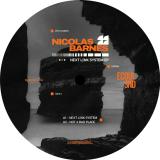
After years in the digital space, ECOUL SND finally steps onto vinyl. Next Link System EP is ECOUL SND’s first 12” and the first solo record by founder Nicolas Barnes — a long-awaited step for the label and a focused statement of its sound.
Four tracks of minimal deep and deep tech, built around low frequencies, restrained grooves and spacious delays. The music moves patiently, leaving room for each element to settle and connect. The artwork follows the same sense of space and distance: cliff, water, and a narrow passage between them.
"Next Link System" sets the tone, "Not A Bad Place" opens things up, "Get My Soul" moves deeper into the dark, and "It Was" leaves a lingering trace after the final track.
A flash of light hits your eyes. Your ears hear muffled bass. As bright white fades to amber, you find yourself in a familiar place. A place you have been to many times. Though the edges of your memory are no longer sharp, the shape of it all is in your DNA.
The smell of rusted metal, dirt-covered floors that once hosted workers, machines and industry mixed with spilled beer and the sweat of a thousand bodies moving to syncopated music. As your vision comes into focus, you’re back there.
A warehouse in the former industrial part of town. You’re surrounded by hundreds of strange but familiar faces, each of you dancing into a frenzy countless times under the moonlight — moving, jumping, laughing and connecting.
Sunlight pours through warehouse windows or appears over a distant horizon.
The DJ plays a song that completes the journey you all just shared. You are desperate to hold on to the feeling of the last song that lands you safely from the night and into a new day. The feeling is deep. Pure.
Especially when communal ecstasy is juxtaposed against the edges of the warehouse floors, the intimacy of city lofts, the spiritual nature of open fields or forests.
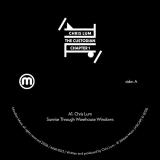
The Custodian
I spent just shy of two decades in spaces like that — as a raver in early 1990s Los Angeles, then a DJ, producer, label owner and head of Moulton Studios in San Francisco.
The Custodian Project is a memoir of a life lived deep inside the culture and business of house music from 1990 to when I stepped away from music as a full-time life in 2015 — told through music, stories and DJ events.
Each release of new music draws inspiration from feelings, emotions and memories of that life — different rooms, different eras. It is an exploration to understand and capture what those feelings were, and in some cases still are.
The Music
This EP is the beginning. 1990. When I first found the rave and re-ordered my DNA based on the sounds, songs and feelings of that era that can be summed up in the title track — Sunrise Through Warehouse Windows.
All three tracks here are an attempt to reach back and touch those mornings again. To put the listener back in the warehouses or open spaces where we would dance as the sun rose over the horizon.
To capture what I felt back in 1990 when the night transitioned into daybreak. Bodies moving in unison. People, places and music all connect. An era before algorithms.
(tracklisting)
A1 — Sunrise Through Warehouse Windows — 7:51
B1 — *Truly Amazing — 8:16
B2 — Sunrise Through Warehouse Windows (Floating Beatless Mix) — 4:20
Written and produced by Chris Lum for Abitare Music (ASCAP)
* Written and produced by Chris Lum - Abitare Music (ASCAP) & Jay-J Hernandez Stopped in Time (ASCAP). Originally released on Leaf Recordings 2000
Some records point at the dancefloor; this one points at the sky. Decryption Of Reality is dubtommy's first solo record for NOREPRESS – the sublabel where he first surfaced on 2022's Pasanauri Way — and it lands as dub tech house wired to the stars: deep, driving, and lit from somewhere far off.
Across four tracks, wide synths stretch over a steady, danceable pulse and drag the groove off-world – less a night in a club than a signal caught from deep space. Three cuts keep the floor moving, bright and propulsive; the closer, "CDEFGAB" – named for the bare notes of the scale – sets down softly into something quieter and near-weightless, back to first principles.
A record for the deep end of the floor and the long drift home.
A year or two back, original Nottingham deep house don Gavin Belton (famed for being part of Smokescreen and Drop Music-adjacent duo The Littlemen) returned to the UK after living in New Zealand. One thing led to another and soon he was back in the studio alongside former creative partner Steve Lee for the first time in 15 years. Featuring heady spoken word vocals from Hector Moralez, the result is 'House For Change', a lightly electrofunk-fired slab of classic East Midlands deep house. Raising funds for homeless charity Help The Framework, this surprise EP also includes 2004 classic 'Tell Me' (a free party deep house classic) and two fresh reworks: a TB-303-bass-driven revision of 'House For Change' by their old pals Inland Knights, and a squelchy, spacey take on 'Tell Me' by Lee under his solo alias, Positive Divide.
Australian producer Inkswel is back on the Cosmocities label in France with more of his superbly soulful sounds, this time with none other than Chicago legend Robert Owens. The lush 'Space Love' is a playful deep house jam with the sort of cosmic synths that recall early Fingers Inc and Owens's smoky tones only heighten that feeling. Steve Spacek provides a mix that rides on broken beats with elastic bass but just as much cosmic energy and a Fluterumental gets all loose-limbed and seductive. On the flip side are two Yoruba Soul mixes that bring extra rich soul vibes and shimmering pad work. A classy and timeless EP for sure.
Dub techno runs on ghosts and twins. The ghost is the echo that outlives the hit – the reverb tail, the delay feeding back into empty space. The twin is the dub itself: every sound shadowed by its own double, the original and its darker reflection locked into the same groove. Ghosts & Twins gathers four cuts that work that space.
This is BLACKINSTOCK's Black Gold Dub Techno with both feet on the floor – measured but muscular, weighted, no filler and no drift. The groove stays locked, the low end does the talking, and every echo earns its keep. Music for a dark room and a loud system, not a candle and a beanbag.
Curated by Kirill Matveev, who called in friends and long-time collaborators from across the MixCult circle, the record plays as four takes on one idea. Spectral Model opens with "Distancial" – a new name here, making a first outing on the MixCult family, and a fitting one to raise the ghosts. Djalo follows with "Model Dub," dubbing minimal and techno the way he has across MixCult, Souplex and Apnea: economical, hypnotic, built for the low end. On the flip, Schime – Hungarian producer Sanyi Egyed, working dub techno, deep and minimal since 2013 across Phonoda, Welter and the MixCult ranks – turns in "Phased." Closing the record, The Don Of Dubhouse is the new alias of TM Shuffle, Finnish producer and head of Vuo Records, no stranger to MixCult.
A long-time figure at the heart of Samurai Music, Last Life makes his first appearance on SAIBAI trading his signature snarl for shadowy psychedelia and snaking beatdowns. Since 2015 Mauro Picciau has been cultivating a sound that maximises on the space that opens up around half-time 170, finding plenty of power while stretching out his rhythms. On this new release he pivots towards subtler tones and textures, and plugs directly into the wave of innovative artistry occurring at the intersection of D&B and deep techno. Writhing, taut sound design spells out the mood on opening track 'Gear Cutter', as Picciau gets expressive with metallic feedback tones that elegantly contort across the front of the mix. There's a strong sense of narrative that brings the track's dynamic movement to the fore, holding back energetic shifts with a measured intent to ramp up the tension. 'Norma' has a more ceremonial feel, locking into a steady pulse and letting distant clouds of melodic ambience create a bewitching atmosphere around the percussive mantras. 'Radian' speaks its own minimalist, techno-spirited language, drawing on alien murmurs and steely drones to strike a lighter note without breaking the mysterious fog that hovers over the EP. 'The Moat' leads on a heavier set of drums to close the record out, shaping space with skilful reverb and a tightly controlled synth pulse. Within this echo chamber, and across the whole release, Picciau has capitalised on this patient approach to bed infinitesimal ripples into the mix, rewarding the active listener and instilling his creations with a kinetic vitality that can always be felt, no matter how slight the sound is.
The Temptations Get High on Psychedelic Soul: Cloud Nine Soars with Ambitious Arrangements and Production, Features Standout Vocal Performances and Instrumentation by the Funk Brothers
The Temptations’ Cloud Nine announced that Motown — and “The Sound of Young America” — would never be the same. Influenced by the emergence of cutting-edge rock and pop currents, as well as increasing sociopolitical turmoil, the album broke down barriers between rock, psychedelia, and soul while heralding the arrival of visionary arrangements and production techniques. Bookended by traditional R&B numbers, the 1969 record sent the Temptations in bold new directions and signaled the advent of psychedelic soul.
Sourced from the original master tapes, strictly limited to 3,000 numbered copies, pressed at Fidelity Record Pressing, and housed in a Stoughton gatefold jacket, Mobile Fidelity’s 180g 45PM 2LP set presents Cloud Nine in audiophile sound for the first time on a domestic pressing. This collectible reissue bestows Norman Whitfield’s extraordinary production with the grand-scale dynamics, natural tonality, expansive openness, and low-end weight it deserves. The timbre of each of the five members’ voices is readily identifiable — even within the group harmonies — bestowing a realism never experienced outside the recording studio.
Making its debut on 45RPM, the album further benefits from the wide groove space by playing with greater separation and more realistic presence than prior editions. Everything from the brassiness of the horns to the dry snap of the snare comes across with reference-grade clarity and positioning. And since Motown’s renowned Funk Brothers backing band plays on many of the cuts, you’ll want to savor every note. The imaging, soundstaging, and organic bloom-and-decay of the notes make that possible.
Amid Cloud Nine, the instrumentation and architecture stand out as much as any element. Never before had a Motown album contained such ambitious patterns and complex passages. Seemingly conscientious of the departure from their past methods, the Temptations and Whitfield bunched together the tracks that mark a deep dive into psychedelic territory and counterbalance them with seven sterling soul cuts that dovetail with Motown tradition drenched with heartfelt vocals, swelling strings, and finger-snapping beats.
On the original 33RPM release, traditional Motown soul — laden with heartfelt vocals, swelling strings, and finger-snapping beats — occupies Side Two. These songs reveal an ensemble still very much on top of delivering pristine pop-soul material graced with romantic sweetness, persuasive insistent, and soaring highs. Re-energized after the departure of lead singer David Ruffin, who was fired for a variety of reasons in June 1968, the Temptations seamlessly meld with his replacement, Dennis Edwards, on one melodic gem after another.
The collective tackles five songs co-written by the legendary Motown team of Barrett Strong and Whitfield. Not the least of which are the smooth, shuffling “Why Did She Have to Leave Me (Why Did She Have to Go)” and deceptively simple, horn-spiked “Gonna Keep on Tryin’ till I Win Your Love.” On these tracks, as well as on a lush rendition of the ballad “Love Is a Hurtin’ Thing” and pleading, tender send-up of the Gerry Goffin-Carole King classic “Hey Girl,” Edwards and Paul Williams take turns on the lead with the estimable Eddie Kendricks, Melvin Franklin, and Otis Williams providing backing support.
All five vocalists trade-off leads on the simmering title track, a groundbreaking composition shot through with wah-wah-pedal effects, liquid funk, deep bass lines, Cuban percussion, saturated reverb, and gang choruses. Whitfield mines each member’s natural vocal range with spectacular results, keeps time with cymbals, and channels both the heated temperatures and escapist desires of a society embroiled in war, conflict, and experimental drugs.
Amazingly, the Temptations top themselves on the similarly revealing “Run Away Child, Running Wild.” Nearly 10 minutes in length, the song explodes R&B parameters and harbors a cinematic scope. Urgent pianos, distorted guitars, stripped-down percussion, steamy Hammond organs, minimal bass motifs, five distinct voices narrating the tale of a boy who fled home and now finds himself amid the scary, unforgiving external world: They combine to give the urgent tune a walls-closing-in atmosphere where fear and desperation reign. Bolstered by an extended instrumental section that precedes a climactic return of the singers’ voices, “Run Away Child, Running Wild” equaled the success of the record’s title track, with both reaching No. 6 on the pop charts.
Distorted Sensory Perception is back after 3 years of lurking in the shadows...
Welcoming Zeta Reticula to the fold with 3 timeless, emotionally star struck tracks that not only bang, but also alure to a deeper, more contemplative works from their creator. ‘Return To Zeta Prime’ embodies a sound, that feels both ancient and futuristic. The record open with the sonic ambiance of ‘Signals Beyond Orion’ a deep space roller, brimming with a palpable, mysterious energy. Dynamic basslines frame sophisticated arpeggios as primal voices echo under emotive synth parts.
Followed by ‘Return To Zeta Prime’ Rolling breaks, alien LFO’s, rumbling bass parts & sorrowful leads that grows on you after each listen, which makes for a deeper journey in transit. In whole, a colder and more turbulent turn of direction.
The B-side of the record begins with ‘Reticuli Control Protocol’. Lush chords, rippling percussion, deep sub parts & enchanting vocals make for a poignant sonic statement. Beautifully balanced and bearing profound insight.
Concluding the release, ‘Reticuli Control Protocol (Zobol remix)’. An acidic re-work by DSP label co-owner. A stuttering re-imagining with a braindancey edge.
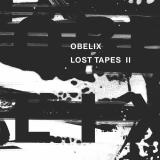
Obelix is the brainchild of UK producers Richard George and Corine Trembath, whose timeless take on house and techno has long been cherished by underground heads and vinyl collectors alike.
With releases on Pacific Records, Mosaic and Stickman, their music occupies a distinctive space between early house and techno, raw, hypnotic and deeply musical, built around rolling 909 rhythms, expertly programmed 303 acid lines and the unmistakable character of analogue hardware.
Following an extensive dive into their DAT archives, Pariter presents The Lost Tapes, a collection of previously unreleased recordings made in the mid-1990s. Carefully restored and curated by Yossi Amoyal, the material retains all the rawness, warmth and analogue
character of the original tapes, offering a rare glimpse into a particularly fertile period of UK underground dance music.
The two part release is completed by Whatever, their sought after classic originally released on Offshoot, a timeless slice that stands alongside the unreleased recordings as an essential piece of the Obelix story.
The Lost Tapes documents a sound that has lost none of its power, raw, hypnotic and unmistakably timeless.
On the 9th instalment of MAXIMILIAN’s vinyl-only MIKROKOSMOS EP series, he returns with two atmospheric tracks: speedy Deep House and spaced-out Acid House. It’s time to squeeze the Roland TB-303 once again with our boy MAXIMILIAN, delivering two tracks that move from raw acid basslines and hypnotic grooves to deep, atmospheric territory.
Move in Stereo: The Cars’ Eponymous Debut Album Functions as a Greatest-Hits Set with Classics Such as "You're All I've Got Tonight," "Good Times Roll," and "Just What I Needed"
Experience the Six-Times-Platinum Record in Definitive Sound on
Mobile Fidelity’s UltraDisc One-Step 180g 45RPM 2LP Box Set:
Strictly Limited to 4,000 Numbered Copies,
It Plays with Reference Definition and Presence
1/4” / 15 IPS analogue master to DSD 256 to analogue console to lathe.
Among the most critically and commercially successful debuts in history, the Cars' eponymous album doubles as a greatest-hits collection. Not one song on it is widely unrecognized or unknown. Consider the list: "You're All I've Got Tonight." "Good Times Roll." "Just What I Needed." "Moving in Stereo." "My Best Friend's Girl." "Don't Cha Stop." “Bye Bye Love.” Just call The Cars the best new-wave rock album ever made. And a natural candidate for preservation on a Mobile Fidelity UltraDisc One-Step pressing.
Sourced from the original analog tapes, pressed at Fidelity Record Pressing in California, mastered by engineer Krieg Wunderlich, and strictly limited to 4,000 numbered copies, MoFi’s UD1S 180g 45RPM 2LP box set presents the six-time platinum record in the most vivid, wide-spanning, three-dimensional sound it has enjoyed on vinyl. Compared to the label’s outstanding and out-of-print 180g 33RPM version, this collectible edition features richer textures, broader openness, greater presence, and bigger dynamics.
Benefitting from the extra groove space on 45RPM by playing with enhanced definition, deep-black backgrounds, and ultra-quiet surfaces, this reissue portrays the band’s oscillating rhythms, futuristic keyboard passages, and panned images with stunning realism. Songs take on an absolutely surreal quality. The Cars and producer Roy Thomas Baker manipulate arrangements at will to mesmerize listeners' senses. The concept of "moving in stereo” has likely never been truer.
The industry-leading packaging of the UD1S set gives fans another reason to gravitate towards the 1978 album. A deluxe slipcase, two foil-stamped jackets, faithful-to-the-original graphics, and MoFi inner sleeves make for a premium tactile experience. It invites you to immerse yourself in everything about the record, including the now-familiar cover art depicting Nataliya Medvedeva behind the wheel. Enhanced by her glistening ruby-red lips, her face flashes an expression caught between surprise, ecstasy, and disbelief — an apropos way of responding to The Cars whether you’re hearing it for the first or 1,115th time.
Introduced in 2024 into the National Recording Registry for its significance, and ranked the 353rd Greatest Album of All Time by Rolling Stone, The Cars explodes with emotion, energy, and hooks. Its songs unite then-disparate styles: bubblegum melodies, art-rock angularity, progressive structuralism, terse minimalism, and power-pop sheen. The stylish arrangements also benefit from a laidback cool and understated irony that remain uncommon in the world of contemporary mainstream music.
Equally rare is the deep chemistry the members shared before they entered London’s AIR Studios and knocked out the record in less than a month. Benjamin Orr and Ric Ocasek began their first band together in the early ‘70s. A subsequent group with future Cars keyboardist Greg Hawke preceded Orr and Ocasek bonding further by temporarily performing as a duo. One final pre-Cars ensemble, Cap’n Swing, brought guitarist Elliot Easton into the fold. A decision by Ocasek to take the band in a rock direction, a crucial lineup shuffle, and a name change begat the Cars so many listeners know and love.
Already a going concern in Boston, the quintet cut its teeth and woodshopped songs for nearly a year and a half before signing with Elektra and partnering with Baker. The Cars enjoyed success right out of the gate, hitting No. 18 on the Billboard Top 200 chart and netting a pair of Top 40 singles in the form of “Just What I Needed” and deceptively happy “My Best Friend’s Girl.” The sarcastic “Good Times Roll” climbed to No. 41, but soon enough, almost every track on The Cars became a radio staple — an honor far more meaningful than chart positions.
Obsessed with incorporating the latest technologies and sounds into its palette, the band spiced tunes with delightful and quirky accents — country-tinged guitar fills, echoing Syndrums, reggae splashes, hard-rock tones, robotic pulses. Orr's low, nuanced deliveries and Ocasek's cool, detached vocals lend shades of doubt and double meaning to the lyrics, which are further counterbalanced by synthesizer flourishes and electronic beats.
Accessible and eccentric, edgy and catchy: The results comprise a landmark whose characters come to vivid life with nuclear boots, dry-drip gloves, ribbon-festooned coiffures, suede-blue eyes, and rock ‘n’ roll hair. It's practically impossible to avoid humming along to every song, all enhanced by Baker's stellar production. Best known for his work with Queen, he ensured the record packed a punchy midrange, opened up with instrumental and vocal separation, and breathed with airy harmonies.
Indeed, from the timeless music to the sleek production and sonic restoration, The Cars on UD1S is just what you needed.
But rest assured - it's still the same excellent band from Ruda ?l?ska, only this time instead of a forest full of ghosts or a land of fairy tale creatures like a Fruwajacy Przestepca the duo of producers takes us on an interstellar journey!
The artists' third album, just titled KOSMOBOTANIKA, is an over forty-minute work skillfully composed from a multitude of various samples, and genre-wise presenting the sounds of deep house, trip-hop, breakbeat, ambient and even jazz. This is electronic music with a very cinematic, visual and imaginative character, something at which ETNOBOTANIKA has undoubtedly achieved mastery confirmed by their first two very well-received albums. This cinematic style (electronic concept album?) is reminiscent of the classic albums of the genre's progenitors from the UK like The Orb (first releases) or The KLF (the iconic "Chillout" album), but also the French Motorbass.
The Silesian duo does it their own way, of course, with a local twist. Thus, in the cosmic journey our guides will be in-sampled familiar voices from Polish television, cinema, radio and dusty vinyls (yes - samples from Mr. Kleks in Space had to be on the album, of course :) ).
There is no shortage of atmosphere-building instrumental fragments here, but also quite song-like tracks with catchy melodies and vocals. Fans of the band will certainly be satisfied.
What is there to say - ETNOBOTANIKA has created another classic, which simply must be on the shelf :) Trust them and let yourself be taken on a cosmic journey - satisfaction guaranteed!
'Nicolò's Static forays deep into liminal space, where signal decays, rhythm stutters and sub-pressure thrums.
'The four-track EP is the inaugural transmission from Nicolò’s own Exploring Records. Melancholy bleeds through the frequencies, yet the pulse remains restless, insectoid, off- kilter.
'Here we pace darkened corridors of flickering projections and half-remembered futures, setting the direction for what’s next...'
Another standout chapter in the Sacred Medicine catalogue, this latest release sees Ron Trent at the helm once again. This time featuring master percussionist Angel Figueroa (Herbie Hancock “This is the Drum” ) and multi versed guitarist Pablo Color.
The track unfolds through layered rhythms and melodies that feel light yet deeply pulsating, carrying both elegance and intensity. Its rich, evolving arrangement balances a strong percussive drive with a sense of space and musicality, revealing new details with every listen.
On the flipside, a more acoustic “Suite” version offers an alternate perspective, highlighting the composition’s organic textures and depth. A record that speaks to both dancers and attentive listeners alike, and another meaningful addition to the ever-consistent Sacred Medicine catalogue.
Details marks SCHiLLiNG's return after years of research, above all on himself. It brings together the practices that have become essential to him: composition, sampling, sonic patchworks, and a palette that mirrors the full spectrum of his musical identity, from Rock'n'Roll to Trip-Hop and Ambient. Details is rich in small edits, hidden layers, fragile textures, and fragments that reveal themselves slowly. Yet the word carries a deeper meaning: what truly matters is often the smallest element, what doesn't appear clearly at first glance or on first listen, yet quietly holds the core of everything. The detail as the very pulse of one's inner world. Across 14 tracks, the album unfolds as a diverse journey, carefully shaped yet open enough to allow unexpected elements and subtle imperfections to remain part of its flow. The structure is not binding, you can begin from any track and embark on your own path through it. Each piece contributes to a wider arc without overpowering the others. The album includes collaborations with several artists who lent their talent to the project; their names appear in the credits of the physical release. In many ways, they embody the very idea behind the title: individual presences, each bringing their own nuance, forming a whole together. After all, fragments, in their union, shape the larger totality. Details doesn't ask to be consumed in a specific way, fast or slow, close or distant. It simply is what it is
Nippon Psychedelic Soul 1970-1979 is Time Capsule’s continuation of the deep dive into Japan’s rich history of folk and psychedelic soul music.
Vinyl LP with 4 page insert, original artwork and photos
The kaleidoscopic psychedelia of 1970s Japan captured a fragile and fertile moment as the country sought its future in funk grooves, heavy reverb and lyrical hallucinations.
The follow-up compilation to Time Capsule’s Nippon Acid Folk, Nippon Psychedelic Soul takes myriad pathways into the tripped-out undergrowth of 1970s Japan. Finding their feet at home and looking for inspiration abroad, the musicians featured here were engaged in the communal soul-searching that followed the breakdown of the 1960s protest movements. Some made it big, others drifted into oblivion. The music they left behind shimmers with intensity.
At the core was Happy End, the first project of YMO’s Haroumi Hosono, whose distortion-heavy guitar and crisp back-beat laid the foundations for Japanese lyrics that flipped the paradigm of Japanese rock music on its head. With it came a new found sonic ambition, such as in the bold Philly-soul style arrangements of producer Yuji Ohno, whose work with occult wandered Yoshiko Sai shares some of the bittersweet grandeur of Rotary Connection or David Axelrod.
Then there was Jun Fukamachi, a pioneer of Japanese synthesis, whose debut album was a carnival of orchestral funk, euphoric horn lines and rich production, complete with soaring guitar solos, psychedelic organ and a truly cinematic finale. The first and only time Fukamachi would sing on record, ‘Omae’ rips like the ultimate end-of-nighter.
Influenced by giants of the US soul scene, maverick composer Hiroshi “Monsieur” Kamayatsu (otherwise known as ‘the Brian Wilson of Japan’) went one step further, enlisting Tower of Power to play on ‘Have You Smoked Gauloises?’ The B-side to Monsieur’s biggest-selling single, it coasts with sophisticated cool - a liquid bassline and suave keys comping under a roaring trademark ToP sax solo. No surprise it found favour once more on the Acid Jazz dance floors of ‘90s London.
Such was the spirit of experimentation that big studio productions and private press releases sat side-by-side, with the likes of Momotaro Pink and Kazushi Inamura, taking their hopes of success into their own hands with the resources available to them. More reflective but no less robust, theirs was a heavy, fat-backed drum sound, soaked in dramatic, soulful psychedelia.
If some were dreamers and others space cadets, none were further out than sci-fi writer, musician, activist and self-made scientist Tadashi Goino, who transformed his own fantasy novel Messenger from the Seventh Dimension into an operatic prog odyssey with few discernible musical reference points – a majestic and completely bonkers outlier even among company as strange and brilliant as that which is collected here.
Less a compilation of a scene, as a compilation of a sentiment, Nippon Psychedelic Soul is a wild ride from start to finish, shattering the narratives of the Japanese folk and rock tradition into a million tiny pieces.
The mighty Trelik label has long led the way when it comes to the best minimal in the underground and nothing about that changes with this new one from German pair Anro and Kuyateh. They collide their creative minds on four cuts starting with 'All We Have', which, like many of the sounds on this label, fizzes with a light synth touch while rolling on frictionless drums. 'Crocket' is another luminous sound with dubby drum loops that are supple and seductive, as spaced out motifs up top bring a curiousness. 'Gametime' layers in some warped and molten acid sounds to dubby tech rhythms and 'Hi' is a final sophisticated closer for those who like it deft and deep.
Yore Records presents: Craig Alexander - Phenomenal Woman / Across My Mind (12" Maxi Reissue)
Following his recent appearance on the label, Craig Alexander returns to Yore Records with a carefully curated reissue of two standout House Workouts: Phenomenal Woman and Across My Mind.
Originally released on earlier records, these tracks are now brought together on one 12" - each presented in two distinct mixes - capturing the raw, emotional depth of Chicago House in its purest form.
At the heart of this release lies Phenomenal Woman, a track that draws inspiration from Maya Angelou's iconic poem of the same name. Rooted in the African-American cultural context, the piece carries a subtle but powerful message of identity, strength and self-definition - translated here into deep, jazz-infused House music.
Across My Mind complements this with a more introspective tone, driven by warm chords, understated grooves and a timeless sense of space.
Together, these recordings embody what House music has always been at its core:
music with a message, shaped by lived experience, culture and emotion.
Stripped down, honest and deeply rooted, this is Chicago House in its most original and authentic form - a sound that continues to resonate far beyond the dancefloor.
Phosphor returns with its fifth release and a new chapter for the label’s founders, Blue Vision. As their second EP on the imprint, Machines Will Transform Us (PHP005) confirms the project’s direction: a precise balance between club-driven tech house and more immersive, hypnotic electro textures.
Across the EP, Blue Vision asks a simple question: after spending our days connected to algorithms and modern machines, can repetitive rhythms and mechanical grooves on the dancefloor turn us into machines once again, or instead help us reconnect with ourselves?
Machines Will Transform Us (A1) opens the EP with a driving Italo bassline and tight, tech-driven drums. Melodic 80s synths contrast with sharper electro elements, gradually building tension before a final drop designed for peak-time impact. The track sets the tone for the release: machines transform us as much as we transform them.
Then comes Just a Game (A2), blending spacious 90s progressive and synthwave influences over a rock-solid club bassline and crisp drums. Playing with atmosphere and emotion, the track explores the feeling that we are never too far from a simulation, that maybe everything is just a game. Perfectly suited for introspective yet intense moments, it acts as an ideal bridge between harder tracks in a set.
On the flip side, I Love Acid (B1) is direct, hypnotic, and designed to lock the dancefloor into a steady flow. Stripped back to punchy drums and a raw acid line, it takes a minimal approach that works equally well in early hours or late-night sets. Behind the title lies the idea of acid as both machine energy and mental escape, where repetitive sequences blur the boundary between human emotion and mechanical movement.
As a final touch, Scan Your Brain (B2) shifts into deeper, more immersive territory. Analog pad textures create a drifting atmosphere over a hypnotic bassline and electro drums. With this closing track, Blue Vision answers their initial question by imagining the dancefloor as a space to disconnect from rigid thinking. The vocal serves as a reminder that the brain is constantly overloaded, and that dancing becomes a way to let go, reset, and reconnect.
London based Reposition Records return with ‘Electric Dream Romance’ - celebrating a brand new beautiful piece of braindancing house music from trailblazer Kim Cosmik. DMX Krew, dBridge, El Prevost and Kim herself all provide 4 distinct remixes.
With deep roots in UK soundsystem free party culture as a member of the legendary Spiral Tribe, Kim remains a fixture in the underground regularly DJing in spaces from London's FOLD to The Advent's Technoclub. Past releases across 20/20 Vision and her own label Cybersoul have explored the harder, industrial edge of techno. Electric Dream Romance turns toward the more heartfelt side of her production, finding a feel for classic dancefloor house, tantalising vocals and seductive chords wrapped around playful acid lines and Kerrier District-esque synth work.
The unique remixes then glide from DMX Krew's patient electro workout through to an off-kilter shuffling dnb remix from Exit Records boss Dbridge, an emblematically stripped back workout from Reposition co-founder El Prevost, and finally a broken techno interpretation from the EDR innovator herself, Kim Cosmik.
Proto Exotica notches its third release with The Infinite Hum EP , the debut project from Melbourne producer Mateo Torres Rodriguez under his new alias: Cerro.
Cerro is a personal and transportive collection of recordings owed to four months in Colombia, where Mateo returned to the neighbourhood he grew up in. On a table in his childhood home, he set up a modest travelling studio with a small collection of analogue hardware. At times, he'd pack individual pieces of
gear to travels within his travels, working without a fixed room or routine.
And so from a drum machine, a monophonic synth, a polyphonic synth, a laptop, and a pair of headphones (but no speakers) came five tracks of dub-inflected house and cosy Balearica.
The EP opens with 'The Bright Side' , dub bass, warm analogue pads, housey tempo. 'Unending Journey' slows things down, its deep low-end holding space beneath a synth that drifts in and
out.
'Power Of The Small' brings a dreamy house melody alongside a dubbed-out analogue lead, the filter opening and closing as the track breathes. On the B-side, Andras remixes 'The Bright Side' , keeping the bounce and weaving a jazzy lo-fi Rhodes solo through it. The EP closes with 'Indubitably' , dubbed-out vocal samples and floating pads settling into a downtempo Balearic lilt.
Continually presents Norwegian Rave EP (CON007), curated by Tonchius and Rub800.
A rave is never only a location. It is a temporary world built through rhythm, movement and shared energy.
Norwegian Rave captures different moments within that world. A collection of four interpretations connected by a common pulse, moving between peak-time intensity, hypnotic travel, open-ended exploration and the euphoria of the final hours.
A:G opens the record with Vibrations, a high-energy transmission built for the moment when the room reaches its highest point. Lord of ITB follows with Duties, taking the journey deeper through hypnotic patterns and a sense of movement beyond the immediate.
On the B-side, Finn Balansen presents Ketu, opening the space with a more progressive and expansive approach. Ruton closes the release with Rave-O-Lution, a playful and energetic celebration of rave culture—the moment when the night continues into the morning and the memories begin to form.
Norwegian Rave is a collection of moments rather than a definition—a shared frequency moving between individuals, rooms and memories.
Obelix is the brainchild of UK producers Richard George and Corine Trembath, whose timeless take on house and techno has long been cherished by underground heads and vinyl collectors alike.
With releases on Pacific Records, Mosaic and Stickman, their music occupies a distinctive space between early house and techno, raw, hypnotic and deeply musical, built around rolling 909 rhythms, expertly programmed 303 acid lines and the unmistakable character of analogue hardware.
Following an extensive dive into their DAT archives, Pariter presents The Lost Tapes, a collection of previously unreleased recordings made in the mid-1990s. Carefully restored and curated by Yossi Amoyal, the material retains all the rawness, warmth and analogue
character of the original tapes, offering a rare glimpse into a particularly fertile period of UK underground dance music.
The two part release is completed by Whatever, their sought after classic originally released on Offshoot, a timeless slice that stands alongside the unreleased recordings as an essential piece of the Obelix story.
The Lost Tapes documents a sound that has lost none of its power, raw, hypnotic and unmistakably timeless.
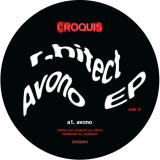
r.hitect opens a new chapter with a refined vinyl release that signals both evolution and intention. Exploring subtle textures, intricate rhythms, and a deeper, more introspective sound, this record marks a shift toward a more personal sonic identity.
The release also introduces Croquis, a new label concept focused on capturing music in its purest form — raw, spontaneous, and essential. More than just a label, Croquis is a space for stripped-back expression and meaningful sound.
This vinyl sets the tone for what’s to come: minimal, emotional, and deeply authentic.
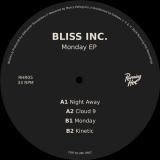
Running Hot welcomes Bliss Inc. for RHR05 with the Monday EP, four cuts of warm, groove-led house music built for intimate spaces and long nights.
The EP arrives during a busy year for Bliss Inc., following a recent release on Punctuality and the start of a new residency at Tokonoma in Frankfurt, where he’s been regularly playing the Holo and Sakuru floors. Those smaller rooms have had a clear influence on the EP, with subtle shifts, detailed percussion and hypnotic grooves given room to unfold.
Across the four tracks, rolling low-end sits alongside understated melodies and intricate percussion. The EP draws from the deeper end of house and minimal without ever sounding overly referential, and feels just as at home in a low-lit warm-up as it does deep into the night.
An exciting announcement - The Return Of Cosmic Ritual by Joaquin Joe Claussell.
The Return of Cosmic Ritual
Kanita- Forgiveness is a Beautiful Thing Featuring a Cosmic Tribute to Nujabes
Cosmic Ritual, the early recording alias of Joaquin Joe Claussell, emerged during the formative years of his journey-with at the time the young and visionary Spiritual Life Music label. From those beginnings came For The Loft in You, a composition whose atmospheric language would travel far beyond its original moment-helping shape a sonic vocabulary that continues to resonate throughout the deeper realms of contemporary dance music.
Its influence can still be felt today: in the spaces between rhythm and silence, in the textures of deep house, ambient soul, spiritual jazz, and in productions created by artists who continue to explore the unseen dimensions of sound.
Now, after its long journey through the cosmos, Cosmic Ritual returns.
At the heart of this new chapter is “Kanita (Forgiveness Is a Beautiful Thing)”, a composition that journeys even further inward-toward the more atmospheric, introspective, and soundscape-oriented side of Joaquin Joe Claussell’s musical spirit.
It is music for the inner traveler.
And as another celestial passage, the release also offers a special Cosmic Tribute to Nujabes Titled "Heaven", Nujabes is a deeply admired artist whose work transcended boundaries and whose musical spirit continues to inspire generations across cultures and continents-even after his untimely departure.
This tribute is more than an acknowledgment. It is a meeting of frequencies, a quiet conversation between kindred spirits who understood that music could exist beyond genre, beyond geography, and beyond the limitations of ordinary perception.
And Finally " Myths Across Tribes " A Trance Dance Percussion number that takes the listener into the jungles of Africa.
As with all of Joaquin Joe Claussell’s work, The Return of Cosmic Ritual l invites the listener to go deeper.
For those who seek mind travel.
For those who listen between the notes.
For those drawn toward cosmic ambience, spiritual resonance, and the deeper dimensions of sound.
Focus On Egoless returns with a powerful new Various Artists release, bringing together Dutch talents Sosef and Kai Stein with three artists from the Canary Islands: Daniel Rodríguez, Funke, and Moray.
A diverse collection of club focused cuts, this release moves across different shades of energy, from hypnotic, groove driven tracks made to set the tone at the beginning of the night, to powerful and intense weapons designed to take things deep into the dancefloor.
Balancing raw energy with more subtle, rolling warm up grooves, each track brings its own character while staying rooted in the distinctive sound and spirit of Focus On Egoless.
LUCIANO LAMANNA — A CARLO Blackwater Label — 2026 Distributed by Triple Vision More than ten years in the making, A CARLO is a single-sided EP by Luciano Lamanna for Blackwater Label, dedicated to Carlo Giuliani and to the memory of the events that unfolded during the G8 protests in Genoa in 2001. This record is the result of a long process, one that began more than a decade ago and has remained unfinished until now. Two tracks, both carrying the name and memory of Carlo, finally complete a circle that has been open for years. The first track, “Il Giorno del Sole”, was previously released on physical CD through Blackwater Label. The second, “Amore Infinito”, arrives more than ten years later, completing the dialogue between the two pieces and giving the project its long-awaited counterpart. Together, the tracks form a deeply emotional and personal statement: melancholic, haunting and at the same time driving and hopeful. Lamanna moves through the industrial language that has always characterised his work, while “Amore Infinito” explores a darker, more intimate territory, evoking the emotional intensity of Coil. A CARLO is not intended as a historical reconstruction or a conventional political statement. It is an act of memory.
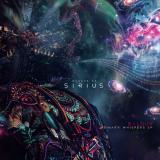
Sounds of Sirius Music presents SOSNZ014 Balouk – Binary Whispers EP
A distant signal moving through the universe. Fragments of consciousness appearing between silence and noise. A transmission crossing the space between stars.
Somewhere between zero and one, something speaks.
Rooted in classical music, Balouk explores the unknown through modular synthesis and intuition. His sound drifts between structure and chaos, where machines breathe, patterns shift, and every transmission takes a different form.
Balouk opens the transmission with the original cut, followed by a deeper interpretation from r.hitect.
On the B-side, Herman Saiz and Daniel Meister reshape the signal, each revealing a different frequency of the same unknown message.
"Fragments of Light" documents seven years of creative dialogue between Purl (Ludvig Cimbrelius) and Ecovillage (Emil Holmström & Peter Wikström). Their journey began with a spontaneous meeting in Los Angeles during October 2019, evolving into a transcontinental process where Ludvig refined ideas during Sri Lankan train journeys while Emil and Peter furthered their ambient dreaming in northern Sweden. Sonically, the album inhabits a space between pop ambient and new age—combining atmospheric textural depth with accessible melodies, while also carrying forward the contemplative nature central to the artists' work and personal lives. Ecovillage, who has collaborated with many revered artists (such as Laraaji, Carlos Niño, and Fennesz), here pour their own deep sensibilities into the ever widening river of Purl—this initial, ambient-rooted alias of Ludvig Cimbrelius. Featuring original, hand-painted artwork by Steven Jackson and delicate mastering work by Ludvig for a special limited physical edition released via his own LILA लीला imprint, “Fragments of Light” carries the hallmarks of an ambient classic-to-be. The album fits naturally alongside works by artists like Brian Eno, Harold Budd, and Hiroshi Yoshimura, as well as contemporary artists who bridge the ethereal with melodic sensibility.
His sophomore LP for Limousine Dream, Secrets, is his most expansive and refined to date. Borrowing from after-hours techno, tech house, minimal, and deep house, Secrets is a tour de force of the outer fringes of house music. Wallace leans into the darker hours of the night and the tracks are heavier and headier, but still imbued with his trademark funk. Across 8 hi-definition nuggets, Wallace crafts bespoke bangers for the sound systems of the world’s best clubs.
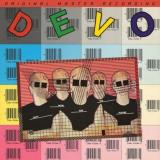
Devo Marries Gritty Guitars with Expansive Keyboard Canvasses on Duty Now for the Future:
Transitional Album Furthers the Band’s Satirical Stance, Includes Cover of “Secret Agent Man”
Hear the 1979 Record in Audiophile-Grade Sound and at 45RPM for the First Time:
Mobile Fidelity’s Numbered-Edition 180g 45RPM 2LP Set
Benefits from Enhanced Definition and Presence
1/4” / 15 IPS Dolby A analogue master to DSD 256 to analogue console to lathe
“Pop music needs a big enema.” Devo created Duty Now for the Future with that mission statement, relayed to the press by co-founding bassist/vocalist Gerald Casale, in mind. Though unfairly pegged by some as an example of the common sophomore slump, the record spurred the group’s interest in electronic instrumentation, extended its penchant for biting social satire, and contained another transformative cover song in the form of “Secret Agent Man.” Above all, the 1979 work proved the Ohio pranksters were anything but a joke even if they would have to wait one more year until for their mainstream breakthrough.
Sourced from the original master tapes, mastered by engineer Krieg Wunderlich, pressed at Fidelity Record Pressing in California, and housed in a Stoughton gatefold jacket, Mobile Fidelity's numbered-edition 180g 45RPM 2LP set presents Duty Now for the Future in audiophile-grade sound. Benefitting from the extra groove space on this first-ever 45RPM version, it plays with enhanced definition, deep-black backgrounds, and ultra-quiet surfaces.
Though certain band members later expressed regret with some of his decisions, the merits of Ken Scott’s production emerge like never before. A lurking edginess serves as a signpost in Devo’s progression before it fully embraced keyboards as a primary tool. Guitars possess punch and grit and, along with the crisp arrangements, are sharpened with an ear toward accuracy and vibrancy. It all helps give Duty Now for the Future a direct immediacy that answers the complaints of listeners who felt the affair too processed or sterilized.
Notably, a majority of the material here stems from the same grab bag of songs Devo banked before Warner Bros. signed it to a deal. The album marks a capstone to Phase One of a career that for all intents and purposes began in 1973. And just like many of the group’s performances of that era, Duty Now for the Future remains just as famous for the critical disdain it inspired as the music itself. A vicious review in Rolling Stone — the very publication that a few decades later would trumpet the band as one of the most important of its age — ended with the writer offering to send readers shards of the LP he planned on smashing to bits.
Perhaps he just needed to experience this new-wave effort with the restored sound that makes everything now feel so explosive and urgent. Whatever the case, the songs hold up and, amid a contemporary period which gives increasing license to artificial intelligence and behemoth conglomerates, seem more apt than ever before.
Consider “Blockhead,” which skewers the predictable appearances and numb-to-the-world actions of a rule follower. Or the similarly themed “Clockout,” an uptempo ditty whose thumbing-its-nose bravado and sardonic lyrics send up corporate culture with an irresistible smirk. As for the wiry, hard-hitting urgency of “Wiggly World” and Mark Mothersbaugh’s loud declaration that “They say the fittest shall survive/Yet the unfit may live”: Evidence these art-school rabble-rousers still had some punk fury to flush out of their system. And the sincere allure of the charged power pop and wishful circumstances of “The Day My Baby Gave Me a Surprize” cannot be denied.
To point to an interesting bit of history that makes Duty Now for the Future all the more intriguing, particularly for the most committed Spuds, more than half its tracks were selected for Greatest Misses — a 1990 anthology that celebrates lesser-known cuts and functions as a rejoinder to a hits compilation from the same year. (The only track from the 1979 album to make the “hits” disc: “Smart Patrol/Mr. DNA.”)
Indeed, tunes like the riff-driven albeit controversial “Pink Pussycat,” atmospherically twitching “S.I.B. (Swelling Itching Brain),” and ceremonial instrumental “Devo Corporate Anthem” may lack the catchy appeal and all-together coherence of what follows on the group’s third and most commercially successful effort, Freedom of Choice. Yet in order to get there, to de-evolve if you will, the band needed the smorgasbord that is Duty Now for the Future.
Following the launch of the label late last year, Tripsitter Records returns with its second release, Social Memory Complex EP, a four-track Various Artists compilation that explores the evolving intersection of speed garage, warped low-end pressure, and contemporary tech house. Featuring contributions from Baumb, Marcos Coya, New Balaance, and Voosen, the EP captures a shared fascination with the resurgence of UK garage aesthetics while pushing the sound into new territory through modern club production and forward-thinking songwriting.
Across the release, listeners are met with rolling grooves, swung percussion, and a heavy emphasis on elastic warp basslines that nod to the roots of speed garage while embracing the power and functionality of modern tech house. Built equally for dark club rooms and open-air festival systems, each track offers a distinct perspective on the genre's current evolution. Baumb delivers a driving, high-energy cut that balances hypnotic rhythm with low-end intensity, while Marcos Coya leans into deeper club textures and precision-engineered groove work. Voosen rounds out the collection with a track that further reinforces the EP's dancefloor focus, combining punchy drums with unmistakable garage-inspired movement. Perhaps the most unexpected contribution comes from New Balaance, whose track ventures into synth-pop territory without abandoning the EP's core identity.
Melodic hooks, emotive synth work, and song-oriented structures are woven together with speed garage rhythms and bass design, creating a standout moment that broadens the compilation's sonic palette while remaining firmly connected to the release's underground roots. With Social Memory Complex EP, Trip Sitter Records continues to establish itself as a platform for artists exploring the spaces between genres—where UK garage heritage, tech house functionality, and contemporary electronic songwriting converge. As speed garage continues its resurgence across clubs and festival stages worldwide, Social Memory Complex EP arrives as a snapshot of a scene in motion: nostalgic without being retrospective, and innovative without losing sight of the dancefloor.
Polygonia & MTRL - Division / Taris EP incl. Remixes by Claudio PRC and Mary Yuzovskaya
A1. Polygonia - Division
Right from the start the listener is cast into orbit with driving percussion and abstract sound effects. Soon they are followed with a morphing bass sound and cymbals which lock the groove into place, cranking the drive to the max. As the track progresses the landscape of sound reveals its nature with metallic quality, like schrapnel from a barren city. Truly a Deep Techno banger which will without a doubt fill a dance floor.
A2. MTRL - Taris
The listener is slowly submerged into the waves of percussive bass sounds and menacing sweeps of noise which remind of a storm in a desert, the horizon only slightly glimmering behind the veil of sand. Soon the listener is introduced with a pounding kick drum, almost making the landscape seem even more ruthless as the track progresses.
Quality, heady Deep Techno.
B1. Polygonia - Division Claudio PRC Remix
The hypnotic Techno maestro Claudio PRC twists the idea of the original track into a mind explorative voyage with a triplet feel. The remix is shrouded in melancholy with distant pad sounds, which add a nice tension to the track. As usual, a brilliant remix from Claudio PRC.
B2. MTRL - Taris Mary Yuzovskaya Remix
On the remix the Berlin based producer is molding the source material into a driving and psychedelic track, functional yet synapse tingling. Now the bass has a bit more liquid-like quality and the overall soundscape is more abstract. Hallucinatory effects of noise are filling the spaces between the sounds, almost like being surrounded with faint whispers. Driving and psychedelic Deep Techno done with finesse.