Vladislav Delay presents the third EP in his "Hide Behind The Silence" series with five 10" releases coming throughout 2023. Intuitive and raw music, momentary and reflective, released on Ripatti's own label "Rajaton".
--
Stillness is a myth. Consider concepts such as ”still water”, or ”still air” for that matter. Go to a restaurant, ask them for a glass of still water, hold it against the light and see where we’re at. Even though the water itself has been captured and imprisoned in the glass, it never stops breathing. It’s filled with tiny particles, dancing. Everything can be explained on a molecular level, but since we’re not scientists – and even if you happen to be – it’s the natural world of perception that moves me.
Still air is very similar. A hot summer’s day with zero wind feels completely still. It’s the closest I have felt to complete stillness. Or for a more urban adaptation, imagine the same vibe inside a normal apartment. In those moments, revelations and mind- blowing experiences can be had with experiments in stillness.
Try this: Just sit down for a minute on a sunny day, making sure there’s enough natural light. Do absolutely nothing. Try not to breathe for a bit. (If you need a mental anchor, you can play Cage’s 4’33” in your head but nothing else.) Watch the tiny dots of dust dancing :..’ ̈.:; ́ ́*°.,’:,. ̈ ̈ ̈ ̈:,.’
The movement is crazy, but the feeling of stillness comes from witnessing how subtle it is. In (perceived) complete stillness, every act of microscopic mobility seems to speak volumes. Yet, it feels both reassuring and oddly threatening that the stillness is never complete. What if we would need absolute stillness? Or is it just enough that we can perceive something as such? Extremes attract, so for both water and air, extraordinary movement is equally fascinating. That is also a luxury item of sorts. For us to enjoy a very ”loud” body of water or air, we need to be safe, in enough control of the situation. So when you are, it’s worthwhile to pay attention and take it all in.
A rapid flowing free with extreme strength and just barely in control. Look at that water go! No still water on this one, only ”sparkling”. A windy day when birds seem surprised how hard it is to fly, but in the end they make it. Trees bend but don’t break. The wind shows you its movement but doesn’t hurt you. It feels friendly, like a big clumsy dog that doesn’t quite understand its size.
It’s beautiful to be a guest of the elements, but not at the mercy of them. A new kind of dialogue forms.
quête:del close
Back in 2019, Leng Records offered a debut to a previously unheralded producer, Takovoi. Three years on, the Russian nu-disco specialist returns to the label with a five-track EP that displays the depth and quality of his rapidly evolving trademark sound.
The Perfect Match EP delivers a range of grooves and stylistic approaches while showcasing the producer’s love of dreamy Balearic chords, soft-touch synth sounds and colourful melodies.
He sets the tone with the EP-opening title track, ‘Perfect Match’ where sustained, sun-down chords, yearning lead lines, cascading piano motifs and twinkling electronics ride a shuffling, post-electro beat and a warm, undulating bassline. ‘Homesickness’ sees Takovoi wrap waves of rising and falling synth sounds and melancholic melodies around a deep, hypnotic nu-disco groove, while the slow-motion sensation that is ‘Dreams’ brings throbbing analogue bass, sustained piano chords, sparkling electronics and the gentlest of beats.
Takovoi’s dancefloor credentials come to the fore with ‘Bubbles’, a slowly building Balearic nu-disco gem that layers up echo-laden percussion hits, eyes-closed melodies, and drowsy synth sounds over a bustling beat that sits somewhere between deep house and TR-808-driven broken beat.
This off-kilter approach to beat programming continues on the EP’s inspired closing cut, ‘Another The Same’, where hazy female vocal samples, immersive chords and reverb-heavy musical motifs gingerly dance on a bouncy and densely layered 4/4 beat. When the main melody makes its presence felt midway through, the track is elevated to a whole new level altogether. It’s a fittingly impressive end to Takovoi’s new EP for Leng.
The distinctive rolling grooves, growling basslines and blasting horns of Snakehips Etcetera combined to present Nucleus's most energetic record. First released on Vertigo in 1975, original copies of Snakehips Etcetera are now very tricky to score. Like all the Nucleus records, it’s aged ridiculously well and this Be With re-issue, re-mastered from the original analogue tapes, shows off just why this deserves to be back in press.
Genius trumpeter and visionary composer Ian Carr was one of the most respected British musicians of his era. He was a true pioneer and saw the potential in fusing the worlds of jazz with rock, just as Miles Davis and The Tony Williams Lifetime did in the US. In late 1969, following the demise of the Rendell-Carr quintet, and tiring of British jazz, Carr assembled the legendary Nucleus. Regarding music as a continuous process, Nucleus refused to “recognise rigid boundaries” and worked on delivering what they saw as a “total musical experience”. We can get behind that.
Under bandleader Carr, Nucleus existed as a fluid line-up of inventive, skilled musicians. This constant evolution and revolution was all part of the continuous musical exploration and discovery that took jazz to new levels. And the music has kept relevant. To steal a line from a review of our re-issue of Roots, when it comes to anything Nucleus “it’s basically already hip-hop”
With all restraint out the window, 1975's pimped-up Snakehips Etcetera is the outrageous - in both cover art and sound - follow-up to the brooding Under The Sun. It's perhaps not one for the jazz purists! It finds Nucleus pared down to a core group of six, with Carr, Bob Bertles (sax), Ken Shaw (guitar), Geoff Castle (keys), Roger Sutton (bass) and Roger Sellers (drums) comprising the collective. Snakehips Etcetera reflects a period where the compositions start to become a little more direct and less-cerebral in comparison to some of Nucleus' previous releases. And why would we begrudge them some fun? This one rocks, swings and funks with no little soul. And more than a little jazzy sleaze. Clearly, they were having a good time.
The album has a real live, jamming feel to it, no surprise given the extent to which they were touring at the time. The band is tight and grooving throughout, none more so than on Bob Bertles's effervescent opener, "Rat’s Bag". So darn funky it stings, it's an infectious gem full of punchy clean lines over a killer bassline from Sutton. The thick, driving jazz-rock of "Alive And Kicking" is exactly that. It has a very improvisational feel, but an inspired one at that and features a wailing guitar solo from Ken Shaw that simply slays. The funky "Rachel’s Tune" is amazing, bringing you back to Canterbury days with its fuzzed-out organ solos to close out Side A.
Opening up Side B, the cool psychedelic title track unfolds slowly and sensually over its ten-plus minutes. A stoned soul stew of sorts, each member of the crew gets their chance to shine over Sellers's steady drums. The melodic funk fusion of "Pussyfoot" pairs Carr with Bertles on ace solo flute for a bright, springy melody. This one really gleams over shuffling drums. Changing the pace to close out this memorable set, the particularly cool "Heyday" is a reflective, sober tune which reinforces the sumptuous Nucleus palette, the acoustic guitar and bass high in the mix to make the neck snap, the horns elegantly blasting to help you swoon.
This Be With edition of Snakehips Etcetera has been re-mastered from the original Vertigo master tapes, Simon Francis’ mastering working together with Cicely Balston's cut at AIR Studios to weave their usual magic with these wonderful recordings. The striking, lascivious sleeve has been restored in all its seductive/ridiculous beauty.
n this Second Edition of eli.sound we bring you High-End Music with the Best exponent of Our Catalog in this moment, This time Our Happy House Side our Leader Son of Elita releases a Party Deep House with many changes of analog Synthesizers and pads chords and so on close Side A with a Incredible Argentinian Collaboration Trentz & Cajal induce to wear out all your Sneakers with a very emotional Fast Groove.
A Roman Side dresses up by hosting one of the best Romanian Exponents the great Direkt already known by all in the Underground environment releases a track with Experimental Minimalistic Trends and Organic Groove, to close our Project SOEm launches Breakbeat cut with Arpeggios and Organic Synthesizers. We assure you that this LP cannot missing from your Selection.
Foyer Red’s debut LP, Yarn the Hours Away, plays out as a collection of short stories, each with its environment and protagonist(s) meticulously crafted by the band, with lead singer, vocalist, and clarinetist Elana Riordan at the helm. Foyer Red’s debut EP, Zigzag Wombat, showcased their playfully chaotic arrangements, which bridge art-punk, math rock, and sweetly sung indie with a dash of the zoomies.
The band synthesizes their homespun take on magical realist indie rock that was centered on their EP with their varied musical influences; taking cues from the otherworldly melodies of Cate Le Bon, Yucky Duster’s jangle-filled crayon rock, and the organized chaos of Deerhoof’s iconic polyrhythms. The songs that makeup Yarn the Hours Away are fantastical, surrealist stories that hinge on contemporary, post-digital life.
The lead single “Etc” captures this dynamic perfectly. Anchored by Eric Jaso’s hypnotizing bass line, the song unfolds with off-kilter call-and-response vocals between Riordan and Kristina Moore, their stilted deliveries bouncing around the mix. The track is searching but discontent with the algorithmic and claustrophobic realities of daily life: singer/guitarist Mitch Myers throws the song for a loop singing, “gathering information / will set you free once you’ve reached / 37 percent / of the database.” While there’s paranoia and cynicism undergirding the lyrics, the song itself is a thrilling and playful listen.
The songs on Yarn the Hours Away are uniformly exciting and compelling; each track feels distinct and sometimes even in direct conflict. The peppy opener “Plumbers Unite!” belies its themes of gamification of our daily lives and delves into the science fiction and fantasy songwriting of Foyer Red’s debut EP. Centered around a relentless rhythm section, their dueling vocals never abate; Moore and Riordan’s honey-sweet but getting more frantic as the song progresses, while Myers’ erratic talk-singing culminates in one final frustrated scream. Juxtapose this with “Gorgeous,” a lovely song about Riordan and drummer Marco Ocampo’s relationship that sees the band slowing their pace into a blissful sway. Riordan coos and sighs over the track while recalling “Marco-isms”; botched colloquialisms that Ocampo uses.
“Gorgeous” shares little in common with “Pocket,” a loose lamentation on late capitalism that touches on time travel and human evolution. Moore and Riordan’s exclamations are chopped up and used as rhythm instruments, layered over the intricately frenetic guitars of Myers and Moore. Foyer Red thrives on these extremes and contradictions. Where their first release was self-recorded, this LP found them in Figure8 Studios with a deadline. “It was really liberating,” says Jaso. “We're all just kind of throwing in our own voices and challenging each other to make the songs better.”
Yarn the Hours Away comes from a lyric on the closer “Toy Wagon.” The song that first marked the time Moore and the rest of the band worked together, a promising spark of a thrilling collaboration to come. “It harkens back to all of us coming together and spending the hours together in music,” says Moore. “There are few moments where you get to relax and exhale,” adds Riordan. “It's what happened when the five of us got together and started writing. We just wrote all of these out there songs and we didn't see a reason to dial that back. Its natural form is in its chaos and layered craziness.”
- A1: 1916 (1:11)
- A2: Elastic Rock (4:05)
- A3: Striation (2:14)
- A4: Taranaki (1:38)
- A5: Twisted Track (5:19)
- A6: Crude Blues (Part 1) (0:54)
- A7: Crude Blues (Part 2) (2:38)
- A8: 1916 (The Battle Of Boogaloo) (2:58)
- B1: Torrid Zone (8:41)
- B2: Stonescape (2:39)
- B3: Earth Mother (5:15)
- B4: Speaking For Myself, Personally, In My Own Opinion, I Think… (1:31)
- B5: Persephone’s Jive (2:14)
Nucleus's Elastic Rock is undisputedly a milestone in Jazz-Rock. A beautiful and vital debut album, it was first released on Vertigo in 1970. Original copies are now very tricky to score and, like all the Nucleus records, it’s aged ridiculously well. This Be With re-issue, re-mastered from the original analogue tapes, shows off just why this deserves to be back in press.
Genius trumpeter and visionary composer Ian Carr was one of the most respected British musicians of his era. He was a true pioneer and saw the potential in fusing the worlds of jazz with rock, just as Miles Davis and The Tony Williams Lifetime did in the US. In late 1969, following the demise of the Rendell-Carr quintet, and tiring of British jazz, Carr assembled the legendary Nucleus. Regarding music as a continuous process, Nucleus refused to “recognise rigid boundaries” and worked on delivering what they saw as a “total musical experience”. We can get behind that.
Under bandleader Carr, Nucleus existed as a fluid line-up of inventive, skilled musicians. This constant evolution and revolution was all part of the continuous musical exploration and discovery that took jazz to new levels. And the music has kept relevant. To steal a line from a review of our re-issue of Roots, when it comes to anything Nucleus “it’s basically already hip-hop”.
The very title Elastic Rock could be regarded as the group's MO, describing a melting point between their rock and jazz impulses. Indeed, housed in a memorable gatefold jacket designed by Roger Dean, the die cut molten teardrop shape on the front sleeve opens to reveal a fiery volcanic crater. On the back, Dean's drawing has Carr with saxophonist Brian Smith, guitarist Chris Spedding, drummer John Marshall, bassist Jeff Clyne and sax, oboe and pianist Karl Jenkins in a circle, the central core of a movement and the basis for its activity.
Recorded over four days in January 1970, Elastic Rock didn't sound like any other British jazz album. Exploding out the gate, "1916" opens with Marshall's frantic pounding before melancholic horns enter. The smooth title track, "Elastic Rock" is just a gorgeous electric blues track. Light drums, gentle melodic horns, piano and a solid bassline serve as the perfect bed for Spedding's graceful bluesy guitar melodies. The serene "Striation", a Clyne and Spedding collaboration, is led by bowed bass and is the epitome of calm before the late night laid back vibe of "Taranaki" breezes along sweetly and smoothly with great trumpet and tenor.
The truly emotional "Twisted Track" is elegant with horns, while guitar is gently played with drums and bass. Initially deeply soothing, it gradually builds with various solos and duets. "Crude Blues (Part 1)" features an excellent oboe part by Jenkins with laconic guitar helping out. "Part 2" is livelier, with a heavy backbeat and great wind parts. "1916 (Battle Of Boogaloo)" features a steady bassline and great call and response parts from the horn section.
The highly-charged centrepiece of the record, the mesmeric epic "Torrid Zone" features an hypnotic bassline and hi-hat with some of the ensemble's best soloing. Brilliantly encapsulating the jazz fusion aesthetic so desired by the group, the rhythm section is rock-influenced but magically retains a laid-back jazz vibe. Just perfection. Spacey jazz in the style of In a Silent Way, the semi-ambient "Stonescape" features smooth, muted brass, warm, smokey keys and a barely-there rhythm section. Heavenly.
The bubbling, fragile restraint of "Earth Mother" partially utilises the "Torrid Zone" bassline but takes the energy in a different direction with Marshall's frenetic drumming and Spedding's unpredictable riffing. Next comes the very idiosyncratic drum solo track by Marshall in the appropriately-titled "Speaking for Myself, Personally, in My Own Opinion, I Think." The album closes with the raucous "Persephones Jive", a track that ends the album frantically, riotously, just as it began.
This Be With edition of Elastic Rock has been re-mastered from the original Vertigo master tapes, Simon Francis’ mastering working together with Cicely Balston's cut at AIR Studios to weave their usual magic with these wonderful recordings. The stunning die-cut gatefold sleeve has been restored in all its molten glory.
- A1: Sunken Waltz
- A2: Quattro (World Drifts In)
- A3: Stucco
- A4: Black Heart
- B1: Pepita
- B2: Not Even Stevie Nicks
- B3: Close Behind
- B4: Woven Birds
- C1: The Book And The Canal
- C2: Attack! El Robot! Attack!
- C3: Across The Wire
- C4: Dub Latina
- C5: Güero Canelo
- D1: Alone Again Or (Bonus Track)
- D2: Whipping The Horse's Eye
- D3: Crumble
- D4: No Doze
- E1: Pepita
- E2: Across The Wire
- E3: Quattro
- E4: Dub Latina
- E5: Sunken Waltz
- E6: Not Even Stevie Nicks
- E7: Woven Birds
- E8: Güero Canelo
- E9: Black Heart
- E10: Alone Again Or
In early 2003, Calexico released their seminal album ‘Feast of Wire’, the album that truly marked the duo’s critical and commercial breakthrough. Beginning in June, the band will play a series of headline shows across the year performing the landmark ‘Feast of Wire’ in full as well as a slew of beloved songs from the band’s full repertoire. In addition to the headline dates, the band will play a handful of festivals as well across Europe
City Slang releases a re-mastered deluxe edition of the album incl bonus track and a bonus live album.
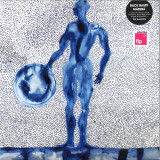
African Singer-songwriter Blick Bassy is back with a fifth album, again sung in the Baasa language of Cameroon. Madíbá brings together twelve songs in the form of fables, dedicated to the theme of water, in which his high and angelic voice dominates, carried by delicate guitar, synthesizer melodies, and sober brass arrangements. The cuts are diaphanous and nevertheless modernist songs, which testify to a contemporary and poetic Africanity at the crossroads of soul, folk, and electro.
Blick Bassy’s albums have a humanist and universal dimension. His fifth and new solo album, titled Madíbá, which means water in the Douala language of Cameroon, comes in the form of songs close to the fable, in which Bassy explores "a theme shared by all” of water, the source of life.
The fables of the album, all born in the imagination of Blick, explore in a more concrete way different themes related to water, its rarity, its necessity, its energy or its vital power. The twelve songs all bring together a series of figures, animals, or various characters, embodied in turn by Blick Bassy. "I have fun stepping into the shoes of a bird, a cat conversing with an elephant, a flower worrying about its declining beauty, a monkey looking for a spring or a storyteller with his grandchildren. In these texts, water can even take on a human appearance.”
Beyond the tale, the texts of the album also refer to our climate crisis, or to the problems of access to water, a way for the artist to approach serious subjects through a poetic form which avoids didactic or moralizing speeches.
Lime green (yellowish?) vinyl LP Finnish noise rock duo NYOS deliver a clairvoyant Celebration of the present, written at a time when that present was shimmering just like the feathers of the cover art courtesy of animal photographer Zac Herr. Combining the danceable grooves of Battles with Sonic Youth - infused noise bursts and the yearning electric melodies of And So I Watch You From Afar, Celebration is a defiantly joyful, loud, and festive affair. A promising cure for the drudgery of the times we live in. Recorded by Brooke in his own Tonehaven Recording Studio, Celebration is the latest testament to the undeniable synergy these musicians have built over the past seven years. With the material largely written before the advent of corona, Celebration is a reflection of life before lockdown, filled to the brim with infectious grooves and glaring melodies. "We tried for something upbeat this time to contrast the times," explains Tom Brooke about the recording process, which in turn did take place during pandemic life. "We always love it when people can move to our music, so a big focus for the record was to embrace the dance vibe and go for it." This collection of eight colourful, jarring tracks is rife with small nods to dance music throughout the world. Take a song like "Light" with its complex syncopated drum pattern that recalls the Amen Break so typical for drum and bass music, but listen closely and the song reveals an off-beat skank that flips over into experimental reggae territory. Similarly, a track like "Tucano" recalls the experimental IDM of Bristol-based producer Vessel, while "Gold Vulcan" offsets a gnarly gyrating guitar riff with Latin- American and oriental melodies. The attention to detail on Celebration is phenomenal. The album contains some of the band's most layered compositions to date, but it is also the first NYOS record to feature improvised live recordings, the aptly named "First Take" as well as the celestial "Cloudberry". These musical sketches show two musicians at the apex of their connectedness. Every time that one of them appears to be taking a somewhat questionable turn, you'll find yourself carefully and respectfully readjusting your own interpretation of the song's intention - and what NYOS are all about.
- A1: Bowery Electric - Things'll Never Be The Same
- A2: Asteroid #4 - Losing Touch With My Mind
- A3: Mogwai - Honey
- B1: Flowchart - Ode To Secret Hassle
- B2: Fuxa - Amen
- B3: Accelera Deck - I Believe It
- B4: Arab Strap - Revolution
- C1: Bardo Pond - Call The Doctor
- C2: Frontier - Hey Man
- C3: Low - Lord Can You Hear Me?
- D1: Amp - So Hot (Wash Away All Of My Tears) (Wash Away All Of My Tears)
- D2: Piano Magic - How Does It Feel?
- D3: Transient Waves - Billy Whizz
First repress since its original release in May 1998
Celebrating twenty-five years since its release as rgirl2 – the label’s first LP – Rocket Girl is reissuing its seminal compilation A Tribute to Spacemen 3 on double vinyl with spot varnish sleeve in May 2023.
Widely acclaimed at the time of its release (garnering rave reviews in the UK, US, Canadian and European music weeklies and monthlies), the collection sounds as fresh and inventive as it did three decades ago. Launched at a time when tribute albums were prevalent, A Tribute to Spacemen 3 stands apart from other covers albums in that it not only redecorates S3’s songs in a bold new palette of colours, but also acts as a time capsule documenting a very specific wave of 90s US and UK bands that shared many sensibilities – ‘post-rock’ might be the catch-all genre, but their music also encompassed psych, slowcore, analogue electronica, dream pop and space rock to varying degrees – and many of whom (Mogwai, Low, Arab Strap, Bardo Pond) have gone on to reap major critical and commercial success, and are still thriving today. In 1998 the LP was a gateway for fans of Spacemen 3 to discover these relatively unknown experimental artists operating on small independent labels either side of the Atlantic – today it is a celebration of the timeless innovation and longevity of that scene.
As author Richard Milward states in Rocket Girl 20, the 2019 book illuminating the history of the label: ‘In no way is the LP a collection of imitators simply regurgitating Spacemen 3’s songs sound-for-sound – rather, the compilation celebrates the purity and bravery of Pierce’s and Kember’s song writing (themselves never averse to a transformative cover version) while showcasing the originality and diversity of those bands they have inspired.’ It is the simultaneous simplicity and otherworldliness of S3’s songs that make them perfect fodder for reinterpretation, the band’s ‘three chords good, two chords better, one chord best’ mantra providing a solid, tantalising foundation for these bands to experiment with freely. Throbbing and humming with equal parts euphoria and melancholia, over the course of the album’s 69 minutes the tracks slide from slithering stoner psych (Asteroid #4’s ‘Losing Touch With My Mind’) to hymnal delicacy (Amp’s ‘So Hot (Wash Away All of My Tears)’ and Mogwai’s crisp, glockenspiel-chiming ‘Honey’) to zero-gravity lounge jazz (Transient Waves’ closer, ‘Billy Whizz’). There are radical reworkings: the oozing fuzztone lava of Bardo Pond’s ‘Call the Doctor’, and not least Arab Strap’s startling take on S3 live mainstay ‘Revolution’, replete with aggressive, crunching drum machine and the lyrics delivered down the telephone in Aidan Moffatt’s laconic Falkirk drawl – ‘a change, a solution, a wee… a wee revolution’ – before its explosive climax.
Altered Circuits dives deeper in the world of playful and versatile club music with roots in the early 90's! There's an obvious parallel between Ildec's DJ performances and his own music.
Part of a scene with a focus on extended, broad-minded sets, the Ibiza-based artist lets his yearning to unearth and play obscure gems flood into his production process. The "Ahora Si EP" is testament to this adventurous spirit as it tackles a wide array of tempos, styles and moods.
Opener "El Principio" and closer "Grt Plschr" display Ildec's fondness of hazy, recondite atmospherics. With its sustained ambient chord, delay-washed newsreader samples and manipulated themes, the former sounds like a fever dream radio bulletin.
On the latter, a broody motif meanders alongside loosely played drums, while a buried bass guitar occasionally reveals itself. "El Break Del Dia" furtherly explores some of these elements, but this time with the dance floor front of mind.
Languidly morphing bass sequences and staccato synth salvos build up anticipation. When a slowly emerging, ceaselessly arpeggiating organ lead finally materialises, the track explodes. Natural flow is partly traded for sturdier form on the remainder of the EP. "El Break De La Noche" lets an ever-modulating lead groove alongside rigid, dry drum beats.
Descending tom fills, truncated squeaks and a top layer LFO gone haywire complete this sparse yet exciting cut. "La Nueva Version" has a similarly efficient bassline as its bedrock. An interplay of zaps, risers, transposed percussion, and other dusty cartridge samples pulls it left and right while subtle disorienting hints of speech thicken the mix.
On "Modificacion", Ildec moulds his take on progressive and tech house into its toughest shape. A druggy, bleepy lead twirls in and out of the track, carried by the road-tested combo of a taut drum pattern and a piercing backbeat bass. Ominous chords and equally menacing vocals mark its aim: to create tension in the club. It is a standout on a diverse, daring EP we are delighted to present as the fifth release on our label.
A cult icon on the international film scene, Japanese actress Meiko Kaji, born in Tokyo, has been put into the spotlight internationally by Quentin Tarantino when he heavily based his Kill Bill film on the 1973 revenge genre film 'Lady Snowblood,' one of Kaji's most famous films. By the time she appeared in it, she had already made almost fifty feature films (she began her career in 1965) among which the cult 'Stray Cat Rock' and 'Female Prisoner Scorpion' film series and she was one of the most famous exploitation actresses in Japan doubling as a sex symbol. This gave the studios the idea of getting her to start a singing career and release music closely associated with the films she starred in often singing the theme songs. Thus she began releasing records at the dawn of the 70s, recording several 7" singles and five albums for Teichiku which have become sought-after and almost as cult as her films.
Drawing on her film roles, the music on these albums were an uber-cool mix of kayokyoku (Japanese Pop), traditional Enka Music, Acid Folk and Funky beats arranged by the best producers of the time in a cinematic way that could sound like Ennio Morricone or Jean-Claude Vannier. that explosive cocktail is featured in full blow on the first album from the Meiko Kaji reissue program, 'Hajiki Uta' released by Teichiku in 1973.
The album featured two film songs, namely 'Urami Bushi' used for the film series "Female Prisoner Scorpion" and 'Onna No Jumon' featured in the film 'Female Prisoner Scorpion - Jailhouse 41,' which have been composed by Shunsuke Kikuchi who also composed the score for these films. At first Kaji was unsure of her singing talents as told to Hashim Bharoocha in an interview but she quickly rose to the challenge: "I told Shunsuke Kikuchi that I couldn’t imagine myself singing the songs. He said I could ignore the melody that he wrote, and just sing it the way I wanted to. That really lifted the pressure off my shoulders, and I decided to sing the song as the character in the film. The director was also happy with that idea.”
The rest of the album follows the same pattern with atmospheric songs such as "Onna Hagure Uta" or "Onna Somuki Uta" displaying Meiko's sombre singing over a superb slow-burning groove, which precedes the funkier "Hitori Kaze" featuring a wah wah guitar, a breakbeat-like rhythm section and slick string arrangement, shaping the unique Meiko Kaji signature sound.
Wewantsounds is delighted to reissue "Hajiki Uta" and the rest of Meiko Kaji superb early 70s albums for the first time in fifty years in their glorious original Japanese artwork, with remastered audio, cementing further the actress' reputation as a true international pop culture icon.
As NuNorthern Soul eases into its second decade, the label welcomes back a familiar face: Benjamin J Smith, a multi-instrumentalist, songwriter, and pro-ducer whose emotive, colourful and atmospheric compositions are the very definition of ‘Balearic’.
Famously, it was Smith’s The Movedrill Projects album that kicked off the NuNorthern Soul story way back in 2012, and he’s periodically returned to the imprint on numerous occasions since. It’s fitting, then, that Smith is stepping up once more, with NuNorthern Soul found-er Phil Cooper selecting to showcase two overlooked gems from his bulging back catalogue.
Both tracks are taken from Smith’s digital-only album Mojave (Vintage Californian Dreams), a set of thor-oughly gorgeous, West Coast-inspired library music compositions smothered in sumptuous strings and in-formed by the artist’s love of jazz-funk, languid jazz-rock and the kind of luscious, sunset-ready soundscapes that defy neat categorization.
Opening proceedings, and sitting on side A of the vinyl release, is the breath-taking ‘Marina Del Rey’, where layered, reverb-laden harmonic vocalisations, twin-kling electric piano improvisations, lazy guitar licks, spacey synth flourishes and sultry strings slowly rise above a toasty bassline and gentle, Latin-tinged beats. Smith cannily adds layers of sound throughout while moving the musical story forwards, leading to a mem-orable, awe-inspiring conclusion.
In contrast, ‘Big Sur’ sees Smith take an imaginary road trip through the driest, dustiest parts of the Cali-fornian countryside. Psychedelic rock style organ mo-tifs, sustained Hammond B-3 chords and glistening West Coast rock guitar solos dance atop a rubbery bassline and intoxicated, loose-limbed drums, with Smith’s eyes-closed vocalisations – drenched in reverb and delay – adding extra layers of aural loveliness. Like ‘Marina Del Rey’, ‘Big Sur’ is a vivid, widescreen con-coction tailor-made for soundtracking films that have yet to be made.
Hania Rani announces "On Giacometti" a tender meditation on the life and art of Alberto Giacometti and family. "On Giacometti" is a collection of beautiful recordings inspired by the renowned artist and family and features some of Rani's most profoundly delicate compositions to date. Invited by film director Susanna Fanzun, to score her forthcoming documentary on the legendary artist Alberto Giacometti, Hania Rani took herself to the Swiss mountains to compose in blissful isolation. As Rani explains eloquently below the compositions are based on improvised melodies, simple harmonies and structures and inspired by the silence of the mountains as Rani returns to her main instrument, the piano. The results are beguilingly reminiscent of her beloved debut album Esja, but with subtle extra layers of synthesiser, and on two tracks cello from friend and long-running collaborator Dobrawa Czocher.
'On Giacometti' is presented as a limited edition LP with bespoke packaging featuring Les Naturals - Chocolat (Gmund) sustainable recycled paperboard made from 100 % recovered paper with Foil Artwork by Łukasz Pałczyński. Plus Double sided printed insert and download code inside.
Hania Rani "On Giacometti":
‘When I was asked to compose a soundtrack for a movie about the family of Giacometti I didn't think twice.
Alberto Giacometti, a Swiss artist, who worked mainly as painter and sculptor has been one of my favourite artists for a long time. His individual style, aesthetics and the character of his creative process is still fascinating to me on many levels, so being able to dive even deeper into his universe, getting to know not only him but also his family was an opportunity that I couldn't miss. Little did I know how far this "yes" will take me - not only mentally and on a creative level but also physically. Thanks to the director of the documentary - Susanna Fanzun and by a stroke of luck and a couple of extra questions I decided to move for a couple of months to the Swiss mountains, not far away from the place where Giacometti was born and where the place he called home was, although he didn't live there. Susanna showed me a place close to her hometown where I could rent a studio and work on the soundtrack but also for my other projects. It was the middle of a winter, the area was full of ice and snow, just like only it can happen still in the mountains. The residency house was located in a valley surrounded by high mountains and the sun in the winter season was not coming up for too long during the day. I remember she told me about it and added "that not everyone is feeling well there, but I hope you will". I did.
Being almost separated from reality, the city and its entertainments, people rushing and everything that usually takes my attention I could fully concentrate on the music and soundtrack, spending most of the day with my own thoughts and having enough space to experiment and be free in a creative process. This soundtrack would probably be a very different thing if composed in a place that I am usually living in. I took this a chance to explore something new about myself as a composer and human being, taking the opposite direction that I would usually choose for myself.
The album "On Giacometti" includes the excerpts from the soundtrack, the most representative tracks and those which became a strong voice itself. Based a lot on improvised melodies, simple harmonies, structures and silence it reminds me of my debut album "Esja" which was partly composed and recorded in another chilly place - Iceland. All these components, both mental and physical, guided me back to my main instrument - piano, which I tried to redefine again with a language of the space that I was working in. The space is usually the key element that gives me the answer about the arrangement or character of the project. Space seems to be the first to appear and music is the invisible power which is changing its angels.’ Living surrounded by mountains makes you change the perspective and understanding of scale as Alberto Giacometti once famously wrote in a letter: It gives an impression that things that are actually far away, like mountains, are close and the other ones that are not so far away, like people, seem small, watched from a distance. You feel like touching the mountain top with your finger could be as easy as touching the tip of your nose. The snow additionally protects the whole area from the noise, each sound lands softly on the ground accompanied by echoes of immeasurable space. Each scratch or whisper is becoming an autonomic entity, opening the gate to the world of ghosts and lost spirits. It's easy to think that time stands still there, while nothing is moving and changing at the first sight. But the ubiquitous ice and snow reveal the passage of time, transforming frozen paysage into the wild stream of water - each day, hour and second. Melting and vanishing, clearing the space from white powder and noise consuming surface. Invisible process for a one night traveller, becomes painfully real for longer time settlers. Time flows with each new wave of sound coming through the river, reminding us that we are part of the cycle, which endlessly repeats itself.
Drop a needle on Psyché's debut album and you'll see visions, or rather Mediterranean visions, be they of waves of heat shimmering above dunes of sand, or of women dancing around a bonfire on a rocky plain, or of bushy cliffs overlooking emerald-green and turquoise sea. The name Psyché is of course ancient Greek for 'soul' or 'mind', signifying the band's love of psychedelic funk, but also the wide range of Mediterranean influences – from Southern Europe to the Balkan Peninsula, and from Anatolia to the Maghreb – that provide an endless source of inspiration for their hypnotic sound and minimalist style.
Psyché members Marcello Giannini (Guru, Nu Genea, Slivovitz), Andrea De Fazio (Parbleu, Nu Genea, Funkin Machine) and Paolo Petrella (Nu Genea) have been active in the Naples music scene for almost two decades, most notably during the first wave of the new Neapolitan Power movement (Slivovitz, Revenaz Quartet). Over the years they have often crossed paths and collaborated on side projects in various genres (math-rock duo Arduo and, more recently, synth-pop duo Fratelli Malibu), before working together as the rhythm section of Nu Genea's live band. Following their first tour with Nu Genea in 2018, they started Psyché with the intent of exploring more minimalist styles and making music with just a few elements.
A unique combination of psychedelia, groove and improvisation, the music of Psyché goes back to the roots of our future; it evokes visions of a mythical past, blending centuries-old music traditions and mixing them with modern genres. Like a warm Mediterranean breeze, it travels across lands, seas and eras, distilling essential rhythms and cosmic pulsations.
The album's opener "Kuma" (titled after the first ancient Greek colony on the Italian mainland, now an archeological site near Naples) is like a vibrant, magical wave. With its deliberately simple harmony and sharp guitar riffs, it travels across the Mediterranean from Italy to North Africa, first lapping gently on Greek and Turkish shores – with some compositional elements reminiscent of Italian pop legend Lucio Battisti – and then speeding up and landing on the driving, syncopated rhythms of afrobeat. While listening to it your eyes fill with images of small white houses shining in the sun, of fig trees heavy with fruit, of spice bazaars and colourful medinas, and you can almost feel the desert wind blowing in your hair.
The journey continues with two examples of Psyché's bold and elegant approach to contemporary afrobeat and cumbia fusion: "Cumbia Mahàre" and "Amma". The former combines minimal synths and exhilarating rhythmic patterns of drums, percussion, guitar and bass, drawing us into the movements of an imaginary ritual dance (the term mahàre was used in Southern Italian dialects to indicate witches). Next is the cinematic and mysterious ambiance of "Angizia" (a snake goddess worshipped by the Marsi in ancient Italy), another fascinating mixture of different sonic traditions and cultures where hip-hop/funk drums are blended with Maghreb influences, Balkan echoes, and hypnotic, Theremin-like synths that have sort of a sci-fi movie quality to them.
The title track "Psyché", with its uptempo afro-rhythms, ethereal vocalizations and refined percussion, is almost a manifesto of the band's style and confirms the freshness of their minimalism, which is not afraid of taking in the sun of lands confined between the sea and the desert. The following "Manea" (named after the Roman-Etruscan goddess of the dead) is an afro-funk number with smooth and introspective dreamy jazz touches, and with an arrangement dominated by a guitar that, dripping notes like drops of water, creates a delicate, cinematic sound. Next, we come to "Hekate" (the Greek goddess of magic, witchcraft and crossroads), a track that fuses psychedelia, spacious Latin guitars and a fast, tight groove. The album comes to a close with the exquisite melodic ballad "Kelebek", which seamlessly combines hip-hop drums and dreamy guitars, and whose warm, flowing sonorities and evocative atmospheres conjure the image of a butterfly (which is what kelebek means, in Turkish) floating over the Mediterranean and, from there, the world.
Birds chirp through a tape-hiss breeze atop a bed of airy pads, and a cleareyed, forlorn guitar springs forth: this is the beginning of the debut album from Sans Merit, a new rock project from Griffin James, otherwise known as Francis Inferno Orchestra.
For over a decade, the Melbourne-raised—and now L.A.-based—producer has been indulging his indie and alt interests, and this fuzzed-out bedroom janglepop and shoegaze LP, Early Grave, is his first extensive deliverance.
The album represents a gestalt of sorts: years of approaching different genres and songwriting styles, and producing not “in the box,” with soft synths and
samples, but with live instruments (and sometimes a band), has led to this focused and succinct thirteen-track musical journey.
In pursuit of a pure and low-key aesthetic, James recorded demos on phones and chose to rely heavily on budget instruments, clapped-out synths, and
crappy amps, and would often cut tapes live in bedrooms, lay down vocal takes in closets and put microphones to broken speakers, all in part of the quest of using limited resources to create a truthful body of work. The finishing touch is a thick coating of nostalgia ooze; soundbites from internet clips flitter throughout the record, and goofy sound effects flicker above like dying incandescent bulbs.
A dream-pop album for our times: its lyrics are off-kilter romantic musings, sarcastic self-loathing mumbles, reflections on the unrealness of real life.
Old style, Tip-On Jacket, and 8pp heavy insert featuring a treasure trove of newly discovered photos, and a 6,000 word essay by Kris Needs.
In 1962, Karen summoned Richard Tucker to join her in Colorado, extolling the healthier lifestyle, and plentiful gigs at Boulder folk club The Attic. Upon his arrival, the pair solidified their personal and professional relationship, riding horses in the mountains, and performing as a duo at parties and venues throughout Denver and Boulder. Stories of the spell they conjured - and rumours of tapes! - have circulated among friends and musicians who witnessed them, but until now, no recorded evidence had turned up.
Shuckin' Sugar is the glorious result of three reel to reel tapes that miraculously found their way to us in November, 2018; which featured two complete shows from The Attic in January '63, and a benefit concert for The Congress of Racial Equality (CORE) recorded the following February. Their gigs would often include brief solo sets from Karen and Richard, in addition to the duets, and all seven solo songs of Karen's found on the three reels are included here, as well as five duets, sequenced as close to how it all went down as humanly possible. To describe the record would take a poet, but all I can say is that unveiling a missing chapter in the Karen Dalton story - with six songs we've never heard her sing before - is cause for celebration in Delmore's world.
"From her opening, jaw-dropping lift-off with early blues standard "Trouble In Mind," the unique
otherworld Karen conjured springs into vivid life. Playing to audiences inevitably bound to the era's formalities and traditions, Karen instinctively pushed the envelope, straying into uncharted territory beyond the established borders. She must have bewildered many who came to see her in those winsome Peter, Paul and Mary times." From the liner notes by Kris Needs
180 Gram Vinyl Following the success of the 2021 reissue of Ambient Warrior’s cult classic Dub Journey's (1995), Isle of Jura is pleased to present their unreleased second album, II. Born from the same oceanside fusion of instrumental dub, reggae, bossa nova and tango music that made Dub Journey's so distinctive and memorable, II is an equally sublime collection of eleven unheard tracks from the brilliant minds of Ronnie Lion and Andrea Terrano.
Evoking the delights of white sands, palm trees and sunsets, all set against clear waters and endless blue skies, Dub Journey’s and II document the golden moment when Ambient Warrior came together during the mid-90s to create some of the most Balearic Dub ever made. “Music is the greatest traveler, isn’t it?” says Ronnie. “It gets to places the actual artists can’t even get to really.”
The son of an orphaned Jamaican jazz trumpet player and professional boxer who enlisted in the military after stowing away on a boat to London, Ronnie grew up between Germany, Singapore and the UK before becoming a working musician in his mid-teens. A bass player by trade, he honed his skills playing in a series of soul, jazz-funk, blues, rock and reggae bands that performed throughout the UK.
By the time Ambient Warrior released Dub Journey’s, Ronnie and his business partner Ras Joseph were running the Lion Inc. recording studio and record label in Brixton, London. Having set up distribution arrangements with Roots Records (UK) and Semaphore (DEU/NL), they recorded and released a series of singles, compilations and solo albums from a who’s who of roots reggae artists, including Twinkle Brothers, Delroy Washington, Michael Prophet, Alton Ellis, Little Roy, and Ronnie’s own band The Amharic. “Lion was a regular port of call for visiting Jamaican artists,” reflects Ronnie. “When you were in London, it was on the route.”
An accomplished guitarist, producer and recording engineer from Trieste, Italy, Andrea grew up listening to Russian folk, Klezmer and the Italian harmony tradition in a Sicilian-Ukrainian family. After completing compulsory Italian military service, he moved to London to continue studying music. One night, he turned up at Lion Inc. and approached them about running audio engineering classes from the studio.
In Andrea, Ronnie found a collaborator who shared his desire to create borderless music that reflected the diversity of their backgrounds. “I wanted to do something that had no boundaries,” Ronnie explains. “If you’re working on a roots album, it has to sound a certain way, but with Ambient, especially in the nineties, it was just a license to let off. You could do whatever you wanted to do.” “It was a melting pot of influences like London itself,” adds Andrea.
Although they wrote most of II at the same time as they were recording Dub Journey’s, it took them several years to finish off the album. “Things never got done quickly,” Ronnie remembers. By the time it was complete, Roots Records had gone out of business, leaving Lion Inc. without UK distribution. Not long after, their Brixton studio flooded, bringing the label to a close.
These days, Andrea continues to work as a session guitarist, recording engineer and producer in London. Over the last two decades, he has collaborated regularly with Basement Jaxx and released several solo albums. Ronnie, on the other hand, lives on a boat equipped with an onboard studio, where he has recorded a series of oceanic dub albums off the British coast. Twenty-eight years after the release of Dub Journey’s, he recently started working on demos for a third Ambient Warrior album he hopes to record with Andrea in the not-so-distant future.
Artwork By Bradley Pinkerton.
- A1: Damian Lazarus X Jem Cooke - Into The Sun (Major League Djz Remix)
- A2: Jamie Jones - Paradise 2011 (Art Department Remix)
- B1: Pier Bucci - Hey Consuelo (Dennis Cruz Remix)
- B2: Audiojack X Jem Cooke - Feels Good (Michael Mayer Remix)
- C1: Made By Pete X Zoe Kypri - Horizons (Black Coffee Remix)
- C2: Adam Ten & Yamagucci - The K Dance
- D1: Maceo Plex - Together (2011 Mix)
- D2: Guti & Dubshape - Every Cow Has A Bird (Tibi Dabo Remix)
Damian Lazarus celebrates 20 Years of his world-renowned Crosstown Rebels imprint with a special album project of unreleased cuts and fresh remixes, featuring material from Black Coffee, Maceo Plex, Art Department, Dennis Cruz and many more.
Undeniably one of the most influential record labels within underground dance music, releasing material from Laurent Garnier, Krust and Mathew Jonson to Rósìn Murphy, Deniz Kurtel, Francesca Lombardo and Jennifer Cardini while playing a pivotal part in the careers of artists like Maceo Plex, Jamie Jones, Art Department and Seth Troxler, Crosstown Rebels stands today as a hub and platform for flourishing projects across the electronic spectrum, including via sub-label Rebellion and across a long list of showcases across the globe. More than just your everyday label, the Crosstown Rebels legacy has grown alongside its founder in equal measure, with head honcho Damian Lazarus continually showcasing, championing and spotlighting artists from across the globe who share his radiant, experimental vision for house music and beyond. Ringing in a major milestone in style, 2023 will see the biggest twelve months to date as Lazarus and Crosstown mark the 20th Anniversary of the label with a series of projects set to be unveiled in the lead-up to summer, with ‘CR20 The Album’ set for release on 12th May 2023.
“20 years ago, I dreamed a dream of creating a family of like-minded, crazy individuals from all corners of the planet - releasing music to the world and making people dance. That dream was Crosstown Rebels, and this year we are 20. Over these years, I have forged beautiful friendships, discovered very talented artists and tried my best to help, advise and support some of the most colourful characters in dance music. Crosstown Rebels is more than a record label, it is family.
So 2023 will mark the label’s 20th Anniversary. This is an opportunity for the Crosstown Rebels family, a global community of artists, DJs and creatives, and the label’s myriad of followers to celebrate this momentous milestone. There will be parties and events around the world. A killer compilation of exclusives and special remixes, a beautiful coffee table book, a short film, and a special launch event are planned to bring together the sights and sounds of the label’s unique and influential history. There’s lots to share, announce and reminisce. 20 years young.” - Damian Lazarus.
Comprised of six stellar, high-profile remixes of releases from the label’s catalogue, alongside two previously unreleased original gems, the eight-track package is a rich and exemplary showcase of the far-reaching corners of the Crosstown Rebels sound and also its globally connected family of artists and close friends.
Opening the package, Lazarus’ own 2020 collaboration ‘Into The Sun’ with regular Crosstown vocalist Jem Cooke is given a cosmic rework by Johannesburg’s Major League DJz, while Jamie Jones’ slick ‘Paradise 2011’ is stripped back and given a new lease of life by the hypnotic and heady sounds of Art Department. Opening the B-Side, Dennis Cruz brings his percussive Latin-infused signature sound palette to Chilean musician and producer Pier Bucci’s ‘Hay Consuelo’, before Audiojack’s ‘Feel Good’, another standout collaboration alongside Cooke, is taken into synth-led territories as Michael Mayer reaches for an evolving bed of captivating tones.
The second half of the project brings more excellently remixed material, both new and old, with GRAMMY-winning DJ/producer Black Coffee turning his hand to the label’s first release of 2023 in Made By Pete and Zoe Kypri’s emotive ‘Horizon Red’, unveiling reworked melodies and sparkling keys as he delivers an interpretation of a track which has featured as a staple in his sets. Next, the project welcomes Adam Ten & Yamagucci’s playful yet off-kilter and wonky ‘The K Dance’ which unveils itself as a production perfect for those late night hours and early afters, before Ellum boss Maceo Plex’s ‘Together (2011 Mix)’ brings another lost production to the mix with a driving and zipping ride through sugary synths and soaring leads. To close, Tibi Dabo turns his attention to Guti & Dubshape’s absorbing ‘Every Cow Has A Bird’, delivering a nimble minimal-led trip through lush pads and crisp percussion to round things out in style.
Alongside the album, the 20 Year celebrations will also welcome a 192-page hardback book, ’20 Years Of Magic, Madness and Music’, with words from renowned journalist and key underground music player Joe Muggs, and a feature-length documentary directed by acclaimed director David Terranova.
Crosstown has become known globally for throwing some of the world’s best parties, from the wondrous cultural journey of Day Zero Tulum to longstanding Music Week marathon Get Lost Miami. This ethos of creating magical dancefloor moments spills into the label’s 20 year celebration with its worldwide Get Lost tour, launched with Get Lost Miami, and followed by Bali, Tokyo, Ibiza, Dubai, Istanbul, Rome, Paris, London, Berlin and more, plus a special to-be-announced London showcase.
As we get ready to say goodbye to the Telomere Plastic series, we are excited to present Telomere 020.1, aka the first part out of 5.
Each release will have four different artists, making it a compilation of twenty different artists who will deliver unique, juicy and eclectic frequencies that will keep your telomeres bopping for the rest of time!
This first VA, features producers, ESB, Synaptic Voyager, Vinaya and Vonsuck.
A1, Fancy Organ from Vinaya, is a sexy deep and house cut that is guaranteed to bring smiles all around the dance floor. Arpeggios and groovy bass lines galore. Prepare your piano hands because you will find yourself playing that sweet air organ on this one!
A2, Self Destruct Sequence from Synaptic Voyager (aka Telomere 014’s Illuminators), is a very emotional cut. Originally released digitally on Frame Of Mind, we were overjoyed to be given the green light to put this beauty on wax. Deep pads, tommy drums, hints of IDM and techno, and soul striking arpeggios pave the way for a special sonic journey. Close your eyes and melt away with this one!
B1, Keio Acid from ESB. We are always delighted to share more ESB with you. Elan’s love for analog and tape give off a raw and authentic energy that is hard to come by. This deep, jazzy and loopy cut will keep you on your toes from start to finish. We can only dream of being on the dance floor as this one plays out!
B2, Unemati from Vonsuck, is a deep and dubby cut that beautifully blends the three genres dub techno, house and techno. Dark rooms and dark skies are recommend for this one here, even though we could see these frequencies accompanied by a pink and red sunrise bringing waves of energy and nostalgia to your soul. Its a real treat to have Vonsuck aka Galaktlan on the Telomere series!
Very limited black copies as always with a few colored copies available via the Wex bandcamp, be quick!