
10
нет на складе
Закажите сейчас, и мы закажем товар для вас у нашего поставщика.
25,17 €
Последний логин: 11 мес. назад
Закажите сейчас, и мы закажем товар для вас у нашего поставщика.

Space-surf-psych-rock quartet Japanese Television’s album ‘Automata Exotica’ has been remixed by invited friends and peers; including Goat Fool from GOAT, Factory Floor’s Gabe Gurnsey, and Edgar Breau from cult band Simply Saucer. Informed by UFO encounters, ritualism, robots, Northern Soul, and nuclear weapons, ‘Automata Exotica’ was released in March 2024 and was described as “Heavy but also joyful” by The Quietus, “A fuzzy blast of space-surf energy”in Shindig and “A remarkable and unique proposition” by Louder Than War.
Rather than having been transformed out of all recognition, “reimagined” is a more apt term to describe this new version of ‘Automata Exotica’. With the album’s eight tracks presented via considered, alternative mixes with pertinent sonic application, it hangs together incredibly coherently - albeit as a wild and feverish psychedelic experience.
JTV toured with GOAT while writing ‘Automata Exotica’, with the fat fuzz tones and extended middle percussion section of ‘Typhoon Reggae Police’ heavily influenced by their time watching and learning from side stage. Starting life as an uneasy mixture of scratchy 60s garage rock and 70s Afghan psych folk, Goat Fool from GOAT ripped the song apart and stitched it back together. Recognisable but weird and uncanny, it’s a stripped down, oppressive, shimmering voodoo nightmare.
“We used to go and see Gabe’s weird, excellent band Factory Floor playing dark little club nights in Shoreditch years ago and marvel at the racket” says JTV. “Gabe’s been a long time collaborator of ours, in fact he’s the only person to not only do more than one remix for us, but has featured on every remix release we’ve done. Our most ecstatic, cathartic song, ‘Tabadaboum’ was the perfect match for Gabe - the motorik krautrock bassline fits right in with the pneumatic grind of his vintage drum machine loops and synth flurries”.
It's hard to measure the impact cult 1970s Canadian space rock proto punk psych band Simply Saucer had on the formation of Japanese Television. The band reached out to Edgar Breau - the band’s founding member and guitarist - who guitarist Tim says was “really generous with his time, and really kind to an overly keen and slightly awkward Simply Saucer mega fan. It's a real honor to have him playing guitar on one of our records”. His cosmic reimagining of ‘Golden Birds’ layers on the delay, reverb and screaming guitars, launching the track into outer space.
‘Automata Exotica (Remixed)' is set for release on 6th June 2025 on limited edition LP and digital formats. Japanese Television tour in Europe through March and April. The album is released by cult underground label Tip Top Recordings (Jim Wallis, Mandrake Handshake, Pearl & The Oysters), run by Ben Rimmer and David Warn.
он должен быть опубликован на 13.06.2025

Crafted entirely on an analog monophonic synthesizer with no overdubs, Pièces Monophoniques is a tribute to simplicity in an era of limitless digital possibilities. Since his debut album, Music For Prophet (Les Disques du Festival Permanent, 2017), Majorca-born composer Marc Melià, now a long-time resident of Brussels, has been redefining the contours of electronic music through a minimalist, reductionist approach. Much like a solitary hike through the vastness of mountains, where one carries only the essentials, Melià’s work invites listeners on a journey stripped of excess, focusing instead on the purity of sound and intention.
While some have dismissed monophonic music as overly simplistic, others have embraced its distinct charm. Historical records, such as those by Johannes Quasten, reveal that early Church leaders were drawn to monophonic music because it resonated with the era's cosmological beliefs, highlighting the harmony and unity of all creation. In an age of digital abundance, Marc Melià deliberately embraces constraint, crafting an album that thrives within a limited palette of choices. Yet, from these self-imposed boundaries emerges a stunning universe, brimming with rich textures and elegant harmonies. For his debut album, Melià worked exclusively with a Sequential Prophet. With Pièces Monophoniques, his third LP, he returns armed solely with an analog monophonic synthesizer and handcrafted MIDI sequences etched directly onto a single stereo track. These recordings seek to uncover beauty within the boundaries of limitations and simplicity, rejecting any embellishments that are not essential. Melià presents the bare skeleton of music, highlighting the power of absence and silence as creative forces. Like the hidden mass of an iceberg, what is not heard becomes as significant as what is heard.
The album navigates the boundary where the quest for an uninhibited emotional response intersects with the mechanical sounds generated by synthesizer circuitry. Despite being a collection of beatless tracks, a pulse occasionally surfaces, like in the closing piece, "224 Steps. A sharp sequence blended with multiple delays and reverbs creates the vaporous celestial specter of multiple voices in "Illusions of Polyphony", while "Échoes et Fantasies" conjures the illusion of dual harmony. The expansive reverbs and silences between the euphoric synth phrases in "Overture" transport us to an imaginary magestic landscape shaped out of an electric field. "Resonances," a one-note drone-like sequence, embodies the album's aims as a series of resonances created with the synth filter emerge from the fundamental note.
"Pièces Monophoniques," aims to contribute to a tradition that dates back to the dawn of humanity. After all, there is no denying that the earliest music crafted by humanity was monophonic, from the soothing lullabies sung to newborns to Gregorian chants, traditional labor songs, and the repertoire of solo compositions by countless composers.
он должен быть опубликован на 13.06.2025

Given Massive Attack's background, it was almost inevitable that they'd release a dub overhaul of one of their albums at one point. That time came in 1995, when British sound system legend Mad Professor - responsible for some of the greatest UK-made dub records of all time - put his distinctive twist on Protection. 21 years on, the set still sounds sublime: a radical translation that frequently bares only a passing resemblance to the Bristol band's original. It's packed with highlights, from the spaced-out, dub-house rework of "Spying Glass" ("I Spy"), to the ricocheting percussion hits and twinkling pianos of "Weather Storm (Cool Monsoon)", and creepy, delay-laden string surges of "Eternal Feedback (Sly)".
Закажите сейчас, и мы закажем товар для вас у нашего поставщика.
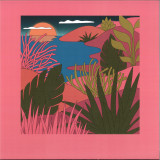
Coyote and Peaking Lights form a perfect pairing on this latest drop of bliss from Is It Balearic? They are artists who are drenched in dub influences and that comes to the fore on this direct collaboration which marries swirling dub with dreamy vocals and ghostly acid arpeggios to bring to mind a serene sunset after a long, hot and lazy day. 'Love Letters' is pure horizontal bliss, 'So Far Away' gets even slower and will drown you in synth succulence and Coyote's dub mix is laden with soothing delays and warm bass that transports you to an exotic world of weed-laced wonderment.
Закажите сейчас, и мы закажем товар для вас у нашего поставщика.

After a three year hiatus, Mutual Response returns for its long awaited second release, by talented artist and close friend of the label, Dockett Eddy.
Moving through fresh yet familiar combinations of drum patterns and melodies, his first EP displays the beginnings of a unique, honed style.
Calling on a varied palette of reference from the last 30 years of electronic music, the atmosphere of the release is established somewhere between the skipping, dream-like rhythms of ’00:04’ and the rough, driving drums of ‘Delayed Response’. The gritty awkwardness of the title track, Monofly, builds to an unexpected, ethereal moment, in what is the worthy climax of all four tracks.
The record sets an ominous tone, consolidating itself as a recognisable contribution to the label’s evolving output, but at the same time demonstrating a sound which is entirely the producers own.
Закажите сейчас, и мы закажем товар для вас у нашего поставщика.
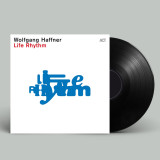
»Ich denke immer wieder aufs Neue darüber nach, wie ich mich als Schlagzeug-spielender Bandleader so positionieren kann, dass das Instrument eine tragende Funktion einnimmt, dies aber auf eine musikalische Weise geschieht und auf keinen Fall als Zurschaustellung von Virtuosität«, sagt Wolfgang Haffner. Diese Haltung zieht sich als roter Faden durch seine gesamte Karriere - und auch durch »Life Rhythm«, sein zehntes Album auf ACT.
Und obwohl Haffners Musik gängigen Vorstellungen virtuoser Schlagzeug-Leader ganz bewusst widerspricht, steht das Instrument diesmal besonders im Fokus. Ausgangspunkt dafür war Wolfgang Haffners allererstes Solokonzert im Jahr 2022 auf Schloss Elmau. Er erinnert sich: »Das war eine Wahnsinns-Herausforderung bei der ich auch vor der Entscheidung stand: Spiele ich jetzt eine Stunde Schlagzeugsolo? Natürlich nicht! Also habe ich habe eine Menge melodisch klingender Perkussionsinstrumente eingebaut, Passagen live geloopt, mit Echos und Delays gearbeitet – im Grunde wie im Studio, nur eben auf der Bühne.« All dies brachte Haffner dazu, sich noch einmal auf ganz intensive Art mit dem Thema mit dem Instrument zu beschäftigen, welches ihn sein Leben lang begleitet. Und so haben alle Stücke auf »Life Rhythm« diesmal ihren Ursprung, nicht wie sonst bei Haffner, am Piano, sondern am Schlagzeug.
Das Ergebnis dieses Prozesses kann man gleich zum Auftakt von »Life Rhythm« auf dem Titeltrack erleben: Das Stück basiert auf einem hypnotischen Groove, bei dem nicht die Becken, wie sonst im Jazz üblich, die Time angeben, sondern vor allem die Trommeln. Das dieser Groove direkt Phil Collins und besonders an dessen Stück »Take Me Home« erinnert, ist kein Zufall: Collins' Art, Drum-Parts zu elementaren Teilen des Songwritings zu machen, ist bis heute eine von Haffners größten Inspirationen. Und auch jedes weitere der elf sehr kompakten, Song-haften Stücke auf »Life Rhythm« öffnet eine eigene Welt des musikalischen Schlagzeugspiels: Mal mal trocken-reduziert mit Besen wie auf »Balance«, poppig bei »Joy of Life«, mit filigranen Becken-Grooves, dezenter Elektronik und Percussion auf »Eternity« oder minimalis-tisch bis kurz vor der Stille in »Silence and Sound«.
Das aus all diesen Stilistiken ein so stimmiges Ganzes ent-steht liegt daran, das Wolfgang Haffner diese im Laufe seiner Karriere bis in die Tiefe durchdrungen hat - an der Seite von stilbildenden Charakteren wie Al Jarreau, Chaka Khan, Pat Metheny, Jan Garbarek, Esbjörn Svensson, Nils Petter Molvaer, Albert Mangelsdorff, Ricardo Villalobos und vielen, vielen mehr. All diese Kollaborationen haben Wolfgang Haffners Voka-bular am Instrument und auch als Komponist geprägt und die da-mit verbundenen, unterschiedlichsten Stile sind gleichermaßen Teil seiner musikalischen Persönlichkeit.
Vielseitigkeit und höchste Musikalität sind auch die Eigen-schaften, die Wolfgang Haffner und seine Mitmusiker auf »Life Rhythm« verbinden. Die Basis bildet ein bestens einges-pieltes Trio zusammen mit Keyboarder Simon Oslender, selbst auch Drummer und Bandleader, und Thomas Stieger, einem der gefragtesten deutschen Bassisten in Pop wie Jazz. Dazu kommen Trompeter Sebastian Studnitzky, Mitstreiter Haffners seit seinem ACT-Debüt »Shapes« und der Finne Arto Mikälä, eine echte Entdeckung in Sachen Klangvielfalt an der Gitarre. Diese Band herausragender Allrounder erweitert Haffner um eine Reihe musikalischer Charaktere, die der Musik ihre ganz eigene Farbe verleihen: Nils Landgren, Freund und Weggefährte seit mehr als 20 Jahren, Saxofon-Ikone Bill Evans, Sting-Gitarrist Dominic Miller, Balkan-Beat-Star Shantel, Bass-Feingeist Nicolas Fiszman, Oud-Virtuose Thomas Konstantinou und Bruno Müller, einer der besten deutschen Jazzgitarristen.
»Life Rhythm«, sagt Wolfgang Haffner, »ist für mich eine Fortsetzung, keine Wiederholung«. Die Musik trägt mit ihrer Wärme, Kraft und Klarheit die charakteristische Handschrift, die Haffner mit seinen Alben und auf tausenden von Konzerten in mehr als 100 Ländern zum wohl populärsten Schlagzeug-spielenden Leader Europas gemacht hat. Und gleichzeitig ist es eine Evolution seiner Musik. Gut möglich, dass Haffners Erfolg genau darin begründet ist, dass seine Musik immer etwas Ver-trautes und etwas Neues beinhaltet und dass Haffner sein Publikum so immer »mitnimmt« im Fluss seiner Ideen - und in einem gemeinsamen »Lebensrhythmus«
он должен быть опубликован на 30.05.2025

Brand new Manchester imprint, 160 Street Recordings is excited to announce its first vinyl release, Evolutions EP, by the dynamic production duo of Response and Buda. With a reputation for carving out a distinctive uncompromising sound, the pair return with a gritty, dark collection of tracks that channel the deep, raw energy of early 90s Jungle and Jungle Techno.
Drawing influences from the breakbeat-driven sub-bass and atmospheric elements of that era, the Evolutions EP fuses heavy basslines, classic breaks, and dark, rave-inspired energy.
A1. Evolutions
The EP opens with the title track, ‘Evolutions’—a driving, atmospheric tune full of breakbeat intensity and underpinned by weighty sub bass. Kicking off with a memorable rave stab melody, the track builds with powerful percussion and a haunting, evolving soundscape that moves between light and dark.
A2. Fintons Dub
“Break, show ‘em something, but not too much….” ‘Fintons Dub’ brings a laid-back dubbed out groove, with a selection of classic breaks and a deep sub-bass foundation. An atmospheric pad and cinematic Kung Fu movie sample add depth to this cut, the breaks building gradually with delays as the track rolls out..
B1. Fintons Dub (Double 0 Remix)
No introduction is needed for Double 0, co-founder of legendary London club night Rupture and one of the pioneering figures of the original Hardcore Jungle Techno sound. His remix of ‘Fintons Dub’ takes the track back to his Doncaster warehouse roots, unleashing thunderous bass and breakbeat energy, a twisted mentasm and techno infused stabs. A true dancefloor weapon that embodies the true spirit of Jungle Techno.
B2. Acid Vein
Rounding off the e.p. is ‘Acid Vein’ a 303 led breakbeat bomb that infuses rolling breaks with a pounding sub bass and haunting jazz samples. Slower in tempo than the previous tracks and more reminiscent of the more formative years of rave, Acid Vein will also appeal to the wider breakbeat community.
Закажите сейчас, и мы закажем товар для вас у нашего поставщика.

Welcome to Forms World.
Our fi rst outing takes shape as a 4-tracker from ADMNTi, delving deeper into the sounds that have shaped the Londoners aural palette.
'Second Hand Sushi' kicks things off to a rowdy start - a real slab of energy that consists of paces drum patterns, twisting synths, and gritty, rattling basslines.
This one's a no-frills dancefl oor destroyer. The steppy drums of 'Lost Fruits' pull us further in, paired with shifting subs and laced with soundbites that echo the era of tape packs and pirate radio.
As we fl ip to the B-side, ‘Diptych’ delivers a still pacey yet more soothing vibe, blending lush orchestral strings with warped vocal chops, all while keeping the head-bopping grooves intact. Rounding things off , a dub-tinged stepper which comes in the form of 'Shrublands'. Eerie chords evolve throughout the track, accompanied by melancholic flutes that bode well with the heavily delayed sax and wobbing basslines. Dialogue from London graff royalty weave in and out, as well as a certain Brooklyn king.
Закажите сейчас, и мы закажем товар для вас у нашего поставщика.

Team TD take a break from re-scoring Colin McCrae Rally to pay our own oddball homage to some of our DJ deities in the form of Talking Drums Volume 8.
Keeping things diverse-yet-disco, this little mover grooves through Muzic Box pump, Lofty symphonics and a Ku-curveball with a smile on its face and a pep in its step.
The A-side erupts in a flash of sexy Euro-NRG, twisted and lifted to give any sweatbox a massive Hardy-on. Sequencers throb, swell and burst, horns wail and not one, but two, killer basslines blast the floor with erogenous urgency. Chuck in a coquettish vocal, delay madness and a fist pumping breakdown and you've got pure peak-time play folks.
The B1 belongs to the sumptuous strings, loose funk and live disco strut of 'Too Hot'. Low slung, low tempo but plenty punchy, this classy cut builds and builds through Merc-y repetition before blooming a fully fledged groover. Taut funk breaks sit beneath a floor-filling vocal and twinkling Rhodes, the wah guitar works overtime, and it all adds up to take the dance floor temperature sky high. Enjoy on a hi-fi sound system with plenty of spiked punch.
The curtain call comes via the alfresco flamenco-frenzy of Ronseal-approved 'Maximum Balearic Dancer', which does exactly what it says on the tin. The TD troupe takes a tiny snippet of Swiss fusion and fleshes it out into the fully fledged floor-filler it always deserved to be. Blessed with a buoyant bassline and balmy mood, this beauty sways along through some weird but wonderful synth riffs, holding you close for that soul-soaring piano solo.
Sometimes you gotta wake up on a beach naked.
Limited Press - Numbered Insert - Drum Fun Guaranteed. .
Закажите сейчас, и мы закажем товар для вас у нашего поставщика.

Закажите сейчас, и мы закажем товар для вас у нашего поставщика.

Danny Ward’s 30-year career has been far from predictable. While best known for the musical eclecticism of his Dubble D project, the dance floor-focused nous of his work as Moodymanc and as a member of the groundbreaking 20:20 Soundsystem, Ward’s bulging CV also includes stints drumming for artists as diverse as Fila Brazillia, Rae & Christian, and The Pharcyde, to Jazz luminaries Mat Halsall and Nat Birchall, alongside countless collaborations (Flora Purim and Nightmares on Wax to name but a couple) and numerous evenings spent adding live percussion to DJ sets at iconic Leeds club night Back To Basics.
Now the long-serving Manchester musician and producer has a new project to share via NuNorthern Soul: Balaphonic. Inspired by a mixture of lockdown-era studio experiments, online collaborations, his long-held love for Afro-Cuban and Afro-Brazilian rhythms and a desire to do things differently, Resolution Revolutions is a gorgeously sonically detailed and immersive album that takes Ward’s musical output to a whole new level.
Like many musicians, Ward used the forced lockdowns of the global COVID-19 pandemic to retreat to his basement studio and make music. Focusing on utilising all of the acoustic and electronic tools at his disposal – not least his beloved percussion instruments – Ward took the opportunity not only to draw on a wide range of musical influences and ideas, but also rhythms, grooves and time signatures. As well as composing new tracks from scratch, he also revisited older compositions with fresh eyes and ears.
The results are simply stunning. Ward sets his stall out via the exotic, slow-burn Balearic warmth of ‘Sunflowers in Dub (Deep Summer Mix)’, where echoing whistles, harmonica motifs, sitar sounds, and cascading piano motifs rise above dub-wise bass and seductive, soft-focus beats. The heady, eyes closed vibe continues on the sunrise-ready awakening of ‘Disorganics (All Strings Mix)’, a samba-soaked summer shuffle rich in sparkling acoustic guitars and infectious Latin percussion, and the fretless bass-sporting Afro-Cuban yearning of ‘Six Fingers’.
As Resolution Revolutions progresses, Ward’s deep love of club-adjacent and dancefloor-focused rhythms subtly comes to the fore. There’s ‘Udders’, a hybrid – and hypnotising – fusion of chopped-up South American percussion, marimba-style melodic motifs, looped bass and spacey electronics, and Ocean Waves Brasil collaboration ‘Oxum’, a mid-tempo Afro-Brazilian deep house number wrapped in deliciously dreamy chords and gentle acid lines.
Similarly impressive and inspired is closing cut ‘Bloco Manco’, where Ward peppers a delay-laden Latin beat and a deep, weighty, dancehall style bassline in waves of echoing hand percussion and restless timbales patterns. Stripped-back, raw and seriously sub-heavy, it provides a jaw-dropping conclusion to one of Ward’s most perfectly formed albums yet.
a A1: Sunflowers In Dub Deep Summer Mix
[b] A2: Disorganics [All Strings Mix]
Закажите сейчас, и мы закажем товар для вас у нашего поставщика.

Art Longo, multi-instrumentalist and composer, has just released your next favourite album. Dwelling in the self-selected confines of a humble home recording studio for years, cooking up psychotropical pop hits heavily influenced by the late eighties music culture and dub.
The album, Echowah Island, in its entirety manifests a soundscape drenched in orange sunsets and cool breezes. The production, smothered in spring reverbs, space echo delays and wah wah (Echo + Wah), always grounded by the satisfying chugging rhythms of various old drum machines.
It is a creative endeavour and prosperous collaboration alongside Claudia Jonas, whose airy mysterious voice brings to mind the classic french femme fatale singers of the sixties. Her lyrics, almost kaleidoscopic in nature paints a nostalgic, rose-tinted dreamworld but never fails to challenge the listeners imagination and sense of reality.
Закажите сейчас, и мы закажем товар для вас у нашего поставщика.

Subterranean stalwart and Underground Quality boss Jus Ed reworks a trio of archive tracks on his 'Mash Up' EP, embracing production with newfound freedom as he continues his ceaseless creative journey. The Bridgeport native has been turning out raw, uncompromising house jams for decades, routinely delivering dancefloor fire. Here, the freak flex of '209 Remix' powers over a relentless synth hook, with vocal cuts, rhythmic bleeps and emotive pads completing the stripped-back sonic landscape. The brooding dub traction of 'Back To Basics' sees hypnotic chords drift over sleazy drums as vocal delays roll into the distance before Ed gets some gripes off his chest via 'Fack Ass Muthafukas' i sending a disapproving message to someone or other, with pointed spoken words jibing over a sinister bass hook.
Закажите сейчас, и мы закажем товар для вас у нашего поставщика.

No less deep, in fact debatably deeper still, Ghost Dubs aka Michael Fiedler returns after the runaway success of his highly acclaimed 'Damaged' 2LP (1500 units sold and 'Dub/Reggae album of the year' for 2024 in The Wire Magazine), with 'Extended Damaged Versions'. Six dubbed out reworks of tracks from last year's album, deconstructed by the man himself, again for The Bug's PRESSURE label. Kicking off with the irresistible seismic grind of 'Dub Regulator', a dancefloor driven beast that miraculously eclipses the original mix, the opening cut increases in weight and intensity seductively, upping the fx drenched madness with its incessant droid hypnotics. The album's mutant dub techno relentlessly probes, stretches and disfigures all of the previous originals, version by version, on this fascinating follow up release to 'Damaged'.
As Fiedler surgically splices and dices his own original source material into successively more warped variants, gleefully atomizing the originals into molten space echo fragments. 'Thin Dub' is a masterclass in simultaneous saturation and evaporation, wilfully liquified in the heart of the echo chamber. Anyone already smitten by 'Damaged' (ie Pole, JK Flesh, Echospace, Valentina Magaletti etc have all graciously, recently acknowledged its greatness), will definitely find further reverb drenched nourishment on 'Chemical Version', which releases a whirlpool of heavily sedated delay trails, and ends up sounding like a wall of sound mirage, vaguely resembling prime Porter Ricks at their sub aquatic peak. Finally, the ambient pulsations of 'Lobotomy Version' sets the album adrift in deepest space, as this superbly crafted collection reflects Michael Fiedler doing what he does best, getting lost in his own mixing desk sorcery, whilst reflecting the captivating morphology of his live shows, where he magically revamps his heavyweight tracks into pure voodoo, casting spells effortlessly....Not an attempt to just milk 'Damaged', 'EDV' is itself a standalone triumph, an invaluable transformation of the original album's material into an epic, fresh, dub odyssey.
Закажите сейчас, и мы закажем товар для вас у нашего поставщика.

For Record Store Day 2020, Far Out Recordings presents a special 'poisoned vinyl' edition of Ivan 'Mamão' Conti's critically acclaimed Poison Fruit album. The 180g splattered colour LP is accompanied by an exclusive bonus 7” with a previously unreleased track from the original Poison Fruit sessions ‘Katmandu, and ‘Ninho’, a track never before released on vinyl.
From an artist in their seventies, you probably wouldn’t expect to hear an album like this. But Brazilian drumming legend Ivan ‘Mamão’ Conti has been experimenting and innovating for the last half a century. As one third of cult Rio jazz-funk trio Azymuth, Mamão was at the root of the group’s ‘samba doido’ (crazy samba) philosophy, which warped the traditional samba compass with jazz influences and space age electronics. Even with his lesser known jovem guarda group The Youngsters, Mamão was experimenting with tapes and delays to create unique, ahead-of-its-time sounds, way back in the sixties. More recently Mamão recorded an album with hip-hop royalty Madlib under the shared moniker ‘Jackson Conti’.
With his first album in over twenty years, and the first to be released on vinyl since his 1984 classic The Human Factor, Mamão shares his zany carioca character across eleven tracks of rootsy electronic samba and tripped out jazz, beats and dance music. Featuring Alex Malheiros and Kiko Continentino on a number of tracks, the Azymuth lifeblood runs deep, but venturing into the modern discotheque (as Mamão would call it), Poison Fruit also experiments with sounds more commonly associated with house and techno, with the help of London based producer Daniel Maunick (aka Dokta Venom) and Mamão's son Thiago Maranhão.
Take a bite of Mamão’s psychoactive Papaya and join the maestro on a weird and wonderful stroll through the Brazilian jung
Закажите сейчас, и мы закажем товар для вас у нашего поставщика.
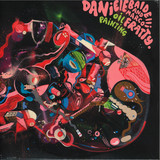
Leng Records’ first album of the year release comes courtesy of two contrasting legends of Italian dance music, Afro-Cosmic pioneer Danielle Baldelli and sometime FPI Project member Marco Fratty (real name Marco Frattini).
Both producers have a wealth of experience. Baldelli first to rose to fame as resident DJ at the near mythical Cosmic Club in the early 1980's, before moving into music production two decades ago. Since then, he’s collaborated with heaps of producers – most notably DJ Rocca, Marco Dionigi and Dario Piana – but “Oil Painting” marks his first collaboration with Frattini, an experienced producer whose bustling discography stretches right back to the Italian house explosion of the late 1980's and early ’90s.
The pair’s debut collaborative release is bold, bubbly, vibrant and funky, with the storied Italian veterans making extensive use of live instrumentation, vintage synthesizers and chugging, floor-friendly grooves. As you’d expect from a Baldelli-related project, the influences are obvious – think funk, dub-disco, cosmic rock, Italo-disco and nu-disco – but the resulting colourful cuts refuse to settle on one specific style.
Firmly focused on the dancefloor, “Oil Painting” is a gleeful, celebratory and excitable as anything either producer has released to date. For proof, check the surging arpeggio style synth-bass, kaleidoscopic synthesizer lines and eyes-closed rock guitar solos of “Automatic Amplitude”, the flute-laden dub disco shuffle of “Jasmine Flavour”, the organ-laden cosmic funk chug of “Oil Painting” and the lolloping disco-funk exuberance of “Steam Engine”, where crunchy guitar licks and Meters style organ stabs wrap themselves around a vintage disco bassline and head-nodding, toe-tapping drums.
The highlights don’t step there, either. Check the percussion and delay-laden Afro-Cosmic funk fusion of “Slinky Funk”, a veritably tropical excursion that repurposes the bassline and incessant cowbells from Cymande classic “Bra”, and the Clavinet-heavy stomp of “Positive Flow”, whose snaking, constantly-changing saxophone solo and flash-fried guitar riffs help create a thrillingly excitable mood.
From start to finish, “Oil Painting” is an album full to bursting with musical joy and umpteen giddy calls towards the dancefloor. From producers of Baledlli and Frattini’s experience, we’d expect nothing less.
Закажите сейчас, и мы закажем товар для вас у нашего поставщика.

ver the years, Andreas O. Hirsch has shaped a distinctive sound, exploring the possibilities of the electro-acoustic instruments he const- ructs. The Carbophone as well as the Electrified Palm Leaf are plucked instruments akin to the African Kalimba or Mbira. In combination with effects and loops, Hirsch creates an experimen- tal space, influenced by early electronics, Asian and African music as well as the possibilities of editing and collage. The majority of the pieces on The Salamander Treaty were made using the Carbophone Jr., a small traveling version of his original Carbophone which was the basis of the previously released Early Carbophonics. Shaped by the joy of discovery, the eight tracks traverse peculiar worlds of sound, carried by a warm downbeat and analogue vibe. Alongside the Car- bophone Jr., other instruments come into play: a vibrato-soaked guitar leads through the slowly evolving ‘Rise’, marked by a recurring Shepard tone and sounds made by striking the bars of an antique wall clock. In the straightforward yet sub-aquatic ‘Te- atime Unlimited’, a pitch-shifted Morse key wanders erratically in the background. Tape-delayed har- monicas serve as a flying carpet for ‘Drifting Newts’, and rubber bands make their melodic-rhythmical appearance through ‘Back Door Minimal’.
The Salamander Treaty refers to War with the Newts, a prophetic and black-humoured science fiction novel by Karel Čapek from 1936, which tells the story of the rise of the salamanders, who become in- creasingly intelligent and eventually begin to compete with mankind. The album is a pacifist response to this dark scenario: Hirsch’s salamanders prefer to hang out under the stars (‘Drifting Newts’), drink tea (‘Tea Time Unlimited’) and — as illustrated on the back cover — write conspiratorial-pacifist demands instead of calling for war (e.g., ‘Teaoism International’, ‘White Lilies’, ‘For Congress’). In image and word, the album invites looking at the term ‘treaty’, which phonetically contains the words ‘tree’ and ‘tea’, as a friendly reminder that the drafting of every treaty and agreement on this planet should be accompanied by a peaceful spirit.
Music, mix and artwork by Andreas Oskar Hirsch. Mastered by Volker Hennes. Pressed on BioVinyl by Optimal, who state that their manufacturing process reduces CO2 emissions by approximately 90% for the PVC component. 12“ LP, coloured sleeve, download code included,
LIMITED TO 100 COPIES!.
он должен быть опубликован на 11.04.2025

The latest drop on Art-E-Fax welcomes back deep cover braindance tinkerer Briain with a tape of warm and gritty electronica done the right way.
We last coaxed Barry O’Brien away from his day job as sound tech at beloved Berlin haunts Ohm and Tresor for a 12” back in 2019, and now he’s graced us with 11 slices of tweaked and freaked machine funk that should appeal to anyone who savours the maverick electro crossover between Rephlex and Drexciya.
The synth lines crunch and squirm and the beats stutter and rasp as Briain rolls out one wonkily perfect jam after another. In the intricate detail and movement that drives each track forwards you can sense the insular focus that comes with the best shut-in electronica. ‘Fist Fight Or Hug’ toys with sliced up breaks while ‘The Precipitous Descent Of Dignity’ deals in dystopian electro of the highest calibre. ‘Beal Bocht’; puts the drums to one side for a gloriously dislocated trip through FM synthesis and broken delay feedback and ‘Cognitive Dissonance’ revels in twitchy micro perc and delicate keys.
It’s a full-bodied album to sink your teeth into, and while it proudly carries the torch from certain legendary electronica forebears, it’s also delivered with all the charm and personality required to make for a future classic in the braindance canon.
он должен быть опубликован на 11.04.2025

Japanese bamboo flute maestro and goat (JP) cohort Rai Tateishi makes an impressive debut statement with his holistic attempts to transcend the limits of ancient instruments to reveal gently delirious insights.
‘Presence’ is a triumph of improvised, elemental musicality that distills aspects of myriad folk traditions in pursuit of the artist’s own truth. For 40 minutes of singularly weird, locked-in performance, Rai Tateishi diverges his formative training in the shinobue (a bamboo flute) to applications for its elder sibling, the shakuhachi, and its distant relatives in the khene mouth organ of Northeastern Thailand and Laos, and even the Irish flute, with remarkable results returned from each.
Piece to piece, Tateishi adapts a spectra of unusual and extended instrumental experiments to articulate uniquely animist sound arrangements, with judicious use of a ring modulator and delay effects only subtly altering his sound in real-time, gelling the harmonics and smoothing off its contours. Some 15 years of studies and accreted knowledge of histories, timelines, and spirits are deftly tattered in the air and rebound in precisely complex ribbons that become all the more impressive by virtue of its in-the-moment recording.
Presented with no overdubs, the six works were recorded by label head and KAKUHAN/goat lynchpin Koshiro Hino across three days of adventurous improvisation capturing the breadth of Tateishi’s vision in a mix of succinct flights of fancy and one durational wonder where he really cuts loose. An opening piece of rapid percussive fingering and rasping sets the tone for increasingly intricate explorations of the shinobue, and bluesy cadence of a reedy Thai khene - antecedent of the shō - whipped into headier harmonic overtones, whilst his 5th piece for Irish flute best recalls Ka Baird or Michael O’Shea’s lysergic impishness, and a 13 minute closing piece most boldly fucks with folk and jazz traditions, in-depth and with the genre short-circuiting audacity of Rahsaan Roland Kirk.
Landing in the wake of prism-shaking works by Will Guthrie & Mark Fell, goat (jp) and Kakuhan; Tateishi’s ‘Presence’ more than lives up to NAKID’s impressive levels, unflinchingly operating by its wits with a verve and dare-to-differ moxie that gets at it from the first hit to the last, harnessing the kind of skill and ingenuity that’s distinctive but still strikingly minimal and overwhelmingly physical. It's a remarkable achievement.
он должен быть опубликован на 11.04.2025
