Das Londoner Electro-Pop-Duo Strange Boy präsentiert - nach bemerkenswerten Kollaborationen mit Terry Riley, Nils Frahm, Clark, Squid, Jeremy Deller und Aurora - auf seiner Debüt-LP 'Love Remains' eine Welt voller Symbolik, Erhabenheit und Verbundenheit, entstanden aus den kühnen Erzählungen von Sänger/Songwriter Kieran Brunt und den atmosphärischen Klanglandschaften von Matt Huxley. Die intim-reflektierende Art des Geschichtenerzählens wird in der lofi-Vocalproduktion mit üppigen Streichern, 'November Skies' feat. Anna B Savage, deutlich, während Blunt seine Liebe zu James Blake, Anohni & The Johnsons und The Magnetic Fields mit einer Coverversion des Kultsongs '100,000 Fireflies' unterstreicht, die er in einem einzigen Take aufnahm und über gefundene Tonbandaufnahmen legte, die er mit halber Geschwindigkeit rückwärts abspielte.
Cerca:delle
It all started with a crashed computer and it certainly didn’t end there. »Cinnte le Dia« is the third collaborative album by Hanno Leichtmann and Valerio Tricoli, their first entry into Ni Vu Ni Connu’s duo series that focuses on Berlin’s Echtzeitmusik scene and beyond. Having already released two joint records on the now-defunct Entr'acte label, the two musicians wanted to document a 2018 concert in Berlin, but technology failed them. Undeterred, the sound artist and percussionist and the electroacoustic composer went to the former’s Static Music Studio to record six of the eight tracks on this record straight to tape, with two additional ones being recorded during a performance at Eupen’s Meakusma festival in 2019.
After 2016’s »The Future of Discipline« saw the duo enter the studio for a one-take session with added synth-bass overdubs and 2018’s »La Casa delle Chimere« documented a live gig in Kyiv, »Cinnte le Dia« presents a synthesis of the two approaches. Mixing the album together and adding overdubs—Leichtmann with his synth-bass again, Tricoli with his trusted Revox B77—the duo combined the special energy of their performance in front of a live audience with the intimate atmosphere of a studio session between two exceptional improvisers and composers. The pieces are accordingly marked by their sonic density, but also a rhythmic intricacy that makes the album as a whole negotiate its place in music history between bass-heavy, dubbed-out club music and electroacoustic as well as musique concrète techniques.
Leichtmann worked with a mix of acoustic percussion routed through a modified looper and a granular live sampler as well as electronic drums consisting of three modular sampleplayers, a Syncussion drum synth and a bass drum module. Depending on the current set-up, the two fed this input through Tricoli’s B77 either individually or collectively to further manipulate single elements or the entire sound. What might look complicated on a tech rider sounds intuitive on record: these are two versatile musicians engaging in a play of difference and repetition, acting and reacting to each other in real-time, but also creating additional layers by inserting new elements after the fact. In a very literal way, »Cinnte le Dia« is the duo’s most refined album, yet at the same time a testament to the uncanny energy they unleash during their improvisations. It’s solemn and moody, spontaneous and driving at once. Of course a computer couldn’t handle that.
Released in 2001, I Giorni paved way for the rise of Ludovico Einaudi to mainstream success. This beautifully melodic record features only solo piano, but captivates throughout with it’s gorgeous shapes and phrasing taking the listener on a journey with Ludovico himself. Quite aptly, the album contains the title track I Giorni, which has now been certified as a gold record in the UK. This is the first time this album has appeared on highly collectable coloured vinyl.
Trystero comprises Scottish/Luxembourgish producer Thomas Lea Clarke (aka MR TC) and Low Bat, otherwise known as one half of the formidable duo Jean-Luc. Their debut album, Sfumare e Vedere, was conceived over three days aboard Urban Boat, a 1960s barge transformed into an arts and performance space. Moored along the river just outside of Paris, the duo embarked on a joint residency, discovering their complementary creative energies and a mutual passion for all things strange and psychedelic.
As frontman, Low Bat is a fire-powered poet, his unparalleled stage presence resonating through Trystero's music. The French native and fluent German speaker has a natural flair for languages. For this project, he sings in a combination of Italian and English about love, loss, and class struggle, constructing surreal wordplay about pelicans and puttanesca. Meanwhile, Clarke's drone-lead electronic accompaniment takes its cues from sizzling acid, 1990s snap rhythms, post-punk, krautrock and shoegaze. Firmly rooted in these tripped-out genres, Trystero journeys to entirely new cosmic dimensions.
Formed in 2017, Flycatcher’s ability to construct sing-a-long melodies and gut-punching instrumentation, while also tackling the dissonance of depression and difficult relationships, proves their power in casting an empathetic, universal eye.
The New Jersey-based quartet, made up of Greg Pease, Justin VanNiekerk (guitar), Jack Delle Cava (bass) and Connor Carmelengo (drums), are known for their undeniably anthemic arrangements. Albums Other Things (2018) and Songs for Strangers (2019) garnered acclaim for their ear-worm choruses, tight textural dynamics and propulsive, driving percussion.
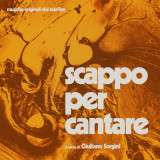
Another dream coming true! One of Giuliano Sorgini's finest and most sought-after titles is finally available as an official LP reissue – the first ever – remastered from the original tapes.
Originally released in 1971on the small library music imprint FAMA, which operated as a sub-label of RCA Italy, the record contains the original music written for Scappo per cantare, a small, pseudo-psychedelic 'musicarello' (musical comedy film) broadcast on RAI television and starring, among others, Italian singers Gianni Morandi and Mauro Lusini.
The only credited album artist is Sorgini, but it's impossible not to perceive, in this record, the hand of his close friend and colleague Alessandro Alessandroni.
This should not come as a surprise. In the early 70s, the two composers and multi-instrumentalists had a fruitful collaboration that saw them, under the monikers Braen (Alessandroni) and Raskovich (Sorgini), produce an abundance of works together, most of which have now gained the recognition they deserve. These include, among others, two 7" singles from their band The Pawnshop, three records in the series Alle sorgenti delle civiltà (Folkmusic), the crime/noir library albums Quarta pagina (Usignolo) and Inchiesta giudiziaria (Octopus Records), as well as the LP Tempo Libero (Panda Records), which was released shortly after the record presented here and in some ways drew rhythmic inspiration from it.
While their collaboration remained unacknowledged on the original release of Scappo per cantare (this was not uncommon at the time, especially in the field of library music), the record sounds perfectly in line with other works composed by Alessandroni in the early 70s, such as Complesso Gisteri's Mostra Collettiva (co-written with Oronzo De Filippi), or even a landmark album like Spontaneous, where Sorgini contributed to a handful of tracks.
So, yes, the sheer beauty of Scappo per cantare is the result of an incredible synergy between two heavyweights of Italian library music! Airy and sweeping melodies à la Zoo Folle, psychedelia à la Under Pompelmo, and various percussion instruments played by Sorgini seamlessly blend and fuse with elements and touches provided by Alessandroni.
More specifically, we find Alessandroni's signature, melancholy whistle in "Desolazione"; the peaceful and dreamy sound of his 12-string guitar in "Scogliere" and "Con Amore"; the trademark harmonies of his vocal ensemble Cantori Moderni in the last two tracks mentioned and in "Per cantare"; and his ingenious use of distortion on his Fender Stratocaster in the suspenseful transitions "Concentrazione" and "Fantocci", as well as in the frantic/hypnotic hippie numbers "Mordente" and "Fendente" (as a side note, it is worth remembering that Alessandroni experimented extensively with distortion in the rock-infused album Underground, co-written with De Filippi and released in 1971 under the moniker Braen's Machine, probably a reference to British psychedelic band Soft Machine).
The creative relationship between Sorgini and Alessandroni was so symbiotic that it would be useless to try to identify in more detail their respective contributions to the sound of Scappo per cantare. The alchemy between these two musical geniuses is the key to the album's exquisitely Italian mixture of cheerful lounge, sweet psychedelia and smooth easy listening.
To do justice to the quality of the music, this remastered reissue is enriched by a new artwork by Eric Adrian Lee, who drew inspiration from the psychedelic visual culture of the period in which the album was written and recorded.
The inaugural release on cult eyewear label Kuboraum's new music platform, SALÒ is a mystifying fusion of noise, prog rock and psychedelic music that attempts to imagine a "dreamy and decadent" Roman renaissance. It's the brainchild of multidisciplinary artist Emiliano Maggi, who links with Mai Mai's Toni Cutrone, Wildmen's Giacomo Mancini, producer Cosimo Damiano and musician, writer and critic Stefano Di Trapani to distill a wellspring of poems, fairytales, anecdotes and mythologies - drawing on mythological symbolism, medieval theater and rural iconography - into an oozing celebration of art, ecstasy and extravagance.
- A1: Ennio Morricone - Mio Caro Assassino (From Mio Caro Assassino/My Dear Killer (1971)
- A2: Bruno Nicolai - La Notte Che Evelyn Uscì Dalla Tomba (Feat Edda Dell'orso - Long Version - From La Notte Che Evelyn Uscì Dalla Tomba/The Night Evelyn Came Out Of The Grave (1971)
- A3: Bruno Nicolai - La Dama Rossa Uccide Sette Volte (Edit - From La Dama Rossa Uccide Sette Volte/The Red Queen Kills Seven Times (1972)
- A4: Stelvio Cipriani - Tribal Shake (From Reazione A Catena/A Bay Of Blood (1971)
- A5: Stelvio Cipriani - Il Sesso Del Diavolo (Finale) (Finale)
- A6: Stelvio Cipriani - Deviation-M1 (From Deviation (1971)
- B1: Riz Ortolani - L'etrusco Uccide Ancora (Titoli) (Titoli)
- B2: Daniele Patucchi - Giallo In Tensione (From Frankenstein '80 (1972)
- B3: Ennio Morricone - Ansimando (Feat Edda Dell'orso - From Macchie Solari/Autopsy (1975)
- B4: Manuel De Sica - Black Dream (From Mystery Tour (1985)
- B5: Paolo Gatti & Alfonso Zenga - Cerro Torre (From Cesare Maestri: Il Ragno Delle Dolomiti (1980)
- B6: Berto Pisano - Greta (From La Morte Ha Sorriso All'assassino/Death Smiles On A Murderer (1973)
- B7: Sante Maria Romitelli - Bambola Sensuale (From La Rossa Dalla Pelle Che Scotta/The Sensuous Doll (1972)
- C1: Adolfo Waitzman - Languidamente (From Pensione Paura/Hotel Fear (1978)
- C2: Nico Fidenco - Il Demonio In Convento (From Immagini Di Un Convento/Images In A Convent (1979)
- C3: Ettore De Carolis - Flavour Of Death (From Il Cavaliere, La Morte E Il Diavolo (1983)
- C4: Marcello Giombini - Un Gioco Per Eveline-M11 (From Un Gioco Per Eveline (1971)
- C5: Carlo Maria Cordio - Absurd (From Rosso Sangue/Absurd (1981)
- C6: Stelvio Cipriani - Devil Dance (Performed By Goblin - From Un'ombra Nell'ombra/Ring Of Darkness (1979)
- C7: Daniele Patucchi - E Tanta Paura-M2 (From E Tanta Paura/Plot Of Fear (1976)
- C8: Marcello Giombini - Orinoco: Prigioniere Del Sesso-M19 (From Orinoco: Prigioniere Del Sesso (1980)
- D1: Franco Micalizzi - Bargain With The Devil #3 (From Chi Sei?/Beyond The Door (1974)
- D2: Stefano Liberati - The Prophecy (Version A - From I Pensieri Dell'occhio (1978)
- D3: Luigi Ceccarelli - Walking Through The Shadows (From Difendimi Dalla Notte (1981)
- D4: Daniele Patucchi - Minaccia Sulla Citta (From Belve Feroci/Wild Beasts (1984)
Red vinyl[28,53 €]
PAURA explores the horror repertoire from the precious CAM Sugar archives taking us on a hypnotic journey into the labyrinths of fear, through the different variations that Italian horror took on from the esoteric and supernatural to the slasher films of the early 1970s; to reinterpretations of Romantic literature and gothic fiction to the splatter films of the ‘80s; and from witchcraft to metropolitan horror. This is not a real “best of” but an eclectic menu full of mysterious voices, childlike lullabies, sweet melodies, obsessive music boxes, obstinate harpsichords, crazy distortions and threatening synthesizers, conceived as a succession of sequences, as if a film edit. The new collection includes some of the most creative music ever written and strives to do justice not only to some of the best known composers in this genre, but also to many great unsung composers: From celebrated composers like Ennio Morricone, Riz Ortolani & Stelvio Cipriani to long-forgotten personalities who fed the industrial backbone of Italian cinema such as Daniele Patucchi, Marcelo Giombini & Berto Pisano. The collection includes 6 previously unreleased tracks plus 3 tracks released on vinyl for the first time and 5 tracks available commercially for the first time (originally released only as a limited promo item).
SSIEGE have struck our non-linear world again with Meteora, the follow-up to the breathtaking 2019 cassette release Fading Summer, on Youth. Its elusiveness might be its biggest strength. Indicating a genre is a lost cause. Any description locating it safely inside well-defined boundaries falls flat. Neither analogue or digital, neither old or contemporary, these 5 tracks evoke an androgynous world that is at once open and veiled. A place where presence and absence and weightlessness and gravity are simultaneous. Bathing in colorful light, this record is like a slightly melancholic dream able to usher in a new day or soundtrack the last rays of sunlight
Platform 23 again explores to the dense voids, this time with a touch of the funk, with a reissue of Dutch experimentalists De Fabriek and two tracks from their "Music For" cassette series, this time calling all Hippies.
Featuring both original and reinterpretations from modern-day heads, Dunkeltier and Khidja, this double-pack is something of an oddity, showcasing the bands' expansive range, moving away from the noise, drone and industrial soundscape releases they had become known for and crafting here, free flowing, groovy longform jams.
Active since the late 70s to today, De Fabriek (The Factory) have never considered themselves a real band - being also a label too - with an evolving and irregular line up centred around Richard van Dellen, they present their music and output as a kind of work-union.
With literally four decades and dozens of releases across all formats, 1988's cassette release, 'Music For Hippies', has become something of a cult curio, with the long improvisational tracks, Lullabye and Coming Down eschewing the rougher, industrial experience for something completely different.
In opener Lullabye, we go full leftfield P-Funk meets Motorik undertones. An incessant beat is laid from the start and doesn't cease for over 10 minutes, while spoken vocals call closer to the Krautrock realms of Can and hark to Liebezeit's stylised grooving best.
Analog, echo washed, with touches of glam and wrapped in simple effects pedal work, the secrets are passed to Dresden / Berlin inhabitant Dunkeltier aka Sneaker DJ aka Thomas Smorek. His darker moniker, appearing on obscure edits for Macadam Mambo and the much-missed Bahnsteig 23, his 'Hey Robot' mix adds bass, percussion, strings and synth to remold Lullabye into a late night, red light, basement denzien. This is followed by an additional, bonus reimagining, creating an all-new time piece, an ear worm of the best kind with Tik Tok Goes The Clock.
The second slab presents in Come Down, a more resembling De Fabriek werk. Edited to fit, the darkness is entered as snapshot vocal quips, oscillations and synthesised mutations are laid over a lazy, relentless ostinato rhythm where cymbals crash on the bar. Inviting, calling, De Fabriek's aptly titled downer is in fact, a joyous journey.
To complete, label affiliates, Khidja take a break from finalising their debut album to unfold their 'Psychebabble Mix', a dozen plus minutes of warped, twisted, cassette machinations that suck the listener further along the trip. Added bass propels their edit suddenly to a new direction, a hook for mind and for the open willed, the body. De Fabriek's "coming down lullabye" arriving on vinyl for the first time, with a twist and shake, calling deeper to acceptance.
Recorded in Florence in October 1979, »Asia« represents Egisto Macchi’s musical journey across the East. In this work, Macchi describes the many faces of Asia through his unmistakable, electric style. In Macchi’s music, Asia acquires mystical, religious, naturalist, sacred, and adventurous connotations. Acoustic instruments dominate this album; among percussion, zithers, celestas, flutes, marimbas, sansas, and violins, the listener embarks on a musical journey outside the limits of space and time
In the last five years ElCamino has gone from up-n-coming Griselda affiliate to fan-favorite B$F member. He released two volumes of his self-titled album series in that time and left heads eagerly awaiting the third instalment. Then, last summer he served up ElCamino 3 and showed what he was really capable of. The acclaimed album features production by Harry Fraud, Camouflage Monk, CeeGee, and guest spots from 38 Spesh, Jay Worthy, A$AP Ant, and more.
Wie so oft bei Deichkind geht es auf ihrem achten Studioalbum „Neues Vom Dauerzustand“ scheinbar um nichts – und doch um alles. Insofern passt es perfekt in eine Zeit, in der die Realität die Satire längst eingeholt und an Absurdität übertroffen hat. Und wie soll man auf eine derart groteske Wirklichkeit bitte angemessener reagieren als mit Überzeichnung in grellsten Farben und Klängen?
Auch wenn einem das Lachen im Hals stecken bleibt: Tanzen und Denken passen auf diesem Album perfekt zusammen.
Ihr neues Album „Neues Vom Dauerzustand“ ist bis zum Bersten gefüllt mit Punchlines sowie überwältigenden Sounds und Beats. Man kann in 2023 immer noch bestens zu Deichkind wippen, tanzen, ausgehen, durchdrehen. Und künftige Stehsätze wie „Gefährliches Halbgoogeln“, „Kids in meinem Alter“ oder „Auch im Bentley wird geweint“ werden uns noch lange begleiten.
Mit „Neues Vom Dauerzustand“ ist Deichkind ein Album gelungen, das mit bestechender Dringlichkeit neue Themenhorizonte erobert und in jeder Note absolut frisch und lebendig klingt.
„Neues Vom Dauerzustand“ erscheint auf dem bandeigenen Label Sultan Günther Music und enthält Gastbeiträge von u.a. Clueso, Fettes Brot und Drunken Masters
- A1: Zed Bias & Kc - Let Me Know (Zed Bias Remix)
- A2: Industry Standard - Taken All My Time
- B1: Strickly Dubz - Realise
- B2: Underground Solutions - I Need You Baby
- C1: Anthill Mob Aka T Juice - Blinded
- C2: Dj Double G Feat. Anita - Special Request
- D1: Groove Committee - Heart And Soul (Original Mix)
- D2: Dub Monsters - Waiting
Volume 1[28,78 €]
MORE COLLECTIBLE CLASSICS ON VINYL FROM THE UKs BIGGEST GARAGE BRAND PURE!
A second instalment of the best-selling UKG compilation of all time, returns with a stunning stack of high value collectible classics on DJ friendly vinyl.
Pure Garage Collectible Classics Volume 2 is jam packed full of funky UKG flavas from legends of the scene including Zed Bias, Anthill Mob & Scott Garcia remastered and cut to two slices of heavyweight black vinyl.
The platinum selling compilation brand needs no introduction and these first ever exclusive boutique vinyl releases are truly something very special.
Kicking off this compilation is a collaboration between Zed Bias & KC, the Let Me Know (Zed Bias Remix) is a pumping UKG stomper featuring a catch vocal hook & succulently squelchy analogue bassline. Taken All My Time by Industry Standard features the soulful vocals of Abi, this is the DJ Deller Mix, copies of which have been selling for three figure sums on the resellers market!
The flip side opens with another high value sought after track, Strictly Dubs with Realise. Followed by a tune that received an extremely limited release back in the UK Garage heyday of 1997. I Need You Baby by Underground Solutions is selling on reseller sites for as much as £70!
Anthill Mob come with the goods on side C with Blinded, a must for any UKG DJ set, backed up with Special Request from DJ Double G.
We keep up the pressure on side D with Groove Committee’s track Heat + Soul, a prime example of UK Garage with pumpin' vocal snippets and funky sampled loops. Finally, this release closes with a Waiting by Scott Garcia which previously got a very limited vinyl release back in 1997.
PURE GARAGE COLLECTIBLE CLASSICS VOL 2 will be released on double vinyl on 16th December 2022!
- A1: La Danza Delle Foglie (The Dance Of Leaves)
- A2: Flauti (Flautes)
- A3: Osso D’aquila Per La Danza Degli Spettri (Eagle Bone For The Ghost Dance)
- A4: Rombi Volanti (Flying Rhombs)
- A5: Il Corno, La Tartaruga, L’arco E La Selce (The Horn, The Tortoise, The Bow & The Flintstone)
- A6: Le Pietre Sonore Della Caverna (Sonorous Stones In The Cave)
- B1: Le Pietre Del Fiume (River Stones)
- B2: I Semi Vegetali Voci Della Jungla (Vegetable Seeds: Jungle Voices)
- B3: Lo Spirito Della Palude (The Spirit Of The Marshed)
- B4: Il Linguaggio Del Mare (Sea Language)
- B5: Reperti Amazzonici (Amazonian Finds)
Art Of Primitive Sound is a sensational journey to the origin of Music. In his crucial research chapter on the Paleolithic, Walter Maioli between 1986 and 1991 investigates the soundscape of different geographical, climatic and botanical environments, in which the mystery of the ancient human-nature relationship resides. What emerges is an expanded and unprecedented Paleorganology, with a range of acoustic and natural instruments from all over the World. Rubbing of fossils, animal artefacts, plant elements of all sorts, everything becomes sound and each object opens up forms of imaginary communication, psychic effect and unexplored languages. Whistles, flutes, leaf and shell rattles, rhombuses, horns, bone pipes, slate slabs, bamboo arches, stones, vertebrae, seeds, stalagtites etc...how great can be the Natural Orchestra inherent in the spirit of forests, rivers, caves, seas, swamps or Amazon jungles? Thanks to an interdisciplinary partnership (Anthropology, Archaeology, Botany, Ethnomusicology) of collaborating friends, Maioli directs an Opera of universal character inspired by the archaic essence of sound and infrasonic dimension.
- A1: Bas Mooy & Jeroen Liebregts - Shelf Life
- A2: Mascon - Nenner
- B1: Exium - Dark Voids
- B2: Quelza - Argumentum Ad Ignorantiam
- C1: Nørbak - Hereditário
- C2: Rebecca Delle Piane - Throw A Fit
- C3: Dimi Angélis - Poisoned Cocktail
- D1: Izan Hesse - Blue Room
- D2: Antony Doria - Uprite
- E1: Alexander Johansson & Mattias Fridell - Folkskygg
- E2: Vinicius Honorio - Fearless
- F1: Johannes Volk - Nightmare Orchestra
- F2: Jaraossa - Drive
- G1: Roll Dann - Suffrage Of Souls
- G2: Surit & Katran - Reconnect
- G3: Kaiser - Esco
- H1: Operator - Metal Moon
- H2: Takaaki Itoh - Implement
- I1: Uvb - Hdmt
- I2: Asec - Guilt Can't Shape The Future
- J1: Rommek - Caustic Waves
- J2: Piska Power - Unbenanntererer
- K1: Ritzi Lee - Ants On Steroidz
- K2: Lewis Fautzi - 141021
- L2: Jokasti & Nek - Gains
- M1: Kike Pravda - Rotational
- M2: Olympic Pool Maintenance League - When Sadness Still Comes
- N1: Shxcxchcxsh - Röd Sol
- N2: Vertical Spectrum - Męczybuła
- N3: Gotshell - Lost In The Subway
- K3: Casual Treatment - It Doesn't Matter (Just Listen)
- L1: Bazalt - Ogas
Barbara, die Frau ohne Gedächtnis, irrt durch die malerischen Straßen Hamburgs. Eine zwielichtige Hypnosesitzung und ein nichts ahnender Liebhaber bringen ans Licht, was sich hinter ihrer unschuldigen Schönheit verbirgt. Die Erlösung scheint in greifbarer Nähe, doch der Drang, weiteres Unheil anzurichten, ist unwiderstehlich... Erst der Tag entblößt das wahre Grauen: GIALLO COME IL GIORNO, das fünfte Genre-Album von MONDO SANGUE setzt dort an, wo die vielbeachtete Giallo-LP ROSSO COME LA NOTTE (2021) endete. MONDO SANGUE und ihre Leidenschaft für die Musik und das Kino der italienischen 1960/70er ziehen Kreise. Auf GIALLO COME IL GIORNO sind die Genreliebhaber und Italien(Be)kenner Bela B, Eric Pfeil, Dirk von Lowtzow und Rocko Schamoni auf schwarzem Gold vereint. Die Vinyl 10"-EPs, von Adrian Keindorf illustriert, sind inkl. farbigem Beileger, Texte und Downloadcode auf 444 Stück limitiert und handnummeriert. Über MONDO SANGUE Das Stuttgarter Duo MONDO SANGUE (Christian Bluthardt & Yvy Pop), gegründet 2015, produziert Cinematic Pop in Anlehnung an das italienische Genrekino der 1960/70er. Nach einem Ausflug in den Dschungel (L"ISOLA DEI DANNATI - Die Insel der Verdammten; Soundtrack zu einem fiktiven Kannibalenfilm, 2016), einem Ritt durch den Spaghettiwestern (NO PLACE FOR A MAN - Il Villaggio delle Donne, 2018) und einer Reise ins All mit dem Science?Fiction-Abenteuer VEGA-5 (Avventure nel Cosmo, 2020) feiern MONDO SANGUE das legendärste Italo-Genre, den Giallo, gleich zweifach: mit ROSSO COME LA NOTTE (2021) und GIALLO COME IL GIORNO (2022).
1998 esce l’atteso secondo album di Alexia dal titolo “The Party”. L'album contiene quattordici brani tra cui i due singoli più gettonati dell’estate 1998 ovvero “Gimme love” e “The music I like”. L’album si aggiudica numerosi dischi d’oro e di platino con le sue oltre cinquecentomila copie vendute. “Gimme love” e “The music I like” sono stati al no. 1 delle classifiche quasi simultaneamente, vendendo un totale di più di centomila copie, un vero record nel mercato italiano. Nell’estate del 1998 Alexia domina la scena musicale in vetta alle classifiche, più di ogni altra artista italiana della dance music. In quel periodo, in Inghilterra, esce il remix di “Uh la la la”. E’ il primo singolo di Alexia ad uscire in quel mercato e diventa subito un successo, top ten in classifica. Questo particolare remix é contenuto
nell’album “The Party” come bonus track.
A rediscovered untitled Mass by Adriaen Willaert "Missa Ippolito", a
hidden ode to the Cardinal of Ferrara, Willaert's patron.Adriaen Willaert
must have already been a prolific composer before he assumed the
position of kapellmeister at the Basilica of San Marco in Venice
After all, a second Mass of his was included in a large, illuminated choral
manuscript that was produced for the Illustrious Brotherhood of Our Blessed
Lady in 's- Hertogenbosch, the Netherlands (the first Mass in this manuscript,
Missa sex vocum super "Benedicta," can be found on the LP Adriano 2). The title
page of the Mass does not mention the name of the composition, only that of the
composer, Adrianus Willart. It was catalogued as a Missa sine nomine, a Mass
without a name. It is assumed that the work was composed between 1522 and
1527, at a time when Willaert was a member of the music chapel of Cardinal
Ippolito d'Este in Ferrara, Italy. At first glance, what's striking about this
composition is that one of the tenor voices sings a cantus firmus (a "given, fixed,
foundational voice" that provides the basis for each movement of the Mass, to
which the other voices are added) that always consists of the same 13 notes: mi
ut mi sol mi ut fa mi fa mi re mi.
In an article about the Mass, the musicologist Joshua Rifkin claims to have
discovered a sogetto cavato delle parole in this sequence of notes. This is a
compositional technique common for the time in which the notes of a melody, in
this case the cantus firmus, are derived from the vowels of certain words. The
notes used for the tone poetry are those of the Guidonian hexachord, a series of
the 6 notes ut-re-mi-fa-sol-la.
For example, the word Maria (Ma-ri-a) can be "translated" into the notes la mi la.
The cantus firmus of the Mass, according to Rifkin, fits the words "Primus
Ippolitus Cardinalis Estensis" (Ippolito I, Cardinal d'Este) perfectly. The Mass is
thus almost certainly (via a hidden message in the music) an ode to the Cardinal
of Ferrara who was Willaert's patron. This rediscovered untitled Mass by Adriaen
Willaert, which we have now sung as a world premiere, can therefore rightly bear
the name Missa Ippolito.
- 1: Secondo Coro Delle Lavandaie (Feat. Maria Violenza)
- 2: Fimmene Fimmene (Feat. Vera Di Lecce)
- 3: Musica Nova (Feat. Nziria)
- 4: Nostalgia (Feat. Youmna Saba)
- 5: Sind W/ Cosimo Damiano (Feat. Faraualla & Ars Ludi)
- 6: Mediterranean Gothic (Feat. Mike Cooper)
- 7: Il Cattivo Passato
- 8: Il Futuro Perduto
- 9: Rimorso
- 10: Antiche Memorie (Feat. Lino Capra Vaccina)
Repossessed by the past, bitten once again and forced to relive drama, history, memories, tradition and roots. A past that needs exorcizing, bending and re-imagining in order to move forward and depend on. This is ‘Rimorso’, Mai Mai Mai’s colossal mediterranean gothic album.
Known for his incredible blend of Southern Italian Folklore, industrial drone, proto-techno & punishing miasmic electronic music, Toni Cutrone aka Mai Mai Mai approached ‘Rimorso’ with a clean slate. Following ‘Nel Sud’ (La Tempesta International, 2019) and his mediterranean trilogy ‘Theta’ (Boring Machines, 2013), ‘Δέλτα’ (Delta) (Yerevan Tapes, 2014) and ‘Φ’ (Phi) (Not Not Fun Records / Boring Machines, 2017) the Roma based noise artist recreated his spirits of the past by collaborating with musicians and ethnomusicologists that work on the present, on traditions that are still passed on and morphing continuously, healing our nostalgia for a lost future. ‘Rimorso’ sheds the past heavy use of samples and sound manipulation in lieu of a human element: voices, percussion, lap steel guitar all embedded in a rich cultural heritage.