There is a breaking point where the mind yields and the body takes command. This is precisely the territory of Frenetic Habits EP.
Asymetric80 lands at INDUSTRIAS MEKANIKAS with an unapologetic statement: a direct immersion into the aesthetics of collapse and extreme habits. The work places you in the center of a post-apocalyptic scenario, where survival no longer relies on calm, but on your ability to endure mechanical tension.
The sound is built upon solidity and saturation. You won’t find fragility here, but rather an architecture of EBM, New Beat, and Industrial Techno designed to dominate any sound system that dares to play it.
Side A establishes the hierarchy with Frenetic Habits. Far from linear, the track unfolds a broken, demolishing rhythm, generating a devastating sonic pressure that completely envelops you. It is a piece of constant drive, an armored machine advancing over the very ground you stand on. It is followed by Exile and Unmasked, which shifts the strategy towards depth: a hypnotic immersion where industrial textures densify, creating a dark atmosphere that traps you with no escape.
On Side B, Bleak materializes the heaviness of the environment. A slow-burning, corrosive track with deep bass, which you can feel advancing with the force of concrete. To close, Dementia releases the accumulated tension with overflowing kinetic energy; a final outburst of controlled aggression that closes the cycle with maximum intensity.
Frenetic Habits EP is a record of ironclad textures and terminal atmosphere. A work that documents not defeat, but the brute force needed to remain standing when everything around has come crashing down.
Cerca:demo
Melbourne / Naarm stronghold Butter Sessionsclock 15 years in the game with a trilogy of 12"s, sustaining their uncompromising streak of peak-form electronics. The family-style V/A binds friends, collaborators, former studio neighbours and DJ booth allies, capturing a label that exists as community as much as catalogue.
Disc Two lifts off with recurring contributor Rory McPike's first label outing as Rings Around Saturn, a blissed-out cosmic floater skimming the periphery. Booked in the early days of the label's formative Mania residency, Japanese don Gonno twists freestyle, techno and breaks into pure ecstasy, before the unerringly bold Jennifer Loveless spikes the punch with a hallucinatory mix of drums, disembodied voice and jazz club keys.
On the flip, Boorloo's Guy Contact rolls out Dance In The Grey, a shadowy prog churn pitched between new-romantic vocal sheen and EBM muscle, with Kate Miller completely rewiring the script on Sub Series E - a masterfully minimal, double-time meditation. suki presents his Sniper1 alias to close with a demonic body-jacking groove loaded for the system.
Whether taken alone or folded into the three-disc triptych, each instalment stands as a bag-ready constant, charged with Butter Sessions' curatorial finesse.
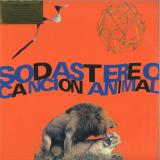
- A1: (En) El Septimo Dia
- A2: Un Millon De Anos Luz
- A3: Cancion Animal
- A4: 1990
- A5: Sueles Dejarme Solo
- B1: De Musica Ligera
- B2: Hombre Al Agua
- B3: Entre Canibales
- B4: Te Para 3
- B5: Cae El Sol
Following the release of Doble Vida , on which they flirted with North American influences, Gustavo Cerati recorded the demos for Cancion Animal in his flat, drawing inspiration from Argentinian rock bands of the 1970s, such as Pescado Rabioso, Vox Dei and Color Humano. The album topped the Argentinian album chart, and the single "De Musica Ligera" also made an impact, being regarded as an anthem of Latin rock and rock en espanol. The song continues to gain new fans daily and has amassed 700 million streams on Spotify to date. This makes it the band's most streamed song. All of this makes Cancion Animal an essential cornerstone album in Argentinian rock culture. Cancion Animal is available as a limited edition of 2000 individually numbered copies on crystal clear vinyl and includes an insert
Libertine Records returns with Traditions 22: NOVA EXPREXX – UNDERGROUND REVENGE
After a break, Libertine Records presents a new chapter in its Traditions series. NOVA EXPREXX – UNDERGROUND REVENGE delivers a fierce and uncompromising blend of techno, new beat, acid, and tribe sounds, crafted for night wanderers and those who live beyond conventional paths.
The release captures the raw energy and spirit of the underground, offering relentless beats, hypnotic rhythms, and a soundscape that resonates with true fans of cutting-edge electronic music.
UNDERGROUND REVENGE is a statement of intent from Libertine Records — a label known for pushing the boundaries of electronic music and celebrating the underground scene.
Alistair Colling vs. Tortured Soul featuring Sabina
When You Find Your Love…Hold On 25th Anniversary Mixes
25 years ago, at the turn of the millennium, downtown NYC was spoiled with record stores. In this pre-digital age, vinyl was king for club DJs, and shops such as Downtown 161, Dance Tracks, and Vinyl Mania peppered lower Manhattan, thriving businesses that supported an expanding scene of local and international DJs. Perhaps the largest and most established of these was Satellite Records, an institution of club sounds that also spawned multiple record labels, including the deep-house imprint Central Park Recordings.
At this time, Central Park Recordings and Satellite Records owner Scott Richmond signed a demo in need of a vocal from young British producer Alistair Colling, and enlisted John-Christian Urich to write it, who had just had a massive hit with “I Might Do Something Wrong” the debut Tortured Soul single on Central Park. He in turn brought in Sabina Sciubba of then newly-formed band Brazilian Girls to record the vocal, and with Jon Cutler on remix duties the record was complete. Tortured Soul went on to release numerous deep house classics like “Fall In Love,” “How’s Your Life” and have continued to tour as a groundbreaking live-house act to this day (of which RNT co-founder JKriv was bassist and collaborator for 10 years).
For the 25th anniversary of this turning point release, Razor-N-Tape has rebooted and remastered the original and classic Jon Cutler mixes, which have never been reissued in any format since the original release. RNT also commissioned two new exemplary remixes from DJ Spinna and musclecars, connecting the dots between the deep-house lineage of the past and present. Presented in a gorgeous jacket that calls back to the graphical style of the original Central Park Recordings aesthetic, this 12” is an absolute essential for any lover of soulful club sounds or purveyor of NYC dance music history.
the debut single by germany’s rising talent harmon is being released on mule musiq.
it was one of the finest demos we have received in recent years, and we signed it immediately.
colorful, dreamy, and highly addictive, this alternative house track is unique and evocative of early dj koze and superpitcher productions.
a fresh and killer release that seamlessly absorbs a wide range of influences—in the best possible way.
Archeo Recordings is a record label. Old, lost, obscure and forgotten gems and a boundless focus on the new Balearic scene for a wider audience of collectors, DJs and music lovers. All releases are limited edition. This release is a Limited Edition EP (100 on Pink Marbled vinyl). New life and an expanded treatment for the magical Free Disco - You Are My Sculpture with the Original 2010 Heterosexual Mix + the Zion Heat Version (an obscure raw unreleased demo from that period that will light up all the dancefloors on the planet) + 2 special Balearic Remixes by label boss Manu Archeo.
- 1: Time Loop At Hot Slit 02:3
- 2: A Little Girl's Horse Craze Betrays Her 00:36
- 3: How Can You Act Opposite To This Emotion 02:25
PISS in collaboration with The state51 Conspiracy is excited to release a limited 7” pressing of “three demos”.
In the span of two years, PISS has gone from a complete unknown in the Vancouver underground scene to an international touring act. The noise punk quartet has never released a full-length record; their reputation grew from their frenetic, intimate live show and three self-produced demos.
These demos were recorded in Paterson’s basement apartment. For the vocal tracks, Paterson and Zantingh drove an old camper van to an industrial neighborhood of Vancouver to avoid disturbing their neighbors. They were mixed by Paterson, with drums for two of three tracks engineered and tracked by Chris Bede.
- Being Left By Today Feat. Norman Blake
- Feather And A Bird Feat. Norman Blake
- Disinformation Feat. Norman Blake
- El, El, El Feat. Norman Blake
- Secret Of Dead Youth Feat. Norman Blake
- Queen Christina The Second Feat. Norman Blake
- Keep Rest In Thunder (My Dying Day) Feat. Norman Blake
- Is Anybody There? / What Am I Afraid Of? Feat. Norman Blake
- Somethin’ Funny Goin’ On Feat. Norman Blake
- Twenty & Twenty Two / Mealy Tell I Am Feat. Norman Blake
- Warehouse Feat. Norman Blake
- Right / Wrong Feat. Norman Blake
- Beautiful Dream Feat. Aby Vulliamy
- Shirley Brassy / Bushed Feat. Aby Vulliamy
- Leave Me Alone Feat. Aby Vulliamy
- Tie Your Hands Feat. Aby Vulliamy
- Who I’m Married To Feat. Aby Vulliamy
- First Time Feat. Aby Vulliamy
- California Girl Feat. Aby Vulliamy
- High Alone Feat. Aby Vulliamy
- Money Dream Feat. Aby Vulliamy
- Mackenzie’s Return Feat. Aby Vulliamy
- I Found It Feat. Aby Vulliamy
- Altogether Hollow World Feat. Aby Vulliamy
On Dreams ’24 / ’25, Scottish composer Bill Wells turns his nocturnal imagination into a sequence of delicate musical miniatures. The album brings together 24 short pieces, most of them under two minutes, unfolding in just under half an hour like a quietly drifting dream diary.
The album is split into two parts. On the Dreams 2024 side, Norman Blake lends his voice to Wells’ dream-born melodies. Blake, best known as a founding member of Teenage Fanclub, recorded the songs with Wells in a single afternoon at his home, capturing their fragile immediacy in direct and unadorned performances.
For Dreams 2025, Aby Vulliamy — one of Yorkshire’s best kept musical secrets — takes over vocal duties. In mid 2025, Wells sent her a batch of demos; Vulliamy recorded them at home and sent them back to him. The result is a second chapter that feels more introspective, intimate and gently surreal.
The songs themselves are born directly from dreams. Wells wakes from the dream, records it on his mobile and later shapes it into a brief, lyrical composition. One piece, Mackenzie’s Return, was inspired by a dream in which Elvis Costello marched through the streets of a suburban town complaining that he had run out of song ideas, a detail that perfectly captures the album’s blend of humour, strangeness and quiet melancholy.
Dreams ’24 / ’25 is not a collection of fully formed pop songs, but rather a series of fleeting emotional snapshots: soft voices, simple motifs, and melodies that appear and vanish before they can fully settle. It is an album that rewards close listening, inviting the listener into a private, half-lit space somewhere between memory and imagination.
The album is accompanied by a striking cover artwork by Annabel Wright.
Never before heard tunes from the heart of Manchester circa 1989. The lost demos of the band that was Joanna, recorded at iconic Strawberry and Pentagon Studios were discovered in a Manchester apartment loft after 35 years on the shelf. For fans of The Stone Roses, Happy Mondays and Charlatans. With the release of Hello Flower, Joanna is no longer “the most popular band without a record out,” as NME called them in 1990, but their singular spirit is now available for anyone who wants a taste.
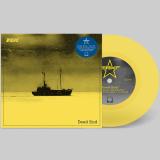
Were FEX the Wildest & Weirdest German New Wave Band in 1984?
Few cult mysteries in modern music have captured the internet's imagination quite like "The Most Mysterious Song on the Internet." Eventually identified as "Subways of Your Mind" by the elusive German band FEX, the track became a viral sensation decades after its creation-and even made its way into a recent Hollywood blockbuster (Black Phone 2).
Now, two more lost FEX recordings have emerged from an old demo cassette: "Dead End" and "Sarah." And they're every bit as electrifying as the legend suggests.
On both songs, guitarist and main songwriter Ture Rückwardt joins forces on lead vocals with his former wife and musical partner Ilona Rückwardt, forming a vocal pairing that channels raw energy and eerie chemistry. What they deliver are two of the most urgent, adrenaline-fueled post-punk artifacts you're likely to hear this year-even if they were recorded more than forty years ago.
Opening with a sharp, melodic guitar solo, "Dead End" bursts forward with uptempo drive-catchy, fierce, and full of momentum. Apparently inspired by Orwell's 1984, its lyrics depict urban desolation-loneliness, homelessness, hopelessness-yet still shimmer with defiance in lines like, "Truth is amazing - hoping is like waiting."
The second track, "Sarah," dives even deeper into darkness. Mixing post-punk intensity with psychedelic textures, Rückwardt tells an imaginary story of a couple lost in drugs and spiraling through a bad trip, only to wake and realize that sobriety offers little comfort-the real world itself can be just as brutal and offers no easy escape.
Neither song makes the slightest concession to commercial trends. Instead, they feel utterly uncompromising-wild, strange, and defiantly timeless. In a world obsessed with polish and playlists, "Dead End" and "Sarah" sound like transmissions from a different planet.
Both tracks were originally recorded as demos in 1984 in the band's rehearsal room, with Hase engineering. The newly restored versions preserve the raw spirit of the original tapes while adding subtle layers to enhance their atmosphere without losing the authentic 1980s sound. FEX hint that the untouched demo versions might surface later, possibly on a second volume of their archival
Emmanuel[8,03 €]
2026 Repress
ARTSCORE002 / I Hate Models. In an era of Abondance, of the wrong leaders, and mass-producing for profit, this name showed how Techno can be innovative, designing a furrow in the mind of people, and move the generations forward. ARTSCORE is the power-core of the label, and I Hate Models Set the bars of the innovation once again with Totsuka No Tsurugi.
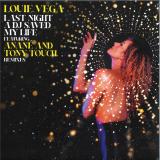
- A1: Louie Vega Ft. Anané & Tony Touch - Last Night A Dj Saved My Life (Louie Vega Remix)
- A2: Louie Vega Ft. Anané & Tony Touch - Last Night A Dj Saved My Life (Anané's Dub)
- B1: Louie Vega Ft. Funki Cadets - In Search Of Peace Of Mind
- B2: Louie Vega Ft. Funki Cadets - In Search Of Peace Of Mind (Louie Vega Peace Dub)
The world renowned “Maestro” of the dancefloor Louie Vega continues to deliver Dance Floor gems at a rate almost impossible to conceive, given that he also maintains a weekly touring schedule that regularly takes him around the world. Louie’s upbringing in the Boogie Down Bronx exposed him to the entire evolution of Disco and Funk at a time when those genres were at their peak in the 80’s, and he brings that wealth of knowledge and passion when it comes to remakes of the classics. His remake of “Last Night A DJ Saved My Life” featuring Anané and Tony Touch in its original version on the NYC Disco Album was a masterful update that kept the essence of the original classic, but was imbued with the irresistible House Music energy that Louie and featured vocalists Anané and Tony Touch can bring to a project like nobody else. The remix from Louie himself gives this peak house groover even more pump, while the Dub from Anané demonstrates that this talented performer has a big future as a producer as well. The bonus track on the B-side “In Search Of Peace Of Mind” shows Louie once again creating a unstoppable groove that respects the foundation of House Music but once again inspires an originality that places him firmly at the forefront the Dance Music Producer community.
Since its inception, Klasse Wrecks has always flirted with rap music flavours. Whether it's Luca Lozano's DJ Cabbage alter ego or the raw beats of the Grafiti Tapes series. Both label owners are big rap fans, with one (Mr. Ho) even being an ex-DMC scratch champ. It makes sense then that the last release from KW in 2025 is the heavily Memphis-inspired 'Straight From Hell' EP, brought to you by the two mysterious producers DJ Skelet and Grim Phunk. To use the term 'stripped down' would be an overstatement in regards to this EP, skeletal drums, booming kicks and frantic vocal loops done right make for a simple yet perfect mix. Tape hiss, MPC crunch and catchy loops are all integral to the vibe and music, tracks keep to a punchy 3-4 minutes and are interspersed by dreamy bonus beats just like in the old days.
Prolific beat pharmacist par excellence Brendon Moeller continues his hot streak with a return to Samurai to serve up the exquisite craftsmanship of Shadow Language. Across 15 fresh productions the seasoned house and techno producer demonstrates yet more variations on his rejuvenated sound since pivoting towards 160 tempo zones. Heavyweight dub techno pulses collide with D&B pressure and dubstep snarl, delivered with devastating restraint and mediative warmth.
Moeller's dub-informed, high-grade production hit a hot streak as he started to experiment with faster tempos and more broken rhythms, reaching into thrilling new sound fields where fast-slow rhythmic intrigue meets with spatial subtlety and constantly evolving synth voices. The past year has seen him release a swathe of albums, from Further on Samurai to outings on Constellation Tatsu, ESP Institute and Quiet Details that all burst with inspiration, each distinct from the last and offering an original perspective on this rich seam of crossover electronics.
Shadow Language shows Moeller burrowing even deeper into this new era of his work, continuing the hypnotic approach set out on Further while edging more forthright ingredients into the mix. From the outset 'Division By Zero' hits with immediacy even as it dips into a dubwise breakdown, with snatches of vocal and even the iconic loom bird making the slightest of appearances. 'Feral Hymn' finds a curious kind of uplift in the synth chord that twists in and out of the mental techno murmurations of the rhythm section. 'Impermanence' has some snarling bass that belongs in the gnarliest tech-step, while the nagging hats ticking through 'Junkyard Syntax' hint at a shockout without resorting to brute force. The majestic dub techno chords of 'Driftform' create a through-line across Moeller's extensive catalogue, but here they dominate the mix above a spongy bed of sub bass throb and framed by the tiniest slithers of percussion.
Throughout the album, it's the implications Moeller suggests with the tools at his disposal that create a powerful energy. Restraint governs the delivery, guiding the listener in deeper until they find a maximal experience from each elegantly understated roller. The weight and presence is abundant across every track, fuelled by the invigorating power of each tone and frequency while avoiding the clutter of overloaded arrangements.
Finding the notes in between and half-hidden rhythms, Moeller himself perfectly summed up his latest opus as he continues to develop his own compelling Shadow Language.
"We just wanted a kiss that makes you want to kiss..."
From a sample to the most iconic kiss in music video history… When Demon released "You Are My High" at the end of 1999, it created a frenzy. Nominated at the Victoires de la Musique and the MTV Awards, the track was on everyone’s lips—including the CSA's, which tried to censor it. 25 years later, the "You" shines brighter than ever, captivating each new generation in turn.
A Top 10 hit in France upon release and certified gold within months, "You Are My High" skyrocketed thanks to its video—three minutes of a single-shot French kiss. Briefly banned by the CSA (who quickly realized it’s hard to censor something you see in every film), the clip ended up playing non-stop on music channels, defining an entire era.
Today, the "You"—as its creator fondly calls it—is considered one of the crown jewels of French Touch 1.0 (Daft Punk, Stardust, Cassius, Modjo, The Supermen Lovers...). With nearly 150 million streams across platforms, its legacy holds strong and continues to inspire a new wave of artists. Among the most iconic reinterpretations: a lo-fi cover by Agar Agar, remixes by DJ Snake and Central Cee, the You and Me video by Disclosure and Flume, and even a Jean Paul Gaultier campaign.
UK funk veterans McKenzie & Gardiner are best known for their 1983 boogie classic 'From Time' and the album Songs From Time - The Lost Demos. They returned in 2021 with a fresh recording of fan favourite 'Hold On Tight' featuring original vocalist Shelley Hicks and it now lands on vinyl for the first time. First, though, the A-side delivers the sultry boogie swagger of 'Completely' with its aching male vocal and humid, throbbing bass. Flip it over for the smooth, soulful 'OG Redux' version of 'Hold On Tight' produced by Clive Gardiner who says, "we used lockdown to get the gang back together, and we've never sounded better." Hard to argue with that.
An incising snare marks the return of Luxus Varta to Shipwrec. Since his last appearance, Aquamarine Puzzle in 2017, the Frenchman has been honing his craft with releases on a spread of stellar imprints. Noise Figure is the culmination of that refining process, his sound and style being forged and framed within the parameters of electro. And these parameters are immediately tested. From the warbling bass and tight percussion of The Resetter, crystalline chords cascade before a shimmering string of wintery warmth. Terse beats introduce Building Peaks, wraith-like rinses offering space for playful forms to take hold. Fudgey basslines are unsettled by sci-fi synths, a touch of the otherworldly balancing this unique cut. The warm current of Lizardous penetrates the frostier funk of the EP, delicate and fragile notes thawing the cold rhythms and glacial undertones. Silver Girl contrasts autumnal shades with brittle harmonies, angles and lines curved by sheer musical craftsmanship. Shifting into electronica, the close is a complex composition that demonstrates Luxus Varta's breadth of ability. Gentle melodic ebbs are countered by echoes of the factory floor, the human touch coming to the surface with understated radiance.
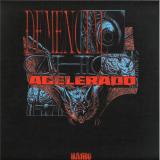
Following the success of his recent releases, Mendekua and Electro Bloody Music, Barro’s honcho Nöle demonstrates that he is at one of his creative peaks with this new four-track EP.
The fortunate owners of reference number thirteen will not only take home a substantial slice of vinyl but also a powerful teleportation device that will instantly send them to the dance floor. Demencial chico acelerado features four tracks of techno infused with elements of industrial and EBM, as dark as it gets.
The EP kicks off with the enigmatic “IDDDQD,” a complex industrial techno track packed with sharp synths, devastating basslines, and an incredible punch.
“Lemmy Dust” comes next showing no mercy from the moment that the powerful kick hits, captivating you with its hypnotic sound and not letting go until you’re exhausted.
Cinematic as its name suggests, “Xenomorph” is a claustrophobic industrial techno powerhouse, brimming with intense EBM nuances that are both unsettling and frenetic—perfect for dancing with your hair standing on end.
Last but not least, “Ghost Dancer,” is one of the most purely techno tracks, showcasing haunting synths mid-way through. It’s heavy material fit for the dance floor.
Without a doubt, this demencial accelerated kid knows exactly what he’s doing.
The above references have already been supported by artists such as Dave Clarke, Phase Fatale, The Hacker, Lokier, NX1, Unhuman, Alienata, Reka, and many more.
Text by : El Garaje de Frank
The second chapter after “neverlost”, “closer” blends samplebased production with classic songwriting – like a sonic mosaic of warmth and groove. Lyrically “hippiesque,” Sepalot explores natural beauty, unity, equality, and self-determination. Guest features shine: Blu delivers sharp lyricism, and Illa J surprises
with soulful vocals on “My Own Way.” For fans of The Avalanches, Caribou, and Madlib – Closer is lush, human, and unforgettable.
Sepalot is one of those rare artists whose sonic palette refuses to be boxed in. His music exists in the fertile space between multi-layered sophistication and playful unpredictability – a quality rooted in his eclectic upbringing. From skate-punk beginnings to soul all-nighters, from obsessive vinyl digging to
deep immersion in hip-hop’s golden era, Sepalot has carried the art of sampling like a badge of honor. His beats are mosaics – meticulously pieced together fragments of sound forming an intricate whole. Beyond the studio, he’s explored these influences as DJ, producer, and live performer, leading the
Sepalot Quartet across Europe’s jazz festivals, and more recently with his experimental band Tikhet alongside Angela Aux
With “closer”, the upcoming second chapter following his 2023 album “neverlost”, Sepalot distills his broad musical world into a sample-based yet song-driven statement. The production feels warm and tactile – think needle-on-vinyl crackle meeting modern songwriting clarity. Lyrically, it’s “hippiesque” in the best
way: themes of natural beauty, unity, democratic awareness, equality, and spiritual introspection weave through the tracklist.
The guest list is just as inspired: legendary wordsmith Blu delivers razor-sharp verses, while Illa J – brother of the late J Dilla – steps away from his signature rap to surprise with soulful vocals on “My Own Way.” Together, they amplify the album’s humanist core, balancing groove-heavy production with
lyrical depth.
Fans of artists like The Avalanches, Caribou, DJ Shadow, or Madlib will find plenty to love here, but Closer carries its own unique fingerprint – a testament to Sepalot’s ability to merge hip-hop grit with songwriting grace. If “Neverlost” was a map, “Closer” is the destination: lush, thoughtful, and deeply human.
Highly recommended for anyone ready to hold hands, open their mind, and let the beat guide them.
Where maturity evolves into a signature sound, the personal and musical journey becomes one. Chromadelia by Italian producer and live artist Ness refines two decades of precision and craft. It is techno reduced to its core logic - direct, functional, and self-aware. Ness' process moves from spontaneous jams to detailed sculpting, a continuous sequence where improvisation gradually becomes structure. Randomness plays a role, but only as the foundation for his architecture. The result is music that feels both deliberate and fluid, shaped by intuition and refined through years of practice. Minimalism here isn't merely an aesthetic choice, but an organic conclusion -- drawn from experience and the trust that less can truly reveal more. The four tracks on Chromadelia extend this clarity onto the dance floor: sharp, beepy, metallic, rhythmically charged, yet open enough to let each element breathe. Introspection and club-functionality coexist seamlessly, each amplifying the other. In Chromadelia, Ness demonstrates that every tone, every pulse serves a purpose, offering a clear reflection of an artist who has learned to let precision speak louder than complexity.
CAY unveils his personal side on Another Life, a debut album rich in melancholic euphoria
The expressive, multi-faceted 10 tracker comes on Mind Against's HABITAT label in January 2026
Cologne-born producer CAY explores beyond the dancefloor with Another Life, a debut album that trades peak-time pressure for an ambitious and artful exploration of self. Far from being rooted in one genre, the record weaves his own honest vocals with a wide range of powerful rhythms that pull from progressive, broken beat, techno and trance.
For CAY, making music has always offered refuge and a place to calm his mind, process life’s chaos and channel personal experiences into sound. His journey started in the clubs of Cologne, in illegal forest raves and with trips to Berlin to soak up big room techno. His search for more purpose, away from mental demons and the darker side of the party lifestyle, led him to production. DJing followed after a push from his brother turned Manager, and while those experiences around Europe shaped his understanding of dance floor dynamics, he was never in a rush to release his early experiments.
Instead, CAY took private time to evolve into an accomplished artist with his own musical voice. Label heads Mind Against were so impressed when they heard what he sent to their demo inbox, they both reached out to collaborate, and he has since released on their label HABITAT.
With Another Life, he is making music that is multilayered and rich in narrative, rather than defined purely by big moments. It is drawn from years of writing, with more than 60 tracks whittled down to one concise, impactful statement. "There wasn't one big concept,” says CAY “but there was direction. It's a big risk for me, but I wanted to introduce people who like club music to something deeper. I want the music to say something real.”
Because of that, Another Life introduces CAY the vocalist. For the first time, he sings on several tracks. The subjects are real, whether that's an important friend, a moment with his girlfriend or, on 'Runaway', the thought of giving up and escaping everything. The lyrics are honest but often slightly oblique, so they invite your own readings rather than spelling everything out.
Sonically, the album moves between optimistic grandeur and introspective reality. It's cinematic but personal and bridges the gap between dancefloor drive and vulnerable storytelling. There is a grand scale to many of the tracks, with arching synths reaching and heavyhearted drums anchoring a groove: you'll dance, you'll cry, maybe both at the same time.
Another Life is the sound of a producer granting himself permission to sing, turn inwards and risk audience expectations. It’s intimate without being insular, club-capable without being confined, and a compelling first chapter for an artist who has spent years building toward this moment of truth.
Kin Gajo is a Brussels based electro-acoustic jazz trio drawing inspiration on the one hand from J Dilla and Flying Lotus, and on the other from the sound of British jazz artists such as The Comet Is Coming, Yusef Dayes, and Alfa Mist. With their atypical instrumentation-accordion, saxophone, and drums-the trio has developed a sound entirely of their own, with the accordion often resembling a heavy analog synthesizer.
DJ and producer Lefto featured Kin Gajo on his compilation Lefto Presents Jazz Cats Volume 3, positioning the trio at the forefront of the young Brussels jazz scene. The music clearly demonstrates how original and vibrant the results can be when elements of contemporary jazz merge with diverse influences from a metropolitan melting pot.
With Tsuki ?, Kin Gajo releases their first full-length album.
- A1: Rage
- A2: More Real
- A3: Like No Other
- A4: Driving & Talking At The Same Time
- A5: Aeiou
- A6: Sahara
- B1: Europe
- B2: State-Of-The-Art
- B3: The Finish Line
- B4: Detroit Tonight
- B5: On The Run
- B6: Paceways
- C1: Law & Order
- C2: I Feel Tension
- C3: I Do
- C4: Dancing Out Of Time
- C5: Runaway Child (Minors Beware)
- C6: Detroit Tonight
- C7: Snake Dancing
- D1: Working
- D2: Back To You
- D3: My Baby's Explosive
- D4: Born Yesterday
- D5: Paceways
- D6: Big Sky
- E1: The Dark Side Of Me
- E2: Tachito In The White Meredes Benz
- E3: New Strangers In Town
- E4: Skylife
- E5: The Dancing Girls Of Windsor
- E6: My First Idea
- F1: 3Rd Generation
- F2: The Exterminator
- F3: A Detective Story
- F4: Jerry Leaves The Small Town
- F5: Mona Lisa On My Arm
- F6: The World Is Loud
“The group has no niche, it doesn’t fit in anywhere,” explains Necessaries drummer Jesse Chamberlain in a 1980 Melody Maker interview. “We just state the facts about life in America, like The Clash did about England, but we’re not so heavy about it.” The Necessaries rose from the ashes of Harry Toledo & The Rockets, a little-known New York art-rock band playing gigs at Max’s Kansas City during glam’s metamorphosis into punk. —From the liner notes by Michael IQ Jones The Necessaries came together in 1978 and in the too-brief lifespan of the band counted among their members, Ed Tomney (Rage To Live, Luka Bloom), Jesse Chamberlain (Red Crayola), Ernie Brooks (Modern Lovers), Arthur Russell (The Flying Hearts), Randy Gun (Love Of Life Orchestra). First championed by John Cale on the strength of Tomney’s songs, Cale produced their first single for Spy Records (under the I.R.S. umbrella) which was released in 1979. With the forward momentum brought about by the single, the band set about tracking demos intended for Warner Bros., but The Necessaries ultimately would sign to Seymour Stein’s Sire Records. These rough demo basic tracks lacked overdubs, mixes and any finishing touches that would have made them viable for commercial release, but due to tour commitments, the band had to put the sessions on hold to hit the road. While on tour, the band was shocked to discover that Sire had issued the unfinished tracks as their debut album Big Sky (issued in 1981). The band had Big Sky withdrawn and replaced with Event Horizon (issued in 1982) which included half the original tracks from Big Sky and continued to record throughout 1982 aiming for a follow-up. It was not to be and their final studio sessions remained unissued until now. Completely Necessary (Anthology 1978–1982) is the first authorized collection of recordings by The Necessaries and includes 37 tracks, 28 of which are previously unissued. Completely Necessary represents the most accurate musical history of the band laid out across three albums. Disc one is the band-approved first album Event Horizon, followed by Pilots Facing North, a disc collecting studio recordings spanning 1978–1981 and disc three finally sees the release of their final sessions, Songs From The Blue Colony. Album notes by Michael IQ Jones trace the history of the band for this compilation produced by The Necessaries’ Ed Tomney and Cheryl Pawelski (Omnivore Recordings). The audio has been restored and mastered by Michael Graves at Osiris Studio, and both the 3-LP and 2-CD sets feature previously unseen photos across the package. Finally, an essential missing piece of the late ’70s/early ’80s New York scene that was just slightly ahead of the college alt-rock soon to come, is finally available to rediscover—this time it’s authorized and absolutely necessary. BUY! HERE’S WHY! • The first authorized and comprehensive anthology by The Necessaries. • Mid-’70s/early ’80s New York rock/punk/art scene band included members: Ed Tomney, Ernier Brooks, Arthur Russell, Jesse Chamberlain, and Randy Gun. • 37 tracks, 28 previously unissued. • Liner notes by Michael IQ Jones, plus unseen photos.
- A1: Hurts And Noises
- A2: Wake Up
- A3: I Don't Wanna Be A Rich
- A4: Terrorist Bad Heart
- A5: Provocate
- A6: Lucifer Sam (Pink Floyd)
- B1: Happy!?
- B2: So Lazy
- B3: I Feel Down
- B4: Stupido
- B5: Guilty
- B6: Caroline Says (Loo Reed)
UILTY RAZORS, BONA FIDE PUNKS.
Writings on the topic that go off in all directions, mind-numbing lectures given by academics, and testimonies, most of them heavily doctored, from those who “lived through that era”: so many people today fantasize about the early days of punk in our country… This blessed moment when no one had yet thought of flaunting a ridiculous green mohawk, taking Sid Vicious as a hero, or – even worse – making the so-called alternative scene both festive and boorish. There was no such thing in 1976 or 1977, when it wasn’t easy to get hold of the first 45s by the Pistols or the Clash. Few people were aware of what was happening on the fringes of the fringes at the time. Malcolm McLaren was virtually unknown, and having short hair made you seem strange. Who knew then that rock music, which had taken a very bad turn since the early 1970s, would once again become an essential element of liberation? That, thanks to short and fast songs, it would once again rediscover that primitive, social side that was so hated by older generations? Who knew that, besides a few loners who read the music press (it was even better if they read it in English) and frequented the right record stores? Many of these formed bands, because it was impossible to do otherwise. We quickly went from listening to the Velvet Underground to trying to play the Stooges’ intros. It’s a somewhat collective story, even though there weren’t many people to start it.
The Guilty Razors were among those who took part in this initial upheaval in Paris. They were far from being the worst. They had something special and even released a single that was well above the national average. They also had enough songs to fill an album, the one you’re holding. In everyone’s opinion, they were definitely not among the punk impostors that followed in their wake. They were, at least, genuine and credible.
Guilty Razors, Parisian punk band (1975-1978). To understand something about their somewhat linear but very energetic sound, we might need to talk about the context in which it was born and, more broadly, recall the boredom (a theme that would become capital in punk songs) coupled with the desire to blow everything off, which were the basis for the formation of bands playing a rejuvenated rock music ; about the passion for a few records by the Kinks or the early Who, by the Stooges, by the Velvet mostly, which set you apart from the crowd.
And of course, we should remember this new wave, which was promoted by a few articles in the specialized press and some cutting-edge record stores, coming from New York or London, whose small but powerful influence could be felt in Paris and in a handful of isolated places in the provinces, lulled to sleep by so many appalling things, from Tangerine Dream to President Giscard d’Estaing...
In 1975-76, French music was, as almost always, in a sorry state ; it was still dominated by Johnny Hallyday and Sylvie Vartan. Local rock music was also rather bleak, apart from Bijou and Little Bob who tried to revive this small scene with poorly sound-engineered gigs played to almost no one.
In the working class suburbs at the time, it was mainly hard rock music played to 11 that helped people forget about their gruelling shifts at the factory. Here and there, on the outskirts of major cities, you still could find a few rockers with sideburns wearing black armbands since the death of Gene Vincent, but it wasn’t a proper mass movement, just a source of real danger to anyone they came across who wasn't like them. In August 1976, a festival unlike any other took place in Mont-de-Marsan – the First European Punk Festival as the poster said – with almost as many people on stage as in the audience. Yet, on that day, a quasi historical event happened, when, under the blazing afternoon sun, a band of unknowns called The Damned made an unprecedented noise in the arena, reminiscent of the chaotic Stooges in their early adolescence. They were the first genuine punk band to perform in our country: from then on, anything was possible, almost anything seemed permissible.
It makes sense that the four+1 members of Guilty Razors, who initially amplified acoustic guitars with crappy tape recorder microphones, would adopt punk music (pronounced paink in French) naturally and instinctively, since it combines liberating noise with speed of execution and – crucially – a very healthy sense of rebellion (the protesters of May 1968 proclaimed, and it was even a slogan, that they weren’t against old people, but against what had made them grow old. In the mid-1970s, it seemed normal and obvious that old people should now ALSO be targeted!!!).
At the time, the desire to fight back, and break down authority and apathy, was either red or black, often taking the form of leafleting, tumultuous general assemblies in the schoolyard, and massive or shabby demonstrations, most of the time overflowing with an exciting vitality that sometimes turned into fights with the riot police. Indeed, soon after the end of the Vietnam War and following Pinochet’s coup in Chile, all over France, Trotskyist and anarcho-libertarian fervour was firmly entrenched among parts of the educated youth population, who were equally rebellious and troublemakers whenever they had the chance. It should also be noted that when the single "Anarchy in the UK" was first heard, even though not many of us had access to it, both the title and its explosive sound immediately resonated with some of those troublemakers crying out for ANARCHY!!! Meanwhile, the left-wing majority still equated punks with reckless young neo-Nazis. Of course, the widely circulated photos in the mainstream press of Siouxsie Sioux with her swastikas didn’t necessarily help to win over the theorists of the Great Revolution. It took Joe Strummer to introduce The Clash as an anti-racist, anti-fascist and anti-ignorance band for the rejection of old-school revolutionaries to fade a little.
The Lycée Jean-Baptiste Say at Porte d’Auteuil, despite being located in the very posh and very exclusive 16th arrondissement of Paris, didn’t escape these "committed" upheavals, which doubled as the perfect outlet for the less timid members of this generation.
“Back then, politics were fun,” says Tristam Nada, who studied there and went on to become Guilty Razors’ frontman. “Jean-Baptiste was the leftist high-school in the neighbourhood. When the far right guys from the GUD came down there, the Communist League guys from elsewhere helped us fight them off.”
Anything that could challenge authority was fair game and of course, strikes for just about any reason would lead to increasingly frequent truancy (with a definitive farewell to education that would soon follow). Tristam Nada spent his 10th and 11th unfinished grades with José Perez, who had come from Spain, where his father, a janitor, had been sentenced to death by Franco. “José steered my tastes towards solid acts such as The Who. Like most teenagers, I had previously absorbed just about everything that came my way, from Yes to Led Zeppelin to Genesis. I was exploring… And then one day, he told me that he and his brother Carlos wanted to start a rock band.” The Perez brothers already played guitar. “Of course, they were Spanish!”, jokes their singer. “Then, somewhat reluctantly, José took up the bass and we were soon joined by Jano – who called himself Jano Homicid – who took up the rhythm guitar.” Several drummers would later join this core of not easily intimidated young guys who didn’t let adversity get the better of them.
The first rehearsals of the newly named Guilty Razors took place in the bedroom of a Perez aunt. There, the three rookies tried to cover a few standards, songs that often were an integral part of their lives. During a first, short gig, in front of a bewildered audience of tough old-school rockers, they launched into a clunky version of the Velvet Underground's “Heroin”. Challenge or recklessness? A bit of both, probably… And then, step by step, their limited repertoire expanded as they decided to write their own songs, sung in a not always very accurate or academic English, but who cared about proper grammar or the right vocabulary, since what truly mattered was to make the words sound as good as possible while playing very, very fast music? And spitting out those words in a language that left no doubt as to what it conveyed mattered as well.
Trying their hand a the kind of rock music disliked by most of the neighbourhood, making noise, being fiercely provocative: they still belonged to a tiny clique who, at this very moment, had chosen to impose this difference. And there were very few places in France or elsewhere, where one could witness the first stirrings of something that wasn’t a trend yet, let alone a movement.
In the provinces, in late 1976 or early 1977, there couldn’t be more than thirty record stores that were a bit more discerning than average, where you could hear this new kind of short-haired rock music called “punk”. The old clientele, who previously had no problem coming in to buy the latest McCartney or Aerosmith LP, now felt a little less comfortable there…
In Paris, these enlightened places were quite rare and often located nex to what would become the Forum des Halles, a big shopping mall. Between three aging sex workers, a couple of second-hand clothes shops, sellers of hippie paraphernalia and small fashion designers, the good word was loudly spread in two pioneering places – propagators of what was still only a new underground movement. Historically, the first one was the Open Market, a kind of poorly, but tastefully stocked cave. Speakers blasted out the sound of sixties garage bands from the Nuggets compilation (a crucial reference for José Perez) or the badly dressed English kids of Eddie and the Hot Rods. This black-painted den was opened a few years earlier by Marc Zermati, a character who wasn’t always in a sunny disposition, but always quite radical in his (good) choices and his opinions. He founded the independent label Skydog and was one of the promoters of the Mont-de-Marsan punk festivals. Not far from there was Harry Cover, another store more in tune with the new New York scene, which was amply covered in the house fanzine, Rock News (even though it was in it that the photos of the Sex Pistols were first published in France).
It was a favorite hang-out of the Perez brothers and Tristam Nada, as the latter explained. “It’s at Harry Cover’s that we first heard the Pistols and Clash’s 45s, and after that, we decided to start writing our first songs. If they could do it, so could we!”
The sonic shocks that were “Anarchy in the UK”, “White Riot” or the Buzzcocks’s EP, “Spiral Scratch” – which Guilty Razors' sound is reminiscent of – were soon to be amplified by an unparalleled visual shock. In April 1977, right after the release of their first LP, The Clash performed at the Palais des Glaces in Paris, during a punk night organised by Marc Zermati. For many who were there, it was the gig of a lifetime…
Of course, Guilty Razors and Tristam were in the audience: “That concert was fabulous… We Parisian punks were almost all dressed in black and white, with white shirts, skinny leather ties, bikers jackets or light jackets, etc. The Clash, on the other hand, wore colourful clothes. Well, the next day, at the Gibus, you’d spot everyone who had been at this concert, but they weren’t wearing anything black, they were all wearing colours.”
It makes sense to mention the Gibus club, as Guilty Razors often played there (sometimes in front of a hostile audience). It was also the only place in Paris that regularly scheduled new Parisian or Anglo-Saxon acts, such as Generation X, Siouxsie and the Banshees, the Slits, and Johnny Thunders who would become a kind of messed-up mascot for the venue. A little later, in 1978, the Rose Bonbon – formerly the Nashville – also attracted nightly owls in search of electric thrills… In 1977, the iconic but not necessarily excellent Asphalt Jungle often played at the Gibus, sometimes sharing the bill with Metal Urbain, the only band whose aura would later transcend the French borders (“I saw them as the French Sex Pistols,” said Geoff Travis, head of their British label Rough Trade). Already established in this small scene, Metal Urbain helped the young and restless Guilty Razors who had just arrived. Guitarist for Metal Urbain Hermann Schwartz remembers it: “They were younger than us, we were a bit like their mentors even if it’s too strong a word… At least they were credible. We thought they were good, and they had good songs which reminded of the Buzzcocks that I liked a lot. But at some point, they started hanging out with the Hells Angels. That’s when we stopped following them.”
The break-up was mutual, since, Guilty Razors, for their part, were shocked when they saw a fringe element of the audience at Metal Urbain concerts who repeatedly shouted “Sieg Heil” and gave Nazi salutes. These provocations, even still minor (the bulk of the skinhead crowd would later make their presence felt during concerts), weren’t really to the liking of the Perez brothers, whose anti-fascist convictions were firmly rooted. Some things are non-negotiable.
A few months earlier (in July 1978), Guilty Razors had nevertheless opened very successfully for Metal Urbain at the Bus Palladium, a more traditonally old-school rock night-club. But, as was sometimes the case back then, the night turned into a mass brawl when suburban rockers came to “beat up punks”.
Back then, Parisian nights weren’t always sweet and serene.
So, after opening as best as they could for The Jam (their sound having been ruined by the PA system), our local heroes were – once again – met outside by a horde of greasers out to get them. “Thankfully,” says Tristam, “we were with our roadies, motorless bikers who acted as a protective barrier. We were chased in the neighbouring streets and the whole thing ended in front of a bar, with the owner coming out with a rifle…”
Although Tristam and the Perez brothers narrowly escaped various, potentially bloody, incidents, they weren’t completely innocent of wrongdoing either. They still find amusing their mugging of two strangers in the street for example (“We were broke and we simply wanted to buy tickets for the Heartbreakers concert that night,” says Tristam). It so happened that their victims were two key figures in the rock business at the time: radio presenter Alain Manneval and music publisher Philippe Constantin. They filed a complaint and sought monetary compensation, but somehow the band’s manager, the skilful but very controversial Alexis, managed to get the complaint withdrawn and Guilty Razors ended up signing with Constantin with a substantial advance.
They also signed with Polydor and the label released in 1978 their only three-track 45, featuring “I Don't Wanna be A Rich”, “Hurts and Noises” and “Provocate” (songs that exuded perpetual rebellion and an unquenchable desire for “class” confrontation). It was a very good record, but due to a lack of promotion (radio stations didn’t play French artists singing in English), it didn’t sell very well. Only 800 copies were allegedly sold and the rest of the stock was pulped… Initially, the three tracks were to be included on a LP that never came to be, since they were dropped by Polydor (“Let’s say we sometimes caused a ruckus in their offices!” laughs Tristam.) In order to perfect the long-awaited LP, the band recorded demos of other tracks. There was a cover of Pink Floyd's “Lucifer Sam” from the Syd Barrett era – proof of an enduring love for the sixties’ greats –, “Wake Up” a hangover tale and “Bad Heart” about the Baader-Meinhof gang, whose actions had a profound impact on the era and on a generation seeking extreme dissent... On the album you’re now discovering, you can also hear five previously unreleased tracks recorded a bit later during an extended and freezing stay in Madrid, in a makeshift studio with the invaluable help of a drummer also acting as sound engineer. He was both an enthusiastic old hippie and a proper whizz at sound engineering. Here too, certain influences from the fifties and sixties (Link Wray, the Troggs) are more than obvious in the band’s music.
Shortly after a final stormy and rather barbaric (on the audience’s side) “Punk night” at the Olympia in June 1978, Tristam left the band ; his bandmates continued without him for a short while.
But like most pioneering punk bands of the era, Guilty Razors eventually split up for good after three years (besides once in Spain, they’d only played in Paris). The reason for ceasing business activities were more or less the same for everyone: there were no venues outside one’s small circuit to play this kind of rock music, which was still frightening, unknown, or of little interest to most people. The chances of recording an LP were virtually null, since major labels were only signing unoriginal but reassuring sub-Téléphone clones, and the smaller ones were only interested in progressive rock or French chanson for youth clubs. And what about self-production? No one in our small safety-pinned world had thought about it yet. There wasn’t enough money to embark on that sort of venture anyway.
So yes, the early days of punk in France were truly No Future!
Straight from the pantheon of techno greats, John Beltran’s Placid Angles project enters Kalarahi orbit.
Revived after a 22 year hiatus, PA has since become our main source for new Beltran material. Buy-on-sight stuff for those seeking ambient techno of a rarified calibre. There’s an inevitable pinch-me moment whenever a producer of undeniable influence jumps on the label, and safe to say, this is one of those moments.
Expect sun-kissed Balearica and sublime, acid-fuelled romance. Sometimes we levitate, bathing in the glow of JB’s beatific harmony and sanguine tenderness. The slow-burn simmer of 303, the lithe gliding of his breaks; all of it demonstrating effortlessness of execution.
Choral vocals ascend, vistas pristine and closer listens reveal even greater levels of detail. You might say it’s the gift that keeps on giving.
"For Toronto outsider pop auteur Saya Gray, music is a glittering mosaic of endless influences. Her debut album is akin to a sonic chimera; its limbs assembled from disparate, but complimentary musical organisms. Does she make pop? Folk? Rock? R&B? The moment you think you’ve got her pinned, she’s gone like a flash.
Gray’s often collage-like sonicspheres, blanketed with layers of riffs upon layers of electronic chatter, demonstrate the limitless potential of music as an art form.
Saya Gray has received support from Pitchfork, The Guardian, The Times, Colors, The New York Times, BBC Radio 1, BBC Radio 6, NTS, Fader and has recently recorded an incredible Tiny Desk session to be release around her new album. "
2026 REPRESS + DOWNLOAD
Years Of Denial is back on Veyl with their second LP 'Suicide Disco Vol. 2'. The follow up to 2019’s 'Suicide Disco', the duo makes a triumphant return, elevating their distinct sound which fuses dark wave, goth, newbeat, post-punk, EBM, and techno. The LP features 12 tracks all written and produced at Ark of Noise studio, located miles away from the polluted noise of social turbulences, immersed in isolation, creative indulgence, and poetic writing.
From the start, 'Art Break' provides the perfect warm-up, gently cleansing the palette and re-introducing us to Barkosina’s lustful vocals with a slow-burning pace that only marks the beginning. 'Wrong' picks things up, injecting a dose of body music for an infectious piece that bleeds into 'La Pendue' which keeps the energy rising. Next up, 'Mr. Guillotine' delivers a razor sharp edge, carving out a fresh post-punk feel which then brings us to the brooding, 'Never Satisfied'.
'Lover’s Crime' marks the halfway point of the record and one of the album’s standout tracks. Undeniably seductive with an ominous feel, the pair keep this mood going with 'City Lights' and then smash things open with 'Dancing With Demons'. After the devious message sent with 'The Letter', we are submerged in the romantic melancholia of 'Death Of A Lover' and 'Regarding the Pain of Others' before closing things out with 'Social Anxiety' which features vocals by longtime collaborator Broken English Club. The result is an immersive journey through the pair’s self described, Suicide Disco sound, and further builds on the Years of Denial form and legacy.
- #1 - In/Flux
- (Side A, Track 1) Dj Shadow - In/Flux - (Side B, Track 1) Dj Shadow - Hindsight
- #2 - Lost And Found (S.f.l.)
- (Side A, Track 1) Dj Shadow - Lost And Found (S.f.l.) - (Side B, Track 1) Dj Shadow - Hardcore (Instrumental) Hip-Hop - (Side B, Track 2) Dj Shadow - Last Stop
- #3 - What Does Your Soul Look Like
- (Side A, Track 1) Dj Shadow - What Does Your Soul Look Like - (Part 2 - Original Standalone Version) - (Side A, Track 2) Dj Shadow - What Does Your Soul Look Like - (Part 3 - Original Standalone Version) - (Side B, Track 1) Dj Shadow - What Does Your Soul Look Like (Part 4 - Original Standalone Version) - (Side B, Track 2) Dj Shadow - What Does Your Soul Look Like - (Part 1 - Original Standalone Version)
- #4 - Midnight In A Perfect World (U.k. Version)
- (Side A, Track 1) Dj Shadow - Midnight In A Perfect World (Radio Vision) - (Side A, Track 2) Dj Shadow - Midnight In A Perfect World (Gab Mix) - (Side B, Track 1) Dj Shadow - Midnight In A Perfect World (Extended Vision) - (Side B, Track 2) Dj Shadow - Mutual Slump (Album Version)
- #5 - Stem
- (Side A, Track 1) Dj Shadow - Stem (Cops 'N' Robbers) - (Side A, Track 2) Dj Shadow - Red Bus Needs To Leave! - (Side B, Track 1) Dj Shadow - Stem/Long Stem (Earlier Version) - (Side B, Track 2) Dj Shadow - Soup
- #6 - High Noon
- (Side A, Track 1) Dj Shadow - Hypnotist Intro - (Side A, Track 2) Dj Shadow - High Noon (Alternative Mix) - (Side B, Track 1) Dj Shadow - Devil's Advocate (Alternative Version) - (Side B, Track 2) Dj Shadow - Organ Donor
- (Extended Overhaul - Original Version)
- #7 - Camel Bobsled Race
- (Side A) Dj Shadow - Camel Bobsled Race (Original Unedited Version) (Part 1) - (Side B) Dj Shadow - Camel Bobsled Race (Original Unedited Version) (Part 2)
- #8 - Bonus Disc For This Box Set
- (Side A, Track 1) Dj Shadow - In/Flux (First Ever Mpc Version) - (Side A, Track 2) Dj Shadow - Lost And Found (S.f.l.) (First Ever Mpc Version) - (Side B, Track 1) Dj Shadow - What Does Your Soul Look Like (Part 2 - First Ever Mpc Version) - (Side B, Track 2) Dj Shadow - What Does Your Soul Look Like (Part 4 - First Ever Mpc Version)
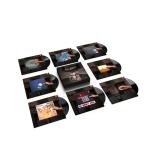
Zum ersten Mal seit Jahrzehnten erscheinen DJ Shadows legendäre Mo’Wax-Singles wieder offiziell – in einem umfassenden 8-teiligen Vinyl-Set, das mehrere Stunden bahnbrechender Musik enthält.
Die Aufnahmen wurden in den Abbey Road Studios von Miles Showell halbspeed-remastered und klingen so klar und kraftvoll wie nie zuvor. Die Box enthält zahlreiche bisher unveröffentlichte Mixe und Edits sowie eine exklusive Bonus-LP mit den ursprünglichen Demos von vier Tracks – ein einzigartiger Einblick in die Entstehungsgeschichte des Shadow-Sounds.
Abgerundet wird das Set durch neue Fotografien von Brian Cross (B+), DJ Shadows langjährigem visuellen Wegbegleiter.
Ein essenzielles Sammlerstück für Fans, Vinyl-Liebhaber und alle, die die Wurzeln moderner Beat-Kultur feiern wollen.
"This box wasn’t made for the casual listener,it was made with the hardcore fan in mind. I’ve always felt, if something is worth doing, it’s worth doing right, and every step of the process was
made with this philosophy firmly in mind. I had fun locating and resurrecting these songs, some of which still feel close to my consciousness as though they were made yesterday.”
-DJ Shadow
Key long-term collaborators and Coil's "secret third member" Danny Hyde located the original Hellraiser studio session tapes, and the bonus material recovered from them is presented here as an "expanded ritual" edition.
For fans of pain & pleasure, Throbbing Gristle, lost horror soundtracks & haunted electronics.
Back in 1987, Clive Barker's supernatural body-horror classic Hellraiser hit cinemas worldwide and introduced audiences to the demonic Cenobites. Barker was a devoted COIL fan (Peter Christopherson and John Balance), and he famously said they were the only band he'd ever heard on record whose music he'd had to take off because, in his words, "theymade his bowels churn.". He initially invited them to compose the film's music, and the group began recording cues. But the producers at New World Pictures ultimately rejected the material in favor of a more traditional approach, bringing in Christopher Young, whose final score remains excellent, if less experimental. What remains from Coil is an unfinished soundtrack with surviving fragments and rough ideas, abruptly left behind mid-process, a glimpse into an alternate Hellraiser movie, one we can only fantasize into existence.
Nearly 40 years later, key long-term collaborators and Coil's "secret third member" Danny Hyde located the original Hellraiser studio session tapes, and the bonus material recovered from them is presented here as an "expanded ritual" edition, reassembled into a standalone, possibly definitive and strangely beautiful nightmare suite. Play it in the dark and experience the consequences of raising hell...
MUSIQUE POUR LA DANSE presents The Unreleased Themes From Hellraiser expanded ritual by Coil
Back in 1987, Clive Barker's supernatural body-horror classic Hellraiser hitted cinemas worldwide and introduced audiences to the demonic Cenobites. Barker was a devoted COIL fan (Peter Christopherson and John Balance), and he famously said they were the only band he'd ever heard on record whose music he'd had to take off because, in his words, "theymade his bowels churn.". He initially invited them to compose the film's music, and the group began recording cues. But the producers at New World Pictures ultimately rejected the material in favor of a more traditional approach, bringing in Christopher Young, whose final score remains excellent, if less experimental. What remains from Coil is an unfinished soundtrack with surviving fragments and rough ideas, abruptly left behind mid-process, a glimpse into an alternate Hellraiser movie, one we can only fantasize into existence.
Nearly 40 years later, key long-term collaborators and Coil's "secret third member" Danny Hyde located the original Hellraiser studio session tapes, and the bonus material recovered from them is presented here as an "expanded ritual" edition, reassembled into a standalone, possibly defnitive and strangely beautiful nightmare suite. Play it in the dark and experience the consequences of raising hell...
Notes by Danny Hyde
Original artwork by Trevor Brown
For fans of pain & pleasure, Throbbing Gristle, lost horror soundtracks & haunted electronics.
Brånd is one weird/post black metal act from the Upper Austrian town of Linz.
Started off in 2015 as a solo act by Vritra (also in Kringa and Weathered Crest) with the need for a form of expression free from perfection or boundaries, over the past ten years the ever-evolving project ventured into various soundscapes, from crude black metal to lo-fi ambient and from ferocious post-punk to psych downer rock, all while splitting releases with extreme underground torchbearers like Absolute Key, Calvary and Rosa Nebel.
Joined by musicians to evolve old and new ideas, Brånd debut full-length album grew from 4-track demos gathered over the last decade to become an album of richly arranged songs from all over the fields of interest, breaking from their lo-fi tradition to new horizons.
To describe thoroughly “Tåg & Nåcht” is possibly the hardest task to do, given all the influences that are skilfully intertwined and perfectly balanced. In this witches’ brew the most schooled listeners will hear some angular post-punk à la Gang Of Four sustaining pagan declamations in the vein of Fenriz folk metal excursus Isengard. Straight forward dark anarcho punk assaults are mitigated by almost new age juxtapositions. Traces of 70’s German krautrock like La Düsseldorf are melted into a heavy metal cast, while wind instrument raids that are equally James Chance and Death In June seem to drop when least expected.
The sound is crunchy and surprisingly warm, contrary to what one might expect of a band emerging from a black metal background. But right now, Brånd is so much more than this: they can master a wide range of sounds that span from 70’s space rock, passing through 80’s post-punk and UK82, reaching 90’s black metal and 2000’s blackgaze, all in one incredibly coherent album. If this sounds too good to be true, suit yourself and press Play.
Split released with Tour De Garde in US/CA.
Luca Moplen’s reworks of the T-Connection classic “Do What You Wanna Do”!
The 9 minute plus vocal version combines the authentic pumping bass-line and slamming beats together with the characteristic T Connection percussion with the vocals of frontman Theo Coackley, while on the flipside Luca demonstrates his skills with a slightly shorter Dub-version, stripped from it’s vocals, cooked and re-edited to perfection.
2026 Repress
Slam rework Nitzer Ebb, Silent Breed, DK8, Terrence Fixmer and more for the final installment of their Archive Edit series.
Soma label heads Slam curate a specially designed package of tracks to finalize their Archive Edit project that sees them delve deep into Techno's past to bring some of the genre's best tracks into the modern age. The Archive Edit project started as a way for Slam to showcase and share the many different edits that had made their way into their DJ sets over the last few years.
The pairing of Stuart McMillan & Orde Meikle have both raided their extensive collections, picking out tracks that have defined countless sets over their career. Tracks from luminaries such as Nitzer Ebb, Thomas P Heckmann (as Silent Breed), Damon Wild & Terrence Fixmer have been re-edited alongside some of Slam's own unreleased material, showcasing the duo's current sound; one that naturally evolves, matures and demonstrates why the duo have been at the forefront of the global scene since its inception.
- 1: Cavity - First Communion
- 2: Figurative Theatre
- 3: Burnt Offerings
- 4: Mysterium Iniquitatis
- 5: Dream For Mother
- 6: Stairs - Uncertain Journey
- 7: Spiritual Cramp
- 8: Romeo's Distress
- 9: Resurrection - Sixth Communion
- 10: Prayer
- 11: Dogs
- 12: Romeo’s Distress
- 13: Deathwish
- 14: Desperate Hell
- 15: Spiritual Cramp
- 16: Cavity - First Communion
- 17: Sleepwalk (1982 Demo)
- 18: Invocation (1982 Demo)
- 19: Cavity - First Communion (Alternate Version)
- 20: Lord’s Prayer (Alternate Version)
Blood Sanctum Vinyl w/ Poster
Futurismo präsentiert das legendäre Debütalbum "Only Theatre Of Pain" (1982) der Gothic-Legenden Christian Death in neuen limitierten Deluxe-Formaten - remastert und erweitert um frühe Demos und rarem Material, samt Poster. "Only Theatre Of Pain" gilt als Meisterwerk und Ursprung des Deathrock - ein wegweisendes Epos von unheiliger Kraft und tiefschwarzer Emotionalität. Obwohl seine Wurzeln im Punk liegen – die Ursprünge der Christian Death-Originalbesetzung liegen in der Früh-1980er Hardcore-Explosion in Südkalifornien –, kann die Bedeutung dieses Werks für die nachfolgende Musiklandschaft nicht hoch genug eingeschätzt werden. Wie ein Adrenalinstoß ins Herz der Finsternis entspringt diese ungezügelte und geheimnisvolle Aufnahme bis heute jeder Kategorisierung. Mit dem visionären Rozz Williams (damals noch Teenager) sowie Punk-Legende Rikk Agnew (Adolescents), James McGearty und George Belanger präsentiert "Only Theatre Of Pain" eine musikalische Erkundung, geprägt von psychosexueller Lyrik und einem tiefen Glaubenskampf, aufgenommen innerhalb weniger Tage mit Produzentenlegende Thom Wilson. Klanglich und visuell seiner Zeit voraus, ist dieses Stück sakrilegischer US-Punk ein absolutes Muss für alle, die sich für Gothic begeistern, für Fans von The Misfits, Bauhaus und The Cramps.
- 1: Lake Walk
- 2: Lazy Daisy
- 3: Ups & Downs
- 4: Silently
- 5: There Was A Nice Sunset
- 6: Somewhere Good
- 7: Slow Island
- 8: Movin’ On
If – in some parallel universe (or perhaps a not-so-distant-future version of the one we’re already sentenced to living in) – the evil overloads of artificial intelligence were actually successful in their attempts to create convincingly enjoyable “original music,” more specifically tasked with wholly encapsulating my own personal tastes by data-chugging some cocktail of – oh, I don’t know – the posters on my wall, the records in my “most listened to” pile, the mixtapes I made for others, intensive physical scans of my auditory cortex, amygdala, hippocampus, heart strings, whatever else they have splayed out on their autopsy table with the intention of generating one all-encompassing “perfect band” based on the fruitful sum of their findings – that band, for me, would be (or would at least sound exactly like) the Tara Clerkin Trio. It is, quite simply, without exception, the music I wish to hear.
Formed in Bristol UK (where none of them are from yet all of whom are deeply engrained) in 2020, the Tara Clerkin Trio – as it somewhat democratically exists today, despite the singular authority implied by its name – consists of the titular Tara Clerkin, her partner Sunny Joe Paradisos, and Sunny’s brother, Patrick Benjamin. I’ll confess, I don’t know what their respective roles are within the operation and there’s only a very small part of me that cares to learn, as one of my favorite qualities in an objective listening experience is the mystery of who is playing what, which sounds are “authentic” versus synthesized, which chunks are performed “live” in a room together versus meticulously Frankenstein’ed from measure to measure, or how exactly the overall sound is so (seemingly) effortlessly achieved. Though, I suspect, if and when I do witness a live performance by this band at any point, my enjoyment of the music will not be lost in my better understanding of it.
With two extraordinary mini-albums – In Spring (2021) and On The Turning Ground (2023) – making a splash on London’s formidable World of Echo label in wake of their self-titled 2020 debut, this upcoming Somewhere Good LP is, in many ways, the band’s most realised work. In running their usual gauntlet of idiosyncratic (*an overused adjective for which here there is regrettably no sufficient alternative) approaches, Clerkin & co. colour in and outside of compositional lines over the course of 40+ celebratory minutes - never wallowing, despite inherently somber subject matters of self-defeat, disease, displacement, restlessness, gentrification - allowing their arrangements and improvisations ample space and time to situate, stretch out, breathe, cross-pollinate, and ultimately take deeper hold on the listener’s imagination – all while somehow sounding more like themselves than ever before.
Of course, there are traceable influences herein, if one felt that such comparisons were necessary to properly examine and enjoy this music (they aren’t)… Being the big dumb American from the small boring town that I am, cornfed on ‘90s alternative radio with the enchantingly exotic sounds of Maxinquaye and Mezzanine emanating from my chunky tube television, I can’t help but to make a blatantly obvious reference to a “Bristol sound”, ie the whole trip-hop trip, the pastoral crooning over the suggestive urban grime of cracked electro/piano treatments, the digitally-yet-primitively reconstructed James Bond soundtrack string-beats, etc.. But the Tara Clerkin Trio is so infinitely much more than that. There are elements of avant-pop, modern classical, kraut-folk, audio verité, dare I say indie rock (and not of the beer guzzling, masturbatory fuzz-flex variety but perhaps more like a Trish Keenan-fronted Faust, Adrian Sherwood at the mixing desk of If You’re Feeling Sinister, or – in expanding on our alternate reality – a world in which High Llamas cut a full-length for Warp Records with Andrew Weatherall on coffee duty).
The hazy, unmappable skyline-mirage of droning harmonium, upright bass, peculiarly accentuated wind instruments, acoustic guitar, hushed yet literally mighty keys combine to hypnotizing effect. The band may make underlying nods to jazz, sure, but it’s not appropriation, it’s that they have the actual chops to build it out. Beneath the janky samples and oddball percussive embellishment lies actually great drumming. Beyond the manipulated vocal witchery and woefully reflective plain-spoke moments are Tara’s subtly inspired melodies, sung with what might honestly be the glue to the whole crazy equation. A calming consistency throughout the otherwise unpredictably dynamic, boldly intuitive, uniquely British exploration of this (their own) universe in song. – Ryan Davis (Chicago, February 2026)