Eight men pick up shiny brass instruments, lock into an unspoken groove and rotate genres like your favorite playlist shifting from jazz and R&B to hip-hop, pop and beyond with fire, focus and fluidity. New Orleans-bred staple The Soul Rebels expand musical boundaries with an unwavering commitment to originality. Far more than augmentation and accompaniment, the octet—Julian Gosin trumpet, MC, Marcus Hubbard [trumpet], Lumar LeBlanc III [snare drum], Derrick Moss [bass drum], Corey Peyton [trombone, MC], Erion Williams [saxophone], Paul Robertson [trombone] and Manuel Perkins Jr. [sousaphone]—pioneer the integration of their chosen instrumentation.
Featuring Special Guests: Sean Carey, Dee-1, Alfred Banks, Emeril Lagasse, Trombone Shorty, Kermit Ruffins, Mia X, DJ Jubilee, Cheeky Blakk, Tonya Boyd-Cannon, New Orleans Citywide Youth Choir, Jaelyn Langston, Wild Wayne, Kango Slim, PJ Morton, Big Freedia, Denisia, Branford Marsalis, Brandee Younger, KES, Kayla Jasmine, Matisyahu, Robert Glasper, Fabriq, Tarriona "Tank" Ball
Voivod wurde 1982 in Jonquière, Quebec, von Sänger Denis „Snake“ Belanger, Gitarrist Denis „Piggy“ D'Amour, Bassist Jean-Yves „Blacky“ Thériault und Schlagzeuger Michael „Away“ Langevin gegründet und nahm eine Reihe von Demos auf, bevor Brian Slagel auf die Band aufmerksam wurde und einen Vertrag mit Metal Blade Records unterzeichnete. Das Ergebnis war das furiose Debütalbum „War And Pain“, das im August 1984 veröffentlicht wurde. Zu dieser Zeit teilten sich alle vier Mitglieder eine Wohnung in Montreal und lebten von 150 Dollar Sozialhilfe pro Woche. Da sie die Schule bereits hinter sich hatten, konnten sie fast jeden Tag proben, was zur Entstehung ihres zweiten Albums „Rrröööaaarrr“ führte. Während der Aufnahme des Albums wurde fast die gesamte Ausrüstung aus dem Proberaum gestohlen. Um Geld aufzutreiben, organisierte die Band zusammen mit ihrem Manager Maurice Richard das legendäre „World War III“-Festival. Dort lernten sie Karl-Ulrich Walterbach kennen, der Voivod davon überzeugte, bei seinem Label Noise Records zu unterschreiben. Nach „Rrröööaaarrr“ von 1986 hieß Voivods zweites Album für Noise „Killing Technology“ und gilt weithin als der größte kreative und klangliche Sprung der Band. Es wurde in West-Berlin unter den wachsamen Augen von Harris Johns aufgenommen und kam 1987 auf den Markt. Weniger hektische Kompositionen wie „Tornado“, „Ravenous Medicine“ oder „Killing Technology“ hoben die Kanadier schnell von ihren Thrash-Zeitgenossen ab. „Rrröööaaarrr„ haben wir mit unserem Tontechniker in einer heruntergekommenen Schule ohne Geld selbst produziert“, erklärt Michael Langevin in dem Buch „Damn The Machine. The Story Of Noise Records“ des amerikanischen Autors David E. Gehlke. „Plötzlich hatten wir ein professionelles Umfeld, ein richtiges Studio mit einem richtigen Produzenten und ein Label, das die Finanzierung sicherstellte. Es ging Schritt für Schritt. Für „Killing Technology“ haben wir vielleicht ein bisschen langsamer gemacht. Wir konnten die Rollen spielen, und es hat viel Abwechslung. Es ist mein Lieblingsalbum und in meinen Ohren die perfekte Mischung aus Thrash, Prog und Hardcore. Es ist definitiv ein entscheidendes Album.“
Vocals are the starting point of all music and the source of connection with listeners.
This exquisite female vocal compilation features a lineup exclusive to Terashima Records, from hidden gems to promising young vocalists.
"Jazz is about enjoying the music, not the improvisation," and "buying for the beautiful album cover is recommended," Terashima has long advocated.
Enjoy a moment of enchantment with his unique vocal style. Yasukuni Terashima has carefully selected great voices, great sounds, and great songs, providing a l
uxurious listening experience. Enjoy this vocal compilation while driving, relaxing, or enjoying a drink. It's also recommended as a way to learn about the current
state of contemporary jazz vocals. The "For Jazz Vocal Fans Only" series, featuring carefully selected female vocalists from a lineup exclusive to Terashima Records,
from hidden gems to promising young singers, has received such positive feedback that the eighth installment is now available on limited-edition vinyl!
It also includes tracks by MOON, who recently made waves with Tsuyoshi Yamamoto, as well as Katie George and Diana Panton, who are popular in Japan.
Based on Denis Johnson's beloved novella, Train Dreams is the moving portrait of Robert Grainier, a logger and railroad worker who leads a life of unexpected depth and beauty in the rapidly-changing America of the early 20th Century. The Netflix film features the music of Bryce Dessner, who blends classical influences with a modern sensibility. Dessner has been a member of the successful rock band The National for years. In the past years he becomes more and more known for scoring contemporary films, such as C'mon C'mon, Sing, Sing and The Two Popes. The final song on this album features none other than Nick Cave, making this a real must-have. Train Dreams is available as a limited edition on orange & black marbled vinyl and includes an insert.
Vokabularium, curated by Denis Horvat, welcomes Mexican producer Mëhill for his label debut, The Pink Thing. Known for his releases on Innervisions and Exit Strategy, Mëhill delivers a hypnotic, emotive EP blending precision and soul.
Refined over a decade of craft, The Pink Thing captures Mëhill’s signature balance of energy and harmony - cementing his place in the new wave of modern melodic electronic music.
out of Stock
Last delivered 85 days ago available to reorder, subject to availability
Uzed is the fourth album by Belgian band Univers Zero. It was released three years after 'Ceux du Dehors', due to a change in line-up and a new repertoire, although the EP 'Crawling Wind' had been released in the meantime.
The album marked a turning point for the band. Univers Zero explored new electric colors, giving it a more rock feel with the addition of new musicians such as Jean-Luc Plouvier, who introduced the synthesizer, guitarist Michel Delory, who played a memorable solo in 'Célesta (For Chantal)', and André Mergen on electric cello and alto saxophone, who enriched the orchestral texture. Dirk Descheemaeker on clarinet and soprano saxophone, the return of Christian Genet on bass, this evolution can also be explained by the arrival of new musicians. UZED'is entirely composed and arranged by Daniel Denis
The recording and mixing were done at Daylight Studio in Brussels in 1984, but to bring out UZED, the sound had to be improved by giving it more dynamic range, which was done at ICP Studios in 2024.
Uzed is the fourth album by Belgian band Univers Zero. It was released three years after 'Ceux du Dehors', due to a change in line-up and a new repertoire, although the EP 'Crawling Wind' had been released in the meantime.
The album marked a turning point for the band. Univers Zero explored new electric colors, giving it a more rock feel with the addition of new musicians such as Jean-Luc Plouvier, who introduced the synthesizer, guitarist Michel Delory, who played a memorable solo in 'Célesta (For Chantal)', and André Mergen on electric cello and alto saxophone, who enriched the orchestral texture. Dirk Descheemaeker on clarinet and soprano saxophone, the return of Christian Genet on bass, this evolution can also be explained by the arrival of new musicians. UZED'is entirely composed and arranged by Daniel Denis
The recording and mixing were done at Daylight Studio in Brussels in 1984, but to bring out UZED, the sound had to be improved by giving it more dynamic range, which was done at ICP Studios in 2024.
More Than Meets the Eye is the debut album by Belgian artist Léonard Steyaert - an evocative blend of experimental electronics and intimate songwriting. Across six tracks, the album unfolds like a psychological thriller, navigating themes of alienation, vulnerability, and ecstatic release. Think Radiohead meets Aphex Twin, with echoes of Björk, Portishead, and Messiaen.
More Than Meets the Eye is the debut album by Belgian artist Léonard Steyaert - an evocative blend of experimental electronics and intimate songwriting.
Across six tracks, the album unfolds like a psychological thriller, navigating themes of alienation, vulnerability, and ecstatic release.
Think Radiohead meets Aphex Twin, with echoes of Björk, Portishead, and Messiaen.
Mixed by James Ginzburg (Emptyset), mastered by Joker, the sound is raw, detailed, and immersive.
Tracks like Caught Breaking In and See You Burst oscillate between whispered confessions and intense sonic ruptures.
The album forms a narrative arc - from inner tension (A Threatening Morning) to the revelation of What Really Happened.
Artwork and live visuals are part of a strong visual identity created in collaboration with artists Joséphine Steyaert, Thomas Vanderniet and Esther Denis.
A limited vinyl edition and a performance-based live show will support the release.
Perfect for adventurous listeners and tastemakers seeking something personal, cinematic, and genre-defying.
The third drop into the Poorly Knit ocean, sees Bruce washed ashore with three silted and barnacled explorations into dub techno, ambient and beyond.
Seizing the microphone for the first time since his sophomore album Not Ready For Love, Bruce weaves a seductive siren song with Golden Water Queen, treading sweet nothings into the bubbling abyss. Sinking further into the deep, The Hand fizzes and froths at the fringes of nothingness, born from the wishing of a softer and more insidious soundtrack to Denis Villeneuve’s Dune. Then finally the waves are parted with DHam’s Jam, bobbing along 8 minutes of bouncing kick and prancing percussion, pulling you with peaceful buoyancy along the dancefloor, into “the zone.”
With a continued emphasis on the importance of physical medium within dance music, the 12” is pressed with eco-friendly “Eco-Mix” reground PVC and sleeved in DIY lino printed sleeves.
out of Stock
Last delivered 11 months ago available to reorder, subject to availability
Forming as teenagers in the late 70s, female vocal group Black Harmony was comprised of Diane Cape, Dup'e Odelade, and Denise Mansfield (sister of Ingrid Mansfield-Allman, lead vocalist on Freeez’s ‘Southern Freeez’).
Whilst their much-loved 1979 cover version debut ’Don’t Let It Go To Your Head’ (Jean Carn) was a hit on the UK reggae charts, gaining major label distribution, Black Harmony’s self-penned 'Let’s Be Lovers’ has arguably become the trio’s most coveted work amongst collectors.
Originally released in 1981 by Tony Owens’ Cyprian Records imprint and distributed from his shop, Seven Leaves Records in Kensal Rise, the single marks one of saxophonist and flautist Courtney Pine’s earliest appearances on record as a member of the backing band Inity Rockers.
out of Stock
Last delivered 11 months ago available to reorder, subject to availability
On the cover of 8 Tips for Full Catastrophe Living, the new album by Asher White, The Statue of Liberty is in pieces but not destroyed - in progress, being built, not yet complete. Her torch is on the ground, her head somewhere out of frame. Before she was a symbol, she was metal, and living, sweating people riveted her together. The spirit of de/construction characterizes 8 Tips, White's 16th LP overall and first since signing to Joyful Noise. Like White's previous albums, 8 Tips for Full Catastrophe Living darts boldly among varied musical styles. Doom metal splits open into bossa nova; psychedelic rock and power pop flip into industrial techno. Each song emerges from its composite parts in the studio: White doesn't draft or demo before recording, but builds out her pieces sculpturally, sound by sound. "It's forever collage, forever assemblage," she says of her music. "To me, it has more to do with J Dilla, L.A. beat, and musique concrète than pop songwriting." The record's quick turns and vivid contrasts reflect White's cultural voraciousness. A writer, painter, and sculptor as well as a musician, she gathers materials constantly, always digging for new ideas in every possible form. The films of Claire Denis, the novels of Clarice Lispector, and the memoirs of Eve Babitz all funnel into White's reflection of 21st century disaster capitalism. 8 Tips is also White's first album to have been mixed outside her Providence studio; after recording it herself, she brought tracks to Seth Manchester (Lightning Bolt, Battles, The Body) who gave the album its brawny, unruly charge. "I was interested in making something that serves dually as a self-help book and a chronicle of self-destruction," says White. Overlaying autobiography onto character vignettes, 8 Tips for Full Catastrophe Living wrenches open the idea of apocalypse - an abrupt disaster rained down on uncomplicated innocents - and peers inside at its bursting, devastated particulars. Apocalypse is slow and uneven. Nations falter as do individual people, clinging fast to their old, dilapidated self-preservation strategies. What saved you in the past might destroy you in the future. Flip it around, shake yourself loose, ruin the person you've known yourself to be, and you might get the chance to become something else. "There have been so many end times, many other apocalypses." White says. "People were writing self-help tips, and people were partying." We have survived catastrophe before. Out of the ruins, people made work - art, books, culture. "I was interested in making something that sounds like a self-help book, but it's actually about self-destruction," says White. "In full catastrophe living, you just have to do a bunch of whippets. This album is mostly about doing whippets. I'm not even kidding."
In Guadeloupe, many people think that jazz and ka music are like a ring and a finger. To some extent, the same could be said about so called Latin music and the music played in the French West Indies.
Both aesthetics were born in the Caribbean and bear so many connections that they can easily be considered cousins. In constant dialogue, there are lots of examples of their fruitful alliance and have been for a while. The English country dance that used to be practiced in European lounges came to be called kadrille in Martinique and contradanza in Cuba. They both featured additional percussion instruments inherited from the transatlantic deportation. Drawing from shared feelings about the same traumatized identity – later to be creolized – it would be hard not to assume that they were meant to inspire each other. The golden age of the orchestras that graced the Pigalle nights during the interwar period further proves the point. As soon as the 1930s, Havana-born Don Barreto naturally mixed danzón and biguine music in a combo based at Melody's Bar. In the following decade, Félix Valvert, a conductor who was born and raised in Basse-Terre in Guadelupe, also worked wonders in Montparnasse with La Coupole, which was an orchestra made up of eclectic musicians. Afro- Caribbean performers of various origins were often hired on rhythm and brass sections in jazz bands, which used to enliven the typical French balls of the capital. In the 1930s and onwards, Rico’s Creole Band was one of them.
Martinican violinist-clarinettist Ernest Léardée, who would become the king of biguine music as well as the main figure of French Uncle Ben's TV commercials (a dark stigma of post-colonial stereotypes), had musicians from the whole Caribbean sphere play at his Bal Blomet – and they all enchanted "ces Zazous-là" (according the words of Léardée's biguine-calypso piece). In les Antilles (French for French West Indies), music history started to speed up in the 1950s, when trade expanded and radio stations grew bigger. The Guadelupean and Martiniquais youth tuned in their old galena radio sets to South American and Caribbean music. As for the women traders, les pacotilleuses, they bought and sold goods across different islands (the "passing of items through various hands" was thought to be most pleasurable) and brought back countless sounds in their luggage. Such was the case of Madame Balthazar, who once returned from Puerto Rico with the first 45rpm and 33rpm to ever enter Martinique.
Out of this adventure was created the famous Martinican label La Maison des Merengues, a music business she opened and undertook with her husband and which proved to be a major landmark. At the end of the 1950s, in Puerto Rico, Marius Cultier competed in the Piano International Contest playing a version of Monk's Round 'Midnight. He won the first prize and this distinction foreshadowed everything that was to come. Cultier, the heretic Monk of jazz, was quickly praised for writing superb melodies, always tinged with a twist that conferred a unique sound to his music. It didn't take long for the gifted self-taught musician to get to play with Los Cubanos, making a name for himself thanks to his impressive maestria on merengues.
The rest is history. Besides, in the late 1950s, Frantz Charles-Denis, born into the upper middle class in Saint-Pierre and better known by his first name Francisco, went back home after working at La Cabane Cubaine – a club located rue Fontaine where he had caught the Latin fever. Francisco's music was therefore heavily marked by his Cuban cousins' influence, which gave the combos he led a specific style and also led to renewal. Things were swinging hard in La Savane, located in the main square in Fort-de-France. He set up the Shango club close by and tested out the biguine lélé there, a new music formula spiced up with Latin rhythms. Soon afterwards, fate had him fly to Puerto Rico and Venezuela.
As for percussionist Henri Guédon (percussions were only a part of his many talents), he was born in Fort-de-France in May 22nd 1944, the day marking the celebration of the abolition of slavery. As an old man, he could remember that in " his father's Teppaz, a lot of hectic 6/8 music was constantly playing...". In the opening lines of his Lettre à Dizzy, a small illustrated collection of writings published by Del Arco, he highlighted the huge impact that cubop had on him as a teenage boy, around 1960. He eventually turned out to be the lider maximo in La Contesta, a big band steeped in Latin jazz. He was also the one who originated the word zouk to describe music which brought the sound of the New York barrio to Paris. It was the culmination of a journey that started in Sainte-Marie: "a mythical place for bélé, the equivalent of Cuban guaguancó". In the early 1960s, the tertiary economy developed to the detriment of agriculture. Yet rural life was where roots music emerged in Martinique and in Guadeloupe.
Record companies played a major part in the process of Latin versions sweeping across the islands – before reaching everywhere else. Producer Célini, boss of the great Aux Ondes label, and Marcel Mavounzy, both the head of Émeraude records - a firm which was founded in 1953 - as well as the brother of famous saxophonist Robert Mavounzy, were big names to bear in mind. Although there were many of them - all of whom are featured on this record - Henri Debs was definitely the major figure in the recording adventure. He proved to be so influential that he even got compared to Berry Gordy. In the mid 1950s, when he acquired his first Teppaz, he worked on his first compositions: a bolero and a chachacha. Then, he became the one man who made people discover Caribbean music, from calypso to merengue. He was among the first ones to rush out to San Juan, Puerto Rico, to buy records and distribute them through a store run by one of his brothers in Fort-de-France. He had members of the Fania All Star come and perform there, which he was madly proud about. He was also the first one to pay attention to Haitian music, such as compas direct and various other rhythms which would soon flood the market. As a result, many of the combos hitting his legendary studio would end up boosted by widespread "Afro-Latin" rhythms. However, he never denied his identity: gwo ka drums were given a major role, although they were instruments which had long been banned from the "official" music spheres. The present selection bears witness to such a creative swarming. Here are fourteen tracks of untimely yet unprecedented cross-fertilization: all types of music rooted in the Creole archipelago have found their way, whatsoever, to the tracklisting. Whether originating from the city or being more rural, they all go back to what Edouard Glissant, in an interview about the place of West Indian music in the Afro-American scope, called "the trace of singing, the one which got erased by slavery." "It is so in jazz, but also in reggae, calypso, biguine, salsa... This trace also manifests through the drums, whether Guadelupean, Dominican, Jamaican or Cuban... None of them being quite the same. They all point to the idea of a trace, seeking it out and connecting to each other through it. This is the hallmark of the African diaspora: its ability to create something new, in relation to itself, out of a trace. It may be the memory of a rhythm, the crafting of a drum, a means of expression which doesn't resort to an old language but to the modalities of it." The opening track features one of the emblematic orchestras of this aesthetic identity, criscrossing many music types from the archipelago. The 1974 Ray Barretto guajira – Ray Barretto was a major New York drummer influenced by Charlie Parker and Chano Pozzo – is magnificently performed by Malavoi, a legendary Fayolais group (i.e from Fort-de-France). Additionally, the compilation ends on a piece by Los Martiniqueños de Francisco. It symbolically closes the circle as it is a genuine potomitan of Martinique culture which also functions as a tireless campaigner for Afro-Caribbean music. Practicing the danmyé rounds (a kind of capoeiria) to the rhythm of the bèlè drum, it delivers a terrific Caterete, a kind of champeta of Afro- Colombian obedience which was originally composed by Colombian Fabián Ramón Veloz Fernández for the group Wgenda Kenya. The icing on the cake is Brazilian Marku Ribas, who found refuge in Martinique in the early 1970s, bringing his singing to the last trance-inducing track. These two "versions" convey the whole tone of a selection composed of rarities and classics of the tropicalized genre, swarming with tonic accents and convoluted rhythms. It is the sort of cocktail that the West Indians never failed to spice up with their own ingredients. For instance, the Los Caraïbes cover of Dónde, a famous Cuban theme composed by producer Ernesto Duarte Brito, has a typical violin and features renowned Martinique singer Joby Valente and his piquant voice.
The track used to be – or so we think – their only existing 45rpm. The meaningful Amor en chachachá by L'Ensemble Tropicana, a band which included Haitian musicians among whom was composer and leader Michel Desgrotte, also recalls how Latin music was pervasive in the tropics in the mid-1960s. They were the ones keeping people dancing at Le Cocoteraie in Guadelupe and La Bananeraie in Martinique. Around the same time, another "foreign" band, Congolese Freddy Mars N'Kounkou's Ryco Jazz, achieved some success on both islands by covering Latin jazz classics – such as their adaptation of Wachi Wara, a "soul sauce" by Dizzy Gillespie and Chano Pozo whose interweaving of strings and percussions can have anyone hit the dancefloor. How can you resist Dap Pinian indeed, a powerful guaguancó by Eugene Balthazar, performed by the Tropicana Orchestra and published by the Martinique-founded La Maison des Merengues? It also acts as a symbol of the maelstrom at work. Going by the name Paco et L'orchestre Cachunga, Roger Jaffory used to play guaguancó too: his Fania-inspired Oye mi consejo is one example of his style. Baila!!!!! Dancing was also one of the Kings' focus points. Oriza is a Puerto Rican bomba and a "classic" originally composed by Nuevayorquino trumpeter Ernie Agosto, which reserves major space for brasses, giving it a special sheen.
Emerging from the New York barrios crucible was also La Perfecta, a Martinique group originating from Trinidad, whose name directly references the totemic Eddie Palmieri figure as well as his own band, also called La Perfecta. Here they borrow Toumbadora from Colombian producer and composer Efraín Lancheros and interpret it by emphasizing percussions, which set fire to the track even more than the wind instruments. The same goes for Martinique's Super Jaguars, who use Tatalibaba – a composition by Cuban guitarist Florencio "Picolo" Santana which was made famous by Celia Cruz & La Sonora Matencera – as a pretext for sending their cadences into a frenzy. In a more typically salsa vein, the Super Combo, a famous Guadelupean orchestra from Pointe-Noire that was formed around the Desplan family and had Roger Plonquitte and Elie Bianay on board, adapt Serana, a theme by Roberto Angleró Pepín, a Puerto Rican composer, singer and musician also known for his song Soy Boricua. Here again, their vision comes close to surpassing the original. In the 1970s, L'Ensemble Abricot provided a handful of tracks of different syles, hence reaching the pinnacle of the art of achieving variety and giving pleasure. They played boleros, biguines, compas direct, guaguancó and even a good old boogaloo - the type they wanted to keep close to their hearts for ever, "pour toujours", as they sang along together in one of their songs. Léon Bertide's Martinican ensemble excelled at the boogaloo which had been composed by Puerto Rican saxophonist Hector Santos for the legendary El Gran Combo.
Three years later, in 1972, Henri Guédon, with the help of Paul Rosine on the vibraphone, tackled the Bilongo made famous by Eddie Palmieri. Such a classic!!!!! And so were the Aiglons, the band from Guadelupe: choosing to execute Pensando en tí, a composition by Dominican Aniceto Batista, on a cooler tempo than the original, they noticeably used a wonderfully (un)tuned keyboard in place of the accordion. On the high-value collectible single – the first one released by Les Aiglons under the Duli Disc label – there is a sticker classifying the track under the generic name "Afro". Now that is what we call a symbol. Jacques Denis
out of Stock
Last delivered 7 months ago available to reorder, subject to availability
When they performed a handful of concerts as a duo in the summer of 1998, Kristen Noguès and John Surman had already worked a lot on the interweaving of genres: Noguès had confronted traditional Breton music with contemporary music and Surman had changed his jazz into atmospheric numbers that would be amongst the finest recording on the ECM label. As a duo, the harpist and the saxophonist would go on to invent something different: free folk, traditional ambient, modal ‘fest- noz’ … it is difficult to label, because the duo Noguès / Surman is one of a kind.
Diriaou, means “Thursday” in Breton. It is also the title of the first piece that Kristen Noguès and John Surman played together in 1991. Noguès learned the Breton language as a child, at the same time as the Celtic harp, – taking lessons with Denise Mégevand, who would go on to teach others, notably Alan Stivell. At the beginning of the 1970s, Noguès discovered Breton singing (soniou and gwerziou) At the beginning of the 1970s, she discovered the Breton song tradition (soniou and gwerziou) and became involved in Névénoé, a cooperative of traditional expression founded by Gérard Delahaye and Patrick Ewen. She recorded a single with the two musicians in 1974, then her first album, two years later.
Everyone who has listened to Kristen Noguès debut Marc’h Gouez, is now aware of her mysterious plucked strings. Her art, leaving Brittany, would go on to take in all landscapes and folklores, in the same as that of John Surman, conceived a little further north including vernacular jazz, international fusion with Chris McGregor or Miroslav Vitouš, and exploring more personal territory. Remember the Cornish landscapes in one of the best albums on the ECM label : Road To Saint Ives.
Kristen Noguès and John Surman thus shared an ‘extra-Celtic’ inspiration infused with free improvisation. On this recording, made in 1998 by Tanguy Le Doré at the Dre Ar Wenojenn festival, the duo uses original compositions which refer back to traditional songs (Maro Pontkalek, Le Scorff). The musicians then create fantastic impressions: Baz Valan, on which Noguès and Surman have a heavenly exchange; Kernow, on which the shared theme slowing disappears into the mist; Maro Pontkalek and Diriaou which move from the storm to the calm. Elsewhere, there is singing, first with Surman (Kleier) and then moving on to Noguès (Kerzhadenn and her signature song Berceuse). On a canvas of traditional music, the two musicians weave countless memorable landscapes.
out of Stock
Last delivered 13 months ago available to reorder, subject to availability
GASTEROPODES KILLERS présente Poison Ideas son nouvel album aux sonorités punk-rock-ska. Nos Escargots Tueurs se sont formés il y a 33 ans en Seine St Denis, avant de ramper, lentement mais sûre-ment, jusqu’en Charente sans bave ni lé-zard !
Amateurs de punk-rock, de hardcore et de ska, ils revendiquent haut et fort leurs influences : Clash, Parabellum, Mano Negra, Bérurier Noir, Garçons Bouchers, Wampas, La Souris Déglinguée, Madness, Bad Manners, Specials, Total Chaos, Exploited, Agnostic Front et autres Poison Idea.
Ces Assassins à Coquille se composent de Nath (chant & basse), de Droopy (chant & guitare), de Drunk (choeurs & guitare) et de Boul (batterie & chant). Chacun puise dans l’actualité, son quotidien, ses expériences personnelles ou dans le cinéma pour produire chansons et musiques tranchantes. Et puis, si le dessinateur Chester assure la pochette, alors l’humour est aussi de mise.
Attention, nos Colimaçons Criminels n’en sont pas à leur première sortie discographique et connaissent le « Do It Yourself » sur le bout de la langue. Maîtres dans l’art de la reptation et en totale indépendance, les GASTEROPODES KILLERS ont enregistré et mixé ce neuvième album dans leur studio La Coquille 2.
C’est le retour des Mollusques Terrestres Meurtriers, il est temps de relever vos antennes et de prendre la coquille en marche !!!
Grown through collaboration, Samuel Savenberg’s EP As Bright as a Burning Star stands for a music that evolves and becomes newly tangible in the very moment of performance.
The live EP captures a concert by Savenberg and his band, recorded at the 2024 B-Sides Festival on Sonnenberg near Lucerne. In this setting, the concert with his close musical companions takes on a life distinct from the studio recordings it draws upon, casting the music in a new light: more immediate, vibrant, and warmer.
As Bright as a Burning Star features newly interpreted pieces from Unsung—Savenberg’s 2023 album released via Präsens Editionen—alongside two new songs. The title track had existed in a similar form since 2016 but had never been released—until it was rediscovered by chance during preparations for the concert. The second new piece, "Expressions of Regret", features vocals by Remo Helfenstein, a longtime friend and fellow Präsens Editionen artist.
As Bright as a Burning Star is a labor of love—shaped by shared musical histories and lasting friendships. It is available on cassette tape, for streaming and as a digital release via Präsens Editionen.
Samuel Savenberg is a composer and producer based between Lucerne and Berlin. Following the release of Unsung in 2023, he has presented selected remixes and live performances—the latter mostly in a band setup—and collaborated with other artists, taking on a variety of roles.
Founded in 2011 in the process of launching zweikommasieben, Switzerland-based publishing house and music label Präsens Editionen has released music on vinyl, cassette, CD, and digital formats—alongside magazines, books, and other printed matter. Audio releases include works by Anna Homler, Robert Turman, Belia Winnewisser, Samuel Reinhard, Martina Lussi, and Magda Drozd & Nicola Genovese’s Sopraterra.
* Edition of 66 professionally dubbed cassette tapes (colored)
* Special artwork by Denise Haeberli at INTR in custom snapbox
* Free DL
After meeting vocalist, multi-instrumentalist, & physician Eki Shola through her first vinyl release and playing her on the Oonops Drops show on Brooklyn Radio, Oonops asked her to be featured on the Nautilus single "Why I Came to California" alongside Denise M'Baye.
After this incredible release, a new common project was needed: so he asked Japanese beatmaker Shin-Ski as well as soul pianist, soul producer and soul dj SWING-O 45 a.k.a. 45 from Tokyo who is the head behind the 45trio. Both of them chose their favorites songs from Eki's album "還 (Kaeru)" to create their own vibrant reinterpretation.
Besides the limited black edition, there will be a hand-numbered edition of 50 on golden 7"-vinyl via Oonops Drops.
out of Stock
Last delivered 16 months ago available to reorder, subject to availability
With French Lessons, Jeff The Fool delivers a dazzling display of musical diversity, exploring a myriad of styles and influences. From the melancholic rain of Paris to the warm rays of the Californian sun, each track showcases remarkable technical precision and infectious energy.
Set for release in 2025, this album stands out with its array of international guest artists such as Fleur de Mur, Oden & Fatzo, Mangabey, and Phat Kat. It brings together singers and rappers from Lagos, Detroit, and Atlanta, infusing the work with a unique cosmopolitan dimension. On compositions imbued with French accents, these artists lend their voices to traverse house, hip-hop, jungle, trap, and afro-soul. French Lessons is a true ode to innovation, illustrating Jeff The Fool’s determination to push genre boundaries and reinvent himself alongside talented collaborators. This album pays tribute to the electronic music scene while asserting his unique artistic identity.
Here, Jeff The Fool continues his creative journey, marked by a subtle blend of underground house sounds and more accessible grooves. Since his notable debut with the Pay Your House EP in 2018, he has consistently expanded the horizons of house music, skillfully combining soulful samples and deep rhythms, crafting tracks designed for the dance floor.
Building on the success of his 2022 album Russian Dolls, released under Nowadays Records and amassing millions of streams, Jeff The Fool continues to captivate house music purists while drawing in a broader audience. His live performances, intense and eclectic, blending house, techno, disco, and electro, have taken him to international stages, showcasing the breadth and richness of his talent.
out of Stock
Last delivered 77 days ago available to reorder, subject to availability
Parisian mambo " is the second album by " Cecilya & the Candy Kings ". The entire LP is an homage to the city of Paris, that has made musically grown up the catalan singer since she settled down in the capital of love. The 11 songs of the album take you to a musical journey back to the 1950"s by the hand of a woman with a powerful and luminous voice committed to the causes of her time. Cecilya"s lyrics, intimate and universal at the same time, not only speak about love and celebrationas the old rhythm"n"blues did. She speaks about dreams (broken or not), internal struggles, healing,emigration, her native Mediterranean sea, the chance to be a freewoman, the superficiality of the world we live in and the nostalgia for better times.The music, signed Rodolphe Dumont, has been carefully created and produced to sublimate Cecilya"s personal universe. The retro sound ambiances and catchy melodies truly take us back to the times of Elvis and Marilyn Monroe. "Parisian mambo" captures the essence of the cream of rhythm"n"blues from the golden era: a mix of blues,rock"n"roll, boogie-woogie, mambo and far more.The musicians on the album are:Cecilya Mestres on vocals, Rodolphe Dumont on electric guitar, Sax, Gordon on tenor and baritone saxophones, Olivier Cantrelle on piano, Abdell B. Bop on double bass and Denis Agenet on drums.
We are thrilled to announce the Playedby020 vinyl compilation, a special edition celebrating Playedby's 10th anniversary. This exclusive collection features 20 notable tracks from renowned international producers. As we mark a decade of musical innovation and passion, the Playedby020 compilation showcases the diverse and cutting-edge sounds that have defined our journey. Join us in celebrating ten years of incredible music with this limited edition vinyl box, a must-have for any electronic music aficionado or committed collector. Thank you for being part of our journey—here's to many more years of musical excellence!
out of Stock
Last delivered 8 months ago available to reorder, subject to availability
Mutant und WaterTower Music präsentieren den Soundtrack zu "Dune: Part Two" mit dem Score des Oscar-prämierten Komponisten Hans Zimmer, einem majestätischen und mitreissenden Meisterwerk, das zu einem der besten Filme des Jahres passt. Hans Zimmer liefert als Meister der kontemplativen und epischen Themen sowohl wunderschöne und zärtliche Liebesthemen wie auch kühne und bedeutungsvolle Schlachtrufe, die die Hörer in ferne Länder entführen, in denen sie für immer verloren gehen möchten.
2xLP schwarzes Doppelvinyl in bedruckten Innenhüllen im Gatefold, Erstpressung im bedruckten Kunststoffaussenschuber. Beide Formate mit Linernotes von Hans Zimmer & Denis Villeneuve.
out of Stock
Last delivered 18 months ago available to reorder, subject to availability
*180g virgin leaded vinyl in a deluxe textured heavy gatefold cover, with paste-on artwork and special anti-static innersleeve.* Note: The pressing is absolute on point!!!!
Vincent Gallo and Harper Simon with a beautifully recorded suite of songs and instrumentals.
" More than two decades since he blew minds with a suite of brilliant releases on Warp, Vincent Gallo returns to the world of music at long last in Butterfly, his duo with Harper Simon, with the project’s full-length debut, “The Music of Butterfly”. A gesture of gentle, DIY / bedroom left-field pop, falling within the rough territory for which Gallo became renowned during the late '90s and early 2000s, while interweaving fascinating flirtations with minimalism and experimentalism, it’s a truly captivating piece of work that’s hard to get off the turntable after the first needle drop.
In the arts, the lines between genius and madness, as well as fact and fiction, often blur. Such, it seems, has always been the life of the artist, filmmaker, actor, musician, and composer Vincent Gallo. A cult figure and a member of various creative undergrounds for the better part of half a century, Gallo has courted controversy, ruffled feathers, and made some of the most singular statements to flirt at the outer edges of popular culture that can be called to mind. Arguably most well known for his work in film, during the late '90s and early 2000s - notably with his soundtrack for “Buffalo 66” and a suite of releases on Warp - Gallo became something of a sensation in the world of independent music for a visionary, incredibly unique and sensitive approach to sonority. For a time, the world was abuzz, waiting on bated breath for more, and yet time passed. Bar a few fragments, appearing here and there, almost nothing has been heard from Gallo, within the world of music, for more than 20 years. That is, until now, with the release of “The Music of Butterfly”, the debut full-length of Butterfly, his duo with Harper Simon: beautifully produced and issued by Family Friend Records - Gallo’s own label, founded in 1981 - in a deluxe edition that simply left us speechless: 180g vinyl in textured heavy gatefold cover with paste-on artwork and thick anti-static innersleeve. More or less picking up from where we last encountered him, spinning captivating melodies and gentle song-craft within the quieter temperaments of DIY, left-field pop, once again, and at long last, Vincent Gallo, encountered in an incredibly successful collaboration with Harper Simon as Butterfly, reminds us that he’s as much a force within the realm of music as he is within film. Not to be missed. This one isn’t going to sit around for long.
Vincent Gallo’s biography reads like the stuff of blaring beauty: a figure of moderate fame in his own right, who has remained at the centre of cultural ferment as the decades have rolled by. Born in 1961, in Buffalo, New York, as the story goes he ran away to New York City at the age of 16 and fell into the brewing counterculture of the Downtown scene, William Burroughs and John Giorno, in addition to the cream of his own peers, and began making paintings, music, and experimenting with film. In addition to being a member of the now legendary band Gray, with the artist, Jean-Michel Basquiat, and the filmmaker, Michael Holman, Gallo appeared in the cult 1981 film “Downtown 81”, before slowly beginning a career as an actor and catching the eye of Claire Denis, who brought his talents into the broader cultural gaze. Catapulted into the public by his own subsequent career as a filmmaker with “Buffalo '66” (1998) and “The Brown Bunny” (2003), both of which were marked by controversy and praise, Gallo further captivated the public with a partially brilliant, if not relatively brief, flurry of activity in the realms of music.
While Gallo had already been making music for roughly two decades at the time of his release of the “Brown Bunny” soundtrack, and the four release issued by Warp in rapid succession between 2001 and 2002 - “When”, “Honey Bunny”, “So Sad”, and “Recordings of Music for Film” - the almost fanatical fandom reached a fever pitch at the moment, allowing him, for some, to be regarded as much, if not more, as a musical artist than an actor and filmmaker. Anyway you cut it, in a few short years, he proved himself to be a polymath of rare talent. Somewhere along the way, while both were working as members of Yoko Ono's Plastic One Band, Gallo met the New York based, highly regarded singer-songwriter, guitarist, and producer, Harper Simon, who also happens to be the son of Paul Simon. The pair fell into an incredibly fruitful duo collaboration, which came to be called Butterfly, and “The Music of Butterfly” being their debut full-length release.
Written, performed, and recorded by Vincent Gallo and Harper Simon in New York City between the winter of 2018 and the spring of 2019, the ten tracks comprising “The Music of Butterfly” are cumulatively a gesture of gentle, DIY / bedroom left-field pop, falling within the rough territory for which Gallo became renowned during the late '90s and early 2000s, making one feel like barely a moment had passed since we’d encountered his graceful hand at song-craft. Stripped back and raw, while retaining a sense of warmth and intimacy, across the length of “The Music of Butterfly” the duo of Gallo and Simon weave something completely captivating at the juncture of minimalism, experimentalism, and pop: meandering moments of texture and tone, slowly forming toward flirtations of melody that flower into song and back again. Somehow playful and light, while also remarkably emotive and personal, it’s almost as though each of these tracks crystallised out the air, unlabored and exactly as they should be without a note or beat more.
An engrossing immersion into both Gallo and Simon’s remarkably accomplished minds, having followed the path toward one another after radically different experiences and careers, “The Music of Butterfly” is one of those records that’ll be hard to get off the turntable after that first needle drop, and rarely leave the listening pile for some time to come. Issued by Family Friend Records in a beautiful deluxe edition that is unmatched even among the most stunning recent productions we can call to mind - 180g vinyl in textured heavy gatefold cover with paste-on artwork and thick anti-static innersleeve - it’s lovely to have Gallo back in the musical mix after so many years. "
Two killer tracks of erotic psychedelia with a jazzy twist and touches of acid rock by the French cabaret star Rita and Chilean rock pioneers Aguaturbia. A perfect soundtrack to an imaginary sexploitation film, half-way between the classic sound of library records and a progressive and hypnotic musical journey driven by fuzzy guitars. French actress, model, dancer and singer Rita Cadillac, local star at well-known Parisian cabarets like Crazy Horse or Folies Bergère, recorded several 45s in the 1960s. In 1969, and most likely following the success of the Welsh band Man (from whom they "took inspiration" when recorded this 'Erotica'), released this song that could have easily worked as the perfect soundtrack for a sexploitation movie. Rita's sensual voice is wrapped in a piece of background music that could have been taken from a classic library record from the KPM, Chappell or Montparnasse 2000 catalogues. Hammond-driven prog jazzy passages, subtle fuzzy guitar solos and a contagious bassline all delivered by some anonymous studio band accompanied by Rita's provocative whispers and moans. This 7"-only rarity has been compiled many times over the years, but we thought it would be nice to have it reissued in its original format. What better than another song in a similar vein and identical title, 'Erotica' by Chilean rock pioneers Aguaturbia, to complete this single? Denise's alluring vocals dance harmoniously with Carlos' electrifying guitar loaded with fuzz and wah wah effects, building up a progressive and hypnotic musical journey. This song was included in their much sought-after debut LP and we present it here again as the perfect accompaniment to the sensual Rita.
WHO IS ULTAN O’BRIEN? Ultan O’Brien is a fiddle player and composer from the wilds of County Clare in the West of Ireland. Ultan is a performer as well as a regular at sessions all of Ireland and can be found by chance in any pub in Dublin, Cork or some remote village on the edge of nowhere, flying jigs and reels around the room. Ultan was reared in the rich tradition of Irish music which is so commonly found and heard in Co Clare, but he also delves deep into sound art and experimental music. He has often been heard in the back of a car after a few pints quoting lines from Alvin Lucier or speaking at length about improvisation and its place in modern Irish music. Ultan O’Brien is a fresh and vital player who has much to offer with his unique approach and technique to a tradition so old and ever ready for a subtle change every 100 years or so. Ultan has played and recorded with people and bands such as Skipper’s Alley, Eoghan Ó Ceannabháin, John Francis Flynn, Slow Moving Clouds, Cuar, Laura Jurd, Martin Green, Natalia Beylis, Paul Roe and Nic Gareiss. ‘in its Ultan’s fiddle playing sincerity of tone it reminds me somewhat of those great caoineadh which were played with such elusive grandeur by Denis Murphy and Pádraig O’Keefe’ Adrian Scahill ‘lets the heart brighten and the feet tap’ Richard Hollingum -KlofMag
ABOUT THIS WONDERFUL ALBUM: ‘This album, Dancing the Line, is my first solo album of music played on an alternatively-tune alto fiddle. I found that the resonance and growl of this lower tuned instrument sat me perfectly into the sound-world I wanted to be in, giving vibrancy to my own compositions and nestling into the traditional music I grew up with.’
Red Marbled Vinyl. Play Dirty is the fourth studio album by British heavy metal band Girlschool released in 1983 and produced by Noddy Holder and Jim Lea from the hard rock band Slade. It has very polished sound, filled with keyboards, choruses andmelodies, containing covers of the Slade songs ,High & Dry" and ,Burning in the Heat" and of T.Rex's ,20th Century Boy". Drummer Denise Dufort rated the album as her favourite of all the band`s career saying it had a more mature sound to it and comparing it to Def Leppard. Girlschool are thelongest-running all-female rock band, still active after more than 40 years. During their career they travelled the world, playing in many rock and metal festivals and co-headlining or supporting important heavy metal bands. They maintain a worldwide cult following, and are an inspiration for many female rock musicians.
Red Vinyl. Play Dirty is the fourth studio album by British heavy metal band Girlschool released in 1983 and produced by Noddy Holder and Jim Lea from the hard rock band Slade. It has very polished sound, filled with keyboards, choruses andmelodies, containing covers of the Slade songs ,High & Dry" and ,Burning in the Heat" and of T.Rex's ,20th Century Boy". Drummer Denise Dufort rated the album as her favourite of all the band`s career saying it had a more mature sound to it and comparing it to Def Leppard. Girlschool are thelongest-running all-female rock band, still active after more than 40 years. During their career they travelled the world, playing in many rock and metal festivals and co-headlining or supporting important heavy metal bands. They maintain a worldwide cult following, and are an inspiration for many female rock musicians.
Denison Witmer returns with a new collection of ten vibrant and pensive folk-pop songs recorded and produced by Sufjan Stevens, his long-time friend and collaborator. Anything At All finds Denison in a suitably reflective mood, mining sublime revelation from an ordinary, domesticated life. Topics like bird watching, carpentry, houseplants, and hiking offer insights into bigger, existential questions about life, death, meaning, and purpose. What are we doing with the precious time we have left on this earth? Whether it's spent making clocks, gathering berries, planting trees, or putting the kids to bed at night, these songs suggest that a life lived with thoughtfulness and care can lead to deeper joy and fulfillment. Recorded sporadically over a period of two years, Anything At All was primarily created at Sufjan's Catskills studio during the pandemic, with additional sessions recorded by Andy Park, in Seattle, WA. Contributors include Stevens and Park as well as Sam Evian, Hannah Cohen, Sean Lane, and Keenan O'Meara, amongst others. The album's musical aesthetic marries Denison's folksy, Mennonite vibe with Sufjan's signature bells and whistles: lush strings and woodwinds, women's choir, and an occasional jazzy saxophone weave their way around Denison's matter-of-fact vocals and acoustic guitar. These are simple folk songs with bursts of awe and wonder.
The genius of Lord Kitchener has been the mainstay of our series. In this volume devoted to his post-war London recordings, Kitch plays his many roles with signature aplomb and poised subtlety. First there is the hooligan chantwell, up for anything in the hurly-burly of carnival proper; and then the casual reporter, firing off postcards to Trinidad about taxis, flashy booze, fast women and football in Manchester, with homesickness and grievance nestled just behind the optimism, pride and tentative senses of belonging. There is the bearer of news from home, in detailed accounts of murders, tales of stupid local coppers, and reminiscences about food and particular mango trees; the political thinker, considering racism and Africa; and the diarist, with his vivid tales of infidelity, and disclosure of the break-up of his marriage, and his desire to get away. One foot in the UK, the other in Trinidad; but the man himself somewhere in-between. Kitch In The Jungle, nobody around. A ‘diasporic explorer’; a key twentieth-century witness, alongside such hallowed figures as Samuel Selvon and Edward Kamau Braithwaite. Though in frustration Kitch would sometimes take over double-bass duties himself, the musicianship of Rupert Nurse, Fitzroy Coleman and co is top-notch. The original glorious sound is down to Denys Preston, recording for Melodisc, often at Abbey Road Studios (where we transferred and restored the 78s compiled here). Presented in a lovely gatefold sleeve, with a full-size booklet containing superb, specially-commissioned sleevenotes by Kitch biographer Anthony Joseph, and fabulous, previously-unseen photographs.
30D Records celebrates a decade of modern sonic exploration. Since its inception at the end of 2014, and initially taking inspiration from 40's & 50's science fiction culture, the label has been offering to listeners a vast array of genres, being experimental, creative and forward-thinking dance music its main mission.
For its 10th anniversary, the cutting-edge electronic music label very proudly announces five distinctive releases, each one across their respective sub-labels.
Denise Rabe, a regular face into our roster, is back to the label with a full release for the very first time. True to the meaning of the word in itself, Mastermind Ep is a highly clever and complex exercise of dark and oppressive but also psychedelic, magical and almost ritualistic broken-beat techno music, which defines Denise's own sound, and that clearly explains why she is becoming increasingly a key piece for the evolution and development of the current techno scene.
out of Stock
Last delivered 21 months ago available to reorder, subject to availability
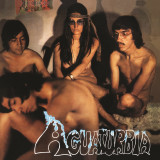
"Aguaturbia" (1970) is an essential album to understand the construction of what we know today as Chilean rock. This very influential album is raw and dynamic, featuring heavy rhythms, distortion, and exceptional phased female vocals reminiscent of Jefferson Airplane. It comprises original compositions and electrifying renditions of songs brought to fame by the likes of Tommy James & The Shondells, The Beatles and, of course, Jefferson Airplane elevating these classics to new heights of intensity and rhythmic allure. We are thrilled to make this outstanding LP available again after many years out of stock. Aguaturbia's debut album was originally released in 1970 and showcases one of South America's most significant psychedelic bands from the late 60s and early 70s. Their influence in their native Chile -and beyond- was groundbreaking. It was played live in 1969 on 3 tracks, and it became an icon of transgression due to its unbridled musical aesthetics and cover art that - for the time of its irruption - meant a clear defiance of the conservative logics lived in Chile, which saw in the nudity of the cover a challenge to morality and good manners. The album is raw and dynamic, featuring heavy rhythms, distortion, and exceptional phased female vocals reminiscent of Jefferson Airplane. Guitarist Carlos Corales shines and when he played solos at the gigs, the effect on the audience was silence and euphoria at the same time, they couldn't believe what they heard. Everything was done with a professional attitude. In fact, Carlos Corales (guitar) and Willy Cavada (drums) were both professional musicians who had made a previous career in rock and roll bands. The LP showcases breathtaking moments, like Willy Cavada's masterful drum solo in 'Ah Ah Ah Ay' captured flawlessly in a single take. Dive into the sensual psychedelic journey of 'Erotica,' where Denise's alluring vocals dance harmoniously with Carlos' electrifying guitar. Plus, don't miss their thrilling renditions of 'Somebody to Love' and 'Crimson and Clover'-each track elevating classics to new heights of intensity and rhythmic allure. This album is more than music; it's an invitation to experience sheer auditory bliss! "Aguaturbia" is an essential album to understand the construction of what we know today as Chilean rock.
Voivod wurde 1982 in Jonquière, Quebec, von Sänger Denis „Snake“ Belanger, Gitarrist Denis „Piggy“ D'Amour, Bassist Jean-Yves „Blacky“ Thériault und Schlagzeuger Michael „Away“ Langevin gegründet und nahm eine Reihe von Demos auf, bevor Brian Slagel auf die Band aufmerksam wurde und einen Vertrag mit Metal Blade Records unterzeichnete. Das Ergebnis war das Debütalbum „War And Pain“, das im August 1984 veröffentlicht wurde. Zu dieser Zeit teilten sich alle vier Mitglieder eine Wohnung in Montreal und lebten von 150 Dollar Sozialhilfe pro Woche. Da sie die Schule bereits hinter sich hatten, konnten sie fast jeden Tag proben, was zur Entstehung ihres zweiten Albums „Rrröööaaarrr“ führte. Während der Aufnahme des Albums wurde fast die gesamte Ausrüstung aus dem Proberaum gestohlen. Um Geld aufzutreiben, organisierte die Band zusammen mit ihrem Manager Maurice Richard das legendäre „World War III“-Festival. Dort lernten sie Karl-Ulrich Walterbach kennen, der Voivod davon überzeugte, bei seinem Label Noise Records zu unterschreiben. „Rrröööaaarrr“ erblickte schließlich im März 1986 das Licht der Welt. Mit Songs wie „Ripping Headaches“, „Thrashing Rage“ oder dem ultimativen „To The Death!“ bleibt es bis heute eines der extremsten Alben von Voivod. Nachdem diese ultimative Ausgabe des zweiten Voivod-Albums lange Zeit nicht erhältlich war, habt ihr nun die Möglichkeit, selbst zu beurteilen, ob „Rrröööaaarrr“ wirklich das beste Werk der Kanadier ist oder nicht.
Voivod wurde 1982 in Jonquière, Quebec, von Sänger Denis „Snake“ Belanger, Gitarrist Denis „Piggy“ D'Amour, Bassist Jean-Yves „Blacky“ Thériault und Schlagzeuger Michael „Away“ Langevin gegründet und nahm eine Reihe von Demos auf, bevor Brian Slagel auf die Band aufmerksam wurde und einen Vertrag mit Metal Blade Records unterzeichnete. Das Ergebnis war das furiose Debütalbum „War And Pain“, das im August 1984 veröffentlicht wurde. Zu dieser Zeit teilten sich alle vier Mitglieder eine Wohnung in Montreal und lebten von 150 Dollar Sozialhilfe pro Woche. Da sie die Schule bereits hinter sich hatten, konnten sie fast jeden Tag proben, was zur Entstehung ihres zweiten Albums „Rrröööaaarrr“ führte. Während der Aufnahme des Albums wurde fast die gesamte Ausrüstung aus dem Proberaum gestohlen. Um Geld aufzutreiben, organisierte die Band zusammen mit ihrem Manager Maurice Richard das legendäre „World War III“-Festival. Dort lernten sie Karl-Ulrich Walterbach kennen, der Voivod davon überzeugte, bei seinem Label Noise Records zu unterschreiben. Nach „Rrröööaaarrr“ von 1986 hieß Voivods zweites Album für Noise „Killing Technology“ und gilt weithin als der größte kreative und klangliche Sprung der Band. Es wurde in West-Berlin unter den wachsamen Augen von Harris Johns aufgenommen und kam 1987 auf den Markt. Weniger hektische Kompositionen wie „Tornado“, „Ravenous Medicine“ oder „Killing Technology“ hoben die Kanadier schnell von ihren Thrash-Zeitgenossen ab. „Rrröööaaarrr„ haben wir mit unserem Tontechniker in einer heruntergekommenen Schule ohne Geld selbst produziert“, erklärt Michael Langevin in dem Buch „Damn The Machine. The Story Of Noise Records“ des amerikanischen Autors David E. Gehlke. „Plötzlich hatten wir ein professionelles Umfeld, ein richtiges Studio mit einem richtigen Produzenten und ein Label, das die Finanzierung sicherstellte. Es ging Schritt für Schritt. Für „Killing Technology“ haben wir vielleicht ein bisschen langsamer gemacht. Wir konnten die Rollen spielen, und es hat viel Abwechslung. Es ist mein Lieblingsalbum und in meinen Ohren die perfekte Mischung aus Thrash, Prog und Hardcore. Es ist definitiv ein entscheidendes Album.“
Lisa Gerrard, the renowned Australian vocalist and composer, presents the compilation "Come Tenderness". With the inspiration of the healing power of water at its core, the album has been personally curated by Lisa and features ten of her most exceptional works newly mastered alongside a brand-new song "Whispers". The hand-picked playlist forms a cohesive album showcasing each track in a new light alongside striking artwork by Nigel Grierson. In keeping with her collaborative nature, the album includes iconic pieces Lisa has created over the years with Daniel Johns, Astrid Williamson and Patrick Cassidy. At the forefront of every track is Lisa's ethereal and iconic vocals which, combined with her expressive and profound compositions, come together to form a truly emotional listening experience. With a vision and vocal style that is as unique as it is precise and all-embracing, Lisa Gerrard has established herself as one of the world's most highly acclaimed film composers and vocalists, including winning a Golden Globe for her work on the score for 'Gladiator' with Hans Zimmer. Her musical journey began in the early 1980s when she and fellow Australian Brendan Perry formed duo Dead Can Dance. With nine albums released between 1984 and 1995. Lisa's vocal performances continue to be heard across the world. She performed as part of 'Gladiator Live' at The Royal Albert Hall in London in 2018 and as part of 'The World of Hans Zimmer - A Symphonic Celebration' tour. In 2021 and 2024 she was a Featured Vocalist on the score for 'Dune' and 'Dune: Part Two', directed by Denis Villeneuve.
out of Stock
Last delivered 6 months ago available to reorder, subject to availability
qebrus (pronounced Ké-brusse) was a project by Thomas Denis, an enigmatic French musician and producer born in 1981 and based in Caen, France, before his untimely passing in February of 2018. His undefinable otherworldly compositions and internet glitch trickery turned many heads catching the attention and support of esteemed artists such as Aphex Twin, Four Tet and Venetian Snares. The appeal of his music to other forward-pushing producers was emblematic of the uniqueness of his productions and led to collaborations with the likes of Tom Middleton, Otto Von Schirach and Mr Bill. His only release on Love Love Records, 'ᐔ ᐌ ᐂ ᐍ ᐚ', proved to be one his furthest reaching, originally released on CD during a flurry of musical productivity during 2017. Those 6 tracks of intricate extraterrestrial electronics now get the vinyl treatment, having been lovingly remastered or this reissue and pressed on green coloured wax.
The qebrus guise was that of an alien stranded on Earth and this concept was consistent throughout. The project gained notoriety almost exclusively on the internet, with many people's first experiences of his persona coming from the use of chaotic ASCII syntax in track titles which at the time 'broke' many of the websites he used to host his music. This theme of incomprehensibility extended to the sonic qualities of his music, foregoing any shred of familiar sounds in favour of an entirely electronically synthesised sound palate resulting in jarring and frenetic works full of near-imperceptible micro-details.
qebrus rarely performed live with one of the few occurrences being at an after-party following the now legendary Day For Night Festival 2016 in Austin, Texas where Aphex Twin played some of Qebrus' music to a crowd of 20,000 as Thomas watched on in what was undoubtedly an otherworldly experience for him.
Despite his vision being entirely self-driven without a care for popularity or recognition, there were many people across the globe that connected with the sheer weirdness of it all. 7 years on 'ᐔ ᐌ ᐂ ᐍ ᐚ' still sounds wholly futuristic and will likely remain so for centuries to come. In a time where it seems everything has already been done before Thomas leaves behind a legacy of an artist who was truly 'doing their own thing'.
Thomas is survived by his two children who will be receiving his proceeds from sales of this release.
“really alien sounding music”
Aphex Twin —
“Did you know that guy, Qebrus? He was on his own shit, he was making some really out there music, his music was incredible”
Venetian Snares —
“Listening to intelligent dance music producer Qebrus feels a lot like entering another dimension, his music stumbling its way through electronic chaos, leaving the listener unsure over what just happened.”
Thomas Hobbs — Crack Magazine
out of Stock
Last delivered 18 months ago available to reorder, subject to availability
Finding herself in different emotional and physical spaces over the past years, The Hague-based Seina creates four ambiguous tracks for Juni, her debut EP out on Präsens Editionen. The material, which comfortably sits between ambient, glitch and noise, feels like a long-overdue update of Mille Plateaux and Raster-Noton's golden days. The result, however, is much richer in texture and much more sensual than these dinosaurs of electronic music.
On Juni, Seina, who has a background in electroacoustic music and live performance, layers a range of source material created with different means and techniques—from Supercollider-generated elements, to field recordings gathered in Finland, France and The Netherlands, to analog electronic instruments, digital feedback and manipulated human voices.
The EP, which is partly composed and partly improvised, does not point in one particular direction but in many at the same time, making it an immersive experience and, at the same, a bold debut.
* Edition of 100 copies
* Special artwork by Paris-based visual artist Caroline Ventura in custom snapbox
* Designed by Swiss graphic designers Denise Häberli & Alina Scharnhorst of INTR
out of Stock
Last delivered 22 months ago available to reorder, subject to availability
First time vinyl reissue of Univers Zero's legendary Crawling Wind, originally released in 1981 on the Japanese 'Chaos International Series' label, with the original cover artwork has been beautifully redesigned by Thierry Moreau.
Toujours Plus à l'Est, as the title suggests, is heavily influenced by the traditional music of Eastern Europe, particularly Bulgaria., and paying tribute to the iconic catchphrase of Professor Calculus (Tournesol), the character from the Belgian comic series Tintin. Before The Heat, played live a few times, is an ambient composition by Andy Kirk, who is part of the EP's lineup alongside Daniel Denis, Guy Segers, Alan Ward, and Dirk Descheemaeker. Central Belgium in the Dark is a live improvisation from a period when Univers Zéro dedicated part of their concerts to complete improvisation. What makes this recording unique is that one of Andy Kirk's effects pedals picked up and emitted the sound of a mysterious radio signal, seemingly coming from "nowhere," especially noticeable at the end of the piece. The title of this improv is a nod to contemporary composer Charles Ives' work Central Park in the Dark. Central Belgium refers to the concert venue where the piece was recorded (Haine-St-Pierre).
Univers Zero represents one of the longest-living bands in Belgium. It was established in 1974. Drummer Daniel Denis had the brilliant idea to gather together a team of professionals sharing the same taste for music. The band has adopted an instrumental progressive style. Over the last couple of decades, the band has also implemented a series of influences from chamber music - most commonly, chamber music from the 20th century. Even if the line-up changes a lot over the years, the overall sound of UZ remained fairly consistent.
LA SACREE GROLE is a tale by the TAMERANTONG company, set to music by LUDWIG VON 88.
TAMERANTONG! is a theatre company based in Mantes-la-Jolie, Paris-Belleville and Saint-Denis that puts on shows with children and young people from these neighbourhoods.
LUDWIG VON 88, road companions of the great hours of alternative rock (Bérurier Noir, Parabellum...) is also the only rock band capable of rhyming in ‘ong’.
TAMERANTONG! had long been plundering their repertoire for their shows. In retaliation, the Ludwigs decided to compose the soundtrack to ‘La Sacrée Grôle’: a Gallic legend told and sung by twenty kids from Paris-Belleville.
In the heart of the land of the Arvernes, reigns a valiant free people. Their village lies on the edge of a dreadful forest where no one ever ventures. But the time has come for all the peoples of Gaul to enter the fearsome forest and set off in search of the Sacred Pole!
La Sacrée Grôle premiered at Paris-Belleville and was performed from 1996 to 1998 in Paris (Café de la Danse, Palace, Trianon, Café Éphémère / Les Halles), Mantes-la-Jolie, Briançon, Rouen (Festival Débarquement Jeunes) and Montreal/Quebec.
This record, released for the first time on vinyl by the Archives de la Zone Mondiale label, includes 7 previously unreleased songs by LUDWIG VON 88.