- 1: Black Angels: I. Departure
- 2: Black Angels: Ii. Absence
- 3: Black Angels: Iii. Return
- 4: Spem In Alium
- 5: Doom. A Sigh
- 6: They Are There! Fighting For The People's New Free World
- 7: Quartet No. 8: I. Largo
- 8: Quartet No. : Ii. Allegro Molto
- 9: Quartet No. 8: Iii. Allegretto
- 10: Quartet No. 8: Iv. Largo
- 11: Quartet No. 8: V. Largo
Cerca:departure
Danielle Boutet’s P »Pièces« is a mysterious artifact of Quebecois marginalia, self-released in 1985. Moving from languid ennui to high drama, »Pièces« is a dreamy gestalt, an album that borders Chanson, spoken-word, jazz noir, and minimalism, conjured from the chasm between acoustic and electronic realms. »Pièces« allows us a window into the highly intimate songcraft and compositional skill of an artist who longed to linger not in the public eye, but in relation with others and the world around her.
Born in Quebec City, Boutet studied music at the University of Montreal, where she focused on composition and percussion, before becoming involved in Montreal’s feminist and lesbian art scene. Primarily written, performed, and recorded by Boutet, with voice, guitar work, and technical assistance by Sylvie Gagnon, Pièces was created during a paradigm shift in home recording. Originally composed for the piano, Boutet and Gagnon utilized a consumer-friendly Tascam 4-track Portastudio and versatile Yamaha DX-7, alongside guitar, bass, marimba, and the human voice, to expand and contemporize the original composition’s scope.
Inspired by prog rock and British poet and musician Anne Clark, »Pièces« translates Boutet’s influence by moving between sunny, wistful fairytale and dark, wintry dirge. Filled with longing marimba, vertiginous, startling synth pads, and folk guitar, each track on Pièces offers a wholly unique proposition. Some are modal and rife with the ethereal psychological tension of a sci-fi soundtrack, while others are more like entering a smoke-laced lounge, the entertainer embodying seduction.
With the sprechgesang of artists like Serge Gainsbourg, there is an intense intimacy to Boutet’s delivery, sometimes as if she is performing for an audience of one. As one lyric goes, translated to English from French: “Like holograms/ Images from a world/ That inhales souls/ And exudes drama.” Another song contains an excerpt from The Tao of Physics: “The eastern sages specify clearly that they do not identify an ordinary void, but rather, a void having an infinite creative potential.”
To English-language audiences, the album’s title, »Pièces«, might seem to simply refer to the eleven different pieces. The title can also, of course, refer to parts of a larger whole, but Boutet is keen to point out that there is also another meaning: In French, a pièce is a room. On the cover of the original cassette, Boutet is seen sitting on a chair, alone in an empty apartment, a cable snaking at her feet. Listening to »Pièces« is like entering eleven different rooms: whether a study encased in shadow, a greenhouse left to wither in an eternal frost, or a divine nave.
Boutet sold a few dozen copies around Montreal, a scene mostly occupied by the new wave explosion de rigueur, but the inclusion of Pièces in the 1987 issue of Ladyslipper—the North Carolina-based mail order catalog that championed women musicians of all calibers and careers—led to more exposure throughout North America. “In the catalog,” Boutet says, “they included it in the New Age section, but I was, and still am, aware that this album is relatively unclassifiable.”
Boutet would release one more album, titled Musiques Urbaines, before getting pulled in the direction of interdisciplinary art and theory. “Although I never stopped making music, I lost all interest in public diffusion or performance,” Boutet says. Despite her departure from performance and publicly releasing music, she left behind a strange and enthralling document of Montreal’s 1980s feminist fringe, an aural document of the historic moment when self-recorded music and its practical potential became a prismatic reality.
Danielle Boutet’s Pièces arrives February 16, 2024 as part of uncommon¢ (“uncommon sense”), an open-ended, serialized endeavor from Freedom to Spend that provides new meaning for rarefied recordings from music’s outermost fringe.
The first revolutionary fracture in The Fall was the sudden departure of guitarist Martin Bramah. Commonly understood as the only viable challenger to Mark E Smith's dominance of the band, Bramah was The Fall's first singer and primary songwriter at the start. His subsequent group, Blue Orchids, was originally a reconstitution of the first recorded line-up of The Fall, without Mark, but with another slightly later Fall member, Eric McGann. After slight revisions in the lineup, Blue Orchids created a singular sound of maniacally aberrant psych on two thrilling singles - "The Flood" and "Work" - before recording one of the most imperfectly perfect debuts in what could no longer really be called 'rock and roll'. 'The Greatest Hit (Money Mountain)' eschews the frenetic energy of those singles to present itself as the greatest 'morning after the trip' albums ever - Martin and Una's wonderful explanations of the experiential backdrop to "Sun Connection" take up nearly as much space as those of all the other songs combined! Without exception, the songs are brilliant, majestic and memorable . . . plus it's possible that more covers of songs from 'The Greatest Hit' have been recorded by bands of credibility and renown than from any single Fall LP (although we're counting!), with near-contemporaneous versions arising from Fish & Roses, Slovenly, Dustdevils and Aztec Camera and many others since. Never reissued on vinyl since its 1982 release, due to objections from the WB Yeats estate for the album's musical interpretation of the author's "Mad As The Mist And Snow" (now in public domain!), this deluxe edition includes a bonus album with two unreleased pre-album demos, two further demos released only on long out-of-print cassette compilations from more than forty years ago, and scorching live set featuring several of their early songs, extensive liner notes from Martin Bramah and Una Baines, a reproduction of the original lyric fold-over booklet and (with the 2LP version), a download card. The original artwork for the album and booklet have been restored painstakingly, and as Bramah himself says, "It's better than the original." Four decades later, we're ecstatic to make this classic available again. Tiny Global Production's first album, "Awefull", is also available. A companion to this release, it contains the band's first two 7" singles, the album's four-song follow-up 12" 'Agents Of Change', and two unheard demos.
Classic black vinyl pressing on 140g LP. CD digipack. Note new prices for the LP & CD. Spacemen 3's second album is a remarkable departure from the band's 1986 debut, SOUND OF CONFUSION. Reduced to a trio (guitarists / keyboardists Pete "Sonic Boom" Kember, Jason "Spaceman" Pierce, and bassist Pete Bassman) following the departure of the first album's drummer, Spacemen 3 makes an asset out of the newfound lack of percussion, giving THE PERFECT PRESCRIPTION a considerably less rock-oriented sound with much more open space in its varied, subtle arrangements.
1976 hatte Michael Hoenig eine kurze Zusammenarbeit mit Manuel Göttsching von Ash Ra Tempel in Berlin; eine 48-minütige Aufnahme einer der Sessions, die 1995 unter dem Titel "Early Water" auf Bernd Kistenmachers Label Musique Intemporelle veröffentlicht wurde. Das Album wurde gestrichen und war lange Zeit nicht erhältlich. Nun wird es endlich eine Wiederveröffentlichung von "Early Water" geben. Michael Hoenig erinnert sich noch: "Während ich an dem Album "Departure From The Northern Wasteland" arbeitete, hatte mich Manuel Göttsching gefragt, ob ich mit ihm für einige Konzerte in Frankreich zusammenarbeiten würde, da seine Gruppe gerade eine Winterpause eingelegt hatte. Wir probten drei oder vier Wochen bei mir zu Hause. Eines Abends bekamen wir einen Anruf wegen einer fehlenden Garantie, woraufhin wir beschlossen, die Tournee abzusagen. Nur zum Spaß spielten wir ein letztes Mal eines der geplanten Sets. Obwohl ich mich nicht daran erinnern kann, eine Aufnahmetaste gedrückt zu haben, hat jemand kürzlich ein Revox-Band mit eben diesem Set ausgegraben. Nach einer digitalen Klangarchäologie wurde es soeben unter dem sehr passenden Titel "Early Water" veröffentlicht." Und Manuel Göttsching fügt hinzu: "Leider wurden einige Konzerttermine nicht rechtzeitig bestätigt und wir mussten die komplette Tournee erst am Tag vor der Abreise nach Frankreich absagen. Dennoch haben wir an diesem Abend unsere letzte Probe "für alle Fälle" aufgenommen. Es ist ein fließendes, harmonisches Stück geworden, das viel von der optimistischen Stimmung des Jahres 1976 widerspiegelt. In den frühen 1980er Jahren zog Michael nach Los Angeles. Als wir uns im November 1994 wiedertrafen, schlug ich vor, dieses alte Stück von uns zu veröffentlichen. Michael nahm das Originalband mit nach Los Angeles, restaurierte es liebevoll und nun, hier ist es wieder!"
Presenting the second thematic volume on the “Aquapelagos" series - a collection of split LPs where selected artists offer their own take into water surrounded cultures and communities. After the initial release of the Anthology compilation Aquapelago in 2022 (Discrepant ,CREP91) and the split LP Atlantico by Lagoss & Banha da Cobra (Keroxen, KRXN027) we proudly introduce an unique collaboration in the series in the shape of no other than two improvising giants, Mike Cooper and Pierre Bastien.
This second volume blows the lid wide open with a sound journey inspired by the equally majestic and mysterious Indian Ocean, a wide space of open ocean bounded by Africa, to the west, Asia to the north and north-west and Australia, to the south west.
From Philip Hayward and Matt Hill’s liner notes:
‘’The album opens with Return To Chagos by emphasising human presence in the oceanic space, opening with gentle percussive taps and distant looped male vocalisation that gradually come into sharper focus, layered and thickened, accompanied by thicker percussion and mouth harp. The sense of departure is taken up in Trincomalee, which lifts over the oceanic textures, opening with slow, struck and scraped metallic sounds before thick low pitched wind instrument sounds enter, oscillating around shifting microtonal frequencies. The shore returns on Side 2, with the miniature epic of Nicobar elaborated over looped ‘atmos’ sounds of birds and insects over which tonal, slightly distorted electric guitar lines enter before looped high pitched feedback squeals join the texture. Summoning tropical storms and the disruption to the region caused by western intrusion, strong and startling brass accents appear, melding with the looping guitar feedback, creating eeriness and a sense of alarm. Tuangku is permeated by restrained dynamics and an expressive, breathy, low pitched, animalistic melodic voice that offers intermittent and ambiguous utterances, as if rendered in a language essential to and evocative of a place and time but impossible to precisely comprehend – coming from an ocean-aquapelagic beyond that can only be glimpsed and rendered by affect.’’
Philip Hayward and Matt Hill, March 2022
Bitchcraft was born in a move from New York City, where Bitch had lived for 15 years, to a log cabin in the woods. There was all the time in the world to make art, and it was there, in the cabin, that Bitch began to write some of the songs that would appear on Bitchcraft. 'It gave me space to think about the biggest version of myself that I could be,' she says of those early days in the cabin. The songs she wrote were a departure from anything she'd ever written before, and she began to craft huge pop tracks with the help of her trusty violin. Then, she moved to LA and Bitchcraft began to shapeshift again. In the time that followed, Bitch assembled a coven to complete it. She called on Anne Preven (Beyonce, Madonna, Demi Lovato) and God-des who helped her crystalize her vision in terms of writing and production. She called on Roma Baran (Laurie Anderson) to produce the violins on 'Polar Bear.' She called on Melissa York (Team Dresch, The Butchies) and Faith Soloway (Transparent) to co-write a couple of the songs. The resulting record is one that is full of glorious pop tracks that go in unexpected directions. Bitchcraft is like Joni Mitchell set to a click track, it's queer Cyndi Lauper. It's neon pink, in your face, ready to hex you with its brilliance. It's an unbelievably fun record that is extremely capable of breaking your heart a little bit. It also makes you think: about the state of the world, about evil politicians, about what it means to exist as a woman, and how to find joy along the way.
Finnogun’s Wake is the delightful portmanteau of a band fronted by Shogun (vocalist of Royal Headache, and later Shogun and the Sheets) and newcomer Finn Berzin. Decades apart in age but united in tutelage and outlook, they have mitigated the Joycean tome of What To Do Now, and crafted the four debut songs of the Stay Young EP from the inside out, sharing the spotlight for a riveting, deafening smear of melodic pop and buzzsaw guitars.
Mourning the departure of his best mate to a life overseas, Shogun started hanging out with his friend’s younger brother, Finn. The two of them started spending their free time together, one having seen a fair chunk of the world through music, the other just starting to figure it all out. They went through the essential lessons that could be gleaned from Definitely Maybe and Hüsker Dü, Finn got himself a guitar, and the songs simply fell out of both of them, with this initial batch as the result. Shogun sings on “Blue Skies” and “Strawberry Avalanche,” and Finn takes the lead on “So Nice” and “Lovers All,” and while there’s no mistaking Shogun’s striking delivery and fatalistic lyrics, Finn proves himself as a carousing foil, holding his ground like the natural he’s become.
Taking into account the fevered, quick-burning success of Royal Headache, this group is the most likely candidate to do it all again, giving the sense that some people can write bounding guitar leads that stick to you like burrs from the brush, and sing so effortlessly you’re embarrassed and a little mad about how great it all sounds. Backed on these recordings by keyboardist Gabrielle De Giorgio (a longtime collaborator of Shogun’s from back in the Sheets era), bassist Campbell Troy (who was in Shogun’s first hardcore band Nintendo Police back in the mid ‘90s), and DMA’s drummer Liam Hoskins (on some COVID-enforced boredom with no tour-dom), Finn and Shogun stare down a changed world from two very distinct poles, and aim to fill it with glorious songs just like these.
After a decade-long hiatus, Bristol-based shoegaze ensemble, The Fauns, have reemerged from their secret bunker with eagerly anticipated third album, 'How Lost' set for release Jan 19th, 2024 via Invada.
The Fauns’ journey began in 2007, self-releasing their eponymous debut album in 2009, followed by the 2013 release of "Lights." These two works garnered warm acclaim from both critics and fervent shoegaze-loving fanbase alike - arriving into an atmosphere rekindled by the return of My Bloody Valentine.
This latest album bridges The Fauns' transformation from their earlier incarnation to their current evolution. The tracks traverse a spectrum of styles, ranging from intricate, guitar-driven sci-fi fantasies to industrial-tinged new wave compositions. The hallmark shoegaze elements are now stretched over gritty pulsating electro beats.
Moreover, the album marks a shift in lyrical themes and attitude. Poignant tracks coexist with narratives of vodka-infused nights in dimly lit clubs, reflecting a departure from introspection. "This album is less about the melancholy associated with the genre and more about getting our audience dancing.”
2024 Repress
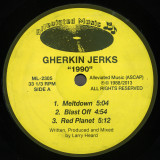
Recorded in 1989, this is one of the rare and sought after recordings by Larry Heard. Never been available since 1990 and a departure from his more familiar style that he released as Mr Fingers, Fingers Inc. and The It). Gherkin has been an outlet for his more experimental and techno-orientated productions. 6 tracks on this record, and everyone seems to have their own favorite... but worth mentioning are the dramatic opener ''Meltdown'', the cosmic ''Saturn V'' and the incredible extra terrestial ''Strange Creatures''. Tracks that are the foundation of the house we live in! - essential!
The old is dying and the new cannot be born; in this interregnum a great
variety of morbid symptoms appear"
-Antonio Gramsci, Prison Notebooks.
Iskandr's latest offering "Spiritus Sylvestris" appears to be a radical
statement in both content and form Signifying a departure from the black metal roots of the project, the psychedelic folk doom of the new album builds upon the directions of where both "Vergezicht" and "Glas" were already moving towards.
"Spiritus Sylvestris" is cinematic in scope: majestic and threatening in its aura of sublime grandeur. The Latin title translates to "spirit of the wild" and also refers to the early modern alchemical name for carbon dioxide - when the spirit of the wilderness is released into the
aether through the burning of wood and charcoal. The songs tell impressionistic stories of natural elements personified; when powerful spirits that linger in the earth are stirred, those elemental forces will be forced to haunt our world.
In an era of irreversible damage to our planet and anthropogenic climate change, Iskandr aims to offer funeral dirges for the world that we have already lost.
"Spiritus Sylvestris" embraces a limitless approach to translate this vision into musical form. Employing musical elements from a broad array of genres; easily moving between the martial stomp of early Laibach and the ethereal melodics of Dead Can Dance.
Recorded and mixed by the legendary Pieter Kloos (The Devil's
Blood, Motorpsycho) at The Void Studio in Eindhoven, the new Iskandr record has broadened the scope and sound of the project beyond any confines, resulting in the most open soundscapes from Iskandr to date. The heavy baritone guitar riffs that form the backbone of the record provide a pitch-black canvas in which huge percussive rhythms and psychedelic layers of Hammond organ, Mellotron as well
as subtle acoustics move in and out of focus. If this world is at an end it deserves a requiem for that what is lost.
With their profound take on electronic music, Animistic Beliefs have steadily solidified their spot in the global underground. Influenced by cultural concepts such as ancestry, animism and mythology, as well as the languages of political techno, punk, bubbling and IDM, Linh Luu and Marvin Lalihatu consistently translate their visions into sensitive productions as well as high-octane live performances. On MERDEKA, the artists explore and embrace their cultural heritage in all of its pride, pain and complexity. It symbolizes Animistic Beliefs' breaking free, coming to terms with their changing selves and letting go of external expectations. The record rethinks childhood memories, confronts the generational trauma left by (post-)colonialism, and re-connects Linh and Marvin â?? respectively of Vietnamese-Chinese and Dutch-Moluccan descent â?? with their formative cultures. MERDEKA marks their first step in an overall departure from western club music. For its layered sound, Animistic Beliefs once again draw from the past, present and future of global club music, creating a sonic space where fast techno, warped breakbeats and ambient soundscapes make way for the augmented influence of (Southeast Asian) tribal music. The record incorporates Indonesian scales and recordings of the Tahuri (a wind instrument made out of a conch shell), Totobuang (Gamelan-like gongs) and Tifa drums, known as â??the Moluccan heartbeatâ??. In true Animistic Beliefs fashion, MERDEKA will set fire to sweltering clubs and (sleepless) dreams. Yet, for the artists, it is essential to amplify the stories that spark that flame and keep it burning. The release of MERDEKA follows CACHE/SPIRIT, their ongoing collaboration with visual artist Jeisson Drenth, which extensively explores the artistsâ?? intersectional identities. As such, the latest album is the next step within a bigger, introspective investigation. More unapologetic than ever, MERDEKA embodies a turning point on Animistic Beliefsâ?? ongoing journey towards self-acceptance â?? fuelled by the sound of urgency.
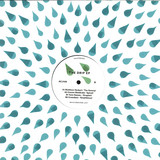
The Drip EP brings together four distinctive producers and one set of sounds - The Drips. The result is a compilation of 4 tracks that bring the swing and sampling of some of Accidental Jnr's finest to produce a soaking wet dancefloor.
First up is label boss Matthew Herbert with a trademark groove that harks back to his Wishmountain moniker albeit found lurking in the swamp. Cosmo Sheldrake takes a slight departure from his usual multi-instrumentaling live-looping avant-folk to deliver a track that could only be described as travelling circus aqua-techno. Bahraini born, French / US bred and now Edinburgh dwelling video game builder, sound designer and sometime Scottish league football referee Yann Seznec opens the B-side with an absolute stormer of a rain drenched club hook. Sussex based producer Crewdson and builder of such electronic instruments as the Eggiophone and Concertronica closes proceedings with a drizzling evolving 2-step number.
SOURCED FROM THE ORIGINAL MASTER TAPES: 2LP SET PRESENTS 1991 ALBUM IN 45RPM SPEED FOR FIRST TIME.
PCM Digital Master to Analog Console to Lathe.
Dire Straits never made a big to-do about its final run. In classic understated British fashion, the band simply let its music speak for itself. And how. Originally released in September 1991, On Every Street became the group’s swan song – a lasting testament to the influence, musicianship, and integrity of an ensemble whose merit has never been tainted by cash-grab reunions or farewell treks. It remains an essential part of the Dire Straits catalog and a blueprint of the distinctive U.K. roots rock the collective played for its 15-year career.
Sourced from the original master tapes, housed in gatefold packaging, and pressed at RTI, Mobile Fidelity’s 180g 45RPM 2LP set of On Every Street presents the album like it has always been meant to be experienced: in reference-grade audiophile sound. Recorded at AIR Studios in London and produced by Dire Straits leader Mark Knopfler, it features all of the band’s sonic hallmarks – wide instrumental separation, visceral textures, seemingly limitless air, broad soundstages, atmospherics that you can almost reach out and feel. Each element is made more vibrant, physical, and lifelike on this collectible reissue, which marks the first time this 60-minute work has been available at 45RPM speed.
Afforded generous groove space and black backgrounds, the songs from On Every Street burst with nuanced details and vibrant colors. Dire Straits’ playing appears to float, their intricate performances organized amid hypnotic, fluid, three-dimensional arrangements. Mobile Fidelity’s definitive-sounding set also brings into transparent view Knopfler’s finely sculpted guitar lines, expressive tones, and laid-back vocals – as well as the balanced accompaniment from his band mates. Here’s a record on which you can hear the full blossom and decay of individual notes, and imagine the size and shape of the studio. It is in every regard a demonstration disc. And it happens to be filled with timeless fare.
Remarkably, On Every Street almost never came to light. Dire Straits initially dissolved in September 1988 after touring behind its blockbuster Brothers in Arms and suffering the departure of two members. At the time, Knopfler professed his desire to work on solo material; bassist John Illsley also explored side projects. But Knopfler’s decision in 1989 to form the country-leaning Notting Hillbillies reignited a spark to reconvene his primary band and craft a fresh batch of songs. Six years removed from Brothers in Arms, Knopfler, Illsley, keyboardist Alan Clark, and keyboardist Guy Fletcher teamed with A-list session pros – steel guitarist Paul Franklin, percussionist Danny Cummings, saxophonist Chris White, guitarist Phil Palmer included – to create what still stands as an unforgettable farewell.
The platinum record brings the band full circle in that it returns Dire Straits to a quartet formation; finds the group refreshingly out of step with the era’s prevailing trends; and sees Knopfler and Co. knocking out song after song with the deceptive ease of a punter tossing back a pint at a pub. That subtle cool, clever poise, and innate control – signature traits that no other band ever matched – dominate On Every Street. Knopfler’s clean, virtuosic six-string escapades unfurl with dizzying melodicism and economical efficiency. Led by his winding fills and focused solos, Dire Straits traverse a hybrid landscape of rock, jazz, country, boogie, blues, and pop strains with near-faultless prowess.
More than any other entry in the group’s oeuvre, On Every Street welcomes quick detours down back alleys and into the depths of human souls. What makes it more brilliant is its staunch refusal to cater to commercial expectations or take advantage of prior successes; every passage feels true, every measure echoed in the service of song. It’s evident in the humorous satire of “Heavy Fuel,” closeted desperation of the witty “Calling Elvis,” and shake-and-bake bounce of “The Bug.” It pours from the album’s darker corners, as on the high-and-lonesome melancholy of the title track and bruised emotionalism of “When It Comes to You.”
Hinting at the open-minded approaches and boundless curiosity he’d embrace as a solo artist, Knopfler doesn’t limit himself when it comes to style or subject matter. Look no further than “You and Your Friend,” a shuffle whose all-inclusive lyrics encourage an array of interpretative meanings. Another of the album’s deep cuts, “Iron Hand,” comes on as one of the band’s most memorable moments – the narrative addressing the abuses of power at the 1984 Battle of Orgreave during the U.K. miners’ strike. Given cinematic heft by the expert production, the true-fiction account puts into perspective the richness, poetry, and depth of On Every Street.
“Every victory has a taste that’s bittersweet,” sings Knopfler on the title track. At least that bittersweetness seldom sounded so damn good on record.
- A1: Main Theme
- A2: Walking Music
- A3: Dragon's Tale
- A4: Happy Music
- A5: Jungle Music
- A6: Walk To The Castle
- A7: The Feast
- A8: Hurry Music
- A9: Balloon Music
- A10: Laughing Music
- A11: Underwater Music
- A12: Cowboy Music
- A13: Circus Music
- A14: Circus Play-Off
- A15: Landscape
- A16: Gloomy Pirate
- A17: Shanty
- A18: Street Scene
- B1: Main Theme
- B2: Walk To The Shop
- B3: Road Activity
- B4: Mr Benn
- B5: Rome
- B6: Gladiator Prison
- B7: Panther
- B8: Slow Benn
- B9: Chase
- B10: Chariot Walk
- B11: Before The Contest
- B12: Emperor's Arrival
- B13: The Arena
- B14: The Arena V2
- B15: Chariot Walk V2
- B16: Emperor's Departure
- B17: Hurry Music
- B18: Walking Home
- B19: Thoughtful Benn
All the music from the iconic Mr Benn cartoons, available for the only time. Recorded in two sessions - Olympic Studios in 1969, and Gateway Studios in 2004. All the music was written by Duncan Lamont, and featured some iconic session musicians including
Kenny Wheeler, Ray Swinfield and Duncan Lamont himself. Ray Swinfield used the same instruments as he used on The Beatles Penny Lane on these recordings. Mr Benn has an enduring popularity, and was shown on The BBC every year from 1971 - 1999, then on Nick Jnr till 2010. The sessions have ben fully remastered, and sound fabulous! It was due to Nick Jnr that a 14th Mr Benn cartoon was made, and the second session features re-working of some of the original tunes as well as lots of new tunes for Gladiator.
The packaging features an insert with Mr Benn dressed in all his adventure outfits, and a game to match all the souvenirs to each adventure. Not to be missed. A must for everybody that grew up with Mr Benn. All the sleeve notes have been written by The Mr Benn cartoon producer Clive Juster, and are full of insights from the recording sessions.
- A1: The Lamb Lies Down On Broadway
- A2: Fly On A Windshield
- A3: Broadway Melody Of 1974
- A4: Cuckoo Cocoon
- B1: In The Cage
- B2: The Grand Parade Of Lifeless Packaging
- C1: Back In N.y.c
- C2: Hairless Heart
- C3: Counting Out Time
- D1: Carpet Crawlers
- D2: The Chamber Of 32 Doors
- E1: Lilywhite Lilith
- E2: The Waiting Room
- E3: Anyway
- F1: Here Comes The Supernatural Anaesthetist
- F2: The Lamia
- F3: Silent Sorrow In Empty Boats
- G1: The Colony Of Slippermen
- A) The Arrival
- B) A Visit To The Doktor
- C) The Raven
- G2: Ravine
- G3: The Light Dies Down On Broadway
- H1: Riding The Scree
- H2: In The Rapids
- H3: It
Analogue Productions (Atlantic 75 Series)
Celebrating the 75th Anniversary of Atlantic Records!
The Lamb Lies Down On Broadway — Genesis' gold-selling sixth studio album!
180-gram 45 RPM 4LP
Mastered directly from the original master tape by Chris Bellman at Bernie Grundman Mastering
Pressed at Quality Record Pressings and RTI
Tip-on old style gatefold double pocket jackets with film lamination by Stoughton Printing
Genesis' sixth studio album was released as a double album in November 1974 by Charisma Records and is the last to feature original frontman Peter Gabriel. The group's longest album to date, The Lamb Lies Down on Broadway peaked at No. 10 on the U.K. Albums Chart and No. 41 on the Billboard 200 in the U.S..
The album is a concept album and tells the surreal story, devised by Gabriel, of a young Puerto Rican named Rael who embarks on a journey through a series of strange and bizarre events in New York City.
Musically, the album is a departure from the band's previous works, incorporating a wide range of styles including progressive rock, art rock, funk, and jazz fusion. The album features complex rhythms, intricate melodies, and dense layers of instrumentation, showcasing the band's virtuosic musicianship.
The album is notable for its use of storytelling, with each track contributing to the larger narrative of Rael's journey. The lyrics are often cryptic and abstract, and the album's surreal imagery has been interpreted in a variety of ways by listeners and critics.
The Lamb Lies Down On Broadway gained acclaim in the years after its release, reaching gold certification for sales in the U.K. and U.S.. In 1978, Nick Kent wrote for NME that it "had a compelling appeal that often transcended the hoary weightiness of the mammoth concept that held the equally mammoth four sides of vinyl together." In a special edition of Q and Mojo magazines titled Pink Floyd & The Story of Prog Rock, The Lamb ranked at No. 14 in its 40 Cosmic Rock Albums list. The album came third in a list of the 10 best concept albums by Uncut magazine, where it was described as an "impressionistic, intense album" and "pure theatre (in a good way) and still Gabriel's best work." A Rolling Stone poll to rank readers' favourite progressive rock albums of all time placed The Lamb fifth in the list.
The Lamb Lies Down On Broadway is widely regarded as one of Genesis's most important and influential works, inspiring generations of progressive rock musicians.
In 2006, THE DRAFT was formed by Hot Water Music members Jason Black, George Rebelo, and Chris Wollard shortly after singer/guitarist Chuck Ragan's departure. The three remaining members of the band wanted to continue making music together but chose not to continue under the Hot Water Music name, opting for a fresh start instead. The initial writing and demo sessions included the legendary punk rock guitarist Brian Baker (known for Minor Threat, Dag Nasty, Bad Religion). However, due to conflicting schedules, Baker couldn't commit as a full-time member, leading fellow Florida resident and former Discount member Todd Rockhill to join the band. After releasing their debut album "In a Million Pieces" (produced by the esteemed Brian McTernan) on Epitaph Records in 2006, the band embarked on extensive tours with acts like Samiam, The Gaslight Anthem, and Paint It Black. They also released several singles on the renowned No Idea Label before disbanding in 2008. With both "In a Million Pieces" and all 7" records being out of print for years, THE DRAFT has now teamed up with End Hits Records and Equal Vision Records to release a deluxe vinyl version on double vinyl. For the first time, you can find every track ever recorded by THE DRAFT: Included are the twelve album tracks, six songs featured on three 7" records, two unreleased demo versions, as well as four songs recorded during a radio session in the UK that have never been released before. Not only were all songs remastered specifically for vinyl by Brian McTernan, and detailed liner notes have been added to tell the band's history from beginning to end, but the packaging has also been completely overhauled. A special feature for collectors: the European and American versions come in different gatefold covers, which together form a complete work of art.
African Queen is a departure from the sound of the Amarra’s debut Ariwa release. This time Toots Hibbert’s Bam Bam provides the template for African Queen. Over the past 30 years this rhythm track has been associated with several hits including Sister Nancy’s Bam Bam and Chaka Demus and Pliers Murder she wrote.
African Queen has a catchy chorus with a touch of modern day electronics using the warbler and filter effects. An interesting song, drawing from some unlikely quarters of the 21st century, and blending them together.
The fragility and balancing act of creativity is an immeasurable factor in the life of any artist, serving as a commanding force in the choices they make over their careers. If the connection and meaning in creativity becomes devoid, there's a transformation process that either channels an ascension or departure. An internal and external battle that can chase and haunt individuals in every part of their life if one falls into the latter position. In the case of Los Angeles based electronic producer Huxley Anne, ascension was achieved during one of these tests of creative endurance and preservation, entering a phase of her life where the process of feeling art on meaningful levels had subsided for a lengthy period and the eventual reprisal of these natural gifts returned. This led to the creation of her debut album and an expansion in creativity that marks an important beginning for her path as an artist. This work is known as Ilium, representing a moment in Huxley Anne's life that's been one of her most testing yet rewarding mountains to climb. Ilium is Huxley Anne's debut album with Los Angeles indie imprint and Alpha Pup Records affiliate, Dome of Doom. Sonically, Ilium is an orchestrated field of unique beauty, drawing together eight tracks of exotic electronic music that calls upon the darkest and most light-driven of emotions. Exploratory textures take on vortexes of shape through cinematic sound designs, fluidly traversing between amorphous undertones, intricate composition mapping and pulsing rhythms. From the submersion of euphoria to the illumination of power, Ilium draws upon as many influences in the realm of mystical antiquity as it does the landscape of experimental music leading us into the future. A sonic portrait of her ascension through creative turmoil, the struggle of sustained determination and a rebirth into timeless artistry. Huxley Anne has created a boldness in sound that was made with the most vulnerable and giving of sides and simply put, Ilium is the continuation of meaningful life