Lonely Planets Rec. is thrilled to announce label co-pilot Caim with his luring new EP Medusa Hunter. A deep dive into a sonic realm where ancient myth intertwines with futuristic soundscapes, Medusa Hunter invites listeners on a seductive journey through hypnotising layers of hissing rhythm and smouldering, Goa-inspired techno. This EP pulses with energy, as Caim masterfully blends trance-inducing melodies with venemous driving bass-lines, creating an atmosphere of ancient mystery and suspense. Each track coils and twists like the mythic Gorgo, luring us deeper into her sonic gaze where time dissolves and consciousness drifts. Rhythm and warmth and whisper seamlessly through the mesmeric soundscapes, igniting a primal sense of movement where sound and myth collide.
out of Stock
Last delivered 8 months ago available to reorder, subject to availability
Die Debut-EP ,Kingdom of Decay" umreißt in vier Songs alle Stilwelten, aus denen Silverships aus Hamburg ihre Inspirationen schöpfen. Der Desert Rock der 90er und 2000er bildet das Fundament des Trios. Viele Spuren von Queens Of The Stone Age finden sich in den Songs wieder, in den brachialen Passagen fühlt man sich an Kyuss erinnert. Auch Klangmalereien der 70er Jahre Pink Floyd tauchen immer wieder auf. Psych-Poppige Momente der frühen Tame Impala werden abgelöst von düsterer, fast beklemmender Atmosphäre, die den Vibe von The Doors einfängt und sich auch als Soundtrack eines noch zu drehenden Films wohlfühlen würde. Charakteristisch für die Band ist neben opulenten Arrangements und abwechslungsreichem Songwriting die Liebe zu B-Parts, die die Songs mit vielen Ausrufezeichen beenden. Hinter der kraftvollen Produktion steckt Hauke Albrecht, der mit Mountain Witch den letzten größeren Stoner Export aus Hamburg produzierte. Für das Artwork konnte die Band BEWITCHED Graphics bzw. Benjamin Nickel gewinnen, der mit seinen psychedelischen Arbeiten z. B. schon das Reeperbahn Festival versorgt hat.
Born in Recife, Brazil, and currently residing in Lisbon, Sam Nóbrega is a singer-songwriter, multi-instrumentalist, arranger, and producer.Influenced by the Brazilian melodies his parents sang and listened to at home and on the radio, and driven by his love for Brazilian folk songs, street culture, and genres and movements like samba funk, forró, Ijexá, Manguebeat, and Bossa Nova, Sam embarked on a journey of musical self-discovery. In 2017, he took the stage with his first shows presenting his original music, performing at the Misturada festival in Florianópolis, southern Brazil, and at renowned venues in his hometown. However, it was in 2019 that Sam Nóbrega unveiled his debut single, "A Vida Vai e Volta," showcasing his instrumental prowess in a live video on top of a building. Subsequent releases like "Ruas Desertas," an independent release during the pandemic, demonstrated Sam's versatility.
His debut album "Ponta de Dois Lados," produced by Sam and Pedro Diniz, is slated for release by the British label Freestyle Records late November 2024. It is a rich sonic tapestry of Brazilian culture, blending traditional and popular elements with an indie and contemporary touch, creating an intriguing fusion of old and new sounds. Influences from João Donato, Marcos Valle, Milton Nascimento, Jorge Ben, Gilberto Gil, Novos Baianos, to the Manguebeat, Tropicalismo, and Vanguarda Paulista movements.
The making of a maiden album can be a capricious process. One moment of outright musical flow paired with another period of sustained creative struggle are feats experienced by seasoned producers the world over. So when Miraclis was forced to hole away in his makeshift studio - in the midst of a global pandemic - the stage was set for something magical. Now it will see the light of day for the very first time.
Having released two singles on Secret Teachings to critical acclaim already this year, Chilean talent Miraclis will accomplish a milestone achievement in July with the release of his debut album: Origin Of Truth.
Difficult experiences were fundamental to the creation of such work, as were Miraclis’ inherent musical interests. He explains: “Origin Of Truth had its birth during the pandemic. I created it as a way of communicating to myself the sensations and feelings that were spinning around my head at the time. I've always been inspired by Bristol trip hop, as well as classical rock, and these genres definitely contributed to the making of these melancholic tracks. In a way I wanted to fuse all the musical influences that were part of my childhood, up until this point now, so this album really means a lot to me. It was my way of communicating, when there was a lack of social contact and communication itself was hard to come by.”
It's this meditative quality that initially drew Damian Lazarus to the project. “It’s a record that has its roots in electronic music, but it’s a very alternative, very deep, melancholic album. I find it both soothing and stirring at the same time, and that’s a quite interesting juxtaposition in that it feels edgy but delicious at the same time,” says Lazarus. “The fact that this was written in this place surrounded by the most incredible desert landscapes makes this a very important piece of work to me. It doesn’t sit in any particular genre, which is why it feels right for a Secret Teachings release. It hints at so many genres that I as a DJ am quite into, and it feels like a first as it’s unique and unclassifiable. That mystical, esoteric, edgy feel makes this a perfect release for the label.”
Sonnet opens proceedings, with ghostly vocals residing next to raw instrumental elements throughout. Miraclis’ signature guitar riffs soon converge on saddened keys, paving the way for Scienter. It takes the form of an instrument-based, electronic-inspired cut, building slowly before reaching a crescendo midway through via an enrapturing acoustic solo.
Floating Child comes next, brimming with a darker intensity courtesy of broody synth pulses and rhythmic hi-hats, as Shiver arrives next. There’s a rock-leaning sensibility to the piece that gives way to earnest lyrical offerings, opening swiftly into the breakbeat-esque world of Perceptions. Hard-hitting drums act as the focal point, with electric chords adding depth and intrigue, whilst Bright continues in a similarly heartfelt vein.
Introspective pads leave us feeling pensive, ahead of Interstellar taking us on a celestial journey through warped bass tones. Acting as the LP’s penultimate number, it’s a four-and-a-half minute showcase of guitar-based musical goodness and one that perfectly sets the stage for Trapped, a closing saga of suitably emotive proportions.
Miraclis earned his stripes as a DJ under the name Max Clementi in his native Chile, as well as Spain after a stint at the Barcelona SAE Institute. Playing and writing music since his parents gave him his first guitar at age twelve, he found himself inspired by synth wave, electronic pop, trip hop, and psychedelic rock of the ‘80s and ‘90s, drenching himself in music by the likes of Massive Attack, Tricky, Depeche Mode, and Nine Inch Nails. However, it wasn’t until he had to move back to Pucón to take care of his father during the pandemic that he began working on what would become Origin Of Truth.
Serendipity seems to play a large part in Crosstown Rebels’ new label Secret Teachings. Just look at the story of how Damian met Miraclis in the first place. It involved a chance midnight encounter in Pucón, Chile at a woodland campfire after the DJ was locked out of his hotel room. This meeting of minds was the start of a remarkable friendship, where Miraclis invited Lazarus to stay at his house and break bread with his family. The two kept in touch, exchanging music and ideas as a result.
out of Stock
Last delivered 4 years ago available to reorder, subject to availability
Less than a year after Botanical Illustration takes patience and Skill EP, Giovanni Natalini aka CO-PILOT, comes back on Simona Faraone’s label, New Interplanetary Melodies, with the Green Machine album, which is its natural prosecution: inside it we also find the three tracks previously published by the same label in audio cassette format only (NIM001- MC).
Green Machine is a concept album, which takes up and develops the ecological issues already treated by the artist in his previous work, namely the increasingly tricky dichotomy between nature and machine and the harmful impact of humans on it.
The A side opens with the already published Botanical Illustration takes patience and Skill (A1), an 8 minutes suite in which the powerful Live drum breaks are perfectly combined with synths and vocal samples, transporting us to the tops of exotic mountains, to continue with the ecstatic Himawari (A2) that sounds like a “desert session” made on Mount Fuji, for a result of pure musical mysticism and finally, Mother Love Nature pt.1 (A3), a track that takes us back to more familiar territories, winking at the most experimental British trip hop of recent memory and Mother Love Nature pt.2 (A4) characterized by a background of modular synths and nature sounds effects that precede Giovanni’s powerful drums, underlining once again this perfect fusion of organic and synthesized sounds.
Side B opens with the psychedelic choruses of Dancing Like Fela (B1) supported by synthetic arpeggios and a frenetic drumline sounds like a breakbeat. Continuing along this side, we come to the unsettling use of vocal samples on the beautiful Halo (B2), the ethereal and danceable art-pop of Lost You - In Translation - (B3) to conclude with the evocative Playing the Zurna in Ulan Bator (B4), a track with a pressing rhythm and elegant arrangements that once again underlines Giovanni Natalini’s mastery in mixing sounds and suggestions that are apparently far away but that always find the right place.
Green Machine sounds like a valid attempt to finally find a “solid” balance between humans and nature, but it also demonstrates how the continuous mixing of sounds is the most effective way to escape from the homologation that is increasingly widespread in contemporary society.
out of Stock
Last delivered 4 years ago available to reorder, subject to availability
Ramkot is a wrecking ball from Ghent, Belgium, playing powerful yet danceable rock music. After two EP’s and building a reputation as one of the most exciting live bands around, the spring of 2023 sees the release of debut album In Between Borderlines, a razor-sharp 25-minute uppercut aiming for both head and hips. They tour extensively, playing a hefty 100 shows in just one year: from steamy venues and sun-drenched festival stages (Pinkpop, Down The Rabbit Hole) to even opening for Metallica in Amsterdam. For their sophomore album, instead of producing it themselves again, Ramkot enlist producer Alain Johannes (QOTSA, Eagles of Death Metal, Them Crooked Vultures), who invites them to the Joshua Tree desert. For three weeks, Ramkot reside in the legendary Rancho De La Luna studio, famous for QOTSA frontman Josh Homme’s The Desert Sessions. ‘We pulled out all the stops, not pushing our foot down on the accelerator all the time, which allows the music to breathe more. There’ll be a couple of softer songs the fans will not be expecting from us.’ But rest assured, every single note still sounds very much like Ramkot. The band will only play a handful of shows this year, including 2000 Trees (UK), Sziget (H), Pukkelpop and Lowlands.
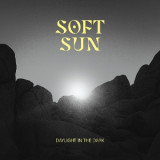
Gary Arce, Pia Isaksen and Dan Joeright have created something very special and amazing with SoftSun. Spaced-out, other-worldy and soothing, the band move within a sphere it's wonderful to be.
Night On Earth records
is an independent structure/label created 20 years ago which deals with
the invisible and the deviant,
the void and the love,
the parallax and the unknown …
we release vinyls and tapes
we organise events
we are you and us
we are nothing and everything
we are oblivion and memory
we are your egotrip’s nightmare
we are your deviancy catharsis
meet us through this double LP which is one cartography of the night on earth vortex across 3 continents and several generations of music freaks and braincrackers
Some Artists missing there (there are too much : RINUS VAN ALEBEEK, SS MYLITTA, SOLAR SKELETONS, THE RADAR THREAT, ÂME DE BOUE, and.. RIPIT !
out of Stock
Last delivered 18 months ago available to reorder, subject to availability
Fom the Sleevenotes by Paul Murphy: Jazz Room Records:
"I took a trip to the If Music Store, 2nd Floor, above the paint shop and that got me hooked on the sound of COPA SALVO.
"You NEED this!" said Jean-Claude. "They're an amazing and unique Jazzy Combo from Japan!" But at the time I was stuck in some dead end Gulag job getting things together for the launch of a record label idea I'd been working on and the bobs were just not in abundance. Especially in the part of the wallet marked "Japanese Vinyl Import Department". But he gave it a spin and I was pretty much hooked from that day on.
Things soon looked up though and the next sighting of COPA SALVO was on the BBE Records release: A Journey Into Deep Jazz Vol. 3 (Compiled by that very same Jean-Claude!) which featured COPA SALVO - Hasta La Victria Siempre, a pounding piano driven homage to Fidel which incidentally is one of the featured numbers of the album that is soon to be released on Jazz Room Records.
I kept looking for more COPA SALVO as I was really intrigued by the sound they produced and, over a period of time I managed to obtain nearly all of their sparse catalogue. Once Jazz Room Records had started to get established and the release of the Colin Curtis Presents: indigo jam unit compilation had been a success I thought "Time for COPA SALVO to make their Jazz Room debut!"
This Jazz Room Records Compilation will feature their unique and highly original compositions which are an energetic meltdown of Funk, J-Jazz, Afro-Cuban, Boogaloo and range from the Heavy Latin Jazz Vibes of Bolivia 67 to the Kung Fu '70's sound of Tong King Rock with a journey that takes in an Eastern Folktale and a Jump Up Life along the way."
Vocal/Guiro : Tadahiro Masuda
Piano : Eri Konishi
Bass : Hironori Kobayashi
Percussion : Yo Sato
Percussion : Pyon Nakajima
Timbales/Drum : Peach Iwasaki
out of Stock
Last delivered 14 months ago available to reorder, subject to availability
Roy Ayers' first album on the Polydor label inaugurates his music's evolution away from the more traditional jazz of his earlier Atlantic LPs toward the infectious, funk-inspired fusion. Although Ubiquity maintains one foot in Ayers' hard bop origins, it favors soulful grooves and sun-kissed textures that flirt openly with commercial tastes. AllMusic reviewer Jason Ankeny rated the album with **** out of five stars, stating that “Several cuts feature the male/female vocals that would become a hallmark of subsequent works by the same group, while mid-tempo instrumentals like ‘Pretty Brown Skin’ and ‘The Painted Desert’ feature evocatively cinematic arrangements and intriguing solos that unfurl like psychedelic freak flags. The crack supporting cast including bassist John Williams, keyboardist Harry Whitaker, and drummer Alphonso Mouzon proves equally effective on high-energy numbers like ‘Can You Dig It’ and the Nat Adderley-penned ‘Hummin' in the Sun,’ which point the way to the mind-expanding funk Ayers would perfect across the sessions to follow. An outstanding record.”
Camelot, the legendary seat of King Arthur's court in Early Middle Ages Britain, was probably not a real place. A corruption of the name of a real Romano-Briton city, the word "Camelot" accumulated symbolic, mythic resonances over centuries, until achieving its present usage as a near-synonym of "utopia." In the mid-20th century alone, Camelot inspired an explosion of representations and appropriations, among them the violent, affectless Arthurian court of Robert Bresson's 1974 film Lancelot du Lac and the absurdist iteration of Monty Python's 1975 Holy Grail, both of which feature armored knights erupting into fountains of blood; the mystical Welsh world of novelist John Cowper Powys's profoundly weird 1951 novel Porius, with its Roman cults, wizards and witches, and wanton giants; and the nationalist nostalgia of President John F. Kennedy's White House. Unsurprisingly there are fewer Camelots in more recent memory. Camelot, Canadian songwriter Jennifer Castle's extraordinary, moving 2024 chronicle of the artist in early middle age, charts a realer, more rooted, and more metaphorical place than the fabled Camelot of the Early Middle Ages (or its myriad depictions), but it too is a space more psychic than physical. In Castle's Camelot, the fantastic interpenetrates the mundane, and the Grail, if there is one, distills everyday experience into art and art into faith, subliming terrestrial concerns into sublime celestial prayers to Mother Nature, and to the unfolding process of perfecting imperfection in one's own nature. Co-produced by Jennifer and longtime collaborator Jeff McMurrich, her seventh record is at once her most monumental and unguarded to date, demonstrating a mastery of rendering her verse and melodies alike with crisply poignant economy. For all their pointedly plainspoken lyrical detail and exhilarating full-band musical flourishes, these songs sound inevitable, eternal as morning devotions. "Back in Camelot," she sings on the lilting, vulnerable title track, "I really learned a lot / circles in the crops and / sky-high geometry." The album opens with a candid admission of sleeping "in the unfinished basement," an embarrassing joke that comes true. But the dreamer is redeemed by dreaming, setting sail in her airborne bed above "sirens and desert deities." If she questions her own agency_whether she is "wishing stones were standing" or just "pissing in the wind"_it does not diminish the ineffable existential jolt of such signs and wonders. This abiding tension between belief and doubt, magic and pragmatism, self and other, sacred and profane, and even, arguably, paganism and monotheism, suffuses these ten songs, which limn an interior landscape shot through with sunstriped shadows of "multi-felt dimensions" both mystical and quotidian. The epic scale and transport of "Camelot," with its swooning strings, gives way dramatically to "Some Friends," an acoustic-guitar-and-vocals meditation in miniature on Janus-faced friends and the lunar and solar temperatures of their promises_"bright and beaming verses" versus hot curses_which recalls her minimalist last album, 2020's achingly intimate Monarch Season. (In a symmetrical sequencing gesture, the penultimate track, the incantatory "Earthsong," bookends the central six with a similarly spare solo performance and coiled chord progression, this time an ambiguous appeal to _ a wounded lover? a wounded saint? our wounded planet?) Those whom "Trust" accuses of treacherous oaths spit through "gilded and golden tooth"_cynics, critics, hypocrites, gurus, scientists, doctors, lovers, government, the so-called entertainment industry_sow uncertainty that can infect the artist, as in "Louis": "What's that dance / and can it be done? What's that song / and can it be sung?" Answering affirmatively are "Lucky #8," an irrepressible ode to dancing as a bulwark against the "tidal pools of pain" and the "theory of collapse," and "Full Moon in Leo," which finds the narrator dancing around the house with a broom, wearing nothing but her underwear and "big hair." But the central question remains: who can we trust, and at what cost faith, in art or angels or otherwise? Castle's confidence in her collaborators is the cornerstone of Camelot. Carl Didur (piano and keys), Evan Cartwright (drums and percussion), and steadfast sideman Mike Smith (bass) comprise a rhythm section of exquisite delicacy and depth. This fundamental trio anchors the airiness of regular backing vocalists Victoria Cheong and Isla Craig and frames the guitars of Castle, McMurrich, and Paul Mortimer (and on "Lucky #8," special guest Cass McCombs). Reprising his decennial role on Castle's beloved 2014 Pink City, Owen Pallett arranged the strings for Estonia's FAMES Skopje Studio Orchestra. On the ravishing country-soul ballad "Blowing Kisses"_Pallett's crowning achievement here, which can be heard in its entirety in the penultimate episode of the third season of FX's The Bear_Jennifer contemplates time and presence, love and prayer_and how songwriting and poetry both manifest and limit all four dimensions: "No words to fumble with / I'm not a beggar to language any longer." Such rare moments of speechlessness_"I'm so fucking honoured," she bluntly proclaims_suggest a state "only a god could come up with." (If Camelot affirms Castle as one of the great song-poets of her generation, she is not immune to the despairing linguistic beggary that plagues all writers.) Camelot evinces a thoroughgoing faith not only in the natural world_including human bodies, which can, miraculously, dance and swim and bleed and embrace and birth_but also in our interpretations of and interventions in it: the "charts and diagrams" of "Lucky #8," a daydreamt billboard on Fairfax Ave. in LA in "Full Moon in Leo," the bloody invocations of the organ-stained "Mary Miracle," and all manner of water worship, rivers in particular. (Notably, Jennifer has worked as a farmer and a doula.) The album ends with "Fractal Canyon"'s repeated, exalted insistence that she's "not alone here." But where is here? The word "utopia" itself constitutes a pun, indicating in its ambiguous first syllable both the Greek "eutopia," or "good-place"_the facet most remembered today_and "outopia," or "no-place," a negative, impossible geography of the mind. Utopia, like its metonym Camelot, is imaginary. Or as fellow Canadian songwriter Neil Young once sang, "Everyone knows this is nowhere." "Can you see how I'd be tempted," Castle asks out of nowhere, held in the mystery, "to pretend I'm not alone and let the memory bend?"
Military Genius (aka songwriter/producer Bryce Cloghesy) today announced his new album Scarred for Life will be released November 1st, 2024 via Unheard of Hope. The follow-up to his atmospheric 2020 debut Deep Web, Scarred for Life is a genre-flexing mix of bass-heavy R&B, spaced dub, and jazz that is newly grounded within a more traditional rock framework and centered on lyricism. Lead single “Darkest Hour”–out now alongside a self-directed video filmed near his new desert home in Joshua Tree, California–reflects a head first journey into the unknown. "’Darkest Hour’ encapsulates the feeling of being swept away by time, into an endless night,” says Cloghesy. “There is a certain melancholy in leaving the past behind, dwelling on simpler, antiquated ways of life as we are pushed forward. This message is poignant on a personal level–becoming a father has led me to contemplate my own childhood, witnessing a purity of emotion prior to self-awareness. This applies to a broader collective consciousness too, as the march of progress fundamentally alters our shared experience. It's all about embracing the journey, stepping beyond the point of no return, and facing the future."
. For Fans Of: The Weather Station, Weyes Blood, Adrianne Lenker, Phoebe Bridgers, Joan Shelley, Lana Del Rey, Cass McCombs, Angel Olsen & Neil Young. Camelot, the legendary seat of King Arthur’s court in Early Middle Ages Britain, was probably not a real place. A corruption of the name of a real Romano-Briton city, the word “Camelot” accumulated symbolic, mythic resonances over centuries, until achieving its present usage as a near-synonym of “utopia.” In the mid-20th century alone, Camelot inspired an explosion of representations and appropriations, among them the violent, affectless Arthurian court of Robert Bresson’s 1974 film Lancelot du Lac and the absurdist iteration of Monty Python’s 1975 Holy Grail, both of which feature armoured knights erupting into fountains of blood; the mystical Welsh world of novelist John Cowper Powys’s profoundly weird 1951 novel Porius, with its Roman cults, wizards and witches, and wanton giants; and the nationalist nostalgia of President John F. Kennedy’s White House. Unsurprisingly there are fewer Camelots in more recent memory. Camelot, Canadian songwriter Jennifer Castle’s extraordinary, moving 2024 chronicle of the artist in early middle age, charts a realer, more rooted, and more metaphorical place than the fabled Camelot of the Early Middle Ages (or its myriad depictions), but it too is a space more psychic than physical. In Castle’s Camelot, the fantastic interpenetrates the mundane, and the Grail, if there is one, distills everyday experience into art and art into faith, subliming terrestrial concerns into sublime celestial prayers to Mother Nature, and to the unfolding process of perfecting imperfection in one’s own nature. Co-produced by Jennifer and longtime collaborator Jeff McMurrich, her seventh record is at once her most monumental and unguarded to date, demonstrating a mastery of rendering her verse and melodies alike with crisply poignant economy. For all their pointedly plainspoken lyrical detail and exhilarating full-band musical flourishes, these songs sound inevitable, eternal as morning devotions. “Back in Camelot,” she sings on the lilting, vulnerable title track, “I really learned a lot / circles in the crops and / sky-high geometry.” The album opens with a candid admission of sleeping “in the unfinished basement,” an embarrassing joke that comes true. But the dreamer is redeemed by dreaming, setting sail in her airborne bed above “sirens and desert deities.” If she questions her own agency whether she is “wishing stones were standing” or just “pissing in the wind” it does not diminish the ineffable existential jolt of such signs and wonders. This abiding tension between belief and doubt, magic and pragmatism, self and other, sacred and profane, and even, arguably, paganism and monotheism, suffuses these ten songs, which limn an interior landscape shot through with sunstriped shadows of “multi-felt dimensions” both mystical and quotidian. The epic scale and transport of “Camelot,” with its swooning strings, gives way dramatically to “Some Friends,” an acoustic-guitar-and-vocals meditation in miniature on Janus-faced friends and the lunar and solar temperatures of their promises—“bright and beaming verses” versus hot curses which recalls her minimalist last album, 2020’s achingly intimate Monarch Season. (In a symmetrical sequencing gesture, the penultimate track, the incantatory “Earthsong,” bookends the central six with a similarly spare solo performance and coiled chord progression, this time an ambiguous appeal to … a wounded lover? a wounded saint? our wounded planet?). Those whom “Trust” accuses of treacherous oaths spit through “gilded and golden tooth” cynics, critics, hypocrites, gurus, scientists, doctors, lovers, government, the so-called entertainment industry sow uncertainty that can infect the artist, as in “Louis”: “What’s that dance / and can it be done? What’s that song / and can it be sung?” Answering affirmatively are “Lucky #8,” an irrepressible ode to dancing as a bulwark against the “tidal pools of pain” and the “theory of collapse,” and “Full Moon in Leo,” which finds the narrator dancing around the house with a broom, wearing nothing but her underwear and “big hair.” But the central question remains: who can we trust, and at what cost faith, in art or angels or otherwise? Castle’s confidence in her collaborators is the cornerstone of Camelot. Carl Didur (piano and keys), Evan Cartwright (drums and percussion), and steadfast sideman Mike Smith (bass) comprise a rhythm section of exquisite delicacy and depth. This fundamental trio anchors the airiness of regular backing vocalists Victoria Cheong and Isla Craig and frames the guitars of Castle, McMurrich, and Paul Mortimer (and on “Lucky #8,” special guest Cass McCombs). Reprising his decennial role on Castle’s beloved 2014 Pink City, Owen Pallett arranged the strings for Estonia’s FAMES Skopje Studio Orchestra. On the ravishing country-soul ballad “Blowing Kisses” Pallett’s crowning achievement here, which can be heard in its entirety in the penultimate episode of the third season of FX’s The Bear Jennifer contemplates time and presence, love and prayer and how songwriting and poetry both manifest and limit all four dimensions: “No words to fumble with / I’m not a beggar to language any longer.” Such rare moments of speechlessness “I’m so fucking honoured,” she bluntly proclaims suggest a state “only a god could come up with.” (If Camelot affirms Castle as one of the great song-poets of her generation, she is not immune to the despairing linguistic beggary that plagues all writers.) Camelot evinces a thoroughgoing faith not only in the natural world including human bodies, which can, miraculously, dance and swim and bleed and embrace and birth but also in our interpretations of and interventions in it: the “charts and diagrams” of “Lucky #8,” a daydreamt billboard on Fairfax Ave. in LA in “Full Moon in Leo,” the bloody invocations of the organ-stained “Mary Miracle,” and all manner of water worship, rivers in particular. (Notably, Jennifer has worked as a farmer and a doula.) The album ends with “Fractal Canyon”s repeated, exalted insistence that she’s “not alone here.” But where is here? The word “utopia” itself constitutes a pun, indicating in its ambiguous first syllable both the Greek “eutopia,” or “good-place” the facet most remembered today and “outopia,” or “no-place,” a negative, impossible geography of the mind. Utopia, like its metonym Camelot, is imaginary
Military Genius (aka songwriter/producer Bryce Cloghesy) today announced his new album Scarred for Life will be released November 1st, 2024 via Unheard of Hope. The follow-up to his atmospheric 2020 debut Deep Web, Scarred for Life is a genre-flexing mix of bass-heavy R&B, spaced dub, and jazz that is newly grounded within a more traditional rock framework and centered on lyricism. Lead single “Darkest Hour”–out now alongside a self-directed video filmed near his new desert home in Joshua Tree, California–reflects a head first journey into the unknown. "’Darkest Hour’ encapsulates the feeling of being swept away by time, into an endless night,” says Cloghesy. “There is a certain melancholy in leaving the past behind, dwelling on simpler, antiquated ways of life as we are pushed forward. This message is poignant on a personal level–becoming a father has led me to contemplate my own childhood, witnessing a purity of emotion prior to self-awareness. This applies to a broader collective consciousness too, as the march of progress fundamentally alters our shared experience. It's all about embracing the journey, stepping beyond the point of no return, and facing the future."
In 2007 an Italian film festival invites Mouse on Mars to score a film of their choice. The organizers claim to be able to clear the rights for any movie the band chooses. Werner Herzog’s fictional documentary Fata Morgana, which merges footage of several desert explorations by Herzog and his team into one continuous association, has long been a band’s favorite. The film comes with a soundtrack by Mozart, Leonard Cohen, Third Ear Band and field recordings. Andi Toma and Jan St. Werner are sent a DVD to Düsseldorf and start working. The idea is to score the film in real time so instrumentation has to be readily at hand: guitar, percussion, electronics, mouth harp, pedals, software, tapes, samplers. Once the arrangement for the three-part film is sorted Mouse on Mars bring their score to stage. Herzog Sessions is performed twice: first when the band still thought the rights had been cleared, and a second time at London’s Southbank Center knowing that Herzog would have never approved a new score.
--
Mouse On Mars – London Queen Elizabeth Hall soundtracking Werner Herzog.
By Mike Diver, 24.04.2009
Filmed in 1971, Fata Morgana is perhaps not one of Herzog’s best-known works (think Grizzly Man, Rescue Dawn, et cetera…), but then Mouse on Mars have never been ones to embrace the mainstream, quietly letting their modern, experimental take on krautrock do the talking over the years, thus producing some quietly brilliant electronica that far outweighs their modest profile.
The film itself is not altogether dissimilar to the wonderful, Phillip Glass-scored Koyaanisqatsi, with sweeping landscape shots and no obvious plot or narrative, though Fata is concentrated purely in one place – in and around the Sahara Desert, switching from images of barren wasteland to desert tribes and dead, skeletal cattle.
The obvious thing to do when soundtracking such powerful imagery is to vie for dreamy electronic soundscapes which can be sustained for a long period, and whilst this ambient shoegaze approach was present and correct (also carefully constructed and highly effective), Mouse on Mars added a human element to the performance, incorporating a live dimension by using and looping guitars, harmonicas, processed vocals and even a live horn player (quite possibly a flugelhorn. Look it up if you don’t believe me) for the final section of the film.
Some of the most interesting points arose when the duo suddenly switched from solemn, ambient tones to glitchy, bouncing electro (reminiscent of their more upbeat work) whilst on the same film shot – causing the audience mood to flick from tripped-out bliss to attentive semi-wired, utterly subverting any idea of a narrative the film may have possessed. Clever stuff.
Ranging from sinister to surreal to humorous, all the moods portrayed in Fata Morgana were successfully matched by Mouse on Mars’ live rescore – no mean feat. The duo also went above and beyond the call of duty with their own soundtrack, adding a fascinating personal signature to an already unique film.
out of Stock
Last delivered 23 months ago available to reorder, subject to availability
After a nine year hiatus SUN AND SAIL CLUB are back and they've come back swinging! This album is more aggressive than the previous album, as if that was even possible. Same line-up as before featuring Scott Reeder (FU MANCHU/SMILE) on drums, Scott Reeder (KYUSS/THE OBSESSED/FIREBALL MINISTRY) on bass, Bob Balch (FU MANCHU/SLOWER/BIG SCENIC NOWHERE/YAWNING BALCH) on guitar and Tony Adolescent (THE ADOLESCENTS) on vocals. The album starts with a mellow jazz guitar piece and then proceeds to rip your face off until the end of the album, which closes with another solo jazz guitar piece. "Shipwrecked" is their strongest album yet. Fully realized and to the point. Fast and dissonant. "This album is a compilation of riffs collected over a nine year period. Most of the songs were written last year but some of them have been floating around for a while. There is a general sense of unease throughout. I wanted to make an album that went one step further than "The Great White Dope." The songs are faster and more intense at times. It's basically the soundtrack of me beating the shit out of my guitar. Then you factor in Scott Reeder on drums, Scott Reeder on bass and Tony Adolescent on vocals and you've got something more than I could have imagined by myself. This album is raw and pummeling. If you're a glutton for punishment this might be your desert Island record." - Bob Balch Recorded at Jim Monroe's The Racket Room, Casa De Balch, and Scott Reeder's The Sanctuary
Red vinyl, limited to 300 copies. After a nine year hiatus SUN AND SAIL CLUB are back and they've come back swinging! This album is more aggressive than the previous album, as if that was even possible. Same line-up as before featuring Scott Reeder (FU MANCHU/SMILE) on drums, Scott Reeder (KYUSS/THE OBSESSED/FIREBALL MINISTRY) on bass, Bob Balch (FU MANCHU/SLOWER/BIG SCENIC NOWHERE/YAWNING BALCH) on guitar and Tony Adolescent (THE ADOLESCENTS) on vocals. The album starts with a mellow jazz guitar piece and then proceeds to rip your face off until the end of the album, which closes with another solo jazz guitar piece. "Shipwrecked" is their strongest album yet. Fully realized and to the point. Fast and dissonant. "This album is a compilation of riffs collected over a nine year period. Most of the songs were written last year but some of them have been floating around for a while. There is a general sense of unease throughout. I wanted to make an album that went one step further than "The Great White Dope." The songs are faster and more intense at times. It's basically the soundtrack of me beating the shit out of my guitar. Then you factor in Scott Reeder on drums, Scott Reeder on bass and Tony Adolescent on vocals and you've got something more than I could have imagined by myself. This album is raw and pummeling. If you're a glutton for punishment this might be your desert Island record." - Bob Balch Recorded at Jim Monroe's The Racket Room, Casa De Balch, and Scott Reeder's The Sanctuary
Pia Isa is the solo project of bassist, guitarist and vocalist Pia Isaksen from Norwegian heavy psych/doom rock-band Superlynx. As much as she loves playing with Superlynx (already formed in 2013) and other people, Pia’s ideas for her solo-albums seemed more right to work through on her own mostly. Pia´s music is rooted in slow heavy drones, but also has a lighter, dreamy and hopeful side. She is inspired by massive soundscapes, heavy psych, meditative moods, desert vibes and Eastern scales as well as her Nordic coastal surroundings. Superlynx-listeners may recognize her slow, heavy and minimalistic riffs, and haunting sometimes chanting voice. Pia has an open mind to a lot of different music. Not caring about fitting to any genres but channeling honest and heartfelt music in her own way. The lyrics are deeply personal and stretches from the very inner self and throughout nature. On her new album Pia has worked more with layers of vocal harmonies and has given an old dark sounding nylon acoustic guitar more space in her massive distorted soundscape.
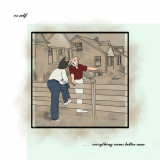
Neue grün-rot-blau gestreifte Vinylausgabe des 2020er Debütalbums "Everything Seems Better Now" der Emo/Screamo-Punker Vs Self aus Los Angeles. Die Band konnte sich im kalifornischen DIY-Bereich schnell eine Fangemeinde aufbauen und sich mit dieser Debüt-LP, Tracks wie "Homesick", "Leave Everything", "Mourn" oder "Yesterday By Beatles Or: Imagine By Yoko Ono As Sung By John Lennon" sowie Millionen von digitalen Streams in den gesamten USA bekannt machen.
The next installment of MFM's popular multi-artist compilation Virtual Dreams: 'Virtual Dreams - Ambient Explorations In The House And Techno Age, Japan 1993-1999'. As with Part One, released in 2020, 'Virtual Dreams II' shines a light on house and techno-adjacent music that helped redefine the definition of ambient music during the 1990s.
The focus of Part One heavily fell on music from techno and house producers in Europe, eagerly exploring new soundtracks for chill-out rooms and re-imagining the potential future of club culture from new perspectives. For Part Two, we narrow the lens to focus on a unique time and place, namely Japan between 1993-1999. Despite missing out on the 'Acid House Fever', club culture was beginning to take shape in Japan during the early '90s. In contrast to the rest of the world, where ambient techno / IDM emerged as a by-product or response to the scene, 'listening techno', as it is known in Japan, was a central pillar of the culture right from the start.
'Virtual Dreams II' aims to shine a light on this unique moment in time where the thread of ambient music weaved its way through the music of an emerging club culture. This period saw the birth of many great Japanese techno labels such as Sublime Records, Transonic Records, Syzygy Records, Frogman Records, and Form@ Records, following in the late '90s. 'Virtual Dreams II' features ambient, chill-out, and intelligent techno from these leading labels alongside other lesser-known but equally influential imprints, as well as ambient deviations from Japanese house producers. Much of the music featured has only ever been released on CD.
'Virtual Dreams II' is compiled by Eiji Taniguchi and Jamie Tiller, who have worked closely together on previous Music From Memory releases such as 'Heisei No Oto' and 'Dream Dolphin - Gaia'. It is also the final project Jamie Tiller worked on before his tragic passing in 2023. Jamie had been researching, planning, and compiling this version of Virtual Dreams even before the first chapter was released, believing that there were many great tracks in Japan that fit the concept of the series. Knowing how much love and energy he put into compiling it gives it an extra special place in our hearts.
Compiled by Jamie Tiller and Eiji Taniguchi with artwork by Kenta Senekt, design by Steele Bonus and liner notes by Itaru W. Mita,
out of Stock
Last delivered 24 days ago available to reorder, subject to availability
Fohn brings connection, displacement and new identities into the moment, on pastoral debut album Seanteach - informed by island life, marine folklore and musical tradition.
Connection to the land, the severing of earthly ties, explorations of environment, mythos and generational memory: under the moniker of Fohn, English violinist and producer Tom Connolly (Quade, AD93) takes to the fiddle on which he learned his craft as a child. Forging new bonds with his family’s island home off the coastal west of Ireland, their story is retold in Seanteach (Irish for ‘old house’), released on Odda Recordings.
“Seanteach explores the nature of my relationship with Ireland, and Connemara in particular, where my dad’s family is from,” explains Connolly, speaking on a long-form work that blends new compositions on traditional Irish fiddle with ambient electronics and evocative field recordings.
“It explores how the island of Maighinis became an almost mythological space for me, growing up in England - we would spend every summer there, but it felt equally present for me when we were back in the UK, a sort of mental solace that I found through music especially.”
Each track on the album is a reflection of aspects of that relationship to island life - where physical features intersect with mythology. Such as, ‘Boreen’, named after a colloquial term for rural byroads sometimes shared with otherworldly neighbours. ‘Aisling at Sea’ draws on the primal, unstoppable momentum of the water, while the folklore of ‘Immram’ reflects on generationally-kept tales of marine bravery and supernatural accomplishment.
“The compositions often sit at the fraying edges of memories I’ve inherited from my own experiences, that of family lore, or from stories that I have come across. I wanted the compositions to tread the space between documentation and fantasy that feels so reflective of my relationship with this place.”
Tying these worlds together is the presence and memory of Connolly’s ‘Mamó’ (Irish for grandmother), Bríd. Despite passing during Connolly’s childhood, this “larger-than-life character” shaped his imagination with anecdotes and stories, representing both a familiar figure, and the poignancies of potential and regret.
“Even at a young age I sensed a sadness emanating from her. Through a series of unfortunate and fortunate circumstances, she found herself leaving Ireland and settling in Boston like so many others. Under the impression she was an illegal immigrant in the US she didn’t return to Ireland for decades.”
‘Between the Shoreline and the Gorse’ channels her early childhood, born to a large Catholic family in the island’s ‘Seanteach’, and cast adrift from her old life - a severance of ties that Connolly attempts to make ethereal amends for, with the album named for her family home.
“It’s something that feels so visibly prominent in Connemara with its landscapes charcoaled with deserted ruins. It’s a feeling I also experience, despite never having lived in Ireland, which prompted me to want to explore the idea of longing for something/somewhere ‘un-experienced’, and to a certain extent, fictionalised.”
The Intima led a chameleon-like existence from 1999 to 2004, confounding critics who struggled to describe their distinctive sound while sharing stages with everyone from The Rapture to The Mekons. Hailing from Olympia and Portland, the postpunk quartet utilized sharp rhythms, prescient lyrics, and a collaborative compositional approach to conjure forth a sound that manages to be explosive yet detailed, experimental yet propulsive and melodic. Featuring a classically-trained violinist, custom-tuned guitars that careen at odd angles, and an imaginative and powerful rhythm section, the band explored the intersection of art-punk and agitpop with a spirit and tenor uniquely their own. In 2017, the Polish website More Noise summed up their sound by saying that "the first association that comes to mind is The Ex and the Dutch avant punk scene of the 1980s, but fans of the bands Dirty Three, Godspeed You Black Emperor and Unwound may also be intrigued."The group toured the States extensively during the 4+ years that they were active, including one grueling six-week tour undertaken just after 9/11 and another one in 2003 during which the US began bombing Iraq. The group's live sets are remembered for their combination of unbridled intensity and tightly-coiled musicianship, as well as their chaos potential, whether that chaos was performing in the middle of an illegal street party or causing a PA to burst into flames immediately preceding a headlining set by Deerhoof. A memorable show in DC with Q And Not U was mentioned by Dischord group Black Eyes in their Speaking In Tongues booklet last year, with Hugh McElroy describing the Intima as "a really aggressively-beautiful and poetic punk band with a violin where a guitar normally would be...pushing genre barriers in a way that helped me see a vision of how we might want to do that ourselves."Peril and Panic was recorded in Olympia over eight months in 2002 and was released in 2003 on LP (Zum/Collective Jyrk) and CD (Slowdance). In 2022, in the midst of the pandemic, the group commissioned Jason Powers to remix the original tracks from the ground up, which turned into an 18-month endeavor that included some compositional edits, significant work to improve the sound of the drums, and the uncovering of unreleased songs. Today, a fully remixed and remastered Peril and Panic is finally being released into the wild sounding much closer to how it was originally meant to be heard. Sounding more relevant than ever, it seems increasingly clear that the ideas and feelings that informed both band and album are no longer so "radical" - if anything, they've become the zeitgeist of today, as a confluence of global crises points to a fraught future long predicted.
After their critically acclaimed full length vinyl release “Acid Universe” from last year, the American (from Fargo, North Dakota) psychedelic, proggy, bluesy and groovy instrumental stoner rock band El Supremo continues on “Signor Morte Improvvisa” with its strong line-up featuring Chad Heille on drums, Neal Stein on guitar, Chris Gould on organ/keys and Cameron Dewald on bass. El Supremo was originally formed as a one-man project with Chad Heille playing all the instruments and handling recording/production. A self-titled full-length demo was released in 2008, with Tom Canning and Neal Stein only contributing guitar solos. Chad and Neal went on to play in the band Egypt from 2012 to 2018. After Egypt split, it was time for Chad and Neal to continue under the El Supremo name, whose influences are rooted in classic 70’s rock, heavy blues and cinematic (cosmic / desert) stoner rock. “Signor Morte Improvvisa” is their third full-album. Vinyl.
William Tyler is a Nashville guitarist and composer. He spent years woodshedding and touring with Nashville groups like Lambchop and Silver Jews before breaking away to focus on his own version of instrumental guitar music. In the summer of 2022 he was fortunate to have an artist residency at Epicenter in Green River, Utah, a tiny high desert town three hours from anything, One of the other non-profit friends of Epicenter was The Tank is Rangely, Colorado. The Tank itself is a giant and tall disused water tower from the high days of train travel and used to store water to cool train engines and such. Empty for decades, it is now an internationally recognized destination for sound art and almost unparalleled echo/acoustics. William Tyler decided to book recording time there and chose to re-interpret all of the songs of hie 2019 album "Goes West" in a sparse yet cavernous solo acoustic setting: "Something about the frailty and space I wanted the songs to imply was lost in the over-production of the studio record, This felt like a reclamation of the songs and also a symbolic tribute to the stunning, haunted and vast possibilities of the American West, especially at the twilight of American Empire.’
out of Stock
Last delivered 23 months ago available to reorder, subject to availability
Mit neuem Album „In These Dying Times“ meldet sich Suzan Köcher eindrucksvoll aus der Pause zurück.
Psychedelischer Pop trifft auf eingängige Melodien und Texte, die sich auch mit ernsteren Themen befassen (Schmerzhaftes Erwachsenwerden bei „Seventeen“ und Weltschmerz allgemein bei „Living In A Bad Place“).
Alles in allem hat sich das Warten gelohnt oder wie Klaus Fiehe bereits in seiner Sendung auf WDR 1Live schwärmte „Das Beste, was sie je geschrieben hat“.
Im Herbst außerdem auf Tour!
Bevor sie eine richtige Band wurden, begannen Greenleaf als loses Kollektiv von Freunden, die von den 70er Jahren inspirierten Hard Rock und Proto-Metal spielten. Unter der Leitung des Gitarristen Tommi Holappa, Mitbegründer der europäischen Desert-Rock-Band Dozer, spielten in den verschiedenen Konfigurationen von Greenleaf Mitglieder von Lowrider, Truckfighters, Demon Cleaner, Dozer und anderen mit. Und trotz der wechselnden Besetzung schafften sie es, über 14 Jahre hinweg mehrere Alben mit hochkarätigem Riff-Rock in ihrer ursprünglichen, unstrukturierten Form zu veröffentlichen.
Bevor sie eine richtige Band wurden, begannen Greenleaf als loses Kollektiv von Freunden, die von den 70er Jahren inspirierten Hard Rock und Proto-Metal spielten. Unter der Leitung des Gitarristen Tommi Holappa, Mitbegründer der europäischen Desert-Rock-Band Dozer, spielten in den verschiedenen Konfigurationen von Greenleaf Mitglieder von Lowrider, Truckfighters, Demon Cleaner, Dozer und anderen mit. Und trotz der wechselnden Besetzung schafften sie es, über 14 Jahre hinweg mehrere Alben mit hochkarätigem Riff-Rock in ihrer ursprünglichen, unstrukturierten Form zu veröffentlichen.
Bevor sie eine richtige Band wurden, begannen Greenleaf als loses Kollektiv von Freunden, die von den 70er Jahren inspirierten Hard Rock und Proto-Metal spielten. Unter der Leitung des Gitarristen Tommi Holappa, Mitbegründer der europäischen Desert-Rock-Band Dozer, spielten in den verschiedenen Konfigurationen von Greenleaf Mitglieder von Lowrider, Truckfighters, Demon Cleaner, Dozer und anderen mit. Und trotz der wechselnden Besetzung schafften sie es, über 14 Jahre hinweg mehrere Alben mit hochkarätigem Riff-Rock in ihrer ursprünglichen, unstrukturierten Form zu veröffentlichen.
“The Blue Hour” is the second VA of Berlin-based THISBE Recordings, following “Black Ink” released in 2022. Curated by label owner Pyrame, The new compilation is an invitation to cruise through the blue hour, that unique time of the day from dusk to night.
During that special time lapse, as the sky goes through several shades of blue, so goes the record: Dominik Marz´s “Bura´s Hymn” brings us straight above the Earth´s surface with a track as atmospheric as it can get, before Radial Gaze & Balam´s collab tune “Foreclosed” sets the scene for a groovy dance above the clouds.
We have already lost sight of the ground when World Wild Web initiates an immersion into an enigmatic phase of the voyage with his track “Extase”, where we do not really know in which time-space we find ourselves any more. Agle hints at a possible spot: “Sahel”, a tune that feels like a breeze across the desert, before Philip Lawns shakes everyone up with the upbeat “Johns”, bringing our feet back just above the ground. Volta Cab wraps up our imaginary trip with “Krasnodar Nights”, bringing a treat for the soul and some peace of mind. The night can now settle down.
out of Stock
Last delivered 19 months ago available to reorder, subject to availability
Bones Shake are a scuzzy, fuzz enthused garage rock trio formed in Manchester in 2011. They play everything to the extreme; violent bottle-neck blues riffs, drums kicked, pounded and exploited and squeals of reverb drenched vocals which when combined, will help save your soul. With a relentless energy, they’ve never taken their foot off the gas. In July 2022 they released Bleed to critical acclaim, itself the follow up to 2019’s debut LP Sermons. Purge sees the trilogy complete. Through tirelessly playing across the UK and Europe, their cult following makes them one of the best not so kept secrets in the underground scene. Wherever they go they fill out venues and have now played the infamous Raut Oak festival twice. With a string of previous releases under their belt, they have gone from strength to strength and attracted attention worldwide. Imagine a desert dive bar, the only bar in a hundred miles, the soundtrack as the shots fly is Purge. Talking about the LP, Bones say that “we needed to purge ourselves of these songs so we stuck two fingers up, lodged them at the back of the larynx and spewed out a new album.” Opener ‘Banshee’ wastes no time in providing that proverbial kick to the face these guys are infamous for. With a gnarly vocal and guitar interplay you’re hooked from the first note; the intensity rises with every rotation and if this one doesn’t leave you breathless you are not listening loud enough. ‘One Kiss’ is a filthy little blues number that taunts and teases, while ‘Pretty Little Things’ takes you on a journey through their sound bringing out all the bumps and grinds you could possibly muster. ‘The Creeper’ is a bit different to their usual, adding a sense of intrigue and unease that draws you in deep. Lead single ‘Let Go’ is an adrenaline fuelled expedition through all the best parts of their sound, with a few surprises thrown in for good measure. ‘Passive Intervention’ changes track a little, keeping you aurally attentive while title track ‘Purge’ is the experience that can’t be surmised, get the volume up high and release. With its rolling, thunder-esq. drums, closer ‘Stench’ rounds things off in the best way; leaving you wanting more. Purge is without doubt their strongest and most visceral release to date, dare you miss out on this experience
Sun-scorched riff-rock propelled from the windswept heart of the desert! Blue Heron expand on their unyielding desert sound with a new slab of propulsive, sun-scorched riff-heaviness. Everything Fades finds the band reveling in low-tuned roil and amplifier hum, churning out swerving grooves as if the atavistic, primordial spirit of the desert itself compels them. Balanced between laid back, meditative atmospherics and heavier, more aggressive lunges, these cruising jams and gritty stoner romps call to mind echoes of Kyuss, Clutch and Soundgarden, along with modern contemporaries like Valley of the Sun and High Desert Queen. Full of rhythmic intensity, sledgehammer riffing, and vocals ranging from clean and moody to howling and raw, Blue Heron cover a wide expanse of musical ground that shows how familiar influences can still be molded into inventive, exciting new forms. New album of grooving, raw desert rock for fans of Kyuss, Valley of the Sun, Clutch and High Desert Queen Presed on sleek blue vinyl, available as Digipak-CD, too.
Sun-scorched riff-rock propelled from the windswept heart of the desert! Blue Heron expand on their unyielding desert sound with a new slab of propulsive, sun-scorched riff-heaviness. Everything Fades finds the band reveling in low-tuned roil and amplifier hum, churning out swerving grooves as if the atavistic, primordial spirit of the desert itself compels them. Balanced between laid back, meditative atmospherics and heavier, more aggressive lunges, these cruising jams and gritty stoner romps call to mind echoes of Kyuss, Clutch and Soundgarden, along with modern contemporaries like Valley of the Sun and High Desert Queen. Full of rhythmic intensity, sledgehammer riffing, and vocals ranging from clean and moody to howling and raw, Blue Heron cover a wide expanse of musical ground that shows how familiar influences can still be molded into inventive, exciting new forms. New album of grooving, raw desert rock for fans of Kyuss, Valley of the Sun, Clutch and High Desert Queen Presed on sleek blue vinyl, available as Digipak-CD, too.
Der Stil von Nazca Space Fox ist eine spannende Mischung aus Post-, Psychedelic- Space-und Desert- Rock. Einflüsse von Bands wie den frühen Pink Floyd, Mogwai, Explosions in the Sky und Russian Circles sind in ihrer Musik zu hören. Diese Einflüsse verschmelzen zu einem Sound, der gleichzeitig nostalgisch und modern wirkt. Das neue Studio-Album 'Ceres' bietet mit seinen fünf Songs eine Instrumental Rock Landschaft geschaffen aus Post Rock der mühelos die Verbindung zu Psychedelic Space- und Desert Rock schafft. Fünf Songs, die es erneut schaffen, den Hörer in eine andere Dimension zu entführen.
'Ceres' ist erneut ein beeindruckendes Album, das die musikalische Reise von Nazca Space Fox fortsetzt und gleichzeitig neue klangliche Horizonte erkundet. Mit seiner Mischung aus kraftvollen Rock-Elementen und atmosphärischen Klanglandschaften bietet es sowohl intensive als auch beruhigende Momente und nimmt den Hörer mit auf eine unvergleichliche Reise durch den musikalischen Kosmos.
Die psychedelischen Stoner Rocker aus Nordengland bauen auf einem soliden Fundament aus schweren Riffs und Breakouts auf, das sie geschickt mit entspannten Vibes verstärken. Dabei besticht "Warped Vision" durch die Präzision, mit der jeder Hook genau auf den Punkt genagelt wird, ebenso wie durch die perfekte Balance von rauen Kanten und eingängigen Melodien. Die Band stammt aus Bradford in West Yorkshire, eine Stadt, die wahrlich nicht durch ein trocken-warmes Klima gesegnet ist. Der verregnete Norden am Rand von Englands rostendem industriellen Herzen inspirierte PSYCHLONA zu einer sehr britischen Variante von Klangideen, die ihren eigentlichen Ursprung einige Jahrzehnte zuvor im sonnigen Kalifornien hatten. Zum Desert Rock amerikanischer Prägung fügten die Engländer die rohe Energie des britischen Punk, eine großzügige Prise New Wave of British Heavy Metal sowie einige Esslöffel englischen Psychedelic Rock der 60er und 70er Jahre hinzu. Das Experiment an einigen heißen Tagen des Sommers 2016 übertraf die eigenen Erwartungen der Musiker deutlich und schon waren PSYCHLONA geboren. Im November wird es in englischen Städten düster, kalt und nass. Doch im Jahr 2018 ließ das sonnendurchflutete Debütalbum "Mojo Rising" nicht nur insulare Mundwinkel nach oben zucken. Damit stellten die Briten auch die Weichen für ihre produktiven folgenden Jahre. Im August 2020 veröffentlichten PSYCHLONA fleißig ihr zweites Album "Venus Skytrip", das im gesamten Heavy Rock Underground mit begeisterten Kritiken bedacht wurde und der Band ihre erste Nummer Eins auf der einschlägigen Webseite Doom Charts einbrachte. Das Zweitwerk sicherte ihnen auch zahlreiche Plätze weit oben auf wichtigen Jahresbestenlisten. Zwei Jahre später, im August 2022, stellten die britischen Stoner Rocker ihr drittes Album "Palo Verde" vor, das ihnen im Powerplay Magazine UK schon die zweite 10/10-Bewertung einbrachte. Mit "Warped Vision" sind PSYCHLONA bereit, um den nächsten großen Schritt zu gehen. Mit zwei neuen Mitgliedern an Bord bekam die Band sowohl beim Schreiben als auch bei den Aufnahmen frischen Wind in die Segel. Auch dank dieser Dynamik legen die insularen Wüstenrocker ihr bisher vollständigstes und spannendstes Album vor. Mit "Warped Vision" knacken PSYCHLONA den Jackpot!
Little Elements neues Album Trippy Moon ist ein akustischer Trip zwischen Alpen und karibischem Strand
Die Innsbrucker Produzentin, Singer-Songwriterin und Multi-Instrumentalistin Lisa Aumaier alias Little Element lässt auf ihrem zweiten Studioalbum Trippy Moon Genre-Grenzen verschmelzen und erschafft dabei psychedelisch angehauchte Sound-Welten zwischen Trip-Hop, Indie-Pop und ihrer charakteristischen Mischung aus Neo-Psychedelia, Dub und World Music-Einflüssen. Ganz nebenbei produziert und komponiert die authentische Multiinstrumentalistin auch noch alles selbst - mal am Meer, mal im eigenen Studio in den Tiroler Bergen.
With "The Mirrored Mask", Dutch band Harlem Lake announces their highly anticipated second album, set to be released on September 27th under Jazzhaus Records Following their critically acclaimed debut album "A Fool's Paradise, Vol. 1" from 2021, the band from Haarlem, near Amsterdam, once again presents an eclectic mix of blues, rock, and Americana. However, Harlem Lake refuses to be pigeonholed, using these genres definitions merely as loose creative inspiration, resulting in a fresh and timeless sound. "The Mirrored Mask" is an energetic work, opening with two outstanding singles: "Carry On" and "Fooled Again." While "Carry On" impresses with powerful vocals by frontwoman Janne Timmer and sophisticated brass arrangements, "Fooled Again" showcases a funkier side of the band, with guitarist Sonny van den Berg displaying his distinct skills. The album features a wide range of styles and moods, from danceable tracks like "Beggars Can't Choose" to moving ballads like "The Thought Of You." The latter is characterized by its gentle instrumentation and melancholic lyrics, reminiscent of folk- Americana greats like Kacey Musgraves or Katie Pruitt. With tracks like "Crying In A Desert," Harlem Lake then also surprises listeners with a uniquely atmospheric road song a la J.J. Cale, complete with an impressive guitar solo. The highlight of the album is undoubtedly the title track "The Mirrored Mask," which showcases the full range of Harlem Lake's musical abilities. Concluding the album, the band presents two more highlights, "Temptation" and "Jack In The Box," skillfully rounding out the album with blues, jazz, and Americana flair. Harlem Lake, consisting of Janne Timmer (lead vocals), Dave Warmerdam (keyboard), Sonny van den Berg (guitar), Kjelt Ostendorf (bass), and Benjamin Torbijn (drums), created "The Mirrored Mask" as an album that impressively demonstrates their musical maturity and passion for songwriting. From powerful rock numbers to intimate ballads, the album offers a multifaceted listening experience that will captivate both fans and newcomers alike. Known for their dynamic live performances as winners of the European Blues Challenge 2022, the band will be presenting the songs from "The Mirrored Mask" on an extensive tour through Europe.
Duncan Forbes returns to 49North with a super fresh sounding 4 track EP, all killer no filler !
First up is ‘Moods Shift And Flicker’ which eUortlessly fuses Duncan’s love of Detroit and dub techno with his love of Chicago house music and spoken word all underpinned by an infectious disco bass line. Following on and taking things up a level or two we are treated to the uplifting peak time monster that is ‘Time Is Now !’. Peak time melodic techno that will be just as at home in any large open-air space as it will in a dark basement. Third on the menu is Spectra, a no holes barred sonic battle weapon that will take you to the stars and back as it builds and builds. Desert is served up in the form of ‘I Wanna Know’ a solid 808 electro workout with one foot in the 80’s and the other somewhere in the future which asks the questions ....How Come The Quantum ? How Come The Universe ? ....... I Wanna Know !
out of Stock
Last delivered 21 months ago available to reorder, subject to availability
For the first time since its inception 36 years ago, Steve Hiett’s elusive Down On The Road By The Beach is finally made available outside of Japan. Most recognized in the fashion sphere as an English photographer and graphic designer, Hiett‘s transportive audio portraits amplify his serpentine guitar to the infinite blue, recorded across Paris, Tokyo and New York with no coastline in sight. Now widely celebrated as a desert island disc, very little is actually known of its unfathomable genesis.
A career devotee of Brian Wilson’s ground breaking harmonies, Hiett shot The Beach Boys for Rolling Stone - as well as The Doors, Miles Davis and Jimi Hendrix (in one of his final performances at the 1970 Isle Of Wight Festival) - while establishing himself as a fashion photographer. Decamping to Paris in 1972, he began what would become 20-year collaborations with Vogue Paris and Marie Claire, printing his signature warm, saturated and vibrantly hued snapshots.
In 1982, representatives from Tokyo’s Galerie Watari visited him to propose a solo exhibition. Asking if he could insert a 7” of original music into the back of the exhibition catalogue, Hiett laid down ‘Blue Beach - Welcome To Your Beach’ in a Parisian radio station, playing all of the instruments himself, and two more cuts in New York with Yoko Ono, The Doobie Brothers and Steely Dan hired-gun Elliot Randall. Once dispatched, the phone began ringing off the hook with requests for him to fly to Tokyo. Assuming these long-distance callers were wanting him to check proofs for the book, it wasn’t until he arrived that he discovered CBS/Sony had facilitated an entire album. Heitt hastily gripped some petty cash, bought a guitar and retreated to his hotel room to start writing.
Entering the studio the following day, he was further surprised by a waiting room of session players known as Moonriders - one of Japan’s most acclaimed rock bands of the 1980s. Intimidated by their indecipherable sheet music, Hiett suggested Randall join them and with money being no object for major labels at the time, his wingman was on the next plane out of New York to finalise the high production indulgence. Near-ambient arrangements that float in a space between The Durutti Column, Steve Cropper and Ashra, Down On The Road By The Beach also crowns Hiett the master of recontextualization with his zero-gravity blues visions of Roll Over Beethoven, Santo & Johnny’s Sleep Walk and the 1967 Eddie Floyd soul hit Never Found A Girl.
Produced in coordination between Be With, Efficient Space and the artist, this definitive reissue is restored from original masters with vivid reproductions of the Down On The Road By The Beach exhibition catalogue, intended to accompany its original release, and extensive liner notes penned by fellow Steve Hiett obsessive Mikey IQ Jones.
out of Stock
Last delivered 15 months ago available to reorder, subject to availability
Die US Death Metal-Ikonen NILE kehren mit ihrem mit lang ersehnten, zehnten Studioalbum The Underworld Awaits Us All zurück, das via Napalm Records erscheint.
Wieder einmal verbinden sie technische Präzision mit unbarmherziger Brutalität zu einer markerschütternden Death Metal-Attacke. Dabei beweisen ausnahmslos alle Bandmitglieder – von Gründungsmitglied und Gitarrist Karl Sanders, Schlagzeuger George Kollias, bis hin zu Sänger und Gitarristen Brian Kingsland Zach Jeter, sowie Bassist Dan Vadim Von – enormes musikalisches Können an ihren Instrumenten.
Das neue Album wurde erneut in Sanders' eigenem Serpent Headed Studios in Greenville, South Carolina produziert und aufgenommen. Für das Mixing und Mastering arbeitete die Band mit dem Produzenten Mark Lewis (Dying Fetus, Whitechapel, The Black Dahlia Murder) zusammen, der auch schon am Vorgängeralbum Vile Nilotic Rites beteiligt war und die gewaltige Bildwelt des Covers wurde von Micha "Xaay" Loranc gestaltet, der sich vom Jüngsten Gericht inspirieren ließ.