With Horror Spectrum, Bunnies plunges headfirst into the shadowy abyss of their art-rock multiverse, unearthing sounds that slither, shimmer, and scream.
Equal parts psychedelic hallucination, krautrock ritual, and noise rock exorcism, this record feels like the sonic aftermath of mad scientists summoning ghosts through an analog synthesizer they excavated from a cursed tomb. It's less an album and more an experiment gone deliciously wrong—a séance that channels the chaotic energies of dimensions better left untouched.
From the extraterrestrial pulsations of “Eyer of Ire” to the technicolor bliss of “That Evil Ghoul,” Horror Spectrum is a seven-track odyssey that detonates the boundaries of Bunnies’ already unhinged catalog. These tracks drag you by the ankles into realms where sound has teeth, time melts into warped rainbows, and the music feels like it’s plotting something sinister. Few bands dare to tread where Bunnies boldly hop, but here they are, mapping out mythical soundscapes with the glee of cartographers lost in their own creation.
This freakish entity of a record is profoundly unsettling and weirdly exhilarating. Horror Spectrum is the sound of a band digging deep into their subconscious and inviting you to get lost in the labyrinth.
Will you find your way out?
And if it sounds this good, why not just stay?
quête:det
Few albums evoke a sense of place as vividly as Desire!, the third offering from Friend of a Friend. The duo—Claire Molek and Jason Savsani—craft music that feels cinematic and immersive, threading themes of yearning, transformation, and resilience through a palette of lush synths, tactile rhythms, and haunting vocals. Recorded in a sprawling Victorian mansion in rural Illinois, with a history steeped in spiritualism and the paranormal, Desire! not only embodies the environment where it was created but also reflects the duo’s evolution as musicians and sonic architects.
Producer Jordan Lawler (M83), who also worked with the duo on FACILITIES, played a pivotal role in shaping the album’s sound. His approach seamlessly integrates analog and electronic elements, from shimmering synth pads to deep, tactile rhythms. The result is a record that feels both vast and grounded, inviting careful listening to its intricate details.
With Desire!, Friend of a Friend captures their evolution as musicians and storytellers, offering a record that lingers in the spaces between tension and beauty. The result is an immersive and deliberate work, one that showcases their musical innovation and their ability to create a vivid, otherworldly sense of place—haunting and cinematic, like stepping into a film where every sound carries a story.
The band has been named an artist to watch by Rolling Stone, an “American visionary” group by Mesmerized, an “indie rock band taking the scene by storm" by Wonderland Magazine, a "cultural phenomenon" by Extravafrench, "sonic visionaries" by Plastic Magazine, "the next huge thing in indie rock" by Each Measure, and "seamlessly intriguing" by Obscure Sound.
LA-based composer/producer/guitarist Dustin Wong returns to Hausu Mountain with Gloria, his third album on the label since 2018. Wong has established a multifaceted career over the last two decades that encompasses his solo work centered around guitar performance and live looping, roles as a guitarist in Baltimore-based bands Ponytail and Ecstatic Sunshine, and a wide catalog of collaborations with artists including Takako Minekawa, Good Willsmith, and Patrick Shiroishi. In composing his solo music, Wong has always transmuted his own life experiences into the thematic source material for emotionally resonant works rippling with fine-grain details and intricate looping architectures. With Gloria, the composer channels specific memories and pieces of his family history into a deeply personal narrative arc focused on his grandmother Gloria Violet Lee Wong, who passed away in January 2024, just shy of her 96th birthday. Using a road trip they took together down the west coast of America in 2023 as the direct inspiration for the individual scenes and flashes of imagery that form the album’s continuously unfolding structure, Wong presents Gloria as a memorial to her storied life and a celebration of the warmth and kindness that characterized their close relationship. A moment-to-moment travelogue that zooms out in its full scope to evoke a multi-generational memoir that spans decades and continents, Gloria gives Wong space to open his heart and uncover his roots — all while experimenting with new techniques in live performance and sound design that lead his music into territories that he has never before explored.
- 1: From An Ocean, To A Lake
- 2: All They Want Is Violence
- 3: Reveille!
- 4: Blue Gatorade
- 5: Sårbare
- 6: Running Through The Tøyen Arboretum In The Spring
- 1: Misundelig
- 2: Closer – Demo
- 3: Solo Yo Y Tú
- 4: Lampi
- 5: スイセン
- 6: Oh, When I Was In Love With You
- 7: Cascades (葉月君へ)
- 8: Attar
Hailed by Pitchfork for his “ambient, intimate…songs that blossom gently with intricate musical details and enigmatic lyrics,” Conner Youngblood gained early acclaim with a series of self-released singles and EPs before breaking out internationally with his 2018 full-length debut, Cheyenne, which fused electronic and analog elements into a lush mix of bedroom pop and chamber folk. Youngblood toured the record heavily until 2020, when the pandemic forced him off the road and, hungry for fresh inspiration, he began enrolling in Russian, Danish, Spanish, and Japanese language lessons. He didn’t realize it at the time, but those classes weren’t just expanding his vocabulary, they were laying the groundwork for his most ambitious, experimental album yet: Cascades, Cascading, Cascadingly.
Written and recorded at home in Nashville, the collection is a dreamy series of meditations steeped in desire and yearning, loneliness and loss, exhilaration and escape. The lyrics blur the lines between fact and fiction, toying with magical realism and outright abstraction in various languages, and the arrangements are surreal and cinematic to match, hinting at everything from Cocteau Twins to Atoms For Peace. In addition to producing and engineering, Youngblood played every instrument on the album himself, and the result is a pure, unfiltered journey deep into the subconscious of a relentlessly curious artist, one with a boundless imagination and an insatiable appetite for sonic exploration.
Mit „Hair“ haben Phillip Boa And The Voodooclub im Januar 1989 eines der wohl wichtigsten deutschen
Indie Rock-Alben der ausgehenden 80er/ beginnenden 90er Jahre veröffentlicht. Ein Paradebeispiel an
stilistischer Experimentierfreude, versponnener Erzählkunst und kreativer Eigensinnigkeit, mit dem das
Dortmunder Musikerkollektiv seinen Status als vehemente Antipopstars untermauerte. Im April erscheint
der Longplay-Meilenstein als remasterte und erweiterte Anniversary-Edition, die neben dem Original-Album
weitere Tonträger mit brandneuen Songs, einen bisher noch unveröffentlichten Konzertmitschnitt sowie
exklusive Raritäten, Bonustracks und Session-Outtakes enthält!
Mit der Re-Edition erscheint „Hair“ nun in remasterter und restaurierter Form. In aufwändiger Detailarbeit
wurden alle Stücke des Original-Albums von Boas langjährigem Wegbegleiter Eroc (der auch als Drummer auf „Hair“ vertreten ist) aufgefrischt und wiederhergestellt. Ergänzt wird die erweiterte Neuauflage
durch das exklusive Bonus-Album „The Honeymoon Files“, auf dem elf brandneue Tracks im Spirit von
„Hair“ enthalten sind. Die „Flitterwochen“-Songs entstanden zwischen 2023 und 2024 gemeinsam mit dem
bewährten Co-Producer David Vella in Phillip Boas Studio auf Malta.
- River
- Spirits
- Pas De Deux
- Tahlila
Trumpeter, santur player, vocalist, and composer Amir ElSaffar joins electronics performer and composer Lorenzo Bianchi-Hoesch in a new project exploring electro-acoustic spaces, maqam, microtonal harmonies, and improvised and composed structures in a modular musical composition that accommodates a variety of musical styles across genres. Together, they create an immersive sound that transcends notions of form, musical language, electronic, and acoustic categories in music. This new work will be a modular composition combining pre-determined structural elements with freely improvised sections, played live by ElSaffar and Bianchi-Hoesch. The work will explore electro-acoustic spaces in a microtonal environment that embraces the sonic spectra of multiple musical languages. Bianchi-Hoesch and ElSaffar are interested in creating a transcultural collaboration combining jazz, contemporary classical music, maqam, raga, and other musical backgrounds, inclusive of all the richness, complexity, and idiomatic expression, without compromising or oversimplifying in order to be compatible with others. They are in search of boundary-less spaces in music.
Lisbon-based producer & DJ, Helder Russo is a standout figure in Portugal's electronic music scene. Helder's work has gained acclaim since his early releases on Groovement, Tomorrow Is Now, Kid! & most recently, Percebes.
His 2019 release 'Onfrico' & the 2021 anthem 'Cascalho' showcased his unique blend of Chicago House, Detroit Techno, London-inspired breaks & rich African influences. As a true ambassador for Portuguese dance music, his music is highly regarded.
Now, Helder presents his debut album 'Nha Joia' (Creole for 'My Jewel'), a heartfelt tribute to his beloved mother. This collection features the 80's cop show inspired 'Parsley park', the infectious 'Whippit', the emotional 'Nha Joia', the Outkast-reminiscent 'Muscanite', the futuristic techno soul of '11.22' & the gritty 'Badio' & 'Sampa'.
This album is brilliant, honest, & complete - Recommended for fans of Carl Craig, Underground Resistance, Larry heard, Kamasi Washington & Thundercat. Sleep now, cry later.
Kali Malone's The Sacrificial Code is the 2019 breakthrough album of the acclaimed composer's pipe organ pieces. Her temporally informed studies of harmonics and intonation breathed life into a suite of compositions which leaves the heart moved and mind still. This 2025 edition was mastered by Rashad Becker and features a new track Sacrificial Code III. Pitchfork praised the album for its "time-stretching properties" and "clean minimalism." Resident Advisor described the album as an "exercise in concentration, restraint, and focus." Tiny Mix Tapes emphasized the "intensity and intimacy" of the album, pointing out how Malone's close miking technique brings out every textural detail of the organ, creating a highly focused and immersive listening experience.
- A1: Blake Baxter - Sexuality
- A2: Suburban Knight - The Worlds
- B1: E-Dancer - Feel The Mood (N.y. Groove Mix)
- B2: Yvette - Pump Me (Mayday Mix)
- A1: Qx-1 - I Won't Hurt You (I Swear)
- A2: Fred Brown - Roman Days
- B1: Mr. Fingers - I'm Strong (Instrumental)
- B2: Laurent X - Machines (Apocalypse Mix)
- A1: Revelation - First Power (Original Mix)
- A2: Egotrip - Dreamworld (World Of Dreams Mix)
- B1: 33 1/3 Queen - Searchin
- B2: Bobby Konders - Let There Be House
- A1: Steve Poindexter - Computer Madness
- A2: Age Of Chance - Time's Up (Timeless)
- B1: Lfo - Lfo (Leeds Warehouse Mix)
- B2: Alice D In Wonderland - Time Problem (Techno Speed Work)
- A1: Joeski - My English Lover (Acid Mix)
- A2: Pleasure Zone - Fantasy
- B1: Mellow Man Ace - Rhyme Fighter (House Dub)
- B2: The Gherkin Jerks - Strange Creatures
- A1: The D.o.c. - Portrait Of A Masterpiece (Cj's Ed-Did-It-Mix)
- A2: Robert Armani - Circus Bells (Full Length Original Mix)
- B1: Todd Terry Presents Cls - Can You Feel It (In House Dub)
- B2: Virgo - Free Yourself
- B1: A Homeboy, A Hippie & A Funki Dredd - Total Confusion (Heavenly Mix)
- B2: 2 Men From Jersey - Track Werk (After Dark Mix)
- A1: Human Resource - Dominator (Frank De Wulf Remix)
- A2: Frankie Knuckles - Your Love
- B1: Simon Sed - Criminal
- B2: Tyree - Hardcore Hip House (Joe Smooths Too Deep Mix)
- A1: Frankie Bones - Call It Techno (House Mix)
- A2: Frank De Wulf - The Tape (Remix)
- B1: A Guy Called Gerald - Automanikk (Derrick May The Force Be With You Mix)
- B2: Sheer Taft - Cascades (Hypnotone Mix)
- A1: Tronikhouse - The Savage & Beyond (Savage Reese Mix)
- A2: The Orb - A Huge Evergrowing Pulsating Brain That Rules From The Centre Of The Ultraworld (Orbital Dance Mix)
- B1: Mental Mayhem - Where Are They Hiding
- B2: Edwards & Armani - Acid Drill
- A1: Njoi - Jupiter Re-Dawn
- A2: Basex - U-R-Self-Go (All Night Mix)
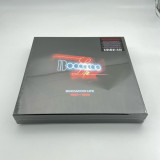
(10x12" box set, limited to 1000 copies, with premium finishing, uniquely numbered, incl. 10 records in individually printed sleeves, a booklet detailing the club's history & exclusive stickers) Boccaccio has secured its place among legendary venueslike Paradise Garage in New York and The Hacçinda in Manchester. Its bold fusion of emerging electronic genres such as New Beat, Acid, House, and Techno was way ahead of its time, drawing music lovers and clubbers from across Belgium and beyond.
Belgian label Music Man Records presents Boccaccio Life 1987-1993, a new compilation offering a fresh perspective on the legacy of the iconic Belgian club Boccaccio - often associated with the short-lived New Beat movement. The 40-track compilation highlights the raw and futuristic early house and techno sounds that were heard in the pioneering club.
Located in rural Destelbergen (Belgium), just a stone's throw from Ghent, Boccaccio has secured its place among legendary venues like Paradise Garage in New York and The Hacçinda in Manchester. Its bold fusion of emerging electronic genres such as New Beat, Acid, House, and Techno was way ahead of its time, drawing music lovers and clubbers from across Belgium and beyond. Sundays at Boccaccio were unlike anywhere else-offering sounds you couldn't hear anywhere else.
Boccaccio Life 1987-1993 is carefully curated by resident DJ Olivier Pieters and club regular Stefaan Vandenberghe, standing as the ultimate testament to a club that was more than just a venue. For those who experienced it, it was a community - a way of life. Hence the club's full name: Boccaccio Life.
This compilation stands as a testament to an innovative time in electronic music, capturing the raw, futuristic sounds of early house and techno. It sheds light on another side of Boccaccio, one that goes far beyond the short-lived New Beat scene. A carefully curated selection of 40 tracks, resonating with those who were there by offering familiar classics, while also reaching a new generation-those who never experienced it firsthand.
With tracks from Blake Baxter, Virgo, Frankie Knuckles, Tyree, and A Guy Called Gerald, the unmistakable influence of black American pioneers is clear-the originators of the firstanalog house and techno sounds. On the other hand, UK sound innovators such as The Orb and LFO bring both sharp textures and rough breakbeats to the table.
Club staple tracks include dreamy excursions from Roger Sanchez under his Egotrip moniker, the relentless basement house of Circus Bells by Robert Armani on Dance Mania, an uplifting take on a hip-house cut from The D.O.C. (Portrait of A Masterpiece in the CJ Ed-Did-It Mix), a timeless remix of UK Formation's Age of Chance from 1994, and an alternate take on The Tape by Boccaccio club regular and Belgian producer Frank De Wulf, taken from his B-Sides project.
While not always the obvious hits, these tracks have gracefully withstood the test of time, and were exclusive to Sundays at Boccaccio. Now, they are finally available to experience together in one collection, offering a timeless snapshot of a unique era.
Cataleya Music continues 2025 in style with the powerful Bring Me Down. Alton Miller is no stranger to the label, having remixed Mark Francis' Exclusively last year. Miller has a Detroit House pedigree stretching back to the 1980s and today can be found on labels like Mister Bear and Quintessentials. Detroit's Maurissa Rose has worked with everyone from Dave Lee to Theo Parrish. Bring Me Down appeared on Sound Signature in 2017 and is back now with new remixes. Alton Miller's Remix features a strong vocal display and understanding keys.
The Instrumental focuses closely on those keys and organic percussion. Coflo continues his relationship with Cataleya with stellar remixes. Coflo's Vocal Remix employs a flute, which gives Maurissa's vocals a melancholic tinge. His Instrumental sees the flute fly alongside a sturdy backend. Cataleya Music is already shaping up for a strong 2025.
Danny Ward’s 30-year career has been far from predictable. While best known for the musical eclecticism of his Dubble D project, the dance floor-focused nous of his work as Moodymanc and as a member of the groundbreaking 20:20 Soundsystem, Ward’s bulging CV also includes stints drumming for artists as diverse as Fila Brazillia, Rae & Christian, and The Pharcyde, to Jazz luminaries Mat Halsall and Nat Birchall, alongside countless collaborations (Flora Purim and Nightmares on Wax to name but a couple) and numerous evenings spent adding live percussion to DJ sets at iconic Leeds club night Back To Basics.
Now the long-serving Manchester musician and producer has a new project to share via NuNorthern Soul: Balaphonic. Inspired by a mixture of lockdown-era studio experiments, online collaborations, his long-held love for Afro-Cuban and Afro-Brazilian rhythms and a desire to do things differently, Resolution Revolutions is a gorgeously sonically detailed and immersive album that takes Ward’s musical output to a whole new level.
Like many musicians, Ward used the forced lockdowns of the global COVID-19 pandemic to retreat to his basement studio and make music. Focusing on utilising all of the acoustic and electronic tools at his disposal – not least his beloved percussion instruments – Ward took the opportunity not only to draw on a wide range of musical influences and ideas, but also rhythms, grooves and time signatures. As well as composing new tracks from scratch, he also revisited older compositions with fresh eyes and ears.
The results are simply stunning. Ward sets his stall out via the exotic, slow-burn Balearic warmth of ‘Sunflowers in Dub (Deep Summer Mix)’, where echoing whistles, harmonica motifs, sitar sounds, and cascading piano motifs rise above dub-wise bass and seductive, soft-focus beats. The heady, eyes closed vibe continues on the sunrise-ready awakening of ‘Disorganics (All Strings Mix)’, a samba-soaked summer shuffle rich in sparkling acoustic guitars and infectious Latin percussion, and the fretless bass-sporting Afro-Cuban yearning of ‘Six Fingers’.
As Resolution Revolutions progresses, Ward’s deep love of club-adjacent and dancefloor-focused rhythms subtly comes to the fore. There’s ‘Udders’, a hybrid – and hypnotising – fusion of chopped-up South American percussion, marimba-style melodic motifs, looped bass and spacey electronics, and Ocean Waves Brasil collaboration ‘Oxum’, a mid-tempo Afro-Brazilian deep house number wrapped in deliciously dreamy chords and gentle acid lines.
Similarly impressive and inspired is closing cut ‘Bloco Manco’, where Ward peppers a delay-laden Latin beat and a deep, weighty, dancehall style bassline in waves of echoing hand percussion and restless timbales patterns. Stripped-back, raw and seriously sub-heavy, it provides a jaw-dropping conclusion to one of Ward’s most perfectly formed albums yet.
a A1: Sunflowers In Dub Deep Summer Mix
[b] A2: Disorganics [All Strings Mix]
Fully remastered Detroit classic incl. 3 extra tracks from the CD version that were never released on vinyl before. This album has a unique blend of raw, warm and futuristic Detroit sounding electro and techno. Originally released on 430 West back in 1999.. We cant recommend it enough, big tip!
The Ibex Band, with Giovanni Rico and Selam Woldemariam at the creative helm, provided the musical backbone for legends like Aster Aweke, Girma Beyene, Tilahun Gessesse, Mulatu Astatke, and Mahmoud Ahmed, including the iconic album Ere Mela Mela, shaping modern Ethiopian music as we know it today. This 1976 album (Ge’ez Year 1968) played a pivotal role in that legacy and has now resurfaced to set the record straight.
There’s a tendency to talk about the seventies as a golden age of Ethiopian music. There are good reasons for that, and just as good reasons against it. However, the notion of a golden past privileges the role of Western explorers and suggests that the pinnacle of Ethiopia’s musical culture is something only a foreigner can appreciate and unearth. It downplays the complexities of Ethiopia’s culture and history, creating an artificial divide between then and now. And it underestimates the constantly evolving sound that has followed.
The legendary musical outfit The Ibex Band, later metamorphosed into The Roha Band, has played a central role in defining the sound of many of the greatest stars on the music scene of Ethiopia from the mid-seventies onwards–but their golden output has never really waned. The story of the origins of the band that provided the musical backbone for greats such as Aster Aweke, Girma Beyene, Tilahun Gessesse, backing the solo career of group member Mahmoud Ahmed as well as backing Mulatu Astatke and many others has yet to be properly told.
Two misconceptions plague the image of Ethiopian music, one is that the music is pure because it is, by some notion, unexploited, the other is that it is all traditional. To begin with, a combination of political changes between the late sixties and the mid-nineties created an environment where only the most dedicated and skilled musicians struggled on and pursued a musical career against fierce odds. The whole Ibex Band, with Giovanni Rico and Selam “Selamino” Seyoum Woldermarian at the creative helm, are arguably the origo of the vibrant scene in the mid-seventies, and the said pair are foremost responsible for not only navigating the band through troubled times, but also modernizing the 6/8 chickchicka rhythm to a contemporary form. Giovanni laid the rhythmic foundation with heavy looped basslines that reinvented traditional melodies as dance music, and with Selamino’s innovative guitar work they influenced scores of musicians from Abegaz Kibrework Shiota to Henock Temesgen. Even Giovanni’s Fender bass and Selamino’s Gibson guitar inspired younger musicians in their choice of instruments. Not only in choice of instruments but also in sound–even as the digital revolution hit Ethiopian music, a lot of popular music still took its cue from the masters from Ibex and Roha.
Ibex emerged out of the ashes of the sixties group the Soul Echos band, adding Giovanni and Selamino to their ranks and taking their cues from a slew of influences, such as Motown and The Beatles, fused with traditional music. A tighter-knit unit than most bands at the time – Ibex has remained six to seven members throughout their whole career, compared to many bands that were as large as fifteen or sixteen men strong when Ibex set out. Their playing has been viciously focused, economical yet heavy. Just a year before the recording sessions of the album in your hands, Giovanni and Selamino made a contribution to the popular musical lexicon of Ethiopia that was simply defining the popular sound: their arrangement and recording of bandmate Mahmoud Ahmed’s solo effort and real commercial breakthrough tune and eponymous album, Ere Mela Mela, from 1975.
Selamino has never limited himself to being an adroit lead guitarist, but has always been a scholar of history, and as such he has probably contributed as much to modern Ethiopian music with his guitar playing and compositions as with a deepened understanding of modern or contemporary – Zemenawi – Ethiopian music. Selamino’s contributions serve as a metaphor for those of the whole band, at one and the same time creating and defining a new, danceable and updated sound anchored in Giovanni’s bass, whilst also elevating the broader scene through their support for others on the scene and on top of that, increasing the understanding of the music.
There is an understandable desire to romanticize the musical heyday Ibex and Roha were at the forefront of, because so much of the output is sorrowfully hard to come by. Ibex creativity was nothing short of ridiculously fierce compared to many of their Western contemporaries. Based on their sheer recorded output alone they could have usurped the title “hardest working in show business” from James Brown, recording more than 250 albums or 2500 songs in the seventies and eighties. Some only surface as cassettes today, others were never given full LP release, and some are simply impossible to find today. In the light of that, it’s nothing short of a miracle that the recording Stereo Instrumental Music from 1976 (Ge’ez Year 1968) has resurfaced. Unearthed in perfect condition on a chrome cassette, this is musical history comes alive–to set the future straight. Stereo Instrumental Music was recorded in collaboration with Karl-Gustav Lundgren, a Swedish national working for the Radio Voice of the Gospel. It took two sessions at the Ras Hotel ballroom in Addis Ababa. The Ibex Band was the first band in Ethiopia to employ a four-track recorder for their recording (the first available in the country, lent by Karl-Gustav). Later the same week, Giovanni and Selamino realized that, lengthwise, the recorded material fell short of what they wished for, so they recorded four more tracks in one more session on a single-track recorder. The Ras Hotel and Ghion Hotel, where the Ibex Band held musical residencies were to Ethiopia in general and Addis Ababa in particular what Motown was to the USA and Detroit a few years earlier – a hotbed of musical creativity and showmanship.
The most astonishing thing about Ethiopian music of the last half century is how tradition and modernity are intertwined. Because of this feature, it’s kind of hard to tell when there ever was or when we are in a “golden age”. So much of music from the past has been criminally neglected, but because of the hardships in the past, it would be an oversimplification to say that said past was a golden age. Probably, the golden age is what we are approaching, because for the first time both the past and future are accessible, and the monumental contributions from before can lay a firm foundation for a thriving music scene today. The Ibex Band stands firmly in the past, present and the future. That, if anything, is golden.
The detailed history of Stereo Instrumental Music is in many ways unique. To begin with, it couldn’t have been recorded earlier (there were no four-track recorders available) and it really couldn’t have been recorded afterwards either, at least not in the years directly following, because of the toll the musical scene took from the unfavorable political climate that followed when the nascent Derg regime and rival groups tried to assert themselves, the musical equipment lent from The Voice of Gospel Radio simply disappeared from Ethiopia when the radio station folded in 1977. Karl-Gustav Lundgren,
the Swedish foreign national who assisted during the recording, worked with the Ethiopian Evangelical Church Mekane Yesus at the time, recalls how they only had about fifteen minutes to get the microphones in place for the recording as to not alert neither the management at Ras Hotel nor the authorities and most importantly, to complete the recording before the curfew came into effect at midnight. In leaping to the opportunity to use previously unavailable equipment to push their sound forward and improvising to meet the logistical challenges, the Ibex Band displayed the very avant-gardism and adaptability that explains their longevity as a band through the years. The recording of Stereo Instrumental Music is from a given time in history, but it sounds as beyond time.
Much of the energy that burst out of the scene that Stereo Instrumental Music came out of dissipated or got sidetracked during the societal changes Ethiopia went through in the 1970s and 80s. Whilst leaders might have professed to be revolutionary, the work ethic of the Ibex Band can truly be described as that. They never called it quits, but adapted, toured extensively abroad in Africa, Europe, and the Middle East, and found ways to work even in the face of the curfew that curtailed a lot of musical life. They even played major arenas in the nineteen eighties, despite said curfew and restrictions. The whole extent of their legacy has never been told, but their music speaks louder than words, so therefore… tune in to the Ibex Band’s Stereo Instrumental Music.
For their second album 'The Foel Tower', Quade holed up in an old stone barn in the cradle of a Welsh mountain valley.
The valley was a stark and windswept backdrop with little daylight, as the band would huddle around crackling fires each evening. “There was very much a feeling of being on the complete fringes of society,” the band says. “The last vestiges of settlement before the unrelenting barren moors that loomed over us.”
It was an environment that would shape the band – a Bristol four piece made up of Barney Matthews, Leo Fini, Matt Griffiths and Tom Connolly – and the record they have made. It’s an album that is as dreamy as it is melancholic, and as quiet and tender as it is forceful and potent – gliding across genres like winds blowing over those wide-spanning Welsh hills – to arrive at something the band half-jokingly, yet somewhat accurately, describe as “doomer sad boy, ambient-dub, folk, experimental post-rock.”
Quade is a band but it’s also a very close-knit group that have been friends since childhood who use this musical vehicle for interpersonal explorations and connections. “We’ve individually experienced a lot of difficulty over the last several years and Quade has represented a space to shelter from these,” the band says. “This means we often communicate extensively with each other about the issues affecting us individually and collectively. These conversations and concerns are central to The Foel Tower.”
In many ways, the making of this record – or any Quade record – goes way deeper than the simple writing, construction and recording of music. It is a profoundly deep and meaningful experience. “A key theme of the album relates to why we connect with specific places in the way that we do,” the group says. “We often remove ourselves to isolated valleys, sheltered from some of the painful personal struggles that we have experienced as a band. These become spaces in which we collectively purge ourselves of some of these difficulties hoping to make Quade a physical and emotional place of solace. This album celebrates these places that we’ve been able to retreat to and recuperate.”
It is a deep, dense record that is stuffed with musical, cinematic and literary influences – from Ursula La Guin and Cormac MacCarthy through to RS Thomas and Yeats – but despite the heavy, introspective and anxious nature of some of the material, it is also a record that is remarkably deft, agile and considered.
Made with producer Jack Ogborne and mixer Larry ‘Bruce’ McCarthy, there is a pleasing duality to the final sound of the record. One that feels fragile and intimate but also powerful and forceful, as introspective as it is expansive, and a record that is as detailed and textured as it is wide open and spacious.
The album title also pays homage to the place that shaped it so greatly. Within this remote Welsh valley stands the Foel Tower, a stone structure filled with valves and cylinders that can raise and lower the level of the reservoir to draw off water. Which it can then send as far as 70 miles to Birmingham. However, in the late 1800s this land was occupied by local farmers and families in the hundreds until the British Government acquired the land, cleared the valleys, and promptly displaced them in order to begin serving the vastly expanding industrial English city. The band dug into the history and politics of this and wove it into the themes they were already thinking about, using what the Foel Tower stands for as something of a contemporary metaphor. “This tension was something that we wanted to explore without the haughty judgement of our more metropolitan lifestyles,” they say. “And to explore how this specifically relates to ourselves: how can we envisage a genuinely ecological future for ourselves – one that is accessible, affordable and in harmony with endangered rural practices.”
What makes The Foel Tower such an incredible record is that it feels born of a time, place and situation that only existed in that very moment. It’s a snapshot of those 10 days spent in rural Wales and all the feelings and anxieties the band were experiencing at that specific time, magically caught on tape. “The album very much feels tied to this valley for us and the conversations and experiences we shared there,” they say. “It brings up a great deal of poignancy for us, an emblem of some fleeting respite from the strains we all have to experience. But there’s also deep sadness knowing how transient these moments are – in fact, there’s just a great deal of sadness in this album. But it’s also a record that while personal, resigned, and emotionally burdened, is ultimately hopeful.”
Maazn Records unveils its inaugural release "Lost in Transit” by Guzman & Terraflow. Inspired by the breadth of London's current sounds, this record gives a taste of their vision for the future.
The A-side features label co-founder Terraflow infusing his signature style of old-school drums and intricate synth work. "Atomic" lays down a catchy bass riff that summons an ethereal feeling of the past, whilst "Totaled Larynx" takes a hypnotic turn, embellished with haunted melodies suited to the early hours of a certain pit in Norfolk.
Guzman takes the wheel on the B-side, starting with the punchy, sleazed-out rhythms of “Neo (Trance Mix)”, steering the EP further into the depths of the peak-time dance floor. Finally, “Time Deprivation” details clever vocal sampling atop of an arsenal of dangerous waveforms - a fitting verdict that is guaranteed to send the audience into a bass-laden frenzy.
These are no warmup tracks, play out at your own risk
- 1: Dirt
- 2: The Only Marble I’ve Got Left
- 3: Sugar In The Tank
- 4: Bottom Of A Bottle
- 5: Downhill Both Ways
- 6: No Desert Flower
- 7: Tape Runs Out
- 8: Off The Wagon
- 9: Tuesday
- 10: Showdown
- 11: Sylvia
- 12: Goodbye Baby
Black Vinyl[26,68 €]
After dropping hints for months and following the release of their first single "Sugar in the Tank,” Julien Baker & TORRES are excited to announce the April 18 release of their debut album Send a Prayer My Way. The album has been in the works since the two played their first show together in 2016 and at the end one singer turned to the other and said, “You know, we should make a country album.” This is the origin story, the stuff of legend in the world of country music, and the beginning of a collaboration between two artists already admired for their spare, elegant lyrics as well as the courage to share their struggles with those who love their music. It’s also the beginning of creating a work that, like the most enduring country albums, sustains and inspires, reminding both singer and listener that not one of us is ever totally alone in this world, that music is a steady companion. Julien Baker & TORRES’ Send A Prayer My Way was written and sung in the best of the outlaw tradition - defiant, subversive, working class, and determined to wrestle not only with addiction, regret and bad decisions, but also with oppressive systems of power. Mercifully, this is only the beginning of the stories TORRES and Baker are determined to tell. Because these are also songs about radical empathy and second chances, and third chances, and while there’s plenty of struggle and regret in here, there’s also humor and defiance.
- A1: Kamic, L'artiste
- A2: Générique Début
- A3: Jo Vient Vendre Ses Trucs À Moreno
- A4: Kamic Au Bord De La Seine
- A5: Spaghetti Drums And Tuna Sax
- A6: La Patek, Je L'ai Vendue
- A7: Kamic Devant La Fenêtre Du Musée
- A8: Kamic Dévisse, Démonte Et Observe
- A9: Moreno Calls
- A10: Cobb Découvre Les Oeuvres
- A11: Jo Devant Son Brasero
- B1: C'est Qui M ?
- B2: Cobb Achète Le Modigliani
- B3: Jo Chez Cobb
- B4: Arrestations
- B5: Cobb Détruit Les Œuvres
- B6: Interrogatoires
- B7: Épilogue
- B8: Cobb En Panique Avec Sa Femme
- B9: Late, I Wanna Run Home
- Original soundtrack of "Les Règles de l'art". 100% new original songs by The Liminanas/Lionel Liminana & german -french music composer David Menke .
- Black LP, gatefold sleeve
- Exclusive Record Store Release
- A1: Frankie Bones - Clip On
- A2: Bryan Zentz Presents Baradatrax - Grimshots
- A3: Damon Wild - Skylab
- B1: Mike Parker - Detonations
- B2: Adamx - Change Of Gameplan
- B3: Daniel Myer - Atomic Overclub
- C1: Statiqbloom - Wax Turns To Skin
- C2: Orphx - The Moon Was In My Heart
- C3: Rhys Fulber - State Circus
- D1: Dasha Rush - Miracles
- D2: Reade Truth - No Doubt
- D3: Outlander - Presence Of Absence
2025 Repress
No skips, no pauses-since 1995. Sonic Groove Records of New York celebrates an important milestone: 30 years of crossing the parallels within electronic music. This special compilation features exclusively unreleased tracks by some of the most innovative and respected icons in techno and industrial music, each carefully crafting top-notch works to create an album filled with all killer, no filler selections. The legends of Sonic Groove live on!
splatter vinyl[16,85 €]
Imagine having a song go viral for 17 years - without even knowing it. That's exactly what happened to the German 1980s band FEX. And this isn't just any song - it's The Most Mysterious Song on the Internet, a track that puzzled music detectives for decades before finally being identified in November 2024. Now, it has been officially released - twice.
The Story in Brief:
Sometime around 1984, a song was broadcasted on NDR Radio. The name of the song was Subways Of Your Mind - only found out 40 years later in November 2024. Back then, a listener recorded the NDR show on cassette, a common practice at the time. Decades later, the tape resurfaced, but while most songs from the recording were identified, one remained an enigma. On March 18, 2007, the track was uploaded to the internet in an attempt to uncover its origins. Due to its now-iconic opening lyric, it was tentatively titled Like The Wind. Over time, the mystery deepened, and the song was given a nickname: The Most Mysterious Song - or simply TMMS.
Starting in 2019, a dedicated Reddit group, TheMysteriousSong, now boasting over 63,000 members, took up the search. They meticulously documented every lead, hoping to solve the riddle of the song's origins. Then, in 2024, the breakthrough: Reddit user marjin1412 reached out to musician Michael Hädrich after discovering a reference to his band FEX in an old newspaper article. Hädrich, FEX's keyboardist, provided a recording from an old demo cassette which included an alternative version of the song. On November 4, 2024, the mystery was officially solved: FEX was the band, Subways Of Your Mind was the title.
What Happened Next:
Since then, FEX has released two singles - both featuring Subways Of Your Mind - through the Berlin-based independent label The Outer Edge. First, the demo cassette version was pressed onto vinyl, as the original NDR radio recording remained lost (see EDGE-028). The Remastered Demo Mix single instantly topped Bandcamp's global charts, holding the #1 spot for several days. By then, it was clear: this was more than just an internet curiosity. A real fanbase had formed. Enthusiastic comments on the sales page ranged from "best post-punk song to ever exist" to "FEX themselves (are) perhaps the most underrated musicians of all time."
But the story didn't end there. A higher-quality version of the NDR radio recording was rediscovered in late december, remastered, and now sent for a second vinyl pressing: the TMMS Version. This new vinyl 7" is backed with Talking Hands another great and unissued song that was found on the demo cassette.
Fame Comes with a Price
Suddenly, time isn't standing still for FEX. The band had to come to terms with the fact that they had become Lostwave super stars. A FEX fan club quickly formed on Reddit, fan-hosted FEX parties are popping up, and the internet is demanding more - an album, merchandise, live performances. But how does a band prepare for a comeback after a 40-year hiatus?
For now, FEX is carefully considering their next steps. Their demo cassette contains six songs - and a few other recordings have resurfaced which probably could be restored and compiled. But foremost, a brand new re-recording of Subways Of Your Mind is in progress.
One thing is certain: The Most Mysterious Song will continue its unstoppable journey around the world. Don't miss this (second) chance to own a piece of music history!