Caetano Veloso's seminal first '68 Tropicalia monster in MONO, must have or what...
First Authorized North American Vinyl Issue of Caetano Veloso Courtesy of Third Man Records!
IN VERY RARE MONO VERSION
Caetano Veloso's self-titled debut solo album is one of the most important and influential Brazilian (and, dare we say, South American) albums of all time. With the release of this seminal album, Veloso would become the leading voice of Tropicália. The songs on this album immediately connected with people. "Alegria, Algeria" was his breakout hit that gained traction as a hymn for liberty advocates, juxtaposing images of Coca Cola, guerrilla groups, bombs and Brigitte Bardot as part of the everyday experience. The album's first song "Tropicália" was an anthem for the whole movement; it's a fragmented allegory, a structure borrowed from friends in the concrete poetry scene, touching on divergent cultural symbols, events, allusions and idioms, nimbly representing and critiquing the many contradictions in the new Brazilian dictatorship.
"Superbacana" (translated as "Supergroovy") follows a hyperbolic superhero's use of technology to fight a gang of cowboys led by the money-hungry Uncle Scrooge, serving as allusions to American imperialism and greed felt in their country, all in the rapid-fire structure of a comic book. The subtext in all these songs, which the dictatorship would not immediately catch, were that these repressed but glaring contradictions, not the bountiful sunny paradise that the military regime was pushing, were the true national identity. Unfortunately, these cleverly veiled jabs in Veloso and his contemporaries' bodies of work gained greater and greater exposure as the movement became more and more popular, leading to the arrest, imprisonment and forced exile of Veloso and many of his cohort. Despite these difficulties, the Tropicalists continued creating in exile, strongly influencing artists both at home and abroad.
This is the first authorized North American vinyl issue of Caetano Veloso. Whether you're a longtime fan or first-time listener, Third Man Records could not be more proud to spread the compelling story of this album, this artist and the Tropicália movement.
quête:dia
Galvanised by a passion for soul, jazz, funk, folk, and Brazilian samba, Judith Ravitz's Bolerio (in Hebrew, Yehudit Ravitz - ) brilliantly reimagines the music of the Brazilian legend Jorge Ben. Increasingly sought-after, housing as it does her seminal take on 'Dia De Indio' - often re-edited and sampled, bootlegged but never bettered - it's a uniquely thrilling LP in its own right. The year is 1983, and Ravitz discovered that Jorge Ben was touring Israel with his crack backing band A Banda Do Zé Pretinho. After joining her in the studio, the ensemble reinvented a selection of Ben's killer tracks that the band regularly performed. On Bolerio - 'come to Rio' - Ravitz handed them equal billing as they aided a recontextualization of Ben's music for an audience that was barely aware of him. These versions are by no means straight re-treads. Far from it. The highlights are many and memorable. The aforementioned 'Dia De Indio', a strutting, electronic samba-funk with stabbing bass and fluid arrangements, sounds so current and fresh that it's hard to believe it's now 35 years old. Its vibrant ambience has been likened to the wiry dubbiness of King Sunny Ade's Synchro System and it's easy to see why. Indeed, the electro elements add a futuristic feel that the original could never comfortably possess. Undeniably rocking more furiously than Ben's versions, the album begins with a throbbing take on 'Boiadeiro', the opener from Ben's Salve Simpatia.
For this album, the legendary Congolese band Konono N°1 has joined forces with acclaimed Angolan/Portuguese artist Batida aka Pedro Coquenão. Deluxe double LP with colour innersleeves and download code.
Along with producer Vincent Kenis, they convened in Batida's garage-cum-studio in Lisbon with a series of collaborators and friends of Batida's, reflecting the city's vibrant, cosmopolitan music life: guitarist Papa Juju (the leader of Lisbon's foremost Afro-fusion band Terrakota), vocalist Selma Uamusse (one of the best young African singers currently residing in Portugal) and MC AF Diaphra, a distinguished slam poet and an artist/producer in his own right.
As we all know by now, Konono N°1 are based in Kinshasa, DRC, but originate from the Bakongo ethnic group, which lives in a region straddling the border between the Congo and Angola. Hence certain similarities between Konono's rhythms and some types of Angolan music from which Batida has drawn inspiration for his albums and shows.
This encounter was obviously bound to happen... but was nevertheless quite an adventure: blending the worlds of electronics beats and organic grooves was a challenge to which the parties have risen beautifully to create this exciting, unheard-of new strain of Afro-electro music. The album was jointly produced by Vincent Kenis and Pedro Coquenão.
- A1: Encie´ndelo (Feat. Dj Jigu¨e & Yissy Garci´a)
- A2: Compan Eros Tropicales (Feat. Dj Jigu¨e)
- A3: Bomba (Feat. El Individuo)
- A4: Dia´spora (Feat. Negro Wadpro)
- A5: Ciclo De La Vida (Feat. Luz De Cuba & Kamerum)
- A6: Traketeo (Feat. Luz De Cuba)
- B1: Carambuko (Feat. Joao Pglagarto)
- B2: Soy Libre (Feat. El Individuo)
- B3: Number One (Feat. Nin O Fony)
- B4: Encontra´ndome (Feat. Sigrid)
- B5: Blues De Mi Barrio (Feat. Yasek Manzano)
- B6: Eshu (Feat. Kamerum)
- B7: Hasta Pronto (Feat. Dj Jigu¨e & Yissy Garci´a)
For A Long Time, Electronic Music Has Been Understood In Terms Of Sounds Rooted In Particular Places: The Styles Of House And Techno Inextricably Wedded To Detroit, Or The Early '90s Jungle Sound Which Carries Echoes Of London. But That's Something Which Is Changing - In Latin America More Than Anywhere Else. A New Project, Led By Gilles Peterson And Rum Maker Havana Club (that Created The Havana Cultura Platform In 2007 To Promote The Island's Contemporary Culture), Shines A Light On Cuba's Fast-mutating, Rhythmically-adventurous Underground. It's A Scene Where Old Ideas Are Transplanted Into New Contexts, And Like-minded Scenes Are Brought Together In New Dialogues.
Havana Cultura: ¡su´belo, Cuba! Showcases An Extended Network Of Like-minded, Forward-thinking Musicians Driving Cuba's Music Forward. Following Repeated Trips To Connect With Venues, Collectives And Djs, Peterson And Will Lv - One Half Of Lv, Who've Released On Hyperdub And Keysound Amongst Others - Linked Up With Dj Jigu¨e, A Much-respected Producer And Dj, Whose Guampara Label Has Charted New Directions For Cuban Music. He's Been Profiled By The Fader And Vice, And The Album Features His Extended Network Of Collaborators, Connecting Afro-cuban Traditions With Contemporary Movements And Ideas.
The Album Provides A Snapshot Of A Unique Club Culture That's Fast Evolving. On The One Hand, It's Indebted To Cuba's Unique Characteristics, Where Regularly-practised Traditions Are Coloured By Intermittently-experienced Cultures From Outside. On The Other, It's Part Of A Global Shift Toward De-centred Club Music, With Homegrown, Influence-grabbing Dance Cultures Tilting Attention From Club Culture's Traditional Epicentres. It Offers A New Side To Havana That's Firmly Rooted In Its Past.
Having recently relocated to the remote redwood forests of Northern California in order to set up a satellite mixing studio for his old stomping ground, Glasgow's Green Door Studio, Sordid Sound System returns to Invisible Inc with 4 cuts of Psychedelic Dungeon Disco.
The EP opens with his most blissed out track to date 'Die Ewige Nacht', an eight and a half minute inverted sun ritual based around shimmering cascades of dubbed up electronic percussion and an overdriven tintinnabulated FM arp.
Hi-NRG meets 80s B-Boy electro on 'Crescent City' with a careering off-road excursion into tripped out mutant carnival cavalcade territory.
Dia De Muertos's offbeat eerie percussion and driving low frequencies are met with spectral buzzing melodic refrains from the furthermost reaches of a decaying Oaxacan cemetery.
The acid drenched ambient lullaby 'You & Me' brings proceedings to a fittingly fucked up close.
Sordid Sound System's last release on Invisible Inc, 2017's 'Fear Eats The Soul', received plays and praise from the likes of Manfredas, Trevor Jackson, Sascha Funke, Optimo's JD Twitch and Thomas Von Party.
- A1: Raffaela Renzulli - Asking Eyes
- A2: Candeias - Managua
- A3: Minas - Calma Mulher
- A4: Quarteto Uai - Marcas
- A5: Ary Lobo - Nêgo São
- B1: Hardkandy - Dunks
- B2: Ed Motta - Daqui Pro Méier
- B3: Piri Reis - Ceu Da Managua
- B4: Lucas Santtana - Dia De Furar Onda No Mar
- B5: Jackson Do Pandeiro & Almira - E So Balanco
- C1: Skymark - Boa Noite Meu Filho (Mental)
- C2: Penha Maria - Você Balança O Meu Coraça~O (Ou Sol Demais)
- C3: Kate Ceberano - Like Now
- C4: Os Originais Do Samba - Canto Chorado
- C5: Deodato - Skyscrapers
- D1: Nathan Haines - U See That
- D2: Azambuja & Cia - Tema Do Azambuja
- D3: Fafá De Belém - Naturalmente
- D4: Jazzanova - Gafiera (Instrumental Trio Version)
2026 ORANGE COLORED // LIMITED // VINYL ONLY // 180G VINYL // NEW PRINTED KRAFTPACK SLEEVE
NEXT UP IS “I WAS DEEP IN MY LAST LIFE”, SASCHA DIVE RETURNS TO BONDAGE MUSIC ONCE AGAIN FOR ANOTHER DEEP FREQUENCY ENCOUNTER, AS USUAL AS VINYL ONLY RELEASE
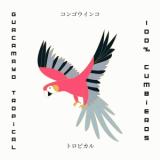
Two fantastic tracks that Guacamayo Tropical has released in seven-inch format.
A collection that balances soulful vibes with modern an edge. Saison's "Can't Get Through" opens with deep textures and a classic house swing, while Piem, Saison & Kid Enigma's "Don't Stop" injects vocal fire and raw energy into the A-side. Flipping over, Matt Gillespie's "Need You Now" layers warmth and urgency into his take on the classic garage sound. Closing the record, Scott Diaz & Miss Yankey's "Intergalactic (Alternate Rub)" ventures into more garage territory with its atmospheric pull and soulful chords. A versatile package that brings together established names and rising voices in perfect balance.
Mimose, Parra for Cuvas new, fourth studio album, is set to be released in spring 2024. The album continues the musicians avid exploration of sound in a surprising and sensitive journey that unites haunting vocals, choir-singing, groovy basslines, trance-inducing shakers and many exciting collaborations.
New single by Romperayo on 7-inch vinyl spinning at 45 rpm, released by the Austrian label discos
elgozo.
This record is a tribute to the sound of Cumbia Sabanera de Acordeón from Colombia, in dialogue with
Mexico’s Cumbia Sonidera. It also pays homage to the melodic line of the first generation of
Colombian accordion masters of Cumbia Sabanera such as Joaquín Betín, Emiro Caicedo, and
Policarpo Calle.
The two tracks are built on a solid rhythmic foundation of bass and percussion, accompanying a
melodic interplay between accordion and analog synthesizer.Mixed and produced by Pedro Ojeda Acosta at Romperayo Studios, both songs were recorded live, in
quartet format, at Mambo Negro Studios in Bogotá, Colombia, by Daniel Michel, featuring Iván
Medellín on accordion, Nicolás Eckardt on electric bass, Juan Manuel Toro on analog synth, and Pedro
Ojeda on percussion.
This single offers a first taste of Romperayo’s upcoming LP, set for release in early 2026 — once again
on discos elgozo.
Metal up Your Ass was recorded on November 29, 1982, at the Old Waldorf in San Francisco. The support band was Exodus, featuring Metallica's soon-to-be lead guitarist Kirk Hammett. The band played all their original material (nine songs) that they had written up to that point, which included all the songs from their previous demo No Life 'Til Leather and two new songs (which were later released on the Megaforce demo). Two covers of Diamond Head songs were played: "Am I Evil?" and "The Prince". However, "The Prince" was not recorded as the tape had run out. Both the name and album cover of this demo was to be used as the band's first album name and sleeve. However, Metallica's record company did not let them use the name "Metal up your ass" for an album name. Cliff renamed the album when out of emotion, he said, "I hate the managers. Let's just Kill 'Em All".
Jexy's back! After conquering post-pando dance floors with his celebrated Bad Timin' label, the Jexter is getting back to basics and bringing things home to his Good Timin' label. This time, the Balearic Bad Boy slams the breaks on the BPMs and delivers an album full of downtempo groovers, angelic diamondry and more hooks than a pirate convention! Get into it!
- A1: Who's Got A Problem With Gena
- A2: Theybetterbegladihavetherapy
- A3: Left The Club Like "Really Nigga!
- A4: You've Outdone Yourself Today
- A5: Unspoken
- A6: Tgd
- A7: Readymade
- A8: Douwannabwihtastar
- A9: This Is So Crazy
- B1: Lead It Up
- B2: Howwefl
- B3: Doobie Doo Wew
- B4: Circlez
- B5: Dream A Twinkle
- B6: Thatsmyluvr
- B7: Omo Iya Ati Baba
Vinyl[28,15 €]
There is a kinetic energy that binds drummer and producer Karriem Riggins and singer-songwriter, rapper, and producer Liv.e, the spark that happens when instinct meets flow and spirit finds rhythm.
Their collaborative debut as GENA (short for “God Energy, Naturally Amazing,” and loosely inspired by Gina from Martin), The Pleasure Is Yours feels like a playful, soulful conversation between two kindred improvisers: Liv.e’s smoky, unpolished vocals glide through Riggins’ warm, percussive universe. Rooted in jazz, soul, and hip-hop, Liv.e brings a raw, experimental approach to R&B, while Riggins known for his work with Common, Erykah Badu, The Roots, Madlib, and his close kinship with J Dilla, extends his lifelong dialogue between jazz improvisation and beat science.
Together they create a world that’s analog and ethereal, percussive and poetic, bridging eras without settling in one, the sound of two artists finding a new shared language rooted in rhythm, vulnerability, and exuberance.
Pressed on 180g vinyl, the album comes in an embossed sleeve and is avaible in red and black splatter.
Saithara were a leading traditional Lanna music group in the Chiang Mai area, led by Chansom Saithara who was named a National Artist in 1996.
Chansom's son, Thepthara Panyamana, fronted the related Saithara "Combo", who explored a range of international pop styles to craft their light-hearted parody tracks in the local "kam mueang" dialect. The lead single here, from 1985, makes use of a well-known German synth-pop song which had become a surprise smash a few years earlier, while the b-side snags a similarly notable power-pop tune from the USA.
Thepthara was also a songwriter and instructor for the child musical group Nok Lae, a Chiang Mai area youth band who became mainstream crossover stars nation-wide. Thepthara passed away in 2017, and Baa Records has teamed with his brother Komsan to license this re-issue in his memory.
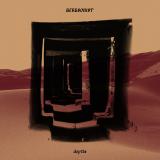
Bergsonist emerges on Dark Entries with Depths, a genre-bending 12-track LP of atmospheric and rhythmic excursions. For more than a decade, Moroccan-born Selwa Abd has been using the Bergsonist moniker to examine postcolonial identity and speculative temporalities across disparate media, including sound, image, video, and installation. She is also a key figure in New York underground music, fostering mutual aid and community support through her platforms Pick up the Flow (PUTF) and BizaarBazaar. On the 2025 album ASL أصل ⴰⵙⵍ, Bergsonist explored her Amazigh heritage using field recordings captured in Morocco. With Depths, her sixth LP, she continues the project of ancestral reconnection through sound. Abd notes: “I really use making music as therapy, not as a precious act, more as an energy release that makes me feel alive.” Depths overflows with this excess of vitality.
Tracks like “Trust the Current”, “Depths”, and “Underwater World Pursuit” showcase her singular take on diasporic techno-futurism, where James Stinson-esque atmospherics meet Moroccan rhythms. Elsewhere, “Again” and “Higher” push into coldwave territory, with icy arpeggios and electroid beats dancing beneath Abd’s ethereal vocals. But the dancefloor is not to be neglected: “Breakthrough” and “Ode to Life” spring forth with the kind of skewed peak-hour energy that only Bergsonist can bring. Artwork for Depths was designed by Eloise Leigh, and incorporates photographs by Abd and Greg Zifcak taken in Morocco. Also included is a protection poster that features an Amazigh symbol used for warding off the evil eye. Depths is an album that achieves a rare balance of elegance and DIY ethics - it is truly an ode to life.
Assemble Music welcomes XDB for his first appearance on the label. Born and based in Germany with Greek roots, XDB (Kosta Athanassiadis) has been deeply involved in electronic music since the early 1990s. Known for his broad musical vision and refusal to be boxed into a single style, XDB has built a reputation through both his carefully curated DJ sets and hardware-driven productions. His sound draws from raw Detroit traditions, dub techno and deep house, favouring analog textures and stripped-back machine funk. On this three-track EP, XDB explores the darker edges of house and techno, blending classic Detroit influences with raw analog production to deliver a focused and uncompromising statement. With releases on respected imprints such as Sistrum, Ferox and Dial Records, this debut on Assemble Music feels perfectly placed and essential.
Joe Fujinoki centered the compositions of his latest album Glass Torso round the idea of the fragility of the human body. Fujinoki described the narrative thread of the album as that of “holding the shape of a human body as if it might shatter like glass”. The precariousness of the body, the essence of the body as defined by Fujinoki as the torso, and the object relations between the boundaries of dialectical exercises pack themselves into his creative process.
Fujinoki recorded Glass Torso exclusively with analog synthesizers, stumbling in and out of structural loops to find space for accidental discoveries. The ten pieces of recorded material feel somewhere on the edge of typified form, feeling like a vascular system pumping in and out its undulating liquidities. Maybe this is the hollowed space held together by Fujinoki’s notion of the torso where you hear a microscopic world, dubby and generative. Fujinoki is adept at organizing this realm of subtle sound sources, giving proper considerations of shared tonal space. Seemingly, this handling of the precarity of sonic material elucidates Fujinoki’s mature attention to detail.
Ambient music genre tropes often affirm the listeners vessel for escape and dissociation. It provides an intoxicating allure by respite from an overwhelming exterior reality far outside the listeners controls. Here this space becomes apolitical, or its protest vocabulary softer and subtle. Fujinoki does not aim to tackle hyperobject topics on how to course correct the world, but he does something increasingly rarer to come across. On Glass Torso an alternative space is created not as shelter, but as a meditation on negotiation and compromise. This twenty eight minutes of audio lays down a foundation for imagination, for imagining how to negotiate the fragility of the self. Zoomed out, the implications of his negotiative sonics can be a playground for broader reflections on distributive care and attention.
Fujinoki says he feels “alert” to his physicality and placement in the world amidst vast digital cultures creating impositions on him and his surroundings. On Glass Torso he creates a concretized space on a vinyl record, where the virtual and the tangible antagonize one another that create the spectacle of the listening experience. This spectacle is a soft one, a considered one, and an utmost enjoyable one. Fujinoki juggles opposing forces brilliantly, and formulates an exquisite palette of soft passing music so he can also help the listener with the exquisite burden of their own Glass Torso.”
- Nick Klein, January 2026