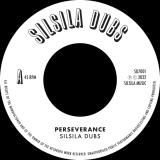
Silsila Dubs is a brand new label emanating from the backrooms and dancehalls of West London. Deeply inspired and rooted in the long standing traditions and dialogues of sound system culture, the label's output will echo the myriad musical foundations laid at various local historic venues including Southall Community Center and the Tudor Rose respectively.
Energized by the sounds of Jah Shaka, Aba-Shanti-I (Falasha Recordings), The Disciples, Manasseh, Conscious Sounds and more, the Silsila Dubs sonic aesthetic is that of classic 1990s sounds and recording techniques, lovingly channelled and dubbed via the cult Soundcraft Ghost Mixing Desk at Silsila HQ.
This debut release from the label has been written, produced and mixed by Govind Singh of the burgeoning Mya Hi-Fi crew who are closely related to Silsila and it's output. Across 2 mixes 'Perseverance' offers us a meditative and uplifting space in which to enrich our ears and our minds to carry on, no matter what life throws at us. Positive sounds for all to absorb.
Across four tracks of lean and potent workouts with his unmistakable sonic signature, Peverelist returns to Livity Sound with his first release of 2026. After three years shaping out the Pulse series, Pace The Wrecks EP finds Pev shifting focus in subtle ways while upholding his focus on impactful, sprightly club modernism.
It's clear there are fresh inputs into the Peverelist sound from the very first note of 'Wreck I', which opens on an ominous lower-register piano note leading into a brooding house-tempo cut laced with sci-fi synth licks. On 'Wreck II' the dial shifts towards a more rapid-fire, electro-informed rush before swerving towards the bass-heavy, bleep-loaded jack of 'Wreck III'. 'Wreck IV' closes the EP out on a more sparsely arranged broken beat tip primed for lighter moments in the mix.
True to Pev's singular sound while maintaining the consistently fresh, uplifting energy of his recent output, Pace The Wrecks opens up the next phase in his studio work with assured poise and a sustained commitment to keep pushing forwards.
out of Stock
Last delivered 2 days ago available to reorder, subject to availability
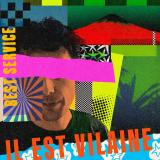
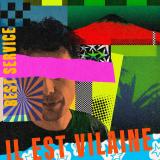
Four years after Les Mystères de Lorient, Il Est Vilaine returns with Best Service, a rich and cosmopolitan album that broadens horizons in a bleak era.
Twelve tracks and interludes crafted with the aesthetic the duo has been refining since its inception: a blend of analog electronics, techno, vintage rock, and synth-pop.
Tailor-made atmospheres, oscillating between raw energy, groove, and dark romanticism, provide perfect spaces for unexpected guests.
out of Stock
Last delivered 8 days ago available to reorder, subject to availability
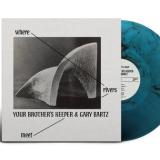
Gary Bartz und das neue Londoner Ensemble Your Brother’s Keeper präsentieren mit "Where Rivers Meet" ein tiefgründiges und intuitives Studioalbum, das die seltene Begegnung zweier Generationen von Jazzmusikern einfängt. Das Album, das pünktlich zum 20-jährigen Jubiläum von Brownswood erscheint, vereint Bartz' Tradition mit der jungen, pulsierenden Szene Londons. Das Ergebnis ist Musik, die sich mit Offenheit und Intensität entfaltet, getragen von tiefem Zuhören und gemeinsamer Improvisation.
Im Zentrum des Projekts steht Bartz, eine der einflussreichsten Vertreter des modernen Jazz. Der Saxophonist, dessen Karriere sich über mehr als fünf Jahrzehnte erstreckt, machte sich einen Namen durch Auftritte mit Charles Mingus, Max Roach und Art Blakey, bevor er sich Miles Davis in dessen elektrisierender Phase der frühen 1970er-Jahre anschloss. Mit seinen gefeierten Aufnahmen mit der NTU Troop wurde er schnell zu einer prägenden Figur des Spiritual Jazz und schuf ein Werk, das Generationen von Musikern und Zuhörern gleichermaßen begeistert. Sein Spiel – lyrisch, tiefgründig und unverkennbar gefühlvoll – zählt nach wie vor zu den markantesten Stimmen des Jazz.
Das Album markiert zudem die Gründung von Your Brother’s Keeper, einem neuen Kollektiv um Schlagzeuger und Produzent Jake Long (Maisha), dessen musikalischer Dialog und die Improvisation tief in der Musik verwurzelt sind. Mit Ali MacSween (Piano, Synthesizer, modulare Effekte), Axel Kaner-Lidstrom (Trompete), Twm Dylan (Kontrabass), Tim Doyle (Percussion) und Chelsea Carmichael (Tenorsaxophon) sowie Long am Schlagzeug spiegelt die Gruppe eine Szene wider, die den Sound des zeitgenössischen Jazz im letzten Jahrzehnt maßgeblich geprägt hat.
out of Stock
Last delivered 11 days ago available to reorder, subject to availability
Ecstatic’s dreamiest cadets bliss out on a new album of acoustic and electric guitar, harmonium and synth tapestries, notably nestling a Romance cameo within a genteel toggle of atmospheric pressure.
Back on (side) road after releasing quietly acclaimed kosmische gem ‘I Had too Much to Dream Last Night’ back in 2021 and the lysergic lushness of ‘Listen to the Sky’ a couple of years later, Celestial suggest a more sublime return to earth with the shine-eyed wonders of ‘I Can Hear the Grass Grow’, an album that soothes to the supine in eight shimmering parts of pearlescent melodic motifs marbling harmonious backdrops intended to tenderly comb nerves straight.
The duo take their role as seductive sandmen with a curious melodic wit that leaves something to the imagination whilst nudging it along the album’s narrative thread. A courtly flamenco lick flickers in opener ‘The Endless Stair’, one of the most restrained recordings we've heard from the childhood friends; blessed with just a little reverb and echo, as if a mic's been lowered into some dimly lit basement while Celestial puzzle out mystifying, interlocking harmonies. It hits a mid-point between John Fahey's raga-inspired Americana and Vini Reilly's rain-soaked Northern blues - the emotion throbs from every note.
Celestial's music is never too polished, giving it the fuzzy, uninhibited flair of a long-lost mail order private press and instilling it with a level of humanity that's rare to discover in the new-new age. Even when mysterious labelmate Romance turns up to ornament 'Mermaid Boulevard' with backmasked electronics, it's their low-slung Ry Cooder-esque guitar/bass that provides the narrative anchor, while the title track and spongiform analog textures of ‘Song For The rainy Season’ dial it right down to a Harmonia-via-BoC pastoral sublime. Vini Reilly and Eno’s influence is most surely felt on the swaying elegance of ‘Sweet Sleep, Angel Mild’, with a central motif that lingers on the mind long after it’s stopped playing, whilst their closing couplet perfectly resolves the cycle with a melancholic kiss-off for the ages.
out of Stock
Last delivered 16 days ago available to reorder, subject to availability
Jason Dungan (aka Blue Lake) and Johan Carøe find beauty in the rhythms
and repetitions of domestic life for collaborative album, 'Routine' - out September 25
Copenhagen-based multi-instrumentalists Jason Dungan and Johan Carøe didn't set out to make an album. Instead, as the title 'Routine' suggests, they found their way there through a process of habitual making and listening, developing an intuitive musical language to reflect the dreamlike meanderings and creative play of life's quiet moments. 'Routine' blends pop orientated sounds, Avant-garde minimalism, folk and new age with the emotive depth of film-score.
Their meeting was not entirely coincidental. Previously in bands such as Squares and Triangles, Jason Dungan has since recorded multiple albums under the moniker Blue Lake, including the lauded 'Sun Arcs', pursuing his passion for self-built percussion and multi-string instruments. Johan Carøe meanwhile is a composer whose film soundtrack work has seen him collaborate with Angelo Badalamenti, Arp, and Sofie Birch, at whose Andersabo residency (curated by Dungan) the pair first met, resulting in the highly praised album 'Repair Techniques' written by Birch and Carøe.
'Routine' emerged organically over many years against the backdrop of great personal change. As Carøe said goodbye to his father and welcomed his first child, the pair sent each other fragments of melodies and patterns, working up responses when time allowed to assemble a sonic palette that combined acoustic instrumentation of zither, clarinet, cello, saxophone (among others) with the textures of tape, drum machine and Yamaha DX7 synth. Inspired by the vulnerability and DIY ethos of Arthur Russell's home recordings, the vision of labels like Disques de Crepescule, and the art pop, experimentation inherent to late '70s and early '80s recordings from NYC and Japan alike, Dungan and Carøe conjured new forms for their folk, leftfield pop and avant garde influences from the low-lit living rooms of Copenhagen and rural Sweden. "I'm very interested in the ways in which music and art emerge from our wider experiences as people, workers, parents and in the daydreaming activity of making music," Dungan explains of a process which allowed the duo's individual styles to drift apart and merge together seamlessly. "I think the process was definitely capturing moments in time, but over a long time," Carøe adds. "It was a bit like improvisation, but with time stretched."
The music floats with grace and humility, remaining sophisticated yet acutely introverted.
Whether on 'Clouds', where soft layers of zither and clarinet are moved along by a featherlight bass riff and the hypnotic clip-clop of the primitive groovebox, or the gentle grandeur of cello rising and falling through 'Routine 1', the album reveals itself over 10 instrumental tracks, evoking the ineffable calm that descends when the light changes and the world turns inwards. The act of time passing became a key creative ingredient to the evolution of the album, enriched with the exciting challenge to transform their passing rounds of home recordings via a slow release musical dialogue. Jason found creative moments in the twilight hours to lay down zither, melodica, acoustic guitar to name but few, while Johan utilising "line-in and headphones" would manipulate, stretch and pitch Jason's melodic pathways during newly born naptimes.
Carøe rhythmically plucks and slides the stringed cello instrument, leaving palpable foundations on 'Hymn' and 'Chords', in a treated, stylistic approach akin to Mabe Fratti, while 'Silence' draws to a close with a gospel touch. Dungan's harp-motion zither flourishes reveal more classical connotations on 'Reunion' with inspiration of Bedroom Community's Nico Muhly as organs rise with Moogs, culminating with a climatic choral outro from friend, mezzo-soprano Anna Caroline Olesen.
'Routine' then is their first collaboration, an album of deep and sincere reflection with inviting overtones that gesture with unrushed authenticity. A document of a new-found friendship that opens a window into the most personal of spaces, where the daily practices of music and life exist side-by-side to wondrous effect.
Montréal-based sound artist Steve Bates expands his strategies and stylistic influences on An Infinite Antenna, his second solo album for Constellation, giving freer reign to melodic components and textural dynamics: leftfield synth work, deconstructed drum machine, pointillist electric guitar, and radiostatic blur are all part of the new brew swirling around his bruitist signal-bending and field-recording sensibility. Arguably a more ambient album than his acclaimed 2022 Constellation debut, An Infinite Antenna is at the same time more densely packed with ideas, dynamics, evocations and earworms. Coming out of the anarcho-punk scene of the Canadian Prairies in the 1990s, Bates founded Winnipeg’s experimental sound festival Send + Receive in 1998 before moving to Montréal to become Sound Coordinator at Hexagram (Concordia University), delving further into sonic research and theory, tape-based composition, and installation work. Alongside the curatorial arc of his own sound art label The Dim Coast, Bates released several solo and collaborative albums on ORAL_records leading up to All The Things That Happen, the 2022 Constellation debut praised by Boomkat for its “grittily iridescent ambient billow rendering maximalist panoramas” and by Backseat Mafia as “extraordinary soundscapes of unstable, destructive cacophony and tender calm, echoes of the threat of power.” Where that album was noisier and single-minded, made with the self-imposed limit of a Casio SK-1, Bates plays more widely with instrumentation and atmospheres on An Infinite Antenna, also drawing on his post-hardcore roots in seeking a sort of track-by-track concision nonetheless driven by the album’s coherence as a seamless work. “I was trying to set durations I associate with punk rather than the longer, sprawling music coming from more ambient styles (that I very much love), and while I wasn’t able to quite pare it down to Minutemen durations, I had that reduction to essential elements as a sort of whisper over my shoulder.” Incorporating source recordings made throughout 2023-2025, including at artist residencies and site-specific sound installation visits in Bosnia and Herzegovina (the album’s cover photo was taken in Sarajevo), Austria, Greece, and Saskatchewan, An Infinite Antenna combines Bates’ “idea of slowly scanning a radio dial” with a soundworld of recurring timbral and textural touchstones that forge an integrated whole.
The album’s 12 tracks work effectively as stand-alone pieces, replete with shifting undercurrents, buried melody, and stuttering kinetics, and as a sequential flow where the brief interstitial silences between them are like short pauses to flip the next page in a sketchbook of perspectival studies of a wide but singular tableau. The glistening atonal synth expressionism of opener “Pink pink pink pink…pink pink” drifts gently toward submerged ambience, darkened by the noised rumble and static interference of “Green as a ghost”, which introduces broken beats and piano chords in its denouement. Tracks like “Battles and sieges and street trees” and “Easier sad than done” work the foundations of low-end field-recording resonance, but dappled with lovely melodic droplets of treated guitar and synth. “Waste, songs of the world” and “Disaster loans” are among the album’s most explicit stylistic references to posthardcore, with distorted ambient bass and gently abrasive drum sampling. Closing track “Swamps and factories”, the album’s longest piece, is perhaps most reminiscent of Bates’ previous record with its sustained dissonant glimmer-drone, but the journey An Infinite Antenna traces to get there is Bates at his most dynamic, diverse, distinctive, and engaging. Thanks for listening.
Montréal-based sound artist Steve Bates expands his strategies and stylistic influences on An Infinite Antenna, his second solo album for Constellation, giving freer reign to melodic components and textural dynamics: leftfield synth work, deconstructed drum machine, pointillist electric guitar, and radiostatic blur are all part of the new brew swirling around his bruitist signal-bending and field-recording sensibility. Arguably a more ambient album than his acclaimed 2022 Constellation debut, An Infinite Antenna is at the same time more densely packed with ideas, dynamics, evocations and earworms. Coming out of the anarcho-punk scene of the Canadian Prairies in the 1990s, Bates founded Winnipeg's experimental sound festival Send + Receive in 1998 before moving to Montréal to become Sound Coordinator at Hexagram (Concordia University), delving further into sonic research and theory, tape-based composition, and installation work. Alongside the curatorial arc of his own sound art label The Dim Coast, Bates released several solo and collaborative albums on ORAL_records leading up to All The Things That Happen, the 2022 Constellation debut praised by Boomkat for its "grittily iridescent ambient billow rendering maximalist panoramas" and by Backseat Mafia as "extraordinary soundscapes of unstable, destructive cacophony and tender calm, echoes of the threat of power." Where that album was noisier and single-minded, made with the self-imposed limit of a Casio SK-1, Bates plays more widely with instrumentation and atmospheres on An Infinite Antenna, also drawing on his post-hardcore roots in seeking a sort of track-by-track concision nonetheless driven by the album's coherence as a seamless work. "I was trying to set durations I associate with punk rather than the longer, sprawling music coming from more ambient styles (that I very much love), and while I wasn't able to quite pare it down to Minutemen durations, I had that reduction to essential elements as a sort of whisper over my shoulder." Incorporating source recordings made throughout 2023-2025, including at artist residencies and site-specific sound installation visits in Bosnia and Herzegovina (the album's cover photo was taken in Sarajevo), Austria, Greece, and Saskatchewan, An Infinite Antenna combines Bates' "idea of slowly scanning a radio dial" with a soundworld of recurring timbral and textural touchstones that forge an integrated whole. The album's 12 tracks work effectively as stand-alone pieces, replete with shifting undercurrents, buried melody, and stuttering kinetics, and as a sequential flow where the brief interstitial silences between them are like short pauses to flip the next page in a sketchbook of perspectival studies of a wide but singular tableau. The glistening atonal synth expressionism of opener 'Pink pink pink pink_pink pink' drifts gently toward submerged ambience, darkened by the noised rumble and static interference of 'Green as a ghost', which introduces broken beats and piano chords in its denouement. Tracks like 'Battles and sieges and street trees' and 'Easier sad than done' work the foundations of low-end field-recording resonance, but dappled with lovely melodic droplets of treated guitar and synth. 'Waste, songs of the world' and 'Disaster loans' are among the album's most explicit stylistic references to posthardcore, with distorted ambient bass and gently abrasive drum sampling. Closing track 'Swamps and factories,' the album's longest piece, is perhaps most reminiscent of Bates' previous record with its sustained dissonant glimmer-drone, but the journey An Infinite Antenna traces to get there is Bates at his most dynamic, diverse, distinctive, and engaging. Thanks for listening
It pairs Virelles - who is known for his all-encompassing approach to creativity that is deeply-rooted in the Cuban influences of his upbringing - with two towering figures of creative music, whose individual work have helped shape the evolution of modern jazz for more than six decades. Together, they create music that is spacious, lyrical, and uncompromisingly inventive, grounded in profound listening and collective imagination. The group evolved out of Trio 3 , which featured saxophonist Oliver Lake alongside Cyrille and Workman. Following Lake's retirement, the remaining members invited David Virelles to help continue the group's legacy. Recorded at the legendary Van Gelder Studio , the album captures three master improvisers in an intimate, deeply expressive dialogue that unfolds through shared intuition, revealing an ensemble whose interplay is marked by subtlety, trust, and fearless exploration.
Four years after Les Mystères de Lorient, Il Est Vilaine returns with Best Service, a rich and cosmopolitan album that broadens horizons in a bleak era.
Twelve tracks and interludes crafted with the aesthetic the duo has been refining since its inception: a blend of analog electronics, techno, vintage rock, and synth-pop.
Tailor-made atmospheres, oscillating between raw energy, groove, and dark romanticism, provide perfect spaces for unexpected guests.
Music From Memory presents ‘Miraggi’, the debut release by Argento, a new project conceived by composer and producer David August. Written between Berlin and the Tuscan coast, the record unfolds as an imagined soundtrack to the Mediterranean, shaped by memory, longing and a profound connection to landscape.
The earliest sketches emerged during extended periods spent along Italy’s Tyrrhenian coast, where the shifting light, vegetation and ever-changing presence of the sea became lasting creative impulses. At the same time, an immersion in Italian library music of the 1970s and ‘80s quietly informed the project’s tonal language, while traces of jazz fusion and Balearic ambience surfaced not as direct references but as distant echoes.
Built around a dialogue between synthesizers, electronics, acoustic percussion and environmental recordings, ‘Miraggi’ balances rhythmic movement with spacious, cinematic composition. During the recording process, August was joined by drummer and percussionist Lorenzo Setti, whose performances and co-writing became an integral part of the album’s evolving rhythmic language. Across extended improvisations and recording sessions, August and Setti gradually shaped a musical language that feels both deeply personal and quietly transportive, allowing atmosphere and place to become as important as melody or rhythm.
The title ‘Miraggi’ (‘Mirages’) emerged organically, evoking a longing for something that remains just out of reach — something that cannot fully be grasped or lived. It suggests a suspended state between perception and imagination, akin to a hallucination or a dream. In this sense, ‘Miraggi’ reflects the project’s inner narrative: an imagined soundtrack shaped by desire, memory and the spiritual abundance of the Mediterranean Sea.
‘Miraggi’ will be released on vinyl and digitally via Music From Memory on September 10th 2026.
out of Stock
Last delivered 12 days ago available to reorder, subject to availability
The live EP arrives on vinyl via a collaboration between boutique label Crafting Room Recordings (Maximilian, Soft Top) and indie festival Left of the Dial. The live record follows a massive 2025 where a limited vinyl run of the Spill EP and debut EP 'Hullo, Reality!' both sold out soon after their releases. With champions already found at BBC Radio 6Music (Steve Lamacq, Emily Pilbeam) and earning a spot on the 2026 artists to watch lists for DIY, DORK, and Far Out, ELLiS.D is rapidly cementing his status as one of Europe's most striking, tireless and "sought after live acts" (Far Out Magazine). "As our first sold- out headline show outside of the UK, it felt like a real milestone for myself and the band. We wanted to capture the amazing connection we've felt playing to European audiences, with nowhere better to do it than the basement of a boat in Rotterdam. Each of the tracks on the EP have been staples of our live set for a long time but switching into the mindset of performing and recording for the EP gave us a fair few jitters pre-show. Once we crashed into 'Chasing The Blue' that all melted away. Elmo on sound did a brilliant job capturing the energy of the performance and the audience gave us the response we were hoping for!"
Across two song cycles separated by nearly four decades – Richard Wagner’s »Fünf Gedichte für eine Frauenstimme« (the »Wesendonck Lieder«) and Johannes Brahms’ late »Vier ernste Gesänge« (»Four Serious Songs«) – Wagner’s songs, written under the spell of his relationship with Mathilde Wesendonck and already pointing towards »Tristan und Isolde«, and Brahms’ final composition, which gives the album its name and was shaped by grief, illness, and meditations on biblical texts, circle the same existential questions.
Desire and mortality, ecstasy and resignation appear less as opposites than as mirrored states. The voices of Wesendonck’s poetry seem to answer the solemn reflections of Ecclesiastes and Corinthians, revealing an unexpected dialogue across time.
Without seeking historical authenticity or revisionist spectacle, »Serious Songs« listens for what still resonates beneath these works: the suspended moment where love, loss, and transcendence become indistinguishable. The harp assumes the role of the piano as the foundation, pulse, and emotional compass. The vocal line, liberated from classical convention, inhabits a contemporary expressive space without severing its bond to the original scores. It is Romantic music viewed through the acoustics of the present. The project emerged from a moment of professional disillusionment familiar to many classically trained musicians. This led to a confrontation with some of classical music’s traditional flaws that became an invitation to reimagine it.
Sissi Rada approaches the spinal properties of the Romantic Lieder, fragile enough to transform and resilient enough to survive. Intimate, lucid, and quietly radical.
BUCHLA MEETS ORCHESTRA IN QUADRAPHONIC SPACE ON CIANI/ORKEST
Suzanne Ciani, Metropole Orkest and Simon Dobson release historic immersive performance in multiple immersive formats including quad vinyl.
Silverlake, CA \\ June 4, 2026 – Electronic music pioneer and five-time Grammy nominee Suzanne Ciani joins the internationally acclaimed Metropole Orkest, conducted by Simon Dobson, for the release of CIANI/ORKEST, a landmark live album composed entirely of new work, created specifically for this unprecedented collaboration.
Recorded at Amsterdam Dance Event (ADE) before a rapt audience, CIANI/ORKEST is not a retrospective. It is a bold, immersive meeting of the Buchla electronic instrument and 50-piece orchestral sound. The result is a sweeping sonic landscape, at once intimate and monumental.
Under the direction of the Metropole Orkest, renowned for its genre-defying collaborations with artists from jazz to contemporary classical - strings shimmer, brass swells and woodwinds echo the organic, fluid qualities that have always defined Ciani’s sound. “This project feels like a homecoming,” says Ciani. “The Buchla was always orchestral to me, an instrument capable of infinite color. Hearing those colors unfold through the Metropole Orkest has been profoundly moving.”
At the heart of CIANI/ORKEST lies Ciani’s lifelong commitment to quadraphonic sound. From her early Buchla performances in the late 1960s to her 2018 release LIVE Quadraphonic, Ciani has treated space as a primary compositional parameter. Working alongside immersive producer KamranV, Ciani continues to explore immersive sound as both artistic and human gesture. Kamran’s decades of work in spatial formats, converge here in service of a singular goal: to let sound behave as it does in the physical world. “For both of us, quad is musical,” Kamran notes. “The way Suzanne works, quadraphonic is nested in — not the technology per se — but the intent you bring to the work.”
The recording stands as a meditation on legacy, evolution, and the enduring dialogue between technology and human expression. The live album captures the electricity of performance, the immediacy of touch plates under Ciani’s hands, the collective of musicians responding in real time, and the audience’s shared immersion in quadraphonic-inspired space.
CIANI/ORKEST is released by Atmospheric/AKP Recordings/CyKiK in multiple double-disc quadraphonic 12” Record packages designed by grammy-nominated designer Rebeka Arce. Each pressing is made regionally to minimize carbon emissions and also contributes to nature via Brian Eno's EarthPercent, the music industry's climate and nature foundation.
The release is encoded using the dublab Quadraphonic Universally Accessible Resource Kit (QUARK). QUARK enables binaural listening via standard 2-channel playback or 4-speaker playback via Involve Audio hardware decoders, vintage Regular Matrix quadraphonic receivers, Dolby Pro-Logic II/Dolby Surround Upmixer (DSU) receivers, or any multi-channel audio interface equipped computer. This album is immersive via all formats: digital download, streaming (Qobuz, Spotify, SoundCloud, Bandcamp), radio broadcast, vinyl and high-resolution Dolby Atmos (Apple Music, Tidal, Amazon HD, IIA), Sony 360RA (Nugs, Amazon HD) and Eclipsa Audio (YouTube).
About Suzanne Ciani
Suzanne Ciani is a composer, pianist, sound designer, and electronic music pioneer whose work spans experimental, new age, classical, and cinematic sound. A five-time Grammy nominee and recipient of the Moog Innovation Award, she continues to perform internationally, captivating audiences with immersive modular synthesis performances.
About Metropole Orkest
Based in the Netherlands, the Metropole Orkest is one of the world’s leading genre-crossing orchestras, known for collaborations with artists including Brian Eno, Herbie Hancock, Snarky Puppy, Jacob Collier, and within contemporary classical and electronic spheres.
Nollman and his cohort took a considered approach to developing sonic relationships with the orcas and other animals they encountered, always keeping a respectful distance as they found one another with their ears. Orcas' Greatest Hits collects hydrophone recordings drawn from over 60 hours of interspecies collaboration recorded between 1985 and 2002, showing the playful ways in which Nollman engaged the orcas from the portable studio floating above their home. What we hear is the focused listening by the cetaceans and humans as they search out sonic space among one another, finding in that dialogue potential common ground for deeper understanding.
Chloe Lula Announces Syntax: A Singular Vision Connecting Ambient Meditations and Hypnotic Techno San Francisco-born, Berlin-based artist Chloe Lula announces the launch of Syntax, a record label that codifies her unique position within the electronic music landscape. Arriving as the definitive home for her work as a DJ, producer and cellist, Syntax follows her established residency at Tresor and acclaimed releases on foundational labels including Mord, Blueprint and the highly esteemed experimental imprint Subtext. Her label is the culmination of a decade spent as both a participant in and a defining voice in the scene—a space where Lula’s deep and cohesive vision of electronic music finally converge. The label’s name refers to the arrangement of elements to forge new meaning, a philosophy Lula applies to her singular musical grammar. Whether through her slow-burning, exacting techno or her instrumental compositions, Lula’s work is characterized by a patience that understands nuance and counterpoint. This vision is reflected in the label's structure: releases will arrive in thematic series that bypass traditional genre markers to focus on atmosphere, immersion and hypnotica. The imprint’s debut, SYN-PLS01, marks the beginning of the Pulse series, a collection specifically engineered for the floor. For this inaugural release, Lula took recordings from Swiss electroacoustic composer Alexandra Bellon as a jumping-off point, molding Bellon's architectural sense of space into six tracks of driving techno. Future series will expand the catalog into ambient and instrumental territories, reconciling formal acoustic tradition with the raw functionality of the electronic landscape. With a career spanning editorial leadership at Resident Advisor and her work shaping the dialogue of the culture through her writing and interviews, Lula brings a deep, analytical knowledge to her craft. Syntax is the connective tissue between her work in the booth and her critical contributions to the field—a project that formalizes her distinct perspective as both a curator and a creator. SYN-PLS01 arrives on May 8. Follow @syntax.records for updates.
out of Stock
Last delivered 60 days ago available to reorder, subject to availability
This 7" was pressed on pink wax in amount of 200 copies.
Funky Mamas and Papas Recordings returns to its roots and releases another 7" after the well-received ones (Michał Martyniuk, After 'Ours and Pezda/Ryć). Once again we have something unique!
Stachun Bebach, aka Stanisław Pańta and Bruno Jasieński
The double single "Byk / Składak" is based on recordings from a two-day, improvised recording session at Dwa Domy Studio in the summer of 2023.
They met a few years earlier, on stage, during Stach's first jam at Warsaw's Spatif, and began a dialogue that developed through regular performances, as a duo and in larger ensembles.
The session was recorded at a crucial time for both of them – when Stach was starting college and Bruno was expecting the birth of his child.
out of Stock
Last delivered 75 days ago available to reorder, subject to availability
In a world currently defined by unrest, uncertainty, and cultural fracture, acclaimed saxophonist, composer, and bandleader Isaiah Collier returns with Joy, a 5-track EP that reframes one of humanity’s most nuanced emotions both as a devotional grounding and political act.
Collier’s deeply personal compositions present joy as an act that isn’t rooted in escapism or abstraction, but rather, as something hard-won rooted in lived experience, shaped by transformation, and sustained through connection. Throughout the album’s five compositions, Collier positions joy as a guiding light during challenging times, an expression of challenging yourself to utilize your gifts, an affirmation of love and discovery, and as an affirmative source of reassurance.
“We are in a paradoxical time, where so much is being revealed to us,” Collier shares. “Everything feels political from every scope… our collective hearts feel the heaviness in the air. Yet I say to you all—don’t despair. For right now, the most political thing we can do is share joy.”
That ethos is made clear in the opening title track and lead single “Joy.” A pulsing rhythmic motif anchors the melody with a sense of both searching and certainty. Collier conceived the piece around 3 years ago reflecting on a time where many people in his life were experiencing loss of family and friends and experiencing profound life transitions. “Everything just felt like it was falling apart with no aim in sight,” he reflects. “Yet, there is a light at the end of it all.”
As he played the chords with a sense of urgency, he could feel the vibration of yellow in the piece. That initial triplet motif serves as the guiding light on the piano and the only word Collier could hear was Joy. In addition to Collier at the helm singing and playing piano and tenor sax on the track, it features an expansive 11-piece ensemble with a full horn and string section allowing Collier’s propensity for composition and arrangement to shine with an eclectic sonic palette.
“Landscape of Dreams” finds Collier serendipitously leaning into utilizing his gifts as a multi-instrumentalist. While he had a sketch of the piece going into the studio, a traffic delay caused musicians to be late arriving at the studio. Never one to waste time in the studio environment, Collier stepped into new creative territory and took up the challenge of executing playing all instruments himself as an act of trust and experimentation. “I’ve never done this before, and so it was a leap of faith for me,” he asserts. “I always dream of doing stuff like this, and being part of the small percentage of people who can do it like Prince, Steve Lacy, Frank Zappa, and Stevie Wonder. The end result finds Collier immersed in a hypnotic soundscape playing layered flutes, drums, Metatron, Wurlitzer, and auxiliary percussion.
Another layer of joy is revealed in “Where I’m Loved” that serves as a love letter and leaning into the process of stepping into the willingness to explore life and love with a partner. On the intimate meditation of vulnerability and connection, Collier's vocal prowess is on full display, exerting effortless falsetto reminiscent of D’Angelo over soulful Wurlitzer and guitar as he crosses over into more R&B-inspired realms. “I believe everyone deserves this feeling or to honor the memories of it. Furthermore, I believe you should also go where you’re celebrated and not tolerated.”
“When the Dust Settles” captures the electricity of live collaboration and Collier further steps out of being confined to any specific genre. He had just gotten a microKORG keyboard from co-producer Sonny Daze and was exploring the vast array of sounds on the instrument. Collier plays synth bass on the microKORG joined by the electrifying improvisation of Cole Runge on guitar and the combustible rhythm of his brother Jeremiah Collier on drums with additional post-production work from Sonny Daze.
The album’s final track “God’s By Your Side” reflects on perseverance and artistic legacy, directly inspired from the passing of D’Angelo, whose life’s work was a huge part of Collier’s childhood growing up in the late 90s and early 00s. With gospel flavor and direct influence both from D’Angelo’s vocal and instrumental arrangements, the track speaks to resilience and persistence in the face of obstacles—an affirmation of source and reassurance. “And what’s better than having God by your side, right?” asserts Collier.
Joy is a through-and-through expression of the arc of joy in its truest form. Joy transcends fleeting happiness and is conscious gratitude shaped by taking chances, leaning into your gifts, fostering community, and lived experiences.
“Joy is partially happiness,” Collier explains. “But to me it means happily being grateful for family, friends, lovers, teachers, and good times. These are the things that anchor us.”
The release of Joy comes off the heels of significant momentum for Collier, whose work continues to garner accolades and resonate across cultural spheres. He was featured on the cover of DownBeat’s April 2025 issue, where he was named “The Next Sax Giant,” and profiled on NPR’s Jazz Night in America for his ambitious 13-movement interdisciplinary suite The Story of 400 Years, that traces 400 years of Black American History. He released two full-length albums in 2024 with The World Is on Fire highlighted in The New York Times’ Fall Arts Preview and The Almighty named among the publication’s Best Jazz Albums of the year.
Beyond performance and recoding, Collier’s influence is recognized in broader cultural and intellectual spaces as he was the recipient of the Jazz Journalists Association’s 2025 Up and Coming Artist of the Year Award, the 2024 Chicagoan of the Year in Jazz, and was named a Steve Jobs Archive Fellow joining an elite cohort of the next generation of artistic visionaries through a yearlong program.
In addition to the release of Joy, Collier is touring his “Collier Plays Coltrane” program throughout 2026 in honor of John Coltrane’s centennial. Rather than presenting Coltrane’s expansive catalog as repertory, Collier approaches this music as something living, reshaping it in real-time with a sense of space and improvisational dialog reflecting both reverence to the past and present times.
out of Stock
Last delivered 68 days ago available to reorder, subject to availability
'Where the Smoke Goes captures the conscious and unconscious of Johnny Coley in duet between 2020-2024 AD. Alabama-born, Marseille-based artist Turner Williams Jr. wraps a selection of his dear friend Johnny’s penultimate compositions in arresting tone poems.
'The music buzzes and hums with distant trains, trembling strings, and lapping water, haloing our protagonist in a humid glow as he considers whether horses can live to 70 years old, cigarettes potent enough to knock you on your ass, and orchids facing the wrath of winter storms.
'This work began in the first Covid spring, as Johnny's advancing multiple sclerosis gave way to a permanent domestic confinement and a final period of prolific creativity. Johnny braved the toxic gales of social media to share his thriving poetry and visual art practice and to keep in touch with friends like Turner, who had recently moved abroad. For the first time, Johnny recorded himself, sending Turner fresh poems, day and night.
'Taking cues from late era Coil and the operas of Robert Ashley, Turner approached these recordings both as language and pure sound, arranging accompanying mosaics that emerge as much from Johnny’s unseen text as his mercurial drawl. Tracks draw from Turner’s solo practice as well as sessions including Henry Birdsey of Old Saw, members of the French underground (Manoir Molle, Loto Retina, Mona Assayag) and close Birmingham collaborators (Jasper Lee, Jimmy Griffin, Ladonna Smith). The voice is parsed and played as an instrument and each poem becomes a score.
'There is Johnny’s poetry and Johnny’s voice. These are two independent yet interwoven instruments. For Turner, Johnny's vocabulary, cadence, and timbre carry all of the contradictions that he writes about. His work is a dialogue of rich contradictions. "He plays with Southern American vernacular speech in his poetry while embodying it with his speech, creating a zone of emotional frisson. He loved combining opposites. Rough yet soft was one of his favourite descriptors", Turner recalls, "That was Johnny. ” Upon hearing the completed record, Johnny likened it to "a beautiful wood box, that when you open it there are fabrics shot through with silk threads and sharp fall woods smells - supporting and decorating the poems that fall out of them. ”
'This record captures something unconscious, atmospheric, and gives it unexpected materiality. Smoke that you can feel like grass under your feet. Stars that you can touch like a lover. Meeting for the final time in the summer or 2025, the time for words had passed so they just held hands and listened to the album opener Stargazer in silence as Johnny drifted off to sleep.'
Consolidated, the political dance/industrial music band from the early 90ties joined again for a studio session in San Francisco last summer, resulting in a new album. 'We're Already There'. The first release on Consolidated's own label 'The End Of Records'. What else to expect, the new recordings are an innovating mix of industrial, to hip-hop, to rock and funk with mixtures of live instruments and electronics. Topped with left political activism and politically radical lyrics address issues such as America, Covid and ecocide with song The Flood, demand *'Free Music, Stop America'* with Musica Sin Frontieras & welcome guest vocalist GRETA THUNBERG on the track The 'ol Mass Extinction Blues. The album starts in 'traditional Consolidatedgroove' with the song 'Capitalism A.F.', a mix of beats, industrial sounds and hiphop. Followed by funkypop songs, danceable industrial jams, techno beats, reggae and blues influences plus a remarkable noise track. Main musicians are Adam Sherburne (guitar/vocals) and Mark Pistel (synths/beats) backed by Lynn Farmer (Meat Beat Manifesto) on drums, who replaces the original drummer Phil Steir. The complete album is recorded, mixed and mastered by Mark Pistel at 'Room 5' in San Francisco. The cover shows art paintings from Ayelet Hay (front) and William Kendall (back). On 'We're Already There' Consolidated plays more music than ever. "I have zero interest in being in a band, especially my own_" "I had to develop a different way to be involved with music for aesthetic and mental health reasons_" "FREE MUSIC! is not to the detriment of artists, it's literally the end of artists-as anyone perceives them in the last 500 years" -Adam Sherburne - Consolidated are known for their live performances, in which a microphone is passed among audience members to discuss, rebut, argue or elaborate on song topics. Consolidated: Adam Sherburne & Mark Pistel.
The A side opens with two ambient pieces: "Inception," gritty and haunting, built from field recordings and layered chords, and the dreamier "Regulator Dial." "Air Lock" and "DFtB" turn breaky and low-tempo, evoking early electronica. The flip moves through "Waterproof's" downtempo electro and "Make Right," the LP's most club-ready cut. Title track "Bean Soup" channels early Four Tet: bleepy, minimal, emotional, while "Sunlight" closes with blissful, calming sounds, rounding out a beautifully balanced record.
Tudor Gheorghe, aka Romansoff, is a Bucharest DJ, producer and vinyl collector with over 13 years on the capital's underground scene. Inspired by small local parties in the 2000s, he started collecting vinyl, then DJing, quickly becoming a key figure in the Bucharest club scene. Since founding his imprint Raw Tools in 2013, he's released on Lobster Theremin's Mork, Creme Organization, Les Yeux Orange and Solar Phenomena.
In 2018 he co-founded venue Platforma Wolff, a full club by 2021, as booker and resident, hosting headliners like Prosumer, Paramida and Tornado Wallace. Versatile and creative, he stays a fixture at Bucharest's best nights. His debut LP lands this year on Bar Ton's vinyl label.
out of Stock
Last delivered 3 months ago available to reorder, subject to availability
After a year of silence since the last catalog a new record is now coming to life, notes from the imaginary-world played & programmed by So-Fi.
“Mind Migration” is So-Fi’s debut release on Superluminal Recordings, four tracks inspired by unexplored old and modern techno sectors. Tribal rhythms are wildly unleashed in dialogue with obscure-spectral textures, a musical composition within its influences being reflected also by the artist’s prowess as DJ been witnessed in many clubs.
To celebrate the 10th anniversary of the "Surf Rider" EP (originally released in 2015 on Lumière Noire), Dialect Recordings publishes a limited vinyl edition featuring an exclusive edit of "Lies" by Blackjoy. For the occasion, Il Est Vilaine’s long time collaborator Apollo Thomas has designed a brand-new cover and created a mini comics included with the vinyl. A beautiful collector’s item to honor this classic!
out of Stock
Last delivered 75 days ago available to reorder, subject to availability
For nearly four decades, since its founding during the mid 1980s, the Belgian imprint, Sub Rosa, has continuously plumbed the depths of numerous, radical creative histories, assembling a catalog of releases that has almost no equivalent, while remaining nearly impossible to nail down. That said, for most of its run, Sub Rosa has been primarily recognized for its rigorous explorations of the lesser explored shadows of experimental sound practice (sound-art, sound-poetry, early electronic and electroacoustic music, free-improvisation, etc.), delivering a remarkable body of artifacts that have collectively helped to rewrite history in their wake. While it's always been impossible to anticipate where the label might take us next, threading their catalog are plenty of releases that throw further wrenches in the cogs, expanding our understanding of what they pursue, as in the case of a handful of titles, appearing as early as the 1980s, dedicated to ethnographic field-recordings from various parts of the world. Among the most striking and celebrated of these was 2017's Ethiopian Urban And Tribal Music: Mindanoo Mistiru / Gold From Wax, comprising an astounding body of recordings made by Ragnar Johnson and Ralph Harrisson in Ethiopia during 1971, reissuing material originally released by Lyrichord the following year. Now, Sub Rosa returns to the incredible work embarked upon by the pair and captured on that same trip with Ethiopian Musics 1971, comprising the recordings originally released by Ocora shortly after their completion, expanded in this edition to include an entire disc of never before released music. Widely regarded as some of the most important field-recordings ever made of indigenous Ethiopian folk music (as captivating and intoxicating as they are revelatory: providing insights into the roots of the country's singular traditions of popular music and jazz that have come to be celebrated the world over), this incredible collection is issued by Sub Rosa in a beautifully produced 2LP edition, complemented by a four page insert providing detailed descriptions of each song, as well as notes by the ethnomusicologists and recordists, as well as a 2CD edition, with a twelve page booklet. Insanely good and absolutely essential for any fan of field-recording, ethnomusicology, the music of Ethiopia, or the label's mission at large. Once again, Sub Rosa has defied our expectations and delivered a remarkably important intervention in the history of recorded sound.
Located in the Horn of Africa region of East Africa, few cultures are distinctly singular, while being so diverse (containing 80 distinct ethnic groups who speak 70 languages and 200 dialects) as that of Ethiopia. The home to some of the oldest surviving sects of Judaism, Christianity, and Islam (each contributing important aspects of its collective cultural body), particularly the country's culinary and musical traditions have become celebrated the world over, and (generally speaking) feel entirely independent of those of its neighbors. Given this, it's unsurprising that, during the summer of 1971, the young ethnographer, Ragnar Johnson, accompanied by Ralph Harrisson, traveled to Ethiopia to begin his brief career as a field recording ethnomusicologist, capturing material on reels of magnetic tape that would be subsequently released across three LPs for Lyrichord and Ocora, respectively, coming to form a cornerstone of documentation and study of the country's many indigenous musical traditions, as well as providing wide, global access to them for the first time. While Johnson's recording career was relatively brief, ending toward the end of the decade when he began to focus more on teaching in UK universities, with a focus on the anthropology of art and social anthropology, his impact on the field was lasting. Between 1971 and 1979, in addition to those he made in Ethiopia, he made hugely significant recordings in Yemen (also issued by Lyrichord before being reissued by Sub Rosa) and Papua New Guinea, which were originally released by David Toop's Quartz Publications to wide celebration, before being revisited by Ideologic Organ in 2023.
While it's worth noting that commercial releases of ethnomusicological recordings by labels like Folkways, Lyrichord, and Ocora were still in their relatively early days when he entered the field, Johnson's recordings quickly stood apart for their vivid qualities and clarity of space, allowing them to stand the test of time. As he later stated: "I used a Uher Report L stereo tape recorder, BASF quarter inch tapes at a recording speed of seven and a half inches per second with two directional microphones mounted to record an isosceles triangle of stereo sound," he reveals. "The location of the microphones and musicians was critical. The musicians were fully informed of all aspects of the recording process."
Johnson's recordings are extremely vivid, there is a clear sense of space and the cries of the flutes exist across the entire stereo field. It's a reflection of Johnson's skill as a field recordist that his recordings continue to be reissued over forty years later. "I used a Uher Report L stereo tape recorder, BASF quarter inch tapes at a recording speed of seven and a half inches per second with two directional microphones mounted to record an isosceles triangle of stereo sound," he reveals. "The location of the microphones and musicians was critical. The musicians were fully informed of all aspects of the recording process… I used to enjoy being in the moment and hearing something wonderful despite the stress of the vigilance required to ensure that the recordings were accomplished according to plan. The responsibility is to record and document the music as effectively as possible so that it has been preserved for posterity. It is better to actually record music than to sit in a seminar room debating the ethics of recording music." It is this very ethos and sense of clarity that can be encountered across the length of Ethiopian Musics 1971.
For the sake of clarity, the two LPs of material that comprise Ethiopian Musics 1971 should be regarded as a single body of recordings alongside those made in Ethiopia by Ragnar Johnson and Ralph Harrisson during the summer of 1971 (previously issued by Lyrichord and reissued by Sub Rosa), and as two that have, until now, remained historically distinct. The first LP gathers that material released by Ocora during the early 1970s on Musiques Ethiopiennes, while the second comprises (as far as we can tell) twelve never before issued recordings, expanding the journey and making this the definitive edition of the release with its incredible total of 23 recordings of songs, allowing it ever greater scope to achieve the recordists' modus operandi of capturing the broadest and most diverse cross section of Ethiopia's many musical cultures, ranging from different forms of urban music captured in Addis Ababa, documenting largely orally transmitted idioms within which lyrical content is given greater emphasis than the instrumental components (played on masenko fiddles, craar and bagana lyres, washint flutes and kabaro drums), to folk idioms hailing from the Danakil desert and the border regions with Sudan and Kenya. There are songs sung and played in bars, divination chants, laments, dances, Christian songs, and Amharic sung poetry, to only begin to scratch the surface.
Ethiopian Musics 1971 is one of those rare albums where each musical moment is pure, intoxicating gold, while also being greater through the sum of its parts. There are the many songs, forming a rich tapestry of remarkable range across the respective two LPs/CDs (moments that wondrously flirt with sonic abstraction; hypnotic rhythms; pulsing chant; melodies that, in structural arrangement and tonal combination, help us reframe how such a thing might be understood, and a great deal more), each imbued with a remarkable directness and emotive sensibility, and there is the stunning quality of these recordings themselves, transporting each sound to our ears as though we intimately share its creator's space, while being imbued with the pure heart and remarkable spirit with which they were made. As we said before, it's little wonder, once heard, why these recordings and this music feels as fresh and relevant (enduring more than 50 years) today as when they were made. Once again, Sub Rosa has raised the bar with this essential addition to the incredible work that Ragnar Johnson and Ralph Harrisson did back in Ethiopia during 1971, radically expanding our access to the sounds that they captured with these stunning, beautifully produced 2LP and 2CD editions. Absolutely engrossing from the first sounding to the last, this one can't be missed.
Acclaimed London collective Kokoroko have announced a brand new remix EP titled Brownswood Remix Editions 009 - Kokoroko remixes, set for release on 12th June 2026. The project reimagines standout tracks from their 2025 album Tuff Times Never Last, offering fresh perspectives on three fan favourites through a carefully curated selection of producers.
The EP brings together a dynamic trio of remixers: IG Culture, IZCO, and Musclecars, each delivering a distinct sonic interpretation rooted in club culture, soul, and rhythm-forward experimentation.
Brownswood Remix Editions 009 - Kokoroko remixes will be released on vinyl as part of the Brownswood Remix Editions series, landing as Edition 009. Known for spotlighting forward-thinking reinterpretations from across the global jazz and electronic spectrum, the Brownswood imprint brings a tangible, collector-friendly dimension to the project. This limited vinyl run offers fans and DJs alike the chance to experience these reworks in their fullest analog form, further cementing the EP’s place within the label’s celebrated remix catalogue.
Each remix expands the sonic world of Tuff Times Never Last, an album that resonated widely upon its release in July 2025, praised for its uplifting themes and rich blend of jazz, afrobeat, and soul influences.
With this release, Kokoroko continue to highlight the evolving dialogue between live instrumentation and electronic reinterpretation, reinforcing their place at the forefront of contemporary UK music.
out of Stock
Last delivered 86 days ago available to reorder, subject to availability
Filmmaking and music-making share a common element of worldbuilding. Whole cloth, environments are raised in which a perspective can be placed; the viewer, the listener, is taken on a ride into the unknown for a time. Movie, the newest album by DMV-based duo Lifted, is like a film shot with microphones rather than cameras, using the pacing, spatialization, and semiotics of cinematic sound design to lead us through a surreal soundworld that draws as much from Foley artistry as dub, jazz, and electronic music. Musical elements and field recordings shift in and out of focus, collaged in spontaneous improvisation sessions on CDJs by the core duo of Andrew Field-Pickering (Max D, Dolo Percussion, Beautiful Swimmers) and Matt Papich (Co La, Ecstatic Sunshine). We may not see where we are, but our ears give us all the information we need.
We open on a pedal steel, played by More Eaze, but it’s been warped and slowed, gradually pitching upward until it's met by drums and electronics. Imagine the THX logo emerging onscreen. Movie is bookended by two related themes, “The Ice Chewers (Opening Credits), ” and “Midnight Snack (End Credits), ” giving the spatial experiments at the heart of the record form and focus. If there’s a broader narrative to latch onto, it’s in the transition moments, the juxtaposition of various field recordings that indicate movement of characters through space and life happening at its own pace. Tracks are defined by other thematic elements: a wandering piano in "Repossessed, " the drone of Duncan Moore’s bagpipe on “Melts Very Nasty, ” the delicate dance of Dustin Wong’s guitar over Jeremy Hyman’s drums on “Midnight Snack. ” Even with such an expansive ensemble cast, the focus remains squarely on the flow from one scene to the next.
Robert Altman’s use of sonic perspective shifting, as well as Apichatpong Weerasethakul’s intricate construction of environmental ambience and aural representations of the unknown, were both inspirational for Lifted’s focus on sound as a way to establish set and setting in film. We hear Altman especially in the way dialogue emerges and recedes: as Papich puts in a sandwich order, as Field-Pickering browses the grocery store. These techniques have been a part of the duo’s arsenal in Lifted and their own projects for years, but here, without the mandate to make something overtly musical, they are foregrounded and placed in crisp focus. Here is another way to listen to the world, to understand how time, place, and personality are communicated through sound as Lifted closes the gap between artforms. What you can’t see only drives the imagination to more brilliantly invent.
Malmo-based producer Martinou returns to his roots with a debut on hometown label Kontra-Musik. Since crafting his first album for Nous'Klaer Records (NL) at Inkonst's studio, Martinou has steadily built an international presence through acclaimed releases on Mule Musiq (JP) and Turbo Recordings (CA). This three-track EP is the result of a long-running dialogue with label head Ulf Eriksson--blending Detroit-inspired techno, hypnotic depths and broken lush, all produced with subtle precision and emotional weight. A homecoming of sorts, but also a new departure.
out of Stock
Last delivered 64 days ago available to reorder, subject to availability
Aho Ssan ist der Künstlername von Désiré Niamké, einem in Paris lebenden Komponisten und Elektronikmusiker, der sich im Laufe des letzten Jahrzehnts als zentrale Figur an der Schnittstelle zwischen experimenteller Elektronikmusik, Klangforschung und zeitgenössischer Komposition etabliert hat. Zu seiner Diskografie gehören ,Simulacrum" (Subtext, 2020), ,Limen" mit KMRU (2022) und ,Rhizomes" (Other People, 2023) mit Moor Mother, Angel Bat Dawid und clipping. Er trat bereits im Lincoln Center (NYC), im Muziekgebouw (Amsterdam), in der Krakauer Philharmonie, bei Atonal Berlin, CTM, Rewire und Sonic Acts auf - und war Support von Autechre im Le Trianon (Paris, 2024). Aho Ssans künstlerisches Schaffen lässt sich als hochpräzise Klangskulptur beschreiben, in der gewaltige Ströme digitaler Klänge in rohe Texturen zerfallen, um die Themen Identität und Chaos zu erforschen. The Sun Turned Black basiert auf field recordings, die während einer Reise nach Ghana, der angestammten Heimat von Aho Ssan, gemacht wurden. Aufgebaut um einen klanglichen Dialog mit der international gefeierten Geigerin ASIA, wobei alle perkussiven Elemente bewusst weggelassen wurden, nimmt das Album einen einzigartigen Platz zwischen Ambient, Noise und elektroakustischer Musik ein. Das Projekt wurde ursprünglich von der Maison de la Radio für das Hyperweekend-Festival in Paris in Auftrag gegeben, das Album in Coop mit Subtext Recordings aus Bristol veröffentlicht.
Church Andrews and Matt Davies return with Tilt, a pinpoint collection of skewed microtonal and discordant compositions for percussion and digital synth.
Tones ascend but don’t resolve, rhythms loop, collapse and reassemble, patterns wriggle with geometric precision, sounds tilt, the edges fray.
Kinetic, elastic, wonky without being obtuse, Church Andrews (aka Kirk Barley) and Matt Davies new LP Tilt is the culmination of six years of creative collaboration, refining and redrawing the relationship between Davies’ virtuoso percussive practice and Barley’s off-kilter synthesis.
Where their 2024 release Yucca, took rhythmic cues from the Fibonacci sequence, Tilt explores a more intuitive approach, returning the duo to a minimal sound interrogating the interplay of chance and control, system and body, freedom and mechanisation. Featuring prepared guitar, finely resonant muted percussion and a crisp palette of digital synths, it draws on the pair's long-standing interest in alternate time signatures.
Here, a tripped-up 11/8 beat gives ‘Yokai’ a disorientating quality, threading unusual paths through the playful, mysterious 5-note Hirajoshi scale - a pentatonic scale from Japan hinted at in the track’s playful reference to a supernatural spirit in the country’s folklore.
Using a simple on-off system between drum and synth to trigger a Shepard tone - an auditory illusion of a sound that ascends or descends in pitch without actually changing - ‘Shepherd’ revels in the stripped-back simplicity of its sonic palette, where the nuance lies in what Barley calls “subtleties in the timbre of the sounds” as they dialogue with Davies’ warped loops.
It’s these finely tuned melodic drum tones and an eerily abstracted prepared guitar that give ‘Debris’ its uncanny feel, yet never feeling overly controlled. Like the album’s meticulous, graphic artwork, Tilt seeks the shifting ground between the physical and the digital, as acoustic tones are tweaked and disambiguated into new and unexpected forms.
Tilt represents Church Andrews and Matt Davies’ ongoing collaboration in its purest form - a hyper-defined evocation of gravitational potential in their live sound.
In a patchwork of IRL sound fragments, humming ambience and sub bass brushstrokes, Bobby Ingham debuts on Sneaker Social Club with a social-realist inversion of soundsystem music that relishes negative space while telling a street-level story.
Bobby Ingham is a 24-year-old multidisciplinary artist whose creative practice across film, music and sculpture was shaped by formative experiences in his native Leeds. Having started to experiment with spoken word, poetry and electronic sound production, he sharpened his focus after moving to London. Homesickness moved him to recreate the sensory impression of his hometown through sound, using snippets of his every day experience with his friends and family as well as archival recordings online related to Leeds. The particular lilt of regional dialect became central to the character of his work — a direct portal into a personal world that could only be rendered by someone who has lived it.
Ingham’s work chimes with that of SSC’s own Low End Activist. Where LEA has repeatedly taken us around the Oxford council estate he calls home, on Angel of the North Ingham lets us stay a while on the streets and in the houses that made him. It’s intimate from the very start — opening track ‘Lynne’ features Ingham’s own grandmother, while ‘I Feel So Good I Swear I Could Fly’ finds Ingham voicing his own poem as he retells personal experiences in a disarmingly mythological manner.
‘1st Memory Of Love For DRXSJKFL ft. Pretty V’ invites Wakefield, West Yorkshire-based artist Voldy Moyo to lay down a spoken word piece that evokes the dehumanising nature of military service and those left behind by it. Where there are no words, Ingham instead speaks with brittle machine rhythms and blocks of texture, swooning synthesised beauty and any emotional shade you care to mention in between. It’s a work that takes you right into the heart of the artist — someone committed to telling an honest story from a viewpoint that seldom gets a second thought.
With 'Tangkoa II', Belgian producer and multi-instrumentalist Dijf Sanders invites listeners into a vibrant and immersive sonic world shaped by travel, collaboration and instinct. Released via Unday Records, the album grew out of field recordings captured during a journey through Vietnam, later transformed into rhythmic, colourful compositions that feel both intimate and expansive.
Rather than building tracks piece by piece on a screen, Sanders approaches music as something alive and unfolding. Sounds are performed and reshaped in real time, giving the album a spontaneous energy, as if the music is discovering itself while you listen. Together with drummer and producer Simon Segers, he creates a fluid dialogue between electronic sounds and human rhythm, balancing precision with freedom.
Improvisation lies at the heart of 'Tangkoa II'. Contributions from Vitja Pauwels (guitar), Viktor Perdieus (saxophone) and Louise van den Heuvel (bass) bring a subtle jazz sensibility to the music, pushing it toward hypnotic grooves and unexpected turns.
The result is an album that feels warm, physical and constantly in motion. Electronic music that breathes, pulses and draws you fully into its atmosphere.
Primordial Mind forms the mysteries and intensity of inner life into eight mandalic instrumentals where Mas Aya and Khôra, artists who share 15 years of music making, orchestrate an inspired, prismatic palette of percussive and melodic sources. Each composition presented stages a vigorous meshwork of colours and textures, contrasting riveting polyrhythms with towering arrangements for flutes, synths, and processed acoustic instruments. Tendencies which the artists trace in their solo practices are amplified, blended, and refracted sublimely in unison, serving as energetic portals to the collective awareness.
Combining trans-ethnic scaling alongside a heady brew of rhythmic influences and advanced electronic processing, the recordings on this album operate with a tactility that vaults between free jazz, dub, raga, ambient, and ritual music. Assimilated powers of primal drum patterning and psychoactive, ceremonial melodies, invoke fourth world adjacencies with the work of Don Cherry, Jon Hassell, Popol Vuh et al. There is an alchemical, Buddhist/Taoist/Hindu inflection that guides the record’s narrative, formed through dialogue between the artists over lifelong shared interest in spiritual modalities generally and the tantric approaches of the global east in particular. The album title is derived from an unexcelled esoteric work known as the Kalachakra (Wheel of Time)Tantra and its associated commentary the Ornament of Stainless Light which detail forms of inner and outer transubstantiation within its complex cosmology and metaphysiology.
Mas Aya is the moniker of Brandon Miguel Valdivia, acclaimed Nicaraguan-Canadian composer, producer, and musician whose electronic and jazz inspired works creatively interlace Colombian, Cuban, and a wide array of traditional music. Khôra is the name of the occult entity that uses multi-instrumentalist, producer, and writer Matthew Ramolo to pronounce itself. Returning to Marionette following 2024's monumental Gestures of Perception, Primordial Mind reinforces the rigorous and magical approach to creation which defines Khôra’s two decades of sonic output. Brandon and Matthew met back in 2011 and the pair toured around eastern Europe with Toronto band Picastro in 2013, also performing as a duo with Brandon contributing drums to Khôra's opening sets. After a short spate composing and playing in the ensemble Bespoken together, they continued to discover shared inspiration in psych/art rock, jazz, experimental and electronic music, providing a fertile soil for friendship and collaboration resulting in their collaged, lo-fi album Tangled Roots in 2017. Mythic and talismanic, the duo's Marionette debut weaves a luminous tapestry of organic pulses, offering itself as a support for resonant meditation and a motor for lucid action and intuition.
Brandon Miguel Valdivia: Percussion, Flutes, Log Drum, Korg Lambda, Angklung, Tambor Alegre, Udu
Matthew Ramolo: Modular Synth, Archival Samples, Angklung, Guitar, Duduk, Bass, Percussion, Arrangements and Mix
In 2023, Wood secretly worked with producer Kevin Antreassian on a new mix of his top-selling release "The Normal Album." Digging into the original 2019 recordings for more muscular takes, smoother edits, and a more nuanced and balanced mix, Antreassian and Wood created a version of the fan favorite that is one of the rare cases where a new mix is widely considered to improve on the original noticeably. "The Normal Album" is yet another turn in Wood's discography, sardonically playing with Americana and doo-wop sounds, strategically restrained but still highly emotive vocals, and lyrics densely packed with scientific and philosophical references. The dark mania of Wood's prior 2016 release, "SELF-iSH," continues on some tracks but is arranged with greater precision with a new band at his command. Like his 2015 debut "Everything is a Lot," the songs whiplash tonally but are brought together through intertwined themes and recurrent musical motifs and an undercurrent of simultaneous obtuseness and vulnerability. After the original mix of "The Normal Album" was released, a live version of the 4th track on the LP, "I/Me/Myself," had an unexpected viral moment, which brought attention to many other songs on the LP. Songs like "2econd 2ight 2eer" and "Laplace's Angel" continued to attract new fans with their dense wordplay and high-energy attitude, and the album became Wood's first major break into larger notoriety, proving that his sudden burst of popularity was not just a fleeting trend. After taking some time away from the public, Wood began to revisit the album with the intent of giving it the production that he had originally envisioned for it. Wood's top-selling album re-edited for a fuller sound and clearer instrumentation, bringing the album to a new level: new Modern Stereo Mix - 2023 Edit
out of Stock
Last delivered 5 months ago available to reorder, subject to availability
Saxophonist, producer and composer Brian Allen Simon explores darker hues, transposing waking and altered states under his studio veil Anenon. On the deeply evocative new album 'Dream Temperature', he shifts electronic processing to the foreground, introducing digitized wind instruments and unworldly atmospherics, not heard since his innovating mid-late 2010s output.
A longtime Los Angeles resident, born and raised, Brian Allen Simon has expressively operated under the moniker Anenon, releasing the highly revered 'Petrol' (2016), 'Tongue' (2018) and the viscerally beautiful 'Moons Melt Milk Light' (2023), in a line of unwavering musical dialogues. While the penultimate album was a deliberate, reductive, entirely acoustic detour that was born out of a want to unplug, 'Dream Temperature' sees Brian primed with a newly discovered wind synthesizer as his central compositional tool, alongside acoustic piano and tenor saxophone. The entirety of the album's electronics are triggered by Brian's lungs, generating otherworldly synths modulated by expressive breath control, channelled through the laptop as the core processing chamber for added textural components and field recordings.
A free floating and heavy emotional resonance marks 'Dream Temperature' from beginning to end, invoking the feeling of waking up, still heavy from a night of half-remembered dreams, and continuing one's day in this state. Simon maps out the album's spatial voice early on the statement title track, a deep, yet compact cut, generated from digital saxophone rasps that whistle by in close proximity, along with haze filled textures and sub bass. There is a sonic oscillation of urban grit and pastoral drift throughout as tracks pass by like introspective thoughts, fueling both a tense and ethereal quality that underpins the album. Interluding solo and part-solo piano improvisations 'Last Sun 1' and '2' are positioned adjacent to the buffering digital soundscapes. Their softer, still processed timbres pierce the melancholic exterior, offering a contrasting tenderness that could echo the grace of Ry?ichi Sakamoto, the spiritualist rigor of ECM's Keith Jarrett and a touch akin to Aphex Twin's piano miniatures. 'Nulle Part 1+2' signals the first appearance of an acoustic wind instrument, as tenor saxophone flourishes are juxtaposed against noisy drones, all shouting at the void, with notes resurfacing like lost digital data.
The album was recorded at home during either sunset or nocturnal hours between September of 2024 and October of 2025, a period in which Brian found himself craving more lengthy and intimate studio time as he searched for more pronounced textural qualities amidst his new sonic ambitions. 'When The Light Appears, Boy' shows further evidence of this deeper universe, revealing a grittier edge as the album's essential blueprint is sonically inked. A sprawling expanse of wind synths rhythmically encircle the listener before a dreamy, ghostly ambience blankets 'Toyama'. The sound is evocative of the productions of post dubstep era luminaries such as Burial or the productions of HTRK's Nigel Yang. More isolating and enveloping than the previous all acoustic record, this is music both disorienting and yet warmly inviting all at once. A sonic diarist at heart, personal field recordings were also taken from Sardinia, Japan, Big Sur and LA which intersect at unexpected moments throughout the album's 31-minute play time.
'Dream Temperature' is a vital coalescence of both Simon's electronic and acoustic practices with repositioned electronics akin to earlier works, both haunting and elegant, yet still profoundly personal. Simon continuously resonates as an experimental outlier treading an enthralling, non-linear musical path. This music resolutely glows with an unknowing aura, like an untapped energy source waiting to be discharged.
»Vents d’aether« is the first collaborative album by sound artist Jérôme Bouve and composer-performer Delphine Dora. The six pieces are based on live improvisations on organ and harmonium. They were recorded in different churches on the Cotentin peninsula in France’s Normandy region and later enriched with additional field recordings by SA~RA. This adds an extra layer to compositions which were created both in and out of the moment and which quite literally resonate with the histories of the instruments and the buildings that were so integral to their emergence. »Vents d’aether« is to be understood as a dialogue between sound and space that takes place across time and place.
Bouve carried the idea of working with the organs and harmoniums that can be found in the churches and chapels in the Val de Saire in the Northeast of Cotentin around with him for years. When he got to know Dora, he found the perfect musical partner with whom to finally make a record »about the wind, the wood, the stones of the Val de Saire.« In September 2024, the duo embarked on a short but fruitful journey during which they stopped by at several different churches. They recorded hours-long improvised sessions dedicated to »capturing the moment, letting space and time shape gestures and sound, seizing fleeting epiphanies in their greatest simplicity,« as Dora notes in the album’s linernotes.
She took the lead behind the instruments, however Bouve assisted her on drawbars for the last two pieces on »Vents d’aether,« thus adding an even more unusual touch to the recordings. They formed the basis for an album that Dora calls »the testimony of a sensory quest, a collection of memories suspended in time.« Indeed, starting with the epic 20-minute-long titular piece up until the ringing of church bells near the end of the closing piece »Montfarville V,« this overwhelming yet intimate record blurs the boundaries between different times and spaces altogether.
“Tectonic” is a concise portrait of SIMON BERZ’s geological sound explorations across continents over the last 15 years: drums, electronics, and a set of electronically manipulated basalt stones from Iceland.
SIMON BERZ is a transdisciplinary drummer, sound artist, and music educator based in Switzerland and Berlin. Working at the intersection of improvised music, sound art, and performance, and deliberately crossing boundaries between disciplines, his aesthetics are shaped by a sustained engagement with natural materials, particularly stone, and their sonic transformation through electronic manipulation. Beyond his performance work, BERZ founded BADABUM as an art label and a music school.
For the last 30 years, BERZ has been performing in Japan, China, Russia, the USA, Cuba, Iceland, Turkey, and across Europe. He has collaborated with artists including BILL LASWELL,BABY SOMMER, DAMO SUZUKI (CAN), JAMES TURRELL, JIMI TENOR, JOHN SINGLAIR, JOJO MAYER (NERVE), KONDO TOSHINORI, KIDD JORDAN, LAUREN NEWTON, LEE “SCRATCH“ PERRY, MAURO PAWLOWSKI (dEUS), NILS PETTER MOLVÆR, NIKI GLASPIE, NORBERT MÖSLANG, PAUL LOWENS, PFADFINDEREI, ROB MAZUREK, SKÚLI SVERRISSON, and he was the live drummer for APPARAT. As BERZ understands artistic practice as energy emerging from nature and through dialogue with people, his recorded output is intentionally selective, with one highlight being “Beats versus Breath” with KONDO and LASWELL (2023). Alongside a regular drumkit and electronics, he has developed his own instruments such as the “Lithophon” in which resonating stones are turned into amplified sound through water drops, and “Tectonic”, a set of Icelandic basalt stones shaped through electronic manipulation. These self- built instruments form the material basis for his performances, installations, and sound recordings.
“Tectonic” is also the title of BERZ’s latest work: a summary of his geological sound explorations across continents. From Iceland to Indonesia and Bali, from New Orleans to China, in caves and at shores, BERZ carried his millions-of-years-old basalt stones as both instrument and collaborator. On Java, he met Baron, a builder of stone gamelan instruments. At the Pacitan Tabuhan Cave (Indonesia) he performed with MISBACH BILOK and WUKIR SURYADI (SENYAWA) who work with corals as instruments. BERZ brought these encounters and “field recordings” to the Stöðvarfjörður studio in Iceland, where he recorded with his “Tectonic” set-up, drums, and electronics. The music was later mixed in Berlin by DIRK DRESSELHAUS (SCHNEIDER TM). The resulting album moves from club-driven tracks to ambient passages, from gamelan-inspired textures to HipHop-like beat patterns. It resists easy categorization while staying direct and physical in its impact.
out of Stock
Last delivered 6 months ago available to reorder, subject to availability
»Low Tide, Hi Grypus!« is the new live-iteration of JC Leisure as JC Leisure Group. Documenting an encounter and a communication between human improvisers and atlantic grey seals. The record presents responsive improvisation as a form of cross-species collaboration.
The project began on Porthdinllaen, Wales, where Leisure recorded seal vocalisations from a local colony at low tide. Back in their Liverpool studio, Leisure developed a performance system that translates human musical gestures – pitch, timbre, rhythm, density, presence - into triggers for these seal expressions. The resulting system is dual-active, as in it simultaneously acts and is acted upon in the horizontal instance. It creates a new-music non-linear threshold that cannot be replicated.
»Low Tide, Hi Grypus!« was recorded live at 1210 Berlin and captures one instance of this concept. Local improvisers were invited to encounter the performance system. Recorded in one take, pedal-steel, woodwinds, strings, piano, organ, and electronics gradually learn to listen and respond to the marine voices. This interspecific group moves from intimate duets (that's human, seal) into full ensemble works (humans, seals) over the course of one night.
Rather than treating field recordings as static material, the extensive seal archive functions as an active collaborator: shaping form, pacing, and interaction in real-time. Now that’s marine biology meets human communication!
JC Leisure has previously released work on Sun Ark, Warm Winters Ltd, Not Not Fun and collaboratively with Dialect as Raft of Trash. He has composed a radio play commissioned and broadcast by BBC Radio.
Death Is Not The End reissue Mark Vernon's sought-after 2013 collection Sounds of a Modern Hospital on vinyl & cassette formats.
Whilst every effort has been made to record the subject in as great a degree of isolation as possible, the sound recordings you will hear on this record were made in a real working hospital and not under controlled conditions. Therefore, on occasion, you may hear some unavoidable background noise, conversations and other extraneous sounds.
All recordings were made by Mark Vernon at Forth Valley Royal Hospital, Larbert, Stirling Community Hospital and Falkirk Community Hospital between 2011 and 2013.
out of Stock
Last delivered 7 months ago available to reorder, subject to availability
In 2023, Wood secretly worked with producer Kevin Antreassian on a new mix of his top-selling release "The Normal Album." Digging into the original 2019 recordings for more muscular takes, smoother edits, and a more nuanced and balanced mix, Antreassian and Wood created a version of the fan favorite that is one of the rare cases where a new mix is widely considered to improve on the original noticeably. "The Normal Album" is yet another turn in Wood's discography, sardonically playing with Americana and doo-wop sounds, strategically restrained but still highly emotive vocals, and lyrics densely packed with scientific and philosophical references. The dark mania of Wood's prior 2016 release, "SELF-iSH," continues on some tracks but is arranged with greater precision with a new band at his command. Like his 2015 debut "Everything is a Lot," the songs whiplash tonally but are brought together through intertwined themes and recurrent musical motifs and an undercurrent of simultaneous obtuseness and vulnerability. After the original mix of "The Normal Album" was released, a live version of the 4th track on the LP, "I/Me/Myself," had an unexpected viral moment, which brought attention to many other songs on the LP. Songs like "2econd 2ight 2eer" and "Laplace's Angel" continued to attract new fans with their dense wordplay and high-energy attitude, and the album became Wood's first major break into larger notoriety, proving that his sudden burst of popularity was not just a fleeting trend. After taking some time away from the public, Wood began to revisit the album with the intent of giving it the production that he had originally envisioned for it. Wood's top-selling album re-edited for a fuller sound and clearer instrumentation, bringing the album to a new level: new Modern Stereo Mix - 2023 Edit
Abdou El Omari was born in 1945 in Tafraout, south of Agadir -- a village suspended between the pink granite peaks of the Anti-Atlas and the waves of the Atlantic. A landscape already musical in itself. He grew up in the dry mountain light, surrounded by the rhythms of nature and Berber's culture. Very little is known about the man -- a veil of mystery still surrounds his life, only deepening the fascination. In the 1970s, as Morocco was transforming, Abdou El Omari shaped a sound of his own -- a visionary blend of spiritual jazz, psychedelic funk, Moroccan traditions, and early electronic experimentation. Today, his work is resurfacing, rediscovered by a new generation of listeners in search of lost horizons. This record stands among its rarest and most precious fragments. At twenty-two, he founded his first group, Les Fugitifs, which gained him local fame. Soon after, he released records and cassettes on labels such as Cléopâtre, Hassania, Boussiphone, Hilali, and his own, Al Awtar, while performing on RTM (national radio and television). He also composed for artists like Naima Samih, Laila Ghofran, and Aicha El Waad. In 1976, through the label Gam, he released his only vinyl album, Nuits d'été -- a record that would become cult decades later, reissued in 2017 by Radio Martiko. In the 1980s, his music grew quieter, more secret. He tried to recover his old tapes from the studios he had recorded in, but gradually withdrew from the scene and returned to hairdressing. A pioneer of musical fusion, he opened paths that would remain unexplored for years. He passed away in 2010, never witnessing the rediscovery of his music by diggers, bloggers, and collectors online. One day, his close friend and poet Aziz Essamadi, rescued a cardboard box from the trash -- a box containing Abdou El Omari's personal archives. It was later entrusted to Casablanca based collector Ahmed Khalil, founder of the label Dikraphone. Inside were treasures preserved by chance: demos, rehearsals, private recordings, unseen photographs -- and a stunning, almost forgotten cassette. Here, El Omari sounds bolder than ever, exploring territories where pop, cosmic disco, electric blues, and Moroccan tradition merge without boundaries. Armed with his ARP Odyssey synthesizer, hypnotic grooves, and the celestial layers of his Farfisa, he expanded the dialogue between deep roots and electronic exploration. This album is the continuation of a vision -- a music of the Moroccan future: rooted, but reaching for the unknown. Colorful, magnetic and timeless, here is music for dancing as much as for dreaming.