Melohman and Paco Colombas Unveil 'Palma de Janeiro': A Rhythmic Bridge Between Mallorca and Brazil...
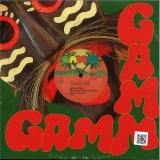
PALMA DE MALLORCA - Producers Melohman and Paco Colombas announce their new EP, 'Palma de Janeiro' on GAMM, a vibrant sonic fusion where Mallorcan tradition meets Brazilian pulse. All together, the result is a highly percussive house workout with a South American feel.
The project centers on a unique dialogue between two worlds: the Mediterranean drone of the Ximbomba and the tropical snap of the Pandeiro.
Inspired by the festive spirit of Mallorca's 'Devil' - a mischievous figure of joy and dance - the EP weaves together communal island roots with the duo's deep-seated passion for Brazilian music.
Born from years of crate-digging and travels across Brazil, 'Palma de Janeiro' is more than a collaboration; it is a celebration of music as a universal language. It is a tribute to the dancefloor, where local heritage and global rhythms collide.
out of Stock
Last delivered 4 months ago available to reorder, subject to availability
Luciano Cilio was born in Naples, Italy, in 1950. He studied music and architecture and, in the late '60s, collaborated with local artist Alan Sorrenti, American expat Shawn Phillips and various avant-garde theater groups. A virtuoso guitarist and self-taught composer, Cilio released only one LP before his untimely death at the age of 33.
Dialoghi Del Presente (1977) is a work like no other, one that sounds both ancient and ahead of its time. Produced by Renato Marengo, it features a series of muted tableaux for strings, woodwinds, guitar, chorus, piano and percussion. Cilio carves out a space where subtle, repetitive phrases yield – almost imperceptibly – to breathtaking silence.
As Jim O'Rourke writes, "These recordings sound as if they were to please no one but himself; they feel self-contained, introspective, and determined ... You can feel in the music a sort of necessity that can be rarely found, like in This Heat's debut or Nick Drake's Pink Moon."
While each subsequent "quadro" grows slightly more abstract, Cilio draws the listener into an expansive, pastoral soundscape. The closing piece, "Interludio," begins with a plaintive guitar, which is joined by haunting strings and woodwinds before concluding, poignantly, as the album began, with Cilio and his guitar, alone once more.
Superior Viaduct's edition reproduces the original sleeve design. Recommended for fans of Johann Johannsson, Talk Talk's Spirit of Eden, Arvo Part and Popol Vuh.
Death Is Not The End reissue Mark Vernon's sought-after 2013 collection Sounds of a Modern Hospital on vinyl & cassette formats.
Whilst every effort has been made to record the subject in as great a degree of isolation as possible, the sound recordings you will hear on this record were made in a real working hospital and not under controlled conditions. Therefore, on occasion, you may hear some unavoidable background noise, conversations and other extraneous sounds.
All recordings were made by Mark Vernon at Forth Valley Royal Hospital, Larbert, Stirling Community Hospital and Falkirk Community Hospital between 2011 and 2013.
Sonor Music Editions proudly presents an absolute Italian mood music grail and one of the best Library Music recordings ever - A.ALESSANDRONI's RITMO DELL'INDUSTRIA n.2, a true legend in the field. This is the maestro most prized and sought-after album, produced in 1969 on the small Grand Prix label, part of the Leonardi publishing group. A mindmelting record featuring some of the most killer driven beats ever! - dark vibes and haunting atmospheres with constant and moody Industrial rhythms, filled with tons of drum breaks, trippy Scat vocals and eastern inspired obsessive grooves. Music has been remastered from the original stereo master tape and the back sleeve will feature deluxe liner notes written by Mr. Jonny Trunk. HOLY GRAIL ALERT!
'Flowers', the new EP from Elizabeth Davis, finds itself at the cross-section of many factors. In part, it’s the result of Davis’ obsession with a seminal folk song. But it also coincides with her rediscovery of the voice and language as an instrument. It was recorded during an autumn residency at Sternhagen Gut, the cultural refuge run by Gudrun Gut and Thomas Fehlmann, located deep in the Uckermark countryside halfway between Berlin and the Baltic coast.
The six tracks on 'Flowers' all take Pete Seeger’s ‘60s protest-folk song 'Where Have All The Flowers Gone' as their starting point. However, they veer off in different directions, from vocal loops and deconstructed lyrics, to instrumental drones and glitchy, manipulated rhythm tracks. Like many musicians, Davis has learnt composition by a process of disassembly, analyzing musical works piece by piece, and 'Flowers' began as one such forensic exercise. “But sometimes,” says Davis, “a source is so loaded up on meaning that the studies and experiments can become worthwhile and meaningful works in their own right.” 'Flowers' began to take on a life of its own, raising renewed questions about age-old themes such as war, authorship, translation and historical structures.
Davis is no stranger to cover versions. From studying violin to playing in free jazz and punk bands, interpreting other artists’ works has long been a key part of her musical approach. And since her radio show 'Deep Puddle' recently drew to a close after seven years, her experiments with narration and sound collage have found their way into her musical work once again. For 'Flowers', she cut up the source material (with a nod to Gysin and Burroughs), and reassembled the lyrics, the musical notes, and recordings by different performers, to create uncanny new forms.
But perhaps the biggest influence on 'Flowers' was conversations about music, art and pop subcultures with Gut. These dialogues helped Davis find a balance between far-out sound design experiments and catchy melodies, combining a certain avant-garde element and modern day songcraft. And it’s this sense of conversation, this revisiting of topics and renewal of ideas, that will keep us coming back to 'Flowers' long into the future.
Una interpretación de Soinuarenbidea II debería partir de esta premisa: todo es posible, nada es aleatorio, y en sí mismo es un imposible de aleatoriedades. El escenario planteado explora la idea de realidad aumentada desde una percepción sonora, ambiental y colectiva. La obra transita hacia adelante y hacia atrás recreando experiencias extintas de porvenir incierto, tratando de facilitar un fin pacificador. Cada pieza sonora se crea, se despliega, se repliega y se destruye, en una torsión permanente de toda la realidad que hace posible cada fragmento musical, cada identidad acústica, cada espacio sonoro. Lo onírico, la ficción, y el viaje están continuamente presentes, y es en el transitar de cada fragmento donde se produce el diálogo de la exposición musical. Los elementos de esta ficción se recrean continuamente, en un continuum donde se entrelazan y se van contorsionando a medida que crecen o decrecen con cada fragmento de síntesis concreta. Los temas explícitamente musicales son el magma que conduce a dar voluptuosidad al disco, siendo la piel un contexto o límite que en sí mismo fluctúa indefinidamente en texturas y configuraciones posibles. Y la urdimbre del silencio es la síntesis que está continuamente presente y que trata de cohesionar los fragmentos en continua colisión expresiva. Las grabaciones de campo proporcionan el material sonoro concreto, y como un fractal sonoro cada una de ellas ofrece diferentes grados de interpretación que a su vez conduce a nuevos fragmentos y nuevas creaciones. Así que se puede pensar que esta es una síntesis de una posible realidad, pero interpretable en infinidad de maneras. Un movimiento y una estaticidad implícitas que generan estructuras y dinámicas acústicas. Lo que se escucha no es real, pero en sí mismo forma parte de la realidad, creando un escenario expectante. Lo cinematográfico, plástico y teatral, danzante y dinámico cobra importancia en este juego, porque se trata de contar una historia, una experiencia recreada desde los puntos de vista del arte visual. Es a su vez hilo conductor y entretenimiento, discurso político y puro divertimento. Es desde este espacio de convivencia artística que tiene sentido la totalidad y justifica el formato sonoro planteado. La contradicción de la obra es patente en el formato, y es a su vez el planteamiento de una accidentalidad en el devenir vital. Contenedor de Ruido recoge todas estas contradicciones y las manifiesta en la obra Soinuarenbidea II. Es una historia sonora, es un cuento acústico. Es un fragmento de vitalidad en imágenes audibles. Es una invitación a la reflexión, a la crítica, al disfrute, a la meditación, a la celebración. Y sobre todo es esperanzadora apreciación de la realidad como algo maleable que confeccionamos colectivamente, que requiere de una paciente observación y la participación colectiva global, en un mundo finito pleno de diversidades y del que ignoramos prácticamente todo, al que deberíamos volver con respeto y devoción.
Soinuarenbidea II-ren interpretazio batek premisa honetatik abiatu beharko luke: dena da posible, ezer ez da ausazkoa, eta, berez, ausazkotasun ezinezko bat da. Planteatutako agertokiak errealitate areagotuaren ideia aztertzen du, soinu-, ingurumen- eta talde-pertzepzio batetik abiatuta. Lanak aurrera eta atzera egiten du, etorkizun zalantzagarriko esperientzia desagertuak birsortuz eta helburu baketsua lortzen saiatuz. Soinu-pieza bakoitza sortu, hedatu, tolestu eta suntsitu egiten da, musika-zati bakoitza, identitate akustiko bakoitza eta soinu-espazio bakoitza ahalbidetzen dituen errealitate osoaren etengabeko bihurdura batean. Onirikoa, fikzioa eta bidaia etengabe daude presente, eta pasarte bakoitzaren joan-etorrian gertatzen da musika-erakusketaren elkarrizketa. Fikzio honen elementuak etengabe birsortzen dira, continuum batean, non sintesi zati zehatz bakoitzarekin hazi edo txikitu ahala elkar lotzen eta bihurritzen diren. Esplizituki musikalak diren gaiak diskoari atsegintasuna ematera eramaten duen magma dira, azala testuingurua edo muga izanik, testura eta konfigurazio posibleetan mugarik gabe aldatzen dena. Eta isiltasunaren irazkia etengabe presente dagoen sintesia da, zatiak etengabeko adierazpen-talkan kohesionatzen saiatzen dena. Landa-grabazioek soinu-material zehatza ematen dute, eta soinu-fraktal batek bezala, horietako bakoitzak interpretazio-maila desberdinak eskaintzen ditu, eta horrek, aldi berean, zati eta sorkuntza berrietara eramaten du. Beraz, pentsa daiteke errealitate posible baten sintesia dela, baina hamaika modutan interpreta daitekeena. Egitura eta dinamika akustikoak sortzen dituzten mugimendu eta estatikotasun inplizitu bat. Entzuten dena ez da erreala, baina, berez, errealitatearen parte da, eta agertoki espektakularra sortzen du. Zinematografikoak, plastikoak eta antzerkikoak, dantzariak eta dinamikoak garrantzia hartzen dute joko honetan, ikusizko artearen ikuspegitik birsortutako istorio bat, esperientzia bat, kontatzea baita helburua. Aldi berean, hari gidaria eta entretenimendua da, diskurtso politikoa eta dibertimendu hutsa. Elkarbizitzarako espazio artistiko honetatik osotasunak zentzua du eta planteatutako soinu-formatua justifikatzen du. Obraren kontraesana nabarmena da formatuan, eta, aldi berean, bizi-bilakaeran istripu-tasa bat planteatzea da. Zarata-edukiontziak kontraesan horiek guztiak jasotzen ditu eta Soinuarenbidea II obran adierazten ditu. Soinu istorio bat da, ipuin akustiko bat. Bizitasun zati bat da, irudi entzungarrietan. Hausnarketarako, kritikarako, gozamenerako, meditaziorako eta ospakizunerako gonbidapena da. Eta, batez ere, itxaropentsua da errealitatea modu kolektiboan egiten dugun gauza xaflakor gisa hautematea, behaketa pazientea eta partaidetza kolektibo globala eskatzen dituena, dibertsitatez betetako mundu mugatu batean, ia guztia kontuan hartzen ez duguna, eta errespetuz eta debozioz itzuli beharko genukeena.
An interpretation of Soinuarenbidea II should start from this premise: everything is possible, nothing is random, and in itself is an impossible randomness. The proposed scenario explores the idea of augmented reality from a sonic, environmental, and collective perception. The work moves back and forth, recreating extinct experiences of an uncertain future, seeking to facilitate a peaceful end. Each sound piece is created, unfolds, retreats, and is destroyed, in a permanent twisting of all reality that makes each musical fragment, each acoustic identity, each sonic space possible. The dreamlike, the fictional, and the journey are continually present, and it is in the transit of each fragment that the dialogue of the musical exposition takes place. The elements of this fiction are continually recreated, in a continuum where they intertwine and contort as they grow or diminish with each fragment of concrete synthesis. The explicitly musical themes are the magma that leads to the work's voluptuousness, the skin being a context or boundary that in itself fluctuates indefinitely in possible textures and configurations. And the warp of silence is the synthesis that is continually present and seeks to unite the fragments in a continuous expressive collision. The field recordings provide the concrete sound material, and like a sonic fractal, each one offers different degrees of interpretation that in turn lead to new fragments and new creations. So one can think of this as a synthesis of a possible reality, but interpretable in an infinite number of ways. An implicit movement and staticity that generate acoustic structures and dynamics. What is heard is not real, but in itself is part of reality, creating an expectant scenario. The cinematic, plastic and theatrical, dance and dynamic aspects take on importance in this game, because it is about telling a story, an experience recreated from the perspective of visual art. It is at once a common thread and entertainment, political discourse and pure entertainment. It is from this space of artistic coexistence that the whole makes sense and justifies the proposed sound format. The contradiction of the work is evident in its format, and it is, in turn, the presentation of an accidentality in the course of life. Noise Container gathers all these contradictions and manifests them in the work Soinuarenbidea II. It is a sound story, an acoustic tale. It is a fragment of vitality in audible images. It is an invitation to reflection, to critique, to enjoyment, to meditation, to celebration. And above all, it is a hopeful appreciation of reality as something malleable that we collectively craft, requiring patient observation and global collective participation, in a finite world full of diversity and of which we know practically nothing, to which we should return with respect and devotion.
Paisajes sonoros, diseño sonoro, drones y música grabada, realizada y arreglada para Contenedor de Ruido por David Aranaz. Coro: Basandere Ahotsak. Producido y mezclado por David Aranaz. Mástering: Estanis Elorza. Fotografía: David Aranaz. Texto: David Aranaz. Traducción: Saioa Aranaz Oreja. Trabajo y Diseño artístico: Cristina Martinez. Edición: Contenedor de Ruido Producciones y Sarbide Music. Distribución: Contenedor de Ruido.
Contenedor de Ruido agradece el apoyo en la realización de Soinuarenbidea II al coro Basandere Ahotsak y en especial a Eva Orbara Goicoa.
Soinuarenbidea II está dedicado al pueblo palestino.
Paisajes y objetos Sonoros, samplers y otras músicas transformadas para Soinuarenbidea II
Burlada: Paseos sonoros matinales por Merindad de Sangüesa, Calle Mayor, Capuchinas, Parque Uranga y varias iglesias y plazas. Pasajes del cotidiano: basura de papel, cristal y plástico.
Pamplona: Cementerio de San José. CEIP Sanduzelai /// Quinto Real: Fábrica de Armas, Puerto de Urkiaga y alrededores. Suite del silencio, bosques en movimiento /// Fábrica de armas de Orbaiceta: regatas, biosques, paseo sonoro hasta regata /// Belate: Puerto de Belate y alrededores. Vacas en pradera junto a las turberas /// Bardenas Reales: Suite de guitarra y Suite del silencio, estepa desértica /// Austria: Tranvías de Graz y Viena. Muchedumbre del metro de Viena.
Voces cinematográficas de: Matanza en Texas, Robocop, Espíritu Sagrado, Solo los Amantes Sobreviven, Voces de Gaza, Yojimbo, Terciopelo Azul, Los 7 Magníficos.
La pista A2 está dedicada a la memoria de David Lynch.
La pista B4 está dedicada a Eva Orbara Goicoa.
Pista A4: Contiene interpretaciones de piano de Three Piano Pieces Op.11 de Arnold Schoenberg.
Pista A5: Es una interpretación expandida con síntesis FM del Concerto Op. 24 - Etwas lebhaft - de Anton Webern.
Pista A7: Contiene la canción Besarkatu ninduzun (Letra de Josune López y música de Josu Elberdin) en interpretación de Basandere Ahotsak en la iglesia de Burutain bajo la tormenta.
Pista B2: Contiene la canción Recuerdos de la Alhambra (Fernando Tárrega) en interpretación torsionada de David Aranaz Sarasa.
Pista B14: Contiene la canción Agur María (Letra y Música de Estíbaliz Robles “Estitxu” y arreglo exclusivo de Alfonso Ortiz para Basandere Ahotsak) en interpretación de Basandere Ahotsak.
Equipamiento para Soinuarenbidea II.
Micros de condensador SE7, configuración XY y ORTF; Micros de cinta ORTIZ LUTHIER configuración XY y Blumlein; Grabadoras MARANTZ y ZOOM; Sintetizadores y samplers Elektron MONOMACHINE SPS-1, MACHINEDRUM SFX6 y MODEL:SAMPLES. Dave Smith MOPHO. Torso Electronics S-4. Sintetizador Modular 333 DIY; Guitarra clásica ALHAMBRA 6P; Esculturas Sonoras tipo Baschet, cristal y metales; Mesa Soundcraft FX16ii; Interface de Audio RME Babyface Pro FS; DAW Logic Pro; Procesamiento de modelado analógico con Acústica Audio, Waves, Softube, Brainworx, Sonible, Analog Obsesion, Tokio Dawn. Metering de Logic y RME DigiCheck . Amplificación Hafler PRO2400. Monitorización BW DM602 S3. Mezcla digital; Mastering híbrido.
From 1986-1987, Chet traveled and worked with the photographer and filmmaker Bruce Weber on a project that would become their Oscar- nominated documentary "Let's Get Lost"1988. During this period, Chet performed at the Cannes Film Festival and recorded sessions at Studio Davout in Paris and Sage and Sound Studio in Hollywood. All remained unreleased until now. Inspired by the film - which celebrated its 35th anniversary last year - SWIMMING BY MOONLIGHT is a two-record soundtrack album curated by Bruce Weber and produced by John Leftwich that compiles music, dialogue and live concert recordings.
Full of joy, they ran to meet him.
Then threw one of the shirts over each of them,
and when the shirts touched their bodies they were transformed into swans,
and flew away over the woods.
The record is comprised of a series of improvised recordings made over the course of an evening in Autumn ’23, captured at the Jabu home studio, south Bristol while Teresa was staying in town for a show. Everything was recorded into the desk in a single take and left as it was, no editing or overdubs, instruments were swapped around and effects units left buzzing ground hum scattered over the floor.
Teresa and Guest (Jasmine of Jabu) provided the vocals, taking words from anything at hand - poetry books, an old copy of the Whole Earth Catalog - their voices winding together, echoing out each other’s melodies. This approach is mirrored by the instrumentals, anchored by something at times - a bassline, one of Birthmark’s synth drones or a fizzing chord but always on the edge of collapsing in on itself or floating away. The tracks become more soporific as the record goes on (and as the night got later), ending on a refrain of ‘say you think its true’ as the instrumental finally dissolves the pedals get dialled up to 11 and Birthmark’s drones turn into distant lasers in a last swan song of feedback.
Recorded Sep 2023 in Bristol, BS3, by:
Teresa Winter (vocals, fx)
Guest (vocals, guitar, fx)
Birthmark (synth, fx)
A.Childs (samples, bass, guitar)
blickwinkel welcomes composer and multi-instrumentalist Francis Plagne to the label with a reissue of Asleep in a beached boat, an album that was initially released on his own Mould/Mouse Museum label in 2021 on cassette. The album was mostly given away to friends but now gets a wider release through a limited vinyl and digital edition.
Gentle melodies set an airy atmosphere and are intertwined with tensive dialogs between rhythms and textures coming from a wide array of acoustic and electronic instruments. Stylistically somewhere in between his Rural Objects (Black Truffle) and Udge (Horn of Plenty), on the eleven tracks on this album we hear Plagne in his most playful way to date.
Francis Plagne is a musician from Melbourne, Australia whose work swings between songwriting and a variety of other approaches, including group improvisation, instrumental abstraction, and domestic musique concrète. He performed live regularly since 2005 and has released recordings on labels such as Black Truffle, Horn of Plenty, Kye Records, Penultimate Press and his own Mould/Mouse Museum micro-label. In addition to performing his own work either solo or with a band, he has performed and recorded in improvised and other arrangements with Tetuzi Akiyama, Oren Ambarchi, Andrew Chalk, Crys Cole, James Rushford, and Joe Talia, among others.
out of Stock
Last delivered 9 months ago available to reorder, subject to availability
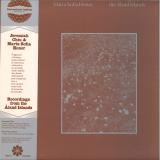
Recordings from the Åland Islands, the duo debut by synthesist Jeremiah Chiu and violist Marta Sofia Honer, is a truly unique series of pieces that marry acoustic and electronic sounds with field recordings, all captured on a trip to the titular Baltic archipelago.
By the time Åland Islands was released in 2022, Honer had already been working with Makaya McCraven and Daniel Villarreal, but this project brought her to the front as a lead artist. And Åland Islands was the label's first collaboration of any kind with Chiu, who has since released the solo outing In Electric Time and the genre-breaking debut of his co-led supergroup SML, in addition to a trio album with Honer and the late Ariel Kalma (2024's The Closest Thing to Silence).
Recordings from the Åland Islands is far more than its context within the world of IARC, however, and it’s certainly more than its context as a travel document. Here Chiu and Honer have created a new world out of an old one with work that sees them in dialogue with their own source material. Like early masterpieces by Franco Battiato or Alvin Lucier, Åland Islands repeatedly presents the listener with a palpable sense of place, only to pluck them up and drop them into an entirely new one.
“...so tranquil and beautiful...” – Jayson Greene, Pitchfork
out of Stock
Last delivered 9 months ago available to reorder, subject to availability
Elations Recordings presents "Return of the Airpoets", an exploratory recording from longtime collaborators Reuben Lewis (I Hold The Lion's Paw) & Adam Halliwell (Mildlife, IHTLP), occupying a unique space between contemporary experimental music and avant jazz. Engineered and mixed by Reuben Lewis in 2023, and featuring guest appearances from acclaimed Australian drummer Ronny Ferella.
"Return of the Airpoets" continues a conversation begun with 'Cygon Dance', an extended duo between Lewis and Halliwell from Halliwell's 2023 LP "Freedom Lapse"; a dialogue that stems from a shared love and respect for Jon Hassell's Fourth World music. Sonic pioneer and adventurer, Hassell's futuristic vision advocated possible musics, stressing plurality and multiplicity. Faithful to his vision, Adam and Reuben, as trailblazers rather than imitators, delight in boundless musical possibilities, adopting Hassell's futurism as stock-in-trade, making it their own while augmented with neo noir hues and hints of the tilted electro-funk of Miles Davis' collaborations with Marcus Miller.
These nine tracks flow together as a unified suite, their shadowy presence stitched from fractured narratives: imaginary crimes, murders, dreams, the unspoken. At the same time, you can detect the artists' meticulous attention to sonic detail, feel the undercurrents, the complex layering. This music has been distilled, winnowed, from extended improv sessions, with the artists - as producers - zeroing in on offcuts, shards, and splinters, seamlessly patching together fragments in post-production to construct intricately layered sound collages, taking a leaf out of Tao Macero's book, building from the ground up.
Who are these airpoets? Their mystifying trial suggests the travails of Joseph K, sentenced for unspecified crimes. But I prefer to see them as fugitives escaped from Robert Bolaño's novel, "Savage Detectives". In Bolaño's book, poet Juan Garcia Madero is granted admission to the shadowy group of poets, the Visceral Realists, whose movement has no clear aims, and whose members "walked backward . . . gazing at a point in the distance, but moving away from it, walking straight toward the unknown." Like the visceral poets, these airpoets, Reuben Lewis and Adam Halliwell, set their sights on a point on the distant horizon, setting off without map or compass, drawing nearer and moving away, towards the unknown.
Featuring 10 of his own compositions, Grossi's renowned virtuosity flows with deep sensitivity through various genres, reflecting the solid trajectory of one of the greatest instrumentalists and most creative musicians in Brazilian music. Collaborating with prominent names from both the national and international music scenes, 'Plural' showcases Grossi's music without borders, offering the world a glimpse of his extensive career. For this celebration, outstanding guests were invited to join the musical journey. Several tracks also highlight Grossi's sensitivity as a songwriter and lyricist. In 'Onde Nascem as Ondas', Ed Motta delivers a soulful ballad carried by his distinctive timbre. Zelia Duncan, sings a unique samba in 'Nosso Amor Vadio' with a captivating cadence. 'Chamego no Salao' captures the spirit of north-eastern Brazil and is brought to life by Lenine's vibrant voice and joyful interpretation, adding a playful tone with a jazzy touch. The art of improvisation is beautifully represented by 'Catarina e Teresa', an improvised composition created in collaboration with the legendary Hermeto Pascoal and dedicated to Grossi's twin daughters. Other tracks include 'Banzo', which showcases a rhythmic dialogue featuring Cuban pianist Omar Sosa. 'Motion', with the brilliance of both Jacob Collier and Seamus Blake, merges jazz and pop in a seamless melodic conversation.
With an open mind and without boundaries, he invites us to explore a vast musical universe, embracing art with profound emotion and passion. This is what you will hear and experience in 'Plural': a deep love for the art of sound and a profound respect for musical diversity - qualities that have defined his career.
For his last solo record ‘Through a Room’, Bill Nace shifted his usual saturated guitar sound and added tapes, hurdy gurdy, doughnut pipe, bird calls and the mysterious Japanese taishōgoto. Setting up for the final night of his three day residency at OTO with only the taishōgoto soundchecked, Nace hoped that Parker would arrive with his small soprano as its opposite. “I’ve been interested in state change, you know, playing until there’s a shift in time.” Known for his development of multiphonics to produce a constantly shifting pattern, Evan Parker has evolved an instantly recognizable sound - his work the soprano most distinct. Happily, it was the soprano Evan brought with him and as soon as the two start to play they entwine - taking off in a double helix of keys and reed primed for endless reconfiguration. Space warps under the velocity of playing, the pitch rising unrelentingly. It felt like unending lift off in the room, sheer energy until the last note makes remember your feet have been on the floor the whole time. Total time bending shredding.
–
"They had never played together before. They had never even met each other before this springtime 2024 concert at London’s Café Oto.
Evan Parker, circular breathing maestro of the saxophone, a legend in the universe that is Free Improvisation since the late 1960s and Bill Nace, one of the most intriguing experimental “noise” guitarists of the 1990s/2000s underground scene.
For those of us who have been enamored by the live and documented work of both these gents, this Café Oto duo was a must-hear event. It could have gone anywhere musically and that would have been totally fine. Particularly with Evan having a history of being thrown into a variety of challenging collaborations throughout his career, employing the learned elegance of trust in his own sensitivity to listening, responding, leading, following, sparring, intertwining, dialoguing, creating in the instant and, essentially, dignifying the non-hierarchical grace of chance.
The aesthetics of socialist consideration in Evan Parker’s playing, in his community of expanded and personal technique, for a younger player such as Bill Nace, strikes an exemplary model. This notion of respect would be entirely the reason Nace, when offered a residency at the most critical “new music” room in England, would request to play in duo with Parker.
Bill Nace came to prominence mostly during the apex of experimental music activity in and around Western Massachusetts in the early days of the aughts, with a focus on visual art and free improvisation guitar action. He could be found in the daytime hours, his head hanging down over a notepad, penning fine-tuned illustrations and abstract line drawings, while in the evenings he’d be attending any number of basement noise gigs, many of which he’d be participating in. His guitar style came across as being informed as much as by the physicality of his writing utensils in friction to the page as it was to his hearing and redefining of radical recordings ranging anywhere from the Black Unity Group to Black Flag.
Utilizing various metal files and other small cylindrical objects Bill would allow his guitar and amplifier to be in tandem with the improvisatory movements of his body as the instrument balanced, intentionally and, at times, precariously, upon his lap. The performances came across thrilling and daring and they would be mostly in the context of venues nothing more than a low-ceilinged damp and dank New England basement, a clutch of people hanging onto rusty pipes or sitting up on dilapidated washer/dryer machines, the shards of Bill’s “file guitar” sounds ringing out like the most alive music on Earth.
By the time Bill reached Café Oto in early 2024 he had relocated to Philadelphia all the while releasing a succession of collaborative LPs on his Open Mouth label to present his developing progression of solo and collaborative work. He also would find himself considerably engaged with playing the electric taishōgoto, a keyboard-activated string instrument from Japan which can exist as a one, two, four, five, or six string oblong sound object. Bill’s approach to the taishōgoto would not be too unlike his approach to the traditional electric guitar, though no outboard implements such as files, sticks, and rocks are utilized. The similarity would lie wholly with Bill’s full immersion of high velocity action-playing where, with the taishōgoto, an electric drone beauty occurs. The flurry of sonics and resultant harmonics emanating from the amplifier (which Bill opts to dial into with borderline loud-as fuck volume settings) furthers the meta-mantra properties of the instrument in an astounding display of drone dynamism.
This sound world of Bill’s two-stringed taishōgoto on this Café Oto night worked beautifully with Evan Parker’s improvisatory saxophone conceptions. The duology achieved instant lift off at ground zero only to find it’s eventual finale as if it were organically ordained. Time seemingly morphed from its ancient human construct of control, rendered inconsequential to the torrential transcendence of the room wildly activated by the magic resonance of the multi-directional pan-spatial sonance of the music as if it were some beatific blessing. It was one of those nights where art as a liberating force of spirit gifted the listeners with an offering of exaltation and joy. It was entirely mystical and mind blowing. A night of Total Music."
Elations Recordings presents "Depois do Silêncio", an intimate, forward-looking acoustic bass, digital keyboard and synthesiser recording by Brazilian avant-garde jazz luminaries Zeca Assumpção and Lelo Nazario. This release celebrates almost fifty years of the duo's friendship and musical affinity, continuing a musical dialogue between long-time collaborators. The duo began working together with Hermeto Pascoal's "Grupo Vice Versa" in the mid 1970s before forging one of Brazil's most adventurous experimental jazz groups "Grupo Um" in 1976; releasing three albums with a shared avant-garde and lateral, exploratory approach to sound fusing jazz and contemporary synthesis with expanded and prepared acoustic playing.
"Depois do Silêncio" reflects the duo's long development of a shared conception of music, resulting in a work that is both timeless and modern. The music on the album was primarily recorded in Nazario's UTOPIA Studio, São Paulo, in 1994, featuring Assumpção on acoustic bass and Nazario on his newly acquired Ensoniq TS-12; these recordings were supplemented with acoustic bass for "Quintal da Memória" in 2018 and completed with an additional layer of rich, complex analog and virtual synthesis following their rediscovery of the material in 2022.
Assumpção's deeply expressive acoustic bass playing forms the backbone of these compositions, augmented by Nazario's expansive and exploratory approach to synthesis, its constantly shifting timbres "making music a living organism, which adapts to situations as they appear." Nazario explains that "although the themes are written, much of the music is improvised based on an organic development of ideas, all intertwined and interrelated exactly as happens in a living organism".
The album title "Depois do Silêncio" (After Silence) references a phrase by the writer Aldous Huxley; "after silence, that which comes nearest to expressing the inexpressible is music". Assumpção and Nazario continue a search for new forms of musical expression, and here they succeed in creating music that "expands the sound of musical instruments, so opening new horizons in the minds of listeners".
out of Stock
Last delivered 11 months ago available to reorder, subject to availability
In between the folds of ceremony and commonality lies a perennial spring of musical expression.
A statement along the time continuum, or a testament to the resilient resourcefulness embedded in that truth, forms the philosophical approach of this album – the first outing of Dídac.
Studying an extensive archive of instruments, artifacts, and field recordings at the Musée d’ethnographie de Genève—a space steeped in folkloric gesture – Dídac encountered a cosmos of liturgical music and folk song. Anchored in reverance for tradition and transformation alike, this album navigates the old-world Mediterranean lore through a post-modern ambient lens, threading drone, gentle rhythm, electroacoustic textures and the crude tactility of archival material into one woven tapestry.
Under the guidance of Dr. Madeleine Leclair, Dídac was invited to work within one of the world’s most extensive ethno- musicological archives—L’AIMP. In the saturated basements and tape-lined backrooms of the museum, he submerged himself in the sounds of ritual and rural life: wax cylinders from the Eastern Mediterranean, tapes of liturgical hymn, the worn edges of communal song.
In a makeshift studio on the fourth floor of the museum, he sifted through the hours of material he collected, gradually discovering that the archive was no static source – It did not dictate; rather, it served as a companion—offering not answers, but questions. Not a beaten track, but a cluster of sonic clues and riddles. Samples do appear occasionally, tenderly interwoven into the dialogue of the songs. In Dídac’s self-titled debut, the past is not worn as ornament or kitsch; it is listened to and responded to. The museum, its archives, and the visit to Geneva became a foundational culisse of sorts, igniting a myriad of rough cuts and improvisational outtakes.
Dídac, or Diego Ocejo Muñoz, was born in Madrid in 1994 to a family of both Catalan and Castilian origin.
Brought up in a religious household, the influence of the Catholic Church innately shaped the social fabric, schooling and daily life. This lingering dominance led the adolescent Diego into a path of rejection of everything sacramental, promptly resorting to subversion in the shape of grafitti, skateboarding and underground music. Only later in life, after a rigorous venture as an acid and electro producer, the Church re-emerged before him in new light, invoking a deep fascination for its mysticism, iconography and choral tradition.
Spain in general and Catalonia in particular, has long served as a crossroads of the eastern–western Mediterranean continuum, with many of its cultures sharing aspects of way of life and ceremony. At the MEG, Diego found himself puzzled with this realization, resulting in a sonic amalgamation that reaches farther away from the rugged mountains of Catalonia than you might perceive at first encounter.
The deeply embedded memory of rite and public ceremony, religious hymn and landscape—sieved through the undercurrent of personal re-emergence, forms the emotional topography of this album. The record does not trace this landscape; it inhabits it. Its repetitive mysticism and ambient, wide-eyed gaze could possibly evoke (perhaps redundant) comparisons to artists such as Dimitris Petsetakis, or Popol Vuh’s late 70’s cinema scores.
The delicate lines between the sacred and the secular – between memory and re-invention – serve as a cipher to understanding this album in its entirety. Titles like Malpàs Mines or Pantocrator’s Portal Outro nudge toward a folkloric and devotional bedrock—places where labor and spirituality coexist, where names preserve both dust and veneration.
Nevertheless, this is far from mere nostalgia. It is a reclamation — singing alongside the spirits of the past, nurturing what still hums beneath the soil. It is an intimate reflection on tradition, rebellion, adolescence, ceremony and fantasy – a pastoral contemplation on what once was and what is to be.
out of Stock
Last delivered 10 months ago available to reorder, subject to availability
Developed over three years across residencies, tours, and periods of deep listening, “Your Whistle Tells of Landscape” finds Australian sound artist Alexandra Spence continuing her investigations into the perceptual entanglements of sound, place, memory, and imagination. Like much of the artist’s work, it unfolds at the liminal edge between the real and the imagined — between what is heard and what is remembered.
Composed from a constellation of materials gathered across sites and seasons — snowscapes recorded in Vancouver, insect choruses from a Sydney backyard, ceramic fragments unearthed while mudlarking with tinysound — it renders an intimate cartography of experience: one shaped equally by ecological resonance and internal drift. Each piece traces a kind of imaginary geography, where sonic ephemera become proxies for topography, weather, or myth.
The album is informed by time spent at EMS (Stockholm) and MESS (Melbourne), where Spence deepened her engagement with microtonality and tuned feedback systems, and by dialogues with sympathetic artists such as Tashi Wada and Patrick Farmer. Sound materials were sourced from Serge Modular systems, a custom lyre built by Tim Wall, amplified objects, handmade electronics, and Spence’s own field recordings captured within rockpools, beneath sand, and among a flock of sheep in the French Pyrenees. On “Magenta,” a collaboration with Delphine Dora, the domestic and mythic intertwine, as layers of voice, environmental recordings, and Halldorophone feedback drift in and out of one another like overlapping weather systems.
Despite its diverse material palette, the album resists spectacle or accumulation. Instead, it moves with a quiet sense of continuity and a rich interiority — less a sequence of compositions than a set of situated attunements. Across its duration, sounds seem to murmur, glint, or hover right at the edge of presence, invoking a listening practice that is as much about orientation as it is about reception. These are pieces not simply about place, but of place — etched with the grains of time, vibration, and breath.
Ostinato as resistance: Rafael Anton Irisarri’s landmark work reimagined. Marking the tenth anniversary of the American composer’s critically acclaimed album 'A Fragile Geography', this new edition arrives renewed, both sonically and visually.
First released in 2015 (Room40) during a period of personal upheaval and creative reinvention, it endures as a testament to resilience, transformation, and the connection we hold with the places that shape us.
Written in the aftermath of a devastating theft, A Fragile Geography was born out of loss. Just days before a cross-country move to New York, Irisarri’s entire Seattle-based studio was wiped out. Instruments. Recordings. Archives. Gone without a trace. He arrived on the East Coast to an empty room and the daunting task of starting over.
“This album wasn’t just a record; it was a lifeline,” Irisarri reflects. “It became a way to process the emotional chaos that followed: uprooting, instability, and ultimately, the slow, intuitive rebuilding of a life.”
Composed and recorded in the rural woods of the Hudson Valley, the album took shape in seclusion, surrounded by nature, and through a process guided by improvisation. Embracing limitations, Irisarri wove textural layers of field recordings with half-remembered melodies from his Seattle years, piecing them together like fragments of memory. Tracks like “Displacement,” “Hiatus,” and “Persistence” juxtaposed haunting stillness with restless momentum, mapping an inner terrain of grief, catharsis, and rebirth.
Among its defining sounds is “Empire Systems,” a monumental centerpiece built around a simple four-chord progression, organ textures, and guitar drones. Gradually, the track expands into layers of immersive loops and thick, enveloping distortion that wash over the listener like a rolling wave. Often cited as the album’s most majestic passage, it captures Irisarri at his most sonically ambitious. With a harmonically saturated structure crafted from restraint and repetition, it remains one of his most recognizable compositions: an exercise in the art of maximal minimalism.
From the outset, “Reprisal” received praise from BBC’s Mary Anne Hobbs, who championed the track on her radio show. Her support played a key role in introducing Irisarri’s work to wider audiences and solidifying his place within the lineage of electronic, drone, and experimental sound artists. A slow-burning elegy, the piece emerges from a haze of distortion and sub-bass, with dense, unrelenting drones carrying a sense of mounting tension. Just as it seems to collapse under its own weight, flickers of guitar emerge like distant light through fog. It’s a meditation on dissonance, resolve, and the elusive possibility of release.
The closing track, “Secretly Wishing for Rain,” is steeped in saudade: a longing for Seattle’s dour grey skies, lush green landscapes, and desaturated sunsets. Through it, Irisarri mourns a vanished chapter of life bound to the city, a time documented in scattered mementos and cherished collections, now permanently gone. A reflection on what could never be recovered: an era lost to time. Julia Kent’s looped cello motifs added a melancholic warmth to the track, marking the first collaboration between the two artists and sparking a musical dialogue that would keep growing in the years that followed.
More than a career highlight, A Fragile Geography has laid the foundation for Black Knoll studio, which Irisarri rebuilt from the ground up. The studio has since grown into a creative hub for countless projects, with Irisarri engineering records for iconic music figures like Terry Riley, Ryuichi Sakamoto, William Basinski, MONO, Devendra Banhart, Grouper, Emeralds, Steve Hauschildt, Julianna Barwick, and many others. Carried by its lasting influence, the album has quietly captured the ear of a younger generation, its sound and emotional arc finding new listeners in unexpected corners.
The album’s new visual language was reimagined in collaboration with Mexico City–based designer Daniel Castrejón. Irisarri captured ghostly images at Gaztelugatxeko Doniene, a historic coastal site in Bermeo, Euskal Herria. Castrejón then treated the photographs with distressed textures and spectral overlays. The final artwork channels the rugged, elemental forces that shaped both the music and Irisarri’s aesthetic, renewing his ties to ancestral ground inspired by the Basque homeland of his bloodline.
Mastered by Stephan Mathieu with exceptional attention to detail, this anniversary edition uncovers every nuance in the sound design, enhancing clarity and presence. With each listen, new elements emerge, inviting discovery and reconnection.
“I don’t experience this album as a document of grief anymore,” says Irisarri. “I hear adaptation and I'm reminded that when everything falls apart, something meaningful, maybe even beautiful, can emerge.”
out of Stock
Last delivered 9 months ago available to reorder, subject to availability
Ostinato as resistance: Rafael Anton Irisarri’s landmark work reimagined. Marking the tenth anniversary of the American composer’s critically acclaimed album 'A Fragile Geography', this new edition arrives renewed, both sonically and visually.
First released in 2015 (Room40) during a period of personal upheaval and creative reinvention, it endures as a testament to resilience, transformation, and the connection we hold with the places that shape us.
Written in the aftermath of a devastating theft, A Fragile Geography was born out of loss. Just days before a cross-country move to New York, Irisarri’s entire Seattle-based studio was wiped out. Instruments. Recordings. Archives. Gone without a trace. He arrived on the East Coast to an empty room and the daunting task of starting over.
“This album wasn’t just a record; it was a lifeline,” Irisarri reflects. “It became a way to process the emotional chaos that followed: uprooting, instability, and ultimately, the slow, intuitive rebuilding of a life.”
Composed and recorded in the rural woods of the Hudson Valley, the album took shape in seclusion, surrounded by nature, and through a process guided by improvisation. Embracing limitations, Irisarri wove textural layers of field recordings with half-remembered melodies from his Seattle years, piecing them together like fragments of memory. Tracks like “Displacement,” “Hiatus,” and “Persistence” juxtaposed haunting stillness with restless momentum, mapping an inner terrain of grief, catharsis, and rebirth.
Among its defining sounds is “Empire Systems,” a monumental centerpiece built around a simple four-chord progression, organ textures, and guitar drones. Gradually, the track expands into layers of immersive loops and thick, enveloping distortion that wash over the listener like a rolling wave. Often cited as the album’s most majestic passage, it captures Irisarri at his most sonically ambitious. With a harmonically saturated structure crafted from restraint and repetition, it remains one of his most recognizable compositions: an exercise in the art of maximal minimalism.
From the outset, “Reprisal” received praise from BBC’s Mary Anne Hobbs, who championed the track on her radio show. Her support played a key role in introducing Irisarri’s work to wider audiences and solidifying his place within the lineage of electronic, drone, and experimental sound artists. A slow-burning elegy, the piece emerges from a haze of distortion and sub-bass, with dense, unrelenting drones carrying a sense of mounting tension. Just as it seems to collapse under its own weight, flickers of guitar emerge like distant light through fog. It’s a meditation on dissonance, resolve, and the elusive possibility of release.
The closing track, “Secretly Wishing for Rain,” is steeped in saudade: a longing for Seattle’s dour grey skies, lush green landscapes, and desaturated sunsets. Through it, Irisarri mourns a vanished chapter of life bound to the city, a time documented in scattered mementos and cherished collections, now permanently gone. A reflection on what could never be recovered: an era lost to time. Julia Kent’s looped cello motifs added a melancholic warmth to the track, marking the first collaboration between the two artists and sparking a musical dialogue that would keep growing in the years that followed.
More than a career highlight, A Fragile Geography has laid the foundation for Black Knoll studio, which Irisarri rebuilt from the ground up. The studio has since grown into a creative hub for countless projects, with Irisarri engineering records for iconic music figures like Terry Riley, Ryuichi Sakamoto, William Basinski, MONO, Devendra Banhart, Grouper, Emeralds, Steve Hauschildt, Julianna Barwick, and many others. Carried by its lasting influence, the album has quietly captured the ear of a younger generation, its sound and emotional arc finding new listeners in unexpected corners.
The album’s new visual language was reimagined in collaboration with Mexico City–based designer Daniel Castrejón. Irisarri captured ghostly images at Gaztelugatxeko Doniene, a historic coastal site in Bermeo, Euskal Herria. Castrejón then treated the photographs with distressed textures and spectral overlays. The final artwork channels the rugged, elemental forces that shaped both the music and Irisarri’s aesthetic, renewing his ties to ancestral ground inspired by the Basque homeland of his bloodline.
Mastered by Stephan Mathieu with exceptional attention to detail, this anniversary edition uncovers every nuance in the sound design, enhancing clarity and presence. With each listen, new elements emerge, inviting discovery and reconnection.
“I don’t experience this album as a document of grief anymore,” says Irisarri. “I hear adaptation and I'm reminded that when everything falls apart, something meaningful, maybe even beautiful, can emerge.”
out of Stock
Last delivered 12 months ago available to reorder, subject to availability
Off The Record (faitiche 39), the new album by French collagist Roméo Poirier, is an amusing romp through the discarded history of recording studios. It contains fourteen miniatures based on accidental recordings of studio talk, revealing things that were never meant for the public: we hear instructions from studio staff, scraps of talk between musicians, or just microphones being adjusted, as well as false notes, false starts: everyone stops. Start again: 1, 2, 3, 4!
Poirier’s approach recalls Accumulation, an artform practiced by Arman, Jean Tinguely and Daniel Spoerri that involved piling up everyday items into assemblages. The objects themselves often remained unaltered, the artistic gesture consisting in the careful curating of a distinctive selection. Poirier’s audio collages explore similar terrain. The fourteen pieces on Off the Record combine more than a thousand found sounds from studio archives into complex miniatures. The audio content of these outtakes is twisted, stretched, cut, reassembled, slowed down and accelerated. Voices cut into a microgroove, from a very old recording, intertwine with digital voices gleaned from YouTube. All of them in dialogue, engaging the listener with the impression of being part of a new music group.
Poirier uses the mundane routine of setting up before the actual recording gets underway to tell a universal story about working in a recording studio. And he manages something few achieve, transforming specialist knowledge into a narrative whose beauty goes far beyond its immediate subject. It speaks to everyone, because the story is told in a musical language that is open and accessible, evoking magical images reminiscent of Oz – a world consisting less of events than of camp hallucinations, captured in grainy black-and-white photographs. En passant, Poirier shows us how the notion of material accumulation can produce great art.
Written and produced by Roméo Poirier, mastered by Stephan Mathieu, photos by Roméo Poirier, graphic design by Tim Tetzner.
out of Stock
Last delivered 12 months ago available to reorder, subject to availability
Fabio Nobile is a drummer and multi-instrumentalist who has been active on the music scene for over 25 years. Today, his musical
exploration draws from the deep roots of Afro traditions and the expressive freedom of jazz—two musical cultures that are an integral
part of his identity.
Sankofa Soul is a musical project born from the encounter between jazz, African traditions, and the search for a profound connection
between past and present. The term “Sankofa” comes from the Akan language (spoken in Ghana) and means “to go back and fetch what
is good” —an invitation to look to the past to better understand the future.
In an era where music is evolving at a rapid pace, Sankofa Soul looks to a rich and multifaceted cultural heritage, while also embracing a
modern voice—a universal call to reconnect with our European origins through the lens of African legacy.
Each track on Sankofa Soul reflects Fabio Nobile’s experiences, studies, and roots, forming a dialogue between past and present, the
sacred and the profane, individuality and community.
Sankofa Soul is a heartfelt tribute to West Africa, with a special focus on Nigeria.
Zuma Rock leads us into the rich and ever-changing soundscape of West Africa—a space where tradition meets innovation, and rhythm
tells stories older than words. Here, the legacy of Fela Kuti’s Afrobeat pulses through every beat, anchoring the music in political fire and
deep ancestral roots. At the same time, the unmistakable horn section weaves a vibrant fusion of Afro-Funk and Jazz. In Zuma Rock, we
enter a dialogue between past and present—a musical return to the source.
And then appears Kalakuta Republic, a heartfelt homage to the self-declared commune that was home to the legendary Fela Kuti—a
reminder not to forget the rebellious spirit of the Kalakuta Republic. This track gives voice to the very essence of Afro-jazz, wrapped in a
hypnotic 12/8 rhythm that echoes ancient African traditions. Its immersive pulse blends seamlessly with jazz’s boundless expressive
freedom, creating a vibrant, compelling dialogue suspended between ancestral roots and modernity.
Landed in Lagos and I Read the Stars naturally embrace the distinctive sound of Manu Dibango, while Say Your Prayer Now reminds us
how the evolution of Jamaican reggae—and its cultural and musical foundations—remains deeply linked to Mother Africa.
This is Sankofa: the soul’s journey back to the past to move forward.
out of Stock
Last delivered 11 months ago available to reorder, subject to availability
Honour's debut album is a ligament stretching from Lagos to London and to New York, curling across the diaspora and brushing the darker hues of blues, hip-hop, free jazz, ambient, gospel with Christian mythology and Yoruba folklore. As cinematic as it is painterly, Alàáfíà is a meditation on themes of life, death and love that pulls inspiration from the unexpected poetic profundity of casual conversations, field recordings, literature, ephemera, or personal archives. The result is an impressionistic vision in Black and Blur that both exhausts and implicates language_substantiating a mythos proposed by Fred Moten that sublimates boundaries between everywhere and nowhere; history and the present; the individual and the universal. Alàáfíà delineates a gothic landscape cut by overdriven beats, swooping orchestral blasts, choral bursts and ear- splitting fuzz, where the fleshly and spiritual realms commune. Dedicated to Honour's late grandmother, the title track began to take form after their last embrace and remains steeped in her influence and spirit_a tape-saturated composition that starts in Lagos and ends in London's smoke-stained cityscape, the song's dream-like quality developed out of the artist's grief and PTSD coping with this loss. Beneath the stretched guitar drones and stuttering loops, their grandmother's shared faith bubbles to the surface. "When Angels Speak of Love," borrows its title from two works by Sun Ra and bell hooks, respectively. Sculpting echoes of praise music into disorienting spirals perforated with syrupy DJ Screw-inspired breaks and sharp splinters of melancholic guitar, "When Angels Speak of Love" engages a conceptual dialogue with the spirits of both late thinkers, folding them into Honour's pantheon of ancestral guides. The album's ninth track, "Giz Aard ($uckets)," is a dirge of regimented drums which anchor this somber melody as it whirls into a blizzard of heartache, uncertain if its consequence will be death or eternal joy. The album's sole lyrical offering, "Pistol Poem (Lead Belly)," begins with a darkly humorous bar, "He went thru hell and back/ came back/ 2 get the strap," that swells into a haunting allegory based on the life of Philip "Hot Sauce" Champion. A modern take on the Blues, Honour's lyrics reify the artist's status as a student of both literature and popular culture, crossbreeding the artist's clever wordplay with additional references to Richard Pryor, Robert Johnson, Kelly Rowland & Bryon Gysin. Setting core principles of hip-hop, R&B, jazz and gospel music to atemporal soundscapes and compositions, Honour crafts a record that marinates in its own knotty contradictions. The ghosts that sit on the artist's shoulders have never been more tangible than with this emotive debut.
out of Stock
Last delivered 12 months ago available to reorder, subject to availability
The songs of Louisiana's Francophone and Creole heritage have flowed through the bayous for centuries, shaped by African, Native American, French, and Caribbean influences. Combining a vinyl record and a bilingual book, Pasé Bél Tan: Francophonies and Creolities in Louisiana celebrates this cultural legacy. It pairs historical recordings with contemporary reflections, inviting artists and scholars to explore this ever-evolving soundscape. Bridging a vibrant present with a painful past, it creates a space for dialogue around identity, memory, and the ongoing transformation of Louisiana’s musical traditions.
The double vinyl compilation and its OBI strip features a staggering 34 songs, ranging from French ballads and Creole renditions to zydeco hooks and reinterpretations by a wide array of contemporary artists such as Madteo, Tanz Mein Herz, Radio Hito, Cyril Cyril, and Deafkids, among others. With archival recordings and contemporary creations side by side, it serves as a bridge across the vast bayou of Louisiana music.
The book is a 272-page bilingual (French/English) publication that seeks to encapsulate the far-reaching implications of Louisiana’s musical heritage within both Louisianan and American society. It explores how this culture has shaped—and been shaped by—its surroundings. With contributions from many key figures of the scene—musicians, researchers, club owners, and other vital witnesses—it aims to present the intricate and singular relationship that exists between Louisiana and its music.
The book only is not available through distribution but only as a bundle with the 2LP version.
The songs of Louisiana's Francophone and Creole heritage have flowed through the bayous for centuries, shaped by African, Native American, French, and Caribbean influences. Combining a vinyl record and a bilingual book, Pasé Bél Tan: Francophonies and Creolities in Louisiana celebrates this cultural legacy. It pairs historical recordings with contemporary reflections, inviting artists and scholars to explore this ever-evolving soundscape. Bridging a vibrant present with a painful past, it creates a space for dialogue around identity, memory, and the ongoing transformation of Louisiana’s musical traditions.
The double vinyl compilation and its OBI strip features a staggering 34 songs, ranging from French ballads and Creole renditions to zydeco hooks and reinterpretations by a wide array of contemporary artists such as Madteo, Tanz Mein Herz, Radio Hito, Cyril Cyril, and Deafkids, among others. With archival recordings and contemporary creations side by side, it serves as a bridge across the vast bayou of Louisiana music.
The book is a 272-page bilingual (French/English) publication that seeks to encapsulate the far-reaching implications of Louisiana’s musical heritage within both Louisianan and American society. It explores how this culture has shaped—and been shaped by—its surroundings. With contributions from many key figures of the scene—musicians, researchers, club owners, and other vital witnesses—it aims to present the intricate and singular relationship that exists between Louisiana and its music.
The book only is not available through distribution but only as a bundle with the 2LP version.
Indonesian duo Kuntari make music that's so distinctive, they had to devise their own genre: primal-core. On Mutu Beton, multiinstrumentalist Tesla Manaf and percussionist Rio Abror dialog with both history and their tropical surroundings in Bandung, West Java's mountainous capital. Using the cornet and hulusi, a free reed instrument made from a bottle gourd and bamboo pipes, Manaf echoes the bellows of local elephants, orangutans and rhinos, grazing Abror's ancestral Indonesian rhythms with potent overdriven riffs and evocative microtonal chimes.
It's music that's profoundly atmospheric and simultaneously raw, recorded live to fully encapsulate the dynamic and deeply human interaction between the two seasoned players. There are elements of sludge metal, noise and post-hardcore, references to traditional folk music and jazz, and gestures towards sound art, 20th century minimalism and dark ambient, but what Kuntari do is completely idiosyncratic -- it's hardly surprising it needed a similarly unique categorization.
Manaf started Kuntari as a solo project, debuting in 2020 with Black Shirt Attracts More Feather and animating his nimble instrumental improvisations with bold electronic processes and booming synthetic drums. And by the time he recorded 2022's acclaimed Last Boy Picked, his approach had evolved significantly; prioritizing organic sounds, he played prepared cornet and piano, bringing in additional percussionists to help devise a ritualistic rhythm section. Abror was one of those performers, and ended up sticking around, playing on 2023's furious LARYNX/STRIDULA, the stylistic precursor for Mutu Beton. At this stage, the duo have racked up a litany of accolades and collaborated with a spectrum of like-minded artists, from noise deity Keiji Haino to fellow Indonesian free-thinker Rully Shabara, who's best known for his work with Senyawa and avant-garde supergroup Osmium. Mutu Beton plays like a lap of honor, showcasing their most kinetic and most feral recordings to date. Kuntari surpass their own high standards, folding history and geography in on itself and suggesting a trailblazing Indonesian cultural movement that's not restricted by highbrow Western conventions. It's not just automation and technology that drives progression, it's interaction and observation. And there's nothing more primal, or revolutionary, than that.
out of Stock
Last delivered 13 months ago available to reorder, subject to availability
Following releases on labels like Inner Islands, Home Normal and Muzan Editions, Japanese composer and sound artist Kenji Kihara is back with a new album that expertly channels the tranquil surroundings of his coastal hometown, Hayama, which is nestled between sea and mountains. What comes out is an immersive ambient work that is indebted to nature, marbled with field recordings of rustling leaves, waves and birdsong, and serene compositions that exude warmth through meticulous tonal layers. His music reflects the patient rhythm of daily life and the quiet shift of seasons, and is a great invitation to calm the mind and reflect. This is ambient that is in direct dialogue with the natural world.
out of Stock
Last delivered 14 months ago available to reorder, subject to availability
Following releases on labels like Inner Islands, Home Normal and Muzan Editions, Japanese composer and sound artist Kenji Kihara is back with a new album that expertly channels the tranquil surroundings of his coastal hometown, Hayama, which is nestled between sea and mountains. What comes out is an immersive ambient work that is indebted to nature, marbled with field recordings of rustling leaves, waves and birdsong, and serene compositions that exude warmth through meticulous tonal layers. His music reflects the patient rhythm of daily life and the quiet shift of seasons, and is a great invitation to calm the mind and reflect. This is ambient that is in direct dialogue with the natural world.
out of Stock
Last delivered 10 months ago available to reorder, subject to availability
Since its founding back in 2014, Blume has carved a unique place in cultural landscape, issuing free-standing works, spanning the historical and contemporary, that represent singular gestures of creativity within the field of experimental sound. Joining their broad efforts in building networks of context and understanding that already includes the works by Werner Durand, Sarah Hennies, Bruce Nauman, John Butcher, Jocy de Oliveira, Mary Jane Leach, Valentina Magaletti, Alvin Curran, Julius Eastman, Alvin Lucier, and following the first ever vinyl release to attend to James Tenney's legendary Postal Pieces, the label now presents the first LP published by the visionary Swiss composer Jürg Frey. Drawing from the transformative power of breath and resonance, this release represents one of the most profound explorations of musical metamorphosis to emerge from the contemporary experimental landscape.
The completed work represents a "conjunction of these two artists" that has "activated a transformative form of experimentalism." These renderings "dance with an airy lightness, humour, and play, imbuing them with a beauty and emotiveness that can be rare within experimental music." They exist as "breaths, carrying the curiosities of life, belonging to no time and all time, to no one and everyone: a human music to be inhaled and pondered, for which the outcome remains unknown." In this liminal space between composition and interpretation, between breath and resonance, Zurria and Frey have created something that transcends the boundaries of experimental music itself, offering what might be called a metaphysical cartography of sound in its most essential form. As Bradford Bailey observes in his penetrating liner notes, "music is rarely a fixed entity," existing instead in a state of perpetual flux, "taking on the influences of its interpreters and performers." This fundamental truth finds its most eloquent expression in the transformative collaboration between Italian flutist Manuel Zurria and Frey, longtime member of the Wandelweiser Group. Where conventional recordings might preserve a definitive version, this release activates what Bailey calls "states of unknowing and continued experimentation," allowing Frey's compositions to evolve into entirely new dimensional territories. The original string quartet and piano works dissolve into breath-carried architectures of sound, where "the original remains in a constant dialogue with its transformation." This is not mere arrangement but ontological metamorphosis - an alchemical process through which crystalline harmonies are reborn as atmospheric phenomena.
The metaphysical dimensions of this transformation become clear through detailed analysis of the musical result. Where Frey's original compositions operate through what he calls "basic confidence in the clear and restricted material," Zurria's interpretation activates entirely new perceptual territories. Space holds almost atomic sense of weight against the airy punctuations of timbres, textures, and tones, creating "suspensions of time within which questions and identities posed by instrumentation fade." The Extended Circular Music pieces - each comprising "a small number of bars to be repeated an undetermined number of times" - become organizations of sound that defy being definitive or fixed. Originally scored for different combinations of violin, viola, cello, and piano, these works now exist as pure phenomena of breath and resonance, where "hanging, breath-length utterances dance and intertwine amongst complex harmonic clusters and conjunctions."
The philosophical implications of this transformation illuminate a lineage of composers who have moved "away from abstraction and responding to the need to create" something beyond mere technique. Drawing parallels to Morton Feldman's understanding of non-functional harmony, Zurria's approach represents "a transformative form of experimentalism" that activates what Frey calls the "thaumaturgic power" of music - its capacity to heal and transform consciousness itself. The result is "a radical reimagining of ambience: sprawling sonorities and resonances adrift in space, carrying the liberated traces of the work's former incarnations and their truths." In Zurria's interpretation, Frey's String Quartet n.3 becomes something approaching "an organ played in slow motion, its seals leaking," while the Extended Circular Music pieces transform into "glacial chords from a diverse palette of voicings, harmonies, timbres, and tones."
Performed by Manuel Zurria. Recorded and mixed by Zurria at BigCardo, Catania between 2022-2024, with mastering by Bruno Germano at Vacuumstudio, Bologna, this Blume release represents a profound exploration of musical transformation.
Detroit’s DJ Slush presents his debut solo EP “Model Collapse” with five versatile tracks inspired by classic stripped down Midwest house & techno. The EP marks the launch of Polytechnic Recordings - a new sublabel of Mark Grusane’s Disctechno Music - run by Eric Schwab (DJ Slush) & Grusane. Following his productions on the Midwest Rhythms series, “Model Collapse” delivers more jacking drum machine programming, spacey & melodic synth lines, and a few psychedelic elements, with nods to the early years of deep house & proto-techno, packaged in a full color jacket sleeve.
out of Stock
Last delivered 12 days ago available to reorder, subject to availability
Balmat 17 marks both a return and a new frontier. It is the second album on the label from Patricia Wolf, whose 2022 album See-Through is one of the most beloved in Balmat’s catalog; it also marks the first time that Wolf has turned her hand to a film soundtrack. The results are every bit as magical as fans of the Portland, Oregon, composer’s music might expect.
Hrafnamynd—Icelandic for “raven film”—is a new feature-length documentary by experimental filmmaker Edward Pack Davee. Shot on a mix of film and digital formats, and incorporating his father’s Ektachrome slides from the 1970s, the autobiographical film works on multiple levels at once: a reminiscence of his childhood in Iceland, an exploration of landscape and folklore, and a documentary study of the island nation’s ravens—including a talking raven named Krummi.
Wolf is the perfect artist to score such an unusual film. Mixing ambient music and field recording—including extensive experience documenting bird song—Wolf brings an unusually empathic perspective to her music. In the context of Hrafnamynd, her airy melodies, pensive atmospheres, and vivid textures intuitively complement the film’s grainy film stock and blown-out colors. Friends for years, the two artists further bonded when Wolf asked Pack to film music videos for her songs “Woodland Encounter” (from See-Through) and “The Culmination Of” (from I'll Look For You In Others). Pack used Wolf’s previously recorded music as placeholders as he began assembling a rough cut of the film, which made her a natural choice to help him complete his idiosyncratic vision with an all-new, bespoke score.
But Wolf’s soundtrack also indisputably stands alone as a full-length album. Largely created using the UDO Super 6 synthesizer, it features a carefully distilled palette of warm, string-like pads and darkly glistening mallets, rounded out with the very occasional introduction of nylon string guitar. Musically and stylistically, the album’s 11 tracks represent both a continuation of the ruminative sound of See-Through and also an extension into new expressive modes. Few musicians, ambient or otherwise, are as skilled at balancing melody with atmosphere, or at finding ways to eke fresh at finding ways to eke fresh, surprising sounds out of an intentionally reduced toolkit. Meditative, immersive, and emotionally generous Wolf’s Hrafnamynd soundtrack evokes a range of ambient classics from decades past while confidently marking out its own verdant patch of ground.
Artist’s Statement:
Edward and I have been friends for years, but we really started to get to know one another better after I hired him to make music videos for my songs “Woodland Encounter” and “The Culmination Of.” For those projects we got to spend a lot of time hiking in various locations around the Pacific Northwest with his camera, very nice lenses, and tripod. Keeping quiet, hidden, and vigilant we searched for wildlife, good light on the trees, meadows, lakes, rivers, and skies. Edward was already an appreciator of my music and I was already in awe of his filmmaking talents so it felt like a great fit. Although we work in different areas of art our styles compliment one another. We both tend toward slow and careful pacing, with a focus on emotion and introspective reflections on life and the landscapes around us. For this reason, Iknew that I could trust Edward to create videos for my music. We saw so many beautiful and unexpected things on our filming days, but I was moved to tears once I saw how magnificent and poetic it all was. His video work from the cinematography, to the editing, and color correction helped bring my inner vision to life.
A few months after that, Edward surprised me with an invitation to work on the soundtrack for his new film, Hrafnamynd. I enthusiastically said yes. I had always wanted to work on a film, and I knew that his filmmaking style would be inspiring to write music for. I had recently acquired an UDO Super 6 synthesizer but hadn't used it much. I decided that this would be the synth that I'd use for the film. It has the ability to sound very modern, but can also sound so warm and fuzzy, like a synth from the 1970s. It turned out to be the perfect instrument for this project as the film itself straddles time from the ’70s to today.
When Edward sent me the rough cut of the film, he used placeholder music to help give me an idea of the emotion and energy that he was hoping to achieve for each scene. For many of the scenes, Edward used music from my albums as temporary tracks. This told me that he trusted my work and style and therefore I should just trust my intuition with how to proceed. I wanted to make sure that everything that I made was a direct reflection of what was happening on screen, a mirror of its emotion and energy so people could really lock into the film psychologically. This process took my composing to unexpected places—like being led by a strange cat or a raven that seemed to have something to show me. I found that the approach made the music so much more dynamic than my usual style. I really enjoyed being influenced by the action and dialog on the screen. Thankfully, Edward was very happy with the work. I made sure to handle this project with the utmost care because this is about his life and his family, and an exploration of the experiences that made him an artist and filmmaker. While watching the film many times over, I found myself thinking about my own family and my early memories with them and how the place where I grew up has influenced who I have become. I found that his film invites the viewer to reflect on their own lives in a similar way. I hope that this music and film can guide others to contemplate on the history of their beingness and the people and places that shaped them.
Another aspect to this project is the splendor and wonder of Iceland itself. I had the opportunity to visit Iceland for the first time in 2023. I got to play a show there for the Extreme Chill Festival and met many friendly and brilliant Icelanders. I also got to collect field recordings that I used in the film. It's a fascinating place and culture that easily captures the hearts and imaginations of anyone who visits. Whether you spend your time in the city immersed in its impressive arts scene, or venture out into the wilderness to behold its wondrous landscape, it will leave a lasting impression. The soundtrack is also a love letter to Iceland itself.
out of Stock
Last delivered 31 days ago available to reorder, subject to availability
"Chasing the funky symphonies that filled my head and my dreams..."
December 25th, 2023 - an Instagram post. Stimulator Jones shared half a dozen FIRE tracks from his beat tape archive. We were immediately drawn to the rough hewn boom bap.
"I'd release that", Rob commented.
Hours of material was shared and the result is this: Cool Green Trees (1999-2005). A collection of beats and loops Stimulator Jones created between the ages of 14-20 at home in his basement, bedroom and computer room in Roanoke, Virginia.
You will not believe the profound soulful genius contained within these naive schoolboy melodies.
December 25th, 1998 - 25 years ago to the day and his much-coveted Yamaha SU10 sampler was finally bestowed upon young Stimmy AKA Sam Lunsford: "I immediately hooked up a CD Walkman to the input jack and looped the beginning two bars of Grover Washington Jr.'s "Mercy Mercy Me". I don't know what exactly was so thrilling about hearing two measures of music repeating over and over but it was so infectious and hypnotizing and enthralling to me. I'll never forget that ecstatic rush of making my first loop - an uncontrollable, gleeful smile plastered all over my face." When you hear the pocket breakbeat symphonies featured here on Cool Green Trees, you'll feel the same sense of frisson.
In the wake of his Stones Throw breakthrough - Exotic Worlds & Master Treasures - Stimulator Jones was pegged by many as a 90s throwback artist. However, he literally IS a 90s artist. He's been recording music most of his life and he's now 40. He created the bulk of Cool Green Trees as a teenager. Everything before 2004 was recorded when Sam was still in school. He was in 8th grade when he made the 1999 tracks - he didn't even have his learner's permit. This album is a snapshot of a young man in a simpler time. Things were still mysterious back then and he was flying blind, relying on his ears and having to figure things out for himself: "I had no road map for becoming a beatmaker. I have been collecting music since I was a kid, I am a lifelong digger and seeker of cool and interesting sounds. I was there in the golden age of Hip Hop, and while I may have been a suburban white kid in Roanoke, Virginia, I was tuned in and I bought so many classic albums when they came out. I was attracted to Hip Hop because of the musical and poetic quality. I was hypnotized by the rhythms, partially because I was a drummer. I didn't brag about collecting my breakbeat records or making beats - it was something I did in isolation. It wasn't something I generally wanted to bring attention to and it didn't really score me any cool points. I certainly wasn't flexing on social media about it."
Hell, he can do that now!
Opener "Pharoah Jones" was inspired by Yesterday's New Quintet and Madlib's ability to capture that classic 70s sound whilst playing all the instruments. Sam created this one stoned afternoon by laying down a 2 bar loop and a shaker loop on his Yamaha SU700 sampler. He hung a microphone from the ceiling and played his Yamaha Stage Custom drum kit over the top before adding ender Rhodes and playing his dad's Selmer tenor sax through an Electro Harmonix Memory Man echo pedal. Yes! Up next, "Ghost Gospel" utilises a dope loop from a gospel record and adds some soul-funk drums overtop, whilst working that filter knob. Says Sam: "The loop reminded me of something Ghostface would rap over. The sample was in 3/4 waltz time but I flipped it for a 4/4 groove, a technique I picked up from RZA. "Ill Feeling" uses sped-up pieces from a dusty old funk record and putting them over a classic NOLA drum loop; gain chopping up a slow, bluesy 3/4 time signature and bending it to a 4/4 groove. Classy shit. "Capital Punishment" features drums tapped in live, inspired by MF Doom's Special Herbs series. "Do Not Adjust" consists loops found on a compilation of 70s French music at Happy's Flea Market, a classic Roanoke digging spot.
The sublime, evocative title track, "Cool Green Trees" was created when Sam was still living at home. He dumped samples off his SU10 into the family desktop and arranged them in a demo version of Pro Tools: "This track was sort of my ode to the DJ Shadow style of sample based production. Super spacey, slow, and moody. The heavily filtered drums were inspired by Alec Empire's 'Low on Ice' album. I later added some scratches and sounds from a Spider Man storybook record." "Chill Scratch" snags the final bit of a bossanova record and pairs it with a drum loop before adding experimental scratching run through an Electro Harmonix Memory Man echo pedal. "Poisonous Fumes" was made using a sampler, mixer and a turntable; a kind of mixtape beat collage with added scratches and sounds from various records. Using dialogue from superhero records was a nod to Madlib. "Welcome Aboard The Starship" is dark, downtempo trip-hop with a spooky bent. Sam paired a slow, hard drum loop with a guitar sample grabbed off a psychedelic rock record. To finish, he added various backwards sounds and weird atmospheric effects and a little scratching. Swoon.
Side B opens with "Keep On Runnin", made on a borrowed Roland SP202 sampler. Having always loved the sound of the Lo-Fi filter on those machines, reminiscent of the Emu SP1200, Sam always imagined Del or another of the Hieroglyphics crew rapping over this beat. You can certainly hear why. "Sounds Impossible" sees Sam experimenting with layering multiple kick samples at different volumes to create patterns similar to those heard by Showbiz and Lord Finesse during their God-level 1995 period. "Painted Faces" was made by chopping up a REDACTED record which he had gotten from Happy's Flea Market and paired it with a REDACTED drum loop. By the time Sam recorded "The Knew Style", he had acquired a shitty old 1960s portable turntable off eBay. It didn't function properly when he bought it but his brother opened it up, cleaned it out and got it working: "I remember he told me that there was a bunch of sand inside of it when he opened it up, as if its previous owner had taken it to the beach. I would take that turntable on my Happy's Flea Market digs so I could preview records...that's how I found this loop."
"Chicken Wing Blues Sauce" loops up a classic blues joint and pairs it with some REDACTED drums. A bit of filtering and arranging et voilà! "Kool Breeze", from 1999, is one of Sam's oldest surviving beats, as is "Sexx Bullets". The Roots sampled the same record, leaving Sam frustrated yet vindicated. "Soul Child" was an early SU10 creation, looping a dusty old Soul Children 45 and pairing it with 70s rock drum loops to great effect. "Take Off Runnin" was another loop found digging with a portable turntable. Paired with some boom bap drums it makes for a hypnotic head-nod groove. "Centurian" was intended to be a little beat interlude a la Pete Rock. The sample is from a sun-dappled soft-psych record and it's paired with a Robin Trower drum loop that just happens to fit perfectly. Sometimes you slap things together kind of haphazardly and magic happens. "Bozack" was the first beat Sam made using Pro Tools, his first foray into using chopped sounds instead of loops, an exciting new world. "Church" is beat interlude using a Phil Upchurch loop with the "Long Red" drums - a favourite break of Dilla et al. Sam was really on a tear in late 2004, probably because he was unemployed and phoneless and able to just make beats all day. He made "Splash One" on a borrowed Yamaha SU700 and again was experimenting with tapping the drums in live with his fingers, instead of using a loop or sequenced pattern. Channeling 9th Wonder, Sam used a water splash sound effect from a Batman record as a percussive element, hence the title (also a 13th Floor Elevators reference). The main loop is a backwards portion of one of his favourite Roy Ayers songs.
"Hank" is another fun little beat interlude thing, created on a borrowed Roland SP202 sampler with the fantastic Lo-Fi effect that resembled the Emu SP1200 at a fraction of the price. "73 goatee", from 99, is another of his oldest surviving beats, created in his bedroom with his Yamaha SU10 and his brother's Vestax MR-300 4-track recorder: "This one will always feel special. I can remember having a feeling all the way back then on the night that I created it that this was a solid beat with a catchy loop. There was something in the Fender Rhodes melody that resonated with me emotionally, and I had never heard a producer sample that portion before. I felt like I had found my own unique sound, my own unique loop. It came from an Ahmad Jamal '73. I actually even recorded myself rapping and scratching over this beat way back then, I still have that version in all its imperfect sloppy glory."
Sam explains just how much these tracks mean to him: "They all have immense historical and sentimental value and I'm proud of them. These beats come from an innocent, simple time when I was just figuring out how to craft these sounds. They're something very personal to me. They are the initial part of a journey that I really was taking *alone*. There was no YouTube. I couldn't Google shit. I didn't even know any other beatmakers, producers or DJs in my town that could teach me anything. It was always just me, alone, in a room with some equipment - chasing the funky symphonies that filled my head and my dreams. What I was doing wasn't cool. Most of my peers thought I was a weirdo and couldn't care less. Creating these sounds was an anti-social endeavour. In a sense, I felt like it was me against the world, and all I had to instruct and assist me were the recordings produced by my heroes - RZA, DJ Premier, Erick Sermon, Beatminerz, Showbiz, Diamond D, Beatnuts, Prince Paul, The Bomb Squad, Pete Rock, Q-Tip, E-Swift, Mista Lawnge, DJ Shadow, Cut Chemist, Peanut Butter Wolf, El-P and so many more...I dedicate this collection to them, and to my older brother Joe who has always been a musical and technical guiding light for me.
This was a time before every kid was a self-described producer and beatmaker, before everyone had a DAW, before Kanye and "chipmunk soul", before Red Bull beat battles, before there was any social media beyond chat rooms and AOL Instant Messenger, before Soundcloud, before SP-404 mania, before lo-fi beats to study to, before Splice, before targeted ads for MIDI chord packs, etc. In 99 when I told people that I had a sampler and made beats I was mostly met with bewildered confusion and indifference. Kids and adults alike would wonder why I got this weird machine for Christmas instead of something worthwhile like a Playstation or a mountain bike or even a guitar for that matter because at least that could be used to make "real music". Back then, sampling was still not widely respected as an art form - it was seen as lazy, talentless and unoriginal at best and outright criminal theft at worst. I had gotten respect for playing drums and guitar and things of that nature but this was a step in the wrong direction in the eyes of many."
The cover photo is a picture of Sam standing on his back porch in the latter part of 1998, just before he got his first sampler. He was 13 years old, in 8th grade. His dad took the picture with his 35mm film camera: "I actually wanted to be pointing my dad's .22 pistol at the camera lens but he wouldn't let me. He gave me an old walking cane to use instead. The Tommy Hilfiger puffer jacket came from the lost and found at William Fleming High School where my mom worked as a secretary. I was thrilled when she brought it home because we never spent money on expensive name brand clothing like that - we were for the most part strictly a sale rack, bargain bin, thrift store, yard sale, flea market kind of family when it came to clothes. My watch is some cheap off-brand fake gold department store watch." Mastering for this vinyl edition was overseen by Be With regular Simon Francis and it was cut by the esteemed Cicely Balston at Abbey Road Studios to be pressed in the Netherlands by Record Industry.
out of Stock
Last delivered 15 months ago available to reorder, subject to availability
Corbin (FKA Spooky Black) makes captivating, honest, and raw music that harkens back to the days when the singer-songwriter’s artistic vision prioritized vulnerability over image. The St. Paul, Minnesota native came to prominence during the rise of the SoundCloud gold rush, helping to influence the new generation of Gen Z songwriters. Songs such as the haunting portrait of addiction “Diazepam”, and his battle with insecurity and instability in relationships “ICE BOY”, showed off his ability to connect with the plight of modern adolescence. But it was the internet-breaking, classic ballad of yearning “Without You”, that inspired a generation of disaffected and abandoned adolescents, serving as a soundtrack to make the alienated feel a little less alone. He’s attracted some of the biggest names in music, featuring on songs with Chief Keef, Trippie Redd, and The Kid Laroi, among others. With his latest record, Crisis Kid, Corbin dials back the angst in favor of an intimate vocal style that sounds like he’s reading his diary from a candlelit cabin. A more polished and refined version of Corbin resurfaces as he contemplates collective suffering, generational trauma, and the quest to find hope during the bleakest timeline, offering a voice for the voiceless.
out of Stock
Last delivered 15 months ago available to reorder, subject to availability
Angelo Debarre's extraordinary guitar technique has long been the tree that hid the forest of his profound musicality and above all, his talent as a composer. Belonging to the family of Django Reinhardt's heirs, Debarre has become a legend among Gypsy Jazz fans, one of those rare musicians, who can enchant a room and make hearts beat in unison.
The New Dictionary of Jazz (Nouveau Dictionnaire du Jazz) describes Angelo Debarre as supersonic, and indeed, he is with mad virtuosity. His left hand moves up and down the fine neck of his gypsy guitar, with speed but always with musicality. But it would be an understatement to speak only of his dexterity; he has a marvellous ability to play with subtlety, and his improvisational possibilities seem endless; all done with great ease and apparent composure. Solos, counterpoint, he's everywhere.
A child from the gypsy community, Angelo started playing guitar with his family at the age of eight. In 1984, he formed the first "Angelo Jazz Quintet". In 1985, he became one of the pillars of the famous Parisian cabaret, "La Roue Fleurie" and participated in numerous tours and recordings, including the famous Gypsy Guitars, a reference album of the genre.
Very comfortable in several gypsy styles, Debarre can be found alongside fellow guitarist Petro Ivanovitch and singer and balalaika player Raya from the group Arbat. As a guest, DeBarre can be heard with the band Bratsch, in dialogue with the pianist Bojan Z, percussionist Xavier Desandre-Navarre, the violinist Florin Niculescu and other leading figures of the gypsy guitar.
Angelo Debarre: guitar
Serge Camps: guitar
Frank Anastasio: bass
Hausu Mountain continues the HausLive series of live show recordings that capture some of the headiest moments in Chicago underground music. On HausLive 4, we rewind the clock approximately one year to May 3rd, 2024 at Constellation, where the all-star Bill Orcutt Guitar Quartet (featuring Wendy Eisenberg, Ava Mendoza, and Shane Parish) made their barn-burning Chicago debut. The series channels the spirit of the informal bootlegging and tape trading of audience recordings as pioneered by the community surrounding the Grateful Dead, honing in on the raw live energy and in-the-moment emotions that can make any show stand out in the stream of time. HausLive 4 catches the Bill Orcutt Guitar Quartet in a sublime state of tour-hardened synergy with one another as they tear through the four-string guitar compositions that Orcutt wrote for his album Music for Four Guitars (Palilalia Records, 2022) with dialed-in fingers-on-fretboard precision, while also letting those songs evolve into flights of improvisation and extend into solo and duo passages led by each of the four guitarists. As Orcutt says on tape during one of the show’s interludes, “that record is thirty minutes; this show is an hour, so we’re improvising.” The resulting free-wheeling moments combine with the rigidity of Orcutt’s meticulous four-guitar compositions to form a program of music that draws power in equal measure from the forces of chance and discipline.
Orchid Mantis, by Michelle Helene Mackenzie and Stefan Maier, is a work that draws its inspiration from the history of the Sanzhi Pod City, in northern Taiwan. Sanzhi Pod City was built from 1978 onwards, made up of buildings constructed from assemblages of `pods' inspired by the futuro houses of Finnish architect Matti Suuronen. The project was abandoned in 1980, following a number of accidents during construction and persistent rumours that the site was haunted. However, this wasteland of a city has allowed insects to proliferate, in particular five species of orchid mantis. It is this strange environment, made up of utopian buildings, proliferating insects and vegetation reclaiming the site, that serves as the imaginary space for Michelle Helene Mackenzie and Stefan Maier's music, a music of carefully designed pace and progression, drawing, through resonance and stridulation, subtle sonic materials that guide and accompany us into multiple worlds with admirable ease and grace. Breach, by American composer Olivia Block, engages in a dialogue between field recordings and synthesised sounds, creating a vibrant plea for wild spaces that face an ever-growing threat to their survival from human activities. The work is based on recordings collected in the San Ignacio lagoon in the Mexican part of Southern California. This lagoon is known as a breeding ground for eastern Pacific grey whales. With the help of precise electronics, the music unfolds like a drift, depicting the subjective soundscape of whales caught up in the noise of the Anthropocene. The composer uses otoacoustic emissions in particular, representing the sound saturation caused by humans in the habitat of these large marine mammals. Going beyond a merely descriptive dimension, Olivia Block manages to transcend her subject to offer a fascinating musical form that engages the listener in a constantly renewed way.
Christian Kleine continues to unearth long-lost transmissions with Electronic Music From The Lost World: Vol.2 - another batch of pristine artifacts from his personal DAT archive. Much like its predecessor, this release serves as both a time capsule and a reminder of Kleine’s effortless blend of melodic warmth, intricate rhythm programming, punk influences, and a deep-rooted love for the fringes of electronica.
Where Vol.1 felt like an invitation back to the late ‘90s, a time when IDM was still an evolving conversation, this second volume extends the dialogue, revealing more of the sonic experiments and fully-formed pieces that never saw the light of day. Tracks recall specific moments from Kleine’s time living in Berlin, an era of minimal comforts but maximal creativity, where all that really mattered was that the PowerPC, sampler, and synths kept running. This period of introspection, coupled with the musical freedom afforded by cheap rent and late-night school classes, shaped the deeply personal and solitary sound of these recordings.
Visually, Vol 2 shares its origins with the first volume, as Midori Hirano’s stark Berlin photography forms the foundation, and Noah M / Keep Adding pushes the imagery into a brighter, more reflective final space. Final touches remain in familiar hands, with LOOP-O on mastering and lacquer duties, bringing new life to Christian’s OG DAT recordings.
And much like the classic City Centre Offices era that shaped this sound and Kleine’s early career, this release nods to that legacy. A special limited 7” EP with two bonus tracks, designed in tribute to CCO’s iconic DIY aesthetic, will be available on release day direct from the label’s Bandcamp.
out of Stock
Last delivered 17 months ago available to reorder, subject to availability
Another foggy day in Yorkshire. A steel grey sky. Raindrops tracing one another down the windowpane. Kirk Barley sits in his studio and assembles compositions from scraps of found sound and live instrumentation. Melodies swell, withdraw and repeat like waves. Time slows. Accelerates. Slows again. The light bends, tweaked at the edges. Twisted by rhythms that never quite resolve.
Written, recorded and produced by Barley in Yorkshire in early 2024, Lux picks up where 2023 LP Marionette leaves off, conjuring a mystical, reflective space between formal minimalism and sonic imaginaries of northern landscapes.
And yet, where Marionette relied at times on more recognisable field recordings, Lux leans into Barley’s skill as an instrumentalist and sound designer, working from a palette of short samples and utilising a variety of alternate tuning systems to build, layer and coax his compositions into being. Most evident on tracks ‘Vita’, ‘Sprite’ and ‘Descendent’, these tunings create an otherworldly harmonic language that is easier to perceive than describe.
Alongside more familiar instruments of guitar, bass, drums, organ and clarinet, here Barley draws on plastic saxophones and bells, and recordings of glass, wood and metal sound objects to provide the organic matter. Rather than directly representative of the natural world, Lux enters into a dialogue with it which, like the grasses and flowers of the album’s cover, exists somewhere between reality and artifice.
On album opener ‘Cache’, Barley constructs his own sense of time from a recording of an umbrella crank, a sparse and spectral piece which hints at memories embedded in the track’s title. Introspection blossoms into new life on ‘Vita’, crumpling again into the percussive ambience of ‘Verre’. A track that takes its harmonic lead from the clinks of glass, it features Barley’s long-time collaborator Matt Davies on drums, whose nuanced, tonally sensitive playing gives ‘Verre’ a fizzing, ice-like quality.
There are several moments where Lux picks up on themes Barley explored under electronic moniker Church Andrews on recent works with Davies, stretching and distorting temporalities most explicitly on ‘Descendent’, whose ritualistic air unfurls around a pattern in exponential decline.
Embracing the surrealism Barley absorbed over years watching classic film noir and the works of David Lynch and Federico Fellini, Lux wends its way through the enchanted sound worlds of ‘Sprite’ and ‘Balanced’ before arriving at the album’s title track.
An expression of his recent experiments in live, prepared guitar, ‘Lux’ brings the album back to earth, returning us to the room where the rain has stopped, the clouds have parted, and the soft warmth of the spring sun is pouring in through the open window.
out of Stock
Last delivered 17 months ago available to reorder, subject to availability
Earthly Measures are very excited to bring to you 'Doroja', an album by Santiago Córdoba & The Bauls of Bengal. Different to past releases, EM explores another part of the world, introducing you to the traditional sounds of Bengal & its talented musicians.
Doroja, is the third album by Argentinian musician Santiago Córdoba, this time in collaboration with The Bauls of Bengal. Recorded at the Hansadhwani Studio in Calcutta, India, where Santiago arrived with only a synthesiser, some effects, and a Legüero Bass Drum (an Argentine percussive instrument used mostly in local folklore) - this album was first conceived in December 2017 during a residency in this mythical city, together with The Bauls of Bengal.
The Bauls believe the body and mind are the sources of all truths and that the expression of freedom cannot be restrained by the labelling of genres or religions, something which is evidently expressed in their music. This provides the perfect foundations for this album to develop without limitations and too effortlessly flow to whichever realms both Santiago and the Bauls of Bengal wish to take us too.
The album combines traditional songs of the Bauls, rhythmic Jhumar instrumental improvisations with the Argentinian legüero bass drum, and other compositions created together in the studio. The result is a melodic mixture/dialogue of cultures, folklore and ancestral sounds with modern influences that help create an experimental and addictive sound full of electronic textures.
Participating in these first recordings: Arpita Chakraborty (vocals), Chandan Ray (dotara), Pijush Baul (Vocals, Dubki) and Tanmoy Pan (percussion), who later, are joined by other artists from different latitudes to achieve a captivating fusion: Matías Romero on strings (Formosa, Argentina), Guilherme Peluci from Mineiro on winds and Daniel Guedes on percussion (Belo Horizonte, Brazil), Porteños Walter Broide on tabla and Cobra Rod on bass (both members of Poseidotica), and the Spanish Ángel Calvo on trumpet.
The album was mixed by Rodrigo Cursach at Delta Uno Estudio, mastered by Daniel Ovie, and the fascinating cover art is by Alejandro Sordi. It will be released on vinyl by the UK based label Earthly Measures, in addition to being available on all digital platforms.
‘Doroja’ means portal, and this album is indeed a magical portal to music, song and dance. Santiago's only means of communication with Bengali colleagues functioned as an astral portal to build the sounds of this journey through strange and unfathomable landscapes that captivate and surprise by building bridges between different cultures of our planet.
Santiago Córdoba is a multi-instrumentalist musician born in the city of Buenos Aires who has been developing his unique sound both with his solo project and with prominent bands from the Argentinian independent music scene. He has been developing his solo career through deep musical and spiritual searching, with the infinite journey as a primary objective.
In recent years, he has lived in places such as Madrid, Beirut and Berlin and has released two albums: ‘Corso’ (2015) and ‘En Other Places’ (2019).
out of Stock
Last delivered 4 years ago available to reorder, subject to availability
180g black vinyl - limited to 200 numbered copies.
"What is my heart now"is the debut solo album by Ziemowit Klimek, known so far from bands such as Immortal Onion, Hania Rani, and Magda Kuraś Quintet. It is a cycle of five improvised compositions – "What," "Is," "My," "Heart," and "Now" – unified by a unique artistic concept, with each piece created in collaboration with a different musician.
The creative process for each of the five duets began with a conversation between Ziemowit, the guest artist, and the video team. Deconstructing the title word into its fundamental elements through questions like "What does 'What' mean? What emotions and associations does this word evoke in us? How can we capture its essence in sound and image?" became the starting point for artistic exploration.
To preserve the authenticity of the material as much as possible, both sound and image were recorded live, with no cuts or post-production editing. Equally important was the choice of spaces that corresponded to the meaning of each title word. Instead of sterile studios, the recordings took place in a variety of unique locations – "Heart" was captured in Ziemowit's most personal space, his bedroom, while "Now" was recorded inside a car during a dynamic drive, where the physical forces acting on the musicians significantly influenced their decisions while playing.
The album resonates with dialogue – not only musical but also emotional and intellectual. It is a meeting of individualities who, for Ziemowit, are not only inspirations as artists but also significant people in his life."What is my heart now"is an album about defining one's identity and capturing the moment, created in an atmosphere of honesty and trust. Ultimately, the question arises: is it even possible to definitively answer the question posed in the album's title?
Waxwork Records is thrilled to release PHANTASM Original Motion Picture Score by Fred Myrow and Malcolm Seagrave. In celebration of the iconic Horror film's 45th Anniversary, this special triple LP features the complete score sourced from the original 1979 master tapes for the first time in any format, a full LP of never before released cues from the Phantasm score recordings sessions, and the newly re-mastered original 1979 score album.
Directed by Don Coscarelli, Phantasm has become a horror classic due to its surreal and unconventional storytelling. Filming on weekends over the span of a year, and working with a budget of only $300,000, Coscarelli and his crew created a bizarre, gorey, and entirely original horror film. Some of the most famous aspects of the film, like the floating silver orb, come directly from Coscarelli’s dreams, which give the film an even more ethereal feel. Composers Fred Myrow and Malcolm Seagrave were inspired by the horror scores of Goblin (Suspiria) and Mike Oldfield (The Exorcist) to create the haunting sounds of Phantasm. Myrow and Seagrave were working with synthesizers in the early days of the instrument. Says Coscarelli, “The synthesizers we used back then were so primitive that you couldn't repeat something; you would program the synthesizer, which means setting all of these dials to create a sound, and you went back and tried to get it again and forget it - it was impossible.
"I recently received notice that our long-term film storage vault in the basement of the historic Howard Hughes Headquarters building on the corner of Romaine and Sycamore in Hollywood was being permanently closed. During the process of moving out our negative materials, I came across the original three reels of Ampex 456 analog tape used in the Phantasm score recording sessions. Listening now to the score, including the outtake tracks, I am impressed with how inventive and adventurous Fred and Malcolm were in their approach to scoring Phantasm."
Waxwork Records is excited to release the definitive PHANTASM Original Motion Picture Score by Fred Myrow and Malcolm Seagrave as a deluxe 3xLP with features including the expanded and complete score sourced from the original 1979 master tapes, never before released score cues from the Phantasm recording sessions, and the newly re-mastered original 1979 score album. Each disc is pressed to "Silver Sphere" metallic silver colored vinyl and housed in a heavyweight triple gatefold jacket. Also included are exclusive liner notes by Phantasm writer, director, and producer Don Coscarelli, an 11""x11"" insert, and full album artwork by Graham Humphreys.