3 of Brazil's most important artists of the past 10 years team up in this Tribalistas project a genre-blurring set of tracks that recalls similar efforts of the Tropicalista generation, updated to reflect the styles of the 3 artists involved, with some nice complicated production touches from Monte herself. Titles include "Carnavalia", "La De Longe", "O Amor E Feio", "Passe Em Casa", "Velha Infancia", and "Ja Sei Namorar".
Buscar:diaspora
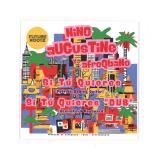
Panama meets Havana on this new 7" from Nino Augustine & AfroQbano on Future Rootz. Both artists are Atlanta and Chicago-based, respectively but they brilliantly channel their Afro-diasporic roots into a sound that's equal parts street heat and global groove. The record is anchored by rich Afro-Caribbean rhythm with slick modern production and the kind of cross-border energy that this label is now well known for. It's music for the dancefloor and the diaspora that merges soulful vibes with kinetic grooves that make you feel alive. A great snapshot of what Afrolatino futurism sounds like right now.
Adey Omotade, a sound artist and cultural cartographer rooted in Lagos and shaped by diasporic experiences in Paris, Johannesburg, Berlin and Ivory Coast, brings a rare sensibility to this work: walking between worlds, bringing with him the cadence of home and the dissonance of diaspora. In his hands, sound becomes ritual: a migration of soul, an assemblage of bells, melodies and chants woven from Ifa shrines, river banks and Yoruba festivals. Playing the dual role of griot and cartographer, Omotade, who works across acoustic ecology, experimental music and sound design, builds each track like a shrine: layered, intentional, alive with breath and blood, each track a libation, each break an invocation. Each track unfurls like aso-oke, the celebratory fabric of the Yoruba people: drums that speak in polyrhythms, synths bending like waves, incantations layered like memory, fading then returning, gently like the water at the banks of the Osun River.
The influence of experimental sound design is evident throughout, but ‘Ni'ran’ is no cold abstraction. It pulses with life, with the heartbeat of talking drums, the breath of ambient textures and the warmth of the voices of babalawos, priests of Ifa, invoking ire (blessings) on all. ‘Oori : Ogbe’ invokes the sacred Odu Ifá — a divination verse that speaks of beginnings, clarity and destiny. In ‘Ofo : 'Nkantation’, polyrhythms unfold like verses, each beat a coded message inviting listeners to reflect on destiny and alignment.The title track ‘Ęęro : Eeşu’ begins with the haunting voice of a priest reciting the Odu Ifá, a calling to give unto Eesu his due. Percussive patterns unfold like verses, each beat both a memory and a prayer.
- A1: Un-Muting Beyond Misspelt Borders ()
- A2: Un-Muting Beyond Misspelt Borders ()
- A3: Un-Muting Beyond Misspelt Borders (A3)
- A4: Un-Muting Beyond Misspelt Borders ()
- A5: Un-Muting Beyond Misspelt Borders ()
- B1: Un-Muting Beyond Misspelt Borders ()
- B2: Un-Muting Beyond Misspelt Borders ()
- B3: Un-Muting Beyond Misspelt Borders ()
- B4: Un-Muting Beyond Misspelt Borders ()
- B5: Un-Muting Beyond Misspelt Borders ()
"Visual artist, musician and composer Satch Hoyt will release a new 10” vinyl album, Un- Muting, on 3 October 2025 on newly minted record label traza, run by Andrea Zarza Canova and distributed by Honest Jon’s Records. This album is the first to document Hoyt’s ongoing, long-term project of un-muting historical African instruments held in Western museum collections and includes his composition: Un-Muting Beyond Misspelt Borders.
Originally commissioned by Nottingham Contemporary for the exhibition Your Ears Later Will Know to Listen, Hoyt’s composition invites listeners to engage with what he calls ‘sonic restitution’, a performative challenge to the silent confinement of instruments within Western conservation standards and ethnographic museums, awakening and celebrating the hybridity, resilience and creativity of the transnational African diaspora.
The composition began with a recording session in October 2023 at the British Museum in London, where Hoyt was granted access to a selection of African instruments held by the British Museum’s Department of Africa, Oceania and the Americas. In the presence of curators and conservation staff, he played the instruments without written scores, responding instead to their physical and sonic presence.
The recordings were then further developed in Hoyt’s studio, combined with additional performances on both African and Western instruments from his own collection."
For Hoyt, un-muting is both a creative and political act:
"To Un-Mute is to gain access into ethnographic museum collections where I play and simultaneously record the abandoned ancient African musical instruments. These restituted recorded motifs and rhythms accompany my live concerts and recordings. Un-Muting is also concerned with the chapters of patriarchal and racist supremacy which accompany the instruments’ abductions, vehemently opposing the current continuum of this supremacy, its ongoing colonial expansion and continued capital extractivism. It remains focused on the retention of spiritual belief and stalwart visions of liberation leading to eventual global emancipation and self-realisation."
- Satch Hoyt, June 2025
The 10” vinyl record includes a newly commissioned text by critic and scholar Tavia Nyong’o.
The album will be released on vinyl and digital formats on 3 October to coincide with the opening of Satch Hoyt’s solo exhibition Satch Hoyt: Afro-Sonic Mapping Chapter 4 at KARST Plymouth.
Ancient African instruments: Trumpets (Kuba), Sanzas (Chokwe, Lega, Kongo, Yao), Ilimba (Nyamwezi), Whistles (Chokwe, Luba, Pende, Bambara), Talking Drum (Yoruba), Slit Drum (Kuba, Yaka, Tetela, Songye), Bell (Tetela), Rattles (Yoruba, Luba, Bamileke, Pende) and Flutes (Kuba, Kongo, Mossi, Bambara)
Western instruments: Flute, Electric Flute, Roland Handsonic, Synthesizers, Glockenspiel, Wooden Xylophone and assorted hand percussion
Composed, arranged, produced and performed by Satch Hoyt
Engineered and co-produced by Dirk Leyers
Recordings of musical instruments held by the Department of Africa, Oceania and the Americas at the British Museum by Adam Laschinger
Studio recordings of African instruments from Satch Hoyt's collection by Dirk Leyers
Uncredited Female Chant on wax cylinder recording by Karl Edvard Laman (c. 1910), held by the Berlin Phonogramm-Archiv
Additional sound design and production by Call & Response Studios
Mixed by Hendrick Valera (Cali, Colombia)
Mastering and lacquer cut by Kassian Troyer at Dubplates & Mastering
Cover art: Satch Hoyt, Score #1, 2020
Design by Elisabeth Klement
Direction by Andrea Zarza Canova
- A1: La Muchacha Y Santiago Navas – No Me Toques Mal
- A2: Gato 'E Monte – Cumbia Fumanchera
- A3: Conjunto Media Luna – Cumbia Providencia
- A4: Felipe Orjuela – Manos Limpias (Cuentas Claras)
- A5: Mau Gatiyo – Telekinea
- A6: Las Hermanas – Laura Palmer
- A7: Karen Nerak Y Cristal Prodigia – Pa La Calle
- B1: Briela Ojeda – Doña Justicia
- B2: Julián Mayorga – La Gente Que Yo Conocía Toda Se Está Muriendo
- B3: Mariscos - Garotinha
- B4: Buha 2030 – Dolor Internacional
- B5: Los Clamores – Insectos De La Asamblea
- B6: Zarigüeya – El Arriendo
- B7: Ana Mariía Vahos – Los Días
In-Correcto 15–25 marks the first vinyl compilation by Bogotá’s independent label InCorrecto, created in collaboration with Austrian imprint discos elgozo. Celebrating ten years of sonic exploration and creative resistance from the Global South, this special edition brings together a vibrant constellation of artists that define the label’s sound: La Muchacha, Ana María Vahos, Felipe Orjuela, Mau Gatiyo, Conjunto Media Luna, Briela Ojeda, Zarigüeya, Buha 2030, and many more. Between mutant cumbia, Latin American folk, introspective electronics, and borderless sonic experiments, 15–25 is both a party and a statement: a manifesto of the in-correct as an artistic and collective force.
Since 2015, In-Correcto has grown from a cultural magazine into one of Latin America’s most vital independent hubs, operating as a record label, publishing house, and creative collective. With more than 160 releases ranging from punk and ambient to trip-hop and experimental cumbia, the label has supported a generation of artists whose work is as socially engaged as it is sonically daring. Through compilations, anniversary concerts, and political projects, In-Correcto has solidified its reputation as a catalyst for collaboration, solidarity, and cultural cross-pollination in Bogotá and beyond. Based in Vienna with roots on Colombia’s Caribbean coast, discos elgozo shares this vision. Founded in 2024, the label works with Colombian artists and their diaspora, releasing music that fuses ancestral knowledge, queer-feminist expression, sonic experimentation, and joy as a political force—as a way to resist cultural erasure, reactivate traditions, and recover collective vitality. Its catalog spans salsa brava, bullerengue, psychedelic cumbia, and experimental jazz, with a strong focus on vinyl as an act of listening, memory, and resistance.
Carefully pressed, In-Correcto 15–25 is more than a record: it is a bridge between Bogotá’s underground and a global network of listeners. A sonic archive and an invitation to dance, it reaffirms that joy, experimentation, and community remain powerful tools to imagine the world otherwise.
- A1: Hosanna (Meridian)
- A2: First Born (Redeemed)
- A3: When Angels Speak Of Love
- A4: Doubleupptown (Larocque)
- A5: W-I-S (Above Every Other)
- A6: Pistol Poem (Leadbelly)
- A7: Whip Appeal (Pipn8Ez)
- A8: Seven Trumpets
- A9: Giz'aard ($Uckets)
- A10: Helpmeet (Iyadunni)
- B1: Flir2A
- B2: U&Me (Decemberseventeen)
- B3: Illbethere, 4Everandever
- B4: Alàáfía (Cita's World)
ALTERNATE COVER[27,52 €]
Honour's debut album is a ligament stretching from Lagos to London and to New York, curling across the diaspora and brushing the darker hues of blues, hip-hop, free jazz, ambient, gospel with Christian mythology and Yoruba folklore. As cinematic as it is painterly, Alàáfíà is a meditation on themes of life, death and love that pulls inspiration from the unexpected poetic profundity of casual conversations, field recordings, literature, ephemera, or personal archives. The result is an impressionistic vision in Black and Blur that both exhausts and implicates language_substantiating a mythos proposed by Fred Moten that sublimates boundaries between everywhere and nowhere; history and the present; the individual and the universal. Alàáfíà delineates a gothic landscape cut by overdriven beats, swooping orchestral blasts, choral bursts and ear- splitting fuzz, where the fleshly and spiritual realms commune. Dedicated to Honour's late grandmother, the title track began to take form after their last embrace and remains steeped in her influence and spirit_a tape-saturated composition that starts in Lagos and ends in London's smoke-stained cityscape, the song's dream-like quality developed out of the artist's grief and PTSD coping with this loss. Beneath the stretched guitar drones and stuttering loops, their grandmother's shared faith bubbles to the surface. "When Angels Speak of Love," borrows its title from two works by Sun Ra and bell hooks, respectively. Sculpting echoes of praise music into disorienting spirals perforated with syrupy DJ Screw-inspired breaks and sharp splinters of melancholic guitar, "When Angels Speak of Love" engages a conceptual dialogue with the spirits of both late thinkers, folding them into Honour's pantheon of ancestral guides. The album's ninth track, "Giz Aard ($uckets)," is a dirge of regimented drums which anchor this somber melody as it whirls into a blizzard of heartache, uncertain if its consequence will be death or eternal joy. The album's sole lyrical offering, "Pistol Poem (Lead Belly)," begins with a darkly humorous bar, "He went thru hell and back/ came back/ 2 get the strap," that swells into a haunting allegory based on the life of Philip "Hot Sauce" Champion. A modern take on the Blues, Honour's lyrics reify the artist's status as a student of both literature and popular culture, crossbreeding the artist's clever wordplay with additional references to Richard Pryor, Robert Johnson, Kelly Rowland & Bryon Gysin. Setting core principles of hip-hop, R&B, jazz and gospel music to atemporal soundscapes and compositions, Honour crafts a record that marinates in its own knotty contradictions. The ghosts that sit on the artist's shoulders have never been more tangible than with this emotive debut.
- A1: Malavoi - Te Traigo Guajira
- A2: Los Caraibes - Donde
- A3: Tropicana - Amor En Chachacha
- A4: Ryco Jazz - Wachi Wara
- A5: Eugene Balthazar - Dap Pignan
- A6: Roger Jaffort - Oye Mi Consejo
- A7: Les Kings - Oriza
- B1: Les Supers Jaguars - Tatalibaba
- B2: Super Combo De Pointe A Pitre - Serrana
- B3: L'ensemble Abricot - Se Quedo Boogaloo
- B4: Henri Guedon - Bilonga
- B5: Les Aiglons - Pensando En Ti
- B6: Los Martiniquenos - Caterate
In Guadeloupe, many people think that jazz and ka music are like a ring and a finger. To some extent, the same could be said about so called Latin music and the music played in the French West Indies.
Both aesthetics were born in the Caribbean and bear so many connections that they can easily be considered cousins. In constant dialogue, there are lots of examples of their fruitful alliance and have been for a while. The English country dance that used to be practiced in European lounges came to be called kadrille in Martinique and contradanza in Cuba. They both featured additional percussion instruments inherited from the transatlantic deportation. Drawing from shared feelings about the same traumatized identity – later to be creolized – it would be hard not to assume that they were meant to inspire each other. The golden age of the orchestras that graced the Pigalle nights during the interwar period further proves the point. As soon as the 1930s, Havana-born Don Barreto naturally mixed danzón and biguine music in a combo based at Melody's Bar. In the following decade, Félix Valvert, a conductor who was born and raised in Basse-Terre in Guadelupe, also worked wonders in Montparnasse with La Coupole, which was an orchestra made up of eclectic musicians. Afro- Caribbean performers of various origins were often hired on rhythm and brass sections in jazz bands, which used to enliven the typical French balls of the capital. In the 1930s and onwards, Rico’s Creole Band was one of them.
Martinican violinist-clarinettist Ernest Léardée, who would become the king of biguine music as well as the main figure of French Uncle Ben's TV commercials (a dark stigma of post-colonial stereotypes), had musicians from the whole Caribbean sphere play at his Bal Blomet – and they all enchanted "ces Zazous-là" (according the words of Léardée's biguine-calypso piece). In les Antilles (French for French West Indies), music history started to speed up in the 1950s, when trade expanded and radio stations grew bigger. The Guadelupean and Martiniquais youth tuned in their old galena radio sets to South American and Caribbean music. As for the women traders, les pacotilleuses, they bought and sold goods across different islands (the "passing of items through various hands" was thought to be most pleasurable) and brought back countless sounds in their luggage. Such was the case of Madame Balthazar, who once returned from Puerto Rico with the first 45rpm and 33rpm to ever enter Martinique.
Out of this adventure was created the famous Martinican label La Maison des Merengues, a music business she opened and undertook with her husband and which proved to be a major landmark. At the end of the 1950s, in Puerto Rico, Marius Cultier competed in the Piano International Contest playing a version of Monk's Round 'Midnight. He won the first prize and this distinction foreshadowed everything that was to come. Cultier, the heretic Monk of jazz, was quickly praised for writing superb melodies, always tinged with a twist that conferred a unique sound to his music. It didn't take long for the gifted self-taught musician to get to play with Los Cubanos, making a name for himself thanks to his impressive maestria on merengues.
The rest is history. Besides, in the late 1950s, Frantz Charles-Denis, born into the upper middle class in Saint-Pierre and better known by his first name Francisco, went back home after working at La Cabane Cubaine – a club located rue Fontaine where he had caught the Latin fever. Francisco's music was therefore heavily marked by his Cuban cousins' influence, which gave the combos he led a specific style and also led to renewal. Things were swinging hard in La Savane, located in the main square in Fort-de-France. He set up the Shango club close by and tested out the biguine lélé there, a new music formula spiced up with Latin rhythms. Soon afterwards, fate had him fly to Puerto Rico and Venezuela.
As for percussionist Henri Guédon (percussions were only a part of his many talents), he was born in Fort-de-France in May 22nd 1944, the day marking the celebration of the abolition of slavery. As an old man, he could remember that in " his father's Teppaz, a lot of hectic 6/8 music was constantly playing...". In the opening lines of his Lettre à Dizzy, a small illustrated collection of writings published by Del Arco, he highlighted the huge impact that cubop had on him as a teenage boy, around 1960. He eventually turned out to be the lider maximo in La Contesta, a big band steeped in Latin jazz. He was also the one who originated the word zouk to describe music which brought the sound of the New York barrio to Paris. It was the culmination of a journey that started in Sainte-Marie: "a mythical place for bélé, the equivalent of Cuban guaguancó". In the early 1960s, the tertiary economy developed to the detriment of agriculture. Yet rural life was where roots music emerged in Martinique and in Guadeloupe.
Record companies played a major part in the process of Latin versions sweeping across the islands – before reaching everywhere else. Producer Célini, boss of the great Aux Ondes label, and Marcel Mavounzy, both the head of Émeraude records - a firm which was founded in 1953 - as well as the brother of famous saxophonist Robert Mavounzy, were big names to bear in mind. Although there were many of them - all of whom are featured on this record - Henri Debs was definitely the major figure in the recording adventure. He proved to be so influential that he even got compared to Berry Gordy. In the mid 1950s, when he acquired his first Teppaz, he worked on his first compositions: a bolero and a chachacha. Then, he became the one man who made people discover Caribbean music, from calypso to merengue. He was among the first ones to rush out to San Juan, Puerto Rico, to buy records and distribute them through a store run by one of his brothers in Fort-de-France. He had members of the Fania All Star come and perform there, which he was madly proud about. He was also the first one to pay attention to Haitian music, such as compas direct and various other rhythms which would soon flood the market. As a result, many of the combos hitting his legendary studio would end up boosted by widespread "Afro-Latin" rhythms. However, he never denied his identity: gwo ka drums were given a major role, although they were instruments which had long been banned from the "official" music spheres. The present selection bears witness to such a creative swarming. Here are fourteen tracks of untimely yet unprecedented cross-fertilization: all types of music rooted in the Creole archipelago have found their way, whatsoever, to the tracklisting. Whether originating from the city or being more rural, they all go back to what Edouard Glissant, in an interview about the place of West Indian music in the Afro-American scope, called "the trace of singing, the one which got erased by slavery." "It is so in jazz, but also in reggae, calypso, biguine, salsa... This trace also manifests through the drums, whether Guadelupean, Dominican, Jamaican or Cuban... None of them being quite the same. They all point to the idea of a trace, seeking it out and connecting to each other through it. This is the hallmark of the African diaspora: its ability to create something new, in relation to itself, out of a trace. It may be the memory of a rhythm, the crafting of a drum, a means of expression which doesn't resort to an old language but to the modalities of it." The opening track features one of the emblematic orchestras of this aesthetic identity, criscrossing many music types from the archipelago. The 1974 Ray Barretto guajira – Ray Barretto was a major New York drummer influenced by Charlie Parker and Chano Pozzo – is magnificently performed by Malavoi, a legendary Fayolais group (i.e from Fort-de-France). Additionally, the compilation ends on a piece by Los Martiniqueños de Francisco. It symbolically closes the circle as it is a genuine potomitan of Martinique culture which also functions as a tireless campaigner for Afro-Caribbean music. Practicing the danmyé rounds (a kind of capoeiria) to the rhythm of the bèlè drum, it delivers a terrific Caterete, a kind of champeta of Afro- Colombian obedience which was originally composed by Colombian Fabián Ramón Veloz Fernández for the group Wgenda Kenya. The icing on the cake is Brazilian Marku Ribas, who found refuge in Martinique in the early 1970s, bringing his singing to the last trance-inducing track. These two "versions" convey the whole tone of a selection composed of rarities and classics of the tropicalized genre, swarming with tonic accents and convoluted rhythms. It is the sort of cocktail that the West Indians never failed to spice up with their own ingredients. For instance, the Los Caraïbes cover of Dónde, a famous Cuban theme composed by producer Ernesto Duarte Brito, has a typical violin and features renowned Martinique singer Joby Valente and his piquant voice.
The track used to be – or so we think – their only existing 45rpm. The meaningful Amor en chachachá by L'Ensemble Tropicana, a band which included Haitian musicians among whom was composer and leader Michel Desgrotte, also recalls how Latin music was pervasive in the tropics in the mid-1960s. They were the ones keeping people dancing at Le Cocoteraie in Guadelupe and La Bananeraie in Martinique. Around the same time, another "foreign" band, Congolese Freddy Mars N'Kounkou's Ryco Jazz, achieved some success on both islands by covering Latin jazz classics – such as their adaptation of Wachi Wara, a "soul sauce" by Dizzy Gillespie and Chano Pozo whose interweaving of strings and percussions can have anyone hit the dancefloor. How can you resist Dap Pinian indeed, a powerful guaguancó by Eugene Balthazar, performed by the Tropicana Orchestra and published by the Martinique-founded La Maison des Merengues? It also acts as a symbol of the maelstrom at work. Going by the name Paco et L'orchestre Cachunga, Roger Jaffory used to play guaguancó too: his Fania-inspired Oye mi consejo is one example of his style. Baila!!!!! Dancing was also one of the Kings' focus points. Oriza is a Puerto Rican bomba and a "classic" originally composed by Nuevayorquino trumpeter Ernie Agosto, which reserves major space for brasses, giving it a special sheen.
Emerging from the New York barrios crucible was also La Perfecta, a Martinique group originating from Trinidad, whose name directly references the totemic Eddie Palmieri figure as well as his own band, also called La Perfecta. Here they borrow Toumbadora from Colombian producer and composer Efraín Lancheros and interpret it by emphasizing percussions, which set fire to the track even more than the wind instruments. The same goes for Martinique's Super Jaguars, who use Tatalibaba – a composition by Cuban guitarist Florencio "Picolo" Santana which was made famous by Celia Cruz & La Sonora Matencera – as a pretext for sending their cadences into a frenzy. In a more typically salsa vein, the Super Combo, a famous Guadelupean orchestra from Pointe-Noire that was formed around the Desplan family and had Roger Plonquitte and Elie Bianay on board, adapt Serana, a theme by Roberto Angleró Pepín, a Puerto Rican composer, singer and musician also known for his song Soy Boricua. Here again, their vision comes close to surpassing the original. In the 1970s, L'Ensemble Abricot provided a handful of tracks of different syles, hence reaching the pinnacle of the art of achieving variety and giving pleasure. They played boleros, biguines, compas direct, guaguancó and even a good old boogaloo - the type they wanted to keep close to their hearts for ever, "pour toujours", as they sang along together in one of their songs. Léon Bertide's Martinican ensemble excelled at the boogaloo which had been composed by Puerto Rican saxophonist Hector Santos for the legendary El Gran Combo.
Three years later, in 1972, Henri Guédon, with the help of Paul Rosine on the vibraphone, tackled the Bilongo made famous by Eddie Palmieri. Such a classic!!!!! And so were the Aiglons, the band from Guadelupe: choosing to execute Pensando en tí, a composition by Dominican Aniceto Batista, on a cooler tempo than the original, they noticeably used a wonderfully (un)tuned keyboard in place of the accordion. On the high-value collectible single – the first one released by Les Aiglons under the Duli Disc label – there is a sticker classifying the track under the generic name "Afro". Now that is what we call a symbol. Jacques Denis
Monzanto Sound are a rising South East London-based music collective fusing together different styles from the African Diaspora with a hypnotic, psychedelic edge and a passion for the alchemical practice of sonic storytelling. Traversing through jazz-inflected funk, psychedelic trip-hop and cosmic neo-soul; they connect the dots using pulsating grooves, hypnotic polyrhythms and soaring vocals. The band consists of Mimi Koku on vocals, Mali Baden-Powell on keys, Wazoo Baden Powell on drums, Anthony Boatright on bass and Rachel Asafo-Agyei on guitar and supporting vocals.
Set for release in August, debut album 'The Channel' explores themes of love and conflict, justice and injustice, fantasy and mythology. Its title is a reference to many things: a journey, a portal or window to another place, a connection, a transformation. It also makes links, conceptually and sonically, between the organic and the technological, the material and immaterial.
- La Reina Nocturna
- La Danza Del Camaleón
Random Coloured Vinyl
Nu-Tone presents Combo Tezeta's debut 7" vinyl record! The A-side, "La Danza Del Camaleón" is an instrumental cumbia-salsera that takes you on a tropical trip with a touch of psychedelia. On the flip side, a dark mid-tempo bolero called, "La Reina Nocturna". Remastered from the original verion, released by Discos Más in 2020. Based out of the Bay Area, Combo Tezeta plays a highly danceable blend of instrumental Cumbias, Chichas, and Musica Tropical inspired by the late 60's and early 70's era of psychedelic Peru. Layering the reverb-fueled sounds of surf rock onto the foundations of Cumbia, the band's focus is to highlight the rich melodies and hypnotic rhythms birthed from the Afro-Latin diaspora. Along with its appreciation of world music and its diverse cultures, Combo Tezeta's mission is to deliver the sounds and musical echoes of the past to the present through a combination of traditional and original music. Combo Tezeta was featured in Noise Pop 2023 and has played Pacific Northwest tours with Satan’s Pilgrim and Thomas Lauderdale of Pink Martini 2023. The band has played famed Bay Area Venues the Chapel, Eli’s Mile High Club and the Ivy Room. In Summer of 2024 they toured the Pacific Northwest and Southern California, including an appearance at The Hardly Strictly Bluegrass Festival in San Francisco's Golden Gate Park. The band was chosen by NPR’s Tiny Desk Concerts to be one of 20 finalists (out of 7000), and featured them in the Northern California showcase of finalists at Lagunitas Brewery in 2024. “Oakland seven-piece Combo Tezeta kicked off the baile with a garage-band take on ’60s and ’70s classics and originals, with distorted guitars and jangly synths layering psychedelic ooze onto timbales and güiras. The musician’s solos revealed hard-won skills, but the band members looked remarkably chill as they played together fluidly.” – KQED
-Combo Chimbita formed in 2016 as a loose combination of friends and bandmates, many of whom had played together in other groups, all of whom were products of the Colombian diaspora who ended up as first generation New Yorkers making their way in the city's fertile music scene
-Dímelo marks the group's first release on Wonderwheel Recordings and in many ways marks a return to the band's roots, as well as a hint of what's to come
-The track was recorded in late 2023 alongside their last single "Margarita" with Victor Axelrod aka Ticklah (Antibalas, Sharon Jones & the Dap-Kings)
-Busy Twist is one of the leading artists of the new global dance underground with his sophisticated fusion of Afro, Latin and UK bass
-Busy Twist has worked with artists like Bomba Estereo, Alewya, Kevin Flores to name a few, and released music on labels like Soundway, Sony Colombia, Because London, and Jamz Supernova's Future Bounce
-They have released music on iconic and cult-favorite labels such as Anti- Records, Names You Can Trust and Figure & Ground
Introspekt’s hotly anticipated debut album Moving The Center comes nearly a year after the release of her latest EP Tectónica. Set to be released on June 20th, Moving the Center sees Introspekt play homage to dubstep’s point of genesis in South London in order to then shift the center of focus from a singular point of origin, to a more global narrative of bass and vibration. The album blends UK bass with contrasting genres like garage and ballroom, creating the perfect feminine blend of these historically masculine genres. The album merges the Black diaspora from across the Atlantic, crafting a sonic world where past, present and future are parallel and immersed in an early millennium type dubstep soundscape.
Speaking about the album, Introspekt says, “‘Moving The Center’ embodies an alternate perspective to that which has been dominant in dance music, particularly so-called ‘bass music’. The narrative it presents is one which throws a wrench in the seemingly common perception of Dubstep as a masculinist sensibility. ‘Moving The Center’ pushes a feminine physicality to the front of the bassbins. Femmes to the front!”
Limited 100 copies pressed on 7” vinyl, featuring a custom stamp & centre label design by Ciaran Birch.
Belinda Zhawi aka MA.MOYO is a Zimbabwean born author and literary & sound artist, based in London, her work explores the African diaspora and deepening the connection between education and art. Also apart of the group BZDB, whose LP on AD93 received critical acclaim last year.
The record is produced by Nova Varnrable, who has frequented on imprints like Escho, 5 Gate Temple, Scenic Route & Kulør. Viva Voce Vol. 1 releases on the UK label Accidental Meetings, who constantly explore a wide variation of sonics.
"In a world where it is easier than ever to say something, it is actually the hardest time to be heard.
We are constantly bombarded by so much information and/or distractions that people can hardly be blamed for not tuning in.
The box has been constructed to be safe, so why step outside it?
The vibe shift is undeniable but everyone is free to choose which frequency to tap into.
Music can be nourishment for the soul if you have the right ingredients. Even then you need the right chefs to cook it properly to be served.
Meftah and Ideeyah have taken their time to create something that feels complete.
Something intentional. Meditative.
Another piece in the great chain of the African Diaspora.
Where else but Detroit could something like this come from?
A complete concept that is unabashedly of the present but still honors the past. This is Soul music. Crafted with love for community, for heritage, for fulfillment.
There was a method to the madness, a reason for the gradual formation of artistic merit that is presented to you now.
This music contains a universal message if you can open your eyes and mind to it.
Less talking, more doing.
Go out there and be somebody again.
Reclaim your light under the sun.
Swing Low, Sweet Chariot.
For Funk is it’s own reward,
if you want it to be.
- Turtle Bugg"
Sonic Interventions is a diaspora-futuristic band of interdisciplinary artists from five continents. Emerged in 2020 from the transcultural Berlin Jazz scene, the group unites diverse languages, instruments, rhythms and dance for collective meditation and healing, improvisation and groove.
Since then, the band has established itself as one of Berlin's most acclaimed underground Jazz collectives. Known for inclusive live spectacles, in which moments of meditation and trance rise into heavy grooves, traditional rhythms of the African and Latin American continents coalesce with urban styles such as Hip Hop, Trap and House. The band combines poetry and dance inspired by the cosmos, ancient alchemy and world mythologies.
- L’mmjr
- Transit
- Casaflex (Feat. Flexfab)
- Win
- Valisa
- Kiss
- Dakchi Hani
- L’azri
- Patience (Feat. Ines)
- Rruina
With Ylh Bye Bye, Swiss-Moroccan producer Sami Galbi delivers a raw and electrifying debut album after the succes of his first single Dakchi Hani / Rruina. Merging North African folk, chaâbi, and trap with forward-thinking electronic club music, his punk energy and DIY ethos stem from years immersed in Lausanne’s underground squat scene, shaping a sound that’s both deeply personal and politically charged.
Driven by infectious North African melodic loops, heavy basslines, and percussive textures—blending bendir drums, karkabas, and analog synths—Ylh Bye Bye pulses with urgency. From high-energy dancefloor anthems to dreamy acid pop ballads, the album explores themes of migration, identity, and belonging. Galbi’s Arabic vocals oscillate between auto-tuned harmonies and spoken word, capturing the tensions of diaspora life.
- A1: Hanadi 02 18
- A2: Dreams Of An Insomniac
- A3: Al Dollarji
- A4: Les Vents Dominants
- A5: Al Bahriye
- A6: Miramar
- A7: The Invisible Cut
- A8: Helia Featuring Sven Wunder
- B1: East Of What
- B2: La Calypso 02 41
- B3: Hawalat
- B4: Sfiha
- B5: La Virgule Suspendue
- B6: Preamble To The Conclusion
- B7: Chou Ostak
- B8: What Happened Next
- B9: Jana
If Hawalat sounds like a world tour that’s because it essentially is. “As much as Marzipan is a picture of Lebanon from the inside, Hawalat kind of picks up from where Marzipan finished but more looking to the outside, the diaspora, to the notion of exile.” Megarbane says he is interested in the connections between the global and the domestic, the mundane and the cosmic, and wanted to create space for non-linear progression.
Hawalat is based on the idea of hawala, informal money transfers that you can make to certain countries impacted by a lack of currency or unstable political and economic contexts. His use of the term on this album is not a financial one, Megarbane explains, but a nod to notions of creative exchange between “places, persons, generations.” It is the first time Megarbane called on other musicians in this way to inform his sound, including a collaboration with Sven Wunder on the song Helia featuring strings by the Stockholm Studio Orchestra.
The album opens with first single Hanadi, a punchy Somali-inspired track with warm non-lexical vocals and saxophone. It immediately pivots to the Dreams of an Insomniac, which balances soft, effortless vocals and keys with urgent violin intrusions. Al Dollarji feels like Megarbane’s bread and butter, that is Mediterranean sounds with intricate strings, while Al Bahriye takes this staple and introduces hip hop inflections. The result is a rich 17 track album that effortlessly blends genres and styles.
Including 8 page, 12" sized booklet with unseen photos and liner notes by Armani Syed.
Now and again, an album project with no home comes along out of the blue, demanding to be licensed and shared with the world.
It was unearthed on one of Paper's digging trips. BOM's album sounded like nothing else out there, only the future. Shrouded in mystery and country-of-origin unknown, Africa runs through its DNA, but sometimes mysteries are best left...
Ase - a Yoruba philosophy signifying the power that makes things happen and produces change; given to Gods, ancestors, spirits, humans, animals, plants, rocks, rivers, songs and prayers.
BOM takes influence from all corners of Africa and its diaspora, blending them with 25 years of Western electronic music into a melange of forward facing, leftfield afro futurism.
The album features one of Africa's brightest rising stars, Luka Productions (from Mali), cosmic poet Sirius Rush (UK) and master drummer & vocalist Felix Ngindu (DRC/Liverpool) for a journey into kaleidoscopic Afro-tech funk. Gqom, Shangaan electro and township funk rub shoulders with hip-hop, bass, deep house and dub for a psychedelic celebration of collaboration and possibility.
As geographical and musical barriers are broken down, BOM's 'Ase' album is leading the charge; London to Lagos, Lisbon to Sao Paulo, Bamako to Berlin, BOM captures the sound of the underground.
Poet, novelist, musician and academic, Anthony Joseph teams up with legendary UK producer Dave Okumu for forthcoming album, ‘Rowing Up River To Get Our Names Back’
Dave Okumu, known perhaps best as frontman for The Invisible, though digging deeper into his production credits, huge names emerge such as; Grace Jones, Amy Winehouse, Jesse Ware, Rosie Lowe and Eska. On this album, the magic and alchemy of Dave’s production style showcase subtle sonics and deep layering resulting in a contemporary sound to carry Anthony’s afrofuturistic metrical meanings.
Anthony and Dave first came across each other when working with Shabaka Hutchings during Covid broadcasts, and then after Anthony performed some poems on Dave’s 2023 album ‘I Came From Love’, the seeds of collaboration were sown.
With a little more psychedelia, a little more experimentation, Dave’s eclectic vision focuses on the actual sounds on these pieces. Anthony stated that “The best producers guide you, not push you” now add to that the fact that both these humans were born on the same day, a concoction of laid back attitudes in people with strong purpose, some real magic can happen, naturally.
Early writing sessions for this record took place in 2022, around Mount Blanc in France. Anthony was away touring with long-time collaborator, Jason Yarde. Ideas were a little thin and they found themselves somewhat repeating previous work resulting in Anthony rethinking things a little, and so entered Dave Okumu.
LP opener ‘Satellite’ is a fine example of how this new partnership pans out. New musicians have been enlisted; Dan See (Drums), Aviram Barath (Synths), Nick Ramm on Fender Rhodes and Byron Wallen (Trumpet). Add to that the mighty vocal power house of Eska and we have a whole new dimension of soul and depth, to carry Anthony’s statements. “You build a wall, we go under, you build it higher, we go higher, like a satellite” .
On the album's second single, ‘Tony’ - there’s a nod to all drummers and creators of African rhythms, from the point of view of Afrobeat legend Tony Allen. Highlighting this is drummer’s drummer Richard Spaven as Dave’s choice of skin beater. He successfully reminds us that Tony was someone who understood the real power of rhythm and how it is used to unite people.
As well as the new musicians on this LP, Dave Okumu played all the guitars and used the studio as his tool. On ‘A Juba for Janet’ - a poem to Joseph’s mother, and a track so bass heavy that it feels as though it could sit in a deep dubstep set in Plastic People days, - Anthony’s voice reaches straight down your ear canals next to dark drums, huge synths and delayed saxophone stabs from Colin Webster. Slightly more introspective verses on ‘An Afrofuturist Poem’ see Dave’s beats show off the real future sound of this record, kalimba, moog bass and guitars all played by the man himself.
Mellower and deeper moments are also present, Anthony’s cryptic yet informative storytelling is at its absolute best on ‘Churches Of Sound (The Benetiz-Rojo)’ - Caribbean and Windrush history reeled off alongside a linear musical timeline of Black music in the diaspora.
A reminder that this body of work is first of 2 volumes, ‘Rowing Up River To Get Our Names Back’ is not a follow up to Anthony’s previous album, but more a development of his 2006 novel, ‘The African Origins of UFOs’ a book where experimental elements of afro-futurism, metafiction, science fiction, surrealism, mythology are rewritten in Anthony’s innovative language. Look out for Volume 2 also coming in 2025.
Anthony Joseph releases, ‘Rowing Up River To Get Our Names Back’ (Vol. 1) via Heavenly Sweetness 7th February 2025 and he will play live at Ronnie Scotts in London on 14th March 2025, with Dave Okumu as a special guest.
CREDITS:
Vocals - Anthony Joseph
Additional vocals, vocal arrangements - Eska Mtungwazi
Producer - Guitars, Bass, Moog, Synthesisers, Programming, Percussion - Dave Okumu
Drums - Dan See
Drums on ‘Tony’ - Richard Spaven
Synthesiser - Aviram Barath
Fender Rhodes, Synthesisers, Nick Ramm
Trumpet - Byron Wallen
Saxophones - Colin Webster
Trombones - James Wade Sired
The genius that is Tony Allen departed this mortal world in April of 2020, but not without leaving an unmatched legacy that crossed oceans and borders, bridging cultures and forging a sound that changed music. As the drummer for Fela Kuti's revolutionary Africa 70, Allen's polyrhythmic drumming defined Afrobeat. His contributions as an artist and cultural ambassador left an indelible impact on every genre of popular music, from Techno to Jan to Rock and Hip-Hop. Tony Allen's music stands as an ongoing testament to the interconnected musical relationships and dialogues across the African diaspora, and their lasting influence on how we listen. For Jazz Is Dead producer Adrian Youngs, it is no small honor to share new music recorded with the drummer revolutionary Tony Allen.
Beirut Birds (طيور بيروت) is a sonic memory capsule honoring (inter)personal stories of migration, displacement, and the cyclical turbulent circumstances in Lebanon. Transforming her multi-year project, multidisciplinary artist and composer Nour Sokhon crystallizes the performance Beirut Birds (طيور بيروت) into her long-awaited debut album. When presented and performed live, it is accompanied by juxtaposed images of the Lebanese capital’s city life and avian migration across the Mediterranean Sea, representing themes strongly woven into the music.
In her variegated artistic process, Nour has undertaken and recorded interviews with diasporas and repatriates to commemorate, share, heal, and envision. These source materials become the album’s core elements that loop, narrate, and return throughout time, with Nour responding with both instruments and her voice. Chanting in dialogue with the interviewees, crafting near-mantras, Nour further congregates these materially-rooted soundscapes by including field recordings that she gleaned during 2018–2021 in Lebanon and her subsequent move to Berlin.
Embedded within the composition are manipulated sounds from objects that symbolize migration, such as office bells, a luggage wheel, car parts, and bureaucratic paperwork. Musically, the songs are enriched by Nour’s improvisations on classical piano, electronics, synthesizers, violin, and various percussion instruments. As time is sculpted and the layers blur, words become specters, while an entropic orchestra of drums and melody rises, giving shape to an in-between space for those who have left, and stayed.
Music and artistic research by Nour Sokhon, 2018–2024. Recording, editing, and mixing by Rabih Beaini at Morphine Raum, Berlin. Mastered by Rashad Becker at Clunk.
Celebrating the 20th anniversary of Callisto's impactful debut album, Svart Records is proud to bring it to you for the first time ever on wax! Callisto is a post-metal band from Turku, Finland formed in 2001. They've headlined several tours in Europe, opened for High On Fire on their UK tour, and showcased in Canada and the United States. Whilst their early works are hardcore and metal, the debut album True Nature Unfolds has a strong sludge metal and doom influence. It was recorded in 2004 by the late Mieszko Talarczyk (Nasum) and introduced to Earache Records a year later through Johannes Persson (Cult Of Luna), earning the band worldwide distribution. True Nature Unfolds was originally released only on CD in 2004 by Fullsteam Records in Finland and Earache Records in the US and UK a year later. The album delivers a breathtaking mix of atmospheric soundscapes, heavy riffs, and haunting melodies. Each track invites you on an emotional journey, blending post-metal intensity with introspective lyricism. Don’t miss this powerful musical experience—let the journey begin! The 20th anniversary edition of True Nature Unfolds is presented on double vinyl in a glorious gatefold cover, with new album art by the band's drummer Ariel Björklund. Available versions are the Svart exclusive green/red/black marble vinyl, limited golden yellow vinyl, and classic black vinyl. Release date December 13th, 2024.
Legendary producer Sweet Abraham, head of Diaspora Recordings, is making his long-awaited return to vinyl with a release on the swiss label imprint Léman Records. For the first time in a while, he feels the same sense of responsibility and excitement as in his early days with
Defender and deep4life. While remaining true to his signature sound, Abraham ventures into a more relaxed, slower house tempo, creating a deep, atmospheric, and dub-infused vibe. The tracks "Givin U" and "Walk of Melech," though distinct from one another, offer a fresh take on his style, while maintaining the richness and depth his fans have come to expect!
A collaboration between Duncan Bellamy (Portico Quartet) and Belinda Zhawi (MA.MOYO), Jump Ship, Sit Lean, Be Still, Stand Tall is a collection of sonic-poetry that sets Zhawi’s illuminating, elliptical words in dialogue with diffuse, explorative music and sound by Bellamy. Fluctuating between expansive contemporary classical arrangements and intimate layered vocal experiments, together they render these disparate forms into something distinct, melancholic and luminous.
Belinda Zhawi is a literary & sound artist based in London & Marseille, author of Small Inheritances (ignitionpress, 2018), & experiments with sound/text performance as MA.MOYO. Her work explores African diaspora research and narratives, and how art and education can be used as intersectional tools. Her literary & sound works have been featured on various platforms including The White Review, Vogue, NTS, Boiler Room & BBC Radio. She’s held residencies with Triangle-Asterides, France; Cove Park, Scotland; Serpentine Galleries; ICA London and was a Brixton House Associate Artist 2022 - 24. Belinda’s the co-founder of literary arts platform, BORN::FREE. She is working on her first full poetry collection.
Duncan Bellamy (b. Cambridge, UK, 1986) is a multidisciplinary artist based in London. His diverse practice encompasses painting, silkscreen, photography, sound and music. His work examines the shape of time, loss and our relationship to the past and present in a period of compressed transformation. He is a founding member of Mercury Prize nominated Portico Quartet, and has contributed sound work to the artist Hannah Collins audio-visual installation I Will Make Up A Song. Bellamy is working on a debut exhibition and new music.
~~~From Mississippi and Olvido Records~~~~~~ Steel-string guitar and vocals by the great Giorgos Katsaros, a mythic figure of Greek rembetiko. Our obsession with underground Greek music continues with 10 ultra-rare recordings of heartbreak and vice from rembetiko legend Giorgos Katsaros. Katsaros, who by some accounts lived to be over 100 years old, carried the old songs of Greece to the Diaspora in the United States, bridging centuries of music in one storied lifetime. Born in 1901 on the Greek island of Amorgos, Katsaros' was enchanted with the songs he picked up as a kid in the streets of Piraeus and Athens. Encouraged by his grandfather, an amateur singer, Katsaros developed a style that mirrored his upbringing - centuries-old Asia Minor songs, island rhythms of his homeland, well-known Athenian songs of the time, and anonymous `rebetiko' songs. Katsaros' songbook was vast, but he was most drawn to the street life and music of the manges of early 20th-century Greece: outcasts who dealt with the indignities of an unstable economy and an inauspicious future with the old standbys: wine, hash, and dancing. These ten tracks are remastered from Katsaros's 64 surviving early recordings, many rarely heard since their original release. Hypnotic melodies plucked over repeating thumbed basslines back his deep, mournful voice. Katsaros brought this nostalgic late-night music to smoke-filled rooms of Greek exiles in Chicago, Philly, and New York, where he emigrated in 1917. He continued to travel the country and play until his music was supplanted by more modern styles in the 1950s. He retired to the town of Tarpon Springs, FL, famous for its Greek sponge fishers, til a late-in-life revival brought him back to Greece for a few massive concerts and national accolades in the 1990s. Like many great artists, Katsaros carefully curated his own mythic backstory over the decades. He sometimes claimed he was born in 1888, making him 109 on his passing, and conflicting accounts of his birth and travels circulate to this day. Greek researchers Stavros Kourousis and Konstantinos Kopanitsanos, who also compiled these tracks, contribute groundbreaking new historical research on Katsaros' life. Lyrics, poetically translated by Tony Klein, further fill in the picture. Clean and rare 78s were remastered by Stereophonic. Katsaros has never sounded better than on this LP, pressed on heavy black vinyl, with extensive notes and lyrics.
~~~From Mississippi and Olvido Records~~~~~~ Steel-string guitar and vocals by the great Giorgos Katsaros, a mythic figure of Greek rembetiko. Our obsession with underground Greek music continues with 10 ultra-rare recordings of heartbreak and vice from rembetiko legend Giorgos Katsaros. Katsaros, who by some accounts lived to be over 100 years old, carried the old songs of Greece to the Diaspora in the United States, bridging centuries of music in one storied lifetime. Born in 1901 on the Greek island of Amorgos, Katsaros' was enchanted with the songs he picked up as a kid in the streets of Piraeus and Athens. Encouraged by his grandfather, an amateur singer, Katsaros developed a style that mirrored his upbringing - centuries-old Asia Minor songs, island rhythms of his homeland, well-known Athenian songs of the time, and anonymous `rebetiko' songs. Katsaros' songbook was vast, but he was most drawn to the street life and music of the manges of early 20th-century Greece: outcasts who dealt with the indignities of an unstable economy and an inauspicious future with the old standbys: wine, hash, and dancing. These ten tracks are remastered from Katsaros's 64 surviving early recordings, many rarely heard since their original release. Hypnotic melodies plucked over repeating thumbed basslines back his deep, mournful voice. Katsaros brought this nostalgic late-night music to smoke-filled rooms of Greek exiles in Chicago, Philly, and New York, where he emigrated in 1917. He continued to travel the country and play until his music was supplanted by more modern styles in the 1950s. He retired to the town of Tarpon Springs, FL, famous for its Greek sponge fishers, til a late-in-life revival brought him back to Greece for a few massive concerts and national accolades in the 1990s. Like many great artists, Katsaros carefully curated his own mythic backstory over the decades. He sometimes claimed he was born in 1888, making him 109 on his passing, and conflicting accounts of his birth and travels circulate to this day. Greek researchers Stavros Kourousis and Konstantinos Kopanitsanos, who also compiled these tracks, contribute groundbreaking new historical research on Katsaros' life. Lyrics, poetically translated by Tony Klein, further fill in the picture. Clean and rare 78s were remastered by Stereophonic. Katsaros has never sounded better than on this LP, pressed on red vinyl, with extensive notes and lyrics.
- Dial In (Intro)
- Ready. Set. Flex. (Feat. Zelooperz)
- Runnup On'm (Feat. Cleveland Thrasher And Ahya Simone)
- Nothing Simple (Feat. Tammy Lakkis And Cleveland Thrasher)
- The Punch! (Feat. Kesswa)
- Let's Talk (Feat. Kesswa And Ahya Simone)
- Can't Keep Up (Feat. Kesswa)
- Bookamagick (Feat. Cleveland Thrasher)
- Pressure (Feat. Kesswa And The Josh Craig)
- Honey High And Blue (Feat. Kesswa)
Sakura Droplet Vinyl[25,17 €]
„Cherry Blossom Baby“, Shigetos erstes Album seit 2017, entspringt einem kollektiven Tauwetter, ist ehrgeizig, kollaborativ und vollendet. Der in Detroit lebende, japanisch-amerikanische Musiker, DJ, Mitbegründer des Portage Garage Sounds-Labels und langjährige Ghostly International-Künstler übernimmt die Rolle des Produzenten und Komponisten. Der kühne und absichtsvoll kultivierte Sound ist eine Hommage an die Traditionen von Electronic Music, Jazz, R&B und Hip-Hop - eine Fusion, die zu seinem Markenzeichen geworden ist und heute lebendiger denn je. Zach Saginaw und eine Gruppe von Gästen und Musikern präsentieren eine Momentaufnahme, eine Feier der Selbstliebe und einen Ausdruck von Vitalität, der eindeutig in Detroit verwurzelt und von der kulturellen Geschichte seiner Familie geprägt ist. Für „Cherry Blossom Baby“ ließ sich Saginaw von den Kirschbäumen inspirieren lässt, die jeden Frühling in Hiroshima blühen - ein bleibendes Bild für Hoffnung, Widerstandsfähigkeit und Erneuerung. „Ich bin ein Kirschblütenbaby“, sagt er. „Wir alle sind Kirschblütenbabys, wir alle sind unverwüstlich, wir alle wachsen, und wir alle werden es auch weiterhin tun.“ Saginaw war auf der Suche, eine schwelende Selbstbeobachtung, die in den letzten Jahren zum Vorschein kam, als das Nachtleben pausierte und er begann, die Idee von Shigeto, dem Performer und der festen Größe in Michigan, zu hinterfragen. „Meine Identität ist etwas, mit dem ich schon immer zu kämpfen hatte: Ich werde weder als Japaner noch als Weißer angesehen. Ich glaube, Shigeto war für mich eine Möglichkeit, diese Identität zu haben, mir eine zu schaffen, an der ich mich festhalten konnte, und plötzlich gab es sie nicht mehr.“ Diese Erkenntnis veranlasste ihn, an sich selbst zu arbeiten, zu seinem Handwerk und seiner Gemeinschaft zurückzukehren, und legte damit den Grundstein für ein Album, das sich aus der Asche im übertragenen Sinne neu erhebt. Das bekräftigte Selbstbewusstsein, der Schwung und die Reifung zeigen sich darin, dass Saginaw sich hier als Songwriter und Produzent positioniert, der Ideen mit den besten Musikern Detroits arrangiert, eine physische Manifestation seiner WDET 101.9FM Radio-Show, die „zukunftsweisende Musik aus der Detroiter Diaspora“ hervorhebt. Jeder Track ist eine Kollaboration, sei es mit einem Sänger oder mehreren Instrumentalisten, die in seinen Portage Garage Studio Sessions geschmiedet wurde. Die Produktion und der Mix sind voll und zurückhaltend und verzichten auf moderne Kompression zugunsten einer geräumigeren Dynamik - eine Anspielung auf Psych- und Jazz-Platten aus den 70er und 80er Jahren.
- A1: Dial In (Intro)
- A2: Ready Set. Flex. (Feat. Zelooperz)
- A3: Runnup On'm (Feat Cleveland Thrasher And Ahya Simone)
- A4: Nothing Simple (Feat Tammy Lakkis And Cleveland Thrasher)

- A5: The Punch! (Feat Kesswa)
- B1: Let's Talk (Feat Kesswa And Ahya Simone)
- B2: Can't Keep Up (Feat Kesswa)
- B3: Bookamagick (Feat Cleveland Thrasher)
- B4: Pressure (Feat Kesswa And The Josh Craig)
- B5: Honey High And Blue (Feat Kesswa)
Black Vinyl[22,27 €]
„Cherry Blossom Baby“, Shigetos erstes Album seit 2017, entspringt einem kollektiven Tauwetter, ist ehrgeizig, kollaborativ und vollendet. Der in Detroit lebende, japanisch-amerikanische Musiker, DJ, Mitbegründer des Portage Garage Sounds-Labels und langjährige Ghostly International-Künstler übernimmt die Rolle des Produzenten und Komponisten. Der kühne und absichtsvoll kultivierte Sound ist eine Hommage an die Traditionen von Electronic Music, Jazz, R&B und Hip-Hop - eine Fusion, die zu seinem Markenzeichen geworden ist und heute lebendiger denn je. Zach Saginaw und eine Gruppe von Gästen und Musikern präsentieren eine Momentaufnahme, eine Feier der Selbstliebe und einen Ausdruck von Vitalität, der eindeutig in Detroit verwurzelt und von der kulturellen Geschichte seiner Familie geprägt ist. Für „Cherry Blossom Baby“ ließ sich Saginaw von den Kirschbäumen inspirieren lässt, die jeden Frühling in Hiroshima blühen - ein bleibendes Bild für Hoffnung, Widerstandsfähigkeit und Erneuerung. „Ich bin ein Kirschblütenbaby“, sagt er. „Wir alle sind Kirschblütenbabys, wir alle sind unverwüstlich, wir alle wachsen, und wir alle werden es auch weiterhin tun.“ Saginaw war auf der Suche, eine schwelende Selbstbeobachtung, die in den letzten Jahren zum Vorschein kam, als das Nachtleben pausierte und er begann, die Idee von Shigeto, dem Performer und der festen Größe in Michigan, zu hinterfragen. „Meine Identität ist etwas, mit dem ich schon immer zu kämpfen hatte: Ich werde weder als Japaner noch als Weißer angesehen. Ich glaube, Shigeto war für mich eine Möglichkeit, diese Identität zu haben, mir eine zu schaffen, an der ich mich festhalten konnte, und plötzlich gab es sie nicht mehr.“ Diese Erkenntnis veranlasste ihn, an sich selbst zu arbeiten, zu seinem Handwerk und seiner Gemeinschaft zurückzukehren, und legte damit den Grundstein für ein Album, das sich aus der Asche im übertragenen Sinne neu erhebt. Das bekräftigte Selbstbewusstsein, der Schwung und die Reifung zeigen sich darin, dass Saginaw sich hier als Songwriter und Produzent positioniert, der Ideen mit den besten Musikern Detroits arrangiert, eine physische Manifestation seiner WDET 101.9FM Radio-Show, die „zukunftsweisende Musik aus der Detroiter Diaspora“ hervorhebt. Jeder Track ist eine Kollaboration, sei es mit einem Sänger oder mehreren Instrumentalisten, die in seinen Portage Garage Studio Sessions geschmiedet wurde. Die Produktion und der Mix sind voll und zurückhaltend und verzichten auf moderne Kompression zugunsten einer geräumigeren Dynamik - eine Anspielung auf Psych- und Jazz-Platten aus den 70er und 80er Jahren.
Slow paced drums with offbeats softly phased with the guitar, misty takeoffs from the synthesizer: a hazy idyll is starting off on the road to the rocket festival (bun bang fai). Answering each other on the responsive mode of the lam soeng, Sothipong engages in a flirt but Oulay Vanh is not ready to trifle with just anybody.
As a stylistic variation of a popular Lao musical genre, the lam soeng was the source of several themes among which the “bang fai” - which is part of the Lao conciliatory festivities preceding the rainy season - remains one of the most renowned.
However, the producer and composer of these songs, Sothy, created an unusual arrangement: the instrumental introduction separates from the sang canon, the synthetic mix is stripped down of the traditional organology - everything here becomes unsettling for a listener familiar with the genre.
Everything comes with a reason: the record was edited in 1981 under the title Sothy Productions yet produced in France by the Parisian label Oxygène (famously known for its unforgettable first French punk compilation 125 grammes de 33 1/3 tours). Chansons Laotiennes still remains hard to classify.
And then who’s Sothy? Along with the unverifiable identity of the seemingly Laotian singers, skepticism gains ground concerning the man behind the pseudonym. Is he an escaped musician from one of the first Cambodian rock bands of the 1960s? A surviving producer from the 1980s Paris? Or a composer in transit in one of the many places of the Laotian diaspora? Sothy eludes any researches and disappears behind his numerous homonyms.
The second track is just as enigmatic: a beat box, a lightly reverberated voice as well as a guitar solo and a small synthesizer break, “Tuei” or “Tawai” offering (as the writing on the record suggests) makes way to dancing step and a truly joyful melody. Twisted and lively steps on a romantic background tune turn this second track into a genuine paslop - a program recommended by therapists to relieve muscular pains due to seated positions: you will unlock your pelvis with some synchronized Laotian choreographies.
For their first edits, Akuphone called on a young Parisian producer. Shelter, aka Alan Briand, mingles his own mixes and electro productions with a large variety of influences and styles: krautrock, disco, traditional music, psychedelic, synth pop, ambient, bossa nova, Japanese funk. He produces both original compositions and remix.
- A1: Mama Africa
- A2: Glass House
- A3: Not Gonna Give It Up
- A4: Stop That Train
- B1: Johnny B. Goode
- B2: Where You Gonna Run
- B3: Peace Treaty
- B4: Feel No Way
- B5: Maga Dog
Red Recycled[31,51 €]
"Mama Africa," released in 1983 is now available on 1LP Red Recycled, is a celebration of African heritage and a call for unity and liberation. This album features a mix of upbeat tracks and heartfelt tributes to the African continent. The title track, "Mama Africa," is a poignant ode to the motherland, while songs like "Glass House" and "Not Gonna Give It Up" convey messages of resilience and determination. "Mama Africa" highlights Peter Tosh's ability to blend social consciousness with melodic reggae rhythms, reaffirming his role as a powerful voice for the African diaspora and global justice.
From the perspective of people who categorize music by genres and types, Evan Shornstein, better-known under his production moniker Photay, has created lots of different kinds of sounds over the past decade. There’s the Hudson Valley-raised, Los Angeles-based multi-instrumentalist composer’s quasi-IDM and electronic almost-pop tracks with the occasional vocal; the improvised organic and and experimental music sessions he participates in alongside new age giants, Laraaji and Carlos Niño; the diaspora electronic folk-jazz he makes with veteran musicians from all over the globe; and the disco and house adjacent records he tag-team DJs with Brooklyn producer Cesar Toribio and engineer Phil Moffa (who also masters all of Photay’s records — and those of dance-music dons around the world). But if you’ve listened closely to Shornstein’s prodigious output, you know that separating and classifying the work is actually contrary to the energy of Photay music. That what on-the-surface may lazily appear as differences, is actually brought together by a shared sonic warmth, a hardware pastoralism at play. Whatever category he engages, Photay makes outdoor music under the spell of the elements, for the purpose of different human movements — some physical, some spiritual, some emotional, some philosophica.
- A1: Hosanna (Meridian)
- A2: First Born (Redeemed)
- A3: When Angels Speak Of Love
- A4: Doubleupptown (Larocque)
- A5: W-I-S (Above Every Other)
- A6: Pistol Poem (Leadbelly)
- A7: Whip Appeal (Pipn8Ez)
- A8: Seven Trumpets
- A9: Giz'aard ($Uckets)
- A10: Helpmeet (Iyadunni)
- B1: Flir2A
- B2: U&Me (Decemberseventeen)
- B3: Illbethere, 4Everandever
- B4: Alàáfía (Cita's World)
Original Cover[27,52 €]
Honour's debut album is a ligament stretching from Lagos to London and to New York, curling across the diaspora and brushing the darker hues of blues, hip-hop, free jazz, ambient, gospel with Christian mythology and Yoruba folklore. As cinematic as it is painterly, Alàáfíà is a meditation on themes of life, death and love that pulls inspiration from the unexpected poetic profundity of casual conversations, field recordings, literature, ephemera, or personal archives. The result is an impressionistic vision in Black and Blur that both exhausts and implicates language_substantiating a mythos proposed by Fred Moten that sublimates boundaries between everywhere and nowhere; history and the present; the individual and the universal. Alàáfíà delineates a gothic landscape cut by overdriven beats, swooping orchestral blasts, choral bursts and ear- splitting fuzz, where the fleshly and spiritual realms commune. Dedicated to Honour's late grandmother, the title track began to take form after their last embrace and remains steeped in her influence and spirit_a tape-saturated composition that starts in Lagos and ends in London's smoke-stained cityscape, the song's dream-like quality developed out of the artist's grief and PTSD coping with this loss. Beneath the stretched guitar drones and stuttering loops, their grandmother's shared faith bubbles to the surface. "When Angels Speak of Love," borrows its title from two works by Sun Ra and bell hooks, respectively. Sculpting echoes of praise music into disorienting spirals perforated with syrupy DJ Screw-inspired breaks and sharp splinters of melancholic guitar, "When Angels Speak of Love" engages a conceptual dialogue with the spirits of both late thinkers, folding them into Honour's pantheon of ancestral guides. The album's ninth track, "Giz Aard ($uckets)," is a dirge of regimented drums which anchor this somber melody as it whirls into a blizzard of heartache, uncertain if its consequence will be death or eternal joy. The album's sole lyrical offering, "Pistol Poem (Lead Belly)," begins with a darkly humorous bar, "He went thru hell and back/ came back/ 2 get the strap," that swells into a haunting allegory based on the life of Philip "Hot Sauce" Champion. A modern take on the Blues, Honour's lyrics reify the artist's status as a student of both literature and popular culture, crossbreeding the artist's clever wordplay with additional references to Richard Pryor, Robert Johnson, Kelly Rowland & Bryon Gysin. Setting core principles of hip-hop, R&B, jazz and gospel music to atemporal soundscapes and compositions, Honour crafts a record that marinates in its own knotty contradictions. The ghosts that sit on the artist's shoulders have never been more tangible than with this emotive debut.
Olatuja is a band, a project, an album full of the uplifting, joyful music of the African diaspora, and a beacon of healing in a divided world. With an A-list supporting cast including drummers Obed Calvaire and Joshua Keitt, guitarists Femi Temowo and David Rosenthal, percussionist Magatte Sow and star pianist Christian Sands, Michael and Alicia set about creating Olatuja - an album that is at once cinematic in scope and intimate and personal in its message of trust, joy and the power of honest communication. "Olatuja" draws on the rich heritage of Michael"s Yoruba culture, the evolving popular music of West Africa, the gospel and jazz traditions that inform Alicia"s musicality, and the strong links that tie all these threads together.
Hot off the heels of an active summer tour across the festival circuit, South London Samba present their debut EP "Tempo!". Across 5 tracks, band leader Adam Ouissellat drives a tight rhythmically focused sound, with influence from Brazil and across the African diaspora.
"We have been performing these tunes for a long time and it felt right to archive them when we came up to our 10 year anniversary (the band started in April 2013).
We recorded them at Midi Music Company which is where we have rehearsed and ran classes since the beginning! These tunes have stood the test of time and are loved by audiences wherever we play."
Recorded in Deptford in single takes without overdubs, and expertly engineered by Ahmad Dayes (brother to Yussef).Tempo!is a vignette of their live performances. It encapsulates the raw power of a drumming orchestra carefully disposed to drive a unique interpretation of samba rhythms.
Adam says"The idea was to capture the spirit of carnival whilst adding to the rhythmic culture of drumming ensembles. Each piece has melodies and motifs running throughout which makes it a listening experience as well as something anyone can groove to."
Tempo!collects global inspiration from the Caribbean, Dutch Brass bands and Latin America and represents a desire to grow their community, and to "push the genre into new territory".Having already supported the likes of the Black Eyes Peas, Disclosure and performed at the O2 arena and regulars at Notting Hill Carnival, SLS are cementing their prowess with a technical dexterity that is immediately profound.
Mazandaran was born from an idea to make protest music that shone a light on the experience of the Iranian diaspora, many of whom were displaced by the current regime. All members share Iranian heritage and the lyrics and imagery speak of the ancient Persian mythology of The Shahnameh, with passages about the legendary hero Rostam slaying the Div-e Sepid, or White Demon, and overcoming evil. Musically, the band delve into the deep and rich history of Japanese and Skandinavian hardcore punk of the 80s, as what better type of punk is there to make you feel like you are battling demons and about to fuck shit up? Dedicated to the brave women and men of Iran suffering 44 years of oppression from the current theocratic, fascist, and fundamentally anti-Iranian regime occupying our ancestral home.
Jaqee – is rhythm and life ”Places becoming journeys in themselves… Different places where I have lived and learned, places that have made my heart beat, the emotional realms that I have experienced. This is where it all starts, every time. Where I am is where it happens, because I am, there. Here.” She sings. She laughs! And she cries, too. Jaqee cannot tell when music and singing became her life, it has ”just always been there, in my head” she says. Now with the fourth album she has taken a closer look at herself, from every possible angle. No hiding. Different phases, different sides of her personality and musical creativity are all there. All as one. ”I am a diaspora kid, I fell in love with all kinds of music, I let myself embrace it all, because good music, is good music. All the way from Uganda at age 13 to the new home and culture in Sweden, then leaving Sweden as an adult for Berlin – has made me the Jaqee that I am”, says the Ugandan /Swedish artist who also received a Swedish Grammy nomination for her past work. Being on the move is without a doubt an important part of her life. “For me travelling is about being exposed to different perceptions, situations, cultures and extreme emotions, it has always made me grow. How many times have I not thought that: I wouldn’t have experienced this or that, if hadn’t been here. I love that feeling!” Jaqee’s music reflects this constant movement and progress. The album is inspired by places like Berlin, South Africa and Jamaica. The trip to Jamaica resulted in the only collaboration track on “Yes I am” recorded in Kingston with reggae artist Anthony B. Teka, the “Kokoo Girl” and “Yes I am” Producer says: ”This time around, like on the last album, we have worked with our colleagues in different countries. Musicians we love and musicians that are inspiring like Martin Hederos (The Soundtrack of our lives) who arranged the strings on the album. We also had New York drummer Daru Jones of Rusic Records play on some tracks. All these talents enhance the idea and expression that we wanted for “Yes I am”. With the album done, it is again time to hit the road and tour for Jaqee. “Getting out there and meeting the crowd is a high. We laugh, we dance and we get loud together. This is the best part of working with music – having a good time together. Music is a universal language.” On composing music, she admits that this time, more than ever, the words matter. Newly found motherhood has made this album in particular a significant legacy. Every song has a life punctuation of its own she has not limited herself by thinking in genres. Making the tone very straightforward. “The melodies and lyrics are closely intertwined, how I sing a word makes all the difference. Even though I love word play, it has to be very clear. Since I am not educated in reading music, I instead visualize and hear it, it seems to be the way my system works. It is all about rhythm and life, it is “YES I AM“.
For the fourth time now Jaqee introduces herself to the World with her impressive voice and her unique attitude. Born in Kampala, the Capital of Uganda, she began her vagabond like life the moment she was born. During her childhood, she travelled the rural areas of her home country with her parents. This is where she collected her first impressions of the life as a nomad. From birth on, wandering the earth became a part of her destiny. In the early nineties she undertook a huge step and immigrated to Sweden. The City of Gothenburg would become her adopted home from where she was able to access all the different destinies and directions, which were on offer to her. Through all the borders Jaqee crossed, music has always been her steady companion whereas it never was a stereotype thing that let her get down with any special genre, than more like a special feeling. “To do what I want in a particular moment is my motivation. I like to express myself in all kind of sounds.” So above all, she became a true nomad in the world of music. After several successful co-operations with numerous artists, in 2005 Jaqee made an impact with her debut album “Blaqalixious”, which was mainly a Soul and R&B album. “That was my direct contact to the music that a rural community in the Diaspora plays” she explains. But it did not end up there because a nomad like Jaqee does not settle anywhere. After further creative and fruitful collaborations, Jaqee released her second long player “Nouvelle d´ amour” in 2007. This time, the sound was more of a rocking, bluesy vibe. It seemed to be the total opposite to her debut album but for Jaqee it was only the next step on her path in the circle of life. “Everything is possible as long as it is real. I never wonder about things like genre as long as the vibe fits.” One step further on, she encountered the songs of Billie Holiday, which lead to the album “A letter to Billie” recorded together with Bohuslänbigband, a lovely homage to the great American Jazz Singer. Both of her first two albums each received a Swedish Grammy nomination and several appearances in the Swedish national television increased her standing as a passionate and soulful Singer. So Teka, producer and creator of many successful riddims for his co-found German label, Rootdown Records considered her to be part of his new project “Koala Desperados“, which link Caribbean vibes like Cumbia to Reggae, and while working on it a totally new idea was born. Jaqee and Teka decided to combine both their talents into one album. The results of which you can now hear on “Kokoo Girl” a refreshing mix of Old School Reggae sounds from the seventies combined with up-to-date Beats, electronic twists and turns and of course the amazing voice of Jaqee. For her, this means that she has achieved some of her ambitions. “I grew up with African Gospel, in sad and turbulent environment, so for me, this means I grasp and totally understand the reggae and its non ending struggle for the common man.” No sooner said than done and “Kokoo Girl” will become Jaqee’s fourth and newest release. All the paths she followed, countries she crossed and influences she absorbed are a part of this album. She sings with the freedom of spirit of the travelling people. The word “Kokoo” is the only memory that remains everlasting. It is just a word but its impact is so huge that Jaqee does not really like to explain it. “It implies irony and seriousness as well as sarcasm and fun.” It is more than a gimmick. “Kokoo” is a very special feeling and a clear view of the world from an artist who has seen more of it than all the people that have settled down.
JAZZ MONEY, the debut album from multiinstrumentalist, composer, and producer Zacchae'us Paul is an irreverent, fresh take on "America's classical music" that speaks to the 24 year old artist’s deep-beyond-his-years understanding of Black music and the African diaspora. Paul stretches and bends jazz sounds around the Atlanta hip-hop he grew up with, the gospel sounds and philosophies that have long shaped his music making, and the Caribbean rhythms he learned studying in Puerto Rico. He has created a wholly personal sound that is youthful, and thoughtful all at once.
"When you listen to this album, listen to it again," Paul says. "A lot of the songs have multiple meanings, and I'd love for people to have different perspectives on them." Made with a cast of improvising upstarts and veterans that includes the album's executive producer, Terri Lyne Carrington, fellow Atlanta native and Candid recording artist Morgan Guerin and Paul's fiancée and star vocalist Melanie Charles, Jazz Money is jazz music for this, and future, generations.
A deep, zouk/electronic dancehall crossover track from Cameroonian artist Maréchal Papillon, including a brand new dub version from Canadian producer Poirier Ferdinand ‘Maréchal’ Papillon was part of the makossa wave that moved from Cameroon to France and across the African diaspora in the 80s and 90s, bringing the sounds of rhythms of Douala and Yaoundé to the clubs and dancefloors of Paris. Although best known for his Sakissa style - his own uptempo take on the makossa of Cameroon - Papillon also regularly featured zouk and reggae influenced tracks on his albums, combining Caribbean and African influences into a unique sound that has stood the test of time. ‘Moulongo’ originally appeared on Papillon’s highly sought after 1995 album “Homme fort….je suis sérieux” and was recorded at Studio de la Madeleine in Paris. The Moulongo session features a who’s who of the Paris scene of the time - Aladji Touré and Toto Guillaume from Cameroon as well as Congolese guitar greats Ngoma Lokito and Nene Tchacou - and combines dancehall, zouk and makossa elements for a pan-African dancefloor sureshot.
- Patience
- A Friend
- Give Me One More Chance
- The Max
- Don't Be Afraid
- Remember Me
- Ghet-To-Funk
- The Stretch
- Reach Out (And Give Me Your Hand)
- Hifidelics Groove
- Feel The Shock
- Disco-Tnt
- Together Pt. 2
- Hey Girl
- Rainy Days And Monday
- This Time
- Everyday
- I'm Tired Of What People Say
- What It Is?
- Let Her Go
- I'm Sure
- Man Oh Man (What Have I Done)
- The Grade A
- Just Jammin
- Dig It (Shovel)
Pink Vinyl[34,66 €]
Ein Doppelalbum, das sich auf die 2012 mit 45 7" Singles erschienene Box-Set Compilation "Eccentric Soul: Omnibus" bezieht und zusammenfasst. "Minibus" versammelt 25 dieser Songs aus der amerikanischen Soul-Diaspora und verbindet die Punkte zwischen dem Harmony Group Sound, Funk, Disco und modernem Soul, 1966-1980. Deluxe Klappcover mit zahlreichen Notizen und Fotos illustriert.