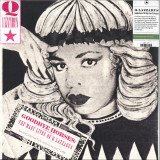
Der Einstieg in die Musik von Q Lazzarus erfolgte für fast alle über „Goodbye Horses“. Der Song tauchte erstmals 1988 in Jonathan Demmes „Married to the Mob“ auf, aber er sollte sich erst dann vollständig im Bewusstsein der Menschen verankern, als er 1991 in Demmes „The Silence of the Lambs“ wieder auftauchte. „Goodbye Horses“ fühlte sich an wie ein in sich geschlossenes Universum - traumhaft und völlig ungewöhnlich, ein sofortiger Klassiker, der die Zuhörer fesselte und neugierig auf die geheimnisvolle Stimme dahinter machte. Diese Stimme gehörte Diane Luckey, einer einzigartig talentierten Künstlerin, deren Musik ihrer Zeit voraus war und die letztlich zu Lebzeiten weitgehend unerkannt bleiben sollte. In Verbindung mit der Veröffentlichung des Dokumentarfilms „Goodbye Horses: The Many Lives of Q Lazzarus“ von Aridjis Fuentes veröffentlicht Sacred Bones eine Sammlung von Songs, die die gesamte Karriere von Q abdecken und die verschiedenen Epochen ihres Schaffens und die ganze Bandbreite ihrer Persönlichkeit zeigen. „Goodbye Horses“ ist die erste Musiksammlung, die den Segen von Qs verbliebener Familie erhalten hat, und hat die Besonderheit, ihre erste und einzige Albumveröffentlichung in voller Länge zu sein. Aufgenommen zwischen 1985 und 1995, spiegelt diese Fundgrube bisher unveröffentlichter Musik einige der interessantesten Facetten der Popmusik der letzten vier Jahrzehnte auf eine Weise wider, die sowohl versiert als auch wild eklektisch wirkt Das titelgebende „Goodbye Horses“ bleibt ein einzigartiges Stück gespenstischer New-Wave-Perfektion, und man könnte sich ein ganzes Q-Lazzarus-Album vorstellen, das sich um diese Ästhetik dreht, aber ähnlich den Gesangsikonen Alison Moyet, Annie Lennox oder Lisa Gerrard eignet sich Qs chamäleonhafte Stimme perfekt für eine Vielzahl von Stilen und Settings. Ihre Coverversion von Talking aHeads' „Heaven“ verwandelt den Song in eine aus voller Kehle gesungene Power-Ballade mit klimpernden Klavierverzierungen, während ihre Interpretation von Gershwins „Summertime“ wie eine dubbige Club-Reduktion klingt, die zu einem Grace Jones Stück der Nightclubbing-Ära hätte passen können. Tracks wie „My Mistake“ und „Hellfire“ flirten mit House-Musik und zeigen, wie frech und glockig Qs Stimme sein kann, wenn sie sich richtig austobt, während „Don't Let Go“ wie eine bombastische Radiosingle klingt, die Cher vor einigen Jahrzehnten hätte veröffentlichen können. Andere Songs wie „Bang Bang“ und „I See Your Eyes“ sind von einer gitarrenbetonten Alt-Rock-Sensibilität, die in einem Paralleluniversum auch auf MTVs 120 Minutes Show hätte laufen können. „Goodbye Horses“ verkörpert das Potenzial für so viele verschiedene Arten von Karrieren, die, aus welchen Gründen auch immer, nie vollständig verwirklicht wurden. Dass wir jetzt diese Songs in der Welt haben und ein klareres Bild von der Person dahinter, ist nichts weniger als ein Segen.
Since launching her own club night, “Motivation,” back in 2018, B.AI has played a key role in bringing the underground’s club sounds to her home country, China. While introducing some of the scene's most exciting artists to her local audiences, she emerged as one to look out for as well: first as a DJ and quickly thereafter as a producer. Her original takes – a sensitive, highly personal approach to melody and a knack for playing with expectations – crystallized in a slew of A+ releases and a couple of international tours. This trajectory, shaped by taking matters into her own hands and self-empowerment, now sees a logical next step, with the inception of a label that will also operate under the “Motivation” banner and features her own “Hope” EP as its first release.
Sparkling mallets, with synth-pop quality catchiness, open the title track. Rather than further evolving, their two-bar arrangement gets looped over and again, serving as the foundation for a slick FM bass rhythm and a variety of hooks. Although these incline to the bright, the overall vibe is melancholic. In vintage B.AI style, the aptly titled “Hope” is more ambiguous than its patches suggest. Similarly, the vocal this type of palette would call for ultimately comes in the form of aloof, covert musings. A bit buried in the mix, they are most efficient – just like the tension that keeps brooding underneath the surface.
“Murderbot Diaries 1991” turbocharges four-to-the-floor synthetic drums with an arpeggiated rolling bass. The blue note melody on top feels sequenced via a pocket calculator, and the dissonant, electroclash-reminiscent stabs that follow might sound even more angular. The tune is frantic, sinister – and perhaps above all tongue in cheek. It reaches fever pitch with the arrival of a tubular bell theme between the two breaks.
“Once”’s slomo cutoff modulation on the 16th note mid-bass instantly creates a sultry atmosphere that meshes greatly with the pastel cool of the gently delayed DX7 leads. The energy drifts between effortless control and uncertain outcome. These contrasts are amplified as the drums alternate amidst moderation and beat-repeat rendered havoc.
On “Only We Know,” a progressive sine lead lays out the central motif. Yet as briskly as it appears, it makes way for detuned, gliding square waves taking on the same theme. This outlines the track’s structure: as slightly morphed repetitions keep getting introduced almost haphazardly, a dreamlike, mesmerizing ambience unfolds. Techy drum rhythms and a 101-type bass make sure everything stays fuelled. Within the ingenious tapestry of melodies and new twists, it never loses touch with the dance floor. It illustrates B.AI’s club savvy neatly and is therefore a perfect closer for this EP.
Torn Hawk is no newcomer…he’s been lurking in the corners, creeping in and between various arts worlds for well over a decade: spoken word slice of life narrations as heard on NTS Radio and Trilogy Tapes; more guitar-oriented song structural work on Mexican Summer; extensive videography (PPU Party Volumes One and Two along with music videos for Torn Hawk as well as Bicep, Xosar, and more); and more beat-focused work as seen on Unknown To The Unknown and as is featured here on his 12” for Fixed Rhythms.
Euphoria in a concrete rainforest. The joys of plumbing the depths of your own inner darkness. 80s synth sounds with soaring guitars and police sirens and rhythmic vocal snips. Distorted bass line bombers. S l o w e d down breakbeats. Offkilter, stomping grooves for the seasoned freaks. Mid-tempo heavy hitters fit for those thirsty for slime and hungry for grit. Step inside and get your fill!
Credits:
Mastered by Dietrich Schoenemann.
Design by Nick Owen.
Distributed by One Eye Witness.
Originally released on 13th September 1994, Ready To Die is the debut studio album from hip-hop legend, The Notorious B.I.G. Upon release, the album was met with widespread critical acclaim, with Pitchfork giving it a 10/10 rating along with various other critics praising it for its brutally honest depiction of gang violence and conflict as opposed to the often-glorified portrayal in the genre and the wider media. The album has cemented its place in hip-hop history and has since gone on to achieve 6x platinum certification in the US, selling over 3.5 million copies, and has achieved platinum status in the UK as well.
This x2LP re-issue featuring the iconic artwork of an infant bearing a resemblance to the rapper has been out of the marketplace for over a decade and also features all 19 tracks from the Ready to Die Sessions.
The album cover is often cited as one of the greatest of all time, with Billboard magazine placing it no.4 on its list of “The 50 Greatest Album Covers of All Time” stating that juxtaposition of the music with the “innocence of a child” on the cover illustrates how “a cruel world imprints on unmoulded minds”. NME has also placed it no.12 on its list of “Timeless Hip Hop Album Covers” and Complex Magazine have placed it at no.16 on its list of “Greatest Album Covers”.
As always Kling Klong gives space for new artists and supports upcoming talents. This time Martin Eyerer & Rainer Weichhold had no doubts signing this debut release from Stuttgart's dj/producer Ninetoes as 'Finder' is obviously a massive stand-out track which has the words 'summer hit' written all over it. So it was just easy to convince Leon and Re-UP from Italy to do the remixes and help to make this release even more oustanding.
Support from:
Matthias Tanzmann, Loco Dice, Adam Beyer, Nick Curly, Butch, Riva Starr, Popof, Kaiserdisco
DJ Feedbacks:
Adam Beyer: like the leon mix!
Loco Dice: Will try. Please send me the WAV. Thanks
Nick Curly: schöner release....leon remix gefällt mir am besten, danke!
Matthias Tanzmann: woher kenne ich denn die Melodie Coole Tracks auf jeden Fall.
Davide Squillace: Nice one..
Monika Kruse: der leon remix rockt.
Tiefschwarz (Ali): nice nice :) re-up rmx is my favorite.
Butch: leon rocks
Riva Starr: leon rmx for me thx
Claptone: supersonniger tune das original
Ramon Tapia: Leon mix is cewl !
Gregor Tresher: Leon mix sounds cool.
Chus: Leon and Re-Up mixes for me.
Popof: Great remix from re up ! love it
Kaiserdisco: Original mix is nice, will try it out.
Wally Lopez: Leon remix are huge!! Support
Shinedoe: I'll try it out.
“Raggamuffin Soldier” was recorded at Channel One Recording Studio in 1983 with Soldgie as engineer and a rhythm track played by Jolly Stewart and Daniel “Axeman” Thompson. Growing up in the Waterhouse neighborhood of Kingston, Jolly Stewart obviously developed this singing style and gave us a killer early digital dancehall missile with pure conscious lyrics “Raggamuffin soldier, big ina your area...me no deal with badness, me nah deal inna war, me is a raggamuffin soldier...mi raggamuffin ina foreign, raggamuffin sit down pon di riddim...how you know the raggamuffin? Me no wear no gold chain, me no wear no gold ring...”. “Raggamuffin Soldier” was produced by Fitzroy Peterkin who also produced the digital lover tune "Angie".
The Waterhouse style is a particular style of singing that emerged in the late seventies and early eighties within the Jamaican reggae scene. The Waterhouse style is commonly described as a plaintive, groaning and fluctuating vocal style, often nasal and strident, characteristics that will give it a sound that is distinct from the rest of the reggae singers. The commonly recognized founders of the Waterhouse style are the singers Michael "Mykal" Rose, Junior Reid and Don Carlos. The name derives from the famous neighborhood of the same name in Kingston, the capital of Jamaica, the place where the three pioneers were born and emerged. The Waterhouse style influenced many dancehall reggae artists of the eightiesvsuch as Tenor Saw, Half Pint, Nitty Gritty, Anthony Red Rose, King Kong, Yami Bolo, Andrew Bees...
Vincent Stewart aka “Jolly Man” is a reggae singer from Kingston 11, born december 16 1960 at Hunts Bay Lane, 4 Miles, Jamaica. Jolly started singing at age 13, he was placed in an approve School for 3 years and at the age of 16 he was released.
He started his musical career in the late 70's with Ossie Thomas, Phllip Morgan and Tristan Palmer from Black Solidarity label. Jolly Stewart recorded his first song entitled "Money Pyaka" on the classic "Pretty Looks" riddim which was recorded for Oswald Thomas on Ganja Farm label and released in 1979. Tristan Palmer who has another tune "Disappointed Lover" on the same riddim backed by The Soul Syndicate made the link with Jolly Stewart because he liked his style of song writting.
Jolly Stewart wrote three songs for Black Solidarity label: "Collie Man", "Bad Minded" and "Symbol Of Justice". All three tracks were covered by Triston Palmer. As a song writter, Jolly Stewart is behind Yami Bolo's hit on Stalag riddim “When A Man Is In Love” released on Winston Riley's label Techniques.
Jolly Stewart then decided to move on with his singjay career. He ventured to Tuff Gong studio where he met two producers. One was Prince Jazzbo from Ujama label, and the other was John John who owned the Bun Fi Bun label. He recorded "Praise jah" for Ujama and "Poverty Rush" for Bun Fi Bun. Still not satisfied with how his career was heading, he moved on to Lannaman's Preparatory School. There he learned to play guitar from a man named Fred McMurray aka Faf and Donald Jackson. Later he learned to play the keyboards by watching other musicians.
In the late 80's and early 90's, Jolly Stewart recorded many songs for various labels such as “Do Me Like So” for Bunny Gemini's label “Bun Gem Records” in 1987, “Late Last Night” and “War” for producer Zelma Rust and his label Myotta Ruff.
He also recorded for Augustus Pablo on his label Rockers International just before he died in the late 90's but we never heard about this release so probably Addis Pablo have it on old master tapes in the Rockers International archives....only Jah knows!
Peppermint Jam is proud to present Mellow Man’s latest release, 'In A Flow', an EP that takes you on a sonic journey through time. With three distinct tracks, this release captures the essence of three different eras of groove: the 70s, the 90s, and today.
Mellow Man has been with us since our founding days in 1994 and is a master of THAT old school sound.
First up, 'In A Flow' throws you straight into the golden age of 90s house music. With its smooth grooves, uplifting melodies, and driving bassline, this track embodies everything we love about classic house.
Next, 'Rumpshaker' brings you right back to the present. This track is all about today’s sound—fat beats, tight production, and a bass to die for, designed to keep the dancefloor moving.
Finally, 'Ghettoblaster' takes you even further back to the early 70s. Featuring the soulful sounds of Artist Locmelis on the tenor sax, this track is a nod to the funk-infused, boombox culture of the era.
Mellow Man produced these tracks using a mix of vintage and modern gear, including the Korg MS 20, Akai samplers, and a Rode NT1000, to name just a few. The result is a rich, textured sound that honors the past while still feeling fresh and relevant today.
With its blend of eras and styles, "In A Flow" is a must-listen for anyone who appreciates the evolution of house music.
»›The Last Will and Testament‹ ist eine Art Konzeptalbum. Eine rastlose musikalische Reise, die in gewisser Weise meine eigene Beziehung zur Musik als Konsument widerspiegelt«, erzählt Bandleader Mikael Åkerfeldt.
»Ich schnappe hier etwas auf, verwerfe dort etwas. Ich bete Musik an und hasse sie gleichzeitig. Diese Ambivalenz führt mich auf eine Art eigenen kreativen Weg, und dann ist plötzlich eine Sammlung von Songs entstanden. Im besten Fall sind diese Lieder gut genug, um die Band zu beeindrucken. Gut genug für die Mächtigen in der Branche. Gut genug für euch?! Ich liebe diese Platte. Ich muss es so sagen (schreiben). Vielleicht bin ich sogar stolz? Ich nehme an, es sind einige vertraute Zutaten dabei. Die meiste unserer Musik stammt aus der gleichen Quelle, also ist es nicht weiter verwunderlich, wenn es nach ›uns‹ klingen wird. Ich bin ein wenig beeindruckt von dem, was wir mit ›The Last Will and Testament‹ gemacht haben. Es fühlt sich wie ein Traum an. Ich hoffe, es gibt eine gewisse ›Kohärenz‹ und ›Songwriting-Fähigkeiten‹, aber was weiß ich schon? Ich neige dazu, das ›Seltsame‹ dem ›Offensichtlichen‹ vorzuziehen, aber ich habe das Gefühl, dass ich in der Minderheit bin, und das ist gut so. Also... faire Warnung! Erwarten Sie keinen sofortigen Rausch (wie üblich), aber wenn Sie es sofort ›kapieren‹ (haben Sie es schon kapiert?), ist das auch in Ordnung!«
Matthew Dear's Black City Can't Be Found On Any Map. It's A Composite, An Imaginary Metropolis Peopled By Desperate Cases, Lovelorn Souls, And Amoral Motives. Like Most Literary Gothams, Black City Is A Place To Love And Hate, As Seedy As A Nightclub's Back Room And As Seductive As The Promise Of Power. Matthew Dear, The Musician, May Live In New York City, But The Matthew Dear Of Black City Inhabits A Sound-world Unlike Any Other: A Monument To The Shadowy Side Of Urban Life That Bumps And Creaks, Shudders And Wakes Up Screaming In The Middle Of The Night. Black City Is Matthew Dear's Third Album On Ghostly International, And It's His Darkest And Most Engrossing Work To Date.
From The rst Notes Of Album Opener "honey", It's Clear That The Love-obsessed Matthew Dear Of 2007's Asa Breed Has Given Way To A More Existentially Paranoid Entity, As Creeping Tempos Dominate, Cavernous Atmospherics Envelop The Listener, And Strange Distortions Crackle On The Horizon. In Black City, Nothing Is At It Seems: Leadoff Single "little People (black City)" Is A Nine-and-a-half Minute Disco odyssey, subverting its gleaming electronic lead with eerily giddy backing vocals and cryptic, ominous lyrics ("a frozen wasted heart / has died", "love me like a clown"); "You Put a Smell on Me" is a sordid sex romp set to hysterically chattering percussion and a serrated synth line that will set your teeth on edge; "More Surgery" at rst recalls the barely-there Krautrock of Harmonia in its burbling minimalism, until Dear's chanted chorus of "Alter genetics / to make my body glow / I need more surgery / there's so much more to know" sends the track hurtling into a dystopian future.
And yet, for all the foreboding moods on Black City, it's the album's sweeter moments that illustrate Matthew Dear's growing maturity as a songwriter. "Slowdance" is a futuristic lullaby in which Dear articulates a lover's helplessness ("I can't be the one to tell you everything's wrong") over breathy, Arthur Russell-esque cello swishes; the album-closing "Gem" is an achingly simple, reverb-drenched piano ballad that ends with a long, slow fade. Even in Matthew Dear's Black City, there is hope.
»›The Last Will and Testament‹ ist eine Art Konzeptalbum. Eine rastlose musikalische Reise, die in gewisser Weise meine eigene Beziehung zur Musik als Konsument widerspiegelt«, erzählt Bandleader Mikael Åkerfeldt.
»Ich schnappe hier etwas auf, verwerfe dort etwas. Ich bete Musik an und hasse sie gleichzeitig. Diese Ambivalenz führt mich auf eine Art eigenen kreativen Weg, und dann ist plötzlich eine Sammlung von Songs entstanden. Im besten Fall sind diese Lieder gut genug, um die Band zu beeindrucken. Gut genug für die Mächtigen in der Branche. Gut genug für euch?! Ich liebe diese Platte. Ich muss es so sagen (schreiben). Vielleicht bin ich sogar stolz? Ich nehme an, es sind einige vertraute Zutaten dabei. Die meiste unserer Musik stammt aus der gleichen Quelle, also ist es nicht weiter verwunderlich, wenn es nach ›uns‹ klingen wird. Ich bin ein wenig beeindruckt von dem, was wir mit ›The Last Will and Testament‹ gemacht haben. Es fühlt sich wie ein Traum an. Ich hoffe, es gibt eine gewisse ›Kohärenz‹ und ›Songwriting-Fähigkeiten‹, aber was weiß ich schon? Ich neige dazu, das ›Seltsame‹ dem ›Offensichtlichen‹ vorzuziehen, aber ich habe das Gefühl, dass ich in der Minderheit bin, und das ist gut so. Also... faire Warnung! Erwarten Sie keinen sofortigen Rausch (wie üblich), aber wenn Sie es sofort ›kapieren‹ (haben Sie es schon kapiert?), ist das auch in Ordnung!«
NEW ORDER setzen die Serie der Definitive Boxsets mit dem 1986er Album Brotherhood fort. Das Boxset enthält das Originalalbum remastered auf CD und 180g Vinyl, plus eine CD mi Extras aus bisher unveröffentlichten Demos und Raritäten, sowie zwei DVDs mit den Auftritten der Band beim Festival of the Tenth im GMex, Manchester 1986 und Live in Brixton, 1987 zur Unterstützung des Welt-AIDS-Tages. Die DVDs enthalten zusätzlich Live-TV-Auftritte, Interviews und seltenes Bandmaterial. Im dazugehörigen gebundenen Buch finden sich zeitgenössische Artikel und Linernotes des irischen Radio-DJs Dave Fanning.
Das Boxset wird zusammen mit drei 12"-Singles aus dieser Zeit veröffentlicht: Bizarre Love Triangle, State of the Nation und Touched by the Hand of God - ebenfalls remastered und auf schwarzem 180g-Vinyl.
Comprised of Clams Baker Jr., Benjamin Romans Hopcraft, Adam J. Harmer, Marley Mackey, Quinn Whalley, and Bleu Ottis Wright, Too Cold To Hold is undoubtedly their best and most ambitious album to date. Taking on board the repetitive and polyrhythmic grooves of gqom (an alluring South African take on house music), adding in a dash of hip hop flavours and even jazz, and then harnessing that to their punk-funk, disco pogo, it’s a spellbinding mix. The album is produced by the band’s Ben Romans Hopcraft alongside Jamie Neville.
Talking about the first track to be taken from the album, ‘Fashion Week’, which is a joyous account of fashion’s die-hard fans rather than the more visible arrivistes or dilettantes, Clams said: “Those that will do anything to become that thing. That creation. And live it. It’s real artistry when you don’t have the means and you’re doing it. You’re hustling to get on the guest list, you get in, you’re done up by means that you can’t really afford, whatever you do… It’s a celebration of people who will do whatever to look good and feel good and step above wherever they are in their own minds.”
With a reputation as one of the most exciting and mesmerising live bands out there right now, they have also today announced both details of a very special ‘Fashion Week’ launch show at London’s Lexington on 10th July and a run of U.K. / EU dates to coincide with the album release in November – the dates include their biggest London headline show to date at The Troxy. The full list of dates, which is as follows:
First Word Records is very proud to bring you the 10th anniversary edition of Tall Black Guy's debut LP '8 Miles to Moenart'!
It includes two brand new jazz interpretations ('From Home To Work, And Back' and 'Running The Motor'), recorded with a live band, as well as a new intro cut ('Black Detroit'), and an alternative mix of the single 'Mon Amie De'troit', previously only available on 7" vinyl.
The original vinyl LP release was a one-time limited edition pressing; this being the first time this project has been available on wax since then, and also includes entirely new artwork and photography.
From humble origins in Detroit, raised on a healthy diet of Motown, jazz and hip hop, Terrel Wallace (aka Tall Black Guy) has become a standard bearer for the hip hop beats scene. Through a steady stream of soulful productions filled with incredibly clever sample flips and deft production chops, he has won fans across the world, including Gilles Peterson, Benji B, Don Letts, Lefto, Tom Ravenscroft, Lord Finesse, Huey Morgan, Anthony Valadez and countless others, along with sessions for Boiler Room and more.
'8 Miles To Moenart' literally brought Tall Black Guy full circle, and proceeds to do so once again. Detroit was where he started making music, and it's to his hometown he took inspiration for this debut album. Taking in low-slung hip hop, downtempo house and jazz-tinged street soul, it's a record of rare focus. It encapsulated the musical heritage of Detroit, through the looking glass of Tall Black Guy's own signature sound.
Follow up releases included his sophomore First Word album 'Let's Take A Trip' (which also featured the likes of Masego, Daniel Crawford, Miles Bonny and Moonchild), and records on Ubiquity, Bastard Jazz and Street Corner Music, to name a few, along with a steady slew of limited self-released edits amd productions, most recently with his #7DayVaults series.
He's worked with a number of formidable artists worldwide, including recent extensive work with Zo! (Little Brother), Ozay Moore, Deborah Bond and Dee Jackson (80's Babies), as well as collaborations with 14KT and First Word label-mate Allysha Joy, to name just a few. He is also an integral player for DJ Jazzy Jeff's infamous PLAYlist Retreat sessions, along with more First Word family, Kaidi Tatham and Eric Lau, as well as artists like James Poyser, Ali Shaheed Muhammad and Questlove, and he was a core contributor to First Word's 'Nothing Leaves The House' series, along with Eric, Mr Thing and kidkanevil.
Tall Black Guy has firmly established himself to be one of the most influential producers working today.
Terrel says "I made the bulk of this album back in Detroit around 2012/2013, before I relocated to the UK. I've been back living and working in the States for a while now, and it's great to look back on this project. But while it's nice to reminisce, it's important to look forwards, so I wanted to include something new here to represent my progression as an artist, so there's some new versions included, that I created with the help of some jazz musician friends of mine."
'8 Miles to Moenart' (10th Anniversary Edition) will be released on digital & vinyl on October 18th 2024.
c 03: Funeral Biz / Welcome to Detroit (Interlude) feat. Malice & Mario Sweet
e 05: Mon Amie De`troit (7" Version) feat. Ozay Moore
We’re teaming up with ELUCID and Fat Possum for a limited edition of 300 copies of a Rush Hour black ice coloured edition.
E L U C I D, one half of the illustrious duo Armand Hammer, is here with the full-length follow-up to 'I Told Bessie'. Further experiments in the sonic, expanding on the 'live' side of music paired with the embracing of chaos. Something you haven't heard, or not so for a very long time. E L U C I D is here to reveal the bleakness of reality.
''There is never time in the future in which we will work out our salvation. The challenge is in the moment; the time is always now.''
James Baldwin
A raw, crackling urgency runs through rapper-producer ELUCID’s new album REVELATOR like an underground power line. There is no space here for sepia-toned reminiscences or indulgent self-mythologizing. Intellectual rabbit holes have been filled in with concrete and rebar ; there is nowhere to hide and no off ramp from the audio Autobahn that ELUCID has fashioned—a renegade Robert Moses with gold fronts, bulldozing the homes of the powerful and the complicit. REVELATOR brims with the energy of now, with a refusal to look away. Carpe diem in a murder one mask.
Born in Jamaica, Queens, ELUCID has been on the cutting edge of New York’s underground scene since the mid-2000s. From the beginning, he has defied both convention and expectation. He ran with Okayplayer darlings Tanya Morgan, but his own music eschewed their throwback charm for glitchy noise experiments and bass-swamped culture jamming. His 2016 debut studio project Save Yourself (re-released in a deluxe edition last year) announced him in earnest. But in recent years, his Armand Hammer releases with partner-in-crime billy woods have received significant attention and acclaim. Serving as a followup to his last solo album—2022’s comparatively balmy I Told Bessie—ELUCID hoped to “re-distinguish” himself with REVELATOR, setting himself apart amidst the increasing attention around the music he and his friends are making together.
For ELUCID, this meant setting bold new challenges for himself. One of these was diving further into live instrumentation than ever before—”getting my Quincy Jones on,” as he puts it. The testing ground for this approach was Armand Hammer’s most recent project, 2023’s We Buy Diabetic Test Strips’ Möbius strip soundscapes, warmed with instrumental flourishes and skin-shedding beat progressions. With REVELATOR, though, ELUCID strove to create an atmosphere of chaos, embracing experimental electronics and atonal sample bursts. He worked on much of the album with co-producer Jon Nellen, who comes from a background in avant-garde and Indian classical music. “I wanted to get as freaky as I could at this moment. I wanted people to hear things, maybe for the first time, or in a way they haven’t for a long while,” the rapper explains.
ELUCID arrived at the studio with a collection of noise sources: non-referential samples, glitches and noises. Together he, Nellen, and others created forms out of them and, as ELUCID recalls, “just started playing drums with it.” Their fried, distorted sound was directly inspired by Miles Davis at his most uncompromising—specifically, the tone-clustering funk track “Rated X” from his 1974 double LP Get Up With It. At times, the pairing of rap with avant-fusion sounds also brings Emergency! from The Tony Williams Lifetime to mind, perhaps in an alternate timeline where the late drummer was listening to Ice Cube’s AmeriKKKa’s Most Wanted.
“The World is Dog,” REVELATOR’s lead single, functions as the album’s aesthetic thesis statement. Like the Davis track, the textures are punishing, the tonality is in free-fall, and the driving breakbeat of a groove cuts in and out unceremoniously. Avant-jazz bassist Luke Stewart, who appears throughout the record, holds the whole thing together just long enough for ELUCID to tightwalk over the beat. This tension is exactly where REVELATOR sets itself apart; in a time of drumless loops, and safe soul samples, this is a high-wire act with no safety net. Similarly, the song announces the themes of the album within just a few phrases, evoking the way societies accept and adjust to new levels of debasement and brutality while suffocating under the weight of history: “Can’t clock the kill, all a mystery/Forced past will eating everyone eventually/The world is dog.”
Many of the songs on REVELATOR grapple obliquely with dissolution and disenfranchisement in America and across the world—the grim realities of our domestic sociopolitical climate and our involvement in foreign conflicts. “Much of my artistic and political sensibility comes from the Black arts movement here in New York,” ELUCID explains. “Recognizing the interconnected global struggles against oppression, artists and thinkers created works and actions in solidarity with freedom movements in South Africa and Palestine.” ELUCID cites intellectuals like Amiri Baraka, Kwame Nkrumah, Audre Lorde, Sonia Sanchez, and Nikki Giovanni among his heroes. (One track on the album is specifically inspired by Lorde’s work, “SKP,” citing the scholar’s paper “Uses of the Erotic: The Erotic As Power.”) Songs like REVELATOR’s insistent closer “ZIGZAGZIG,” find ELUCID applying up-to-the-minute messaging, making explicit reference to the conflict in Gaza: “Feed a war machine…from river to sea, in lieu of peace.”
Despite ELUCID’s preference for cacophonous system overload here, the rapper also provides moments of respite. Recorded at The Alchemist’s Los Angeles studio, the laid-back, wheezing “INSTANT TRANSFER” is a collaboration with billy woods, which crystallizes their shared sense of creative determination. “With much momentum behind us and even more on the horizon, I knew a purpose, and that every step was ordered to that purpose,” ELUCID said of the experience. Meanwhile, the jittery “HUSHPUPPIES” is a playful anomaly on the track list, providing a snapshot of ELUCID watching his grandparents in the kitchen while preparing for Friday night fish fry dinners.
“Love still rules over on this side,” ELUCID says. ”I’m raising a family. We are making meaning and finding joy in the midst of all the fucked up-ness of everything around us because the alternative is cowardice and slow death. We remain rooted. We celebrate our people and our wins. Struggle is necessary.”
“IKEBANA” is one of ELUCID’s strongest statements of purpose on the record, blending the record’s heaviest themes with its most hopeful sentiments. supported by a shoutalong refrain and an urgent prog-funk groove. Breaking away from images of dissolution and crumbling societal systems that populate REVELATOR, ELUCID notes that the only way to navigate life’s bleakest landscapes is to cling to love and believe in those around you—to look forward toward something better that may or may not be possible. For the rapper, one of the album’s most trenchant lines comes during a centerpiece of a beat drop: “Being alive/I must look up.”
“The lyric ‘being alive I must look up’ is important especially in the context of this album. Much of the album imagery is harsh and reflects the actual doom some of us experience. But still I/we exist,” ELUCID explains.
Every artist is, in one way or another, the product of their time, bound by life’s leaden gravity to operate within the space of that which is already known. But there are some who are able to shake free of these ties, to shape the culture as it unfolds, to make the present their own.
Revelation, as a concept, points to the scales falling from people’s eyes—something that has been hiding in plain sight becoming clear. “The revelator relates to things that have been talked about, things that have been forecasted,” ELUCID adds. “And now they’re really here, and everyone sees it. And there’s no escaping.” REVELATOR plays out with the unmitigated power of those storms, laying waste to any genre conventions in pursuit of a certain physicality. Here, ELUCID develops a wholly distinctive musical language to explore our fractured modernity.
REVELATOR's packaging was designed by longtime Armand Hammer / Backwoodz art director, Alexander Richter.
Michael Mayer albums don’t come round too often, which is one of many reasons why his fourth collection, The Floor Is Lava, is a genuine event. It’s been eight years since his last one, the collaborative & released on !K7; its predecessors, Mantasy (2012) and Touch (2004), took their sweet time, too. It’s no real surprise, given the many hats Mayer wears – globetrotting DJ, revered remixer, inveterate collaborator, and boss of both Kompakt and Imara – that his solo productions are relatively sparing. But this also speaks to their quality: Mayer’s name on a record sleeve is a sign of quality, of music that’s both looking to the future and calling back to the past, that balances the imperatives of the dancefloor and the loungeroom, that’s as exploratory as it is functional.
On The Floor Is Lava, Mayer seems to be taking the temperature of both the music that surrounds him (past and present), and the ides of the industry he works within. There’s that iconic album title, for a start. “The album’s mindset,” he says, reflecting on those four words together. For Mayer, it’s partly a critique of the way the industry boxes in both producer and listener, focuses them on genre, on market, on the next new thing: “Being a free minded spirit that transcends genres has become an uphill battle.” A battle worth fighting, though, and with The Floor Is Lava, the result is an album that’s varied, quixotic, idiosyncratic, charming, and deeply, addictively listenable.
Throughout, Mayer finds thrills in exploration and juxtaposition, allowing unexpected things to blossom and giving them their life, their platform, throwing the listener exciting curveballs: “It’s a DJ album by a DJ that’s easily bored.” Either easily bored, or endlessly curious, The Floor Is Lava is rich with ideas. It opens with “The Problem”, which looks back to look forward, embracing the rickety way early house productions threw samples together with gleeful abandon. Mayer mentions Pal Joey, and the scene around Rockers Hi-Fi and their Different Drummer imprint, as reference points, and you can hear that freewheeling spirit throughout.
It’s followed by “Vagus”, a slinky, sensual minimal house number that Mayer describes as his “musical catnip”. The flow of these two opening cuts defines the dynamic of The Floor Is Lava, defining the dialectical drive at its core: thesis and antithesis leads to synthesis, but with a welcome prickliness that means you’re always excited, always engaged. It’s also productive in the way it derives energy from rubbing genres and sounds against each other, in unexpected ways, for maximum musical frisson. There’s psychedelic techno on “Feuerstuhl”, more minimal techno with “Ardor” (Mayer mentions ‘Immer 1’ era 90s minimal as inspiration), slippery, Shepard-tone breakbeat through “Sycophant”, a lovely, lush vocal turn on the poppy “The Solution”.
The album closes with the melancholy “Süßer Schlaf”, where Mayer sets a poem by Goethe to one of his most haunted, moving pieces of music yet, in abstract tribute to a lost friend. It’s one of the most affecting moments on The Floor Is Lava. There’s also an update on 2020’s wild Brainwave Technology EP, with the surrealist glitter-stomp of “Brainwave 2.0” (check out those handclaps!),where Mayer’s thinking about the socio-political precipice of the now: “I’m reading with great interest about this whole complex of how humanity is about to cross so many lines and the implications that the resulting financial and educational inequality will bring.”
That’s The Floor Is Lava: then and now, brainwaves and nerve structures, problems and solutions, genres on fire; the real, the unreal, and the surreal. An album for the easily bored and the endlessly curious. Mayer has the last word, telling us all you need to know about the album’s spirit: “Burning for the cause, being zealous, being addicted to the heat of the night, the exuberant powers of music.”
Michael Mayer veröffentlicht nicht oft Alben, was einer von vielen Gründen ist, warum ‘The Floor Is Lava’ ein echtes Ereignis ist. Es sind acht Jahre vergangen seit seinem letzten Werk, dem Kollaborationsalbum &, das auf !K7 erschien; seine Vorgänger, Mantasy (2012) und Touch (2004), ließen ebenfalls auf sich warten. Es überrascht nicht wirklich, da Mayer viele Rollen gleichzeitig erfüllt – weltreisender DJ, vielbeschäftigter Remixer, unermüdlicher Kollaborateur und Chef von sowohl Kompakt als auch Imara – weshalb seine Solo-Produktionen eher sparsam ausfallen. Doch das spricht auch für deren Qualität: Ein Album mit Mayers Namen auf dem Cover steht für Qualität, für Musik, die sowohl in die Zukunft blickt als auch auf die Vergangenheit verweist, die das Gleichgewicht zwischen den Anforderungen des Dancefloors und des Wohnzimmers hält, die genauso erforschend wie funktional ist.
Auf The Floor Is Lava scheint Mayer sowohl die Musik um ihn herum (vergangen und gegenwärtig) als auch die Strömungen der Branche, in der er arbeitet, zu reflektieren. Da wäre zunächst der ikonische Albumtitel. „Die Grundhaltung des Albums“, sagt er, drückt sich in diesen vier Worte aus. Für Mayer ist es teilweise eine Kritik daran, wie die Industrie sowohl Produzenten als auch Hörer in Schubladen steckt, sie auf Genres, auf den Markt und auf das nächste große Ding fokussiert: „Ein freier Geist zu sein, der Genres überschreitet, ist zu einem steinigen Weg geworden.“ Ein Kampf, der sich jedoch lohnt, und mit The Floor Is Lava ist das Ergebnis ein Album, das vielfältig, eigenwillig, charmant und tiefsinnig, aber auch süchtig machend ist.
Im gesamten Album findet Mayer Freude an der Erforschung und Gegenüberstellung von Stilen, lässt unerwartete Dinge erblühen und gibt ihnen Raum, überrascht den Hörer mit spannenden Wendungen: „Es ist ein DJ-Album von einem DJ, der sich schnell langweilt.“ Entweder langweilt er sich schnell oder er ist unendlich neugierig – The Floor Is Lava ist reich an Ideen. Es beginnt mit „The Problem“, das in die Vergangenheit blickt, um nach vorne zu schauen, und die wilde Art, wie frühe House-Produktionen Samples mit fröhlicher Unbekümmertheit zusammenwarfen, aufgreift. Mayer nennt Pal Joey und die Szene um Rockers Hi-Fi und ihr Label Different Drummer als Referenzpunkte, und dieser freie Geist zieht sich durch das gesamte Album.
Es folgt „Vagus“, eine sinnliche Minimal-House-Nummer, die Mayer als seine „musikalische Katzenminze“ beschreibt. Der Fluss dieser beiden Eröffnungstracks definiert die Dynamik von The Floor Is Lava und den dialektischen Antrieb im Kern: These und Antithese führen zu einer Synthese, jedoch mit einer willkommenen Schärfe, die dafür sorgt, dass man immer aufgeregt und engagiert bleibt. Zudem gewinnt das Album Energie, indem es Genres und Klänge auf unerwartete Weise aneinanderreibt, um maximalen musikalischen Nervenkitzel zu erzeugen. Es gibt psychedelischen Techno in „Feuerstuhl“, mehr Minimal Techno mit „Ardor“ (Mayer erwähnt ‘Immer’ Ära Minimal als Bezugspunkt), gleitenden Shepard-Ton-Breakbeat in „Sycophant“ und einen lieblichen, üppigen Vocal-Auftritt im poppigen „The Solution“.
Das Album schließt mit dem melancholischen „Süßer Schlaf“, in dem Mayer ein Gedicht von Goethe vertont und eine seiner bisher eindringlichsten und bewegendsten musikalischen Kompositionen schafft, als abstrakten Tribut an eine verschiedene Freundin. Es ist einer der ergreifendsten Momente auf The Floor Is Lava. Ebenfalls gibt es ein Update der wilden Brainwave Technology-EP von 2020, mit dem surrealistischen Glitzer-Stampfer „Brainwave 2.0“ (hör dir diese Handclaps an!), in dem Mayer über den sozio-politischen Abgrund der Gegenwart nachdenkt: „Ich lese mit großem Interesse über diesen ganzen Komplex, wie die Menschheit dabei ist, so viele Grenzen zu überschreiten und welche Auswirkungen die daraus resultierende finanzielle und bildungstechnische Ungleichheit haben wird.“
Das ist The Floor Is Lava: Damals und heute, Gehirnwellen und Nervengeflechte, Probleme und Lösungen, brennende Genres; das Reale, das Unreale und das Surreale. Ein Album für die schnell Gelangweilten und die unendlich Neugierigen. Mayer hat das letzte Wort und sagt uns alles, was wir über den Geist des Albums wissen müssen: „Brennen für die Sache, leidenschaftlich sein, süchtig nach der Hitze der Nacht, den überschwänglichen Kräften der Musik.“
Die erste umfassende Compilation ihrer Art, "Even the Forest Hums: Ukrainian Sonic Archives 1971-1996" erforscht die blühende ukrainische Musikszene des späten 20. Jahrhunderts. Von subtil vom politischen Kurs abweichenden Singles aus der Sowjet-Ära bis hin zu DIY-Aufnahmen aus der pulsierenden Kiewer Underground-Szene zeichnet die Zusammenstellung die Entwicklung der reichen ukrainischen Musiklandschaft anhand seltener Folk-, Rock-, Jazz- und Elektronikaufnahmen nach. Sorgfältig kuratiert in Zusammenarbeit mit dem ukrainischen Label Shukai Records und mit voller Unterstützung der einzelnen Künstler. Vitalii "Bard" Bardetskyi, ein in Kiew lebender Filmemacher, DJ und Autor, führt die Hörer durch die physischen Ausgaben des Albums mit aufschlussreichen Linernotes und Track-by-Track-Details. Die 2xLP ist in einer wunderschönen Klappverpackung untergebracht, die die geliebten und ikonischen Folk-Gemälde der ukrainischen Künstlerin Maria Prymachenko präsentiert. Die Vinylausgabe enthält ein 20-seitiges Booklet mit Künstlerfotos und Linernotes in Englisch und Ukrainisch, gepresst auf Clear Blue Sky & Sunflower Yellow Wachs; die CD-Ausgabe enthält Bonusmaterial in einem 64-seitigen, gebundenen Deluxe-Buch. Ein Teil des Erlöses wird an Livyj Bereh gespendet, eine in Kiew ansässige Freiwilligengruppe, die sich für den Wiederaufbau in den vom anhaltenden Krieg in der Ukraine betroffenen Regionen einsetzt.
We are honored to present a proper house music classic from 1991 to y’all which was huge back in the day and we had the pleasure to re-vamp for today´s house heads: Urban Soul ft. Roland Clark- Alright! This project is a brainchild from one of house music´s most prolific figures, Roland Clark, who actually wrote and produced the original track that we all love. Vocal credits also go to Roland and to the late Ceybill Jeffries. The remixes on this beauty are rather huge! First up Baltimore´s finest DJ Spen and MicFreak team up and do a masterclass on remixing, what a soulful house monster, beautiful new chords and a baseline to die for. One of Peppermint Jam´s first artists on the roster, Mellow Man, just couldn´t stop and delivered a fantastic remix with that jackin´ groove which puts us back right to the glorious days of house music in the naughties. Vinyl Only Mixes!
Love International and Test Pressing commemorate yet another cracking festival with the latest instalment in their collaborative compilation series for their LIXTP label. For The Sound Of Love International #006 they’ve chosen Jay Donaldson aka Palms Trax as their selector. He’s a regular at Love International.
The Berlin-based DJ, known for his eclectic sets and long-running NTS show "Cooking With Palms Trax," delivers a diverse selection of tracks gathered from his global journeys.
The majority of the tracks included were self-released / privately pressed and in many cases the often mysterious artists’ only recorded outings. So, in putting this together Palms Trax has unearthed hidden gems, creating a magical, floor-filling journey through music.
Multi-talented, Ghana-born, UK-based sonic shaman K.O.G (Kweku of Ghana - the professional name of vocalist, composer and visionary Kweku Sackey) presents his third album on Pura Vida, the imprint of respected French label Heavenly Sweetness spearheaded by much-loved French DJ and producer GUTS.
Born and raised in Ghana, but having spent much of his adult life in the UK, for K.O.G this record can be seen as the culmination of a lifetime spent absorbing, combining and refining the diverse influences that have shaped his music and his character.
Kweku explains: This album is a very personal journey. I speak about three things: the soul of my community, where I found my inspiration. The roots, highlife, soul, going to church, being around traditional ceremonial setups. Taking people to the very origin of my voice, my soul, my impulses, my community, my culture.
And the next phase is cross-culture: living half of my life in UK and half of my life in Ghana. Putting myself at this crossroads to see the effect of the sonic consciousness, how awake I am with the music from Ghana, and also how living here, having children and family here has also influenced my music.
And thirdly, it’s mirroring my personal journey. Starting in Ghana, with my band in Ghana, and my roots, then moving up to UK, Going from Zone 6 all the way to Europe. Highlife - the syncopated fusion of local music and jazz which is at the core of Ghanaian music, and which from the 1930s spread like wildfire across anglophone West Africa - is one of the core building blocks of this album. But don’t be fooled by the catchy melodies and bright sonics. K.O.G is using it to speak about some topics that are anything but bright.
Highlife is absolutely dark. Most of the places you hear real highlife music, it’s funerals! And it’s part of the culture. Death is part of life. Seeds die for life to germinate. Art is just an emotive expression, when you can cause an emotion in somebody, and it’s not always happiness.
This theme of self-expression and vulnerability is a consistent one throughout the record. With special guests Pat Thomas, Dizraeli, Fameye, Ogunskele.
Kniteforce Crew artist and council member Paul Bradley shows off this lighter counterpart to his epic Swamped EP! This killer slice of old skool rave has proper piano vibes, a summer feel and loops to die for. Heavy beats and uplifting vocals are the name of the game, and the game is being played at an expert level!