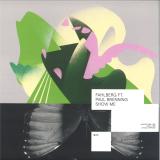
For the 23rd entry in our ICONYC catalogue, we welcome rising Swedish star Fahlberg and his collaborative single with German maestro Paul Brenning, ‘Show Me’. Amped by reworks and edits by Hunter/Game, BAILE, and KEVSKI, our latest delivery is a monumental EP that is bound to awe and inspire in equal measure.
Hinting at something emotionally gripping from the onset, the original version of ‘Show Me’ unfurls over a tight frame as a synthetic bed surges to the front before Fahlberg deploys a thundering bassline. Slowly, we start to sway, making our way to a break in the cloud while Brenning’s ever-alluring vocals glide over the piece in a spectral presence, immersing us deeper into the narrative, as crisp arpeggios make their way through brass swells and backing chords. Blissful, yet exciting at every turn, ‘Show Me’ is a dazzling collaboration that invites us to revel in the possibility of a new, warmer dawn.
Taking ‘Show Me’ in a slightly darker direction, Hunter/Game presents us with their own interpretation, an introspective juggernaut that is constantly evolving as it walks the tightrope between light and shadows like only this acclaimed duo can.
Adding a new layer of depth to this package, BAILE gifts us a wondrous remix that fragments ‘Show Me’ in a different light. Employing broken beats and lush, evocative moments, this softer twist is a mesmerizing creation bound to wash the pain away.
Completing this aural gem that is ‘Show Me’, avant-garde electronic-classical duo KEVSKI unveils an exquisite masterpiece, deconstructing the original skyscraper into a sublime menagerie of textures and melodic flourishes that blossom somewhere between melancholy and hope.
Search:dif
The Goblin Walk is an invitation to trace the footsteps of the eponymous creature through five swampy, dubby, liquid techno interpretations from four different artists. Label head Caldera opens with the gently underlapping space chug of 'Today', followed by Traevor's 'Reef' which turns marimba into a dubbed-out bass meditation. Caldera then features again under his Loop LF alias with 'Tiz', which pairs spectral sonic sketches with whimsical melodies that drift and float as if in a gravity-free zone. Streetfaxx then unearths a long-lost 2013 Cologne track, its patient rhythmic progression untouched by the passing years, before ambient textures take centre stage in Nightwaif's 'Xmas1 (vocal dub)' as tape experiments float over deep sub-bass, caught somewhere between 1980s new age and modern ambient minimalism. A compelling, exploratory world of sound.
Nicolás Mirón presents Hi-Tech Thoughts, his debut release on Echo Alpha Recordings. A record that draws inspiration from Detroit Techno, as well as New York Hip-Hop and MPC culture, reflected in the way he works with samples and programs chops on his AKAI MPC 2500. His production focuses on beat-making, pursuing a raw, hardware-driven sound rather than an overproduced one.
Nico’s creative foundation is rooted in Black music in all its forms, from soul and jazz to electronic sounds, while also embracing the legacy of figures like Kraftwerk, and genres such as Italo Disco, and New Wave. His musical career began with his residency at Radio Relativa in 2022, with his program “Pa’ Riparla Benne”, a connection between skateboarding and music, as well as its evolution and close relationship with contemporary culture. In the show you can hear different styles of music that have appeared within this scene through legendary video parts from skateboarding history, along with stories and curiosities behind these pieces of art.
2026 Repress.
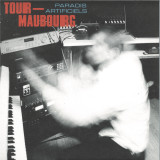
There is with Tour-Maubourg an eternal desire to translate the feeling of love into music. Sometimes cheerful, sometimes melancholy, always exhilarating, the producer, native of Brussels and expatriate in Paris, has continued for 3 years to attract the praise of his peers and the support of a growing audience. The man who was described by Trax Magazine upon the release of his 1st EP as ‘‘one of the most promising producers of the French house scene’’ has revealed himself in this hyperactive new scene to become one of its best standards.
After several EPs released in France on Pont Neuf, FHUO (ie. Folamour’s label), as well as Happiness Therapy or in England and Germany on FINA and Salin, Tour-Maubourg unveils his first album, Paradis Artificiels. The Parisian producer refers to Charles Baudelaire’s poem, to which he links his melancholy music, who wrote:
‘‘common sense tells us that the things of the earth exist very little, and that the true reality is only in the dreams’’.
If the producer’s first EPs were mainly focused on club music, Paradis Artificiels oscillates between the atmospheres that made the success of these previous releases and those of a studio album. Composed of both house songs and downtempo sound researches, always flirting with the jazz sounds that have made the fame of the producer, this first album invites us on a journey in the lineage of St Germain, Massive Attack or Nicolas Jaar.
In spring 2025, Abul Mogard and Rafael Anton Irisarri created the source material for their second album, Where Light Pauses in the Silence of the Sun, during a three-day residency at Morphine Raum in Berlin. Functioning as both recording studio and performance venue, the space has no stage, with the audience gathered around the performers. Working within an open framework, the duo reshaped the music each evening while recording the performances live to multitrack. Rotary speakers, modular synthesizers and bowed guitar formed the core of their sonic language, captured through a 1970s mixing console and microphones placed around the room.
Back in Mogard’s studio in Rome, the material was further crafted as motifs were stretched, fragments isolated, and tempos dissolved. Irisarri recorded additional guitar textures and treatments in New York, while passages recorded by Martina Bertoni and Andrea Burelli in Berlin reinforced the harmonic centres and brought breath, refinement and a new sensibility to their compositions. The process continued as Mogard’s layering and subtraction reassembled everyone’s parts into the final arrangement.
The album opens with “In the Eastern Wild,” building from a sparse outline into a monumental formation of low-frequency weight, its internal motion shaped by the rotating Leslie speaker. “Over the Domes” widens into a broader acoustic field, where sustained modular tones meet waves of softly plucked guitar. The music then turns inward with “A Blue Descent,” centred on Bertoni’s cello, whose growling timbre introduces a melancholic depth.
At the album’s centre, “In a Quiet Radiance” unfolds around a slow guitar ostinato, its luminous stillness opening into a more expansive and reflective state. Across its ten-minute span, Burelli’s violin lines and Bertoni’s lower cello phrases gradually surface, weaving through the harmonic field. Mogard brings Burelli’s processed voice to the fore, its emotive, operatic presence becoming one of the record’s pivotal moments. “Of Blessed Ages” suspends the sonic flow, shifting between parallel major and minor chords as lingering, slowly decaying melodies shape the music’s internal drift. The closing “Among Shadows” settles into a darker resonance as layered textures recede.
Mogard and Irisarri’s shared language balances restraint and maximalism. UK magazine Crack describes the music as “a tidal wave held in suspension,” while Dutch newspaper de Volkskrant writes, “What a colossal sound, and how this music strikes at the emotions.” Reflecting on the residency sessions, Irisarri recalls: “At moments I genuinely couldn’t tell if a sound was coming from me or from Abul. It stopped feeling like two people making decisions and began to feel like we were inside a system moving on its own."
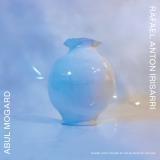
Marja de Sanctis’ cover artwork revisits the vessel sculpture from the duo’s first album, Impossibly Distant, Impossibly Close. There it appeared as raw, unfired clay. Here it has been fired in the kiln and finished with a glaze. Light gathers on its polished surface and spills into the surrounding space. As she explains, “I wanted to convey the idea of continuity within the duo, and the vessel became a kind of container for that idea. However, their music felt different this time, and with the collaboration of Martina and Andrea, I felt it should have a sleeker, softer, more glamorous look, very distant from the first raw appearance.” The transformation of the vessel from raw clay to fired form suggests a passage from immediacy toward permanence, mirroring the music’s gradual expansion.
In spring 2025, Abul Mogard and Rafael Anton Irisarri created the source material for their second album, Where Light Pauses in the Silence of the Sun, during a three-day residency at Morphine Raum in Berlin. Functioning as both recording studio and performance venue, the space has no stage, with the audience gathered around the performers. Working within an open framework, the duo reshaped the music each evening while recording the performances live to multitrack. Rotary speakers, modular synthesizers and bowed guitar formed the core of their sonic language, captured through a 1970s mixing console and microphones placed around the room.
Back in Mogard’s studio in Rome, the material was further crafted as motifs were stretched, fragments isolated, and tempos dissolved. Irisarri recorded additional guitar textures and treatments in New York, while passages recorded by Martina Bertoni and Andrea Burelli in Berlin reinforced the harmonic centres and brought breath, refinement and a new sensibility to their compositions. The process continued as Mogard’s layering and subtraction reassembled everyone’s parts into the final arrangement.
The album opens with “In the Eastern Wild,” building from a sparse outline into a monumental formation of low-frequency weight, its internal motion shaped by the rotating Leslie speaker. “Over the Domes” widens into a broader acoustic field, where sustained modular tones meet waves of softly plucked guitar. The music then turns inward with “A Blue Descent,” centred on Bertoni’s cello, whose growling timbre introduces a melancholic depth.
At the album’s centre, “In a Quiet Radiance” unfolds around a slow guitar ostinato, its luminous stillness opening into a more expansive and reflective state. Across its ten-minute span, Burelli’s violin lines and Bertoni’s lower cello phrases gradually surface, weaving through the harmonic field. Mogard brings Burelli’s processed voice to the fore, its emotive, operatic presence becoming one of the record’s pivotal moments. “Of Blessed Ages” suspends the sonic flow, shifting between parallel major and minor chords as lingering, slowly decaying melodies shape the music’s internal drift. The closing “Among Shadows” settles into a darker resonance as layered textures recede.
Mogard and Irisarri’s shared language balances restraint and maximalism. UK magazine Crack describes the music as “a tidal wave held in suspension,” while Dutch newspaper de Volkskrant writes, “What a colossal sound, and how this music strikes at the emotions.” Reflecting on the residency sessions, Irisarri recalls: “At moments I genuinely couldn’t tell if a sound was coming from me or from Abul. It stopped feeling like two people making decisions and began to feel like we were inside a system moving on its own."
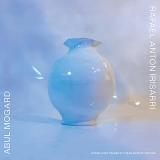
Marja de Sanctis’ cover artwork revisits the vessel sculpture from the duo’s first album, Impossibly Distant, Impossibly Close. There it appeared as raw, unfired clay. Here it has been fired in the kiln and finished with a glaze. Light gathers on its polished surface and spills into the surrounding space. As she explains, “I wanted to convey the idea of continuity within the duo, and the vessel became a kind of container for that idea. However, their music felt different this time, and with the collaboration of Martina and Andrea, I felt it should have a sleeker, softer, more glamorous look, very distant from the first raw appearance.” The transformation of the vessel from raw clay to fired form suggests a passage from immediacy toward permanence, mirroring the music’s gradual expansion.
In spring 2025, Abul Mogard and Rafael Anton Irisarri created the source material for their second album, Where Light Pauses in the Silence of the Sun, during a three-day residency at Morphine Raum in Berlin. Functioning as both recording studio and performance venue, the space has no stage, with the audience gathered around the performers. Working within an open framework, the duo reshaped the music each evening while recording the performances live to multitrack. Rotary speakers, modular synthesizers and bowed guitar formed the core of their sonic language, captured through a 1970s mixing console and microphones placed around the room.
Back in Mogard’s studio in Rome, the material was further crafted as motifs were stretched, fragments isolated, and tempos dissolved. Irisarri recorded additional guitar textures and treatments in New York, while passages recorded by Martina Bertoni and Andrea Burelli in Berlin reinforced the harmonic centres and brought breath, refinement and a new sensibility to their compositions. The process continued as Mogard’s layering and subtraction reassembled everyone’s parts into the final arrangement.
The album opens with “In the Eastern Wild,” building from a sparse outline into a monumental formation of low-frequency weight, its internal motion shaped by the rotating Leslie speaker. “Over the Domes” widens into a broader acoustic field, where sustained modular tones meet waves of softly plucked guitar. The music then turns inward with “A Blue Descent,” centred on Bertoni’s cello, whose growling timbre introduces a melancholic depth.
At the album’s centre, “In a Quiet Radiance” unfolds around a slow guitar ostinato, its luminous stillness opening into a more expansive and reflective state. Across its ten-minute span, Burelli’s violin lines and Bertoni’s lower cello phrases gradually surface, weaving through the harmonic field. Mogard brings Burelli’s processed voice to the fore, its emotive, operatic presence becoming one of the record’s pivotal moments. “Of Blessed Ages” suspends the sonic flow, shifting between parallel major and minor chords as lingering, slowly decaying melodies shape the music’s internal drift. The closing “Among Shadows” settles into a darker resonance as layered textures recede.
Mogard and Irisarri’s shared language balances restraint and maximalism. UK magazine Crack describes the music as “a tidal wave held in suspension,” while Dutch newspaper de Volkskrant writes, “What a colossal sound, and how this music strikes at the emotions.” Reflecting on the residency sessions, Irisarri recalls: “At moments I genuinely couldn’t tell if a sound was coming from me or from Abul. It stopped feeling like two people making decisions and began to feel like we were inside a system moving on its own."
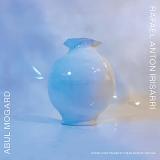
Marja de Sanctis’ cover artwork revisits the vessel sculpture from the duo’s first album, Impossibly Distant, Impossibly Close. There it appeared as raw, unfired clay. Here it has been fired in the kiln and finished with a glaze. Light gathers on its polished surface and spills into the surrounding space. As she explains, “I wanted to convey the idea of continuity within the duo, and the vessel became a kind of container for that idea. However, their music felt different this time, and with the collaboration of Martina and Andrea, I felt it should have a sleeker, softer, more glamorous look, very distant from the first raw appearance.” The transformation of the vessel from raw clay to fired form suggests a passage from immediacy toward permanence, mirroring the music’s gradual expansion.
Maazn returns for its second release, Day Walker EP, featuring prolific French producer BOOH. Co-founder of BOOOoo! Records, alongside his sister Bousti, BOOH has taken a different direction for Day Walker EP, carefully crafting a unique balance between light and darkness. Electro leaning robotic vocoder samples and thumping basslines dominate the A side, with both Consequence and Magnetic System prepped to test the limits of any soundsystem.
The B-side follows a similar, but more introspective style, with title track Day Walker's slower pace and earworm synths more suited to hazey afters in forgotten corners. Kiss Me Goodbye closes out the EP with funk tinged acoustic bass sounds, married to driving EBM style drums that will even get your grandmother up and out of the chair.
Group Rhoda returns to Dark Entries with Phase 5, a new LP of synthesizer-driven art-pop. An integral member of the West Coast electronic music scene, Mara Barenbaum has been writing, performing, and plunging into oneiric depths as Group Rhoda since 2009. Barenbaum’s songcraft is at once stylistically diffuse and laser-focused, a synesthetic approach that allows her to effortlessly glide between genres and soundworlds while centering her singular poetics. On Phase 5, her fifth LP as Group Rhoda, we find Barenbaum waxing nondualistic. Lines between fairytale and fact, between nature and art, between subject and object all dissolve under contemplation.
The songs on Phase 5 are perpetually in-between states, deftly shifting form at the blink of an eye. With sleight of hand, “Field Tone” transmutes from brooding John Carpenter-esque electro into vocoder-driven space disco. “Dragon Pine” darts from cosmic dub to cybernetic dancehall and back again. The uptempo darkwave-leaning number “Aeolian Crossing” dissolves into the void, like sand falling through one’s fingers, like a retreating wave. The cover artwork for Phase 5 is by Shawn Reed, and features purple lilies and light refracted through water. All songs on this album were mastered by Ruud Lekx. The digital version of Phase 5 will be released via Katabatik, a label and sound system that Barenbaum has had close ties to for the past decade.
The new album by the collective that for
over 25 years has been among the most
representative names of the Italian dance
and electronic scene worldwide.
“BLOOOM”, this is the title of the new release,
will be available in all traditional stores and
on digital platforms starting January 16.
Set against the soundscapes that have become
the Planet Funk trademark, the lyrics by Dan
Black attempt to give voice to a fragile and
contradictory condition of our time: an
intensified sensitivity that, instead of
turning into openness and connection, often
becomes emotional overload. A generation
constantly overwhelmed by excessive stimuli,
relentless information, anxieties, and fears,
called upon to find its way in a world thaoffers neither pauses nor silence. In this paradox, sensitivity is no longer just a natural gift, but
a daily effort: staying open and receptive without being overwhelmed, trying to preserve a human and
vulnerable gaze in order, despite everything, to fully appreciate life and the present moment.
The single’s artwork—like that of the album—curated by Nationhood, visually conveys this tension: the
distant sirens of a city that amplifies feelings of disorientation and loneliness even when we are
surrounded by thousands of people.
“BLOOOM”, preceded by the single “FEEL EVERYTHING”, arrives at the end of an intense, creative year
full of music, which saw Alex Neri (DJ, keyboards, synthesizers), Marco Baroni (keyboards, piano,
programming), Dan Black (vocals and guitar), and Alex Uhlmann (vocals and guitar) engaged between
studio work, collaborations, and live performances in Italy and abroad. A journey that today
transforms into new energy, into an even more open vision oriented toward the future.
Exactly one year ago, PLANET FUNK released “Nights in White Satin”, a single that reached the top
positions of the radio charts and launched a season rich in concerts and DJ sets in Italy and around
the world. The subsequent “I Get a Rush”, the collaboration with Alfa and Manu Chao on the remix of
their hit “A me mi piace”, and the track “È Naturale” together with Francesca Michielin, confirmed
Planet Funk’s ability to renew themselves and engage with different musical worlds while always
remaining true to their own identity.
Throughout this journey, music has inevitably intertwined with life. The memory of Sergio Della Monica
and Domenico “Gigi” Canu, pillars and founding souls of the PLANET FUNK project, is a living part of
this new chapter. Their vision, creative spirit, and way of understanding music continue to be a
constant guide, a deep root from which new ideas and new directions can grow.
“BLOOOM” is also this: a personal and artistic blossoming that, starting from the legacy left by
Sergio and Gigi, transforms into a living process of growth, metamorphosis, and discovery. An album
that does not look back with nostalgia, but forward with awareness, momentum, and a desire for
renewal.
Founded in 1999, for over 25 years PLANET FUNK have represented one of the most important, solid, and
influential realities in the international electronic music scene. Born from the meeting of Souled
Out! (Domenico “GG” Canu and Sergio Della Monica) and Kamasutra (Marco Baroni and Alex Neri), and
following their debut with “Non Zero Sumness” in 2002 (a gold record and a turning point for the
band), PLANET FUNK have managed to reinvent themselves over time while maintaining a unique sonic
identity. This has led them to collaborate with internationally renowned artists, deliver iconic
performances around the world, create soundtracks and international advertising campaigns, and
continue to demonstrate constant creative vitality
Drumcomplex & Frank Sonic open their world once again, but this time they let others walk through the same shadows. The remixes of the Lost Echoes album feel like wandering through rooms you can only enter in your mind: quiet, flickering, suspended somewhere between a club night and introspective silence. These remixes are a quiet glance into four mirrors, each showing a different fragment of the same story. A subtle nod to those nights you feel more than you can ever describe.
Efficient Space continues to bind its mind with Altered States Tapes, offering another service to How So?, Th Blisks' 2022 debut in home-cooked experimentation. A blurring of three vastly different heads into a single disjointed, but fluid organism, How So? finds Yuta Matsumura (The Lewers, Keanu Nelson), Amelia Besseny (Troth, Impatiens) and Cooper Bowman (Troth, CD3) working with vocals, melodica, deeply pulled samples, guitar, drum machine, synths and resourceful percussion. An Elixa-blueprint of sideways ambient rituals, fog-thick melodica dub and paranoid trip hop by way of Sydney's pioneering industrial collagists, the LP recirculates beyond its original 150-copy confines for those who missed its first apparition.
Andreas Tilliander returns to Kontra-Musik in a grand style with his second TM404 album. Titled 'Acidub', this highly anticipated release is much more of an evolution than a repetition of the first superbly self-restricted album, where Tilliander even decided to use only one of the two Roland TB-303 waveforms. Acidub is a more playful and open listening experience, no doubt inspired by his extensive live touring with the TM404 concept. In fact, you can almost hear Tilliander's flock of acid machines breaking free from the restrained modus operandi. Every sound is like a migratory bird with a heart yearning for high altitude and favourable winds. The opening track Alinge paints a lucid picture of these acid birds leaving a cold industrial landscape behind, the flickering black shadows from their wings against the white smoke rising from a forest of chimneys below. The very last seconds of Alinge even echo of the place the silver birds are longing for, but that will remain a secret between Kontra-Musik and the avid listener. Sufficient to say, we can follow these birds of passage as they're heading south towards a warmer climate, fleeing the cold discipline of the North. Mutron Mantra, for instance, brings us to a rainforest full of serpentine lianas, giant leaves dripping with moist and green pools of water bubbling with organic life. Don't Defend Mascot guides us through a steaming savannah at dusk with hundreds of yellow eyes following our every step while Pade vividly describes the perils of the flight and the pace and courage needed to press on. In all, Acidub is a surprisingly exuberant follow-up to the more introspective TM404 album. But while the musical journey of this second album is quite different, the experience of sheer aural eminence remains the same. Andreas Tilliander has done it again, and Kontra-Musik couldn't be prouder.
nagoyaka na kaze / 和やかな風 (quiet wind): a collection of forward-thinking electronic experiments sourced from central Japan - co-curated by Nagoya artist abentis for Facta & K-LONE’s Wisdom Teeth imprint.
The project profiles a close-knit community of music makers operating in and around the Japanese city of Nagoya: one of the country’s most populous and industrial cities, but one all too often overlooked in terms of its cultural significance.
Curated in close collaboration with local scene organiser Yuya Abe - aka abentis - the record seeks to capture the creative energy of a community of artists making hard-to-define, future-facing electronic music away from the clamour of the bigger cities. “In Nagoya, there’s a strong culture of supporting artists. Even if you pursue music in your own way, as long as it’s good, you’re encouraged to keep doing what you want”, explains abentis. “Within that environment, my generation has been able to freely bring in elements we like from all kinds of genres, combine them in our own way, and express ourselves individually. If you go to Tokyo or Osaka, that kind of freedom isn’t something you can take for granted.” Spiritually, Nagoya fits the mould of cultural hotbeds like Bristol, Detroit or Melbourne, showing that some of the most innovative creative communities form away from the glare of the capital cities. Like Detroit, Nagoya is principally known for being a major auto manufacturing hub, famous for being the home of Toyota Motors - but behind the scenes, it is quietly harbouring one of Japan’s most vibrant and forward-thinking electronic music scenes. “In a good way, Nagoya is a bit removed from the cutting edge, so you find people making all kinds of music”, explains Karnage. “If you’re making music, you feel like part of the crew, and people of different ages mix together without much hierarchy.” The city’s music scene is characterised by a freedom to mix genres and an open-door approach to creatives of all disciplines. The artists featured come from a diverse set of backgrounds, ranging from hip-hop to noise music, but have found a common collective identity in their omnivorous approach to genre. As such, the record moves fluidly between shimmering ambient and new age (Am Shhara, DHYAN, daiki hayakawa), psychedelic minimal house (Methodd, abentis), abstract, low-slung downtempo (baptisma, Nasty Soupman) and spaceage steppas (Karnage). “I’d say the way ambient, new age and that kind of sound design are blending nicely with dance music feels somewhat new”, says baptisma, the crew’s eldest member and de-facto scene leader. Responsible for bringing artists like Basic Channel, Mala and Jan Jelinek to the city, baptisma has been crucial in establishing underground electronic music in Nagoya since the 90s, and now helps cultivate the next generation of local talent. “Artists and DJs are seamlessly mixing ambient and new age with techno, house and bass music. I think that’s a really interesting development.” nagoyaka na kaze has its roots in a one-off event held in October 2024 as part of the 10 Years of Wisdom Teeth Japan tour. Curated by abentis in collaboration with Facta & K-LONE, the showcase featured live sets from eight artists based in and around Nagoya at one of the city’s key dance music hubs, Club JB’s. Each of the artists features again here, on record, presenting an original commission produced especially for the project. The record’s art direction was led by Yudai Osawa - in-house designer for Kankyō Records, the much-loved Tokyo record shop run by H. Takahashi - and features original photos by Hayato Watanabe.
Hearts and Minds is a new vinyl-only label founded in 2025 by house-head Rich Carrick, named after his Northern UK club night of the same name (co-founded with DJ partner Rayees), and dedicated to showcasing the finest underground artists old and new who have influenced him over the past 30 years. First up is a hero of the scene who carries on his tradition of making 'sublime, sophisticated machine music' with something a little different, in the form of two deep chuggers that will sound equally as good on more discerning dance floors, or on home systems. Lead track 'Acid Cry' brings to mind the menacing, string-laden intensity of Underworld's 'Dark and Long', while the flip-side 'Feel That Vibration' is an uplifting euphonic workout reminiscent of a Spirit Catcher composition. The quality is, unsurprisingly, high, and there are more exciting releases planned for the near future. Definitely one to watch!
Janeret present Orizon, With his new record label, Janeret opens the door to a world of unrestricted sound. A label that thrives on variety, mixing styles while providing a platform to artists who resonate with his vision. Orizon001, Mantrax EP is dedicated to the different spectrum of house music to a deep dive into atmospheric Drum & Bass. ,
Based in Rennes and founder of the Vives label in 2020, Weever has been exploring the interplay of light and shadow for over 10 years, crafting abstract soundscapes and textured sonic tunnels of unparalleled musical breadth. He elegantly blends industrial and baroque sounds to construct sonic cathedrals. His music is both utterly raw and meticulously crafted.
L’âge de la Galère :
started this EP in 2020. At the time, I had just finished my studies, it was a pretty difficult period and I had made a track, or rather a melody, that I thought was amazing. I held onto it all these years without ever releasing it. 2020 was a tough year overall. The big question was: What am I going to do with my life? Hence the title L’âge de la Galère
The title really started to make sense when I began putting tracks together for Micheal. Around that time, I was reading Those of 1914 by Maurice Genevoix. For those who don’t know it: it’s written as a journal and tells the story of the author and his fellow soldiers in the trenches during World War I.
I’ve always been passionate about the two World Wars, I watch every film, old and new, I listen to the soundtracks, and so on. Same with period films, especially medieval ones. I love drawing inspiration from them.
So naturally, I imagine and create around that. It comes easily because it’s always been my universe. And when I make music, those kinds of images inevitably come out, even subconsciously.
So I created and told an audio story through my 6 tracks.
“It’s 1914. The story of many men who, upon hearing the sound of the bells, are met with the announcement of a war like no other. Most of them are young, some very young, and they are drafted into the French and German armies. They have no military experience, and the first battles are so violent that many won’t make it back. Very few will earn the glory they deserve.
The conditions are appalling, everything is in short supply, and the men are exhausted. Still, they must hold on.
Leaving carelessly from beneath their mothers’ skirts, too few returned. Many were left traumatized, and an entire generation was forever changed.”
‘Desire’ is the sophomore full-length album by TLF Trio, following their beloved debut album ‘Sweet Harmony’ from 2022. On ‘Desire’, the group presents their signature, contemporised chamber music through their main instruments: piano, cello and electric guitar; now enhanced by a pervasive use of sampling and a distinct use of silence as musical material.
The album is an aesthetic voyage in a musical landscape of minimalism, classical music, free improvisation, left-field-electronica, and references to pop and house music. It blends into a sound that is experimental and unpredictable – yet at the same time strangely familiar and self-explanatory.
The ten pieces balance an open-ended improvisational intimacy with a tight compositional intention. Each track's repetitiveness operates as a trickling plateau of layered sentiments of times and spaces through the sampling of different acoustic rooms, the playing in specific styles and the curated selection of sounds and instrumentations; a collage of memories and associations patched together to create new meanings.