"These Exit Times" is the name of a newsletter sent by an environmental organisation advocating the extinction of the human race as a solution to save the planet. When Victor Ramirez first came across the group on the internet a couple of years ago, it brought a smile to his face. But after some pondering on the subject, he decided that "Exit Times" would be the name of his sensational third album as Ramirez Exposure.
The record started to take shape in early 2020, after a musical hiatus that had lasted a year. It had been somewhat of a dark period, and Victor felt it was time to go back to recording songs. It would be the first time he would be doing so at home. He had managed to set up a small studio that would allow him to make some proper recordings, and without having to use a computer. He'd also started a new job, as an orderly in a hospital, which gave him time to record and cash to pay the rent.
Victor was ready to take on the task of making the album with the help—albeit from a distance, this time—of Ken Stringfellow (Posies, Big Star) and Brian Young (Jesus & Mary Chain, Ivy, Fountains of Wayne), both regular accomplices of the Valencian in production and instrumentation. Working with the two of them feels very natural for him, even though they are in three different countries.
Looking back, it seemed as if he'd prepared himself for what was coming.
And so, the pandemic happened, and Victor found himself turning the ideas he had outlined on his phone into the songs for Exit Times. He was in a good place, personally and, despite the situation, he was happy to be able to contribute to society through his job at the hospital and, after coming home, to concentrate on his music and isolate himself from everything else.
Gradually, the sketches turned into luminous songs, with bright harmonies and lyrics that exude a fine irony. Victor admits that he strives to be a good pessimist every day, and the songs reveal a way of understanding life that relativises almost everything in order to stick with what's really important. This subtle sense of humour in the lyrics, like the luminosity of his music, is vintage Ramirez, and is present throughout the album, and even on the cover. The artwork is a painting by German painter Angela Dalinger, depicting Victor himself, their dog, Colombo, and some meaningful objects. The vinyl record featured is George Harrison's Brainwashed.
Exit Times is a shiny collection of songs with a universal vocation, bathed in sunshine pop with touches of new psychedelia. All simmered under the Mediterranean sun—the same sun that illuminates the entire planet.
Поиск:differ ent
Все
Here is the the effortless work of a band entirely confident in their own craft - the consolidation of nearly three decades of peerless songwriting and almost telepathic musicianship amongst the band's three founder members: Norman Blake, Raymond McGinley and Gerard Love. Recorded with the band’s soundman David Henderson alongside regular drummer Francis Macdonald and keyboard player Dave McGowan in three distinctly different environments (initially at Vega in rural Provence, then at Raymond’s home in Glasgow before mixing at Clouds Hill in the industrial heart of Hamburg), it’s a record that embraces maturity and experience and hugs them close.
As ever, song-wise the Fanclub present a textbook representation of democracy in action, the record offering four each by Blake, Love and McGinley. From the almighty chime of opener I’m In Love through The First Sight’s ecstatic soul-search and the paean to unerring friendship With You, Here is a a collection of twelve songs about the only things that truly matter - life and love.
Teenage Fanclub will be touring the UK extensively throughout the Autumn, including two London shows – Islington Assembly Hall and Electric Ballroom – both of which sold out within days of going on sale. Glasgow's finest will also be making an exclusive appearance at this year's End Of The Road festival in early September.
Toronto’s PACKS make music that’s like leafing through a diary entry of a time without visible movement, a subtle beauty that appears only when paying close attention. The band’s debut is a collection of songs that marry the loose but incisive jangle of early Pavement with the barbed sweetness of Sebadoh and the wideeyed wonder of the first Shins LP. Written in two different settings, between the city limits of Toronto where Link was living in 2019, and the Ottawa suburbs where she was quarantined with her parents in the spring 2020, both remain complementary emblems of selfreflection and wry observation of the mundanity of daily life. Packaging: LP Printed Inner Sleeve
Etruria Beat founder Luca Agnelli unveils his long-awaited debut album, ‘Source Drops’ – presenting a ten-track journey through techno and beyond.
A name at the centre of Italy’s rich house and techno scene for over a decade, Etruria Beat head-honcho Luca Agnelli continues to showcase his talent as a leading DJ, producer and label boss on the international stage. With releases via a host of globally renowned labels, plus standout remixes including Moby’s iconic ‘Porcelain’, the Tuscany native’s reputation has seen him become of the genre’s leading artists when combining energetic, entrancing productions throughout his powerful DJ sets. Yet, the core of his work has always found a perfect home on his own Etruria Beat imprint, with July now welcoming the arrival of his highly-anticipated debut album ‘Source Drops’ – an in-depth musical story presenting growth, development, self-reflection and raw emotions via a collection of ten tracks ranging from powerful peak-time anthems through to EBM influenced cuts and slower, hypnotic productions.
“This is the journey that traces my musical evolution of the last 20 years, discovering more conceptual, deeper musical territories; taking inspiration from what influenced me in my career as a DJ and from my continuous research without musical barriers. A journey always in equilibrium, at times dark and sharp, solar and fluid, that develops a different creative vision in each track trying to convey my most intimate and strongest emotions". – Luca Agnelli
Opening via the slow-blooming builds and atmospheric and waves of ‘Black Mirror’, before diving into the heady and menacing tones of ‘Mutant Circle’, the ten-track project quickly showcases a wide-reaching range of influences and nuances central to Agnelli’s development as an artist over his career. Productions such as ‘Balance’ and ‘Oxigen’ contrast with one another whilst bringing space to proceedings, guided by breaks-influenced percussion, minimal arrangements and warping leads, whilst the driving ‘Resistance’ harnesses classic techno tendencies to provide an energetic and lively, snaking journey through rich soundscapes.
Title cut ‘Source Drops’ brings that trademark Luca Agnelli energy to the heart of the project, merging scintillating melodies, acid-tinged stabs and icy hats to unveil a high-octane ride into the peak-time, whilst ‘Raw Surface’ keeps the tempo high with sweeping leads, oscillating basslines and resonant lasers. Next, ‘Omega’ spirals into an off- kilter ride through glitchy echoed vocals, crunchy percussion and rumbling low-ends, with the epic ‘Losing Control’ welcoming an infectious lead melody at its core guided by punchy kicks and slick drum licks. To close, the package veers to an eerie yet ethereal close as hazy, celestial vocal chants meet panning sirens and swooping electronics – punctuating an expansive and diverse offering from the Italian favourite and shaping up an impressive debut LP in the process.
“Montreal’s genre-defying post-rock combo BIG|BRAVE could very well be the most noteworthy recent heavy curiosity to come out of the city in recent years.” - NOISEY
“…combines elements of Björk, Neurosis and Sunn O))) into a cohesive whole; but this whole is an ever evolving and challenging sonic mass.
- THE QUIETUS
Minimalism and instinct, structure/freedom and meticulous timing form the cornerstones of their precise, rhythmical sound.
Lyrically, the album explores the weight of race and gender, endurance and navigating other people’s behaviours, observation and protest. The band further comment “this album involves what it means navigating the outside world in a racialized body and what it does to the psyche as a whole while finding individual worth within this reality.”
This time featuring the core trio Robin Wattie, Mathieu Ball and Tasy Hudson, for their most collaborative record they’ve made so far. The band elaborate “having cut our teeth in very different musical backgrounds respectively, our intuitions vary, which has an interesting effect on our individual approaches and ears.”
For this record, BIG | BRAVE once again made the trek down to Rhode Island to record with Seth Manchester at Machines with Magnets. They remark “we fully trust his instinct as an engineer and his creative output, getting to experiment with textures, concepts, layers, and with pretty much every single recorded sound, the process of making records with Seth is an absolute journey and pleasure.”
With the initial seeds planted in 2012, with no other goal than simply experimenting with the instruments in their possession, Robin Wattie and Mathieu Ball started writing subtle ambient/minimalistic folk songs together. When long time friend Louis Alexandre Beauregard joined on drums, the goal still remained to play as tranquil as possible. After an incident where Wattie’s acoustic guitar broke, and having borrowed a friend’s electric as a replacement, larger amps that Ball had in storage from previous bands started to get incorporated to the outfit. Now with amplitude as a compositional tool, BB never lost interest in the power of minimalism and fragility. It became clear that loud volume would become just as effective as the lowest possible ones and the juxtaposition of both would become something BB still uses as their main MO to this day.
After self-releasing Feral Verdure in 2014, the band had the opportunity to open for Thee Silver Mt Zion in Montreal QC. After which, Efrim Manuel Menuck found something meaningful in the members and the band and invited them to open on future shows with Mt Zion and with Godspeed! You Black Emperor.
In 2015, the band entered the studio with Menuck and recorded “Au De La”. With no home for the record, they decided to take a chance in writing to Southern Lord. As luck would have it, Greg Anderson happened upon their email among hundreds and responded. Since then, the band has had a home with Southern Lord Records. (Along with Au De La, Southern Lord has released Ardor in 2017, A Gaze Among Them in 2019 and VITAL in 2021).
After Beauregard’s departure in 2018, the band traveled down to Rhode Island with Loel Campbell on drums to make a first record with Seth Manchester at Machines with Magnets. After the album’s release, with Campbell unable to tour, Tasy Hudson joined the ranks and the band spent most of the year touring their 2019 album “A Gaze Among Them”.
In 2020, the core trio of Ball, Wattie and Hudson once again made the trek down to Machines with Magnets to record their 5th LP “VITAL”.
Since their inception, the band has had many honours and privileges of touring a number of times in North America and Europe with bands such as Sunn O))), MY DISCO, The Body, Thou, Primitive Man and Thee Silver Mt Zion.
The Spaces Between were formed out of creative studio sessions in the summer of 2020 and comprises of bona fide house legend Terry Farley, electronic music producer Wade Teo and renowned author and co-owner of Club Chi’ll Records, Ian ‘Snowy’ Snowball. The idea for ‘Ghosts’ came from Terry’s idea to reference the Jazz greats who have gone to glory leaving behind their astonishing musical legacies. Within days of emailing a comprehensive list of jazz artists to Chicago House luminary and The It/ Jungle Wonz member, Harry Dennis, an answer with Harry’s sparse, haunting vocals was received. These were laid down over a bed of live instruments and electronic sounds and the combined talents of The Spaces Between created the compelling jacking jazz vibe of ‘Ghosts’.
Snowy ran the track past Jo Wallace at F*CLR Records – it was love at first listen. Jo suggested the track should be part of an EP with remixes from the newly reformed Black Science Orchestra. It was agreed and provided an ideal opportunity for Ashley to work with Terry once again, reinforcing the Junior Boy’s Own heritage.
The first incarnation of Black Science Orchestra began life in 1992 when Ashley Beedle joined forces with Rob Mello and their debut release, ‘Where were you’ exploded onto the global dance scene via the iconic UK house label JBO. Broken in the US by the Godfather of House, Frankie Knuckles, ‘Where were you’ entered into the hallowed halls of immortal dance music. Black Science Orchestra has become one of the most respected deep house acts of the 1990s, with the revered album ‘Walter's Room’ and the legendary genre crossing 'New Jersey Deep' track that is considered one of the top dance tracks of all time and rarely leaves discerning DJs' record boxes. Fast forward 29 years and original BSO founding fathers, Ashley and Rob decided that both they and the world needed the sound of Black Science Orchestra again and decided to reform, inviting long time musical and studio accomplice Darren Morris to join the collective now in its 6th incarnation!
When presented with the original version of ‘Ghosts’, Rob, Ashley and Darren loved it and all heard various ways it could be reworked in a true Black Science Orchestra way. Donning their pandemic production hats and remotely getting their feet back under the studio desk again, they worked together to create distinctly different remixes ranging from the deep, spacy electronic to the tough and psychedelic sleazy funk. With original BSO productions included on this EP, 'Ghosts' has helped square off the circle and the Black Science Orchestra conductors are back and mean dance floor business!
- A1: Wolfgang Dauner - Output
- A2: My Solid Ground - The Executioner
- A3: Association Pc - Scorpion
- B1: Fritz Muller - Fritz Muller Traum
- B2: Exmagma - It's So Nice
- B3: Anima-Sound - It Loves Want To Have Done It
- C1: Tomorrow's Gift - Jazzi Jazzi
- C2: Out Of Focus - See How A White Negro Flies
- C3: Brainstorm - Snakeskin Tango
- C4: Thirsty Moon - Big City
- D1: Gomorrha - Trauma
- D2: Brainticket - Black Sand
With his ongoing commitment to like-minded archivist label Finders Keepers Records, industrial music pioneer Steven Stapleton further entrusts us to lift the veil and expose “the right tracks” from his uber-legendary and oft misinterpreted psych/prog/punk peculiarity shopping list known as The Nurse With Wound List.
Following the critically lauded first instalment and it’s exclusively French tracklisting both parties now combine their vinyl-vulturous penchants to bring you the next ‘Strain Crack & Break’ edition which consists of twelve lesser-known German records that played a hugely important part in the initial foundations of the list which began to unfold when Stapleton was just thirteen years old.
From the perspective of a schoolboy Amon Düül (ONE) victim, at the start of a journey that commenced before phrases like kosmische and the xeno-ignant Krautrock tag had become mag hack currency, this compendium is devoid of the tropes that united what many would accurately argue to be the greatest progressive pop bands in Europe
(namely CAN, Neu! and Kraftwerk) and rather shatters the ingredients across a ground zero landscape for both inquisitive fans and socially rehabbing musos to begin to assemble a unique self-styled identity. If Krautrock was the music that journalist told us lurked behind schlager (German pop) in the 1970s, then this record includes the music that skulked behind Krautrock and perhaps refused to polish its backhanded name belt.
Including lesser-known artists like the late Wolfgang Dauner, whose career proceeded and outlived the kosmische movement while consistently informing and outsmarting them whenever they got stuck in their metronomic ruts, or how about Fritz Müller, the man who
was to Kraftwerk what Stuart Sutcliffe was to The Beatles but had more in common with Yoko and quite rightly couldn’t give a stuff about the Fab Four’s Hamburg roots.
Elsewhere we have a plethora of German bands made for German audiences as they try and shed secondhand flower power Americanisms and feel the benefits of much harder drugs and the realisations of difficult second album budgets while Kommune 1
newsflashes wipe smiles from everybody’s faces and replace them with opioid chic or acid-sarcastic grins. Bonzo Cockettes show us their Big Muffs and drummers ask for extra mics while Conny Plank goes for parliamentary office and gives babies good firm handshakes for the camera.
‘Strain Crack & Break: Volume Two’ is the sound of Steve Stapleton’s sponge-like mind and the dividends of anyone who was brave enough to even peek inside those brick-thick gatefold covers never mind drop the needle.
Over forty years since Nurse With Wound’s first album was released, Finders Keepers Records and Steve Stapleton take connoisseurs of our kind of music back to the disused elevator shaft towards ground zero. Arriving at the same checkout from different departments, Finders Keepers and Nurse With Wound continue to sing from the same hymnal with this ongoing collaborative attempt to officially, authentically and legally compile the best tracks from Steve’s list, where many overzealous erds have faltered (or simply, got the wrong end of the stick).
After ‘Strain Crack & Break: Volume One’ merely scratched the surface of this DIY dossier of elongated punk-prog peculiarities, this second lavish metallic gatefold double vinyl compendium drives a much deeper groove which, in accordance with Steve’s wishes, focusses exclusively on individual tracks of German origin - the country whose music forged the prototype of the NWW inventory in the form of his secondary school vinyl wantlist in the early 1970s, comprised of disassembled free jazz, unshowered stoner psych, hypnotic prog, deranged monk funk and fuzzed out Deutschmark bin bonzo beats.
For BRZ45087 we present a split release comprised of two tried-and-tested favourites from the Mr Bongo record bag.
Rio-born pianist and organist Lafayette’s career started in the mid-60s and saw him become a prominent member of the Brazilian musical movement entitled 'Jovem Guarda’. For his inclusion on this selection in the Brazil45 series we move things along a few years to 1982 and the Brazilian boogie gem 'Sol De Verão'. Taken from his album 'Edição Especial’ and originally released on Copacabana Records, 'Sol De Verão' was written by Jorginho Gomes from one of Brazil's greatest bands Os Novos Baianos. It's a superb slice of 80s boogie/funk brilliance with a super catchy ear-worm of a vocal - definitely one for the dancers!
For the flip, we include an absolute monster from the fantastic Marisa Rossi, who we featured previously on number 38 in the Brazil45 series. 'Quem Vem Lá’ is a heavy driving Samba Rock / MPB groove track with female and male call and response vocals. Originally released on a very rare and exclusive 7" also on Copacabana Records, but this time in 1971. Marisa would go on to work with the legendary Arthur Verocai in the 1980s.
Two very different slices and styles of Brazilian music, but both absolute gems.
Perila (Aleksandra Zakharenko) left her native Russia six years ago, landing in Berlin. Finding her place almost immediately - first at Berlin Community Radio and through that amongst a group of like-minded creative individuals (including her current flatmates Special Guest DJ and exael) - she started a regular practice of working on an expressionistic "sonic diary" of field recordings and electronic sound research for her own pleasure. When the opportunity arose to create her own podcast series, WET (or Weird Erotic Tension) was born. Upon hearing her evocative and atmospheric music layered with friends Nat Marcus and Inger Wold Lund's erotic spoken word poetry, Sferic Records asked to release it, and Perila - a project name originally used for her BCR show - truly came to be. Aleksandra, who was raised in St. Petersburg, has been involved in music since childhood thanks to her melomaniac father. She's been both drummer and singer in local bands in Russia, and is also the co-founder of radio.syg.ma - one of the first online stations in Russian focusing on experimental sounds - but Perila is something else entirely. You could loosely describe it as ambient, but her soundworld is so specific and transportative, filled with detail and movement, it's more akin to hauntological musique concrète, touched by song. Her fascination with voice and language - she studied English literature at university - is still evident, although that's now her voice, her texts, her crooning you can hear on the Everything Is Already There cassette (Boomkat Editions, 2020), her processed breaths on the Meta Door L cassette (Paralaxe Editions, 2020). The Wire Magazine got it right when they said about Irer Dent that, "Sensuality is presented as a secret pass to a higher consciousness." For her debut album, How Much Time it is Between You and Me?, released via Smalltown Supersound on June 11th, Aleksandra takes inspiration from the concept of time, which she felt keenly during the pandemic. Recorded primarily in September 2020 in a rural village in France - her only travel during the first year of the pandemic period - surrounded by mountains but otherwise alone with no internet, her perception of time there differed immensely. She describes the trip as, "an immersive experience into self," viewed through a "silence prism" where everyday sounds usually ignored felt amplified. While her work has always dealt in intimacy - be it the private thrills of WET or the audible closeness of our surroundings - the organic response and consistent feedback she gets for Perila made Aleksandra recognize a longing, a need for it in today's world. Intent on creating work based in honesty and tenderness, Perila's practice also explores how we feel music and emotion throughout the body and how sound can help to release it. How does the sound enter a body and travel through it? Where does movement start? How do you reach and unblock emotional clusters with the help of sound and deep listening of the body responses? Aleksandra likes to describe her music and performances as trips - thick narratives drifting along sound to get closer to self. Let Perila guide you through this journey.
- 1: Bonjour Klaus - Jeff Özdemir & Daniel Raymond Gahn 03:58
- 2: He's A Woman - Jeff Özdemir With Knarf Rellöm & Dj Patex 03:51
- 3: I Follow My Heartbeat - F.s.blumm & Jeff Özdemir 0:25
- 4: Saatler, Dakikalar Ve Saniyeler Gelip Geçiyor - Jeff Özdemir & Ertan Doğancı 02:29
- 5: Kleistpark - Vackrow 04:22
- 6: Love Letters - Jeff Özdemir & Joanna Gemma Auguri 03:31
- 7 52: Nd Street Und Dann Die Erste Rechts - Jeff Özdemir 05:14
- 8: Campagne (Band Version) - Désolé Léo 04:46
- 9: Disco - Beige Gt 03:40
- 10: Losin' - Jeff Özdemir & Zap 04
- 11: Complètement Perdu - Jeff Özdemir & Alexandre Thiercelin 02:18
- 12: Zu Viele Erinnerungen - Otto Von Bismarck 08:23
- 13: That's Not What Friends Are For - Jeff Özdemir's New Hard Drive 02:58
- 14: Bremerhaven, Das Kann Ich Dir Nicht Antun - Jeff Özdemir 03:26
- 15: The Day - Eng°N Featuring Jeff Özdemir 05:43
- 16: Güneș - Jeff Özdemir & Treetop 01:51
- 17: Bored - Elke Brauweiler & Jeff Özdemir 04
- 18: Die Quelle Von Hermidas - Jeff Özdemir With Elmer Kussiac 02:19
In the past years, the multi-instrumentalist, composer, producer and music enthusiast Jeff Özdemir had been focusing on organising the Live-Mixtape series in Berlin, inviting numerous artists to join him on stage for every single event. However, the year 2020 put an end to this for all the painfully obvious and obviously painful reasons. Undeterred, he instead put together the third instalment of the »Jeff Özdemir & Friends« series, working with singers, musicians and groups such as Knarf Rellöm & DJ Patex, F.S. Blumm, Joanna Gemma Auguri, Elke Brauweiler and Elmer Kussiac for an 18-track … Now, is this a compilation or an artist album? Well, why just either this or that when it can just be both at once? This is »Jeff Özdemir & Friends Vol. 3« after all, emphasis on »&«.
Released on Karaoke Kalk like its two predecessors from the years 2015 and 2017, respectively, »Jeff Özdemir & Friends Vol. 3« sees the man behind Kreuzberg’s 33rpm record store and the 33rpm Records label showcase his qualities as a people remixer, songwriter and versatile musician. He put together a collection of groovy tunes picking up on funk and afrobeat rhythms, introspective ballads, a musically channeled punk attitude, shoegaze sentiments, spoken word passages, drones, glockenspiel sounds, seriously fun experimentation and much more. Just like on the cover artwork - courtesy of Marion Eichmann, Özdemir’s favourite visual artist - everything here seems to discreetly exist for itself while being tightly connected to everything else at same time.
While artists like Ertan Doğancı, Désolé Léo, eng°n, F.S. Blumm and Zap have been long-term collaborators of Özdemir and were featured on previous instalments of the »Jeff Özdemir & Friends« series, new faces and forces also enter the mix. The melancholic »Love Letters« for example marks the first (though hopefully not last) collaboration with singer Joanna Gemm Auguri, while Knarf Rellöm & DJ Patex’s appearance has been dreamt of collectively but hasn’t been fully realised until now.
Whether it’s Désolé Léo’s French crooner soul, the lo-fi synth pop song »Bored« featuring former Commercial Breakup singer Elke Brauweiler or the many different sounds and styles presented under the name Jeff Özdemir: no decision is ever made between either that or this musical direction, but all are being joyfully enjoyed together. Thus, throughout its 70 minutes, the stylistic diversity of »Jeff Özdemir & Friends Vol. 3« does not once border on randomness. Instead, these sometimes very different songs are marked by a shared atmosphere - a direct result of these very different musicians approaching their studio time together less as a chance to make music but more of a chance to carefully listen to and interact with each other.
Just like you’d expect it from someone deeply connected with the local music community who also happens to run a record store, Özdemir is also the kind of person who’ll hand you the worn copy of a record he has just fished out from the bargain bin because he knows about its potential to change your life. The contributions by Vackrow (»Kleistpark«), Gebrüder Teichmann’s old band BeigeGT (»Disco«), and Otto von Bismarck (»Zu viele Erinnerungen«, produced by The Whitest Boy Alive’s Daniel Nentwig) do not even feature Özdemir, but are simply musical pearls that were (almost) lost in the shuffle of music history and unearthed for this very special occasion. That’s just what friends do, don’t they?
- A1: Khalia No Better Day
- A2: Denyque I Found Me
- A3: Lmk So Real 2.0
- A4: Sophia Squire Vibez So Nice
- A5: Myriam Sow & Thais Lona No Surrender
- B1: Queen Omega Strong Woman
- B2: Ikaya Perilous Time
- B3: Sumerr 3Rd Eye
- B4: Bad Gyal Jade So Much To Say
- B5: Nattali Rize & Minori Keep On Burning
- C1: Pressure Complete Me
- C2: Jah Vinci Officer
- C3: Blacko Love Is All We Need
- C4: Million Stylez Holding On
- C5: Skarra Mucci Ain't No Giving Up
- D1: Pressure Know More
- D2: Turbulence Hands In Mine
- D3: Stranjah Miller Jah Light
- D4: Riflah Kensei
- D5: Charly B Love Instead
With a 20-year-experience each in the music production, Digital Cut & Dance Soldiah are joining forces for an ambitious project entitled “Kensei/Sensei Riddim”, supported by Canna France, to be released on June 18, 2021. This double “One Riddim” album brings together 21 international artists of 6 different nationalities on 20 titles. The project is built on an innovative concept as 10 tracks are from female artists and the other 10 from male artists. Equality and parity is the essential value placed at the center of this new project.
Women are represented by the artists Khalia, Denyque, LMK, Sophia Squire, Thaïs Lona & Myriam Sow, Queen Omega, Ikaya, SumeRR, Bad Gyal Jade, Nattali Rize & Minori and men by Pressure, Jah Vinci, Blacko, Million Stylez, Skarra Mucci, Turbulence, Stranjah Miller, Riflah and Charly B.
The complementary sounds of the 2 instrumentals (or "riddims") will delight all Reggae/Dancehall fans and purists. The artwork is signed by the artist KAMO, one the French leader in manga culture, who created 2 original illustrations for the occasion.
The first music video taken from the project was released in February 2021 with the track “No Better Day” by Jamaican rising star Khalia. The track is already airplayed on radios in more than 40 countries around the world and is set to become a real hit in Jamaica. The second single highlights the French female artist LMK with a beautiful video shot in Colombia. The entire album will then be released on June 18, 2021 and more music videos will follow !
Question everything. Consider your sources. Be wary of ulterior motives, insidious media narratives and even your own unconscious bias. Trust sparingly and try to make smart, informed choices. As the world slides further into ruin, it’s more important than ever to be vigilant and fight back. Luckily, Hacktivist are back to help cut through the noise and bullshit, tooled-up and ready to attack with renewed vigour and reinforced ranks. With Jot Maxi and J. Hurley now sharing the vocal and lyrical load, drummer Rich Hawking and bassist Josh Gurner bringing the beats and rhythms, and guitarist and production don James Hewitt fleshing out the group’s genre-fluid muscle, new album Hyperdialect arrives less like a mission statement and more as a flaming musical Molotov, declaring all-out war. “Hyperdialect isn’t an album for people to just casually listen to,” J insists, “we’ve taken things to the next level, which I didn’t even think was possible. We spit the truth. *We are the truth.*” In 2016, when Hacktivist initially set sights on their enemies with debut album Outside The Box, the world wasn’t fully equipped to heed their warnings and pay attention to its timely rallying cries. They return into a very different one, however – a world that’s sadly now all-too-finely-attuned to the horrors they first forecasted four years ago. “It’s becoming clear that we are on the brink of some type of revolution,” says Jot, with no small dose of conviction or optimism. “Hacktivist are here to bring truth and positivity – the silver lining of a society clouded in poisonous fear. Hacktivist also represents a voice that isn’t afraid of saying what needs to be said. We’re already living in the future. We have the choice to either be shaped by it or to stand up and shape it ourselves. Which path will you take?” It was with those battle lines clearly drawn and ambitions duly set that Hacktivist entered into the creation of Hyperdialect. Starting almost two years ago and developing on the acerbic sonic filth introduced by 2019 singles Reprogram and Dogs Of War, the five-piece felt fired up by their new working dynamic and the collective process involved, with each member actively encouraged to contribute ideas until the best outcome was reached. Unusually, for such a group of bloody-minded insurrectionists, this democratic approach worked wonders – a testament to how much they were all on the same page on these 12 tracks.
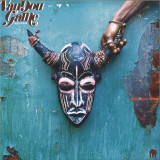
African, funky, sarcastic, bewitching, green, ecstatic: these words collide to describe Vaudou Game and all of them are true.
Noussin is the fourth album of the french Afro Funk band. Forced into lockdown, like much of the planet, Peter Solo and his Vaudou Game had no choice but to retreat into the studio. A reunion to once again invoke the spiritual forces of the Voodoo Deities. A reunion that was Initially imagined for an EP…yet these spiritual forces behind that imagination yearned for something more, and as we all know, these forces are impossible to push away once they have decided to stay.
Under the strain enforced by the current socioeconomic climate, as much as by the environmental peril that faces us all today - they diverted the course of the groove towards daring new vibrations. Without extinguishing or diminishing its highly communicative power, they released Vaudou Game from its origins of pure Afro-Funk to gradually engage into compositions which crystallized themselves into tones resembling more rock than funk.
On this fourth album, with an entirely revisited line-up, Peter Solo separates for the first time in his career from his brassy guard, leaving saxophone, trumpet and trombone outside to invite an arsenal of keyboards to define, with him, this new voodoo sound. A sound, as usual, built on vintage and precise analogical material - grime even on the white side of the tape, a blunt instrument used to blanket anything that strived to shine too much in the mix.
Graced with tapered guitars stringing out rhythmic bumps or withdrawing a few beats to indulge in infectious solos, this album is boisterously alive with vintage 70's Funk, infused with a few digressions into other ethers of the funk timeline, nicking different sounds and frequencies to render the black and white keys of an inspired keyboard to reach new euphoric levels of melodic acidity.
Tearing off the enigmatic mask to reveal his true face: on a few titles, Peter Solo ventures outside of his sacred voodoo range to reconnect with his London years, these titles feature small nods to the time he spent in “The Smoke” where the incantations of British music culture were written within him.
Noussin which means “Stay strong” in Mina, a dialect spoken in the south-west of Togo. Noussin, a message of hope as much as a call to come together to weather the turmoil and to come out better on the other side. Don’t let them grind you down…Noussin!
Repress
Punctual like a Swiss watch, Driftmachine presents a new album that once again astounds and delights. We know their trademark: solid mechanical percussions, forceful bass and melodies systematically built around circular patterns. "Spume & Recollection" is the sixth Umor Rex album by the Berlin duo, and what better way to celebrate the label's 15th anniversary than with a new record from the masters of labyrinthine cables and patches. Regarding "Nocturnes" (UR 2014), their debut album, we described their sound as precise and symmetrical, identical concrete blocks mounted and articulated in a random order. Their already obsessive style continued to evolve with their third record, "Colliding Contours" (UR 2016), now pushing further into abstract dub, ultra-tense grooves, and even more kinetic loops, moving further away from conventional musical structures. Between these two albums they released the remarkable "Eis Heauton" (UR 2015), a kind of hypnotic experiment informed by shadowy atmospheres, chance, and an intuitive dialogue with their musical machines, a unique situation in which they acted as bemused observers in hunt for epiphanies, resulting in an exquisite amalgamation of lucid dream-logic and mechanical precision. A one-of-a-kind soundtrack for minute and wordless scenes unfolding in pitch-black back alleys and hidden, alchemical basements. A similar map was explored with "Shunter" (UR 2018), a superb secret meeting between avant-garde phantasmagoria and concrete experimentation. "Radiations" (UR 2017) offered B-sides and bonus tracks, in addition to collaborations with Shackleton and The Sight Below, a kind of preamble that united Driftmachine’s different expressions and leanings.
When Andreas Gerth and Florian Zimmer come up with new material, one listens with high expectation. Looking back on their discography, one could safely anticipate a high quality album densely layered with their familiar leitmotifs. And yet, "Spume & Recollection" takes us by surprise and finds a new way to transfix. Fresh methods and ideas are introduced to their dynamics and formula. Yes, of course, you can still expect a healthy dose of kosmische, which is one of the dominant features in Driftmachine’s DNA; but this is now entwined with novel materials, semi-material patterns of alien code stretching over exhilaratingly tense and detailed grooves, clouds of gas shifting on top of deep dub architecture and blocking out the sun for prismatic effect. Even more of a surprise is the immediate, streamlined nature of these tracks, making "Spume & Recollection" their most accessible record and, perhaps, the most addictive (and this without sacrificing the essential mystery and strangeness at the core of Driftmachine’s sound).
We have previously described their work as post-industrial-dub; right now, we might just call it hypno-music for man and machine to dance and dream together. "Spume & Recollection" takes this concept as far as it can go without breaking, and finds some strange new feelings, and weirdly danceable grooves, to shed some light on this dark and dazzling ride.
All songs written & produced by Andreas Gerth & Florian Zimmer in Berlin Mastered by John Tejada Artwork & Photos by Daniel Castrejón
Almost all records are a snapshot, a musical ribbon bow that documents a very specific moment in time or simply ties-off everything up to that point. Indigo De Souza’s I Love My Mom, her debut LP initially released in 2018, was the latter; a collection of the best songs she’d written in the few years that preceded it, recorded quickly and breathlessly and thrown out into the world.
Consisting of ten songs, I Love My Mom feels both raw and unabashed. Indigo pulled a band together for the first time, and was quickly encouraged to commit her songs to tape. Recorded at her friend’s house, they played almost everything live in just a few days, and released the record naturally, with little fanfare. That the record quickly took on a life of its own, deeply resonating with those who heard it, is a testament to Indigo’s songwriting which took inspiration from the unique worlds created by Arthur Russel, Sparklehorse, The Microphones, as well as contemporaries such as LVL UP and Happyness.
Two of the songs have racked up more than a million streams each on Spotify: “Take O Ur Pants” and “How I Get Myself Killed.” The former balances an often breezy lead vocal with gnarly undercurrents of guitar before the whole thing lets rip in its punchy chorus, while the latter, the album’s opening track, finds a different mood entirely, a slacker rock gem that repeats its chorus as a chest-beating mantra. Elsewhere, “Good Heart” furthers the dichotomy which sits at the record’s core, each moment of quiet introspection soon met by a cacophonous burst of energy.
May 28 will see prolific Japanese vibraphonist, multi-percussionist and composer Masayoshi Fujita mark a new sonic direction with his forthcoming album Bird Ambience on Erased Tapes.
Bird Ambience brings several fresh changes for the artist. Until now, Fujita would separate his acoustic solo recordings from the electronic dub under his El Fog alias and experimental improvisations with contemporaries such as Jan Jelinek, Bird Ambience sees him unite all of these different sides to his work for the first time, into one singular vision. He also makes a lateral leap from his signature instrument the vibraphone, on which he created his acclaimed triptych Stories (2012), Apologues (2015) and Book of Life (2018), to the marimba, which takes centre stage on his new album alongside drums, percussion, synths, effectors and tape recorder.
“The way of playing the marimba is similar to the vibraphone, so it was kind of a natural development for me and easier to start with, yet it sounds very different”, explains Masayoshi. “The marimba bars are made with wood and it has a wider range than the vibraphone, which gives me a bigger sound palette with more possibilities. I play the instrument with bows and mallets, and sometimes manipulate it with effects.”
Bird Ambience also marks his liberation from fastidious preparation for past solo releases to new endeavours in improvisation. “I prioritised trying to capture the wonder which happens during those occasional magic improv moments. Sometimes the mic-ing and placement of instruments was pretty rough; things weren’t perfect and everything was done quickly, but it turned out as the final recording. Overall when I
couldn’t decide between two takes, I told myself to go with the first”, Masayoshi recalls.
Arranged with a perfect Kanso-like balance, the unhurried pace of Bird Ambience allows each sound and phrase enough time to be mindfully absorbed and savoured. This subtle but affective work carries ethereal remnants of Midori Takada’s minimalism, the static atmospheres of Mika Vainio, To Rococo Rot’s organics and the bucolic electronics of Minotaur Shock. Fujita vaporises contemporary and classical, ambient and dismantled dub, controlled noise and fragments of jazz into an atmospheric, static mist, which he skilfully coerces into new forms.
After 13 years in Berlin, Masayoshi recently relocated to a new home and studio in the rural Japanese mountain village of Kami-cho, Hyogo, following his life-long dream of creating music in nature. Even though the album was entirely recorded in Germany before he left, it has this palpable sense of reverie found in the natural world. From there we can only imagine the kind of impact his new life in rural West Japan will have on future works.
On their self-titled debut album, the German-Indian project Hotel Kali present the results of what started as a brief residency for Theresa Stroetges a.k.a. Golden Diskó Ship in Kolkata and ended in her joining forces with double bass player Debjit Mahalanobis, synth enthusiast Varun Desai and the versatile songwriter Suyasha Sengupta. "Hotel Kali" is a living, breathing entity that theoretically picks up on many different musical traditions but in practice challenges them all. Four different individuals find a common ground somewhere between and far beyond cosmic rock, experimental dance music, and adventurous post-rock.
Ulna’s OEA is a “bar-rock getting sober record.“ The first full length solo record of Ulna, aka Adam Schubert of Cafe Racer, OEA is an ode to reinvention. Along with the release comes a rebranding--formerly Ruins, Schubert’s new pseudonym ULNA is a reference to a pivotal moment in his childhood. At the age of 14, Schubert shattered the bone on the inside of his forearm in a skating accident, and took up the guitar. “That’s what made me serious about playing music,” says Schubert.
This name change also accompanied Schubert’s shift towards sobriety--OEA was created right as Schubert reconfigured his life without drugs or alcohol. With the exception of the final track, “Dead Friends,” the whole album was written while in a recovery program. “You have to reinvent your whole personality, you have to be a different person,” says Schubert.”Who am I if I’m not the crazy drunk dude who’s doing drugs in the bathroom?”
OEA is an intensely personal record, in subject matter but also quite literally--Schubert plays every instrument, though the record feels far from a home-demo, recorded and mastered by Robby Hanes at Strange Magic Recording in Chicago’s Logan Square. Schubert’s songs are ambling and full of picked guitar and retro harmonies, a stylistic sensibility he attributes to a love for the Beatles and “acoustic rock with a weird punk edge,” a-la Big Thief and Kurt Vile. Though instrumentally sunny, his vocals hint at something else - there’s an underlying ache. OEA is an easy listen, but with a depth of emotion that demands listeners’ attention.
OEA explores the range of emotions experienced in the transition to sobriety, from fear to backslide to self doubt. At first listen, “Turn The Record On” feels almost like a love song, with a chorus of “turn the record on/ you’re my favorite song,” but in actuality the song is the story of an empty encounter rather than romance. “It’s kind of about this sad hookup with someone else who is equal in your addiction, you’re just using each other because you don’t want to be alone in your using,” says Schubert. “We both have this problem and we can have fun in it together because we both understand. They know the score.”
While “Turn The Record On” speaks to a moment of shared addiction, other tracks examine what comes after sobriety. “And I took the pill like I should / and I stayed clean just like I said I would,” begins “Last Song,” which Schubert cites as one of the hardest tracks to write. “I got sober and I take medication and - I’m doing all this stuff now but nothing’s changed,” says Schubert. “ I think that’s pretty common in people who get sober. I did all this stuff and now what?”
The penultimate track on the album, “Last Song” fades into a noisy interlude that gives listeners the feeling of motion, like entering a tunnel and emerging into a quieter, lo-fi recording, the closing track “Dead Friends.” The only non-studio track, “Dead Friends” was recorded in Schubert’s home, and carries with it a warm intimacy. “I wanted it to sound like you’re outside somewhere, you're walking, and you step inside somewhere that feels safe,” says Schubert.
This closing track embodies the mood of OEA- warm but with a melancholy edge, like coming in from the cold but still feeling a lingering chill. It’s an album that feels comfortable and cohesive--though individual tracks stand alone, OEA works best when listened through start to finish. It’s a record to put on while cooking dinner and let sink in.
May 28 will see prolific Japanese vibraphonist, multi-percussionist and composer Masayoshi Fujita mark a new sonic direction with his forthcoming album Bird Ambience on Erased Tapes.
Bird Ambience brings several fresh changes for the artist. Until now, Fujita would separate his acoustic solo recordings from the electronic dub under his El Fog alias and experimental improvisations with contemporaries such as Jan Jelinek, Bird Ambience sees him unite all of these different sides to his work for the first time, into one singular vision. He also makes a lateral leap from his signature instrument the vibraphone, on which he created his acclaimed triptych Stories (2012), Apologues (2015) and Book of Life (2018), to the marimba, which takes centre stage on his new album alongside drums, percussion, synths, effectors and tape recorder.
“The way of playing the marimba is similar to the vibraphone, so it was kind of a natural development for me and easier to start with, yet it sounds very different”, explains Masayoshi. “The marimba bars are made with wood and it has a wider range than the vibraphone, which gives me a bigger sound palette with more possibilities. I play the instrument with bows and mallets, and sometimes manipulate it with effects.”
Bird Ambience also marks his liberation from fastidious preparation for past solo releases to new endeavours in improvisation. “I prioritised trying to capture the wonder which happens during those occasional magic improv moments. Sometimes the mic-ing and placement of instruments was pretty rough; things weren’t perfect and everything was done quickly, but it turned out as the final recording. Overall when I
couldn’t decide between two takes, I told myself to go with the first”, Masayoshi recalls.
Arranged with a perfect Kanso-like balance, the unhurried pace of Bird Ambience allows each sound and phrase enough time to be mindfully absorbed and savoured. This subtle but affective work carries ethereal remnants of Midori Takada’s minimalism, the static atmospheres of Mika Vainio, To Rococo Rot’s organics and the bucolic electronics of Minotaur Shock. Fujita vaporises contemporary and classical, ambient and dismantled dub, controlled noise and fragments of jazz into an atmospheric, static mist, which he skilfully coerces into new forms.
After 13 years in Berlin, Masayoshi recently relocated to a new home and studio in the rural Japanese mountain village of Kami-cho, Hyogo, following his life-long dream of creating music in nature. Even though the album was entirely recorded in Germany before he left, it has this palpable sense of reverie found in the natural world. From there we can only imagine the kind of impact his new life in rural West Japan will have on future works.
"Milano Odia: La polizia non può sparare", a 1974 movie directed by Umberto Lenzi, is the quintessence of the Italian police films. Not only, it's even more violent and extreme than usual, with one of the best interpretations ever by the Cuban actor Tomas Milian.
The soundtrack for the film is commissioned to Ennio Morricone, who at the time was already a full-time score composer, and had already worked in the same field. The Maestro wrote the entire OST starting from a single, obsessive theme, arranged in many different ways for each different scene or atmosphere.
The whole soundtrack had never been released until 2007, and this is the first whole edition on vinyl ever. It comes in a gatefold package, with a 30x30cm inlay poster.