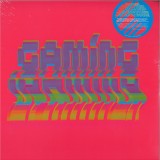
Following January’s acclaimed vinyl debut from Exterior and summer’s much-loved Kota Motomura EP, Edinburgh’s Hobbes Music label ends 2019 with its first album release, also a debut, from GAMING, a fresh new braindance electronica project straight outta Glasgow, from producer and musician Alan Bryden.
GAMING is a new solo outing that brings together a lifelong love of music and technology and creating left field, rhythmic electronica. It’s the sound of IDM, nineties techno and mensch maschine computer music that is as spontaneous as it is programmed.
“Scenes From A Deserted City is a collection of tracks that started as a set of riffs, loops, rhythms and grooves and unfurled around a sense of growing unease about the future of the urban environment around me.
It’s an album that started out as sound…and ended up as a way of telling stories about the age of anxiety we live in, how our world is changing, and how we find a way through that.
This is DIY electronica from Glasgow – it was made on a growing collection of digital and analogue synths and FX units, including a bunch of modular racks, each with its own idiosyncrasies and character that belies the assumption of the binary.
The studio where it was recorded – an abandoned, and often very cold, school building reclaimed by the community some twenty years ago – offered up stories of resilience, even when all seems lost. (I’m not sure what the mice contributed but they definitely climbed in and out of some synths).
This album is ultimately about my changing relationship with Glasgow, a city I’ve lived in for more than 25 years. It’s about how I feel now about the increasing sense of urban decay and how the city can be a very isolating place. It’s about how I reflect on my younger creative self trying to find a direction but mainly feeling a sense of dislocation and not fitting in. And it’s about the questions I have about how that relationship is changing, how it will be forced to move forward.
The result is a soundtrack for walking home on your own, in that headphone bubble when it’s just you focusing on that music that makes sense to you alone. It’s for early in the morning, after the night before, or going to work with the memories of that slipping and sliding inside your head. It’s about how it feels to be both elated and lonely, to be lost in the familiar, despairingly hopeful.”
ALAN BRYDEN (Glasgow, August ‘19)
Cerca:digital release
The globe-trotting Robert Millis returns to Helen Scarsdale for this beautifully fragile album of dissolved glass rendered as a collage of recontextualized minimalism. To astute listeners, Millis should be a household name due to his work in the unpredictably diverse Climax Golden Twins as well as his impeccable curations for Sublime Frequencies (collections include the Deben Bhattacharya: Men and Music on the Desert Road and Indian Talking Machine books). Hie previous solo work include Relief (released here on The Helen Scarsdale Agency in 2013) and The Lonesome High for the Sun City Girls’ Abduction Records in 2016. His scholarship into the hidden corners of music across the world has also earned him Guggenheim and Fulbright fellowships.
Related Ephemera is an album composed mostly from the hiss, the crackle, the surface noise of 78rpm shellacs and wax cylinders. “Horrifying,” Millis explains “is the concept to record collectors that vinyl degrades and can be easily damaged. however, initially records were considered ephemeral, especially 78rpm records. They were novelties. Fleeting. Entertainment.” Millis intends for the album to be a feedback loop whereby the patina of handling, playing, living with the record will circle back to the original source material. Furthering that metaphor, Millis amplifies and dilates feedback tones generated from his collection of vintage gramophones.
That said, Millis does cite the intrusion of exactly one field recording, a broken toy, and a few notes from a cello. But the construction of these rarified tones, crispy textures, ghostly rattles, and fluid resonance that ripples through all of Related Ephemera has its origins in the tactile nature of the vinyl medium. It’s hardly the stuff of sentimental nostalgia though. Related Ephemera is more an act of time travel, slipping backwards and forwards with the scratch of a needle (Watch out! What pre-recorded needle jump sound is not your turntable going haywire!). The emotional core to the album is that of a resigned melancholy, almost Bergman-esque in its starkness but not without a brief moment of dark humor.
Here is an album that aligns itself aesthetically with Nurse With Wound’s Soliloquy For Lilith, Philip Jeck’s more languid collages, and even some of Harry Bertoia’s sculptural atmospherics.
The vinyl was mastered and cut by Helmut Ehler at D&M Berlin, whose expertise was necessary given that part of the original compositions from Millis’ reworked surface noise were exceedingly problematic to cut. The D&M cut does temper the composition into a mysterious, diaphanous cloud; where the digital-only mastering provides a cascade of insects gnawing within your inner ear. Two facets. One piece of music.
Kenton Slash Demon return to Tartelet Records with Zstring + remixes by Urulu and Kasper Marott + 12' comes in vintage Tartelet sleeves circa 2009-2010. Limited Edition 400 copies. It's been ten years since Kenton Slash Demon landed on Tartelet with their debut EP Khattabi followed by the much-celebrated The Schwarzschild Trilogy singles - Sun, Matter and Daemon all released 2009-2011.Ten years have passed since our first release on Tartelet and with this record it feels like we've gone full circle. It's a beautiful thing.'Zstring marks their return to Tartelet - but it's also a precursor for things to come within the next year. With talks of a full-length album, the KSD project is now being given the attention it deserves.
Kenton Slash Demon have always had an affinity for uplifting melancholic tunes - and Zstring cements their ability to create just that. The track oozes with dance-floor euphoria, offering up a distorted arpeggio bassline, lush pads and layered melodies, all built around a tight and ever- changing groove. There are clear references to Italo disco, early techno and trance, but it's hard to pin down the exact style - if that even matters.On remix duties, man of the moment and label collaborator, Urulu, delivers a fresh take in his signature early 90s style, while local hero and close friend Kasper Marott of Monkeytown fame comes through with an obscure melodic techno workout of the finest sorts.
To further advance the concept of 'full circle,' the 12' comes in vintage Tartelet sleeves circa 2009-2010, salvaged from three different releases - which have been in storage since being produced.Zstring will be available April 12 th 2019 on vinyl and April 26th on all digital platforms.
The release of Rising Son in 1986 on Greensleeves began a new era for Augustus Pablo edging his Rockers revolution into the digital age. In his own words Rising uon “mix-up the vibes a little more” from steppers like ‘Pipers of Zion’, revival reggae ‘African Frontline’ and the deep and heavy ‘The Day Before The Riot’. Recorded at Channel One, Tuff Gong, Dynamic & HC&F and engineered by Phillip Smart and Scientist.
Ambient and environmental Japanese scene has flourished stronger than ever in the last years. The pioneers of this sound and the creators of an innovative way of making and understanding ambient music, such as Hiroshi Yoshimura, Yoshio Ojima, Toshifumi Hinata or Takashi Kokubo have been championed and their works have been successfully unearthed by reissue labels.
Continuing in this endless path, Glossy Mistakes adds Takashi Kokubo’s brilliant “Volk Von Bauhaus” to its catalogue, with the Japanese masterpiece as the third official release of the Spanish label.
As most of 80’s Japanese ambient and environmental music, “Volk Von Bauhaus” is an audio impression designed to give a multi-sensory experience to the listener. An effort to make things audible, an exercise of understanding and soundtracking objects or situations. The main objective of this sound is to create an iconic musical landscape to accompany a specific place.
Though his name might be unfamiliar to many, Kokubo has crafted music that has impacted virtually all of Japan, from national mobile phone earthquake alerts to contactless card payment jingles. He was one of the first artists to create ambient music strictly through loops. As he mentioned when release this album, "this recording used no keyboard players, no multitrack tape recording techniques, no analog sounds”. A shift on the process of imagining sound.
“Volk Von Haus” is and ode to this ambient, new age and environmental music created in Japan throughout the 80’s. Throughout 9 cuts, Kokubo handcrafts his own sound and immerses the listener in a peaceful yet challenging adventure. The record is the first piece of his Digital Soundology series, and arguably his most interesting work due to the groundbreaking techniques he used.
"A revolutionary musical expression that shatters the old values”, explains Kokubo about this piece. And its just what we can hear when we play “Volk Von Haus”.
The album includes an unheard exclusive track by Takashi Kokubo an insert with an interview made by Takashi Kokubo. A true gem that must land in every ambient head’s musical library.
Remastered from master tapes by Frederic Stader.
Insane times like these call for insane measures to counter all that's going to shit in music these days. Great music in all its glorious forms should be timeless with no expiration date. Here at PRSPCT this has always been our mission and especially now this should count for every record any of the labels releases.
Thank god we got Limewax aka Maxim Anokhin in our ranks delivering a work so unique, only this artist could even be capable of producing. An album that for sure will survive the test of time and not lose any of its relevance in the years to come.
Limewax at his absolute best bringing his signature out of the box sound. Snaredrum warfare. Pots & pans, Moodswings, Weirdness, Dancefloor smashers and total mindfuckers. Settime LP by Limewax is a record any lover of good music needs in his or her life.
11 tracks on this record. 8 solo tracks + 3 collabs with KRTM, Dolphin and Baseck. Available as 2 12" in printed gatefold sleeve & digital formats.
Designed by Mike Redman.
Mastering by Bryan Fury.
h C2 Fingers With KRTM
‘Heaven To A Tortured Mind’ - written and
composed by Yves Tumor and produced by Yves
Tumor and Justin Raisen (Sky Ferreira, Ariel Pink,
Charli XCX) - marks the fourth official full-length
release from Yves Tumor and the follow-up to
2018's critically acclaimed and era-defining Warp
release, ‘Safe In The Hands Of Love’.
The album features guest appearances from Julia
Cumming of Sunflower Bean, Kelsey Lu, Diana
Gordon, Hirakish and Clara La San.
CD in 6 panel digipack.
Vinyl in printed inner in gatefold outer sleeve with
digital download card insert.
After many hints and teases MANIC STREET PREACHERS have confirmed the re-issue of a deluxe edition of their 1993 second album ‘GOLD AGAINST THE SOUL’ on 12th June 2020 for Columbia/Sony. Available as a 120 page A4 book featuring unseen images from the bands’ long time photographic collaborator Mitch Ikeda, many personally annotated by Nicky Wire and original typed and handwritten lyrics from the bands own archive. It will contain two cd’s featuring the remastered album, previously unreleased demos, b-sides from the era, remixes and a live recording of The Clash song ‘What’s My Name’. There will also be a 180g vinyl version of the original album with download codes to the extra tracks on CD1 and a digital version featuring all the songs.
Nicky Wire said of the release “We moved our studio a few years ago and I unearthed a lot of demos and pictures from the ‘Gold Against The Soul’ era and thought it would be a shame not to let them see the light of day. We haven’t always been the most complementary about this album in the past, but with hindsight it was a strange and curious record with many fan’s favourites on it. James always gets a huge response when he teases the riff to ‘Sleepflower’ live.”
‘Gold Against The Soul’ entered the Top 10 on release just over a year after their debut album ‘Generation Terrorists’ and saw the band shift musically to a classic rock sound. Lead single ‘From Despair To Where’ was followed by ‘La Tristesse Durera (Scream To A Sigh)’, ‘Roses In The Hospital’ and ‘Life Becoming A Landslide’. Produced by Dave Eringa who had been working in various guises with the band and continues to do so to this day, the album was recorded over six weeks at Outside/Hookend Studios.
The Bees are a textbook case of the chew and spit cycle that was the late 80’s South African music industry. Although their unknown story is likely unique, it is just as likely that it is no different to that of many other young artists who dreamed of getting their music heard at the time.
By 1988, the independent record label was no longer as uncommon as it had been at the beginning of the decade. As the 80s went on, more seasoned A&R reps and Producers that had gained experience and connections from their work under major labels would be trying to cash in on a market they helped create. Without the need of big rooms or expensive recording equipment, the digital advancements allowed many Producers to open or work in smaller studios and promote unknown artists under their own imprints. They would then have their catalogs marketed and distributed by the same major labels they had been working for just years prior. This would open up the possibility of a new era of stars as potential talent no longer had to be pitched to major labels in hopes of them taking a chance on a new signee over their already established artists. With the market growing and a struggle to keep up with the demand for new sounds this agreement would allow the major labels to put new emerging artists or groups on their catalog with little investment and high reward if it happened to be a hit.
ON Records was just one of the independent players at the time. Ronnie Robot had just signed the unlikely trio The Bees in hopes of adding a hit group to his label roster that consisted of solo acts. Despite the debut’s fresh house inspired sound, it failed to catch on was outsold by the bubblegum disco the label was known for. Over the years unsold back stock and promos would build up with the distributor. Luckily this allowed sealed copies from the label’s catalog to survive into the 90s when the distributor’s stock was unloaded and picked up by legendary Johannesburg jazz shop Kohinoor. Here sealed copies of the Bees first attempt sat under appreciated for over 20 years before becoming a hot title after they started circulating online and became club staples. This is how the first album of an unknown group with no success was able to become a collectors item and earn a reissue over 25 years later.
With their first record behind them The Bees were ready move forward and get back into the studio. A suggestion from producers had the trio change camps and go work with the newly formed Creative Sound Recordings, the label that promised “Music for the Future” and ended up being an essential studio in the early years of Kwaito. They would work with producer Chris Ghelakis and guitarist George Vardas, while a young Marvin Moses sat behind the desk. Musically the sophomore album was as good as a follow up as you could get. Building on the first album, Mashonisa delivers catchy melodies backed by heavy drum programming that would score points with any Pantsula. The Black Box inspired “ Never Give Up” was one of two tracks chosen to be pressed as the promo for the album, hoping to trick listeners with their catchy version of the hit( A year later the label would release their first volume of Black Box covers sang by neo soul diva BB, it would be a great seller). The label printed up an unknown amount of these in a last attempt to push the release in Shabeens and on Radio. The cheaper route of flooding the market with promo copies would only pay off 25 years later when unplayed copies started being rediscovered and had survived the years in a quantity that original run of the full album could not. Once again it was clear that with no mainstream appeal, the quality of the music on its own was not enough to garner any success at the time. The album flopped worse than their first and failed to make it past it’s initial run, making it one of the harder titles to get from the CSR catalog.
Mashonisa would be the last attempt from the Bees. They would disappear from the scene as quickly as they appeared. Of the three members it is only known that lead Singer Solomon Phiri continued in music fronting a wave dance group before he mysteriously vanished in 1993, never to be heard from again. Through a combination of luck and circumstance the group, which is unknown in South Africa to even the most plugged in musicians, producers and radio hosts of the time, managed to finally get some of the recognition they deserved 30 years later. Unfortunately this small blip of fame would happen with none of the band members present to give their side of the story, or even aware of how their two albums became popular enough to be printed on different continents in a new millennia. The Bees suffered the same fate as countless other artists of the time, who thanks to emerging independent labels and willing producers were given an opportunity to have a short career, only to be replaced by the meat grinder of the music industry when they failed to produce a hit.
Kajunga is proud to release unheard material from the wise and honorable Heckadecimal. “Critters” is a collection of 5 unique hardware built tracks that scurry from moody and contemplative to charged and frantic.
“Bat Silk Stunt” starts the record off with resonant acid bass lines creeping through a rich forest of analog drums. “D’etre” shifts the tone into a pool of moody progressions, dissonant sequences, and syncopated grooves. Living up to it’s namesake, “Acid Tenders” provides an exciting exploration of unbridled 303 energy. “Digital Foam” picks up the pace with frantic and squiggly textures that skitter about as a deranged synth-line takes command. “The Luminous Flesh of Giants” rounds out the journey with a 4/4 crawl through wistful melodies and iridescent chords.
Heckadecimal has been a fixture of the Minneapolis DIY electronic music scene since Time Untold, or around the turn of the century. He’s been an unwavering force and advocate for sonic experimentation, known for his energetic live sets of pure machine fun, from bouncy electro to breaky techno and acidic wiggles galore.
Heckadecimal has released on Great Circles, Electric Music Foundation, and his own label, Always Human Tapes, co-run with Ryan Wurst and TML. Past projects and collaborations include: The Worm, Two Human, noface, Clavin Klein, Joshua Michaels & Allen Smithee. Recently he’s dropped hours of live material via Bandcamp spanning 8 releases. He’s thinking of learning how to DJ
After years of searching for the elusive sensation of heart-rending beauty, Avondlicht releases his debut album on 3 April, 2020 on all digital platforms. The LP will be out on 8/4.
Hyperromance is the culmination of an emotional and geographical journey, as Belgian producer Matthias Dziwak sought to find and examine idealised moments of true romance within the less-than-romantic reality of existence.
Having already achieved a great deal with his initial run of EPs for labels like PIAS, Fog Mountain and Unit Delta Plus, Antwerp-based Dziwak became obsessed with the concept of Hyperromance – “a moment or idea so heavily romanticised that it seems impossible to be really experienced.” The melancholic feeling it sparked in his heart set him off on a journey through Argentina, Chile and Uruguay, via a month-long stay in Amsterdam and finally to settling for six months in Portugal. Throughout this time he made field recordings and began writing pieces that would feed into the finished album. Along the way he found a full spectrum of moments that allowed him to view the world in a truly romantic way, from the majesty of the Andean mountains and the snow falling on the Amsterdamse Grachten to encountering love in Lisbon. At other times he found himself lost, adrift and heartbroken, pulled back to Earth, as is the cyclical nature of the human experience.
Musically, Hyperromance’s grapple with day-to-day reality and rose-tinted fantasy is embodied through the contrast between organic instrumentation and high-definition electronics. Dziwak began writing his songs as simple piano pieces, which then transferred to a staple of synths and sound processing as they became more wholly defined. Sonically, the sound sweeps from modern classical and bombastic electronica to evocative ambient, even touching on jungle and techno along the way. Rather than being defined by genre associations though, Hyperromance is shaped by the swooning beauty of its composition, as the music pulls you in and out of richly rendered moments of joy and pain following Dziwak on his personal journey of truth and beauty. With visceral life experiences woven into the fabric of the record, Hyperromance is expressive on the most intimate level. It’s a record that dazzles with searing bright wonderment and casts creeping shadows as the time passes – a journey as nuanced as life itself, elevated by romance and grounded by reality, beautifully told by Avondlicht.
A new sub-label of the longstanding Canadian electro imprint Suction Records, Ice Machine — focusing on old-school wave/post-punk sounds — is thrilled to present a new, deluxe reissue of “Pow Wow”, the debut 1982 solo LP from Cabaret Voltaire’s Stephen Mallinder. Now expanded to a double-LP, and also released on CD/digital, it’s a definitive reissue which now includes Mallinder’s early solo discography in its entirety. This collection of mutant dub/funk/postpunk sounds just as fresh and contemporary in 2020 as it did in 1982 (note Autechre’s inclusion of standout cut “Del Sol” in a mix earlier this year), and highlights Mallinder’s crucial contributions to Cabaret Voltaire.
Some words from Mr.Mallinder on the scene and era from which “Pow Wow” was born: “It was an interesting, and inspiring, time. The primal caterwaul of punk was dying and lots of really significant things were emerging from the fires. Much looser vibes were in the air and there was a much more exploratory feel. Punk had championed a visceral, anti-intellectual approach but in truth the real characters brought so much more to the table, and what began to happen - from people like The Pop Group to Throbbing Gristle, and emerging scenes from No New York to Factory Records - is we began to embrace the art of it all. There was acknowledgement of the importance of books, films, graphic art, and experimentation with all those mediums. We were just as interested in turning over rocks to see what lay beneath, as throwing them. There was a sense of new magik emerging.”
“Pow Wow” was commissioned by the Fetish Records label, and recorded at the Cabs’ Western Works studio, where Mallinder would spend his days recording with Cabaret Voltaire, and continue on alone into night recording his debut solo material. “I slept very little in those days,” he adds, continuing: “It was done on 8 track and very multi-tracked, so lots of recording, then bouncing, and overdubbing, to get the integrated feel of the tracks. I became very adept at pressing record then jumping onto equipment to play it - it was actually a very 'live' record in that sense. I've always seen rhythm at the core of what I do so I loved the layering of counter rhythms. The sequence/arpeggiator parts were all drum machine triggers that were played live. It was about creating a distinct groove so arrangements came from weaving in and out of those linear grooves. It was fun to play everything from drums, guitars, keys, trumpet, percussion, tapes… and record and produce it all. Prince got it from me!”
Surprisingly, Mallinder’s first solo LP would also prove to be his last - that is, until last year’s critically-acclaimed solo return “Um Dada”, on Dais.
This new edition of “Pow Wow” contains 14 songs, and is housed in a recreation of the original, iconic Neville Brody jacket, painstakingly recreated using scans of Brody’s original artwork elements. The 2LP vinyl edition is in a reverse board, thick-spine jacket, and adds a 12”x24” folded poster/insert, featuring unused elements from Brody’s original designs, sketches, and instructions for the LP. The CD edition comes in a reverse board, 6-panel digipack.
2-11 from the Pow-Wow LP on Fetish Records, 1982.
13-14 from the Temperature Drop / Cool Down 12” on Fetish Records, 1981.
12 from the Fetish Records compilation The Last Testament, 1983.
1 edit from the Pow-Wow Plus LP on Fetish Records (Japanese pressing), 1984.
Historic cassette of first Tuareg guitar studio recording. Newly restored and remastered. Tuareg guitar gets the electronic treatment, with a reissue of the cassette by legendary Nigerien composer Abdallah Oumbadougou. Produced in Benin in 1995, “Anou Malane” is one of the first studio recordings of Tuareg guitar. The genre, known for minimal folk ballads performed on acoustic guitar, is transformed with a full-on 90s swinging groove. Abdallah Oumbadougou is one of the original creators of Tuareg guitar music. Active in the Tuareg rebellion in the 1990s, his early compositions were politically charged, addressing the fighters scattered in the desert. These low-fi recordings were recorded on boomboxes, and found their way throughout the diaspora, passed through clandestine networks of cassette dubbers. In exile, Abdallah traveled to Benin to record an official release with Nel Oliver, a West African producer known for his work on a number of seminal boogie and afro-funk records. Oliver’s influence is heavily felt on the recordings with early digital techniques of programmed drum effects and backing synthesizer, transforming Saharan political ballads into Afro-boogie anthems for the discotheque. The resulting album went on to become a classic and pushed Tuareg guitar and the rebellion into the public consciousness
Interstellar digital dancehall with stunning synth, superb vocal by Robert Ffrench in extended mix & mad style by obscure DJ Shortie Ranks. Recorded at Creative Sound Studio (Kingston, JA) in 1985.
"On “I Am Wondering” – a lovers of sorts – Ffrench is Dennis Brown in the high notes, and Gregory Isaacs in the song`s playboy sentiments. A guitar gently wah-wahs, while the synths do a giddy glissando. Midway through this discomix the bass becomes boss – throwing everything else – chopped piano chords and all – into echo. Then it`s rewind for the DJ cut – a brag and boast toast from Shortie Ranks – recounting his triumphs at legendary Kingston reggae venue, Skateland”. (Ban Ban Ton Ton - April, 21 of 2020) Robert French grew up in central Kingston and attended Kingston College. He recorded his first singles in 1979, at the age of 17. He achieved success in 1984 with his performances at the Festival Song Contest and the Reggae Sunsplash festival. He had a combination hit with deejay Clement Irie with "Bun & Cheese", and his first two albums were released in 1985. He had another hit in 1989 with "Modern Girl", a collaboration with
Courtney Melody. In the mid-1990s he relocated to New York City, where he teamed up with rapper Heavy D, with whom he had a hit with "More Love", with an album following on Ras Records, featuring collaboration with several artists including Lady G and General Degree. He has since returned to Jamaica, where he runs the
Ffrench record label and distribution company. He released the album Yesterday and Today in 2001, collecting many of his earlier singles. After a period of inactivity as a recording artist, he returned in 2009 with the single "I Do". As a producer he has worked with artists such as Dennis Brown, Buju Banton (he produced Buju's first single
"Ruler" on Stamina riddim), Beres Hammond, George Nooks, Luciano, Jah Cure, Yami Bolo and Sizzla to name a few. Robert French was the cosin of the late great Pat Kelly. As a french label, big fan from Ffrench productions, i'm very proud and happy to start a collaboration with Robert Ffrench, the most french jamaican. Stay tuned for many many more.
With a hybrid jazz based on African grooves, Ethio-oriental melodies and psychedelic dub this Belgian five-piece creates an atmosphere where ancient and modern sounds fuse into a powerful, hypnotic and groovy sensation.
Receiving critical acclaim for their second album 'Artifacts' (2017), the Belgian quintet are pleased to announce the release of their much-anticipated third album entitled 'Future Flora', released 12th April via Sdban Ultra on vinyl / cd / digital.
Piloted by saxophonist/flutist/composer Nathan Daems (Ragini Trio, Dijf Sanders, Echoes of Zoo), the input of notorious musicians, drummer Simon Segers (MDC III, De Beren Gieren, Stadt), cornet player Jon Birdsong (dEUS, Beck, Calexico), keyboardist Wouter Haest (Voodoo Boogie) and bassist Filip Vandebril (Lady Linn, The Valerie Solanas) leads to the specific universe that only Black Flower is able to create.
Where debut album 'Abyssinia Afterlife' (2014) and 'Artifacts' (2017) bathed in an atmosphere of psychedelics, mythical figures, ancient sounds and modern cultures, new album 'Future Flora' refers to the power of plants and their importance for the future.
"'Future Flora' is a metaphor for the importance of feeding and watering powerful and revolutionary ideas and initiatives that can save our world. You can compare it with plants that fight between the paving stones of the city for their future. These "urban warriors" need water to survive and grow. Their future and ours depends entirely on how we look at the plant world", says Daems.
Black Flower's musical cross-pollination of sounds and rhythms remain on 'Future Flora', but there is still room for a more Western touch with Romanian and Maloya (Réunion) influences. Daems developed his own arrangements where Western, Oriental and Ethiopian scales and chords are fused together to create a real mix of traditional instrumentation and modern electrical vibrations.
The strong underlying groove is omnipresent, but the room for psychedelics, folklore and experimentation grows. Songs like new single 'Hora de Aksum' combine modern western rhythms with doses of Balkan eccentricities while 'Future Flora' takes you on a psyche-delicious 21th century Ethio-dub-jazz trip with echoes of Mulatu Astatke and Fela Kuti.
"The general feeling that dominates is that of strength and perseverance. The feeling that we have to fight for our future and that we have to do it now! The whole album is interspersed with this atmosphere and sounds swirling, haunting and ecstatic. For those who once saw Black Flower live at work, this energy will be extremely recognizable", he adds.
Composed as a means to map the cultural translation between Chinese culture and European traditions, Piotr Kurek’s A Sacrifice Shall Be Made / All The Wicked Scenes is comprised of pieces composed between 2016 and 2018 specifically to accompany theatre performances directed by Tian Gebing (500m and The Decalogue) and Grzegorz Jarzyna (Two Swords). Kurek attended performance rehearsals in Beijing and Shanghai, with additional preparations and recording sessions taking place back in Warsaw.
While most of Kurek’s past work is unaccompanied by other musicians or outside help, A Sacrifice Shall Be Made / All The Wicked Scenes features various Polish and Chinese musicians both from classical and experimental scene (Barbara Kinga Majewska, Grzegorz Hardej, Łukasz Rychlicki and Hubert Zemler) as well as by actors of Paper Tiger Theatre Studio from Beijing. This approach of Kurek exploring new players and places is further juxtaposed as Kurek recycled samples from his own past, including various recordings with musicians he did throughout years, found sounds from the Internet, or cannibalised old solo work.
Recorded over the course of several years, this aural report of a monumental multi-disciplinary venture is in the end an enthralled and enthralling survey of a contemporary composer who is unencumbered by geographic or cultural boundaries. Concurrently, ditching any resemblance to local musical traditions and rearranging the compositions for all three performances, Kurek has formed an architecture that allows the phases of rituals to unfold while projecting social structure assumed in myth making. The regrouping of different moments in these stories is a curious way of narrating another myth — a synthetic, polyvalent story set in a city that strangely reassembles Beijing, Giza, and Prague at the same time.
Piotr Kurek is a Warsaw based musician and composer who straddles the world of electronic music taking inspiration from various genres but fitting comfortably in none. Through his unconventional use of a wide array of instruments both electronic and acoustic, he built a reputation for himself as a qualified inventor of hypnotic worlds drenched in uncanny arrangements.
Kurek has already released a range of idiosyncratic, forward-thinking works on a variety of imprints (including but not limited to Sangoplasmo, Black Sweat Records, Hands In The Dark, Dunno Recordings, Crónica, Foxy Digitalis) and participated in numerous music festivals including Unsound, CTM, OFF, TodaysArt and UH Fest as well as participating in extensive tours in Poland and abroad. In 2014 and 2015 he opened for Bonnie “Prince” Billy’s two European mini-tours. In 2016 he has been selected as a part of Shape platform for innovative music and audiovisual art from Europe.
Beijing-based duo Zaliva-D returns with a second installment on Knekelhuis. After last year’s great EP, released on Shanghai label SVBKVLT, Zaliva-D unleashes a new record in these unreal pandemic times. At its core is a concept of data’s capacity to overcome any boundary, whether that’s physical, digital or mental.
The material at hand, created after the second European tour, pushes heavily through walls, with bombastically accentuated kicks. Blended with joyous, psychedelic songwriting, it is a testament to the power of music to unite despite involuntary confinement.
Artwork by Fenna Fiction. Mastering by Brandenburg.
Dua Lipa announces news of her highly anticipated new album Future Nostalgia, revealing artwork and track listing information for the upcoming second LP, due for release on April 3rd.Future Nostalgia will include the Number 1 global hit single ‘Don’t Start Now’, and new single ‘Physical’, which is available to stream now.
The new album will be available for download on all digital platforms as well as physical on the following formats; pink neon vinyl, CD, picture disc, gold cassette and deluxe box set, all of which are now available from Dua’s web store.
2x12"
since long, chilean/swiss producer and dj luciano is a prominent figure in the global electron-ic club music circle. already from a young age on he was exposed to music profoundly, as his father worked as a jukebox repairman and possessed a large record collection.
when he was twelve, his mother gifted him a guitar, that turned luciano shortly into a mem-ber of a school punk rock band. soon after, his passion for electronic music rose. infected by detroit techno and engaged by close friends like producer dandy jack, he started to play rec-ords in local santiago de chile dance clubs and became involved in the minimal techno scene around friends like ricardo villalobos.
when luciano moved back from chile to switzerland in 2000, he established a residency at weetamix club in geneva, started releasing his own productions on labels like mental groove and joining the cocoon team in ibiza to play at the famous monday night at club amnesia.
since then he is a regular on the balearic island, holding residencies at clubs like dc10 or, with his “vagabundos” serial, at ushuaïa. besides playing around the globe with the likes of carl craig, richie hawtin or loco dice, he is releasing groundbreaking minimal techno and house on his label cadenza since 2003, featuring music by artists like nsi, ricardo villalobos, pikaya, reboot, maayan nidam and himself.
his very own music, so far issued on three albums and countless eps, was always ambiguous. there is his club leaning creativity that can dance slightly into pop spheres while never for-getting the power of precise sliced rhythms and subtle bass sensations.
and then there is a calmer luciano, that displays his love for “music to listen at home, done for a spiritual travel, an inner universe and a moment paralyzed in ether”, as he describes it.
on his first ever mule musiq album release “luci neu house”, luciano now delivers meditative journey music full of repetitive patterns that slowly playing tricks on the listeners subcon-sciousness. “i love music that has a dimension more than music designed for the radio or tv format. mu-sic, that is designed to bring you a higher level of energy and creativity.
so, there is no pretentious things in it ... more just sounds and dimension that will lead your head into the fall of jupiter” he reveals about the one-hour long composition “luci neu house”, whose esoteric deepness reminds on the intensely meditative class of his older pro-ductions like “behind my soul” from 2010.
an epic tune cut on vinyl into four 15-minute long pieces, who shift slowly, almost unper-ceived, whilst absorbing the mind of close observers into a micro-sliced world of moving gen-tleness.
maelstrom magnetism against the gravity of time, that also can be found on the additional mule musiq 257 12inch, which functions as a soothing footnote to luciano’s album.
the almost 13 minutes long trip “flags of himalaya” opens with restful percussions that unhur-riedly start to dance with soft string, piano and horn melodies. on the opposite, the nine-minute long “the evasion of the spiritual soldier” grooves laidback with jazzy rhythms and italo leaning melodies.
a perfect tune for slow dance sensations and endless sunset seaside drives. at a total length of almost 90 minutes, all new mule musiq music composed by luciano distributes a mesmer-izing healing spirit, that grounds organically, even if it is totally rooted in the digital, soft-ware driven world of composing music. “check your buddha” tunes, that somehow sound novel during each new listening circle.


