UK Techno and House lynchpin Mark Broom returns to Radio Slave’s Rekids with the ‘Touch’ EP, landing 8th May 2026. Active since the late ‘80s and widely regarded as one of UK dance music’s most enduring figures, Broom’s catalogue spans key imprints including Warp Records, M-Plant, Hardgroove, and his own Pure Plastic and Beardman, alongside collaborations with the likes of Riva Starr, Baby Ford, and James Ruskin. Since fi rst appearing on Rekids in 2019, he’s gone on to deliver 13 further releases, including his five-part ‘Mutated Battle Breaks’ EP series on sister label RSPX.
Following 2024’s ‘Showtime’ EP, his last House-leaning outing for Rekids, Mark Broom now drops the ‘Touch’ EP.The title track leads the charge, pairing a nostalgic vocal with a Disco-House hybrid feel and jackin’ edge, setting the tone for ‘Eyes’, where he works the filters to build suspense as a loopy sample drives those feel-good dancefloor moments. The B-side shifts into Techno territory with ‘MXM’, a robust, driving groove marked by a machine-like swirl that steadily pushes the pressure, before closer ‘Don’t’ rounds things out with a hard-hitting drumline and tough, strobe-lit stab work.
Search:disco 2
Six years after their last full-length release, Satoshi & Makoto return with Mirage Café, the highly anticipated new album on 8mm Records, in collaboration with Standart Magazine.
A carefully crafted and long-awaited work, Mirage Café is more than an album — it is a fully immersive sensory experience. The Japanese duo expand their signature sound into deeper and more cinematic territory, blending refined electronica, ambient textures, subtle jazz inflections and understated groove with remarkable elegance and control.
The title evokes an imaginary café — a space of contemplation, connection and inspiration. The partnership with Standart Magazine reinforces this conceptual layer, bridging music and coffee culture into a cohesive narrative that feels both intimate and international. The result is an album that unfolds like a slow ritual: warm, enveloping and meticulously detailed.
Throughout the record, Satoshi & Makoto demonstrate a mature and confident songwriting approach. The production is rich yet restrained, atmospheric yet rhythmically engaging — balancing introspection with forward motion. Lush harmonies, delicate arrangements and immersive sound design create a listening experience that rewards both focused attention and late-night drifting.
With Mirage Café , the duo not only meet expectations after a six-year silence — they surpass them. This is a masterwork of nuance and vision, poised to become a defining chapter in their discography and a standout release in the contemporary electronic landscape.
The crew behind the freshly minted Secret Vault imprint are keeping their cards close to their chests, with the accompanying press release loosely explaining their desire to prioritise dancefloor "heat" over spoon-feeding information to buyers (and in this case, Juno reviewers). The secrecy makes sense, though, because these uncredited cuts are heavyweight disco edits - and fantastic ones at that. Our shadowy heroes first extend and (we think) lightly speed up a slap-bass-sporting slab of disco-soul gorgeousness full of dewy-eyed female lead vocals, extended breakdowns, glistening guitar solos and punchy. Over on the flip, our scalpel-wielding fiends turn their attention to a bouncy, energetic and infectious disco-funk gem topped off by expressive male lead vocals.
Little is known about Em Vee, the elusive German editor and producer whose dusty vinyl crates have unearthed some of the most coveted disco and boogie reworks of the last decade. Born somewhere between the fading echoes of Berlin’s underground clubs and the hidden record shops of Hamburg, Em Vee’s story is as much about myth as it is about music.
From the funk fuelled hands in the air love bomb of Where Is The Love to the arms embracing body jam of Body to Body. On the flip the heavy disco balearic boogie monster, All Night Long takes it up a few gears before the rounding the EP off with the dramatic closer, Pleasure Island. Em Vee delivers an outstanding EP that covers all bases, that will no doubt appeal to late night disenfranchised Disco fiends.
- A1: Satin Jackets & Kimchii - Bring On Up Your Love (Flashbaxx Remix) Length 05 18 Min
- A2: Satin Jackets & Erobique & Thunder - You Get Me So High Length 04 19 Min
- B1: Satin Jackets Feat Nazzereene - Know Me (Johannes Albert Remix) Length 05 04 Min
- B2: Satin Jackets Feat Seint Monet - Control (Ceci Remix) Length 03 31
A concentrated four track showcase extending the warm glow of last summer’s album “Cruise Control” into the spring of 2026. Satin Jackets lines up a heavyweight cast and delivers an EP that moves effortlessly between sunlit elegance and late night force.
A1) Satin Jackets & Kimchii – “Bring On Up Our Love” (Flashbaxx Remix)
Flashbaxx transforms the Satin Jackets and Kimchii track into a driving disco house floor weapon with bright chords and classic dancefloor swagger. Guaranteed to get everyone grooving.
A2) Satin Jackets & Erobique & Thunder – “You Get Me So High”
A radiant meeting of Satin Jackets, Erobique and Thunder that sails between disco, Westcoast soul and soft focus glamour. Built around the 2025 vocal, the trio turn it into a warm and irresistibly smooth homage to timeless Yacht Rock.
B1) Satin Jackets & Nazzereene – “Know Me” (Johannes Albert Remix)
The Berlin producer dives deep into Chicago house aesthetics and delivers a crisp, rolling late night tool that lights up any club at peak time.
B2) Satin Jackets feat. Seint Monet – “Control” (Ceci Remix)
Ceci closes the EP with a dreamy, slow burning rework that wraps Seint Monet’s vocal in hazy pads and gentle after hours warmth.
Extra Mile EP is the kind of twelve inch you do not pass on. A tight, potent combination of artists who elevate each other with ease.
Going Good pres. Emerging from the moors of the post-industrial North, Miles J Paralysis arrives on his freshly minted Crying Outcast imprint.
Since debuting in the mid-1990s, Kurt Spichiger aka Shaka has released rather a lot of high-quality deep house, in the process notching up appearances on the likes of Local Talk, Traxx Underground, Yore, Housewax and, most recently, Mate. Here he evokes the atmosphere of a 'smoky' basement club via a three-track Seasons Limited label debut. Title track 'Smoky Club' is undeniably classy and carefully crafted, with starry electronic motifs, dreamy pads and jammed-out Wurlitzer organ motifs rising above a languid, leisurely deep house groove. Spichiger's love of jazz comes to the fore on the even warmer and more seductive 'City Park' - all sampled disco drums, smooth jazz-funk bass and extended electric piano solos - while 'The World Goes Oriental' sounds like vintage Larry Heard mixed with the afterglow of late night lovin'.
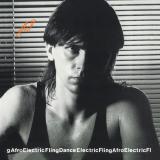
Borrowing from the melody of Rah Band’s “Electric Fling”, Stefano Breda’s cover version completely re-invents the theme into what came to be a “Afro Cosmic” classic. Not your average Italo Disco sound, the downtempo chuggy beat quickly got picked up by pioneering jocks in the cosmic scene. With plenty of silence in between transients putting the spotlight on the multiple percussive elements employed by the skilful drum machine techniques of Breda along with trippy electric wind instrument sounds, resulting in an overall aesthetic of highly unforgettable mediterranean dreaminess, take a deep dive into Breda’s instrumental bliss. This release is remastered and further embellished with yet another previously unreleased mix of “Electric Fling” which was recently alchemized by the artist himself — the “Long Afro Version” which goes in the bonus beat realm with another study in his percussive generosities.
Never before heard tunes from the heart of Manchester circa 1989. The lost demos of the band that was Joanna, recorded at iconic Strawberry and Pentagon Studios were discovered in a Manchester apartment loft after 35 years on the shelf. For fans of The Stone Roses, Happy Mondays and Charlatans. With the release of Hello Flower, Joanna is no longer “the most popular band without a record out,” as NME called them in 1990, but their singular spirit is now available for anyone who wants a taste.
From his roots in House, Alex Finkin is a renowned producer and creative director. Working in his Paris studio he has developed numerous projects, notably his own (Roseaux), as well as commissions for radio and television. Meanwhile, with 30 years of production and DJing under his belt, Rocco Rodamaal belongs to the elite circle of House innovators who continue to influence the scene. He's played alongside some of the best in the industry showcasing his versatility and deep understanding of the genre, and remixed artists including Marshall Jefferson, Kerri Chandler, Louie Vega & Moodymann, Todd Terry, Barbara Tucker and Robert Owens to name just a few. Alex Finkin befriended Rocco Rodamaal, who he met via the soulful Parisian club Djoon, where Alex was resident from 2006 to 2014. They have since collaborated on a number of projects together, including "In Da Hood" released on COD3 QR in 2023. Kenny Dope's "O'Gutta" remixes are a series of house and club-focused reworks characterized by raw, gritty and often stripped-back percussion, which he now brings to "In Da Hood".
Ross McMillan, known professionally as Carlos Nilmmns, is a Scottish electronic music producer, DJ and composer originally from Glasgow. Over the years he has collaborated with a range of notable artists, including Grammy-nominated and Grammy-winning figures, including Kenny Dope, Carl Craig, Kevin Saunderson and Davina Bussey, plus respected artists like Niko Marks, Rolando, Laurent Garnier, Santiago Salazar, Hardrock Striker, Karl The Voice, Zadig, Ben Sims, Andrés (who worked with Jay Dilla and Moodymann), and YouANDme. His music has been released on Planet E, Trax, Cocoon, Ornaments, Circus, Virgin, Skylax/Universal Music France and more. His style draws from house, techno and jazz influences, often combining analogue and digital production methods. A returning regular and COD3 QR favourite, he's back with another stunner in "Latin Quarter".
K' Alexi Shelby is a prominent figure in electronic music and with a career spanning decades, he's established a significant influence on House and Techno. Throughout his career he's worked with many well-known artists and remixed tracks that are now key pieces. The cultivation of his massive musical catalogue has overflowed into albums and the three labels he heads. It's also led to legendary collaborations with artists such as The Pet Shop Boys, Robert Owens, Kenny Dixon, Roy Davis Jr., Maurice Joshua, Terry Hunter, Joe Smooth, Steve Silke Hurley, Tyree Cooper, Ron Trent, Glenn Underground, Larry Heard, DJ Pierre, Carl Craig, Felix da Housecat, Marshall Jefferson, Will Smith and countless others. Already respected around the world as a true underground House legend, he delivered "Flame" in 2025 for COD3 QR. Now he's back with "When I", another deep and sexy cut.
Benny Rodrigues a.k.a. ROD unveiled his new moniker, The Lost Souldancer when he dropped "No More Voices" for COD3 QR last year. In his own words, Benny says: "The Lost Souldancer is about coping with the loss of what once was. Finding comfort in the invisible rather than what can be seen. Disconnect to connect in order to be loved rather than liked." He continues this ethos with the delicate and melodic closing track "Life and Death".

NES label founder and Danish DJ Popup brings his signature deep house sensibilities to the Aurore 404 imprint. The release features three house cuts that showcase his dual love for groove-driven, Daft Punk–influenced rhythms and deeper, more hypnotic shades of deep house. DJ Central steps in on remix duties, rounding out a true Regelbau family affair.
DISPLACES represents Fabris' most personal musical journey to date, inspired by the concept of hyperobjects and cartographic practices. The album sculpts a high-dimensional phased time-space composed of concrete materials and digital archetypes in a state of constant displacement. It delves into the symbolic and philosophical realms of mapping as one of the greatest sense-making mechanisms for life, in dialogue with object-oriented environments, superimposition and non-locality applied to cosmic, temporal, and emotional memory.
The sonic ecosystem expands on the image of navigating a path through a set of places, from the microcosm of quanta to the macro force of dark matter, from underwater depths to overland terrains, encapsulating the cyclical flow between birth and death, both in ecological and anthropological sense. The intersection of these shifting states is explored through the extensive processing of the langspil, Iceland's only traditional instrument, intertwined with manipulated field recordings of biophonies and geophonies captured across Icelandic and Venetian territories. These recordings form the backdrop for a meditative process that relocate familiar objects into unfamiliar realms, reflecting on the transformative power of self-reflection while encapsulating the fragmentation and entanglement found in nature and the human state. The record plunges the listener into a disconcerting and physical soundscape, as a “ghostly spectrality that comes in and out of phase with normalized human spacetime,” evoking sensations of suffocation and release as each layer continuously unfolds the palimpsest of the enclosed labyrinth.
“Extraction of the I” embodies a subatomic reaction—erupting as a molecular force that rises, only to re-submerge with a solitary exhale underwater. In this mutated dark space, beluga whales breathe into "Xanadu Phasing," creating a pulsating tension that releases only to unveil a frozen landscape.
In “Barricading the Ice Sheets” the glacial material morphs into a liquid tunnel of digital artifacts, building a wall of noise that shatters into scattered fragments of ice, resembling bird calls from another world.
A moment of stasis is offered with the appearance of an asymmetrical loop in Monolith I, evoking a primitive rite before an unknown force emerges.
The physical intensity of subsonic material in "A Quake in Being" interrupts the hieratic tone, detuning into polluted sonic matter sourced from relics of the First World War in the Venetian Prealps. The geography of this place reconciles with the original homeland in "The Map is the Territory," blending negative space with anthropogenic elements and exploited sounds of the langspil.
The burning density of "Wolf-Rayet" projects into the void, echoing the residual sounds of a local church as relics of fossilized religions. Wolf tones are the remains in Monolith II, introducing the final track, "Topography of Extinction," where evolving psilocin textures invite the listener to uncover deeper layers of meaning and dislocation.
COME ON Yé!
Spanish hero JAVI MULA is back on an amazing splatter 12”!
With a massive demand on Discogs and prices for ALL other pressings on ALL labels soaring (150 to over 400€), a repress is here!
Including the most-wanted version of this Spanish holiday club classic, the ORIGINAL, and as well with an amazing new remix by Belgian house hero Christopher Phonk, well-known from his classic underground house tracks “Marmalade Skies” and “Why Don’t You Love Me”.
Christopher Phonk has taken this track to the next level.
Also on this release, the acapella and the Robbie Moroder Remix.
MUST HAVE!
Signaling their long-anticipated debut on ICONYC, the label welcomes acclaimed Italian duo Glowal with their Future Faces EP. Uncompromising in its intent, this two-track capsule extends the duo’s emotional vocabulary, threading new ideas through their unmistakable sonic lens for a release that underscores the expressive precision at the heart of their craft.
Casting their gaze forward on “Future Faces”, Fabio Giannelli and Alessandro Gasperini open proceedings with a fractured rhythmic chassis driven by a throbbing low-end pulse that warps with each passing beat. Heavy percussive strikes carve their path into the night before a disarming female vocal emerges from the shadows, injecting a sense of yearning and fragile wonder into the piece. A sudden brake—like tires skidding across rain-slick asphalt—ushers in laser-etched synth lines that cry out with an anthemic resolve, while iridescent sequences bubble to the surface, sealing a striking first statement on the label.
Turning the corner, Glowal unveil the esoteric “Desert Soul,” a slow-burning reverie that expands on the EP’s emotional terrain. Patiently unfolding over fragmented rhythms and a meandering bassline, neon traces guide us toward a robotic vocal presence that introduces a subtle human-machine tension. Stripped to a minimal core yet rich in sentiment, “Desert Soul” resonates with quiet introspection—an understated meditation on self-discovery that lingers well beyond its final echo.
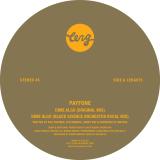
Some tracks are just too good to only feature on a compilation, even if it is a significant and celebratory set like Leng’s 15 Year anniversary album from late last year. That’s certainly the case with Payfone’s brilliantly atmospheric ‘Dime Algo’, a seductive slab of slow-motion Balearic disco featuring ‘I Feel You’ vocalist Kyd Nereida, along with Sofi Hardoy and Ludmila Rodriguez.
For this single release Black Science Orchestra, one of Britain’s most storied production collectives, deliver some truly exceptional remixes. Initially making their name with a series of sensational house jams on Junior Boy’s Own across the 1990s, BSO became renowned for the quality of their remixes as well as an ever-evolving trademark sound that put soul, organic instrumentation and references to dance music’s rich and varied past front and centre.
Comprised of Rob Mello, Ashley Beedle and Darren Morris, Black Science Orchestra work has been rare in recent years but here they deliver some magical takes on ‘Dime Algo’, blending Payfone’s original instrumentation with their own low-tempo magic. The Vocal Mix begins with sparse drums, Kraftwerkian bleeps and heavy sub-bass, building the action in waves with 303 lines, electro synths, warm chords and Nereida’s superb lead vocals combining to re-frame ‘Dime Algo’ as a deep, far-sighted slice of chugging 21st century acid-disco. The Dub Mix stretches things out with effects-laden instrumentation, acid lines and vocal snippets. Deeper and woozier, with more prominent use of the trio’s 303 trickery and Payfone’s superb original elements, it’s a heady, intoxicating and loved-up interpretation that subtly gains intensity throughout its seven-minute duration.
- A1: Holiday
- A2: Kwajilori
- B1: I Am Your Mind (Part 2)
- B2: I Like The Way You Do It To Me
- C1: Third Time
- C2: Touch Of Class
- D1: Release Yourself
- D2: Come To Me
- E1: Wide Open
- E2: Funk In The Hole
- F1: Liquid Love
- F2: Tarzan
- F3: Sunshine (Demo)
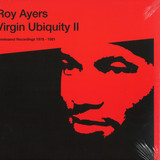
BBE Music announces the first repress of the classic Roy Ayers albums ‘Virgin Ubiquity’ 1 and 2 since 2006, on luxurious 180g vinyl with brand new sleeve notes written by Sean P. The music on 'Virgin Ubiquity' was selected and mixed down from previously unreleased multi-tracks recorded between 1976 & 1981, which Roy had in storage. It's all unmistakably Ayers, but is diverse and fresh enough to be more than a mere adjunct to one of his most productive and popular periods - testament to his and his musicians' creative abilities, as much of most revered Ayers output stems from this time. These discoveries take their place beside some illustrious company in a timeline bookended by 'Everybody Loves The Sunshine' and 'Africa, Center Of The World', several solo and Ubiquity albums, collaborations with Wayne Henderson & Fela Kuti, as well as guesting on LPs by Buster Williams and Herbie Mann. Out of print on vinyl and CD for over a decade now, BBE is delighted to re- present these groundbreaking Roy Ayers titles, neatly coinciding with the 45th anniversary of his classic album ‘Mystic Voyage’ and a UK tour to commemorate it during April 2020.


![VARIOUS - [QR]V.093.STTP!.26](https://www.deejay.de/images/l/8/2/1218782.jpg)