Search:disco for the people

Styles
All
Various - Wigan Casino Classics 1973-2023

Wigan Casino - the original UK dance culture super club - ran its’ first Nothern Soul All-Nighter in September 1973. It’s last session was in December 1981, and by then its 500 plus frantic All-Nighter had firmly stamped Northern Soul as an integral part of the British music landscape,

Wigan Casino Classics 1973 - 2023 proudly celebrates 50 years since the birth of the most important ever Northern Soul venue with 14 all time classic floor fillers. The Sandi Sheldon, Major Lance, The Seven Souls and Johnny Robinson gems were originally released on the Uber cool Okeh label but despite being part of the mighty Columbia Records empire sank without trace on release in the USA only to be discovered (and revered) by UK Soul devotees.

The Metros and Lorraine Chandler tracks were produced by Detroit’s mighty Pied Piper Productions crew and demonstrate that Motown were far from the only Motor City set up that knew how to conjure up truly breathtaking music.

In Northern Soul lore there is an intriguing story behind all 14 tracks - who produced and wrote them, which Rare Soul detectives - the original crate diggers - discovered them, what DJs played them..

But at the centre of it all is Wigan Casino, the seen better days Lancashire dance hall where 2,500 plus Soul fanatics flocked to every weekend to dance dance dance at the pre Rave era ultimate Rave. The recent 50th Anniversary celebration in Blackpool attracted a 5,000 turn out. The legend lives on.

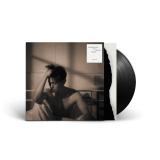
This release marks the return of the always style wise Joe Boy label. Their trademark on point graphics are reinforced with the LP front sleeve being devoted to an iconic photograph by Francesco Mellini taken at the last ever Casino All-Nighter.

Soul plus Art from The Heart of Soul.

In Stock

On Stock and ready to ship

15,25
Various - BOSCONI STALLIONS VOL.III (2x12")

The Stallions compilations have become a benchmark of Bosconi's position as one of the leading house and techno labels operating out of Italy. This third instalment marks a shift in sound which also comes full circle to the music that first inspired founder Fabio Della Torre as a DJ and producer around the turn of the millennium, when punchy electro production was driving European house and techno into new zones.

All the artists featured on Vol. III are Italian, holding true to Bosconi's commitment to supporting local talent from Florence and across the country. Amongst the familiar faces is Della Torre's own Minimono collaboration with Ennio Colaci, which indulges a proudly manic palette of tweaked bleeps and dirty low-end. Elsewhere, recent additions to the Bosconi fold include veritable legends Alexander Robotnick and Marco Passarani, who infuse their unpredictable approaches to electro-techno and italo disco with ear-snagging synth-pop and driving analogue box jams respectively to create vibrant, impassioned dancefloor monsters.

The Mechanical Man is an alias from Nicola Altieri, who leans in on a classic Italo arpeggio to create a seductive club sound which builds on his recent Bosconi EXV EP, while Cixxx J switches from the mood of his own Bosconi appearance for a new alias Queen Of Coins and a pivot towards heads-down electro-techno-trance with a whiff of International Deejay Gigolos. Lapucci builds on the promise of his 2021 Bosconi 12" with a sentimental fusion track which lands somewhere between old school Italo house, the snappy pulse of EBM and crisp 00s-era electro house. Meanwhile modern day Italian techno legend Lucretio of The Analogue Cops makes his first appearance on Bosconi with the playful video game stylings of 'Gradius'.
A great deal of space on Vol. III is given over to emergent talent, ranging from Miguel Herr's twitchy detroitian synth-pop braindance and Twovi's vocoder-charged electro funk to DJ Rou's jacking ghetto house flavour. Giammarco Orsini and Jacopo Latini appear as Data Memory Access and deliver an emotive, punchy strain of machine soul. Feel Fly rounds the compilation off in bombastic style with an epic, cinematic workout which draws on Moroder-inspired drama without losing the forthright peak-time focus which binds the whole collection together.

Even the artwork on Vol. III serves as an opportunity to celebrate Italian creativity, as pioneering crypto artist Niro Perrone builds on his accomplished work in the field of NFTs and a background in music production to respond intuitively to the vibrant, synthetic sound of the compilation. For all the futurism in the music though, there remains a strong sense of human feeling which has marked Bosconi out since the beginning. The label remains as inspired and inspiring as ever, celebrating the fertile crossover when people manipulate technology to express themselves in an honest, playful way. Independent of wider trends or fashions, Bosconi remains true to its own idiosyncratic passions, and so Bosconi Stallions Vol. III stands proud as a compilation like no other.

In Stock

On Stock and ready to ship

24,16
Soom T - The Louder The Better LP 2x12"

Soom T aka “The Raggamuffin Queen” will release her sixth studio album “The Louder The Better” on October 13, 2023. A combination of live band studio recordings and digital compositions, it took only 3 years to fully realize from the very first live band recordings in Brazil during the 2020 pandemic to its release this year. Entirely self-produced with her own music label Renegade Masters with Kunta as executive producer, Soom T called on her most trusted collaborators to produce this new Reggae/Dub gem, and it’s sunnier than ever.

“Path of the Wanderer” with its poignant and deeply emotive vocal, irresistible rolling bass line and driving rhythm was composed by French production maestro Tom Fire with “Ezekiel’s Vision” and “Michael” being the fruits of live band recordings at Pangea Studios in Sao Paolo Brazil under the skilled direction of Mauro Rabello.

“Fly My Bird” and sunny pop anthem “Good Will Come” are original compositions by Terry Vibes out of the USA while “Bad Road”,“Emergency” and “Normal People” were stylised digital productions by France’s own Dr Bud reminiscing on Soom T’s first love of digital. Additional synths were added by executive producer Kunta and studio partner Green Teddy of Highly Seen.

“Prophets”, “Free the Man”, “There is love”, “No worries” and “Don’t Make Me” composed and curated by Christian Cowlin who is the live sound engineer for The Wailers USA, takes the journey into a more roots direction with some solid harmonies and flashbacks to a bygone era. Many of the instruments on these songs were performed by Mr Cowlin himself among other seasoned musicians and recorded at his studio in the UK. Led by her great respect for activists whose aims and efforts are rooted in making society movw forward with dignity and honour, Soom T denounces the incarceration of businessman/politician Schaeffer Cox, unjust in her eyes and tens of thousands of others globally, in a call to “Free the Man”.

If “The Louder The Better” has definite roots influences, “Like a Dog” composed by French label and music production studio Irie Ites and “Walk the Earth” performed by legendary British drum & bass duo Mafia & Fluxy, added some more digital delight alongside a sweet roots trip for the listener to indulge in a medley soup of varying influences throughout this album, mixed by Mista Maff and mastered by Simon Capony at Basalte Studio.

« Hail to the Watchman », an easy favourite for more traditional reggae lovers was composed by Kunta in conjunction with Green Teddy, both of whom contributed to the production of the 2017 ‘Arch’ LP.

Finally, with this new reggae album, Soom T sticks to what is closest to her heart covering a multitude of topics from the corrupt state of the world, to the emptiness of politics and the urgent need to awaken to the reality of the condition of society.

Behind the need to inform and urge society moving forward, « The Louder The Better » delivers a positive and inspiring message, led by melodies and vocals at the crossroads of genres, that fans will love to listen to at any time.

See you on October 13, 2023 to discover this new opus by Soom T.

In Stock

On Stock and ready to ship

21,43
Captain Mustache - The Super EP

It’s been a few years since Captain Mustache took a ride with Kompakt – 2021, to be exact, when he released the “Everything” single, and subsequently made an appearance on that year’s entry in the Total series. But this visionary French producer has been busy, indeed fiercely productive, ever since, appearing on Helena Hauff’s Return To Disorder and John Digweed’s Bedrock, collaborating with Dave Clarke, Popof, The Advent, Paris The Black Fu, Keith Tucker from AUX88... and two beautifully eloquent albums, Tourbillon Nocturne and Indigo Memories. But with The Super Album, Captain Mustache returns to Kompakt with his most sublime collection yet. On The Super Album, the Captain soundtracks an imagined “whole day for party people.” He welcomes friends old and new on board: opening with the poetic club banger of “About Love”, with guest appearance from Speakwave (aka dynArec), The Super Album shifts gears into the lush, sunny “Shifting Basslines”, where Captain Mustache’s pulsing electro-disco is the perfect fit for a third collaboration with electroclash pioneers Chicks on Speed. After the deep techno pulsations of “Laser Me” and the glitzy pop shine of “Gimme Ya Mustache”, more guests arrive: Arnaud Rebotini of Black Strobe on the slinky “I Love Watching U”, and then a spoken cameo from the truly legendary French disco diva Amanda Lear on “Mustache Of The Universe”, a glitzy glitterball of a song that’s shrouded in ghostly synths. All those tracks appear on the 12” version of The Super Album – download the digital version and you get six more slices of Mustache magic. Here, the narrative turns more insular, more dancefloor focused – the party people have moved through the daytime and they’re in their element, diving deep into the night-time economy. The album spirals, beautifully, into stark electro, driving techno, with great moments of beauty and melancholy – see the pointillist arpeggios of “Everything” (which features Play Paul), the disco stomp of “Acapulco Citron”, and a breath-taking double-bill of stripped back psychedelic electro on “Pulsions Organiques”, and the layered, luscious, swooning “Clair-Obscur”. From there, it’s an astral glide into the Dopplereffekt-ish “Galaxian Symbiosis” before Foremost Poets join Captain Mustache to wave the night goodbye with the brittle, brilliant “Floorwax”. It’s a day in the life, but all in service to the pleasures of nightlife; the dancefloor is The Super Album’s beacon, your body the pliable material moulded into evocative new shapes by this dense, hypnotic, brilliantly pop album.

In Stock

On Stock and ready to ship

17,61
Elic - Retourism

Elic

Retourism

12inchHELICAL01
HELICAL
20.09.2023

Elic, aka Giorgio Di Natale, is a DJ and producer from Bari, Puglia (Italy). He was initiated into electronic music at a young age, when he began attending clubs in the area and working as a PR. Soon after, he discovered, while frequenting the most transgressive Florentine clubs and the Adriatic Riviera, a passion for house music and everything that runs around the world of clubbing.The uncontrollable desire and instinct to listen and buy records to share with friends and people, led him to take up DJing in 1999. With the huge background behind him and the various styles that contaminated him, he decided to let this flow into productions as well, and it was not until 2021 that he entered the world of music production.Thus was born Elic and his label HELICAL. "Retourism" is the label's first EP and collects three tracks ranging from electronic to techno and minimal.

A journey through hypnotic atmospheres, but with an eye always on the dancefloor.

In Stock

On Stock and ready to ship

12,40
VARIOUS - 70s Disco Hits Vol. 2 LP

Various

70s Disco Hits Vol. 2 LP

12inchZYX55988-1
Zyx Music
29.08.2023

The vinyl sampler „70s Disco Hits Vol. 2“ is a compilation of timeless disco classics from the 1970s presented on a highquality vinyl record.

This sampler invites you to rediscover the pulsating rhythm and distinctive sound of this outstanding decade.

Thanks to very careful selection, „70s Disco Hits Vol. 2“ presents a fascinating mix of well-known songs and hidden gems of the disco era. From funky basslines to rousing horn sections and infectious choruses, this sampler offers a crosssection of all the diversity and energy of the 70s.

In Stock

On Stock and ready to ship

13,87
Qzzaargh - Lost But Found

Qzzaargh

Lost But Found

12inchDTL001
Detali
25.08.2023

Very special material found in the legacy archive of a Ukrainian rock'n'roll star from the '90s, the frontman of the Braty Hadiukiny band. After a long pause in his musical career and a life-changing period abroad, he unexpectedly switched to electronic music production.

He passed away in 2009 without releasing these tracks, and only a very limited number of people ever heard them in his studio. His productions include eclectic house, progressive trance, and downtempo tracks we discovered thanks to his former wife, who kept Serhii’s artistic heritage throughout the years.

In Stock

On Stock and ready to ship

12,56
MF Robots - Break The Wall LP 3x12"

Mf Robots

Break The Wall LP 3x12"

3x12inchBBE646ALP
BBE
09.08.2023

Effortlessly dismantling the barriers between R&B, soul, funk, disco and jazz sounds, MF Robots present long player ‘Break The Wall’, on BBE Music. Astonishing musicianship, pristine production and top-tier songwriting, ‘Break The Wall’ immediately calls to mind those iconic American rhythm sections of the 70s and 80s. The music is energising, uplifting and the potent result of a highly accomplished musical partnership maturing, growing and hitting their stride together in lock-step. Jan Kincaid and Dawn Joseph met as members of one of the UK’s most successful Acid Jazz bands, which influenced Mark Ronson, D’Angelo, Jamiroquai, Erykah Badu and The Roots to name a few. Founding the Brand New Heavies was an important chapter for Jan, but once he and vocalist and songwriting partner Dawn began working together, the chemistry was instant and irresistible. It was time to turn the page, and soon MF Robots was born. “When we made our first album, we didn’t have a band as such. We basically made a lot of the record at home and called on other musicians as and when we needed them. Our sound was developing organically, and when we finally released the record to great critical acclaim, it was time to get out on the road,” says Jan. “We put together a band of like-minded young musicians, playing intimate gigs and big festivals all over Europe and beyond, growing tight as a unit, so that when it came time to think about making this, our second album, we knew we had an extra level of musicianship full of personality that could realise our vision.” Inviting band members Alex Montaque (keys), Naz Adamson (bass), Mark Beaney (guitar), Jack Birchwood (trumpet), Ben Treacher (sax) to improvise and contribute their own ideas over song-sketches laid out by Jan and Dawn gives ‘Break The Wall’ a special sense of off-the-cuff brilliance. Even on the polished final product you can detect a collaborative, fluid and unhurried approach to production that’s all-too rare these days. There’s guest performances from bassist Gail Ann Dorsey (‘The Love It Takes’, ‘Make Me Happy’) and guitarist Cory Wong ('Shine', 'Make Me Happy'), the former a top-flight session player who’s collaborated with Lenny Kravitz and David Bowie among others, the latter a member of the incredible Vulfpeck collective and an accomplished solo artist in his own right.
In Stock

On Stock and ready to ship

25,84
Hunter Complex - Airports and Ports LP

The new Hunter Complex album Airports and Ports arrives today Friday 2 September 2022 on Burning Witches Records and features contributions from Aquiles Navarro (trumpet, Irreversible Entanglements), new age legend Kat Epple (flute, Emerald Web), Alexander Hawkins (piano, Louis Moholo-Moholo), Justin Sweatt (aka Xander Harris, guitar) and Coen Oscar Polack (field recordings). Airports and Ports is the follow-up to the critically acclaimed synth albums Dead Calm and Zero Degrees (Burning Witches, 2020) and Open Sea (Death Waltz, 2019) and takes a new direction with influences from new age, ethereal jazz and krautrock.The gorgeous artwork was created by Luke Insect.For Airports and Ports,

Lars Meijer of Hunter Complex invited musicians from all around the globe to contribute to the album.Meijer: ‘I wanted to know what they would come up with, what new sounds and styles they would bring to my music. My previous album Dead Calm and Zero Degrees came out at the beginning of the Covid crisis in March 2020. I didn’t create music for months, it felt like time stood still. I missed the energy I got from being around people, from seeing concerts, from traveling. Those musicians gave that back to me and inspired me to create and discover new grounds.

In Stock

On Stock and ready to ship

26,01
Loopdeville - Incase EP

Loopdeville

Incase EP

12inchMODEIGHT016
Modeight
16.06.2023

Expanding an ever-evolving discography of cutting edge minimal house and techno, Modeight adds another brilliant release to the fold. This time beamed in from Spain-based groover Loopdeville.
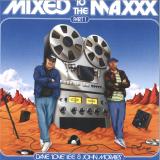
People familiar with his work on Bodyparts, Rotate and his own imprint Delooped, will certainly be excited to wrap their ears around this freshly minted three-tracker. Opening with the low-slung, breakbeat jam 'Incase', Loopdeville injects his characteristic funk and fun-loving vocal flair into the A-side cut. Creating an irresistible dancefloor destroyer.
On the B-side, we begin with the swooning tones of 'Cleansing'. Lacing airy atmospherics and tonal key strokes over a seductive bassline roll. Finally B2's 'The Bounce' is every bit as elastic as its title suggests. With a buoyant breakbeat rhythm underpinning stuttered vocals, and ghostly tonal dissonances. Back with the fire once more, Loopdeville has found the perfect platform on Modeight for his enigmatic.

In Stock

On Stock and ready to ship

11,72
Clio - Eyes

Clio

Eyes

12inchPLT799MIX
Planet Records Classics
09.06.2023

The decade of the 80s is revived through recordings like "Eyes" that allow you to travel through the music and trigger those old emotions of innocence, joy and adventure. It's possible you don't understand a word of what they're singing in the chorus, but the song is very catchy! Maybe not even Maria Chiara Perugini knows what she sings about, but she makes you hang on to every word of her like a nursery rhyme of synths, beach and bubblegum. "Eyes" is so amazing, so mesmerizing and more and more people are discovering this italo-disco masterpiece that usually satisfies and makes fun of you at the same time. If you try playing it at 75% speed gives a hypnotic vapor wave vibe! And even more, the song would have fit well in the dance club scenes from Scarface. Beyond the words - difficult to find a text that makes sense, sometimes out of context, unundestandable even for a French listener - the piece is so surprisingly likeable for the unique tone of Clio's voice, a strange cross between teenager and adult, and the part where she spoke another language, with some really cool synthesizers, are people's favorite parts. 0:31 "Je suis bien heureuse" , 0:47 "La nuit a ses merveilles", 0:57 "Il y a de quoi y perdre la tete, pour toi, sha, pour toi", 1:36 "Je n'ai plus de bulles", 1:52 "Je vous prie applaudissement". "Eyes" by Clio contains all the emotions that a dance-pop song should contain plus the essential element of mystery, a kind of magic that takes place between the chorus and the bass line, a shot in the dark drizzly night of the Italo-Disco. made by Roberto Ferrante, a guarantee for the perfect productions of the 80s, when he was only 20 years old.

In Stock

On Stock and ready to ship

16,77
David Christie - Dance Collection 25th Anniversary LP 2x12"

In order to celebrate the disco legend, Editions Miliani presents a
magnificent double album of remastered tracks by performer and
songwriter David Christie.

David Christie, a.k.a Jacques Pepino, passed away 25 years ago and for the anniversary of his death, Editions Miliani has compiled these tracks to bring to life timeless music that continues to make people dance! Carefully selected, the tracks include the "Saddle Up" version by Bon Entendeur.

David Christie has composed for artists such as Sylvie Vartan, Joe Dassin, Demis Roussos, Morris Albert, Gloria Gaynor, Jimmy James, Grace Jones and Tina Charles, for whom Christie wrote the 1976 hit "I Love to Love" that topped the UK charts. The album pays tribute to the career of this musical genius.

In Stock

On Stock and ready to ship

26,01
Tod Dockstader - Aerial 2 LP 2x12"

Tod Dockstader's Aerial series, an electronic/drone masterpiece, is cherished among fans of the artist's work and this second volume is available in an audiophile quality double LP edition.

Tod Dockstader's Aerial series is sourced from his life long passion for shortwave radio. Dockstader collected over 90 hours of recordings, made at night, and comprised of cross signals and fragments plucked from the atmosphere.

Opening with airwave drones, Dockstader gradually allows elements to slowly come and go, summoning an ominous atmosphere of ethereal cloud clouds. Malignant placidity continues, giving the feeling of eavesdropping upon late-night audio activity not unlike discovering number stations while sweeping the dials. These sounds pull you in as their density and rhythms come and go.
Backward voices, deep echoing choruses of conversations flowing under the surface, ocean sounds, pulsing electro-rhythms, all seem to be created via the collaging of many hours of source recordings. A masterwork of collage and juxtaposition by an overlooked pioneer of American electronic music.

Artwork by John Brien (Imprec) is inspired by the propagation of shortwave radio signals throughout the earth's atmosphere.

"This return of Dockstader is something to cherish, not just because his output has been so limited and scarce but because what we do have is so intriguing, persuasive and cliche-free; the music of an inspired explorer who trails in nobody's slipstream." The Wire

"One of the great figures of musique concrete composition." Dusted

The Aerial project

I've written before of my interest in shortwave radio, in the notes to the Quatermass CD. Also, in the notes to the Omniphony CD (which has my first "Aerial" mix, "Past Prelude," in it), I mentioned "The Aerial Etudes," which was my working title for what became the three CDs you have. And, at the end of an interview with Chris Cutler (which can be found in the "Unofficial TD Website"), the piece I mentioned I was starting to work on at the time became Aerial.) When I was very young, people got most of their entertainment from radio. They called it "playing the radio," as if it were a musical instrument. That's what I've tried to do in this piece. About this time, a few people encouraged me to look into using a computer for this work.

I'd never used one, but I saw it would allow me to keep my mixes digital - no more transfer losses. So, at the end of 2001, I got a computer and an editing program for it, and spent what seemed a long time learning it. I began selecting mixes and loading them into the computer in late March, 2002. Out of the 580, I selected 90 "best" mixes - eventually reduced to 59, the ones on the CDs. Finally, in assembling the CDs, I followed David Myers' suggestion to allow each piece to flow into the next - making a continuous journey to the end. Tod Dockstader, 14 september 2003

About Tod Dockstader: Dockstader moved to New York in 1958 and became a self-taught sound engineer and sound effects specialist and apprenticed as a recording engineer at Gotham Recording Studios. It was around this time that he started to use his off-work hours to experiment with mixing and manipulating sounds on magnetic tape (musique concrète). By 1960 he had amassed enough material to assemble his first record Eight Electronic Pieces which was released on the Folkways label in 1961 (this would later be used in the soundtrack of Fellini’s Satyricon). The last of the eight pieces was later re-worked into his first stereo piece. In 1961 he applied to use the facilities at the Columbia-Princeton Electronic Music Center and was denied access by Vladimir Ussachevsky. Ussachevsky’s official reason was the “overstrained” scheduling of the studios, although many suspect that Dockstader’s lack of academic training was a factor in the decision. He continued to create music throughout the first half of the 60s, working principally with tape manipulation effects. His last piece at Gotham was Four Telemetry Tapes in 1965, after which he left to work as an audio-visual designer on the Air Canada Pavillion at Montreal’s Expo ‘67. It was around this time in 1966 that some of Dockstader’s pieces were released on three Owl L.P.s, and his work became known to a larger audience. He achieved modest recognition and radio play alongside the likes of Karlheinz Stockhausen, Edgard Varèse, and John Cage.

In Stock

On Stock and ready to ship

30,88
The Shapeshifters - Let Loose LP 3x12"

From an aspiring b-boy to working with luminaries Billy Porter, Joss Stone, Kimberly Davis and Teni Tinks, The Shapeshifters, Simon Marlin announces the release of his brand-new studio album “Let Loose”.

Wrapped in a defining optimistic mood and colourful palette, “Let Loose” plays with the friction between musical persona and influence, delivering a masterclass in Simon’s flourishing depth of integrity as a producer and admiration to those that exert their enduring influence upon him.

“I'm a facilitator of talent. I'm blessed that over the years I've managed to put a team of people together - as a producer, that's what I do, very much in the old school sense like a Quincy Jones or Gamble & Huff, they’re the guys I try to emulate - and make something magic out of nothing, but do it in a contemporary way. That’s what really floats my boat, and that's what this whole project is about.” Simon Marlin – The Shapeshifters

Across the latest and long-awaited studio album “Let Loose” The Shapeshifters pledge rhythmic allegiance to the golden era disco records and their spellbinding qualities; embracing the tension often found between tradition and future to craft a euphoric, certifiable body of work presented to the devoted audience he deserves. The Shapeshifters exemplify a scene in rude health one that is now switching on an ever-younger fan base, and with Marlin being the beating heart of it it’s easy to see why The Shapeshifters are more in demand in the clubs than ever.

The twelve-track album is illuminated with vocal collaborations including the recently released and debut collaboration with the Grammy, Tony and Emmy Award-winning Billy Porter.

Layers of rushing strings, flares of brass and hedonistic grooves provide refreshing dancefloor power dynamics and deliver a liberating, triumphant and inherently uplifting record.

Taking an impeccably smooth course through disco-infused house, The Shapeshifters continue the rich relationship with Glitterbox and its record label; one that has yielded instant classics that epitomise the label’s ethos for preserving disco’s mission to uplift and empower.

In Stock

On Stock and ready to ship

33,40
Various - Synchronized Hunting

The second release of Distant Waters has been conceived with the idea of making something dynamic with flow and motions as a scene of sea hunting with several wild oceanic animals. So we collaborated with different inspired divers who came all around Europe to give their vision of our synchronized hunting. Solidwood the italian man behind the label Planet Tapes open this VA with a warm, stirring & progressive track. Then Sans Sucre strikes again, like a seagull who plunges into a big shoal of fish with a high energy track. The guys from Toulouse, Soyouz & Groenogen keep the flow going with a speedy micro-acid track that will make people dance as fast as a group of sardines trying to escape from their predators. English newcomer Human Logo close this EP with a shiny housy track with samples of whales which call for a hunting session.

In Stock

On Stock and ready to ship

10,50
ELIZIO DE BUZIOS - TAMANQUEIRO

Elizio De Buzios

TAMANQUEIRO

7"-VinylND011
NEW DAWN
22.12.2021

Reissue of Elizio De Buzios's "Tamanquiro". Remastered and pressed on 45 RPM!

Sitting a good 90-minute drive away from Rio de Janeiro’s crowded beaches and packed tourist hot-spots, Campo Grande is not a neighbourhood that attracts travellers from around the World. Traditionally it is home to the city’s lower middle-class, whose aspirations of moving up the social ladder were played out in a suburb that has always been solidly working-class.

Campo Grande is home to Elizio De Buzios, a Brazilian musician who started playing music in the late 1970s and early 1980s. De Buzios began as a drummer, before learning to play guitar and starting to compose and sing his own music. When he turned 18, De Buzios joined a local band formed by some of his friends and other like-minded local musicians: Sol da Terra. The band mostly played samba in neighbourhood bars and small venues around Camp Grande, but De Buzios was interested in more than just samba. While he naturally admired great samba composers such as Cartola and Beth Carvalho, his musical pass went far beyond Brazil’s national music. He also loved MPB and bossa-nova and at home he listed to Joäo Bosco, Milton Nascimento, Luis Melodia, Tom Jobim, and many bossa-nova singers.

In 1980 De Buzios was noticed by a local representative of international major label Polygram, who gave him the opportunity to record two songs. He was excited, so started searching for inspiration for the songs he would eventually lay down. He found that inspiration close to home while passing a neighbourhood shop which made and sold clogs. After noticing a display of then fashionable Portuguese clogs outside the store, De Buzios popped inside to talk to the owner. It turned out that he was a tamanqueiro – as clog-makers are traditionally called in his native Portugal – and was as passionate about music as he was about the footwear he made. Thus inspired, De Buzios returned home to work more on the lyrics and music.

The next day, he headed into the studio to record the song, with Vale Ribeiro, who later went on to produce tracks for Marcos Valle, behind the desk. With Ribeiro’s assistance, De Buzios managed to record two songs in one day: ‘Tamanqueiro’ and ‘Sou Um Louco’, a ballad with English lyrics blended into the mostly Portuguese text. From the start, it was clear that ‘Tamanqueiro’ would be the single’s A-side. Incredibly catchy and funky, with some subtle disco elements, the song remained distinctively Brazilian thanks to the use of the cuíca. Listening back all these years on, De Buzios’ lyrics seem almost spontaneous, carry the track forward, and make it almost impossible not to sing along. Its infectiousness and funkiness made it an instant hit with the first few people to hear it.

When it was released, responses to the song were enthusiastic, even if it never became the Brazil-wide smash it should have been. It resonated well in the local clubs and on the radio, but unfortunately the marketing was handled by an inexperienced Polygram employee who failed to adequately promote the track. As a result, the record sank without trace and De Buzios’ dreams of stardom evaporated. Having just started a family, he realized he could not live off the uncertainty of being a musician. Instead, he got a job at city hall as a civil servant, a role he continued until his retirement a few years ago. ‘Tamanqueiro’ and ‘Sou Um Louco’ remain the only two songs he ever recorded.

In the early 2000s, with the rise of diggers’ culture, ‘Tamanqueiro’ slowly surfaced again. It became a sought after, hard to find seven-inch single, finding its way onto the airwaves once more and into the ears of a new generation of listeners. Some started appreciating the song so much that it was referred to as the “best-Jorge-Ben-song-Jorge-Ben-never-recorded”. And they are right: ‘Tamanqueiro’ does have that Jorge Ben-straight-forwardness. It’s a completely honest song that’s almost impossible not to fall in love with. Thanks to this remastered reissue on Rush Hour, De Buzios may now get the props his sole record so richly deserves.

Now for the good news: De Buzios is still singing in local bars and clubs in and around Campo Grande. He is surprised, but also incredibly proud, that the record he had almost forgotten about is appreciated so much by a group of music lovers he didn’t even know existed. But above all, he is happy that more than 40 years after the recording session, the record lives on – not only on this re-release, but also in his weekend sets in the bars of Campo Grande.

In Stock

On Stock and ready to ship

12,40
Alignment - Nothingness EP

Alignment

Nothingness EP

12inchKNTXT008
KNTXT
28.05.2021

Charlotte de Witte's mighty KNTXT label rolls on with another big new EP from Italian wonderboy Alignment. The Berlin based techno talent serves up four suitably supersized cuts that follow on from his Time EP, which landed earlier in the year.

For the last five years, this artist has been amassing a fine discography of thrilling techno. This has earned him a worldwide reputation amongst the techno cognoscenti, and despite the global
pandemic this year, he has still put out plenty of red hot new material that proves he has used his extra free time at home wisely. He can do old school inspired bangers as well as refined futuristic techno rollers with equal style, and proves that once more with this fantastic new EP.

He says it, “reflects more the ‘sentimental' moments during these hard times. Nevertheless, you can also expect trippy and hypnotic vibes that will make you dream to dance again until the early hours.“

While Charlotte adds, "Ever since I started playing these tracks, people started asking for track IDs. They stood out and always were one of the highlights of my sets. These tracks are made to
destroy any type of dancefloor. A true masterpiece by one of the most exciting artists around.”

Opener Nothingness is a hunched over techno power-groove, with high pressure kicks and scraping synths peeling off the drums. It's a big wall of irresistible sound, then Injection brings
even bigger and more kick drums that are sure to rattle any club to its foundations, while the rave synths will get hands in the air.

Reverberated keeps up the good work with a more all-consuming techno cut thanks to the laser-like synths that light up the track from above. It has superbly dark and unsettling vocals stitched into the groove for extra layers of mental intensity. Last of all is the dark and urgent Sensory Deprivation with its edgy synth motifs and unrelenting energy.

These are four more high powered tracks from man of the moment Alignment.

In Stock

On Stock and ready to ship

13,40
Various: Jordan Rakei - Late Night Tales: Jordan Rakei 2x12"

“I wanted to try and showcase as many people as I knew on this mix. My idea of Late Night Tales was to distil a series of relaxing moments; the whole conceptual sonic of relax- ation. So, I was trying to think of all the collaborators and friends that I knew, who’d recorded stuff with this horizontal vibe. Plus, I was also trying to help my friends' stuff get into the world. I know the story of Khruangbin blowing up after appearing on the series (in fact, I think that's how I discovered them). So, the main idea was to create a certain atmosphere, but also to help some of my favourite collaborators and bud- dies to give their songs a little push out into the world. Hope you like it” Jordan Rakei


Due for release on 9th April, Late Night Tales celebrate their 20th anniversary with the release of multi-instru- mentalist, vocalist and producer Jordan Rakei’s majestic compilation. The 28-year-old modern soul icon effortlessly stamps his own jazz and hip-hop driven sound all over this gorgeous array of handpicked tracks. A beautifully layered blend that is mirrored in the music he’s made, itcomes as no surprise that such a supremely gifted songwriter should deliver a mix that is all about the song.


Rakei, born in New Zealand, but raised in Australia, moved to the UK in 2015; he released his debut album, Cloak, with Oz label Soul Has No Tempo, but his two subsequentLPs, Wallflower and Origin, came out on Ninja Tune, the former#2 in Album Of The Year for Gilles Peterson’s Worldwide poll, while Origin was nominated for Best Album at the AIM Awards. Jordan had this to say on his upcoming mix:


As Jordan says,there’s so much more to the song selection on Late Night Tales’latest outing than a random collection of artists. Many have some sort of personal connection, so just as Bonobo provided a platform for the breakout of Khruangbin on a previous LNT, this may have the same ef- fect for Rakei’s friends. After a soothing opener from Fink, good friend and big influence Alfa Mist (part of the Are We Live collective) delivers ‘Mulago.’ “I want to champion their sound and show the world how good he is, and I thought it’d be fitting to start the mix with family,” says Jordan.


Next up is Charlotte Day Wilson with ‘Mountains,’ followed by ‘Count A Heart’ from Moreton, an exclusive collab- oration with Jordan, who grew up on the same street in Brisbane, Australia. “She was the first artist I ever collabo- rated with, and one of the first artists to be involved in mycareer,” he explains. Elsewhere we hear Scottish producer and multi-instrumentalist C Duncan’s haunting ‘He Came from the Sun,’ Barcelona collective Oso Leone deliver a dreamy ‘Virtual U’ and Bill Lauren’s ‘Singularity,’ which evokes a striking sense of time and place.


Snowpoet’s ethereal ‘Evitenity’ is a “long mediative nar- rative over a beautiful soundscape,” which at times seems chaotic, nicely juxtaposed with undeniable beauty, and Maro’s kooky songwriting shines on ‘Always And Forever.’ Long-time buddy Armon-Jones contributes ‘Idiom,’ and Jordan’s exclusive cover version is a two-for-one, Radio- head’s ‘Codex’ merging with ‘Lover, You Should’ve Come Home’ by Jeff Buckley and another exclusive,original com- position by Jordan, ‘Imagination.’ The latter works as a piece with the spoken (Spanish) word voiced by movie director Alejandro González Iñárritu (Babel, Birdman, and The Reve- nant,) who is a big fan of Jordan’s. “He messaged me when I went to L.A and asked to come to my show. I was in such shock and we hung out after. I thought it would be nice to get him to do this in his native tongue, because I don’t think that’s been done yet on the series.” It certainly is a familyaffair. Not theblood is thicker than water kind, but certainly musical kindred spirits.

In Stock

On Stock and ready to ship

20,80
Nile Rodgers - Do What You Wanna Do - The Reflex Mixes

The established favourite Nicolas Laugier AKA. The Reflex has been a crucial name in the fabric of electronic music, and is widely praised for his masterful production style which has gained the seal of approval of heritage artists such as Nile Rodgers, Giorgio Moroder, Nina Simon, Kid Creole, Kathy Sledge, Noel Gallagher, Bono and Paul Weller - morphing some of the world classics into contemporary; certified rave anthems. Loved by tastemakers alike including Rob Da Bank, Gilles Peterson, Craig Charles and Mistajam, The Reflex is responsible for unleashing some of the best remixes to date.

Returning off the back of his latest revision of Norman Doray and Darren Crook's 'Sweet Freedom', which has so far gained nearly 150 worldwide radio spins since it's release on 6th November, The Reflex now puts forward an incredible 2021 revision of two time Grammy award winner Nile Rogers' 'Do What You Wanna Do'. A modern disco anthem, the track has since been remixed by producers like MK, Eats Everything and Rob Da Bank. With an already established repertoire of essential remixes and re-edits, the London based producer combines his unique Disco and Soul blend with his acclaimed musical initiative to create what will be an intricate and exceptional upgrade, and a key selection of an already impressive arsenal of releases.

A percentage of the royalties from this release will be donated to Nile Rodgers' 'We Are Family Foundation' - who collaborate with forward thinking organisation who believe in youth and together, build creative programming and content, empowering young people to take humanity forward.

In Stock

On Stock and ready to ship

13,40
Various - Hip Dozer Vol. 5 (2x12")

Various

Hip Dozer Vol. 5 (2x12")

2x12inchHIPDOZER005
Hip Dozer
24.03.2021
 
26
also available

Vol. 6[25,00 €]

Vol.7[24,75 €]

Vol. 8[24,75 €]


Back in 2015, when we started Hip Dozer we were overwhelmed by the amount of talents that were still defending that old school way of doing beats and the amazing creativity that was circulating in the scene.

In a period of time where hip hop was evolving so much and getting always further (sometimes for the best but also for the worst), it appeared evident to us that we had to defend this rising scene of young beatmakers that were so tied up to the roots of the 'old-school' beatmaking but still bringing it to another level.

It has been 5 years since we have created Hip Dozer Records with our 1st Anniversary compilation and this is what makes this compilation such a special project every time. Its goal remains the same and will always be, championing the art of beatmaking that we love and help to showcase new artists from the scene.

This year we have the chance to have onboard some of our favorite new talent from the scene with the like of Burrito Brown, Loland, Imagiro, we also have the chance to have standard bearers like Jinsang, Saib, Flofilz, Melodisinfonie, Kazam, Shuko and, cherry on the cake, the french hip hop legend DJ Cam on top of that.

We want to thank so much all the artists who took part in this project and that were as enthusiastic as we are in its realization. It’s been such a thrill since this venture started and this is just the beginning. Much love to all of you guys listening and supporting wherever you are.

PEACE. Hip Dozer Fam.

In Stock

On Stock and ready to ship

25,00
Purple Disco Machine Feat Mind Enterprises - Exotica

After a long delay due to his previous powerhouse 'Hypnotised' blowing up the worldwide spot, German maestro Purple Disco Machine finally lets loose the next step in his world dance domination. Every superlative under the sun has been used for this man's talents and he does not disappoint with a return to his updated Italo disco stylings on new single 'Exotica'.

Purple Disco Machine remains at the forefront of world dance music, following a series of remixes for A-list icons Diplo, Dua Lipa, Mark Ronson, Foals, Calvin Harris, Fatboy Slim, Sir Elton John, whilst more recently delivering his stellar cuts of Duke Dumont’s ‘Ocean Drive’, and Lady Gaga and Adriana Grande’s international hit single ‘Rain On Me’.

He now unveils yet another side of his impressive production prowess with new single ‘Exotica’ featuring the Italian electro funk producer Mind Enterprises on vocals, creating an electric club record exploring and playing homage to '80s German and Italian euro disco records that he grew up with.

Based around a replayed sample of 80’s Italo disco classic ‘Void Vision’ by Cyber People, Purple Disco Machine creates a high energy dance-floor heater with a lively modulated vocal. ‘Exotica’ shares its name with the forthcoming studio album, which the artist confirms will feature his playful interpretation of the music of the decade that birthed the Purple Disco Machine sound; Synth Pop, Italo Disco, Electro Funk, Soul, R&B and Boogie.

Certified as one of the most prolific electronic artists of our generation, the Dresden born producer ranks #2 on Beatport’s all-time Top Artists, with his 2013 breakthrough hit ‘My House’ remaining as one of the platform’s best-sellers through to today. With an undeniable midas touch, Purple Disco Machine landed himself in the record books once again in 2018, whilst amassing a stunning 100 million streams across his original ‘Dished (Male Stripper)’, and remixes of Weiss’ ‘Feel My Needs’, and most notably his remix of the seminal ‘Praise You’ by industry icon Fatboy Slim. With a slew of varied releases including hit singles ‘In My Arms’, ‘Body Funk’ and ‘Devil In Me’, the producer’s status was propelled by his debut LP ‘Soulmatic’, earning him critical acclaim across the globe.

In Stock

On Stock and ready to ship

13,87
The Posse - Our Thin

The Posse

Our Thin

12inchPWRLD16
Plastic World
27.03.2017

'an incredible, funked-out live show and production team with their own modern take on boogie, Philly soul, and NY disco.' - XLR8R The Possé are a new face to many people. The five piece run by Andrew Elston and Ross Ferraro is comprised of veterans from all over Australia's music scene. After a year of knuckling down in the studio and a string of sold out shows they've boiled down their favourite influences into an in-credible, raw, funked out live show and production team. Watch out for The Posse's debut EP, Our Thing, featuring contributions from Andrew Elston (Phy-sique/Toni Toni Lee/Catcall), Ross Ferraro & Jarrol Renaud (The Goods), Michael Di Francesco (Touch Sensitive/Van She) and NZ jazz keys prodigy Andrew Bruce.

In Stock

On Stock and ready to ship

7,27
Originale Disco Version - Communion LP 2x12"

STRICTLY LIMITED TO 100 COPIES ARTIST PROJECT After discovering techno at La Concrète, invited by my girlfriend, it was a revelation, and I very quickly felt the urge to contribute in my own way. My intention has been to create tracks infused with positive energy (even if the creative process sometimes leads into slightly darker corners of music). Still, I realized—rather late—the importance of the musical genre known as “techno.” Here is my reflection on it: Nothing is closer to village music (with everything that implies among indigenous peoples, for example—important and respected moments of communion) than techno. On one side, you have basic organic instruments and the voice; on the other, the most advanced technology available. But fundamentally, the difference is only superficial—the essence is the same: a guide, and people who participate intuitively, ultimately finding or discovering their own inner paths… individuation. Techno represents the re-emergence of a kind of initiation rite that had been missing in the West for quite some time—a sort of continuation of Woodstock, more spread out over time but just as powerful from a societal perspective. This release is my contribution to that revival, in the same way a villager might feel free to join trance music with a simple stick that sounds right, or a drum—something intuitive that all our ancestors must have practiced naturally at one point or another. In short, nothing pretentious—just something made with heart

pre-order now15.05.2026

expected to be published on 15.05.2026

26,85
Soul Jazz Records Presents - REBEL ISLAND SOUL – Under The Influence: Reggae, Funk & Soul In Jamaica in the 1970s (2x12")
  • 1: John Holt - You’ll Never Find Another Love Like Mine (3.48)
  • 2: Cornell Campbell - Be Thankful (3.58)
  • 3: Elizabeth Archer & The Equators - Feel Like Making Love (.4)
  • 4: The Chosen Few - People Make The World Go Round (3.22)
  • 5: Dave & Ansel Collins - Single Barrel (3.17)
  • 6: The Now Generation - Shaft (3.19)
  • 7: The Marvels - Some Day We’ll Be Together (3.05)
  • 8: The Darker Shades Of Black - War (2.41)
  • 9: Winston Curtis - Private Number (3.42)
  • 10: Lee Perry & The Upsetters - Bathroom Skank (4.30)
  • 11: Slim Smith - Watch This Sound (2.43)
  • 12: Winston Francis - Sitting In The Park (3.29)
  • 13: The Sensations - If I Don’t Watch Out (2.57)
  • 14: Carl Bert & The Cimarons - Slipping Into Darkness (3.04)
  • 15: The Darker Shades Of Black - Ball Of Confusion (3.10)
  • 16: Jah Youth - Ain’t No Sunshine (2.35)

Sixteen killer 70s reggae funk and soul cuts from the likes of John Holt, Lee Perry, Cornel Campbell, The Cimarons, The Chosen Few and more featuring superb reggae takes on songs by artists including The Jackson 5, William DeVaughn, Diana Ross and The Supremes, War, The Temptations, Roberta Flack, The Stylistics and others!

Well-documented is the influence of American black music on Jamaican styles of the 1960s – from the birth of ska music, when The Skatalites ska-ified the jump-up southern USA rhythm and blues music of Rosco Gordon, Louis Jordan and Fats Domino, through to the creation of rocksteady when Jamaican artists like The Techniques, The Paragons, Alton Ellis and The Melodians turned to the slower rhythms and soulful harmonies of groups such as The Impressions and The Drifters for inspiration. 

Less-well established is that in the 1970s Jamaicans didn’t (shock!) stop listening to American black music styles, with many 70s reggae artists as invested in soul, funk and the proto-disco sounds of Philadelphia, as was the case with rhythm and blues in the previous decade. In the 1970s, while Jamaica promoted its own roots reggae styles around the world, powerhouse USA soul labels such as Motown, Philadelphia International and Stax Records were at the same time all popular on the island.
This interaction between American and Jamaican music was not limited to Jamaica. In Britain, first-generation Caribbean-émigré children in the 1960s and early 70s grew up with an equal love of both soul and reggae, which manifested itself in the home-grown arrival of lovers rock in the mid-1970s.
Soul Jazz Records’ new ‘Reggae Island Soul’ tells this story of how soul and funk-infused reggae in the 1970s united the sounds of Jamaica, USA and the UK into a highly addictive cultural hybrid of styles.

pre-order now15.05.2026

expected to be published on 15.05.2026

28,99
Sheldon - Les Monstres LP 2x12"
  • A1: Outro
  • A2: Les Monstres
  • A3: La Fenêtre
  • A4: Être Une Fille
  • A5: Sidequest Feat. Asfar Shamsi
  • B1: Avec Ça
  • B2: Bonhomme De Neige
  • B3: Vivant
  • B4: Les Rois
  • C1: Cowgirl Feat. Tuerie
  • C2: Eh Le Reuf
  • C3: Kodak Blue
  • C4: Vol De Nuit Feat. Jazzy Bazz
  • D1: L'école Primaire Feat. Chilly Gonzales

New album by french rapper Sheldon, including featurings with Chilly Gonzales, Jazzy Bazz, Tuerie, Asfar Shamsi...


Monsters are never where we expect them to be. They take shape in silences, in vague fears, in the baggage we carry without always understanding it. Sometimes, we also encounter them along the course of a life. On this new album, Sheldon chooses to dance with them, to tame them with wit, grace, and a sense of peace.


Following a powerful return with Grünt 75, an iconic format to which the 75e Session collective brought particularly ambitious visual staging, Sheldon unveils a fourth album that unfolds across fourteen tracks like a chiaroscuro landscape, revealing the full depth of his emotional and musical range. Through intimate narratives, the record explores identity (Être une fille), family and fatherhood (La Fenêtre and Les Monstres, the title track), as well as friendship (Eh le reuf). These are themes that run through all of us, approached here with writing that is vivid, demanding, and deeply sensitive.

Driven by a strong narrative arc, the album features songs like Être une fille, which challenges and questions us. On it, Sheldon reflects on his relationship to gender, his doubts and discomfort with the codes of masculinity, and the idea that he has sometimes imagined himself elsewhere. Tracks like La Fenêtre and Avec ça illuminate the album like moments of communion, sincere, warm, and unifying, carried by a childlike lightness that makes tomorrow disappear.

True to his open minded and ever curious artistic approach, Sheldon draws from a wide range of musical genres while keeping rap as the album’s guiding thread, giving each song its own singular identity and contributing to the balance of the whole. To shape the project, Sheldon surrounded himself with a new generation of musicians and beatmakers whose influences span rap, indie rock, pop, and experimental music. Among them are Johnny Ola, who has notably composed for Zamdane, Jazzy Bazz, and Edge, Rodolphe Babignan, Carbonne’s flamenco guitarist, and Jeune Oji, an artist signed to Friends of Friends Music. Together, they bring melodic and acoustic richness, as well as a collective generosity that deepens the album’s intimacy.

This new album also opens the door to new collaborations.

On L’école primaire, Chilly Gonzales joins Sheldon for an unconventional piano and vocals piece, driven by cinematic, deeply intimate storytelling. Using his primary school as a point of reference, Sheldon retraces his path from childhood to adulthood, somewhere between nostalgia and serenity.

On Cowgirl, Tuerie joins Sheldon for a soft, melodic ballad with an 80s tint, capturing the weightlessness of a sunlit summer.

On Sidequest, Sheldon reunites with Asfar Shamsi, who had already appeared on his Grünt. Over a delicate cloud trap production, the two artists open up about everyday pain, finding in introspection a way to put things into perspective.

Finally, Vol de nuit brings Jazzy Bazz and Sheldon together for an intimate exchange over an ethereal, mysterious production, as both artists look back on their journeys with calm and clarity.

Conceived alongside Sheldon’s closest circle, the project celebrates family, friendship, and love as its founding pillars. Sheldon chooses to step away from the images, allowing his story to be embodied instead through the faces and gestures of those around him. This approach runs through all of the project’s visuals. Rejecting the excess of spectacular image making, he chose instead to hand a camera to his loved ones so they could offer their own vision of a song from the album. By opening a small window onto his intimacy, and that of the people closest to him, Sheldon finds a way to say a great deal with very little, turning deeply personal trajectories into something universal.

Like the music videos, the album cover is rooted in a deliberately simple approach, where the fantasy of childhood disrupts reality. Designed by Tenzin, the graphic designer behind Sheldon’s recent projects, Ptite Sœur, and also work for Jul, it is based on an archival photograph taken during a traditional carnival in Tenzin’s native village. With no staging involved, the image captures children in costume mid parade, caught in a spontaneous burst of movement, embodying the free innocence of childhood.


Les Monstres marks a new chapter in Sheldon’s journey. Like a rainbow after the storm, this fourth album reveals new colours in the artist’s discography, as he delivers a record that is both demanding and accessible, intimate and open, one in which music becomes a love letter to friendship and to love itself. Set for release on April 24, 2026, the album will be followed by a tour culminating at La Cigale in Paris on December 3, 2026.

pre-order now15.05.2026

expected to be published on 15.05.2026

28,78
WILL WOOD - THE NORMAL ALBUM  (2023 MIX)

In 2023, Wood secretly worked with producer Kevin Antreassian on a new mix of his top-selling release "The Normal Album." Digging into the original 2019 recordings for more muscular takes, smoother edits, and a more nuanced and balanced mix, Antreassian and Wood created a version of the fan favorite that is one of the rare cases where a new mix is widely considered to improve on the original noticeably. "The Normal Album" is yet another turn in Wood's discography, sardonically playing with Americana and doo-wop sounds, strategically restrained but still highly emotive vocals, and lyrics densely packed with scientific and philosophical references. The dark mania of Wood's prior 2016 release, "SELF-iSH," continues on some tracks but is arranged with greater precision with a new band at his command. Like his 2015 debut "Everything is a Lot," the songs whiplash tonally but are brought together through intertwined themes and recurrent musical motifs and an undercurrent of simultaneous obtuseness and vulnerability. After the original mix of "The Normal Album" was released, a live version of the 4th track on the LP, "I/Me/Myself," had an unexpected viral moment, which brought attention to many other songs on the LP. Songs like "2econd 2ight 2eer" and "Laplace's Angel" continued to attract new fans with their dense wordplay and high-energy attitude, and the album became Wood's first major break into larger notoriety, proving that his sudden burst of popularity was not just a fleeting trend. After taking some time away from the public, Wood began to revisit the album with the intent of giving it the production that he had originally envisioned for it. Wood's top-selling album re-edited for a fuller sound and clearer instrumentation, bringing the album to a new level: new Modern Stereo Mix - 2023 Edit

out of Stock

Order now and we will order the item for you at our supplier.

26,01

Last In: 14 days ago
Emily Nenni - Movin' Shoes LP

Emily Nenni

Movin' Shoes LP

12inch607396593217
New West Records
01.05.2026
also available

GOLD VINYL[27,10 €]


Whenever Emily Nenni is onstage, she welcomes everybody to the dancefloor. The California-born, Nashville-based singer-songwriter wants the honkytonk to be a place of escape, where fans can shed their troubles for a few hours and feel safe and free. “I’m always watching the dancefloor and making sure everybody’s being respectful.” Or, as she sings on the supremely funky title track to her new album Movin’ Shoes, “Here’s where you dress for you and dance the way that you want to.”

Movin’ Shoes is an album about how we treat each other and how we treat ourselves. Confident in its touchstones and compassionate in its insights, Movin’ Shoes eloquently and wryly blends southern soul from Memphis and Muscle Shoals with southern rock from Macon and outlaw country from Austin. Making Movin’ Shoes was a process of discovery for Nenni. Musically she found all new ways to combine the disparate artists she loves so much, and lyrically she found all new ways to relate to herself and to others. “We should at all times acknowledge and accept the fact that we’re imperfect people,” she explains. “We all make mistakes and we should all rethink the way we go about things. I am flawed. Everyone around me is flawed. But that’s not a bad thing. It just means we’re all human. This album is about making mistakes and learning from them. I’m always trying to put that into my songs.”

pre-order now01.05.2026

expected to be published on 01.05.2026

27,10
Emily Nenni - Movin' Shoes LP
also available

Black Vinyl[27,10 €]


Whenever Emily Nenni is onstage, she welcomes everybody to the dancefloor. The California-born, Nashville-based singer-songwriter wants the honkytonk to be a place of escape, where fans can shed their troubles for a few hours and feel safe and free. “I’m always watching the dancefloor and making sure everybody’s being respectful.” Or, as she sings on the supremely funky title track to her new album Movin’ Shoes, “Here’s where you dress for you and dance the way that you want to.”

Movin’ Shoes is an album about how we treat each other and how we treat ourselves. Confident in its touchstones and compassionate in its insights, Movin’ Shoes eloquently and wryly blends southern soul from Memphis and Muscle Shoals with southern rock from Macon and outlaw country from Austin. Making Movin’ Shoes was a process of discovery for Nenni. Musically she found all new ways to combine the disparate artists she loves so much, and lyrically she found all new ways to relate to herself and to others. “We should at all times acknowledge and accept the fact that we’re imperfect people,” she explains. “We all make mistakes and we should all rethink the way we go about things. I am flawed. Everyone around me is flawed. But that’s not a bad thing. It just means we’re all human. This album is about making mistakes and learning from them. I’m always trying to put that into my songs.”

pre-order now01.05.2026

expected to be published on 01.05.2026

27,10
Amarante-Cerisier - Amarante-Cerisier

Amarante-Cerisier

Amarante-Cerisier

12inchOKRAïNA#19
Okraïna
30.04.2026

"What if, alongside the mainstream history of music, with careers and discographies spanning ten or fifty years from album to album, there was an underground, minority history, that of artists and projects with only one record? A flash, a burst of brilliance, a gem, but no follow-up, no repetitions, no decline.
"This will most likely be the case for this album by Amarante-Cerisier, a duo formed by Mauricio Amarante (RadikalSatan, Équipage, travelling companion of Canan Domurcakli and Austin Townsend) and Marine Debilly Cerisier (dancer, performer, writer, co-founder of alternative cultural venues in Marseille and Brussels), with these eight poetic songs in French having more in common with the visionary essence of certain songs from the early 1970s (Brigitte Fontaine-Areski, for example) than with the post-modernism of the ‘nouvelle chanson française’ of the1990s and 2000s.
"But – and this is undoubtedly no coincidence – this is also the case for two unique albums, which had no immediate follow-ups but which, 50 and 20 years after their release, inspired Mauricio and Marine's album and discreetly found their way into it:
"At the very end of the 1960s, Tchékov Minosa (Marine's grandfather) embarked on a journey to the East with his partner Brigitte de Saint-Preux, during which they were married ten times, in ten different traditions (in Kurdistan, among the Kuchi people of northern Afghanistan, among the Kalash people of north-eastern Pakistan, in Rajasthan,etc.). This three-year journey was documented in numerous articles in the European press, in documentaries, in a book... and on a double LP of traditional music recordings released in 1973 by Le Chant du Monde. And sampled today by Mauricio Amarante at the end of the track ‘Parfois’.
"In the early 2000s, Austin Townsend, a tall, bony figure, washed up on the banks of the Garonne River near Bordeaux, arriving from New Zealand. With a voice that was sometimes very Bob Dylan-esque, at other times buried in the gravelly depths of the low frequencies, he strung together contemporary blues songs on his only album, Introvenus (Potagers natures, 2007), beautifully accompanied in subtle tones on banjo and double bass by Mauricio and Cesar Amarante (alias Radikal Satan). Beyond this unique record, Mauricio played extensively with Austin in concert. And when his friend died in the spring of 2024, he received his guitar, used the instrument for some of the tracks on the upcoming Okraïna record, and decided to dedicate the album to him.
"In our conception of music, fleeting appearances, unexpected reunions, and timeless records outside the dictates of current musical trends thrill us more than overly well-planned career paths."

pre-order now30.04.2026

expected to be published on 30.04.2026

23,32
Giom - Giom Classics Part 1

Giom

Giom Classics Part 1

12inchSUPREMUSV001
Supremus
24.04.2026

Giom's Supremus Records has been dropping digital heat for more than a decade and now, in collaboration with us, they are making their vinyl debut with the Giom Classics series featuring tried and tested gems that have been fully remastered. 'The Message' is first up and back in 2015 when it originally dropped quickly became a favourite of the don Bill Brewster. It's patient, low-slung and slow burning with an irresistibly hypnotic effect. 'People' then gets more party with chopped vocals and disco samples all bristling with energy and big drums carrying it onwards and upwards. 'Last Dance' closes out with more warm, soul-infused and patient house depths with musical chords and another well-chosen and expertly deployed vocal that adds just the right amount of fire to amp up the energy.

out of Stock

Order now and we will order the item for you at our supplier.

13,87
Niklas Paschburg - L'Ècho De Bretagne LP
  • 01: Paimpol
  • 02: Marché
  • 03: Le Port
  • 04: À La Maison
  • 05: La Vie Lente
  • 06: Bandes
  • 07: Adieu

A century-old grand piano, a secluded house surrounded by the greenery of Brittany, no internet connection, and a reel-to-reel recorder.L'Écho de Bretagne, the new EP by Niklas Paschburg, set for release from fall 2025 via Nettwerk Music Group, is a solo piano record as essential as it is intense. An album made of silences, space, slowness. A music that doesn't chase impact, but truth.

the album release is march 26th - 2026.

If his previous work, Mexican Alps (2025), marked the first time the German composer and producer created an ambient-electronic album without his instrument of choice, the piano, L'Écho de Bretagne emerges as a direct response to that absence. "It was exactly the lack of piano that brought about the need for this new record, which instead puts that instrument, so vital to me, at the very center, stripping everything else away," Niklas explains.

Born in 1994, Paschburg has shaped over the years a musical path deeply connected to travel, nature, and introspection. From his debutTuur Mang Welten(2016) toOceanic(2018),Svalbard(2020),Panta Rhei(2023), and the aforementionedMexican Alps— alongside soundtracks, remixes, and collaborations with artists like RY X, Hania Rani, Ásgeir, and Bryan Senti — his sound bridges neoclassical, electronic, ambient, and pop-driven composition.

WithL'Écho de Bretagne, the Hamburg-born, Berlin-based musician continues his exploration by seeking solitude in nature, much like he did onSvalbard, but this time with an even more radical choice: disconnecting completely from the internet, and switching off both computer and smartphone for a while, in order to fully immerse himself in his new music. "I rented an old cottage in Paimpol, Brittany, where I knew there was a grand piano," he recounts. "When I got there, I discovered that not only was the piano more than a hundred years old, but it was also of an unknown brand, never restored, and quite difficult to play. But that gave it a unique character, and I didn't give up. Sure, it was an instrument left to its own fate, I couldn't play anything too fast. But how fascinating was that? I'm convinced that setting limits, instead of giving yourself total freedom when composing, can become an extraordinary source of inspiration."

As for the decision to temporarily detach from a life that demands we stay constantly connected, Niklas describes it as both a creative and human experiment. "I had my laptop and phone with me, just in case, but I kept them turned off. That choice made me wantL'Écho de Bretagneto be a fully analog work, even in how it was recorded." A way of clearing the mind. "I don't think I've ever been as calm as I was during those days in Paimpol. Even though I was working on a very specific project and didn't have much time, that period was more relaxing than any vacation."

Not that it was free of hiccups. "I'd borrowed a reel-to-reel recorder small enough to travel with me, but after recording a session on the piano, I realized it wasn't working properly, the sound was distorted, full of crackles. I got worried, because I wasn't near any big city where I could find a technician. Luckily, I figured out the problem was the old tape reels I had brought along. That was the only time I had to go online, to order new ones. But it was just for a moment. I shut everything off again right after." At that point, Niklas was waiting for the new tapes to arrive. He found out, completely by chance, from a local UPS courier that they had been delivered to a nearby village. "Since my phone was off, I couldn't track the shipment. So one day I asked this delivery guy, who didn't know anything about it. But from that point on, we'd see each other daily and talk… That's what being disconnected also means: reconnecting with people around you, even strangers. It was thanks to that courier that I found out where the tapes had ended up. And he even helped me get them back, writing directions for me on a scrap of paper."

But there's another element that makes this new EP unique.L'Écho de Bretagnewas recorded entirely live; its tracks are all improvised, complete with their imperfections. This approach leads to a sound that is pure, profoundly organic, and deeply authentic, intentionally preserved to give the listener the feeling of a live performance happening in their own living room. The touch of fingers on the keys, the breath of the wood, the tension of the vibrating string, all become part of the music. There is no construction, only expression. "Even now, when I listen back to it, I feel that moment I gave myself to step away from everything: from reality, from words, from noise." The result is a collection of suspended melodies and atmospheres, reflecting a state of the soul. A refuge from the rush of time. A pause from the world.

pre-order now24.04.2026

expected to be published on 24.04.2026

25,00
Various - Tchic Tchic: French Bossa Nova 1963-1974  Colored Edition LP 2x12"
  • A1: Les Masques - Il Faut Tenir (1969)
  • A2: Isabelle Aubret - Casa Forte (1971)
  • A3: Christianne Legrand - Hlm Et Ciné Roman (1972)
  • A4: Jean Constantin - Pas Tant D'chichi Ponpon (1972)
  • A5: Billy Nencioli & Baden Powell - Si Rien Ne Va (1969)
  • B1-: Marpessa Dawn - Le Petit Cuica (1963)
  • B2: Jean-Pierre Sabar - Vai Vai (1974)
  • B3: Sophia Loren - De Jour En Jour (1963)
  • B4: Isabelle - Jusqu’à La Tombée Du Jour (1969)
  • B5: Sylvia Fels - Corto Maltesse (1974)
  • C1: Frank Gérard - Comme Une Samba (1972)
  • C2: Ann Sorel - La Poupée Des Favellas (1971)
  • C3: Charles Level - Un Enfant Café Au Lait (1971)
  • C4: Andrea Parisy - Les Mains Qui Font Du Bien (1970)
  • C5: Audrey Arno - Quand Jean-Paul Rentrera (1969)
  • C6: Aldo Frank - T’as Vu Ce Printemps (1970)
  • D1: Christianne Legrand - Cent Mille Poissons Dans Ton Filet (1972)
  • D2: Clarinha - Lemenja (1970)
  • D3: Hit Parade Des Enfants - Aquarela (1976)
  • D4: Jean-Pierre Lang - Tendresse (1965)
  • D5: Magalie Noël - Une Énorme Samba (1970)
  • D6: Françoise Legrand - La Lune

Ever since the late 1950s bossa-nova revolution, Brazil’s influence on French music has been undeniable. Pierre Barouh, Georges Moustaki and a vast array of lesser known artists, all made the Musica Popular Brasileira (MPB) an axis of promotion at the service of a cool and metaphysical, modern and mixed Brazilian lifestyle. Some were seduced by the poetic languors of the bossa, some were looking for fun, and others just loved the American hybridization of jazz-bossa, jazz-samba.


What is bossa nova? One of its creators, Joao Gilberto said: "Its style, cadence, everything is samba. At the very start, we didn't call it bossa nova, we sang a little samba made up of a single note - Samba de uma nota so .... The discussion around the origins of bossa nova is therefore useless”. It is nevertheless useful to remember that these magnificent Brazilian songs, which the guitarist describes as samba, were shifted and balanced around improbable chords. "I like things that lean, the in-betweens that limp with grace," said Pierre Barrouh, quoting Jean Cocteau.


With emotion, arrangements for violin and supple guitar licks, bossa nova rapidly changed. A transformation that can be heard in the Tchic, tchic, French Bossa Nova 1963-1974 compilation, the result of a cultural reappropriation, which traveled through the United States and supplemented itself in France.

A musical revolution that has remained significant, bossa nova was born in Rio. From 1956 to 1961, Brazil lived through its golden years. In five years, the country had invented its modernist style. Elected president in 1956, Juscelino Kubitschek de Oliveira, an elegant man with a broad forehead, brandished a promising slogan: "Fifty years of progress in five years". He quickly got to work. Not worried about increasing debt, he launched the project for a new federal capital, Brasilia, designed by the communist architect Oscar Niemeyer. Volkswagen opened state-of-the-art factories and created the “fusquinha”, the Beetle. In Rio, the Vespa made its first appearance. The Arpoador Surf Club crew run into the “girl” from Ipanema, Helô Pinheiro - the tanned garota ("chick"), between a flower and mermaid, who at 17 walked by the Veloso bar, where the fiery author and composer, Tom Jobim and Vinicius de Moraes, were getting drunk on whiskey. From then on, bossa symbolized cool.

In 1958, Joao Gilberto recorded Chega de Saudade, which the directors of Philips denied, calling it "music for fagots". The marketing director, who believed in it, secretly pressed 3000 78-inch vinyls and distributed them at schools around Rio, creating a tidal wave.

American jazzmen then took over. In particular, trumpeter Dizzy Gillespie and guitarist Charlie Byrd. In November 1962, the Brazilian Ministry of Foreign Affairs funded a "Bossa-Nova" concert at Carnegie Hall in New York, inviting the genre’s pioneers. Unprepared, the show soon turned to disaster. But the troupe was invited to the White House by Jackie Kennedy. The first lady loved "the new beat" and in particular Maria Ninguem, a song by Carlos Lyra, later covered by Brigitte Bardot.

In Brazil, the 1964 military coup quickly ended this euphoria. The destructive atmosphere that ensued pushed many Brazilian musicians to leave, if not to exile. Thus, Tom Jobim, Sergio Mendes and Joao Gilberto arrived to the United States. In New York, Joao Gilberto met saxophonist Stan Getz. At the time, he was married to the Bahianese Astrud Weinert Gilberto, who had a German father. She had never sung before, but she knew how to speak English. Getz therefore asked her to replace her husband on The Girl From Ipanema. The Getz/Gilberto record with Tom Jobim on piano, was released in March 1964. Phil Ramone, the "pope of pop" was in charge of sound.

Bossa nova arrived in Paris through the classic “guitar-voice” channel (Pierre Barouh, Baden Powell, Moustaki…) But France loved jazz and Paris had already welcomed its American contributors. All these good people were to pass through Saint-Germain-des-Prés. The cabaret l'Escale became the Mecca of Latin American sound where one could find Pierre Barrouh and his friends, such as the Camara Trio, samba-jazz aces, whose only record was published by the Saravah label. With a band strangely called Les Masques (a band that included Nicole Croisille and Pierre Vassiliu, among others), the Camara Trio recorded an interesting Brazilian Sound, including the track Il faut tenir which is present on this tasty compilation of rarities.

Other enlightened musicians can also be found on the compilation, such as Jean-Pierre Sabar (songwriter for Hardy, Auffray, Leforestier ...) and the French pop rock organist Balthazar. In 1975, Sabar recorded Aurinkoinen Musiikkimatka on a Finnish label, which featured the crazy Vai, Vai, included on this record. We are now following the footsteps of Brazilian electronic musicians such as Sergio Mendes, Eumir Deodato or Marcos Valle who created funk and disco sounds on their keyboards and synthesizers. A style that influenced Véronique Sanson when she wrote Jusqu’à la Tombée de la nuit in 1969 for Isabelle de Funès, the niece of Louis and a great friend of Michel Berger - Sanson did end up singing this track on her 1992 Sans Regret record.


The pinnacle of exoticism and travel, Sylvia Fels’ Corto Maltese includes bongos, sea mist and ocean sounds. The title was taken from Jacky Chalard’s concept album written in 1974, Je suis vivant, mais j’ai peur (I am alive, but I am scared), based on Gilbert Deflez’s science fiction novel.


However, bossa nova extended the scope of popularity. "In the 1970s, I was a fan of Sergio Mendes, Getz / Gilberto. I fell in love with this music that I knew because I had been an orchestral singer, " explained Isabelle Aubret, who in 1971 delivered a composite record of covers by the very funky Jorge Ben, Orfeu Negro, Tom Jobim, Vinicius de Morais and Jean Ferrat. "I recorded this album for Meys Records in Paris, far from Brazil, with wonderful musicians, François Raubert, Roland Vincent, Alain Goraguer...". The latter wrote the arrangements for Casa Forte, a very percussive title borrowed from Edu Lobo, one of the initiators of the bossa who spent time in California. "Jazz and bossa came together and produced very rhythmic music. I love singing, it allows me to dream, to have fun, to feel a high on stage, and these songs brought me joy, made me swing, my singing felt like a dance.”


The world tours of French singers and their desire for the tropics, often brought them to Rio with its hills, forests, caipirinhas and tanned bodies. There are surprises though, like this Iemenja (Iemenja is the goddess of the sea in the Afro-Brazilian candomblé religion). Not unlike the composer and musician Jean-Pierre Lang, based in Sao Paulo, Claire Chevalier taught Brazil to Brazil. In 1970, the singer and painter published a 45-inch vinyl, Mon mari et mes amants (My husband and my lovers), under the improbable pseudonym of Clarinha (little Claire). She was then living in Rio, with her husband, Joël Leibovitz, who founded a band called Azimuth, and who owned a record label specialized in "sambas enredos" songs for samba school parades.


For its B side, she asked Pierre Perret to come up with lyrics for a song composed by Carlos Imperial: "Oh goddess of the sea, o goddess Iemenja, I bring a white rose to adorn your long hair ..." . "Perret came to see us, and we had fun, remembers Joël Leibovitz. We wrote Lemenja for fun, we recorded it at the Havaí studio, behind the Central do Brasil the central station. Erlon Chaves, the arranger who worked with Elis Regina, joined us" adding his share of Afro-Brazilian percussions and funky brass to the mix.

There is a common misunderstanding in Franco-Brazilian history: that bossa, admittedly hedonistic, is perceived as funny, even though the poets who wrote the texts are often philosophizing on the human condition. Its French interpreters pull it towards a carnival inspired universe, far removed from its fundamental essence. Thus, Jean Constantin covered the famous Samba da minha terra, an ode to the art of samba written by the classic Bahian composer Dorival Caymmi, renaming it with the enticing title of Pas tant de tchi tchi pompon: "On your pier there is no tchi tchi / when you arch your back, you know everything is alright ”(lyrics by Gérard Calvi). This expedited bossa aims for the absurd, but retains a certain elegance.

Indeed, Jean Constantin was not an idiot, the rather large man had a huge mustache and liked fantasy, (Les pantoufles à papa, Le pacha, inspired by cha-cha-cha-cha, salsa and jazz) but he was also the lyricist of Mon manège à moi interpreted by Edith Piaf, the composer of Mon Truc en plume by Zizi Jeanmaire and the soundtrack of François Truffaut’s 400 Blows. Le Poulpe, published in 1970, from which this bossa is extract, was arranged by Jean-Claude Vannier, an accomplice of Serge Gainsbourg’s Melody Nelson. In short: "There is enough of samba / By looking at the parasol / Because my poor cabeza / Is going to die in the sun".

Even the American actress Marpessa Down, who was at the heart of the bossa nova revolution with her role as Euridyce in Marcel Camus’ film Orfeu Negro, winner of the 1959 Cannes Palme d'or, fed the clichée with Je voudrais parler au petit cuica - "Tell me how you manage to always make people want to dance / It's true, I must admit that I cannot resist your magic" - in consequence, once can hear the cuica, a little drum inherited from the Bantu.


But bossa nova had many angles. Societal, of course, pushing actresses who were symbols of women's liberation like Brigitte Bardot, Jeanne Moreau, or Sophia Loren to engage in the exercise of accelerated bossa. In February of 1963, Sophia Loren made a record in French in Rome, Je ne t'aime plus, featuring the song De jour en jour, a bossa written by two Italians, Armando Trovajoli and Tino Fornai, which was released a little later by Barclay. Bossa accompanied the 1960s, a decade of moral liberation. Ann Sorel, who interpreted La Poupée des favellas, caused a sensation with L’amour à plusieurs, a provocative song written by Frédéric Bottom and Jean-Claude Vannier. As for the actress Andrea Parisy, she displayed her bourgeois cheekiness in Marcel Carné's Les Tricheurs before interpreting Les mains qui font du bien. And Magalie Noël, the friend of Boris Vian, who sung Johnny fais-moi mal, was hired to sing Une énorme Samba, composed by Alain Goraguer (arranger to Gainsbourg, Bobby Lapointe and Jean Ferrat) with lyrics by Frédéric Botton.

But in the end, of what wood is bossa nova made of? The answer is given by Christianne Legrand, daughter of Raymond the conductor, and sister to Michel the composer: "With me, with jà" - jà means "immediately" in Portuguese. In 1972, the singer, an expert in vocal jazz and a member of the Double Six, published Le Brésil de Christianne Legrand. Two songs included on the Tchic Tchic compilation that demonstrate how bossa, jazz, funk, rock, etc. work like a swiss army knife: the music is used to denounce broken systems, or miracles, HLM et ciné roman, Cent mille poissons dans ton filet, two songs from the O Cafona soundtrack, a successful telenovela broadcast, at the time in black and white, on TV Globo. The first was adapted in French by the fighter and friend of the Legrand tribe, Agnès Varda. The second is content with a play on words, jostling them into a summer fun.


Véronique Mortaigne

pre-order now17.04.2026

expected to be published on 17.04.2026

27,31
Christina Kubisch - TUNING

Christina Kubisch

TUNING

12inchFAIT-41LP
Faitiche
17.04.2026

Faitiche welcomes a new artist: Christina Kubisch belongs to the first generation of sound artists. Her practice ranges from performances, concerts, to works with video and visual art, but she is best known for her sound installations and electro-acoustic compositions.

TUNING brings together three pieces by Christina Kubisch from different periods of her oeuvre. What they have in common is the way they transform sound phenomena originally considered “non-music” into compositions.

Jan Jelinek: Gaming in Silence (2024) is the most recent work on this compilation. It’s a collage of electromagnetic waves, voice, and abstract sound textures. How did this combination come about?

Christina Kubisch: Gaming was commissioned as a fixed-media composition for the Sound Dome at ZKM Karlsruhe. Since Resonances: The Electromagnetic Bodies Project (2005), I’ve been making recordings in the old and new server rooms at the ZKM and in their permanent collection of historical computer games. Computer games like Asteroids (Atari, 1979) and Poly-Play (VEB Polytechnik, 1986) have specially generated analogue electromagnetic waves that interest me in particular on account of their density, rhythms and textures. I originally studied painting and to me the work of composition often feels like painting an abstract picture. I alter my source material as little as possible, layering and overlapping until a distinctive sound space emerges. In recent pieces, I sometimes combine magnetic waves with field recordings or live instruments. In Gaming it’s my recording of a Chinese song about silence.

JJ: Two persons walking through a street in Madrid (2004) is a recording from your Electrical Walks series. Here we should give a brief explanation of one of your best known works: participants in an Electrical Walk move through public spaces wearing prepared headphones that allow them to receive electromagnetic waves from their surroundings – for example from security gates, ATMs or neon signs. They discover a situation that normally is inaudible to the human ear and they can actively shape it by choreographing their movements. I really admire this piece, not least because there’s no clear dividing line between participants and artist. What exactly do we hear in Two persons walking through a street in Madrid (2004)?

CK: With this early work, I wanted to understand what is heard by people participating in an Electrical Walk in the same place but moving in different ways. The Spanish composer Miguel Alvarez-Fernàndez and I set off from opposite ends of a major shopping street in Madrid, met briefly in the middle, and then continued to the end. We both recorded our walks and I then layered them over one another. You might call it a work of electromagnetic conceptualism.

JJ: Diapason (2009 version) is an installation that plays a composition based on sounds from fifteen tuning forks. This setting is audible in the recording: there’s no dramatic arc, no beginning or end – instead, it recalls a piece of aleatoric music focussing on the decay phase. How did you come to make this work and could you tell us something about your compositional method?

CK: Diapason is part of a series of three pieces that deal with “non-instruments” or instruments that no longer exist: electrical mine bells used to send signals to the workers underground; a historical glass harmonica originally used for medicinal purposes; and tuning forks that were used by doctors to test people’s hearing. All of these methods are no longer in use. The sound of the tuning forks, audible only if held close to the ear, was recorded at the electronic studio at Berlin’s Technical University in such a way that even their decay remained audible. The frequencies range between 64 and 2048 Hertz and they can be adjusted at micro-intervals using small movable weights. The sequence and the duration of the pauses are dictated by chance and were not defined in advance. The 2009 version was created for an installation in the historic Holy Cross Church (Korskirken) in Bergen. Visitors could enter and leave the space at any time, deciding for themselves where and for how long they wished to listen to the sounds played back over an array of small loudspeakers placed on the floor of the apse.

Credits:

Gaming in Silence: commission of the ZKM/Hertzlab, Karlsruhe 2023
elektronic sound processing: Tom Thiel
sound engineering and mixing: Eckehard Güther

Diapason: produced at Elektronisches Studio of TU Berlin
rearrangement: Eckehard Güther

Christina Kubisch, published by Edition Christina Kubisch / Random Musick Publishing

image front: Transitionen 2021 by C. Kubisch, sonagrams of electronic waves (courtesy: Galerie Mazzoli Berlin)
image back: Diapason Tuning Fork, property of Folkmar Hein, Photo: Archiv Christina Kubisch

design by Tim Tetzner
mastered by Giuseppe Ielasi
Thanks to Miguel Álvarez-Fernández, Folkmar Hein, Dominik Kautz and Mario Mazzoli

pre-order now17.04.2026

expected to be published on 17.04.2026

27,31
Guilty Razors - Complete Recordings 1977 - 1978

UILTY RAZORS, BONA FIDE PUNKS.


Writings on the topic that go off in all directions, mind-numbing lectures given by academics, and testimonies, most of them heavily doctored, from those who “lived through that era”: so many people today fantasize about the early days of punk in our country… This blessed moment when no one had yet thought of flaunting a ridiculous green mohawk, taking Sid Vicious as a hero, or – even worse – making the so-called alternative scene both festive and boorish. There was no such thing in 1976 or 1977, when it wasn’t easy to get hold of the first 45s by the Pistols or the Clash. Few people were aware of what was happening on the fringes of the fringes at the time. Malcolm McLaren was virtually unknown, and having short hair made you seem strange. Who knew then that rock music, which had taken a very bad turn since the early 1970s, would once again become an essential element of liberation? That, thanks to short and fast songs, it would once again rediscover that primitive, social side that was so hated by older generations? Who knew that, besides a few loners who read the music press (it was even better if they read it in English) and frequented the right record stores? Many of these formed bands, because it was impossible to do otherwise. We quickly went from listening to the Velvet Underground to trying to play the Stooges’ intros. It’s a somewhat collective story, even though there weren’t many people to start it.
The Guilty Razors were among those who took part in this initial upheaval in Paris. They were far from being the worst. They had something special and even released a single that was well above the national average. They also had enough songs to fill an album, the one you’re holding. In everyone’s opinion, they were definitely not among the punk impostors that followed in their wake. They were, at least, genuine and credible.

Guilty Razors, Parisian punk band (1975-1978). To understand something about their somewhat linear but very energetic sound, we might need to talk about the context in which it was born and, more broadly, recall the boredom (a theme that would become capital in punk songs) coupled with the desire to blow everything off, which were the basis for the formation of bands playing a rejuvenated rock music ; about the passion for a few records by the Kinks or the early Who, by the Stooges, by the Velvet mostly, which set you apart from the crowd.
And of course, we should remember this new wave, which was promoted by a few articles in the specialized press and some cutting-edge record stores, coming from New York or London, whose small but powerful influence could be felt in Paris and in a handful of isolated places in the provinces, lulled to sleep by so many appalling things, from Tangerine Dream to President Giscard d’Estaing...
In 1975-76, French music was, as almost always, in a sorry state ; it was still dominated by Johnny Hallyday and Sylvie Vartan. Local rock music was also rather bleak, apart from Bijou and Little Bob who tried to revive this small scene with poorly sound-engineered gigs played to almost no one.
In the working class suburbs at the time, it was mainly hard rock music played to 11 that helped people forget about their gruelling shifts at the factory. Here and there, on the outskirts of major cities, you still could find a few rockers with sideburns wearing black armbands since the death of Gene Vincent, but it wasn’t a proper mass movement, just a source of real danger to anyone they came across who wasn't like them. In August 1976, a festival unlike any other took place in Mont-de-Marsan – the First European Punk Festival as the poster said – with almost as many people on stage as in the audience. Yet, on that day, a quasi historical event happened, when, under the blazing afternoon sun, a band of unknowns called The Damned made an unprecedented noise in the arena, reminiscent of the chaotic Stooges in their early adolescence. They were the first genuine punk band to perform in our country: from then on, anything was possible, almost anything seemed permissible.

It makes sense that the four+1 members of Guilty Razors, who initially amplified acoustic guitars with crappy tape recorder microphones, would adopt punk music (pronounced paink in French) naturally and instinctively, since it combines liberating noise with speed of execution and – crucially – a very healthy sense of rebellion (the protesters of May 1968 proclaimed, and it was even a slogan, that they weren’t against old people, but against what had made them grow old. In the mid-1970s, it seemed normal and obvious that old people should now ALSO be targeted!!!).
At the time, the desire to fight back, and break down authority and apathy, was either red or black, often taking the form of leafleting, tumultuous general assemblies in the schoolyard, and massive or shabby demonstrations, most of the time overflowing with an exciting vitality that sometimes turned into fights with the riot police. Indeed, soon after the end of the Vietnam War and following Pinochet’s coup in Chile, all over France, Trotskyist and anarcho-libertarian fervour was firmly entrenched among parts of the educated youth population, who were equally rebellious and troublemakers whenever they had the chance. It should also be noted that when the single "Anarchy in the UK" was first heard, even though not many of us had access to it, both the title and its explosive sound immediately resonated with some of those troublemakers crying out for ANARCHY!!! Meanwhile, the left-wing majority still equated punks with reckless young neo-Nazis. Of course, the widely circulated photos in the mainstream press of Siouxsie Sioux with her swastikas didn’t necessarily help to win over the theorists of the Great Revolution. It took Joe Strummer to introduce The Clash as an anti-racist, anti-fascist and anti-ignorance band for the rejection of old-school revolutionaries to fade a little.

The Lycée Jean-Baptiste Say at Porte d’Auteuil, despite being located in the very posh and very exclusive 16th arrondissement of Paris, didn’t escape these "committed" upheavals, which doubled as the perfect outlet for the less timid members of this generation.
“Back then, politics were fun,” says Tristam Nada, who studied there and went on to become Guilty Razors’ frontman. “Jean-Baptiste was the leftist high-school in the neighbourhood. When the far right guys from the GUD came down there, the Communist League guys from elsewhere helped us fight them off.”
Anything that could challenge authority was fair game and of course, strikes for just about any reason would lead to increasingly frequent truancy (with a definitive farewell to education that would soon follow). Tristam Nada spent his 10th and 11th unfinished grades with José Perez, who had come from Spain, where his father, a janitor, had been sentenced to death by Franco. “José steered my tastes towards solid acts such as The Who. Like most teenagers, I had previously absorbed just about everything that came my way, from Yes to Led Zeppelin to Genesis. I was exploring… And then one day, he told me that he and his brother Carlos wanted to start a rock band.” The Perez brothers already played guitar. “Of course, they were Spanish!”, jokes their singer. “Then, somewhat reluctantly, José took up the bass and we were soon joined by Jano – who called himself Jano Homicid – who took up the rhythm guitar.” Several drummers would later join this core of not easily intimidated young guys who didn’t let adversity get the better of them.

The first rehearsals of the newly named Guilty Razors took place in the bedroom of a Perez aunt. There, the three rookies tried to cover a few standards, songs that often were an integral part of their lives. During a first, short gig, in front of a bewildered audience of tough old-school rockers, they launched into a clunky version of the Velvet Underground's “Heroin”. Challenge or recklessness? A bit of both, probably… And then, step by step, their limited repertoire expanded as they decided to write their own songs, sung in a not always very accurate or academic English, but who cared about proper grammar or the right vocabulary, since what truly mattered was to make the words sound as good as possible while playing very, very fast music? And spitting out those words in a language that left no doubt as to what it conveyed mattered as well.
Trying their hand a the kind of rock music disliked by most of the neighbourhood, making noise, being fiercely provocative: they still belonged to a tiny clique who, at this very moment, had chosen to impose this difference. And there were very few places in France or elsewhere, where one could witness the first stirrings of something that wasn’t a trend yet, let alone a movement.

In the provinces, in late 1976 or early 1977, there couldn’t be more than thirty record stores that were a bit more discerning than average, where you could hear this new kind of short-haired rock music called “punk”. The old clientele, who previously had no problem coming in to buy the latest McCartney or Aerosmith LP, now felt a little less comfortable there…
In Paris, these enlightened places were quite rare and often located nex to what would become the Forum des Halles, a big shopping mall. Between three aging sex workers, a couple of second-hand clothes shops, sellers of hippie paraphernalia and small fashion designers, the good word was loudly spread in two pioneering places – propagators of what was still only a new underground movement. Historically, the first one was the Open Market, a kind of poorly, but tastefully stocked cave. Speakers blasted out the sound of sixties garage bands from the Nuggets compilation (a crucial reference for José Perez) or the badly dressed English kids of Eddie and the Hot Rods. This black-painted den was opened a few years earlier by Marc Zermati, a character who wasn’t always in a sunny disposition, but always quite radical in his (good) choices and his opinions. He founded the independent label Skydog and was one of the promoters of the Mont-de-Marsan punk festivals. Not far from there was Harry Cover, another store more in tune with the new New York scene, which was amply covered in the house fanzine, Rock News (even though it was in it that the photos of the Sex Pistols were first published in France).
It was a favorite hang-out of the Perez brothers and Tristam Nada, as the latter explained. “It’s at Harry Cover’s that we first heard the Pistols and Clash’s 45s, and after that, we decided to start writing our first songs. If they could do it, so could we!”
The sonic shocks that were “Anarchy in the UK”, “White Riot” or the Buzzcocks’s EP, “Spiral Scratch” – which Guilty Razors' sound is reminiscent of – were soon to be amplified by an unparalleled visual shock. In April 1977, right after the release of their first LP, The Clash performed at the Palais des Glaces in Paris, during a punk night organised by Marc Zermati. For many who were there, it was the gig of a lifetime…
Of course, Guilty Razors and Tristam were in the audience: “That concert was fabulous… We Parisian punks were almost all dressed in black and white, with white shirts, skinny leather ties, bikers jackets or light jackets, etc. The Clash, on the other hand, wore colourful clothes. Well, the next day, at the Gibus, you’d spot everyone who had been at this concert, but they weren’t wearing anything black, they were all wearing colours.”

It makes sense to mention the Gibus club, as Guilty Razors often played there (sometimes in front of a hostile audience). It was also the only place in Paris that regularly scheduled new Parisian or Anglo-Saxon acts, such as Generation X, Siouxsie and the Banshees, the Slits, and Johnny Thunders who would become a kind of messed-up mascot for the venue. A little later, in 1978, the Rose Bonbon – formerly the Nashville – also attracted nightly owls in search of electric thrills… In 1977, the iconic but not necessarily excellent Asphalt Jungle often played at the Gibus, sometimes sharing the bill with Metal Urbain, the only band whose aura would later transcend the French borders (“I saw them as the French Sex Pistols,” said Geoff Travis, head of their British label Rough Trade). Already established in this small scene, Metal Urbain helped the young and restless Guilty Razors who had just arrived. Guitarist for Metal Urbain Hermann Schwartz remembers it: “They were younger than us, we were a bit like their mentors even if it’s too strong a word… At least they were credible. We thought they were good, and they had good songs which reminded of the Buzzcocks that I liked a lot. But at some point, they started hanging out with the Hells Angels. That’s when we stopped following them.”

The break-up was mutual, since, Guilty Razors, for their part, were shocked when they saw a fringe element of the audience at Metal Urbain concerts who repeatedly shouted “Sieg Heil” and gave Nazi salutes. These provocations, even still minor (the bulk of the skinhead crowd would later make their presence felt during concerts), weren’t really to the liking of the Perez brothers, whose anti-fascist convictions were firmly rooted. Some things are non-negotiable.
A few months earlier (in July 1978), Guilty Razors had nevertheless opened very successfully for Metal Urbain at the Bus Palladium, a more traditonally old-school rock night-club. But, as was sometimes the case back then, the night turned into a mass brawl when suburban rockers came to “beat up punks”.

Back then, Parisian nights weren’t always sweet and serene.

So, after opening as best as they could for The Jam (their sound having been ruined by the PA system), our local heroes were – once again – met outside by a horde of greasers out to get them. “Thankfully,” says Tristam, “we were with our roadies, motorless bikers who acted as a protective barrier. We were chased in the neighbouring streets and the whole thing ended in front of a bar, with the owner coming out with a rifle…”
Although Tristam and the Perez brothers narrowly escaped various, potentially bloody, incidents, they weren’t completely innocent of wrongdoing either. They still find amusing their mugging of two strangers in the street for example (“We were broke and we simply wanted to buy tickets for the Heartbreakers concert that night,” says Tristam). It so happened that their victims were two key figures in the rock business at the time: radio presenter Alain Manneval and music publisher Philippe Constantin. They filed a complaint and sought monetary compensation, but somehow the band’s manager, the skilful but very controversial Alexis, managed to get the complaint withdrawn and Guilty Razors ended up signing with Constantin with a substantial advance.

They also signed with Polydor and the label released in 1978 their only three-track 45, featuring “I Don't Wanna be A Rich”, “Hurts and Noises” and “Provocate” (songs that exuded perpetual rebellion and an unquenchable desire for “class” confrontation). It was a very good record, but due to a lack of promotion (radio stations didn’t play French artists singing in English), it didn’t sell very well. Only 800 copies were allegedly sold and the rest of the stock was pulped… Initially, the three tracks were to be included on a LP that never came to be, since they were dropped by Polydor (“Let’s say we sometimes caused a ruckus in their offices!” laughs Tristam.) In order to perfect the long-awaited LP, the band recorded demos of other tracks. There was a cover of Pink Floyd's “Lucifer Sam” from the Syd Barrett era – proof of an enduring love for the sixties’ greats –, “Wake Up” a hangover tale and “Bad Heart” about the Baader-Meinhof gang, whose actions had a profound impact on the era and on a generation seeking extreme dissent... On the album you’re now discovering, you can also hear five previously unreleased tracks recorded a bit later during an extended and freezing stay in Madrid, in a makeshift studio with the invaluable help of a drummer also acting as sound engineer. He was both an enthusiastic old hippie and a proper whizz at sound engineering. Here too, certain influences from the fifties and sixties (Link Wray, the Troggs) are more than obvious in the band’s music.

Shortly after a final stormy and rather barbaric (on the audience’s side) “Punk night” at the Olympia in June 1978, Tristam left the band ; his bandmates continued without him for a short while.

But like most pioneering punk bands of the era, Guilty Razors eventually split up for good after three years (besides once in Spain, they’d only played in Paris). The reason for ceasing business activities were more or less the same for everyone: there were no venues outside one’s small circuit to play this kind of rock music, which was still frightening, unknown, or of little interest to most people. The chances of recording an LP were virtually null, since major labels were only signing unoriginal but reassuring sub-Téléphone clones, and the smaller ones were only interested in progressive rock or French chanson for youth clubs. And what about self-production? No one in our small safety-pinned world had thought about it yet. There wasn’t enough money to embark on that sort of venture anyway.

So yes, the early days of punk in France were truly No Future!

out of Stock

Order now and we will order the item for you at our supplier.

21,43

Last In: 40 days ago
Tucker Zimmerman - I Wonder If I'll Ever Come True  LP
  • 1: It All Depends On The Pleasure Man
  • 2: Watching Heroes Come And Go
  • 3: Slide On
  • 4: So It Goes
  • 5: Let's Start Over Again
  • 6: Taoist Tale
  • 7: Welcome To Mass Media
  • 8: Song
  • 9: Advertisement For Amerika

Orange Vinyl with exclusive illustrated notes/lyric insert ltd to 300 w/w.“Zimmerman conjures up a kind of Arcadian folk surrealism that is utterly his own” MOJO Never released before collection featuring Ian A Anderson & Maggie Holland recorded 72-80 is among Tucker’s finest - Free-ranging, Playful, Intimate - his Songpoet imagination unbound and in full bloom now on colour Vinyl for first time with (exclusive to this version) illustrated lyric insert with notes from Tucker.Recorded between 1972-80 this is the first ever release for ‘I Wonder If I’ll Ever Come True’ a stunningly beautiful, homegrown collection by Songpoet Tucker Zimmerman and friends. The range and depth is astonishing. From the heady surreal journey of ‘It All Depends’ Upon the Pleasure Man’, to the uplifting Gene Clark-esque 'So It Goes’, to some of his most beautiful & touching love songs in ‘Let’s Start Over Again’ & ‘Song’. Only one song has seen the the light of day before now - ‘Taoist Tale’ from his 1984 album ‘Word Games’. This recording from a decade earlier loses no power in its folkier stripped down style driven by Tucker’s strong narrative.

While living in bucolic seclusion in Belgium with Marie-Claire, Tucker invited visiting musicians (Derroll Adams, Wizz Jones, Maggie Holland, Dave Evans, Ian Anderson) into his home studio to play and live tape whatever songs he had at hand. Maggie Holland and Ian A Anderson feature, while Tucker found a freeing simplicity in just guitar, ’70s organ, bass and piano. We are so grateful to Ian A Anderson, who carefully kept and curated these recordings from 50 years ago. “Every time I would leave, Tucker would hand me another tape full of songs”. Ian worked with Tucker and ourselves to present this wonderful album. The collection is among Tucker’s finest - free-ranging, playful, intimate - his Songpoet imagination unbound and in full bloom. The ethos, the playing, the freedom, feels like Ronnie Lane’s time in the Welsh Borders. Unhurried, liberated, down-home and cosmic. Extraordinary music made among friends.
"Startling collection of intimate, home-recorded songs from the cult singer-songwriter adored by David Bowie and Big Thief alike.

When I first interviewed Tucker Zimmerman back in 2015 neither of us had any idea that, a decade later, he would be venerated by a new coterie of young fans, touring with maximal folk-rockers Big Thief and recipient of a concerted reissue campaign by the wonderful Big Potato Records. Last year I eulogised the “Arcadian folk surrealism” of his 1974 LP *Over Here In Europe but, if anything, this informal collection of intimate home-studio recordings is even better. Recorded between 1973 and 76 whilst living in Belgium and hosting such visiting folk musicians as Derroll Adams, Wizz Jones, Maggie Holland, Dave Evans, and Ian A. Anderson this is the kind of assured, organic freewheeling folk music that has the mellow, introspective rough-edged feel of some lost private-press LP, the kind rightly revered by Endless Boogie’s Paul Majors as “real people” music. A true find.” Andrew Male MOJO 4/5
“Here's a charming oddity: an unreleased album dating from the mid-Seventies by an American-born songwriter beloved of David Bowie and, more recently, Adrianne Lenker of the folk-rock band Big Thief. Zimmerman's a bohemian type who eschewed the big time for a life of gigging around Europe. He, his wife, Marie-Claire, and a handful of friends recorded these songs in seclusion in the Belgian countryside, and what songs they are. Slide On could have come from the Byrds when they discovered country music, Let's Start Over Again captures the dreamlike experience of being in love with unsettling clarity. This is a real unearthed gem.” 4/5 The Times

pre-order now10.04.2026

expected to be published on 10.04.2026

23,32
DOODSESKADER - THE CHANGE IS ME
  • 01: Glass Mask On
  • 02: Celebrity Culture Simp Farm
  • 03: Please Just Make It Stop
  • 04: No Laughter Left In Me
  • 05: Weaponizing My Failures
  • 06: Unthinking My Every Thought
  • 07: Insignificant Other
  • 08: It Keeps On Stinging
  • 09: I Took A Pill In Vilvoorde
  • 10: Suffering In Technicolor

DOODSESKADER clearly haven’t had enough of redefining boundaries – they’ve only just gotten started. Tim De Gieter and Sigfried Burroughs return on April 3rd, 2026 with their third full-length album, The Change Is Me, a rollercoaster that can only be described as the unstable lovechild between witch house, hip-hop, industrial dream pop, and stadium rock that can’t decide if it wants to watch the world burn or shout from the rooftops that we need to save it. Their combination of grungy 90s melodies with distorted synths, sludgy bass, hard tuned vocals, rapping, singing, and explosions of undiluted rage at the current state of the world leave you wondering just exactly what it was you smoked last night, and if it was too much or not enough. The Change Is Me is an album that grabs you by the arm and asks if you’re ready to go on a grand adventure, then pulls you into its chaos before you can say “yes” or “no.”

Tim and Sigfried aren’t just breaking the boundaries between genres; they’re breaking out of their own Year cycle, a path they had laid out for themselves at the band’s inception in 2020. Up until now, the duo had set out to document their “journey to getting better” through writing one album each year: Year Zero (2020), Year One (2022), and most recently Year Two (2024). After spending eight months throughout 2024 and 2025 writing, recording, producing and mixing Year Three, the band scrapped the finished record entirely. Playing shows while simultaneously navigating the process of mixing Year Three created a sort of disconnect – the people that they were when they wrote that record and the people that playing shows made them become were no longer one and the same. “We’re people with faults and strengths, and we realized we needed to accept it. That’s equal parts bleak and liberating. If you’re so focused on self-improvement, you can’t even applaud yourself for how far you’ve come,” the band explains. “This project is meant to be a document of us and of the human condition, not a self-improvement handbook designed to keep us all stuck on what may or may not have happened to us or because of us in the past.”

DOODSESKADER chose instead to embark anew on a week-long creative journey in Tim’s own Much Luv Studio with one goal in mind: to make an album that captures who they are right now. Finally writing everything together in the same room for the first time in years, the process of bringing "The Change Is Me" to life was captured by Diana Lungu in their latest documentary, "Now I Know You See Me", out December 2nd, 2025.

"The Change Is Me" marks the beginning of DOODSESKADER’s shift into a more positive era, both musically and conceptually. Over the course of the 40-minute record we hear the two friends unite in a fight against a world that grows more and more disappointing, a concept made crystal clear in tracks like “Celebrity Culture Simp Farm,” “It Keeps On Stinging,” and of course the album’s epic closer “Suffering In Technicolor.” While their previous albums saw them trying to outrun their pasts and arrive at a better version of themselves, here the search for some external or internal revelation that will “make them better” is no more. It’s been replaced by the realization that change isn’t something we force: it’s gradual, and more importantly, it’s something that’s already there – we just need to reach out and accept it.

The band’s live appearances over the last several years have been instrumental in shaping their ideology. On stage is where the duo find connection; not only with the audience, but also with each other. Their sold-out release shows at Ancienne Belgique (2022) and VierNulVier (2024) have proven that they are one of Belgium’s must-see acts. Abroad, their energy has translated into a month-long EU/UK tour with French band Alcest in 2024, as well as appearances at festivals such as Roadburn Festival (NL), Eurosonic (NL), Hellfest (FR), Mystic Fest (PL), Jera On Air (NL), ArcTanGent (UK), Fluff Fest (CZ) and more.

"The Change Is Me" is out April 3rd, 2026 on DOODSESKADER’s own label, 45 Records.

pre-order now03.04.2026

expected to be published on 03.04.2026

25,17
DURAND JONES & THE INDICATIONS - PRIVATE SPACE
  • 1: Love Will Work It Out
  • 2: Witchoo
  • 3: Private Space
  • 4: More Than Ever
  • 5: Ride Or Die
  • 6: The Way That I Do
  • 7: Reach Out
  • 8: Sexy Thang
  • 9: Sea Of Love
  • 10: I Can See

Nach dem "makellosen und zeitlosen Soul" (The Guardian) des 2019er-Vorgängers "American Love Call" öffnet "Private Space" von Durand Jones & The Indications die Tür zu einer breiteren Palette von Klängen und führt die Band kühn in eine synthielastigere Soul-Welt aus mit Streichern durchsetzten Disco-Beats. Das harmonische Zusammenspiel zwischen Aaron Frazers sanftem Falsett am Schlagzeug und Durand Jones' kräftigem Gesang sitzt noch immer tadellos und wird von Blake Rhein (Gitarre), Steve Okonski (Tasten) und Mike Montgomery (Bass) perfekt abgerundet. The Indications bleiben auch auf ihrem dritten Album wahre Meister darin, Revival-Sounds mit einer modernen Haltung zu verschmelzen. "Private Space" atmet den Geist der vergangenen Disco-Ära und die zehn Tracks liefern so eine dringend benötigte Dosis Eskapismus nach diesem turbulenten Jahr 2020. Das Album entstand nachdem die Band einen Großteil des Jahres getrennt voneinander verbracht hatte. Die Freude des Wiedersehens und am kreativen Miteinander ist auf "Private Space" jederzeit spürbar. Der hoffnungsvolle Sound setzt auf die Idee, dass Freude uns befreien kann. Die Kraft eines guten Songs, ein Licht in der Dunkelheit zu sein. Bandleader DURAND JONES fasst es treffend zusammen: "At the end of the day, I just want people to close their eyes and forget where they are. Just the way a Stevie Wonder album does for me."

pre-order now27.03.2026

expected to be published on 27.03.2026

22,27
THE ROOTS - Undun LP

THE ROOTS

Undun LP

12inch6788928
Def Jam
24.03.2026
  • A1: Dun
  • A2: Sleep
  • A3: Make My Feat Big Krit & Dice Raw
  • A4: One Time Feat Phonte & Dice Raw
  • A5: Kool On Feat Greg Porn & Truck North
  • A6: The Otherside Feat Bilal Olivier & Greg Porn
  • B1: Stomp Feat Greg Porn
  • B2: Lighthouse Feat Dice Raw
  • B3: I Remember
  • B4: Tip The Scale Feat Dice Raw
  • B5: Redford (For Yia-Yia & Pappou) (Redford Suite)
  • B6: Possibility (2Nd Movement)
  • B7: Will To Power (3Rd Movement)
  • B8: Finality (4Th Movement)

Undun is the story of a man, Redford Stevens, dying in reverse, rewinding from the moment he became a statistic and hitting the points in his life where he's at his most self-aware. That he's a criminal who got caught up in the familiar street-hustle trappings that the modern media's documented countless times is a pivotal detail-- it's hit at an angle that seems to emphasize the futile inevitability of it all. His life could be any number of misdirected narratives that ends with a toe tag, and what details listeners learn about him are hazy, buried under archetypal turns of fate and decisive struggles. That this protagonist is a fictionalized composite of a handful of real people, filtered through a matter-of-fact narrative that splits character ambivalence with journalistic impartiality, only makes his lack of direction and the failure of any real closure stand out even more. "Lotta niggas go to prison," Dice Raw states on "Tip the Scale", "how many come out Malcolm X?"

So the Roots' latest album isn't a sprawling, rise-and-fall crime story, not a condemnation or a veneration of a man living outside the law, not a bullet-riddled grand guignol heavy on explicit details of soldiers getting cut down. It's a character study of a man whose existential crisis ends only with his death-- a death gone largely unspecified, the glamor and tragedy washed over with a doomed resignation. That's a hard thing to pull off, even for a band as given to deep-thinking concepts as the Roots are. And when your main lyrical catalyst is Black Thought-- a man more given to allusions than direct statements-- it's likely that it'll take a while for the full scope of Undun to really sink in.

If and when it does, it might strike listeners as a bit skeletal: omit the mood-setting instrumental bookends, including a brief, four-part orchestral suite that builds off Sufjan Stevens' "Redford (For Yia-Yia and Pappou)", and you've got maybe a half hour's worth of material. By ?uestlove's accounts, writing Redford's story introduced the headaches and challenges that come with scriptwriting into their songwriting, and what's left on Undun is the end result of frequent revisions and rewrites that attempt to reconcile character, theme, and continuity. If it comes at the expense of nuance, it's not always obvious: There's an easy-to-trace narrative line from Redford's acceptance of his fate ("Sleep") to his acknowledgement of how close it's approaching ("Make My"), back through declarations of aggravated toughness ("One Time"), and celebratory fatalism ("Kool On"), along ups and downs that juxtapose motivation ("Stomp") and helplessness ("Lighthouse"). When the vocal portion of the album ends with two of the bleakest sets of verses in the Roots discography, peaking with the estrangement of "I Remember" and the desperation of "Tip the Scale", Undun reveals itself as a story where a man's actual death isn't quite as tragic as the circumstances that pushed him to it.

out of Stock

Order now and we will order the item for you at our supplier.

31,05

Last In: 57 days ago
LUKE UNA pres. E SOUL CULTURA - VOL 3 LP

LUKE UNA pres. E SOUL CULTURA

VOL 3 LP

12inchMRBLP328I
Mr Bongo
20.03.2026

With two deeply cherished compilations already in the bag, Luke Una steps up for the third volume in his É Soul Cultura series on Mr Bongo. A love letter to the dancefloor and its power to unite people from all corners of society amid growing division and extremist politics. Genre-spanning in nature, the 15 tracks travel between cosmic soul, boogie, proto-house, slo-mo technoid grooves, drum machine afro, astral bass-bugging futurism, jazz funk, dance, and disco. Each having the ability to move the body as much as the heart.
 
From his formative years in Sheffield to co-founding Manchester’s much-fabled Electric Chair with Justin Crawford, through to helming the iconic LGBTQ institutions of Homoelectric / Homobloc, Luke has spent 40 years immersed in dance music. His latest outlet, É Soul Cultura, has grown from a label to a globe-spanning events series with Luke holding residencies and embarking on tours across the world from Japan and Australia to America and Europe. 
 
“For me, the dancefloor was never about a one-dimensional, thudding, 130 BPM beat only. It's a much more dynamic, broader vision than that. I cut my teeth in an era where a 100 BPM record had as much impact, excitement, and energy as a 134 BPM dancefloor jazz funk or techno record”, Luke mentions. É Soul Cultura Volume 3 is the perfect embodiment of that notion: “It’s about four decades in the trenches playing dance music, the late-night afters, the shebeens, the basements, warehouse parties, the eight-hour journeys in East London, through to festival sets at Houghton and We Out Here. It’s music unconstrained by genre or tempo and more about making your body move”. 

But this isn’t simply a collection of disparate dance tracks; they carry meaning and soul. “It’s less about escapism, more about reconnection. My experience of post-covid has been the coming together of all the clans in various clubs and gatherings. A reaction to a very toxic world out there, where the aggro rhythms of division have sought to divide us, and people don't meet as often. The coming back together face-to-face in clubs has encouraged a real love in the air, there's a real togetherness and collective spirit”.
 
Opening up the compilation is a track that channels that very message, the transcendental, soul-rousing Harris & Orr ‘Spread Love’. Joining the dots from there, to the low-slung deep house closer of Fatdog ‘Remember’, you’ll find electronic drum machine Nigerian funk, sitting side by side with dancefloor Cape Verdean brilliance, a post-punk cover of Fela Kuti, rubbing shoulders with cosmic electro, and an Una-championed, 8-minute, kickless DJ Harvey remix. There’s jazz funk in various guises moving from boogie synth to astral travelling, slo-mo acidic raw techno, and a ‘79 soul stepper, alongside swirling percussive Italo disco and tribal-charged house. All infused with an innate ability to bring people together.
 
As society becomes increasingly fractured, É Soul Cultura Volume 3’s message is more than movement. It’s about dance music’s power to unify people from all walks of life and break down the barriers that divide us.

out of Stock

Order now and we will order the item for you at our supplier.

28,15

Last In: 61 days ago
Items per Page:
N/ABPM
Vinyl