A spiritual successor to our last Sleazy McQueen 12", Daikaya is a slab of buttery, slow-burn disco that coats the dance floor in molasses, making the party move with a certain sensuality.
The four-track vinyl EP includes three originals, all by Sleazy McQueen and Terry Grant, and one remix, courtesy of Versatile chief, Gilb’R, who turns the title track inside out and gives it a creeping, alien presence while not letting go of its starry-eyed, luscious warmth. For the digital edition, a second version, stripped down and dubby, is tacked on as a bonus.
Поиск:disco house
Все
Cititrax presents a full length LP by a new duo called Tornische. Julio Tornero and Hanna Chamiarytskaya (aka Anneq) got together in Madrid after having met through mutual friends. Immediately, they bonded and found a musical chemistry between them. They went into the studio and began revisiting Julio's unreleased archives, incorporating what he had already recorded years ago with fresh sounds and Neu Deutsche Welle style duets. The result is a modern, chaotic, take on 80s European new wave, 90s detroit electro, and contemporary indie pop. The energy level is always high, the melodies are catchy and the vocal delivery and lyrics futuristic, subversive, italo-disco / punk, and surreal. A special album, this one is line with Medio Mutante's classic debut EP, 'Inestable' (2008) and not unlike the pioneering sound of Liaisons Dangereuses.
The vinyl will be pressed on 160 gram ultra clear and limited to 500 copies. The record is housed in a PVC printed sleeve, with a neon graphic designed by Peter Miles. The back features an image by Nastya Porukevich along with the track titles and album info.
... BubbleTease Communications and Running Back team up once again for Mim Suleiman’s fifth studio album on vinyl and compact disc. During the course of Si Bure you will find Mim at her very best.
It’s easy to imagine the Zanzibar-born-UK-based vocalist and percussionist dancing and prancing to the 14 songs featured here.
The tropes of house and disco are mixed here with wonderful rhythmic adventures, infectious futuristic pop and ultramodern African music, while the mesmerizing and addictive lyrics are sung in Swahili and deal with love and affection, freedom, oppression, unity and everyday life.
Enchanting, entrancing and entertaining all the way.
- Produced by Maurice Fulton.
Spaziale Recordings is born. Setting their sights on reissuing highly sought-after, obscure records, alongside providing fresh new interpretations of these classic gems, they kick things off with a bang.
Presenting an official remastered limited edition reissue of a classic cosmic disco 12”, featuring extended disco versions of three superb Afro and Latin-flavoured tracks taken from John Ozila’s 1979 killer funk album ‘Boogie Salsa’.
- Released on French label Disques Vogue, the A side offers the highly
infectious afro groove of ‘Funky Boogie’, treasured by the likes of
Horse Meat Disco, Dekmantel Soundsystem and Jack J.
- Previously a fiercely-guarded record collectors’ secret, the flip
houses two great afro-cosmic, obsure disco versions of “Let’s Go
Boogie” and “L’Orange Bleue” previously only available as album
versions on the “Boogie Salsa” LP.
- Now fully remastered and cut loud and proud to 12 inch for
maximum audio pleasure.
London based producer Christian Piers has a decade of production experience and a discography that spans house, techno and drum and bass. He is a long-term friend of 17 Steps, and became the second artist to release on the label after label heads Dusky back in 2015. Acclaimed releases on Curle and with Leon Vynehall as Laszlo Dancehall have sustained Christians' reputation as a truly versatile producer.
With ‘Virus’, his debut LP under this alias, Christian puts himself forward an exceptional and compelling voice in UK techno, drawing on his experience in drum and bass and breaks, a sample heavy hip-hop inspired approach to production and a dubbed out, industrial techno aesthetic.
Opener ‘Extrinsic’ lays the foundations, combining cavernous drones and rattling breaks over submerged kicks, conjuring up images of chasmal warehouses, dusty basements and rattling window frames. Elsewhere delay soaked stabs bounce off combative breaks. A dialogue between Christians’ influences ensues that’s as captivating as it is individual.
Christian creates passages of intense energy without breaking a sweat. Cold atmospheres are navigated with an unhurried authority and confidence that prevents them from becoming desolate. Behind the gritty haze and forceful bassweight Christian hides the playful, agile rhythms that have become his signature – percussive sounds stumble and roll in the background, whip like snares slice through the fog.
‘Virus’ is an exhilarating ride; right up to the final bars of the teasing, anti-climactic dancefloor weapon ‘Resource Depletion’. The infinite rising tones of the closer are a bold and forward looking statement of intent from an artist whose evolution continues to unfold.
- A1: Laurent Garnier - Water Planet
- A2: Mono Junk - Beyond The Darkness
- B1: Psychick Warriors Ov Gaia - The Valley
- B2: Melody Boy 2000 - Plenty Of Love
- C1: Drax Ltd Ii - Amphetamine
- C2: Dan Curtin - 3Rd From The Sun
- C3: Front 242 - U-Men
- D1: The Prince Of Dance Music - E3 E6 Roll On
- D2: Pan Sonic - Lahetys/Transmission
- D3: Burial - Archangel
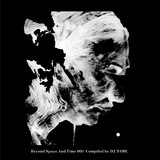
Beyond Space And Time is the new record label from Japanese music festival, Rainbow Disco Club (RDC). RDC has been welcoming music loving people to Japan for over a decade. Throughout the festival's history, RDC have been fortunate to constantly encounter performers and DJs who've collaborated with them in establishing a beautiful dance floor year in, year out. These relationships have lead RDC to start their own label, and now gives them the opportunity to reveal one of the best-kept secrets: What is in a DJ's record bag?
This time around, festival regular DJ Nobu kindly opens up his collection and shares the music he loves with us all. On visual duty we welcome Senekt - his representational yet contemporary drawing illustrates the emotion we feel from DJ Nobu.
We have much more music to come in future from artists that we trust and respect.
▼ DJ Nobu describes 10 tracks this way ▼
A1. Laurent Garnier - Water Planet
Highly respected French DJ/Producer Laurent Garnier has been releasing tracks for decades capturing the very essence of Detroit Techno and Breakbeat. He always manages to create something truly emotional. This is not his biggest hit, but it's my favorite.
A2. Mono Junk - Beyond The Darkness
This track represents the very early days of Techno with it's ravey atmosphere. It has a primitive feel, and the obscure mixdown sounds almost unbalanced. That said, this one really stands out when DJing. Very cool.
B1. Psychick Warriors Ov Gaia - The Valley
It was always my intention to include this track in a compilation if were I ever to do one. It has a fat underlying groove, with some indigenous spices thrown in. The whole thing is put together beautifully. No complaints!
B2. Melody Boy 2000 - Plenty Of Love
I wanted to include a track that had Jacking feel to it - that is my definition of dance music. This track mixes well in both Techno and House DJ sets.
C1. Drax Ltd. II - Amphetamine
This is my all time favorite track by Thomas P Heckman. It asks questions and strikes down all the boring 'wanna be cool' techno tracks. It is obviously a well known tune already, but I include it here because I'm often asked for it's track ID from new kids in the game. This is a classic that should be passed down.
C2. Dan Curtin - 3rd From The Sun
Curtin's refined synth grooves and bass lines make this a true timeless classic. It do not get tired of listening to his rhythms and melodies - he always gets it just right.
C3. Front 242 - U-Men.
The originator of Electric Body Music. Their husky vocals, hard rhythms and strong synth basslines made the group very popular at the time, and they are still to this present day. To me, this track represents what the Belgian New Beat scene is all about.
D1. The Prince Of Dance Music - E3 E6 Roll On
This is the track I played the most up until around 2006. It is a genuine house track that cuts through trends in music. A hidden floor killer.
D2. Pan Sonic - Lähetys / Transmission
Electronic music has existed for decades, and if you are to choose some of the best from all scattered & hidden places, Pan Sonic's 'Lähetys / Transmission' must be considered. The track emerges beautifully - breaking structures and transcending the past. Every layer of the piece is produced with such delicacy and care, that as a whole it magically drags you into the world of the unknown.
D3. Burial - Archangel
This track merges melancholic emotions with technological prowess at the highest level, and deeply impacted the dance music scene on it's release. I recently played this track at the end of my set at the forward thinking Terraforma Festival in Milan. It faded out to huge applause from the open minded crowd. A moment to be remembered.
Elkka - the London based DJ, producer and founder of record label and DIY art collective femme culture - has announced her latest EP ‘Every Body Is Welcome’ on her imprint, following a very strong year constallated of live perfromances and DJ sets throughout Europe, and a growing radio presence in London and beyond.
‘Every Body Is Welcome’ will be released on 22nd of November. Smudging the boundaries between eras and styles, Elkka’s free-wheeling dance tracks float between club beats, earthy sounds, full of warmth, soft edges and lovely instrumentation which all lead to a completely captivating and blissful listen. The infectious new five-track EP looks set to further solidify her status as one of the artists changing the shape of dance music in 2019.
The EP kicks off with an acid-sounding dance thumper that elegantly moves along the piano melody, for a beautiful house start to the whole project. In typical Elkka style, the EP moves from the atmospheric, sun-soaked rhythms of ‘Compromise for What’ and ‘LVURSLF’ Interlude, to the more club-oriented, 4am nightscapes of ‘Avant Garde’ - ending with ‘Breathe’, the perfect union to these two different sides of her artistry in one elegant, thumping, soulful track.
‘Every Body Is Welcome’ was informed by Elkka’s own deeper understanding of who she is as an artist and what the dance floor means to her, claiming that “Arriving in London in my early 20s I was a completely different person in every possible way and discovering club culture, the rave scene and queer spaces allowed me to explore myself fully as a woman and as queer person. For me, the dance floor has been a place where I have felt the most liberated, the most myself, unified with friends and strangers by the music and moment we are sharing. This EP is a celebration of those moments, of the dance floor, of dance music that has inspired me creatively and personally. Every Body Is Welcome symbolises what I hope the dance floor to be - a music utopia or haven, somewhere for everyone to feel safe to express themselves, to find themselves, to be whoever they want to be and feel part of a community of acceptance and tolerance. Idealistic? Yes but I think art should be a space to express idealism and where we hope to be.”
Her previous EP ‘Full Circle’, released via femme culture, received acclaim and support from Annie Mac, Pete Tong, Tom Ravenscroft and Elkka was also named as one of the artists to watch in 2019 by Mixmag. In addition, Elkka has garnered playlist and radio plays from acclaimed producers Four Tet, Floating Point’s and George Fitzgerald.
Elkka founded the femme culture label and collective in 2016 in response to the lack of support for womxn DJs, producer and artists, later teaming up with fellow DJ and creative Ludo who she now co-runs the platform with. Since then, the progressively minded collective have been swiftly gaining recognition with their boundary-free ethos that champions women, women-identifying, artists and the LGBTQ+ community whilst pushing forward-thinking music through their carefully, curated club nights and events.
Earlier this year they released their second label compilation ‘HeForShe x femme culture.’ Compiled in aid of the UN Women, the compilation featured fresh new sounds from the likes of Lone, Elkka herself, Martin Bootyspoon, India Jordan, Ouri, Nightwave and more - and earlier this summer they hosted their annual alternative Pride after-party ‘PROUD’, in which all the proceeds went to The Albert Kennedy Trust (a charity for homeless LGBTQ youthsworthy causes).
With its latest release Matasuna Records continues to explore contemporary Afrobeat from different countries. After the last trip to the Swiss Mittelland, this time the journey goes across the English Channel to discover more new & authentic Afrobeat and serve it on a tasty vinyl single.
Heroes of Limbo is a new studio project from long-time collaborators, producer and multi-instrumentalist Glenn Fallows (The Impellers, Disposable Breaks, Andres y Xavi) and trombonist/arranger Gram 'Canyon' Treldavs.
Reimagining classic and contemporary pop as authentic 70's Afrobeat and Highlife from Nigeria and Ghana, this first release asks you to fire up your time machine in your mind and wonder what would the Happy Mondays sound like if they'd played at Fela Kuti's Afrika Shrine, rather than Manchester's legendary Hacienda Club? What if Disclosure were not a Mercury Prize-nominated electronica duo, but a Highlife Orchestra based in Accra, Ghana?
Madchester Woman takes Ebo Taylor's African Woman and uses it as a chassis for a cut 'n shut reworking of Happy Mondays' 1990 classic 'Loose Fit' - a hot and explosive mixture as you can easily hear!
White Noise, featuring vocals from Clair Fallows (The Impellers, Soul Grenades), re-works Disclosure & Aluna George's electro-house anthem into an uplifting slice of afro-disco dancefloor shuffle.
Since debuting on the label in May 2017, East London duo Earthboogie has been part of the extended Leng family. In rhat time, Izak Gray and Nicola Robinson have delivered a swathe of superb singles and a fine debut album, 2018’s critically acclaimed Human Call. Here they present their sole single of 2019, a two-track fusion of intergalactic, terrestrial and tribal elements reflective of their by-now trademark style. Fittingly, lead cut “Creepy Steve” – a previously unheard workout recorded during the sessions for Human Call – contains many of the musical ingredients that made Earthboogie such an enticing proposition. It boasts a raw, fuzzy and driving analogue bassline, densely layered tribal percussion, dub disco-influenced guitars, woozy electronics and sporadic blasts of African style chanting. As if that wasn’t enough to get the blood pumping, Gray and Robinson have also thrown in some extended, rock style guitar solos and more cowbells, bongos and timbales than you can shake a stick at
It comes accompanied by a previously unheard remix of “Human Call”, the title track from their superb debut album, by friend and fellow musical fusionist Joel Harrison. His version is warm, woozy, driving and percussive, brilliantly re-imagining Earthboogie’s original version as a supersonic slab of peak-time ready deep house. The band’s original chanted vocals, guitars and melodies slowly rise above bustling, all-action drums, weighty bass, alien-sounding electronic flourishes, poignant trumpet parts and seriously dreamy sustained chords.
Skyf Connection (pronounced skAyf) was a short lived project by long time friends Anthony Mthembu and Enoch Nondala. At the time they were working for Annic Music, an independent label run by married couple Anne and Nic Blignaut. Although the label was known mostly for Zulu, Sotho, Tsonga and other traditional styles, they had a few Disco releases on the label including groups like Keith Hutchinson’s Focus and Enoch’s discovery Lena, who went on to have huge success under the name Ebony a few years later.
In 1984, when an artist didn’t show up for a booked session they decided to make use of the studio time and began working on a demo. At the time Anthony and Enoch had been playing for a year at a new club called Gamsho, located on a farm on the outskirts of Kliptown Soweto. Along with Blackie Sibisi, Sepate Mokoena and Elijah “chippa” Khumalo they made up the resident house band. Due to cultural boycotts and American artists refusing to perform in the country, locals took it upon themselves to fill the market with the American sound the crowds demanded. The demo they recorded at Blue Tree Studios was going to be their product they could use to promote their brand of the American sound. They then took the demo to Universal Studios where their friend and trusted engineer Jan “fast fingers” Smit was working. It would be here that they would polish their demo into something they could take to their bosses and have pressed. Equipped with a DX 7, Linn Drum and some Juno synthesizers they were on their way. Jan lived up to his name and programmed the drums, it is rumoured he could program in almost real time, a skill that translated to the local arcade where he held high scores on many machines. Enoch would be singing and playing guitar while Anthony would do all the Bass and Keyboards. The result was 4 funky party anthems with synth work like no other recording at the time. Their take on what they believed the crowd would want to hear at the beloved club they called home.
From start to finish the 4 tracks portray what would have been a standard night at the Gamshu. Although the club would open earlier and the standard hours of most clubs was 6 to 6 , the band would start playing at 10pm. With their standard set time and Anthony and Enoch unique view on what a Disco should be, they chose the motto Ten to Ten as the album title because those were the hours when they were the stars and Disco ruled the dance floor. To get to the club was a bit difficult, you needed to drive along an empty road where thieves waited for any patrons trying their luck walking after dark. Since there was no transport during the night, the safest way to get home was to wait till the next morning to walk home. Even though in the summer months of Johannesburg light begins to peek in just after 4am, crowds refused to leave and stayed enjoying good music and company until 10am. The lead off track “Let’s Freak Together” has powerful lyrics encouraging people to let go of their worries, put aside any differences and let the music bring everyone to freak and dance together. The whole album is about the joy we can all feel when we share the same moments and how music can bring people together in a unique way, a philosophy shared with the original nightclubs of 70s New York. This approach to music is where the name Skyf Connection comes from, translating from slang to mean the connection we create through sharing, in this case Music and good times.
Skyf Connection would go on to play at Gamsho till the club’s closure in 1986. In those years their popularity lead to being booked for private events like weddings and birthday parties, as well as gigs in some other venues like Mofolo Hall. They would share the stage with many artists through the years learning artist’s songs and providing support as a backing band. After the club closed Anthony would go on to join the house band at The Pelican, another famous club located in Orlando East, as well as dabbling with songwriting for artists like Phumi Maduna and helping Enoch on many projects through the years. Enoch would ditch live music altogether and immerse himself in studio work, starting full time as a house producer and A&R for the recently formed Ream Music. He would go on to produce hit albums for pop artists like Percy Kay and Makwerhu but made his mark discovering countless artists that would become stars in the traditional market. They would remain friends until Anthony’s passing in 2016 and although Anthony is no longer with us his spirit lives in the grooves he left on this one of a kind record. His wife Vinolia will be accepting his portion of the profits on his behalf.
Hot off the heels of Aluxes, his 2018 Lumière Noire debut EP, young Mexican DJ/producer Iñigo
Vontier is inviting Chloé's label on a trip to the far corners of the body & mind with an album of
demented grooves, psychedelic take-offs and imaginary comic strips of mystical rituals. A
bewitching debut full-length. Mexicans may never possess the sonic science of the Germans,
the hedonistic madness of the English or the gift for synthesis of the French, but, as proven by
Iñigo Vontier's first full-length for Lumière Noire, their universe is much more exciting than
anyone would have ever thought.
The DJ/producer fully asserts his origins by brandishing the album’s title "El Hijo del Maiz" ("the
son of the corn") almost as an emblem: "in Mexico, corn is eaten daily. It has long been defined
as 'the gold of America', and I consider all Mexicans as children of corn". A spiritual and
embodied vision Iñigo's first Lumière Noire release, the four-track Aluxes, set the tone of the
young talent's distinctive interpretation of dark disco, which creeps up on the dancefloor from its
iconoclastic side. The two tracks and two remixes (one by Flügel, the other by Inigo himself)
featured on the 12" for lead single "Xu Xu" (featuring Red Axes-affiliate Xen's irrelevant vocals)
was a full-bodied confirmation that Vontier sees the dancefloor as an arena for the occult –
whether from the peoples of the equatorial jungle, the Middle East or, even from indocile
machines. But, while the spiritual element seems part and parcel of the Jalisco native’s output, it
is in no way the only ingredient of this first long-player: "this album best reflects my own vision
and spirituality, and the way I feel it" he says.
Whether contemplative or frenetic, the collection of tracks that make up “El Hijo Del Maiz” takes
the kitchen sink and throws it out the window: languid rhythms, haunted vocals, and mysterious
percussion fuel a discombobulated house set that scrambles the listener's five senses, leaving
one disoriented and exposed to the vagaries of vertigo. Following the demented, dystopian “Xu
Xu” EP, which explored an imaginary jungle that harbored Mayan and Egyptian pyramids,
Middle Eastern accents are once more present in the off-kilter “Bo Ni Ke” and its Japaneseinfluenced vocal trickery, which Moroccan flutes à la Jajouka transform into a feverish trance.
With the following three tracks, Iñigo Vontier raises himself to the same level of excellence as
the Pachanga duo (of which pride of the Mexican scene Rebolledo, is also known as a prolific
artisan of deconstruction): “Awaken”'s slumbering voice, heard as through the veil of hypnosis,
slowly introduces a techno beat which, as in follow-up “Time”, literally brings the listener to a
levitative state. In a housier vein, yet continuing in the same psychedelic, 90s-infused spirit,
“Don’t Go Back” disrupts the genre’s usual signatures with an out-of-tune keyboard that is
becoming the artist's trademark, destabilizing the listener into a drunken vertigo, with a good
helping of sexiness: "I think the sexy dimension definitely brings a kind of magic to music," says
Vontier. “I'm sure I felt this magic during my DJ sets, and I like to think that sorcerers use this
element in their practices. I might consider myself a bit of a sorcerer when I take over the DJ
booth, by the way." A mood and sound that can once again be found – in a quieter, more
bucolic version – on “Chiquitita” (feat. the flute stylings of pioneer DJ Rocca, now a partner of
cosmic disco legend Daniele Baldelli). The more cinematic, fast-paced and dreamy beat of the
no less captivating “Little Monster” might evoke the mischievous spirit of the Mayas' minor
mythological creatures, while ode to the magical herb Marijuana (feat Thomass Jackson)
proudly tramples into the debate that such a provocative title inevitably provokes: "psychedelic
drugs are powerful tools to reach a higher level of consciousness about what surrounds us, but
we must learn how to complete this psychic journey by ourselves, notably through meditation
and love.
In the end, El Hijo del Maiz is an album-length confirmation of Iñigo Vontier's uniqueness, and
his adherence to Lumière Noire's policy of letting artists fully express their vision – while letting
their passions guide their idiosyncrasies and explorations of innovative electronic signatures
For his return to Make Mistakes, Derek Russo ventures into the Belly of the Whale with three pieces of beautiful, retro future, dance floor chic.
Embryonic Speck opens up the record, evoking classic rave beats, in a crisp, clear, modern style. With this cut, Derek has crafted a late-night slayer for the discerning dance floor. A relentless groove drives the track along, creating the hypnotic, smoky dreams of rave’s past.
Night Sea Journey takes it down into disco depths. A wandering bassline swaggers through the track, crashing through dark waves of sound. Sexy and mysterious, made to drag the sweaty sea on the dance floor through the night.
Straddling, a piece of timeless, familiar house music, rounds things out by bringing in a touch more warmth and whimsy. Still for the darkness, but with a lighter mood, and booty wiggle bass. Deep, and grooving, with a playful sexiness, what more could you ask for?
“Consider the subtleness of the sea; how its most dreaded creatures glide under water, unapparent for the most part, and treacherously hidden beneath the loveliest tints of azure. Consider also the devilish brilliance and beauty of many of its most remorseless tribes, as the dainty embellished shape of many species of sharks. Consider, once more, the universal cannibalism of the sea; all whose creatures prey upon each other, carrying on eternal war since the world began.
Consider all this; and then turn to the green, gentle, and most docile earth; consider them both, the sea and the land; and do you not find a strange analogy to something in yourself? For as this appalling ocean surrounds the verdant land, so in the soul of man there lies one insular Tahiti, full of peace and joy, but encompassed by all the horrors of the half-known life. God keep thee! Push not off from that isle, thou canst never return!”
― Herman Melville, Moby Dick
TCB aka Chris Beißwenger, our boy on Jah bless road, goes a little something like: 1977, born cross-eyed, parents like Boney M; 1984, suburbia USA, DSNY, still cross-eyed; 1988, 98.7 Kiss FM New York on the school bus radio; 1989, Frankfurt Am Main, hyperactive, outsider, got lazered; 1991, drums and piano in cheesy school band; 1993, kicked out of Omen, kicked out of school band; 1994, kicked out of Omen again, got his own band; 1995, kicked out of band, finally in at Omen, The Box, Wild Pitch Club; 1996, got first car, Fasttracker, EMU ESI-32; 1999, no more car, no more Omen, Robert Johnson instead; 2002, first release, High Tide; 2003, Ableton 0.1 Beta, less MIDI, more gefrickel; 2004, exchange High Tide for CB Funk, kicked out of Cocoon; 2005, a silly move to Düsseldorf, Burkina Faso, more synthesizers; 2006, again silly in Düsseldorf, Brontosaurus, disco-house, love; 2007, Cologne and Frankfurt, back to piano, more love, still no car; 2008, with love to Frankfurt, Arto Mwambe on the road, storyteller; 2009, Mwambe still on the road, bored of work; 2010, Live At Robert Johnson, four-day week (thank God), four bike accidents; 2011, Europe, bored of piano, invention of The Citizen’s Band; 2012, modular cookery, thoughts of moving; 2013, Burkinian's death, Delphi's rise, almost made it, 2014, broke out of seven-year cycle too complicate
Gyedu-Blay Ambolley was born on the 11th Street in Sekondi, Ghana 72 years ago. On the cover photo you can see on the right side the house of his birth which was also his parental home. The Ghanian legend’s latest release shows off a pride of heritage, and his honed talent for mixing highlife with other genres like rap, Afro-funk and Disco Ghanaian highlife. Gyedu-Blay Ambolley returns with 11th Street, Sekondi, his 31st album since his debut in 1973. The charismatic stage personality, no stranger to mixing humour into his music and who has performed alongside Afrobeat legend Fela Kuti and highlife bandleader Ebo Taylor, has been a record collector’s staple since his appearance on the seminal Ghana Soundz compilation on Soundway in 2002, which re-introduced the world to his trademark ‘Simigwa’ style. Highlife, which started in Sierra Leone and Liberia, took hold in Ghana in the 1940s as a coming together of the musicians fed up with the foxtrot and quickstep parties originally hosted by English colonists. It began with big band horns and happy lyrics, popularised by artists such as E.T Mensah, before opening up in the ‘50s and ‘60s with a wave of guitardriven, socially conscious and more danceable Afro-funk hits -- a product of the easy movement of people between Nigeria and Ghana. It was then that Ambolley’s trademark baritone vocals burst onto the scene, under the tutelage of close personal friend Ebo Taylor.
Ambolley’s latest album, 11th Street, Sekondi, named after the area of West Ghana in which he grew up, is a look back at the area and musical styles that shaped the musician’s life. Black Woman is a funky number that opens the album with Ambolley on a tenor sax solo, while tracks like Little Small Girl showcase his renowned James Brown-influenced vocal flourishes. Soul, jazz, blues and comedy are present -- in keeping with his fervent belief that music must always be entertaining for the listener. The album is the second of his to be released on German label Agogo records, after acclaimed 2017 hit, Ketan. It also stays true to highlife's social ambitions, with reflections on the misguided pursuit of European ideals ahead of African values. Ambolley's career has been filled with accolades, including a Lifetime Achievement Award from the Charles R Drew University in Los Angeles, and formal recognition from the Ghana Embassy in Washington DC for producing the first ever commercially recorded rap album.
The debut album from the American female trio, originally released in 1973 on the Philly Groove Label
Classic Philadelphia sound featuring the disco anthem and title track that peaked at #28 on the Billboard Hot 100 and #16 UK charts. Other highlights include the hit singles ‘Smarty Pants’ (UK #9), ‘Newsy Neighbors’ and Northern Soul Classic ‘This Is The House’
Demon Music are proud to reissue this soul classic on 180g heavyweight vinyl, with printed inner sleeve and original artwork
TXLAX is Dave Aju’s first album in five years, and we couldn’t be more pleased to present it.
As always there is plenty of fresh genre-defying ideas in the music, but this time wrapped in a much more relaxed and focussed aesthetic - a fitting personal soundtrack for the homecom-ing theme of his move back to Los Angeles from Berlin, as the combined airport letters in the title suggest.
There is a sonic stylistic bridge of sorts between the sister cities on display as well, all im-bued with that inimitable combination of raw playfulness and warm refined soul as only Dave Aju does.
From the soaring West Coast future funk opener “Bird’s Eye”, the nautical disco-not-disco of tomorrow in “Out To C” and the bugged-out broken beat flavor of “Silverfish” to the slick me-lodic electro vibes of the title track, and gorgeous shuffling deep house closer “Yulia”, TXLAX is a masterwork filled with beauty, character, and detail that will reward many repeat listens. We hope you enjoy it as much as we do!
- A1: Power
- A2: Home
- A3: Anxiety
- A4: Future
- A5: Life & Dreams
- B1: Disco Pregnancy
- B2: Paris
- B3: Primal
- B4: Before America
- B5: Poem Song For Iggor
- C1: Power (Rhythmical)
- C2: Home (Rhythmical)
- C3: Anxiety (Rhythmical)
- C4: Future (Rhythmical)
- C5: Life & Dreams (Rhythmical)
- D1: Disco Pregnancy (Rhythmical)
- D2: Paris (Rhythmical)
- D3: Primal (Rhythmical)
- D4: Before America (Rhythmical)
- D5: Poem Song For Iggor (Rhythmical)
Rooted in the São Paulo contemporary art scene, Laima Leyton’s credentials in the world of music are firmly established as one-half of Mixhell alongside her husband Iggor Cavalera (Sepultura, Cavalera Conspiracy) and for her work with Soulwax.
Now the producer, musician, activist, artist, mother and teacher unites her multifaceted talents with her ambitious double-vinyl debut album ‘Home’. It will be pressed and distributed by The Vinyl Factory and released by Deewee on November 8th. Featuring two records that are designed to be played simultaneously: Laima’s vocal and synth tracks on the ‘TONAL’ disc alongside Iggor’s beats on the ‘RHYTHMICAL’ record. Syncing two records offers an unconventional way to experience the music.
Rather than passively hearing the music, the listener’s need to ritualistically sync both records makes for an immersive experience. There are two key elements that make ‘Home’ such a distinctive project. Thematically it explores how the two core contrasts that inform Laima’s life can coexist. On one hand it’s about domesticity – her love for her family and her frustration with domestic routine. Yet on the other, it’s about her creativity – her desire to express herself artistically while still tending to her role as a mother and a housewife. “It’s almost like a family photo album in another format,” says Laima. “I needed to find the balance in this dichotomy, to feel good with myself in both roles, and be aware of things that really mattered to me. To be a woman, a mum and a female producer: all of these feelings were in the music.”