Zaratustra Is a Young French Producer Strongly Inspired by Indie Dance, Italo Disco, Ebm, New Beat, Acid and Ethnic Music. His Style Matured Over the Course of This Year & We Actually Received This Extraordinary "Uprising" Demo. This Track Symbolizes the Perfect Mix of Rock, Italo and Ebm, for the Older Ones We Will Notice the Incredible Similarity in the Voice With Ian Astbury Singer of the Cult. a Bit as if This Fabulous Group Would Have Teleported to 2022 Accompanied by a Very Modern Production. It Is Once Again Stolt Who Strikes the Blow With One of His Finest Vocal Performances. We Called Again on the Brilliant Lauer for a Rereading Halfway Between Suicide, Alan Vega & the Cramps. This Record Is More Than a Statement, It's a Miracle. ...
Suche:disco inc
- A1: Le Marquis Du Néant - Commencer
- A2: Consistance - La Tête À Ça
- A3: Lagon Ouest - Narration
- A4: Buck Douanier - Festivals
- A5: Frikoppling - Bergtagen
- A6: Gencive - Bisou Magique
- B1: La Commanderie Pro-Tribal - Welcome To Mortebouse
- B2: Krystal Zealot - Interlude
- B3: Cyriak’s Oak - Pétrichor
- B4: Fur Pants - Fur On Fur
- B5: Krystal Zealot - Voyage Vers Inti
- B6: Le Marquis Du Néant - Terminer
The soundtrack to the comic strip "Lou! Sonata 2" will plunge you into the heart of Dead Dung Fest, the music festival organised by the heroine and her friends. The ten (fictional, created by the Krystal Zealot collective) bands who perform there are present on this record.
Existential bossa nova (Le Marquis du Néant), Swedish electronic folk (Frikoppling), steamy fusion (Cyriak's Oak) or relaxed disco pop (Fur Pants): each track reinterprets the themes of the story and the moods of the characters.
The vinyl edition includes several bonus tracks based on the world of "Lou! Sonata" and the Dead Dung Fest: a poster, a series of 10 illustrated album covers corresponding to the different groups, the flyer and the official festival woven bracelet.
- Intro At The Piano
- Red, White, And Blue
- Improvisation At Heart Mountain
- Summer Of '42 (Orchestral Edition)
- Improvisation In The Root Cellar
- ? ? ? ? ? (Iga Ueno Castle)
- Improvisation At Jerome, Ar
- Theme For Jerome (Orchestral Edition)
- ? ? ? ?? (Nada Sou Sou)
- ? ? ? ? ? ? ? ? (Ue O Muite Arukou)
- A Safe Place For Animals
- Manchester (Acoustic Edition)
- Removal (With Kara Kondo)
- Violin Tsunami For The Victims Of Tacoma Detention
- Epilogue From Improvisations On Eo9066
- For Every Voice That Never Sang
- War
- Removal
- Arrival At Heart Mountain
- Coldest Of The Camps
- Know Your Enemy:japan
- Improvisation For The Tokyo Firebombing
- Intro To 1853
- 1853: Commodore Perry And His Black Ships
- Bach's Double Violin Concerto In The Key Of Gypsy Swing
- Keiko Ishibashi
- My Name Is Kishi Bashi
- Proud American
- The 442Nd - Go For Broke
- Chicago Meditation
- A New Life
- The Pilgrimage
- Omoiyari And The Model Minority Myth
"Omoiyari" means to have empathy and consideration for others, and act on it. This fall, the American indie-folk multi-instrumentalist and singer-songwriter Kishi Bashi is set to release the companion album to his forthcoming documentary song film, titled Music from the Song Film: Omoiyari. Consisting of two LPs_"The Songs" and "The Score"_the release showcases what is essentially the soundtrack to Omoiyari, the feature-length motion picture co-directed by Kishi Bashi, aka Kaoru Ishibashi or "K," which is being released via MTV Documentary Films in November. Focusing on K's own six-year journey of discovery surrounding his research of the incarceration of 120,000 Japanese Americans that followed the attack on Pearl Harbor in 1941, the film is part social justice documentary and part song-film experiment. The album includes K's live improvisations, which are featured in the documentary, many recorded on the sites where the concentration camps stood. Written during and about the artist's transformational dive into his personal identity and serving as a broad survey of the Japanese American experience as well as the incarceration_Music from the Song Film: Omoiyari serves as an evocative musical accompaniment to the lessons of empathy and compassion portrayed in the film and highlights the process and power of one of modern indie's most talented musicians.
2023 markiert den Beginn einer neuen Ära für IN FLAMES mit der Veröffentlichung des vierzehnten Studioalbums Foregone - ein neues Meisterwerk einer Band, deren kreativer Output den Kurs und die Richtung des modernen Metals verändert hat.
Um den Aufwärtstrend fortzusetzen, markiert 2023 auch die Wiederveröffentlichung von vier bahnbrechenden Titeln aus dem umfangreichen Katalog der Band, nämlich A Sense of Purpose (2008) (15th Anniversary Edition inc. The Mirror's Truth EP, die noch nie auf Vinyl erhältlich war), Reroute to Remain (2002), Come Clarity (2006) (mehr als 400.000 verkaufte Exemplare weltweit + Gewinner des schwedischen Grammis-Preises für das beste Hard Rock-Album 2017) und Sounds of a Playground Fading (2011), die alle vergriffen und bei alten und neuen Jesterheads gleichermaßen sehr gefragt waren.
Die Wiederveröffentlichungen von 2023 enthalten alle Original Artworks mit einigen wenigen, sorgfältigen Retuschen. Alle Veröffentlichungen wurden von Justin Shturtz im legendären Sterling Sound Studio in Nashville, Tennessee, speziell für Vinyl neu gemastert. Alle Platten werden auf schweres 180g-Vinyl gepresst und sind mit dem unverkennbaren Jesterhead-Logo auf Seite D (z.B. A Sense of Purpose) versehen!
NEA Jazz Master, Toots Thielemans, is widely considered to be the preeminent jazz harmonica
player. It is safe to say that before him, the harmonica in jazz was simply not done, and Thielemans
can be credited with legitimizing the instrument in the genre. Born in Brussels, Belgium in 1922.
Theileman’s excelled on accordion as a small child, before picking up the guitar as a teenager after
hearing Django Reinhart. Along the way, he taught himself to play harmonica as a hobby. In 1948,
during a visit to the US, he sat in on guitar with a jazz group at small club in New York and was
“discovered.” Engagements soon followed with the likes of Benny Goodman, Charlie Parker, Miles
Davis, Oscar Peterson, Dizzy Gillespie, Quincy Jones and more. As the story goes, in response to a
musicians’ union restriction, Thielemans was forbidden to play guitar at a gig. So, he pulled out his
harmonica. The rest, as they say, is history. He went on to have a long and prolific career on the
instrument, as both a band leader and session musician. With his unique sound, he became a go-to
for film scores in the 1970s (The Pawn Broker, Midnight Cowboy). Perhaps most notably, Thielemans
is unconsciously known to generations for having played the melody on Sesame Street’s famous
closing theme. Organized as a purely jazz session, the date here prominently features a young Joanne
Brackeen on piano. It is perhaps Brackeen’s presence that makes this set so interesting. As an
avant-garde player she provides the vehicle for Thielemas to explore more advanced ideas. The
album covers a wide range of material, including two originals by Brackeen, alongside standards by
Coltrane, Ellington, Mercer and Mancini.
A Flor de Piel, the new album from singer-songwriter and composer Maria Monica Gutierrez (aka Montañera), is a meditative journey of self-discovery across oceans, time, and the traditional confines of genre. Originally from Bogota, Colombia, Gutierrez began the album as a way to explore her identity after a difficult move to London left her feeling untethered in a strange new place. The result is an examination of the immigrant's experience through a rich sonic lens of ambient pop textures, inspired by sources as disparate as Colombian traditional music, traditional Senegalese music, and whalesong from the depths of the Atlantic. The album begins with the title track "A Flor de Piel," Gutierrez's indelible vocals floating above a vast expanse before being joined by deep, silky bass and the plucks of a koto-like stringed instrument. "The song was inspired by traditional Japanese music," Gutierrez explains, "It's about making my heart a little lighter; I know that inside of me I can be as light as mist in heat, I can be fragile as the song of a sparrow." That sentiment perfectly encapsulates much of what makes A Flor de Piel so special. The album comes with a message of healing for all people, without forgetting the centuries of struggle and hurt that form the bedrock of modern society. The track "Santa Mar," for instance, is inspired by the musical traditions of afro-pacific women in Colombia, and the crucial role that they play as peacebuilders in the region. Backed by a hypnotic beat, the song features contributions from marimba player Cankita, alongside Las Cantadoras de Yerba Buena, an all-female vocal group that utilizes traditional Afro-Colombian music to preserve their history and promote peace. Standout track "Como Una Rama" is a futuristic take on bullerengue, a traditional style of music and dance originally developed by Maroon communities on Colombia's Caribbean coast. Deeply affecting, the song combines Gutierrez's indomitable voice with electronics that recall Steve Reich's rhythmic minimalism. "Cruzar," the final track on the album, feels almost like a lullaby, with a meditative harmonic style and trance-like vocal melody. "The lyrics," Gutierrez explains, "are a personal reminder of what is important to me: healing, letting go, breathing, evaporating, forgetting, changing, crystallizing." Across the 40-odd minutes of A Flor de Piel, Gutierrez triumphs at recontextualizing traditional sounds and sentiments into a modern form using synth-based and electronic textures. It's a fitting representation for the personal struggles that the artist endured during her move to London. Rather than dwelling solely on the past Guitierrez uses A Flor de Piel to summon the strength of past generations, and forge a new path forward. As she describes it, "The album has accompanied me through inner journeys of finding myself in a new territory _ of redefining myself, of remembering who I am _ in a strange place." As we drift towards an increasingly frightening and uncertain future, perhaps Montañera's A Flor de Piel is exactly what we need: something to give us strength, to bring us peace, and to accompany our journey into a strange new place.
Black Vinyl[21,13 €]
Bathed in a green haze, the crowd oozed to the mutant rock and roll roaring from the basement's dusty depths — everything and everyone was sweaty and sticky. But as Speedy Ortiz crammed into the back corner, their grins just inches away from ours, D.C.’s Dougout became a moshed-and-sloshed sauna of 20-somethings delirious on rock euphoria.
After spending much of the new millennium bored out of my skull by network soap indie, Speedy Ortiz — not to mention its pals in Pile, Ovlov, Grass is Green and the rest of New England’s burgeoning basement scene — was rock's wild howl. The songs were unpredictable, yet weirdly memorable, swaggering with a winky and wry sense of self. Riffs would twist with a topsy tenderness, then slam a ruptured discord. Sadie Dupuis' sphinxian-yet-sensitive lyrics were not only matched but accentuated by her coil-sprung vibrato. How could Speedy Ortiz not immediately become my new favorite band?
What began as a short-lived solo project recorded in Dupuis' off-hours as a rock camp counselor became a four-piece band in Northampton, Mass., by the end of 2011: Dupuis on guitar and vocals with drummer Mike Falcone, bassist Darl Ferm and guitarist Matt Robidoux. They made cool mixtapes, cracked inside jokes and gushed about teenagers that opened for them on tour. They freaked out (via LiveJournal) when they met the bassist from Polvo or Helium's Mary Timony, but also rolled their eyes at '90s indie-rock comparisons. The band's first single — the gender-bending got-laid grunge yowler "Taylor Swift'' — elicited that rare response of the simultaneous giggle and headbang. The Sports EP amped up the taut yet rubbery riffery.
Released July 9, 2013, Major Arcana is filled with wedding chapel exorcisms, oiled-down attractants and criminally twisted puny little villains — this is Dupuis' haunted lexicon as she scales the toxic Aggro Crag of a breakup. And while Dupuis wrote these songs, the band's convulsing arrangements and diverse influences sprawled the squigglier edges of feedbacked fuzz to mete out matters of the heart. Falcone — who, it's worth noting, has a knack for vocal harmony — swung as much as he smashed the drums. In easily tipoverable songs, Ferm's burly bass and percussive overdubs gave the unruly glee its momentum. Robidoux ripped skronky guitar solos and countered Dupuis' riffs with decorative splatter. Over a four-day marathon session at Sonelab in Easthampton, recording engineer Justin Pizzoferrato sparked the studio imagination of Speedy Ortiz — not only leaning into gritty tones but layer-caking dense dynamics that made these songs pop and pulverize.
For all her sweet-toothed seething, Dupuis was not easy on herself. Everyone's allowed the idiot growing pains of your 20s and the misery that follows, but I can only imagine the emotional exhaustion that playing these songs on the road, night after night, must have wrought. "But you left something on my lips: a mark so sick," she repeats over the doomy destruction that ends the album. Thinking back to the many Speedy Ortiz shows I caught in those early years, including an unofficial after-after party for my own wedding, "MKVI" often served as the noisy down-and-out closer — heads would bang in solidarity as the crowd became co-authors in the chaos, the biting phrase now a hex, Speedy Ortiz forever our coven. —Lars Gotrich
To celebrate the 10th Anniversary of Major Arcana, Speedy Ortiz release a remastered edition on Carpark Records.
In the wake of Young Marble Giants’ breakup, two acts were created, with Stuart Moxham taking minimalist, geometric play to extremes while Alison Statton added more warmth and feeling to a similar template, creating something stunning yet based in popular forms. Those two opposing means of forging paths away from one of music’s most astonishingly unique debuts both included Stuart’s brother, Phil. More recently, both have reversed course, with Stuart proving himself a master of classic pop form, with Alison’s work again approaching a modern abstraction of quiet folk music - experimental but accessible. But that’s another tale. With no template to guide him, Stuart’s new music - as The Gist - was regarded as wildly uneven. Stuart admits that he didn’t know which way to go, so perversely, he decided to take all directions at once. The Gist’s original discography stood at a scant 18 songs, yet only seven featured Stuart’s own voice, often in heavily processed and oddly-mixed form. The Gist’s label, Rough Trade, dropped the band. Starting with a critical re-evaluation of The Gist’s sole album Embrace The Herd in an issue of Mojo, the tide begin to turn. Ambience in pop has long enjoyed a cult following, and the nonlinear structure of many of The Gist’s songs have parallels with artists such as Aphex Twin and Seefeel. One song from the era was covered by Etienne Daho in France - sounding rather advanced for French pop at the time, it ended up selling over a million copies and was later covered by Lush and sampled by DJ Koze with Lambchop singer / songwriter Kurt Wagner. Recent discovery of a trove of unreleased recordings show that Stuart had held back an array of excellent material, in demo and completed forms, often in different arrangements. Interior Windows adds 13 new performances or alternate versions to the band’s catalogue, and does the service of making both sides of The Gist’s first 7” 45 (recorded at the same session as the final YMG single) available again, along with their contribution to the NME / Rough Trade cassette compilation C81, and in keeping with The Gist’s tradition, at least one song on which Stuart does not appear
Splatter Vinyl[13,66 €]
Rhythm Cult's unstoppable momentum continues after achieving consecutive number-one positions across online and physical platforms. RCM019, their most recent release, welcomes the incredibly gifted Chilian producer Dinky into the fold.
Dinky's hypnotic blend of deep house, strong techno, and precise minimalism has earned her a residency at the famed Panorama Bar, in Berlin confirming her position as a unique voice in the electronic industry.
The EP kicks off with the soulful and uplifting "Come Hold Me," a futuristic house anthem that effortlessly fuses tribal rhythms with intricate stuttering synth patterns.
Dinky provides the unmistakable and irresistible vocal hook that suggest this will be a summer anthem in the making. "She's Got Nowhere To Go" follows, riding on an insistent one-note bass line and yet more addictive vocal snips, complemented by disco stabs that complete the party vibe. Dinky's skilful use of stuttering glitches and inventive sample manipulation showcases her love for minimal detail and angular funk.
Finally, dOP turn in not one but two remixes of their unique and unconventional take on house and techno. First, their reinterpretation of "Come Hold Me" takes us on a journey to the deeper realms of house, riding on a low-slung acidic bass groove while enveloping the listener in waves of lush synths, perfect material for warming up dancefloors or setting the mood for the early hours. Then they wrap “She’s Got Nowhere To Go’ around an elastic bass and dosed with warped synth lines to create an irresistibly explosive dancefloor weapon.
The EP exudes sophistication, weaving intricate futuristic house sounds that are imprinted with the influences of Balearic, acid, and deep house. These heaters are undoubtedly set to light up dancefloors throughout the summer season. With this exciting collaboration, Rhythm Cult further cements its position as one of the industry's most cutting-edge labels, and Dinky's addition adds a distinctive dimension to their roster.
Prepare to find yourself absorbed by this exceptional release from two forces shaping the future of electronic music.
It is our pleasure to announce an exciting collaboration born out of the resounding success of UMAY and BASHKKA's iconic EP, "Maktub." Together, we are thrilled to unveil the culmination of BASHKKA's initial vision: the release of a meticulously crafted vinyl edition, complete with fresh and iconic remixes courtesy of some of her closest comrades and confidants. Ever since its electrifying debut in February, "Maktub'' and its mesmerizing title track, 'Act Bad,' have set dance floors ablaze across the globe. This explosive track earned the esteemed title of Top Summer Hit from Germany's venerable Groove Magazine, leaving us with no choice but to bestow upon it the grand physical manifestation it so rightly deserves. This offering is tailor-made for the discerning vinyl aficionados, dedicated collectors, and music connoisseurs who have fervently championed both this release and the incomparable talent of BASHKKA throughout the year. Graciously funded by the generous support of Initiative Musik, we have not only breathed life into this iconic release but have also empowered BASHKKA to co-direct her very first music video, in collaboration with the visionary director Valentin Noujaim, based in Copenhagen. Within the grooves of this vinyl masterpiece, you will discover four exquisite remixes thoughtfully crafted by BASHKKA's esteemed friends: Roza Terenzi, Hyperaktivist, Sedef Adasi, and AKUA. This illustrious ensemble perfectly encapsulates the essence of the project--an impassioned homage to the tight-knit community of allies and pioneering femme leaders who remain steadfast in their mission to challenge prevailing industry norms and dismantle the barriers that have long hindered marginalized communities' path to success. As each contributor works tirelessly on their own endeavors, they collectively construct vital support systems that foster sustainable growth and uplift those in need within our midst. With an exceptional team standing firmly in our corner, we eagerly anticipate unveiling a treasure trove of delightful surprises that this release promises to deliver. Stay tuned for tantalizing hints and immerse yourself in the tangible embodiment of BASHKKA's iconic creation.
- A1: Super Disco Breakin
- A2: The Move
- A3: Remote Control
- A4: Song For The Man
- A5: Just A Test
- A6: Body Movin
- B1: Intergalactic
- B2: Sneakin' Out The Hospital
- B3: Putting Shame In Your Game
- B4: Flowin' Prose
- B5: And Me
- B6: Three Mc's And One Dj
- C1: The Grasshopper Unit (Keep Movin')
- C2: Song For Junior
- C3: I Don't Know
- C4: The Negotiation Limerick File
- C5: Electrify
- D1: Picture This
- D2: Unite
- D3: Dedication
- D4: Dr. Lee, Phd
- D5: Instant Death
- E1: Description Of A Strange Man
- E2: Dirt Dog
- E3: Intergalactic (Colleone Webb Remix)
- E4: Dr. Lee Version Dub
- E5: Switched On
- F1: Body Movin' (Fatboy Slim Remix)
- F2: Auntie Jackie Poom Poom Delicious
- F3: Putting Shame In Your Game (Prunes Remix)
- F4: Stink Bug
- G1: Peanut Butter & Jelly
- G2: Piano Jam
- G3: Happy To Be In That Perfect Headspace
- G4: The Negotiation Limerick File (The 41 Small Stars Remix)
- G5: The Drone
- G6 20: Questions Version
- H1: The Bizz Grasshopper Experiment
- H2: Hail Sagan (Special K)
- H3: Body Movin' (Kut Masta Kurt Remix)
- H4: Creepin
- H5: Learning Remote Control
- H6: Oh My Goodness This Record's Incredible
DEE DIGGS is having a big year. Opening for BEYONCE, critical lauding from the likes of THE NEW YORKER & DJ MAG, and having her vinyl debut "TOSS IT" listed among "best of the year" by MIXMAG and BERGHAIN. This 3 tracker includes the LADYMONIX remix that's been melting global dance floors in 2023. (TOUCAN SOUNDS) HOUSE
Prior to her recent Panorama Bar set, the Berghain crew wrote: "TOSS IT" merges disco extravagance with vintage house deepness and is, in our humble opinion, one of the best dancefloor numbers with pop appeal of the year so far."
Grey Matter - Lost In Thought, originally released in November 1996 on Axia Records as a 5 track EP is now back on vinyl.
Dave Mothersole had this to say in his review of it for Muzik magazine in February 1997.
"Acid Techno, slo-mo Hip Hop breaks, right through to old school, bottom heavy warehouse grooves and Depeche Mode-meets-Juan Atkins purism. The real surprise, here, though, is how thoroughly listenable the whole thing is. Innovative, imaginative, and pretty bloody good."
This release includes all 5 tracks from the original AX001 release which has been selling for over £60 a copy on Discogs, spread over two 12"s with 3 extra unreleased tracks 'Never Die Just Multiply', 'Musical Electronic Poetry', and the 'Melt Into The Floor Mix' of 'Gloomy Encounters'.
All tracks are remastered from the orignal DAT tapes by Paul Mac & Simon @ The Exchange.
- A1: String Quartet No. 5 I
- A2: String Quartet No. 5 Ii
- A3: String Quartet No. 5 Iii
- A4: String Quartet No. 5 Iv
- A5: String Quartet No. 5 V
- B1: String Quartet No. 4 (Buczak) I
- B2: String Quartet No. 4 (Buczak) Ii
- B3: String Quartet No. 4 (Buczak) Iii
- C1: String Quartet No. 2 (Company) I
- C2: String Quartet No. 2 (Company) Ii
- C3: String Quartet No. 2 (Company) Iii
- C4: String Quartet No. 2 (Company) Iv
- D1: String Quartet No. 3 (Mishima) 1957 – Award Montage
- D2: String Quartet No. 3 (Mishima) November 25 – Ichigaya
- D3: String Quartet No. 3 (Mishima) 1934 – Grandmother And Kimitake
- D4: String Quartet No. 3 (Mishima) 1962 – Body Building
- D5: String Quartet No. 3 (Mishima) Blood Oath
- D6: String Quartet No. 3 (Mishima) Mishima/Closing
When Kronos plays a piece, they become fellow composers, true collaborators. Without them, we wouldn’t have the kind of string quartet playing that we find around us today. There are two kinds of string quartet playing: the ‘Before Kronos’ and the ‘After Kronos’.” – Philip Glass
‘Kronos Quartet has broken the boundaries of what string quartets can do.’ – New York Times
Nonesuch releases Kronos Quartet’s acclaimed album Kronos Quartet Performs Philip Glass on vinyl for the first time to coincide with Kronos Quartet: Five Decades, a year-long celebration marking the quartet’s 50th anniversary. Originally released in 1995, the album features David Harrington (violin), John Sherba, (violin), Hank Dutt (viola) and Joan Jeanrenaud (cello) performing Quartet No. 2 (Company) (1983), No. 3 (Mishima) (1985), No. 4 (Buczak) (1990), and No. 5 (1991), the first piece Glass wrote especially for Kronos. Recorded at Skywalker Sound in California, the album was produced by Judith Sherman, Kurt Munkacsi and Philip Glass. The cover art features Francesco Clemente’s painting The Four Corners (1985). At the time of the album’s release, the New York Times said, ‘It contains some of Glass's best music since Koyaanisqatsi. His ear for sumptuous string sonorities is undeniable,’ while the Washington Post called it ‘An ideal combination of composer and performers.’ It was a top 10 hit on Billboard’s Top Classical Albums, and spent 12 weeks on Billboard’s Classical chart.
In his original liner note, critic Mark Swed wrote, ‘Glass’ string quartets may contain his most intimate music. They are works through which a very public composer, perhaps the most important opera reformer of our age and a longstanding collaborator in large-scale music theater, holds up a mirror to himself and his way of composing. “In an odd way,” Glass explains, “string quartets have always functioned like that for composers. I don’t really know why, but it’s almost impossible to get away from it. It’s the way composers of the past have thought and that’s no less true for me. It’s almost as if we say we’re going to write a string quartet, we take a deep breath, and we wade in to try to write the most serious, significant piece that we can.” Glass says that as he sat down to write String Quartet No. 5, he had discovered that perhaps not taking a serious tone might be the most serious way to deal with it. “I was thinking that I had really gone beyond the need to write a serious string quartet and that I could write a quartet that is about musicality, which in a certain way is the most serious subject.”’
Glass’ first numbered quartet was written in 1966; however, he did not return to the string quartet medium until 1983, when he provided incidental music for a dramatization of Samuel Beckett’s prose poem, Company. During those 17 years, Glass had formed an ensemble and developed his style in a series of increasingly elaborate pieces for it. String Quartet No. 3 is also adapted to dramatic music, this time from his score to the 1985 Paul Schrader film, Mishima. It was with the music of Mishima that Kronos became associated with Glass, recording the string quartet sections of the soundtrack and subsequently working extensively with the composer on all five of his numbered quartets. Kronos also gave the first concert performances of Company and Mishima. String Quartet No. 4 was composed in remembrance of the artist Brian Buczak, who died of AIDS in 1988.
As Kronos’ anniversary season continues with further concerts around the world, Nonesuch will reissue Black Angels on vinyl on February 16. First released in 1990, the award-winning album includes George Crumb’s title piece, which inspired David Harrington to found the quartet. Called ‘an unusually elevated and searing Vietnam War protest’ by the New York Times, it sets a dark, powerful tone for this collection, which addresses the political/physical/spiritual consequences of war. Also featured are works by Charles Ives, István Márta, Thomas Tallis, and Dmitri Shostakovich. ‘Stylishly packaged, intelligently programmed, superbly recorded and brilliantly performed,’ proclaimed Gramophone. ‘In short, very much the sort of disc we’ve come to expect from the talented and imaginative Kronos Quartet.’ The Evening Standard included it among its ‘100 Definitive Classical Albums of the 20th Century’.
Born in Baltimore, Maryland, in 1937, Philip Glass is a graduate of the University of Chicago and the Juilliard School. By 1974, he had created a large collection of music for The Philip Glass Ensemble. The period culminated in the landmark opera, Einstein on the Beach. Since Einstein, Glass’s repertoire has grown to include music for opera, dance, theatre, orchestra, and film. His scores have received Academy Award nominations (including Kundun and The Hours, as well as Notes on a Scandal) and a Golden Globe (The Truman Show). Recent works include his memoir, Words Without Music, his first Piano Sonata, opera Circus Days and Nights, and Symphony No. 14. Glass received the Praemium Imperiale in 2012, the US National Medal of the Arts from President Barack Obama in 2016, and 41st Kennedy Center Honors in 2018.
Nonesuch’s relationship with Glass began in 1985, with the release of the score for Paul Schrader’s Mishima featuring Kronos Quartet. Over the years other Glass works on Nonesuch have included Einstein on the Beach (1993), Kronos Quartet Performs Philip Glass (1995), Music in Twelve Parts (1996), Glass Box (2008), as well as the soundtracks for Powaqqatsi (1988), Kundun (1997), Koyaanisqatsi (1998), and The Hours (2002), amongst others.
For 50 years, San Francisco’s Kronos Quartet – David Harrington (violin), John Sherba (violin), Hank Dutt (viola), and Paul Wiancko (cello) – has challenged and reimagined what a string quartet can be. Founded at a time when the form was largely centred on long-established, Western European traditions, Kronos has been at the forefront of revolutionizing the string quartet into a living art form that responds to the people and issues of our time. In the process, Kronos has become one of the most celebrated and influential groups of our era, performing thousands of concerts worldwide, releasing more than 70 recordings of extraordinary breadth and creativity, and collaborating with many of the world’s most accomplished composers and performers. Through its nonprofit organization, Kronos Performing Arts Association, Kronos has commissioned more than 1,000 works and arrangements for string quartet – including the Kronos Fifty for the Future library of free, educational repertoire. Kronos has received more than 40 awards, including three Grammy Awards and the Polar Music, Avery Fisher, and Edison Klassiek Oeuvre Prizes.
Kronos is prolific and wide-ranging on recordings. The ensemble’s expansive discography on Nonesuch includes three Grammy-winning albums: Terry Riley’s Sun Rings (2019), Landfall with Laurie Anderson (2018), and Alban Berg’s Lyric Suite featuring soprano Dawn Upshaw (2003); the 40th-anniversary boxed set Kronos Explorer Series; Nuevo (2002), a Grammy- and Latin Grammy–nominated celebration of Mexican culture; Pieces of Africa (1992), a showcase of African-born composers that simultaneously topped Billboard’s Classical and World Music charts; and Folk Songs (2017), Nonesuch’s 50th album with Kronos, which featured Sam Amidon, Olivia Chaney, Rhiannon Giddens, and Natalie Merchant singing traditional folk songs.
Originally released as a hand-numbered CD on New Year's Eve of 2004, Last Light captures Tor Lundvall 's hushed songcraft at its most ghostly and grayscale, stripped bare like branches bracing for winter. Initially conceived of as "a piano album with sparse electronics" (with the working title November), Lundvall's palette steadily expanded, incorporating synthesizer, samples, bass, metronomes, and his signature spectral vocals. A journal entry from the spring of 2002 proved formative to his evolving vision: "I remember watching the blueish-grey light shimmering outside and hearing distant sounds echoing far away, eventually sinking into silence and stillness." The album's 12 tracks are steeped in this sense of autumnal transience, of bearing witness to what fades. The music moves in whispered swells, between dirge, drift, and devotional. Synths chime like slow-tolling bells; percussion shuffles and shivers, icy and isolated; bass traces a low-lidded plod - it's a mode both austere and seductive, lulling the listener into its landscapes of deepening dusk. Lyrically, Lundvall's language skews observational and depressive ("through lace curtains / grey light falls / dark clouds gather / in my soul" ), with each song like a gauzy glimpse into a different tableau framing winter's descent: rust - colored leaves, frozen ponds, cold crescent moons. Lundvall has long considered Last Light a "personal favorite" in his discography, and it's easy to hear why. In texture, finesse, and pacing, it vividly evokes the rare mood of fragile, frosty pastoral noir depicted in his iconic oil paintings. His is an art of the half-seen and half-remembered, of fleeting figures, shapes and shadows, and gathering darkness. Of all that disappears, and the ghosts that never leave: "So I wait / as the years / slowly drain the magic and the light / and the girl / I never loved / haunts me through the dark roads of my life."
"There could barely be a better figurehead for Belgrade's simmering multi-limbed music scene than Jan Nemeèek" The Quietus `Dissolved', a new album by Serbian synthesist and sound designer Jan Nemeèek, began its life cycle in a studio live room. It unpacks the paradigm of the individualistic act of computer music creation, transporting it into the communal setting of a band, its performers contributing elements ranging from prepared piano to Turkish lyre. The album opens with an unexpected falter, a false start that imbues the album with a sense of vulnerability. It's as if the album itself is finding its footing, mirroring the dissonance of an orchestra tuning. This digital ensemble, an assembly of electronic voices, seems to search for its harmony, its discord, its pitch, its timbre - much like a traditional counterpart would. As it unfolds, `Dissolved' further taps into the raw tonalities of partially defunct digital synthesizers, ranging from early 2000s' attempts at neural networks to precursors of oscillator-laden software synthesizers, in order to build its cloud of suspended tension and alternate histories. Through this clash of wistful piano and biting frost of digital pads with the iridescent hum of tube amps, the album reflects New Age tropes through the prism of metal (machine) music. Hailing from Belgrade, Serbia, Jan Nemeèek has been releasing electronic music since 2005, with a particular focus on ambient and bass-heavy electronic compositions. Nemeèek's music is characterized by his use of a wide range of sound generating tools, including neural networks, analog synthesizers, and granular synthesis. His approach to music production allows his work to unfold with patience, influenced by borderline dub sub-bass movements and heavily based on deconstructed recordings. Jan has released several albums, most notably 2014's Fragmented and later Recurrences. Prior to that, he co-founded the Creative Commons-based net label Norbu. `Dissolved' is set to be released on vinyl and digital on 10th November 2023 via Refractions, a new imprint founded by Nemeèek.
ele
- A1: Martin Solveig - Heartbeat
- A2: Diva - Balearic
- A3: Bob Sinclar - On The Drum
- B1: Bob Sinclar - Slave Nation
- B2: Liquid People Feat Heidi Vogel - Don't You Go Away
- B3: Diva - Primavera
- C1: S U M.o - Wintersong
- C2: Bibi - Macumba Walele (A Better Day's Mix)
- D1: Bob Sinclar Feat Exile One - Viel Ou La
- D2: Gwen - Soul Conga
- D3: Martin Solveig - Edony (Crowdy Edit)
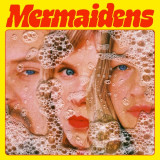
New Zealand indie trifecta Mermaidens, are set to make a resounding splash in the music scene yet again with the announcement of their fourth self-titled album and release of the project's first single ‘I like to be alone’. The trio, comprising of Gussie Larkin (guitar/vocals), Lily West (bass/vocals), and Abe Hollingsworth (drums), has been on an impressive journey of musical excellence, boasting three critically acclaimed albums, international tours, and a slew of accolades to their name. With a sound that is both bold and adventurous, Mermaidens' music is a testament to their unwavering creativity and relentless work ethic. Their upcoming self-titled album, a product of the band's tireless efforts between 2019 - 2022, promises to be a captivating sonic journey, delving into themes of self-awareness, introspection, long-term love, and even channelling political anger and frustration. Recorded mainly at Surgery Studios in Wellington, with the engineering prowess of Lee Prebble and produced by Samuel Flynn-Scott of The Phoenix Foundation fame, the album also saw the band stepping up their production game with Gussie and Lily working their magic with Protools in their DIY home studios, showcasing their growth and versatility as artists. “Working with Sam has really been a round-trip in our creativity,” as Lily explains, “we grew up listening to Sam’s early records and here we are getting the inside scoop on how to make that kind of magic. Listening to Pegasus today still transports me to a time when I listened to music on a Walkman. In the best possible way - sometimes it felt like we’d added an evil genius to the mix, we’d be working on a song and he’d come in like a mad scientist with fresh ideas to try.” To give fans a taste of the upcoming album's brilliance, Mermaidens have released new single 'I like to be alone.' The song has been part of the band's live repertoire for a while and explores the fulfilling contentment of being alone and the struggle to convey this sentiment to a partner. Its relatable lyrics capture the essence of cherishing solitude while navigating the complexities of human connections. Gussie's candid and honest approach to self-discovery is complemented by the song's, Michel Gondry inspired video, as Gussie explains: “The giant jean pocket and denim world were created by Hannah Webster, a textile designer and illustrator based in Wellington. Hannah took all the wild ideas for props and made them come true! I’m still in awe of how she managed to sew a 6x6 metre backdrop for the denim world out of whatever scraps she could find. The video captures our playfulness and sense of humour, and is a hint of what’s to come for the rest of the music videos. I love the way the story wraps up with the three of us together, literally playing “in the pocket”. Mermaidens' self-titled album will be released on Friday 3 November 2023 and is available for pre-order now. UK listeners will be able to pick up an exclusive Rough Trade vinyl pressing in transparent red, along with an A3 poster and jumbo bumper sticker. Having released their last two albums through iconic local label Flying Nun, Mermaidens will be released independently. Creative control is an important pillar for the band, who are hands on in every facet of their projects. Mermaidens gather their community close via their hugely popular multi-city boutique festival Mermgrown, hosting peers including Womb, Hans Pucket, Vera Ellen (Girl Friday) and Kōtiro from 2021 onwards. They've been invited to share the stage with Death Cab For Cutie, Sleater-Kinney, Gang of Four, Parquet Courts, Lorde and The Veils, and have toured extensively in Europe, the UK, and Australia.
We at BDQ are delighted to release Brian Auger, Julie Driscoll & The Trinity's long lost, swinging Hammond Organ version of the jazz dance classic ‘Jeannine’. Released for the very first time on a 45, ‘Jeannine’ had lain forgotten about for 55 years, and was only discovered whilst Brian and his son were looking for previously unreleased material to include on the recent ‘Auger Incorporated' compilation (Soul Bank Music) Julie Driscoll’s unmistakable voice paired with Auger’s fiery playing makes for a fresh take on this evergreen classic.
On the B side, for the first time on a UK release we have the hip swinging, big band 'mod jazz' dancer 'In & Out'. Taken from The Trinity's 1967 album 'Open' and is built around guitarist Gary Boyles' Wes Montgomery inspired playing. 'In & Out' was only released on a 45 in the US by ATCO Records, making this it's only ever single release outside of the United States - this special BDQ 45 single is a strictly limited edition release and will not be repressed.
Brian himself has been very supportive, making it very clear that this 45 was a priority project for him, and we are very lucky to collaborate on our second project with this legendary artist. Many will be aware that Brian and BDQ first collaborated on the single ‘Truth In My Tears’ which featured his trademark Hammond Organ sound alongside the sultry voice of Lydia Sharpe to great effect. We extend our gratitude to Brian and Karma Auger, Brians' manager Greg Boraman, and all at Soul Bank Music/K7 Music.
The Sad Clown Bad Dub series first started as a string of limited cassette tapes and CD-R's for Atmosphere to sell exclusively on tour. Since its inception in 1999, the Sad Clown series has seen over a dozen iterations in numerous formats, including rare 4-track demos, live recordings, a DVD of behind-the-scenes tour footage, a mixtape, 7” vinyl singles and more. To this day, one of the earliest volumes – Sad Clown Bad Dub 2 – still remains one of the most celebrated and coveted installments from the series.
Originally released in 2000, Sad Clown Bad Dub 2 was a rather stripped-down DIY release – a simple CD tucked behind an illustrated cover with handwritten tracklist and liner notes. The recordings were equally as rough, consisting of a dozen raw 4-track demos that hadn't been treated to any sort of mixing or mastering. Although Atmosphere initially produced only 500 copies of these CD's to sell on the road for extra cash, the buzz and the subsequent demand from fans eventually led the group to pressing more of the CD's, this time stamp- ing the cover art with the phrase "Authorized Bootleg" as a sly nod to those who'd been ripping and sharing the files. The unpolished nature of Sad Clown Bad Dub 2 was no deterrent from the appeal of its contents though.
Generally considered an underground classic in hip-hop circles, Sad Clown Bad Dub 2 is often mentioned as one of the standout releases in Atmosphere's extensive discography. It is a deeply introspective project that explores a range of complex thoughts and emotions, counter-balanced by occasional moments of darkly humorous sarcasm and wit. Slug's writing is sharp and insightful with a knack for turning his personal struggles into universal themes that listeners can relate to. Ant's production is minimalistic, moody, even eclectic in nature, full of atmospheric textures and unconventional rhythms. This release is very clearly one of the early stepping stones in developing their unique and distinctive sound together, helping to establish their reputation as one of the most innovative and boundary- pushing acts in hip-hop.
We're excited to reintroduce the legendary Sad Clown Bad Dub 2, digitally remastered from the original 4-track tapes and available on vinyl for the first time ever!