José González has delivered a new album, Against the Dying of the Light, a companion and further meditation on the themes of his critically acclaimed album, Local Valley. Where Local Valley turned inward toward place, language, and personal reflection, this new record widens its gaze, becoming an urgent call to preserve the light of humanity with all its flaws, at a moment when, technology increasingly shapes how we think, feel, and relate to one another.
While José has always embraced technological advancement, he questions the assumption that every new possibility must be pursued to its maximum potential, especially when progress comes at the expense of human flourishing, attention, and empathy.
Keeping in the tradition of folk music as protest, José’s new single — sharing its title with the forthcoming album — urges listeners to resist systems that dehumanize and divide: “Disconnect from every algorithm, every perverse incentive that drags you down. Let’s rebel against the replicators, against the dying of the light. Kill the codes that feed the hate, keep the codes that make you thrive, celebrate the **king fact that we’re alive.”
Across the album, González works within a deliberately minimal framework, pushing his familiar palette to new heights through subtle variation, restraint, and detail. Each song unfolds with its own distinct character, proving how much emotional and musical range can be achieved within self - imposed limitations. Written in English, Swedish, and Spanish, the record reflects his Swedish - Argentine roots and frames its humanist message as a global one rather than a purely personal or political statement.
José González is one of the most quietly influential artists of our generation. The Swedish - Argentine artist has built a singular musical world from hypnotic, minimal guitar work and his unmistakably gentle voice — a sound that has become deeply personal to millions of listeners worldwide. With billions of streams across platforms and hundreds of thousands of physical records sold, González’s songs often act as emotional landmarks. Ask almost anyone, and they can name at least one of his tracks tied to a defining moment in their lives.
out of Stock
Last delivered 6 months ago available to reorder, subject to availability
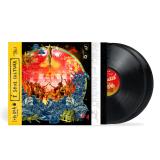
The history of house and disco music is full of gospel soul singers creating anthemic bangers for the dance floor. Annie and the Caldwells, a family band from West Point, Mississippi, are the latest to join their ranks.
============================
This collection — featuring remixes from musclecars, Kornél Kovács, Alexis Taylor (of Hot Chip), and disco icons Nicky Siano and Justin Strauss — follows the release of the Caldwells’ wildly acclaimed debut Can’t Lose My (Soul) Luaka Bop, Spring 2025. Hailed as “a masterpiece” by The Guardian (★★★★★), and one of the best albums of the year by The Times, MOJO, UNCUT, and The Economist, Can’t Lose My (Soul) found fans all over the world — like Sir Elton John, who called their album “A great, great record that I insist you go out and buy.”
“I was blown away when I first heard the original version of ‘Wrong’,” says Kornel Kovács, whose remix of “Wrong” appears on this white label. “Deborah’s voice floored me, as well as the background singers. One of the greatest vocal performances I’ve heard, let alone worked with. The result is a club-ready take that’s become a highlight in my recent DJ sets.”
Producers Brandon Weems and Craig Handfield (of musclecars) had a similar experience when they heard the family for the first time: “We quickly fell in love with the groovy bassline and the choir vocals,” said Craig. “We thought it’d be fitting to put our own spin on it, while paying homage to those jive brothers from Tulsa. The uplifting keys paired with the punch of the drums, rounded out with that organ…this one is sure to bring a joyful noise!”
Annie Caldwell and her family have since performed in more than twenty countries on four continents, and recently made a star turn on the UK's preeminent music program Later... with Jools Holland. They’re hitting the road again in 2026. Watch this space.
c Wrong You Dropped a Bomb - Extended Wooden Dance Floor Mix (A Nicky Siano Production) 6:48
out of Stock
Last delivered 83 days ago available to reorder, subject to availability
Orange Vinyl with exclusive illustrated notes/lyric insert ltd to 300 w/w.“Zimmerman conjures up a kind of Arcadian folk surrealism that is utterly his own” MOJO Never released before collection featuring Ian A Anderson & Maggie Holland recorded 72-80 is among Tucker’s finest - Free-ranging, Playful, Intimate - his Songpoet imagination unbound and in full bloom now on colour Vinyl for first time with (exclusive to this version) illustrated lyric insert with notes from Tucker.Recorded between 1972-80 this is the first ever release for ‘I Wonder If I’ll Ever Come True’ a stunningly beautiful, homegrown collection by Songpoet Tucker Zimmerman and friends. The range and depth is astonishing. From the heady surreal journey of ‘It All Depends’ Upon the Pleasure Man’, to the uplifting Gene Clark-esque 'So It Goes’, to some of his most beautiful & touching love songs in ‘Let’s Start Over Again’ & ‘Song’. Only one song has seen the the light of day before now - ‘Taoist Tale’ from his 1984 album ‘Word Games’. This recording from a decade earlier loses no power in its folkier stripped down style driven by Tucker’s strong narrative.
While living in bucolic seclusion in Belgium with Marie-Claire, Tucker invited visiting musicians (Derroll Adams, Wizz Jones, Maggie Holland, Dave Evans, Ian Anderson) into his home studio to play and live tape whatever songs he had at hand. Maggie Holland and Ian A Anderson feature, while Tucker found a freeing simplicity in just guitar, ’70s organ, bass and piano. We are so grateful to Ian A Anderson, who carefully kept and curated these recordings from 50 years ago. “Every time I would leave, Tucker would hand me another tape full of songs”. Ian worked with Tucker and ourselves to present this wonderful album. The collection is among Tucker’s finest - free-ranging, playful, intimate - his Songpoet imagination unbound and in full bloom. The ethos, the playing, the freedom, feels like Ronnie Lane’s time in the Welsh Borders. Unhurried, liberated, down-home and cosmic. Extraordinary music made among friends.
"Startling collection of intimate, home-recorded songs from the cult singer-songwriter adored by David Bowie and Big Thief alike.
When I first interviewed Tucker Zimmerman back in 2015 neither of us had any idea that, a decade later, he would be venerated by a new coterie of young fans, touring with maximal folk-rockers Big Thief and recipient of a concerted reissue campaign by the wonderful Big Potato Records. Last year I eulogised the “Arcadian folk surrealism” of his 1974 LP *Over Here In Europe but, if anything, this informal collection of intimate home-studio recordings is even better. Recorded between 1973 and 76 whilst living in Belgium and hosting such visiting folk musicians as Derroll Adams, Wizz Jones, Maggie Holland, Dave Evans, and Ian A. Anderson this is the kind of assured, organic freewheeling folk music that has the mellow, introspective rough-edged feel of some lost private-press LP, the kind rightly revered by Endless Boogie’s Paul Majors as “real people” music. A true find.” Andrew Male MOJO 4/5
“Here's a charming oddity: an unreleased album dating from the mid-Seventies by an American-born songwriter beloved of David Bowie and, more recently, Adrianne Lenker of the folk-rock band Big Thief. Zimmerman's a bohemian type who eschewed the big time for a life of gigging around Europe. He, his wife, Marie-Claire, and a handful of friends recorded these songs in seclusion in the Belgian countryside, and what songs they are. Slide On could have come from the Byrds when they discovered country music, Let's Start Over Again captures the dreamlike experience of being in love with unsettling clarity. This is a real unearthed gem.” 4/5 The Times
The cycle of life and nature is a precious and wondrous thing. We are born. We learn. We live. We die. And after death, another life awaits. When the world succumbs to the cold, dark grasp of winter, the promise of a spring birthing everything anew keeps hope alive. Such is the journey we make, and such is the lifespan of “Faþir”. Heaving, pulsating, filled with contrasts: ardent hostility and fiery revenge, blossoming life and lush fertility, soul-wrenching grief and deep anguish. Such is the path we walk under the guidance of the deities – the helping hand of a father, the nurturing wisdom in times of need. But sometimes, a treacherous god leads us into death and despair, albeit always with an underlying purpose. Such is “Faþir”.
With eloquence, elegance, and emotion, L. Swärd has created another monolith of sublime art to add to Forndom’s impeccable discography. This highly awaited follow-up to 2016’s “Dauðra Dura” is nothing short of a modern masterpiece, rooted in ancient ways. Expressive vocals and strings soar atop a foundation of unyielding drums, like spirits dancing in the skies yet bound to the human pulse. Never surrendering its strong connection to our mortal world, “Faþir” carries a deeply sacred dimension – a glimpse of the divine, seen through a lens of devotion and veracity. The joining of death and life, if you will.
The thick atmospheres and vast inner landscapes Forndom creates are more prevalent than ever, and from the first trembling string introduction of “Jakten” to the last wistful beat of “Hemkomst”, one is transported to another time, another place, and another mindset – leaving behind the calamity, stress, and superficiality of the modern world, and rediscovering the lost wisdom hidden behind the veil of passing years.
Pete Blaker returns to RNT with 2 glorious long-play sides of edit mastery. On side A, Miami Sax is a bit of funky 80s fusion for the jazz Uncs, teased out and looped up to dizzying perfection, with the blissful soul of Must Be Love on the flip, for the disco spinners . Both extended loopy journeys of dancefloor euphoria, already getting big support from Harvey, Hunee and company!
Writings on the topic that go off in all directions, mind-numbing lectures given by academics, and testimonies, most of them heavily doctored, from those who “lived through that era”: so many people today fantasize about the early days of punk in our country… This blessed moment when no one had yet thought of flaunting a ridiculous green mohawk, taking Sid Vicious as a hero, or – even worse – making the so-called alternative scene both festive and boorish. There was no such thing in 1976 or 1977, when it wasn’t easy to get hold of the first 45s by the Pistols or the Clash. Few people were aware of what was happening on the fringes of the fringes at the time. Malcolm McLaren was virtually unknown, and having short hair made you seem strange. Who knew then that rock music, which had taken a very bad turn since the early 1970s, would once again become an essential element of liberation? That, thanks to short and fast songs, it would once again rediscover that primitive, social side that was so hated by older generations? Who knew that, besides a few loners who read the music press (it was even better if they read it in English) and frequented the right record stores? Many of these formed bands, because it was impossible to do otherwise. We quickly went from listening to the Velvet Underground to trying to play the Stooges’ intros. It’s a somewhat collective story, even though there weren’t many people to start it.
The Guilty Razors were among those who took part in this initial upheaval in Paris. They were far from being the worst. They had something special and even released a single that was well above the national average. They also had enough songs to fill an album, the one you’re holding. In everyone’s opinion, they were definitely not among the punk impostors that followed in their wake. They were, at least, genuine and credible.
Guilty Razors, Parisian punk band (1975-1978). To understand something about their somewhat linear but very energetic sound, we might need to talk about the context in which it was born and, more broadly, recall the boredom (a theme that would become capital in punk songs) coupled with the desire to blow everything off, which were the basis for the formation of bands playing a rejuvenated rock music ; about the passion for a few records by the Kinks or the early Who, by the Stooges, by the Velvet mostly, which set you apart from the crowd.
And of course, we should remember this new wave, which was promoted by a few articles in the specialized press and some cutting-edge record stores, coming from New York or London, whose small but powerful influence could be felt in Paris and in a handful of isolated places in the provinces, lulled to sleep by so many appalling things, from Tangerine Dream to President Giscard d’Estaing...
In 1975-76, French music was, as almost always, in a sorry state ; it was still dominated by Johnny Hallyday and Sylvie Vartan. Local rock music was also rather bleak, apart from Bijou and Little Bob who tried to revive this small scene with poorly sound-engineered gigs played to almost no one.
In the working class suburbs at the time, it was mainly hard rock music played to 11 that helped people forget about their gruelling shifts at the factory. Here and there, on the outskirts of major cities, you still could find a few rockers with sideburns wearing black armbands since the death of Gene Vincent, but it wasn’t a proper mass movement, just a source of real danger to anyone they came across who wasn't like them. In August 1976, a festival unlike any other took place in Mont-de-Marsan – the First European Punk Festival as the poster said – with almost as many people on stage as in the audience. Yet, on that day, a quasi historical event happened, when, under the blazing afternoon sun, a band of unknowns called The Damned made an unprecedented noise in the arena, reminiscent of the chaotic Stooges in their early adolescence. They were the first genuine punk band to perform in our country: from then on, anything was possible, almost anything seemed permissible.
It makes sense that the four+1 members of Guilty Razors, who initially amplified acoustic guitars with crappy tape recorder microphones, would adopt punk music (pronounced paink in French) naturally and instinctively, since it combines liberating noise with speed of execution and – crucially – a very healthy sense of rebellion (the protesters of May 1968 proclaimed, and it was even a slogan, that they weren’t against old people, but against what had made them grow old. In the mid-1970s, it seemed normal and obvious that old people should now ALSO be targeted!!!).
At the time, the desire to fight back, and break down authority and apathy, was either red or black, often taking the form of leafleting, tumultuous general assemblies in the schoolyard, and massive or shabby demonstrations, most of the time overflowing with an exciting vitality that sometimes turned into fights with the riot police. Indeed, soon after the end of the Vietnam War and following Pinochet’s coup in Chile, all over France, Trotskyist and anarcho-libertarian fervour was firmly entrenched among parts of the educated youth population, who were equally rebellious and troublemakers whenever they had the chance. It should also be noted that when the single "Anarchy in the UK" was first heard, even though not many of us had access to it, both the title and its explosive sound immediately resonated with some of those troublemakers crying out for ANARCHY!!! Meanwhile, the left-wing majority still equated punks with reckless young neo-Nazis. Of course, the widely circulated photos in the mainstream press of Siouxsie Sioux with her swastikas didn’t necessarily help to win over the theorists of the Great Revolution. It took Joe Strummer to introduce The Clash as an anti-racist, anti-fascist and anti-ignorance band for the rejection of old-school revolutionaries to fade a little.
The Lycée Jean-Baptiste Say at Porte d’Auteuil, despite being located in the very posh and very exclusive 16th arrondissement of Paris, didn’t escape these "committed" upheavals, which doubled as the perfect outlet for the less timid members of this generation.
“Back then, politics were fun,” says Tristam Nada, who studied there and went on to become Guilty Razors’ frontman. “Jean-Baptiste was the leftist high-school in the neighbourhood. When the far right guys from the GUD came down there, the Communist League guys from elsewhere helped us fight them off.”
Anything that could challenge authority was fair game and of course, strikes for just about any reason would lead to increasingly frequent truancy (with a definitive farewell to education that would soon follow). Tristam Nada spent his 10th and 11th unfinished grades with José Perez, who had come from Spain, where his father, a janitor, had been sentenced to death by Franco. “José steered my tastes towards solid acts such as The Who. Like most teenagers, I had previously absorbed just about everything that came my way, from Yes to Led Zeppelin to Genesis. I was exploring… And then one day, he told me that he and his brother Carlos wanted to start a rock band.” The Perez brothers already played guitar. “Of course, they were Spanish!”, jokes their singer. “Then, somewhat reluctantly, José took up the bass and we were soon joined by Jano – who called himself Jano Homicid – who took up the rhythm guitar.” Several drummers would later join this core of not easily intimidated young guys who didn’t let adversity get the better of them.
The first rehearsals of the newly named Guilty Razors took place in the bedroom of a Perez aunt. There, the three rookies tried to cover a few standards, songs that often were an integral part of their lives. During a first, short gig, in front of a bewildered audience of tough old-school rockers, they launched into a clunky version of the Velvet Underground's “Heroin”. Challenge or recklessness? A bit of both, probably… And then, step by step, their limited repertoire expanded as they decided to write their own songs, sung in a not always very accurate or academic English, but who cared about proper grammar or the right vocabulary, since what truly mattered was to make the words sound as good as possible while playing very, very fast music? And spitting out those words in a language that left no doubt as to what it conveyed mattered as well.
Trying their hand a the kind of rock music disliked by most of the neighbourhood, making noise, being fiercely provocative: they still belonged to a tiny clique who, at this very moment, had chosen to impose this difference. And there were very few places in France or elsewhere, where one could witness the first stirrings of something that wasn’t a trend yet, let alone a movement.
In the provinces, in late 1976 or early 1977, there couldn’t be more than thirty record stores that were a bit more discerning than average, where you could hear this new kind of short-haired rock music called “punk”. The old clientele, who previously had no problem coming in to buy the latest McCartney or Aerosmith LP, now felt a little less comfortable there…
In Paris, these enlightened places were quite rare and often located nex to what would become the Forum des Halles, a big shopping mall. Between three aging sex workers, a couple of second-hand clothes shops, sellers of hippie paraphernalia and small fashion designers, the good word was loudly spread in two pioneering places – propagators of what was still only a new underground movement. Historically, the first one was the Open Market, a kind of poorly, but tastefully stocked cave. Speakers blasted out the sound of sixties garage bands from the Nuggets compilation (a crucial reference for José Perez) or the badly dressed English kids of Eddie and the Hot Rods. This black-painted den was opened a few years earlier by Marc Zermati, a character who wasn’t always in a sunny disposition, but always quite radical in his (good) choices and his opinions. He founded the independent label Skydog and was one of the promoters of the Mont-de-Marsan punk festivals. Not far from there was Harry Cover, another store more in tune with the new New York scene, which was amply covered in the house fanzine, Rock News (even though it was in it that the photos of the Sex Pistols were first published in France).
It was a favorite hang-out of the Perez brothers and Tristam Nada, as the latter explained. “It’s at Harry Cover’s that we first heard the Pistols and Clash’s 45s, and after that, we decided to start writing our first songs. If they could do it, so could we!”
The sonic shocks that were “Anarchy in the UK”, “White Riot” or the Buzzcocks’s EP, “Spiral Scratch” – which Guilty Razors' sound is reminiscent of – were soon to be amplified by an unparalleled visual shock. In April 1977, right after the release of their first LP, The Clash performed at the Palais des Glaces in Paris, during a punk night organised by Marc Zermati. For many who were there, it was the gig of a lifetime…
Of course, Guilty Razors and Tristam were in the audience: “That concert was fabulous… We Parisian punks were almost all dressed in black and white, with white shirts, skinny leather ties, bikers jackets or light jackets, etc. The Clash, on the other hand, wore colourful clothes. Well, the next day, at the Gibus, you’d spot everyone who had been at this concert, but they weren’t wearing anything black, they were all wearing colours.”
It makes sense to mention the Gibus club, as Guilty Razors often played there (sometimes in front of a hostile audience). It was also the only place in Paris that regularly scheduled new Parisian or Anglo-Saxon acts, such as Generation X, Siouxsie and the Banshees, the Slits, and Johnny Thunders who would become a kind of messed-up mascot for the venue. A little later, in 1978, the Rose Bonbon – formerly the Nashville – also attracted nightly owls in search of electric thrills… In 1977, the iconic but not necessarily excellent Asphalt Jungle often played at the Gibus, sometimes sharing the bill with Metal Urbain, the only band whose aura would later transcend the French borders (“I saw them as the French Sex Pistols,” said Geoff Travis, head of their British label Rough Trade). Already established in this small scene, Metal Urbain helped the young and restless Guilty Razors who had just arrived. Guitarist for Metal Urbain Hermann Schwartz remembers it: “They were younger than us, we were a bit like their mentors even if it’s too strong a word… At least they were credible. We thought they were good, and they had good songs which reminded of the Buzzcocks that I liked a lot. But at some point, they started hanging out with the Hells Angels. That’s when we stopped following them.”
The break-up was mutual, since, Guilty Razors, for their part, were shocked when they saw a fringe element of the audience at Metal Urbain concerts who repeatedly shouted “Sieg Heil” and gave Nazi salutes. These provocations, even still minor (the bulk of the skinhead crowd would later make their presence felt during concerts), weren’t really to the liking of the Perez brothers, whose anti-fascist convictions were firmly rooted. Some things are non-negotiable.
A few months earlier (in July 1978), Guilty Razors had nevertheless opened very successfully for Metal Urbain at the Bus Palladium, a more traditonally old-school rock night-club. But, as was sometimes the case back then, the night turned into a mass brawl when suburban rockers came to “beat up punks”.
Back then, Parisian nights weren’t always sweet and serene.
So, after opening as best as they could for The Jam (their sound having been ruined by the PA system), our local heroes were – once again – met outside by a horde of greasers out to get them. “Thankfully,” says Tristam, “we were with our roadies, motorless bikers who acted as a protective barrier. We were chased in the neighbouring streets and the whole thing ended in front of a bar, with the owner coming out with a rifle…”
Although Tristam and the Perez brothers narrowly escaped various, potentially bloody, incidents, they weren’t completely innocent of wrongdoing either. They still find amusing their mugging of two strangers in the street for example (“We were broke and we simply wanted to buy tickets for the Heartbreakers concert that night,” says Tristam). It so happened that their victims were two key figures in the rock business at the time: radio presenter Alain Manneval and music publisher Philippe Constantin. They filed a complaint and sought monetary compensation, but somehow the band’s manager, the skilful but very controversial Alexis, managed to get the complaint withdrawn and Guilty Razors ended up signing with Constantin with a substantial advance.
They also signed with Polydor and the label released in 1978 their only three-track 45, featuring “I Don't Wanna be A Rich”, “Hurts and Noises” and “Provocate” (songs that exuded perpetual rebellion and an unquenchable desire for “class” confrontation). It was a very good record, but due to a lack of promotion (radio stations didn’t play French artists singing in English), it didn’t sell very well. Only 800 copies were allegedly sold and the rest of the stock was pulped… Initially, the three tracks were to be included on a LP that never came to be, since they were dropped by Polydor (“Let’s say we sometimes caused a ruckus in their offices!” laughs Tristam.) In order to perfect the long-awaited LP, the band recorded demos of other tracks. There was a cover of Pink Floyd's “Lucifer Sam” from the Syd Barrett era – proof of an enduring love for the sixties’ greats –, “Wake Up” a hangover tale and “Bad Heart” about the Baader-Meinhof gang, whose actions had a profound impact on the era and on a generation seeking extreme dissent... On the album you’re now discovering, you can also hear five previously unreleased tracks recorded a bit later during an extended and freezing stay in Madrid, in a makeshift studio with the invaluable help of a drummer also acting as sound engineer. He was both an enthusiastic old hippie and a proper whizz at sound engineering. Here too, certain influences from the fifties and sixties (Link Wray, the Troggs) are more than obvious in the band’s music.
Shortly after a final stormy and rather barbaric (on the audience’s side) “Punk night” at the Olympia in June 1978, Tristam left the band ; his bandmates continued without him for a short while.
But like most pioneering punk bands of the era, Guilty Razors eventually split up for good after three years (besides once in Spain, they’d only played in Paris). The reason for ceasing business activities were more or less the same for everyone: there were no venues outside one’s small circuit to play this kind of rock music, which was still frightening, unknown, or of little interest to most people. The chances of recording an LP were virtually null, since major labels were only signing unoriginal but reassuring sub-Téléphone clones, and the smaller ones were only interested in progressive rock or French chanson for youth clubs. And what about self-production? No one in our small safety-pinned world had thought about it yet. There wasn’t enough money to embark on that sort of venture anyway.
So yes, the early days of punk in France were truly No Future!
out of Stock
Last delivered 6 months ago available to reorder, subject to availability
We've got a bit of an obsession with Hozan Yamamoto here at Mr Bongo! A legend of Japanese jazz, he is rightly regarded as a true master and was recognised as a "living national treasure" by the Japanese government in 2002. Over five decades he pushed the genre into new directions, absorbing fusion, funk, spiritual jazz and many other sounds, resulting in a discography studded with gems of rare beauty. Exploring his back catalogue has taken us on an engrossing journey that now sees us reissuing another work from this ground-breaking musician.
Though not translating perfectly into English 'Akuma Ga Kitarite Fue Wo Fuku', (kitarite has not been a modern expression in Japanese) roughly means 'The Devil Comes Playing The Flute' / 'The Devil Is Coming While Blowing The Whistle' or 'Devils Flute’. It is the original soundtrack to Kôsei Saitô’s 1979 mystery and suspense movie, ‘Devil’s Flute’. The film is based on a story by the famous author, Seishi Yokomizo, and is centred around a much-loved fictional Japanese detective, Kosuke Kindaichi. A Japanese Sherlock Holmes that has been popular for generations.
Hozan Yamamoto was invited to compose the soundtrack directly by the producer of the film, Haruki Kadokawa. Mr Kadokawa also hired keyboard player and producer Yu Imai as assistant producer on the project, resulting in a stunning cosmic, breaks and beats-laden, funk, disco soundtrack extravaganza.
When it comes to the soundtrack and the technology of the time, Hozan Yamamoto and Yu Imai got inventive, tripped out, funked up, and experimented, creating a quirky soundtrack masterpiece that needed to be heard more outside of Japan. Differing from the more traditional Japanese music orientation of some of his other albums such as 'Beautiful Bamboo-Flute' (also released on Mr Bongo) the album showcases a number of genres, from lush atmospheric incidental music to disco and funk grooves, experimental nuggets, drum and flute workouts, to neo-classical and more.
A special record that showcases the further depths of this wonderful musician's talents.
The sonic worlds of Devon Rexi and John T. Gast collide in a vital meeting between two singular mavericks!
Following two lauded EPs on cult label South of North, Amsterdam-based Devon Rexi prepare to release their much-anticipated debut album, recorded by and featuring elusive 5 Gate Temple devotee, musician and producer John T. Gast, whose acclaimed catalogue continues to flourish.
Devon Rexi is a trio made up of Nicola Reverda (Nicolini), Nushin Naini and Goya van der Heyden (La Rat). They’ve quickly carved out their own sonic world, traversing krautfunk, post-punk and psyched-up no wave, all laced with a dub-heavy experimental mentality. Breathstep captures the band’s bass-heavy incantations, ripe with melodic chaos and rhythmic improvisation, while devilish cackles and processed vocals flirt over a jukebox of dubbed snippets and sliced textures.
The introduction of John T. Gast as producer and collaborator pulls the Devon Rexi sound deeper into bubbling dub territory, while his own palette is stretched and pushed into new terrain. Though Gast has firmly cemented his singular sound over the last decade, this interconnected process marks new ground for all involved. The result is a supreme convergence of esteemed musicians and a wickedly fine debut collaborative record.
Breathstep finds its home on Bristol imprint Accidental Meetings, whose ever-evolving sound and wide-ranging discography continue to grow. The album was recorded over the last year across Amsterdam, Lisbon and London.
out of Stock
Last delivered 69 days ago available to reorder, subject to availability
Berlin Based DJ & Producer Johannes Klingebiel returns to Claptrap with “Dolce” a four-track EP served sweet, rich, and ready for peak-time indulgence.
Three original cuts and a heavyweight remix combine for a release that’s equal parts playful and potent. Consider this your sugar rush warning.
The title track, “Dolce,” is a warm and irresistible disco-house groover. Creamy acoustic drums lay the foundation while spicy xylophones and syrupy flute lines weave through the mix, striking a perfect balance between sophistication and pure dancefloor pleasure. It’s smooth, infectious, and built to move bodies.
Next up, “Follow The Line” blends shuffled house rhythms with 303 basslines and grainy vocal stabs. On paper, it’s an unlikely combination, on the floor, it locks tight. The result is hypnotic, driving, and effortlessly smooth.
On the flip, “Pink Forest” ventures into more mysterious territory. Built around an elusive, shifting time signature (one that even jazz-trained drummer Johannes struggles to explain), the track somehow feels both unpredictable and deeply groovy. It bends perception without losing momentum, a heady but danceable excursion into the unknown.
Closing the EP, Sun Damage delivers a remix of “Follow The Line” that both sharpens and distorts the original’s trajectory. Chunkier, weightier, and slightly off-kilter, this rework injects a tougher edge while maintaining the track’s hypnotic core, primed for late-night floors and heavy systems.
“Dolce” is indulgent yet refined, a release that balances musicality with movement, sweetness with punch.
Consume responsibly.
out of Stock
Last delivered 4 months ago available to reorder, subject to availability
Heavyweight psychedelic improvisers EarthBall are back with their third and most monstrous record to date: ‘Outside Over There’, released on Upset The Rhythm (Nov 7th). Born from the haunted basements of Nanaimo, Canada, the quintet thrives on spontaneity, shaping improvisation into jagged hallucinations and ecstatic eruptions.
Recorded live-off-the-floor in 2024 in Jeremy, Izzy, and Kellen’s basement, and mixed by drummer John Brennan, ‘Outside Over There’ is an album that feels both summoned and inevitable. Each track lands with uncanny purpose, as if uncovered rather than written.
The opener, 100%, features a cameo from comedian and English icon Stewart Lee, who lent his blessing for the band to use a fragment of his stand-up. The album was mastered by John Dieterich (Deerhoof), with liner text contributed by longtime comrade John Olson (Wolf Eyes). Olson describes the album in his unmistakable style:
“This eight-track odyssey unfolds like a dreamscape, where whispered incantations brush against the shadowy fringes of the cosmos, and wild, Cézanne-inspired rock anthems erupt like geysers of color in the midst of a western warm and wet rain storm… culminating in the sprawling eleven minute masterpiece, ‘And The Music Shall Untune The Sky,’ aptly dubbed the Earth Crusher. A creation so utterly deconstructed and intertwined with the pulse of nature itself that if AI was called upon to conceive ‘Outside Over There’ anew, it would just spit back, “F.U. in Tree Font”. An enchanting invitation for even the flat-earthers to join the circle, if only just a little.”
EarthBall’s trajectory has been relentless. Their 2024 album ‘It’s Yours’ was praised by The Quietus as “fully aggressive and fully life-affirming,” and by The Wire as "a boisterous mind-melting album”. The band’s live double set LP ‘Actual Earth Music Vol. 1 & 2’ (2025) captured blistering performances: a performance opening for Wolf Eyes at the Fox Cabaret, and a Café OTO improvised throw-down featuring Chris Corsano and Steve Beresford. These releases on their own confirm them as one of Canada’s most vital experimental exports, not to mention the impressive self-released discography on their Bandcamp. The band’s reach has stretched far beyond their west coast roots with a UK tour May 2024, plus this past June, EarthBall closed Montreal’s Suoni Per Il Popolo Festival alongside Pulitzer Prize-winning composer Raven Chacon. This November they will perform at Le Guess Who? Festival in Utrecht, with a European tour to follow (tour dates below). Outside of EarthBall, each member carries their own torch. Jeremy Van Wyck, founding member of the legendary Shearing Pinx, has toured extensively, released over 100 records, and has been a vital force in the Vancouver and West Coast underground for the past 25 years. He and Isabel Ford (Izzy) play together not only in EarthBall, but also in Psychedelic Dirt, Shearing Pinx, Behaviours, and Crotch.
John Brennan collaborates widely, including recently with Endlings (Raven Chacon and John Dieterich), Evichen (Victoria Shen), Francesco Fonassi, Plan Your Future (with Greg Saunier of Deerhoof), Brennan/Corsano duo and Physics with John Dieterich. Kellen Maclaughlin performs with KVMP and Ora Corgan, while saxophonist Liam Murphy is a west coast staple, playing with the best across Vancouver Island and the mainland. On three of the tracks of ‘Outside Over There’, the band is joined by their comrade Justin Patterson, who also plays with Brennan in the duo Modale. This cross-pollination fuels EarthBall’s sound - a collective improvisation, psychically overdriven, and grinding into bloom.
Outside Over There’ is more than an album though, it is a ritual, a gathering of sound at the forest’s edge; where feedback, saxophone screams, and ecstatic vocals dissolve the boundary between chaos and clarity. EarthBall invite you into their circle, to share in the joyful terror of spontaneous creation. ‘Outside Over There’ will be released on November 7th through Upset The Rhythm digitally and as a limited blue-in-black vinyl LP.
2026 black vinyl, 2022 Abbey Road remaster, original 2012 artwork! When the mysterious masked collective calling themselves Goat first emerged in 2012, armed with an incendiary debut album 'World Music' - there was, and there still isn't, anyone else on earth quite like them. With their enticing mythology, music full of sinuous grooves and manic explosions of fuzz, Goat were outliers from the very beginning. 'World Music', received an avalanche of acclaim with critics, psych heads, outernational crate diggers etc, all left enraptured by its thunderous intensity, conjured from a singular mix of sounds from across the globe. 'World Music' is brimming with tracks now seen as 'classic' Goat live favourites. Tracks that have been wowing audiences all over the world; the afrobeat stomp of 'Disco Fever', the fuzz abuse of 'Goathead', the post-punk groove of 'Let it Bleed', the sing-along repetitive pop of 'Run to your Mama'... From the first note to the last, 'World Music' oozes with a sonic confidence rarely seen on a debut album. What Goat have is unique - they've managed to create a sound unrestrained by genre or any other boundaries. So if you haven't done so already, then it is now time you joined the Goat commune.
DOODSESKADER clearly haven’t had enough of redefining boundaries – they’ve only just gotten started. Tim De Gieter and Sigfried Burroughs return on April 3rd, 2026 with their third full-length album, The Change Is Me, a rollercoaster that can only be described as the unstable lovechild between witch house, hip-hop, industrial dream pop, and stadium rock that can’t decide if it wants to watch the world burn or shout from the rooftops that we need to save it. Their combination of grungy 90s melodies with distorted synths, sludgy bass, hard tuned vocals, rapping, singing, and explosions of undiluted rage at the current state of the world leave you wondering just exactly what it was you smoked last night, and if it was too much or not enough. The Change Is Me is an album that grabs you by the arm and asks if you’re ready to go on a grand adventure, then pulls you into its chaos before you can say “yes” or “no.”
Tim and Sigfried aren’t just breaking the boundaries between genres; they’re breaking out of their own Year cycle, a path they had laid out for themselves at the band’s inception in 2020. Up until now, the duo had set out to document their “journey to getting better” through writing one album each year: Year Zero (2020), Year One (2022), and most recently Year Two (2024). After spending eight months throughout 2024 and 2025 writing, recording, producing and mixing Year Three, the band scrapped the finished record entirely. Playing shows while simultaneously navigating the process of mixing Year Three created a sort of disconnect – the people that they were when they wrote that record and the people that playing shows made them become were no longer one and the same. “We’re people with faults and strengths, and we realized we needed to accept it. That’s equal parts bleak and liberating. If you’re so focused on self-improvement, you can’t even applaud yourself for how far you’ve come,” the band explains. “This project is meant to be a document of us and of the human condition, not a self-improvement handbook designed to keep us all stuck on what may or may not have happened to us or because of us in the past.”
DOODSESKADER chose instead to embark anew on a week-long creative journey in Tim’s own Much Luv Studio with one goal in mind: to make an album that captures who they are right now. Finally writing everything together in the same room for the first time in years, the process of bringing "The Change Is Me" to life was captured by Diana Lungu in their latest documentary, "Now I Know You See Me", out December 2nd, 2025.
"The Change Is Me" marks the beginning of DOODSESKADER’s shift into a more positive era, both musically and conceptually. Over the course of the 40-minute record we hear the two friends unite in a fight against a world that grows more and more disappointing, a concept made crystal clear in tracks like “Celebrity Culture Simp Farm,” “It Keeps On Stinging,” and of course the album’s epic closer “Suffering In Technicolor.” While their previous albums saw them trying to outrun their pasts and arrive at a better version of themselves, here the search for some external or internal revelation that will “make them better” is no more. It’s been replaced by the realization that change isn’t something we force: it’s gradual, and more importantly, it’s something that’s already there – we just need to reach out and accept it.
The band’s live appearances over the last several years have been instrumental in shaping their ideology. On stage is where the duo find connection; not only with the audience, but also with each other. Their sold-out release shows at Ancienne Belgique (2022) and VierNulVier (2024) have proven that they are one of Belgium’s must-see acts. Abroad, their energy has translated into a month-long EU/UK tour with French band Alcest in 2024, as well as appearances at festivals such as Roadburn Festival (NL), Eurosonic (NL), Hellfest (FR), Mystic Fest (PL), Jera On Air (NL), ArcTanGent (UK), Fluff Fest (CZ) and more.
"The Change Is Me" is out April 3rd, 2026 on DOODSESKADER’s own label, 45 Records.
Stacey Kent is an American jazz singer in the mould of the greats, with a legion of fans, a host of honors and awards including a Grammy nomination, album sales in excess of 2 million and more than one billion streams, and Platinum, Double-Gold and Gold-selling albums that have reached a series of chart-topping positions.
Stacey, a comparative literature graduate with a passion for music, travelled to Europe to further her studies after receiving her degree from Sarah Lawrence College in NY. Through a series of twists of fate, she found herself in London where she enrolled in a graduate music program at the Guildhall School of Music and Drama, where she met her future husband and musical partner, Jim Tomlinson.
Kent's musical journey began with childhood piano lessons. A keen ear and true voice lead her to search out opportunities to express her love of music. However, nothing suggested the shift from the academic path to the one that propelled her to international recognition as one of the foremost jazz singers of her generation. With a catalogue of 13 studio albums, including the Platinum selling, Grammy-nominated Breakfast On The Morning Tram (Blue Note/EMI 2007) and an impressive list of collaborations, Stacey has graced the stages of nearly 60 countries over the course of her career.
Her worldwide fan base is testimony to her ability to express the emotional heart of her songs with delicately nuanced interpretations that transcend borders and defy categorization. Her unique multi-lingual repertoire includes standards, chanson, Bossa Nova, and originals written by Jim Tomlinson, her saxophonist/producer/composer/arranger husband in collaboration with the Nobel Prize-winning author, Kazuo Ishiguro with whom they have worked since 2006. She has also recorded with Brazilian legends, Marcos Valle, Roberto Menescal and Danilo Caymmi, and the celebrated French string quartet, the Quatuor Ébène.
Stacey's last studio album, Summer Me, Winter Me, was released in November 2023 on Naïve Records. A collection of fans' requests from her as yet unrecorded concert repertoire, Summer Me, Winter Me entered the French jazz charts at number 1 and has quickly established itself as a new highlight in her discography. She now returns with A Time For Love.
Welcome to the world of Edward Blankman, a retired dentist who wrote elegant, minimalist jazz in obscurity circa 1970. At least that’s the story.
In truth, Edward Blankman’s Cape Cod Cottage is the 2021 concept album from Echo Park composer Brendan Eder.
A tender, wistful follow up to 2020’s To Mix With Time, the Cape Cod Cottage sound evokes the spirit of Erik Satie, Miles Davis with Gil Evans, and Stevie Wonder, balanced with the accessibility of 1960s lounge-exotica. Eder’s characteristic arrangements are crafted to reflect the past, without losing the innovative quality of his modern ear.
Eder created Blankman’s story to channel his own grief, with bittersweet tenderness. Read the liner notes, and you’ll be transported to the quiet shores of Cape Cod, where a lonely retiree mourns his late wife, Natalie, with walks in nature and evenings at his Wurlitzer.
The story is brought to life with a meticulously crafted package sporting classic liner notes, faux 1970s photographs documenting Edward with the musicians (taken during the actual session), a make-believe jazz label, and a commissioned oil painting of Edward’s cottage. Eder spent over a year rendering the compositions and charts according to his vision.
Eder brought together a dream line up with a ton of chemistry for the project; drummer Christian Euman (Jacob Collier), saxophonist Josh Johnson (Jeff Parker, Leon Bridges), and bassist Alex Boneham (Billy Childs), who all studied together at the Hancock Institute of Jazz. Rounding out the group is flutist Sarah Robinson, a recurring player in Eder’s ensemble, and Edward Blankman (Brendan) on the Wurlitzer.
The cast was booked for a single date with coveted engineer Michael Harris (Kamasi Washington, Angel Olsen, Fleet Foxes) at famed Electro-Vox Recording Studios. To create realism for Edward’s story, the charts were purposefully withheld from the musicians until they arrived at the studio. The result is an authentic and natural performance delivered by players at the top of their game, captured on pristine vintage equipment including the legendary Neve-8028 console.
out of Stock
Last delivered 6 months ago available to reorder, subject to availability
"Tapping into a shared affinity for early trance – as in short for transcendental – Function and Nastia Reigel come together on Dekmantel with ‘Devocion’. Bridging the past and the future, this partnership draws deeply on brooding, melancholic early-90s sounds and supercharges it with the immensity of modern techno.
The project began when Nastia Reigel shared a series of discoveries with David ‘Function’ Sumner – records rooted in the rave-leaning edge of the era, spanning labels like R&S, FAX and EXperimental. He responded that this was precisely the music he had been absorbing while coming up in the thick of New York’s club and rave scenes and beginning his journey into DJing. The excited exchange of deep digs around this niche of dance music history naturally led to a conversation about collaborating on music in this vein, and Devocion is the result.
Familiar genre touchstones are everywhere, from the plaintive bleeps and understated breakbeat roll of 'Eternity' through the sad-eyed arpeggios strafing on the edges of 'Reverence' and on to 'Flowstate's blue-hued acid lines and 'Orion's sky-scraping gated pads. But Reigel and Sumner deploy these strongly coded elements with poise, feeding into a richly rendered production that feels anything but old-school. The emotive streak is wielded with care, spelling out the mood without losing the steely, shadowy sensibility that tracks through their respective catalogues.
In a perfect demonstration of honouring the past while embracing the present, Devocion EP lands as a distinctive artistic statement on its own terms."
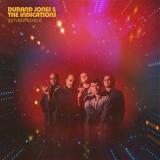
Nach dem "makellosen und zeitlosen Soul" (The Guardian) des 2019er-Vorgängers "American Love Call" öffnet "Private Space" von Durand Jones & The Indications die Tür zu einer breiteren Palette von Klängen und führt die Band kühn in eine synthielastigere Soul-Welt aus mit Streichern durchsetzten Disco-Beats. Das harmonische Zusammenspiel zwischen Aaron Frazers sanftem Falsett am Schlagzeug und Durand Jones' kräftigem Gesang sitzt noch immer tadellos und wird von Blake Rhein (Gitarre), Steve Okonski (Tasten) und Mike Montgomery (Bass) perfekt abgerundet. The Indications bleiben auch auf ihrem dritten Album wahre Meister darin, Revival-Sounds mit einer modernen Haltung zu verschmelzen. "Private Space" atmet den Geist der vergangenen Disco-Ära und die zehn Tracks liefern so eine dringend benötigte Dosis Eskapismus nach diesem turbulenten Jahr 2020. Das Album entstand nachdem die Band einen Großteil des Jahres getrennt voneinander verbracht hatte. Die Freude des Wiedersehens und am kreativen Miteinander ist auf "Private Space" jederzeit spürbar. Der hoffnungsvolle Sound setzt auf die Idee, dass Freude uns befreien kann. Die Kraft eines guten Songs, ein Licht in der Dunkelheit zu sein. Bandleader DURAND JONES fasst es treffend zusammen: "At the end of the day, I just want people to close their eyes and forget where they are. Just the way a Stevie Wonder album does for me."
The new issue of Disco Pogo features 20 pages on Prince’s influence on electronic music marking 10 years since his passing.
Our other two cover stars are Warp’s Nightmares on Wax, who is celebrating 30 years since his classic album ‘Smokers Delight’ having just sold out The Royal Albert Hall, and TOMORA who are a new duo made up of Tom from The Chemical Brothers and Scandi pop star Aurora.
Plus features on The Durutti Column, Wendy Carlos’ ‘Clockwork Orange’ soundtrack, Burial, Lorraine James, DJ Hell, DJ
Shadow, Hot Chip’s Alexis Taylor, Speedy J, Tiga and much more!
194 pages of quality music journalism by the world’s best music writers plus beautiful photography and design in a quality print magazine.
José González has delivered a new album, Against the Dying of the Light, a companion and further meditation on the themes of his critically acclaimed album, Local Valley. Where Local Valley turned inward toward place, language, and personal reflection, this new record widens its gaze, becoming an urgent call to preserve the light of humanity with all its flaws, at a moment when, technology increasingly shapes how we think, feel, and relate to one another.
While José has always embraced technological advancement, he questions the assumption that every new possibility must be pursued to its maximum potential, especially when progress comes at the expense of human flourishing, attention, and empathy.
Keeping in the tradition of folk music as protest, José’s new single — sharing its title with the forthcoming album — urges listeners to resist systems that dehumanize and divide: “Disconnect from every algorithm, every perverse incentive that drags you down. Let’s rebel against the replicators, against the dying of the light. Kill the codes that feed the hate, keep the codes that make you thrive, celebrate the **king fact that we’re alive.”
Across the album, González works within a deliberately minimal framework, pushing his familiar palette to new heights through subtle variation, restraint, and detail. Each song unfolds with its own distinct character, proving how much emotional and musical range can be achieved within self - imposed limitations. Written in English, Swedish, and Spanish, the record reflects his Swedish - Argentine roots and frames its humanist message as a global one rather than a purely personal or political statement.
José González is one of the most quietly influential artists of our generation. The Swedish - Argentine artist has built a singular musical world from hypnotic, minimal guitar work and his unmistakably gentle voice — a sound that has become deeply personal to millions of listeners worldwide. With billions of streams across platforms and hundreds of thousands of physical records sold, González’s songs often act as emotional landmarks. Ask almost anyone, and they can name at least one of his tracks tied to a defining moment in their lives.
DJ Support: Garnier, Opolopo, Worldwide FM, Marcia Carr, Bill Brewster, Timeout Moscow, Craig Smith, Delfonic, Tony Nwachukwu, Marcel Dettmann, DJ Rocca, Shuya Okino, Borrowed Identity, Titonton Duvante, Alex Attias, Rainer Truby, Sol Power All-Stars, Kyri R2, Robert Luis, Severino Panzetta, Lars Behrenroth, Kassian, Alkalino, Getdown Edits, Moodymanc, Gerd, Lea Lisa, Young Pulse, Mark de Clive-Lowe, Mark Grusane, Alex Barck….
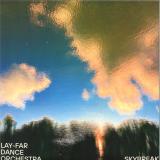
International dance music heavyweight, producer and DJ Alexander Lay-Far returns with a powerful new chapter - Lay-Far Dance Orchestra (LFDO) - a fully-fledged live band project that reconnects him with his jazz-funk and fusion DNA while pushing dance music forward with unmistakable groove, musicianship and emotional weight. Formed in early 2024, LFDO is no nostalgia exercise. With Lay-Far at the helm as bassist, bandleader, composer, arranger and sound engineer, the orchestra has already been turning heads with explosive live performances, reinventing classic Lay-Far cuts, and now unveil their first album “Skybreak” with all new and original material written and produced by Lay-Far together with his bandmates and star guests, including Lipelis, Antoha MC and Seven Davis Jr. This work shows the departure from the predominantly electronic sound of Lay-Far's previous solo albums in favour of live instrumentation recorded to analogue tape and effortlessly bridging the gap between Jazz, Library Music, Disco-Funk, House, Broken Beat and Drum’n’Bass. “Skybreak” is dynamic, passionate, spiritual, cinematic, playful, heartfelt, life-affirming, dreamy and deeply romantic. Ultimately, there’s something profoundly romantic in recording and releasing such music in this day and age!
“Take Flight (Part 1)” is opening the album with style. It takes us on a beautifully orchestrated journey, blending the sensuality of Library Music with high-octane Jazz-Funk and raw b-boy breaks, propelled by breathtaking flute and Rhodes solos of Timur Nekrasov and Maxim Glonti. This aural symbiosis of “beauty and the beats” will become more and more prominent as the album unfolds.
It’s time for “Aquarius Love” created with the inimitable artist and vocalist Seven Davis Jr. (Secret Angels, Ninja Tune). In this composition cinematic soul and heavy jazz meet the restless energy of live drum & bass with deep and heartfelt vocals - timeless sound combined with a timeless message about love and life!
Next is “Head In The Clouds” - a theme for an imaginary rom-com, an ode to all the dreamers - sweet, light, naive and heartwarming. Space-Disco-Funk at its best!
“Where You From” is a fiery Soulful House number with heavy Afro-Latin influences recorded in collaboration with Lipelis. It’s full of Sun, joy and passion. Its irresistible rhythm is emphasised by funky octave bass, wah-wah guitar, catchy piano riffs, guitar solo by Lipelis and seemingly light conscious message delivered by Lay-Far and Maryag. Summer is here!
Now the album takes an unexpected twist in the form of “The Harp of Boom” which at first glance appears to be a classic-sounding Boom-Bap banger. Yes, It’s loud, raw, and gritty, yet it gradually evolves into something delicately-touching and deeply-soulful thanks to a memorable flute melody and lush string arrangement. Definitely recorded with tongue in cheek.
Next is “Feel The Moment” a remarkable collaboration with one of the most recognisable and distinctive Russian artists, singer, trumpeter and cultural icon Antoha MC. It’s a feel-good song, hopeful, life-affirming and bittersweet. A stylish excursion into Brit-Funk and Soviet Jazz-Fusion sound, drawing inspiration from the likes of Atmosfear, Light Of The World or Soviet Jazz bands like Allegro and Arsenal, but reimagining the influences through the modern West London broken beat lens.
The spectacular music journey continuous with “Take Flight (Part 2)” - it’s all about the deep infectious jazz-funk groove, heavy beats, rolling percussion and the glory of the soloing instruments - saxophone and flute by Timur Nekrasov, demonstrating the wide range of emotions from thoughtful and lyrical to restless and borderline vicious. One for freestyle dancing!
As the album draws to an end a vibrant musical triptych “Soul Constant” awaits, mixing together the deep and sensual mood of spiritual jazz with heavy syncopated drum’n’bass rhythms by Michail Fotchenkov, lush orchestration, expressive saxophone solos and the ending which can simply be described as “aural bliss”. It’s breath-taking!
A pleasant bonus is the exclusive version of “Where You From” by Lipelis himself, who is taking it into dub territories, further enhancing the rhythm section and enriching the song with his trademark playful synth flourishes and dreamy guitar solos for maximum effect (and appeal).
The album “Skybreak” by Lay-Far Dance Orchestra is the work of real artistry and craftsmanship with timeless sound that’s not only deeply-rooted but also forward-thinking.
out of Stock
Last delivered 4 months ago available to reorder, subject to availability
Joff Bush and the Bluey Music team proudly present the brand-new Bluey album. Featuring 17 brand-new recordings including ‘Sleepytime’, ‘Flat Pack’, ‘Seesaw’, and the new ‘Bluey Theme Tune (Orchestral Version)’.
“This was our most ambitious album to date - so we wanted something extra special - something we’ve wanted to make for a long time."..."Hearing the music from episodes like ‘Sleepytime’ and ‘The Sign’ in all its orchestral splendour meant tissues needed to be on hand throughout the mixing process.”
“Fittingly, the theme of this album is ‘growing up’. Much of this music, like the episodes they derive from, explore what it means when kids start to discover their independence and venture out on their own. Whether that’s learning to sleep in their own bed or taking a spaceship to Mars. I hope you enjoy ‘Up Here’, as the opportunity I had to make this album is thanks to YOU!"
These four tracks simply blew me away when I heard them. Its raw disco funk cosmic energy that you just can't replicate. Sometimes when you get a long disco track that's eight or ten minutes long, mundane thoughts and loss of interest can start to kick in once the dums and bongo's have faded.
This isn't the case with Magique. You just keep joining the rocket ride to the stars.
From the social message disco funk of "Inch By Inch" which is still relevant to today's social problems. "Dancin" and "Disco Nights" epitomise why we love disco.
And finally "Disco Cowboy" has a sound that harks back to those Plainfield NJ P-Funk roots. I think if any of the Dj pioneers from the 1970's stumbled across these they would have been etched in Disco Folklore!
out of Stock
Last delivered 45 days ago available to reorder, subject to availability
Undun is the story of a man, Redford Stevens, dying in reverse, rewinding from the moment he became a statistic and hitting the points in his life where he's at his most self-aware. That he's a criminal who got caught up in the familiar street-hustle trappings that the modern media's documented countless times is a pivotal detail-- it's hit at an angle that seems to emphasize the futile inevitability of it all. His life could be any number of misdirected narratives that ends with a toe tag, and what details listeners learn about him are hazy, buried under archetypal turns of fate and decisive struggles. That this protagonist is a fictionalized composite of a handful of real people, filtered through a matter-of-fact narrative that splits character ambivalence with journalistic impartiality, only makes his lack of direction and the failure of any real closure stand out even more. "Lotta niggas go to prison," Dice Raw states on "Tip the Scale", "how many come out Malcolm X?"
So the Roots' latest album isn't a sprawling, rise-and-fall crime story, not a condemnation or a veneration of a man living outside the law, not a bullet-riddled grand guignol heavy on explicit details of soldiers getting cut down. It's a character study of a man whose existential crisis ends only with his death-- a death gone largely unspecified, the glamor and tragedy washed over with a doomed resignation. That's a hard thing to pull off, even for a band as given to deep-thinking concepts as the Roots are. And when your main lyrical catalyst is Black Thought-- a man more given to allusions than direct statements-- it's likely that it'll take a while for the full scope of Undun to really sink in.
If and when it does, it might strike listeners as a bit skeletal: omit the mood-setting instrumental bookends, including a brief, four-part orchestral suite that builds off Sufjan Stevens' "Redford (For Yia-Yia and Pappou)", and you've got maybe a half hour's worth of material. By ?uestlove's accounts, writing Redford's story introduced the headaches and challenges that come with scriptwriting into their songwriting, and what's left on Undun is the end result of frequent revisions and rewrites that attempt to reconcile character, theme, and continuity. If it comes at the expense of nuance, it's not always obvious: There's an easy-to-trace narrative line from Redford's acceptance of his fate ("Sleep") to his acknowledgement of how close it's approaching ("Make My"), back through declarations of aggravated toughness ("One Time"), and celebratory fatalism ("Kool On"), along ups and downs that juxtapose motivation ("Stomp") and helplessness ("Lighthouse"). When the vocal portion of the album ends with two of the bleakest sets of verses in the Roots discography, peaking with the estrangement of "I Remember" and the desperation of "Tip the Scale", Undun reveals itself as a story where a man's actual death isn't quite as tragic as the circumstances that pushed him to it.
out of Stock
Last delivered 6 months ago available to reorder, subject to availability
Manfredi Romano, founder and A&R of Life and Death Records, has been a pivotal figure in electronic music for over two decades. This year marks an important milestone as he is invited to curate the upcoming fabric presents mix for fabric Records, a release that highlights his instinctive storytelling and the distinct musical identity he has cultivated throughout his career.
Manfredi’s journey began in Italy around the turn of the millennium, tour-managing punk bands and organizing left-field music events before completing his studies in computer science at the University of Pisa. He went on to form DAZE, Italy’s first booking agency dedicated exclusively to electronic music, laying the groundwork for what would become a globally influential presence in the scene.
In 2010, he shifted focus to his own artistic project, DJ Tennis, which quickly gained international recognition for its emotive blend of house, techno, and disco. Renowned for creating intimate atmospheres in even the largest spaces, DJ Tennis has performed at leading clubs such as Circoloco Ibiza, Fabric London, and Panorama Bar Berlin, and at major festivals including Sonar, Timewarp, Primavera Sound, and Coachella. His 2022 residency at Phonox in London further showcased his ability to shape dancefloors with nuance and depth. Since 2017, he has also co-founded and curated Rakastella, the celebrated Art Basel Miami festival created in partnership with Life and Death and Innervisions.
As a producer, DJ Tennis draws from early relationships with post-rock pioneers such as Godspeed You! Black Emperor, Tortoise, and Fugazi, channelling their influence into intricately layered electronic compositions. His work has appeared on respected labels including Kompakt, Rhythm Assault, Running Back, !K7, Cercle Records, Aus Music, and Circoloco Records, alongside frequent releases on Life and Death. His remix portfolio includes collaborations with Diplo, Boys Noize, Loco Dice, WhoMadeWho, and Acid Pauli, among many others. He has also previously contributed a DJ-Kicks mix, bringing his eclectic sensibilities to one of electronic music’s most beloved series.
After extended periods living in Miami, Berlin, and Barcelona, DJ Tennis now resides in Paris. Outside the studio and club environment, Manfredi is a passionate chef who has curated menus for charity events and collaborated with Beatport at ADE, Pioneer, and Resident Advisor. He is also an avid collector of bicycles, vintage action figures, and vinyl — his record collection now surpasses eleven thousand pieces.
With the forthcoming fabric presents DJ Tennis release, he offers a deeply personal, narrative-driven statement that reflects decades of crate-digging, boundary-pushing selections, and a lifelong devotion to sound. It marks a new chapter in his artistic evolution and stands as one of the year’s most anticipated entries in the iconic series.
The first single from DJ Tennis is a collaboration with long-time studio partner Ashee, and it immediately sets the tone for the mix: warm, seductive, rhythm-driven, and emotionally charged.
“I Wanna Know” is a sleek club track built around a pulsing groove and a steady, hypnotic rhythm. The low end is rounded and warm, giving the track a driving but understated momentum. Percussion is crisp and minimal, allowing the bassline and vocal elements to take center stage. The repeating, robotic earworm of a vocal hook, “I wanna know’ is the lynchpin to the track and will remain in your head long after the track has finished.
It’s the kind of record that warms up a room early in the night, sets the tone for a sunset beach set, or adds a lush, emotional peak during a more leftfield club moment.
out of Stock
Last delivered 3 months ago available to reorder, subject to availability
Artist, painter, curator Leo Vincent, is fired up off the back of supporting Soulwax, on their recent Paris and Netherlands shows. Proudly presenting two debut songs “Hello it’s me again” and “Loving isn’t easy”, co-produced with the brothers, David & Stephen Dewaele, of Soulwax/2manydjs.
Seven years ago, Leo Vincent bluffed his way into a video editing job at DEEWEE. Despite being told to not touch or ruin their gear, he later resurfaced with demos that sounded like he had anyway.
"Don’t know much about history”
"Don’t know much about biographies"
But we do know that by the time Leo Vincent arrives in your town, he will probably have destroyed two more Tascam 8-tracks.
Brussels-based, failed goalkeeper-turned-painter-turned-cameraman-turned-musician Leo, doesn’t seem to be afraid to leave his faders in the red zone for an unorthodox period of time while repairing the pitch knob. Some say it’s disco for night janitors. Some say it’s glam-rock for ravers. Others haven’t found the time to listen yet because they have real jobs.
But to fully grasp Leo Vincent's essence, imagine yourself sitting in the home cinema of the late Marc Bolan while watching a documentary on Scatman John, directed by Jacques Tati and scored by Ween, using only the instruments of Cabaret Voltaire.
out of Stock
Last delivered 6 months ago available to reorder, subject to availability
Light Touches Records is devoted to shed new lights on hot rarities, unknown grooves as well as forgotten classics.
While the older numbers are much sought after on Discogs, Light Touches pushes further and invites Irish underground heroes Frawl and Blackout (respectively founder and one of the resident djs of the connaisseur Backwards parties in Limerick) for the new release on the highly revered Light Touches Records.
On A side, “Fortune Teller” is a masterpiece of a lost disco tune with infectious funky bassline, while “Foxee” goes deeper into a brass driven relentless grooves with psychedelic melodies. On the flipside, “Me, Me, Me” is a 10 minutes journey, with a strong moody and deeper vibe.
All tracks have been carefully edited without overdubs, in order to bring the spirit of classic disco manipulators to today’s dancefloors!
12” limited to 300 copies (no digital).
out of Stock
Last delivered 3 months ago available to reorder, subject to availability
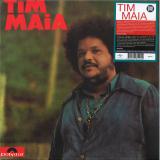
Tim Maia’s self-titled 1973 album is one of those records that hits you from the very first groove and doesn’t let go. Originally released on Polydor Brazil, this was the fourth in a series of Tim’s self-titled albums and many fans and critics still consider it the crown jewel. Packed with irresistible hooks, lush arrangements, and that unmistakable Tim Maia swagger, the album captures the singer at the peak of his creative powers.If you’re new to Tim Maia, here’s the quick story: born in Rio de Janeiro, Tim was a larger-than-life icon whose music married American soul and funk with Brazilian samba and pop long before “fusion” was a buzzword. A true musical polymath, he absorbed everything from Curtis Mayfield to Motown and translated it into a sound entirely his own, gritty, passionate, and full of groove.
He didn’t just introduce soul to Brazil; he made it Brazilian.On this 1973 release, Tim pushes everything up a notch. The arrangements are bigger, slicker, and surprisingly majestic, without losing the raw spirit that earned him a devoted following. From the moment ‘Réu Confesso’ opens the album, you know you’re in for something special—smooth, funky, and heartfelt in all the right ways. The bittersweet ‘Gostava Tanto de Você’ remains one of his most beloved classics, while ‘O Balanço’ bursts with Brazilian flavor that practically dares you not to move. And with tracks like ‘Do Your Thing, Behave Yourself’ and ‘Over Again,’ Tim shows just how naturally the soul idiom fit him, even when he switched to English.This record has everything: deep grooves, soaring strings, magnetic vocals, and that unmistakable sense of joy that Tim Maia carried into every session. It’s a front-to-back winner—one of those albums that deserves a spot not just in Brazilian music history, but in any collection that celebrates great soul, funk, and timeless grooves.If you’re a longtime fan, it’s a reminder of why Tim Maia is legendary. If you’re discovering him for the first time, this is the perfect place to start. Either way: press play, turn it up, and let Tim do his thing.
out of Stock
Last delivered 5 months ago available to reorder, subject to availability
With two deeply cherished compilations already in the bag, Luke Una steps up for the third volume in his É Soul Cultura series on Mr Bongo. A love letter to the dancefloor and its power to unite people from all corners of society amid growing division and extremist politics. Genre-spanning in nature, the 15 tracks travel between cosmic soul, boogie, proto-house, slo-mo technoid grooves, drum machine afro, astral bass-bugging futurism, jazz funk, dance, and disco. Each having the ability to move the body as much as the heart.
From his formative years in Sheffield to co-founding Manchester’s much-fabled Electric Chair with Justin Crawford, through to helming the iconic LGBTQ institutions of Homoelectric / Homobloc, Luke has spent 40 years immersed in dance music. His latest outlet, É Soul Cultura, has grown from a label to a globe-spanning events series with Luke holding residencies and embarking on tours across the world from Japan and Australia to America and Europe.
“For me, the dancefloor was never about a one-dimensional, thudding, 130 BPM beat only. It's a much more dynamic, broader vision than that. I cut my teeth in an era where a 100 BPM record had as much impact, excitement, and energy as a 134 BPM dancefloor jazz funk or techno record”, Luke mentions. É Soul Cultura Volume 3 is the perfect embodiment of that notion: “It’s about four decades in the trenches playing dance music, the late-night afters, the shebeens, the basements, warehouse parties, the eight-hour journeys in East London, through to festival sets at Houghton and We Out Here. It’s music unconstrained by genre or tempo and more about making your body move”.
But this isn’t simply a collection of disparate dance tracks; they carry meaning and soul. “It’s less about escapism, more about reconnection. My experience of post-covid has been the coming together of all the clans in various clubs and gatherings. A reaction to a very toxic world out there, where the aggro rhythms of division have sought to divide us, and people don't meet as often. The coming back together face-to-face in clubs has encouraged a real love in the air, there's a real togetherness and collective spirit”.
Opening up the compilation is a track that channels that very message, the transcendental, soul-rousing Harris & Orr ‘Spread Love’. Joining the dots from there, to the low-slung deep house closer of Fatdog ‘Remember’, you’ll find electronic drum machine Nigerian funk, sitting side by side with dancefloor Cape Verdean brilliance, a post-punk cover of Fela Kuti, rubbing shoulders with cosmic electro, and an Una-championed, 8-minute, kickless DJ Harvey remix. There’s jazz funk in various guises moving from boogie synth to astral travelling, slo-mo acidic raw techno, and a ‘79 soul stepper, alongside swirling percussive Italo disco and tribal-charged house. All infused with an innate ability to bring people together.
As society becomes increasingly fractured, É Soul Cultura Volume 3’s message is more than movement. It’s about dance music’s power to unify people from all walks of life and break down the barriers that divide us.
out of Stock
Last delivered 30 days ago available to reorder, subject to availability
Mahjong Room is the second album Cameron Lew released under the artist name Ginger Root which explores his coming of age and discovery of his own signature sound; self coined as Aggressive Elevator Soul. Self Produced and Performed, this album marked the beginning of Ginger Roots' rise in popularity outside of his Huntington Beach hometown. Lew was still in film school at the time of recording and releasing Mahjong Room. His attention was equally focused on the music videos that were made for singles `Two Step', `Call it Home', `Jeanie', `Mahjong Room', and `Ohio'. Becoming a signature of Ginger Root releases, the video treatments of songs were humor-filled and directed and produced by Lew himself. Catching the attention of other touring indie acts Ginger Root spent most of the fall of 2018 on tour with artists Khrunagbin, Duran Jones & The Indications, The Marias, and Omar Apollo.
Strut Records presents a fresh look at Oblivion Express, the 1971 album that marked Brian Auger’s shift into a new musical frontier. After years spent shaping the sound of British jazz-soul with the Trinity, Auger stepped into the new decade with a leaner, electrified ensemble and a renewed sense of purpose. This record captures the moment that transformation took shape.
Oblivion Express introduced a sound that was distinctly Auger’s own. Rather than echoing the fusion emerging in the United States, Auger developed a language rooted in the UK’s jazz underground, culminating in a spaced out jazz- rock / prog-fusion album awash with larger than life drum fills and Auger’s virtuosic organ playing. Between bassist Barry Dean and drummer Robbie McIntosh the album moves effortlessly between tight, articulated phrases and broader, improvisational passages. The trio’s interplay forms the backbone of the album and sets the tone for the sound that would define the early years of the Express.
Album opener “Dragon Song” launches with a restless drive that immediately signals Auger’s new direction. Auger chose to record this version of John McLaughlin’s piece (his friend and former bandmate in 'The Niddy Griddys') after hearing McLaughlin’s album Devotion during its mix at New York’s Record Plant Studios. Auger was blown away, recalling, “Oh my god, this is amazing. I wanted to record that myself - and I did!”. Pieces like “Total Eclipse” demonstrate the Oblivion Express’ command of dynamic contrast, and title track “Oblivion Express” explores the cinematic and compositional prowess of the group through stripped back, building moments vs. explosive melodic breakdowns. Riff-heavy “The Sword” later became known through Madlib’s usage in 2014 tracks “Yeti Movie” and “Parodies”.
In retrospect, Oblivion Express stands as a jazz leaning, prog-rock masterpiece and foundational moment in Auger’s catalogue. It captures the starting point of a new sound that is more focused, more urgent, and fully committed to the possibilities of jazz-rock at the dawn of the seventies. The album remains a vivid document of a band discovering its identity and setting the stage for the further array of influential releases that would follow.
out of Stock
Last delivered 6 months ago available to reorder, subject to availability
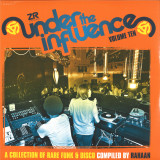
Z Records continues its commitment to unearthing the obscure and
long forgotten tracks from the last 40 years through the ever-popular
Under The Influence series. Following on from Red Greg, Nick The
Record, Sean P, Faze Action, and last years Alena Arpels. It’s now the
turn of one of the scene’s most impressive collectors & DJs; Rahaan
Hailing from Chicago his love affair with muzik started in the late 70’s early 80’s, listening to muzik on the radio combined with his mom and dad playing their records every weekend. In the early 80’s on the South side of Chicago, he started hearing something a bit different, what they called ‘house muzik’. A combination of Disco, Jazz, Soul Funk, New Wave and Italo Disco. Here Rahaan digs deep into his impressive record collection that he has collected, built up and crafted over his many years of travelling, networking and DJin to showcase 22 of his finest and rarest cuts. Many of the tracks on the album would cost hundreds and that’s if you were even able to find the originals! As always with ZR compilations a lot of time and effort has been spent on creating these masters from the original vinyl, cleaning them up, removing all the clicks and pops resulting in the cleanest sounding copy possible.
out of Stock
Last delivered 6 months ago available to reorder, subject to availability
Well. Where do we start with 'Deep Inside' Originally released in the golden NYC House era of 1993, this 5 tracker literally smashed everything in sight. And still does now! The epitome of an evergreen, all-time classic release. Masters At Work Louie Vega and Kenny Dope were on a major roll in this era, producing, remixing, dj-ing and everything in-between, these guys put in ridiculous work. They are joined on this EP by a roll-call of names and collaborators, Erick Morillo engineering the title track Check. Maurice Joshua on co-production duties You got it. Vocals by Ms. Barbara tucker They're there. Killer, rock hard drums Stacks of Soul Masterfully chopped up Disco samples All present. Serious stuff. Sometimes a record just manages to capture and distill the true essence of what this is all about and 'Deep Inside' is one such record, it bears all the hallmarks of golden era MAW, all the signposts of what was happening in NYC's clubs in the early to mid 90's were there within it's grooves. You know a record is good when it's still being, quite literally, hammered nearly 25 years later! Now, remastered, and reissued with the full involvement of Strictly Rhythm this seminal piece of NYC House history is made available again with all original, full sleeve artwork intact as per the 1993 original. This one's a straight up essential for any self-respecting dance aficionado. You know what to do!
Das Berliner Indie-/Electro-Wave-Trio Dina Summer meldet sich mit einer ordentlichen Portion Synthpop auf ihrem zweiten Album ‘’Girls Gang’ zurück!
Dina Summer ist ein kollaboratives Projekt, das aus Kalipo, einer Hälfte der legendären Electro-Punk-Band Frittenbude, und dem griechisch-deutschem DJ & Produzenten Duo Local Suicide besteht, die das Label Iptamenos Discos betreiben. Ihre bisherigen Werke umfassen das von Kritikern gefeierte Album „Rimini“ aus dem Jahr 2022, das einen nostalgischen Einblick in Retro-Disco-Vibes bietet, sowie die EPs „Who Am I“ (2021) und „Hide & Seek“ (2024). Seit der Gründung der Band vor fünf Jahren hat Dina Summers Musik mit Millionen von Streams, weltweitem Radio-Airplay und zahlreichen Spotify- und Apple Music-Editorial-Playlists für Aufsehen gesorgt und wurde von DJs wie Charlotte De Witte, The Hacker, Âme, Dixon, Joris Voorn, DJ Hell, Joyce Muniz und Dubfire gespielt. Das neue Album umfasst 11 Songs die sich mit Themen wie Empowerment („No More Tears“ & „Girls Gang“), Außenseitertum („Alien“ & „Zombie“), Vergänglichkeit („Promise Me feat, Curses & Joshua Murphy“), Nostalgie („Halkidiki“) und Beziehungen („Nothing To Hide“ & „Hypnotized“) auseinandersetzen. Legte ihr Debütalbum seinen Fokus eher auf den Club zwischen Italo-Disco und 90ies Elektro, erkundet die neue Veröffentlichung eine größere Sound-Palette, die von New Wave & Post-Punk zu Electroclash und Synth- & Indie-Pop reicht. „Girls Gang“ ist ein gutes Stück songorientierter als das Debütalbum, die Band erweitert ihr Repertoire auf einigen Songs unter anderem um echte (!) Bässe und Gitarren, vorallem aber setzt Frontfrau Dina neben ihrem Markenzeichen - Spoken Word - immer öfter auf ihre Gesangsstimme. Trotzdem knüpft das Album nahtlos an das Erstlingswerk an, man hört wieder jene poppige Melodien und Hooks mit denen sich Dina Summer zuvor schon einen Namen gemacht hat, ausgebreitet auf einem Bett aus Indiepop-Hymnen und Club-Brechern.
out of Stock
Last delivered 3 days ago available to reorder, subject to availability
Turbotito and Ragz's electrifying Naya Beat label has curated a cultured list of remixers to add their spin to the work of legendary Indian vocalist Asha Puthli. This essential remix album features Yuksek, Maurice Fulton, Psychemagik, Kraak & Smaak, Jitwam, and Turbotito & Ragz.
Naya Beat, which translates from Hindi as 'new beat', is focused on uncovering foundational electronic sounds from the subcontinent and South Asian diaspora through reissues, remixes and compilations. It found quick success with its first release, 'Naya Beat Volume 1: South Asian Dance and Electronic Music 1983 - 1992', followed by a rare 1985 Hindi New Wave album by Pinky Ann Rihal and more recently a ground-breaking compilation ‘Awaaz’ uncovering Bollywood electro and leftfield 80s original soundtrack recordings.
Hot off their highly sought after EP of Dimitri From Paris’ seminal remixes of Asha Puthli’s iconic track ‘Space Talk’, the label now offers up the first of two full-length releases based around her music. Cosmic disco pioneer, Studio 54 icon and jazz improviser Asha Puthli has recorded, sung or shared the stage with the likes of Roy Ayers, Alice Coltrane, Grace Jones, Barry White, Andy Warhol and many more. From David Mancuso's The Loft, to Giorgio Moroder's early work with Donna Summer, to hip-hop where she has been sampled extensively, Asha's musical influence and impact is profound. She was the first artist of South Asian descent to successfully crossover and make a mark on dance, jazz and pop culture in the West.
For this LP, Naya Beat tracked down the long mythologised original stems and recordings of Puthli's most seminal albums, including ‘The Devil is Loose’, and working closely with Asha, they have tasked a series of producers inspired by her work to remix her music.
Yuksek opens up with a pumping disco remix of 'I Am Song (Sing Me)' awash with uplifting synths and big claps next to the original vocals, which soar to the heavens. The seminal 'Space Talk' is remixed by Maurice Fulton into super steamy and late-night territory. The live drums and jumbled percussion are lit up with soulful chords as Puthli's carefully delivered vocals seduce up top. 'Lies' (Kraak & Smaak Remix) rides on fat-bottomed drums and bass that unfold with a dub swagger beneath a nebulous eco-system of cosmic synths and dramatic vocals. Label heads Turbotito & Ragz flip 'One Night Affair' into a leggy disco celebration with sweeping synths and bright effects, and Psychemagik's 'Right Down Here' is a pulsating mix of dark, snaking bass and drums with deep space ambience and raw hits making for a turbulent and tense atmosphere. Lastly, Jitwam closes out with a smooth disco sound laced with dynamic drums and cruising chords next to another sensuous top line from Asha Puthli.
out of Stock
Last delivered 4 months ago available to reorder, subject to availability
The Golden Age of southern soul lasted from about 1962 to 1975, when disco ripped the heart out of it. And although it may seem as though the blend of country, gospel and R & B that emerged from the great studios in Memphis and Muscle Shoals in that decade was entirely fresh and new, like any other genre classic, southern soul picked up musical cues and absorbed influences from a whole variety of sources: horn lines from Louisiana's swamp pop, lyrical themes from the blues, songs from country music, and of course so, so much from the black churches. Part of the 'History of Soul' series, this LP reveals the musical antecedents that gave southern soul its inspiration. The music here will tell you the real story - and it will knock your socks off too! Notes by John Ridley.
If you could go back in time ten years, what would you want to tell yourself? This was a question Khruangbin posed to themselves when approaching the ten-year anniversary of their debut album, the once cult classic, now genre-defining work The Universe Smiles Upon You. “If we could go back and tell ourselves how much was going to happen to us after that record, what would we want to
celebrate?” asked Laura Lee, bassist, vocalist, and founding member of the band. Instead, they thought: “Let’s do it again.”
The Universe Smiles Upon You ii was recorded on January 4-6, 2025, in the same family barn of guitarist Mark Speer, across the
same dates where TUSUY was first conceived ten years earlier. Though the conditions were the same–dirt floor, brutally cold,
minimal sound isolation, all takes live–the songs aren’t. They’re re-approached, some changed more than others, harnessing the lightning-in-a-bottle energy of TUSUY while discovering what would be unique this time around, in this stage of the band’s life.
The result moves like ripples on the water across ten hypnotizing tracks, the barn creating a sense of spaciousness, serenity and creative freedom, nearby wildlife (listen out for the birds on “August Twelve ii”), rattles and creaks of the barn and all. It’s a tapestry of small movements in nuanced arrangements, slowly revealing the new life, stories and character of someone you’ve met again for the first time in ten years.
Over the decades, Numero has excavated a metric ton of recordings from the depths of Detroit. From all manner of mini Motowns we’ve uncovered soul, R&B, funk, disco, boogie, and by nature of proximity—gospel. Previous examinations of the Revival and Big Mack la- bels turned up more than a few new apocryphal hymns, and Great Lakes Gospel Vol. 2 compiles a dozen curious church groups devotionally reaching towards the genre’s frayed edge. Get lost in ecstatic choir funk, pulpit rappin’, direct-injection guitar solos, and the holy spirit, should it move you. Look around the room. You could start a church with this thing.
MonsieurWilly – “Stomp” (Nu-Disco Remake of The Brothers Johnson) – 7" Vinyl Single Get ready to move your feet: MonsieurWilly revitalizes the timeless funk anthem “Stomp” by The Brothers Johnson with an electrifying Nu-Disco makeover. Pressed on a high-quality 45 RPM 7" vinyl, this remake blends vintage groove with modern dancefloor energy, delivering an irresistible combination for DJs, collectors, and funk-disco lovers alike.
MonsieurWilly’s production pays homage to the original’s infectious basslines and uplifting spirit while injecting fresh synth textures, crisp beats, and a stylish contemporary polish. The result is a vibrant re-imagining that feels both nostalgic and brand new— perfect for setting the tone at any party or adding standout flair to your vinyl collection. This is another special and exclusive 45/7“ release via Soulkitchen Distribution…
out of Stock
Last delivered 4 months ago available to reorder, subject to availability
"¡Qué ardiente!" combines the best of Los Roger's limited discography, one of the most influential Amazonian cumbia bands from Iquitos, Peru.Their discography dives deep into Cuban-influenced sounds, where the guitar shares the spotlight with powerful percussion and-with tracks like 'Descarga Roger's'-with the vocals as well. A thorough look into one of the most essential Psychedelic cumbia bands in Peru. Iquitos, one of Peru's most remote cities and the capital of its Amazon region, was the epicenter of the psychedelic cumbia movement. Countless bands emerged from this place, each with a different fate in their musical journeys. Some rose to become international stars and flag bearers of cumbia, while others remained local legends, their fame never traveling far beyond the Amazon jungle. Los Roger's achieved great success in Iquitos and served as the foundation and inspiration for many local bands that emerged in the late 1960s and early 1970s. "¡Qué ardiente!" combines the best of the band's limited discography. The recordings come from their first 45 RPM single and their two mini Long Plays for the FTA label, as well as their only elusive LP from 1971, "¡Qué ardiente!", ("How Burning!") recorded for the prestigious IEMPSA label. Los Roger's came to an abrupt end just one year after the release of their LP, at the peak of their career, due to their disappointments with the music industry.
out of Stock
Last delivered 6 months ago available to reorder, subject to availability
Das zweite Album des Palace-Records-Gründers Andrei Nikolsky ist stark von Soundtrack- und Library-Musik der Vergangenheit beeinflusst, darunter auch von einem seiner Helden, John Cameron (Kes, KPM, Bruton), der auf dem Album mit dem Song "Swing Time" zu hören ist. Die Platte bietet eine Mischung aus ungewöhnlicher Elektronik, modalem Jazz und experimentellem Disco. Weitere Mitwirkende sind Mitglieder seiner Band The Kanpai Quartet (Charlie Searle, Euan McGinty, Dan Kabakov) sowie die Schlagzeuger Filippo Galli, Mike Bandoni (aka Funkshone) und Felix Weldon (Johnny Dankworth, Ian Shaw, Jean Toussaint, The La's).
- "Verdammt nochmal, Mann, was für ein Jazz!" - Sarah Evans (BBC6-Produzentin)
- "Ein wunderschönes Album! Perfekt für meine One Jazz-Show." - Dom Servini (Wah Wah 45s)
- "Schöne Soundsammlung." - Rory More (Les Hommes)
- "Die neuen Tracks klingen super! Ich mag die Anspielungen auf Disco und die verschiedenen musikalischen Richtungen." - Paul Osborne (Project Gemini)
out of Stock
Last delivered 4 months ago available to reorder, subject to availability