Back In Stock!
Grammy Award winner Louie Vega has the unique ability to spotlight and highlight the most essential elements of classic dance tracks and remix and recreate them to create something just as powerful for today’s audiences. Currently in the midst of putting the finishing touches on his forthcoming album, Expansions In The NYC, Louie took some extra time to gather together the original members of the seminal New York – based disco funk band Unlimited Touch and collaborate with them at Log Cabin Studio in Manhattan and his own Daddy’s Workshop Studio in New Jersey to produce the 2020 edition of “I Hear Music In The Streets.”
Unlimited Touch consists of Audrey Wheeler (lead singer), Phil Hamilton, Tony Cintron, Sandy Anderson (RIP), Stephanie James and Lenny Underwood. “I Hear Music In The Streets” was originally released on legendary imprint Prelude Records in 1981.
Growing up in the Bronx, from an early age Louie had an affinity and love for all the various musical genres that were bubbling up in New York during that era defining creative period. It is that passion that has stayed with him during a career that has brought him Grammy’s, several worldwide hit records, and a status as one of the world’s most sought after DJs. It was especially fulfilling for Louie to work with the original members of Unlimited Touch, He quickly realized that their talents were still as strong as ever as they performed musical and vocal elements from the original song, and that they had the vision to see how the song could be re-energized by having Louie add his unique production elements to this seminal tune.
Louie is in the midst of an especially prolific and productive period. In 2016 he released the Grammy nominated Louie Vega Starring….XXVIII full length album; 2018 saw the release of the widely acclaimed and chart topping NYC Disco 2 X CD and 4 X vinyl album on Nervous Records. Known universally as “The Maestro” due to the standards of excellence he maintains in his productions, DJ Performances and live appearances with his Elements of Life Band, Louie Vega is now ready to unleash another gem to add to one of the music industry’s most remarkable body of work.
Поиск:disco stu
Все
A student of the Weatherall school of DJing, Asa Tate has showcased an astonishingly mature approach to production over the years that belies his age. You’d be forgiven for thinking these 4 tracks had been discovered from a dusty DAT tape, locked away in the vaults of a northern Italian club and rediscovered after 30 years....Listen more closely and you’ll notice the contemporary production flair and more recent influences that make this EP a perfect reinterpretation of the mid 90s house sound: sitting somewhere between dream house and Morales finest work under the red zone moniker.
The EP wastes no time in setting it’s intentions with the A1 Title Track, “Replica” - after a brief and floaty progressive house intro the refrain “ E-e-e-e-e-e-e-ECSTASY” echoes loudly over sampled vocals, euphorias piano chords, throbbing lead synths and a bouncy tech house bass line.
“89” is a sultry deep house cut featuring rising Spanish star, Dariam Coco on Vocals. It floats like a butterfly, but stings like a bee, as the soft chords are interrupted with huge drum fills deftly transforming an after party jam to a peak time moment.
We continue to “ Unknowns” - a masterclass in building tension and holding it - this track simmers with restrained intensity for almost 6 minutes. It’s trademark Asa Tate production at its most understated and classy. We round of the EP with the fittingly titled “Last Dance” , a wistful composition that brings us back down to earth slowly, safely and gently; always grooving but never pushing - this one is the soundtrack to the end of a long summer day and reaffirms Asa Tate’s claim to be a modern master of Deep House.
- A1: Skyscraper
- A2: Subways Of Your Mind
- A3: Goldrush
- A4: Heart In Danger
- A5: Dirty Slapstick
- B1: I Got My Eyes On You
- B2: Talking Hands
- B3: Strange Feeling
- B4: Jenny
- B5: Subways Of Your Mind (Tmms Darius Version)
Yellow Vinyl[25,17 €]
The incredible story that began with The Most Mysterious Song on the Internet (TMMS) now enters an exciting new chapter: Skyscraper, the debut album by FEX.
Skyscraper features ten original tracks recorded in the early to mid-1980s-carefully re-transferred, remastered, and brought back to life. The album cover, designed by Darius S., brings the story full circle. Darius is the very person who preserved the now-iconic track Subways of Your Mind by recording it from NDR radio in the mid-80s. Without him, FEX may never have been discovered.
FEX's debut opens with its namesake, Skyscraper-a brooding, previously unreleased track the band once described as part of their "psychedelic phase." With haunting synth-helicopter textures and deep guitar riffs, it immediately sets the tone and raises tension.
The release flows naturally into the energetic and fully remastered studio version of Subways of Your Mind. This version of the TMMS - re-discovered on the "yellow label tape" by Reddit user Marijn-was long believed to be from a smaller home studio, but was actually recorded in November 1984 at Hawkeye Studios in Ganderkesee, near Hamburg.
Goldrush, first teased in raw form on FEX's YouTube channel, bends toward mechanical rhythm and shimmering synths, a snapshot of the band's experiments with programmed drum machine sound. Rückwardt's lyrics point to greed and criticizes materialism, and while the music leans toward pop sensibilities, it carries a raw, fractured edge.
Heart in Danger and I've Got My Eyes On You offer contrasting experiences-one rooted in classic post-punk tension, the other floating in melodic synth layers. The latter in particular feels like a fragment from a parallel radio history: a precise and one of a kind synth pop love song with a progressive touch.
From a rehearsal tape comes Dirty Slapstick, its urgency intact. Missing keyboard parts were later reconstructed by Michael Hädrich using his original DX7 synthesizer-recovering lost elements without rewriting the past. The lyrics take a wry look at forced optimism. Also included are the songs Talking Hands, Jenny and Strange Feeling, the latter being a slower blues-tinged cut, revealing yet another facet of the band's reach and Rückwardt's songwriting diversity.
The album closes where the legend began-with the original radio recording of Subways of Your Mind from Darius' cassette. This version of The Most Mysterious Song features alternate vocal effects, contributing to the track's enigmatic aura. Digitally transferred using a high-end Revox machine and carefully remastered, it now has its long-deserved official release.
The cover features a photo of the Eichenberg Bunker in Kiel-one of FEX's original rehearsal spaces and a symbolic monument to their sonic legacy.
Before he turned 20, Lô Borges released one of the most captivating albums to come out of Brazil's rich musical landscape - a record that somehow flew under the radar at the time but has since become a cult favorite for listeners around the world. Recorded in the same whirlwind year as the legendary "Clube da Esquina" - the groundbreaking collaboration with Milton Nascimento and Beto Guedes - this self-titled solo debut finds Lô Borges in full creative flight. Pressured by Odeon Records to deliver a solo project, Borges responded with a burst of youthful brilliance, sometimes writing a song in the morning and laying it down in the studio that very night. The result? An album that's spontaneous, heartfelt, and sonically stunning. From the shimmering guitars of 'Você Fica Melhor Assim' to the dreamy melodies of 'Cançao Postal' and the jazz-infused groove of 'Calibre,' the album blends Brazilian popular music with rock, soul, and subtle psychedelic touches. It's got the intimate spirit of a bedroom recording, but with the musical sophistication of legends - with collaborators like Toninho Horta, Tenorio Jr., Nelson Angelo, and of course, Beto Guedes helping bring Borges' vision to life. Fans of Caetano Veloso, Gilberto Gil, or early Nascimento will feel right at home here - but Lô Borges brings his own voice, at once tender and electrifying, to every track. The guitars are fuzzy, the harmonies rich, and the songwriting nothing short of magical. Though it didn't make a splash in 1972, "Lô Borges" has only grown in stature over the years. It's the kind of album you discover once, then return to again and again - a timeless treasure from a young artist who helped redefine Brazilian music from the ground up. If you're into warm, soulful songwriting with a touch of experimental edge, this record is waiting for you. Give it a listen - and see why "Lô Borges" is considered one of Brazil's most underrated masterpieces. Reissue on 180g vinyl.
Seit 2007 bricht das schwedische Power-Disco-Quartett Royal Republic mit allen Rock'n'Roll-Normen, verweigert sich Klischees und schafft mit seinem fünften Studioalbum "LoveCop" eine rebellisch brillante Mischung. Gegründet mit Hits wie "Tommy Gun", entwickelte sich Royal Republic durch Alben wie "Save The Nation" und "Club Majesty" weiter. Mit Hits wie "My House" und "LoveCop" zeigt das Album, das in den Hansa Studios in Berlin von Michael Ilbert und Adam Grahn aufgenommen wurde, durch charakteristisch freche Riffs und Wortspiele, eine Fortsetzung ihres unwiderstehlichen Sounds. Vollgepackt mit intelligenten Drum-Beats und groovigen Bass-Lines ist es eine schweißtreibende Fusion aus Metallica und Michael Bolton. Macht Euch bereit für eine musikalische Achterbahnfahrt, wenn "LoveCop" die Herzen zum Schmelzen bringt und gleichzeitig die Lautsprecher in Brand setzt. Es ist die Befreiung von allen Fesseln mit dem Recht einfach mal wieder laut zu sein! Nehmt die Hände hoch und tanzt zu den unaufhaltsamen Beats von Royal Republic.
- A1: The Crown Is Permanent
- A2: We Should Be Buried Like This
- A3: Royally Done
- A4: Chasing Shadows
- A5: Dance Of The Dandelions
- A6: God Has Favourites
- B1: Mirage
- B2: Frail
- B3: Shun The Limelight
- B4: Vividus
Ltd. Orange Vinyl Finnish powerhouse Bloodred Hourglass (BRHG) return with their seventh studio album “We Should Be Buried Like This”, a bold and unrelenting statement from a band that has steadily evolved into one of the most commanding forces in modern death metal. Hailing from Mikkeli, BRHG have long stood out for their ability to merge the ferocity of thrash and groove metal with the immersive soundscapes of metalcore, alternative metal, and melodic death. Their music is as dynamic and emotionally resonant as it is heavy and entertaining - a mix that has earned them critical acclaim, a devoted international fanbase, and a reputation for explosive live performances. On “We Should Be Buried Like This”, the band takes their darkest, most unfiltered turn yet. Described as “a work of end-time songs,” this album does not aim to comfort or explain. It’s a raw, confrontational piece built around the slow erosion of hope, the fading of love, the repetition of generational mistakes, and a world defined by self-obsession, disconnection, and indifference. “There’s no pleading, no sugarcoating,” the band explains. “We’re not here to prove anything. This is an album born from an urgent drive to rip things open and say them as they are.” Musically, “We Should Be Buried Like This” is the most aggressive and straightforward album BRHG have ever crafted, yet it never loses sight of the unmistakable melodic power that defines their sound. With searing riffs, explosive energy, and sweeping emotional depth, the album pulses with intensity from start to finish. Guest appearances and fresh sonic elements are woven throughout, yet the band remains firmly rooted in the signature style they’ve spent years perfecting.
For 20 years Bart De Paepe has carved a distinctive trace in the realm of psychedelic underground and counterculture. With several outstanding solo albums on a.o. Astres d’Or, Ultra Eczema, No Basement Is Deep Enough and with many studio and concert ventures with Sylvester Anfang’s funeral folks, Louise Landes Levi, Timo van Luijk, Raymond Dijkstra to name a few, Bart De Paepe developed a wide and sharp spirit within the orbit of psychedelic improvisation. Since 2007, Bart also curates the Sloow Tapes and Sloowax labels with an impressive catalog of music and poetry by a wide range of resonating artists. Bart’s visual work (drawing and painting), parallel to his musical universe, has been used on many of these releases. He is a genuinely curious traveler, always discovering new dimensions, which is clearly to be heard on the four tracks of this album.
Zürahümnah is an immediate and immersive dive into solitary inner and outer worlds of light and darkness. Zürahümnah is a floating vibration of flickering twilight. Zürahümnah is a mysterious journey through detached time and space. Equipped with Hawaiian guitar, piano, organ and cymbal, Bart De Paepe sets the controls for the heart of the sun.
- A1: Primal
- A2: Mercenary
- A3: Discordia
- A4: Axis
- A5: Huntress
- B1: Unbound
- B2: Indifferent
- B3: Drifter
- B4: Draconian
- B5: Vellichor
Clear Vinyl[27,10 €]
SOEN - the Swedish progressive metal powerhouse spearheaded by Joel Ekelöf (vocals) and Martin Lopez (drums) - continue to find incredible new pathways into the spatial areas between light and dark, loud and calm, heavy and soothing. And with its seamless march across deeply human emotional terrain, their forthcoming 7th studio album Reliance, SOEN continues to explore the human mind, heart, and soul with a visionary duty of care, plus an extra edge of heavy. With Lars Enok Åhlund (keyboards & guitar), Cody Lee Ford (guitar), and Stefan Stenberg (bass) standing shoulder to shoulder with Ekelöf and Lopez, the lush continual evolution of SOEN’s sound soars. Take “Primal”, a barrel-chested roar detailing the existential fight between the human spirit and our current world, Ekelöf’s incredible vocals leading the heavy charge. “Axis” is a resolute and defiant look into where humanity sits, propelled by Lopez’s relentless yet swinging drums, and then there’s the serene elegance of “Indifferent” a beautifully orchestrated modern lament on the loss of love which rides resolutely on the power of strings, piano, and Ekelöf’s marvellous voice. With Reliance, SOEN continue their extraordinarily raw and earnest lifetime exploration of the mental and physical boundaries which challenge humankind as it writhes and wrestles with itself in these challenging times. Thoughtful, provocative, beautiful and brutal, Reliance is a journey you need to take.
- A1: Primal
- A2: Mercenary
- A3: Discordia
- A4: Axis
- A5: Huntress
- B1: Unbound
- B2: Indifferent
- B3: Drifter
- B4: Draconian
- B5: Vellichor
fBlack Vinyl[27,10 €]
SOEN - the Swedish progressive metal powerhouse spearheaded by Joel Ekelöf (vocals) and Martin Lopez (drums) - continue to find incredible new pathways into the spatial areas between light and dark, loud and calm, heavy and soothing. And with its seamless march across deeply human emotional terrain, their forthcoming 7th studio album Reliance, SOEN continues to explore the human mind, heart, and soul with a visionary duty of care, plus an extra edge of heavy. With Lars Enok Åhlund (keyboards & guitar), Cody Lee Ford (guitar), and Stefan Stenberg (bass) standing shoulder to shoulder with Ekelöf and Lopez, the lush continual evolution of SOEN’s sound soars. Take “Primal”, a barrel-chested roar detailing the existential fight between the human spirit and our current world, Ekelöf’s incredible vocals leading the heavy charge. “Axis” is a resolute and defiant look into where humanity sits, propelled by Lopez’s relentless yet swinging drums, and then there’s the serene elegance of “Indifferent” a beautifully orchestrated modern lament on the loss of love which rides resolutely on the power of strings, piano, and Ekelöf’s marvellous voice. With Reliance, SOEN continue their extraordinarily raw and earnest lifetime exploration of the mental and physical boundaries which challenge humankind as it writhes and wrestles with itself in these challenging times. Thoughtful, provocative, beautiful and brutal, Reliance is a journey you need to take.
- 1: Siphium
- 2: Moly
- 3: Psalacantha
- 4: Styrax
- 5: Argos
- 6: Murena
- 7: Snake Of Arabia
- 8: Gold Eating Ants
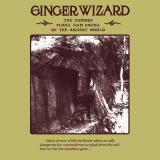
Crypt of the Wizard is proud to present Ginger Wizard - The Curious Flora and Fauna of the Ancient World on vinyl and digital formats.
About ten years ago in a record store in Prague, the Ginger Wizard discovered a copy of Bo Hansson’s Lord of the Rings LP. Although initially unfamiliar with the record, the reference to Tolkien’s masterwork and the incredible cover art drew him in and, rather fittingly, sent him off on a journey of discovery that would reshape his creative trajectory.
Years later while working in cassette tape manufacturing, Ginger Wizard noticed that most fantasy-inspired music fell into two camps: metal and dungeon synth. With little interest in the former, but intrigued by the latter, he began writing a few songs imagining a beautifully packaged and tactile cassette tape. However, dungeon synth he soon realized was “the most boring music to make”.
So began the Ginger Wizard’s own mythological discography. In 2022 came The Feast for the Dead King and Other Musical Themes recorded at home in a cold kitchen, is conversely an album full of warmth drawn from sheer exploration. A year later Can I Choose My Own Psychopompos? was recorded for the legendary Stoned to Death label - a 7” séance of semi-improvised noise and melody featuring allies from the Ginger Wizard’s live backing band The Peter Jacksons. The following year with Bathysburg Tales, a new approach was needed in order to keep the project interesting. Drawing inspiration from Popol Vuh and the inclusion of vocals lent by Protomartyr’s Joe Casey and Jakob Battick, a new more cinematic sound began to emerge.
Now, we present The Curious Flora and Fauna of the Ancient World marking a step into something stranger while still channeling the spirit of Bo Hansson. The new album rejects swords and sorcery for the mythology of the natural world “the ancient stuff,” he explains in the record’s insert, “has a similar taste for me as fantasy.” These songs bloom, creep, and shimmer like forgotten plants under distant suns while rooted in something real and organic. Inspired by the myths of nature rather than heroic quests, it’s an album that feels alive, equal parts archaeological dig and psychedelic garden.
Currently at work on a soundtrack for an imagined 1970s fantasy film in collaboration with The Peter Jacksons, the Ginger Wizard continues to expand his strange universe while The Curious Flora and Fauna of the Ancient World serves as a new map to somewhere ancient, beautiful, and unknown.
NPVR is the avant garde duo made up of the late Peter Rehberg and Nik Void. Editions Mego is proud to present their second and final release. No this is not some kind of Beatles synthetic AI that raises the dead reconstructed recordings but rather a new album made by the humans and their machines.
The initial meeting of Rehberg and Void was in London in 2016 and despite or due to their mutual awkwardness found solace and compatibility in the fact that they both had a similar electronic modular set up, along with matching cases to transport all. The idea to collaborate was an obvious and organic process as a means to connect their individual gear together and observe the outcome. The fruits of these initial experiments, recorded in London, resulted in the playful experimentation of their acclaimed 2017 release 33 33 (eMego 251).
Now in 2024 Editions Mego presents the logically titled follow up, 33 34. These sessions were recorded six months after the initial recordings at Peter’s home in Vienna. This was planned out as a mirror city release to the original London recordings. With Peter having access to his full studio set up this time around we encounter a rich audio landscape which organically folds together a variety of musical genres blurring any distinction between these forms so the resulting music hovers as a new cloud of sound. Any musical form, be it industrial, electro-acoustic, ambient, drone and techno all coexist and melt into the other as the ensuing result unveils a hypnotic swarm of divergent sounds (music). When active there were no lines or contexts with NPVR, either between sound or genre within these recordings or live where NPVR were at home playing at a techno club one night and an avant garde venue the next.
The initial session of these recordings was edited by Rehberg and sent to Void to further develop. Over time the final versions were agreed on and then shelved as other outside projects took over. The awkwardness had been surmounted and the two had become close friends. NPVR performed at a range of venues such as Tresor, Sutton House, Corsica, Blitz, Paris GRM #Focus2, LEV Festival and Rigas Skanumezs Festival. Following Rehberg’s untimely passing Void had difficulty listening back to the sessions but eventually thought it fit to complete and release this album, of which even the artwork (like 33 33, an image from Zurich photographer, Georg Gatsas) had been decided upon prior to Rehberg parting ways.
There is an unmistakable joy to these recordings. One encounters an enthralling exploration of their chosen machines which conveys the excitement of what can be randomly conjured when people speak through such devices. There is no grand statement or argument here, just the sheer thrill of creation and the recorded results of random encounters. The art of collaboration was always a mainstay of Rehberg’s practice from the advent of the MEGO adventure. Rehberg & Bauer was an initial collaboration with former business partner Ramon Bauer. Even at this stage one can hear a relaxed sense of delight in the sheer discovery of sound.
A mix made for the Wire magazine following the release of 33 33 hints at the freedom that comes with endless urge for exploration and discovery. Abstract tracks from Z'EV. Jérôme Noetinger and Jung An Tagen are included alongside British stalwarts The Fall and New Order. There were no lines between pop / academic / underground or mainstream in Rehberg’s world. All of it sat at the same table. It is just matter in the atmosphere, like the diverse exploration found in these recordings that comprise 33 34.
Towards the end of his life Rehberg was obsessing over the immense output of the German ambient musician Pete Namlook. An artist renowned for not only his sprawling catalogue of ambient masterpieces but one who often said his main inspiration was nature. This is apt with regards to the work of NPVR which also aligns with such thought as the intertwining of the two individual artists and their machines results in a natural symbiotic flow, as it happens, just like in the world around us.
Vinyl reissue of the most acclaimed album by Brazil's legendary female vocal quartet, this LP captures the group at their creative peak, featuring sophisticated arrangements by Edu Lobo and Luiz Eça (Tamba Trio), A post-bossa gem filled with stunning vocal harmonies. Originally released in 1972 on the Odeon label, Quarteto Em Cy stands as a high-water mark in the group's prolific discography-and a hidden gem for collectors of Brazilian vinyl. Known for their intricate vocal harmonies and deep roots in the bossa nova movement, the quartet ventures into post-bossa territory here, where sophistication meets groove in all the right ways. Arrangements by Edu Lobo and Luiz Eça (of Tamba Trio) lend the album a richly layered sound-elegant, jazzy, and emotionally resonant-while the group's harmonies remain as mesmerizing as ever. It's a masterclass in vocal interplay and tasteful orchestration, with an unmistakable Brazilian soul running through every track. Highlights include their stunning interpretation of Milton Nascimento's 'Tudo Que Você Podia Ser,' along with deep cuts like 'Quando o Carnaval Chegar,' 'Canto de Obá,' and 'Cantoria.' These recordings capture a moment when the group, already respected collaborators of Vinícius de Moraes, Jobim, and Chico Buarque, hit a new creative stride. A MPB landmark and long out of print, often cited as QEC finest work, this self-titled LP has become a sought-after piece among collectors of MPB, bossa, and 70s harmony pop. For those drawn to groups like The Free Design or The Mamas & The Papas-but with a distinctly Brazilian elegance-this album offers a rare and rewarding listen. Reissue on 180g vinyl.
Brussels-based accordionist Suzan Peeters releases her debut album Cassotto on the Belgian label blickwinkel. With Cassotto, she opens a door into a hidden chamber of sound. The title refers to the “cassotto” — a small resonating chamber inside the accordion that warms, softens, and deepens its tone. Listening to this record feels as if you’ve stepped into that room yourself, enveloped in a world where intimacy and grandeur collide.
Although this is her first release, Peeters is already recognised as one of the most promising names in Belgium’s experimental music scene. Her distinctive live shows — from leading venues across Belgium to a packed Café Oto in London — have earned her a reputation for combining accordion, electronics and unconventional objects such as a massage board into a compelling whole where contrasts come together in an unexpected way. Cassotto captures this approach in recorded form, giving listeners the same sense of immediacy as her concerts, but framed within the intimate space suggested by the album’s title.
While the cassotto chamber naturally gives the accordion a soft and velvety voice, Peeters harnesses that warmth to explore extremes — from hushed detail to bold, expansive gestures that fill the room. As such, the album moves between the acoustic and the electronic, the tender and the abrasive, the static and the dynamic, the traditional and the experimental.
With Cassotto, Suzan Peeters presents a debut that places the accordion at the centre of an adventurous and contemporary sound world — one that invites to discover how far an accordion can reach when tradition and imagination intertwine.
Suzan Peeters (*1999) is a Belgian accordionist, composer, and experimentalist. She is constantly looking for new timbres and sound textures within the accordion, pushing its acoustic spectrum to its limits by manipulating the interplay between her body and the body of her instrument.
Suzan studied classical accordion at KASK & Conservatorium in Ghent and at the Royal Danish Academy of Music in Copenhagen. She is currently studying Live Electronics at the Royal Conservatory of Brussels.
Swan Song
The vinyl LP at the heart of this éthiopiques 31 tracks 2 to 11 was one of the very last vinyl records ever released in Ethiopia. But above all it represents, we felt, the absolute masterpiece of the Ethiopian Groove – the Swan Song of Swinging Addis. The album leaves a clear idea for posterity of the level of sophistication and mastery that modern Ethiopian music had achieved, before being crushed under the Stalino-military heel of the Derg – as the bloody revolution that was unfolding came to be called.
Ethiopia1976.
The Revolution that broke out in February 1974 rolled on in a ruthless march. The whole of Ethiopian society was utterly stunned. The bouquets of flowers handed joyfully to the first tanks of the coup d'état were to wilt very rapidly. From September 1976 to February 1978, 18 months of Red Terror (the name given by the junta itself) spilled blood throughout the country. This fratricidal conflict took its heaviest toll among students and youth. The shift from feudalism to a cruel and primitive Stalinism left the country's citizens deeply traumatised, and snuffed out any pretence of activism, whatever the sector of society. This ice age was to last for seventeen long years.
ሙሉቀን፡መለሰ Mulukèn Mellèssè Muluqän Mälläsä
It was three tracks by Muluken that served as the opener for éthiopiques-1 more than 25 years ago. Seven more tracks appeared on éthiopiques-3 and 13, all accompanied by The Equators, which was soon to become the Dahlak Band.
The first track, Hédètch alu, also the very first piece that Muluken ever recorded, left audiences both unsettled and amazed. Reflecting the singer's extremely young age (he was just 17 at the time), this angelic voice mystified many, who thought they were in fact listening to a feminine voice. He was not yet 22 when he released his last vinyl record in 1976 with Kaifa Records (KF 39LP), one of the very last to be issued in Ethiopia, before the cassette tape became the dominant medium for music distribution – and before the new revolutionary regime put a stop to all independent musical life, via an unspeakable barrage of prohibitions and other persecutions.
Mulu qèn, literally, “A well filled day”. This tender maternal intention wasn't enough to ward off the cruelty of fate. His mother's premature death drove Muluken to leave his native Godjam, in northeast Ethiopia, to live with an uncle in Addis Ababa. Born Muluken Tamer, he took his uncle's last name – Mèllèssè.
The spelling Muluken appeared in his administrative records. Transcription of Amharic to the Latin alphabet, both in Ethiopia and for scholars, gives rise to controversies and quibbles that can never be neatly settled. French allows for a closer approximation of the original pronunciation, thanks to its battery of accent marks, confusing as they may be to anglophones.
Between rather accommodating administrative record-keepers and the various versions that pop up in interviews given by the artist, Muluken's year of birth oscillates between 1953 and 1955…
1954? One thing is certain: the artist's talent made itself known very early indeed, because he got his start in 1966-67, at the age of 13 or 14. Photos from the period attest to his extreme youth. It's a strange sort of initiation for a very young teenager to become a sensation in the heart of Addis's nightlife at the time, Woubé Bèrèha – the Wilds of Woubé. And what's more, in the club of the Queen of the Night, the Godjamé Assègèdètch Alamrèw herself, the very same that was portrayed by Sebhat Guèbrè-Egziabhér in his novel-memoir Les Nuits d’Addis Abeba2… The legendary female club owner who is remembered to this day by the capital's ageing boomers.
Muluken first tried his hand at the drums, before he grabbed the microphone. He emigrated briefly to the Zula Club, across the street from the old Addis Post Office, one of the ground-breaking bars of the burgeoning musical scene, before joining the Second Police Band in 1968, for around three years. He spent a few months with the short-lived Blue Nile Band founded by saxophonist Besrat Tammènè. As the musical scene grew increasingly successful, and pulled slowly but decisively away from its institutional ties, Muluken released his first 45rpm single in February 1972 (Amha Records AE 440). It was included in two LP Ethiopian Hit Parade compilation albums in September of the same year. All in all, Muluken released eight two-track 45s and the same number of original cassette tapes between February 1972 and 1984, the year that he departed for permanent exile in the USA. After converting to Pentecostalism in 1980, Muluken gradually abandoned all secular musical activity. In 1985, at the end of a concert in Philadelphia, he decided to quit concerts and recording for good. Mèlakè Gèbré, the historic bass player from the Walias band who was playing with him that night, recalls that everything appeared so irredeemably diabolical in Muluken's eyes, that it was to be the end of his contribution to Ethiopian Groove.
The end of the story, the beginning of a legend.
Dahlak Band, forgotten by History
Aside from his personal history and vocal talents, it must be remembered that Muluken Mèllèssè was one of the biggest names in the musical innovations that marked the end of the imperial period. These éthiopiques aim to convince those who are just discovering this hidden gem... As for Ethiopians themselves, they are to this day captivated by this singular and atypical figure in the Abyssinian pop landscape – even though he withdrew from public life some 40 years ago. Incorrigible devotees of poetic twists, of more or less hidden meanings, Ethiopians appreciate above all the care Muluken took in choosing his lyrics and the writers who penned them, such as Feqerte Haylou, Alemtsehay Wodajo and, here, Shewalul Mengistu (1944-1977). Love songs, written by women, a far cry from the conventional drivel that pleases sappy sentimentalists.
Muluken is equally acclaimed for his perfectionism when it came to music, the opposite of the overly casual approach that is all too common. He remained a faithful partner of musicians who came from a lineage that borrowed from several inventive and pioneering bands (Venus, Equators, Dahlak). Amongst them were certain artists who began their musical lives with Nersès Nalbandian at the Haile Sellassie Theatre and who come of age in around 1973 – at just the wrong time, you might say. Among them were the pillars Shimèlis Bèyènè (trumpet), Dawit Yifru (keyboards) and Tilayé Gèbrè (sax & flute). Most notably Tilayé Gèbrè, certainly one of the most important musicians, composers and arrangers of his generation, of the end of the imperial era, and of the early years of the Derg.
It was only in 1981 that a miraculous opportunity arose for Tilayé to escape the Stalinist paradise of the dictator Menguistou Haylè-Maryam. Once again it was Amha Eshèté (1946-2021) who provided a solution. The spirited and courageous producer, who had been in exile in Washington since 1975, succeeded, thanks to his incredible perseverence, in bringing the Walias Band to the USA. It was, in fact an extended Walias Band comprising ten musicians3, six of whom chose to slip away after a few concerts and the recording of an LP (The Best of Walias, WRS 100). Tilayé Gèbrè was one of these. He has been living in the USA ever since. There he joined the then-nascent Ethiopian diaspora, which lived largely unto itself, and was making only very modest headway in the American musical market. It seems unfair that Tilayé Gèbrè and the Dahlak Band were not able to benefit earlier from the public recognition that they do deserve.
A similar draining away of the top-rate talents would lead to the reorganization of the major groups of the “Derg Time”. The remaining artists spread themselves around between Ibex Band (renamed Roha Band), Ethio Star Band and a remodeled Walias Band. That spelled the end of the Dahlak Band.
With this record, produced by the essential Ali Abdella Kaifa a.k.a. Ali Tango, we can appreciate everything that the Derg not only destroyed, but also prevented from flourishing. This gem of Ethiopian-style afrobeat came out in 1976 (and, by way of a parenthesis, before the FESTAC 1977 in Lagos, which was attended by an impressive delegation of Ethiopian musicians — although Fela was already personna non grata in his own country). Despite everything that might distinguish this ethio-groove from Fela’s music – no colonial axe to grind, no question of political confrontation with the authorities, no claims to negritude or Africanism for the Ethiopian musicians, and less extrovertion! –, this LP fits beautifully into the saga of intense and electrified soul of the new “African” groove that Fela and Manu Dibango embodied so well from that point onwards.
In restoring this record to its place in the afrobeat epic, it can be seen that, if nothing else, the timeline bestows a legitimate pedigree and a historical primacy to works that had no international impact when they were originally released.
Warning! Masterpiece!
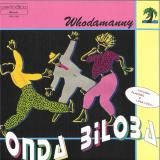
Raffaele Arcella, known under the moniker Whodamanny, is a hyper-prolific producer and remixer who has been active for many years within the independent underground electronic scene and beyond. Closely associated with the Neapolitan label Periodica Records, he has released and co-produced numerous projects, and since 2023 he has been curating his own imprint, Biloba, conceived as a platform to carry forward the legacy of the Latin Italo-Disco trend that marked many Italian productions from the late 1980s through the 1990s. Onda Biloba stands as a kind of album–compilation, bringing together the results of Arcella’s ongoing exploration in recent years — both in stylistic development and studio experimentation. The record offers a diverse and vibrant selection, shifting between potential “hit-not-hit” dancefloor bangers and more laid-back, downbeat digressions for blue-hour moments.
Groovin Recordings proudly announce the forthcoming release of "Back From Paradise", a track co-produced by the legendary Italian DJ Costantino “MixMaster” Padovano and renowned South Italian producer Antony Reale.
This record is a dedication to the enduring legacy of Costantino MixMaster Padovano. Originally produced in the late 90's but never officially released, this collaborative piece is finally seeing the light of day as a powerful celebration and tribute.
Costantino MixMaster Padovano needs no introduction to house music aficionados. He was one of the first Italian DJs to achieve deep respect in the 90s US house scene, regularly sharing the decks with titans like Frankie Knuckles, Kenny Dope Gonzalez, Louie Vega, and Todd Terry. His studio influence was massive, including official remixes for legends such as Marvin Gaye, Diana Ross, Gloria Gaynor, Chaka Khan, Mary J. Blige and many more.
Antony Reale is an established Italian DJ and producer with a large discography spanning the last two decades. He has produced and remixed a roster of top artists, including Chaka Khan, Mary J. Blige, Ultra Naté, and RuPaul.
"Back From Paradise": Originally created by Antony and Costantino during their creative prime in the late 90's, Antony has now decided to finally release the track. It serves as a beautiful and fitting monument to the memory and fantastic career of this iconic Italian DJ and producer who helped define the 90's house scene.
- A1: The Jungle
- A2: Love That Boy
- A3: House On Fire
- A4: Sacrifice
- B1: Get My Mind
- B2: Le Queens
- B3: In Your Eyes
- B4: Bold
Montreal indie rock trio Plants and Animals announce "The Jungle", their fifth studio album set to be released October 23rd via Secret City Records. Their shortest album yet and certainly their boldest, "The Jungle" is eight acts in a world full of noise. The album is auto-produced and was recorded at Mixart, their studio in Montreal. The band explains : "We started working on this a couple of years ago. Warren was afraid for a friend's health. He thought he was self-medicating too much and not taking care of himself. He couldn't let go of this image of an overworked dude swallowing too many sleeping pills and falling asleep with the stove on. So it began as the place next door, sometime before Greta Thunberg turned the expression into a rallying cry, where Earth is the house and the people are sleeping. It's terrifying, and on the whole we're not unlike this friend, are we?" "The Jungle" starts with electronic drums that sound like insects at night. A whole universe comes alive in the dark. It's beautiful, complex and unsettling. Systematic and chaotic. All instinct, no plan. Voices taunt,"yeah yeah yeah." This tangled time in which we find ourselves is reflected back in shadows. Every song is such a landscape. The first one grinds to a halt and you become a kid looking out a car window at the moon, wondering how it's still on your tail as you speed past a steady blur of trees. You watch a house go up in a yellow strobe that echoes the disco weirdness of Giorgio Moroder, Donna Summer and David Bowie. You get pummelled by a rhythm then set free by a sudden change of scenery_the wind stops, clarity returns. You're under a streetlight in Queens, soft-focus, slow motion, falling in love. You speak French now too, in case you didn't already. Bienvenue. These are personal experiences made in a volatile world, and they reflect that world right back at us, even by accident. There's one song Nic sings to his teenage son who was dealing with climate change anxiety and drifting into uncharted independence. The band carries it out slowly together into a sweet blue horizon. Warren wrote the words to another shortly after losing his father. It's about the things we inherit not necessarily being the things we want. In a broader sense, that's where a lot of people find themselves right now.
- A1: Paris Latino (Original Version)
- A2: Paris Latino (Version Longue)
- A3: Paris Latino (Latin Mix)
- A4: Paris Latino (House Mix)
- A5: Paris Latino (Special Reserve Mix)
- B1: Paris Latino (Instrumental Version)
- B2: Rêves Noirs (Original Version)
- B3: El Bandido Caballero (Original Version)
- B4: Cocoloco (Original Version)
- B5: Paris Latino (Hot Paris Latino Us Remix)
Autumn 1983: "Paris Latino" hits the radios. The hit was then ranked No. 1 in the Europe 1 and RTL charts, No. 1 in Spain, No. 2 in Germany, Italy and Switzerland, No. 3 in the famous Top 50 in France and No. 19 in Belgium. Very quickly, the Bandolero group sold 3 million records of this first single. With a rather funk-disco-pop sound, the title is taken over by the students of season 2 of Star Academy and finds itself ranked No. 1 in the Top 50! Bandolero then released four more singles. On the occasion of the 40th anniversary of "Paris Latino", Bandolero offers this compilation of 10 tracks containing several versions of their mega hit (remixes, foreign version...) but also of their other singles, for the first time on color vinyl. LIMITED EDITION AND REMASTERED TRACKS
- 1: On Stubborn Defiance
- 2: A Worldwide Clique Pt. Ii
- 3: Before Judge And Jury
- 4: When They Come For Me
- 5: Death Is Not Our Only Option
CLIQUE exists not as a traditional band but as a forum for radical discourse within hardcore's landscape. Formed in 2022 in California with members spanning the Bay Area and Los Angeles, CLIQUE has quickly made a name for itself through an undeniably vicious live show and a depth that's been long missing from the scene. In a world increasingly defined by individual recognition, CLIQUE operates anonymously, rejecting the spotlight in favor of their message and finding strength in collective struggle.
Unlike many of their contemporaries, CLIQUE was formed with explicit political intent. In an era where hardcore’s content has drifted toward toothless posturing, they aim to reintroduce radical thought into a scene that has lost much of its subversive edge. Drawing from influences spanning Crass to Neurosis, Earth Crisis to MBV, they forge a sound that defies easy categorization while undoubtedly belonging to hardcore.
CLIQUE isn't interested in raising awareness for impotent establishment causes or upholding the system. Their vision extends beyond reform to revolution - the dismantling of structures that exploit people, degrade cultures and destroy the earth. Each show is an invitation for people of all walks of life to participate, a reminder that hardcore’s true strength lies in the connection of everybody in the room, erasing the boundary between stage and crowd.
As they put it: "This is a prayer for those we've lost along the way. This is a celebration of our liberation to come. This is a eulogy for the state and its worthless existence." In an increasingly commercialized hardcore landscape, CLIQUE stands apart - anonymous, uncompromising, and unwavering in their conviction that another world is possible. The message is clear: no one is coming to save us, we can only make our own future, together. This music is both a reflection of our hellish reality and an invitation to imagine and create something better. Clique up. Say nothing.
- Vinyl 1: Speedy
- Vinyl 2: Sacrifice
- Vinyl 3: Ampyre
Schon in den späten Achtzigern waren Teile von Ampyre in Gruppen wie Tindale Creek, Silk´n´Steel oder Dark Haze aktiv, die Veröffentlichungen vorweisen konnten. Mit Sängerin Elke Grötzinger, die auch heute noch erfolgreich mit FRONTROW WARRIOR die Bühnen rockt, hatte man dazu einen perfekten Fang gemacht. Somit hatte man im Raum Stuttgart direkt einen guten Start und volle Häuser, trotz starker Konkurrenz.
Für das im Marquee Studio produzierte 5-Track-Demo griff man tief in die Tasche, was zu einem dementsprechend professionell klingenden Ergebnis führte. Das musikalische Können und ein für diesen Stil perfektes Songwriting hätten eigentlich für den großen Knall sorgen müssen, doch 1991 änderte sich die musikalische Landschaft und auch der melodische Metal musste gegen Grunge, Crossover, sowie Thrash- und Death Metal antreten. Das Label Golden Core machte diese Aufnahmen erstmals zugänglich und die Reviews in Magazinen wie Rock Hard oder Break Out waren traumhaft. Aus der Schweiz stammten Sacrifice, die sich 1984 mit einer selbstproduzierten Single vorstellten und dann einen Deal mit dem GAMA Musikverlag bekamen. „On The Altar Of Rock“ erschien 1985 auf dem GAMA-Label Camel und platzierte die Band in der damaligen Heavyrock-Szene.
Die Mischung aus melodischem Hardrock und Heavy Metal macht den Reiz dieses Albums aus. Geschicktes Songwriting mit vielen Hooklines paart sich mit dem spielerischen Können.
Die Wiederauflage auf Golden Core enthält als Bonus die zwei raren Tracks der 12“ Single und ist remastert. Ende der Siebziger befanden sich The Teens auf dem Siegeszug und dominierten die Jugendhefte wie die Bravo. Natürlich sollte es nicht lange dauern, bis man Konkurrenz bekam. Speedy waren eine waschechte Band, die beim Musizieren in ihrem Proberaum entdeckt wurde. Kurze Zeit später wurde die erste Single „Willy Is Back“ von Didi Zill (Birth Control, The Nighthawks) produziert, der auch als Fotograf für die Bravo bekannt war. Man schaffte es ohne Umweg in die Kultsendung Ilya Richer´s Disco. Dies führte zur ersten und leider einzigen LP „Much Too Young To Rock´n´Roll“ und zur gleichnamigen Single mit dem Knaller „Fight Like A Fighter“ auf der B-Seite.
Beide Tracks schafften es erneut ins TV (eine Ferienshow mit Karl Dall und zum zweiten Mal die Sendung Disco) – das Thema Speedy brodelte! Leider entschieden sich die Eltern der minderjährigen Musiker gegen eine Tournee mit Def Leppard, was die Karriere beendete. Die Wiederauflage enthält als Zusatz auch die Songs, die es nur als Single gab.