Introducing Wishy, a brand new band from celebrated Indiana songwriters Kevin Krauter and Nina Pitchkites. Wishy came to life as a musical partnership between the two Indianapolis musicians when Pitchkites moved back home from Philadelphia in 2021. The two bonded over their love for 90s alternative bands like The Sundays and My Bloody Valentine and soon began crafting their own brand of swirling pop-rock with an introspective, grungy flair. By day Krauter works as a music teacher, giving drum and guitar lessons to students, while Pitchkites is a seamstress by trade and often makes embroidered merch for the band. While Krauter spent the better part of the last decade cementing his place as a torchbearer of Midwestern dream pop with 2018's Toss Up and 2020's Full Hand, Pitchkites delved into her own indie electro-pop project Push Pop, writing songs like "Spinning" that would later be reworked for Wishy. To round out the live band, Pitchkites and Krauter enlisted guitarist Dimitri Morris, bassist Mitch Collins, and drummer Conner Host. Across two trips to Los Angeles in late 2022 and early 2023, Krauter and Pitchkites linked up with friend and producer Ben Lumsdaine, who had some spare time between Durand Jones tours to record the pair's newly written songs. The result of their fruitful time in sunny California is the aptly named Paradise, a breezy and melodic EP that puts on full display the songwriter's musical fluency. Tastefully blending shoegaze, dreampop, and alt-rock into a heavenly haze, Wishy delivers a strong 5-song introduction that's dense with melodic earworms and stirring sentiment. Wishy's debut single for new label home Winspear, the driving and distorted "Donut," showcases Pitchkites' hypnotic vocal and Krauter's melancholic wash of guitars. Written after a period when Pitchkites was driving on a spare, "Donut" laments the cynical capitalism of Midwest living and the reliance on a car to get around. Of the song Pitchkites says "When you've got the possibility of the open road plus the limitations of your shitty car-and you're stuck driving on a donut spare tire- it's a Catch 22." Throughout Paradise, the band laments on American loneliness and idealism as it relates to our everyday lives. Across the EP's five tracks, Pitchkites and Krauter trade bittersweet reflections on love and self actualization over vast, scrappy guitar chords. The whole thing feels equally indebted to early aughts alt-rock and '90s jangle pop. Wishy's music is cathartic, yet underlined by a subtle brooding energy-sitting nicely alongside the work of their contemporaries like Momma or Tanukichan, both of whom Wishy will have shared the stage with. Wishy will be touring this Fall supporting Tanukichan, and the band will make their first festival appearance at LEVITATION in Austin, TX. After that, they have their eyes set on finishing their debut album, slated for release via Winspear in 2024

quête:distort
For fans of Steve Vai, Richie Kotzen, Gary Hoey and Instrumental Guitar Rock! Slick riffs and a mighty fusion of melody and distortion make up the immersive rock sound and style that is The Chris Mahoney Project. Showcasing extensive experience and passion as a guitarist, the music delivers a series of energizing soundscapes, each one uniquely designed and structured so as to take listeners on an intensely uplifting journey
Records for AIA organisation. All benefits and even a bit more have been donate in advance to the Artists In Action Association... Organising kitchen in Calais refugees camp « The Jungle ». Here we got one excellent techno tune from Crystal Distortion, one pumpin from Suburbass and a great funny tribecore track from Matt Weasel Buster Tribe :) We also have here something really sticking to the subject : a tune made with sounds from the Jungle.
Seve & SleepingWater - Run For Human Values's Video Clip
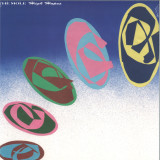
High Hopes - New album from the Mole.
High Hopes is 17 songs across 40 minutes on one slice of wax that, as advertised, sounds nothing like last month’s Ep, High Dreams. Here, rather than the long form dance form, is a continuation of the beat tape pacing from the last album, a collection of moments posing as ideas posing as a narrative stuffed with oddities and surprises that reward the close listen.
What’s heard on High Hopes is the Mole’s exploration of a love letter, from one person to a family, from the northern Pacific to the southern Atlantic, from a boy to a painted bird. Vancouver Island to Manantiales. The songs range from ambient sound bath and hip hop sludge, up to micro boogie and almost House before tumbling back down and forth again. Bubbling synths, MPCs swung out, samples chopped and chewed, bass and violins from Rick and Sophie, field recordings of birds and frogs and beaches, friends and family and fiestas. Did we mention the love ?! This album has got it all! Original collages from Antonio Carrau envelope this wax: jacket, sleeve and cookie. Antonio’s work is typified by playful combinations and bold statements about living in a embrace of analog and digital health. His co lages marry the corporeal world with an updated, digitalized age of reproduction, inducing feelings of gratitude for the simple everyday scenes we sometimes lose touch with when we forget to slow down. Good living, like breathing, requires inhaling as well as exhaling.
We can’t always produce content, make art, we must also pause, and listen. And enjoy. The Mole is joined by friends and colleagues on several songs included on High Hopes. Rick May plays bass on both Que Rico and album stand out GoinF4er. Sophie Trudeau (Godspeed You Black Emperor) plays and arranges violins on GoinF4er and Danuel Tate (Cobblestone Jazz) and Julz Chaz (Wagon Repair) both play Vibes and Emaxx throughout the album. Working with these incredible talents not only enriched this album, but fulfilled a long standing goal of the Mole’s; to work again with the musicians from whom he learned so much. People who helped inform the shape of Mole to come.
The Mole who was As High As The Sky. The Mole has been ‘recognized’ by the ‘global underground’ since his critically celebrated premiere album, As High As The Sky, but his earlier Eps (Wagon Repair, Philpot, Musique Risquee) got the attention of Top DJs, clubs, and festivals around the world first. His sound remains unique, fresh and deep: enjoying plays in a wide variety of spaces and places.
High Hopes is the Mole’s 5th solo album and his 2nd album for Circus Company (The River Widens) who have also proudly released two eps of Mole magic (Little Sunshine, High Dreams).
*Isn’t that too much time for one record? Short answer - No. Long answer - depends on the material. Due to the many quiet passages in the album, the groove spacing can be modulated and the needle can slow it’s progress towards the center/end resulting in longer sides with continued high gain and low distortion.
High Hopes - New album from the Mole.
High Hopes is 17 songs across 40 minutes on one slice of wax that, as advertised, sounds nothing like last month’s Ep, High Dreams. Here, rather than the long form dance form, is a continuation of the beat tape pacing from the last album, a collection of moments posing as ideas posing as a narrative stuffed with oddities and surprises that reward the close listen.
What’s heard on High Hopes is the Mole’s exploration of a love letter, from one person to a family, from the northern Pacific to the southern Atlantic, from a boy to a painted bird. Vancouver Island to Manantiales. The songs range from ambient sound bath and hip hop sludge, up to micro boogie and almost House before tumbling back down and forth again. Bubbling synths, MPCs swung out, samples chopped and chewed, bass and violins from Rick and Sophie, field recordings of birds and frogs and beaches, friends and family and fiestas. Did we mention the love ?! This album has got it all! Original collages from Antonio Carrau envelope this wax: jacket, sleeve and cookie. Antonio’s work is typified by playful combinations and bold statements about living in a embrace of analog and digital health. His co lages marry the corporeal world with an updated, digitalized age of reproduction, inducing feelings of gratitude for the simple everyday scenes we sometimes lose touch with when we forget to slow down. Good living, like breathing, requires inhaling as well as exhaling.
We can’t always produce content, make art, we must also pause, and listen. And enjoy. The Mole is joined by friends and colleagues on several songs included on High Hopes. Rick May plays bass on both Que Rico and album stand out GoinF4er. Sophie Trudeau (Godspeed You Black Emperor) plays and arranges violins on GoinF4er and Danuel Tate (Cobblestone Jazz) and Julz Chaz (Wagon Repair) both play Vibes and Emaxx throughout the album. Working with these incredible talents not only enriched this album, but fulfilled a long standing goal of the Mole’s; to work again with the musicians from whom he learned so much. People who helped inform the shape of Mole to come.
The Mole who was As High As The Sky. The Mole has been ‘recognized’ by the ‘global underground’ since his critically celebrated premiere album, As High As The Sky, but his earlier Eps (Wagon Repair, Philpot, Musique Risquee) got the attention of Top DJs, clubs, and festivals around the world first. His sound remains unique, fresh and deep: enjoying plays in a wide variety of spaces and places.
High Hopes is the Mole’s 5th solo album and his 2nd album for Circus Company (The River Widens) who have also proudly released two eps of Mole magic (Little Sunshine, High Dreams).
*Isn’t that too much time for one record? Short answer - No. Long answer - depends on the material. Due to the many quiet passages in the album, the groove spacing can be modulated and the needle can slow it’s progress towards the center/end resulting in longer sides with continued high gain and low distortion.
There are few hidden gems that we can find on the different streaming channels, and it is precisely our job to have them for you. This Saturday we want to bring you a Chilean band that is born from transversal rock and its variants. We talk about The Cruel Visions. The Cruel Visions is the name that Pablo Giadach (founder) proposes to imagine a luminous and nostalgic interior landscape, expressed in songs of subtle composition and evocative beauty. The guitarist and musician in the bands Casino, Trancemission and The Ganjas, brings with him an album weathered by the passage of time in nightly improvisations and his recording studio, influenced mainly by the sounds of the early 80's, new wave, paisley underground, post punk and dark wave. The Cruel Visions was born from the idea of grouping together different recordings that Pablo made in parallel to his work with The Ganjas between 2015 and 2017 at different times and formats. Most of the album is a collection of demos and improvisations with a Rickenbacker 12-string guitar, an echo chamber and a drum machine, which were then worked on for almost 3 years in the free time at Estudio Lautaro, where he also performs. as an engineer and producer. His authorial present discovers the ethereal and light sounds that bands like The Cure or The Jesus and Mary Chain decanted, who left the initial rawness to give way to a more atmospheric and personal repertoire, which, although luminous, maintains traces of the darkest noise of the post-punk era. This time the path taken in other formations where Pablo provides precise sounds, completed with effects such as reverb and distortion, gives shape to a more personal list of songs that sails with the wind in its favor through foggy waters, already known to listeners of English 80's alternative music. Vocals and some arrangements were done at Woodbine St Recording by John A. Rivers, who has produced records by Love and Rockets, The Specials, Nikki Sudden, Close Lobsters and Dead Can Dance, among many others
On alene et, Michaela Turcerová, a Copenhagen-based, Slovakia born musician, takes minutiae — the tiniest scrapes and breathiest hums — and distorts them into sprawling, collaged webs that barely resemble the instrument in its natural state. Each shard, when pieced together, makes a rhythmic, undulating sound born from the subtlest motions.
Alene et marks Turcerová’s debut as a soloist, putting a spotlight on the exploratory approach she has developed on her own and across a variety of collaborations. She has long studied the quiet excavation of her instrument, pulling it apart to find a new vocabulary. To develop this language, she unearths shards of sound from the instrument, muting it or bringing out its scratchiness and grittiness. Primarily working with open-ended scores and improvisation, she is inspired by various percussive music, looking to deep sonic awareness to guide her. As a soloist, her music harkens to the abstracted electronics present across the Editions Mego catalog or the distorted ruminations of Nyege Nyege tapes. And no matter where she goes, she is constantly in the pursuit of the unknown — the hidden elements of music that come to life through experimentation and listening.
With alene et, Turcerová presents her singular language on the saxophone to the fullest. To make this music, she placed many microphones close to her instrument, zeroing in to each sound and examining it from multiple different angles. She emphasizes the percussive possibilities of her instrument, puzzle-piecing each note into pulsating webs. Each track highlights a different side of the saxophone — the bristling distortion and amplification of a column of air as it blows through her saxophone’s body, the trickling tapping of the keys as she places her fingers onto them.
At its core, alene et presents Turcerová’s curiosity. The saxophone lives many different lives within her hands, shapeshifting through the uncovering of its possibilities. She shows us how the instrument is an ever-changing entity, a distorted and blown out drone with a thousand shards poking out from inside of it. But more than just a showcase of an individual instrument, alene et feels like a statement of the act of exploration. Turcerová is an excavator, always looking for new worlds hidden within her saxophone, and leaving room for more to come alive with each listen.
LINKIN PARK—Mike Shinoda, Brad Delson, Phoenix, Joe Hahn, alongside new members Emily Armstrong of critically acclaimed band Dead Sara as co-vocalist and Colin Brittain songwriter/producer for G Flip, Illenium, One OK Rock as drummer—share their first brand new music in seven years.
The iconic band shared a new single “The Emptiness Machine,” which is also the herald for the arrival of LINKIN PARK’s first album since 2017, FROM ZERO, on November 15.
About the new era, Shinoda stated, “Before LINKIN PARK, our first band name was Xero. This album title refers to both this humble beginning and the journey we’re currently undertaking. Sonically and emotionally, it is about past, present, and future—embracing our signature sound, but new and full of life. It was made with a deep appreciation for our new and longtime bandmates, our friends, our family, and our fans. We are proud of what LINKIN PARK has become over the years, and excited about the journey ahead.”
Right out of the gate, “The Emptiness Machine” channels the DNA of LINKIN PARK, harnessing the band’s explosive energy and retaining the hallmarks of their instantly identifiable and inimitable sound. A chameleonic and catchy anthem, Shinoda’s hypnotic melodies hand off to Armstrong’s blistering chorus, over distorted riffs and head-nodding drums.
Ultimately, with FROM ZERO, the band is looking to harness the purest energy of their past, present, and future. The new era has officially begun.
Lili Holland-Fricke and Sean Rogan’s debut album “dear alien” is a constellation of radiant improvised impulses, imagined in lucent fragments of cello, guitar and voice. Spacious, tender and glistening with rich electronic distortion, the record melds a spectrum of processed and natural sound as the artists invite listeners into their dreamlike world of synergetic introspections.
Cultivated through a shared spirit of resourcefulness and play, “dear alien” emerges as an organic meeting place in the compositional output of British-German experimental cellist Lili Holland-Fricke and Manchester-born guitarist and producer Sean Rogan. Having studied their respective instruments at the Royal Northern College of Music, both artists have flourished in eclectic solo and collaborative projects, creating intricate and intimate spheres of sound with a deep appreciation for songwriting and improvisation.
Holland-Fricke’s transition from the classical world to writing her own material, and later vastly expanding her palette with electronics, first converged with Rogan’s distinctive flair for production in 2022 on her EP “birdsong for breakfast” and single ‘draw on the walls’. Now, the duo present an album envisioned through true ‘50/50’ collaboration during the summer of 2023, written across two intensive weeks of improvising and experimenting at Rogan’s Greenwich home studio. A convergence of the artists’ sounds and influences, the music was fostered by the idea of making an album with ‘no plan’ and their shared recent discovery of Arthur Russell, to whom the final track is dedicated.
“dear alien” assembles eight compositions that emerged naturally as the duo created sketches with cello and pedals, guitar, tape loops and poetic vocal musings, forming songs that explore themes of waiting, circling back around, and glitchy communication. Moments of drifting through pillowy layers of sound contrast with saturated visions of electronic modification, where the record’s glowing instrumental contours are pushed to the extremes.
The plaintive shades of ‘half blue’ and meandering deliberations of ‘slow thing’ are teased by the friction of static signals and a sense of ever-mutating sonic mass – a sensibility most acutely realised in ‘dawning’, where cello-vocoder eruptions grow in magnitude, the absence of sound between them burdened with something sinister and unspoken. As the artists expand on this piece, ‘It’s the sound equivalent of squeezing your eyes shut to shield against the brightness of something you don’t want to see, only to find that each time you open them again the world is not softening but getting more relentlessly overwhelming, to the point of being totally blinding.’
Three tracks with lyrics – ‘at first’, ‘dear alien’ and ‘seem asleep’ – refract the album’s wistful and melancholic colours into poetic imagery and metaphors, ushering in reflections on relationship tensions and someone close feeling unknown, with hints towards wider unsettled feelings about climate change. In the spirit of lyrical improv, ‘seem asleep’ compiles lone lines from Holland-Fricke’s journals into a cut-and-paste collage around hopeful patience or futile lingering – either way conjuring a softness that welcomes the hazy ambience of ‘for a. r.’, the final composition which soundscapes the summer days spent making the album. As the artists describe of this track, ‘The music kind of leads somewhere, but then kind of leads nowhere, and just meanders around where it is, content to just be walking in a circle back to where it started.’
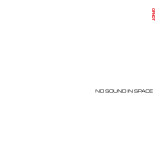
Blake Lee has always been fascinated by the unknown, and space, in its isolating, mysterious vastness, embodies this theme immaculately. The open void, captured so memorably by Stanley Kubrick in '2001: A Space Odyssey', is Blake's far-reaching canvas on 'No Sound In Space', a cinematic meditation on the cosmos that's painted in nuanced, emotionally sincere colors. The Los Angeles-based composer has been contemplating his full-length debut since 2021, using his guitar as a sonic paintbrush rather than find himself snared in its traditional aesthetic constraints. Transforming its characteristics with effects and subtle processes, he layers sustained tones and intimate improvisations, creating richly visual polychromatic utopias teeming with unknown life.
Since 2011, Blake has been most known for being the guitarist and a music director for Lana Del Rey, notching up three songwriting credits on her acclaimed ‘Ultraviolence’ full length. He sees his solo work is a form of escapism, a place where he can experiment and find comfort and catharsis outside of expectations and formal structure. The album was written instinctively, and Blake made sure he didn't force anything, letting go and getting out of his own way, listening intently as sounds and textures materialized organically. "I didn't want to ruin it by being a perfectionist," he laughs. And his collaboration with Kenyan sound artist KMRU, who runs the OFNOT label and contributes to two of the tracks on the album, occurred similarly organically.
Blake was moved to reach out to KMRU when he caught a performance of 'Natur' at Los Angeles' Zebulon in 2022, leading to a prolonged back-and-forth. They didn't meet in person until earlier this year, by which time they'd become firm friends, continuously sharing music and conversation. KMRU had lent a valuable ear to Blake, who sent early playlists of 'NSIS' that, over the months, slowly evolved into the finished album. It's the first release on OFNOT that's not by KMRU himself; the label emerged last year with the release of KMRU's own 'Dissolution Grip', and Blake's debut immediately expands its sonic universe. Alongside the playlists, Blake also provided KMRU with the tracks' raw stems, which KMRU began to edit and expand in his Berlin studio. 'Miura' and 'Waiting' are the result of this process, two sublime abstractions that augment Blake's dreamlike, euphoric tones with KMRU's pebbly distortions and booming low-end rumbles. And this same playful sense of freeness seeps into Blake's other compositions.
On the misty 'In A Cloud', he surrounds cascading string tones with soft-focus pads that swell until they're like crashing waves, and on the two 'Echoplexx' pieces, he uses delay and reverb to smudge his sounds until they're viscous residue, the harmonies obscured by whooshes of white noise and distant chimes. The mood is quieted somewhat on 'Moving Air', as Blake's swirling tones form half-heard lullabies, coalescing into a dense, melancholy crescendo, and he fills out the sound with reverberant airport recordings on 'Pan Am', letting pitchy My Bloody Valentine-esque drones warble beneath the transitory chatter. Each track melts into the next, forming a billowing, cryptic narrative that leaves more questions than answers. Blake is constantly searching, and fills his unoccupied space with warmth, perception and sensitivity.
Blake Lee has always been fascinated by the unknown, and space, in its isolating, mysterious vastness, embodies this theme immaculately. The open void, captured so memorably by Stanley Kubrick in '2001: A Space Odyssey', is Blake's far-reaching canvas on 'No Sound In Space', a cinematic meditation on the cosmos that's painted in nuanced, emotionally sincere colors. The Los Angeles-based composer has been contemplating his full-length debut since 2021, using his guitar as a sonic paintbrush rather than find himself snared in its traditional aesthetic constraints. Transforming its characteristics with effects and subtle processes, he layers sustained tones and intimate improvisations, creating richly visual polychromatic utopias teeming with unknown life.
Since 2011, Blake has been most known for being the guitarist and a music director for Lana Del Rey, notching up three songwriting credits on her acclaimed ‘Ultraviolence’ full length. He sees his solo work is a form of escapism, a place where he can experiment and find comfort and catharsis outside of expectations and formal structure. The album was written instinctively, and Blake made sure he didn't force anything, letting go and getting out of his own way, listening intently as sounds and textures materialized organically. "I didn't want to ruin it by being a perfectionist," he laughs. And his collaboration with Kenyan sound artist KMRU, who runs the OFNOT label and contributes to two of the tracks on the album, occurred similarly organically.
Blake was moved to reach out to KMRU when he caught a performance of 'Natur' at Los Angeles' Zebulon in 2022, leading to a prolonged back-and-forth. They didn't meet in person until earlier this year, by which time they'd become firm friends, continuously sharing music and conversation. KMRU had lent a valuable ear to Blake, who sent early playlists of 'NSIS' that, over the months, slowly evolved into the finished album. It's the first release on OFNOT that's not by KMRU himself; the label emerged last year with the release of KMRU's own 'Dissolution Grip', and Blake's debut immediately expands its sonic universe. Alongside the playlists, Blake also provided KMRU with the tracks' raw stems, which KMRU began to edit and expand in his Berlin studio. 'Miura' and 'Waiting' are the result of this process, two sublime abstractions that augment Blake's dreamlike, euphoric tones with KMRU's pebbly distortions and booming low-end rumbles. And this same playful sense of freeness seeps into Blake's other compositions.
On the misty 'In A Cloud', he surrounds cascading string tones with soft-focus pads that swell until they're like crashing waves, and on the two 'Echoplexx' pieces, he uses delay and reverb to smudge his sounds until they're viscous residue, the harmonies obscured by whooshes of white noise and distant chimes. The mood is quieted somewhat on 'Moving Air', as Blake's swirling tones form half-heard lullabies, coalescing into a dense, melancholy crescendo, and he fills out the sound with reverberant airport recordings on 'Pan Am', letting pitchy My Bloody Valentine-esque drones warble beneath the transitory chatter. Each track melts into the next, forming a billowing, cryptic narrative that leaves more questions than answers. Blake is constantly searching, and fills his unoccupied space with warmth, perception and sensitivity.
Die neuseeländische Künstlerin und Produzentin Fazerdaze (Amelia Murray) erforscht auf ihrem zweiten Album 'Soft Power' die Komplexität des Frauseins.
In den 11 Tracks, die sie selbst als 'Schlafzimmer-Stadion' bezeichnet, verschmilzt Amelia verträumte Synthies und elektronische Beats mit Rockband-Elementen und schafft so einen Sound, der die Balance zwischen düsterer Authentizität und raffinierter Pop-Brillanz hält. 'Soft Power' wurde von Amelia selbst aufgenommen und produziert und handelt von Themen wie Hingabe, starkem Selbstmitgefühl und reifer Selbsterkenntnis.
'Soft Power' folgt auf Fazerdaze's 2017er Debütalbum 'Morningside' und die 2022er 'Break!' EP.
- Ltd. Col. LP: (Silberfarbenes Vinyl)
Dimi Angelis presents ANGLS 14 - four raw, spaced out, 909-driven tools in his characteristically direct and minimalistic style. Sparse, delicate sequences reverberate to provide a sense of space against classic drum patterns that build into a full workout.
The A1 opens with Third Eye - a slow, tense build with heavy low end and terse percussion, setting the tone. Endorama on the A2 is driven by a living bleep - distorted, repeating, but never quite the same.
Decka opens the B side with a remix of Intergalactic to provide a groove heavy, sequence-driven and lethal interpretation of Dimi's sound. Chrysalis rounds off the package on the B2 with a rolling 101 bassline and descending bleep that hypnotizes
and controls the listener.
Intergalactic originally appeared on ANGLS 13.
Die neuseeländische Künstlerin und Produzentin Fazerdaze (Amelia Murray) erforscht auf ihrem zweiten Album 'Soft Power' die Komplexität des Frauseins.
In den 11 Tracks, die sie selbst als 'Schlafzimmer-Stadion' bezeichnet, verschmilzt Amelia verträumte Synthies und elektronische Beats mit Rockband-Elementen und schafft so einen Sound, der die Balance zwischen düsterer Authentizität und raffinierter Pop-Brillanz hält. 'Soft Power' wurde von Amelia selbst aufgenommen und produziert und handelt von Themen wie Hingabe, starkem Selbstmitgefühl und reifer Selbsterkenntnis.
'Soft Power' folgt auf Fazerdaze's 2017er Debütalbum 'Morningside' und die 2022er 'Break!' EP.
- 01: Un Mondo - Generato Da Un Seme Casuale - Con Un Inventario Vuoto
- 02: Sottaceti Di Mare Che Si Generano In Un Burrone Sotterraneo
- 03: Il Nether Presenta Un Terreno Unico Simile A Una Caverna Senza Cielo
- 04: La Foresta Cremisi È Densa Di Funghi Distorti
- 05: Slime In Un Mondo Superpiatto Nella Versione 1.1
- 06: Una Immagine Ingrandita Di Una Foresta Distorta
- 07: Il Portale Dell&Apos;End Conduce Ad Una Dimensione Oscura Che Si Trova Nel Vuoto
nobile, one half of the former Milanese duo Voronoi, presents a new series of recordings of ephemeral ambient soundscapes, organic throbs and broken rhythmic textures that sublimate the more instinctual and playful side of his poetics.
The project is haunted by cavernous sounds and an obsession with the 'netherworld' of the videogame Minecraft, and by Le Matin des Magiciens - the classic and revolutionary book that popularised occultism, alchemy and paranormal phenomena in the 1960s. "...FANTASTICO INTERIORE is" - as the artist puts it - "a fantastic journey inside the body, perhaps also a journey into the unconscious to understand my gastritis?"
The seven tracks traverse underworlds, infused with fantastic realism, where odd sounds materialise like poltergeists of digital folklore. Creepy voices emerge from the hell-like nether, intertwined with clusters of gelatinous percussive sounds that trudge to the surface. Earthy streams of crackling white noise carry volatile sonic particles that bounce off walls with short delays and reverberations, giving an almost visible form to the space.
But it is not always serious. As soon as you come across the curiously long titles of the tracks (which are rough translations of the Minecraft manual into Italian) a subtle irony emerges. The imagery appears to be harmless and eventually, as in a video game, you can switch to safe-mode and refill your health-bar along the way...
No panic attacks in the soft-occultism of FANTASTICO INTERIORE ;)
- A1: Free Improvisation
- A2: The Drifter
- A3: The Doors Of Perception
- B1: Ballad
- B2: Anticipation
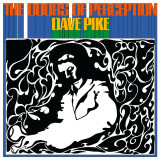
Repress! The Doors Of Perception Is Presented In A Unique Blue Swirl Colored Vinyl Pressing / "The Doors of Perception" is among the most experimental and innovative releases by famed jazz vibraphonist Dave Pike. Recorded in 1966 and released in 1970, the album finds Pike indulging in full-fledged psychedelic jazz, with trippy grooves and a new sound. Produced by Herbie Mann, "The Doors of Perception" features an all-star cast of musicians, including Eddie Daniels, Lee Konitz, Don Friedman, and Chuck Israel. Their talents are complemented by a wide range of sound effects, from echo chambers to piped-in applause to thunderstorms to fuzzy distortion, making for a dynamic and unique listening experience.
Known for the monolithic force of their music and their inventive production techniques, The Body"s albums are benchmarks in the expansion and evolution of heavy music. Tightly packed with deceptively nuanced arrangements and exhilarating, challenging distortion, their compositions are possessed of an unmistakably singular sound. The Crying Out of Things is no exception; a culmination of all that The Body have done before, highlighting their mastery of dynamic and monumental music that pushes toward the unmistakable sound of oblivion The Body have produced a wealth of groundbreaking collaborations with the likes of Full of Hell, Thou, Uniform, BIG|BRAVE, OAA, and Dis Fig. The duo"s benchmark albums have, over the past 2 decades, changed the perceptions and directions of heavy music. The Crying Out of Things" embrace of noise is a comprehensive display of the multitude of expressions possible with abrasive sound, a skill that The Body have pioneered and refined. "I think for us the key to the way we use noise is, it"s not the only element," says Buford. "You"ve gotta really listen if you"re into noise. But it also has to have dynamics. Where, say, BIG|BRAVE (who have a similar ethos) expresses it in this more intellectual, minimalist way, The Body comes from an instinctual, maximalist way. We"re trying to cover it ALL." The Body stand alone in their ability to connect disparate influences and collaborators into a wholly original, potent and singular work. Alongside producer/engineer Seth Manchester, the duo"s voracious and omnivorous musical appetites have pushed the studio as an instrument into new avenues to conjure profound feelings from the music. The Crying Out of Things cements The Body"s place as a leader of heavy new music, their boundless creativity, their defining ability to convey anguish, created with a visceral clarity to devastating impact.
Unbound by place or genre, mercurial, experimental pop duo Soft as Snow find freedom to intuitively reflect the disarray of human connection with their intricate, shape-shifting pop production. With each successive release, the duo evolves, unfurling into their own poetic sound, now fully realized on their intimate, third full-length, Metal.wet.
The oft-present trappings of male-female duos are eschewed here as the Berlin-based Oda Starheim and Øystein Monsen contribute equally across a canvas of analogue synthesizers, samplers, live drums, and processed guitars. At once a part of and yet apart from the zeitgeist, their forward-thinking modernity stretches the limits of expectations across Metal.wet's ten insouciant tracks. Fans of Tirzah, Hype Williams, and even Angelo Badalamenti will find much to love in this haunting work peppered with ASMR moments and rough sampling wrapped in high production –– twinkling glasses and sirens in the distance, rhythms and voices up front. The result is synth-driven, noisy, and dripping with laidback, confident sensuality.
Although Starheim's voice begins the album in a whisper, it quickly becomes apparent that the group has jettisoned their previous tendency to bury and distort her vocals. Nested in a bed of thorny electronics and broken rhythms, her multifaceted vocals might bring to mind Kazu Makino of Blonde Redhead or Hope Sandoval fronting Massive Attack. London MC Brother May (Mica Levi, CURL) makes an appearance on the driving and ethereal “Whip,” while Øystein’s own voice appears for the first time in a state of languid background haze.
Soft as Snow create and record across Europe. Defiantly averse to genre, the pair become vessels for their “electronic music pushed to the brink of collapse” (The Wire), previously released by Infinite Machine and Houndstooth. Informed by backgrounds in film and performance art, “there’s a surrealism that comes with watching Soft as Snow in the flesh,” (Vice) as seen at L.E.V. and Lunchmeat Festivals. Collaborations with visual artist Guynoid, designer AGF Hydra, and sculptor Camilla Steinum add depth to the corporeality of their “strange, mesmerising and utterly unforgettable” electronic experimentations. (DJ Mag).