Following the collaborative releases with DJ Duckcomb, Emotional Rescue teams with “discodub” specialist NAD aka Dan Tyler (Idjut Boys) in the continual documentation of the crucial role played by the Caribbean diaspora in Britain’s music history.
Of the many who have made a mark, Clifton “Sonny” Roberts maybe one of the most unheralded. Upon arrival in the early migration from the Caribbean, Roberts used his carpentry vocation to build and operate the first Jamaican recording studio and then black owned record shop in the country.
Working alongside and sharing offices with a young Chris Blackwell and Trojan founder, Lee Gopthal, Roberts’ trailblazing through his Planetone and Orbitone labels were pivotal in bringing first Ska, then Reggae and on to Lovers Rock to prominence, as well as releasing influential Afrobeat and rising Disco sounds of the day.
It is on the sub-label Cartridge that the mega-rarity I Want You appeared in summer 1982. Teaming up with vocalist Joseph “Remy” Martin, the original 12” is a wonderful mixture of all their influences; soulful vocals, unrelenting boogie groove, afro keys, all pinned by reggae bass.
A heavily saturated Discomix is then created by Dan Tyler aka NAD. A dub masterclass with live desk filter passes and flanging, all running through spring reverb for a true Tubby disco-rockers ride, this is a sound system treasure with more to follow soon.
Buscar:dj robert
- A1: Green Onions
- A2: Rinky-Dink
- A3: I Got A Woman
- A4: Mo' Onions
- A5: Twist & Shout
- A6: Behave Yourself
- A7: Squint-Eye (Bonus Track)
- B1: Stranger On The Shore
- B2: Lonely Avenue
- B3: One Who Really Loves You
- B4: Can't Sit Down
- B5: A Woman, A Lover, A Friend
- B6: Comin' Home Baby
- B7: Sit Still (The Mar Keys) (The Mar Keys)
60th Anniversary Edition[36,56 €]
Limited coloured marbled vinyl edition of this album Booker T. & the M.G.s formed as the house band for Stax Records and provided playbacks for numerous singers, including Wilson Pickett and Otis Redding. During a - recording break for Billy Lee Riley, 17-yearold keyboardist Booker T. Jones, guitarist Steve Cropper, Lewie Steinberg on bass and Al Jackson Jr. on drums began messing around with a bluesy organ riff. The president of Stax Records, Jim Stewart, was at
the mixing board. He liked what he heard and recorded it. The result: „Green Onions,“ with „Behave Yourself“ as the B-side.
The record became a hit when radio DJ Reuben Washington played it four times in a row, even before the band had a name. The single went to #1 on the US R&B chart, #3 on the pop chart, reached #7 in the UK
and sold over a million copies. The song was listed as one of the 500 greatest songs of all time by Rolling Stone magazine and received a Grammy Hall of Fame Award in 1999. It was followed by the allinstrumental album „Green Onions“, which is now a classic of the era.
The album was included in Robert Dimery‘s 1001 Albums You Must Hear Before You Die. Booker T. & the M.G.s have been called the most influential stylists in modern American music. Until the 2000s, they
played as the house band for countless world stars such as Bob Dylan, Stevie Wonder, Johnny Cash, Eric Clapton, George Harrison, Neil Young and many others.
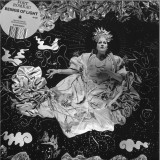
- Followup to 2015's Insides. - RIYL: Jacques Greene, Leon Vynehall, DJ Seinfeld, Project Pablo - Features cover art by Salvador Dalí protégé Steven Arnold. - Silver halide (gray + black marble) vinyl limited to 1,500 copies worldwide - Vinyl is housed in a black dust sleeve inserted in to a matte varnish jacket with metallic silver spot color // After a run of critically-acclaimed singles and EPs, British producer Michael Greene, aka Fort Romeau, returns to the full-length format with Beings of Light, the long-awaited follow-up to 2015's Insides and his second LP on Ghostly International. While a prolific DJ who orients many of his productions for the dancefloor, Greene still sees the album as the ultimate statement of intent, "a space to stretch out, to speak in full paragraphs rather than stunted sentences." He has explored several stylistic fragments in recent years (including the summer 2018 anthem "Pablo," hailed a Best New Track by Pitchfork), but when faced with the extended pause to the dance community in 2020, Greene felt compelled to focus on a larger body of work. Embracing a back-to-basics mentality, he amassed over a dozen hours of sounds, asking himself throughout the sessions: "Does the music move you? Is it honest?" He came out the other end with Beings of Light, an expressive collection traversing rainy day ambient, moonlit disco, and dream-like techno in pursuit of the power found within our subconscious. Album opener "Untitled IV" ushers in a sprinting tempo in its exploration of the human voice, a recurring device in the Fort Romeau project. Greene uses it as a compositional layer, disembodied with its context often opaque or reduced to a single phrase. Here the voice is scattered in percussive twitches, colliding with a kick drum to induce a near state of hypnosis as horns sound off in the distance. Propulsive standout "Spotlights'' is Greene's ode to the romanticised New York City that lives in our hearts, nocturnal and carefree. A vocal snippet repeats the title with a breezy poise, reminiscent of classic house cuts. "Ramona'' honors the beloved Robert Johnson club in Offenbach, Germany. Hazy, spacious, and sustained, Greene designed the beat with their system in mind, "also with a strong nod to the more modern lineage of exceptional minimal house music from Frankfurt," he says. Two ambient pieces surround the track, "(In The) Rain" sets the scene and "Porta Coeli" (a Latin phrase which loosely translates to "heaven's gate") soundtracks the comedown. The album's closer, the title track, is an arc constructed with atmospheric textures, euphoric swings of percussion, and a well-placed piano refrain, "Beings of Light" is adaptive; one could imagine it reverberating from a club, scoring the emotional apex of a film, or radiating through the realm of dreams.
- A1: Elle Cato - I Feel Love
- A2: Ultra Nate - I Can Dream
- A3: Michelle Perera - Never Give Up
- B1: Mr V - Dj Rae - Scott Paynter - The Feels
- B2: Blondewearingblack - What Can I Do
- B3: Blakkat - Second Chance
- C1: Joe Roberts – Easy
- C2: Dj Rae - Come Undone
- C3: Blakkat - Can’t Get Enough
- D1: Michelle Perera - Life Is A Song (Philly Mix)
- D2: Lea Lorien - Never Looking Back
- D3: Michelle Perera – Addicted
There is nothing quite like an evening under the rhythmic spell of the legendary David Morales. Stepping on the dancefloor while he's behind the decks requires full trust and surrender. You agree to hand the reins of your mind, body, and spirit to his intuition and ability to guide you to where you need to be at all times. It will occasionally be cathartic and intense. It will often make the hairs on your body stand on end, and make you sweat more than you ever have before. The endorphin release will be powerful. You will feel like you can touch joy and euphoria it in the air around you. As he gently brings you back down to reality, you will feel renewed and ready for anything life brings your way. This is more than a night of dancing. This is an experience at the hands of a magical maestro of music. How is this possible from a night on the dancefloor? Well, it begins with the brilliant mind of an artist at the peak of his creative power, imbued with the empathy necessary to connect with what has become a global legion of fans. "If there is any secret, it's really simple: I love what I do with all of my heart," Morales says. "I'm a DJ first. I thrive on human interaction. I am always adjusting my sets based on what the people in the room need. Each night, we form an emotional connection that inspires the music as it comes."
For Morales, "working in the studio is important, but it exists as a way of supporting the DJing experience. It's all to inform how it will work on the dancefloor."
To that end, you're reading these words as you dive into a new collection of Morales classics. Ever the collaborator, he has enlisted the input of a wide range of voices and talent. There is the diva power of fellow legend Ultra Nate, who brings her signature sass to "I Can Dream," while Michele Perera's explosive chemistry with David is all over the inspiring "Life is a Song" and "Never Give Up", as well as the impassioned "Addicted."
Morales reminds the listener of his ever-evolving musical scope in collaborations with blondewearingblack ("What Can I Do"), Lea Lorien ("Never Looking Back"), and Blakkat ("Can't Get Enough"). There's the clubland supergroup of David with Mr. V, Scotty P. and DJ Rae on "The Feels." Rounding out the set is a reunion with longtime muses Elle Cato ("I Feel Love") and British soul icon Joe Roberts ("Easy"). Just be sure to listen closely, because there's bound to be a surprise tucked between these grooves to tickle your ears and move your body.
The beauty of this sparkling new foray into electronic music is the heightened intimacy between Morales and the music. What you are hearing here is almost exclusively from the man's own fingertips. "The technology has evolved in the most extraordinary and liberating ways," he says, adding that he is now able to be far more directly hands-on during the building of each track. "Back in the '90s, I had to have more people involved, With the changes and growth in technology, I can now do it, myself. I don't even have to be in the studio anymore. It's smart, financially, but it's also way more fun and creative."
David adds, "I don't have to wait to manifest an idea anymore. I can just build my ideas as they come to me." In fact, he reveals that many of these new tracks were born in unique places, like planes, cars, his bedroom, and a host of other settings. "Music is always spinning around my mind. I no longer worry about losing an idea."
Surviving the highs and lows of an ever-changing world has also brought Morales back to the basic essentials of life and music. "The pandemic has brought things full circle for me," he says. "I love what I do and I still have the passion of a kid who is just getting started"
Yet, we know that Morales has been in the game for longer than a minute. He's a Grammy award-winning producer, remixer, and songwriter. He has lent his skill to countless of records by icons that include Mariah Carey, Madonna, Whitney Houston, Michael Jackson, Aretha Franklin, Donna Summer, Seal, and Jamiroquai. As a turntable artist originally from New York City, he earned his bones of credibility back in the '80s and '90s in clubs like the Paradise Garage, Red Zone, Tunnel, and Club USA. He initiated the concept of DJs touring beyond their hometowns with countless, wildly successful treks that have taken him the farthest-reaching corners of the world. As electronic music thrives on pop radium, David tops the list of every young artist and DJ as a primary influence.
Even with such a staggering legacy, Morales never looks over his shoulder.
"That is how you stumble and fall," he says. "If you get all caught up in the past, you're going to lose sight of what is right in front of you. You lose the excitement of discovery. That is what gets me off; taking what I know and combining it with what I don't know as I learn it. There is nothing better than experiencing how it all comes together. It's different every time."
And that is the ultimate secret to that extraordinary spell that David Morales casts over us all every single time.
Collaboration between Live At Robert Johnson & Public Possession, both selecting some key label artists to remix “Gingko” a track taken from “Aksel & Aino”s debut Album “Lullabies for Insomniacs”. Including Mixes by Gerd Janson, Lauer, DJ City & Nice Girl ranging from Big Room Balearic Pop to tripped out Techno and classic house.
- A1: Sagittarius A (Right Ascension) 05 15
- A2: Pleasure Discipline 05 57
- A3: Ertrinken 05 38
- B1: Growth Cycle (Featuring Robert Owens) 05 52
- B2: Zahlensender 08 04
- B3: The Approach 03 27
- C1: Nylon Mood 06 26
- C2: Alphabet City 05 43
- C3: Don't Ask, Don't Tell 06 10
- D1: No Entiendes 06 56
- D2: Kurzstrecke 06 43
- D3: Golden Dawn (Featuring Stefanie Parnow) 07 14
- E1: Interdimensional Interferenc 05 58
- E2: Distant Paradise 08 05
- F1: Be (Featuring Robert Owens) 04 50
- F2: Vampir 06 29
- G1: Downtown | 161 11 38
H- side is etched
The American cable-television industry exploded in the 1980s, pushing broadcasts of diverse programming and emissions of low-laying cultures into homes. Community stations piggybacked on the digital developments of the time, extending their existence through telephony and broadcast a iliates. For those growing up in this time, in locations such as New York City, the localized communications beamed into their homes exposed them to an impressionable array of disparate sounds and visions.
Move into the 1990s and New York was filled to the brim of emergent cultures drawing from this ebullition of communication. From Rammellzee’s shapeshifting to the late Judy Russell and Frank and Karen Mendez’s Nu Groove imprint fusing reggae, poetry and house, nascent ideas emanated from the city walls, from within stores such as Sonic Groove store and on VHS releases such as Stakker’s The Evil Acid Baron Show, a legendary technicolor psychedelic trip along the wildest frontiers of acid house. As scenes expanded and identities developed, such individuals weather the events of the visceral now, expressing themselves right into an unpredictable future.
Function’s long career has seen him uncover a vast range of sonic identities, a mainstay through house, techno and industrial with collaborations with the likes of Regis, Damon Wild alongside his highly influential Infrastructure imprint. With influences deeply tied to pop art, rave and gay scenes, and early memories of block-parties emitting Kraftwerk and Strafe, he found himself seeking out the undercover illegal nights of the 90s on a quest of sexual unearthing, mixing the ever-yearning escapology mission of disco with the influential DJ sets of Jeff Mills.
For his new album Existenz, he marks a clear step away from the corporeal techno of his recent releases. Pivoting around themes of religion, sexuality, trauma and healing, it is a work expansive and celebratory, a clear liberation from a deeply internalized past. Formed from a collection of recordings made in a period from late 2016 to mid 2019, Existenz takes the form of a creative outburst in reaction to a number of traumas - recent, childhood and throughout Function’s life. Life partner Stefanie Parnow assisted the production process in its entirety, providing inspiration, spiritual healing and featuring vocal contributions.
Cosmic synths soar and swoop in ‘Pleasure Discipline’ through towering stacks of rhythm that stutter and creak to a halt before rebooting, a firm robotic response to human intervention. ‘Zahlensender’ reflects a spatial tetris of urban life, as digitalization set within an XYZ matrix confronts the sprawling city. Constant arpeggiated meditations echo synaptic transmissions, e ecting a dissolution of boundaries. ’The Approach’ recalls the unification of the self, a state of delirium non-subjective and smooth, as all connections and functions give way to simple intensities of feeling, crossing the threshold into spirituality. ’Golden Dawn’, featuring Stefanie Parnow, marks a further elevation of dubbed-out euphoria, as once more positive rays emerge. His ode to the effortless short-trip urban navigation 'Kurzstrecke' finds Function in motion, upfront and bold, snapshots of conversation and flickers of light. 'Ertrinken' finds metallic bass jabs swamping snipped synthetic voices, with hidden stores of emotion set as a nod to the history of vocoders as a tool for encrypted military communication. House icon Robert Owens features on 'Growth Cycle' and 'Be', entrenching a celebratory atmosphere over Function's clubwise leanings. Closing track 'Downtown 161' reflects the unmistakeable filtered and squashed interjections of television, and sampled dance vocals - a sound for the curious, dreamers and dancers.
With Existenz, Function reveals an essential body of work, spread over 4LP - thought experiments on the role of identity and spirituality after a lifetime of upheaval and trauma. Leading up until the release date, Function will undertake an album promo tour with select dates - A/V shows at Berlin Atonal and Rural festival in Japan, and three dates as part of his Bassiani residency.
Belgian producer Gratts, an active DJ for more than 20 years, teams up with pioneering Chicago vocalist Robert Owens on this new house anthem for our times. Hope is built into the very fibre of ‘Brighter Future’, from its optimistic synths to the sprightly Roland drum patterns, with Owens’ lilting affirmations soaring above. On the flip, Jorge Caiado’s remix and the New Vision Dub bring the track to the late night dancefloor, recalling the 90s heyday of Murk, Cajmere and Mood II Swing.
Mainly known to DJs for the funk groover "Te Queria", Rota-Mar is the first solo album by the charismatic Zéca do Trombone. During a vertiginous career which started in the late 60s, Zéca was a permanent member of Wilson Simonal's band, toured with Luiz Eça's Sagrada Família (alongside Joyce, Naná Vasconcelos, Nelson Angelo and others), recorded the seminal Brazilian funk "Coluna do Meio" for his joint effort with Roberto Sax, and played and recorded for some of the big names of Brazilian music such as Tim Maia or Martinho da Vila. Particularly for samba artists such as Alcione, Leci Brandão or Moreira da Silva, Zéca do Trombone was the trombonist of choice.
Rota-Mar displays the work of an established musician who has nothing to prove. Impregnated with Zéca's characteristic voice, the songs draw inspiration from the sea, love and bohemian life, and let us all dream of what life in Rio the Janeiro was during that time. "Te Queria", penned by Zéca's childhood friend Elízio de Búzios (known for his highly collectable funk/boogie single "Tamanqueiro") is the obvious highlight, although we believe the real beauty of the album lies in the relaxed sea-side groove and MPB in the rest of the songs, including Zéca's superb take on Martinho da Vila's "Manteiga de Garrafa".
Tone B. Nimble hit us with a seemingly endless list of possible songs to license, and to that end we’re blessed to be able to offer a ‘bonus’ chapter of two in-demand University gospel choir cuts - Side One from Oral Roberts University (Tulsa, OK) and Side Two from Rutgers University (New Jersey). Original LPs are hard to come across, here Tone B. Nimble selects the best two tracks, re-mastered in DJ friendly 7" 45RPM format!
"Soul is My Salvation is a collection of dance friendly gospel songs. The mission is to simply uplift your spirit through music and word. Dancefloors around the world mirror the reactions of Churches from the 70’s and 80’s when experiencing these recordings" - Tone B. Nimble
To mark EPM’s 20th anniversary we’ve been releasing a series of EPs, each one focussing on a different genre. In May we brought you a taste of Techno with Robert Hood, Ben Sims, James Ruskin and Mark Broom each delivering their distinct production skills, whilst this September sees the release of our second EP bringing together cuts by some of Electro’s leading lights - The Advent & Zein Ferreira, Carl Finlow, Detroit’s Filthiest and Modulator (a.k.a. Freddie Fresh).
For the third and final EP in the series we turn our attention to House music, and once again we’ve commissioned four brand new and exclusive tracks from artists who we’ve had the pleasure to work with over the years.
First up is none other than a Detroit Techno founding father and the TechnoSoul innovator himself Eddie Fowlkes, who delivers a classy opener in ‘1-2-3’ that’s deep yet vibrant and showcases his legendary status. Next is a fellow Motor City modernizer, Jon Dixon whose musicianship and productive talent takes him from jazz to techno which he skilfully brings to ‘Mack & Bewick’. Motech Records’ founder DJ 3000 brings us the spirit of ‘Summer 1995’ as he briefly steps away from techno to give us this uplifting sun-drenched stunner. Final track ‘The Beat’ comes from Rico & Sonny, the pseudonym of Chicago based DJ duo and production team of Adam Stolz and the talented Tim Baker, recorded before his devastating and untimely passing. His music lives on and we’d like to dedicate this EP to him.
The ‘EPM20’ compilation which features all the tracks from the EPs plus additional cuts from a host of other artists and EPM friends will follow this autumn.
30 years since their creation, the unreleased Frankie Knuckles remixes of Electribe 101’s deep cut ‘Heading for The Night’ are finally unvaulted, available on 12“ vinyl
UK based electronic group Electribe 101 and their one album, Electribal Memories hold a legendary place in the annals of house and dance music. The band met after vocalist and writer Billie Ray Martin had placed an ad in Melody Maker in 1988: “Soul rebel seeks musicians – genius only”. Billie headed to meet the four responding musicians (Brian Nordhoff, Joe Stevens, Les Fleming, and Roberto Cimarosti) at their studio in Birmingham.
“I took three songs with me, one of which was the lyrics and melodies to (Electribe 101’s first single) ‘Talking with Myself’, as well as a copy of Julian Jonah’s ‘Jealousy and Lies’,” says Billie. “I told the guys: “I’ve heard the future, and this is what I want to do.” I had heard Julian’s track at the WAG Club and I still remember the moment I stopped my shimmying and just stood there, staring, then turning on my heels and going straight to the DJ to ask what this record was. The guys had already experimented with some more dance orientated tracks and were instantly sold on the idea.”
Originally self-released on white label and championed by pirate radio, ‘Talking with Myself’ caught the imagination of the UK club scene and saw the band sign to Phonogram Records. With the re-issue and its follow up, ‘Tell Me When the Fever Ended’, becoming bona fide pop chart hits, with daytime radio play, Top Of The Pops appearances, and magazine covers from Melody Maker to MixMag, i-D, the label were keen to galvanise the band’s success and for them to deliver an album quickly.
“Because we weren’t yet used to writing together, we tried different approaches,” explains Billie.” I brought along a few songs I’d already written with others. Other songs we wrote from scratch. ‘Heading for The Night’ is one of those songs. The guys had developed the music and I wrote and sang the melody and lyrics straight onto the track, without making any arrangement changes.”
The band had also found ardent fans in the US, with chart-topping success on the US club charts and mixes from some of the most in-demand remixers of the day, including Chicago House doyennes Frankie Knuckles and Larry Heard.
“Frankie had already done such an incredible job with ‘Talking with Myself’ and he was smitten with ‘Heading for The Night’”, recals Billie. “He enjoyed mixing it so much that he did six mixes, each one brilliant and soulful in its own way. His effortless and perfect vocal production while creating a more danceable version makes this another Knuckles masterpiece.”
While 'Heading for The Night' had been considered for single release, these legendary remixes never saw the light of day. Finally, Frankie’s work on this song finds its rightful place in both his and Electribe 101’s legacy.
This EP of remixes precedes the release of Electribe 101’s fabled second, never before released album Electronic Soul, later this year.
- A1: Shake The Dust
- A2: Nobody But You
- A3: Night Fires
- A4: One And Only One
- A5: Rhythm And Blues
- A6: Sure Thing
- A7: Oliver Swan
- A8: I Got The Fever
- B1: Do Me
- B2: I Betcha Heaven's On A Dirt Road
- B3: Gonna Let You Have It
- B4: Hale To The Man
- B5: Alone At Last
- B6: Get It Up
- B7: Shot From The Saddle
- B8: Rich Man
- B9: Down To The Station
LTD. COL. VINYL[44,41 €]
- Dritter Teil in LITAs hochgelobter Country Funk Serie! - Mit Dolly Parton, J.J. Cale, Conway Twitty, Larry Jon Wilson und Billy Swan, unter vielen anderen - Inklusive eines bisher unveröffentlichten Tracks von Tony Joe White - Alle Tracks neu gemastert - Neues Original-Artwork des renommierten Künstlers J. William Myers (der für Robert Altmans "Nashville", Waylon Jennings und Willie Nelsons "Waylon & Willie"-Album und die LP-Cover für die Charlie Daniels Band verantwortlich zeichnet) // Im Sommer 2012 wehte ein neuer Sound aus der staubigen Wüste herein. Es war ein Sound, der schwer zu fassen war, schwer zu kodifizieren; ein Sound, der sich wie ein wildes Pferd dem Zugriff entzog. Aber dies war kein Trend, keine Eintagsfliege, keine Vermischung von Stilen. Dieser Sound reichte Jahrzehnte zurück, in die zweite Hälfte der 1960er und frühen 1970er Jahre, als abenteuerlustige Künstler begannen, Country-Harmonien mit dem Hochgefühl des Gospels, dem sexuellen Schub des Blues und einem Hauch von Großstadt-Härte zu vermischen. Dies war ein neuer Sound mit einem einfachen Namen: Country Funk. Country Funk 1969-1975, erstmals 2012 veröffentlicht, brachte eine disparate Gruppe von Künstlern zusammen, die durch das einfache Gefühl ihrer Songs verbunden waren. Country Funk ist abwechselnd verspielt und melancholisch, slow jammin' und booty-shakin'. Es ist ein Sound, der sich sowohl im Studio als auch in der Bar durchsetzt, wie die auf Volume I vertretenen Künstler beweisen: Johnny Adams, Mac Davis, Dale Hawkins, Tony Joe White, Bobbie Gentry, Larry Jon Wilson, und viele andere. Nur zwei Jahre später wurde Volume I mit einer neuen Sammlung von Songs für Country Funk 1967-1974 (LITA 116, 2014) fortgesetzt. Volume II ließ nicht locker und bot alles, was man an Loose Talking und Lap-Steel Twangin' vertragen konnte. Schwergewichte wie Willie Nelson, Townes Van Zandt, Kenny Rogers, Dolly Parton und J.J. Cale teilen sich die Barhocker mit den weniger bekannten Stimmen von Bill Wilson, Donnie Fritts und Thomas Jefferson Kaye. Mit Country Funk Volume III 1975-1982 wird noch mehr Funk aus dem Kofferraum geholt. Diesmal sind die Jeans enger, die Haare größer und die Discokugel dreht sich zu einem Country-Synthie-Beat. Produziert und zusammengestellt von Jason Morgan (DJ/Sammler aus der Bay Area) und Patrick McCarthy (Co-Produzent/Compiler von Volume I & II), enthält die Trackliste neben den Stammgästen Dolly Parton, J.J. Cale, Larry Jon Wilson und Tony Joe White (dessen Track hier zum ersten Mal veröffentlicht wird) auch neue Gesichter wie Steven Soles, Gary & Sandy, Conway Twitty, Travis Wammack, Billy Swan, Rob Galbraith, Brian Hyland und viele mehr. Als die 1970er Jahre abebbten und sich die 1980er Jahre näherten, erweiterte sich die Palette des Country-Funks um Disco-Beats, schwere Moog-Synthesizer-Bässe und Clavinet. Volume III zeigt Künstler, die sich weiterhin gegen traditionelle Country-Tropen und -Produktionen wehren, während sie modernen Soul, Disco und verkorksten 80er-Jahre-Synthie-Pop in sich aufnehmen. Dies ist der wahre Soundtrack des Urban Cowboys. Aufsatteln, Partner.
- A1: Shake The Dust
- A2: Nobody But You
- A3: Night Fires
- A4: One And Only One
- A5: Rhythm And Blues
- A6: Sure Thing
- A7: Oliver Swan
- A8: I Got The Fever
- B1: Do Me
- B2: I Betcha Heaven's On A Dirt Road
- B3: Gonna Let You Have It
- B4: Hale To The Man
- B5: Alone At Last
- B6: Get It Up
- B7: Shot From The Saddle
- B8: Rich Man
- B9: Down To The Station
LP[38,28 €]
- Transparentes Vinyl mit roten und blauen Schlieren - Dritter Teil in LITAs hochgelobter Country Funk Serie! - Mit Dolly Parton, J.J. Cale, Conway Twitty, Larry Jon Wilson und Billy Swan, unter vielen anderen - Inklusive eines bisher unveröffentlichten Tracks von Tony Joe White - Alle Tracks neu gemastert - Neues Original-Artwork des renommierten Künstlers J. William Myers (der für Robert Altmans "Nashville", Waylon Jennings und Willie Nelsons "Waylon & Willie"-Album und die LP-Cover für die Charlie Daniels Band verantwortlich zeichnet) // Im Sommer 2012 wehte ein neuer Sound aus der staubigen Wüste herein. Es war ein Sound, der schwer zu fassen war, schwer zu kodifizieren; ein Sound, der sich wie ein wildes Pferd dem Zugriff entzog. Aber dies war kein Trend, keine Eintagsfliege, keine Vermischung von Stilen. Dieser Sound reichte Jahrzehnte zurück, in die zweite Hälfte der 1960er und frühen 1970er Jahre, als abenteuerlustige Künstler begannen, Country-Harmonien mit dem Hochgefühl des Gospels, dem sexuellen Schub des Blues und einem Hauch von Großstadt-Härte zu vermischen. Dies war ein neuer Sound mit einem einfachen Namen: Country Funk. Country Funk 1969-1975, erstmals 2012 veröffentlicht, brachte eine disparate Gruppe von Künstlern zusammen, die durch das einfache Gefühl ihrer Songs verbunden waren. Country Funk ist abwechselnd verspielt und melancholisch, slow jammin' und booty-shakin'. Es ist ein Sound, der sich sowohl im Studio als auch in der Bar durchsetzt, wie die auf Volume I vertretenen Künstler beweisen: Johnny Adams, Mac Davis, Dale Hawkins, Tony Joe White, Bobbie Gentry, Larry Jon Wilson, und viele andere. Nur zwei Jahre später wurde Volume I mit einer neuen Sammlung von Songs für Country Funk 1967-1974 (LITA 116, 2014) fortgesetzt. Volume II ließ nicht locker und bot alles, was man an Loose Talking und Lap-Steel Twangin' vertragen konnte. Schwergewichte wie Willie Nelson, Townes Van Zandt, Kenny Rogers, Dolly Parton und J.J. Cale teilen sich die Barhocker mit den weniger bekannten Stimmen von Bill Wilson, Donnie Fritts und Thomas Jefferson Kaye. Mit Country Funk Volume III 1975-1982 wird noch mehr Funk aus dem Kofferraum geholt. Diesmal sind die Jeans enger, die Haare größer und die Discokugel dreht sich zu einem Country-Synthie-Beat. Produziert und zusammengestellt von Jason Morgan (DJ/Sammler aus der Bay Area) und Patrick McCarthy (Co-Produzent/Compiler von Volume I & II), enthält die Trackliste neben den Stammgästen Dolly Parton, J.J. Cale, Larry Jon Wilson und Tony Joe White (dessen Track hier zum ersten Mal veröffentlicht wird) auch neue Gesichter wie Steven Soles, Gary & Sandy, Conway Twitty, Travis Wammack, Billy Swan, Rob Galbraith, Brian Hyland und viele mehr. Als die 1970er Jahre abebbten und sich die 1980er Jahre näherten, erweiterte sich die Palette des Country-Funks um Disco-Beats, schwere Moog-Synthesizer-Bässe und Clavinet. Volume III zeigt Künstler, die sich weiterhin gegen traditionelle Country-Tropen und -Produktionen wehren, während sie modernen Soul, Disco und verkorksten 80er-Jahre-Synthie-Pop in sich aufnehmen. Dies ist der wahre Soundtrack des Urban Cowboys. Aufsatteln, Partner.
HIGHLIGHTS An emblematic figure of the Brazilian avant-garde and a key part of the cultural climate that made the rise of tropicália possible, Walter Smetak was a Swiss musician and inventor of instruments who developed his career in Brazil. "Smetak" (1974), his debut album, was produced by Caetano Veloso and Roberto Santana, and had the support of Gilberto Gil. It sums up a personal universe that combines Afro-Brazilian ritual traditions, theosophy, microtonal studies, collective improvisation and the use of unconventional musical instruments. Liner notes by Caetano Veloso. DESCRIPTION Walter Smetak was a Swiss cellist, composer, inventor of musical instruments, sculptor and writer who developed his career in Salvador, Brazil, and became an emblematic figure of the Bahian avant-garde and a key part of the cultural climate that made the rise of tropicália possible. Since 1969, he has carried out various workshops of experimental music at University of Bahia. His music was materialized in two albums: "Smetak" (1974) and "Interregno" (1980). "Smetak" was produced by Caetano Veloso and Roberto Santana, with the support of Gilberto Gil. There he unfolded a radical sound universe, based on the investigation of Afro-Brazilian ritualistic traditions, microtonality studies and collective improvisational open processes, always under the influence of theosophy, which he discovered in Brazil, and which allowed him to generate a symbolism represented in the construction of his own unconventional instruments, many of them of a sculptural nature, made with unusual materials such as PVC pipes, pumpkins and polystyrene foam, which he called plásticas sonoras. Around 150 instruments were created by Smetak, many of them in a surrealist style. They have been exhibited on various occasions in museums and galleries. His music was often based on graphic scores, many of them of great beauty. In addition to Smetak, Caetano Veloso and Roberto Santana, musicians such as Gereba, Tuzé Abreu, Djalma Correa, Capenga, among others, participated in the recording of this album. The author of one of the most important studies on Smetak, Marco Scarassatti, has written on the work of the Swiss-Brazilian artist: "His original and metaphysical work goes beyond any mysticism created around his figure. He investigated the relationship between sound and light, space and form, microtonality, collective improvisation, as a sound alchemist, a multimedia and unplugged prophet-visionary. While transforming matter, Smetak transformed himself and many of those around him." This reissue reproduces the much sought after original 1974 edition, published by Phillips. It includes the catalog of instruments used, adds a brochure with new photos and presents the remastered audio. The liner notes were written by Caetano Veloso. This project is part of Incidencias Sonoras: COINCIDENCIA experimental music & sound art platform, by the Swiss Arts Council Pro Helvetia.
A singular group of ?experts? issues a notice of extraordinary urgency in the vicinity of various atmospheric phenomena, which are partially localized and, above all, of high intensity. Yet the sun shines with strength over the Neapolitan favela. ?Allerta Meteo? is the first album of sparkling sonics by The Funkin? Machine Collective and the newest release of Periodica Records? Pegaso Series, comprising a cross-section of jazz and funk sounds, with bright colors that are good for any season, whether rain or shine. The voice of Andres Balbucea - the binding soul of the opera - is supported by the unmistakable flow of Speaker Cenzou during the vibrant ''L'ora d'o Groove'', accompanied by the performances of Roberto Porzio on the synthesizers, Alessio Pignorio and Riccardo Betteghella on the guitars, Vincenzo Lamagna bass guitar, Andrea De Fazio drums, Paolo Bianconcini on percussions, and the extraordinary participation of Pietro Santangelo in the cinematic ''Django'' and Jeroen Verberne on Trombone in ''Rafiki''. An authentic wave of warm notes destined to overwhelm the most observant listener, the first hour followers and all the citizens.
Live At Robert Johnson introduces SIRS to its artist roster, with a two-track laid-back Balearic disco EP, reducing the tempi to bring on a nicely crafted and floating cosmic groove. Arrived EP kicks off with Keep Forgetting, a laid-back and slowly evolving cosmic vibe, which lets you forget the daily routines and hardships for a while. On the flip-side, Junee widens the Balearic panorama with added pads, uptempo beats, and a heart-warming synth line. Available digital-only, Call Me turns a notion of long-distance longing into a punchy downbeat, with floating chords and melodies building into a labour-of-love tune. Daniel Klein aka SIRS (read: Sounds In Real Stereo) has come a long way since getting acquainted with electronic sounds in the 1980s and into DJing just a decade later, inspired by the early Hamburg gay scene. His mid-Nineties relocation to Ibiza and Mallorca has clearly informed SIRS’ productions and overall style, which features on many remixes and co-productions, as well as his own tracks and label SIRSOUNDS.
FUSE reveal the first single from Paolo Rocco’s forthcoming album ‘Ever So’ alongside house icon Robert Owens, backed by two slick remixes from S.A.M.
Ahead of the release of his ten-track album on the label in late-April, FUSE unveil the first single from Montreal based talent Paolo Rocco’s ‘Life In Pieces’ LP as he combines with legendary singer-songwriter, DJ, producer, and one of the most iconic voices in house music, Robert Owens, to deliver the soulful and slick ‘Ever So’ – accompanied by two warping remixes from Mandar member and Delaphine boss S.A.M.
A warming and rich production from the off, ‘Ever So’ welcomes a melting pot of classic and modern influences as Rocco’s bright keys and resonant chords meet Owens’ infectious and inimitable vocals to reveal a smooth, classy slice of house music. On the flip, S.A.M’s first interpretation of the production sees the introduction of trademark swirling, spacey synths and vibrant stabs, whilst his ‘Hypnotic’ take on the production flows and journeys into deeper moments guided by arpeggiated melodies, acid-tinged basslines and sweeping atmospherics.
For volume 86 in the Brazil45 series, we return with a pair of stellar 1970s Brazilian-Funk / Black Rio nuggets by two of the greats of the genre, Toni Tornado & Zeca Do Trombone.
'Sou Negro' (I'm Black) is taken from Toni Tornado's (aka Antônio Viana Gomes) sought after 1970 four-track compacto EP on Odeon Records. Already having had some experience in show business as a dancer in the 1960s, Toni started his musical career in 1970 and adopted the stage name 'Toni Tornado'. The influence of James Brown flowed through his music, with Toni becoming one of the first Brazilian artists (alongside Tim Maia) to introduce the soul and funk sound into Brazilian music. Together with other contemporary musicians and bands such as Banda Black Rio, Gerson King Combo and Cassiano, this new sound led to DJ's throwing soul parties. This unique Brazilian take on soul and funk (and later on disco) became coined as 'Black Rio'. A movement that celebrated pride in its Black identity and consciousness.
Zeca Do Trombone has an impressive repertoire which has seen him releasing a handful of solo albums and working with some of the greats of Brazilian music, such as Tim Maia, Ivan Lins, Joyce, and Luis Vagner. The track 'Coluna Do Meio' is taken from his 1976 collaboration project 'Zé Do Trombone E Roberto Sax' with saxophonist Roberto Sax, which additionally features the heavyweight Wilson das Neves on percussion. This catchy Wah-Wah guitar-led dancer has become a favourite with DJ's over the years and will continue to be championed for years to come.