Since 2021, FLUPKE counts nine releases, seven self-made music videos, a video game, many stages set on fire, collaborations and remixes with Vonfelt, Émile Londonien, Ouai Stéphane, DJ Earl, amongst others. Time has come for FLUPKE to compile the best of his colorful and pixelated universe on solid wax. LE BEST OF is a manifesto of the French producer’s duality between high and low resolutions, crunchy and textured sounds, that has been fueling his spaceship to explore cosmic and electronic soundscapes.
Поиск:dj seven
Все
Sasha links up with Joseph Ashworth for epic new single 'HiFiHi' comes on Sasha's Last Night on Earth as two different versions
Sasha has been on an exceptional run of form of late, not least in collaboration with a wide range of innovative producers. His work continues to explore the most moving end of the electronic spectrum, both in terms of well-crafted grooves but also inescapable synth emotions. This time he links with Joseph Ashworth, Sound Of Outside label head and a regular on the likes of Anjunadeep, Needwant and Pets Recordings. His painstakingly crafted sound draws from a wide spectrum of influence, is rich in texture and melody and has seen him serve up indelible DJ sets all over the world.Together these studio wizards cook up 'HiFiHi' which is a sublime seven-minute trip built on bass, full of drama and tension. The silky synth lines weave in and out with rising chords and vocal motifs all enriching it with warmth and soul. After an epic build-up, fresh synth energy breaks out with trance-inducing magic and euphoric chords that bring great emotional release. The LoFiLo Mix is more mellow and with extra vulnerability in the elegant blend of synths and melodies that wash over you in a beautifully serene and escapist fashion.
- A1: Cycles (Feat James Mollison)
- A2: Obelisk (Feat Natty Wylah & Brother Portrait)
- A3: Reverie
- A4: Boomerang (Feat Native & Wilf Petherbridge)
- A5: Surrey Canal Road (Feat James Mollison)
- B1: Folding (Feat Allysha Joy)
- B2: Here To Learn (Feat Andre Espeut)
- B3: Sermon (Feat Sara El Harrak)
- B4: Parc De Belleville (Feat Wilf Petherbridge)
- B5: What You Saw (Feat Ma.moyo & Mahon)
Footshooter is the moniker of Barney Whittaker, a south London-based producer and DJ. His production style takes in influences from broken beat, jazz, house and more, working with rappers, poets and vocalists to create a soulful sound referencing the past while being firmly future-facing in its approach. His records as Footshooter and SAUL have earned airplay and support on BBC Radio 1 & 1xtra, BBC 6 Music, NTS Radio, Jazz FM and Rinse FM, from the likes of Gilles Peterson, Bradley Zero, Errol (Touching Bass), Alex Nut (Eglo Records) Shy One, Virgil Abloh, Zakia, Jyoti, Nabihah Iqbal, Bonobo, Jamz Supernova, Maryanne Hobbs, Mr Scruff and more.
His musically diverse live band sets and DJ sets over the past seven years have taken him to Boiler Room London, Tate Modern, Alexandra Palace, The Jazz Cafe and the Barbican Centre, as well as performances at Brainchild, We Out Here and Love Supreme Festivals. A Balamii Radio resident for the past 5 years with his monthly show 'Sonic Fruits', Footshooter's DJ sets are as versatile and wide ranging as his production credits, spanning the finest soulful house, broken beat, UK Rap, soul, jazz and beyond.
"This is the sound of London right now, and it is fantastic" - Juno Records
- Main Titles
- Dragonstone
- Shall We Begin?
- The Queen S Justice
- A Game I Like To Play
- I Am The Storm
- The Gift
- Dragonglass
- Spoils Of War (Pt. 1)
- Spoils Of War (Pt. 2)
- The Dagger
- Home
- Gorgeous Beasts
- The Long Farewell
- Against All Odds
- See You For What You Are
- Casterly Rock
- A Lion S Legacy
- Message For Cersei
- Ironborn
- No One Walks Away From Me
- Truth
- The Army Of The Dead
- Winter Is Here
The seventh and penultimate season of the fantasy drama television series Game of Thrones premiered on HBO in 2017.
The penultimate season focuses on the convergence of the show's main plots in preparation for the final season. Daenerys Targaryen arrives in Westeros with her army and three large dragons and begins to wage war against the Lannisters, who have defeated her allies in the south and west of Westeros. Jon Snow leaves Sansa in charge of Winterfell and visits Daenerys to secure her help to defeat the White Walkers and the Army of the Dead. He mines the dragonglass at Dragonstone and begins a romance with Daenerys. Arya and Bran (now the Three-Eyed Raven) return home to Winterfell; the Starks execute the treacherous Littlefinger. Tyrion persuades Daenerys not to destroy King's Landing, reminding her that she does not want to be simply a queen of ashes. Instead, Jon goes north of the wall to capture a wight to prove to Cersei that the fearsome army of the dead exist and are coming; in doing so, his group is pinned down and nearly killed. Daenerys rescues them with her dragons but the Night King kills one of her dragons and makes it part of his army. The undead dragon later destroys part of the Wall and the dead march through. Bran learns that Jon is really his cousin, Aegon Targaryen, the legitimate heir to the Iron Throne.
Game of Thrones Season 7 received 22 nominations for the Primetime Emmy Awards and won for Outstanding Drama Series and Dinklage won for Outstanding Supporting Actor in a Drama Series. The score by Ramin Djawadi was also nominated for a Grammy Award for Best Score Soundtrack for Visual Media.
Game Of Thrones Season 7 is available as a limited edition of 750 numbered copies on silver coloured vinyl and includes a 4-page booklet.
- A1: Montego Bay - Everything (Paradise Mix) 04 59
- A2: Atelier - Got To Live Together (Club Mix) 06 06
- A3: Golem - Music Sensations 04 56
- B1: The True Underground Sound Of Rome Feat. Stefano Di Carlo - Gladiators 05 26
- B2: Eagle Parade - I Believe 04 26
- C1: Dj Le Roi - Bocachica (Detroit Version) 05 28
- C2: Green Baize - Synthetic Rhythm 01 41
- C3: M.c.j. Feat. Sima - Sexitivity (Deep Mix) 05 30
- D1: Kwanzaa Posse Feat. Funk Master Sweat - Wicked Funk (Afro Ambient Mix) 06 31
- D2: Progetto Tribale - The Bird Of Paradise 06 29
- D3: Mbg - The Quite 06 59
Vol 1[28,99 €]
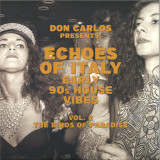
Googling “paradise house”, the first results to pop up are an endless list of European b&b’s with whitewashed lime façades, all of them promising “…an unmatched travel experience a few steps from the sea”. Next, a little further down, are the institutional websites of a few select semi-luxury retirement homes (no photos shown, but lots of stock images of smiling nurses with reassuring looks). To find the “paradise house” we’re after, we have to scroll even further down. Much further down.
It feels like yesterday, and at the same time it seems like a million years ago. The Eighties had just ended, and it was still unclear what to expect from the Nineties. Mobile phones that were not the size of a briefcase and did not cost as much as a car? A frightening economic crisis? The guitar-rock revival?! Certainly, the best place to observe that moment of transition was the dancefloor. Truly epochal transformations were happening there. From America, within a short distance one from the other, two revolutionary new musical styles had arrived: the first one sounded a bit like an “on a budget” version of the best Seventies disco-music – Philly sound made with a set of piano-bar keyboards! – the other was even more sparse, futuristic and extraterrestrial. It was a music with a quite distinct “physical” component, which at the same time, to be fully grasped, seemed to call for the knotty theories of certain French post-modern philosophers: Gilles Deleuze, Félix Guattari, Paul Virilio... Both those genres – we would learn shortly after – were born in the black communities of Chicago and Detroit, although listening to those vinyl 12” (often wrapped in generic white covers, and with little indication in the label) you could not easily guess whether behind them there was a black boy from somewhere in the Usa, or a girl from Berlin, or a pale kid from a Cornish coastal town.
Quickly, similar sounds began to show up from all corners of Europe. A thousand variations of the same intuition: leaner, less lean, happier, slightly less intoxicated, more broken, slower, faster, much faster... Boom! From the dancefloors – the London ones at least, whose chronicles we eagerly read every month in the pages of The Face and i-D – came tales of a new generation of clubbers who had completely stopped “dressing up” to go dancing; of hot tempered hooligans bursting into tears and hugging everyone under the strobe lights as the notes of Strings of Life rose up through the fumes of dry ice (certain “smiling” pills were also involved, sure). At this point, however, we must move on to Switzerland.
In Switzerland, in the quiet and diligent town of Lugano, between the 1980s and 1990s there was a club called “Morandi”. Its hot night was on Wednesdays, when the audience also came from Milan, Como, Varese and Zurich. Legend goes that, one night, none less than Prince and Sheila E were spotted hiding among the sofas, on a day-off of the Italian dates of the Nude Tour… The Wednesday resident and superstar was an Italian dj with an exotic name: Don Carlos. The soundtrack he devised was a mixture of Chicago, Detroit, the most progressive R&B and certain forgotten classics of old disco music: practically, what the Paradise Garage in New York might have sounded like had it not closed in 1987. In between, Don Carlos also managed to squeeze in some tracks he had worked on in his studio on Lago Maggiore. One in particular: a track that was rather slow compared to the BPM in fashion at the time, but which was a perfect bridge between house and R&B. The title was Alone: Don Carlos would explain years later that it had to be intended both in the English meaning of “by itself” and like the Italian word meaning “halo”. That wasn’t the only double entendre about the song, anyway. Its own very deep nature was, indeed, double. On the one hand, Alone was built around an angelic keyboard pattern and a romantic piano riff that took you straight to heaven; on the other, it showcased enough electronic squelches (plus a sax part that sounded like it had been dissolved by acid rain) to pigeonhole the tune into the “junk modernity” section, aka the hallmark of all the most innovative sounds of the time: music that sounded like it was hand-crafted from the scraps of glittering overground pop.
No one knows who was the first to call it “paradise house”, nor when it happened. Alternative definitions on the same topic one happened to hear included “ambient house”, “dream house”, “Mediterranean progressive”… but of course none were as good (and alluring) as “paradise house”. What is certain is that such inclination for sounds that were in equal measure angelic and neurotic, romantic and unaffective, quickly became the trademark of the second generation of Italian house. Music that seemed shyly equidistant from all the rhythmic and electronic revolutions that had happened up to that moment (“Music perfectly adept at going nowhere slowly” as noted by English journalist Craig McLean in a legendary field report for Blah Blah Blah magazine). Music that to a inattentive ear might have sounded as anonymous as a snapshot of a random group of passers-by at 10AM in the centre of any major city, but perfectly described the (slow) awakening in the real world after the universal love binge of the so-called Second Summer of Love.
For a brief but unforgettable season, in Italy “paradise house” was the official soundtrack of interminable weekends spent inside the car, darting from one club to another, cutting the peninsula from North to centre, from East to West coast in pursuit of the latest after-hours disco, trading kilometres per hour with beats per minute: practically, a new New Year’s Eve every Friday and Saturday night. This too was no small transformation, as well as a shock for an adult Italy that was encountering for the first time – thanks to its sons and daughters – the wild side of industrial modernity. The clubbers of the so-called “fuoriorario” scene were the balls gone mad in the pinball machine most feared by newspapers, magazines and TV pundits. What they did each and every weekend, apart from going crazy to the sound of the current white labels, was linking distant geographical points and non-places (thank you Marc Augé!) – old dance halls, farmhouses and business centres – transformed for one night into house music heaven. As Marco D’Eramo wrote in his 1995 essay on Chicago, Il maiale e il grattacielo: “Four-wheeled capitalism distorts our age-old image of the city, it allows the suburbs to be connected to each other, whereas before they were connected only by the centre (…) It makes possible a metropolitan area without a metropolis, without a city centre, without downtown. The periphery is no longer a periphery of any centre, but is self-centred”.
“Paradise house” perfectly understood all of this and turned it into a sort of cyber-blues that didn’t even need words, and unexpectedly brought back a drop of melancholic (post?)-humanity within a world that by then – as we would wholly realise in the decades to come – was fully inhuman and heartless. A world where we were all alone, and surrounded by a sinister yellowish halo, like a neon at the end of its life cycle. But, for one night at least, happy."
Quiet Village announces new label, The Quiet Village, and new single, ‘Reunion'. Matt 'Radio Slave' Edwards and Joel Martin's critically acclaimed project's first official single under the Quiet Village name in seventeen years!
Beginning life as a 'heady 6/8-time urban jazz odyssey, 'Reunion is a stunning piece of modern, Hi-Tech Jazz that draws influences from Pat Metheny, Timeline, Innerzone Orchestra, and Clyde Stubbelfield's drumming.
While previous Quiet Village material was hewn from a myriad of samples extracted from Edwards' and Martin's notorious digging, 'Reunion' and its follow-ups are drawn from a tight-knit crew of session musicians, including the likes of Jon Hester and Thomas Gandey, adding further depth and feel to the QV sound. Already a firm favourite with Gilles Peterson and Luke Una, the latter of which leaked a clip of the release via his inimitable Instagram presence and called it 'something so fucking beautiful. Tony Allen, Sun Ra meets Carl Craig, Underground Resistance, house, tech, funk, everything rolled into one'.
'Reunion’ is the first single on The Quiet Village, Quiet Village's new imprint. Despite continually producing new music and a slew of remixes, most recently for Running Back and Isle of Jura, the long-term friends and collaborators have been unable to release under their Quiet Village moniker since their LP 'Silent Movie' in 2008. While a few releases under QV and their sometime DJ aliases of Maxxi (Edwards) and Zeus (Martin) have emerged, 'Reunion' is the beginning of a new and re-energised Quiet Village that will see more original material and remixes, DJ and live touring that began in Japan in May and curated compilations of treasures, old and new, in the coming months and years.
- A1: Santiago Silva Y Hnos - El Pito
- A2: Ñico Estrada - Salchicha Con Huevo
- A3: Beto Villena - Dejenme Ser Libre
- A4: Nilo Espinosa - Lindo Caballito
- A5: Pancho Acosta Y Sus Guaracheros - Heriberto Boogaloo
- B1: Melcochita Y Karamanduka - Peruvian Boogaloo
- B2: Kintos, Los - Sin Caña Y Sin Platanal
- B3: Joe Di Roma - Bugalú Cornejo
- B4: Santiago Silva Y Hnos - La Batea
- B5: Tito Chicoma - Pata Pata Pelada
- C1: Joe Di Roma - Popurri De Boogaloo
- C2: Melcochita Y Karamanduka - Peruvian Guajir
- C3: Melcochita Y Sus Astronautas - Rumba A Gogo
- C4: Sonora Casino - Guajira De Amor
- C5: Luciano Luciani Y Sus Mulatos - Guajira Cubana
- C6: Mario Allison Y Su Combo - El Boogashake
- D1: Coco Lagos Y Sus Orates - Tumba Coco
- D2: Kintos, Los - Bam Bam
- D3: Laghonia - Bahía O New Juggler Sound
- D4: Otto De Rojas - Soul Limbo
- D5: Sangre Joven - No Se No Se
- D6: Rayos Del Ande - Cadera Contra Cadera
These two vinyl records showcase the legacy left by the boogaloo movement in Peru between 1966 and 1975. They comprise twenty-two songs by seventeen artists who recorded on the remarkable local label MAG more than five decades ago and now invite today’s new generations to dance body and soul to these re-releases. You will find outstanding tracks by the likes of Tito Chicoma, Melcochita, Los Kintos, Otto Rojas, Coco Lagos among many others. MAG was one of the most important and prolific labels in Peru and, though it also was involved in releasing a lot of other types of music, its specialty was the tropical variety, which coincidentally, DJs and collectors seem to crave most. Peru developed a major boogaloo scene in the mid-60s, far from the genre’s place of origin, New York, where iconic songs like 'Bang Bang' and 'El Pito', fused soul and funk with Latin sounds, conquering dance halls and winning extensive radio airplay. The music trend soon spread to Caribbean countries and from there made the geographical leap to the city of Lima. 'El Pito', the collective creation of the Joe Cuba Sextet, was particularly popular. Shorn of overelaborate arrangements, the improvisation and spontaneity of the song resonated with the young generation who were avid for new music after the U.S. placed an embargo on the distribution of Cuban music. In July 1966, Rebeca Llave´s label, Disperú, released the 45 RPM of 'El Pito' (and Joe Cuba's LP), promoting the single in the most prestigious newspaper in the country: El Comercio. The press information stated that the record had sold seventy thousand copies in New York and fifty thousand in Los Angeles. That same year local dance versions by the bands of Alfredo Linares (MAG) and Lucho Macedo (El Virrey) were released, followed by another by the band of the Argentinean musician Enrique Lynch who was based in Peru (Sono Radio). These records were a hit with a new generation that embraced Lucho Macedo's band and the garage rock of Los York's with equal enthusiasm. Although Joe Bataan claimed that boogaloo was killed off at the end of the sixties by the labels and their veteran musicians (who conspired against the new generation of singers), Pete Rodriguez, Richie Ray and the Lebrón Brothers continued to release boogaloo records in Peru, but salsa music soon took over.
Modern Obscure Music is proud to present Pierre Bastien & DJ Low's "Swing Low", a work that fuses the poetic inventiveness of Pierre Bastien with the visionary legacy of the late DJ Low (Tom Deweerdt), a central figure in Belgian independent music and founder of the influential Lowlands label. This album, which interweaves memory and experimentation, represents Bastien's debut on the Barcelona label's catalog and a testament to the creative bond between the two artists.
The album, composed of seven pieces, stands out for its hybrid nature: five reinterpretations of Bastien's previous works, some of them coming from his influential Mecanoid (originally released by Rephlex), and two unreleased improvisations, A Pupa and Reviver, which seal the unique character of the project.
Pierre Bastien, recognized as a composer, inventor and builder of sound machines, has been a tireless explorer of the frontiers between the mechanical and the musical. From his contribution to the Belcanto Orchestra, his collaboration with the PRSNT project to his participation in Pedro Vian's Earth, Our Planet or his collaboration with Tomaga for the Other People label, his career illustrates a constant commitment to experimentation and the intersection of disciplines. Among the artists he has worked with are names such as Robert Wyatt, Jac Berrocal, Jaki Liebezeit and designer Issey Miyake. His works have found homes on iconic labels such as Marionette, Morphine and Discrepant to name a few.
The album is presented with a visual design by Koen Bruyneel, reinterpreted as a tribute to Tom Deweerdt, a decade after his departure.
- 01: Smilin` Faces (Feat. Antonio Mclendon)
- 02: Don`t Be Scared (Feat. Antonio Mclendon)
- 03: Here We Go Again (Feat. Audrey Wheeler &Amp; Brent Carter)
- 04: Doin` Alright (Feat. O&Apos;Bryan)
- 05: Someone I Used To Love (Feat. Antonio Mclendon)
- 06: Time Of Our Lives (Feat. Antonio Mclendon)
- 07: I`m In Love (Feat. Antonio Mclendon)
- 08: Really No Chance (Feat. Katie Holmes-Smith)
- 09: Love Of Another Guy (Feat. Antonio Mclendon)
- 10: True Love (Feat. Antonio Mclendon)
- 11: Every Time You Touch Me (Feat. Antonio Mclendon)
- 12: Can`t Hide Love (Feat. Brent Carter)
Output/Input release their debut album 'Forward Motion' on double vinyl LP, December 1st. The album is an eclectic mix of 70's-inspired soul and funk delivered in a truly 2023-style of recording, with all tracks being recorded remotely across multiple continents. The band is a truly diverse and international group featuring members from countries including the USA, UK, Germany, Hungary and South Korea. Their previous releases have been praised by DJ's and tastemakers, regularly featuring on Jazz FM, BBC Radio 2, BBC Radio 6 and a host of specialist Soul radio stations across the globe. The CD and digital album have been No.1 on multiple UK Soul Charts.
Lead vocalist Antonio McLendon (pictured) has worked and performed with James Ingram, Tata Vega, Gladys Knight and Donna Summer, and features as vocalist on seven of the ten tracks on the album. He has definitely made an impact as a world-class singer this year, with the singles 'Smilin' Faces' and 'Someone I Used To Love'. both being radio hits. Co-incidentally, Antonio's daughter, Samara Joy won two Grammy awards this year for her album 'Linger Awhile'. Here We Go Again' features the vocals of Audrey Wheeler-Downing, who worked with Unlimited Touch and Chaka Khan, and Brent Carter, the current lead singer of AWB and previous to that, Tower Of Power. 'Doin' Alright' features vocals from O'Bryan, who Davis worked with extensively on his albums for Capitol. This re-recorded version, co-written by Melvin, originally appeared on the album of the same name in 1982, and is widely tipped as a stand-out rare groove revival cut on the album and is already hotly anticipated. 'Really No Chance' features the lead vocals of Katie Holmes-Smith, a globally sought-after singer, who backed Adele on her world tour as well as currently performing with her for the duration of Adele's residency at Caesar's Palace in Las Vegas. The CD release featured a bonus track, 'Every Time You Touch Me', recorded very recently, written by Noval Smith and Mark Love and sung by Antonio McLendon, while the 2LP features another bonus cut, a fantastic cover of the Earth, Wind & Fire classic 'Can't Hide Love', penned by Skip Scarborough, with vocals by Brent Carter
- A1: Progetto Tribale - The Sweep
- A2: Onirico - Echo Giomini
- A3: Open Spaces - Artist In Wonderland
- B1: Alex Neri – The Wizard (Hot Funky Version)
- B2: M C.j. Feat. Sima - To Yourself Be Free - Instrumental Mix Energy Prod
- B3: Mato Grosso - Titanic Expande
- C1: Dreamatic - I Can Feel It (Part 1)
- C2: Carol Bailey - Understand Me Free Your Mind (Dream Piano Remix)
- C3: The True Underground Sound Of Rome - Secret Doctrine
- D1: Don Carlos - Boy
- D2: Lazy Bird – Jazzy Doll (Odyssey Dub)
Vol 2[28,99 €]
Volume 1 of this expertly curated project of 90s Italian House - put together by Don Carlos.
If Paradise was half as nice… by Fabio De Luca.
Googling “paradise house”, the first results to pop up are an endless list of European b&b’s with whitewashed lime façades, all of them promising “…an unmatched travel experience a few steps from the sea”. Next, a little further down, are the institutional websites of a few select semi-luxury retirement homes (no photos shown, but lots of stock images of smiling nurses with reassuring looks). To find the “paradise house” we’re after, we have to scroll even further down. Much further down.
It feels like yesterday, and at the same time it seems like a million years ago. The Eighties had just ended, and it was still unclear what to expect from the Nineties. Mobile phones that were not the size of a briefcase and did not cost as much as a car? A frightening economic crisis? The guitar-rock revival?! Certainly, the best place to observe that moment of transition was the dancefloor. Truly epochal transformations were happening there. From America, within a short distance one from the other, two revolutionary new musical styles had arrived: the first one sounded a bit like an “on a budget” version of the best Seventies disco-music – Philly sound made with a set of piano-bar keyboards! – the other was even more sparse, futuristic and extraterrestrial. It was a music with a quite distinct “physical” component, which at the same time, to be fully grasped, seemed to call for the knotty theories of certain French post-modern philosophers: Gilles Deleuze, Félix Guattari, Paul Virilio... Both those genres – we would learn shortly after – were born in the black communities of Chicago and Detroit, although listening to those vinyl 12” (often wrapped in generic white covers, and with little indication in the label) you could not easily guess whether behind them there was a black boy from somewhere in the Usa, or a girl from Berlin, or a pale kid from a Cornish coastal town.
Quickly, similar sounds began to show up from all corners of Europe. A thousand variations of the same intuition: leaner, less lean, happier, slightly less intoxicated, more broken, slower, faster, much faster... Boom! From the dancefloors – the London ones at least, whose chronicles we eagerly read every month in the pages of The Face and i-D – came tales of a new generation of clubbers who had completely stopped “dressing up” to go dancing; of hot tempered hooligans bursting into tears and hugging everyone under the strobe lights as the notes of Strings of Life rose up through the fumes of dry ice (certain “smiling” pills were also involved, sure). At this point, however, we must move on to Switzerland.
In Switzerland, in the quiet and diligent town of Lugano, between the 1980s and 1990s there was a club called “Morandi”. Its hot night was on Wednesdays, when the audience also came from Milan, Como, Varese and Zurich. Legend goes that, one night, none less than Prince and Sheila E were spotted hiding among the sofas, on a day-off of the Italian dates of the Nude Tour… The Wednesday resident and superstar was an Italian dj with an exotic name: Don Carlos. The soundtrack he devised was a mixture of Chicago, Detroit, the most progressive R&B and certain forgotten classics of old disco music: practically, what the Paradise Garage in New York might have sounded like had it not closed in 1987. In between, Don Carlos also managed to squeeze in some tracks he had worked on in his studio on Lago Maggiore. One in particular: a track that was rather slow compared to the BPM in fashion at the time, but which was a perfect bridge between house and R&B. The title was Alone: Don Carlos would explain years later that it had to be intended both in the English meaning of “by itself” and like the Italian word meaning “halo”. That wasn’t the only double entendre about the song, anyway. Its own very deep nature was, indeed, double. On the one hand, Alone was built around an angelic keyboard pattern and a romantic piano riff that took you straight to heaven; on the other, it showcased enough electronic squelches (plus a sax part that sounded like it had been dissolved by acid rain) to pigeonhole the tune into the “junk modernity” section, aka the hallmark of all the most innovative sounds of the time: music that sounded like it was hand-crafted from the scraps of glittering overground pop.
No one knows who was the first to call it “paradise house”, nor when it happened. Alternative definitions on the same topic one happened to hear included “ambient house”, “dream house”, “Mediterranean progressive”… but of course none were as good (and alluring) as “paradise house”. What is certain is that such inclination for sounds that were in equal measure angelic and neurotic, romantic and unaffective, quickly became the trademark of the second generation of Italian house. Music that seemed shyly equidistant from all the rhythmic and electronic revolutions that had happened up to that moment (“Music perfectly adept at going nowhere slowly” as noted by English journalist Craig McLean in a legendary field report for Blah Blah Blah magazine). Music that to a inattentive ear might have sounded as anonymous as a snapshot of a random group of passers-by at 10AM in the centre of any major city, but perfectly described the (slow) awakening in the real world after the universal love binge of the so-called Second Summer of Love.
For a brief but unforgettable season, in Italy “paradise house” was the official soundtrack of interminable weekends spent inside the car, darting from one club to another, cutting the peninsula from North to centre, from East to West coast in pursuit of the latest after-hours disco, trading kilometres per hour with beats per minute: practically, a new New Year’s Eve every Friday and Saturday night. This too was no small transformation, as well as a shock for an adult Italy that was encountering for the first time – thanks to its sons and daughters – the wild side of industrial modernity. The clubbers of the so-called “fuoriorario” scene were the balls gone mad in the pinball machine most feared by newspapers, magazines and TV pundits. What they did each and every weekend, apart from going crazy to the sound of the current white labels, was linking distant geographical points and non-places (thank you Marc Augé!) – old dance halls, farmhouses and business centres – transformed for one night into house music heaven. As Marco D’Eramo wrote in his 1995 essay on Chicago, Il maiale e il grattacielo: “Four-wheeled capitalism distorts our age-old image of the city, it allows the suburbs to be connected to each other, whereas before they were connected only by the centre (…) It makes possible a metropolitan area without a metropolis, without a city centre, without downtown. The periphery is no longer a periphery of any centre, but is self-centred”.
“Paradise house” perfectly understood all of this and turned it into a sort of cyber-blues that didn’t even need words, and unexpectedly brought back a drop of melancholic (post?)-humanity within a world that by then – as we would wholly realise in the decades to come – was fully inhuman and heartless. A world where we were all alone, and surrounded by a sinister yellowish halo, like a neon at the end of its life cycle. But, for one night at least, happy.
- A1: Spirit Of Cyrus (Ft. Snoop Dogg)
- A2: The Force
- A3: Saturday Night Special (Ft. Rick Ross, Fat Joe)
- A4: Black Code Suite
- A5: Passion
- A6: Proclivitie (Ft. Saweetie)
- A7: Post Modern
- B1: 30 Decembers
- B2: Runnit Back
- B3: Huey In The Chair (Ft. Busta Rhymes)
- B4: Basquiat Energy
- B5: Praise Him (Ft. Nas)
- B6: Murdergram Deux (Ft. Eminem)
- B7: The Vow (Ft. Mad Squablz, J-S.a.n.d., Don Pablito)
Rock & Roll Hall of Fame inductee, two-time Grammy® Award-winning Hip-Hop icon, Kennedy Center Honoree, actor, author, NAACP Image Award winner, entrepreneur, philanthropist, and founder/CEO of Rock The Bells, LL COOL J continues his trailblazing career with upcoming album 'The FORCE'.
LL’s highly anticipated 14th studio album The FORCE (Frequencies of Real Creative Energy) set for release September 6th follows over a decade long hiatus. The record was executive produced by Hip-Hop innovator and Rock & Roll Hall of Fame inductee Q-Tip, of A Tribe Called Quest. With this album, LL will help celebrate the 40th anniversary of the creation of Def Jam Recordings. As LL was the label’s first release, there is no better way to represent the legacy of Def Jam Recordings on its 40th year
Rock & Roll Hall of Fame inductee, two-time Grammy® Award-winning Hip-Hop icon, Kennedy Center Honoree, actor, author, NAACP Image Award winner, entrepreneur, philanthropist, and founder and CEO of Rock The Bells, LL COOL J has created one of the most multifaceted careers and brands in entertainment and continues to display his wide range of talents with every project.
Four decades after he first burst onto the scene, LL COOL J continues his vibrant, trailblazing career. LL COOL J helped elevate the burgeoning rap and Hip-Hop scene of the 80’s, which developed into the musical and cultural phenomenon that is Hip-Hop as we know it today. Of LL’s many contributions to the culture, he also is credited with the creation of the acronym “G.O.A.T.” - short for “Greatest of All Time.”
First introduced to the world in 1984 as a Def Jam Recordings’ flagship artist, LL is the first rap artist to amass ten consecutive platinum-plus selling albums, including his critically-acclaimed debut album, RADIO, and the international, timeless anthem and album of the same name, MAMA SAID KNOCK YOU OUT. LL’s hit singles include “Going Back to Cali,” “Doin’ It,” “Around the Way Girl,” “Loungin’”, “Headsprung,” and Hip-Hop’s first rap ballad “I Need Love.”
Up next, this fall LL is back to make his latest artistic contribution and continue to elevate Hip-Hop culture after over a decade long hiatus with the release of his highly anticipated new album, The FORCE (Frequencies of Real Creative Energy), executive produced by Hip-Hop innovator and Rock & Roll Hall of Fame inductee Q-Tip, of A Tribe Called Quest. With this album, LL will help celebrate the 40th anniversary of the creation of Def Jam Recordings.
In December 2017, LL became the first rapper to earn the prestigious Kennedy Center Honor, which is America’s highest achievement for any performer. In addition, he received his star on the world-renowned Hollywood Walk of Fame on January 21, 2016.
In March 2018, LL launched his own SiriusXM timeless Hip-Hop channel entitled “LL COOL J's Rock The Bells Radio,” garnering millions of daily listeners. The channel features a wide range of innovative and timeless Hip-Hop content, music, interviews, and in-depth retrospectives curated, programmed, and presented by the award-winning artist himself. Since founding the radio station, Rock The Bells has developed into a global platform that has become the preeminent voice for timeless Hip-Hop. Rock The Bells focuses on content, commerce and experiences that honor the CULTURE and the core elements of Hip-Hop – MCs, DJs, Breakers, Graffiti Artists – and more. Rock The Bells hosted its inaugural eponymous music festival in Queens, New York in August 2022, which sold out back-to-back years in 2022 and 2023, where LL headlined both festivals.
LL COOL J was inducted into the Rock & Roll Hall of Fame on October 30, 2021, in Cleveland, Ohio for the 36th annual induction ceremony. Considered by most as the crowning achievement for one’s musical career, the ceremony was a celebration of LL’s lasting impact on Hip-Hop and the music industry.
In Summer 2023, LL COOL J, Rock The Bells, and Live Nation Urban kicked off his first arena tour in 30 years across North America called The F.O.R.C.E. Tour, inspired by the name of LL’s forthcoming album. Living up to the acronym for Frequencies of Real Creative Energy, the lineup for this tour was personally curated by LL COOL J. Building off their amazing performance together on the GRAMMY® Awards earlier that year celebrating the 50th Anniversary of Hip-Hop, all dates featured collaborative live performances with preeminent Award-winning Hip-Hop band The Roots, the legendary DJ Jazzy Jeff, and DJ Z-Trip.
LL hosted the GRAMMY® Awards for an unprecedented five years in a row from 2012-2016, for which he earned rave reviews. In addition, he hosted and produced the GRAMMY® Nominations Concert Live Special for seven years and has also been a presenter at the Emmy®, Golden Globe® and SAG Awards. Most recently, at the end of 2023, LL helped produce CBS’ live concert special A GRAMMY Salute To 50 Years Of Hip-Hop, which celebrated the 50th anniversary of Hip-Hop and was nominated for an NAACP Image Award.
LL has always been an avid philanthropist involved in numerous causes, including literacy for kids as well as music and arts programs in schools. Founded in 2005, LL’s charity “Jump & Ball” – which takes place every August in his hometown of Queens, New York – aims to give back to his local community by offering an athletic and team building program dedicated to bringing wholesome fun to young people.
Between being a musician, actor, philanthropist and entrepreneur, LL COOL J is the ultimate multi-hyphenate whose career continues to expand and where he remains one of the most beloved and innovative brands in entertainment. He currently resides in both New York and Los Angeles.
Bedouin return to their Human By Default imprint with a stunning double A-side The sublime ‘Into The Wind’ EP lands on the duo’s acclaimed label in early November and features a collaboration with vocalist IVETA.
Hot off the back of their Human By Default imprint’s fiftieth release milestone, Miami-based duo Bedouin return to home turf with two heady cuts that have already been road-tested on wide-eyed crowds at Pacha Ibiza during their weekly SAGA residency and beyond. Opener 'Better Than This' is a soul-stirring house track with tender vocals from IVETA that bring a seductive edge to the bouncy beats while worldly synths weave intricately through cascading strings. On the flip, 'Khazna' is a seven-minute deep house trip lit up with well-curated synth work and peppered with lush, swinging woodblocks. The arrival of a haunting lead at the mid-point adds an eerie touch to close out proceedings in style.
Multidisciplinary DJ and producer duo Bedouin, aka Rami Abousabe and Tamer Malki, are two of the most in-demand artists in the organic and melodic house spheres. Capping off another stand-out summer that included key festival appearances from Eastern Electrics to OFFSónar and a non-stop Ibiza season curating and fronting their award-winning SAGA party, Bedouin are back on their Human By Default label with the two-track ‘Into The Wind’ EP, featuring a collaboration with vocalist IVETA.
Back in stock due to popular demand, the 18th release in our signature Brazil 45’s series saw Elys Camargo’s ‘Taieiras’ and ‘Não Aguento Você’ by Trio Esperança issued for the first time on 7”.
First up, ‘Taieiras’ from Elys Camargo’s 1972 album Cantos Da Minha Gente on RCA. An infectious, folk-leaning, call and response number that transports you instantly to Brazil. Although Elys recorded 12 albums between 1960 and 1983, little is known about her. DJ Yoda sampled ‘Taieiras’ in his 2012 track ‘U No Likey Like That’ featuring Roots Manuva and Kid Creole & The Coconuts.
On the B side, ‘Não Aguento Você’ by Trio Esperança. A Rio vocal trio formed by siblings Mário, Regina and Evinha Correia José Maria (the latter of which recorded the stunning classic, ‘Esperar Pra Ver’), whose three older brothers we’re The Golden Boys.
‘Não Aguento Você’ is a sun-kissed, psychedelic stunner, taken from their self-titled 1971 album. The original line up recorded seven albums for Odeon Brazil between 1963 and 1975.
Out of the murky, mystic world of Komodo Kolektif slides the Gamma Knife.
In the corner of a dank, dark mind, a nebulous notion condenses and solidifies, featureless and blind...and from that Komodo Klay a new kreature is hacked, molded and (mal)formed.
“The foundations of some of these pieces were laid almost a decade ago, others more recently. All of them came into being as sketches intended as Komodo Kolektif tracks to develop but for various reasons this didn't happen. The Seven Heavenly Elements was first presented to the group in 2019 but partly through personal differences in musical taste as well as COVID throwing a spanner in the works it was put aside and never worked on collectively. The two Disciple of the Drum 'dubs' are essentially rhythm tracks using the rhythm and percussion of Disciple Of The Drone, also from 2019, stripping away the drone, the gamelan melody and finally, even the bass line, which was initially intended to be the fundamental driving force of at least one of these dubs. In the end neither of these two tracks became anything like the idea that I had in mind, but that's how creativity works sometimes. The vocal parts in Cantation Dub were added most recently, just a few months ago. Fire Dub is just an exercise in me trying to rein in some insane delays and barely managing. The Ghost of Water is an anomaly because many of the fundamental parts are taken from the same jam session recorded in 2015 that led to Djakarta 3001 from the first EP. If you listen closely you'll hear Graeme Miller on guitar (back when guitar was still featured in our weekly jam sessions). I discovered this unedited hour-long jam session on an older hard drive in late 2023 and decided to fashion something from it until what became Ghost of Water materialised: the heavily delayed saron instruments, the jaw harp, the percussion and so on. What makes the track an anomaly is that it is in some ways both the oldest and newest piece of the five. The Seventh Element takes one of the seven elements of The Seven Heavenly Elements (in this case the Mopho synth tuned to the Indonesian pelog scale and ran through the Boss DE-200's depth modulator) to which I then added some gong parts and field recordings from Bali.
Once complete, I realised with an album's worth of material sitting there which was more “Komodo Kolektif” than anything I would normally produce solo, there came the problem of trying to work out what to do with this distinctly Komodo-esque, non-Komodo material. I came up with the idea of releasing it under the name Komodo Kuts...but a part of me felt I'd be cashing in on the Komodo name so ditched that part entirely...but the kuts remained, which seemed appropriate when used alongside my Gamma Knife moniker (which has a long story of its own...in a nutshell I had a benign brain tumour which only 1 in 10,000 people get and which is most frequently removed with a gamma knife (radiation). In medical parlance the device used in this treatment is often shortened to GK machine. I had been using the DJ name GK Machine, which came from my signature GK Mackinnon, since 1994, in other words long before this diagnosis. In the end I had brain surgery in Spain without use of gamma radiation...but the synchronicity of the name connection fascinated me nevertheless. Sometimes the world works in mysterious ways).
Lastly, now that I've sent these tracks out into the world, I feel somewhat liberated and can move on from this fairly niche and specific sound. The gamelan instruments have been returned to Gamelan Naga Mas, from who we'd borrowed them, and the masks hung up. This does not mean that Graeme Miller and I won't work together again in future...I'm sure we will...it just means we won't be tied to working within the constraints of gamelan, synths, percussion and dub that we became known for. So stay tuned...surely something lurks around the corner” GKM, November 2024
- Hoy Voy A Asesinarte
- Ponte En Mi Lugar
- (Aunque Esté En El Frenopatico) Te Tiraré Del Atico
- Mario (Encima Del Armario)
- Gusanos En Tu Alcoba
- Ayatolah!
- Juegas Al Palé
- No Me Gusta Bailar
- Emilio Cao
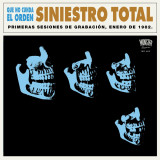
"Que no cunda el orden" comprises the first demos recorded by this iconic Spanish punk band in January 1982, seven original songs and two versions that would also become the band's live repertoire in their early years. Among these songs we find the only studio version of `Emilio Cao' and the previously unreleased `No me gusta bailar'. The sound of the original tape has been mixed and mastered for this very special edition. Siniestro Total were a Spanish punk band formed in Vigo in 1981. A big commercial success accompanied the band for over a decade, until the mid-late '90s, when the popularity of the groups from the so-called "movida madrileña" and other similar scenes from other parts of Spain such as Galicia, where Siniestro Total were formed, faded away. Many of their best and most popular songs, reflecting the punk and fun essence of the band, were written and recorded in the early days of Siniestro Total. This album comprises their very first recording sessions, unearthed here for the first time, when the early demo versions of some of those songs were captured. The band's lack of studio experience was balanced with tons of fun and laughter. This demo was sent to a radio DJ and all the songs were aired on his show at the most popular music station in Spain, Radio 3. In fact, the demo was awarded demo of the year (Maqueta de Oro del Diario Pop 1982). Four decades later, the sound of the original tape has been mixed and mastered for this very special release that Munster Records are honored to bring to fruition.
Making history with his first solo album ‘Golden’, Jung Kook of BTS is back with a vinyl version containing the same hit songs ‘Seven (feat. Latto)’, ‘3D (feat. Jack Harlow)’ and ‘Standing Next to You’. Contents of the vinyl album include: 1-LP Golden Vinyl, Outer Sleeve, Photo Book, Contents Envelope, 2 Post Cards, 2 Photo Cards, 1 Wax Seal Sticker. Dimensions: 316 x 316 x 5mm
The first vinyl release by the Melbourne Soul / Funk trailblazers The Bamboos in over a year since their 'This Is How You Do It' album and UK / EU tour (which included two sold out nights at London's iconic Jazz Café) is something that guitarist / bandleader Lance Ferguson has wanted to do for many years: a Christmas EP!
This limited edition 7" comes in custom printed knitted Christmas sleeve that will rival even the most garish seasonal woollen jumper.
A side "Wrapt In A Beau" is classic Sweet Soul Bamboos style, recalling fan favourites such as "I Don't Wanna Stop" and "Golden Ticket", with a perfect vocal by The Antipodean Queen Of Soul, Kylie Auldist.
On the flip is the string drenched Funk instrumental "The Bells Of Holly Hill", which kicks off with a crisp breakbeat plus sleigh bells intro.
Paid promo service to Soul / Funk DJs w/wide for radio, club and online incl presenters on key radio stations such as BBC6, FIP France, KCRW.
LANCE FERGUSON "I'm never going to make an Xmas track without putting some sleigh bells in the mix, and you should see some of my yuletide knitwear...but for everyone who celebrates Christmas in the Southern Hemisphere it's something that falls right in the middle of Summer, flying in the face of much of that iconic festive imagery.
With these songs we thought we'd lean into some of those unique things that make a sun-drenched, snow-less festive season special."
Previous Bamboos seven inch pressings sold out straight away, so don't sleep on this.