Continuing Ostinato's Series Of Cape Verde 45s Showcasing Diasporan Bands That Are Staples In Europe's Cape Verdean Communities, Ostinato Records Presents Timeless Dance Music For The Summer By Conjunto Jovens Africanos, Founded By Ze Orlando, A Respected Producer Originally From São Tomé. Formed And Originally Based In Lisbon, The Band Fused Raw Funaná Rhythms From The Cape Verdean Island Of Santiago With Syncopated Electric Guitars, Raucous Synthesizers, Relentless Percussion, And Addictive Vocals That Kept Their Compatriots On Their Feet Across Little Known Krioulu Nightclubs In Europe's Major Cities. First Released In 1984, Conjuntos Jovens Africanos' "nhu Jhon" And "volta Pa Terra" Are Stellar Representations Of Modernized Funaná's Endless Energy.
The first commercial vinyl edition of this classic of modern African music, from Burkinab musician and singer-songwriter Victor Deme. The album is a unique mosaic of folk blues melodies, intimate Mandingo ballads, and Latin
influences, salsa and flamenco. This reissue celebrates the album's 10th anniversary, which was a huge success in France (Gold disc, with 100,000 copies sold) and voted Album of the Year in 2008 by France Inter listeners (the No. 1 French public radio station).
After a 30-year career in Burkina Faso, Deme finally released his first album aged 46. In 2007, with the help of journalist David Commeillas and of Soundicate's activists, they founded the label Chapa Blues Records to promote Victor's
music. The singer started to work on his album in the small studio at the back of his artist residence in Ouagadougou, the capital of Burkina Faso. The studio is no more than two rooms separated by a truck windshield and equipped with
a 16- track console, but it has become the rallying point of numerous talented artists. 'His voice is warm and slightly husky and his songs are splendidly lyrical and supported by excellent guitar playing.' - Songlines (The Best Albums of 2008)
Neba Solo, whose real name is Souleymane Traoré, is a true living legend of Malian music. His voice and balafon playing are unique, instantly recognizable, and deeply cherished throughout Mali.
He gained international recognition with his iconic track CAN 2002, composed for the famous African Cup of Nations. This success opened doors to global stages, leading to tours in the United States, Asia, and Europe. Prestigious labels such as Cobalt and Secousse supported this exceptional period in the artistic journey of this musical genius.
For many years, Neba Solo has closely collaborated with Yaya Diarra, the sound engineer of the legendary Bogolan studio in Bamako. Diarra played a key role in preserving and recording the works of the balafon master from Sikasso. He was also the one who invited Dom Peter to work on a bold and resolutely modern project: an album with more electronic sounds, enriched with drum machines, offering a new artistic direction to Neba Solo’s compositions.
Dom Peter and Yaya Diarra immersed themselves in the studio to conceive and produce this album, titled TUMA DUMA. The result is a perfect alchemy, where electronic rhythms blend seamlessly with traditional percussion, redefining the richness of Malian musical heritage.
These nine tracks explore classic themes of the Mandingue repertoire while showcasing Neba Solo’s unique way of narrating both everyday life and universal stories
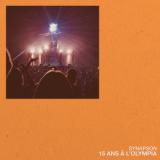
On October 16, 2025, Synapson took over the Olympia for a sold-out anniversary concert, celebrating 15 years of their career. A symbolic night in an iconic venue, in front of a crowd that came to relive the tracks that shaped their journey.
Today, the duo unveils “15 ans à l’Olympia”, a live album recorded during this unique show, a vibrant testament to their stage energy and the evolution of their project.
Green Vinyl. Twenty-five years after their first recording, Panzerpappa - perhaps Norway's most cordial avant-prog ensemble - felt the time had finally come to release their first-ever concept album. In 2025 the band will launch Landsbysladder, their eighth studio release. Landsbysladder is Norwegian for "village gossip" and the album comprises seven instrumental pieces centred on the themes of rumours, tales, and gossip in a small village - a musical chronicle of minor and major dramas unfolding in a tight-knit community where everyone knows everyone - or at least thinks they do. Landsbysladder tells a vivid story without uttering a single word. The music shifts between open, melodic passages and sudden bursts of intensity, drive, and complexity. Tempo changes, rhythmic twists, and harmonic detours mirror the unpredictable way gossip can spread, grow, and shift the mood in an instant. The album features several distinguished guest musicians: renowned folk artist Rannveig Djonne on diatonic accordion, seasoned performer Silje Hveem Lofthus on flute, internationally acclaimed soloist and professor Håkon Stene on tuned percussion, Håkon Borve on the rarely heard contra-alto clarinet, and last but not least, jazz luminary Ståle Storlokken - known from Elephant9, Terje Rypdal, Motorpsycho, and Supersilent - on synthesizer.
Victor Démé loved life, music, friends, his hometown of Bobo Dioulasso, and above all, his family — by blood and by heart. Jovial and generous, he would have been delighted to see his world gathered once again in celebration: with concerts, unreleased tracks, live recordings, and a podcast retracing his finest musical years. Ten years after his sudden passing, this album carries the simple ambition of honoring his music and memory.
Victor passed away on September 21, 2015, in Bobo Dioulasso, during the coup d’État in Burkina Faso. The hospital he rushed to for malaria treatment was closed… His third album was due to be released just days later, but he never had the chance to sing it on stage.
A prolific and unique songwriter, Victor often revived songs he had composed in his youth during sessions at the OuagaJungle studio. With his guitar, he would breathe new life into them, refining them with his musicians — making the final choices sometimes difficult. Among the previously unreleased tracks on this record are Djilon, a reggae piece from Abidjan; Sira, a radiant yet solitary blues; Ambideu, a crooner-style ballad reimagined as an elegant cello-and-voice duet; Mousso mina mousso, a love song meant for a djandjoba celebration; and Bara, a heartfelt choral tribute to the workers of Burkina Faso.
These songs remained in the studio after Victor’s passing and have now been brought to life by the talented musicians Clément Petit, Alex Finkin, and Max “Blundetto” Guiguet. On Side B, the album captures the energy and sincerity of Victor and his band live on stage, with recordings from the May 19, 2009 concert at Théâtre de la Ville in Rouen. The performance opens with Labanko — a song never recorded in studio — followed by several classics, including the iconic Djon Maya, delivered here in its most blues-infused version, carried by Issouf Diabaté’s magical guitar.
Unforgettable memories for his musicians and for all who had the chance to applaud him live. We can only hope that, wherever he is, Victor is smiling and dancing as we celebrate him once more through music.
The third album by Popol Vuh, a collective of musicians founded in Germany by Florian Fricke in 1969. 'Hosianna Mantra’ was a departure from the band’s first two records. Leader Florian Fricke abandoned the use of the Moog synthesiser and instead employed acoustic instrumentation such as piano, oboe and tambura. The record also featured evocative vocals by Korean singer Djong Yun and guitar contributions from Conny Veit.
The resulting album was one of the most inspiring, evocative and beautiful works to emerge in Germany in the 1970s and its fusion of ethnic, classical and ambient influences remains unique.
It is little wonder that 'Hosianna Mantra’ remains regarded as one of the finest works by Popol Vuh and continues to be held in high regard by both critics and aficionados alike.
This Esoteric Recordings edition has been cut at Abbey Road studios and replicates the original album artwork.
After years of wondering, the man behind the mystical and enchanting demos that reached the Rama Lama HQ some time ago was tracked down to Malmö, Sweden with good help from documentary filmer Djoana Djones. On April 23rd, Rama Lama will release his debut album which arrives alongside the trailer for the documentary that follows the search for Jo Yonderly.
‘Greatest Hits 1.0’ is the first collection of songs from an artist that isn’t afraid of experimenting with different styles, this resulting in an eclectic mix that straddles the line of control and chaos. The sound is something you’d imagine to be a classic, but hard to define from what decade, or could it even be from the future? The record will be out on both standard black vinyl and turquoise vinyl limited to just 100 copies.
After years of wondering, the man behind the mystical and enchanting demos that reached the Rama Lama HQ some time ago was tracked down to Malmö, Sweden with good help from documentary filmer Djoana Djones. On April 23rd, Rama Lama will release his debut album which arrives alongside the trailer for the documentary that follows the search for Jo Yonderly.
‘Greatest Hits 1.0’ is the first collection of songs from an artist that isn’t afraid of experimenting with different styles, this resulting in an eclectic mix that straddles the line of control and chaos. The sound is something you’d imagine to be a classic, but hard to define from what decade, or could it even be from the future? The record will be out on both standard black vinyl and turquoise vinyl limited to just 100 copies.
Mow Records proudly presents L’enfants De Kita, the third album from a series of five, all produced by label owner Mowgan. Each album features vocalists and performers with African heritage, channeling Mowgan’s passion for the continent’s diverse sounds into vibrant, highly emotive productions. On L’enfants De Kita he teams up with Fanta Sayon Sissoko, a female performer from West African nation Mali. Based in Toulouse, where the album was recorded, Fanta’s musical roots go deep - her father played guitar and ngoni for Baaba Maal and her grandmother is Kandia Kouyaté, one of Mali’s best-known griot singers.
Mowgan always dreamed of working with a female singer from Mali, enchanted by their vocal style. After moving back to France a few years ago he bumped into Eric Diaouré, an old friend who he worked with in his teens. Eric is also a musician and just so happens to be from Mali. Mowgan revealed his ambitions to Eric and a meeting with Fanta was arranged - within a few days they were in the studio together.
Like the other albums in this series, L’enfants De Kita is a fusion of Mowgan’s love for African music and his penchant for electronic sounds. Fanta’s raw, affecting vocals are complemented by Mowgan’s considered production throughout with additional instrumentation from a range of performers, including a group of schoolchildren on ‘Tubani’. Featured artists include Solo Sanou (whose album ‘Soya’ was the second release on Mow Records) playing percussion, Mamadou ‘Madou’ Dembele, a multi-instrumentalist who plays ngoni, Yohan Hernandez on guitar and bass plus Madani Touré aka Chanana (a famous Malian rapper from the nineties) contributing to lead vocals on the album’s title track, with Tim Xavier handling mastering.
Mowgan’s approach to creating albums is to get a vibe going with the singer, produce a batch of songs and then select the best seven for each LP. It’s a pressure-free attitude that has led to some truly heartfelt productions, which encapsulate the purity of the creative process when it’s liberated from rigid constraints. You can hear this freedom of expression throughout L’enfants De Kita, Fanta in her element as she sings with passion and grace across all seven tracks.
The album begins with the title song ‘L’enfants De Kita’, which pays homage to Fanta’s hometown, Kita, in Mali. It is the centre of griotism, the local style of passing on knowledge from one generation to the next via spoken-word storytelling. Chanana joins Fanta on this one, which is the most ‘western’ sounding cut on the LP, Mowgan’s deft touch taking us to the dance floor, while Chanana adds extra depth with his rapid-fire vocal refrain. The glorious ‘Tubani’ tells the story of Djene Tubani, a girl who thought she was a bird. She disobeys her parents and neglects her friends, but eventually learns the error of her ways. Fanta’s vocals are amplified by the voices of a group of schoolchildren, including her own daughter.
‘Mobaya’ is a reminder that we can possess wisdom and deep knowing, but we can also enjoy ourselves; dance, sing and party. This is a club-focused production with 4x4 beats and a traditional house feel, which provide a wonderful accompaniment to Fanta’s uplifting vocals. Next up is ‘Dakan’, a cut which is all about destiny: Everyone has been put on Earth for a reason and by working together we can all achieve our destiny. Layers of percussion skip over the warm low end, with a lively trumpet appearing in the second half.
‘Dounouya’ explores the notion that we live in a world where everyone faces negative criticism. Fanta encourages us to take responsibility and move forward no matter what others think of us with this inspiring guitar-led cut. ‘Djonya’ highlights the fact that slavery still exists in today’s world - modern slavery, hidden from public view but still very much alive. “Our Africa is going to be okay if we all hold hands, if we are all together, all united,” she says. Finally,‘Badeya’, a great outtro which focuses on unity. We are all one family on this planet and this song speaks of people coming together but also respecting ourselves above everything else. The pace is slow and the instrumentation perfectly balanced to allow Fanta’s vocals to flourish.
nicht am Lager
Zuletzt vor 5 Jahren geliefert unverbindlich nachbestellbar
After their brilliant label debut with "Grow Yes Yes" in 2017, Professor Wouassa now returns with their brand new third album on Matasuna Records.
The Swiss band's career spans more than 15 years, where they have played at many major festivals in Switzerland and abroad. The 11 members of the band have perfected their musical qualities over the years and captivate as a well-rehearsed live band with their energetic and rousing shows. So it isn't surprising that they supported concerts of Afrobeat legends like Ebo Taylor or Seun 'Anikulapo' Kuti.
Their still exuberant creativity can also be heard on their new work entitled Yobale Ma!, which in Wolof's language can be translated as "take me" or "get me". With their new album they take the listener to their musical island to explore the borders of Afrobeat and beyond.
The song Fallou Fall opens the album in a jazzy & big band way, and quickly switches to an afrobeat theme and solo. In the middle the song breaks into an Afro-style pattern, which is performed by Thaïs Diarra in Bambara (Malian dialect) in a traditional Mandingo way of singing. The track ends with a Sabar percussion part - a traditional Senegalese drum.
Yobale Ma is the single of the album, which is inspired by the funky guitars of a Nile Rodger and some typical fast Ghanaian highlife of Ebo Taylor.
The track Thiaroye Gare is about the Tirailleurs sénégalais, a unit of the French army who fought for France in WWII. After returning from captivity they were taken in Camp Thiaroye northeast of Dakar. Corrupt and racist colonial officials led to a revolt, which was bloodily suppressed by French troops.
From the musical point of view the song shows a link between afrobeat and funky James Brown rhythms, which ends in a fast afrobeat style with baritone saxophone and trombone solos.
Beguente Len in the middle of the album is a kind of interlude that represents Wouassa's own way of interpreting traditional afro beats and rhythms.
With the two songs Djongoma and Sama Yone Professor Wouassa leaves his usual afrobeat path to explore the "sound of the islands" (Mauritius, La Réunion, Cape Verde or Cuba) and blend it with their personal and unmistakable style.
With Iba Niawoulo the professors investigate a kind of Ghanaian highlife medium tempo with a chord progression from Serge Gainsbourg's song "Initial BB". The tracks change in the middle to a fast Rhythm'n'Blues beat, which is accompanied by afro guitars. The singer "Mamadou Diagne" talks about his alter ego in Dakar.
In Djougoudja typical afro rhythms are mixed with pure Ethiopian 70's brass sounds and funk guitars. As heard several times in other songs, the track breaks into a very personal and hard to describe Wouassa beat in it's middle. At this time, Mamadou Diagne recites a big slam about the spiritual ideas and the history of the famous senegalese theologian and poet Serigne Touba (Cheikh Ahmadou Bamba). Under his flow some sabar percussions (typical senegalese percussions) build a strong and intense musical rug.
nicht am Lager
Zuletzt vor 6 Jahren geliefert unverbindlich nachbestellbar