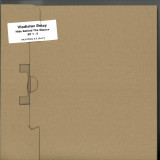
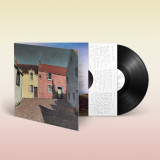
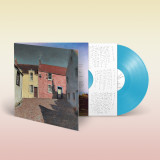
Contradictory accounts of Miles Davis’ creation of the soundtrack to Louis Malle’s film noir Ascenseur pour l'Échafaud have all become part of its legend. Rarely has a soundtrack been so decisive. Nearly seventy years on, beyond the myth, this taut, feverish recording, imbued with extreme dramatic tension, remains one of the Miles’ finest records. The basic outline remains: Jean-Paul Rappeneau suggested to Malle asking Miles Davis to create the film's soundtrack who agreed to record the music after attending a private screening. Davis was performing at the Club Saint-Germain in Paris in November 1957 and on December 4, he brought his four sidemen to the recording studio without having had them prepare anything. Davis only gave the musicians a few rudimentary harmonic sequences he had assembled in his hotel room, and, once the plot was explained, the band improvised without any precomposed theme, while edited loops of the musically relevant film sequences were projected in the background. Bassist Pierre Michelot recalled in 1988 that “Miles just asked us to play two chords, D minor and C7, 4 bars of each, ad lib.” Typically, Miles planned very little but know exactly what he wanted. François Leterrier, the film’s Second Assistant Director picks up the story: “The session started at around ten o’clock and went on until dawn. The screen in the auditorium was showing the scenes for which Miles had devised some harmonies, and they were edited into a loop. And that’s what makes this music unique: it was entirely improvised in conditions that went back to the days of silent films, while watching frames shot in black and white by cinematographer Henri Decaë: tracking shots of Jeanne Moreau wandering down the Champs-Elysées at night, passing in front of lit window displays or going into bars, while looking for her lover/murderer alias Maurice Ronet … All of us there in the dark auditorium were aware that something extraordinary was taking place, something that had definitely never happened before. … In the small hours we all met up again at the Pied de Cochon in Les Halles, and Louis was looking at Miles with the disbelieving eyes of a child … as if he couldn’t believe the gift he’d just received. Even in his wildest dreams he had probably never imagined what his film would be like once it had been as if illuminated by the trumpet of Miles, incisive or wrapped softly in cotton.” The music was released on 10” by Fontana and received the Grand Prix from France’s Académie Charles Cros. It was released in the USA on Columbia as the A-side of the 12” LP Jazz Track, which received a 1960 Grammy nomination for Best Jazz Performance, Solo or Small Group. This beautiful re-issue of the original recording is pressed on 180g vinyl at GZ, and packaged in a deluxe gatefold tip-on jacket with Boris Vian’s original liner notes and Jean-Pierre Leloir’s iconic studio photo of Miles and Jeanne Moreau, and an essay on the circumstances that led to this out-of-the ordinary music by Franck Bergerot.
MRG223LP is black vinyl in a jacket + printed sleeve + printed insert for full album download. File Under: Alternative. In 2003, everything broke open for Ward with the release of Transfiguration of Vincent. Critically lauded and long beloved, Pitchfork hailed it as an album that “broadcasts timelessness and defies genre constraints,” and Slant placed it on their list of the best albums of the 2000s.
On Transfiguration of Vincent, Ward’s elegant fingerpicking, evocative croon, and heartrending lyricism came into full bloom, casting a spell so powerful that even a song as universal as David Bowie’s “Let’s Dance” felt not only new but irrevocably his.
One of the most cherished albums in the Merge catalog, Transfiguration of Vin- cent is both a great place to begin your love affair with M. Ward and a deep, stunningly realized work that listeners have returned to over and over again for 20 years. Tracklisting: SIDE A. 1 Transfiguration No. 1 2. Vincent O’Brien 3. Sad, Sad Song 4. Undertaker 5. Duet for Guitars No. 3 6. Outta My Head 7. Involuntary. SIDE B. 8. Helicopter 9. Poor Boy, Minor Key 10. Fool Says 11. Get to the Table on Time 12. A Voice at the End of the Line 13. Dead Man 14. Let’s Dance 15. Transfiguration No. 2
Ba Da Bing is releasing the soundtrack to 2022’s paeon to cuisine prep, Flux Gourmet. A vibrant, four-coursed, 23-track double album, Flux Gourmet includes contributions by Heather Trost, Jeremy Barnes, Marta Salogni, Cavern of Anti-Matter, and Roj (Broadcast), as well as Strickland’s own compositions as part of The Sonic Catering Band. British Director and sonic pioneer, Peter Strickland, known for The Duke of Burgundy (2014), Berberian Sound Studio (2012) and Björk: Biophilia Live (2014), has always pushed visuals and narrative to absurd heights. In Flux Gourmet, performance artists taking part in a residency dedicated to sonic catering combining cooking, sound and theater. Food is amplified, microphones are jammed against blenders, and the sizzling sound of the frier turns becomes an ominous rattle. The film’s soundtrack is equally as process oriented, experimental, and kaleidoscopic as its protagonists’ practice. Contributors are Cavern of Anti-Matter, Jeremy Barnes, Heather Trost, Roj (formerly of Broadcast), Tim Harrison, Dan Hayhurst and Nurse With Wound.
Murdock will release his second album in January 2024. The first was released in 2018, collected 20 million streams, and reached radio in Belgium and abroad with a number of strong singles, partly thanks to guest appearances from UK legend Jenna G and reggae hero Errol?Dunkley.?Studio Brussel chose 'Make Me Stronger' and 'Different Way' for daytime radio, George FM in New Zealand played 'Dollars Aren't Cheap' so much that the track made it into the top 10 of the national Shazam list, and in the UK it was 'Double Dutch' with?Roni Size that convinced BBC Radio 1.?
This time he once again brings Sena Dagadu on board, with whom he scored his biggest hit to date: Can't Keep Me Down has almost 12 million streams and the title is tattooed on loads of body parts worldwide.?She will provide goosebumps again on the upcoming album with 'Reign'.?Omar Perry (son of!) gets on board for 'Fire Burning', which will also be the anthem of the upcoming Rampage edition in the Sportpaleis, Ayah Marar helps the euphoric 'Lost In You' to a dose of soul, and new talents Emilie Rachel and Medyk?steal the show on 'Living In The Moment' and 'Runaway' respectively, on which Murdock combines drum & bass with their pure songwriting skills.?Advance single 'Cola' has already done extremely well: 600,000 streams in a few months, and a lot of radio play in Belgium, New Zealand and United Kingdom.?The album is called X-Ray as each track represents a piece of the identity that makes Murdock a whole.
out of Stock
Last delivered 2 years ago available to reorder, subject to availability
Some Female:Pressure right here with the latest NVST release; Silence Itself Is Noise! This is her debut for SSPB delivering a 6 track ep which are a reflection of her adventurous club sets, a well-balanced mix of powerful beats and expansive atmospheres haunted by skittering echoes of the dancefloor. Each track feels like fleeting memories of the club filtered through the human experience - flickering moments illuminated by strobes and shrouded in smoke, laced with the tang of sweat and psychedelics. Opener "Tiny Mistakes Feeling HOT (Hellisnotamyth version)" coalesces from curling vapors into infernal acid lines and rhythmic fragments that evaporate almost as soon as they appear. "The Devil Loves The Detail (Lucifer's Fire Version)" builds into an inescapable pulse amidst frayed synthesizers, pressure building to fever pitch before "The Danger Zone Of GFY (Freedom Version)" opens out into icy, astral synths. "Monster of Business (Style Edition)" shifts closer to the dancefloor with a slinking, syncopated groove, conversations from the smoking area or studio creeping in at the edges, before erupting into the frazzled bounce of "The Goat and the Night." "The Silence Itself is Noise (Nonstop Bass Version)" loops back once again to more cavernous atmospheres, warped bells and strafing melodic flourishes ringing out amidst fizzing distortion and skeletal percussion. Silence Itself is Noise doesn't clamour for attention, it necessitates it. Once again, NVST proves herself unafraid to challenge club orthodoxy, and unwilling to patronize listeners, instead making deft use of tension and release to create genuine moments of surprise and transcendence.
out of Stock
Last delivered 23 months ago available to reorder, subject to availability
This is a welcome return to the label for Amazingblaze who released his Can't Stop EP in January this year and his Venture EP in 2022. Since then he has continued to innovate with his heavy-hitting trance, techno and hardstyle influenced sounds. His ever evolving studio skills see him mix up old school influences with new school sound design that is perfect for engaging dance floors. His signature imprint is all over these four new cuts with their mix of big synths, bigger drums and all consuming grooves.
“Believe EP says it itself. All I wanted to say is that you have to believe in yourself”, Amazingblaze says. “This brand new EP contains 4 full-power tracks that definitely goes through your heart. Massive trance synths combined with vocals make it sound really mysterious and groovy. Hope you enjoy it, and believe in yourself.”
Charlotte de Witte adds: “It’s no secret that to me, Amazingblaze is one of the purest talents out there. This guy really understands what music is about and manages to create dancefloor bombs time after time. I’m super proud to have him on board for another EP on KNTXT and to watch him grow and become one of the top level artists out there.”
'Believe' kicks off with intense drum patterns and smart vocal samples that are lit up with bright and electric synths full of euphoric energy. 'Strange Candy' is a bulky and physical mix of clipped techno funk and throwback rave sounds with strobe-like lasers shooting across the face of the track. There is more peak time brilliance in the hard drums and hands-in-the air synth magic of 'It Happened Again' while 'Boyz Makin Noiz' shuts down with twitchy stabs and twisted acid lines and dark vocals appear from the shadows.
Amazingblaze delivers yet another exceptional EP, seamlessly blending forward-thinking techno and trance elements.
out of Stock
Last delivered 4 months ago available to reorder, subject to availability
The concept of naught (Ø) has challenged Salvatore Mercatante throughout his musical career, specifically, trying to understand how the idea of ‘nothing’ fits into the realm of sound, and at the same time, exist in a world of influence at every turn. In the absence of everything, are we able to create something truly free?
As a lifelong New York-based musician, Mercatante’s influences and productions run a wide spectrum. Just as happy producing 80s-inspired horror soundtracks as he is refining acute drum patterns over and over again, Salvatore is the first to ask himself, where next? When a musician’s output can be influenced today by so much, and there is no self-defined or perceived artistic goal in mind, how do you start from a place of nothingness, again and again?
This approach has born many minimal and experimental albums of note in the past, but with Ø, Salvatore ended up with an almost controlled maximalist approach. Beginning with open spaces and allowing sonic textures to live and evolve past where you may expect, Ø allows the space between notes to become equally as important as the notes themselves. Walls of noise, soaring soundtracks, dense techno, glittering IDM, and minimal glitch, sit side-by-side to present an all-encompassing palette of sonic possibility.
Often, even without any intent, what can be born from nothing will somehow transpire back into something more recognizable. It’s human nature after all. A subtle fingerprint, as a sequence, melody, pattern, or drum kick. Whether Salvatore intended for this record to represent his defining sound or not, only time will tell.
Mastered by Giuseppe Tillieci @Enisslab, Rome, Italy.
Artwork by Brandon Locher
Written and produced by Salvatore Mercatante
out of Stock
Last delivered 6 months ago available to reorder, subject to availability
In the midst of the pandemic, Enjoy Jazz Festival has developed a musical project whose members will be recruited new every year and then debut at a concert on UNESCO International Jazz Day, April 30. The members come from the jazz scene of the German state of Baden-Württemberg. "We wanted," festival director Rainer Kern stresses, "not only to revitalize the fragile network of outstanding creative minds, but also to rethink it artistically as a rolling system." Two experienced and renowned band leaders, Alexandra Lehmler and Erwin Ditzner, now curate an annually changing ensemble of outstanding artists of the most diverse provenance. As part of a voluntary commitment, the ensemble is to be organized in a sustainable, diverse, and, in three years at the latest, completely gender-equal
and climate-fair manner. Thus, as a commitment to the goals of the "European/Local Green Deal" (and with reference to the jazz standard "On Green Dolphin Street"), the name Green Dolphin Orchestra was created. Another special feature: The renowned Oriental Music Academy Mannheim (OMM), a long-standing partner of the Enjoy Jazz Festival, receives a white card, so that musicians with a migration background or protagonists from other musical cultures are always part of this "orchestra of many" and constantly expand its sound language.
The project has a free improvisation approach with changing personnel. "We actually even thought of drawing lots for the different formats within the band pool," explains saxophonist Alexandra Lehmler. "We decided against it in the case of the first concert and instead put together curated formations." And drummer Erwin Ditzner adds, "In principle, however, this procedure remains an option." It was important to the two of them to also mix the genres represented by the individual musicians in such a way that free space for something truly new could emerge. "We wanted to challenge ourselves," Lehmler sums it up. The only restriction: a time code was assigned to each sub-project. "Each formation was given a time limit, although it was possible to virtually override this limit by spontaneous
reshuffling," says Ditzner, explaining one central of the few rules. "In concrete terms, this meant that after eight minutes, the improvisation in progress was either ended or new musicians simply joined in the ongoing creative process, while others took themselves out of the game."
Alexandra Lehmler summarizes the artistic impact of the ensemble as follows: "We really cross-fertilize each other. In order to push this process even further, we forced ourselves when putting together the ensemble not to fall back on our 'favorite playing partners', i.e. musicians with whom one feels particularly at home. In other words, we consciously wanted to step out of our comfort zone with this project." The present pieces were recorded live in Heidelberg during the ensemble's premiere concert on the occasion of International Jazz Day on April 30, 2022.
Sasu Ripatti's complete "Dancefloor Classics" series. Music for imaginary dancefloors, released on Ripatti's own label Rajaton.
”Look up, into the light” she said, while the camera shutter clicked. ”Like this? Does it look holy?” His neck felt stiff. Her reply: ”Yes, just like that. What do you mean holy? Like religious? ”No, more like trying to look very far, somewhere beyond what we can see.” ”Okay, stand still, I’m going to come close to you now. The light hits your face great.” click, click, click.
He noticed her fingernails. They were not polished. Natural. Even somewhat rugged, as if something wore out the fingers slightly. What had these hands held besides the camera? What made the edges of her fingernails drift off?
He thought it’s weird to look straight into the camera. The photographer had closed her left eye, the one not looking into the lens. Then it opened, she looked up, perusing the surroundings, then she closed her eye again, then looked up, closed, looking up, very quickly. It all seemed very professional. Maybe she calculated the light, making sure it’s close to perfect. ”What will these photos look like?” – the thought popped into his head briefly. It was liberating to think it wouldn’t matter.
”What’s that song playing?” he asked. ”Wait a sec, Ol’ Dirty Bastard?” she replied. ”Oh yeah, right. But the sample?” ”Hey, could you look up again, like that. No, lower.”
New directions: ”Look out from the window, turn left.” ”My left or yours?” ”Yours, I always try to think from the direction of my model.” How professional! This is a good shoot, so natural. Should I worry about how the photos look like? No, I don’t want to. His thoughts bounced around. What would the story be like? It’s a big newspaper, everyone will read it. Maybe someone drinks coffee and eats a stroopwafel while they do it. Will they place the waffle on top of the mug for a brief while, so that it gets hot and the syrup melts a little? Then it feels wet, and you can bend the cookie.
She broke his train of thought off midway through: ”Now turn right, but look left, and slightly up, but don’t turn your face right.” ”Umm, like this? Sounds like a set of pilates instructions.” she laughed ”You do pilates?” ”Yeah, it’s hard sometimes. Have you tried?” ”No”, she said. ”I’m not good for sports that are done in groups.” ”Yeah, but in pilates you can just be inside your mind, drowning in your private thoughts.”
”What are you thinking in pilates?” she asked, taking more photos. ”Well, mostly just which way is right. And which left.” click, click.
Q&A with Sasu Ripatti:
1) Tell us something about the EP series ”Dancefloor Classics”, what’s the idea and what can we expect?
I’ve been slowly writing these sort of dance music pieces and finally curated them together for a conceptual release. I like to create music for a dancefloor that exists only in my imagination and doesn’t try to suck up to the standardized reality.
2) Your vinyl format is 10” which is quite special (as opposed to LP / 12”). Why did you choose it?
It’s my favourite format, absolutely. The size is perfect, and you can make it sound really good @ 45 rpm. And you still can make great artwork.
3) You seem interested in sampling/repurposing, what does it mean to you as an artist to approach something already existing from a new angle? How does the source material inform you about the approach to take?
I guess i could flip it around and just say I’ve outgrown synths or electronic sounds to a great extend, and having gotten rid off all my synths already good while ago I’ve used samples as my main source material a lot. It’s obvious on this series that i’ve sampled existing music, but I also sample instruments and things in the studio and resample my own library that I have built over the years, it’s quite large. To me the end result matters, not so much how I get there. Once I have something on my keyboard and play around, it’s all an instrument, though with sampling other music it becomes a really interesting and complex one as you’re possibly playing rhythm, but also harmonic content and maybe hooks or whatever, all at once.
I never sample premeditadedly, like listening to records and looking for that mindblowing 3 sec part. I just throw the cards in the air and see what lands where, just full intuition and hopefully zero mind involved, playing tons of stuff, trying things, just recording hours of stuff. Then comes the interesting part to listen to hours of mostly crazy stuff and finding that mindblowing 3 sec part.
4) What is your relationship with the dancefloor (conceptually and/or in experiences / as a performer)?
Very complicated. I have never really felt comfortable on a dancefloor but have always wanted to. There’s something in club music, in theory, that really speaks to me. It has never really materialized for me – speaking mainly from a performer’s point of view who goes to check on a dancefloor for a moment after a concert. I never have DJ’d or felt much interest towards it. But again, I love the idea and concept of DJing. As well as producing music for imaginary DJs. Lately, as in the past 10+ years, I haven’t even performed in any sort of club spaces. So my relationship to the dancefloor is quite removed and reduced, but there’s quite a bit of passion and interest left.
All tracks composed and produced by Sasu Ripatti.
Artwork & photography by Marc Hohmann.
Mastering by Stephan Mathieu for Schwebung Mastering.
Vinyl cut by SST Brueggemann.
Publishing by WARP Music Ltd.
out of Stock
Last delivered 2 years ago available to reorder, subject to availability
Vladislav Delay's complete "Hide Behind The Silence" series. Intuitive and raw music, momentary and reflective, released on Ripatti's own label Rajaton.
Stillness is a myth. Consider concepts such as ”still water”, or ”still air” for that matter. Go to a restaurant, ask them for a glass of still water, hold it against the light and see where we’re at. Even though the water itself has been captured and imprisoned in the glass, it never stops breathing. It’s filled with tiny particles, dancing. Everything can be explained on a molecular level, but since we’re not scientists – and even if you happen to be – it’s the natural world of perception that moves me.
Still air is very similar. A hot summer’s day with zero wind feels completely still. It’s the closest I have felt to complete stillness. Or for a more urban adaptation, imagine the same vibe inside a normal apartment. In those moments, revelations and mind- blowing experiences can be had with experiments in stillness.
Try this: Just sit down for a minute on a sunny day, making sure there’s enough natural light. Do absolutely nothing. Try not to breathe for a bit. (If you need a mental anchor, you can play Cage’s 4’33” in your head but nothing else.) Watch the tiny dots of dust dancing :..’ ̈.:; ́ ́*°.,’:,. ̈ ̈ ̈ ̈:,.’
The movement is crazy, but the feeling of stillness comes from witnessing how subtle it is. In (perceived) complete stillness, every act of microscopic mobility seems to speak volumes. Yet, it feels both reassuring and oddly threatening that the stillness is never complete. What if we would need absolute stillness? Or is it just enough that we can perceive something as such? Extremes attract, so for both water and air, extraordinary movement is equally fascinating. That is also a luxury item of sorts. For us to enjoy a very ”loud” body of water or air, we need to be safe, in enough control of the situation. So when you are, it’s worthwhile to pay attention and take it all in.
A rapid flowing free with extreme strength and just barely in control. Look at that water go! No still water on this one, only ”sparkling”. A windy day when birds seem surprised how hard it is to fly, but in the end they make it. Trees bend but don’t break. The wind shows you its movement but doesn’t hurt you. It feels friendly, like a big clumsy dog that doesn’t quite understand its size.
It’s beautiful to be a guest of the elements, but not at the mercy of them. A new kind of dialogue forms.
Q&A with Sasu Ripatti:
1) Tell us something about the EP series ”Hide Behind the Silence”, what’s the idea and what can we expect?
Exploration of inaction. Of many kinds. In arts and in personal life, or at bigger and more serious levels. Questioning myself as a human being as well as an artist. Acknowledging the growing activism all around, and the very clear need for it, and how it reflects my own inaction.
Musically speaking, after Rakka, Isoviha and Speed Demon, I finally found some relief, but more importantly lost the need to go musically ever more outward and intensive. I felt quite strongly certain periods/moods from the past and they made me revisit some musical ideas or states of mind I was exploring early on.
It’s about live moments being captured, not much premeditation or editing. More intuitive and raw, even though the end result (to me) feels and sounds quite introspective and calm. It’s not very ambitious. Momentary and reflective.
2) Your music doesn’t sound very silent. Does it come from somewhere behind the silence?
Oh, this time to me it sounds quite quiet and playing with space if not silence. I don’t know what’s actually behind silence, but I think silence is the source of everything. We just don’t understand it yet.
3) What kind of thoughts or experiences gave inspiration to this series?
Writing this in Nov ’22, it’s not a stretch to say the world has been really unwell. Sometimes, like Mika Vainio put it, the world eats you up. I feel a bit like that. And I try to hide in my studio and stay away from it all, but it’s getting harder by the day. I’ve been questioning myself and thinking if what us artists are doing is worth anything, and whether it’s just a selfish thing I’ve been doing for the past 25 years, running away from everything. I haven’t come to a conclusion yet.
4) Is it easy for you to be in silence, or around silence?
Absolutely. I not only hide behind silence but I also love silence. It’s only since I started going back to nature as a grown-up person that I sensed and was enveloped by silence, true silence. I have begun to appreciate it a lot. I think all the people should spend more time in silence.
All tracks composed and produced by Sasu Ripatti.
Artwork by Marc Hohmann, photography by Shinnosuke Yoshimori.
Mastering by Stephan Mathieu for Schwebung Mastering.
Vinyl cut by SST Brueggemann.
Publishing by WARP Music Ltd.
out of Stock
Last delivered 2 years ago available to reorder, subject to availability
The Vampisoul chicas are back. And for the third time. And, although collectors and connoisseurs have never stopped playing the songs by these Spanish female singers, here they are again, sounding as vibrant as they did half a century ago. Because these children of their times, the musical decades of the 60s and 70s covered by this compilation, boldly ventured into the limited spaces of freedom open to female artists back then. And they did so with attitude, in search of the right repertoire, proudly presenting new, daring personal projects often breaking away from the demure tone adopted by mainstream local female singers. And they were canny about it too. Realizing that the censors working back would just listen to the song that the record company flagged up as the listening target on the A side and not bother to flip the single over, they recorded many of their racier songs on the B side. That exciting dark side of singles, which have long tempted collectors. Lacking the freedom and visibility enjoyed today, these daring records by these female singers went as far as they could and a few managed to go beyond. The songs on this compilation tell everyday stories, narrating small socio-musical conquests revolving round the enduring theme of young love. Sass, sex, boy-girl rivalry, the defense of liberating women's fashion and, saying what women think loud and clear, all characterize these grooves. Performed in a variety of musical styles ranging from ye-yé, twist, disco, beat, popcorn, flamenco pop to Northern Soul, and, even more surprisingly, sung in an everyday, natural and self-assured tone that must have ruffled some feathers. As in previous volumes of "¡Chicas!", this third compilation includes female singers from outside Spain but whose career, their decision to sing in Spanish or their long tours and local stays, and occasionally permanent residence, meant their albums were created, recorded or produced here in Spain. It's a winning proposition for everyone. Take the band Los Bravos, four of the singers that passed through the ranks of this quintessentially Spanish group were foreigners. It's part of our open-door policy. Spain is different. In every sense. But let's get down to the serious stuff and the ritual: vinyl on the turntable and needle poised ready to play. Third volume of Vampis' ¡Chicas! series, an irresistible collection of ye-yé, twist, disco, beat, popcorn, flamenco pop and even Northern Soul! From the early 60s and in the middle of a difficult political and social context, Spanish female singers - and those who moved to Spain - disregarded conventions and overcame all barriers to be part of a music movement that shook the Spanish society of the period. Many of the 24 tracks are reissued for the first time, including very hard-to-find records. It includes extensive notes by Vicente Fabuel featuring all the original record sleeves and artist photos.
New Heavy Sounds is super stoked to announce a very very special team up between our favourite punk sisters, Shooting Daggers and Death Pill. Both bands have recorded a brand new song, and what better way is there to present them (or any kind of punk) than a good old split single. So kicking off the Shooting Daggers/Death Pill split, is this never before recorded Death Pill track 'MONSTERS'. Ukrainian punk trio Death Pill certainly made a stir when they hit the UK as part of their first ever European tour. Articles in the likes of the Guardian and Sunday, featured in all the music mags, plus the band showed that they were a pretty ferocious musical outfit, as those who were witness to the full on live experience can testify. Whilst in London, the band also had time to cut 'MONSTERS'. Recorded live in the studio with Wayne Adams (Pet Brick, Big Lad and producer of Green Lung) at the helm, MONSTERS is a short, sharp shock. An angry, sardonic and skewed amalgam of riffs and full on blast beats … it growls and it rips. The band says .. “This track is about how our parents knowingly or unknowingly lose their children. As an example - here are the most painful things you could hear from your folks: "When will you finish your music games?” "You will never achieve anything!” "When are you finally going to do something useful?" Therefore, when there was an opportunity to record a one live song in London, the choice of a song became obvious. Just imagine the "surprise" on the faces of our mums... Many thanks for Ged and Paul from the NHS label for supporting this idea, and to Wayne from Bear Bites Horse for the sick and fat sound” What makes this release all the more exciting, is that Shooting Daggers are dropping their first new music since last year's EP 'Athames'. Sal, Bea and Raquel are most definitely on the way up, their exciting blend of hard as nails hardcore, punk attitude and a neat melodic sense have made them a much sought after outfit, for gigs and festivals here and across Europe. They are slowly but surely proving themselves to be one of THE bands to watch in 2024. If the EP left their growing legion of fans gagging for more, new track 'NOT MY RIVAL' will not disappoint. It's a catchy, pogo-tastic, queercore punk banger, full of feminist grit and a killer earworm chorus. The band says ... "Not My Rival, is a song about dismantling the male gaze, fighting against the internalised patriarchal messages that we all unconsciously absorb. It's about breaking the cycle of female rivalry. We want to encourage lifting each other up instead of tearing each other down" The Shooting Daggers debut album is due in the new year .... you have been warned, this is the shape of things to come. But there’s more ... a very special 7” single strictly limited to 250 copies. Classic black vinyl, with a reversible foldover sleeve with artwork from each band on each side so you can choose your own cover, full colour printed labels housed in a poly overbag
finally available again on vinyl, note the new price. The most critically revered and commercially successful Eluvium album finally released on stand-alone vinyl for the first time ever. Originally released on CD and Digital formats only, Copia was eventually available on vinyl exclusively as part of the Life Through Bombardment Vol. 1 box set. With thatset long out of print – and Copia celebrating its 10-year anniversary – we are finally giving this landmark album the vinyl reissue that it unquestionably deserves. Remastered for vinyl by Francesco Donadello at Calyx Mastering in Berlin, this deluxe 2xLP set is packaged in a full-color wide-spine jacket with dual heavyweight full-color inner sleeves. // “The grandest, most sweeping Eluvium record to date.” Pitchfork // “A magnificent set, awash in textures, atmospheres, moods, and emotion.” AllMusic // “Copia is the sound of Cooper surpassing himself, combining his patented minimalist drones with beautifully rendered piano.” – Drowned In Sound // Following a string of increasingly remarkable albums, Eluvium's Matthew Cooper set out to broaden his instrumental palette, while maintaining the uncanny emotional resonance that has become his trademark. The result is Copia, an hour-long epic that applies Eluvium's heartache-inducing ether to a symphony of strings, brass, keyboards and piano. Noticeably absent but hardly missed are the washes of guitars that color most of Eluvium's previous material. The deliberate exclusion of traditional rock instrumentation serves as sufficient proof that the instrument is not Eluvium's driving force. At best it is a catalyst, a vehicle to that netherworld in the back of your head, where your life starts to uncontrollably reevaluate itself. Also Available From Eluvium: False Readings On CD, 2LP, Life Through Bombardment Vol. 2 7LP, Nightmare Ending 2CD, The Motion Makes Me Last CDEP, Leaves Eclipse The Light CDEP, Similes CD, Talk Amongst the Trees CD / 2LP, An Accidental Memory In the Case of Death CD, Lambent Material CD
"Sleater-Kinney is one of the most iconic female-fronted rock bands of the last 30 years. Corin Tucker and Carrie Brownstein formed Sleater-Kinney in Olympia, WA in 1994. They were at the forefront of the riot grrrl movement and have grown into one of the most influential and enduring indie bands of all time. This is Sleater-Kinney's 11th studio album and first with producer John Congleton. It’s a roaring return to form that reaches the raw emotional depths of their seminal album Dig Me Out. Over the course of their career they have pushed themselves in and out of comfort zones, grown as musicians, grown as writers, grown apart and then back together again. This is a deeply personal record that is about grief, desperation and human connection. This is the new era of Sleater-Kinney. MEDIA SECURED: The Guardian Film+TV, Dork Magazine Cover (confidential), Kerrang! Joint cover band (condidential), Off Menu Podcast, The Telegraph, NME Feature, 6Music Maida Vale Session, DIY feature, Loud + Quiet feature, Record Collector feature, MOJO Q+A Feature, UNCUT Feature, Sodajerker Podcast, BEAT Magazine feature, Polyester Zine feature, Port Magazine, Hero Magazine, The Forty Five feature. CLASH - “Less a band, more a force of nature, they’ve always been – and continue to be – one of rock’s most electrifying experience.” The Telegraph - “Sleater-Kinney: the riot grrrls are riot women now – and they’re fiercer than ever” Loud + Quiet - “Little Rope should bring the focus back to what they still have: genuine magic, in the form of the shared musical language that Tucker and Brownstein have spent 30 years developing” MOJO – ‘ferocious, intelligent, and fore-grounding Corin Tucker’s elemental howl” (on ‘Hell’) "
Third album from Brooklyn, NY singer/songwriter/guitarist/harpist Lizzie No; first album with a label partner Let’s start with this: genre is a construct. To categorize artists might make it easier to organize record stores and playlists but there’s no one term that could define any artist, least of all one like Lizzie No (she/her/they/them). You could say that Lizzie No makes “Americana” music, in that her work pulls from the rhythms and traditions of Blues, Folk, and Country — not unlike the artists to whom she’s most often compared: Allison Russell, Rhiannon Giddens and Adia Victoria — but her collaborations with Brian Dunne, Pom Pom Squad and Domino Kirkie display an undeniable Indie influence that allows No to move frequently and seamlessly between overlapping musical circles. You could say that Lizzie No writes “protest” songs, in that as a Queer, Black woman, her entire existence is a living, breathing, singing protest against a genre and a country that, on their best days, are reluctant to reckon with the very foundations upon which they were built.
MONO’s beloved debut album finally available again on vinyl, note the new price. Remastered for vinyl by Bob Weston at Chicago Mastering Service. Features all-new cover art // One of the most distinctive bands of the 21st century.” – Pitchfork // “Essential, really” – Exclaim! // “MONO have now well and truly sealed their place in the pantheon of rock history.” – Rock Sound // Under The Pipal Tree is the debut album by now-legendary Japanese experimental rock band, MONO. Released in 2001 on avant-garde icon John Zorn's Tzadik label, Under The Pipal Tree showcased a young Japanese quartet whose wide range of influences - most notably Sonic Youth, Mogwai, The Velvet Underground, and Neil Young's Crazy Horse - were on ferocious and ambitious display. Though MONO would eventually become known for their expert marriage of metal and classical genres, Under The Pipal Tree highlights the band's psychedelic roots. Long stretches of hypnotic, melodic washes give way to scorching guitar freakouts that evaporate into haunting silence. It's remarkable not just for its earnest exploration, but for its startling execution. Fifteen years and eight albums later, Under The Pipal Tree stands as one of the great debut albums by a seminal underground band. Finally released on vinyl for the first time ever, Under The Pipal Tree has been remastered for vinyl by longt ime friend and tour mate, Bob Weston at Chicago Mastering Service. The double album is packaged in all new artwork, and is pressed onto audiophile-quality 100% virgin vinyl. This stunning album has never looked, sounded, or felt better
Story Of Collapsed Dimention unfold in 4 tracks multi-genres musical accompaniment and 12 frame comics, as artwork. The EP symbolizes a journey of personal transformation, the courage to confront the unknown and fight against circumstances and suffering. In order to become something new, we need to give up what we are now.
The tracks span across various styles, including funky house with a live-band feel, featuring infectious rhythms and vibrant instrumentation. There is a breakbeat track infused with a groovy bassline seized from NBA Live 95 on Sega Genesis, accompanied by turntablism hard drops and scratchy sounds that add an edgy and gritty vibe.
B-side explores psychedelic frequency modulations of polyharmonic intertwined with jungle-oriented breaks, creating a mesmerizing fusion of intricate melodies and rhythmic complexity. Finally, the EP concludes with an electro banger that has been accidentally reinvented with its captivating energy and a profound message.
Overall, the EP showcases a diverse and dynamic musical journey through these genres, offering a rich and immersive listening experience or valuable universal DJ-tool.
The artwork features hand-drawn comics by the talented artist Larisa Shalyapina, script and production by CDA.
The unique texture, blurriness, and overall quality of the illustration are meticulously preserved through a process of manual assembly and duplication, resulting in a visually captivating and tactile experience.
Used gear: Roland MC-808, Roland MC-505, Moog Subphatty, Waldorf Wave XT, MAM33, Volca FM, Volca Bass, Tascam Midistudio 644, Jomox t-resonator II, Boss Digital Delay, Teletron SAQ-206B Amp, KME Sound GBA 80 Bassbox, Culture vulture distortion, Distress compressors. DAW Ableton.
conceptualization:
Tracks are written during frequent relocations, capturing experienced moments and raw emotions. As the physical changes in our living environment are comparable to the collisions and evolving paths within the domain of knowledge reflected in the trials of spiritual awakening.
In Berlin, a city of expats, it has a special relevance to people who came here to find themselves. It also resonates with those who have been brought here by circumstances.
Record id released with all Ukrainian brothers and sisters in heart.
While we find comfort in our safe spaces, it is inevitable that some stress will eventually provoke us to take action. We may long for that period of comfort and feel a sense of anger or sadness for what once was. Once the truth is revealed, much like the unveiling of light, there is no turning back — a path to enlightenment shall be accepted.
Within the EP, each track serves as a chapter for this path.
A1
First track encapsulates escapism by chasing a feel-good sense in the run from responsibilities into fantasy-land. In the moment of careless life in careless time, where the future is sacrificed in the name of immediate pleasure.
A2
Robotboy incorporates a superficial state of mind with a reactive personality rooted in a narcissistic ego, dishonestly denying the righteous path. Subconscious struggle from hedonistic lifestyle with no relief.
B1
A deeply intimate and personal, embodied introspective sentiment kept hidden from the world, revealing when we’re alone and usually stifled with distraction and entertainment. Nostalgic feeling of loss follows us during the abandonment of a beloved place. Overwhelming weight of regret in presents.
B2
Taking action of the first step makes us unstoppable and disclosure of knowledge leads to destruction of the illusory world. Finding out the truth, same as seeing the light, excludes the retreat into darkness. As comprehension is the way to enlightenment.
out of Stock
Last delivered 2 years ago available to reorder, subject to availability
Silvana Noris, Italian-German singer, is an artist who has embraced theater, sport (she has been awarded on various occasions in various martial arts disciplines), writing and singing.
The cult song "Din Don" published under the pseudonym of Evo in 1983 for the Italian label "Cultura & Musica".
With Silvana's voice in a very deep and dark intonation, accompanied by synthesizer chords creating a sort of melancholic cosmic-disco, defining an underground hit that has been only recently rediscovered by DJ-Harvey and played into his exclusive "Sarcastic-disco" sessions. Today Best Record Italy presents it again in a limited
edition remastered from the original master tapes at the highest level of quality possible!
out of Stock
Last delivered 12 months ago available to reorder, subject to availability
Impulse’ was a band of Milwaukee, Wisconsin musicians whose members included Michael Reese (Rhodes Piano and background vocals), Cedrick Rupert (Lead and Rhythm guitar), Jeffrey Williamson (Drums and background vocals) and Robin Gregory (Bass and background vocals). They would become a group in their own right with the eventual addition of another local artist John Gee, who joined them as their lead singer. The Impulse musicians formed the backing/touring band for another Milwaukee outfit, a vocal quartet, The Quadraphonics who recorded the solitary 45 single “Betcha If You Check It Out/Prove My Love To You” for the Carl Davis/E. Rodney Jones owned ‘Innovation II’ Record label during 1974. This release would later be nationally distributed by the major Warner Brothers label. With import copies of “Innovation II” single finding their way into the UK the record became popular with the devotees of Blackpool Mecca’s Highland Room.
During 1976 the members of Impulse migrated to Oakland California, they had hoped that, The ‘Quadraphonics’ would join them but instead The Quadraphonics chose to remain in Milwaukee and eventually broke up. It was fellow Brewtown producer/recording artist Harvey Scales who was responsible for inviting ‘Impulse’ to the west coast. Under the auspice of Scales, Impulse recorded their self-titled debut album project at Wally Heider’s Studio in San Francisco. The album was initially offered to Casablanca Records but no firm interest was to materialise, a subsequent approach to Jerry “The Ice Man” Butlers newly formed Chicago label, Fountain Records again failed to secure a release of the album, sadly leaving the project unreleased in the can. In the ensuing years, the former group members have continued with their respective careers, the late John Gee embarked on a solo career, recording the 1980 release “Not Enough Love Makin’/ you Are That Man (Why Don’t You Be That Man)” for Leroy Smith’s Oakland C.A, Pashlo label followed by his 1985 modern favourite “So Good To Me/Just Get On” recorded under the artist name of Jon Pierre Gee on his own newly formed Kandi Inc, Record label. Later Kandi projects included the 1995 Jon Pierre Gee & Touch album and the 2005 Ah’VantSoul cd album project, which featured Jon’s business and real-life partner, Kathryn Hannemann (a.k.a the performing artist Kat Webb).Throughout all the aforementioned projects Jon continued to use and enjoy performing with his former fellow ‘Impulse’ musicians of which the two surviving members Robin Gregory and Michael Reese can still be found jamming to this day in the renowned Milwaukee Restaurant/Coffee House by the name of ‘Coffee Makes You Black’. Sadly, drummer Jeffrey Williamson passed away during 2015 with Coley Jackson coming in to pick up the sticks! Lead and Rhythm guitarist Cedrick Rupert left the group in the 1970’s moving to Lake Charles, LA, sadly, he too passed away in 2020.
The Impulse album project having lain dormant since the 1970’s was resurrected during 2018 when Jon Pierre Gee in conjunction with Stephen Chin of Nice Choice Records (USA) and Soul Junction Records (UK) breathed new life into the project. Beginning with the release of the first of two ‘Impulse’ 45 singles on Jon’s Kandi imprint. Firstly “What’s that Sound/You Changed Me” followed in 2020 by a second 45 “I Really Love You/Get The Funk Off my Back” with all four soul and funk tracks receiving worldwide acclaim. Initial plans for the release of the whole album project had been set in place but we’re unfortunately brought to an unexpected halt with the passing of Jon Pierre in November 2020.
Undetered Soul Junction have finally been able to bring this amazing ‘Impulse’ project to life as a limited vinyl press I’m sure once heard, the old adage of “Good Things Come To Those Who Wait” will certainly ring true, enjoy.
out of Stock
Last delivered 2 years ago available to reorder, subject to availability
Bill Ryder-Jones veröffentlicht sein 5. Studioalbum "Iechy Da" am 12. Januar 2024!
Iechyd Da ist das fünfte Studioalbum von Bill Ryder Jones. Es wurde über die letzten Jahren in Bills West Kirby Yawn Studio aufgenommen. Bill setzt sich auf Iechyd Da mit verlorener Liebe, Trauer und seinen persönlichen Dämonen auseinander. Die 13 Tracks reichen von dem zarten Gal Costa-Sampling "I Know That It's Like This (Baby)" über die ausgedehnte Downbeat-Soundlandschaft von "...And The Sea..." bis hin zu der gewaltigen orchestralen Explosion von "This Can't Go On". Umhüllt von Streicherarrangements und überschwänglichen Gesangseinlagen des Chors der Bidston Avenue Primary School ist dies ein Album, das ein überwältigendes Gefühl der Hoffnung ausstrahlt, aber auch die Entschlossenheit, dass die Dinge besser werden können und werden.
Durch seine Liebe zur walisischen Musik (u.a. Gorky's Zygotic Mynci & Super Furry Animals) und die Nähe der Halbinsel The Wirral zur walisischen Grenze war Bill bereits ein Cambrophile (A lover of Wales or Welsh culture). Doch seine Leidenschaft für Cymru vertiefte sich, als er die verlorenen walisischen Wurzeln seiner Familie entdeckte, was ihn dazu veranlasste, Walisischunterricht zu nehmen und schließlich auch zum Albumtitel führte. Wörtlich übersetzt bedeutet "iechyd da" so viel wie "gute Gesundheit" und ist der walisische Ausdruck, mit dem man auf etwas anstößt.
Bill Ryder-Jones veröffentlicht sein 5. Studioalbum "Iechy Da" am 12. Januar 2024!
Iechyd Da ist das fünfte Studioalbum von Bill Ryder Jones. Es wurde über die letzten Jahren in Bills West Kirby Yawn Studio aufgenommen. Bill setzt sich auf Iechyd Da mit verlorener Liebe, Trauer und seinen persönlichen Dämonen auseinander. Die 13 Tracks reichen von dem zarten Gal Costa-Sampling "I Know That It's Like This (Baby)" über die ausgedehnte Downbeat-Soundlandschaft von "...And The Sea..." bis hin zu der gewaltigen orchestralen Explosion von "This Can't Go On". Umhüllt von Streicherarrangements und überschwänglichen Gesangseinlagen des Chors der Bidston Avenue Primary School ist dies ein Album, das ein überwältigendes Gefühl der Hoffnung ausstrahlt, aber auch die Entschlossenheit, dass die Dinge besser werden können und werden.
Durch seine Liebe zur walisischen Musik (u.a. Gorky's Zygotic Mynci & Super Furry Animals) und die Nähe der Halbinsel The Wirral zur walisischen Grenze war Bill bereits ein Cambrophile (A lover of Wales or Welsh culture). Doch seine Leidenschaft für Cymru vertiefte sich, als er die verlorenen walisischen Wurzeln seiner Familie entdeckte, was ihn dazu veranlasste, Walisischunterricht zu nehmen und schließlich auch zum Albumtitel führte. Wörtlich übersetzt bedeutet "iechyd da" so viel wie "gute Gesundheit" und ist der walisische Ausdruck, mit dem man auf etwas anstößt.
‘Cull Portal’ was an idea that came to life during Sydney’s 2nd lockdown in 2021 when the world was in limbo and time felt like it was standing still.
It’s an exploration of modal harmony and improvisation, extrapolated over the course of the eight tracks. Woozing analog synths, grand piano, live drums and Jeremy Rose’s tenor sax set the tone for this fusion spiritual jazz/ electronic release. Cull Portal definitely nod’s its head to the past while intrinsically pushes the genre forward at the same time.
“I set myself the task of writing something as economical as possible that slowly unfolds into larger, more complex structures. The seed idea started as a solo piano piece, which later formed as ‘Cull pt II’ and from a two chord modal vamp. The rest of the album grew organically from there.
The live instrumentation you hear on this album was recorded remote during lockdown and is a true testament to the abilities of the performers, especially Jeremy Rose who brought so much life to the parts.
I was fortunate enough to record the original Yamaha CS-80 (The synth made famous in the cult classic Bladerunner score by Vangelis) down at MESS in Melbourne for the album, once the borders re-opened and we were allowed to travel again.”
There are two versions of the vinyl - classic black and triple-color limited Indie Shop edition.
Both have special insert inside with the bands bio and photos.
Generacja JAZZ is a project showing a fragment of the new wave of Polish jazz, treading its own path, creating, touring and jamming across Europe. Borders don't exist - especially musical - the new generation is engaging with nightclubs, festivals and playlists. The time has now come to show its broader perspective. We created a project which involves a handful of groups that have already racked up debut albums and festival wins, as they set out on their musical odyssey. The groups also have other things in common, like their passion, originality and, for the needs of the project, age - all the artists during the recording of this album were under 30 years old. This is the new generation - the Jazz Generation.
For the Jazz Generation record we invited five bands who had already released debut albums: Immortal Onion, Klawo, Rejoin, Twoosty Mayonez and USO 9001. We also reserved two spots on the compilation for the winners of our open call competition, whereby on the basis of the jury's choice (jury: Monika Borzym, Paulina Przybysz, Envee, Wojtek Mazolewski i Marcin Groh Grośkiewicz) we met the winning bands: Kosmos and quietet.
The sleeve artist is Kornelia Nowak, who won our open call for young designers and graphic artists. Here once again we could rely on the opinion of a prestigious jury comprised of: Beata Śliwińska Barrakuz, Bovska, Maciej Animisiewasz Grochot, Grzegorz Forin Piwnicki i Marcin Groh Grośkiewicz.
Generacja JAZZ LP is also a start of the new imprint - U JAZZ ME, which will be focused on jazz from Poland.
And here are the bands from the album:
1. Immortal Onion - A band from the Tri-City playing a broad spectrum of instrumental music.
The band Immortal Onion has already established itself as one of the most interesting projects of the new wave of Polish jazz, and is consistently being labelled as such abroad. After two well received albums ("Ocelot of Salvation" (2017) and"XD Experience Design" (2020) U Know Me Records) they released their third album "Screens" in 2022, which was recorded with the well known Tri-City composer and saxophonist - Michał Jan Ciesielski.
The inspiration behind the band's formation were such artists as: Esbjörn Svensson, Hiromi Uehara, Tigran Hamasyan and Tosin Abasi.
The group's guiding principle from the very beginning was the fusion of often disparate musical styles, which bore "post instrumental aggressive gay pop". Despite the stylistic discrepancies, between which they swim, the group has forged its own identifiable language, characterised by complicated rhythmical structures, energetic riffs and trance beats with lyrical melodies.
The trio has performed its original material at many venues and festivals around Europe and Asia.
2. Klawo - seven adventurous adventurers from Gdańsk, who were brought together by their love for music, halvah and throwing Frisbee. Their self-named début album, released in 2022 on the local label Coastline Northern Cuts, is an amalgam of the inspirations of each of the team members and played backwards contains tips on how to reach the Kashubian pyramids. After a win at the international competition Jazz in the Park, held in Cluj-Napoca in Romania, the band began work on their second album. Meanwhile, they were also travelling the length and breadth of Poland on a mission to infect people with the idea of Baltic Funk.
3. Kosmos is a Łódż based jazz quintet. It was formed in 2020 by Pianist Stanisław Szmigero, Saxophonist Iwo Tylman and Trumpeter Jan Ostalski. However, it wasn't until 2022 that Kosmos found its true form when Kamil Gużniczak (Upright bass) and Kacper Kuta (Percussion) joined the line-up.
Their compositions are influenced by Polish yass bands, electronic music and hip-hop. Kosmos music is a mix of lyricism, space, intensity and elements of experiment.
The band members are all eccentric characters possessing different means of musical expression - looking at them, one could even argue they are a group of oddballs. Despite this, for reasons unbeknownst to themselves, the members of Kosmos complement each other on stage and form a unified artistic vision of the world around them.
Kosmos officially released their début single "Ja" in June 2023. They regularly play concerts across Poland and recently were selected as distinguished artists at JAZZiNSPIRACJE (JAZZiNSPIRATION) - a competition held during the 13th Lublin Jazz Festival.
4. Quietet (formed at the beginning of 2023) is the result of meetings between five talented musicians with a deep passion for musical creation. Its sound is a unique blend of Jazz and classical music with a hint of hard rock. The band is inspired by the Scandinavian approach to making music, which brings a characteristic atmosphere and melodies to their work. Their music captivates listeners with its originality, refined improvisations and flawless technique. Both classical and modern musical trends feed their inspiration when creating passionate and emotional compositions.
Their works are full of sound experimentation, which equally surprise and expose new musical horizons. Through their compositions, "Quietet" aims to share their emotions evoked during performances, creating a musical journey that affects and inspires.
5. Connecting jazz with electronic music in fresh interpretations, six young musicians make up the group Rejoin. The group re-formed in 2020 after a four-year break, playing their debut concert at Lotos Jazz Festival Bielska Zadymka Jazzowa. The musicians in Rejoin have performed alongside such artists as: Urszula Dudziak, Krystyna Prońko, Marcin Masecki, Szczyl, Kuba Więcek and Paulina Przybysz.
Most of the members of Rejoin are students from the Katowice Music Academy, where they also develop their own projects. Rejoin was a recipient of the Fabryki Norblin Music Masterclass Foundation scholarship.
6. Twoosty Mayonez is something your grandad would listen to with his younger sister. The non-standard approach to jazz alongside a pursuit of strange sounds, culminated in the conceptual album entitled "Carmin". The material was created by Bartosz Wolerta (percussion) and Dominik Kaniewski (bass guitar/synths). "Triceradiplodocus" tells the story of a mechanical dinosaur that lives on the yet undiscovered planet Carmin.
Shed Seven will return with their first album in more than six years. For "A Matter of Time", Shed Seven"s core members - vocalist Rick Witter, guitarist Paul Banks and bassist Tom Gladwin - reconnected with the classic albums that first inspired them to form a band. The resulting record sparkles with the liberated exuberance and full-throttle rock "n" roll attitude of a group who are making music for the sheer joy of expressing themselves and performing together. While the album broadens the Shed Seven sonic palette a touch, it"s full of the towering, arms-in-the-air anthems and yearning melancholia that fans have come to love them for. The trio enlisted a new line-up for the album, calling upon drummer Rob "Maxi" Maxfield (Audioweb) and keyboardist Tim Willis (Ian Brown). The album was produced by the Grammy Award-winning Youth (The Verve, Pink Floyd) at El Mirador Studios in Andalucia, Spain, before being completed by leading mixer Cenzo Townshend (Florence + The Machine, Inhaler). "A Matter of Time" flows from adrenalised punky power-pop right through to epic slow-burners, complete with some special guests: Happy Mondays" legend Rowetta contributing fervent gospel vocals to "In Ecstasy", Laura McClure of Reverend & The Makers on the folky-pop of "Tripping With You" and Peter Doherty, who duets with Witter on the dramatic closer "Throwaways". Shed Seven emerged as one of the big hitters during the heyday of Britpop, their catalogue of classic singles leading to seven Top 20 hits including "Going For Gold", "Chasing Rainbows", "Disco Down" and "On Standby" as well as four Top 10 albums. Their popularity has continued since reforming in 2007, with 2017"s "Instant Pleasures" album debuting at #8 - their highest-charting record in eighteen years. 2024 will mark 30 years since Shed Seven"s debut, Change Giver, and A Matter Of Time demonstrates that the band are at the very top of their game and the journey is far from nearing its end.
Four essential cuts from Ghana & Cape Verde, compiled by Arp Frique...
Music is a great connector, bringing people together in many ways. On his journey in music so far, Arp Frique has been fortunate to meet many beautiful artists. The songs on this first edition of "Radio Familia" are deeply connected to the musicians he performs with. Join the music family on a trip through exciting sounds from Ghana and Cape Verde and listen to their story in both words and music.
Arp Frique never played a show without including Americo Brito’s epic song “C’est Dudu”. The song originally appeared on his album “Fidjo Di Mizeria” from 1989 but he had been performing his anthem for years and it came in many shapes and forms. After spending a lot of time in Paris, he (like many others in those days) got inspired by new records from Guadeloupe and Martinique, especially “kadans”. Incorporating latin piano motifs borrowed from salsa and merengue and a bold choice to sing in French, the song and album became an instant success for Americo in and outside the clubscene (note: DJs were not the primary source of dance music in those days, bands played all night to keep the dancers moving). The addition of C’est Dudu to this compilation became especially relevant since Americo recently passed away. Fortunately, his anthem just like all his other music will remain with us for decades to come.
While going through the archives with Americo Brito for the Radio Verde compilation, he introduced Arp Frique to a band called Imilux Star, of course again well connected with Americo. This Cape Verdean band residing in Luxemburg (where there is a substantial Cape Verdean community) definitely added a different flavor to the musical pallet the islands are famous for: heavy syncopated rhythms coming from the drum computer. They released two albums which both became very popular in their scene and the track “Yolanda” from their 1988 album “Jota Dê” got to Arp Frique’s attention too late to add to the Radio Verde comp. The band is still performing to this day in the Luxemburg-Cape Verdean live circuit.
While Arp Frique was on the road with his lead singer Mariseya, they talked much and deep about Ghanaian music (especially highlife) and he learned a lot about the community from Ghana in the Netherlands, mostly in Amsterdam and The Hague. Mariseya’s dad, Nana Adomako Nyamekye, came to see their liveshow while in the UK which was very special to them considering he is one of the highlife artists Arp Frique has grown to be very fond of. His deeply funky and bubbly bass driven song “Obra Twa Owuo” is about life and death, telling us we should all love each other as we still have life to live. Originally released on “Ano Plan” from 1982, the album is filled with philosophical advice. In his own words: “A message to all humans that something awaits us all at the end of life. Let’s live together with love.
Bnnyhunna, from the Ghanaian community in the Netherlands, joined Arp Frique’s live experience several times playing keyboards and synthesizers. His dad Elvis Kwasi Ankomah, just like him, developed a high level of musicianship while performing regularly in church. The song “Fa Wokoma Mame” (give me your heart) from his only studioalbum “Mfa Menko” released in 1995 is about showing his love to a lady but only if she puts her trust in him completely. The album talks about love, pain, relationships and life. Having worked with artists like Daddy Lumba, Nana Ampadu, Amakye Dede and many other hiplife and highlife legends, he still plays in church every week and has been doing so ever since he was 15 years young.
out of Stock
Last delivered 2 years ago available to reorder, subject to availability
Four dazzling, extended engagements with mbalax master-drumming.
The contribution from Holy Tongue is chase-the-devil steppers — thumping, clangorous, reverberating — super-charged with energy and atmosphere. From the off drummer Valentina Magaletti detonates a hard rain of small bombs, rounds of fire, ticking fuses. Musical co-ordinates are somewhere between classic On-U Sound crew like African Head Charge, The Mothmen, and Creation Rebel, and the experimental funk of the Pop Group and 23 Skidoo, at their funkiest. Thrillingly, the two dubs are increasingly deranged.
Adjusting the same wavelengths as her superb Workaround LP, Beatrice Dillon plays spaced-out, abstract synth-work against the bodily physicality of the ancient, shifting mbalax rhythms. The music is poised, mindful, tentative; but also limber, fleet, and magical.
Phantasmagorical and efflorescent, Lamin Fofana’s one-two is simply stunning. Both excursions are wide-open, beautiful, epic, and propulsive — the first mix is banging and headlong, the second more syncopated and serpentine — teeming with freshly sublime, funkdafied updates on Jon Hassell’s Fourth World possible musics.
The two parts of LABOUR’s Etu Keur Gui engage the same sequence of drum patterns (called bakks) from different perspectives. The duo performed portions of this piece at the opening ceremony of the Dakar Biennial in 2022, at the Grand National Theater, with thirty sabar players from the family of Doudou Ndiaye Rose. This Wolof phrase for the inner-court of a home — a meeting-place — doubles here as a metaphor for inner space on a metaphysical level; and Pan Sonic, Muslimgauze, Zoviet France, early Shackleton… all ghost across the threshold.
out of Stock
Last delivered 5 months ago available to reorder, subject to availability
Samosa Records quickly follows up the first volume of Afrikano treats with Volume 2; a veritable melting pot of Afro beats and rhythms packed in to an exceptional four tracker.
Kicking the EP off on the A-side is Vincent Galgo and J’ngolo. This hypnotic Afro sizzler takes full advantage of the effortless bass, congo beats, African horns and (subtle) funky guitar. Add the mesmerising chanting and you have a perfect ‘Bunny Chow’ of a tune that will tantalise the tastebuds for a long time after the music has stopped. Second helpings? Why not?
A2 unleashes ‘Zaire’ by the supremely talented Matalo! Dark and broody beats take centre stage with this one, as you’re slowly enveloped in a ritual you never knew you were part of but now you can’t help sway with the rest of the worshippers. ‘Zaire’ is one of those rare tracks that you feel could create fire if you let it. With sweeping synths, tribal chanting and a detached sense of being, this monster lives under your bed and waits for lights out. Beware!
On the B-side Leslie Lello ups the tempo with ‘Alcyone’. Solid, punchy bass, driving guitar and gorgeous piano riff and vocal combine with a synth lead you absolutely need in your life. The track morphs and transforms into a full-on (almost housey) stomper; nailing its tribal colours to the mast with intent. A real beast of a tune.
Closing this superbly diverse EP is label boss De Gama and ‘E.T.A’. You know De Gama doesn’t mess about. You know De Gama wants to hit you with all he has and with ‘E.T.A’ he unleashes his ‘inner Chief. Indigenous beats pound, roll and build up to a Ramkie guitar infused chorus that’s as joyful, uplifting and inspiring as the dawn itself. A genuine, incredible slice of Afrikano from a master of the genre.
Afrikano Vol. 2 proves once again that Samosa Records know this genre like no other label out there. If this isn’t in your record box on release day, then we simply can’t be friends.
out of Stock
Last delivered 12 days ago available to reorder, subject to availability
#40 ON ROLLING STONE'S 500 GREATEST ALBUMS OF ALL TIME: ANTICIPATES LATE 1960S TURBULENCE VIA PROPHETIC SONGS AND DARK THEMES
1/4" / 15 IPS analogue master to DSD 256 to analogue console to lathe
Any discussion about the finest psychedelic rock record ever recorded is incomplete if it doesn't grant consideration to Love's Forever Changes. Ranked by Rolling Stone as the 40th greatest album ever made, and named by Mojo the second-greatest psychedelic set in history, the effort is an internationally recognized seminal work of art. Transcending language and convention, its magnitude and magnificence need to be heard again and again. For here is an effort whose mind-boggling acoustic complexities and kaleidoscopic nuances are tailored for high-fidelity playback.
Nearly unlimited headroom, vast instrumental separation, transparent clarity, artifact-free atmospherics, and faithful balances appear out of jet-black backgrounds. Turn it up as loud as you want; the sole limitation will be your system's potential.
Commercially ignored upon release in November 1967, Forever Changes confronts the alienation, paranoia, violence, and strife that would soon plague the countercultural movement and send the Summer of Love into a tailspin. Apart from its lyrical themes and prescient malaise, the record's enduring nature equally owes to intertwined arrangements sewn together with Latin guitar-picked lines, finessed folk harmonies, mariachi-inspired horn charts, and subdued strings.
The seemingly opposing combination – ominous, dark reflections situated amidst lush, light melodic beds – affords Forever Changes a distinguished tension of claustrophobia and openness, dourness and ecstasy, ugliness and elegance enjoyed by no other record in the rock canon. Much of the contrast owes to leader Arthur Lee's mental state and pertinent observations. Lee, whose suppressed romanticism often surfaces even amidst the blackest shadows and most cynical moments, believed he would soon die, and hence channeled everything from lasting hopes to acid-addled decay to the chilling testimony of a Vietnam veteran in his narratives.
Alternatively sad and beautiful, the album-opening and flamenco-inspired "Alone Again Or" establishes the mood for what follows. Vocals overlap and soar; tempos rise and fall; surrealism trades places with reality.Forever Changes thrives both because of and in spite of a surfeit of labyrinthine chords and difficult notes that never repeat. Its ambitious construction almost forced the already fractured band to cede responsibilities to session musicians, which appear on two tracks. The quintet's resolve to not only complete the album, but to do so with such poignancy and curiosity, further enhances Forever Changes' standing.
No wonder that, in the twilight of his troubled career, Lee performed the record in its entirely during concerts met with overwhelming critical acclaim. It was, and will always be, a personal manifesto of timeless relevance and appeal.
Fuzz has abandonment issues. Abandoning expectation. Abandoning reservation, consummation, resignation and trite dictation. Instinct is all there is when it comes to the divination of harsh salvation. Segall, Moothart and Ubovich are exploring all the blank-ations of what will be, or has always been, Fuzz II. Tried and true methods mixed with tongue-twisting, teeth-shattering, seizure-inducing stabs at the norm. Who knows… maybe that’s wrong. Maybe it’s all done. Played out. Maybe it’s not for want of new but for lack of old. But probably not. Bathe in the heat wave that is Fuzz, and regret nothing in the time freeze. Necessity is the mother of creation; and devolution stakes its claim in the past as it continues to bind itself to the future. San Francisco, Los Angeles, heaven, hell, lunar fields, subterranean hallucinations, traffic jams, sleepless days, hazy nights, recollection or blind reflection. It is all there and so should be you. 2015 and 2016 will bring a new surge of slime, fuzz and otherwise bittersweet concoctions of earthly lettering. It will be heavy, chaotically controlled, softly serpentine and blindingly barbaric. To translate the auditory from ethereal to saliva- soaked semantics is to shatter a promise as it’s made. In the meantime, Ty, Charles and Chad walk on. It is what it is. Just like everything else. And if you don’t know, now you know. This message brought to you by In The Red Educational Services… as it was before and is it will be again.
I see lucid blue flames moving before my eyes.
I hear voices melting. Voices somewhere from within.
Speaking words I do not know but feel connected to, almost as if I have known the meaning once..
Noises that obscures the multiple pictures hidden in these digital compositions.
Iku Sakan have created a set of five tracks that takes the listener on a
trip deep into the human psyché. Emotional flickering movements that twists and turns. The albums have a darker, much more intense feel than some of Ikus earlier magical and often hypnotic music. A myriad of different voices creates pulsing patterns and constantly morphing pictures for my inner eye. It's an album that might work as a hack to our lingual structures, pushing limits, pushing possibilities of meaning.
A pool of over-saturated information boils and out of the vapor new contours take form.
The magical and hypnotic is not gone, I still recognise the softer aspects of Ikus highly detailed hybrid sound design. But I no longer see where it takes me. It excites me. It feels like the world is expanding again, breathing. The sounds on the album asks us questions and points in several directions at once. In the shadows, weeds of lucid dreams grow deeper roots, reaching for my inner ear.
The faint sounds on the track Nature Morte reminds me of expeditions to the local witch house ruins as a child. Something almost not there, something felt. History, Memories and the connection between the two seems to have played a part in these compositions. Emotional reactions that plant reactions in other people, all around creating soft movements on the face of our planet.
Whether our collective psyché is an open field or an impenetrable dark forest, is of less concern with a key like Omnitopoeia, that works like an enhanced mirror, reflecting the dreams of the words we speak everyday, reflecting the emotional charges of significant places. Unrecognisable but still remembered.
The official new edition from this rare and great Afrobeat & Soukous masterpiece from Nigeria !
"Vibro Success Intercontinental Orchestra was an extraordinary group from the Central African Republic, founded by the sax player Rodolphe 'Beckers' Bekpa, also known as Master Békers, in the late 60's. The band achieved surprising domestic success after Beckers introduced the first drums to the Congolese Rumba rhythm. His innovation proved to be wildly popular so they were hired as the resident band of “ciel d’Afrique au Km5”, a night club in Bangui. The club was renowned as the temple of the Olympic Réal football team's fans and that visibility propelled them into becoming the official national orchestra.
1970 marked beginning of the band's international fame . Their fame spread beyond national borders until they became so popular that invitations began to arrive from nearby countries like Cameroon and Chad, the former of which the band would then tour that same year. The success of their performances prompted a further tour in 1972. According to Rodolphe Bépka, the audience enthusiasm Vibro encountered was bewildering. "We filled the old military stadium in Yaoundé in 1970, in 1972 the new Amadou Haïdjo stadium ... We are running with great success in the cities.” Their popularity was also growing in Chad, where they would tour several times through the early and mid 70's.
Towards the end of 1976, Vibro Success decided to take their music global and introduce Central African music to listeners worldwide. It worked. The turning point came in Nigeria. There the group achieved extraordinary success, with live performances followed by contracts with local labels like Scottie and Ben/Clover resulting in hit releases. Most of their LP's were originally released on this later label, Ben Limited, owned by Ben Okonkwo.
Ben, also known as Clover Sounds, brought a great number of the biggest bands from the country to market, bands like The Apostles, Akwassa,The Doves, Aktion, The Visitors, Mansion, Folk 77 and many others. Nearly all those groups started their recording careers in the label's studios based in the commercial heart of Aba, Abia State, one of Southeastern Nigeria’s largest cities. Aba at that time was a flourishing city, an important crossroads of people and culture with an intensive and active and cutting edge live music and nightlife.
But after that golden era the group began to lose its popularity. In the 1980's they returned to Bangui and resumed their old-time gigs in dance halls there - only to realize that their music didn't have the appeal it used to. Making matters worse, the domestic economic downturn accelerated, forcing the orchestra to slowly end its activities . Vibro Succès Intercontinental Orchestra disappeared at the end of the 80s and most of its members died in the 90s.
We discovered this LP during our first trip to Nigeria in 2016. While traveling in the east to meet up with a musician, we stopped for a night in a village. As often happens in Nigeria, information has a way of traveling fast. The news that a couple of white guys looking for records had arrived in the village the day before spread like light. When we awoke, we found a couple of elderly music lovers in the hall of our hotel with a little pile of records for sale. The nice cover of the “Drunkard” album was right on top!
At first we thought it was just another really good soukous album made by Vibro Success but after we heard “Drunkard” - we knew we had stumbled onto something very special. That was the “easy” part. Soon after, we had the idea of reissuing this LP and that was a bit harder. There were no credits on the cover and not much information about Vibro Succès. We started to ask to our friends to ask around, see if somebody knew them or the producer. That's when sadly we discovered that Ben Okonkwo had passed. So with no leads to follow and seemingly without any possibility of making progress on the matter, we "gave up" and returned to Italy.
A couple years later, in the summer of 2019, we found ourselves again in Aba. This time we had the chance to meet Nnamdi Okonkwo, the eldest son of the late Ben Okonkwo. After Nnamdi's mother and family agreed, he was glad to cooperate with us for the re-release of this special album."
Telephone Explosion proudly presents the self-titled debut LP from Toronto’s UH HUH, out physically and digitally on April 14, 2023. The album features eight tracks of dub-damaged art rock which conjure a potent vision of spaced-out 1980s post-punks feeding their angular rhythms and bass-heavy grooves through layer upon layer of grime-spattered spring reverb.
There is a palpable sense of discovery and exploration throughout UH HUH’s 37 heady minutes. Elastic basslines and serpentine guitar phrases throb and glide, cutting through dubwise reverberations like hands moving through an opaque cloud of reefer smoke.
Formerly known as Teenanger, the reconfigured (and reinvigorated) group’s newfound sense of sonic identity is put on display the moment the door kicks open. The percolating spaciousness of opener “Somewhere Beyond” is followed by the cyclical grooves of “Redemption Pause.” Vocalists Christopher Swimmings and Melissa Ball each take respective turns at lead vocal duties, showcasing their contrasting yet complimentary styles.
“Babylon”, a slab of overcast, loping funk features both singers on the same track, alternating between Swimmings’ stoned syncopation and Ball’s saccharine melancholy. This juxtaposition leans against a backdrop of reverb-soaked drums, watery guitar chords and rippling trumpet.
The slinking, fractured grooves of “Rain (In The Afternoon)” and “Citrus Song” call to mind the deranged minimal dub-wave of Naffi or Vivien Goldman. Both songs feature lyrical content heavily inspired by the Florida swamplands, although the aural landscape on these tracks is decidedly more brutalist than Boca Raton. Two of the songs included here are reworkings of previously released Teenanger numbers. “Blinds Drawn” is reduced to its core elements of bottom-heavy rhythm, spliced guitar shanks and Swimmings’ murmured ruminations. “Good, You”, on the other hand, is completely re-imagined as a blissed-out melt of opiated bossa nova.
After countless hours of experimentation during the album’s recording sessions at Toronto’s Studio Z, the band decided to send their drum machines, snare drums and percussion through an obscure 1960’s Japanese Guyatone guitar amp with a notoriously ecstatic spring reverb sound. The result was immediately inspiring.
The dank, busted and clanking tones produced by the Guyatone evoke a muggy, humid atmosphere that mimics the photo on UH HUH’s cover. The process of re-amping is literally the means through which UH HUH found the sound of this record. UH HUH is a record that asks more questions than it does provide answers. This is searching music that requires that the listener lean into it, the more time you spend in between the beats, bars, notes contained within, the more vivid the picture becomes.
A real soul gem from 1970 on the James Brown affiliated Deluxe label, the first and only album by this mysterious singer: Marie Queenie Lyons.
It is perhaps apropos that Queenie Marie Lyons’s best known song is titled ‘See And Don’t See.’ For all the acclaim that song has accrued, and all the times it has been compiled, reissued and, yes, bootlegged — for all the times it has been seen — Queenie herself has somehow remained unseen. How did a singer from Ashtabula, Ohio record one of the great female-led soul albums and then simply fall off the map, never to record or perform again? Queenie was a natural performer and a gifted singer. At the age of fifteen, she was doing three shows a week at a local venue. In early 1962, Queenie moved to Queens and was soon playing gigs across the city — an early engagement was with Gene Krupa at the famous Metropole Café in Times Square — as well as touring with established acts like Fats Domino and Ray Charles. The following year, Queenie made her debut recording, for a subsidiary of RCA called Groove, credited to an entirely fictitious “Shelley Shoop and the Shakers.” It remained Queenie’s only presence on wax until early 1968, when a Nashville-based label called Sims gave her her first accurately attributed single, “A Minute Of His Goodtime / Good Soul Lovin’.” Although the 45 is now a highly collectible part of the Northern Soul and Lowrider Oldies pantheons, it made no impact at the time, as Sims was focused on more typical Nashville sounds. A few months later Queenie was back in New York City, performing R&B and pop covers with her band when a man passed her his business card at a performance. The card read James Brown Enterprises. James Brown “was my idol,” she says, and someone whose business acumen and stage presence she strove to emulate. Although Queenie ended up on tour with James Brown for only a month or so, when the group reached Cincinnati in mid-’68 she entered the King Records studio there to record what would become the
album you hold in your hands. The songs were a combination of covers, some of which she’d been doing in her live shows, like ‘Fever’ and ‘Try Me,’ and originals written by producer Henry Glover and pianist Don Pullen, who was the bandleader on the session. The album opener, ‘See And Don’t See,’ was also recorded by the veteran R&B singer Maxine Brown, but Queenie’s version blows hers away. “Soul Fever” is a supremely funky and soulful affair, with Queenie’s powerful and captivating voice magnetically attractive, with an urgency that is impossible to ignore. ‘Your Thing Ain’t No Good Without My Thing,’ ‘Your Key Don’t Fit It Anymore,’ and ‘I Don’t Want Nobody To Have It But You’ are as funky and soulful as the best of Tina Turner and Aretha — a statement not to be made lightly!
The album was critically acclaimed — the October 10, 1970, issue of Billboard listed it as their sole “four star” pick in the Soul category — but perhaps due to the tumult at Starday-King, whose stewardship had turned over several times in only a few years, it never seemed to be able to break through to a larger audience.
David Tattersall, the Wave Pictures guitarist and frontman releases a solo album of interpretations of John Fahey tunes, recorded live in the studio. "I have been a fan of John Fahey's music since I was very young; it has always been with me and I can't remember a time when I wasn't affected by it. It is weird music, and very good. Of course, Fahey is an important cult figure in the history of music: as the first man to find a language for steel string guitar that can stand proudly alongside the established tradition of nylon string classical guitar; as one of many men who rediscovered obscure old blues musicians and recorded them for a new generation in the 1960s; as one uniquely able to reconcile 20th century avant-garde music with folk tradition; as an early indie-label DIY pioneer. For me personally, Fahey went beyond technique, and to some extent beyond historical or intellectual justifications for his work. He explored his emotions through his instrument of choice, and in so doing made the case for the guitar as the ultimate conduit for emotional expression. While there are many imitators who try to play ''like Fahey'', I avoided using his fingerpicking style or sense of rhythm, and tried instead to use his music to explore my own emotions, my own dreams and memories. I was more interested in the lyrical and expressive aspects of Fahey's music than in the techniques of it. I tried to find myself within his compositions and without composing anything I feel that I have managed to make a David Tattersall record that says as much about me as any of the many albums that I have written. John Fahey's beautiful discography shows that the guitar can carry as much mystery and soul as the human voice, and simply put, I wanted in on a little of this action. This is my second all-instrumental solo acoustic album, and where this differs from my first attempt, Little Martha, is that here I improvised freely. I used Fahey's originals only as guides. I'm not sure what I was looking for, perhaps something beyond explanation, but I tried to be as free as possible, and I am delighted by the spontaneous results. Hopefully, they will make the listener feel happy and dreamy, just like the effect that Fahey's many albums have on me. One of the most important things that Fahey ever said was his advice to guitarists to try to feel the emotions that each chord they play on a guitar brings forth. He is telling guitarists to not only play the guitar, but to let the guitar play them. I did my best to follow this advice. I hope you enjoy listening to the album, that it brings you some dreamy moments, and that it sends you back to happily explore the originals. I had a great time recording it. Naturally, I can't put the experience adequately into words but that's the whole point. I think Fahey was a genius of the kind that creates a whole genre single-handedly. There could be thousands, millions, of reinterpretations of his compositions. In fact, there probably already are. And long may this continue. All tracks were recorded live with no tampering."
Silver Biplanes are Tim Vass (one half of Razorcuts - the Creation-signed indie pop darlings) and Vanessa Vass (singer of Radcliffe jangle pop favourites The Melons. "A Moment In The Sun" is the debut long player by silver biplanes, a melodic indie band based in Bedfordshire, England. The band features wife-and-husband team Vanessa Vass and Tim Vass alongside drummer Rob Scott and the album is the pinnacle of a musical career which has previously seen Vanessa and Tim release songs on no fewer than 30 different labels between them! The band are lifelong fans of the highways and bi-ways of music and the album draws upon a wide range of influences. It's a heady mix of choruses, hooks and catchy tunes in which you'll hear traces of psychedelia, post-punk, krautrock and more. Tim was bassist and lyricist in cult indie band Razorcuts, co-writing all of their songs. Razorcuts releases regularly featured in the higher reaches of the independent charts throughout the late 80s, and included two top five albums recorded for the famous Creation label. Both albums were reissued in sellout deluxe vinyl editions in 2020. Razorcuts continue to appear on numerous compilations and their influence is often cited in books and internet articles. Tim has also played in Red Chair Fadeaway, Dandelion Wine and the Forever People. Vanessa was the singer in 90's indie band The Melons who are probably best remembered for their two legendary live sessions on Mark Radcliffe's Radio 1 show. The Melons released 6 singles and were regularly featured in the British music press.
Soul To Burn features highly inventive and memorable avant-rock songs by trio of celebrated musicians, Reciprocate. The germ of the notion that would flower into Soul To Burn came when Reciprocate’s vocalist/guitarist Stef Kett reflected on the idea of funk rock. It ought, he thought to himself, be the best of genres but so often in practice it ends up being the poorest. True enough. Kett decided to approach the problem from a fresh angle, multiple fresh angles, grinding angles, creating an “alt-soul” in which the soul gets to stretch and burn, applied with the power of a rock’n’roll trio but dynamism and agility, rather than cumbersome bulkiness. Reciprocate is a super-group made up of highly celebrated musicians from the UK DIY music scene – their singular, searing-hot power conjured by Stef Kett (Shield Your Eyes) in tandem with drummer Henri Grimes (Shield Your Eyes, Big Lad) and Marion Andrau (The Wharves, Underground Railroad) on bass. The result is the excellent Soul To Burn, which proceeds at a cadence all of its own, halting and blasting, ducking and weaving, zooming away from its distant cousins: Taste era Rory Gallagher or Mr Zoot Horn Rollo of Captain Beefheart’s Magic Band. That’s particularly evident on “Self Regarding Floor Sweepings”, with echoes of “When Big Joan Sets Up” from Beefheart’s Trout Mask Replica, especially with Kett’s added harmonica as the trio hit the winding dirt track, slaloming and swerving. Here is an album of full throttle soul, an avant-rock made up of ear worms so intoxicating they borrow from deep in the mind down deeper into the heart – it’s the cool, weighty groove of Tony Joe White leathering it at full throttle, fuelled by virtuosic back beats that remind of somewhere between the rolling rock of Mitch Mitchell and the fractured noisebeat of Lightning Bolt’s Brian Chippendale: immediate, innovative, virtuosic, exhilarating. Key to the impact of Soul To Burn is Grimes’ drumming, a force unto itself, which sometimes feels like it’s engaged in a creative and playful tussle with Kett’s virtuosic vibrato guitar. Take “Rhodia”, which sounds initially like a radical reworking, an anagram of Free’s “All Right Now”, on which Grimes doesn’t so much hit the groove as hammer it into the ground. Reciprocate tend to be averse to mere repetition, too full as they are of ideas, possibilities. But they know how to hit a riff, as on “Pissed Hymn”. Kett’s vocals are unconventionally impassioned - no vibrato or performative hollering. Rather they climb, up and and again up from the pit of the soul. There’s a sense throughout that this music is hard wrought, squeezed through small apertures, produced against the odds, born to trouble as the sparks fly upwards. There are quieter moments, however, such as the exquisitely beautiful “Ressypressocate”, which affirm the ultimately tender place from where this album proceeds, notes plucked like black flowers, twisted and cherished. Reciprocate demonstrate an astonishing virtuosity, nuance and musical sensitivity manifested through their deep mutual understanding and synergetic interactions. There are moments of sync and camaraderie that remind of the very late Beatles, those rare moments during the Let It Be Era when they loosened up, reassumed their old understanding. But then Kett’s lets fly with a long, looming note and suddenly we’re somewhere else again. With Soul To Burn, Reciprocate set out their stall of intoxicating, super catchy good-time, big heart music – a human album delivering a human message of love and love lost. By the album’s end, you’ll feel pushed and pulled through the mill, wiped out, blissfully exhausted, strangely serene
On Rock Island, their second LP, Palm produces evidence of a distinct musical language, developed over time, in isolation, and out of necessity. On the island, melodies are struck on what might be shells or spines. Rhythms are scratched out, swept over, scratched again. Individual instruments, and sometimes entire sections, skip and stutter. There is the sense of a music box with wonky tension or a warped transmission in which all the noise is taken for signal.
Like other groups so acclaimed for their compulsive live show, Palm has been burdened by the constant comparison between their recorded material and their touring set. On Rock Island, they render this tired discussion moot, using the album form to present that which could never be completely live, reserving for performance that which could never be completely reproduced.
Despite appearing behind the instruments typical of rock music, Palm trades in sounds of their own making. On these songs, one of the guitars and the drum kit are used as MIDI triggers, producing an index that can be combed through later and replaced with new information. The percussion is sometimes augmented so as to suggest a multiplication of limbs. The strings are manipulated to choke, crack, and hum like other instruments, or other bodies, might.
Working again with engineer Matt Labozza, the band spent the better part of a month in a rented farmhouse in Upstate New York. With the benefits of time and space, Palm recorded the various elements piecemeal, only rarely playing together in groups larger than two or three. While some members tracked, others holed up in the next room, experimenting with quantization, beat replacement, and other methods borrowed from electronic music. Even accounting for the many labors that brought them to be, these materials seem produced by an organic logic. Their complex friction forms a habit of thought, scores a network of grooves on the floor of the mind.
This is music with dimensionality. Sonic objects are deployed, developed, and dissected in various states of mutation. The listener flits about between the field and the lab. The tone is warm in a way only the sun could make, the pace as forceful and as variable as a gale. Whether one locates Rock Island in a sea or in a refinished attic (as in Greg Burak's album cover), whether one escapes to there or is banished, its psychic environs are charted clearly enough. Only at this remove from the mainland can we sense the conditions necessary for such a strange species of sound.
Van Halen did more than announce to the world the earthshaking arrival of a revolutionary guitarist. Performed by an enterprising California quartet that took its name from two of its principal members, the 1978 debut ripped headlines away from punk, injected fresh energy into a then-moribund rock 'n' roll scene, reimagined how heavy music and throwback pop could coexist, and invited everyone to experience the top-down pleasures of a beach-front Saturday night every day of the week no matter where they lived. Painstakingly restored by Mobile Fidelity Sound Lab, and the first of a multi-album series in an exciting partnership between the famous reissue label and Van Halen, Van Halen delivers feel-good thrills and hormonally charged desires like never before.
Limited to 12,000 numbered copies, pressed on dead-quiet MoFi SuperVinyl at RTI, and mastered from the original analogue master tapes, Mobile Fidelity's ultra-hi-fi UltraDisc One-Step 180g 45RPM 2LP collector's edition pays tribute to the record's merit and allows fans to experience Van Halen's original blend of raw power, Hollywood flair, and vaudeville fun for generations to come. Playing with reference-setting sonics that elevate a 10-times-platinum landmark whose importance cannot be quantitatively measured, this definitive version provides a clear, clean, transparent, balanced, and turn-the-volume-up-to-11 view of an album that birthed entirely new styles. Since MoFi's unique SuperVinyl compound allows you to crank the decibels to your wildest desires without risking noise-floor interference, prepare to not only hear but feel Van Halen in your chest, no fifth-row concert seat necessary.
The premium packaging and gorgeous presentation of the UD1S Van Halen pressing befit its extremely select status. Housed in a deluxe box, it features special foil-stamped jackets and faithful-to-the-original graphics that illuminate the splendor of the recording. No expense has been spared. Aurally and visually, this UD1S reissue exists as a curatorial artefact meant to be preserved, touched, and examined. It is made for discerning listeners that prize sound quality and production, and who desire to fully immerse themselves in the art – and everything involved with the album, from the iconic cover art to the meticulous finishes and, yes, of course, Eddie Van Halen's pioneering fretwork and his brother Alex's double-bass percussion.
Indeed, could a piece of music that transformed how countless guitarists approached their instrument be more fittingly named than "Eruption"? Likely not, and in just 102 seconds, Eddie Van Halen rewrote, reimagined, and reconfigured a vocabulary last significantly updated a decade earlier by fellow six-string wizard Jimi Hendrix. Akin to the Washington State legend, Eddie Van Halen developed his own techniques and tones all the while making his seismic accomplishments seem effortless. Devoid of the pretence, ego, and showiness that infected many of his imitators, the Dutch native sticks to a straightforward approach that underlines the authority, prowess, and visionary scope of his playing and then-unheard-of finger-tapping skills. Throughout Van Halen, he establishes himself as an instant idol – a savant whose otherworldly combination of breadth, poise, feel, speed, force, and melody seems beamed in from another galaxy.
As does nearly every song on the record, whose cohesiveness and dynamic put into perspective the advanced chemistry and one-for-all spirit the youthful band had out of the gates. Having paid its dues for years in bars and clubs – going as far as recording a 24-track demo for Kiss bassist Gene Simmons at Village Recorders only to be spurned by management companies that felt its music wouldn't go anywhere – Van Halen finally got a deserved break when Warner Bros. executives signed the group in 1977. The subsequent recording sessions further testify on behalf of the band's synergy and alignment. Completed in just a few weeks with producer Ted Templeman, Van Halen was primarily cut live in the studio with minimal overdubs and edits. The explosiveness, energy, and electricity remain definitive, and as heard on this UD1S set, put the group on a private stage – humming amplifiers, Frankenstrat guitar, bright spotlights, sweaty headbands, and then some.
Van Halen yielded just one hit in the form of a Top 40 single (a breathless cover of the Kinks' "You Really Got Me") but practically every song on the revered LP has become a staple. Named the 202nd Greatest Album of All Time by Rolling Stone and considered by countless experts as one of the best debuts in history, the record displays what can happen with four distinct talents gel and strive for the same purposes. In Van Halen's case, the latter almost always involved partying, freedom, sex, and, in the immortal words of singer David Lee Roth, living "life like there's no tomorrow." The celebration manifests from the opening notes of the strutting "Runnin' with the Devil" – announced with the blare of droning car horns, Michael Anthony's robust bass line, and Alex Van Halen's thumping drumming – and continues through the conclusion of the white-hot "On Fire," goosed by Eddie Van Halen's race-track-ready lines, Roth's flamboyant deliveries, and the rhythm section's cat-like pounce.
Picking out individual highlights on Van Halen is akin to trying to count all the stars in a clear nighttime desert sky: There are far too many to identify, once you see one you notice another dozen you didn't spot before, and the cluster is best enjoyed as a whole. What's evident over repeat listens is the sheer diversity, a fact that's often overlooked: The high harmonies and background funk of "Jamie's Cryin'"; the insistent cane-and-a-tophat shuffle and doo-wop shoo-bop vocal break on "I'm the One"; the throwback acoustic blues that spreads into fast-paced, single-entendre wildfire on the Roth-led standout interpretation of John Brim's "Ice Cream Man." Like the man says, on Van Halen, all the flavours are guaranteed to satisfy.
More About Mobile Fidelity UltraDisc One-Step and Why It Is Superior
Instead of utilizing the industry-standard three-step lacquer process, Mobile Fidelity Sound Lab's new UltraDisc One-Step (UD1S) uses only one step, bypassing two processes of generational loss. While three-step processing is designed for optimum yield and efficiency, UD1S is created for the ultimate in sound quality. Just as Mobile Fidelity pioneered the UHQR (Ultra High-Quality Record) with JVC in the 1980s, UD1S again represents another state-of-the-art advance in the record-manufacturing process. MFSL engineers begin with the original master recordings, painstakingly transfer them to DSD 256, and meticulously cut a set of lacquers. These lacquers are used to create a very fragile, pristine UD1S stamper called a "convert." Delicate "converts" are then formed into the actual record stampers, producing a final product that literally and figuratively brings you closer to the music. By skipping the additional steps of pulling another positive and an additional negative, as done in the three-step process used in standard pressings, UD1S produces a final LP with the lowest noise floor possible today. The removal of the additional two steps of generational loss in the plating process reveals tremendous amounts of extra musical detail and dynamics, which are otherwise lost due to the standard copying process. Every conceivable aspect of vinyl production is optimized to produce the most perfect record album available today.
MoFi SuperVinyl
Developed by NEOTECH and RTI, MoFi SuperVinyl is the most exacting-to-specification vinyl compound ever devised. Analogue lovers have never seen (or heard) anything like it. Extraordinarily expensive and extremely painstaking to produce, the special proprietary compound addresses two specific areas of improvement: noise floor reduction and enhanced groove definition. The vinyl composition features a new carbonless dye (hold the disc up to the light and see) and produces the world's quietest surfaces. This high-definition formula also allows for the creation of cleaner grooves that are indistinguishable from the original lacquer. MoFi SuperVinyl provides the closest approximation of what the label's engineers hear in the mastering lab.