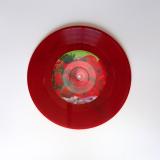
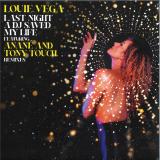
"Melodic, dreamy bedroom pop with a nostalgic sheen" is how Tom Davies, creator of brand new dream-pop artist Flopsy's dream, describes this charming little album.
Some of you may know him as GeoWizard; the mad British adventurer/YouTuber who travels in straight lines, but here you get to see or indeed hear a completely different side to him - one that sings in soft, tuneful tones reminiscent of Damon Albarn or Ray Davies, builds ethereal, layered harmonies that wouldn't sound out of place on a Fleet Foxes track, and crafts gorgeous guitar and synth parts that could easily have come straight out of John Frusciante or Kevin Parker's handbook.
Written in a young Davies's bedroom between the years of 2008 and 2014, the songs themselves are far from brand new, but with the help of his good friend and writing partner Liam Rhodes (with whom he played in Birmingham Psychedelic outfit "Kinds of light"), Davies has brought these sentimental tracks to life whilst keeping them bang in line with their original vision.
The result is an album that doesn't really fit into any specific genre, in fact you could argue it's just regular old generic pop, but there's an innocence and a playfulness in there that disarms the listener and transports them to a simpler time when melody ruled supreme.
Guests is the home recording project of Jessica Higgins and Matthew Walkerdine. Vaguely named as such to avoid any problems with the poster if they pull out of a gig (which has only happened once, about a year and half before any songs were actually written to be fair) but also to capture a sense of reverse hospitality. That is, arriving at your door with a bottle of good wine (can’t turn up empty handed) or a fist full of savoury or sweet snacks (time of day dependant); oversharing at the afters (and then passing out on your couch); reading to your toddler while you make their lunch or put everything back where it was meant to go (only to get torn apart again). So, something about what happens when private worlds meet each other, making or having been made a space for. But at times, it’s a different kind of intimacy, a temporal or material one, like the feeling of crisp fresh sheets, and abundant and soft, body-part appropriate towels in a hotel in a city you’ve been to before and love to go back to.
Their debut record, “I wish I was special”, was variously described as “a collage of concrète experiments and outerzone pop gestures, music that sounds as if it’s been written from the depths of a dream”; “music for people who love music but also hate it too”; “something like chasing ghosts or befriending a wild animal”; “pulling apart nervous sensations with haphazard ease and requisite humour”; and “a melody of refusal, of being all-in (…) finding the exact right WRONG sound to express the discontent”. Common Domestic Bird continues in this vein, layering synthesiser, keyboards and samples over rudimentary drum rhythms and field recordings, which are in turn sung or spoken with to create nine new songs.
Written and recorded between autumn 2024 and summer 2025 in Reading, Berkshire, the music has matured since its last outing, in a way, leaning less into collage and more toward structured composition and melodic depth, yet retains a healthy dose of indeterminacy and off-kilter rhythms for the forever-amateur. The songs on Common Domestic Bird hint at some “about”-ness through a series of discrete vignettes which sound a bit like architecture or end of year lists, gossip or over-thinking subjectivity, like disappearances and impressions, the support structure of the spine, letters and signs offs, things you could really do without and where they should go, hoping you’ll see something that isn’t there, pretences and performance. At times they feel kind of funny, others kind of sad or a bit angry and annoyed, a bit like you really.
DJ Support: Kerri Chandler, Folamour, Louie Vega, Jazzy Jeff, Dimitri From Paris, David Morales, Dave Lee, The Shapeshifters, Brian Tappert, Quentin Harris, Michael Gray, Terry Hunter, Hector Romero, Tedd Patterson, Dr. Packer, Marcel Vogel, Dj Pippi and many others
Groove Culture main men Micky More and Andy Tee are once again at the controls as the label presents its' Third collection of “Groove Is In The Heart”. As with the popular imprint's various EPs, the focus is on joining the dots between organic house, revivalist disco, uplifting dancefloor soul and colourful jazz-funk. There's much to admire from start to finish, a very strong bunch including MM & AT,Gianni Bini and Angela Johnson celebratory cover of EWF swirling disco-funk ‘In The Stone', a wonderfully rolling and funky-House joint titled ‘Let The Rhythm’ from Ralph Session & Djfudge, Memi P. And Gisele Jackson tasty Feel Good Classic-house Tune “Make It On My Own” and the soulful-house warmth of Audiowhores ‘Touch The Ground' Feat. Angela Johnson.
Minù Recordings is the label project evolving from Minù, the long-standing party known for its deep connection to underground club culture and the dancefloor. The focus is clear: music first, beyond trends and visibility.
Each year, the label develops around a different theme, shaping the identity of its releases while maintaining a coherent direction. The catalog brings together both established artists and emerging names, all part of the extended Minù circle, connected through the parties and their evolution over time.
All releases are strictly vinyl only.
The first release, Not For Fame 001, introduces a selection of artists closely tied to Minù:
Cristi Cons – Everything_again
Arapu – Night Light
Mennie – Hard Beat
Tripmastaz – Don’t Bang My Line
On his sixth album, The Arc of Tension, the Berlin based DJ, label owner and producer OLIVER KOLETZKI yet again presents his remarkable vision of contemporary electronic music, while he assumes the role of a storyteller. The Arc of Tension speaks to its listener as a singular, self contained work, which communicates by way of its natural flow and arc of suspense. The latter is mirrored not only in the multifarious narrative of the actual album, but can also be understood as evidence for its creator's long musical history. While Koletzki focussed on a diverse range of vocal collaborations on his previous long players, he now moves on to a different form of storytelling, rooted in the quiet confidence of a veteran musician, as well as the hectic lifestyle of a globally in demand DJ. The Arc of Tension is the psychonautic journey through the various continents of Oliver's consciousness. The quiet chirps and warbles, which initially unfold on the opener 'A Tribe Called Kotori', thus act as a loose associative bridge to 'Der Muckenschwarm', Oliver's big breakthrough hit of 2005. The first minutes of the album leave no room for doubt - we are immediately locked into an autobiographical world of sound that knows how to captivate from the get go. The dreamy, exotic timbres of the downbeat tracks 'By My Side', Tankwa Town' and 'Byron Bay' penetrate our minds in a subtle yet purposeful manner. But soon the tension tightens and organic sounds one by one evolve towards a sterner, electronic cadence.
International DJ and collector Elado is well known to edit lovers for his work on the likes of Funkyjaws Music, Razor N Tape and Eddie C's Red Motorbike. He has been digging in his vaults again, this time for Scruniversal, and turns out a pair of blazing Brazilian edits. First up is 'Sabor' ,which is a tight, funky sound that sways low with lush claps and wandering basslines, but the vocal harmonies are what make it, and your heart, soar. 'Debbie' then follows off with some soft, honours Portuguese soul vocals and instrumental disco-funk grooves that are super sophisticated and perfect to go with a cocktail at sundown somewhere nice.
Barrington Levy's 3rd LP for Jah Life, another killer selection from the fruitful works of the Wright/Lawes/Levy axis. From the golden era of the Radics at Channel 1, mixed by Scientist at Tubby's, 10 tracks, great all the way thru. Finally available again, this was only repressed once before in the late 1990's, other than its original release in the early '80s. Featuring iconic cover art by the late NYC legend Jamaal Pete and pressed from the original mothers, identical to the original press.
Let's see now – you just love that hugely fertile foundation period of Jamaican pop music from the birth of ska, through the spectacularly brief two year heyday of rocksteady up to and including the arrival of the first incarnation of reggae a.k.a. early or 'boss' reggae. But you're also aware that the pioneers of these sounds (including The Pioneers!) won't be creating music in these styles or touring forever – so what do you do?
Well, if you're Neil Anderson, owner of Original Gravity Records, the creation bit isn't a problem. You put forth period-authentic style material from a 'roster' of acts – such as Junior Dell & The D-Lites - that in reality consist mostly of yourself (you are a multi-instrumentalist and lyricist after all!) and whichever extra musicians and session singer you rope in for a given track. In the case of Junior Dell & The D-Lites that singer was Adrian Dell – soon to be dubbed (no pun intended) 'Junior' - first appearing on 2021's uptempo ska tribute to Salvadoran retro-dancing internet sensation Aranivah, entitled Miss Aranivah. And you keep putting out stuff so profusely and effectively that there are clamours for you to tour 'the band' which - er - doesn't really exist. What a botheration! Still, maybe your session singer could become – well - a permanent singer? Maybe you can rustle up assorted bredren to become the rest of the band and...you know what? That might just work!
And so, in the blink of an eye, Junior Dell & The D-Lites becomes a bona fide actual live band fronted by a young Jamaican singer playing fresh 60s/70s-style Jamaican music with an energy last seen and heard in, well, the 1960s and 70s. And it tours so effectively that there are clamours for 'the band' – or more accurately, now – the band - to release an album. Wait...what now? And, by the way, you've got a European tour coming up in April wouldn't it be great if the album was ready to tour by then? Pressure drop? Pressure rise more like!
Then again, Junior Dell & The D-Lites have done so many sure-shot singles to date that assembling them along with a new cut, an extended version of one of the singles and re-recordings of two of the label's previous singles that were originally by 'label mates' The Regulators should be a cinch. So expect all the hits: bluebeat banger 20 Flight Ska, the euphoric ska bounce of the aforementioned Miss Aranivah and the title track, a de rigueur smattering of covers (opener Jump Around, midway markers Praise You and Just Can't Get Enough, and one of the re-recordings, closer Don't Look Back In Anger), early reggae groovers Cool Right Down, Last Night Reggay, Can't Stop The Reggae (in a new extended form) and crowd-pleasing new one Mi Try along with the other Junior Dell re-recording - the gorgeous Why Why Why which nods to the period of reggae between the sound of '69 and the arrival of roots.
Don't you brag and don't you boast but that's a Whole Lotta Skankin' going on! Do the ska, do the rocksteady, do the reggay, why– it's another scorcher!
AE Productions in association with Sure Shot Recordings and In Effect Recordings are pleased to announce a 10 Year Anniversary Edition of the critically acclaimed Phill Most Chill and Paul Nice album as the Fabreeze Brothers.
The hugely successful first edition which was pressed on colour vinyl and supplied in double fold out sleeve sold out in only 2 weeks from release date and then the 2nd pressing black vinyl edition sold out a little while later but has for years been out of print but is increasingly requested by shops, via email, social media, AE Productions website back in stock requests, etc…
As it has been 10 years since original release back in 2015 at the time of proceeding with manufacturing, it was the perfect opportunity to do a 3rd pressing to mark the anniversary but we had to pull out all the stops for a 3rd run of this incredible album and also make it subtly different again in packaging design from the 1st and 2nd pressings so that each has it’s own particular feel and quality.
With help from the original designer and all-round vinyl artwork supremo Mr Krum we have found some nice adjustments for the gatefold sleeve where the detail from the insert sheet found in the original issues is incorporated into the inside panels of the sleeve. We have also tweaked the hype sticker to mark the 10th Anniversary Edition and updated the vinyl labels so as to work better with the new Splatter vinyl which follows the original red and yellow vinyl but each splattered with the opposite colour.
For something a little extra we have compiled a Limited Expanded Edition Double Cassette Box Set that includes the original album and also a ‘Bonus Tape’ which features all of the remixes, alternate versions, Original Versions of album cuts and bonus tracks found on B-sides of the array of singles and we included for good measure 2 tracks that only appeared on the promotional only LP sampler that ended up being different on the final release. This is limited to cassette just for the non-vinyl heads as all of these tracks already appear on vinyl. The outer box is A5 card in black with gold foil Fabreeze Brothers logo and comes with discography booklet.
‘The Bonus Tape’ from the box set is also available as a standalone cassette release with alternate j-card art work so that it has it’s own flavour and so that anyone that purchased one of the original run of cassettes that sold out before we could even ship any copies, did not need to purchase the main album again unnecessarily and to make it noticeable from the Expanded Edition Box Set version.
This version also has an alternate shell design in keeping with the clear shell with dark liner that was commonplace back in the 90’s and the cassette geeks may note the red text on the spine as was also a common design back then – giving this a pseudonym of ‘the 90’s tape’ during the design process.
We couldn’t stop there so we also have an extremely low quantity Limited Edition Mini Disc version which is the main album plus 8 of the bonus tracks from The Bonus Tape – only missing the 2 least significant alternate versions but clocking in at just a few seconds under 80 minutes – the absolute maximum for the format! Mini Disc???!!! You’re probably asking – yes!
While looking into the cassette duplication options we realised that the duplicator also offers Mini Disc production so we thought that it may be worth doing a very small run just because not only are professionally manufactured Mini Disc’s rare in Hip Hop, they are rare within the entire music industry as they never really took off as a medium to purchase music but ended up as the choice for home recorded Walkman and car use. Indeed, AE boss Mr Fantastic still has his main machine, portable and old discs. Amazingly also, the sleeve artwork transferred brilliantly to the Mini Disc template. They are manufactured using high quality Sony discs using ATRAC 4.5 codec.
All releases are supplied with unique free download codes on cards that are included inside the packaging but also with the Expanded Edition cassette and Mini Disc having 2 cards – 1 for the main album and a 2nd card for ‘The Bonus Tape’. The free downloads are supplied direct from Phill Most Chill’s Bandcamp page keeping it independent.
Delivering the second sermon in their Disco Gospel series, Chicago’s Sadar Bahar & Marc Davis hand-pick and re-edit two more under-the-radar disco/gospel fusion tracks for the modern dancefloor.
Both revered selectors and producers, Marc and Sadar are integral parts of Chicago's underground music scene, sharing the city’s spirit with the world. Through his own label, Black Pegasus, and the Chi Talo series, Marc has become an in-demand DJ known for his raw and eclectic sets. He joins forces with good friend, DJ’s DJ and Soul In The Hole head Sadar Bahar, whose name regularly tops the bill at some of the finest clubs and festivals around the globe.
Digging deep once again, the pair serve up two certified secret weapons from their renowned collections. Finding that sweet spot that drew out the most uplifting, powerful, and danceable elements of both gospel and disco, they shine a light on two beauties from Myrna Summers and also The Yancy Family. Tweaked and re-edited with style and consideration, they re-work the tracks with DJs and dancers in mind.
As Robert M. Marovich of Journal of Gospel Music puts it, “The rise of contemporary gospel music in the 1970s and 1980s changed the style, if not the substance, of Black sacred music. Artists, including the Yancy Family and Myrna Summers, worked within the groovy new sound to attract the attention of a generation growing up on rock, jazz, pop, and soul. Bring them into the church through the music, the maxim goes, and they’ll stay for the sermon. Likewise, these two re-edited album tracks by Sadar Bahar and Marc Davis keep the gospel music heritage alive while encouraging a brand-new generation to dance through the church doors.”
Up first, Myrna Summers ‘So Much to Live For’ channels that straight from the heart passion and collective joy that gospel embodies. Bursting with uplifting lyrics, scintillating organ melodies, and an infectious sing-along spirit, Marc and Sadar give it a club-ready DJ edit, extending it for maximum dancefloor deliverance.
The B side sees the duo work their magic on, ‘Lifted Me Higher’. Written by Kevin Yancy and taken from the Yancy Family’s 1989 album From One Christian Family to Another, it features vocals from siblings Kevin, Judy, and Rev. Darryl Yancy, along with Lois Scott. The all-star team of Chicago musicians includes Sherwin (Butch) Yancy on organ, Michael Wade on piano and synthesizer, and Richard Gibbs (longtime accompanist for Aretha Franklin) on piano and bass. With a soulful boogie flavour, dripping in slap bass and ‘80s synthlines, Marc and Sadar rework the intro so it rides out on a section of delectable instrumental grooves, before letting the glorious vocals hit home.
Tone Dropout Records kick off the new year in emphatic style with a brand-new 6-track vinyl EP that stays true to the label’s unmistakable dancefloor-driven sound.
Packed with heavyweight grooves, acid lines, breaks, and bleeps, this release delivers six high-impact tracks designed for late-night systems and packed floors. The EP also marks an exciting moment for the label, welcoming two new artists into the Tone Dropout family while celebrating the return of long-standing contributors.
Joining the roster for the first time are KWAKE and Harry Light, both making a powerful debut on the label. They sit alongside Tone Dropout regulars SkyWave Transmissions and XOTR, while label co-owners DAWL and SWEEN reunite once again, delivering an acid-fuelled opener and a special bonus breaks track on Side B.
As always, the EP is overflowing with breaks, bleeps, acid, and raw rave energy.
Side A – The Head Side
Side A opens strong with DAWL and SWEEN at the helm, laying down a driving four-to-the-floor acid groover that would warm up any dancefloor with ease. It’s a statement opener — and a sign of much more to come from the duo throughout the year.
Next up, SkyWave Transmissions brings his trademark experience and finesse, delivering a tightly produced acid-bleep track that showcases depth, quality, and character. Following seamlessly is long-time collaborator XOTR, who rounds out the side with a pure slice of northern bleep excellence — unmistakably Sheffield in style and sound.
Side B
Side B introduces the first of the new Tone Dropout members, KWAKE. A long-time friend of the label, this marks his first official appearance, and he doesn’t disappoint. His track is a full-force breaks banger, capturing authentic rave energy and guaranteed to ignite the floor.
Next comes Harry Light, making an immediate impact with a pounding house-and-breaks hybrid. Impeccably produced and relentless in energy, the track lives up to its name perfectly — “POWER HOUSE.” Both newcomers arrive firing on all cylinders, delivering two massive dancefloor weapons back-to-back.
Closing out the EP, DAWL and SWEEN return with Tones Breaks 5, a three-minute breaks workout and the latest installment in the label’s breaks series. This track also serves as a respectful nod to one of their musical heroes, Frankie Bones, rounding off the release on a high.
Six tracks. All killers. No fillers.
In challenging times, this EP delivers exceptional value — a complete package of club-ready music pressed to vinyl and built for real dancefloors.
Another quality release from Tone Dropout Records.
Clock Poets returns with Get Down, the seventh release on the label and a floor-focused statement from Spanish producer Baltazar, based in Palma de Mallorca and founder of the Sapernika platform. Known for selecting and developing distinct, groove-centred voices from the underground, Clock Poets hands the reins to an artist who understands hypnosis, repetition and tension as tools rather than effects.
The A-side, “Get Down”, is a pumping minimal cut shaped by slightly tribal percussion loops and a locked-in groove that builds momentum through subtle shifts rather than overt peaks. Hypnotic male vocal samples circle like a mantra, weaving ritual into rhythm as the track steadily tightens its grip on the floor. On “Try On Trust Me”, the formula expands: a female vocal, washed in reverb and echo, floats between melodic textures and soft pads, creating a more spacious, emotive framework while maintaining the same disciplined drive and forward motion. Closing the record, “On My Way” dives deeper — a stripped-back 4/4 minimal construction infused with Arabic and double harmonic scale influences. Spatial, meditative and profoundly hypnotic, it stretches time and space, offering a moment of emotional suspension within the dancefloor continuum.
With Get Down, Baltazar doesn’t chase trends — he commits to groove, sophisticated repetition and unique atmospheres. In doing so, he both reinforces Clock Poets’ sonic identity and injects it with a fresh, trance-like intensity, proving once again the label’s consistency without predictability.
Black Truffle is pleased to present Radis, the first recording by the Oslo-based trio of Andrea Giordano (voice and organetto), Kalle Moberg (accordion) and Jo David Meyer Lysne (guitar and snare drum). Now based in Norway, Giordano is a native of Cuneo, in the Piedmont region in the north-west of Italy and her exploration of the Piedmontese language provides the starting point and conceptual anchor of the trio improvisations heard on Radis, which make use of the words of 20th century Piedmontese poets Nino Costa, Bianca Dorato and Oreste Gallina. As the musicians explain, the project is an attempt to preserve the beauty and singularity of a language at risk of extinction.
Fittingly, the first sound we hear on the opening piece ‘Fiorìa’ is Giordano’s unaccompanied voice. She sings a poem from Oreste Gallina as a kind of floating cadenza, the accompanying silence sensitizing the listener to the pellucid quality of Giordano’s voice and the unique sound of the Piedmontese language. The voice dies away and into the silence swells a single tone, sounded by Moberg’s accordion and—special guest on this opening piece—the alto saxophone of Mario Gabola. Extended techniques and preparations create unexpected timbres from the acoustic instruments: Gabola’s saxophone is augmented with tin cans and springs and Moberg’s unorthodox techniques allow the accordion to generate wheezing, buzzing textures and patterns of microtonal beating. Giordano’s voice returns, picking up the thread of the languorous opening melody, coexisting for a while with the shifting drone before the piece takes an unexpected yet organic left-turn into a delicate saxophone solo of sorts.
Recorded in several locations across Italy and Norway over the course of three years, Radis documents an ensemble who have developed both a distinctive sound-world and a remarkably sensitive group dynamic. Moving from folkish duets between accordion and Giordano’s organetto (the small accordion used in Italian folk music) to episodes of metallic guitar scraping from Meyer Lysne, the music is both quietly contemplative and gently chaotic. Ensemble roles shift with disarming ease. If on ‘Profij dëspers’ Meyer Lysne’s prepared guitar adds a haywire noise element to a lyrical episode of organetto and accordion, the next piece, ‘D’antorn a lor’, is grounded in chiming guitar chords of stunning beauty; once Giordano’s joins, the result calls up the most spacious moments of Maria Monti’s Il Bestiario. Throughout the seven pieces, the trio explore countless possibilities of group interaction and the margin between conventional euphony and pure abstraction: at times the voice floats against silence or seems almost disconnected from the gentle clatter of the instruments (sometimes reminiscent of Nikiforas Rotas’ haunting settings of Cavafy), while at other points the instruments touch on conventional harmonic accompaniment. What is perhaps most striking of all is the way that voice and instruments relate to each other, the extended technique reframing the voice as a kind of abstract sound object, while the melodic beauty of Giordano’s voice lends a contemplative, almost melancholic air to the wheezing and scraping of accordion and guitar.
Captured in gorgeously intimate recordings, Jim O’Rourke’s careful and beautifully spacious mix highlights the wealth of textural detail in each element. Accompanied by notes, session photos and the text of the Piedmontese poems, Radis is a work of stunning beauty that demonstrates the vitality of exploratory music in Norway today.
Analog Fingerprints Vol. 0 is a compilation bringing together the early 2000s works of Marco Passarani under his Analog Fingerprints alias, collecting key tracks originally released on Rome’s Plasmek and Pigna labels.
For Numbers, the story starts long before the label itself. In their formative years, digging in Glasgow’s Rubadub, Passarani’s records felt like dispatches from a future city. Releases on his own Nature Records and on labels such as Generator and Interr-Ference Communications were mind blowing: rooted in Detroit techno, Chicago house and electro, yet pushing somewhere new. Much like fellow travellers Autechre, who would remix him in 2001, Passarani’s music balanced machine funk with restless experimentation.
Information was scarce, and you would hear these records first on the dancefloor or at listening stations in shops like Rubadub. Print fanzines like Ear and early web outposts such as Forcefield offered only fragments. But there was a palpable axis forming between Detroit techno and a new European wave of record labels including Skam, Rephlex, Clone, Viewlexx and Nature itself. It was the sound that defined Saturday nights at Rubadub’s ‘69’ parties in Paisley, just outside of Glasgow.
Passarani’s records, in particular, were instrumental in bringing together the future Numbers co-founders. Richard had already booked him pre-Numbers; meanwhile Calum (Spencer) and Jack (Jackmaster), then 16/17 year olds working alternate Saturdays in Rubadub, were so enamoured with the Roman sound that they travelled to Rome for the Bitz Festival in 2003 to seek out Passarani and Lory D at their source.
The first Analog Fingerprints release landed as a 12” on Plasmek in 2001, following the fractured, IDM-leaning 6 Katun material. For Passarani, the project marked a recalibration. A DJ first and foremost, he had moved into production via early computer setups, from a Commodore Amiga through primitive PC audio, Cubase and Logic, later experimenting with Ableton. The IDM scene had offered a playground for trial and error, but there was always a tension between abstraction and the dancefloor. Analog Fingerprints became the bridge: still intelligent, but with more dance than distance. After years of broken beats and complex arrangements, he wanted directness without surrendering identity.
Working closely with Francesco de Bellis and Mario Pierro in the Pigneto district, the trio formed Pigna as a vehicle for reclaiming a more accessible dance sound, deliberately steering away from the minimal wave beginning to dominate Europe. Sessions were fast, instinctive, often stretching late into the night with friends dropping by. It was a studio as social space, production as collective energy.
“In that constant search for balance, Analog Fingerprints was my way of expressing something closer to the classic dance floor. The track 'Tribute' - a tribute to my favourite early Detroit techno track of all time, 'First Bass' by Separate Minds - came after I realised I had almost lost my connection with the dance floor. The simplest step was to take inspiration from early Chicago and Detroit and twist it in our Roman ‘Pigna’ way. My goal was to create more accessible dancefloor tracks by mixing my unconscious Italo roots with my teenage love for that early US sound, ensuring the result was as far as possible from the minimal sound that was starting to dominate everywhere.” - Marco Passarani
Technically, the Analog Fingerprints tracks span a transitional era: Roland TR-909, SH-101 and Alpha Juno hardware met early software experiments. A Novation Drumstation rack stood in for the unattainable TR-808, syncing with TB-303 and TR-606. Yet the true secret weapon was Jeskola Buzz, a tracker-style modular environment that allowed step-by-step parameter control and strange melodic constructions, later exported into the audio sequencer. Even the lead on ‘Tribute’ came from an early PPG Wave-style plugin. It was hybrid thinking at a moment when digital tools still felt unstable but full of possibility for technologists like Passarani.
Behind the music sat Finalfrontier, a loose Roman collective orbiting Nature and Plasmek. Distribution and production were intertwined; importing obscure records into Italy built connections with like-minded outsiders across Europe and the US. Expensive phone bills and fax machines forged an “electronix network” that linked Rome to Clone, Viewlexx, Skam, Rephlex, Rubadub and Detroit’s Underground Resistance. There was a shared sense of survival and resistance, of operating against commercial systems.
Passarani recalls “The first time I found a sheet of paper inside an Underground Resistance 12” with info about upcoming releases... and a huge picture of Spock on the back. Imagine that: you love the music, you love Star Trek, and there’s someone on the other side of the ocean sharing those same values and sounds. It was the perfect match. We even gave our original company the suffix ‘Finalfrontier’: that says it all.”
Feedback in that era arrived physically: distributor faxes, conversations with visiting DJs, the experience of playing abroad and meeting kids who had connected with the records. Glasgow became a key node in a scattered outlier network. Passarani personally brought the first two Nature releases to Fat Cat in London, playing them in-store. Shortly after, a fax arrived from Rubadub in Glasgow requesting copies.
“I still remember that phone buzz and the fax paper slowly sliding out, with someone I didn’t know saying they wanted 75 copies of Nature 001. Or like the time we got a fax from the Rephlex crew just saying, “Hello Nature Records, Keep up the good work.” That was how we knew the message was getting through. It was a fantastic feeling; just one piece of thermal fax paper as an analog notification - the mood for the entire week would change.” - Passarani
The connection to Glasgow has since stretched across generations. As Passarani reflects, links often fracture as scenes renew themselves, but in Glasgow something different happened. New and old mixed seamlessly. There was a visible trust in what came before, and a willingness to carry it forward rather than discard it. Observed from Rome, it was deeply encouraging.
Analog Fingerprints Vol. 0 captures that moment of exchange: Rome to Glasgow, Detroit to Europe, experiment to dancefloor. It documents an artist recalibrating his sound and a network of scenes discovering one another in real time, connected by vinyl, faxes and shared intent.
Audience’ was a 14-track record that signalled a shift back to Hayes Bradley's dancefloor roots. It was a collision of breakbeats, trip-hop, and ambient textures that perfectly balanced nostalgia and forward-thinking sounds, and now it gets spun into all new worlds by some of the scene's most acclaimed contemporary stars.
Special Request, aka UK powerhouse Paul Woolford, has shaken up the scene with his thrilling mix of jungle, bass, techno, rave, and hardcore in recent years. The hugely prolific producer knows exactly how to blow up the club and does that here with two reworks of '& I Love U'. The Special Request Extended Mix is a meticulously crafted jungle workout, featuring precision drums, rising synth tension, and gorgeous melodies that dart throughout and will appear on the vinyl release only. The VIP version focuses more on celestial memories for a heavenly escape.
Next is Shanti Celeste, a house and garage favourite who crafts emotional, high-impact sounds on her own Peach Discs. Her remix of 'Play It As It Lay' is a bubbly, soft-focus, late-night sound with earworm synth motifs and rich bass that sinks you in deep for a nice, heady trip.
Piori is an alias of Canadian musician Francis Latreille, who has built a sprawling discography full of hyper-detailed techno steeped in science fiction and fantasy. He flips 'Awareness' into a zoned-out affair, with broken beats and cosmic synth waves over a bold bassline that shows, once again, why his productions are in such demand.
Last but not least is Kaifeng-born sound artist, DJ, and producer Yu Su, whose truly unique sound has made her a cult underground star. She flips 'Dear Treasure' into a slow motion and sleazy chugger with dark disco energy and raw live drums, shady vocal loops and otherworldly melodies that seep into your consciousness.
For this edition, the label meets this duo of producers, that has been created by the musical synergy between Zonker and Daniel Gorziza, who go by the name – “SameSame”. This disc has been titled “Unconditional Society” and has been crafted with a mission to be brought to the worldwide dancefloors and to be foreseen by the adepts of the sound it conveys. The A side is opening with a deep trancey burner “Suspect Zero”, with time passing this side of the record is morphing into the prime-time speaker ripping sound of “Rip the Jacker. The B side will see more mellow feel to it and sometimes even could be said that the vibe turns relatively melancholic by the time the record reaches its natural conclusion. The words that have been shared do not translate the profoundness of the subject that the artists have carried through, but then again, sometimes them letters have to be present even if they are kept to the slightest. The frequencies communicate much superior to the words and by now you can stop reading this and immerse yourself into the sound.
‘In Virus Times’ is an acoustic instrumental piece by Lee Ranaldo.
Composed during the pandemic, ‘In Virus Times’ is released as a onesided LP with an etching on Side B. The cover is a beautiful photo by
Lee’s friend, the great Brazilian photographer Anna Paula Bogaciovas.
Originally released as one track as part of a collaboration with Lucien
Jean for Le Presses du Reel, the music was featured on a mini CD that
accompanied a book that featured two short stories.
‘In Virus Times’, released by Mute, sees the track transformed into 4
pieces and is available on transparent turquoise vinyl with digital
download and an exclusive poster, designed, signed and individually
numbered by Lee Ranaldo. The poster design is based on an electron
microscope photo of the COVID-19 molecule.
Lee has written some of his own ‘loner notes’ for the release:
“This recording began on an evening in September 2020, stuck at home
in lower Manhattan during the dark days of the Covid-19 pandemic as
we came out of a deadly summer. A heightened sense of anxiety
stemming from the then-upcoming US Presidential elections as well as
the virus seemed to pervade all aspects of life, for myself and everyone I
knew. Its minimal quality reflects the sense of ‘motionless time’ that
many of us felt. I set up some microphones in our darkened living room
(studios being closed due to Covid restrictions), coaxing out one simple,
repetitive phrase, and then another, sounding them out into the air. The
casual home ambience - a siren or truck rumbling down the street out
the window; someone talking around the table in another part of the loft;
water running - intrudes at points. I worked to develop a few simple
thematic elements, but mostly I wanted to hear the notes and chords
ringing out, hanging in the air for a long time on that evening when the
world seemed close to stopped on its axis.
“I’d been listening closely to Morton Feldman’s catalog throughout the
pandemic. His sparse, long-duration music could often be heard playing
on repeat as we spent endless days locked inside. His willingness to do
very little, with very simple elements, and to such profound effect, has
been inspirational. I found the vast open spaces in his works thrilling,
miraculous, and comforting in those empty times. Additionally, the Drop
D guitar tuning used here has prompted my own variations on Bach’s
works for solo cello, open strings droning against melodic lines, so
simple and perfect…” - Lee Ranaldo, New York City, August 2021
As Nathan Fake rises from the nocturnal subterranea and rave catharsis of his previous records, on Evaporator, he resurfaces into the domain of daylight, bringing a tangible sense of air rushing against your face, of big skies, and endless landscapes. The idea of pop accessibility that trickled into 2023’s Crystal Vision is refracted here through the prism of sweeping ambient, deep electronica, and trance uplift. Evaporator is Fake’s idea of “airy daytime music”, with each track a different barometer reading across the album’s varying atmospheres, which range from vibrant sunbursts, bracing rainscapes, and fine mists of clement melodics. “It’s not overtly confrontational electronic club music,” states Fake. “It’s quite pleasant, it’s accessible. As I was progressing through making the tracklist, I called it a daytime album. It doesn’t feel like an afterparty album.” For the past decade Fake has been gingerly introducing collaborations with heroes and friends alike into his lone, idiosyncratic working process. Border Community alumni Dextro AKA Ewan Mackenzie transmutes his ferocious drumming for Pigs Pigs Pigs Pigs Pigs Pigs Pigs into the blurred choral thump of ‘Baltasound’. ‘Orbiting Meadows’, meanwhile, is his second collaboration with Clark, an eerily idyllic duet where microtonal 18EDO piano clangs slowly twirl around wailing pads. Evaporator marks the junction point of old technology and ever fresh creativity for Nathan. The trusty “dinosaur” age software, particularly Cubase VST5, that has powered two decades of music is rarely updated. “I used to sort of feel a bit ashamed of using such old software, and then I kind of had an epiphany – that’s just how I work”, comments Fake. “That’s just how I play. I’m very fond of these old tools, and I get the most joy out of them, but now I’ve incorporated new technology too.” When an artist accumulates so much synergy with their instrument, music making becomes instinctual. By Fake’s account, much of Evaporator just fell into place. The album title arrived randomly in his head (“it felt completely perfect. Airy.”), ideas looped and developed until things locked into place and just felt right. ‘The Ice House’ is a fleeting glimpse of the sonic world he taps into in this creative state, its glassy FM synths built around a counterpoint between rough-hewn crystalline arpeggios and sparse yet gravitas-bearing bass. “That riff I just wrote out on the keyboard, I just played it forever and ever and ever. The original track ended up being really short. Here you go, and it’s gone!” These unplanned channellings of sound call forth records from Fake’s past while he looks ahead, perhaps getting at the very essence of his musicianship. The opener ‘Aiwa’ (“the breeziest,” he muses) reminds of the introspection that characterised Providence, excited by the fire and grit of Steam Days’ textural experiments, its chunky slams and clatters surging into a flood of harmonic buzzing as they reach out for old wisdom. ‘Hypercube’ stampedes in a similar chronological confluence, infusing an incessant synth line reminiscent of the golden age of rave with the crackling, ecstatic energy of modern festival anthems. Like the vaporisation of liquid to particles, everything that Evaporator presents has a mutant desire to be amorphous. Sounds rarely settle; the irradiated garage beat of ‘Bialystok’ is pitched downwards to driving, rebounding effect, while ‘You’ll Find a Way’ warps static into shivering energy, cinematic synth strings building anticipation into a gradual gush of chords. This translates into a more expansive stereo field than Fake has explored before. ‘Slow Yamaha’ saves the wildest, most kinetic transformations for last with a cornucopia of crispy melodies and fried drums; a sibilance of cymbals on the left, a susurrus of shakers on the right, and kaleidoscopic lasers pulsing and fizzing all around. Evaporation culminating in pure excited atoms. In a world where music has increasingly become background content, making albums remains lifeblood for Fake: “It makes me realise how long; twenty years is ages! It’s weird to see how much the world has changed. Release day back then you did fuck all, now you spend all day on socials. When I grew up the people who made the electronic music I was into were quite mysterious, and the artwork was very abstract. There was a massive distance between you and that music, and that was a key part of it, really. Now it helps to be an extrovert, and I'm just not, but the album marks the first time my face has graced the cover art. I’ve never wanted to do this before, I'm very shy, and generally I don’t like being seen,” he professes. “But, twenty years in, I supposed I could try something new. I'm very lucky that I'm somehow surviving in this world, where the media world favours extroverts and interesting looking people. It’s not my world but somehow I’m still in it.” Evaporator continues to prove Nathan’s necessary presence, with some of his most engaging, varied, and magical music yet.
140g vinyl, remastered, double LP with the original LP along with a second record of 14 rare tracks
Sweet And Nice is the vital debut album from Jamaica’s undisputed first lady of song Marica Griffiths. It’s reggae at its most soulful. Slinking through a tight ten tracks of R&B and pop-sourced material, it became an instant best seller. 45 years after its initial release the LP is available again on vinyl, now as a double LP, with an extra record collecting 14 rare tracks.
Sweet And Nice has appeared over the years with a revised running order and under different titles. But the original’s opening sequence of loping soul is legendary, even beyond reggae circles. These songs are now returned to how they were presented on that first Jamaican release, and under their intended album title. Be With doesn’t mess with magic.
Marcia’s version of “Here I Am (Come and Take Me)” has long been lusted after, played by genre-hopping selectors to snapping necks for decades now. It’s followed by the sophisticated, rollicking wah-wah funk of “Everything I Own” and the slice of smooth lovers soul par excellence that is “Green Grasshopper” and her ace, lilting Neil Diamond cover “Play Me”.
The thundering, humid funk of “Children At Play” “sounds uncannily like a precursor of Massive Attack”, as FACT Mag astutely noted when they put Sweet And Nice at number 16 in their list of the 100 best albums of the 1970s. Otherworldly, moody and essential.
Side two keeps the fire burning. “Sweet, Bitter Love” should leave you swooning, and is also one of the album’s alternate titles. Curtis Mayfield’s already-eternal “Gypsy Man” is up next, recast as proto-lovers rock.
“There’s No Me Without You” is elevated to canonical status by the majestic, forlorn horns of the Federal Soul Givers and Marcia’s heartbreaking delivery. And if this doesn’t get you then surely the next track will: arguably the definitive version of Ewan MacColl’s “The First Time Ever I Saw Your Face”. Yes, seriously.
“I Just Don’t Want To Be Lonely” re-takes its rightful place at the end of the LP’s second side… but we couldn’t leave it at that. So we added an entire second record of rare material recorded around the same time as Sweet And Nice, much of it unavailable since it was originally released. Some of these songs have only ever been found on now unattainable 7" singles and no, rarity doesn’t always correspond with quality, but in this case we’re talking about some seriously jaw-dropping music.
Amongst 14 extra tracks you’ll find the exquisite late-60s singles “Melody Life” and “Mark My Word” which, along with the sumptuous reading of “Band Of Gold”, are now £100 records, if you can find them! Just sayin’. There‘s also a fantastic version of “The First Cut Is the Deepest” and an alternate take of “Play Me” with producer Lloyd Charmers adding his own vocals.
Everything’s been remastered of course, including the original LP, so Sweet And Nice now sounds even sweeter, and even nicer.
Mean Field Mutation is a thermodynamic phenomenon occurring just below the vaporization point of voracious growth. It relies on the debris of false and almost forgotten narratives. Astral residue of consumer angst, echoes of obsolete newspeak and oscillations of promotional imbecilities collide with free floating particles hovering under the radar of the megamachine. In steady intervals, this results in a meltdown producing random waves of reconfigurations driven by cryptic but sanguine naivety.
Released on Lustpoderosa, Mean Field Mutation is the first musical output by Des Coda. Written and produced by Piero Scherer during the pandemic winter of 2021 in his bedroom studio in Zurich. Moving between playful
serenity and feral distortion, it was produced by layering sounds from field recordings, radio and TV clips, as wellas sequences from drum machines and analogue synthesizers. Taking a stance against commercial copyright, all stems of this production are available for download free of charge and ready to be reappropriated.
Des Coda is an open field for collaborative, cultural experiments beyond the conventional understanding of authorship and representation. It engages with an artistic position that defines the creative process as an interplay between context and concept. The resulting work is not a rigid product of authoritarian ingenuity, but a sensitive, living organism guided by the tensions between society and individual. Des Coda is the zestful curiosity rummaging through the rubble of the present in search of future aesthetics.
Helena Hauff's Return To Disorder keeps it disordered with legendary producer DeFeKT next up with his vision of twisted electro. 'My Mother' has a dark undercurrent but is doused in synth radiance that provides great comfort, so if you ask us, it's a fitting title. It's texture that again stands out on 'Disastrous Infinity which has a squelch, acidic lead wriggling about the mix, pounding drums and crispy percussion that all pull back to reveal pixel-thin and eerie pads. 'No Coffee' is a dense and gauzy world of ice-cold melody and rigid grooves, and 'Soaked' turns the same vibe up to 11. 'Phaser' and 'Early Morning Tea' close out with opposing energies - raw and prickly, then more smooth and serene.
The label Erdgeschoss celebrates the freedom of sound and vision at the bar of life, like football – only with a bass drum instead of a ball. And with beer. Because even with vinyl records, the ball has to go in the net.
Pop Vampires Cologne will kick things off; their surrealist debut masterpiece, Karianne, was already released at Total 25 last year. PVC lives up to its name. Like vampires, oskø and Wassermann once again sample their way through the pop supermarket of unlimited possibilities.
Almost overnight, in their illegal, digital garage, they clone hybrid sound structures, saturated with both foreign and self-injected blood doping. Forbidden fruit is known to taste the best. Consciously, explicitly, and provocatively, PVC explores sampling as an indispensable stylistic device, a universal tool for quotation and pop networking. Equally daring and respectfully irreverent, they oppose the new, all-disenchanting AI search engines on the internet with the freedom of art. The rest is surrealism. Just like the accompanying video, which isn't a video in the conventional sense, but rather a kind of making-of with Sabine as the main front character. And the digital versions of some tracks may differ slightly from the vinyl versions.
Because: Anything goes…
Das Label Erdgeschoss feiert an der Theke des Lebens die Freiheit von Sound and Vision wie Fussball - nur mit Bassdrum statt Ball. Und mit Bier. Denn auch bei der Schallplatte muss das Runde ins Eckige.
Den Anfang machen Pop Vampires Cologne, deren surrealistisches Debüt-Meisterstück Karianne bereits im letzten Jahr auf der Total 25 erschienen ist. Bei PVC ist der Name Programm. Wie Vampire sampeln sich oskø und Wassermann einmal mehr durch den Pop-Supermarkt der unbegrenzten Möglichkeiten. Quasi über Nacht klonen sie in ihrer illegalen, digitalen Garage hybride Sound-Gebilde, getränkt mit Fremd- und Eigenblutdoping. Verbotene Früchte schmecken bekanntlich am besten. Bewusst, explizit und provokant arbeiten sich PVC am für sie unverzichtbaren Stilmittel des Sampling als universelle Zitat- und Pop-Vernetzungsmaschine ab. Ebenso wagemutig wie respektvoll respektlos, halten sie den neuen, alles entzaubernden K.I. Suchmaschinen im Netz die Freiheit der Kunst entgegen. Der Rest ist Surrealismus. So wie das dazugehörige Video kein Video im herkömmlichen Sinne ist, sondern eine Art Making Off mit Sabine als Frontdarstellerin. Und die digitalen Versionen einiger Stücke sich leicht von den Vinyl Versionen unterscheiden. Denn: Erlaubt ist, was gefällt…
The breakout underground star of the past year, the deservedly hyped Thought Leadership returns with another X ideas: the deck this time chooses the suit of Cups. This new collection is closer to the Post-Punk tonality of Pentacles, than the breezy Balearic Jazz of Swords. Gone are the brushed drum samples and airy synths and in their place are BIG guitars, 808 thumps and a decidedly more prominent use of bass as a melodic device.
As the suit of Cups reflects the emotional heart of the Tarot, presented within are a further X pieces, this time displaying the full range and fervour of Thought Leadership.
You know the drill by now. Originally out on cassette only, we present the first ever vinyl issue. It's a hideously limited pressing of 300 for the world, so don't sleep on this.
Side A explores the emotional levels of consciousness; angst, joy, love, sorrow, relief, regret – they are all represented across the first seven tracks, and often within the same piece. XXI kicks us off with a huge tumbling D minor passage, layers and layers of guitar front and centre, whilst the drums pound away in the distance. Release is provided with a gorgeous G Dorian section, where we hear the bass take flight with a high melodic line.
We’re still in familiar Durutti Column meets Dif Juz territory here, but things switch up with XXII. This piece showcases a darker, more angular palette of guitars; think Alan Rankine (The Associates), or Deb Demure (Drab Majesty) in the unexpected harmonic shifts, knotty arpeggiated patterns and heavy, goth-adjacent modulation. A real love letter to 45+ years of darkly inclined guitar heritage.
XXIII enters the fray with tight, thumping 808s and Marr-esque guitar figures; and again, the bass providing heavy melodic counterpoint to the guitars. Enter chiming, lyrical lead phrasing, reminiscent of the eternal opening to "Everybody Wants To Rule The World". Another accidental perfect pop moment from the Thought Leader. Whilst on the topic of Tears For Fears, XXIV comes swinging out of the gate with some serious Sophisti-chug; we’re reminded of "Shout" in the A section, before being beautifully juxtaposed in the B section with more Vini-eqsue patterns, reminiscent of his timeless classic, Another Setting.
XXV gives us welcome pause to take stock midway through the A side. No drums this time, but instead a heartbreaking conversation between two guitars; think Kevin McCormick and David Horridge’s masterful Light Patterns, or perhaps even the early solo-Bill Connors mid-70s cuts for ECM. The moment of quiet reflection passes, and is quickly shattered by the thudding march of XXVI – this piece comes across like The Associates playing "Wicked Game"; heavy, moody, and utterly compelling. XXVII ends our journey across Side A with more Marr-inspired playing; one for the heads and already featured on mixes, this one is real testament to the vision of Thought Leadership.
Side B again takes us on a trip through three long-form semi-improvised pieces. XXVIII is like those classic Jonny Nash, early Melody As Truth releases, slowly unfurling, additional details introduced deliberately piece by piece, this idea builds across 7+ minutes culminating in some utterly joyous ebow fireworks at the end – well Balearic.
XXIX again, like XXV before it, dispatches the drums with a focus purely on melody and mood. The piece feels like a lost Save Room Theme from the Resident Evil series, pure golden age Capcom Sound Team vibes. Unadulterated aural nostalgia for hours spent with a PS1 in haze of hash.
XXX completes this majestic voyage with another Modal exercise; this time the Thought Leader has opted for the Lydian Mode. Beautifully dreamy, undeniably Soundtrack-y, and arguably the most concise distillation so far of everything this project stands for; drum machines, guitars, pedals, one-take improvised solos – XXX has the lot, and is surely destined for greatness.
So, another X epic statements for guitar, homespun with the humblest of means, for all the dreamers out there. The first ever vinyl release of IV Of Cups has been carefully remastered by Be With's engineer Simon Francis to ensure it sounds better than ever after its initial tape release. Cicely Balston's expert skills have made sure nothing is lost in the cut at Abbey Road Studios whilst the records have been pressed to the highest possible standard at Record Industry, in Holland. The original tape cover artwork, so crucial to Thought Leadership's striking visual aesthetic, has been rejigged for vinyl issue here at Be With.
Black Truffle is thrilled to announce Dalbergia Retusa, an extensive double LP selection of the solo guitar music of Hans Reichel, compiled by Oren Ambarchi. Last heard on Black Truffle as one quarter of the joyously anarchic Bergisch-Brandenburgisches Quartett, Hans Reichel (1949-2011) is one of the great figures of experimental guitar music. Though perhaps lesser known than peers like Derek Bailey, Fred Frith and Keith Rowe, Reichel’s rethinking of the instrument was in some ways the most radical of all. Early on, he dispensed with existing guitars to build a series of his own that explored the use of additional strings and fretboards, moveable pickups, extra bridges, special capos, and other innovations documented in the extensive booklet accompanying this release.
Reichel was a long-term resident of Wuppertal, the small Western Germany city that became an unlikely centre of European free jazz in the late 1960s, also home to Peter Brötzmann and Peter Kowald. His solo debut Wichlinghauser Blues was an early entry into the FMP discography and began a relationship with the label that stretched into the 1990s; all the solo performances heard here were first released on FMP. As Reichel says in the charming archival interview with Markus Müller included here, he was ‘always a cuckoo’s egg at FMP’, a label that began as an outlet for roaring European free jazz. What strikes the listener right from the opening selection on Dalbergia Retusa—‘Return of the Knödler show’, from 1987’s The Dawn of Dachsman—is the extraordinary beauty of Reichel’s music, at once alien in the shimmering sonorities and unconventional pitch relationships made possible by his invented instruments, and deeply lyrical, even romantic in its harmonic content. Growing up in West Germany in the 1960s, Reichel’s formative influences were mainly British and American rock bands, a background that shines through in many of the pieces included here: ‘An old friend passes by’ is haunted by the ghost of Hendrix’s rhythm guitar, and the wild closer ‘Heimkehr der Holzböcke’, taken from a rare 1975 7” and the only piece to use overdubbing, layers errant hammer-on and slide tones over a Canned Heat boogie chug.
Reichel was an important source for the development of Oren Ambarchi’s own extended approach to the electric guitar. Appropriately enough, his selection opens with the very first piece by Reichel he ever heard, on a flexidisc included with a 1989 issue of Guitar Player magazine. Though Reichel collaborated with others extensively in many settings and also performed on violin and his other major contribution to instrument invention, the daxophone, his music for solo guitar remains at the core of his oeuvre. Focusing exclusively on solo pieces recorded between 1973 and 1988, the 23 pieces on Dalbergia Retusa showcase the range and consistency of Reichel’s work, allowing the listener to see how his performances developed hand-in-hand with his instrumental inventions. On a piece from his very first LP, played on an 11-string instrument (partly strung with piano strings and using a schnapps glass a slide), we hear his intensive exploration of fret-hammering to create zither-like, chiming tone, which Reichel would hone further in later years with a double fretboard guitar specifically designed to be hammered rather than fretted and picked. On a piece from 1979’s Death of the Rare Bird Ymir, Reichel uses two steel-string acoustic guitars at once, with beautiful results: ‘some even say too beautiful’, he jokes in the interview included here. Many of the pieces from the 1980s make use of varieties of the ‘pick behind the bridge guitar’, instruments of uncanny harmonic richness primarily designed to be played on the ‘wrong’ side of the bridge. At times the unexpected behaviour of attacks, resonance, and decay can almost seem electronic, conjuring up the technology-assisted work of Henry Kaiser or even Fennesz, but realised solely through Reichel’s unorthodox techniques on his invented instruments. Extensively illustrated with photos and Reichel’s own plans and drawings of his instruments, Dalbergia Retusa is an essential introduction to the unique world of Hans Reichel. Rarely has music been at once so strange and so beautiful.
DJ Support: Laurent Garnier, Dennis Cruz, Girls Of The Internet, Horse Meat Disco, Stacey Pullen, Elliot Schooling, Solomun,Marco Carola, Joseph Capriati, The Martinez Brothers, Dam Swindle, Soul Clap, Luke Solomon, Riva Starr, Franky Rizardo, Archie Hamilton, Silvie Loto, Fouk, Austin Ato, Salomé Le Chat, Blackchild, Jean Pierre, Black Loops, Kassian, Seamus Haji, Melvo Baptiste, Rimarkable, Sophie Lloyd
In-demand Amsterdam-based duo Makèz step into new ground with the release of their album ‘Arriving Home Elsewhere’, via ANOTR’s No Art label. A kaleidoscopic project that moves between deep house, cosmic jazz, R&B, broken beat, and club-ready energy, the record is both a declaration of identity and a dissolution of boundaries - proof of the duo’s rare ability to merge worlds without diluting or compromising their true essence.
Where most albums that span electronic realms lean on functionality, ‘Arriving Home Elsewhere’ reaches for something much more expansive. The project is a true hybrid: half shaped for the intimacy of a headphone listen, half designed for the electricity of the dancefloor. together forming a seamless continuum between reflection and release. Tracks like ‘REARRANGE YOURSELF’, ‘BE REAL’, and ‘LOOKS LIKE IT (SPACE TALK)’ are stripped to the core of house music’s driving pulse, made for bigger systems and peak-time release. In contrast, ‘Dreams’, ‘Fruits of the Universe’ (with douniah), and ‘Without The Sun’ (with Oliver Night) explore lush, textured arrangements where live instrumentation and improvisation carry equal weight to rhythm and groove.
Collaboration is at the heart of the LP, with Makèz inviting a constellation of voices who each expand the project’s palette. Ben Westbeech, Liv East, and SANITY bring soulful intensity; 30/70 and dreamcastmoe connect Amsterdam to Melbourne and DC; Cor.Ece and Oliver Night weave delicate threads of emotion; Goya Gumbani and Javonntte guide the production with their vibey, groove-led performances; while Life on Planets reprises his role as a core creative partner, appearing across the album on tracks including the standout ‘BE REAL’ and the previously released ‘ILLUSIONS’ alongside rising Amsterdam talent AVA LAVÁ. Together, these contributions shape an album that feels less like a singular statement and more like a living, breathing ecosystem.
For Makèz, ‘Arriving Home Elsewhere’ is as much about philosophy as it is about music. The title encapsulates a tension central to their art: the feeling of belonging to multiple worlds without ever being confined to one. Jazz, house, soul, and experimental club sounds are not separate influences but parallel languages, and in merging them, the duo has created a record that mirrors the fluidity of contemporary identity and expression. And while it may speak in many voices, the LP tells one clear story - that of Makèz, arriving, again and again, home elsewhere.
Vintage Pleasure Boutique once again dives deep into the vast catalogue of super-productions by Roberto Zanetti, better known as Robyx and Savage. This time, the journey takes us back to 1984, unearthing a true gem created at the suggestion of Marco Bresciani, Italian DJ and producer, and the same creative force involved with Radiorama. Zanetti delivered flawlessly. He transformed the elegant, high-grade British synth-pop original by OMD into a first-class Italo disco weapon, infused with that unmistakable sweet, melodic touch and fat kick that blended perfectly in clubs alongside genre-defining tracks of the era. “Souvenir” by Saxophone quickly became a classic, a staple of the sound and a cornerstone in countless old-school DJ record bags.
Today, original copies are scarce, highly sought after, and often prohibitively expensive on the secondary market. This reissue is both a tribute to long-time fans of the record and a nod to devotees of Robyx’s unmistakable sound. The vinyl also features a special remix of “Souvenir”, sonically aligned with Savage classics such as “Radio,” “Fugitive,” “Only You,” and “Don’t Cry Tonight.”
A true feast for lovers of this timeless Italo disco aesthetic, equal parts nostalgia, elegance and dancefloor power.
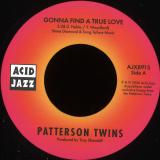
Estus & Lester Patterson’s ‘Gonna Find A True Love’ is one of the greatest ‘70s southern soul dancers. A sublime three minutes of smooth, shuffling, dance floor dynamite, that has been reissued before and will no doubt be reissued again. It’s a record that has been in demand since it was championed by UK DJs, as Northern Soul began its wonderful offshoot into Modern Soul in the early '80s. It’s one that should be permanently in print for those who feel the need to add it to their DJ set, juke box, or home-listening/dancing pile… and Acid Jazz Records has obliged.
Nearly seven years since group label Miles Away pressed 500 copies, this new pressing is on Acid Jazz. To add to the fun, the Deep Soul ballad ‘How Long Must The Show Got On’ is on the flip, which has, until now, been an album-only gem, just sitting there waiting for someone to shine the spotlight on it.
With over 20 years of intense production work and prestigious collaborations, Irie Ites Records has established itself as one of the most respected reggae labels on the international scene. In 2025, the label continues it's strong momentum with a brand-new volume of it's flagship series: Cream of the Crop 2025. Following the success of the previous editions (2022, 2023, and 2024), which each reached several million streams and gained strong visibility in reggae media and playlists worldwide, this new release stands as a must-have for all roots & culture reggae lovers. True to it's reputation for excellence, Irie Ites Records has once again teamed up with some of the finest musicians and producers in reggae: Mafia & Fluxy, Bongo Herman, Earl "Chinna" Smith, Lone Ark, Naram, The Ligerians, King Jammy, Willy William, among others. All tracks were mixed at the Irie Ites Studio (France), ensuring a warm, powerful, and authentic sound. To conclude the album, four exclusive dub versions add the final touch to this outstanding compilation.
Chicago legend K. Alexi returns to Dark Entries with K.A. Posse’s Strkes Again, an EP of preleased unreleased acid and house mayhem. K’Alexi Shelby’s illustrious career has included releases on legendary labels such as Trax, DJ International, and Transmat, as well as collaborations with high-profile artists like Marshall Jefferson and Pet Shop Boys. But his musical journey began at the young age of 12, when he befriended Ron Hardy and Frankie Knuckles while frequenting the Music Box and Warehouse. In high school, he began to write songs and hone his poetic craft. “I recognized I had a gift to say what I was thinking. I would study Prince and Marvin Gaye, figure out what they meant and put my spin on it. The power of the word. I was writing love notes for all my boys in high school and making a killing. I would know what to say and what they should do.”
Dark Entries previously reissued Shelby’s debut record, Essence of a Dream, which was recorded under the name Risque III in 1987. Strikes Again brings us six tracks recorded in Chicago between 1988 and 1990, which come courtesy of Mike Dunn’s personal archive. This record showcases the rawer, more immediate side of Shelby’s sound, with tracks full of overdriven 808’s, careening sirens, and dangerously funky breakbeats. “Imported Taste” brings Shelby’s signature deep pads to the front of wild congo-laced percussion. “Suckas Be Ready” is a slamming hip-house cut featuring vocals from MCD-TA, while disco-samples duel with crunchy 909s on the jacking “Muzic Box.” Strikes Back showcases the real underground sound of Chicago, where sonic abstraction meets full-body kinetics. The record comes housed in a retro-styled sleeve designed by Eloise Shir-Juen Leigh.
Disco legend Sylvester comes to Dark Entries with Private Recordings: August 1970, an intimate collection of vintage jazz, blues, and gospel. While Sylvester is best known for his chart-topping collaborations with producer Patrick Cowley, such as “You Make Me Feel (Mighty Real),” this release reveals his passion for the sounds of the 30s and 40s. In 1970 a 22-year-old Sylvester had moved to San Francisco and found himself involved with the Cockettes, the infamous psychedelic performance art troupe. Among this milieu was Peter Mintun, a pianist and record collector living in a commune devoted to retro culture. According to Mintun, “We were like hippies who lived in the twenties. We lived in a house that didn’t have anything modern in it. Nothing in it was made after World War II.” Mintun and Sylvester bonded over their love of Black singers of yore and were allotted a slot during Cockettes performances reviving the music of the Prohibition Era. One afternoon, Sylvester and Mintun recorded a number of their shared favorites using a high-end microphone a friend had acquired. Private Recordings features 9 songs from this session, including standards like “Stormy Weather,” “Happy Days Are Here Again,” and “God Bless the Child.” Sylvester’s unmistakable falsetto brings depth and a dash of camp to these familiar tunes. The recordings are casual and intimate, even capturing banter between Sylvester and Mintun; their brief rendition of “When My Dreamboat Comes Home” has the duo working out a melody in real time. In addition to their sonic explorations of decades past, Sylvester and Mintun also staged photographic shoots in vintage couture. Private Recordings comes with a 16-page booklet on firm cardstock featuring images from these never-before-seen shoots as well as liner notes from Mintun detailing his friendship with Sylvester and their experiences recording. All this is housed in a metallic silver sleeve designed by Eloise Leigh featuring a 1920’s Art Deco aesthetic. The record will be released on September 6th which would have been Sylvester’s 76th birthday, and all proceeds from Private Recordings will go to the two charities that Sylvester left his royalties after his death: Project Open Hand and PRC (formerly AIDS Emergency Fund). This essential release documents the earliest known recordings from one of disco’s greatest talents.
As far as disco bangers go, they don't come much better than 'To Be With You Again'. The shock is hits is actually a brand new tune on a new label rather than an unearthed old gem. It's a heart-swelling sound with symphonic strings and swooning energy all finished in magnificent style by the stunning vocals from the Choir of Angelic Disco Angels. Getaway Jones adds the tight bassline and some superb keys to make this a must-cop 12" this is guaranteed to fly off the shelves. An instrumental on the flip is just as moving, but it's the vocal-fuelled A-side that really soars.
DJ Support: David Morales, Dimitri From Paris, Tedd Patterson, Dj Spen, Terry Hunter, Hector Romero, Dr Packer, Da Lukas, Sebb Junior, Jo Paciello, Shabi and many others.
The friendship between Sarah Jane Morris and Mario Biondi is the basis of this collaboration, born from the desire to pay homage to Roberta Flack. The idea, proposed by Sarah Jane, to reinterpret "Back Together Again" was born a few months before the death of the famous American singer. The original song, published in 1980 on the album "Roberta Flack Featuring Donny Hathaway", included the posthumous participation of Donny Hathaway, who died in 1979. Mario Biondi enthusiastically welcomed the proposal, and considering that the original song had a strong dance component, entrusted the production to Micky More & Andy Tee, one of the most important Soulful Disco House production teams on the contemporary world scene. The duo of DJs and producers from Ancona Italy have been at the top of the charts of digital dance stores for years. The package includes a fantastic DUB version of Jazz-N-Groove, Courtesy Of Brian Tappert & Marc Pomery, The legendary American Dance producers Duo. A MUST HAVE.
After the excellent response to the first volume, Acid Jazz Classics returns with the second volume.
The Acid Jazz sound born in the 1990s, which harked back to the Soul Funk of the 1970s, found in IRMA one of the labels most dedicated to
this world, and still releases music that can be categorized under this name.
From songs from the 1990s with artists like Jestofunk, Bossa Nostra, Black & Brown, Gazzara, Italian Secret Service, LTJ Xperience, Sarah
Jane Morris, to the present day with artists like The Smoke Orchestra, Yuts and Culture, Fusion Funk Foundation, Micky More & Andy Tee,
Belladonna, and many others.
19 tracks on a double vinyl, some of them never before released on vinyl, all rigorously perfect for both the club and listening.
In fact, some tracks are little club gems:
"Say It Again" by Jestofunk in its very first version from 1993;
Belladonna - Black Jazz, one of her most requested songs ever released on vinyl;
Key Tronics Ensemble - You For Me, the Montuno Salsa version performed for years by Little Louie Vega at many of his gigs;
the Micky More & Andy Tee remix of Sarah Jane Morris's Hold On To Love!
ULURU is a large sandstone rock formation in Australia. It's sacred to the Anangu, the local Indigenous of the area. For many years it had been deprived of its spiritual significance, due to mass tourism, capitalism, as well as greedy and selfishness of people who just want to make money out of it. However, as a result of the Anangu’s resilience, care and staunchness, huge changes took place in the national park around Uluru as well as in the broader public's consciousness, giving again to the Uluru the sacred identity that had been lost.
You might be reading and thinking now: so what's the point? Actually, there's no real point. I would rather say, there’s hope. The hope of seeing humans all around the world following the example of the Anangu. The hope of seeing humans finally stopping to treat the earth and all what’s part of it, what’s on and what’s in it, as a slave without soul. The hope of changing today, and if not today at latest by tomorrow. This system is failing. It's no longer sustainable, and there's no much time left.
The new album by the collective that for
over 25 years has been among the most
representative names of the Italian dance
and electronic scene worldwide.
“BLOOOM”, this is the title of the new release,
will be available in all traditional stores and
on digital platforms starting January 16.
Set against the soundscapes that have become
the Planet Funk trademark, the lyrics by Dan
Black attempt to give voice to a fragile and
contradictory condition of our time: an
intensified sensitivity that, instead of
turning into openness and connection, often
becomes emotional overload. A generation
constantly overwhelmed by excessive stimuli,
relentless information, anxieties, and fears,
called upon to find its way in a world thaoffers neither pauses nor silence. In this paradox, sensitivity is no longer just a natural gift, but
a daily effort: staying open and receptive without being overwhelmed, trying to preserve a human and
vulnerable gaze in order, despite everything, to fully appreciate life and the present moment.
The single’s artwork—like that of the album—curated by Nationhood, visually conveys this tension: the
distant sirens of a city that amplifies feelings of disorientation and loneliness even when we are
surrounded by thousands of people.
“BLOOOM”, preceded by the single “FEEL EVERYTHING”, arrives at the end of an intense, creative year
full of music, which saw Alex Neri (DJ, keyboards, synthesizers), Marco Baroni (keyboards, piano,
programming), Dan Black (vocals and guitar), and Alex Uhlmann (vocals and guitar) engaged between
studio work, collaborations, and live performances in Italy and abroad. A journey that today
transforms into new energy, into an even more open vision oriented toward the future.
Exactly one year ago, PLANET FUNK released “Nights in White Satin”, a single that reached the top
positions of the radio charts and launched a season rich in concerts and DJ sets in Italy and around
the world. The subsequent “I Get a Rush”, the collaboration with Alfa and Manu Chao on the remix of
their hit “A me mi piace”, and the track “È Naturale” together with Francesca Michielin, confirmed
Planet Funk’s ability to renew themselves and engage with different musical worlds while always
remaining true to their own identity.
Throughout this journey, music has inevitably intertwined with life. The memory of Sergio Della Monica
and Domenico “Gigi” Canu, pillars and founding souls of the PLANET FUNK project, is a living part of
this new chapter. Their vision, creative spirit, and way of understanding music continue to be a
constant guide, a deep root from which new ideas and new directions can grow.
“BLOOOM” is also this: a personal and artistic blossoming that, starting from the legacy left by
Sergio and Gigi, transforms into a living process of growth, metamorphosis, and discovery. An album
that does not look back with nostalgia, but forward with awareness, momentum, and a desire for
renewal.
Founded in 1999, for over 25 years PLANET FUNK have represented one of the most important, solid, and
influential realities in the international electronic music scene. Born from the meeting of Souled
Out! (Domenico “GG” Canu and Sergio Della Monica) and Kamasutra (Marco Baroni and Alex Neri), and
following their debut with “Non Zero Sumness” in 2002 (a gold record and a turning point for the
band), PLANET FUNK have managed to reinvent themselves over time while maintaining a unique sonic
identity. This has led them to collaborate with internationally renowned artists, deliver iconic
performances around the world, create soundtracks and international advertising campaigns, and
continue to demonstrate constant creative vitality
nagoyaka na kaze / 和やかな風 (quiet wind): a collection of forward-thinking electronic experiments sourced from central Japan - co-curated by Nagoya artist abentis for Facta & K-LONE’s Wisdom Teeth imprint.
The project profiles a close-knit community of music makers operating in and around the Japanese city of Nagoya: one of the country’s most populous and industrial cities, but one all too often overlooked in terms of its cultural significance.
Curated in close collaboration with local scene organiser Yuya Abe - aka abentis - the record seeks to capture the creative energy of a community of artists making hard-to-define, future-facing electronic music away from the clamour of the bigger cities. “In Nagoya, there’s a strong culture of supporting artists. Even if you pursue music in your own way, as long as it’s good, you’re encouraged to keep doing what you want”, explains abentis. “Within that environment, my generation has been able to freely bring in elements we like from all kinds of genres, combine them in our own way, and express ourselves individually. If you go to Tokyo or Osaka, that kind of freedom isn’t something you can take for granted.” Spiritually, Nagoya fits the mould of cultural hotbeds like Bristol, Detroit or Melbourne, showing that some of the most innovative creative communities form away from the glare of the capital cities. Like Detroit, Nagoya is principally known for being a major auto manufacturing hub, famous for being the home of Toyota Motors - but behind the scenes, it is quietly harbouring one of Japan’s most vibrant and forward-thinking electronic music scenes. “In a good way, Nagoya is a bit removed from the cutting edge, so you find people making all kinds of music”, explains Karnage. “If you’re making music, you feel like part of the crew, and people of different ages mix together without much hierarchy.” The city’s music scene is characterised by a freedom to mix genres and an open-door approach to creatives of all disciplines. The artists featured come from a diverse set of backgrounds, ranging from hip-hop to noise music, but have found a common collective identity in their omnivorous approach to genre. As such, the record moves fluidly between shimmering ambient and new age (Am Shhara, DHYAN, daiki hayakawa), psychedelic minimal house (Methodd, abentis), abstract, low-slung downtempo (baptisma, Nasty Soupman) and spaceage steppas (Karnage). “I’d say the way ambient, new age and that kind of sound design are blending nicely with dance music feels somewhat new”, says baptisma, the crew’s eldest member and de-facto scene leader. Responsible for bringing artists like Basic Channel, Mala and Jan Jelinek to the city, baptisma has been crucial in establishing underground electronic music in Nagoya since the 90s, and now helps cultivate the next generation of local talent. “Artists and DJs are seamlessly mixing ambient and new age with techno, house and bass music. I think that’s a really interesting development.” nagoyaka na kaze has its roots in a one-off event held in October 2024 as part of the 10 Years of Wisdom Teeth Japan tour. Curated by abentis in collaboration with Facta & K-LONE, the showcase featured live sets from eight artists based in and around Nagoya at one of the city’s key dance music hubs, Club JB’s. Each of the artists features again here, on record, presenting an original commission produced especially for the project. The record’s art direction was led by Yudai Osawa - in-house designer for Kankyō Records, the much-loved Tokyo record shop run by H. Takahashi - and features original photos by Hayato Watanabe.
Vohkinne is the alter-ego of Craig McWhinney, close associate and one of Southern Light’s foundation artists. The Way Of All Things is his first album in six years and provides a dystopian sonic journey into contemporary and modern techno that few artists can match.
Internal Collapse is an opening statement of intent; drone-infused and heavily cloaked dark ambient techno. Falling Knife is a chilling half step creation, providing a sense of murky sonics raining down from above. Unearthly Lights shifts gears as it traverses a more linear and magnetic path, while Disintegration diverts again with darker, squelching breaks.
C h r o m e s t h e s i a slows down the tempo but the morose and opaque feel of the album remains ever present, before War Paint is unleashed with a sense of urgency and high-octane intensity. Between Lives continues that intensity by unleashing its dark hypnotic breaks, before closing with the title track, perhaps for the first time on the album revealing a ray of hope amongst the dystopian energy that prevails on the album.
The Way Of All Things is more than a collection of tracks; it’s a look inside one artist’s view of the world, distilled into a singular and expansive archetype body of work.
The world renowned “Maestro” of the dancefloor Louie Vega continues to deliver Dance Floor gems at a rate almost impossible to conceive, given that he also maintains a weekly touring schedule that regularly takes him around the world. Louie’s upbringing in the Boogie Down Bronx exposed him to the entire evolution of Disco and Funk at a time when those genres were at their peak in the 80’s, and he brings that wealth of knowledge and passion when it comes to remakes of the classics. His remake of “Last Night A DJ Saved My Life” featuring Anané and Tony Touch in its original version on the NYC Disco Album was a masterful update that kept the essence of the original classic, but was imbued with the irresistible House Music energy that Louie and featured vocalists Anané and Tony Touch can bring to a project like nobody else. The remix from Louie himself gives this peak house groover even more pump, while the Dub from Anané demonstrates that this talented performer has a big future as a producer as well. The bonus track on the B-side “In Search Of Peace Of Mind” shows Louie once again creating a unstoppable groove that respects the foundation of House Music but once again inspires an originality that places him firmly at the forefront the Dance Music Producer community.
Isa Gordon and Tony Morris were first brought together through their individual releases on Optimo Music, which established mutual respect within the label’s community. While they had not previously performed live together, they were invited to take part in a fundraiser hosted by Queen’s Park Arena in support of Glasgow NW Foodbank and later for JD Twitch’s end-of-life care. Tony asked Isa to contribute guitar and backing vocals to his set, including a track then called Last Night I Had a Dream. That performance became the seed for their collaboration.
The first phase of fleshing it out, recalls Tony: “Somebody said Isa sang like Shania Twain. That got me thinking about country music and call and response, prompting me to come up with alternative lyrics.” Isa remembers: “I cycled over to Tony’s house with my guitar, and we spoke about what the tune meant. It was about him being wrapped up in dreamland, luxuriating in his subconscious, while my character — impatient and trapped in her own routines — barely had time to remember her own dreams.” Tony continues: “Brilliantly I realised that I could never collaborate with anyone in situ and so I sat in the garden for two hours watching my wife tend to plants. Every now and again I would creep up the stairs and put my ear to the door. I could hear Isa warbling away and so would resume my garden watch. After two hours I went back upstairs to see how she was getting on, only to find that she had written one of the greatest songs I’d ever heard. I still think that.” Tony adds: “My overwhelming sentiment about Wake Up Baby is pride. I can honestly say that I’m more proud of it than anything else I have done. It ticks a whole load of boxes. Isa’s singing in various Scottish modes is unique. The way her electric guitar adorns the dance beat makes it a rock song as well as a dance and a C&W song — truly multi-genre.”
The B-side of the 12” release, Syringe Moustache, is a surreal, darkly playful counterpart to Wake Up Baby. The track was inspired by a dream Tony had: “I was in a shopping mall, in a two-level shoe shop, and my attention was taken by a little girl with a syringe taped beneath her nose like a moustache. She went about her business trying on shoes, confident and wise beyond her years. In the dream, I imagined her as the daughter of cultured, intelligent parents determined to raise her independently. I was struck by my own feelings of inadequacy — I knew I could never have coped with such a contraption myself.” Isa’s take on the meaning of this song somewhat differs: “Tony sent me the tune over Instagram months before I met him, and I was spooked — as far as I knew, he didn’t know anything about me, but the story felt like it was written about me as a little girl, growing up around heroin addiction. The syringe beneath the girl’s nose became a symbol of the inescapable constraints of that environment, literally written on her face, yet something you just have to carry on through. On a buzz from the serendipity, I added a full instrumental backing to this most bizarre of works.”
The result is absurd, unsettling, and strangely empowering, staking out its own surreal, cinematic space. The 12” dance single is a format Tony had long wanted to explore — a tangible artefact to leave for family, a medium that celebrates the physicality of sound and the ritual of listening. It allowed the artists to maximise the format’s potential: a strong, multi-genre A-side, a surreal B-side, and remixes that expanded the record’s sonic world. Glasgow music staples Auntie Flo and 100% Positive Feedback were invited to reinterpret the tracks, bringing their distinctive touch — Auntie Flo transforming the A-side into a luscious, dancefloor-ready meditation, and 100% Positive Feedback twisting Syringe Moustache into absurd, playful shapes with false-start drops and over-the-top vocal editing.
The cover photograph, taken at the University Café by Harrison Reid, captures Isa and Tony embodying the characters they brought to life in the songs — a visual reflection of the record’s narrative and emotional stakes. The Café also holds personal significance: it’s where all of Isa’s meetings with Keith McIvor took place, where she first remembers visiting Glasgow as a child, and a place Tony fondly likes to go to drip egg yolk down his tie and watch the world go by. Together, the 12” format, the remixes, and the artwork create a cohesive, tactile experience, amplifying the duality, theatricality, and emotional breadth of the collaboration.
DJ Support: Mousse T, Mr V, Quentin Harris, Mark Knight, Claptone, Severino, Roger Sanchez, Moplen, David Morales, Kenny Carpenter and Terry Farley
So Sure presents – Tedd Patterson: Pieces Of Me EP
A1. “Let The Music Set You Free” (feat. Manchild Black & Monster Black)
Tedd Patterson joins forces with Manchild Black and Monster Black to deliver a vibrant, uplifting slice of NYC dancefloor energy. “Let The Music Set You Free” puts a fresh spin on The Illustrious Blacks’ signature message of joy and empowerment.
Patterson’s trademark production—tight, driving beats, bright synths, and peak-time club pressure—creates the perfect foundation for The Illustrious Blacks’ playful, feel-good, and exuberant vocals. Their dynamic presence shines throughout, bringing color and vitality to a track crafted for uplifting moments and late-night release.
A standout A-side full of personality, positivity, and true NYC spirit.
B1. “Piece Of Me” (feat. Inaya Day)
“Piece Of Me” is a high-energy, funk-infused dancefloor bomb featuring a sublime, hook-laden vocal from the legendary Inaya Day. Expertly produced and perfectly executed, this track hits that sweet spot between soulful house and classic club firepower, with Inaya’s unmistakable presence elevating it into instant-favourite territory.
B2. “Do It Again” (feat. Joi Cardwell)
Fresh from collaborations with Inaya Day and The Illustrious Blacks, Tedd Patterson returns with another heartfelt slice of soulful NYC house. “Do It Again,” featuring the unmistakable voice of Joi Cardwell, is vocal house at its purest—authentic, emotive, and stamped with Patterson’s bonafide New York pedigree.
If you like your house music infused with feeling, warmth, and groove, “Do It Again” delivers in full.