V Don and Da$h are not strangers to each other. Connecting in the past for memorable tracks like “Glad Bag”, “Redrum”, and “Now or Never”. They picked right up where they left off with a menacing five track EP back in July. “5 Deadly Venoms” put V Don’s expert production and the many flows of Da$h on front street. A duo that has always held themselves to high standards.
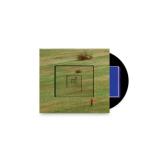
Die langjährigen Freunde Bibio und Dorian Concept tun sich nach diversen Kollaborationen für das gemeinsame Instrumentalalbum "Answers" zusammen. Ein Großteil der Musik entstand aus der Ferne; Ideen wurden zwischen Wales und Österreich hin- und hergeschickt, was die Vorliebe beider Künstler für einen eher zurückgezogenen, prozessorientierten Schaffensprozess widerspiegelt. Der britische Produzent Bibio, bekannt für die Verbindung von Folk, Ambient und Lo-Fi-Tape-Texturen, steuert eine greifbare, von der Gitarre geprägte Wärme bei, während der Wiener Dorian Concept, Autodidakt am Keyboard und Improvisationskünstler am Synthesizer, seinen fließend-experimentellen Ansatz elektronischer Komposition einbringt. Auch an der visuellen Gestaltung arbeitete das Duo eng zusammen; Videos und Artwork entstanden gemeinsam, inspiriert von der geteilten Liebe zu Vintage-Kameras und visuellem Spiel. Das Ergebnis ist ein texturreiches Instrumentalalbum, das sich weniger wie eine erste Zusammenarbeit anfühlt, sondern vielmehr wie eine Fortsetzung: Zwei eigenständige Stimmen treffen in einer gemeinsamen Sprache aufeinander, die über Jahre gegenseitiger Inspiration und stillen Experimentierens gereift ist. Beide Formate enthalten ein Concertina-Booklet, gefaltet in Ziehharmonika-Form.
After a savage summer of performing over 35 festival shows, COLLIGNON continue their journey with the release of Bicicleta.
Bicicleta was written and recorded right in the midst of the band's summer tour. Gino, Yves and Jori seized the moment, the album captures exactly where they currently stand as a band: thriving on the energy of their live performances, with the desire to dive deeper into their music.
The result is Bicicleta—a diverse and authentic album that stays true to COLLIGNON’s distinctive blend of wildly grooving beats, psychedelic guitars, and sharp keyboard riffs. The music transports listeners across many borders, all while maintaining their signature COLLIGNON sound.
This album was made with vinyl in mind, designed to be experienced as a complete journey. From the first Maloya rhythms of "Fonkér la Mér" (Kreol for 'fond du cœur de la mer', meaning ‘from the bottom of the heart of the sea’) to the Brazilian groove and cosmic crescendo of "Vai Vai Vai (Into the Stars)", Bicicleta is a trip that flows from track to track.
The album, recorded while Jori left his Portuguese studio for a year-long stay in the Netherlands, pays homage to what -without engine, exhaust or pollution- might be considered the finest emblem of Dutch culture: the bicycle.
The words of adventurer Nellie Bly, written in 1896, still ring true today: ‘In a frenetic era of expanding possibilities, cycling offers a journey into a landscape of dreams. The bicycle has always signified independence and freedom in steering one’s daily course and the byways of its occasional adventures.’
To truly experience this album, nothing compares to holding the vinyl sleeve in your hands and spinning the record on your turntable.
Once upoun a time Fat Mike came up with the idea of calling up 101 of the best old and new punk rock band around, have them each record a 30-second long song, then put all the tracks out on one record to make the best punk compilation ever. And guess what, the dream came true. The 101 most famous punk rock bands around doing each a 30 seconds long song Back in print for the first time in ten years! Pressed to Lime Vinyl Features super rare songs (recorded exclusively for this compilation) by Green Day, The Offspring, Blink- 182, Pennywise, Rancid, Less Than Jake, The Vandals, Bad Religion, and more
It's hard to explain an album when one listen is enough. All the more so with MaMaMa: there's no room to stay passive. Listening to his new album, EST, means immersing yourself in an atmosphere that's softly psychedelic, comforting and organic all at once. A dreamy, electronic pop that proves this Strasbourg-at-heart, Paris-by-adoption musician, arranger, singer, songwriter and producer never stops reinventing himself. After changing his name — formerly Petit Prince — and delivering two critically acclaimed albums ("MaMaMa-gnificent." / "Hooks you carry in your head for a long time" / "sumptuous arrangements"), Elliott Diener now offers an even more sincere record. Real songs in French, after two albums where production sometimes took up all the space: "when you make heavily produced music, once you strip away the layers of sound, there's no fruit left underneath. On EST, I don't need makeup for the songs to work," he admits.
That's what this new album is about: the song and the French language first, then the pleasure of sound. An album less concerned with talking about its own making, more inhabited, more embodied, within a contemporary folklore. With this new album, don't expect to be bored: EST is his best record yet.
No pretense
Entirely conceived in his studio in Pantin — a room of his own, at last — imagined as a space free of any daydream, open to every sonic landscape, MaMaMa offers a record that's both hazy and downy soft. Often composed very early in the morning, it has become nostalgic without being dark, melancholic without being sad, with a few lineages showing through: Flavien Berger, Moodoïd, Feu! Chatterton for the taste for words and unease, Mount Kimbie for the approach to sound and rhythm. Unsurprising, given that EST was finalized with the British duo's producer. Live, MaMaMa is preparing a show in the style of Nicolas Jaar or UTO. Hypnotic and immersive.
The most liberating thing is that EST is an album without pretense. With it, we move through perseverance (in Aussi loin qu'il tiendra debout), the small arrangements we make to avoid facing reality (Tout sauf la vérité), and the fragility of bonds we thought were solid (Si bien ensemble). We also touch on lasting conflicts with the people we love (Anywhere You Are, There You Are), misunderstanding (Elle me parle une langue), and the erosion of friendships (S'envoler). EST draws an intimate and redemptive map of human relationships, in a body of work that's both lucid and sensitive — like when he also addresses social masks such as filial love (in Beau garçon, dedicated to his son) or relationships that have become impossible.
"It's really the album that sounds most like me, in terms of sonic landscape," Elliott points out. A record that rises above the noise of an imperfect, shifting world — like us — joyful in its words, liberating in its production. A true gem.
Sadurn’s sophomore album The Underworld is a collection of heart-rendingly personal and instantly relatable songs, due out this fall on Run For Cover Records. Following years of lingering vocal issues for guitarist G DeGroot, the album is the culmination of an emotion- al and spiritual journey and a a deeply personal meditation on loss, healing, and transformation.
Sadurn began in 2017 as a solo project for G DeGroot, and from the start their approach to songwriting was informed more by emotional intuition than any kind of real ambitions to be heard. “I discovered songwriting as an outlet for processing my reality,” they explain. “A lot of times when something is hard to say, it flows more easily in songwriting. It’s a place where you can circle back to your own truth.” After moving to Philadelphia, DeGroot was joined by gui- tarist Jon Cox, drummer Amelia Swain, and bassist Tabitha Ahnert. The group recorded Radiator, a debut that immediately connected with listeners and was met with critical acclaim.
Throughout The Underworld, the rawness of DeGroot’s lyrics are matched by Cox, Ahnert, and Swain’s evocative playing. Stunning opener “the weight” describes the early stages of a relationship deteriorating, with brilliant soloing from Cox and DeGroot’s warm voice intertwining through its widescreen outro. Highlights like “mess,” “never tell me,” or “whole thing” strike a perfect balance be- tween lush arrangements and intimate performances, while tracks like “why does my heart” or “can’t stop” add unvarnished, single take moments of spontaneity, or GarageBand demo looseness that perfectly compliment the unabashed longing in the songwriting.
Sadurn’s sophomore album The Underworld is a collection of heart-rendingly personal and instantly relatable songs, due out this fall on Run For Cover Records. Following years of lingering vocal issues for guitarist G DeGroot, the album is the culmination of an emotion- al and spiritual journey and a a deeply personal meditation on loss, healing, and transformation.
Sadurn began in 2017 as a solo project for G DeGroot, and from the start their approach to songwriting was informed more by emotional intuition than any kind of real ambitions to be heard. “I discovered songwriting as an outlet for processing my reality,” they explain. “A lot of times when something is hard to say, it flows more easily in songwriting. It’s a place where you can circle back to your own truth.” After moving to Philadelphia, DeGroot was joined by gui- tarist Jon Cox, drummer Amelia Swain, and bassist Tabitha Ahnert. The group recorded Radiator, a debut that immediately connected with listeners and was met with critical acclaim.
Throughout The Underworld, the rawness of DeGroot’s lyrics are matched by Cox, Ahnert, and Swain’s evocative playing. Stunning opener “the weight” describes the early stages of a relationship deteriorating, with brilliant soloing from Cox and DeGroot’s warm voice intertwining through its widescreen outro. Highlights like “mess,” “never tell me,” or “whole thing” strike a perfect balance be- tween lush arrangements and intimate performances, while tracks like “why does my heart” or “can’t stop” add unvarnished, single take moments of spontaneity, or GarageBand demo looseness that perfectly compliment the unabashed longing in the songwriting.
Sadurn’s sophomore album The Underworld is a collection of heart-rendingly personal and instantly relatable songs, due out this fall on Run For Cover Records. Following years of lingering vocal issues for guitarist G DeGroot, the album is the culmination of an emotion- al and spiritual journey and a a deeply personal meditation on loss, healing, and transformation.
Sadurn began in 2017 as a solo project for G DeGroot, and from the start their approach to songwriting was informed more by emotional intuition than any kind of real ambitions to be heard. “I discovered songwriting as an outlet for processing my reality,” they explain. “A lot of times when something is hard to say, it flows more easily in songwriting. It’s a place where you can circle back to your own truth.” After moving to Philadelphia, DeGroot was joined by gui- tarist Jon Cox, drummer Amelia Swain, and bassist Tabitha Ahnert. The group recorded Radiator, a debut that immediately connected with listeners and was met with critical acclaim.
Throughout The Underworld, the rawness of DeGroot’s lyrics are matched by Cox, Ahnert, and Swain’s evocative playing. Stunning opener “the weight” describes the early stages of a relationship deteriorating, with brilliant soloing from Cox and DeGroot’s warm voice intertwining through its widescreen outro. Highlights like “mess,” “never tell me,” or “whole thing” strike a perfect balance be- tween lush arrangements and intimate performances, while tracks like “why does my heart” or “can’t stop” add unvarnished, single take moments of spontaneity, or GarageBand demo looseness that perfectly compliment the unabashed longing in the songwriting.
Tropical Fu*k Storm revisit the live album concept on ‘Inflatable Graveyard Vol. 2’, their second live album and the follow-up to the critically acclaimed ‘Fairyland Codex’. Recorded over three nights during a sold-out residency at New York venue TV Eye, the album finds the band at the height of their incendiary powers, turning already combustible songs into something even more ferocious and unpredictable.
Fine-tuned and road-tested through heavy touring, songs from ‘Fairyland Codex’ are stretched into new forms. Ballad “Stepping on a Rake” takes on heavier undertones, “Irukandji Syndrome” becomes a launchpad for a guitar solo worthy of the Velvets’ “I Heard Her Call My Name” and “Moscovium” sounds more urgent than ever.
The band also revisit back catalogue favourites including “Who’s My Eugene” and “You Let My Tyres Down”, alongside a cover of Australian punk heroes The Saints’ “This Perfect Day”.
Tropical Fu*k Storm have built a catalogue worth obsessing over, but their live show is where the band’s brilliance really breaks open, and ‘Inflatable Graveyard Vol. 2’ catches that chaos in the act.
Key Quotes:
“Tropical Fuck Storm are masters of tension and release.” The Guardian.
“If anyone's qualified to make music about all-encompassing terror, it ought to be Tropical Fuck Storm.” Pitchfork.
“Thrilling noise-rock pranksters” Uncut.
“End times chaos… A gloriously imperfect storm” MOJO.
“A galvanising opus of incredible political bite” The Line Of Best Fit.
“One of the most rewarding listens in rock music” Consequence Of Sound.
Tropical Fu*k Storm revisit the live album concept on ‘Inflatable Graveyard Vol. 2’, their second live album and the follow-up to the critically acclaimed ‘Fairyland Codex’. Recorded over three nights during a sold-out residency at New York venue TV Eye, the album finds the band at the height of their incendiary powers, turning already combustible songs into something even more ferocious and unpredictable.
Fine-tuned and road-tested through heavy touring, songs from ‘Fairyland Codex’ are stretched into new forms. Ballad “Stepping on a Rake” takes on heavier undertones, “Irukandji Syndrome” becomes a launchpad for a guitar solo worthy of the Velvets’ “I Heard Her Call My Name” and “Moscovium” sounds more urgent than ever.
The band also revisit back catalogue favourites including “Who’s My Eugene” and “You Let My Tyres Down”, alongside a cover of Australian punk heroes The Saints’ “This Perfect Day”.
Tropical Fu*k Storm have built a catalogue worth obsessing over, but their live show is where the band’s brilliance really breaks open, and ‘Inflatable Graveyard Vol. 2’ catches that chaos in the act.
Key Quotes:
“Tropical Fuck Storm are masters of tension and release.” The Guardian.
“If anyone's qualified to make music about all-encompassing terror, it ought to be Tropical Fuck Storm.” Pitchfork.
“Thrilling noise-rock pranksters” Uncut.
“End times chaos… A gloriously imperfect storm” MOJO.
“A galvanising opus of incredible political bite” The Line Of Best Fit.
“One of the most rewarding listens in rock music” Consequence Of Sound.
The sun sat high above the desert outside Joshua Tree on October 17, 2024, baking the rocks and shrubbery outside the Farrington Observatory as a small group of invited guests ventured up a steep path towards the telescope. Kyle Simon, the artist and printmaker who founded the Observatory, was standing outside the print studio sat below the towering cylindrical building, greeting friends alongside his wife Sarah and lifelong friend Brian Weitz, the musician widely known as Geologist of Animal Collective. Simon and Weitz had spent the previous day testing and retesting a system that would transform the light of the oncoming full moon captured by the gigantic telescope into a signal that would modulate the control voltage of Weitz’s modular synthesizer. As the sun dipped below the horizon line, the audience gathered on a small wooden patio surrounded by speakers while Weitz readied himself behind the array of patches and knobs. Simon addressed the group, presenting the history of The Sirens, the sonic exploration of the night sky’s mystical and scientific significance about to unfold.
The music conjured under the Hunter’s Moon that night is now documented on this first official release of The Sirens, which was conceived by Simon and Weitz as a recurring performance piece and sound installation. Over a decade ago, Simon began immersing himself in literature on humanity’s sonic relationship to the celestial realm, including Homer’s Odyssey, Plato’s “Spindle of Necessity, ” Kepler’s Harmonices Mundi, and the field of astroseismology. He fitted homemade telescopes with photodiodes and optical sensors to make the images audible, finding latent patterns in the noisy sonic signals he began receiving from the stars. With Weitz, the process expanded as the signal was routed through an analog amplifier and set to modulate the pitch, filter, and other elements of his synthesizer. Together they developed a system of improvisation, with Simon adjusting the telescope to change the intensity of the light based on its relationship with the moon’s position (imagine a theremin player moving their hands in subtle, meaningful motion), and Weitz responding to that input in real time: bending it, amplifying it, or letting it stand on its own. The duo debuted the piece at the Integretron in Joshua Tree in 2018, providing a crucial proof of concept for the performance at Farrington featured here.
The first thing the listener hears on The Sirens is the opening of Farrington Observatory, the cranking of motor and metal. As the lens of the telescope is exposed to the evening air, a wavering drone emerges from the synthesizer, flickering at the margins, the tuning of the oscillators adjusting to the rapidly cooling desert air. The piece progresses and the drone becomes a luminous, spherical constant, bathing the listener in pure tone as Weitz draws out harmonically ambiguous melodies that spiral upwards. Electronics crackle and convulse, coalescing into dense dissonance before widening out into an open octave. Just as the moon orbits the Earth and the stars shift as the planet rotates, so each sonic element appears in flux, interrelationships slowly forming and falling away. Divided into two parts, The Sirens flows as a continuous conversation between the artists and the starlight completing its thousand-year journey across the galaxy.
The Sirens belongs primarily to a lineage beyond music: of sea captains navigating by looking skyward, of astrophysicists studying the formation of the Milky Way, of the modern myths of werewolves, of the stories embedded in constellations. As Simon writes in the album’s extensive liner notes, “These stories and explorations reveal a collective yearning to become conscious of our connection to the universe, our deep-seated desire to understand how we fit into it all.” This music underscores the history of the night sky as the place where poetry and science find common ground, where exploration hinges on the imagination. Driven by curiosity and ingenuity, Weitz and Simon look up and wonder.
4/5 REVIEW IN MOJO: “HEARTBEAT TONES DISSOLVE INTO BEAUTEOUS SHIMMER AND STELLAR SYNTH MEDITATIONS GIVE WAY TO CAREFULLY ORCHESTRATED ELECTRONICA.”
4/5 REVIEW IN UNCUT: “IT'S MASTERFUL, THOUGH IT WILL LEAVE YOU FEELING LIKE A SPECK OF GRAVEL IN A SELF-DESTRUCTING WORLD.”
NME - 8/10 review (w/c 14 October) "He’s mastered this stylistic skittishness and you’ll do well to find much dispute about his talent."
NARC - 5/5 review (October issue) "An immersive soundtrack to your own personal psychodrama."
WIRE - ONE PAGE REVIEW (October issue) "The sentiments it stirs to life are shadowed and ambiguous, simultaneously personal and impersonal. It is also fantastically immersive, dragging the listener into its turbulent undertows, then washing them back on dry land, intact but changed.’’
Virgins was recorded during three periods in 2012, mostly in Reykjavik, Montreal and Seattle, using ensembles in live performance.
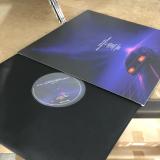
While this album remains committed to a painterly form of musical abstraction, it is also a record of restrained composition recorded live primarily in intimate studio rooms. This record employs woodwinds, piano and synthesizers towards an effort at doing what digital music does not do naturally—making music that is out of time, out of tune and out of phase.
Some pieces go off the rails before forming into anything, others eschew crescendo
compositional structures or bombastic density while going sideways instead. It points to the ongoing development of Hecker's work. It suggests illusory memories of drug- hazed jams or communal music performance that may have never been performed or been heard.
It is an offering of music into the void, a gift of digital filler between distractions. Yet hopefully it also stands as a document of the enduring faith in the narcotic, enigmatic function of music as long-form expression.
Mixed by Valgeir Sigurðsson and Tim Hecker. Additional assistance by Randall Dunn and Ben Frost. Mastered by Mandy Parnell at Black Saloon Studios in London, UK.
New Rosati on deck! The Italian producer returns with a deep excursion for the late-night hours. Shifting focus toward a warmer, more atmospheric sound, this release delivers rolling baselines, lush chord stabs, and infectious house-infused techno grooves. Pure sonic hypnosis!
'Come Into My Life' is a deep vocal house spine-tingler from Nathalie Capello and Rose Lonegran that is the subject of three separate remix EPs on Jus-Ed's top drawer Underground Quality label. This one begins with German house head Damiano Van Erckert layering in some humid chord work, before Reggie Dokes's Jazzy Adlib has fingers dancing nimbly across the piano keys to bring a brighter sound and Machillado's House Again remix is pulled apart and rebuilt as a rough-edged and dusty beatdown. Kossi Emmanuel keeps things bouncy and chord-laced for the ultimate soulful release.
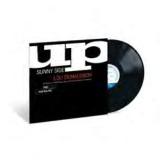
Altsaxofonist Lou Donaldson wurde schnell zu einer festen Größe des Blue-Note-Labels, nachdem er 1952
als Sideman an der Seite von Thelonious Monk und Milt Jackson zu hören gewesen war. Noch im selben
Jahr begann er, eigene Sessions als Bandleader einzuspielen und blickte, als er 1960 ins Van Gelder Studio zurückkehrte um sein hervorragendes Album ”Sunny Side Up” aufzunehmen, bereits auf ein Dutzend
Aufnahmesessions unter eigenem Namen zurück. In vielerlei Hinsicht ist das Album ein Paradebeispiel für
den typischen Blue-Note-Hard-Bop-Sound: eine Mischung aus swingenden Standards und bluesgetränkten
Eigenkompositionen, die von einem Quintett mit viel Gefühl und Ausdruck interpretiert werden.
Love or its absence dominates the intimate songs on the new album from ARBORIST – the musical outlet of Mark McCambridge. Looking For Love, Arborist’s fourth album of exquisitely inventive Americana, places us firmly in his hometown of Belfast, allowing it to act as a microcosm of the wider-world, with all its foibles and charms. We find fictional protagonists scouring the dark corners of the city, wiling-away afternoons in strip clubs, wandering the streets in all weather and reflecting on the harsh reality of modern society, all in search of an elusive love – emphasising our need for it now more than ever.
Looking for Love is ARBORIST’s first album to be self-produced by McCambridge, largely from his home studio in Belfast – and at times it feels like we are in the room with him. It’s a different kind of record for him as previously he has always sought collaboration; whether it be with Kim Deal who chose to sing intertwined harmony on his debut single “Twisted Arrow”, or recording in The Curfew Tower owned by The KLF’s Bill Drummond who described Mark’s songwriting as being “riven with more loss than any record since Leonard Cohen quit this world”, and who Matthew E White and his Spacebomb band collaborated with to such astonishing effect on the previous Arborist LP, 2023’s An Endless Sequence of Dead Zeros, winner of the prestigious Northern Ireland Music Prize. This time, with no outside producer steering the way, McCambridge found that the quiet hours were where he felt most at ease, despite periods of trial and error, and, by his own admission, moments of feeling genuinely lost in it all.
Despite playing many of the parts himself, McCambridge still called upon old friends from the community around him; Spacebomb’s resident bassist Cameron Ralston (Bonnie Light Horseman, Hiss Golden Messenger) again features throughout the record, alongside Eamon Ferris (The Waterboys) on drums, with the great and the good from Belfast’s vibrant music scene. Grainne Meyer plays concert harp and Aga Olek plays violin for the quasi-title track “Looking 4 Love” – an off-kilter love-letter to Belfast. Meilana Gillard provides a sleazy saxophone on “Bye Bye Johnny Cash” – a seedy tale of a man obsessively visiting a dancer in a club, and The Larne Community Youth Choir provide backing vocals for “Go Kill The Fatted Calf” – a song Mark wrote about his son growing up, a take on the parable of the prodigal son, with Jonny Ashe’s blistering guitar solo adding an album highlight. The Errigal Ensemble String Quartet and Aisling Agnew’s breathtaking flute solo feature on “What Is It You’re Asking” – a song about love, or its absence, both personally and universally in these times.
McCambridge was recently honoured with a “Fellowship” by the Seamus Heaney Centre at Queen's University Belfast where he collaborated with such illustrious names from the literary world as Nick Laird, Caoilinn Hughes and Conor McPherson. Through the University he was given access to the music department's Steinways and pipe organs, and decided to try one out for the album’s centrepiece “I’ve Been A Flaneur”. As Mark explains, "The drone on the pipe organ — and the sound of it starting and stopping — was so visceral that I decided to try a half-written song against it right there and then, and this came out in one take… The song was a breakthrough artistically - I don't think I'll ever record in the same way again after this."
The album was engineered by longtime collaborator Ben McAuley (Van Morrison) and mixed by Jimmy Robertson (Anna Calvi, Beth Gibbons, Fat Dog). The results are staggering, devastating and uplifting in equal measure, calling to mind albums such as Songs Ohia’s Magnolia Electric Co., The Divine Comedy’s Regeneration, The Blue Nile’s Hats and Wilco’s Ode to Joy, as well as early-70s records from John Cale, John Lennon and Bill Fay.
Belfast native Mark McCambridge played his first show as Arborist supporting James Yorkston. A solo tour followed, and impressive performances led to notable support slots alongside Low, Cat Power, Echo & The Bunnymen and Guy Garvey. Arborist's debut single, the Americana-tinged "Twisted Arrow," caught the attention of the critics with an astonishing duet with Kim Deal of The Breeders. The debut album Home Burial (2016) and its follow-up, A Northern View, both received glowing praise, from The Guardian ("instant classic" ----) to MOJO ("devastatingly bleak… upliftingly beautiful" ----) to Uncut (8/10), with BBC 6 Music play from Cerys Matthews, Cillian Murphy, Lauren Laverne, Radcliffe and Maconie and Gideon Coe — and Steve Lamacq calling single "Taxi" "one of those records that makes you immediately stop what you're doing." He went on to even greater success with the 2023 Northern Irish Music Prize winning third LP, An Endless Sequence of Dead Zeroes, which was recorded at SpaceBomb Studios in Virginia with musician and producer Matthew E White. For his fourth LP, Looking For Love, he has signed with Fika Recordings and with a tour approaching in November, 2026 looks set to be a seminal year for the Irish artist.
For the label's latest, Oath is proud to present 'Honey Tangerine', the newest mini-album from producer extortionaire Olsvangèr, who serves up his signature blend of hyper-kinetic, ever-shifting dance music.
Olsvangèr's sound and musical journey are forever rooted in the liminal spaces that make up the broad-reaching and ever-shifting electronic music landscape, with his records consistently channeling that in-betweenness that imprints lasting impressions. A classically trained musician with a profound passion for house and techno, Olsvangèr's sonic palette is one of both broad and delicate brush strokes, applying an array of compelling motifs within amorphous arrangements that blend and blur perspectives. His records seek out the faraway fringes as much as focusing on the intensity found in the detail, creating cavernous soundscapes that are impeccably tuned and effortlessly free-flowing. Seemingly genreless, his records are anchored in all that is known and loved, yet due to the music's perspective situated at the intersectionality of electronica, a beautiful anticipation resides within every stanza of his tracks at what may come next. His musical language has found him releasing on the likes of Kalahari Oyster Cult, Hooj Choons and Craigie Knowes, and follows through within his imprint Tofistock, which has been pushing some of the most forward-thinking dance music of recent times.
'Honey Tangerine' touches upon the classic motifs of Olsvangèr's sound, and as always, the room for growth within the record's parameters remains truly endless. Over six tracks, Olsvangèr lays bare the directions of travel, with paths unravelling that feel well trodden yet with some that branch out towards new horizons. 'Source of Thought' opens up proceedings with a captivating ambience, where twinkling hues and lively tones paint the parameters of sound. The chuggy breaks that land deep within the mix drop in and out of view, allowing a deft balance between pure ambiance and rhythm to exchange dialogue between one another. 'In a Nutshell' shifts gears in atmosphere and energy, with all eyes placed upon the club. The shifting rhythm section lifts the acidic melodic features up above, with driving bass notes and a euphoric vocal like lead linking the depths to the heavens. 'Tulpa Nine' swings into heads-down territory, where the drums swing slow and the throbbing bass hits heavy. The auto-tune vocal line up above creates an atmosphere of hazy, smoke-filled rooms, where the party yearns for downtime in anticipation of the next shift in energy.
'Sunrise on the Lips' gives over further chill out room vibrations, where the lights remain low, and smiles reside all around. The enriching drums provide the basis for sitars and glossy keys to glide across the top ends, with the mind invited to dip deep within this enthralling ensemble. 'Zoom It Out' provides the release into the room, with the ante upped. A breaky house leaning number, this cut grooves through its chiming melodic section and groove-laden bass line, with the polyrhythmic drumming pattern doing much to keep the energy residing very high indeed. The record is wrapped up with 'Some Air', which gives over one final jaunt through the airy, slowed-down slipstreams. A wondrous beat is complemented by melodic elements that chime, absorb and quiver, glowing through the night with such charm and feel. An engrossing composition that demonstrates what Olsvangèr is all about - a crafter of sound, where adventure is sought and found, never wavering but curating new connections, feelings, and tones, with an eye on what might come next.
Whether softly undulating or boundlessly expressive, Olsvangèr's music remains a beautiful enigma that serves up both the glorious knowns and the captivating unknowns - 'Honey Tangerine' is yet another chapter in his glorious discography.
Heavyweight psychedelic improvisers EarthBall are back with their third and most monstrous record to date: ‘Outside Over There’, released on Upset The Rhythm (Nov 7th). Born from the haunted basements of Nanaimo, Canada, the quintet thrives on spontaneity, shaping improvisation into jagged hallucinations and ecstatic eruptions.
Recorded live-off-the-floor in 2024 in Jeremy, Izzy, and Kellen’s basement, and mixed by drummer John Brennan, ‘Outside Over There’ is an album that feels both summoned and inevitable. Each track lands with uncanny purpose, as if uncovered rather than written.
The opener, 100%, features a cameo from comedian and English icon Stewart Lee, who lent his blessing for the band to use a fragment of his stand-up. The album was mastered by John Dieterich (Deerhoof), with liner text contributed by longtime comrade John Olson (Wolf Eyes). Olson describes the album in his unmistakable style:
“This eight-track odyssey unfolds like a dreamscape, where whispered incantations brush against the shadowy fringes of the cosmos, and wild, Cézanne-inspired rock anthems erupt like geysers of color in the midst of a western warm and wet rain storm… culminating in the sprawling eleven minute masterpiece, ‘And The Music Shall Untune The Sky,’ aptly dubbed the Earth Crusher. A creation so utterly deconstructed and intertwined with the pulse of nature itself that if AI was called upon to conceive ‘Outside Over There’ anew, it would just spit back, “F.U. in Tree Font”. An enchanting invitation for even the flat-earthers to join the circle, if only just a little.”
EarthBall’s trajectory has been relentless. Their 2024 album ‘It’s Yours’ was praised by The Quietus as “fully aggressive and fully life-affirming,” and by The Wire as "a boisterous mind-melting album”. The band’s live double set LP ‘Actual Earth Music Vol. 1 & 2’ (2025) captured blistering performances: a performance opening for Wolf Eyes at the Fox Cabaret, and a Café OTO improvised throw-down featuring Chris Corsano and Steve Beresford. These releases on their own confirm them as one of Canada’s most vital experimental exports, not to mention the impressive self-released discography on their Bandcamp. The band’s reach has stretched far beyond their west coast roots with a UK tour May 2024, plus this past June, EarthBall closed Montreal’s Suoni Per Il Popolo Festival alongside Pulitzer Prize-winning composer Raven Chacon. This November they will perform at Le Guess Who? Festival in Utrecht, with a European tour to follow (tour dates below). Outside of EarthBall, each member carries their own torch. Jeremy Van Wyck, founding member of the legendary Shearing Pinx, has toured extensively, released over 100 records, and has been a vital force in the Vancouver and West Coast underground for the past 25 years. He and Isabel Ford (Izzy) play together not only in EarthBall, but also in Psychedelic Dirt, Shearing Pinx, Behaviours, and Crotch.
John Brennan collaborates widely, including recently with Endlings (Raven Chacon and John Dieterich), Evichen (Victoria Shen), Francesco Fonassi, Plan Your Future (with Greg Saunier of Deerhoof), Brennan/Corsano duo and Physics with John Dieterich. Kellen Maclaughlin performs with KVMP and Ora Corgan, while saxophonist Liam Murphy is a west coast staple, playing with the best across Vancouver Island and the mainland. On three of the tracks of ‘Outside Over There’, the band is joined by their comrade Justin Patterson, who also plays with Brennan in the duo Modale. This cross-pollination fuels EarthBall’s sound - a collective improvisation, psychically overdriven, and grinding into bloom.
Outside Over There’ is more than an album though, it is a ritual, a gathering of sound at the forest’s edge; where feedback, saxophone screams, and ecstatic vocals dissolve the boundary between chaos and clarity. EarthBall invite you into their circle, to share in the joyful terror of spontaneous creation. ‘Outside Over There’ will be released on November 7th through Upset The Rhythm digitally and as a limited blue-in-black vinyl LP.
Following hot on the heels of the Frequency Damage EP, DJ Quest returns to Cyberfunk with Squeaks / Snake Style— a two-track release that dives deep into the unmistakable sound that made Quest’s productions stand out during the early 2000s.
Rather than simply recreating the past, both tracks tap directly into the DNA of the original Cyberfunk sound: rolling breakbeats, huge basslines, twisted analogue synths and the kind of distinctive production that became synonymous with DJ Quest at the height of the Bassline Breaks era.
Built around original analogue synth work throughout, Squeaks / Snake Style is a deliberate throwback to the raw, futuristic sound of the early 2000s, produced with the weight and clarity needed for today’s sound systems.
It’s classic Quest, strange noises, big bass, rolling drums and plenty of attitude.
A. Squeaks
Everything DJ Quest became known for rolled into one track. Squeaks is an unapologetic throwback to the classic Quest sound of the early 2000s, driven by heavyweight breaks, deep bass and original analogue synth work throughout.
Twisted electronic squeaks and evolving analogue sounds weave their way around the drums, giving the track that instantly recognisable combination of funk, darkness and futuristic weirdness that characterised so many of Quest’s early productions.
Raw, energetic and built firmly for the dancefloor, Squeaks takes the spirit of the original Bassline Breaks era and brings it straight back onto a modern sound system.
AA. Snake Style
On the flip, Snake Style takes the same analogue-driven approach but moves into deeper rolling territory.
A more hypnotic, heads-down breaks roller, the track develops around a heavyweight bass groove, rolling drums and constantly shifting analogue synth lines. There’s less emphasis on the immediate impact of the A-side and more on building a groove that locks into a DJ set and keeps moving.
Still unmistakably Quest, Snake Style combines the rawness and character of early-2000s breakbeat with modern low-end weight and production, proper rolling Cyberfunk business.
Special Vinyl Edition
Making this release particularly special for collectors, the 12” vinyl comes with an exclusive book showcasing the artwork from some of DJ Quest’s biggest and most memorable releases.
The book looks back through Quest’s extensive catalogue and the visual identity that accompanied the records, bringing together a selection of classic release artwork from across his career plus photo collages of memories made across his journey.
It turns Squeaks / Snake Style into more than just a new DJ Quest 12”, it’s also a celebration of the music, artwork and history surrounding one of the original pioneers of the Bassline Breaks sound.
For long-time followers it offers a piece of Quest history alongside two brand-new productions, while newer listeners get an introduction to the catalogue and imagery behind the sound