oracle and audioMER. are honoured to announce the release of a new LP; Reading the City with music by oracle, Laszlo Umbreit & Mira Sanders.
In 2019 oracle invited artist Mira Sanders to interact with their practice through her writing. Due to the corona crisis, their shared working time couldn’t happen in the planned way:
“The writing project was originally planned as an exchange while travelling together one week on the Buratinas boat, navigating on the canals and rivers starting from Brussels. Due to the sanitary conditions with the Covid19, the trip together could not be realised or at least was complicated.
Instead of seeing the situation as an obstacle, I saw it as an opportunity to travel with them from afar. Me, living outside the city and them, inside. My question was ‘how, through their voices echoing with the urban spaces, will I imagine the city’s everyday life?’. Because one of the things that oracle’s practice does is to offer ways to perceive and encounter the city and its inhabitants.
For the texts I was inspired by the recordings oracle sent me every day during one week. Besides that, the book Invisible Cities written by Italo Calvino gave me a way of structuring my imagination.” – Mira Sanders
Following this artistic exchange and during a collaboration with sound artist Laszlo Umbreit, the idea of the record Reading the City was born. The existing recordings and the written sci-fi episodes by Mira Sanders functioned as a source of inspiration for the electronic sound composition Places, infiltrated by the original voices and city soundscapes. The recordings of the texts From Afar reflect oracle’s playful and spontaneous way of interacting with their given environment. From Afar is an invitation for the reader to immerse in the city while being in movement. Each track on this side has its own identity or colour, often in relation to what Mira’s text evoked, but this also happened in an empirical way, by trial and error.
Places is a composition in movement, following the idea of interaction with imaginary cities but regularly coming back to a presence of the workshop’s raw documentary sound. While being a carefully edited piece, it tries to keep a certain sense of immediacy and improvisation through semi-random dropping of heterogeneous sound materials in the timeline. Accidents are welcome. The arc drawn by the journey through different “places” is an interpretation of what can happen inside (and outside) when experiencing the oracle practice: being around them, imagining what was felt at different moments in the street, from a distance, preparing the itinerary in the city beforehand, talking about what oracle could be as a record and if it can exist outside the moment it happens.
Поиск:document one
Все
Anne-Marie’s second studio album, ‘Therapy’, is the official follow-up to her multi-platinum and four million-selling 2018 debut, ‘Speak Your Mind’ the UK’s biggest-selling debut release of that year. An artist whose everywoman candour and knock-you-down vocal range has reverberated across the globe, ‘Therapy’ is a collection of songs that embody Anne-Marie’s characterful artistry, self-effacing attitude and beautiful honesty; attributes that have not only catapulted Essex-born Anne-Marie to platinum status in the UK to the USA and everywhere in-between, but ones that have seen her reign supreme a fearless Gen Z role model.
With the full tracklisting yet to be announced, Mind Charity ambassador Anne-Marie is delighted to confirm that ‘Therapy’ will feature her already-released UK Top 3 and Gold-selling ‘Don’t Play’ with KSI and Digital Farm Animals; recent feel-good Nathan Dawe and MoStack collaboration ‘Way Too Long’; as well as Niall Horan collaboration, ‘Our Song’, which the pair wrote with Phil Plested and TMS (Lewis Capaldi), with the latter also on production.
An album of candour and vivacity in equal measure, Anne-Marie wrote ‘Therapy’ with Max Martin (Ariana Grande, Taylor Swift), Kamille (Little Mix, Headie One), MNEK, Raye, TMS, Blake Slatkin (The Kid Laroi, 24kGoldn), Ed Sheeran, Nathan Dawe and Plested (Lewis Capaldi) – production comes from Mojam (Aitch, Fredo), Fred Ball (Rihanna), TMS and Blake Slatkin.
Anne-Marie has become one of the globe’s most successful pop stars since hear breakthrough in 2016. An artist with over five billion streams to her name, in her home market, she has secured 1 x platinum album alongside five Top 10 singles to date. And 2021 has seen her continue her winning streak, too – her January release ‘Don’t Play’ spent twelve weeks inside the Top 10 in the UK’s Official Singles Chart and has subsequently become the biggest song of 2021 so far by a British female artist (OCC). Not to mention her prime time debut as the new, and winning, judge on talent show, The Voice, earlier this year.
Rewind to 2020 and alongside charitable work and recording, Anne-Marie released her first-ever documentary titled ‘How To Be Anne-Marie’, exclusively with YouTube. Shot in her home county of Essex at a time when her years’ plans were turned upside down due to the pandemic, Anne-Marie took us back to where it all began. In the hour-long film, we saw her recounting her difficult school years, the close bonds she shares with her family, fans and friends, as well as the plights of stardom that she candidly spoke about with her peers, Little Mix.
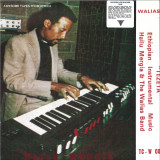
From their genesis as members of the Venus club in-house band in the early 70s, Hailu Mergia and the Walias Band were at the forefront of the musical revolution during an era where modern instruments and foreign styles superseded the traditional fare to become the staple sound of Ethiopia. No one would argue that the Walias were the trailblazing powerhouse of modern Ethiopian music. They were the first band to form independently without affiliation to a theatre house, a club or a hotel; unprecedented and risky as they had to raise all funding for expenses by themselves including buying equipment. They were the first to release full instrumental albums, considered to be commercially unviable at the time. They opened their own recording studio, with band members Melake Gebre and Mahmoud Aman doubling as technical buffs during sessions. They were also the first independent band to tour abroad. In short, they were the pioneers every band tried to emulate; some more successfully than others.
Odds are, any Ethiopian over the age of 35 who had access to TV or radio by the early 90s, will instantly recognize the sound of Walias. What is not a given is, how many would actually identify the band itself. Barely a day went by without hearing the Walias either in the background on radio or as an accompaniment to various programs on TV.
This Tezeta album, the band’s second recording, released in 1975, is one of those that have been impossible to find for nearly three decades. Sourced by Awesome Tapes From Africa and expertly remastered by Jessica Thompson, its unique and funky renditions of standards and popular songs of the day are so quintessentially Walias, flavorful and evocative. Hailu's melodic organ, unashamedly front and center in every track, makes even the complex pieces accessible.
Profoundly engaging; it's an immersive trip down memory lane for those of us getting reacquainted with it, while also an enthralling and gratifying experience for fresh ears.
Virtually unknown recording outside Ethiopia.
Documents Mergia & Walias legendary early period.
Follow-up to reissue of hugely popular seminal Ethiopian instrumentals LP Tche Belew (ATFA012)
Cassette-only, released in 1975 on the band’s in-house label to fund their record store.
Beautifully-rendered instrumentals of classic Ethiopian standards.
Fine Art Book, Ltd. to 400 copies:
Hardcover book printed on Munken Print White 115g/m2 // 108 pages, 24cm x 22cm, 65 photos // Logo, slot and circle embossed // Matt laminate + selective varnish // Hand-numbered, hand-stamped
"Même Soleil" is the result of a dialog between the French photographer Gaël Bonnefon and the French musician Frédéric D. Oberland initiated by IIKKI, between December 2019 and June 2021.
Self-taught multi-instrumentalist & photographer, Frédéric D. Oberland finds himself at the crossroads of image and sound, favoring a synesthetic approach. He articulates different modes of narration, combining the raw character of the documentary form with the transfigured reality of myth and poetry, allowing him to question notions such as the sacred, the monstrous, the fraternity, while at the same time returning to the political news of the present. Attentive to the pulse of the body, his work is willingly itinerant, modulating between the ripples of dreams, watching the points of incandescence and the bursts of electricity that act as revelations of our presence in the world, here and now. He’s the co-founder of leading bands such as Oiseaux-Tempête, FOUDRE!, Le Réveil des Tropiques, FareWell Poetry and is co-curating the label NAHAL Recordings.
"Fueled by travels and their emanations, Frédéric D. Oberland’s music had to build new horizons this year, outlined by the curves of semi-modular synthesizers, the avalanches of effect pedals and the zigzagging paths of electric circuits. Même Soleil, his third solo album, manages to merge mystical visions of the unconscious and the absurdity of an apocalyptic present in a sensory whirlwind, operating an astonishing mutation with tones still unexplored in his previous releases. A visual as well as a musical journey that takes shape in a book and a record of the same title, Même Soleil is the result of a collaboration with the photographer Gaël Bonnefon. Seeking the tension between the blinding light of day and the glittering visions of saturated night skies, the two pieces in dialogue transcend reality to deliver their own truth, as bright as the first light of the sought-after morning." (Alice Butterlin)
Gaël Bonnefon graduated with highest honours from the Fine Arts School of Toulouse (Isdat) in 2008. He has exhibited at Villa Pérochon, at the Eté photographique in Lectoure, at the 104 in Paris during Jeune Création 2012, at Rencontres Internationales de la Photographie d’Arles and at PhotoEspaña, at the Abattoirs Museum in Toulouse in 2014, at the Château d’Eau Gallery in 2012 and 2019 and in the Vitrine of Frac Île-de-France in 2020. His work is part of the collections of Frac Midi-Pyrénées, Château d'Eau gallery, Kulturamt in Dusseldorf and Kiyosato Museum in Japan ; he participated in Temps Zero projects Berlin, Braga, Rome, Bucarest, Groningen and Thessaloniki. He has also been granted artist’s residencies in Germany, France and Israel. His first book Elegy for the Mundane was published by La Main Donne in 2019. He continues his intimate and dense journey and presents his second publishing, Même Soleil with photographic works from 2009 to 2021.
"At first brutal and declining, the substance of Gaël Bonnefon's photography is just like a gaze that fears being one day extinguished and that is always looking to be born again. In photography as in love, recoil and desire, tension and easement, repetition, wandering and rest, flight and pursuit. Here photography allows itself to be traversed by flashes of life, renewed forces, echoes of far-off kindnesses and lost joys. It sings silently, lover of a thousand faces from which the thread of a single and same image is born, followed without relent, from the snowy peaks of childhood to the lost worlds of the present." (Michaël Soyez)
- A 1: Time After Time (Acoustic)
- A2: Wayfaring Stranger (Acoustic)
- A3: Early Morning Rain (Acoustic)
- A4: At Last (Acoustic)
- A5: Who Know Where The Time Goes (Acoustic)
- B1: Dark Eyed Molly (Acoustic)
- B2: Songbird (Acoustic)
- B3: Bold Young Farmer (Acoustic)
- B4: Tennessee Waltz (Acoustic)
- B5: It Doesn't Matter Anymore (Acoustic)
- B6: People Get Ready (Acoustic)
- C1: The Water Is Wide (Acoustic)
- C2: Kathy's Song (Acoustic)
- C3: True Colours (Acoustic)
- C4: You Take My Breath Away (Acoustic)
- D1: American Tune (Acoustic)
- D2: I Wandered By A Brookside (Acoustic)
- D3: Autumn Leaves (Acoustic)
- D4: Wade In The Water (Acoustic)
- D5: Danny Boy (Acoustic)
• 20 acoustic tracks, compiled as an acoustic best-of album.
• The new album builds on the popularity of a previous acoustic album, Simply Eva (12 tracks), released 10 years ago, which has UK scanned sales of 236K and was Top 5 on release.
• The 3rd Jan 2021 was the 25th anniversary of Eva Cassidy’s legendary Blues Alley concert. A new documentary, “One Night That Changed Everything” was premiered on the anniversary itself with a general promotional campaign around this date.
• The 18th March 2021 is the 20th anniversary of the Songbird album going No.1, there will be a promotional campaign in support.
Compilation of all new productions from a wealth of international talent, put together by Knekelhuis.
Label Text "This is a story of friendship, about how it grows stronger through the years. But it’s just as much about fledgling togetherness and shared art in times of crisis. The result is an introspective document of contemporary music, in spirit of Eno and Hassell. A space where we embrace our differences and speak the language of collectivity together, where we reflect, adapt and value each artist's contribution equally. To witness a multitude of cultural backgrounds that speak one like-minded language. Soothing and illuminating. And felt like...
Mastered by Amir Shoat and artwork by Keziah Phillips and Steele Bonus."
Out now for the first time on vinyl! The world first heard Pill on their self-titled cassette release on Dull Tools. And the world took note. Evan Minsker, writing for Pitchfork, says 'they are loose with form, they pack in a lot of ideas, and they successfully deliver an emotionally complex narrative where joy is accompanied by an impossible-to-ignore undercurrent of danger. The band's debut outing is enigmatic—a Dull Tools record through and through—but it's also well crafted, full of stellar performances and unflinching lyrics.'
The band then signed to Mexican Summer, releasing their debut LP. Shortly after, prolific in a way that has become a hall- mark of Dull Tools artists, they release another cassette, 2017's 'Agressive Advertising'. If one thought the self-titled cassette couldn't get more acerbic and confrontational, Agresstive Advertis- ing proved them wrong.
Now both releases are available on one LP. This LP is an important document of New York City's DIY scene and one of the best bands to emerge from it. Pill are an ever present force in NYC's scene. Playing small clubs like Baby's All Right, DIY spaces like Silent Barn and even the Museum of Modern Art. When the art and culture of New York is examined in, much in the way we examine culture from the past, you can bet that Pill will be a shining example of this moment in time.
More excellence from the Basin Rock label following albums from Nadia Reid, Julie Byrne, Aoife Nessa Frances, Jim Ghedi, Alex Maas..
With a special knack for balancing bright pop melodies with a drifting sense of melancholy, LA based Johanna Samuels new album Excelsior! is a tender, honest document of the importance of companionship above all else. Named after Dylan’s “Visions of Johanna”, Samuels grew up on the classic songwriters of yesteryear (George Harrison, Tom Petty, Neil Young) and after a healthy dose of Elliott Smith and Jon Brion, has spent the best part of the last decade honing her craft.
her band and producer Sam Evian but it's songs are full of West Coast sunshine. It's Evian's first full album production at his own Flying Cloud Studios. Recorded mostly to tape, the album is as a gorgeous combination of vintage instrumentation, strong melodic hooks, killer harmonies and Samuels’ elegant voice.
Samuels seeks those answers through companionship, exploring the depths of her relationships and then calling upon a handful of womxn to provide the album’s backing vocals - a task she’d always performed herself until now. As such, Excelsior! makes a space for the voices of Courtney Marie Andrews, Hannah Cohen, Lomelda’s Hannah Read, A.O. Gerber, Louise Florence and Olivia Kaplan.
The album takes its name from the signature that Samuels’ grandpa would use before he sadly passed away last December. “He was a very important person to me and he helped raise me,” Johanna explains. “He signed all of his letters and emails ‘Excelsior!’, including the exclamation point. It means ‘ever upward’ and that’s what I wish for everyone: to grow from listening with more empathy and from hearing each other out. I hope this record makes people want to be gentler with each other and themselves.”
70s/80s influenced ambient mixed up with a healthy dose of UFO's, abduction, occultism, paranoia, astral flow, new age and long lost Atlantis. 2020 was the year when Albert Kuningas debut vinyl on Escape From Synthesis was released and now the second part of this ambient/
dark ambient masterpiece is available! Finally it's time to get physical vinyl copies of legendary Bandcamp-only release "Music for UFO document programs 2" with a never before heard bonus track called 'Sateenkaarisilta 2'! Don't sleep on this one as it's limited release of 200pcs only.
Blue Vinyl
Lynch protégé and Twin Peaks sound designer Dean Hurley coaxes an incredible puzzlebox of atmospheres and mood pieces on this killer contribution to our Documenting Sound series, now remastered and pressed on vinyl for what is, perhaps unsurprisingly, the most cinematic and neon-lit instalment in the series. Like a
smudged and overdubbed copy of the BoC Maxima tape, with added iridescence.
Across almost 40 minutes we transition from aerosolised synths to romantic chromatics, thru to Nurse WIth Wound-style severed rhythms and fading glimmers of hope, ‘Concrete Feather’ epitomises Dean Hurley’s prized knack for nuanced instrumental story-telling in the finest and most engrossing style we could imagine. Against the backdrop of the Hollywood film industry that has primed us for as long as we can all remember, the music spans a panorama of lush, mirage-like choral pads and starry flickers thru to gloaming
nightmare sequences and screwed drums, while touching on some of the dankest synth tones this side of his ‘Anthology Resource’ volumes or indeed his soundtrack work for Twin Peaks: The Return. It’s full of dread and a slowly unfolding sense of tragedy.
“Having a regular practice of recording is probably the single most important element to my craft. It’s a way of dropping indiscriminate mile markers while constantly moving forward in time without ability to pause.
Over the years, working for David Lynch taught me a great deal about this and the concept and importance of experimentation. I’ve found myself clinging to those lessons during this time and using them as tools for both productivity and balance. His notion of experimentation is a simple one, yet incredibly profound. It was one of the very first words I heard him say during our initial meeting, and I never stopped hearing the term daily over the subsequent 13 years working together. An ‘experiment’ can provide a legitimate mental back-entrance into the act of creation. It can position an approach toward discovery as opposed to effort, and eliminate the thought that one needs to ‘will’ something into existence. It also aids in calming the judgmental
side of a brain from stepping on/interfering with expression…after all, experiments are not about success or failure, they’re simply about learning. In the Lynch school of thought, multiple experiments then become firewood…and with firewood, one can not only build but actually sustain a fire…even turn it into a multipleacre blaze or more.
Dean Hurley
I first discovered khroniky – Ukranian folk songs – in the Highlands of Scotland. I was watching a screening of Bajka, a mesmerising documentary made by the filmmaker Lucia Nimcová and sound artist Sholto Dobie. I knew nothing about these ballads beforehand, but I was fascinated by these odd, beautiful songs, especially the easy way in which they mixed misery and levity, where gentle melodies blend with tales of dark violence. The folk songs describe hardship, murder, torture, death in gulags, heavy drinking, outsmarting men, love affairs. But they’re often very funny too – many of the songs make fun of marriage, and there’s an amazing subcategory of khroniky songs called potka (vagina) songs.
The khroniky have never been properly documented because they were considered too crude, or contained lyrics that were problematic, politically. When Ukrainian folk songs have been archived in the past, it’s normally a sanitised, more polite version of the ones that Lucia remembers from her childhood. Lucia grew up on the other side of the Ukrainian border in Slovakia. She is part of the Rusyn (Ruthenian) minority ethnic group found in the borderlands of Slovakia, Hungary, Romania, Ukraine and Poland. Rusyn is a centuries-old Slavic language, looked down upon as a poor, uneducated dialect by the neighbouring Ukraine and Slovakia. It was forbidden to talk about Rusyn culture at Nimcova’s primary school, but the khroniky stayed in her memories.
“I remember weddings when I was young,” says Lucia, who now lives in Addis Abeba, Ethiopia. “At the end of the night, when everyone was drunk and the young couple would go around their guests, people would sing in Rusyn. There was singing and dancing, and songs about being in prison or falling in love. I picked up the lyrics and sometimes my mum would make my sister and I sing them for people we met on the train. I was about five or six but the lyrics still come back when I sing to my kids.”
Determined that these rich, nuanced, unique songs shouldn’t be forgotten, she decided to record them. Over two years, Lucia, joined by experimental musician Sholto Dobie, visited Rusyn villages high in the Carpathian mountains to rediscover the songs and make the documentary. It was at the beginning of war breaking out in Ukraine in 2014.
“The Rusyn community is a very closed one,” explains Lucia. “Sometimes we’d have to wait several days to hear someone sing; we had to earn their trust before they shared something very personal to them. We’d stay up ‘til 5am at a wedding, then go straight to a morning baptism, or collect haystacks with the villagers, hoping they’d sing while they were working.”
DILO is named after an important independent Ukrainian daily newspaper that was shut down when the Red Army entered Lviv in 1939. The four long tracks on DILO blur field recordings with song; an unpolished, privileged glimpse into a private world. We hear dogs barking and insects buzzing in the summer heat, then a blast of hurdy gurdy or violin will drift in, or a plaintive song soars softly over the rural background noise, with casually harrowing lyrics about a cuckoo, “lifeless in a world of misery”, as translated in the album’s booklet.
For both Lucia and Sholto, it was important not to tamper too much with what they heard. “When you think about ethnography,” Lucia explains, “you have to have a lot of time, love and respect to document it with sensitivity.”
“The songs all have their own atmosphere and intimacy from the spaces they were recorded in and it was important to maintain these particularities and move with them,” adds Sholto, who now lives in Vilnius, Lithuania. “They guide and sometimes interrupt a journey between interiors – domestic spaces; in kitchens, by the fire – and exteriors; marketplaces, cow sheds. We used contact microphones to record metal bridges and fences, and we spent one afternoon recording a wool processing machine, the details of the rattling and tuning wheels are the ground layer for the third track.”
Lucia took rough notes and diary entries during the recording process, which are now shared in the booklet alongside a selection of lyrics, loosely translated, but revealing the depth and astonishing beauty that sometimes lies in the language of these folk songs.
The feel of the album is intimate, flipping between laughter, where a woman sings about selling her pussy to buy a cow in one track, then shifts to a raw, painful truth; an adult son asks his mother why his dad won’t be back for dinner, as he’s gone to war.
Since Lucia and Sholto began working together in 2014, they have shared the audio recordings on radio and film and shown photos in gallery spaces, making sure these special, smutty, poignant songs don’t get lost. This new record and booklet joins that same continuum, another glorious fruit from the same rare tree.
Nimbus West spirit jazz essential: the Creative Arts Ensemble's classic debut One Step Out. One of the most sought after and highly-regarded titles to have appeared on Tom Albach's celebrated Nimbus West imprint, One Step Out is a timeless work of spiritualized jazz. A true gem from the Los Angeles jazz underground, the album was pianist and composer Kaeef Ruzadun Ali's first recording as leader of the Creative Arts Ensemble, the only large ensemble group that emerged directly from Horace Tapscott's legendary Pan Afrikan Peoples Arkestra community jazz group. A Los Angeles native, Kaeef was introduced to the Tapscott circle in the late 1970s. His first experience of the Arkestra's ethos was through PAPA tenorist Michael Session, who took him to the famous "Great House" at 2412 South Western Ave., LA -- a large mansion house which members of the Arkestra had taken over as a space for communal living. Life in the Great House was a continuous stream of music, dance and community events. "When I walked in there," recalled Kaeef, "it was like this whole rush came over me, just from going in the front door -- It was like a very, very warm feeling of love. I went and I came out with 'Flashback Of Time', and that was my first arrangement." Kaeef quickly became a significant contributor of compositions to the Arkestra's songbook -- his piece "New Horizon" would be recorded by Horace Tapscott for the latter's Tapscott Sessions series. But "Flashback Of Time" would eventually appear on One Step Out, played by the new group he had put together from stalwart Arkestra members. Inspired by both Tapscott's example and by the Art Ensemble of Chicago, Kaeef had wanted to follow their lead by assembling a larger unit. Featuring seasoned Arkestra regulars including reedsman Dadisi Komolafe, drummer Woody "Sonship" Theus and altoist Gary Bias, with veterans Henry "The Skipper" Franklin on bass and George Bohannon on trombone, One Step Out is a key document of the Los Angeles radical jazz underground. Featuring the sanctified vocals of Kaeef's sister, B. J. Crowley, the album is a tour de force of spiritually energized independent jazz music.
From their genesis as members of the Venus club in-house band in the early 70s, Hailu Mergia and the Walias Band were at the forefront of the musical revolution during an era where modern instruments and foreign styles superseded the traditional fare to become the staple sound of Ethiopia. No one would argue that the Walias were the trailblazing powerhouse of modern Ethiopian music. They were the first band to form independently without affiliation to a theatre house, a club or a hotel; unprecedented and risky as they had to raise all funding for expenses by themselves including buying equipment. They were the first to release full instrumental albums, considered to be commercially unviable at the time. They opened their own recording studio, with band members Melake Gebre and Mahmoud Aman doubling as technical buffs during sessions. They were also the first independent band to tour abroad. In short, they were the pioneers every band tried to emulate; some more successfully than others.
Odds are, any Ethiopian over the age of 35 who had access to TV or radio by the early 90s, will instantly recognize the sound of Walias. What is not a given is, how many would actually identify the band itself. Barely a day went by without hearing the Walias either in the background on radio or as an accompaniment to various programs on TV.
This Tezeta album, the band’s second recording, released in 1975, is one of those that have been impossible to find for nearly three decades. Sourced by Awesome Tapes From Africa and expertly remastered by Jessica Thompson, its unique and funky renditions of standards and popular songs of the day are so quintessentially Walias, flavorful and evocative. Hailu's melodic organ, unashamedly front and center in every track, makes even the complex pieces accessible.
Profoundly engaging; it's an immersive trip down memory lane for those of us getting reacquainted with it, while also an enthralling and gratifying experience for fresh ears.
Virtually unknown recording outside Ethiopia.
Documents Mergia & Walias legendary early period.
Follow-up to reissue of hugely popular seminal Ethiopian instrumentals LP Tche Belew (ATFA012)
Cassette-only, released in 1975 on the band’s in-house label to fund their record store.
Beautifully-rendered instrumentals of classic Ethiopian standards.
- A 1: Till The End (Live)
- A2: Hold The Line (Live)
- A3: Pamela (Live)
- B 1: Kingdom Of Desire (Live)
- B2: White Sister (Live)
- C1: You Are The Flower (Live)
- C2: I Won't Hold You Back (Live)
- C3: Stop Loving You (Live)
- C4: Band Introductions (Live)
- B1: Home Of The Brave (Live)
- B2: Rosanna (Live)
- B3: With A Little Help From My Friends (Live)
With A Little Help From My Friends captures one special night on November 21, 2020 when Steve Lukather, Joseph Wil-liams and David Paich appeared with the new line-up of Toto for a global event originating from Los Angeles, CA. Join-ing Lukather, Williams and Paich for this next chapter in their indelible history are new band members bassist John Pierce (Huey Lewis and The News), drummer Robert "Sput" Searight (Ghost-Note / Snarky Puppy), and keyboardist / back-ground vocalist Steve Maggiora (Robert Jon & The Wreck). Keyboardist Dominique "Xavier" Taplin (Prince, Ghost-Note) and multi-instrumentalist / vocalist Warren Ham (Ringo Starr) segued over continuing their tenure in the ensemble. This marks the fifteenth incarnation of the Toto line-up in consideration of band members or sidemen who joined or exited.
The track listing features “Till The End,” “Hold The Line,” “Pamela,” “Kingdom of Desire,” “White Sister,” “You Are The Flower,” “I Won’t Hold You Back,” “Stop Loving You,” “Home Of The Brave,” “Rosanna,” and “With A Little Help From My Friends.” In the DVD and Blu-ray releases, a documentary is featured alongside the performance, featuring thoughts from all members of the band that appeared that evening.
Steve Lukather a.k.a. Luke shares, “When the music is performed by great musicians it honors TOTO. The documentary featured on the DVD and Blu-ray offers great insights in to our thoughts looking forward. David, who stands with us, alongside Joe and myself, desire to keep this music alive. And Paich could pop in any time for a show as a special surprise. When it came to plan this specific set list, we picked an eclectic group of songs for this one night only show.
The album will be released on June 25, 2021 on transparent 180 grams vinyl, CD+DVD and CD+Blu-ray.
The DVD is region-free, and playable worldwide. DVD audio track: PCM 2.0
By 1991, the world’s most celebrated trumpeter could look back on five decades of musical evolution – his own, and that of the world around him. Miles Davis had found ways of marrying jazz with classical ideas, then later R&B, rock and funk, producing hybrid offspring that shaped the course of popular music and had come to define his legend. In 1985, he’d left Columbia after thirty years to sign to Warner Bros. Records, a label riding high with best-selling artists like Madonna, Van Halen and Prince, with whom he had a mutual admiration and friendship.
Miles Davis’s lifelong love for France is well-documented, and in July 1991, he became a Knight of their Legion of Honour. Davis received the award from French culture minister Jack Lang, who described him as: "The Picasso of jazz." A few days before, he played this electrifying set at the Vienne Jazz Festival with the Miles Davis Group. He passed away two months later in September 1991.
Miles Davis’ performance at Jazz a Vienne on July 1, 1991 became one of his final live performances before he passed away on September 28, 1991, and this previously unreleased set includes two songs written by Prince, “Penetration” and “Jailbait”. The package features liner notes from music historian, journalist, and producer Ashley Kahn, with art designed by Bruno Tilley.
Kojaque follows his critically acclaimed cult concept record, ‘Deli Daydreams’, with an
expansive, urgent debut album. In this landmark debut, Kojaque mines both his
emotional interior as an artist, and the external forces of a love triangle barrelling
towards chaos. ‘Town’s Dead’ is a mind-bending, explosive and expansive trip,
documenting a tumultuous love triangle that unfolds across New Year’s Eve in a
place where gentrification poses as much a threat as the violence of street dealers.
Sonically, the record smashes any previous expectations, stretching an aural palate
that leaps from rage to solace, from clattering musical combustions to tender
ruminations. The tremendous scope and scale of ‘Town’s Dead’ demonstrates an
artist utterly untethered to assumptions about what a particular voice or genre should
be, and instead explores radical musical territory. Dark corners of parks, bedrooms,
clubs, streets and psyches are excavated and pouring over the rubble is an artist
who refuses to conform, unafraid of the vulnerabilities that are exposed when the
voice rings true, because there’s just no point in being anything else.
Kojaque is part of a new wave of Irish artists flooding the world with blistering and
sophisticated literature, film and music - ideas and work that emerged from a social
revolution stonewalled by late-stage capitalism. Welcome to that state of mind, where
the path less travelled is the only one worth taking.
On the announcement of his debut album Kojaque has said: “‘Town’s Dead’ comes
from the potential that I see in Dublin and in the people I’m surrounded by day in and
day out. There’s nothing but talent and ambition among young people, I’m constantly
reminded of that through the art and music that I see being made but I think so often
the city grinds you down, it takes your hope and your ambition. I know that it can
change because so many of my friends express the exact same wants, desires and
frustrations with living in Ireland. If so many of us are on the same page then I know
that things can change, there just needs to be some sort of catalyst to kick start that
change and for me that’s always been art and music. Time and time again, amazing
art continues to be made in spite of the struggles and setbacks that are presented
when living here. The title track and the album is a fight against what can sometimes
feel inevitable, it’s a rejection of what people tell you is your destiny as a young
person in the city, Town’s NOT dead it’s just Dormant.”
CD housed in digisleeve containing 12-page lyric and photo booklet.
Black double vinyl housed in 5mm wide spine single sleeve with 12-page lyric and
photo booklet.
“Hints of Odd Future and its offspring... Kojaque is not your average rapper” - i-D
“Dublin’s hip-hop community are making waves right now... an intimate introduction
to the world this bold artist inhabits” - Clash
“Social realist rhymes set to silky hip-hop” - NME
“Likeable and funny” - Trench
“The Dublin MC forcing us to face real life; both the gory and the glory” - Wonderland
“Ireland’s freshest hip-hop hope, Kojaque, serves ‘soft hip hop’ with a side order of
poetry and performance art” - Notion
Following ‘Heirloomʼ, which came out on E. Sagglia and Death Kneelʼs now defunct Summer Isle label in 2018, ‘The Cormorantʼ is the latest album by Australian native Jason Campbell.
After taking exactly a year to complete, Campbell perceives the work on ‘The Cormorantʼ as “a document of small-town Australia, concerned with the natural environment and the rugged coastline that I call home.”
The sounds of his native Australian domain, located by the coastlines of New South Wales, are meticulously explored and dissected throughout the entire album, where ocean swells or conversations at the local food court are layered onto sequences of violin tremolos, detuned cymbals and delayed piano chords.
Throughout the albums run time, ‘The Cormorantʼ encompasses a destructive sonic realm of its own, and yet the pieces also manages to stands out individually; from the highly emotive opening ‘Emerge Againʼ, which features an accelerative volley of machine clatter and pitch shifted choruses, slowly merging into a bed of candid breaths and piano chords, to the deeply emotive, corrosive title track ‘The Cormorantʼ and the albums pre-culminating reprieve ‘A Fallen Eucalyptʼ, each piece showcases a unique, riveting sonic investigation of J. Campbellʼs coastal home.
In the end, ‘The Cormorantʼ is the culmination of a sincere, introspective and deeply invigorating journey, resulting in an album that is not merely about the examination of oneʼs topography, but about passion, existence and self- discovery.
Outside Ludlow / Desert Disco is the first major solo release from Australian performer-composer Sam Dunscombe, now based in Berlin after residing for the past decade in San Diego and Tokyo. A virtuoso clarinettist who has performed in composed and improvised settings with artists such as Klaus Lang and Taku Sugimoto, their practice also embraces computer music, lo-fi electronics and field recordings, in addition to their long-term commitment to archiving, studying and performing the work of Romanian spectralist composer Horatiu Radulescu.
The two side-long pieces presented on this LP began from a chance encounter in a specific geographic location (documented in the photographs that grace the record’s sleeve). Exploring California’s Mojave desert with a friend, Dunscombe made the unlikely discovery of a tangle of quarter-inch tape snared on a cactus. The digitised version of this tape, variously edited and processed, as well as Dunscombe’s own transcription and embellished performance of some of its material on Hammond organ, makes up one of the main ingredients of the LP’s first side. The other is a field recording of the area outside the ghost town of Ludlow, where the tape was found, where haunted silence is punctuated by freight trains and clusters of explosions from gold mines and the local marine corps. Far from any kind of documentary approach, the resulting composition reaches back to the smeared atmospherics and overdriven tape crunch of Hands To, Small Cruel Party or Joe Colley, before the Hammond organ rises up to cast a spectral shimmer reminiscent of 1960s tape music classics like Arne Nordheim’s ‘Warszawa’.
On ‘Desert Disco’ (its title perhaps a clue to the content of the mysterious tape), Dunscombe zeroes in on a single fragment of the tape, accompanying it with analogue synthesis to craft an immersive work based on a single chord. Throughout the course of this work, the monolithic opening sonority gradually splits apart, revealing an infinity of rhythmically phasing lines that swarm like a cloud of insects and patter like falling rain, placing Dunscombe’s piece in a lineage of patient electronic exploration that includes landmarks like Costin Miereanu’s Derives and the contemporary work of Jim O’Rourke.
Limited edition vinyl with images by Sam Dunscombe and design by Lasse Marhaug. Mastered by Joe Talia at Good Mixture, Berlin.
With Bending the Golden Hour, the third album from Memphis, Tennessee’s Aquarian Blood, husband and wife team J.B. Horrell (Ex-Cult) and Laurel Horrell (formerly of the Nots) continue the gorgeously stripped-down and atmospheric direction set on their critically acclaimed previous effort A Love That Leads to War.
While Aquarian Blood has roots as a chaotic punk rock six-piece, the band shifted gears after two raucous cassette-only releases on ZAP Cassettes, a pair of seven-inches, and 2017’s Last Nite in Paradise, released on Goner Records. After drummer Bill Curry broke his arm, the Horrells redefined
Aquarian Blood, reemerging in early 2018 as the more intimate, mostly acoustic balladeers behind the staccato, fever dream sound of A Love That Leads to War. Like its immediate predecessor, Bending the Golden Hour was recorded at the Horrell's Midtown Memphis home. The band turned over 43 tracks to Goner co-owner Zac Ives, who handpicked 17 songs for the album.
The final result is shimmering and hopeful; as beautiful and sparse as a Rockwell Kent snowscape. Bending the Golden Hour begins ominously with “Channeling,” which sounds like an outtake from Paul Giovanni’s soundtrack to 1973’s pagan nightmare The Wicker Man. Then the band upshifts for “Time in the Rain,” a sweet duet set to a rigid snare beat. From there, Aquarian Blood zigs to country and zags to psychedelic folk, brooding on one song and soothing listeners with the next. And while the music, feel, and experience is different, Aquarian Blood naturally brings to mind some legendary musical partnerships: Richard and Linda Thompson, Lee Hazlewood and Nancy Sinatra, Johnny and June Carter Cash, Gram Parsons and Emmylou Harris; not to mention similarly-bent-but-beautiful luminaries like Roy Harper, Pentangle circa 1967 -1973, and Jackson C. Frank.
There’s a big middle ground, like folk-psych, or weirder country music,” he says, reeling off names like Skip Spence and Syd Barrett as stepping stones between the genres of punk and folk.
Inspirations for Bending the Golden Hour come from myriad sources that document the milestones and minutiae in a family’s full life. Some lyrics name a time or a place; others reflect the fleeting moments that elapse unnoticed. “Come Home,” which is sung by J.B. and his daughter Ava, was written the day Ava got her driver’s license. “Ava took the car out by herself afterwards, and I wrote the song immediately—she sang her part when she got home that evening,” J.B. recalls. Whether or not the listener knows the backstory, the song rings sentimental, with subtle, supportive instrumentation that underscores guitar and vocals. The bewitching “Rope and Hair,” on the other hand, is less sketched out, with lyrics that are simply a recitation of the talismen found on a silver sabertooth charm that J.B. purchased for Laurel at a Latin strip mall in southeast Memphis. That’s all to be said. “Sometimes when you know too much about what the song is about, it takes away the magic,” says J.B. “Alabama Daughter,” says Laurel, is about a place where a childhood friend lived called Castleberry Holler. “It was really rural, just a lot of shacks without electricity—the kind of place you didn’t go to unless you were invited,” she says. “Probable Gods” is a hazy reflection on the struggle of such a strange year. “It’s been very cathartic to put all of this into words and not have it live
“In some respects, Trust is a simultaneous documentation of progression and regression. A homecoming of sorts, influenced by the interim where we developed our skills as producers and our skills as artists. Armlock, as a vehicle, seems like returning full circle to where we started.”
Trust, out June 2, 2021, is the debut release of Australian duo, Armlock. It’s a nuanced record that explores trials felt in personal growth, from resentment to submission to complacency. A quiet, thrashing gem of songcraft, the record makes as much use of the intimate, empty space as it does of its layered, heavy instrumentals. Each one of these songs conjures a summer storm of internal conflict, with the angst and uncertainty that comes with realizing that you’re finished growing, and rather than feeling a sense of ease you’re left restless and discontented.
Multi-instrumentalists Simon Lam and Hamish Mitchell met studying jazz together at Monash University in Melbourne. While rehearsing standards for a small ensemble in 2010, the two discovered their mutual hatred of the genre, opting to explore experimental, song-based electronic music. Alongside Solitaire Recordings owner, Dan Rutman, they went on to form the group I’lls, releasing four records in five years, and, later, the two went on to form Couture. Simultaneously, Lam (along with his cousin Chloe Kaul) found success with the synthpop group Kllo, amassing over 100 million streams on Spotify and critical acclaim from Pitchfork, The Guardian, GQ, NME, NYLON, and Stereogum. Lam’s solo project Nearly Oratorio (also on Solitaire Recordings) has achieved acclaim in its own right, as has Mitchell’s work as a producer and designer for artists like Jack Grace.
With their first release as Armlock, the duo maintains the depths of I’lls’ electronic soundscapes but brings the warmth of analogue instruments with Lam’s clear, disillusioned singing up front. He sounds both heartfelt and dejected in equal measure, with a dispassionate coolness that synergizes with the vulnerability of his lyrics. Live, the duo are backed by a reel-to-reel tape, with Mitchell on guitar and Lam singing, bridging their electronic past and indie present.
Squid announce their debut album, ‘Bright Green Field’, already one of 2021’s most highly anticipated releases.
Produced by Dan Carey, ‘Bright Green Field’ is an album of towering scope and ambition, it is deeply considered, paced and intricately constructed. With all band members playing such a vital and equal role, this album is very much the product of five heads operating as one.
Some bands might be tempted to include previous singles on their debut - and the band already released two more in 2020 via ‘Sludge’ and ‘Broadcaster’ - but instead ‘Bright Green Field’ is completely new. This sense of limitlessness and perpetual forward motion is one of the key ingredients that makes Squid so loved by fans and critics alike, from 6 Music, who have A-Listed previous singles ‘Houseplants’, ‘The Cleaner’ and ‘Match Bet’, to publications such as The Guardian, NME, The Face, The Quietus and countless others. The band was also on the longlist for the BBC Music Sound Of 2020 poll.
‘Bright Green Field’ features field recordings of ringing church bells, tooting bees, microphones swinging from the ceiling orbiting a room of guitar amps and a distorted choir of 30 voices, as well as a horn and string ensemble featuring the likes of Emma-Jean Thackray and Lewis Evans from Black Country, New Road.
Squid’s music - be it agitated and discordant or groove-locked and flowing - has often been a reflection of the tumultuous world we live in and this continues that to some extent. “This album has created an imaginary cityscape,” says Ollie Judge, who writes the majority of the lyrics and plays drums. “The tracks illustrate the places, events and architecture that exist within it. Previous projects were playful and concerned with characters, whereas this project is darker and more concerned with place - the emotional depth of the music has deepened.”
For all the innovative recording techniques, evolutionary leaps, lyrical
themes, ideas and narratives that underpin the album, it’s also a joyous and emphatic record. One that marries the uncertainties of the world with a curious sense of exploration as it endlessly twists and turns down unpredictable avenues.
Unknown recording outside Ethiopia which documents Mergia Hailu & The Walias legendary early period. Beautifully-rendered instrumentals of classic Ethiopian standards, "Tezeta"is the follow-up reissue of the hugely popular seminal Ethiopian instrumentals LP "Tche Belew" (ATFA012). It was a Cassette-only release in 1975 on the band's in-house label, to fund their record store. From their genesis as members of the Venus club in-house band in the early 70s, Hailu Mergia and the Walias Band were at the forefront of the musical revolution during an era where modern instruments and foreign styles superseded the traditional fare to become the staple sound of Ethiopia. No one would argue that the Walias were the trailblazing powerhouse of modern Ethiopian music. They were the first band to form independently without affiliation to a theatre house, a club or a hotel; unprecedented and risky as they had to raise all funding for expenses by themselves including buying equipment. They were the first to release full instrumental albums, considered to be commercially unviable at the time. They opened their own recording studio, with band members Melake Gebre and Mahmoud Aman doubling as technical buffs during sessions. They were also the first independent band to tour abroad. In short, they were the pioneers every band tried to emulate; some more successfully than others. Odds are, any Ethiopian over the age of 35 who had access to TV or radio by the early 90s, will instantly recognize the sound of Walias. What is not a given is, how many would actually identify the band itself. Barely a day went by without hearing the Walias either in the background on radio or as an accompaniment to various programs on TV. This Tezeta album, the band's second recording, released in 1975, is one of those that have been impossible to find for nearly three decades. Sourced by Awesome Tapes From Africa and expertly remastered by Jessica Thompson, its unique and funky renditions of standards and popular songs of the day are so quintessentially Walias, flavorful and evocative. Hailu's melodic organ, unashamedly front and center in every track, makes even the complex pieces accessible. Profoundly engaging; it's an immersive trip down memory lane for those of us getting reacquainted with it, while also an enthralling and gratifying experience for fresh ears.
Sub Rosa presents in their Early Electronic series, the final chapter of music by Beglian key composer of early electronic experiments, André Stordeur (1941-2020). Side A features a previously unreleased, stark and poignant composition from 1979; while the B side is vibrant and almost playful of pieces from the 2000s.
André Stordeur His musical career started in 1973 with a tape composition for the soundtrack to a film on Gordon Matta-Clark titled Office Baroque. Later in the 1970s, he participated to avantgarde music ensemble Studio voor Experimentele Muziek, founded in Antwerp, Flanders, by Joris De Laet. Since 1980, Stordeur composes exclusively on Serge synthesizer, either a Serge series 79 and a Serge prototype 1980, which was especially built for him by Serge Tcherepnin himself. In 1981, Stordeur composed the music of Belgian film director Christian Mesnil's documentary Du Zaïre au Congo. He studied at IRCAM in 1981 with David Wessel and then flew to the US to study with Morton Subotnick. Stordeur became an influential sound synthesis teacher and, in 1997, completed his Art of Analog Modular Synthesis by Voltage Control,4 a guide to everything modular.
Oberheim While 'Oberheim' is the centerpiece of this LP, we pressed for the first time on vinyl three pieces from the session André called 'Synthesis Studies,' previously featuring on Complete Analog and Digital Electronic Music, 1978-2000. 'I was helped in my studies by a must-have book: The Techniques of Electronic Music, by Thomas Wells and Eric Vogel (University Stores, 1974). That book aside, I learned synthesis on my own. After a trip to India in 1968, I discovered Indian music and took tabla and sitar classes in New Delhi; my teachers were students of Chatur Lal and Ravi Shankar. Later, in the 2000s, while living in the US, I tried to recreate through synthesis all the Indian musical instruments I loved so much.' 'Drone' is one of his most spectacular works.
- 01: There&Apos;S No One Who&Apos;S Got Your Back
- 02: Dancing Takes Away My Anger. That&Apos;S Why I Do It
- 03: We Were Just Being Twats. That&Apos;S All Me And Sam Ever Do
- 04: Something Needs To Go In About Our Kids
- 05: They Told Me I&Apos;D Be In Prison When I Was 16
- 06: I&Apos;D Like To Go To Space Because I&Apos;M Really Curious
- 07: In This Little Container Is A Roll Of Film From The Camera
- 08: The Sky Going Into Three Different Colours
- 09: If You&Apos;Ve Got Money, You&Apos;Ll Make It
INTERMISSION MUSIC is the soundtrack to An Intermission, an artists film by Edwin Mingard made in collaboration with a group of young people experiencing homelessness in Stoke-on-Trent, England. Like the film, the soundtrack was made collaboratively by the group, working with Edwin and composer Tom Haines.
ALL PROFITS from the soundtrack go to a dedicated fund to support the young people as they take their next steps in life. All partners have worked for free or at cost to make sure this is as much of the cover price as possible.
The film won Jury Special Mention at IDFA, the world's most prestigious documentary festival; was selected for New Contemporaries, and longlisted for the Aesthetica Art Prize. In 2021 it is screening at the London Short Film Festival; Future Now Symposium; and is being exhibited at South London Gallery from May 2021.The soundtrack is being showcased on all these platforms.
The Guardian are releasing the film in 2021. Their documentaries consistently receive tens of thousands of views, and the release of INTERMISSION MUSIC will be highlighted here also.
No one album could ever capture the claustrophobia-to-catharsis of an Eyehategod show, but this compilation of live tracks and demos comes as close as it gets. Giving you an idea of Eyehategod’s uncompromising, single minded purity of expression and exertion of raw nerve, “10 Year Of Abuse” is a monumental document all the way from the demo era to their later, legendary relentless live tour set. Many other bands have tried unsuccessfully to emulate Eyehategod and have never quite captured their dynamic. Formed in 1988 in New Orleans they have become one of the most well known bands to emerge from the NOLA metal scene. Eyehategod note bands like Melvins, The Obsessed, Discharge, Black Flag, Black Sabbath and Saint Vitus as major influences, but are often mentioned in the same breath as any of these legendary bands. Drawing comparisons to Grindcore, Crust Punk and Sludge Metal, their heavy bluesy, detuned rock and roll has been a lynchpin for the misanthropic and disenfranchised. Eyehategod has released five studio albums to date with a sixth in the works and have toured all over the world in a career spanning over thirty years. Though the band has never released a live album, we are left with “10 Years” as the only official witnessing document to decades of decimating live sonic abuse. Released on May 29, 2001, “10 Years” spans seven live tracks from their European tour in 2000, a live radio show from August 1994 and four songs from an early 1990 demo. The result is a feedback-laced window into that wonderful, brutal Eyehategod “sound”, that addictive, lower-than-low note that nestles somewhere in the pit of your burning, alcohol-soaked, nauseated stomach. The booklet alone is a delight for anyone who worships at the altar of Eyehategod’s oppressively heavy, crushing riffs.
In 1970 Barney Wilen assembled a team of filmmakers, technicians and musicians to travel to Africa for the purpose of recordi ng the music of the native pygmy tribes. Upon returning to Paris two years later, he created Moshi, a dark, eccentric effort fusing avantjazz sensibilities with African rhythms, ambient sound effects and melodies rootedin American blues traditions. Cut withFrench and African players including guitarist Pierre Chaze, pianist Michel Graillier and percussionist Didier Leon , this is music with few precedents or followers, spanning from extraterrestrial dissonance to earthbound, streetlegal funk. Wilen pays little heed to conventional structure, assembling tracks like "Afrika Freak Out" and "Zombizar" from spare parts of inde terminate origins. (Jason Ankeny, AMG)
Revelatory reissue of Barney Wilen’s ambitious jazz-fusion journey, Moshi (1972), presenting the legendary French jazzman and Miles Davis-sideman’s wildly ambitious effort fusing recordings of Pygmy tribes with African rhythms and stellar avantjazz leanings, sounding little like anything before or since its release. (boomkat)
Super rare and long out of print, the ground-breaking 1972 album from saxophonist Barney Wilen receives a reissue treatment of the highest order. Complete with a 20-page booklet and a never before seen DVD chronicling Wilen’s trip to Africa, this one is sure to be a delight for fans old and new. The deepest spiritual jazz grooves meet field recordings from the Upper Volta and b eyond, whilst psych rock influences collide with hypnotic and shamanistic percussion work. Truly one of the most out -there jazz records we’ve stocked for a long time! (bleep)
Originally issued by the seminal imprint Saravah in 1972, and among the most uncategorizable and sought after artefacts of the French avant-garde, Barney Wilen’s Moshi is nothing short of a masterpiece - long holding a coveted spot in the hearts of adventurous listeners and record collectors alike. A wild unkept cultural collage. A series of sonic experiments. A spiritual, psychedelic pilgrimage into the unknown - darting from one continent to the next, each of its tangents building toward a more optimist world view through ordered sound. Its scope remains as difficult to understand today as it was when it was released. Now brought back into the light by Souffle Continu, this is a moment to be celebrated far and wide. (Soundohm)
Deluxe reissue with additional artwork & remastered audio. 20-page booklet including rare pictures, sheet music & original liner notes. Bonus DVD with exclusive artwork of Caroline de Bendern’s movie « à l’intention de Mlle Issoufou à Bilma » documenting this incredible african journey.
In 1970 Barney Wilen assembled a team of filmmakers, technicians and musicians to travel to Africa for the purpose of recordi ng the music of the native pygmy tribes. Upon returning to Paris two years later, he created Moshi, a dark, eccentric effort fusing avantjazz sensibilities with African rhythms, ambient sound effects and melodies rootedin American blues traditions. Cut withFrench and African players including guitarist Pierre Chaze, pianist Michel Graillier and percussionist Didier Leon , this is music with few precedents or followers, spanning from extraterrestrial dissonance to earthbound, streetlegal funk. Wilen pays little heed to conventional structure, assembling tracks like "Afrika Freak Out" and "Zombizar" from spare parts of inde terminate origins. (Jason Ankeny, AMG)
Revelatory reissue of Barney Wilen’s ambitious jazz-fusion journey, Moshi (1972), presenting the legendary French jazzman and Miles Davis-sideman’s wildly ambitious effort fusing recordings of Pygmy tribes with African rhythms and stellar avantjazz leanings, sounding little like anything before or since its release. (boomkat)
Super rare and long out of print, the ground-breaking 1972 album from saxophonist Barney Wilen receives a reissue treatment of the highest order. Complete with a 20-page booklet and a never before seen DVD chronicling Wilen’s trip to Africa, this one is sure to be a delight for fans old and new. The deepest spiritual jazz grooves meet field recordings from the Upper Volta and b eyond, whilst psych rock influences collide with hypnotic and shamanistic percussion work. Truly one of the most out -there jazz records we’ve stocked for a long time! (bleep)
Originally issued by the seminal imprint Saravah in 1972, and among the most uncategorizable and sought after artefacts of the French avant-garde, Barney Wilen’s Moshi is nothing short of a masterpiece - long holding a coveted spot in the hearts of adventurous listeners and record collectors alike. A wild unkept cultural collage. A series of sonic experiments. A spiritual, psychedelic pilgrimage into the unknown - darting from one continent to the next, each of its tangents building toward a more optimist world view through ordered sound. Its scope remains as difficult to understand today as it was when it was released. Now brought back into the light by Souffle Continu, this is a moment to be celebrated far and wide. (Soundohm)
Deluxe reissue with additional artwork & remastered audio. 20-page booklet including rare pictures, sheet music & original liner notes. Bonus DVD with exclusive artwork of Caroline de Bendern’s movie « à l’intention de Mlle Issoufou à Bilma » documenting this incredible african journey.
Jess Cornelius first began writing the songs that would comprise Distance after moving from Melbourne, Australia to Los Angeles. At the time, she was excited to start fresh after several years as the primary songwriter in the band Teeth and Tonuge. But the distance she addresses over the album is hardly a geographical one. Instrad, Distance finds a deft songwriter analyzing the space between society’s expectations for her and her own dreams, the illusion of the love and reality of disappointment, and a past she is ready to let go of and a future she could have hardly imagined.
Distance documents a songwriter in the pursuit of living life on her own terms. As Cornelius puts it, “A lot of the rEcord was about me deciding to continue this nomadic lifestyle of being a musician. People would ask ne if I was going to have a family and lot of the songs are about me being ok with no pursuing that path. It was about coming to terms with the choice I had made.. And then two years later, I’m knocked up and married! I couldn’t have imagined that”
Cornelius gave a first taste of Distance with “No Difference,” released last year, which was featured by NPR’s All Songs Considered as well as Paste Magazine, Brooklyn Vegan, Hype Machine and Uproxx, who called it “a striking stateside introduction.”
On new single “Kitchen Floor,” Cornelius maps the space between the bedroom and the front door over a Roy Orbison tinged rave-up, lamenting the coming pain: “This is gonna be a hard one.” Its accompanying video, the first in a series in which she plays a familiar female character trope, was filmed by Cornelius and her partner on an iPhone at 5am in Los Angeles so they wouldn’t encounter any people. “I have a weird fascination with Hollywood Blvd — it’s such a grotesque place most of the time,” says Cornelius. “But I knew we’d have the chance to experience it deserted and empty, and it was like a different place. I’d been watching a lot of ‘last human on earth’ apocalypse-type films. Mostly, the concept behind the clip was to have this character just owning it. There are so many things pregnant women are not ‘supposed' be doing, like having casual sex with strangers. There’s a loneliness, too, that I wanted to get across in the clip, but ultimately she’s in a state of friendliness with herself and the world.”
In 1980 the trio Humair / Jeanneau / Texier
recorded this album, which was initially intended to
illustrate an animal documentary. The trio did not
know that ‘Akagera’ would become one of the
founding moments of an aesthetic and an ethic of
French jazz which, 40 years later, remains a model
of the genre.
First of all, the instrumentation (sax / bass / drums)
is already singular for the time, then the creative
power of a trio where each musician finds a
cardinal place, very far from a mere rhythm section
accompanying a soloist. Finally, the three
musicians are also composers, each of them
contributing original themes tinged with Africa and
the Savannah, modal and mysterious World Music,
inexhaustible subjects of unbridled improvisations.
Juan Wauters’ fifth solo album, Real Life Situations, is a multifaceted ode to sur- rendering control and taking life as it comes. References to radio abound on its 21 tracks, and with good reason - the album spans genres, narrators, languages, and perspectives with the ease of spinning a rotary knob. Mining older songs, phone notes, new material, and snippets from TV and YouTube, Wauters has crafted an aural document of the year through his eyes.
Despite the circumstances of its creation, Real Life Situations is not a quarantine record. In many ways it’s the opposite of one, taking togetherness as both its subject and its primary medium. Pre-lockdown collaborations with Mac DeMar- co, Peter Sagar (AKA Homeshake), Nick Hakim, Cola Boyy, El David Aguilar, and more playfully offset Wauters’ more pensive solo tracks, and even in its sparest moments the album pulses with life. This is due in part to an impressive array of interludes and samples, most of which are field recordings that Wauters collects on his phone, ranging from the innocuous (“A Peter Pan Donuts Conversation”) to the intense (“Crack Dabbling”).
Under his care, these small moments become coordinates for the peaks and valleys of human experience, coloring the album with Wauters’ unique shade of realism. “Some people think I’m an optimist”, he explains, “but I’m not. I’m always seeing all sides of things.”
Of course, Wauters himself never disappears in the boisterous crowd - he lends his chameleonic songwriting to experiments in hip-hop (“Unity”), lo-fi R&B (“Mon- soon”), and deft indie folk (“Lion Dome”). Themes of loneliness, personal growth, patience, and companionship arise again and again; we can feel Wauters navi- gating a rapidly-changing world in real time. Jubilant choruses and spoken word poetry bleed into city noises and overheard conversations. Real freedom, the album suggests, comes not from gaining control, but from accepting its artifice. Like the programming on a radio station, there’s something here for everyone. All you have to do is listen.
‘Archive Series Volume no. 5: Tallahassee Recordings’ is the lost-in-time debut
album from Iron & Wine. A collection of songs recorded three years prior to his
official Sub Pop debut, ‘The Creek Drank the Cradle’ (2002). A period before the
concept of Iron & Wine existed and principal songwriter Sam Beam was studying
at Florida State University with the intent of pursuing a career in film.
‘Archive Series Volume no. 5’ documents the very first steps on a journey that
would lead to a career as one of America’s most original and distinctive singersongwriters. ‘The Creek Drank the Cradle’ arrived like a thief in the night with its
lo-fi, hushed vocals and intimate nature, while almost inversely Tallahassee
comes with a strange sense of confidence. Perhaps an almost youthful discretion
that likely comes from being too young to know better and too naïve to give a
shit.
The recordings themselves are more polished than ‘The Creek Drank the Cradle’
and give a peak into what a studio version of that record might have offered up.
‘Archive Series Volume no. 5’ was recorded over the course of 1998-1999 when
Beam and future bandmate EJ Holowicki moved into a house together. Beam
had not been performing publicly however, he was known for playing an original
song or two in the early morning glow of a long night. Holowicki - also in the film
program and who would go onto a career as a sound designer at Skywalker
Sound - had a mobile recording device and after some prodding convinced his
friend to record these late-night meditations.
Together they would record close to twenty-four songs, ideas and sketches, with
EJ on bass and Sam on vocals, guitar, harmonica and drums. The recordings -
all captured in the house where they lived - have a ‘live in the room’ feel akin to
say Neil Young’s ‘Harvest’ or Nick Drake’s ‘Five Leaves Left’, rather than the
homespun lo-fi 4-track home recording experiment taking place at the time.
These recordings, minus one track, have never been made available and were
instead left preserved on a hard drive for the last twenty years. The one track
that floated out there, called ‘In Your Own Time’ was shared without a title to
childhood friend Ben Bridwell (Band of Horses) at some point. The song became
known as the ‘Fuck Like A Dog’ song and Ben shared it with more than a few
folks during the golden era of mix CDs. Two of those folks were Jonathan
Poneman from Sub Pop and journalist Mike McGonigal, who included it on his
best songs of 2001 mix CD, passed out to friends and acquaintances. And for
many that is where the Iron & Wine story begins, until now.
‘Archive Series Volume no. 5’ is the foreword to your favourite book that you’ve
somehow skipped over time and time again. It’s an alternative history mixed with
some revisionist history told over the course of eleven songs. It’s also the debut
record by Iron & Wine some twenty years after the fact.
Pekka Laine is leading a double life. There is his daytime persona, a longstanding journalist and maker of award-winning documentary series for radio and television. Then there is the other side to him that comes out at night: the guitar player and DIY-composer. As a driving force of The Hypnomen, a band with a cult following, Laine has explored the world of instrumental music since the 1990s. In his intrepid journeys from primitive noise art to the spheres of soulful psychedelia, he has now reached one important milestone. As a result of a series of unpredictable twists and turns, Pekka Laine’s first solo album was born. The making of the album has been a highly personal journey. It is a declaration of his undying love of the enchanted instrument that is the electric guitar and the cosmic echoes that tie together the primal 1960s space sounds, psychedelia, dub music and weird film soundtracks to form one futuristic continuum. What started as an innocent and unexpected email in last March has turned into a process mentored by Esa Pulliainen, the fearless leader of the legendary band Agents. From his seat behind the mixing console, the guitar legend captured the sound waves and created the right mood. Multi-instrumentalist and producer Toni Liimatta, a serious alchemist in the world of instrumental music, added his invaluable expertise and experience. The spirit during the sessions where Laine’s compositions were transformed from dreamy ideas into reality was free and almost childlike in zeal. No holds were barred and nothing could stop the stream of influences, associations and sounds ricocheting off the studio walls. Joe Meek, electronic space sounds, Spaghetti Westerns, experimental tape music, London, California, Moscow, Jane Birkin, library music, Björn Olsson, Link Wray, early hip hop, the Wrecking Crew, folk, Roy Anderson’s films – there was no end in sight when the party started raving about all things inspiring. The music, however, is authentic. It came straight from the composer’s own head and heart.
The Slovakian-Norwegian orchestra Angrusori releases its debut-album “Live at Tou” on Hudson Records in May 2021.
This album combines, and at times fuses two distinctive spheres of musical culture: on the one hand, an ancient migratory song tradition, and on the other, contemporary, experimental improvisation. Since 2016, a group of musicians from the Norway based Kitchen Orchestra and the Slovak Roma community have collaborated on the project Phuterdo re (open ear), now renamed as the band Angrusori (ring).
New connections have been developed between contemporary improvised
music from Norway and traditional Slovak Roma music, beautifully re-composed and hybridized by Nils Henrik Asheim and Iva Bittov - helped along by
contributing musicians and hours of collaborative work.
For a number of years, researcher Jana Beli ov has worked with the Roma
population in Slovakia, collecting and documenting songs rarely heard outside
the Slovakian countryside. This album offers a collection of these songs in a
remoulded and repackaged format, inviting both old and new listeners of Roma
music, and appealing to diverse audiences within and outside the Slovakian
vernacular.
These are songs from an otherwise secluded society, songs usually shared in
people’s homes and kitchens. They are songs telling stories of a different European reality, encompassing experiences of social segregation, abject poverty
and ill health, or love, jealousy and loss - stories of specific and universal human
tragedies, which nevertheless bear within them enduring qualities of resilience
and togetherness.
It is music that seeks to give renewed hope for our shared and interdependent
humanity, through its ability to cross borders.
Serj Tankian is the vocalist of iconic much loved metal band System Of A Down
2020, The Year Of Our Pandemic: A year of social unrest, police violence and a monumental US election. The year of COVID-19 and its mounting death toll. A massive explosion and mass death in Lebanon. Political upheaval in Belarus. A spiraling world economy. Global protests. If ever a stage was set for new music from Serj Tankian, this is it.
With his trademark eclecticism and one-of-a-kind vocal style, Serj delivers, Elasticity, a five song EP that run the gamut from hard-driving, electronically enhanced anthems like the title track to rallying cries for his beloved Armenia (“Electric Yerevan”) to the tongue-in-cheek political mash-up of “Your Mom.” Elasticity is comprised of songs originally intended for System Of A Down. But it didn’t quite work out that way.
The EP will delight fans of System who have waited a long time for new music. Alongside the release of the EP, Serj will release the documentary ‘Truth To Power’ which he directed himself and is released in conjunction with Oscilloscope Laboratories and Live Nation. The documentary features music from the EP and there are comarketing initiatives in place with the film company.
- Knives (Feat. Portugal. The
- Man)
- Light The Torch
- Born Into Rain (Feat. Rum.gold & Tunia)
- At Tugáni
- Get Yourself Together
- Close The Distance
- We Just Sit And Smile Here In Silence
- A Feeling Undefined (Feat. Nick Hakim & Iska Dhaaf)
- Synthetic Gods (Feat.shabazz Palaces & Stas Thee Boss)
- Gently To The Sun (Feat. Tay Sean)
- Back In That Time (Feat. Qacung)
Sub Pop release ‘Indian Yard’, the debut record
from Sitka, Alaska project Ya Tseen.
Band founder, Nicholas Galanin is one of the most
vital voices in contemporary art. His work spans
sculpture, video, installation, photography,
jewellery and music; advocating for Indigenous
sovereignty, racial, social and environmental
justice, for present and future generations.
‘Indian Yard’ is a compelling document of humanity
centred in an Indigenous perspective. Created by
one of the world’s foremost Indigenous artists, the
irrepressible album is an intense illumination of
feeling and interconnectedness.
On the track ‘Close the Distance’ Galanin reflects
on the universal need for connection and the
expression of desire across distances. The official
video, directed by Stephan Gray (Shabazz
Palaces ‘Dawn In Luxor’, ‘Deesse Du Sang’),
extends beyond human experience to consider
physical expressions of desire in biological,
mechanical, and celestial forms.
"We want to make people feel good about things that we feel terrible about." says David Brewis, who has co-led the band Field Music with his brother Peter since 2004. It's a statement which seems particularly fitting to their latest album, Flat White Moon released on 23 April via Memphis Industries. Sporadic sessions for the album began in late 2019 at the pair's studio in Sunderland, slotted between rehearsals and touring. The initial recordings pushed a looser performance aspect to the fore, inspired by some of their very first musical loves; Free, Fleetwood Mac, Led Zeppelin and The Beatles; old tapes and LPs pilfered from their parents' shelves. But a balance between performance and construction has always been an essential part of Field Music. By March 2020, recording had already begun for most of the album's tracks and, with touring for Making A New World winding down, Peter and David were ready to plough on and finish the record. The playfulness that's evident in much of Flat White Moon's music became a way to offset the darkness and the sadness of many of the lyrics. Much of the album is plainly about loss and grief, and also about the guilt and isolation which comes with that. Those personal upheavals are apparent on songs like Out of the Frame, where the loss of a loved one is felt more deeply because they can't be found in photographs and compounded by the suspicion that you caused their absence, or on When You Last Heard From a Linda, which details the confusion of being unable to penetrate a best friend's loneliness in the darkest of circumstances. Some songs are more impressionistic. Orion From The Streets combines Studio Ghibli, a documentary about Cary Grant and an excess of wine to become a hallucinogenic treatise on memory and guilt.. Others, such as Not When You're In Love, are more descriptive. Here, the narrator guides us through slide-projected scenes, questioning the ideas and semantics of 'love' as well the reliability of his own memory. The result is a generous record of bounteous musical ideas, in many ways Field Music's most immediately gratifying to date.
LTD EDITION TRANSPARENT VINYL
"We want to make people feel good about things that we feel terrible about." says David Brewis, who has co-led the band Field Music with his brother Peter since 2004. It's a statement which seems particularly fitting to their latest album, Flat White Moon released on 23 April via Memphis Industries. Sporadic sessions for the album began in late 2019 at the pair's studio in Sunderland, slotted between rehearsals and touring. The initial recordings pushed a looser performance aspect to the fore, inspired by some of their very first musical loves; Free, Fleetwood Mac, Led Zeppelin and The Beatles; old tapes and LPs pilfered from their parents' shelves. But a balance between performance and construction has always been an essential part of Field Music. By March 2020, recording had already begun for most of the album's tracks and, with touring for Making A New World winding down, Peter and David were ready to plough on and finish the record. The playfulness that's evident in much of Flat White Moon's music became a way to offset the darkness and the sadness of many of the lyrics. Much of the album is plainly about loss and grief, and also about the guilt and isolation which comes with that. Those personal upheavals are apparent on songs like Out of the Frame, where the loss of a loved one is felt more deeply because they can't be found in photographs and compounded by the suspicion that you caused their absence, or on When You Last Heard From a Linda, which details the confusion of being unable to penetrate a best friend's loneliness in the darkest of circumstances. Some songs are more impressionistic. Orion From The Streets combines Studio Ghibli, a documentary about Cary Grant and an excess of wine to become a hallucinogenic treatise on memory and guilt.. Others, such as Not When You're In Love, are more descriptive. Here, the narrator guides us through slide-projected scenes, questioning the ideas and semantics of 'love' as well the reliability of his own memory. The result is a generous record of bounteous musical ideas, in many ways Field Music's most immediately gratifying to date.
Alan Vega’s name is synonymous with unfettered, tireless creativity. Beginning in the late 1950s, when he was a fine art student at Brooklyn College, through his years playing in Suicide, and all the way up until his death in 2016, Vega was constantly creating. That
process naturally led to a wealth of material that didn’t see the light of day immediately when it was recorded, which came to be known as the Vega Vault. Mutator is the first in a series of archival releases from the Vault that will come out on Sacred Bones Records.
Mutator was recorded alongside Vega’s longtime collaborator Liz Lamere at his NYC studio from 1995-1996, and it serves as a document of a particularly fertile time in his creative life. He had 11 full-length solo albums come out during the ’80s, ’90s and ’00s - plus numerous collaborations, and Suicide records A Way of Life and Why Be Blue. Mutator wasn’t shelved intentionally, but Vega’s back-to-thegrindstone M.O. meant that he had moved on to making his next record before this one was finished. Lamere and Vega’s friend and confidante Jared Artaud (The Vacant Lots) rediscovered the raw, unmixed recordings from the Mutator sessions in the Vault in 2019. Soon after, they mixed and produced them into the visionary album that was lurking within those tapes.
“Our primary purpose for going into the studio was to experiment with sound, not to ‘make records,’” Lamere recalls. “I was playing the machines with Alan manipulating sounds. I played riffs while Alan morphed the sounds being channeled through the machines.”
At the time of the Mutator sessions, Vega was massively inspired by what was happening in the streets of New York - not only the hip hop scenes that were exploding throughout the outer boroughs, but also the literal sounds of the streets, the traffic noise and industrial ambience of city living. That influence trickled into the sounds he and Lamere captured in those sessions. That sensibility, paired with Vega’s unmistakable voice and force of personality, is what made it the great album it is now. The final piece was the production job, completed by Lamere and Artaud 25 years after the songs were first captured.
Alan Vega’s name is synonymous with unfettered, tireless creativity. Beginning in the late 1950s, when he was a fine art student at Brooklyn College, through his years playing in Suicide, and all the way up until his death in 2016, Vega was constantly creating. That
process naturally led to a wealth of material that didn’t see the light of day immediately when it was recorded, which came to be known as the Vega Vault. Mutator is the first in a series of archival releases from the Vault that will come out on Sacred Bones Records.
Mutator was recorded alongside Vega’s longtime collaborator Liz Lamere at his NYC studio from 1995-1996, and it serves as a document of a particularly fertile time in his creative life. He had 11 full-length solo albums come out during the ’80s, ’90s and ’00s - plus numerous collaborations, and Suicide records A Way of Life and Why Be Blue. Mutator wasn’t shelved intentionally, but Vega’s back-to-thegrindstone M.O. meant that he had moved on to making his next record before this one was finished. Lamere and Vega’s friend and confidante Jared Artaud (The Vacant Lots) rediscovered the raw, unmixed recordings from the Mutator sessions in the Vault in 2019. Soon after, they mixed and produced them into the visionary album that was lurking within those tapes.
“Our primary purpose for going into the studio was to experiment with sound, not to ‘make records,’” Lamere recalls. “I was playing the machines with Alan manipulating sounds. I played riffs while Alan morphed the sounds being channeled through the machines.”
At the time of the Mutator sessions, Vega was massively inspired by what was happening in the streets of New York - not only the hip hop scenes that were exploding throughout the outer boroughs, but also the literal sounds of the streets, the traffic noise and industrial ambience of city living. That influence trickled into the sounds he and Lamere captured in those sessions. That sensibility, paired with Vega’s unmistakable voice and force of personality, is what made it the great album it is now. The final piece was the production job, completed by Lamere and Artaud 25 years after the songs were first captured.
Sometimes a work of art comes unintentionally from a place from deep within the soul. It meanders and flops onto a table and sits and waits for its birth.
The album begins with "Wait Till The Stars Burn", a planetary ode to the Sun. The second track "Tribute to the Pharoahs Den", is a requiem for Danny Ray Thompson (R.I.P.) of the Sun Ra Arkestra, his music and legacy now floating above us in the infinity of space. Both tracks and featuring Marshall Allen and Knoel Scott (of the Sun Ra Arkestra).
The album ends with a requiem for Hal Willner (R.I.P.) whose devotion to celebrating the weird and insane was like an insatiable thirst leading to deep introspection and joy in harmony and sonic dissidence.
These compositions have all come from this place inside my bipolar, seroquil ridden mind. It is as much a tribute to the great composers who have inspired me; Alice Coltrane, Rahsaan Roland Kirk, Philip Kelan Cohran, Bernard Herrmann, Ennio Morricone, Miles Davis, Sun Ra, John Carpenter, Quincy Jones, Old Bollywood, Film Noir, to name just a few. In my 23 years of being a composer of music I have had the great opportunity to score several films all of which never got any commercial fame. These films were made from the blood and sweat of film directors and their crews who tirelessly made incredible documents that were ultimately ignored by humanity. But that never stopped them nor will it stop me. These tracks are from the infinite celluloid that runs deep in my mind, body and soul. In my lifetime i never thought i would see the deaths of "Celluloid" or "analog recording". I refuse to accept the coroner reports on said fatalities, so here is my offering to the canon of cinematic overtures and analog self-preservation, for the films in our heads yet to be made.
The three players in Chicago’s Moontype orbited each other for years before they came in phase. Bodies of Water, their debut album for local label Born Yesterday, documents travel, insecurity, friendship, and the titular element—all of which are representative of the band members’ strong connection to place and to one another. “Being rooted in the landscape became important to me while studying geology, which completely changed how I think about the world,” offers songwriter, vocalist and bassist Margaret McCarthy of the album’s central themes. The arrangements themselves feel like open-hearted negotiations; sparse fingerpicking gives way to saturated tube-screaming as naturally as the changing of tides. Over twelve tracks, Moontype revels in the woozy concoction of its many influences, but always lands on punchy hooks, shifting between arrangements both spacious and mystifying without abandoning their conversational warmth.
Conservatory students at Oberlin College’s prestigious music program, each member focused on exploring different sounds. Guitarist Ben Cruz, who came up on classic rock shredding and migrated into jazz performance, admired the indie pop of Fountains of Wayne, the groundbreaking composition work of pianist Vijay Iyer, and the genre-morphing folk of heavy hitters like Neil Young and Joni Mitchell. He played in several projects alongside Emerson Hunton, who’d drummed from age six and entrenched himself in the Twin Cities improvised music scene before even heading to college. Margaret—who grew up outside of Boston playing piano, singing in choirs and writing on guitar—spent her time creating knotty, riot grrrl-and-hyperpop inspired songs for bass and voice, as well as noise soundtracks for art installations. Inspired by artists like Adrianne Lenker and Gillian Welch, she recorded the EP bass tunes at home in an apartment over the town’s optician, releasing it upon graduation. A week later she migrated even farther west to Chicago, where Ben and Emerson had already enmeshed themselves in several projects, from avant garde ensembles to a country group.
Ben was instantly impressed by Margaret’s songs, at once “challenging and unlike anything I had played before.” The duo decided to try performing together, but knew this special music would be even better fortified with drums. Emerson was the obvious choice—as Ben puts it, “He’s our great friend and also the best drummer we know. Who else do you call?” Moontype-as-trio gigged around town, eventually embarking on a first fall tour in Emerson’s Prius. On that trip, they felt the music morph into something living, and the care and trust between them intensified. They decided to put together songs for a record, recorded at the end of 2019 with Jamdek Recording Studio’s Doug Malone, a dependable collaborator whose patient process perfectly captured the magic of their newfound familiarity. While Margaret’s skeletal demos still informed the bulk of Moontype’s full-band debut (some of which are re-recordings of bass tunes cuts), the resulting arrangements are songs reborn and strengthened by the three musicians’ absorption of one another’s ideas.
On Bodies of Water, Margaret’s soothing, unadorned alto is often peppered by the gliding, eerie harmonies of her bandmates. “We love the act of singing together,” explains Ben, who describes it as “connecting and grounding and wholesome.” The push-pull search for common ground characterizes the instrumentals as well. Round basslines occupy higher octaves, trading space with guitars chugging in lower registers, and all the while drums break apart and glue back together in idiosyncratic grooves that never lose the pocket. Of the complicated rhythms that sometimes result: “Any mathy moments are based on how the lyrics fall naturally, which feels like it frees us up from having to stay in one time signature,” says Emerson. “Rhythmic elements never feel like they’re being added in, more like they’re already there and we just float on through.”
Touring’s restlessness informed these songs, but so did the DIY scene that welcomed Moontype to Chicago—including, according to Margaret, the “wild harmonies” of Ohmme, the “deadpan explanatory rock” of Ratboys, and the “luxe math rock pattern music” of The Knees. Working at beloved venue Sleeping Village inspired Margaret’s observational vignettes; “We are sitting at the desk and you are mixing all the bands,” she reports in the middle of the dextrous folk hammer-ons of “3 Weeks,” gently admitting, “I am trying to have fun and I am trying to get paid” in a world of bikes, trucks, and velvet. “About You,” a robust power-popper written about a post-gig romp around Richmond with artist Bebé Machete, opens with a Phair-ian quip: “Looking at you with my fuck me eyes / Do you wanna get inside of mine?” Meanwhile, the spectre of lost camaraderie looms over “Ferry,” an atmospheric and anthemic standout that questions, “If I’m not your best friend / then who am I to anyone?” Alongside water, this preoccupation with friendship is a focal concern lyrically, but the palpable love between Moontype’s players is essential in communicating that desire for connection, and all three members are dedicated to exploring sound and meaning organically and together. Care and generosity are at the core of Moontype, and Bodies of Water is a clever album full of insightful music, as cosily enveloping as it is incisively honest.
Real Real World is the first collaborative effort from Nantes-based Australian drummer/percussionist Will Guthrie and Australian keyboardist/composer James Rushford. Primarily recorded in a fluid, spontaneous studio session in Nantes, with overdubs added later in Melbourne and Nantes, Real Real World presents five spacious, unhurried pieces that inhabit a unique sound world characterised by wheezing, half-voiced organ chords, chiming metal percussion, and eruptions of small sounds. Beginning with the eerily beautiful, shakuhachi-esque sound of Rushford performing on detuned portative organ, the opening title track is abruptly transformed by the entry of Guthrie’s sizzling cymbals, deep gong strikes, and rustling hand percussion. On the epic ‘Lumbering’, which occupies the majority of the record’s first side, organ chords define a space in which a kaleidoscopic succession of amplified thuds, chiming bells, rustled and dragged objects, and abruptly silenced clusters advance and recede in an oneiric blur, eventually making way for a passage of Guthrie’s virtuosic polyrhythms, itself unexpectedly overtaken by waves of melting fairground organ. The record reaches an energetic climax mid-way through the second side with the stunning ‘Slakes’, where lugubrious chords in the organ’s lowest register are joined by Guthrie’s skittering rhythms, which somehow manage to call to mind both the most chaotic moments of Balinese Gamelan and the stochastic breakbeats of late-90s Autechre. On this piece, Guthrie and Rushford are joined by Melbourne saxophone maverick Scott McConnachie, who contributes an alto sax solo of burning precision, working with a single-minded palette of piercing long tones and wild intervallic leaps. Though it makes extensive use of overdubbing, Real Real World retains a strong sense of having been performed, rather than constructed: while at times the fleeting succession of events can recall electroacoustic music, its primarily acoustic nature and unhurried pace is also reminiscent of the music of AACM affiliates or Marion Brown’s classic Afternoon of a Georgia Faun. Immediately engaging while also hiding countless details in the folds of its polychrome fabric, Real Real World is a relaxed and joyous document of collaborative musical invention.
Artwork by Patrizia Bach. Layout by Lasse Marhaug. Mixed and mastered by Joe Talia at Good Mixture, Berlin.
In 1984, German band Alphaville released their iconic debut album "Forever Young" that enjoys international popularity to this day. The album contains some of their biggest 80's classics such as the first single "Big In Japan", which went to number one in several territories, and the timeless 80s-anthem "Forever Young"!
Even before the album was released, the band unveiled their second single "Sounds Like a Melody" that topped the charts in Sweden yet again and reached the Top 10 in several European countries. The title track "Forever Young" was released along with the album on September 27th, 1984. Since then the track has become one of the greatest pop anthems of all time.
"Forever Young" the album hit the Top 20 in six European countries, went triple Gold in Germany and was awarded a Swedish Rockbjörnen as "best foreign album". The iconic album from 1984 has been remastered for the first time ever including additional bonus material.
CD1 & LP
Original Album Remastered
01-A Victory Of Love
02-Summer In Berlin
03-Big In Japan
04-To Germany With Love
05-Fallen Angel
06-Forever Young
07-In The Mood
08-Sounds Like A Melody
09-Lies
10-The Jet Set
CD2
Original Singles, B-Sides, 12" Versions
01-Big In Japan (Single Version)
02-Seeds
03-Sounds Like A Melody (Single Version)
04-The Nelson Highrise Sector 1-The Elevator (Single Version)
05-Forever Young (Version Rapide)
06-Welcome To The Sun
07-The Jet Set (Single Remix)
08-Golden Feeling
09-Big In Japan (Extended Remix)
10-Sounds Like A Melody (Special Long Version)
11-The Nelson Highrise Sector 1-The Elevator
12-Forever Young (Special Extended Dance Mix)
13-The Jet Set (Jellybean Mix)
14-Big In Japan (Extended Instrumental)
15-The Jet Set (Dub Mix)
CD3
Demo Versions
01-A Victory Of Love (Demo Remix)
02-Summer In Berlin (Original Demo)
03-Big In Japan (Demo Remix)
04-To Germany With Love (Original Demo)
05-Fallen Angel (Demo Remix)
06-Forever Young (Demo Remix)
07-In The Mood (Demo Remix)
08-Sounds Like A Melody (Original Demo)
09-Lies (Original Demo
10-The Jet Set (Original Demo)
11-Leben Ohne Ende/Seeds (Original Demo)
12-Traumtänzer (Original Demo)
13-Blauer Engel (Original Demo)
14-Romance (Demo Sketch)
15-Colours (Instrumental)
16-Into The Dark (Demo Remix)
DVD
New 60 min documentary "Never grow up - The story of Forever Young" incl. new interviews with Marian Gold & Bernhard Llyod (both Alphaville), Wolfgang Loos & Colin Pearson (both original album producers) and the original artwork designer
Original music videos: Forever Young, Big In Japan & Sounds Like A Melody
ALPHAVILLE FOREVER YOUNG (Remastered) Release Date: 15th March 2019 Format: 1LP 180g black vinyl PPD: £13.00 UPC: 0190295526283Track List
Original Album Remastered
01-A Victory Of Love
02-Summer In Berlin
03-Big In Japan
04-To Germany With Love
05-Fallen Angel
06-Forever Young
07-In The Mood
08-Sounds Like A Melody
09-Lies
10-The Jet Set
ALPHAVILLE FOREVER YOUNG (Deluxe) Release Date: 15th March 2019 Format: 2CD digipack PPD: £12.50 UPC: 0190295509040
Track List
CD1
Original Album Remastered
01-A Victory Of Love
02-Summer In Berlin
03-Big In Japan
04-To Germany With Love
05-Fallen Angel
06-Forever Young
07-In The Mood
08-Sounds Like A Melody
09-Lies
10-The Jet Set
CD2
Original Singles, B-Sides, 12" Versions
01-Big In Japan (Single Version)
02-Seeds
03-Sounds Like A Melody (Single Version)
04-The Nelson Highrise Sector 1-The Elevator (Single Version)
05-Forever Young (Version Rapide)
06-Welcome To The Sun
07-The Jet Set (Single Remix)
08-Golden Feeling
09-Big In Japan (Extended Remix)
10-Sounds Like A Melody (Special Long Version)
11-The Nelson Highrise Sector 1-The Elevator
12-Forever Young (Special Extended Dance Mix)
13-The Jet Set (Jellybean Mix)
14-Big In Japan (Extended Instrumental)
15-The Jet Set (Dub Mix)
Sun Milk was recorded in two months, a much quicker process than the three years spent on their previous release, Flowers. The band recorded the album at the Pharmacy, Vroom’s home studio in Toronto, located above an actual pharmacy. It was the first album to be recorded after Little Kid solidified their live lineup, with Boothby, Vroom, and Germain having played together for over two years. Every song except “Like a Movie” began as a full-band live take, with overdubs performed democratically, with both Boothby and Germain layering guitars. It was also the first record to feature Lunn’s vocals, who joined the band shortly after the album’s release.
The result is a deeply affecting document of personal crisis, mirroring the dramatic changes in Boothby’s life—a breakup, living alone for the first time, beginning a new career. The lyrics have less Christian content and more personal overtones than other Little Kid records. “It was a relief when these songs came out,” says Boothby, “processing recent changes in my life, trying to take ownership of my identity and choices.” This lends a confessional warmth to the songs, a feeling of reconnecting with an old friend, sharing stories. Highlights include the off-kilter opening track “The Fourth” and the lovely, meandering “Ugly Moon.” The centerpiece of the album is “Slow Death in a Warm Bed.” A meditation on why people stay in flawed relationships, the song builds in calming repetitions until the guitars explode in the last minute, climaxing in a full-fledged distorted freakout. It’s one of the most beautiful and harrowing songs in Little Kid’s catalog.
The drifting, gentle “Dim Light Coming Down” features some of Boothby’s best lyrics. The narrator describes a person seeing “the likeness” of their own dead father “floating high above the road,” a mystical encounter rendered in the most plainspoken of terms. But Boothby quickly undercuts the moment: “But you'd been drinking when you saw him/And your mind was moving slow/Like your ears were full of cotton/So what he said you'll never know.” It’s a thwarted encounter that becomes more powerful for that very fact. Just before the song reaches its slow-building climax, Boothby sings, “Coming down/There’s a bright light/A gentle sound/Opening wide.” The transcendence does finally arrive, but it’s in the coming down, the hangover, the regular life that comes after the big moment. There's little wonder why it's become a live staple for the band.
The record is a high point in a remarkably consistent career. Looking back at Sun Milk, Boothby believes it’s one of the strongest in Little Kid’s oeuvre. “It’s probably my favorite,” says Boothby. “In general, I love slow songs, and this album is full of them. I like the structure of seven long songs—can’t think of too many albums with only seven songs. It gives the album an interesting flow.”
∙ Live they were a revelation. The only group from
the UK scene who could do tight and slick, without
slipping into ‘lift music’ blandness. The core
membership of Andrew Levy, Simon Bartholomew
and Jan Kincaid had been playing together since
college and knew where the other was going. Their
ability to write classic soul songs lifted them above
their contemporaries.
∙ Shibuya 357 is the quintessential (and only live)
document of an era that quickly passed. The hits –
‘Never Stop’ , ‘Dream Come True’, ‘Stay This Way’
and ‘Don’t Let It Go To Your Head’ are all here – as
are some compelling funk jams. This recording
captures the ecstatic rush of joy; when you go from
youthful dream to accomplishment in such a short
period.
∙ The album was only ever released in Japan in the
late 90s and then only for a very short time. Acid
Jazz is pleased to release this new version
remastered from the source tape, and the album
appears on vinyl and on streaming services for the
very first time.
∙ 1991 was a momentous year for The Brand New Heavies.
They started it without a singer second on the bill to
The James Taylor Quartet and by the end they were
had a Top 3 US hit and were about to embark on a
run of 16 Top 40 hits in the UK. N’Dea Davenport
was by this point fronting the group as their guest
singer, and the brilliant string of singles from their
debut album were becoming locked in the minds of
an ever growing fan base.
- A1: Die For The Devil (Live)
- A2: Searching For You (Live)
- A3: 10/3. Undying Evil (Live)
- A4: From Beyond (Live)
- A5: Bells Of Hades/Death Rides This Night (Live)
- B1: Zenith Of The Black Sun (Live)
- B2: Live For The Night (Live)
- B3: Mesmerized By Fire (Live)
- B4: One Thousand Years Of Darkness (Live)
- C1: Guitar Solo/City Lights Jam (Live)
- C2: Scream Of The Savage (Live)
- C3: Drum Solo (Live)
- C4: Run For Your Life (Live)
- C5: Take Me Out Of This Nightmare (Live)
- D1: Destroyer (Live)
- D2: Katana (Live)
- D3: Midnight Vice (Live)
Swedish heavy metal commando ENFORCER proudly presents its second live album, “Live by Fire II”, which will be released through Nuclear Blast Records on March 19th, 2021. “Live By Fire II” offers an intense and passionate performance captured in front of a truly dedicated and wild audience in Mexico City, 2019. “Live by Fire II” lets you experience ENFORCER at the top of their game and marks an outstanding live record documenting the group’s steady path to global recognition in recent years. It also serves as a stunning reminder of how many heavy metal anthems ENFORCER have crafted on their total of five studio albums so far! From the speedy metal attack of ‘Destroyer’, ‘Searching For You’, ‘Midnight Vice’ to perfect sing-alongs like ‘From Beyond’, ‘One Thousand Years In Darkness’ and ‘Take Me Out Of This Nightmare’, the enthusiastic crowd and powerful sound of “Live By Fire II” result in a captivating and extremely entertaining listen.
Physical formats of the release will be including extensive booklets containing a tour program, liner notes and tons of photos compiled and designed by vocalist/guitarist Olof Wikstrand recapturing ENFORCER’s touring cycle for the albums “From Beyond” and “Zenith” during the years 2015-2020.
“Live By Fire II” will be released as Gatefold 2LP with 16-LP sized booklet, CD with 28-page booklet, and digital album.
At the end of the '60s in Italy - but also abroad, especially in France and England - a very particular trend began to spread, that one known as 'Library music' or 'sonorization': as suggested by its name, those were real music libraries intended for the accompaniment of audiovisual productions such as
television programs, advertisements, documentaries and films. Since they were created in total artistic freedom condition, they are often difficult if not impossible to catalog, as they're not anchored to a specific musical genre; this freedom also allowed the authors to compose, sometimes in the most complete anonymity, experimental and avant-garde music, capable of anticipating the sounds that only many years later would have been widespread on a larger scale.
Egisto Macchi (1928-1992) was one of the most active composers of the sonorization and soundtrack genres together with artists such as Piero Umiliani, Alessandro Alessandroni and Ennio Morricone; he also collaborated with the latter in the experimental music project Gruppo di Improvvisazione Nuova Consonanza. "Fauna Marina" is among his most popular and sought-after by collectors titles: a set of eleven compositions intended to accompany the images of a hypothetical fish fauna documentary, an abstract hybrid of classical, contemporary and jazz music that is still fresh and surprising today.
"Fauna Marina" is part of a reissues series, made in collaboration with Edizioni Leonardi (Milan, Italy), of extremely rare library music LP's published between late '60s and early '70s, most of which have never been released again until today, and that are finally made available again for
collectors and sonorization music lovers.
The mighty Channel One Studios,Kingston, Jamaica, has its place set in Reggae's Musical History.Its distinctive sound the studio created on opening its doors in 1972 to its closure in the early 1980's made it the Producers, Singers and Musicians studio of choice during this furtive period. Achieving that vibe and clarity, separated it from the other Kingston establishments.
Run by the Hookim Family's four sons, Jo Jo the eldest followed by Paulie, Ernest and Kenneth. Their father originally came from China and married a Chinese Jamaican lady and settled in the St Andrews district before moving to Kingston Town itself. The family business was built on jukeboxes and one armed bandit machines in and around Kingston. A lucrative venture until the gaming laws changed in 1970, outlawing the gaming machines. So the music side of the business would have to be expanded. So it was decided to open a studio to make the music to supply their already established Jukebox enterprise. The four brothers opened Channel One Recording Studios in 1972 at 29 Maxfield Avenue, Kingston 13. Initially as we stated the purpose of the studio was for the brothers use only, but this would soon change when the various Producers all looking for that Channel One sound came asking for studio time.
The brothers had used the services of Bill Garnet a renowned and well respected technical engineer on setting up the studio. They spent a lot of time laying out the space to get the right acoustics and picking the right quipment. They went with a four track API desk and the best quality microphones such as Neuman, Sony and AKG, vital in obtaining the quality sound and track separation that would prove so worthwhile after the music was recorded to give the best flexibility on the final mix downs. Jo Jo would take over the production duties after the initial hiring of Syd Bucknor a producer who had worked closely with Coxonne Dodds Studio 1 stable. The first release on the Channel One label would be 'Don't Give Up The Fight' by Stranger Cole and Gladstone 'Gladdy' Anderson.The initial two thousand run being swallowed up by their Jukebox interests and so the steady flow of hits would run up to the brake through hit of 1975 'Right Time' by the Mighty Diamonds.
1977 saw Jo Jo extending his stays in New York to a semipermanent status, returning mainly to oversee recording sessions and then taking the results back to America for worldwide distribution. His brother Paulies senseless killing in that year also added to Jo Jo's decision to spend more time with his Hit Bound Manufacturing set up in New York. The Channel One studio would be upgraded in 1979 to sixteen tracks and although Jo Jo and Ernest still covered the mixing and engineering duties Kenneth would now supervise sessions. An often untold part of Channel Ones history is the involvement of Producer Niney The Observer. The mid to late 1970's were heavy times both musically and politically and Maxfield Avenue was in the heart of this crossfire. Some artists and musicians were weary of using the establishment especially when sessions ended late at night and exiting the studio at these times could be somewhat dangerous. But Niney’s fearlessness seen him over running and in many cases running the all night sessions with his trusted set of musicians loosely called The Soul Syndicate. Having the run of the mighty Channel One studio's allowed Niney to build up and work on a stockpile of rhythms that he still has yet to unleash on the world. We have been lucky to select a bunch of material from Niney's vaults for this release. Some great unreleased rhythms and some different cuts to some tracks you might already know. Niney's work with Dennis Brown and his own distinctive heavy roots style productions have been documented and indeed his work on Channel Ones Yellowman releases stand tall also. We hope this fine set of Niney Productions set inside the hollowed walls of Channel One will sit beside them as they so richly deserve.
Both tracks produced by Robin The Fog at The Sticky Shed, Penge during lockdown 2020. Side A features a recording of a wine glass. Side B is created entirely from closed input sounds of the tape machines themselves. One take, no edits, no overdubs, no artificial FX. Mastered by Steven McInerney. A.H.M.F. and long live the Wyrm.
Robin The Fog is a sound designer, radio producer, audio archivist, educator and occasional DJ based in London. His work falls under the broad term "radiophonics" and includes composition, sound installation, field recording and documentary. Best known as founder and chief strategist of "tape loop quintet" Howlround, he also produces work alongside DJ Food and Chris Weaver as The New Obsolescents and with Ken Hollings as The Howling. Originally described as a "second wave hauntologist", his current obsession is attempting to use closed-input feedback loops to create primitive techno, which is quite a long way from where he started. His biggest fear is being swallowed by a python, but living in South London he appreciates the contingency is a remote one.
The dusty streets of apartheid-era Soweto, 27 July 1987. The politically charged funeral of a young activist who fled South Africa to became a commander in the military wing of Nelson Mandela's African National Congress. Police await in armoured cars. The funeral is restricted by specific government decree.
The man being buried is Peter Motau, assassinated in neighbouring Swaziland on the orders of South Africa's most notorious government-sanctioned killer, Eugene de Kock, orders carried out by his secret police unit in a bloody ambush.
For De Kock and the apartheid government, Peter Motau was a terrorist. For the singing, chanting mourners at his funeral, he was a freedom fighter, a hero from the streets of Soweto itself.
ZA87 is a raw audio document of one extraordinary day under apartheid. A father mourns, himself breaking the regulations declaring any political statements at the funeral illegal. Young activists, the "Comrades", sing in praise of the banned ANC's military wing, sirens blare, helicopters hover overhead, a police officer orders all television and photojournalists to leave. Nigel Wrench's microphone remains. Also there is Winnie Mandela, on behalf of the ANC's exiled leadership. Banned from speaking at the funeral, she speaks instead into Wrench's microphone and stages a remarkable intervention as the police seek to detain activists.
The authorities sought to keep the events of that day away from the eyes and ears of anyone who wasn't there. ZA87 breaks that silence.
Nigel Wrench is an award-winning journalist whose career began in South Africa under apartheid. He is the winner of a Sony Award for "Out This Week", BBC Radio's first national lesbian and gay news programme, and a New York Radio Award for BBC Radio 4's "Aids and Me", chronicling his experience of living with HIV. "Few journalists have quite so intimately captured the essence of their era's great moral panics as Nigel Wrench" (The Quietus).
ZA87 is the follow-up to Wrench's acclaimed first cassette on The Tapeworm, ZA86, "a remarkable documentation of South Africa under apartheid in 1986" (Boomkat), "chilling and at times stunningly beautiful" (The Quietus), "stylistically not dissimilar to Adam Curtis's 2015 documentary 'Bitter Lake', its hypnagogic float through the rushes feels curiously vivid, free of the dating or distancing effect further media packaging might bring" (The Wire).
- A1: Wolfwalkers Theme
- A2: Wolves
- A3: Running With The Wolves (Wolfwalkers Version)
- A4: Mechanical
- A5: Wolf Or Girl
- A6: I'm A Wolfwalker
- A7: Howls The Wolf (Moll's Song Wolf Run Free) (Moll's Song Wolf Run Free)
- A8: Our Forest
- B1: What Are You Doing Here?
- B2: This Is Intolerable
- B3: Please Mummy
- B4: My Little Wolf
- B5: Our Victory
- B6: Follow Me
- B7: Mebh's Tune
- B8: Robyn's Tune
In the cinema, the composer must go to meet the filmmakers, enter their world, but without giving up his own. This is the difficulty or the paradox of music for the image. By collaborating with directors from a wide variety of backgrounds, I think I have indirectly discovered a lot about myself. It helped me to progress, to explore territories that were not naturally mine. Cinema is a laboratory where I have sought to construct original orchestral formulas combining Corsican polyphonies, musicians from jazz, variety, classical, or even rappers. Like the world today, a fragmented world where all cultures mingle. So said Bruno Coulais, one of the most innovative composers of contemporary cinema, during the tribute paid to him in 2011 at the Cinémathèque de Paris
In 1978, Bruno Coulais, a young composer of concert works, discovered in film music a new means of expression, a way of bringing the demands of his writing to the masses. François Reichenbach, then Josée Dayan, Jacques Davila, Souleymane Cissé or Laurent Heynemann, first on television and then in the cinema, lead him of his own accord in the discovery of this new world.
In 1995, he composed the music for Microcosmos. This centimeter-scale initiatory journey offers him the opportunity to reveal the full dimension of his writing. He injects into his score a strange lyricism, between wonder and fantasy, confirming the lesson learned from François Reichenbach: "to any documentary image, music brings a part of fiction".
The success of Microcosmos established the musician and made him the indispensable composer of other natural tales, notably alongside Jacques Perrin (Le Peuple migrateur, Oceans, Les Saisons, etc.). Other long-term relationships will be forged, in particular with Benoît Jacquot, with whom he has worked for more than a decade, not to mention Frédéric Schoendoerffer, James Huth or Jean-Paul Salomé.
In addition to great popular successes such as Les Choristes, Brice de Nice or Sur La Piste Du Marsipulami, it is hardly surprising that this insatiable curiosity has found in the animated cinema the most inspiring playgrounds, in particular through his collaboration with two exceptional designers, Henry Selick and Tomm Moore.
The first, American director of The Nightmare Before Christmas produced by Tim Burton, invites Bruno Coulais to sign in 2009 the magnificent score of Coraline (film nominated for the Oscars). 10 years later, he is about to find him for a new and beautiful Wendell & Wild adventure. For Irishman Tomm Moore, Bruno Coulais has already composed the music for two Oscar-nominated films, The Secret of Kells (2009) and Song Of the Sea (2014), and in 2020 he will sign the score for Wolfwalkers.
Whether it is about author's films or more mainstream films, Bruno Coulais maintains the same standards, always considering his art as a window open to the world. Much less wise than it seems, he reveals in it a gift of a modern alchemist and a very personal way of mixing the most diverse cultures in universal harmony at work.
500 only LP. One of the first full-length recordings of Hauka ritual music. Praise songs and sacred incantations to the spirits to inhabit the body. Call and response chants, the pluck of a monochord lute and relentless pounding percussion combine in a dizzying nonstop session. The Hauka movement started nearly a century ago and has persisted on the fringes of Nigerien society. Documented in the 1955 Jean Rouch film Les maitres fous, the Hauka are a pantheon on spirits mirrored on colonial and military figures. Central to the religion is the "Holley Hori" possession ceremony, a ritual driven by militaristic percussive music, wherein spirits come into the body in powerful and violent manifestations. Lingo Seini has played ritual music for almost 60 years, learning from his father. He is joined by his son Youssouf on the calabass and Issaka Moulla, playing his homemade kuntigi. The group regularly accompanies Hauka priests in ceremonies. Recorded with a single microphone in the outskirts of Niamey.
The saga of composer Tim Story's 1982 debut is a case study in the shifting sands of the early progressive music industry. Recorded on a Tascam 4-track reel-to-reel in his basement bedroom in Whitehouse, Ohio using a ragtag array of equipment – salvaged vibraphone, pawn shop Les Paul, his mother's spinet piano, a PAiA synth kit assembled by his girlfriend's father, and a Yamaha CS-30 – Story optimistically dubbed six cassettes and sent them around the world. Following a polite rejection from Klaus Schulze, the French avant-garde label Atem (This Heat, Univers Zero, Art Zoyd) reached out with an offer to release Threads via their new instrumental electronic subdivision, Labyrinthes. After several letters confirming terms of the arrangement as well as multiple rounds of test pressings, correspondence suddenly ceased. Some months later the label folded, never having begun. Synchronistically, however, Schulze's copy ended up in the glovebox of an engineer associate, who happened to play it for a couple visiting journalists with contacts at a newish Norwegian imprint, Uniton Records (Popul Vuh, Harold Budd).
Impressed, they connected Story to the label head, but by then he'd already recorded a follow-up, the more neoclassical-leaning In Another Country, which became his inaugural release. Finally, 40 years later, Dais Records is rectifying history's error by properly issuing Threads on vinyl for the first time. It's a beautiful, beguiling work, exploratory but emotive, documenting, as Story puts it, “the path not taken... like the first chapter of a book that was set aside to begin another.” Despite only being in his early twenties at the time of its creation, Threads feels finessed and considered, weaving through a diverse spectrum of moods and minimalist melodies. From sunburst synthesizer devotionals (“Tethered By A Thread”) to shadowy cosmic drift (“Without Waves,” “Iso”) to fragile piano vignettes (“Burst,” “Scene And Artifact”), Story's compositional instincts skew subtle and sophisticated, carving gemstones of fluctuating radiance. He cites his discovery of tape loops as a central tool in the process, allowing him to generate recurring patterns of echoes and texture, decaying in volume and fidelity as desired: “A whole new and inspiring world opened up.” As both time capsule and discographical fountainhead, Threads vividly captures the threshold sensation of early 1980's electronic music: post-kosmische, prenew age, before ambient became codified, just as synthesizers began slipstreaming into the underground. It's an album of beginnings and forking paths, inner space voyaging towards limitless horizons, born of “youthful dedication to something one loves, in a world that feels uncertain.”
· First ever vinyl edition, originally set to be released in 1982 but due to original label's untimely demise, it was never issued until now.
· Collaborative releases with Hans-Joachim Roedelius and Dwight Ashley, with releases on notable labels Uniton, Windham Hill, and Hearts of Space.
· For fans of Harold Budd, Brian Eno, Roedelius, Nils Frahm, Klaus Schulze, Popol Vuh, Vangelis, Jean-Michel Jarre · The song "A Thousand Whispers" has been in regular rotation at Sirius XM.
· Tim Story is a Grammy nominated artist in 1988 for his "Legend of Sleepy Hollow" recording with Glenn Close.
“Our first ever show in the UK was the opening slot at Brixton Academy so this is just totally emblematic of the support that has grown overseas we are ever grateful for. It’s still the greatest show we have ever played and we will never forget that night. See you all soon! Stay safe.” DMA’S
On March 6th, 2020 a sold-out audience filled the O2 Academy Brixton’s cavernous space from wall-to-wall. The band played the biggest headline show of their career to date half a planet away from home, yet the show conjured the atmosphere of an intimate homecoming celebration.
The O2 Academy Brixton show was immediately hailed as one of the highlights of the band’s career so far, and it has taken on whole new significance given the events that have followed. For many fans it was their final show before live music events were halted.
From early favourites ‘In The Air’ and ‘Lay Down’ to new material such as ‘Silver’ and ‘Life Is A Game Of Changing’ from ‘THE GLOW’ The show is documented in the ‘Live at Brixton’ album, which will be released almost a year to the day later on March 5th. ‘Live at Brixton’ will be released on a striking smoke-effect pink/orange limited edition double vinyl. Its design was inspired by a flare that was set off during the show. The album offers a chance to reminiscence on the life-affirming power of live shows, and also an inspiring reminder of what we’re all looking forward to returning to.
Clarinetist, composer, singer & spiritual jazz soothsayer Angel Bat Dawid presents this powerful live document alongside her band, Tha Brothahood. LIVE was mostly recorded on November 1st, 2019, at Haus der Berliner Festspiele in Berlin, Germany, during the 2019 edition of JazzFest Berlin. For Angel and Tha Brothahood - which includes Deacon Otis Cooke (vocals, synth), Viktor Le Givens (vocals, auxiliary instruments), Xristian Espinoza (tenor sax, percussion), Norman W. Long (electronics, synths), Dr. Adam Zanolini (double bass, bass guitar, soprano sax, flute, percussion), Isaiah Collier (drums), and Asher Gamedze (drums) - it was the first stop of their first European tour. Angel and her band experienced a number of difficult, racially charged interactions during their two days in Berlin. But despite, or perhaps in light of the difficulties they faced, they performed a set at Berliner Festspiele that Angel considers to be one of their best ever. "The show was very deep, and really helped me to process all the rage, and uncomfortable things I was feeling... It made me think of all the artists of the past who endured way more than I ever will with this music industry. It was a very freeing and beautiful show... we played our ass off!!"
Back by popular demand, Memorials of Distinction is rereleasing Porridge Radio's shed-recorded debut album on a limited pressing of 1000 clear vinyl and CD. This comes after a year in which Porridge Radio's Every Bad, their first on Secretly Canadian, led to top reviews in Pitchfork, The Guardian, NME, The Times, The Quietus, Clash, Uncut, Q, The Independent, LOBF, DIY, Stereogum, Paste, Vice, amongst others, and then being shortlisted as one of the Hyundai Mercury Prize's 12 Albums of 2020. Porridge Radio started as Dana Margolin’s bedroom project, but grew to a Brighton-based band who, on this debut, inelegantly knotted together tender melodic pop songs with vicious and furious emotional outpour. After a series of home-recorded solo demos and the growing legend of their live shows on the UK DIY scene, they originally released this lofi debut full band LP in 2016. The album documents struggles with life, love and boredom - spelt out with sticky fingers by five idiot savants. RP&OF's lyrics, title and artwork, as well as the group's name, brings to mind a certain scrapbook absurdism at the core of Porridge Radio's earlier work. Faced with the dark abyss of existence, Margolin and co. scrape together some value from the nonsensical and the pointless, and then cling to it, giggling, for dear life.
- A1: Arrival
- A2: Gone For A Wander
- A3: Sunshine In 1929
- A4: Water Theme (Le Chateau De Corail) (Le Chateau De Corail)
- A5: We Almost Got Lost
- A6: Falling Asleep Under Pine Trees
- B1: People On Sunday
- B2: Merry-Go-Round
- B3: Running Down The Hill
- B4: Rituals
- B5: Watching Boats Pass By
- B6: Back To Everyday Life
- B7: Everyday Life
People On Sunday is an original soundtrack to the 1930 silent film variously known as Menschen am Sonntag, Les Hommes le Dimanche and People On Sunday. The film is a key work of interwar German cinema, based on a screenplay by Billy Wilder.
Like Domenique Dumont’s earlier albums, Comme Ça and Miniatures De Auto Rhythm, People On Sunday evokes a more innocent, carefree time conjured by wistful electronics full of warmth and melody. Touching on the hazy exotica that made those two records so alluring, here Dumont draws on his love of classical music, library music and early electronic experimentation to create a timeless, optimistic sound. If his past productions possessed a certain Mediterranean quality, across these 13 new pieces Dumont’s shimmering synth-pop has an enchanting simplicity.
Part documentary, part fiction, the film People On Sunday follows a group of characters going about their business in Weimar-era Berlin over one weekend and shows normal life in Germany before dictatorship.
“The film shows people and their surroundings shortly before all of it was destroyed,” says Dumont. “Ironically, watching this movie with the eyes of today, it looks more surreal than documentary. And I can’t help but think and reflect about the times we are living in now. We might have similar desires people had a hundred years ago, but we now have a completely different approach to life.”
*People On Sunday is the third album by Domenique Dumont.
*Freshly signed to The Leaf Label, having previously released two albums on Parisian electronic/dance label Antinote.
*It follows on from the cult success of synth-pop exotica albums Comme Ça (2015) and Miniatures de Auto Rhythm (2018)The album was originally conceived as a soundtrack to the classic 1930 German silent film known variously as Menschen am Sonntag, Les Hommes le Dimanche and People on Sunday.
*It was originally performed at Les Arcs Film Festival, with plans for further film festival concerts when regulations allow.
*Watch the video for first single ‘People On Sunday’ featuring excerpts from the film.
*Artwork and design by artist Edward Carvalho-Monaghan.
*Support from Pitchfork, Resident Advisor, FACT Magazine, Gorilla vs Bear, KEXP, BBC 6 Music’s Tom Ravenscroft, Mary Anne Hobbs and NTS Radio’s Charlie Bones, among others.
*Dumont recently remixed Domino’s Jaakko Eino Kalevi, and has also reworked tracks by Cola Boyy and Mark Barrott.
*Festival appearances include Mutek Montreal, Dekmantel, Nuits Sonores, Milhões de Festa and the Venice Biennale.
‘Dekalb Works’ is the collaborative project of Austin Peru (Vision Fortune) & Daniel Creahan (Sweat Equity / Alien D). Born out of a shared deep sociological interest of dialects and cultural frameworks, and the effects these have on meaning within modes of speech, the pair here delve into the dialects of their own beginnings, mining US/British regional accents and weaving these situational scenes through a textured, intentionally disjointed, hand made soundscape of bass tension and fleeting, glistening melody – adding additional layers of emotion and meaning to everyday observations of language.
‘Duologue’ intends to blur the lines between perceived and constructed reality, occupying a gauzy, dreamlike space shared by the likes of Hype Williams & James Ferraro, where foggy sonars & deep subs provide the backbone to both eccentric and mundane ephemeral flutters of dialect.
‘Duologue’ revels in its variance of linguistic stylings – from the deep US south religious lament of ‘of a’ hovering above an ambience of Zither & Bells, to the doom laden sax skronk and vocal stutter of ‘with’, to the creeping stripped micro dub of ‘only’ which allows the familiar hue of the British news reader and typical West Midlands dialectical moments to clash – aptly documenting of an impending collision.
This is certainly one for heads into all things slow & spacious - for sure there’s a lot to digest and get lost in here across the records quite intentionally intoxicating ark, where touch points and historical nods range from Laraaji’s signature ambience to Ernest Hood’s visionary ‘Neighbourhoods’, filtered through modern outer sound explorers such as John T. Gast, Mark Lecky, and the bass minimalism of SND.
More than 40 years after its original release, this limited and numbered facsimile edition of Keith Jarrett’s legendary 10-LP box set “Sun Bear
Concerts” is recreated from original analog sources.
Sun Bear Concerts - documenting five complete solo performances by Keith Jarrett in Japan - counts as a milestone achievement in the history of jazz recording. As Down Beat wrote, on the occasion of the original release, Jarrett’s improvisations are “the inventions of a giant, overpoweringly intimate in the way they can draw a listener in and hold him captive. Jarrett has once more stepped into the cave of his creative consciousness and brought to light music of startling power, majesty and warmth.”
Rich in incident and detail, the music in this beautifully produced, illustrated and presented ten-LP set, first issued in 1978 revealed Jarrett as a player of limitless creativity, unique in his ability to find new forms in the moment, night after night. “These marathons showed Jarrett to be one of the greatest improvisers in jazz,” Ian Carr wrote in his biography of the pianist, “with an apparently inexhaustible flow of rhythmic and melodic ideas, one of the most brilliant pianistic techniques of all, and the ability to project complex and profound feeling.” The present edition is a facsimile of the original LP set, described by the late Haus der Kunst curator Okwui Enwezor as “part of ECM’s declaration of independence from standard packaging of jazz records. Setting itself apart in this way, ECM treated its recordings as works of art by musicians of the highest artistic and conceptual order.”
A work of art by any standards, Sun Bear Concerts brings together solo concerts in November 1976 in Kyoto, Osaka, Nagoya, Tokyo and Sapporo, in recordings made by Japanese engineer Okihiro Sugano and producer Manfred Eicher, who travelled through Japan with Keith Jarrett. The set’s book-form packaging, with design by Barbara Wojirsch, includes photographs by Klaus Knaup, Tadayuki Naitoh and Akira Aimi.
Running Circle presents China-born DJ and producer Guohan, with his debut LP Lost Sound Book.
The 16 track publication charters an otherworldly inward journey, with influences ranging from ancestral rock carvings to bustling city streets, mythical tales to sunrise and sunset. Guohan draws from many places and cultures, hiphop and jazz, traditional music and everyday life, documenting the moods and colours left out from today’s society.
The fractured rhythms and harmonies on Lost Sound Book feel like a reconstruction of memories and missing links.
Culminating at 430m of altitude, mount Aïdour has been looking over the city of Oran for centuries. Legendary tales and myths are born in this place that have been inspiring writers through generations. It is there that the seeds and the roots of this record were planted, inspiring me to tell a story as well. 4 tracks about 4 destinations through a country of splendor. From North to South, East to West, from one century to another.Based on local field recordings associated with modern machines, this is the continuation of the legends started generations ago.
Bab is a member of French collectives 404 and Pardonnez Nous. He's currently making a documentary about Algerian Raï music which led him to visit the country multiple times recently and inspired him to do this dark and haunted EP, reminiscing of Muslimgauze.
Freestyle Records are proud to present the first ever reissue of this rare Black Ark-era Lee "Scratch" Perry production on LP & CD w/ bonus tracks. Both formats feature liner notes from author of the acclaimed People Funny Boy: The Genius of Lee 'Scratch' Perry and Solid Foundation: An Oral History of Reggae, David Katz.
The late Bunny Rugs was best known as the frontman for legendary reggae band Third World, but prior to that he completed an apprenticeship at Lee Perry's Black Ark resulting in this solo LP, originally released in 1975 and credited to Bunny Scott.
The album captures the laid-back sessions of the early Black Ark, with a few surprising innovations lurking amongst the soul covers and love ballads. Highlights include the sought after Blaxploitation-influenced funk track 'Kinky Fly' featuring members of The Chi-Lites' backing band, passing through Perry's infamous studio whilst in Jamaica for a series of shows - their horn section and Chinna Smith's wah-wah guitar give the track its outstanding difference as synth overdubs add to the moody feeling, underpinned by the ghostly click tracks of the Conn Rhythm Unit (constituting one of Perry's earliest experiments with drum machines).
Breakup track 'Second Avenue' shows how suited Rugs' powerful, deep tenor was suited to a soul framework, the Chi-Lites' horns again making a striking difference. The Bee Gees' evergreen 'To Love Somebody' takes James Carr's soulful rendition as its reference and 'Big May' re-works the 'Return Of Django'/'Sick And Tired' rhythm, with a new drum part. while the broken-hearted 'What's The Use' was cut at the request of Sonia Pottinger, who ultimately failed to release it.
Somehow the sublime rendition of William DeVaughans' 'Be Thankful', recorded during the same session, was left off the LP - but appears here as a bonus track on the CD along with I Never Had It So Good & Hip Harry + it's version track.
Looking back on the sessions documented on this LP, Rugs said that Perry's creativity taught him that music could be limitless. As he explained, 'It was so simple that it became complex. The approach he has to music and to recording, I think the music nowadays lack that kind of intuition. He's somebody that would use pliers and a screwdriver to create percussion; he wouldn't hesitate to experiment. He was a little...not crazy, but somebody with that kind of thinking must be somewhere else, in another zone sometimes.'
There is a blink-and-you’ll-miss-it anecdote tucked into one of
the many fine documentaries about seminal 20th Century artist
Jean-Michel Basquiat regarding the habits of his studio practice.
As we watch inspiring footage of Basquiat darting from one
piece to the next with rapid-fire brush strokes, a friend or
gallerist in a voice over says that it was not unusual for
Basquiat to be working on several paintings in the same
moment as several radio stations and televisions played in the
background. Not much more time is spent on the anecdote but
it feels like a skeleton key into Basquiat’s endlessly alluring,
neoexpressionist work.
And while Bryan Devendorf’s solo curio ‘Royal Green’ doesn’t
possess the only-in-New York vibe of Basquiat’s work, there is
something shared in its many-channels-open style of creation.
Satellite signals, strange voices from lost television
documentaries and radio operas are all woven into its fabric -
like it’s using these endless tides of media and information to
unlock the subconscious. Even its covers - Bob Dylan,
Fleetwood Mac, The National (with a nice big wink), The
Beatles - are like stunning, albeit satanic takes on hymns, or
like American standards almost dragged into the underworld.
Like the best of Spacemen 3, Sparklehorse or massively
underrated San Fran band Skygreen Leopards - the music
makes you queasy in one movement and lulls you into
blissmode in the next. It’s the very edge of outsider pop
songwriting.
For all the amphitheaters and festival fields Devendorf has
played to over his career, ‘Royal Green’ almost feels like an unlearning and a newfound love of homemade/found/fractured
sounds - and how, if collaged just so, detritus can become
stunningly gorgeous and surreal. And not without hooks. Look
no further than ‘Frosty’, which could be Little Billy Corgan’s
decayed demo tape from just before the Smashing Pumpkins
appeared on the scene. And the unspooling, slightly unglued
dream-pop of ‘Breaking the River’ is as rapturous as it is
sinister. And that’s probably where Devendorf wants it.
One of the most striking documents of Italy’s Minimalist movement, Giusto Pio’s "Motore Immobile" is a work with few equivalents. Produced by Franco Battiato in 1979, at the outset of a long and fruitful period of collaboration between the two composers, and issued by the legendary Cramps Records, its triumphs were met by silence, before falling from view.
"Motore Immobile" now sits within a reappraisal of a large neglected body of efforts made by the Italian avant-garde during the second half of the 1970’s and early 80’s. It is singular, but not alone. It resonates within a collective world of shimmering sound, one familiar to fans of Battiato, Lino Capra Vaccina, Luciano Cilio, Roberto Cacciapaglia, Francesco Messina and Raul Lovisoni.
An exercise in elegant restraint - note and resonance held to the most implicit need. Where everything between root and embellishment has been stripped away. A sublime organ drone, against interventions of deceptively simple structural complexity - executed by Piano, Violin, and Voice. A sonic sculpture reaching heights which few have touched. A thing of beauty and an album as perfect as they come.
There is a blink-and-you'll-miss-it anecdote tucked into one of the many fine documentaries about seminal 20th Century artist Jean-Michel Basquiat regarding the habits of his studio practice. As we watch inspiring footage of Basquiat darting from one piece to the next with rapid-fire brush strokes, a friend or gallerist in a voice over says that it was not unusual for Basquiat to be working on several paintings in the same moment as several radio stations and televisions played in the background. Not much more time is spent on the anecdote, but it feels like a skeleton key into Basquiat's endlessly alluring, neoexpressionist work. And while Bryan Devendorf's solo curio `Royal Green' doesn't possess the only-in-New York vibe of Basquiat's work, there is something shared in its many-channels-open style of creation. Satellite signals, strange voices from lost television documentaries and radio operas are all woven into its fabric _ like it's using these endless tides of media and information to unlock the subconscious. Even its covers _ Bob Dylan, Fleetwood Mac, The National (with a nice big wink), The Beatles _ are like stunning, albeit satanic takes on hymns, or like American standards almost dragged into the underworld. Like the best of Spacemen 3, Sparklehorse or massively underrated San Fran band Skygreen Leopards _ the music makes you queasy in one movement and lulls you into blissmode in the next. It's the very edge of outsider pop songwriting. For all the amphitheaters and festival fields Devendorf has played to over his career, `Royal Green' almost feels like an un-learning and a newfound love of homemade/found/fractured sounds _ and how, if collaged just so, detritus can become stunningly gorgeous and surreal. And not without hooks. Look no further than "Frosty" which could be Little Billy Corgan's decayed demo tape from just before the Smashing Pumpkins appeared on the scene. And the unspooling, slightly unglued dream-pop of "Breaking the River" is as rapturous as it is sinister. And that's probably where Devendorf wants it.
After a decade gap, northern soul legend Dean Parrish has once more hooked up with Acid Jazz Records to release a new single. ‘It’s Time - Purple Mountain Majesty’ is a towering slice of psychedelic soul, that references the work of Norman Whitfield and like those records, comes with a powerful message.
Known predominately in the UK as ‘the Northern Soul star that sold over one million records’, Dean is an esoteric musician who has worked with the likes of Jimi Hendrix, Santana, Herbie Mann and Bob Marley. All whilst following a career as an actor too, appearing in hit US TV series The Sopranos
The iconic status of his hit records such as I’m On My Way, Tell Her & Bricks, Broken Bottles and Sticks has meant that Dean has always been welcome in the UK. In the noughties, he released records with Acid Jazz and was the subject of a Radio 2 documentary by the late and much missed Pete Mitchell. Now 79, Dean has not stopped writing & recording. This latest single presents us with a stunning return to form.
The five members of Sun June spent their early years spread out across the United States, from the boonies of the Hudson Valley to the sprawling outskirts of LA. Having spent their college years within the gloomy, cold winters of the North East, Laura Colwell and Stephen Salisbury found themselves in the vibrant melting-pot of inspiration that is Austin, Texas. Meeting each other while working on Terrence Malick's 'Song to Song', the pair were immediately taken by the city's bustling small clubs and honky-tonk scene, and the fact that there was always an instrument within reach, always someone to play alongside. Coming alive in this newly discovered landscape, Colwell and Salisbury formed Sun June alongside Michael Bain on lead guitar, Sarah Schultz on drums, and Justin Harris on bass and recorded their debut album live to tape, releasing it via the city's esteemed Keeled Scales label in 2018. The band coined the term 'regret pop' to describe the music they made on the 'Years' LP. Though somewhat tongue in cheek, it made perfect sense ~ the gentle sway of their country leaning pop songs seeped in melancholy, as if each subtle turn of phrase was always grasping for something just out of reach. Sun June returns with Somewhere, a brand new album, out February 2021. It's a record that feels distinctly more present than its predecessor. In the time since, Colwell and Salisbury have become a couple, and it's had a profound effect on their work; if Years was about how loss evolves, Somewhere is about how love evolves. "We explore a lot of the same themes across it," Colwell says, "but I think there's a lot more love here." Somewhere is Sun June at their most decadent, a richly diverse album which sees them exploring bright new corners with full hearts and wide eyes. Embracing a more pop-oriented sound the album consists of eleven beautiful new songs and is deliberately more collaborative and fully arranged: Laura played guitar for the first time; band members swapped instruments, and producer Danny Reisch helped flesh out layers of synth and percussion that provides a sweeping undercurrent to the whole thing. Throughout Somewhere you can hear Sun June blossom into a living-and-breathing five-piece, the album formed from an exploratory track building process which results in a more formidable version of the band we once knew. 'Real Thing' is most indicative of this, a fully collaborative effort which encompasses all of the nuances that come to define the album. "Are you the real thing?" Laura Colwell questions in the song's repeated refrain. "Honey I'm the real thing," she answers back. They've called this one their 'prom' record; a sincere, alive-in-the-moment snapshot of the heady rush of love. "The prom idea started as a mood for us to arrange and shape the music to, which we hadn't done before," the band explains. " Prom isn't all rosy and perfect. The songs show you the crying in the bathroom,, the fear of dancing, the joy of a kiss - all the highs and all the lows." It's in both those highs and lows where Somewhere comes alive. Laura Colwell's voice is mesmerising throughout, and while the record is a document of falling in love, there's still room for her to wilt and linger, the vibrancy of the production creating beautiful contrasts for her voice to pull us through. Opening track 'Bad With Time' sets this tone from the outset, both dark and mysterious, sad and sultry as it fascinatingly unrolls. "I didn't mean what I said," Colwell sings. "But I wanted you to think I did." Somewhere showcases a gentle but eminently pronounced maturation of Sun June's sound, a second record full of quiet revelation, eleven songs that bristle with love and longing. It finds a band at the height of their collective potency, a marked stride forward from the band that created that debut record, but also one that once again is able to transport the listener into a fascinating new landscape, one that lies somewhere between the town and the city, between the head and the heart; neither here nor there, but certainly somewhere.
DeWolff return with their new album, Wolffpack, released on 5th February 2021 via Mascot Records.
DeWolff, the kaleidoscopic warriors were not long into their 2019 Tascam Tapes European Tour when the Covid19 pandemic broke and they, like so many others, had to turn back and head home. They started working on the new album Wolffpack.
The album kicks off with the first song they finished, the soulful psychedelic funk of "Yes You Do," featuring Ian Peres and longtime friend of the band, Judy Blank. "We wrote it in a Zoom meeting!" Pablo says. "Treasure City Moonchild," struts in with a funky swagger and Piso's trademark swirling Hammond, with Dawn Brothers' Levis Vis providing some Bass juice. "Do Me," includes Theo Lawrence on vocals and is through the eyes of an anti-hero who realizes he isn't worthy of the woman of his dreams, and dates back to 2019 and the Next of Kin live show. "I consider this the best song I ever wrote, so I couldn't stand the idea that it was only used for those Next of Kin shows and then never again! That's why I brought it to DeWolff, but it needed some rearranging," he says. Another song from the Next of Kin sessions was "Sweet Loretta" and features Dawn Brothers' Stefan Wolfs and Darilyn's Diwa Meijman. "Loretta is the protagonist's childhood sweetheart. She has a rich dad, but he's really conservative, and so she can only inherit his money if she marries a man. But she's lesbian. So, the protagonist, who's also out for this old guy's money, suggests they play pretend and marry so they can split the money."
They sweep through disco on "Half Your Love," swamp rock on "Bona Fide" and take on sci-fi and the Old Testament on "RU My Savior." Their tour buddies The Grand East show up on "Roll Up the Rise." Written in the first days of quarantine, it's about the end of the quarantine - told from a future perspective. "Lady J," came after Pablo watched the documentary "13th." "I was quite shaken up by it," he admits. "The lyrics are based on the idea that Lady Justice seems to have a scale that doesn't measure the "weight" of your crime but the tone of your skin. She is supposed to be blindfolded, but the people who act in "her" name aren't blind at all: they discriminate between white and black."
The album ends with the forlorn "Hope Train." Based on the Pulitzer prize-winning novel by Colson Whitehead about two slaves in the US during the 19th century, who make a bid for freedom from their Georgia plantation. "I found it really hard to envision the world in which it takes place," he says. The band used a 1970s Fisher-Price Toy cassette recorder in the intro, "We wanted to see if we could somehow approach the sound of those very early country blues recordings, like the ones by Blind Willie Johnson.”
“The Vale” is in immersive electronic album of dark soundtrack work. It’s the first of several Everyday Dust releases scheduled for Castles in Space in 2021.
Everyday Dust is RJ McConnell. Based in Scotland, RJ ditched piano lessons when he realised I had no interest in being an instrumentalist. Instead he wanted to create his own musical works from the ground up. He goes on, “I was much happier working my way through music theory books on my own and applying my learning to my own music. We had a little home studio when I was a child. My Dad was also a musician and was involved in local amateur theatre where he prepared and operated all the sound cues on reel to reel tape. So from an early age I was messing around with tape machines, making tape loops and recording music. For years I tried to make the most interesting tones I could from a Yamaha home keyboard by passing it through my Dad’s guitar pedals, or recording to tape and playing it back at different speeds etc. My first proper synth was the Roland SH101.” He went on to study music and sound for theatre and worked for many years as a theatre composer before branching into larger events and eventually film and documentary work.
The Vale story starts in 2018. RJ again, “I was brought in as composer for an independent horror short that was being filmed in Istanbul. The film was a vampire movie, very atmospheric and beautifully shot. I was aware of being a Scottish composer on a Turkish film and therefore didn’t want to attempt in any way to make anything that sounded traditionally Turkish. I wanted to represent the idea of these ancient beings who had existed in one of the oldest cities in the world for centuries. I wondered how I could imply this “ancient” world with the instruments I had to hand. I recorded various old metal whistles, which were slowed right down to become eerie arcane horn blasts that sounded like they had come from another time. I also recorded lots of melodica, which was again slowed down to sound like wheezing old harmonium drones. I spent another day recording inside an old piano, plucking individual strings and also hammering them percussively with wooden beaters. Using synthesizers and effects as the “glue” to bring these sounds together I started to work on the cues for the film. I had scored most of the film by the time I heard it was being cancelled. The concept and story had been taken over by a streaming site who wanted to make it into a series - with a drastically different tone and style.
“Later that same year I had worked on a project that incorporated the folklore of a celtic water sprite who kept the waterfalls and streams running smoothly so they could turn the mills of the local village. In return the villagers would bring the water sprite bannocks (Scottish flatbreads) each day. I started to daydream about a darker, Lovecraftian twist on this story. Some Ancient One dwelling in the forests and controlling the water - the very life essence of the village - in return for offerings of the soul. The concept was filed away in the back of my mind for some months.
“The following year I was on a flight to visit my friend in Bodrum. He had been the producer and editor on the original disbanded Vampire film, and I found myself thinking about the project again. I wondered if the sound cue files were still on my laptop, which they were. It had been a year since I’d even heard them. Hearing the eldritch folk-tinged sounds of the whistles and plucked strings my mind instantly returned to the idea of the Lovecraftian folk horror story. I started jotting down notes and musical ideas and by the time I landed in Bodrum I already had the album title - The Vale. Having the album concept and prototype ideas to work with was a huge head start in making the album. Although all of the original cues were so dramatically developed and transformed that they really just served as the initial clay on the wheel.
“I used a Doepfer A100 modular synth to create the animalistic yelps, conches and horns that were improvised over the original cues as a response to the arcane “folk” world of the acoustic instruments. This half-acoustic half-modular landscape was the sonic scene-setter I needed to move onto the composition and musical journey of the album. I composed and developed most of the musical parts on an Oberheim Matrix 6 synthesizer. However all the percussion, rhythmic sequences and ornamental synth sounds were created from improvised modular sessions multitrack recorded. A lot of editing later, the soundtrack to the movie in my mind was finally there.
Unique composer duo Rebekka Karijord & Jon Ekstrand create compelling, hybrid score to intimate portrait of teenage climate activist Greta Thunberg `I Am Greta', the intimate Hulu documentary by Swedish director Nathan Gross-man, tells the story of teenage climate activist Greta Thunberg through compel-ling, never-before-seen-footage. Starting with her one-person school strike for cli-mate action outside the Swedish Parliament, Grossman follows Greta in her rise to prominence. The film culminates with the extraordinary wind-powered voyage across the Atlantic to speak at the UN Climate Action Summit in New York. To musically accompany Greta and the children of the Fridays for Future movement on their journey, composers Rebekka Karijord and Jon Ekstrand spent time searching for the right balance when it comes to how much emotional triggers the music should of-fer: "With the music for `I Am Greta' we aimed to find a sonic counterpoint to the friction between the shy, contemplative inner world of Greta, and the unbounded ener-gy of the natural world and climate change movement. From the start we found it useful to separate the score into three distinct voices: Greta's Voice, the voice of the natural world, and the voice of the climate change movement." "We choose to work with repetition and persistent musical patterns, often illustrated through energetic string arpeggios. This we felt helped underline the remarkable persistence and focus of Greta has on the climate issue, as well as that of the re-lentlessness of nature. Then we found a few places throughout the score, where more melodic aspects could be introduced and carry the story through its dramaturgical journey. It allowed the melodic aspects to shine through when they are introduced." "The score consists of a string octet, modular synthesisers and a voice instrument built by Rebekka of 25 unique singers sampled in their full range. Our soloist on the soundtrack is the cellist Linnea Olsson, whom has a very specific airy and organ-ic tone." "Rebekka and Jon's dynamic score to `I Am Greta' is huge and intimate, uplifting and melancholic, and manages to carry the emotional nuance of Greta's story. The score forms a musical parallel to Greta's journey and narrative voice throughout the film. It's energy, urgency and emotional depth reminds us that the time for climate action is now." - Nathan Grossman, director of `I Am Greta'
Wretched Cuts is the new solo EP by gender-nonconforming techno artist, Projekt Gestalten. The release comes via the New York’s Mild Fantasy imprint run by DJ Elle Dee and features three original themes focusing on introspective techno plus a remix by veteran, The Lady Machine.
The project reflects an array of themes using as the starting point the story of Estamira and the Brazilian documentary of the same name, telling her life story. Estamira was an incredibly enlightened older woman who scattered one of the largest landfills of Rio de Janeiro for food. Not because she had to, but because she loved that place as she loved “her own children” and enjoyed making a living out of other people’s disposable goods. Simultaneously, while dealing with schizophrenia and abuse, she believed she was a superior spiritual being whose magical powers could control time, space, and other elements of nature.
The tracks are inspired by some of her most memorable quotes and moments that made an impact on Projekt Gestalten. “Wise People In Reverse” goes into a darker approach and samples Estamira’s voice talking in a mysterious unknown language with an unrevealed force, using only a broken piece of a telephone that she had just found it in the trash. “Morte Macaca” takes a rhythmic approach towards dub techno, and “Holographic Principle” gets trippier and hallucinogenic with Projekt Gestalten’s signature acid lines. The Lady Machine’s “Wise People In Reverse” remix takes the original theme to a driving, peak hour approach and transforms it into an effective DJ tool.
“There are no more innocent people on Earth, only wise people in reverse”.
The Master Scratch Band was first break-dance / hip-hop / electro funk band in Yugoslavia in 1984. The band members were Zoran Vracevic, Zoran Jevtic and Milutin Stoisiljevic, previously known as Data and Sizike. Jugoton, the biggest label in Yugoslavia, published Data 7'' and MSB's 'Degout' 12'' with limited edition cassette containing two bonus tracks. Impossible to find on the collectors market, Fox & His Friends team in collaboration with Jugoton / Croatia Records is releasing a full, complete version of the rare "The Breakwar" tape, with tracks "Tonight" and "Pocket" never pressed on vinyl. All tracks are sourced from original studio tapes. With the kind help of Zoran Vracevic on credit list and liner notes, this is now the ultimate Master Scratch Band album, released originally in a year 1984 when break-dance was in the peak of its popularity in Yugoslavia. While Data was synthpop, Sizike mellow synth-disco recorded in private studio, this release is pure breaks and hip-hop electro, done old-school way in one of the best studios in Yugoslavia, Enco Lesic's 'Druga maca' in Belgrade. MSB used impressive electronic gear and were helped by huge list of famous musicians and guests: Duca Markovic from hit-show 'Hit meseca' (Yugoslavian Top Of The Pops); Japanac on bass, Max Vincent of Max & Intro on synths, Dudu Vudu from Du-Du-A, Goranka Matic as photographer and many more. MSB sampling technique and choices are unique: from obscure industrial records to freestyle; from found-sounds to cut-up breaks and even real prank-calls. This is document of time that still sounds fresh and needs to find it's new, young audience of hip-hop history researchers, break-dancers, b-boys, b-girls and DJ's. When you know that it's produced in 1984 Yugoslavia, far away, but actually, so close to its USA & EU brothers and sisters, it's even more mind-boggling. Thanks to Fox & His Friends and Jugoton CR collaboration, this gem is waiting for your freezes, footwork and electric boogie moves. ----- Equipment used: Commodore 64 Computer, Roland MC-4B Microcomposer, Prophet Pro-One, RSF Cobol II Expander, Korg Mono-Poly Synthesizer, PPG Wave 2.3 Synthesizer, PPG Waveterm Computer, Boss DE-200 Digital Delay, Drumtraks Digital Drum Machine, Roland TR-808 Rhythm Composer, Electro Harmonix Vocoder, Linn Drum MKII, Juno 60, SH-101, SVC-350, VP-330 Vocoders, Polysix & MS10, Simmons drum module.
Houston’s reputation for developing first-class jazz acts is well-established, as a stream of young players have been distinguishing themselves for decades…among those musicians and mentors who stood tallest, Bubbha Thomas was no exception (and a major key-player) in this long tradition of talent.
Before becoming an artist and educator, Bubbha Thomas (born 1937) was a Fourth Ward kid who grew up in a music-filled household. In High School he divided his time between music & basketball (he excelled at both) and studied with jazz legend Conrad “Prof” Johnson. “Prof” would later bring jazz glory to Texas with the Kashmere Stage Band, the group of teenagers who would win the “Best High School Stage Band In The Nation” prize in Mobile, Alabama in 1972 and who were anthologized in 2006 on Now-Again’s ‘Thunder Soul’ (which led to the 2010 Jamie Foxx documentary of the same name).
After finishing college, Bubbha got drafted in the service (he was a Korean War veteran) and would return to Houston in the early 1960s where he found work as a session drummer for the Duke and Peacock labels. Thomas drummed on recordings by O.V. Wright, Buddy Ace and the Mighty Clouds of Joy. He was playing his own stuff and backing luminaries such as R&B singer Chuck Jackson and homegrown legends like Lightnin’ Hopkins. Bubbha Thomas also teamed up with some of his equally legendary peers (like guitarist Melvin Sparks & organist Leon Spencer) and eventually established his own group, the Jazz Merchants.
Bubbha learned every style that was thrown at him and he played straight-ahead jazz with renowned artists before the political and social upheaval of the late 1960s led him to a path first charted by Coltrane and Sun Ra…the result of these new found influences was the incredible spiritual jazz ensemble ‘The Lightmen’, who released four incredible recordings in the 1970s. Their first album ‘Free As You wanna be’ predates the deep-set, maverick jazz issued by the likes of Tribe and Strata East and is a harbinger of some of the best in the 1970s jazz underground. The Lightmen albums eventually fell out of print until 2017 when the Now-Again record label brought them back into circulation and generated new interest in Bubbha Thomas’ work.
Thomas had a storied career as a drummer and bandleader, but perhaps his most enduring work is that as founder of Houston’s Summer Jazz Workshop, a remarkable program that nurtured upcoming talent for generations...we can’t begin to count the number of young people who benefitted from the exposure to music-arts because of Bubbha Thomas and what he meant to the Houston music community. In his career he earned five Grammy nominations and authored a pair of books. Next to this he was also a writer/editor for several local newspapers, ran one of the first Houston African American Television shows and he hosted a radio program on KYOK. Impressive to say the least!
Bubbha Thomas passed away in March 2020 at the age of 82. It was obvious he was a principled, fiery & wise person…and any anger he felt at America’s (and the world’s) injustices he met with music, intellect, activism and unity!
Next to his work with ‘’The Lightmen’’, Bubbha also released the fantastic (solo) album ‘Life & Times’ in 1985. ‘Life & Times’ (which we are proudly presenting you today) is particularly interesting to boogie-enthusiasts because of its high doses of funky twerks, solid grooves, crazy synth work, soulful vocals and excellent drum-beats courtesy of Mr. Thomas himself. You’ll quickly find yourself shaking hips the moment the needle hits the first track! The whole album is backed by a fantastic cast of all-star players and includes Howard Harris (Ruth Copeland), Dwight Sills (Bobby Lyle - TLC), Jerry McPherson (Donna Summer), Leo Polk (Kashmere Stage Band), John Gordon (Strata East) and Jackie Simley (Queen Latifah - Lionel Richie). All of the above makes this LP an essential purchase for any self-respecting fan and collector.
Tidal Waves Music now proudly presents the FIRST ever vinyl reissue of this fantastic album (originally released in 1985 on Lightin’ Records). This rare record (original copies tend to go for large amounts on the secondary market) is now finally back available as a limited 180g vinyl edition (500 copies) complete with the original artwork.
A never before issued recording of Horace Tapscott leading his legendary Pan Afrikan Peoples Arkestra, 'Live at Century City Playhouse 9/9/79' documents the entirety of a 2 hours performance, sprawling across glorious 3 LPs, that rises as one of the most beautiful, striking, and historically important records of the year. A joyous explosion of sound, seeded by social, political, and community-based action, at the juncture of spiritual and free jazz, this one's a 10 out of 10 and not to be missed.
DAUW present the release of What the Fog, the second album of David Allred & Peter Broderick. The album is a follow-up of their first full-length LP Find the Ways, which was released through Erased Tapes in 2017.
The music itself was originally composed as a soundtrack for an 11-hours slow motion journey in the Louvre museum in Paris. The title, #monalisa, can be interpreted as a new way of perceiving art through technology and social media such as Twitter or Instagram. The movie is directed by Jennifer Anderson and Vernon Lott and tries to make us more aware of the presence of technology in our lives as well as the way we experience an exhibition or art itself. The album is a 42-minutes extraction of the 11-hours journey they went through. Each track is built in a way that makes it possible for the listener to travel from one place to the other, as if you were walking in the museum yourself. In that way, the record can even be perceived as a music documentary.
Being completely instrumental, What the Fog distinguishes itself from their first album in which the voices of both artists held a central place. Nevertheless, in line with an earlier observation from Clash Magazine, the music still combines minimalism and serenity to construct intense pieces of music.
“It presents a moment of calm that uses sparsity to create something quietly intense.” (Clash Magazine on their debut album)
Born in Maine, raised in Oregon, Peter Broderick learned to play several instruments such as piano, banjo and violin. In 2007 he joined the Danish ensemble Efterklang on their tour and had numerous collaborations with artists such as Machinefabriek and Nils Frahm. His most recent release Blackberry was released this August through Erased Tapes. It marked his first vocal album in 5 years and once again showed the variety in his ever growing repertoire.
In a relatively short period of time, Portland-based musician and multi-instrumentalist David Allred showed his songwriting capabilities through several releases on Oscarson and Erased Tapes. Besides his own music, he played as a session musician for several artists and ensembles such as Heather Woods Broderick, Masayoshi Fujita and The Beacon Sound Choir. His most recent album Felt the Transition sees the light late December 2020 through Erased Tapes.
The one and only of ficial reissue of a stunning work by Moggi, better known as Piero Umiliani. “News! News! News!” (1979) was originally released in few copies on the small imprint Sound Work Shop, both label and recording studio owned by the cult maestro. Musica Per Immagini gave another chance to its eleven amazing electronic and jazz tracks played by some of the best musicians who took part in the golden age of Italian music libraries. This sought-after album is the way the composer tried to tell us what were the experimental and futuristic sounds of the old media world, especially on paper, to which he has always been drawn. The titles of the tracks refer, not surprisingly, to a series of technical terms and some tools of journalism. “News! News! News!” thus represents the 'draft' of a different story of a fascinating music without borders, not necessarily composed for documentaries or films. Simply brilliant!
Barang Bang Records Archive Series vol. 1
Previously unreleased recordings
Compiled by Gianmarco Liguori
Bernie McGann - alto sax
Kim Paterson - trumpet
Bobby Gebert - piano (side A)
Andy Brown – bass
George Neidorf – drums
Recorded by Trevor Graham in Sydney, Australia (copyright 1966)
There is no more engaging nor distinctive alto saxophone sound on the planet than McGann’s.
Sydney Morning Herald
McGann takes the language of Bebop then bends and stretches it to fit the contours of his own remarkable im-agination.
The Wire
Bernie McGann’s sound is exciting and physical, as heated as any post-coltrane modernist.
Downbeat
A lost treasure of Antipodean jazz
This compilation documents part of an exciting period in Australasian jazz. Recorded in Sydney, 1966, we can hear Bernie McGann was already one of the great Australian jazz stylists. At the time, the only publicly available recording he made was two tracks on the Jazz Australia compilation (1967) (CBS BP 233450).
Two years earlier, McGann was living in Auckland, New Zealand (1963-64). It was here that he worked regular-ly with Kim Paterson, Andy Brown and pianist Dave MacRae, and the basis of this band came into being.
‘Lazy Days’, ‘Chuggin’, and ‘Sky’ were salvaged from a cassette in Kim Paterson’s collection, one of the few remaining copies. Originally intended for a radio broadcast, the master tapes were reportedly destroyed after the session.
‘Rhythm-a-Ning’ and ‘When Will The Blues Leave?’ were taped by Trevor Graham at the Wayside Chapel in King’s Cross. Graham was a Sydney music journalist and ally of the avant garde, with the foresight to capture some of what was happening at the time.
This album is also notable for a rare appearance by the mysterious American drummer George Neidorf (mis-spelt as ‘Neidori’ in the liner notes on the first Soft Machine album), an early influence on drummer Robert Wyatt.
Field recordings of a major artist in strong company – a lost treasure of Antipodean modern jazz.
2023 Restock
Within the elusive confines of this film awaits an unreleased album that defies categorisation by a musician who in a different time and space would be revered amongst some of the most important exponents of progressive rock, dark ambient, Krautrock and pioneering synthesiser composition - not to mention sound design and art-house film scores. As a protégé of François Bayle and Luc Ferrari who had studied classical music before immersing himself in found-sound manipulation and oscillators, Alain Pierre quickly became an enthusiastic go-to man for sound sculpture and technical studio proficiency in Belgium’s small film industry.
To the many generations of dedicated fans of the visual work of Philippe Druillet it might seem virtually impossible to adequately “score” the alien, futurist landscapes of the man who many called the “space architect” (on account of his space age reductions of Gothic cathedrals, Art Nouveau, and Indian temples), but once you have heard the sonic reactions of Alain Pierre on this the first-ever dedicated Druillet documentary, Ô Sidarta, complete with his own equivalent sound palette, it will be difficult to “hear” Druillet’s world via any other composer. Despite Druillet’s truly incredible record sleeve designs for projects like cosmic disco ensemble Black Sun, concept albums such as Attention by Jean-Pierre Mirouze (composer of Le Mariage Collectif), Parisian metal bands like Sortilège, gatefold portraits of Jimi Hendrix, later period albums by William Sheller and most relevantly on albums by Igor Wakhévitch (Docteur Faust, 1971) as well as separate releases by both Richard Pinhas and Georges Grünblatt (both from the cosmic prog outfit Heldon), it is fair to say that this criminally unreleased album by Alain Pierre would conjure up the closest synergy between sound and vision that either artist would come close to.
The almost twelve of continuous music that Alain Pierre supplied for Ô Sidarta in 1974 fortunately appears in its entirety, unedited, as it does here for the first time ever away from its original broadcasts. Broadcast on Belgian and French TV that autumn, the film received a warm reception from Druillet fans, prospective film producers and space rock fans lucky enough to catch the short feature.
Throughout his career Alain’s commitment to conceptual music excelled within both cinematic realms as well as with the live arena. Never shying away from the constraints of transporting heavy synthesiser technolog and unpredictable analogue equipment to public spaces, Alain took his self-initiated “live” work very seriously. It was within his lesser-documented performances that you would find the closest sound to the music on Ô Sidarta, proving that the Druillet collaboration was naturalistic and conceptually close to Alain’s personal stylistic agenda. A rare recording of a one-off concert at the Université libre de Bruxelles in October 1976 reveals a very similar set of movements and soundscapes found on Ô Sidarta. This rare artefact has been included on the second side of this record under its original title Notions de physique intérieure (Notions Of Interior Physics) and stands as a perfect companion piece to Ô Sidarta - complete with a very similar “kit list” including the welcome addition of an Arp Sequencer, a Korg Vocoder and a Theremin (a back line whose total would far surpass any stationary studio of the era never mind a live show!).
By looking back at his original composition for one of his very first solo soundtrack commissions, Ô Sidarta, you can hear that back in 1974 Alain had already successfully managed to combine more unlikely musical influences, experimental techniques, and previously unheard soundscapes and studio tricks in to one twelve-minute score than most musicians fail to cram in to a whole discography. But still there is so much music yet to be discovered and Ô Sidarta is just the tip of the iceberg in the middle of a cosmic sea. Much like a character from one of Philippe Druillet’s books, Alain Pierre is a rogue pilot, steering his own ship in to the unknown, uncharted, unnoticed and quite unbelievable.
Relapse Records is proud to announce the first ever fully-authorized reissue of GISM's landmark debut LP, ‘Detestation’. Originally released in 1984, Detestation has since remained one of the most innovative, bewildering, extreme, and wildly influential albums in the punk and metal canon. To say ‘Destestation’ was ahead of its time would be a huge understatement -- it incorporated elements from so many genres: hardcore, punk, heavy metal, glam, thrash, industrial, and experimental. It was almost as if listeners didn’t know what to do with the record’s music but gravitated to it nonetheless as they recognized it was something unique and special. Maximum Rocknroll’s Jay Bentley’s 1984 review of ‘Detestation’ made that sentiment clear, describing the record as "Churning Metal-punk, or perhaps even speed-metal, depending on where you draw the distinction. GISM are undoubtedly a heavy metal band who've been heavily influenced by hardcore, but the music is so intense and the vocals so ominous that even I’m in a state of shock. These guys make VENOM sound like the KNACK, especially on side 1."
Much like its predecessor, In Decay, the 2014 compilation of unreleased, early Com Truise recordings, In Decay, Too unlocks a new set of rarities and unheard fragments from the past for the producer's legion of fans. To accomplish such a feat, the Com camp tapped the Internet's foremost Com Truise archivist, Polychora (formerly Comrade), whose YouTube channel has diligently documented Seth Haley's musical output since his earliest Komputer Cast (Haley's podcast mix series) days. Polychora's vault and input helped Haley and the team locate and curate the ultimate sequence of career-spanning off-album material, showcasing an artist in perpetual orbit of hazy machinist nostalgia. Haley's singular style of melodic beat music is the work of countless iterations; with In Decay, Too, his idiosyncratic exercises, experiments, and pivots pause for a rightful wave of appreciation. Following the smeared introductory tones of "Zeta," the album locks into its first robotic groove on "Compress_ Fuse," a trademark Truise treatment with cascading synth lines and deep, sinister low-end bass stabs. Further down is the suspiciously bright "False Ascendancy," which lures listeners through a labyrinth of drum patterns and siren-like keys, all colliding into "Constant Fracture." The track pushes to the point of stress, reaching the album's apex with a punishing series of blows before fading to relief, where the beatless and contemplative "Trajectory" awaits. In 2019, Com Truise left his previous sci-fi narratives behind for the visceral Persuasion System, a markedly more human record, which now makes In Decay, Too something like a bookend to an era. One last transmission from coordinates unknown; a culminating exhale ahead of what's still yet to come.
The Mighty Jah Stitch was a legend in Jamaica, making the move as so many ghetto youth’s have tried from Bad Man to Music Man. Jah Stitch embraced the DJ Culture that he himself was an integral part of.
He put not one but two musical stamps on the format. His initial Big Youth sounding chants grew from working alongside the man on the mic. The second almost spoken vibe came about after a well documented incident that led to him being shot .He lived to tell the tale and cut some of the finest Roots DJ cuts, with his new vocal style that many copied but few have surpassed.
We have selected some of his best known tracks to show the knack of working a killer rhythm and dubbed vocal with an almost call and response story telling style.
The opening and title track to this set ‘Dread Inna Jamdown’ sees him working over John Holt’s ‘In The Springtime’.
The second cut ‘Dem Seek Natty Everywhere’ works another John Holt classic ‘Forgot to Say I Love You’.
After some hits in the 1970’s, the 1980’s would see a short name change to Major Stitch.
But we feel that his best loved monicker Jah Stitch serves the man well.
So sit back and enjoy some fine DJ Cuts
No Dread Can’t Dead…Jah Stitch R.I.P
In these dark times of Covid we still have our music. We have the sounds to soothe us, distract and take our minds away from the chaos and uncertainty.
We can't dance like we used to but we can hear and feel. Our release must be found in another way, we must look within. We find solace and grant ourselves space and time in the music.
Sam McQueen (Indio co-producer with John Beltran, Indigo Aera, Delsin Records, Furthur Electronix) presents his debut album Dreams In Sepia for Mojuba sub label a.r.t.less and hits us with a real time soundscape of the moment, an epic-like document of these times. The rhythms are subtle, sometimes broken, the time structures often complex, this is not primarily dance floor orientated music. These sounds are way more cerebral, for the heads. They reflect perfectly the complexities of life we are experiencing in 2020.
The edges are rounded with occasional strolling bass lines and comfy chords. Slabs of keys and spaced out female vocals like a psychedelic journey that scares you at first yet comforts you soon after. Sam McQueen's mediatory sounds give an overwhelming sense of the moment. The music makes you take time out and listen. Its purposeful manner suggests there are more hours in the day, like time slowing down a pause, like the sun slithering slowly behind the horizon. These are sunset sounds for dark back-rooms.
Daytime or night, it works. This is the soundtrack for the other room, the deeper sounds not designed to make you dance. This music doesn't get in your face, it creeps up and smacks you on the ass. There are elements of early nineties UK Techno, a warmth and delicateness that pervades a distinct lack of four four dance floor in the beat structures, a softer tone throughout than the harder Detroit techno sounds of the same era but still nods and acknowledgements to the D in the layout and way the sounds present themselves. Think John Beltran, Symbols and Instruments, Black Dog or Kirk DeGiorgio, mid 90s Berlin sounds from Basic Channel / Rhythm & Sound, but in lockdown. Music for today's modern lacking landscape. The sounds often familiar, analogue, the drums, hi hats and snares, shimmer, jazz style. They accentuate and push the rest of the elements around them.
?In a bygone era this would be crudely classed as Chill Out music. In 2020 Covid era its about how it makes you feel as you relax and really listen to it. It is about emotion and empathy, a oneness, a new unknown and a deeper train of thought for the listener. Much like 2020, Sam McQueen lays the pieces round the edge of the jigsaw and lets you fill in the rest.
- A1: Every Day I Have The Blues
- A2: When My Heart Beats Like A Hammer
- A3: Bad Luck Soul
- A4: You've Been An Angel
- A5: Get Out Of Here
- A6: My Sometime Baby
- A7: Good Man Gone Bad
- B1: Someday
- B2: You Done Lost Your Good Thing Now
- B3: You Know I Go For You
- B4: Please Accept My Love
- B5: Lonely
- B6: Days Of Old
- B7: Bad Luck
- C1: 3 O'clock Blues
- C2: Fishin' After Me
- C3: Don't Cry Anymore
- C4: The Woman I Love
- C5: Going Down Slow
- C6: Sweet Little Angel
- C7: I Am
- D1: Bad Case Of Love
- D2: I Wonder
- D3: Mean Ole Frisco
- E1: Sugar Mama
- E2: Things Are Not The Same
- E3: My Reward
- E4: Be Careful With A Fool
- E5: Don't Look Now, But I've Got The Blues
- E6: Walking Dr Bill
- E7: Gonna Miss You Around Here
- F1: Hully Gully Twist
- F2: Lonely Lover's Plea
- F3: Peace Of Mind
- F4: Early In The Morning
- F5: Time To Say Goodbye
- F6: Dark Is The Night (Part 1)
- F7: Partin' Time
- D4: Sweet Sixteen (Part 1)
- D5: Sweet Sixteen (Part 2)
- D6: Worry Worry
- D7: Quit My Baby
This 3LP compilation documents B.B.King's breakthrough years, when, initially signed to the Bihari Brothers' RPM label, he unleashed a torrent of superb recordings that would establish him as the world's most famous blues singer-guitarist. He made scores of remarkable recordings during his career - but the ones on this compilation represent that marvelous moment in time when Riley King and Lucille combined to make their indelible mark on the history of the blues.
Catz 'n Dogz are back with album 'Moments'. Written and recorded in the midst of this crisis. Twelve tracks form the backbone to this wide-spanning sonic journey that document the highs and lows of this time. Drawn out of their comfort zone, it's safe to say this shift in their creative paradigm resonates throughout 'Moments'. Inviting you to gaze deeper inside, the album floats in a haze of dreaminess and cottony serenity. Though seemingly simple, the track titles point at themes more complex and universal that will strike a chord with every soul.
Traversed by a vaporous jazz vibe and highlighting an obvious lean towards laid-back atmospheres, 'Moments' effortlessly alternates between. Lo slung house 'Sunrise' features James Yuill, the heavy-lidded, funky bass-heavy 'Memories' and the rolling brass anthem 'Time', in collaboration with Jaw - and more doped up trip-hop-ness. 'Life', the slo-mo chugger that will get the feels on alert, the chillax of 'Nothing' and 'Love,' and the luscious 'Moment' feat. Angelika Nowak, a sample-heavy, soul jam whose naive charm will prove hard to resist, even for the stonehearted.
Catz 'n Dogz explore inwards the heart's non-spoken spheres, where the pop-infused hip-hop 'Meditate' introduces Heather Chelan. A more personal affair 'Listen' makes for a playful interlude. 'It's OK' invites you to let go of the shame at shedding tears, a memorable cut with its joyful whistling, elated guitar riffs and rousing bass.
To close off this sonic micro-odyssey, 'Tomorrow' casts a spell of positiveness. With blazing synth lines and robotised talk, unfolds an anthem for tomorrow's world. One where music holds the crucial place it's always had. So be the kids' dreams, the person they want to be in the future. Be Batman, be a firefighter, be a rock star.
East London record shop World of Echo debuts on the other side of the counter with a reissue of Two Wishes, the solitary 12" by Anglo-German collective, Mutabor!. Seemingly lost to time, Mutabor! were first brought to World of Echo's attention when drummer/singer, Gary Asquith, played at the shop's first birthday celebrations while promoting one of his other bands, Rema Rema. And so the story goes...
Mutabor! emerged wraith-like from the monochromatic grit of Berlin's art punk underground late in 1981 when Asquith left London to set up temporary residence in the city following a chance meeting with Malaria's Bettina Koster backstage at a Birthday Party gig at the Lyceum earlier that year. Beguiled by the possibilities of collaboration, musical and otherwise, he was soon to make his own contributions to what was an already fecund scene. Partnering with Koster, and Gudrun Gut and Manon Duursma also of Malaria!, Mutabor! were publicly birthed via an impromptu performance at punk rock polestar the Risiko. Asquith found himself playing percussion in what would be a first, while the rest of the band ossified in front of him in typically idealistic post-punk democracy. Little documentation of the performance survives beyond that which exists in the memories of those playing - that itself shaky enough - though there was clearly sufficient encouragement for them to commit to a recording session.
Later that winter, the four booked time at Music Lab, the studio operated by Harris Johns, for what would ultimately be their only studio visit. Two songs were laid to tape, and soon after a photoshoot was to take place at Koster's flat, resulting in a handful of images that, along with the music, comprise the sum total evidence of the band's existence. 1001 Nights and Treats both found their way to Peter Kent, a co-founder of 4AD who had recently left the label with the ambition of starting his own imprint. Entitled Two Wishes, the two track 12" was to be the first and only release on Loaded. It seems that Mutabor! were to represent a series of firsts and lasts, a trend that continues now as they open the World of Echo imprint.
It's fitting to think of Mutabor! in these prescient terms given how they sounded. Berlin at that time shared a spiritual axis with New York, the conceptual & aesthetic discordance of no wave and a nascent off-beat dance culture underpinning much of the respective creative activity. There are shared signifiers, but even in that context, Two Wishes sounds oddly out of step, moving to its own unusual rhythm. 1001 Nights stutters along on a tribal beat that seems to run independent of skronking sax, spidery guitar lines and deadpan vocal incantations, the ghosts of two songs meeting in some kind of incompatible voodoo union. On the reverse, Treats slows down and dims the lights further, as Asquith sardonically recites desirous threats as an increasingly malevolent sax and guitar grinds behind him. No surprise the darkness within the music given the parent bands and the backdrop of a crepuscular early 80s Berlin, though there remains a complex compositional element to these songs that suggests a broader spectrum of emotion - desire, romance, and ultimately, infinite possibility.
Recut and mastered, Two Wishes is now presented with the original front cover artwork alongside additional imagery, including a 16 page booklet, all culled from Asquith's own archive. A brief bolt of energy at a crucial juncture in music history, Mutabor!'s story is emblematic of the mutli-verse of post-punk and the creativity its ideology necessitated.
After two years since her debut full-length release, Grand River presents her second album “Blink A Few Times To Clear Your Eyes” on Editions Mego. The 8 track LP shows an evolution towards a more experimental side of the Dutch-Italian composer which is here superbly combined with her ability of creating melodies previously heard on her 2xLP “Pineapple”, released on Spazio Disponibile in 2018.
“Blink A Few Times To Clear Your Eyes” expresses how acoustic instruments can be perfectly merged with electronic and analog synthesizers to become one new organic whole. The composer, whose birth-name is Aimée Portioli, brings the listener along on her personal explorational journey of expressions within a certain genre. The title of the album indicates the desire to explore what is new and see what is around us from different perspectives.
The album opens with the track “Side Lengths”, a complex and dreamy sequence made with one of her favorite synthesizers, the Yamaha DX-7. From there we are brought from extended panoramic sound design and cinematic ambiences, back and forth to synthetic melodies, field recordings, strings and for the first time ever, Aimée’s own modified voice in the closing track “All There Now”.
Recorded primarily at her home base in Berlin, Grand River’s music is pure, magnificent and elegant which documents a solemn atemporal story where her experiences are translated into another language.
- A1: City Of Sin (Feat Ed Sheeran - Intro)
- A10: Gucci Flip Flops
- A2: No Smoke (Feat Miguel, Travis Barker)
- A3: Five Hundred Dollar Candles (Feat Dom Kennedy)
- A4: The Light
- A5: Carmen Electra (Feat Mozzy, Osbe Chill, Tobi)
- A6: Dead Homies (Feat Red Cafe)
- A7: Good Daytonas (Feat Dom Kennedy)
- A8: Westside
- A9: 40 Ounce Love (Feat Just Liv)
- B1: Born 2 Rap
- B10: Gangsatas Make The Girls Go Wild (Feat Chris Brown)
- B11: Blood Thicker Than Water (Feat Trey Songz)
- B12: Rewind Ii
- B13: One Life (Feat J Stone, Masego)
- B14: Cross On Jesus Back (Feat D Smoke)
- B15: Roadside (Feat Ed Sheeran)
- B2: Welcome Home (Feat Nipsey Hussle)
- B3: Interlude. Help Me (Feat Sly)
- B4: I Didn't Wanna Write This Song
- B5: The Code (Feat Marsha Ambrosius)
- B6: Stay Down (Feat 21 Savage)
- B7: Hug The Block (Feat Bryson Tiller)
- B8: Ask For Me
- B9: Stainless (Feat Anderson Paak)
The Games new album - Born 2 Rap - gets a limited 3LP unoffical Record Store Day release!
• ***PLEASE NOTE THAT THIS IS A NON-DISCOUNTED TITLE***
• The Game, two-time GRAMMY® Award nominated multiplatinum Compton rapper, songwriter, producer,
actor, and entrepreneur. He locked down a place in the pantheon alongside greats of both coasts by a
combination of bar-for-bar bravado, provocative observation, hard-hitting hooks, and sharp introspection.
And now the prolific rapper returns with his 9th album fittingly titled, Born 2 Rap. Collaborated on the
album with artists such as Ed Sheeran, Miguel, Anderson .Paak, Nipsey Hussle, 21 Savage, Bryson Tiller,
Chris Brown, Trey Songz, and many more.
• The Game’s prior album 1992 debuted #1 on Billboard’s “Top Rap Albums Chart” and tied Drake for most
#1 album debuts since the chart began in 2004. Also, the album gave The Game his eighth #1 on
Billboard’s “Top R&B/Hip-Hop Albums Chart” tying him for third with 2Pac and Lil Wayne. He started this
impressive legacy with double platinum 2005 full-length debut, The Documentary. It not only bowed at #1
on the Billboard Top 200 and garnered GRAMMY® nods in the categories of “Best Rap Song” and “Best
Rap Performance By a Duo or Group,” but it also emerged as a classic avowed by Pitchfork among the
“Top 50 Albums of 2005”. The 2006 followup Doctor’s Advocate retained his spot at #1 on the Billboard
Top 200 and went platinum. Maintaining positions in the Top 10, he ignited a prolific string of blockbuster
releases—L.A.X. 2008, The R.E.D. Album 2011, Jesus Piece 2012, Blood Moon: Year of the Wolf
2014, The Documentary 2 2015, The Documentary 2.5. [2015], and 1992 [2016].
• “Born 2 Rap” has over 75 million streams worldwide and peaked at #2 on Billboard charts
- A1: Gabahay
- A2: A Habibi Ouajee T'allel Allaiya
- A3: El Medahey
- A4: Bujloudia "Bujloudia Dancing With Aisha Qandisha
- A5: Alalilla "About The Night
- A6: The Middle Of The Night
- A7: Bujloudia
- B1: Jajouka Between The Mountains
- B2: Memories Of My Father
- B3: Mohamed Diha Utalla Fiha (Take Care Of Her Or Leave Her)
- B4: Sbar Yagelbi Sbar
- B5: On Horseback
- B6: Talaha L'badro Alaina
Available on vinyl for the very first time: the 1992 album "Apocalypse Across The Sky" by the legendary MASTER MUSICIANS OF JAJOUKA. Produced by BILL LASWELL, remastered for vinyl by HELMUT ERLER at D&M Berlin and according to Songlines one of the essential recordings of the ensemble.
No matter if you consider the MASTER MUSICIANS OF JAJOUKA a "4,000 year-old rock'n'roll band" (WILLIAM S. BURROUGHS) or even "6,000 years old" (ORNETTE COLEMAN) – without doubt, the music of the ensemble in all its incarnations over the centuries is deeply rooted in Sufi mysticism, paganism and the cult of the goat-god Boujeloud. According to a myth, many centuries ago Boujeloud appeared to a shepherd called Attar, an ancestor of today's ensemble leader BACHIR ATTAR, and till today every year at the end of Ramadan a fire in honour of the goat-god is ignited. This pagan root aside, the music performed in several hour long rituals on traditional instruments like tebel and tariyya (drums), ghaita (a woodwind instrument), lira (flute) and gimbri (stringed instrument) reveals hypnotic, trance-inducing qualities and is considered to have magical and healing properties.
In the 1950's, BRION GYSIN along with PAUL BOWLES were among the first westerners to witness such a ceremony, and it was GYSIN who invited the MASTER MUSICINS OF JAJOUKA to play in his restaurant in Tanger, and who later (in 1967) brought BRIAN JONES to the small village of Jajouka where the ROLLING STONES guitarist recorded the ensemble for what became the first "world music album" and that raised interest in the MASTER MUSICIANS OF JAJOUKA in the western world. Since those days, a wide number of creative minds like WILLIAM S. BURROUGHS, ORNETTE COLEMAN,MARC RIBOT, FLEA, TALVIN SINGH or the ROLLING STONES have worked with THE MASTER MUSICIANS OF JAJOUKA who are now performing regularly outside Morocco.
In 1991, iconic producer BILL LASWELL also embarked on a trip to the small village of just 800 inhabitants in the Rif mountains to record the group for his AXIOM label - "Apocalypse Across The Sky" is, unlike other LASWELL projects that bring together different cultures and genres, a pure document of the ensemble, raw and unpolished but exquisitely recorded, and ranks according to the world music magazine Songlines among the essential recordings of the legendary MASTER MUSICIANS OF JAJOUKA and is now available on vinyl for the very first time!
- A1: Radar Bol (Main Theme)
- A2: Verlaten Dierentuin Wassenaar
- A3: Geheimzinnige Helikopter Basis/Regen
- A4: Liquidatie Bij Albert's Corner
- A5: Men Spreekt Over Atlantis
- B1: Valscherm Malfunction (Ongeluk) (Ongeluk)
- B2: Spannings Bas
- B3: Albert Helpt Met Inpakken
- B4: Nachtelijk Konvooi Op De N44
- B5: Moord Op De Kagerplas
- C1: Verdwaald In De Waddenzee
- C2: Schaduw Horizon (Aktie) (Aktie)
- C3: Land In Zicht
- D1: Voor Een Grotere Zaak
- D2: Duinvallei (Bonus Track)
- D3: Man's Land (Bonus Track)
- D4: Verdwenen Weg (Bonus Track)
Utter presents Danny Wolfers' aka Legowelt's cult spywave album 'Schaduw Horizon' on vinyl for the first time. Initially released on CDR on Wolfers' Strange Life label back in 2008, this DX7-drenched soundtrack was influenced by real locations near Wolfers' coastal dune studio in The Hague.
Set in the depths of the cold war at an abandoned zoo, it scores the imaginary story of Percival, a NATO animal parapsychologist researching the extra-sensory powers of a Siamese cat and a chess-playing chimpanzee named Albert. After the Soviets discover the project, Percival's team members are assassinated one by one, forcing him and his animal friends to escape in a small sailboat towards a mysterious island...
The album has been remastered by Wolfers then transferred and cut by Helmut Erler at D&M. It is housed in a deluxe gatefold sleeve that opens to reveal detailed stories behind each track, while the entire back cover is a life-size chess board for any budding Alberts wishing to play a game. A special 'confidential documents' envelope completes the package and contains a map of the abandoned zoo, a top secret letter including coordinates of the locations featured in the story, DX7 schematics, foldable chess pieces and a 'Schaduw Horizon' sticker.
It is possible that a deeply fickle Bryn Jones, who was never happy with remixes of Muslimgauze music apart from his own, might be with this one.
Extreme, an earlier Muslimgauze label, had a long history of remixing the material Bryn sent to them and this was the main reason for the artist to move to the staalplaat label.
It’s an interesting coincidence that Extreme hired Anders Peterson to remaster Muslimgauze for them. In the process of listening to masters and studying the music, the idea of a remix or ‘rework’ seemed an intuitive next step, reflects Peterson, “The remixes are based on various material from about 6 DAT tapes. I did not choose any specific tracks, rather sections and parts of all the recordings on those tapes. I did not seek to do a remix, it just grew up of that remastering project. I think I could not find any artist in any genre, anywhere, that would be more interesting to rework / remix than Muslimgauze, so I definitely feel very honored having been able to record these remixes.”
Musically, this release falls in line with the more deep spiritual, meditative, abstract side of Muslimgauze, which is often overlooked. The music remains timeless, the production as crisp as ever. Those familiar with the Muslimgauze oeuvre know this music is more than just a series of infectious rhythmic works. Rather a historical document, a musical commentary on the tumultuous times that inspired it; a reflection on the Iran/Iraq war, Operation Desert Storm, the Soviet invasion of and retreat from Afghanistan and the first Intifada. Anders Peterson brings the music of Muslimgauze and successfully found new ways to reveal the artistries from one of the 20th century’s more intriguing artists. Through circumstance, Staalplaat is to ensure that the remix project sees the light of day, now available on the evidently timeless medium of a vinyl record.”
ALTER is proud to present ‘Tendrils’, the first LP release from London based artist & musician Malvern Brume. After gathering some hushed praise from the UK underground for a couple of excellent cassette releases and strong local live performances, ‘Tendrils’ is the first definitive document of the Malvern Brume sound world. His instrumentation and sound sources would be considered familiar staples in the world of “experimental” music, but Salter does an admirable job of making them his own. Comprised of 8 pieces, this is electronic music at its core but a kind that sounds as if it’s being played through fog. Like spores growing on a damp surface. Densely composed and thick with an almost asphyxiating atmosphere - even during the record’s more minimal moments - track titles like ‘Caught In The Exhaust Trails’ and ‘Sunk Into Plastics’ only heighten the tone further.
Salter was originally born in the countryside and since relocated to London, a place he finds “over stimulating in every sense”. Much of ‘Tendrils’ could be taken as a response to the city and a means of equating the two. Camberwell is listed as the location for composition, but field recordings are attributed to rural landmarks. The Rollright Stones on the Oxfordshire / Warwickshire border and Seven Sisters Cliffs by the English Channel are two in case, but despite their picturesque origins Salter renders them into abstract clatter. As if dubbed from the private tape archive of an old eccentric. In addition, synthesised electronic tones hum and buzz, occasionally giving away to strange, slurring sequences that sound like lost transmissions from the radiophonic workshop. Despite the nod to this electronic music institution, it’s lacking the sincere level of esteem that can turn one into a heritage act. There is a strangeness and distant other worldliness to the music that feels unselfconscious and keeps Malvern Brume from being easy to define by contemporary terms.
Salter says the album is defined by movement and the environments that have inspired him over the years. In his own words, “each of these tracks is inspired by a journey or moving through a space, not in a wishy-washy cosmic sense but more as a practical A to B.” With that in mind, ‘Tendrils’ is perfect music for solitary inner-city marshland walks and urban bike rides to forgotten local suburbs.
Two years after he strikingly entered the world stage with Iron, a luminous track with a truly iconic video - Woodkid released The Golden Age, his first ever album, crafted and shaped in the utmost secrecy during the year 2012. While some might have just let the media hype do its work, Woodkid also known as Yoann Lemoine, chose to reverse the rules of the game. Following the release of a second single Run Boy Run, which became a classic in a matter of weeks - with the accompanying video nominated at the prestigious
Grammy Award in 2013, Woodkid decided to bring out his first album. A record with incredible ambition for this young Frenchman who America was already crazy about, picking up the momentum for his rise. The Golden Age is an epic quest, a beautiful and surprising adventure. The foundations of the Woodkid staple are of course all on display : percussions, string and brass arrangements, piano, programming and - of course - this powerful and sensitive voice that delicately runs through the melodies with great magnitude. A few months after its release The Golden Age was certified Platinum and
Woodkid went on to collect the Prize for “Best Live New Act” at the French Music Awards on February 14th 2014. As a multi-talented artist, Woodkid thought out his project with all aspects in mind. Initially working as a video director for the greatest (Lana Del Rey,
Drake and Rihanna), he then directs his own videos and starts creating the visuals and stage-design for his own live performances.
Since then, this gifted all-rounder has continued to explore multiple paths. In 2014 he works alongside contemporary artist JR on an original piece commissioned by the New York City Ballet (JR creating and Woodkid producing the music), takes the artistic reins of Pharrell Williams’ live shows and co-writes an original soundtrack with Hans Zimmer.
In 2015, Nils Frahm performs the soundtrack that Woodkid wrote for a
documentary on Ellis Island, directed by JR with commentaries from Robert De Niro.
The same year, cinematographer Jonas Cuaron (creator of gravity) asks him to write the music for his feature film “Desierto” a gruelling thriller set in the Mexican-American desert. Woodkid comes up with a radical and organic piece halfway between sound-design and film score, released in April 2016. He is to this day one of the most sought-after artists, a visionary and altruistic creator whose modern and powerful body of work continues to shape itself with every new encounter.
Working with sonic archetypes rather than genres, in recent years Moscow's Pavel Milyakov has transcended the average practices of what one might call "the electronic music scene" and built his personal artistic universe where the visual and time-based arts are blended into one another. His new conceptual album PSY X, a collaboration between Gost Zvuk and Buttechno's own imprint Rassvet, can be understood as a collection of audio, video and graphic documents fused together in a homogeneous form. Profoundly rethinking the interactions between various media, Pavel utilizes a vast variety of creative tools and technologies - from generative music algorithms to laser equipment - to create (in)determinate "environments", rather than simply "tracks" or "pictures". The result is simply stunning: a meticulously crafted visual container that encases kinetic, alluring and deeply immersive music from one of Russian burgeoning scene's most vivid voices.
L’Escalier des Aveugles, or The Stairway of the Blind, was commissioned in November 1990 by Spanish National Radio (Radio Nacional de España). Asked for a piece to premiere as part of the European Day of Music, Luc Ferrari returned with a radiophonic concept that organised his anecdotal music into montage form, sequencing short, elusive narratives in a successive way.
The completed composition is formed of thirteen chapters containing a mixture of environmental and synthesised sound, commentary, chatter, and encounters with people and places. Each focuses on a small event within this playbook, and Ferrari notes that each “in addition to being a realistic photograph, will be the subject of a ‘setting to music’: fragments of voice and atmosphere will be sampled and will produce musical matter or a ‘song’.”
The sonic language of Madrid forms the setting to which Ferrari lays out the persistent theme of the piece, that of the composer being guided throughout the city by a young woman. Using a game-like structure (liners for this edition include Ferrari’s “Regles de Jeu”, or “Rules of the Game” which act as a script or score to the piece) the motivation is posed: imagine that one day you are told “I know a place in Madrid that sounds amazing (or bizarre)”, to which you reply “Let’s go to it together.” The recordings toy with the relationships between guide and tourist, translator, director and actress, and masculine and feminine that emerge as Ferrari and the actresses follow this action, documenting the shared experience and connections they make as they visit these places.
Six actresses guide Ferrari (and the listener) through locations simultaneously ordinary and sonically rich: the metro; the El Corte Inglés department store where we hear the gossip from changing rooms set against music emanating from the PA; vagabonds declaiming their political stance in the Conde de Barajas plaza; interactions buying apples in a market; the reverberant and spacious halls of the Prado Museum where one actress gives a moving description of her favourite painting - Goya’s The 3rd of May 1808.
Ferrari replies in French to their comments in Spanish, and there are several self-referential plots, devices, and word games that flirt with the poetics and rhythm of language and sound. A recital of Lorca’s poem "La Casada Infiel" in “Hommage À Lorca” in amongst the location recordings feels striking, and the call and response of “La Nouvelle de L’Escalier”, where one of the actresses descends the staircase of the blind - a long stone stairway in Madrid proposed to Ferrari as an interesting location to visit during the trip by producer José Iges. She replies to Ferrari’s vocal enunciation of the place (and title) in French - L’Escalier des Aveugles - with the place-name in Spanish: La Escalera de los Ciegos.
Using this repeated title and image of the staircase of the blind as a symbolic place, a line is drawn to a situational landscape experienced and diffused through snapshots and allusion rather than holistically overviewed, sound conjuring pictures within the imagination. In the sensorial qualities of Ferrari’s treatment of emotion and language—fortified with electro-acoustic motifs and musical properties—the piece accelerates towards a render that is truthful, beautiful, yet also surreal; somewhere between theatre and reality, a gonzo cinema of the ear.
What is Randolph & Mortimer? A folk duo, a pair of accountants, a techno act…a law firm? What started off as an ‘art project’, influenced by 80s Industrial, 90s rave music and inspired by the documentaries of Adam Curtis, has morphed into a full on New Beat / Body Music dance-floor moving machine. Their studio releases have gained support from some of the biggest underground DJ’s in the world like Ancient Methods and gone on to top various genre sales charts on Bandcamp. Whilst the R&M live shows have seen them share bills with Godflesh, Youth Code, PIG and 3Teeth.
In 2019 it was time for R&M to throw a marker down and so came “Manifesto For A Modern World”, the debut album comprised of tracks from the “$ocial £utures”, “Hope Tragedy Myths” and “Citizens” EP’s plus some additional songs. This album is basically a greatest hits of Randolph & Mortimer. A statement of intent. All killer and no filler. The original limited edition CDs and tapes sold out and it had some incredible reviews. A Model Of Control called it “An absolutely outstanding release” and super cool New York DJ Andi Harriman (Synthicide) made it one her of top 10 albums of 2019 on Post-Punk
So here we are in 2020 and the Randolph & Mortimer story has seriously stepped up a gear with this double vinyl version of the album featuring all Manifesto tracks plus the acid styled dance-floor favourite “Apply Yourself” and four brand new tracks (“Crystal Peaks”, “Stateless”, “What Are You?”, “Fantasy Land”) which make up a whole new EP.
Limited edition of 400 copies with folded poster/insert and sticker.
Following a high-pressure drop on Sneaker Social Club in 2019, bass-toting instigator Low End Activist steps up with his most expansive release yet.
His sound is a perfect amalgam of elements from the hardcore continuum – at times a dark and malevolent brainstorm of grubby drums dragged through crusty samplers, future-weary textural scrapes, moody splashes of pads and of course bucketloads of crushing subs, lows and low mids all designed to rock you from the waist down. You'll hear spectres of culture past lurking in the shadows – a trip hop skit from a gaunt figure here, a riotous brawl of grime MCs there – and feel the decades of soundsystem absorption seeping off the platters. It's like the LEA reached capacity and these productions were what happened when the sponge got squeezed.
One voice cuts a more prominent figure up front though – the peerless Flowdan, lending some powerful bars to Game Theory. What needs to be said about the Pay As You Go / Roll Deep mastermind you don't already know? His flow is mightier than any sword you care to step with.
Speaking of platters, this particular release marks the first vinyl pressing for Seagrave since the BOA 12" Warp Purpose Vol. 1 back in 2015 (slated for a repress – don't sleep!). It's an occasion worth toasting, building on a powerful and varied catalogue of sub-heavy sonics operating well outside the mainstream in service to naught but the sound, all packaged in a full-colour sleeve. As an expansive double pack of seven sure shots, it's also a fitting document of a subversive operative bringing some devastating angles to the hardcore tradition.
- Oli Warwick.
Saturday Night is the debut LP by old friends and collaborators Alex Twomey, Matthew Sullivan, and Sean McCann. Recorded over numerous evenings at the artists’ homes, and completed just before the birth of Matthew’s daughter, Flora. The album became an excuse to spend time with one another as well as perform. As the trio ordered take-out, drank scotch, smoked on patios, laughing off the weight of reality–they stumbled into moments of musical focus.
This album has a prism of fidelities. High and low resolutions press together as the environment blows through the instruments. The woozy, side-long titular track of hesitant cello and pianos opens the record. Quiet music with blemishes and inebriated pauses, breathing an alleviated air. Phrases with failing propellers, teetering between melodic and apathetic. The true speed of their Saturday nights.
Side two opens with “London On My Mind.” Reflecting the other pole, manic cassette treatments duel over Twomey’s placid keyboard, ultimately breaking into a little joke on the piano. “Collection” features guitar by Sullivan, remembered for his thick fog of work under the alias Earn. With Sullivan’s return to the instrument, he is joined by Twomey on upright piano and McCann processing the room in real-time. The brief final work, “Bird,” recalls the style of the group's private press cassettes, The Bird and Charlotte’s Office: poorly-played pleasant-hearted music.
Each edition of the record includes a 20-page photo booklet of stills documenting the recording process.
Delsin turns its attention to the archives of one of the great early pioneers of Dutch techno - Eevo Lute Muzique. The label was founded in 1991 by Wladimir Manshanden and Stefan Robbers (who was already recording seminal early techno records as Terrace for Djax-Up-Beats). Channeling the inspiration of the Detroit originators and mixing it up with their own synth pop and new wave influences, Manshanden and Robbers (adopting the Florence alias) forged a bold aesthetic with Eevo Lute, both musically and visually. This was an early iteration of techno as listening music, with an emphasis on expression and narrative over dancefloor functionality, helped in no small part by Manshanden's striking poetry. This double set of remastered, reissued tracks gathers together the earliest Florence and Wladimir M. material, largely recorded between 1991 and 1994, across five discs - the definitive document of a treasured piece of Dutch techno history. Comes with inlay and liner notes by Oliver Warwick.
**LP FORMAT IS VERY LIMITED - PLEASE BE AWARE THAT UNFORTUNATELY THERE MAY BE CUTS TO ORDERS**
For Los Angeles' The Black Queen, the depths of isolation and loss have always functioned as a gateway to being born anew. Much has transpired since the band released their cold, cutting debut album Fever Daydream (a record that Revolver described as 'a haunting exploration of the darker side of pop music'). But throughout it all, the trio of Greg Puciato (former frontman of the now-defunct The Dillinger Escape Plan), Joshua Eustis (of Telefon Tel Aviv, Puscifer, and Nine Inch Nails), and Steven Alexander (a tech member for Nine Inch Nails, Ke$ha, and A Perfect Circle) have emerged as triumphant and intense as ever, documenting their journey via the synth-streaked industrial anthems of their sophomore release, Infinite Games.Formed in 2011 after a chance meeting between Puciato and Eustis backstage at a Dillinger show in which they both realized they were huge fansof each other's work, The Black Queen became a labor of love for its members to explore sounds and emotions that they couldn't quite fit into their full-time projects. Injecting a pained, twilit edge into slick new-wave tracks as fit for the dance floor as they are for some imagined dystopian skyline, the trio have managed to channel their scattered, eclectic influences into a surprisingly cohesive vision. 'We've got a pretty weird cross section,' Puciato says of the band's musical chemistry. 'We can go out for food and listen to Power Trip on the way there, then Baltimore club music on the way back, and then talk about how killer Maxwell's Embrya album was, and then get sidetracked and talk about the Celeste video game soundtrack, then all have to be quiet so that we can grab a voice recording of some weird sounding radio interference. It's all over the place and unusually far reaching,and there's a lot of passion for discovery.'After releasing their 2016 debut album Fever Daydream to critical acclaim however, the trio underwent several major upheavals that cast the project in a completely new light. Puciato's main project The Dillinger Escape Plan disbanded. Chris Cornell of Soundgarden killed himself while Puciato was on tour with him. Eustis put out music under his beloved Telefon Tel Aviv monikerfor the first time since his former bandmate Charles Cooper died in 2009. Thetrio's storage space was robbed. Puciato suffered a relapse into crippling anxiety and paranoia. Once again, in the face of tragedy, The Black Queen had to rebuild everything from the ground up.The first step was acquiring a new studio space, which immensely helped the band get back into the rhythm of freely collaborating with one another, and experimenting with sounds for as long (and as loud) as they wanted. The resulting album, Infinite Games, marks a massive leap forward for The Black Queen. Not only are the band's icy R&B instincts more sharply pronounced; they've also rendered their morbid electronics in more lush detail than ever before, filling out the corners of their songs with chilling ambient passages
that create a wide-screen backdrop for Puciato's eerie, tortured vocals. 'I think this album is actually hookier, but more insidious in that it reveals itself over time,' Puciato says about Infinite Games. His choice of words says something about the album's creeping, pitch-black approach to pop music.With this release, the group have also announced a new undertaking in the form of their new label, Federal Prisoner. Resisting the more marketing-centricapproach that feels standard at this point for the record label game, the goal of Federal Prisoner is to provide an outlet for projects that emerge naturally from The Black Queen's own creative endeavors and collaborations with otherartists. In a way, Federal Prisoner solidifies TBQ's commitment to creating music on their own terms, following the same organic sense of inspiration that led them to forming in the first place. As Puciato puts it, 'It's just an expression of passion and individualism in a way that opens more doors for us to create and to own what we create with minimal compromise. It's as much an act of refusal as it is a statement of intent.'Infinite Games, the second album from experimental Los Angeles synth-pop trio The Black Queen, comes out on September 28th
- A1: Ode To Saint Cecile - Mary Lou Williams
- A2: The Time Of This World Is At Hand - Billy Gault
- A3: Jean Marie - Sam Jones
- A4: Aida - Rene Mclean
- A5: Tipe Tizwe - Jim Mcneely
- A6: Magwaza - Johnny Dyani
- B1: De I Comahlee Ah - Jackie Mclean & Michael Carvin
- B2: Miss Priss - Ken Mcintyre
- B3: Dark Warrior - Khan Jamal
- B4: Camel Driver - Jackie Mclean & The Cosmic Brotherhood
- B5: Naima - Michael Carvin
Founded in 1972, SteepleChase Records is one of the most significant and prolific European jazz record labels. With a catalogue running to well over 200 titles, the Copenhagen-based imprint has recorded and released music from some of the greatest names in jazz, including Dexter Gordon, Andrew Hill, Jackie McLean, Horace Parlan, Chet Baker and Stan Getz.
Starting out by recording visiting Americans when they performed at the legendary Café Montmartre, founder Nils Winther was encouraged to start the label by none other than the great Jackie McLean, who was the first artist to release a record on the new imprint. From there, Steeplechase rapidly grew into one of the foremost labels to document European jazz with all its distinctive originality and style.
With a particular emphasis on recording front rank American artists who had chosen the expatriate life in Europe, Steeplechase was first in line to document the sounds of the greats as they developed in exile. Featuring in-demand tracks from the likes of Billy Gault, Johnny Dyani and Khan Jamal, and unearthing deep cuts from greats like Jackie McLean and Mary Lou Williams, our Spiritual Jazz 11: Steeplechase pays tribute to one of Europe's most important jazz labels.
Sven Libaek's Inner Space is, simply put, one of the most legendary soundtrack recordings in the history of Australian music. Released in 1973, soundtracking a documentary series on underwater life by Ron & Valerie Taylor, it now stands proud as a key album of 'underwater music', one of the most rightly and righteously revered fields within soundtrack and library music circles.
Endlessly inventive, gorgeously melodic, at times oceanic, at times amphibian, at other times in some mysterious pelagic zone, Inner Space sits proudly alongside such classic underwater OST's and libraries as Egisto Macchi's Fauna Marina, the Sonoton Underwater Music series, the Ittologia and Biologia Marina twin-set, and Danielle Patucchi's Men Of The Sea, Alla Scoperti Del Mare and Uomini E Squali. Considered to be one of the unsung masters of Australian Film music, Sven Libaek composed for many Australian Films and TV series in 1960's and 70's. Inner Space is considered amongst his finest.
Featuring the best Australian jazz musicians including Don Burrows and John Sangster, they masterfully range from the incidental to the improvisational as they create a whirlpool of sublime aquatic jazz exotica. Notably, in 2004 the soundtrack had a second lease on life when several tracks were used in the Wes Anderson film.
'The life aquatic with Steve Zizzou'.
Låpsley releases her highly anticipated second
album. Titled ‘Through Water’, it is the follow up to
her 2016 album ‘Long Way Home’, one of that
year’s most acclaimed debuts. Released while she
was still a teenager, ‘Long Way Home’ featured
Låpsley’s breakthrough moments ‘Station’ and
‘Falling Short’ and spawned one of the biggest club
tracks in recent years (DJ Koze’s edit of ‘Operator’)
as well as inspiring a new generation of
electronically minded songwriters including Billie
Eilish, who namechecked it as a key influence on
her sound.
‘Through Water’ is without doubt Låpsley’s most
accomplished work to date, written and recorded
during her transition into young womanhood. With
Låpsley as the major producer and songwriter, the
ten songs (whittled down from over one hundred)
reflect her newfound confidence, clarity and selfawareness as an artist, documenting a wealth of
personal experiences and coming-of-age stories
set against a thematic backdrop of water, climate,
weather and the elements.
Taylor Swift, seven-time GRAMMY award winner, and the
youngest recipient in history of the music industry's highest
honor, the GRAMMY Award for Album of the Year. She is the
#1 digital music artist of all-time and is the first artist since the
Beatles (and the only female artist in history) to log six or more
weeks at #1 with three consecutive studio albums. Taylor has
an album on Rolling Stone's prestigious The 50 Greatest
Albums of All Time (by women) list, Time magazine has named
her one the of the100 Most Influential People in the world, and
she is Billboard's youngest-ever Woman of the Year. Taylor
has career record sales in excess of 30 million albums and 75
million song downloads worldwide, and has had singles top both
the pop and country radio charts around the globe.
LONDON, 18th August 2014 - Taylor Swift, announced her new
album 1989 and it is available immediately for pre-buy on
TaylorSwiftand iTunes. In addition, Taylor released Shake
It Off, the first single and video from her fifth studio album.
1989 is a touchstone - Taylor's songwriting and sonic evolution
surprises us more than ever before. Heavily keyboard and beat
driven, the pop sensibilities that have always been the hallmark
of Taylor's music now move front and centre on 1989. "I spent
two years making 1989. Two years gives you enough time to
grow and change and let things inspire you. I was listening to a
lot of late 80's pop music and how bold those songs were and
how that time period was a time of limitless possibilities. In
thinking about that, this album is a rebirth for me. This is my
very first documented, official pop album. 1989 is the most
sonically cohesive album I have ever made and my favourite
album I have ever made," said Taylor.
We're delighted to kick off our 10th anniversary celebrations with a release from an artist we've long admired, Dusseldorf's Harmonious Thelonious. His explorations into minimalism and polyrhythms have been staples in our sets since we were first connected via the Salon des Amateurs, and we couldn't be happier to welcome him into the Highlife fold with one of his brightest sounding records yet - documenting his musical adventures in Uganda.
Culled from the vast 90s archives of Brooklyn DJ and producer Adam X, these four tracks demonstrate the early experimentations of the 90s NYC acid rave scene. Tracks tailor made by the djs for the ravers, pushing acid extremes and decimating minds. A document of a time when experimentation and freedom reigned the scene.
This record includes four tracks exclusive to this 12 inch and not on the LP. Remastered at Dadub Mastering. One time pressing limited to 300 copies.
Samuel Rohrer CONTINUAL DECENTERING With his Arjunamusic label and a growing catalog of categorydefying releases, Samuel Rohrer continues to quietly, yet confidently, make a name for himself as a genuinely unique Gigure within the European electronic music realm. In the current era, talk of blurring boundaries between musical genres and attitudes is more the rule than the exception, but not always something done with any degree of success. Rohrer is one of those rare alchemical explorers to have truly created a hybrid which is all his own, one that does not just exist to melt distinctions for its own sake, but is a natural result of years of experimentation with both the determination of electronic music and the ludic spirit of ‘free improvisation.’ On his newest offering, Continual Decentering, this vision is applied to a set of mostly in real time (live) performed explorations. In keeping with his many years’ worth of fruitful collaborations, the tonal palette on this new record is one that is expectedly rich for those familiar with his work, yet still surprising in terms of how exactly the differing tonal colors come together. Representative tracks like Spondee and The Fringe are brimming with dub pulses, noir shivers and blooming timbral variations that are in many places carefully isolated / focused and in other places blended together in vivid fusions. In terms of the emotional atmosphere created here, the pensive and questioning tone hearkens back to the ‘wide open’ state of electronic music in the mid-late 1990s, yet with a greater clarity and maturity of vision that makes this music feel like a possible answer to aesthetic questions being raised at that time. As with Rohrer’s most recent solo work, like the Range of Regularity LP, Continual Decentering showcases the artist’s skill in turning the drum kit into a lead instrument. While the term “lead instrument” denotes a kind of exuberant “Glash,” or a clear separation from the rest of the voices in an ensemble, we can take the term to mean something different throughout this listening program of 13 short vignettes: that is to say, everything else within the audible environment exists to complement the character of the percussive playing rather than to stand apart from it. It helps that Rohrer has, in fact, developed a unique and complex hybrid system in which drum hits trigger modular synthesizer processes, the use of which makes for an incredibly fluid response time between distinct sonic events. In contrast to the previous Range... LP, this new offering is propelled less by interlacing threads of intensity and more by a shared sense of deep listening. As displayed on pieces like All Too Human, there is a profound sense of attention to silences or thoughtful pauses that maybe hints at another crucial aspect of Rohrer’s style: over the course of this program, we tend to hear the player not only playing but listening, an activity which makes perfect sense given the sense of instrumental dialogue already mentioned. All of the above come together to give Continual Decentering a “live”-ness that will easily translate from recorded document to dynamic performance.
Singer-songwriter, multi-instrumentalist and collaborator; the mighty Ásgeir returns with highly anticipated third album ‘Sátt (The Icelandic version of ‘Bury The Moon’).
The Icelandic artist returns to his folk roots for lead single ‘Youth’ written in collaboration with his admired poet father, the song documents his childhood growing up in his small Icelandic town, unburdened by worry and full of unbridled joy.
The stunning new track swells with horns and hushed acoustic guitars, Ásgeir’s unmistakable honey-soaked vocal soaring across weaving instrumental melodies, culminating in a anthemic peak that exudes nostalgia. ‘Sátt’ will be available via One Little Indian 7th February 2020.
Singer-songwriter, multi-instrumentalist and collaborator; the mighty Ásgeir returns with highly anticipated third album ‘Bury The Moon’.
The Icelandic artist returns to his folk roots for lead single ‘Youth’ written in collaboration with his admired poet father, the song documents his childhood growing up in his small Icelandic town, unburdened by worry and full of unbridled joy.
The stunning new track swells with horns and hushed acoustic guitars, Ásgeir’s unmistakable honey-soaked vocal soaring across weaving instrumental melodies, culminating in a anthemic peak that exudes nostalgia. ‘Bury The Moon’ will be available via One Little Indian 7th February 2020.
- A1: Adam E Eve (Feat Patrick Tulippe)
- A2: Ansanm Pou Demen (Feat Henri Louis)
- A3: Konsyans (Feat Patrick Tulippe)
- B1: Elwa (Feat William Casse)
- B2: Yenki Sa An Pa Enme (Feat Leonard Zozio)
- B3: Kan La Line Leve (Feat Francois Dinane)
- C1: La Gwadloupeyen (Feat Thierry Dernault)
- C2: Latilye Valo (Feat William Casse)
- C3: Lekiri A Misie O (Feat Francois Dinane)
- D1: O La Ou Te Ye (Feat Francois Dinane)
- D2: O Moman Lesclavaj (Feat Patrick Tulippe)
- D3: Yo Pe Ke Jen Chanje (Feat Patrick Tulippe)
Soul Jazz Records continues its journey into the world of Afro-Caribbean roots music with this album of newly recorded music of Gwo Ka music recorded and produced by Soul Jazz Records on the island of Guadeloupe, French West Indies.
Gwo Ka music is a fantastic fusion of African-derived musical form ( call and response), with vocal styles that draw upon the equally powerful French chanson singers to create a truly unique combination.
Tradition Ka, made up of some of the island’s finest singers and master drummers, is part of a powerful network of politicised Gwo Ka groups on the island – upholding the traditions and cultural importance of Gwo Ka as part of a larger process of defining the identity of Guadeloupe and its culture.
This album is newly studio recorded in Pointe-A-Pitre, Guadeloupe by Soul Jazz Records. Like the cult music of Haiti’s Vodou and Cuba’s Santeria or the roots music of Belize’s Garifuna (all of which Soul Jazz have also released), Gwo Ka is the musical and cultural product of the region’s African ancestry, forcibly brought to the Caribbean through slavery.
Gwo Ka exists only in Guadeloupe, a very different island from much of the Caribbean, in that it remains a ‘department’ of its original colonial master, France. Here, the currency is the Euro and the baker sells croissant and café au lait.
This constant ‘European-ising’ of the island means that Gwo Ka plays a fundamental and important role in the defining of Guadeloupean identity. As an African-derived music, its position as a counter-balance to French influence means that the definition of how and what Gwo Ka represents is also in a constant state of flux.
These new recordings show how Gwo Ka is both a modern Caribbean music form and one firmly rooted in ancestral history.
Over the last 20 years Soul Jazz Records have been documenting and presenting the often hidden histories and deep musical worlds of Cuba, Haiti, Jamaica, Belize, Trinidad, the Bahamas and more. This documentation encompasses reissuing lost recordings, such as the mighty Studio One catalogue of reggae, producing films/dvds (such as the 3-hour documentary Mirror To The Soul in conjunction with British Pathé, and Dub Echoes), books (check the forthcoming photography book on the Caribbean 90 Degrees of Shade, with text by Paul Gilroy, and Kanaval) as well as travelling to the region to produce new recordings.
- A1: Starfish – This Town
- A2: Vampire Lezbos – Stop Killing The Seals
- A3: Nubbin – Windyyy
- A4: Saucer – Jail Ain't Stopping Us
- A5: Machine – Blind Man's Holiday
- A6: Medelicious – Beverly
- A7: Hitting Birth – Same 18
- A8: Nubbin – Wonderama
- B1: Crunchbird – Woodstock Unvisited
- B2: The Ones – Talk To Me
- B3: Pod – 123
- B4: Thrillhammer – Alice's Palace
- B5: Yellow Snow – Take Me For A Ride
- B6: Helltrout – Precious Hyde
- B7: Bundle Of Hiss – Wench
- C1: Starfish – Run Around
- C2: Thrillhammer – Bleed
- C3: Chemistry Set – Fields
- C4: My Name – Voice Of A Generation Gap
- C5: Small Stars – It's Getting Late
- C6: Shug – Am Fm
- C7: Treehouse – Debbie Had A Dream
- D1: My Name – Why I Fight
- D2: Soylent Green – It Smiles
- D5: Saucer – Chicky Chicky Frown
- D6: Attica – The System
- D3: Kill Sybil – Best
- D4: Calamity Jane – Magdalena
Soul Jazz Records new release takes us on a serious road trip into the North-West region of the USA, 1986-97, to explore the amazing lost and forgotten sounds of the Grunge era.
This Deluxe massive 28-track Double CD with 44-page outsize booklet features extensive text, band features and interviews, exclusive photos. Also Worldwide digital release + Ltd.Edition Two seperate double-vinyl albums with full notes and free download code.
The underground music scene of the North-west of America arose from the early 1980's, strung out in isolated towns across the vast state of Washington. In its early days bands who showed an allegiance to their roots of punk. Yet, by 1991,Nirvana, the biggest band in the world, had been born from this community of outsiders.
This compilation features some of the many divergent bands who emerged out of the North-west during this era. Intensely researched and documented this album features many bands who have now disappeared from history after releasing maybe just a couple of singles, or an album, or even never making it onto vinyl – alongside some bands that continue to this day.
Perhaps most fascinating is the wide-ranging styles that these grunge bands incorporated - from punk to metal, experimental and more.
All Roads lead to Nirvana: 17 of the bands featured here played alongside Nirvana in the period 1987 to 93. All 23 bands featured feature members who shared a stage with Nirvana. Jack Endino (The Ones) produced 37 Nirvana songs. Dave Foster (Helltrout) was Nirvana's 3rd drummer. Bundle of Hiss became TAD who played more gigs with Nirvana than any other band.
With fantastically in-depth sleevenotes, interviews with most of the bands, exclusive photography and all sonically remastered tracks this is a comprehensive double CD (and 2 volumes of 2x12" vinyl releases) bringing together the hidden, lost and forgotten sounds of the North-west grunge era.
Reviews & Articles: Seattle Times feature here. Irish Times here. Read article by compiler Nick Soulsby in Nirvana Legacy here Read second article by the compiler here. Read article about the artwork here.
Five track EP of previously unreleased drum heavy Gallic hard-bop and risqué acidic folk.
The long-lost Parisian skin flick ‘Jeunes Filles Impudiques’ (AKA ‘Schoolgirl Hitchhikers’) marks a particularly vulnerable period in the career of one of the most underrated and misunderstood directors to emerge from the rising smoke of the 1968 Parisian social explosion.
From a director with early links with the Paris underground, the letterists, the surrealists, improv theatre and the free-press comes the reclaimed audio tracks from one of his rarest celluloid moments - but let’s not confuse this for high-art. Finders Keepers make no bones, this is Jean Rollin’s maiden voyage into adult entertainment, directed under the pseudonym of Miche Gentil with a flimsy plot, questionable acting skills and an awesome little schizophrenic soundtrack.
This long-lost movie has been buried for some 40 odd years, with a musical score bursting to jump out of the can and down your tone arm, now made possible by a recently renovated negative print and new source material. These original Pierre Raph (of ‘Requiem For A Vampire’ infamy) compositions from the publishing Library Of Paris’ Musicale Editions Dellamarre (of Acanthus / Unity fame) come straight from Rollin himself as an introduction to Finders Keepers’ new Rollinade series documenting some of the finest musical moments of the director’s career as an avant-gardener, counter-culture vulture and Gallic vamptramp, all housed in their original hand-painted promotional artwork.
- A1: Michna - Triple Chrome Dipped
- A2: Dabrye - Temper
- A3: Dark Party - Active
- A4: Tycho - Cascade (Live Version)
- A5: Jdsy - All Shapes
- B1: Deastro - Light Powered
- B2: Matthew Dear - R+S
- B3: Flyamsam - The Offbeat
- B4: Cepia - Ithaca
- B5: Aeroc - Idiom
- C1: The Reflecting Skin - Traffickers
- C2: Ben Benjamin - Squirmy Sign Language
- C3: Kill Memory Crash - Hit + Run
- C4: Osborne - Wait A Minute
- D1: Milosh - Then It Happened
- D2: 10 32 - Blue Little
- D3: Mux Mool - Night Court
- D4: Solvent - Hung Up
Legend has it that Brian Eno’s concept of ambient music came to him while laid up in a hospital bed after an automobile ac-cident in the 70's. A friend brought him some records, playing them too low to be properly heard, and Eno couldn’t get out of bed to adjust the volume. While the record spun softly, Eno’s idea for music you could ignore as easily as you could give it your full attention, like a sort of sonic wallpaper, was born. It’s in that spirit of quiet isolation that Ghostly International, in associ-ation with Adult Swim, shares Ghostly Swim 2, our way of giving listeners a space to get away from the manic holiday bustle.
For those keeping track at home, Ghostly is wrapping up its 15th anniversary as an Ann Arbor/Brooklyn-based indie. 2014 has seen the company soundtracking video games (Playstation’s Hohokum), collaborating with awesome companies like Warby Parker and VOID watches, and clearing 300 releases of for-ward-thinking music with records from Tycho, Com Truise, and HTRK. What better way to end this banner year than to revisit one of our favorite partnerships from the past decade and a half?
Released in 2008, Ghostly Swim was praised for its adventurous survey of exploratory dance and pop music. Our curatorial focus has shifted this time around, moving further inward (spiritually) and outward (as far as our roster goes) to reflect the electron-ic underground in all of its hazy and vibrant experimentalism. Ghostly Swim 2 is a document of textured ambient zone-outs and woozy, granular house and techno that will help you find some downtime away from The Most Wonderful Time of the Year. So sit back, lower the volume, and enjoy our selections.
- A1: Piper Spray & Ebb Loops & Dritter Verkehrsring - Daunen Und Federn
- A2: Piper Spray - Remove This Later
- A3: Piper Spray - Category
- A4: Piper Spray - No Money In This Room
- A5: Piper Spray & Pedro De Pakos & Blue Stork & Ann Dunham - Dogheads Clowns
- B1: Piper Spray - Realists
- B2: Piper Spray - They Broken This Track
- B3: Piper Spray - Knives On Cars
- B4: Piper Spray - How Late It Was, How Late
- B5: Piper Spray - Boat With Milk
C/D Side[7,52 €]
"Drugstore phones" is a double LP from Russian wizard Piper Spray. This enigmatic producer is a hidden gem of Russian electronic underground. The album is taking you on an unexpected trip in many ways - it's hard to define the genre but one can feel the author's willingness to experiment and explore new sounds. This sonic documentary of Piper's world is breathing and constantly changing, though it's the most balanced and mature work of the author. A spectacular opener for GOST ZVUK's gatefold LP series.
- C1: Piper Spray & 23 Million Pigs Worldwide - Trimmed Eyes
- C2: Piper Spray - Stash Box
- C3: Piper Spray - I Still Hate Summer
- C4: Piper Spray - Aerial Gymnastics
- C5: Piper Spray - December
- D1: Piper Spray - First Snow
- D2: Piper Spray - Drugstore Phones
- D3: Piper Spray - Hello
- D4: Piper Spray - New Sneakers
- D5: Piper Spray - Autumn In Chertanovo
Side A/B[7,52 €]
"Drugstore phones" is a double LP from Russian wizard Piper Spray. This enigmatic producer is a hidden gem of Russian electronic underground. The album is taking you on an unexpected trip in many ways - it's hard to define the genre but one can feel the author's willingness to experiment and explore new sounds. This sonic documentary of Piper's world is breathing and constantly changing, though it's the most balanced and mature work of the author. A spectacular opener for GOST ZVUK's gatefold LP series.
- A1: Kiddus I - If You Love Me
- A2: Winston Mcanuff - Malcolm X
- A3: Cedric Myton - Row Fisherman
- A4: Ken Boothe - Everything I Own
- B1: The Viceroys - Ya Ho
- B2: Horace Andy - Ain't No Sunshine
- B3: Judy Mowatt &Jah9 - Black Woman
- C1: Kiddus I - Survive
- C2: Cedric Myton - Rebellion In Heaven
- C3: Var, Derajah & Winston Mcanuff - Be Careful
- D1: Derajah - Tribute To My Sista
- D2: Ken Boothe - Speak Softly Love
- D3: Var - Live Good
Stripped down to the roots, these 13 contemporary new versions of classic Jamaican recordings, originally from the likes of the Trojan and Studio One studios, are triumphantly fresh and channel Jamaica’s rebel music history.
With Rastafari sewn into its sonic seams, Inna De Yard remind us of Jamaica’s vast contribution to popular music around the globe with a cast of golden-generation roots artists whilst introducing a new class of roots-enthused artists from the island.
Following the release of the album is a feature-length Inna De Yard documentary-film directed by Peter Webber (3 Oscar nominations for Girl with a Pearl Earring), set for its UK and international cinema release alongside European tour and summer festival dates including a special beach performance at the music industry Midem Festival in Cannes.
After a sell-out debut tour in France in 2017, the trailblazing quartet of Ken Boothe, Cedric “The Congos” Myton, Kiddus I and Winston McAnuff join forces to front a cross-generational super-group of roots-reggae visionaries, featuring Jamaican vocal trio The Viceroys and Bob Marley backing vocalist and artist Judy Mowatt, as well as Jah9, Var and Derajah, three of Jamaica’s most stirring and spiritually-connected artists on the scene today.
They Say: “Documentary and industrial underlays for current themes of modern life”.
We say: Mind-blowing, percussion-heavy, Afro-tinged, cosmic-disco library bomb.
This is the one. An absolutely outstanding record from 1983 and definitely one of the hardest to find on the collectable German library label, Coloursound. The Now Generation (Percussive Underscores) is comfortably one of the very best library records full stop.
The record comes galloping out the gate with a pair of rapid synthy-eurodisco bombs - the title-track and “Panama” - before slowing down to a woozy pace on “Inorganic Matter”. “African Nightclub” sounds like it reads, and is a particular favourite of Prins Thomas. Indeed, it was used to great effect on his seminal Cosmo Galactic Prism mix for Eskimo back in 2007. It’s followed by the dark, druggy, slow motion industrial groove of “Grease Plant” before “Southerly” lifts the tempo to close out side A with its Latin funk strut of bells and melancholic keys.
For us, though, it’s all about the opener to side B: “Mechanical Heart”. Seven minutes of building, mid-tempo disco-funk joy, deceptively explosive, club-ready gear for body and soul. The back cover dryly describes the track as “Guitar and percussion, light industrial underlay”. Hmmm. How about, “after finally emerging from a particularly heavy week jamming in a sunless, lawless German warehouse, Chic warily press record on a wayward, illicit instrumental for basement gatherings”. Just wait for those drums at the 3 minute mark…
The beatless ambience and menacing stabs of the proto-electro “Chemical Threat” follows, before the open drums and incredible fills of the metronomic “Steady Going” and fantastically monotonous funk breaks of “Nepal Trek” round out this sensational set.
This is a library masterpiece in no uncertain terms, full of synth funk, afro beats, exotica, leftfield madness, dance floor dynamite and all-around greatness.
As with our KPM and Themes re-issues, the audio for The Now Generation comes from the original analogue tapes and has been remastered for vinyl by Be With regular Simon Francis. Richard Robinson has brought the original Coloursound sleeve back to life in all its metalic silver glory.
- A1: Diego Carpitella & Alan Lomax - E Ballamu Tutti Ddhoi Ti Paru
- A2: Diego Carpitella & Ernesto De Martino - Pizzica Tarantata N 014
- A3: Diego Carpitella & Ernesto De Martino - Pizzica Tarantata N 015
- A4: Diego Carpitella & Ernesto De Martino - Pizzica Tarantata N 026
- A5: Diego Carpitella & Ernesto De Martino - Pizzica Tarantata N 030
- A6: Diego Carpitella - Santu Paolu Meu De Galatina
- B1: Bjorn Torske & Trym Søvdsnes - Pizzica Tarantata N 026 (Rework)
- B2: Uffe - Pizzica Tarantata N 015 (Rework)
- C1: Lns - Pizzica Tarantata N 014 (Rework)
- C2: Bottin - Santu Paolu Meu De Galatina (Rework)
- D1: Don't Dj - Pizzica Tarantata N 014 (Rework)
- D2: Kmru - Pizzica Tarantata N 030 (Rework)
After their first issue focus on Benga, a Kenyan musical movement, FLEE is proud to present its new project: «Tarantismo: Odyssey of an Italian Ritual», available on 2LP Gatefold and as a bundle with 2LP Gatefold and a 168 pages Book.
Please note that the book only is not available
Dedicated to Tarentism, this project tells the story of a centuries-old choreo-musical ritual from Southern Italy, mobilizing frenetic rhythms and maniac dances, to exorcise women of a mysterious evil caused by the bite of a spider. Trans-disciplinary, this effort of documentation and artistic re-interpretation of one Europe’s most mysterious trance phenomenon is comprised of a double LP vinyl compilation including original recordings from Italian Maestro's Carpitella, Lomax and De Martino with reinterpretations from Don't DJ, Bottin, LNS, Bjorn Torske & Trym Søvdsnes, KMRU, Uffe and a hardcover Italian/English book.
The vitality you hear on Antique Blacks is a testament to the unique energy of the community around The Foxhole Cafe in Philadelphia, as Ra honed his unique brand of Afro-Futurism through the late 60';s and 70's. Cosmic theatre, spiritual chants, and experimental electronics make this record an essential document that was ahead of its time. Ancient to future! BIG TIP !
The 1970s saw change in Sun Ra's recorded output, and as far as we can tell, the content of his live performances. By the middle of the decade, Sun Ra's music no longer seemed comprehensible as part of the jazz New Thing – quirkier, more idiosyncratic elements were more to the fore.
At this time, 1974, every Sun Ra record still surprised, and seemed radically different from everything else he had released up to then. The musical universe proposed by free jazz had never circumscribed Sun Ra. He had been part of the movement, but was able to use the possibilities it suggested without being limited by its conventions.
The Antique Blacks illustrates this well. Recorded as a radio broadcast in Philadelphia, according to Dale Williams, it has a well defined but oddball structure. Sun Ra was a master architect, very concerned to use the unfolding of an album, a broadcast or a live performance to create a satisfying structure.
Song No 1 starts on an upbeat note, it's a lively, tonal introduction, featuring John Gilmre on tenor saxophone, Sun Ra on roksichord, Dale Williams, then aged 15, on guitar, and Akh Tal Ebah on trumpet.
Sun Ra's poetry is featured on There Is Change In The Air, a track which has on occasion been used for the album title: in its original incarnation as a Saturn LP, there was no dedicated sleeve artwork, and this record appeared under many names. Ra's poetry is allusive, elusive and paradoxical, and this was its first major appearance on a record. During instrumental passages, Dale Williams' guitar is heard, along with the saxophones of Marshall Allen and Danny Davis.
The Antique Blacks is a similar setting for a Sun Ra poem, which encompasses "spiritual men", and Lucifer as a dark angel. The Arkestra is heard in conducted improvisational ensembles, in between the sections of the poem.
This Song Is Dedicated To Nature's God has Arkestral vocals, with John Gilmore's voice in th foreground. Williams' guitar is once again prominent in the instrumental passages.
Sun Ra's poetic declamations provide the structire for The Ridiculous I and The Cosmos Me, which also has a fine unaccompanied tenor solo by John Gilmore, keyboard improvisations by Sun Ra, and closes with bass clarient from Eloe Omoe.
Sun Ra's keyboards are heard with minimal Arkestra support on Would I For All That Were – a fine synthesiser improvisation, with electric piano left hand accompaniment.
Tension is resolved by Space Is The Place, which rounds the album out in an upbeat mood, with Akh Tal Ebah, James Jacson and Sun Ra prominent among the vocalists. The closing section includes the chant Sun Ra And His Band From Outer Space, often used at the close of live performances. This isn't strictly live, though: in one line the vocal is played backwards on tape!
Shina Williams ‘Agboju Logun’ was a ground-breaking fusion of afrobeat, electronics, boogie and disco. First released on Phonodisk in 1979 as part of the ‘African Dances’ album, then in 1984 as an alternative version on Rough Trade’s Earthwork off-shoot, it has gone on to attain cult-like status.
So it remains a bit of a mystery how so little has been documented about the follow-up. Shina’s self-titled album was originally released on Help Records in 1980. It differs from the upfront afro-disco-funk of ‘African Dances’ as it diverts into deeper, hypnotic, afro-beat territory. Though listed as a six-track album, each side (composing of 3 tracks) is built-upon one continuous groove with call and response female & male vocals and instrumental solos coming and going as each side progresses. The results are raw, hypnotic, locked-in grooves, which sit perfectly on forward-thinking contemporary dancefloors.
Official Mr Bongo reissue. Replica original artwork. LP only. Licensed from the family of Shina Wiliams.
Planning the imminent arrival of the 50th release on Touchin’ Bass, label boss Andrea Parker was digging through the warehouse during a stock take and it became apparent that there was something missing. There was a gap in the catalogue numbers. Where was TB036? Searching the archives it transpired that, for one reason or another (not least Parker’s inability to count), there actually wasn’t one.
So what better way to backfill this now documented gap than to welcome the multitalented guitarist and drummer, mathematician and multidisciplinary improviser Maria Gamboa Perez into the Touchin’ Bass fold with an updated focus for 2019.
Perez combines elements of rage, chaos, tension and anguish to form a visceral style. Her musical terrain and talent is shaped by dissonance and NO art. Under the moniker NonZero!, Perez brings Matrix Equation to the fore; a heavy 8 track EP with electro aesthetics from none other than Carl Finlow Scarletron/Silicon Scally/Voice Stealer.
Beginning her artistic career as a teenager playing as a bassist and guitarist in groups with influences from Noise, Avant Garde and the No-Wave, Perez was introduced into several areas of electronic music during the club culture years in Madrid and opted for styles such as Electro or Industrial, at which point she began to be interested in the introduction of rhythm boxes together with traditional drums.
Her passion for sound synthesis and musical exploration led Perez to introduce electronics into a solo project under the pseudonym NonZero!. Under this name she aims to make electronic music her field of sound research and for years has been continuously searching for existing relationships between sound and mathematics, focusing on the perceptual limit between music and noise.
Matrix Equation indulges in an evidential brooding angst, shifting between abstraction and the kind of elevated introspection carefully harvested over the years. With dramatic frontage in parts, blasts of boisterous energy and machine mayhem, its deployment of surprise, shifting focus and spontaneity operate in an assured statement.
Splintered beats and a foreboding sense of tension give way to a more DJ friendly logic of instinctive introductions and codas of gradual builds and breakdowns as Finlow further reworks the results to great effect.
“This album will be part of the everlasting impact the Tribe collective had on our culture, on our hope and possibilities.” - Herb Boyd
Strut and Art Yard present the first compilation bringing together the modern era recordings of Tribe, Detroit’s acclaimed independent jazz collective.
Tribe began as a musical ensemble in 1971 co-founded by Saxophonist Wendell Harrison and trombonist Phil Ranelin that soon expanded into a broad amalgam including a live collective and independent record label. Ignored by the mainstream, many African American jazz artists in Detroit and across the US began creating their own small imprints and Tribe emerged alongside other cultural entities to express selfdetermination goals in the city: saxophonist Ernie Rodgers with his sessions at Rapa House; John and Leni Sinclair’s Artist Workshop; Bruce Millan’s Repertory Theater; the Hastings Jazz Experience and the Strata Corporation led by Kenny Cox. Harrison’s ideas of independence, self-determination and education were central to the Tribe ethos: “I might be possessed with a drive to get the knowledge out,” explained Harrison, “because I see this as sustaining the future of the jazz diaspora, the jazz tradition.” Tribe album releases like Harrison’s ‘An Evening With The Devil’ (1972) and Harrison and Ranelin’s ‘A Message From The Tribe’ (1973) became early ‘70s milestones in Detroit jazz.
In 1977, Harrison teamed up with pianist/composer Harold McKinney to form Rebirth Inc., aided by Detroit cultural warrior John Sinclair, a continuation of the Tribe community ethos. Musically, it formed a link with radio station WDET and began an outreach program to teach children and to publish Harrison’s jazz instruction books. Harrison continue to record extensively as a leader with his own labels, WenHa and Tribe, documenting the collective through sessions led by Phil Ranelin, Harold McKinney, Pamela Wise and more.
The ‘Hometown’ compilation places the spotlight on this later era of Tribe and Rebirth Inc., with rare and previously unreleased recordings from Harrison’s WenHa / Rebirth Studios and the SereNgeti Gallery And Cultural Center. Among many highlights, Harold McKinney and his “McKinfolk” family of musicians contribute the pulsing ‘Wide And Blue’ and dance celebration ‘Juba’; Phil Ranelin re-works his classic ‘He The One We All Knew’; Poet Mbiyu Chui (Williams Moore), pianist Pamela Wise and percussionist Djallo Djakate spark on the uncompromising ‘Ode To Black Mothers’ and the rallying cry of ‘Marcus Garvey’: “If we ever get together we will astound the world.” Harrison himself evokes the power and majesty of juju on ‘Conjure Man’.
‘Hometown’ comes as a 2LP gatefold and 1CD digipak fully remastered by Technology Works from the original session recordings. Both formats include exclusive sleeve notes by journalist Herb Boyd with rare photos from Wendell Harrison’s personal archive.
Black Truffle invite you to an evening of drunken revelry in the Batcave! After a chance meeting at a local supermarket in Poughkeepsie, New York, Joe McPhee and Graham Lambkin have performed together as a duo extensively in recent years, in addition to their joint work excavating some of the wildest tapes from McPhee’s archive for Lambkin’s now defunct Kye label. Live in the Batcave documents an evening the two friends spent together in the company of Joe’s brother Charlie and Lambkin’s son Oliver in November 2017 at Charlie’s house in Poughkeepsie. The LP captures seven increasingly drunken snapshots of the four shooting the breeze, playing flutes and whistles, drumming on anything at hand, and playing records.
Edited together in Lambkin’s distinctive style of lo-fi domestic tape collage, the multiple simultaneous cassette recordings of the shenanigans abruptly cut in and out and fall out of sync, creating disorientating, woozy echoes. Mics are bumped, stories are told, drinks are poured, text messages arrive, and AACM-esque flute jams are interrupted by violent bursts of laughter and wet-mouthed sound poetry. All the while, classic soul records play, initially in the background, but coming increasingly to the fore until the record culminates in a strangely moving free-associative singalong. Presented in a gatefold sleeve with extensive photographic documentation and liner notes from Joe McPhee, Live in the Batcave is a truly unique document that exists somewhere between free jazz, audio verité, performance art, and everyday life. File next to your copy of Das Kümmerling Trio. ‘Our music was born from the sounds of jazz, funk, soul, noise … sounds with no other reason so exist, except because they did, sounds which occurred like putting one step in front of the other to see if the way was clear to take the next step. The plan was, there is no plan, just start at the beginning, end at the end and party like it’s 1999’ – Joe McPhee
From Far Out Recordings’ in-house producer, Daniel Maunick’s debut solo album Macumba Quebrada conjures scenes of collective hedonism from start to finish. Spanning Afro-Brazilian spiritual dance ceremonies, late-eighties Detroit techno parties and jungle and broken beat raves in nineties London, Maunick celebrates our instinctive, age-old desire to come together and lose our sense of self.
Daniel Maunick practically grew up behind the mixing desk. As the son of Brit-funk legend Jean-Paul ‘Bluey’ Maunick (of Incognito fame), he found himself immersed in music from an early age, and quickly became involved in London’s drum n’ bass, acid-jazz, house, broken beat and soul scenes, releasing his first production at the age of sixteen on Gilles Peterson and Norman Jay’s Talkin’ Loud label. Since then, he has produced albums by the likes of Azymuth, Marcos Valle, Terry Callier, Incognito, Ivan ‘Mamao’ Conti and Sabrina Malheiros.
Reflecting his dual residence between Rio de Janeiro and East London, Macumba Quebrada features deep house stompers and broken bangers littered with Brazilian rhythms - in the form of both dusty percussion and Maunick’s intricate drum programming. But the album sees Daniel draw inspiration from across the black music continuum, and the rich histories of communal celebration in Detroit techno, Chicago house, London D’n’B and New York disco. Bringing all this together in explosive peak-time club tracks, moments of eerie ambience, South American swing and tribal earthiness, Macumba Quebrada expands on Maunick’s recent vinyl-only EPs ‘A Vicious Circle’ and ‘Sombra Do Dragao’, with a 13-track double LP and 14-track CD and digital release.
Taking its title from a syncretism of South American spiritual practices, the cover art is photograph taken by acclaimed French photographer and self-taught ethnographer Pierre Verger, who travelled the world documenting civilizations that would soon be effaced by progress. Settling for good in Salvador, Brazil, Verger became initiated into the Candomblé religion, eventually officiating rituals and ceremonies within the community. Without having become an ordained priest, Daniel Maunick shares both Verger and Far Out Recordings’ love for Brazil: its people, its culture and its music.
"He's been producing Azymuth and all kinds of great musicians in Brazil, and finally his debut album is about to be released." Gilles Peterson (BBC 6 Music)
"This one is a good one. Thanks!" Derrick Carter
"Wow couple of killers on there so it sounds!! Thanks a lot" ?? San Soda
"He is always brilliant!" Voclov (Neroli)
"Energetic, summery and full of groove. "It's like Theo Parrish went to Brazil and never decided to come back." Errol (Touching Bass)
"Super dope release from Daniel! proper Venom / Viper Squad vibes!!" Pablo Valentino (MCDE/Faces Records)
"Organic and bumpy...healthy dance music!" Mad Mats (Local Talk)
"really diverse, great sound" Chris Todd (Crazy P)
"super dope" Nick Tyson (XOA)
"Keep em coming man! ... Nice one" Earl Jeffers
"Feeling this! As always with Mr Maunick." Opolopo
"Dirty Trix is real nice!" Jkriv (Razor N' Tape)
"This is great!" Danny MoodyManc
"He's right on the money with this one, isn't he? Deep, profoundly funky stuff that Larry Heard would be proud of. You can feel it!!!!" Mark Webster (BBC 5 LIVE)
"this is so dope" Alex Attias (Visions Recordings)
"Love these tracks" Serkan Cetin (SunSplash)
"Great release, I love It! I-Robots approved!" I-Robots
"This is excellent. Dirty Trix and Somra Do Dragao are the ones!" Dane (The Love Below)
- A1: How Do You Like My New Dog_ (2019 Remaster)
- A2: Kaltes Klares Wasser (2019 Remaster)
- A3: Geh Duschen (2019 Remaster)
- A4: Zarah (2019 Remaster)
- A5: Pernod (2019 Remaster)
- B1: Your Turn To Run (2019 Remaster)
- B2: Thrash Me (2019 Remaster)
- B3: You You (2019 Remaster)
- B4: Kampfen Und Siegen (2019 Remaster)
- B5: Dabo (2019 Remaster)
- C1: Geld - Money (2019 Remaster)
- C2: Leidenschaft - Passion (2019 Remaster)
- C3: Eifersucht - Jealousy (2019 Remaster)
- C4: Einsam - Lonesome (2019 Remaster)
- C5: Macht - Power (2019 Remaster)
- D1: Tod - Death (2019 Remaster)
- D2: Mensch (2019 Remaster)
- D3: Slave (2019 Remaster)
- D4: Traum - Dream (2019 Remaster)
- D5: Gewissen (2019 Remaster)
2x12" Repress
January 1981 found Gudrun Gut and Bettina Koster in Christopher Franke’s Berlin-Spandau Studio recording their first Malaria! EP (Zensor Records). Christine Hahn of The Static with Glenn Branca and Barbara Ess, joined in from New York, and Manon P. Duursma fresh from Nina Hagen’s O.U.T. project and Susanne Kuhnke completed the Line-Up.
Malaria! started touring intensively soon after the release of their 12”, commencing with a concert with New Order at Brussel’s Ancienne Belgique, and going on from there to concerts with Siouxsie and the Banshees, Birthday Party, The Slits, The AuPairs, Raincoats, Nina Hagen, John Cale, Einstuerzende Neubauten. They played venues as diverse as the Mudd Club, Peppermint Lounge and Studio 54 in New York, the Documenta in Kassel, the Bat Cave in London, Les Bains Douche in Paris, Milky Way and Paradiso in Amsterdam, ICA in London, the Piazza Santa Maria Novella in Florence and Markthalle in Hamburg and naturally, again and again, at the SO36 in Berlin.
While touring, Malaria! used their time off to record in Studios in New York, London, Brussels, New Orleans, and in Berlin (How Do You Like My New Dog? 7”, Weisses Wasser 12”, New York Passage 12”, Revisited MC, Emotion Album). At the BBC studios in London Maida Vale Malaria recorded an Kit Jensen and a John Peel Session.
Malaria! took a break in 1984 - Bettina and Christine re-located to New York, and Gudrun and Manon stayed in Berlin to form, with Beate Bartel, Matador, but not before they recorded their Mini-Album, Beat the Distance. 1992 Gudrun, Bettina, Christine, and Manon met up in New Orleans with Jim Thirlwell (Foetus) to record Elation 12”. Elation was followed by Cheerio, Album, which again was recorded in Berlin.
Chicks on Speed did their own version of Malaria’s song, Kaltes Klares Wasser in 2001, and the Remix went into the German Top 10.
Malaria has been an instrumental part of Berlin Music History, as recently presented at the „Zurück zum Beton“ at Düsseldorf’s Kunstakademie, Kunsthalle Wien „Punk!“, „Geniale Dilletanten“ Goethe Institut, and in B-Movie.
BIBA KOPF 2019
The theme song for that great German road movie yet to be made, Malaria!’s 1981 single “How Do You Like My New Dog?” etched the E into the motion music of their soon-come debut album Emotion with its trail-out line “Immer vorwärts, nie zurück...”. Always forward, never back: from West Berlin to London, Paris, New York and Tokyo... from here, there and everywhere to eternity, the Autobahn goes on forever, with Malaria! at the wheel, spinning new moves from timelines crossed in records and songs right on the money evoking Zarah Leander, fighting the power, staring down Death, and a whole lot more. In all, one merry hell of a ride, and on the evidence of Compiled 2.0, it’s not over yet.
MARK REEDER 2019
"Even today, their originality in everything from sound to style, has proven just how relevant Malaria! are. In my opinion, their music has stood the test of time. To me, Emotion sounds as good today as it did when it was first released and it was a pleasure to revisit it. They might not have had any zillion selling albums, and their image might have been copied, while their sound could never be. They remain exclusively unique and their influence and legacy will reach far into the future. This band is both an inspiration and a statement and they prove what five very creative girls can achieve, if given the right support to allow them to evolve, and it is exactly that, which has made Malaria! Germany’s most successful and renowned, all-girl band...“
DIEDRICH DIEDERICHSEN 1991
"...Malaria! put across so many clear, manifest, attractive, certain, muscular, and harsh symbols, just as they refused - defying the customs intrinsic to these symbols and the worlds in which they circulate - to weave all these things into a readable, reproducible and manageable, generic text..."
Sometimes in soul music history it has seemed that record producers couldn't get enough of a certain backing track, churning out singles after another, chasing for a hit that never came. The latter doesn't really apply to Pratt & Moody's "Lost Lost Lost", which just recently broke 1 million Youtube plays. While stacking up fame in the lowrider soul scene, this beat ballad also caught the ear of the West Coast record collector and dj Mike Noriega, who decided to write fresh lyrics to accompany its instrumental.
"Wondering" that came as a result was brought to life by the singer and industry insider Gerald McCauley, who turned his soul inside out for the performance. In the past McCauley has worked as a musician, A&R man for example in a project involving George Benson and Al Jarreau and even produced a book and documentary on the history of the Fender Rhodes electric piano. Here he slips comfortably into the Cold Diamond & Mink groove, squeezing every drop of heartache on tape.
This version continues the story of "Lost Lost Lost" so gracefully that one can only wonder, if there are more to come. Who will be the next poor soul to sink into this deceivingly blissful bed of roses, filled with piano, drums and slide guitar?
- A1: Reanimation Music
- A2: War Music, 1St Perspective
- A3: Fairytale Music, 1St Perspective
- A4: Dance Music, 1St Perspective
- A5: Death Music, 1St Perspective
- A6: Dance Music, 2Nd Perspective
- B1: War Music, 2Nd Perspective
- B2: Festivity Music
- B3: Art Music
- B4: Fairytale Music, 2Nd Perspective
- B5: Consolation Music
- B6: War Music, 3Rd Perspective
- B7: Death Music, 2Nd Perspective
Marcus Fjellström's second album Gebrauchsmusik, initially released a decade and a half ago, is a bizarre sound document that deserves a closer look. Listening back to it now only re-confirms the unique mind of the Swedish composer, who sadly died in September 2017, only 37 years old.
"Gebrauchsmusik" is German for 'Utility Music', and his second excursion into post-classical experimentation is exactly that; thirteen tracks with each one written to suit a certain theme. War, art, festivity, sadness, death and resurrection are all interpreted by Fjellström in his unique style, taking a classical framework and distorting, confusing and manipulating them into far fetching scenarios that is only limited by ones own imagination.
Marcus worked with the Swedish Royal Ballet, the Scottish Chamber Orchestra and Sinfonietta Cracovia as well as numerous other orchestras, ensembles and soloists, artists and filmmakers. He spent the last half year of his life scoring the AMC series The Terror. In his works, Marcus often aimed to combine opposites so that they don’t contradict each other, but rather fuse into a natural, third element - “High” and “low” culture, the naïve and the sophisticated, good and bad taste. These are all elements that comfortably blend together in his works. Musical influences range from electronic acts such as Aphex Twin and Autechre to 20th century composers such as György Ligeti and John Cage. Further influences include impressionist composers Maurice Ravel and Claude Debussy as well as film music composers Bernard Herrmann, Angelo Badalamenti and Zdeněk Liška.
Vinyl edition ltd. to 300 copies, incl. 8-page 12" booklet with drawings by Marcus Fjellström.
For the first time this massive tune by Esnard Boisdur is pressed on record..One of the standouts in the Gwo-Ka genre.. Comes with a rework on the flip by Africaine 808 (Hans Reuschl & Dirk Leyers) - they used the original stems and added drumcomputer and extra live percussion, synthlines, little dub effects.. Not the ''usual standard threatment'' here!! This is class!
“You don’t need to be a fan of Gwoka or even Antillean music in general to fall in love with the deep, expressive voices of the singers of the genre. Artists like COSACK, ANZALA and ESNARD BOISDUR have fascinated music lovers around the globe for decades. It’s not only the drumming style accompanied by their beautiful melodic intonation, but also the revolutionary spirit of these songs that make them a unique and powerful document of the culture and the history of the Antilles and the Caribbean.
Untameable Anatolian feline fuzzy folk funk finally uncaged. A spontaneous Turkish-Norwegian-Dutch expedition, where seafaring jazz cats entangled with fugitive roadies and Tee-Set mods, makes the story of Durul Gence’s highly anticipated/ill-fated Asia Minor Mission group the stuff of lost-rock legend and remains one of Turkish music’s great “what ifs?” The black cat is finally out of the bag...
Having forged a celebrity status as one of Turkey’s premier percussionists and bandleaders, Durul Gence assembled the underground fusion group known as Asia Minor Mission (AMM) in early 1972 (with Irfan Sumer, Oguz Durukan and Ugur Dikmen) while trying to escape the constant daze of paparazzi camera flashes that followed him across Turkey. During a far-fetched post-gig brainstorm the group pondered relocating to Norway (based on fact that none of them had ever visited the country) when a local seaman who claimed to have recording studio connections in Oslo overheard them. Enlisting the roadie services of a streetwise Istanbul taxi driver friend on the run from the police AMM took the plunge, accepting the sailor’s offer of passage on his next sailing.
In these new idyllic surroundings, the same region that played host to fellow Turkish percussionist Okay Temiz, Durul found the peace he desired discovering a muse in Norway’s welcoming creative climate. Much like Barıs Manço and Mogollar in France, Cem Karaca and Gökçen Kaynatan in Germany, Gence’s relationship with Norway rekindled a passion for composition in ways he couldn’t have imagined in his homeland, opening doors thought previously unreachable. As a potential prodigal son for Anadolu pop Durul joined a wider pop-cultural diaspora alongside electronic pioneer Ilhan Mimaroglu, Tülay German (aka Tuly Sand) Kardasllar’s “Alex” Wiska (collaborator with Krautrockers Can) and Maffy Falay from the band Sevda.
Despite a blooming fan base and original repertoire the Nordic dream was not to be and after two years without a studio session, AMM called it quits during a tour of Holland after which Durukan and Dikmen went home to join Cem Karaca’s band Dervisan - Dikmen’s keyboards feature on Finders Keepers releases by Turkish singer Selda (FKR011). Retreating to the city of Delft to ponder his next move, Durul met Peter Tetteroo, former vocalist from successful Dutch psych-pop combo Tee-Set, who also found himself in a lonely boat after the demise of his long-running group. As an AMM fan, Tetteroo suggested they record two Gence penned AMM demos for Dutch Philips signed exotic songbird Sasi Naz at Peter’s home studio. A session was hastily arranged and a talented, yet unconfirmed, guitarist was enlisted. Durul maintains it was the work of Ferry Lever from Tee-Set/After Tea, something Ferry has denied, and with Tetteroo having died in 2002 the question remains. Upon entering the humble studio Durul stumbled upon a skeletal drum kit. Lacking hi-hat, toms or even a snare he cobbled together a bongo and a tambourine and set to work. Together, under the watchful eye of Tetteroo, the pair jammed stripped back versions of the AMM live staples Black Cat and Boo Song, with an added freak factor otherwise missing from their jazzier approach. Laid down in just 30 minutes, with Gence’s accomplished guide vocals and fuzzy overdubs, the rudimentary but professional recordings never made it to Philips execs and the tapes returned to Turkey under Durul’s arm as one of only two documented AMM recordings (the other being a live performance in Oslo’s Hennie-Onstad Art Centre in May 1973).
Unintended for commercial release, curiouser and curiouser, Finders Keepers proudly present these previously unheard tracks sourced directly from original tapes, which stand as a testament to the inimitable talent of Gence and the only studio document of the mythical AMM Turk jazz funk troubadours, representing a pop-psych Hollandaise holiday postcard which has taken five decades to be delivered. 45 revolutions later... The cat’s got the cream.
In 1975, Pepe Willie booked time at Cookhouse Recording Studios in Minneapolis to demo five original compositions. Known colloquially as “The Cookhouse 5” these recordings showcase a 16-year-old guitar prodigy named Prince Rogers Nelson. A crucial document concerning the origins of the Minneapolis Sound, the B-side boasts instrumental versions of each infectious tune, providing an even greater vantage point from which to admire the Purple One’s expressive playing style, already evident in his teenaged years.
Now available to international accounts for the first time, now with a direct to board jacket with gold foil stamping. Limited to 300 copies.
Available on vinyl for the first time in 40 years, Outernational Sounds proudly presents a cornerstone document from the Los Angeles jazz underground, Flight 17 – the first appearance on record of the legendary Pan-Afrikan Peoples Arkestra, led by their founder and mastermind, Horace Tapscott.
"The Arkestra would allow the creativity in the community to come together, would allow people to recognize each other as one people and ask, “Now what can we do to make this community better? What can we do for this community together?”...That’s how the Pan-Afrikan Peoples Arkestra – the Ark – began, with the knowledge that we wanted to preserve the black arts in the community."
Horace Tapscott
Horace Tapscott’s Pan-Afrikan Peoples Arkestra (P.A.P.A.) was one of the most transformative, forward-thinking and straight-up heavy big bands to have played jazz in the 1960s and 1970s. Countless musicians passed through its ranks, and in Tapscott it was led by a musical visionary who should be ranked with the very greatest names in the music. If P.A.P.A. doesn’t have the interstellar rep of that other famous Arkestra, and if the name Tapscott doesn’t ring bells like Monk or Tyner, there’s a reason why: in an industry dominated by record labels, a band that doesn’t record doesn’t count. And the Pan-Afrikan Peoples Arkestra didn’t record for nearly twenty years. But recording success was never their concern – they weren’t about that.
First formed as the Underground Musicians Association in the early 1960s, Tapscott always wanted his group to be a community project. From their base in Watts, UGMA got down at the grassroots. They played for the people, organising fundraisers in parks and coffee houses, hosting teach-ins and workshops for young and old, and mixing it with radical theatre groups, firebrand poets, political radicals, Black separatists, community groups and churches. They lived communally, supporting each other and their people, and built an ark for the Black arts in the heart of the city. The group was renamed the Pan-Afrikan Peoples Arkestra in 1971, and soon after they established a monthly residency at the Immanuel United Church of Christ which ran for over a decade, while still playing all over LA and beyond. But through all this, they never released a note of music.
It was the intervention of Tom Albach, a fan of Tapscott and the group, that finally got them on wax. Determined that their work should be documented, Albach founded Nimbus Records specifically to release the music of Tapscott, the Arkestra, and the individuals that comprised it. The first recording sessions in early 1978 yielded enough material for two albums, and the first release was Flight 17. From the surging avant-gardism of Herbie Baker’s title track to the laid- back summertime groove of Kamonta Lawrence Polk’s ‘Maui’, or Roberto Miranda’s uptempo Latin jam ‘Horacio’, Flight 17 showcased the radical voices of the Arkestra’s members. Led out by Tapscott’s hard-swinging piano, this is the first flight on wax of the West Coasts’ foundational community big band – energised, hip and together. Open up the gates and prepare for departure!
This edition of Flight 17 contains two tracks previously only available on the 1997 CD edition: ‘Coltrane Medley’ and ‘Village Dance’, recorded live at the Immanuel United Church of Christ. It is released as a limited vinyl-only edition on a 180g pressing by Pallas. Fully licensed from Nimbus West founder Tom Albach.
Black Truffle is pleased to announce the release of this genuine head-scratcher, the first collaboration between DJ/mixtape-compiler Kayo Makino and underground legend Tori Kudo. Originally created to be played between acts at the launch of Eiko Ishibashi’s acclaimed The Dreams My Bones Dream and then reworked and refined for LP release, the two side-long pieces are sonic environments constructed by Makino for Kudo’s piano to inhabit, or, as the LP’s credits suggest, a cinéma pour l’oreille in which Kudo’s piano plays the starring role. Beginning with a soothing field recording of crickets dramatically punctuated by smashing glass, the first side finds Kudo playing his way repeatedly through one of Satie’s 1897 Pièces froides. Best known to many listeners for his role as leader of the ecstatically shambolic rock unit Maher Shalal Hash Baz, Kudo’s performance of Satie’s whimsical yet haunting melody is alternately halting and fluid, delighting in the hesitations of unstudied technique and the subtle variations between repeated attempts. While the combination of Kudo’s piano and the background of crickets initially suggests a documentary approach to recording – as if the we are simply hearing incidental sounds creeping through an open window – things take an unexpected turn a few minutes in when Kudo’s piano is suddenly doubled. Layering two separate attempts at the same piece of top of each other, Makino’s unorthodox mixing blurs Satie’s original into a fog of stumbling echoes that becomes increasingly dreamlike as the chirping crickets are overtaken by pattering rain, German dialogue and traffic sounds. The second side begins in a similarly inscrutable vein, with snatches of birds and film music providing a gentle backdrop for Kudo’s improvisational variations on a chord progression that, as his performance builds over its twenty-minute duration, somehow begins to suggest the sadly swaggering grandeur of Mick Taylor-era Rolling Stones. Makino accompanies and eventually overwhelms Kudo’s piano with a bizarre layer of digitally processed voice and drums, stretched out into a disorienting haze before suddenly retreating to leave Kudo’s piano accompanied only by a barking dog. Seemingly unrelated to anything else being produced in the world of contemporary music, this is a striking collaboration between two unique musical personalities that bridges the mundane and the surreal, opening up a dream-space both haunted and hospitable.
Platform 23 returns with the reissue of songs from Canadian project, Vini Vidi Vici. With just one privately pressed mini-album in 1989 that bridged the gap between the later years of New Wave and the early vestiges of House, the music included in this edited EP highlights a thriving Montreal scene in its heyday.
Vini Vidi Vici was created out of two different music backgrounds. Paul Klopstock was a classical pianist, while Mario Langlois was a DJ, self-taught musician and radio producer, who came together when both worked at the underground arts / club Le Lezard. Starting in 1986 the space mixed painting, drag shows and bands alongside the latest alternative sounds, from Rap to New Beat, Electro to Acid Jazz.
As House and Techno started to filter through, Mario (aka Ave Mario) and the other resident DJs laid the ground of what was to come. From this Paul and Mario collaborated from late 1987 through in to 1988 and created the mini-album, however this EP concentrates on the duo's self penned work.
Recorded at Oliver Sudden Production studio, the A side is made up the raw House of 'Club Stuff" and Native American meets avant percussion of 'Vini Vidi Vici'. Showing a confidence and experimentation beyond their years, the two tracks production and all round hypnotic danceability, highlight why original copies are so prized (and expensive).
The B side follows with two tracks recorded in Mario's home closet studio. Lo-fi to the max and improvised, the no wave / world beat experience of title cut, 'Ou Sommes Nous' and the proto-electro-wave of 'AA HHH' are like something again, a mesmerising fusion and quite unique.
Self pressed, the project ventured to live performance and (sadly unreleased) remix work, before the partners went their separate ways, however this archival document can be seen as their own special conquest.
Regis is the founder of one of techno’s most influential and
uncompromising labels, Downwards Records. His inimitable hard
techno sound, and collaborations with Surgeon as British Murder Boys,
have cemented his legacy as the definition of the Birmingham techno.
Luke Lund is one of the Finland’s fastest rising young composers, with
the ability to move seamlessly between the marshes of dark hop to the
silkiness of deep techno. His own Terranean Recordings label has
been fearlessly documenting the Finnish underground and beyond
since 2010. King Pin Frankie is treasure untold – a live Regis recording
from New Year’s Eve 1997 in Chicago. Pounding classic minimal TR
909 with an accelerating/decelerating arppegiator make this A side a
serious find, with distorted synth moving platforms occurring as the
track winds out. TIP! Luke’s Scourge is an electronic composition
masterpiece – pinning a straight kick underneath a shifting snare,
leaving the question open – is it techno? Is it dark hop? Whatever it
may be, the bass underneath tells it big and fills up a subwoofer.
Limited Edition Print by nem0
- A1: Bees Around The Lime Tree
- A2: Memory Gore
- A3: Confession Bay
- A4: It`s A Low
- A5: Decompression
- A6: Carcass
- B1: The Golden Bough
- B2: Palm Hex Arndale Chins
- B3: Babes Of The Plague
- B4: Four Bibles
LIME W/ SMOKE Vinyl[20,97 €]
Coming out of London and the South West of England, Hey Colossus are one of Europe's great live bands. Since 2003 the 6-piece has been driving around the continent with their “pirate ship” backline of broken amps and triple-guitar drang, elevating audiences in every type of venue imaginable; a doctor’s waiting room in Salford, an industrial unit in Liege and a vast field next to a river in Portugal. Wherever they may roam.
Four Bibles is their twelfth studio album and the first to be released by London label ALTER, whose sole proprietor (the electronic producer Helm) encountered the group at their first gig in 2003. Recorded by Ben Turner at Space Wolf Studios in Somerset, it's their most direct album yet and follows a well-documented trajectory of evolution that began (in the truest sense) with 2011’s RRR for Riot Season and continued across three albums for Rocket Recordings. Lead vocalist Paul Sykes sounds more in focus than before, dialling down the effects and using reverb / delay to carry his lyrics rather than smother. The band has also fine-tuned to leave some room for extra depth. Piano, electronics and violin (by Daniel O'Sullivan of This is not This Heat / Grumbling Fur) all find a way in amongst a familiar mesh of interlacing guitars, wrapped round a taut rhythm section. Like every other Hey Colossus record before, the line-up has altered and the sounds reflect this.
From the weight of “Memory Gore”, to the subtlety and swag of “It's a Low”, via the sonic extremes of “Palm Hex/Arndale Chins” this is exactly as the band are live; raging & rail-roading but somehow in control. Grooves for those who want to dance or for those who want to hug a wall and nod...bleak dystopian imagery submerged in relentless rhythms and low-end rattle. The songs breath life and soul - Hey Colossus have never sounded fresher or more on point.
In her varied career that would combine art gallery installations, major film soundtrackings and commissions for Atari, Suzanne Ciani’s earliest experiments remain some of her most challenging, beguiling and timeless... Flowers Of Evil ticks all the above boxes and flicks switches that would power-up a new uncharted universe of her own musical modernité. Finders Keepers present the first-ever release of these vital archive recordings.
As a genuine vanguard of electronic music composition at the forefront of the modular synthesiser revolution in the late 1960s, Suzanne Ciani’s forward-thinking approach to new music would rarely look to the past for inspiration, which makes this unheard composition from 1969 a rare exception to the collective futurist vision of Ciani and synthesiser designer Don Buchla. In choosing to adapt the controversial prose of French poet Charles Baudelaire, Suzanne would join the ranks of ongoing generations of pioneering musicians like Olivier Messiaen, Karlheinz Stockhausen, Serge Gainsbourg, Etron Fou Leloublan, Celtic Frost and Marc Almond (not forgetting Star Trek’s William Shatner!), all equally inspired by the 19th century writer’s works of “modernité” (modernity), a self-coined term dedicated to capturing the fleeting, ephemeral experience of life in an urban metropolis, best exemplified in his symbolic, erotic and macabre ode to Parisian industrialisation, Les Fleurs du mal (Flowers Of Evil).
In her varied career that would combine art gallery installations, major film soundtrackings and commissions for Atari, Suzanne Ciani’s earliest experiments remain some of her most challenging, beguiling and timeless... Flowers Of Evil ticks all the above boxes and flicks switches that would power-up a new uncharted universe of her own musical modernité. For the many enthusiasts that have already drawn the parallels between Baudelaire’s writings and experimental/electronic music (a relationship rivalled only by the likes of J. G. Ballard and Aldous
Huxley) some might instantly recognise an unconscious sistership between this recording and another 1969 electronic adaptation of Flowers Of Evil by celebrated female electronic composer Ruth White. An interesting distinction of White’s excellent version of Flowers Of Evil (released via Limelight records, home to the likes of Fifty Foot Hose and Paul Bley) is that its dark tone generation and vocal manipulation was created with a Moog synthesiser, the commercially triumphant
rival to Suzanne and Don’s Buchla Systems (Buchla and Moog’s historic, simultaneous, neck-and-neck synth developments are well documented.) The fact that Ciani’s version was never intended for commercial release (not unlike her 1975 Buchla concerts, which could easily have taken Morton Subotnick’s Bull by the horns!) is also poetically reflective of the nature of Ciani and Buchla’s alternative perspective. The choice to present this extract from Flowers Of Evil in its intended French language further distances Ciani’s faithful reaction from some of its better-known variations. Having attempted to voice the poem herself, the multilingual Italian-American composer’s French accent did not meet her own standards, resulting in the request for a fellow unnamed French student who lived on campus at Mills College in Oakland to accurately verbalise the section of Baudelaire’s collection entitled Élévation.
Soft Machine is a surreal wander through the mystical sonic forest. A vision curated and designed by Chicago native Justin Aulis Long. A Cyclopian point of view while gazing through a wide lensed scope, which exists in the liminal spaces where light meets dark and angelic forces bath in the sludge and stardust of unfiltered eroticism.
Eye of the Minotaur - collage 001 is a collection of artists working in varying musical practices that are channeling the solitude of mutantness, strolling through the familiar yet unfamiliar halls of the uncanny, refusing ordinary structures of the mundane, grasping the cold humor of cynicism, basking in the dichotomy of cosmos and chaos, and invoking the energies of Eris and Eros.
Setting the ground is Ciarra Black, a Berlin based New Yorker who makes no apologies for her bare knuckled soundscapes. DuPont Street is a ritualistic unification of discordant entities that summons visions of Pazuzu (lord of the demons) and Inanna (goddess of love) fornicating beneath The Tree of Life. Razor edged synthesizers slice through the atmosphere with the precision of an avenging angel’s flaming sword, while a psychedelic drum code activates ritual movement of the body.
As the needle passes beyond the next threshold it is met by a towering totem, bristling with the illuminated light of the sonic astral plane. Erected from the foundational matter that birthed the Detroit electro punk sound, Eyes Up continues to add to the narrative that is drenched in deranged electronics intuitively mangled in a post punk tradition. Dystopian percussive rhythms generate an unorthodox domain where muffled utterances present an aural Rorschach test. Could this be the riddle of the Sphinx, or an ancient spectral being that possesses secret knowledge? Only its creator, Stallone the Reducer, holds the key.
Fixed at the axis of the journey, Perfect Headache Forever, a mystic operating within the DIY spaces of Chicago, levitates on a transcendental mass that is equally melancholic and optimistic. Her voice hosts a strength equal to a pantheon of titans. Armed with a magical electronic musical box, she weaves narratives that are prophetic. Itself Ecstatic is a voyage through a misty soundscape that begins at one point, but ends in a distant other, in accordance with a system of divination.
Gazing into the murky waters of the oracle’s cauldron, Circling Vultures, (a collaborative effort by Justin Aulis Long and Kenneth Zawacki) channel and evoke the spirits of Antonin Artaud and Geroges Bataille. The poet’s voice, engaged in an act of mutilation and self cannibalization, howls while projecting visions of sacred conspiracies, sensations of vertigo while peaking over the edge of the abyss, and the looming weight acquired from the solitude of the Minotaur alone, sitting silently at the center of the labyrinth. Accompanying the mystical bard’s verbal declaration is a triggered mechanized synth that roars with the vitality of Cold War era Wave music, which is then juxtaposed against applications of loose keyboard playing. The artist’s hand is revealed against the calculated actions of machines.
Bringing the document to its finale, Libby Del Barrio, a multi disciplinary artist based in San Antonio, performs a closing ritual in a manner that only she knows. Setting fire to the Elysium Fields while personified as Moze Pray, Del Barrio rejects plastic narratives that aim to pacify. No Tears, is an unapologetic account of life’s feedback loop around the Wheel of Fortune. Sacrificial actions through ceremonial performance reveals a gateway founded on truth and torment. Moze Pray’s ability to combine musical production, poetic vocalization and ritualistic body performance is charged by chaos and amalgamates into a product of pure expression that defies the rose colored filters aiming to conceal harsh realities.
- A1: Noel Kelehan Quintet - Spon Song
- A2: John Wadham - Floatin
- A3: Louis Stewart - Araby
- B1: Joe O'donnell - Caravan
- B2: Taste - On The Boards
- B3: Granny's Intentions - Nutmeg, Bitter-Sweet
- B4: Mellow Candle - Lonely Man
- C1: Sonny Condell - Red Sail
- C2: Supply, Demand & Curve - When You're By Yourself
- C3: Rosemarie Taylor - Mister Sleep
- C4: Apartment - Weekend
- D1: The Plattermen - Africah Wah Wah
- D2: Jonathan Kelly's Outside - Misery
- D3: Dr. Strangely Strange - Mary Malone Of Moscow
- D4: Stacc - Holy Smoke
- D5: Zebra - Silent Partners
'Buntús Rince' translates from Irish as 'basic rhythms', and this new compilation explores how Irish musicians were influenced by strands of different genres of music from around the world, merging them to create their own unique sounds. The compilation features some of the most innovative and talented figures in the history of Irish music and includes rare Irish jazz, fusion and folk outliers from the 1970s and early 1980s from musicians relatively unknown outside of Ireland.
Often regarded as a musical backwater, the 1970s finally saw Ireland begin to make its mark on international music. The nature of this feat is all the more commendable, considering how isolated and conservative the country still was in the middle of the last century. The emergence of acts like Skid Row, Thin Lizzy and Van Morrison instilled in budding young Irish musicians the belief to dream big.
Unlike many other European countries, Ireland had not benefited from the cultural impact of immigration. Pioneering Irish musicians did not have access to the type of vibrant music scenes ubiquitous to most European cities at that time. With no talented players or even in some cases recordings of the music, they had to cultivate and invent their own small scenes.
A jazz scene had begun to blossom in Dublin in the late 1950s. Self-taught players like Noel Kelehan and Louis Stewart emerged as the Irish standard-bearers. Their level of musicianship saw them play with some of the world's most renowned artists. The 1960s would see the emergence of the 'beat' scene in Ireland, with groups like Granny's Intentions, Taste and Eire Apparent finally challenging the hegemony of Irish Showbands. Change was in the air.
The late 1960s also saw many Irish emigrants returning home, bringing with them inspiration from the new styles and sounds of London and further afield. The arrival in the late 1960s of pirate radio stations like Radio Caroline, new music magazines and the availability of music on vinyl meant that different genres were now becoming more accessible. The musical landscape of the country began to transform and evolve, influencing a new generation of musicians in the process.
The 1970s saw advancements in studio technology. 8-track studios began appearing in Dublin, offering more opportunities for groups to record singles and albums. Synthesizers and other instruments were also becoming easier to acquire as the younger generation turned to electric jazz and fusion music.
While the level of musicianship was high, the levels of opportunities in Ireland were still very limited. Many groups and solo musicians had to emigrate to try and succeed.
Thankfully for those who remained, this new emerging scene didn't go totally unnoticed and local labels began to take a chance on more obscure Irish groups. Labels like Mulligan and also producers like John D'Ardis and Terri Hooley championed and documented music from the Irish underground of the 1970s.
Their valuable work is a common thread which connects many of the tracks on this compilation. From the soaring flute playing of Brian Dunning, to the swinging piano of Noel Kelehan and the sonic force of Jolyon Jackson's synthesizers; 'Buntús Rince' lifts the lid on a vastly underappreciated period of Irish music history.
One for the collectors.
Initially a duo formed in Berlin, FITH have since multiplied and expanded to become a revolving collective of musicians and poets spread out across a Paris/Manchester/Berlin axis. The project, currently comprised of members Dice Miller, Enir Da, Rachel Margetts, ChrIs Lmx, & Arnaud Mathé gesture towards notions of the literary salon, expanded cinema happenings, and the ancient traditions of Greek oratory and religious sermons. Driven by the spell of the spoken word, minimal percussive refrains, oneiric textures & deep melodic synths, FITH channel cinematic imagery, enigmatic narratives & spiritual frenzy.
Their self-titled debut 12' album was released via their collectively run imprint Wanda Portal in November 2016, a 'quietly alluring debut of post punk tempered avant-pop songs' (Boomkat) that laid out the project's foreboding mystique and intoxicating dream sequences with a lurking, devastating sense of purpose and (mis)direction. Other outings have included myriad solo collections of poetry, a two-track release of lurid dissonance and elegiac elevation (Signs / Cornerstone, December 2016) and an extraordinary reinterpretation of the soundtrack for cult film & iconic document of modern alienation Wanda (1971, dir. By Barbara Loden)
With Swamp, their sequel to this activity and their first appearance on Outer Reaches, FITH become a refined force, on a record where all their compelling pluralities and attributes are honed and augmented; everything dilated to delirium. The atmosphere here is one of veiled dread and psychic disturbance, a haunting and macabre psychedelia strewn with echo and dub FX, fragmentary fever dream poetics, elemental drum patterns and volatile synthetic interference. Although the collective conserve the raw crux of their earlier material their execution is, in this special instance, heightened by an intent to broaden and prolong their unique strain of intensity.
Emphatically sinister openers like Forest and Pound present sidereal sequences before building to barrelling, corrosively processed percussion, paroxysmal free jazz and a baleful, concrète-inflected score of electronics, while Swamp introduces phasing currents and a vocal evocative of a chorale from some forgotten giallo film. Elsewhere l'au delà (the beyond) presents a stunning, sombre passage to another state entirely, like some desolate new inflection on Coil's Going Up, before Bialystok shifts into a finale of transportive and meditative evaporation. Together these tracks make for an incredibly immersive and congruous conception; an utterly complete and mesmerising document.
In Swamp's various dimensions perhaps there's comparisons to be drawn with the ritualistic krautrock of Conny Plank and Holger Czukay's Les Vampyrettes, with the hallucinatory, tribal rhythm cycles of Shackleton & Anika's Behind The Glass collaboration, with the primeval drone of Jeremie Sauvage, Mathieu Tilly and Yann Gourdon's France project, with the echoic, disquieting chamber intimacies of Tuxedomoon's Pink Narcissus material and with Lucrecia Dalt's eerie free verse abstractions. But really, we've not heard anything like this before.
Discussing their own inspirations and touchstones the collective cites Franz Kafka, Dario Argento, Lucrecia Martel's La Ciénaga (The Swamp - the film the record is named after) and Yiddish ghost theatre as figures, works and artforms that were prominently drawn upon during the making of Swamp. Yet whilst their imprints could be traced by some, they resemble more of a covert presence within a nuanced whole rather than obvious aspects which moor this record to any familiar setting.
Instead, the acutely unsettling yet poignant spoken word of Miller and the mercurial nocturnes and visitations produced by Margetts, Lmx, Mathé and Da make for a record of strange, novel and striking energies. In revealing the remarkable location and period in which Swamp was recorded Margetts and Miller give a vivid indication as to how these energies are so potently invoked:
'The record was mostly recorded in a caretaker's wing of a 17th century castle in Normandy. It was early March 2018, and our first encounter with the Spring. We had no idea how everything would unfold. There was a lot of tension. Some of us felt compelled to get out the attic room where we had set up our makeshift recording studio and just walk and walk down the vast flat meadows and explore the relics of the wartime barracks, others wanted to keep recording. The outside was serene and inviting, and even though we had been cooped up indoors recording for long stretches of time, we could see from the corner of our eyes, the branches of the trees quivering; an impersonal energy blew through us and then things just happened.'
Alt-rock icon Josephine Wiggs is best known as bassist in The Breeders, rising to superstardom in the '90s and continuing to draw crowds and critical acclaim in the wake of their 2018 album All Nerve.
But over the years, Wiggs has released several of her own albums, all of which delightfully defy genre. Her new solo record, We Fall, is both a departure and a distillation of an enduring personal aesthetic: moody and spare but also melodic, at once contemporary and nostalgic.
Some influences are clear: We Fall is reminiscent of the experimentalism of Brian Eno's Another Green World and recalls the delicate, languid minimalism of Harold Budd. The album's classical inflections, sharpened by a dialog with electronic elements, evoke Alva Noto and Ryuichi Sakamoto. This is an album of juxtapositions: minimalist at moments, richly layered in others; ambient while also sharply focused; melancholy yet resolute.
There's something both dreamy and scientific about We Fall. Wiggs, an enthusiastic amateur mycologist, has an impressive collection of mushrooms she's photographed in her travels. We Fall could be the soundtrack to what can't be captured in a single photo—the growth and decay of miraculous creatures that a less astute and sensitive eye might overlook entirely.
Composed, performed and recorded by Wiggs, with drums and electronics by her longtime friend and collaborator Jon Mattock (Spacemen 3, Spirit , We Fall is a lyrical, bucolic album with an undercurrent of disquiet. Think of a wintertime walk in the woods as dusk falls too soon. True to the classic album form, the 10 almost entirely instrumental tracks on We Fall form a compelling whole: a crystalline meditation on paths not taken and words unspoken, an elegy for moments lost and last embraces.
JOSEPHINE WIGGS BIO
Josephine Wiggs grew up in an unconventional family north of London. Returning home from a summer holiday with a donkey riding in the back of the family's 1927 Rolls Royce was not considered at all bizarre. Wiggs studied cello as a child, segued from college in London to undertake a master's degree in Philosophy, and then, in a move few would have predicted, joined a rock band.
After making three albums with The Perfect Disaster (1987-1990), Wiggs left to join Kim Deal (Pixies), Tanya Donelly (Throwing Muses), and Britt Walford (Slint) in forming indie supergroup The Breeders, whose debut album Pod came out in 1990. Following a shift in line-up—with Kelley Deal on guitar and new drummer Jim Macpherson—The Breeders released Last Splash in 1993; with its hit single 'Cannonball' and 'Divine Hammer,' they became alternative rock superstars.
During the same period, Wiggs released two lower-key albums with Jon Mattock (Spacemen 3, Spiritualized): Nude Nudes (1992) under the name Honey Tongue, and Bon Bon Lifestyle (1996) using the moniker The Josephine Wiggs Experience. She also recorded and produced Klassics with a K (1996), the beloved and only album by the Kostars (Luscious Jackson's Jill Cunniff and Vivian Trimble). During a brief run of shows, Wiggs joined the band on drums, showing her range of musical ability.
In the late '90s Wiggs collaborated with Vivian Trimble as Dusty Trails, whose eponymous 2000 album is an homage to neo-noir soundtracks, spaghetti westerns, and Gallic pop. Time Out described it as 'one of the most subtly suggestive, understatedly elegant...things likely to have caressed your cochlea in years.'
Allusions in Dusty Trails to film music foreshadowed the next stage of Wiggs's career, writing scores for feature and documentary films—from Happy Accidents by Brad Anderson in 1999 to Appropriate Behaviour by Desiree Akhavan in 2014. Her new album We Fall began as a suite of short pieces for the documentary film Built on Narrow Land. Wiggs has also composed and recorded music to accompany live performance and short films by the acclaimed Brazilian choreographers chameckilerner.
In 2013, following the 20th anniversary of Last Splash, the classic lineup of The Breeders reunited for a world tour. Five years later in 2018 they released All Nerve, with Wiggs co-writing two songs and singing lead on the standout track 'Metagoth.' We Fall, Josephine Wiggs' third album of her own design and ninth album in a career spanning three decades, will be released on vinyl and available for download and streaming on April 12, 2019 by Sound of Sinners.
Available on vinyl for the first time in 40 years, Outernational Sounds is proud to present a masterpiece from the Los Angeles jazz underground - Horace Tapscott's burning, spiritualised 1978 set, The Call.
One of the unsung giants of jazz music, the composer, bandleader, arranger, pianist and community activist Horace Tapscott was the undisputed keystone in the grassroots Los Angeles jazz scene. Throughout the 1960s and 1970s, his radical community arts and music formations the UGMA (Underground Musicians Association, later changed to UGMAA - Union of God's Musicians and Artists Ascension), and his protean big band, the Pan Afrikan Peoples Arkestra, were at the epicentre of music, culture and politics in the Los Angeles area.
From their 1960s base at the Watt's Happening Coffee House on 103rd St, to their decade-plus- long 1970s residency at the Immanuel United Church of Christ on 85thE St and Holmes Ave, Tapscott's groups were the beating heart of underground music in LA. Hundreds of musicians passed through and played their part. Major figures in LA jazz such as Arthur Blythe, Azar Lawrence, Jimmy Woods, John Carter, Bobby Bradford, Sonny Criss, Ndugu Chancler and dozens of others all paid dues or just got down with Tapscott, not to mention the core Arkestra regulars who have since become celebrated names - Nate Morgan, Jesse Sharps, Adele Sebastian, Dadisi Komolafe, Gary Bias, to mention only a few.
Tapscott and the Arkestra were down on the ground - playing fundraisers in park and street, organising teach-ins and workshops for young and old, mixing it with radical theatre groups, firebrand poets, political radicals, Black separatists, community groups and churches. They lived communally, and built an ark for the Black arts in the heart of the city. But as a result of this grassroots community focus and Tapscott's antipathy to the music industry, the Arkestra didn't record for nearly two decades. That only changed when long-time jazz fan Tom Albach started Nimbus Records. The label was initiated specifically in order to document Tapscott and his circle, and the first three records showcased Horace and the Arkestra.
The Call was put together from two studio sessions in April 1978, one at Hollywood Sage and Sound, one at United Western - the latter session had the addition of a string section, who can be heard on the moody Cal Massey composition 'Nakatini Suite' and Jesse Sharps' swinging modal trip, 'Peyote Song No. III', with its swirling soprano solo. In keeping with the communal nature of the Arkestra, the other two compositions, 'The Call' and 'Quagmire Manor at Five A.M.' are also by Arkestra members. But at the centre of the music is the builder of the Ark, the visionary whose original call to action started a movement whose legacy continues to this day - Horace Tapscott.
Heed The Call!
In support of their forthcoming documentary 'Subotnick - Portrait of an Electronic Music Pioneer', Waveshaper Media — the same team behind the wildly-popular, acclaimed modular synthesizer documentary 'I Dream Of Wires' — presents a special reissue: a deluxe, 50th-anniversary-edition vinyl LP of Morton Subotnick's landmark 1967 debut electronic release, "Silver Apples of the Moon." Here are some of the features that make this 50th-anniversary-edition vinyl LP special:
All-new, full-colour gatefold jacket.
Vinyl edition is strictly limited to 1,000 copies.
Audio has been REMASTERED from the original, pre-mastered digital tape transfers. Unlike previous reissues of this LP (both vinyl and CD), remastered for Wergo's 1994 CD edition and narrowing the recording's stereo field, our reissue has been remastered maintaining the full stereo field of the original recording.
Brand new liner notes by Morton Subotnick.
The original, iconic liquid-light cover artwork by Tony Martin has been re-scanned for full-resolution clarity.
Featuring rarely-seen, newly-scanned photos of Morton Subotnick in his Bleecker Street studio where "Silver Apples..." was recorded.
Also includes a scan of the LP's original Nonesuch-edition liner notes
- A1: Turkey: Automobile On Mountain Road—Central Anatolian Dance
- A2: Turkey: Mevludin Nebevi (Religious Chant)
- A3: Syria: Rasd (Dervish Song)
- A4: Syria: Bedouin Song And Dance
- A5: Jordan: Bedouin Coffee Grinding
- A6: Iraq: Kesame-Meru (Kurdish Ballad)
- A7: Iran: Baba Karam (Love Song)
- B1: Iran: Rhythm Of A Train (Drums)
- B2: Iran: Humayun (Traditional Melody)
- B3: Afghanistan: Atan Dance Music
- B4: Pakistan: Neemakai (Wedding Folk Song)
- B5: India: Zila From Varanasi (Benares)
- B6: India: Temple Bells And Drums Of A Bengall Kali Temple—Bhajan (Hindu Devotional Song, Sung In Hindi)
The late Deben Bhattacharya was a noted Bengali record producer, ethnomusicologist, poet, documentarian, radio producer, and all around renaissance man. Having moved from Northern India to London as a young man, Bhattacharya began working for the BBC as a radio producer. In 1955, having worked all possible angles to securing funding, Bhattacharya traveled to India to record musicians. The success of this trip allowed him to travel again soon after to the countries of the Middle East. With recordings from Turkey, Syria, Jordan, Iraq, Iran, and Afghanistan, as well as India and Pakistan, this LP is one of the best and earliest documents of the diverse and rich musical traditions of the Middle East. Subtitled 'A Sound Travelogue by Deben Bhattacharya', 'Music On The Desert Road' is exactly that, a beautiful and flowing document of the region's sound.
Chemistry between individuals is an amorphous and elusive notion. It is usually seen as something that occurs between two people who are sharing a physical space, with access to each other's body language and energy. However, modern technology has provided many other opportunities for chemistry to blossom and be explored and this record is just one example of that: Vent is proud to present Kina, a double LP of musical collaborations between MAYa and Tolga Baklacioglu.
Tolga Baklacioglu is an associate professor in aeronautical engineering. He is also a musician. For several years, he has been steadily building a body of work that explores the outer boundaries where techno and abstract textures merge and blur. In 2014, Tolga created a label, VENT, as a platform for his explorations and those of likeminded travelers within this sonic realm.
MAYa Hardinge works in film. She is also a musician. She has collaborated with numerous artists. Beginning in 2008, She released 4 EPs under her solo guise MAYa. Considering her background in film, it comes as no surprise that her work has a strong visual element. Pre- dating Beyonce´'s Lemonade by many years, her last two EPs were visual albums made in
collaboration with various directors.
It makes total sense that MAYa and Tolga should have made an album together. Their interests and backgrounds overlap and diverge meaningfully in a way that has all the hallmarks of good musical chemistry. There is however one unusual element to their collaboration: they have never met. Tolga lives in Eskisehir (Turkey) and MAYa lives in New York City.
Always on the look out for inspiration and new collaborators, Tolga stumbled across MAYa's videos online. What he saw and heard inspired him to reach out and contact her. After some correspondence they decided to experiment with the prospect of making music together. Perhaps deprived of the traditional notions of chemistry defined by proximity, they found inspiration across time and space in the name of exploration and discovery. Tolga began by sending MAYa files of beats and ambiance. Upon finding the ones that spoke to her, MAYa went to work disassembling, adding, subtracting and rearranging. MAYa's work would then go back to Tolga, a world away, for further input and then back again. In this way each track was painstakingly constructed and a true chemistry was born. One built on sensitivity, support and honest artistic communication. In a word: LISTENING.
The songs cover a broad spectrum of topics, from the deeply personal feelings and experiences, to world events, and the fundamental aspects of life and death. Kina is a document of two artists from different backgrounds and their shared visions of the interplay
between one's private microcosm and the global macrocosm of our time; a testament to the fact that, for all its vastness and diversity, this world offers inspiration and potential collaboration around every corner. The music contained within has traveled around the world many times before reaching your ears. As MAYa and Tolga have done before, it is now your turn to LISTEN.
Both Stephen Vitiello and Taylor Deupree are seasoned collaborators. Each new collaboration is a new context, a new conversation and a unique opportunity to learn. Vitiello has worked with musicians such as Scanner, Steve Roden, Ryuichi Sakamoto and Machinefabriek. As an artist often
represented in galleries and large scale sound installations he has also had the frequent opportunity to work with visual artists from the likes of Tony Oursler to Julie Mehretu and Joan Jonas. Deupree has a long history of collaboration including early works with Christopher Willits and Richard Chartier as well as Marcus Fischer, Ryuichi Sakamoto, and Bon Iver's S. Carey. Fridman Variations is Vitiello and Deupree's third release
together and continues their tradition of exploring their unique form of experimental improvisation.
Stemming from a live performance at NYC's Fridman Gallery, Fridman Variations was co-produced by the gallery and will remain as part of the gallery's publications. Fridman Gallery is a visual exhibition space that also boasts a unique dedication to experimental music through their annual New Ear Festival, at which Vitiello and Deupree performed and recorded the main piece for this album.
Side A of Fridman Variations is the live recording, edited for vinyl while side B contains two pieces made with some of the same source material as the live performance and intended to be related, but entirely new, works. Guitar, modular synthesizer and a small tape synthesizer are at the heart of these songs. The improved layers draw on buried melodies and hint of feld recordings and found textures. Not overly melodic, not
overly noisy, Vitiello and Deupree like to fnd the edge between the pretty and the obscure, often suggesting more than laying their intentions bare. This type of sound is one that the duo often explores as an opportunity for Deupree to adventure beyond his melodic comfort zone and for Vitiello to work and experiment with new instruments and how they interact with his signature guitar.
One of the biggest inspirations to the artists for this work was the hushed and dreamy state of the audience during the performance. The late-night ambience added to the immersive quality of the surround speakers and helped to channel creativity and a sense of sharing
Both artists feel that recording live performances is an opportunity to capture a unique moment that simply won't happen again. Despite a performance's faws or imperfections the energy and interaction is a special moment in time for the performers and audience. The opportunity to not only document it for the listeners who were present but also to be able to share the moment with those who weren't there is a positive one.
To further be able to expand on the ideas in the controlled studio environment serves to enrich the experience and further the communication.
Genre: Electronic, World (Arabic). 180gram vinyl includes 12'x24' art print poster + 320kbps DL card. RIYL: Matar Mohammad, Pauline Oliveros, Nadah El Shazly, Lucrecia Dalt, Chino Amobi, Sote, Arca, Fatima Al Qadiri, Tacita Dean, Stan Brakhage. Jerusalem In My Heart (JIMH) returns with Daqa'iq Tudaiq, the third full-length album from the Montréal-Beirut contemporary Arabic audio-visual duo, following the acclaimed 2015 release If He Dies, If If I f If If If (ye ar-end li sts at The Wire (#39), The Quietus (#24) and A C loser Listen (Top 10), among other accolades).
Featuring voice, electronics, buzuk and other instrumentation from composer-producer Radwan Ghazi Moumneh (Matana Roberts, Suuns, Big Brave) and abetted by the 16mm analog film work of Charles-André Coderre in live performance, JIMH continues to expand the horizons of its profound conceptual and aesthetic engagement with Arabic/Middle-Eastern traditions. Daqa'i q Tudaiq translates as 'minutes that bother/oppress/harass'—which presumably needs no further explanation—and features two distinct album sides of music. Side One realizes a long-held dream of Moumneh's to record a modern orchestral version of the popular Egyptian classic 'Ya Garat Al Wadi' by the legendary composer Mohammad Abdel Wahab. JIMH assembled a 15-piece orchestra in Beirut, enlisting the celebrated Montréal-Cairo composer Sam Shalabi (Land Of Kush) as arranger and musical director for the session. Anchored by the stately hypnotic pace of mallet and percussion instruments (riq, santur, derbakeh, kanun), the piece unfolds with lush, languid, reverb-drenched manoeuvrings through virtuosic Maqam shifts (Oriental scales). Moumneh's melismatic lead vocals and electronic production sensibility pay homage to the genre's documented historical recording traditions, while pushing things subtly and respectfully into new territories of sonic distortion and noised, artefact-laden transmission.
The song's original title (with lyrics penned in 1928 by the poet Ahmad Shawqi) translates as 'Oh Neighbour Of The Valley', but JIMH takes a different line from the original lyric as the new title for its orchestral-electronic re-interpretation. 'Wa Ta'atalat Loughat Al Kalam' (' The Language Of Speech Has Broke Down') is an expression of wordless love and transcendent communication between two lovers' eyes in Shawqi's poem; JIMH re-titles the song with this line, exploding the sentiment with more complexity, tragedy and socio-political meaning - also prefiguring the formal aesthetic ruptures JIMH bring to the piece itself. Love in a time of politics, politics in a world conspiring against love, and the specificity of Arab diasporic experience in our brutish 21st century. Side Two comprises four tracks of non-ensemble 'solo' material by Moumneh which push rupture and decomposition/recomposition of tradition further into avant-garde territory - voice, buzuk and electronics take the lead on a suite of emotive and evocative songs, including the percussive loopdriven instrumental 'Bein Ithnein' ('Between Two' ) and the stunningly unsettling processed vocal track 'Thahab, Mish Roujou', Thahab' ('(The Act Of) Departing, Not Returning, Departing'). Daqa'iq Tudaiq is a masterful, mesmerizing artistic statement and confirms Jerusalem In My Heart as one of the most engaged and forward-looking avant-Arabic projects at work in contemporary music today. Thanks for listening.
TUTTI is comprised of eight soundscapes: an audio self portrait comprising of manipulated sound recordings from Cosey's life, music and art:
'It's the only album I've made that is an all encompassing statement expressing the totality of my being. A sense of the past in relation to the present and everything in between.'
These eight pieces were originally conceived as the soundtrack to the autobiographical film 'Harmonic Coumaction', and performed live in February 2017, part of a series of events that accompanied the COUM Transmissions retrospective which opened Hull UK City of Culture 2017. Later that year, 'Harmonic Coumaction' was presented as an audio-visual installation for Cosey Fanni Tutti's solo exhibition at Cabinet Gallery, London.
Cosey Fanni Tutti explains: 'Working on the COUM Transmissions exhibition also coincided with writing my autobiography - collating archive material and re engaging with my past. My work is a continuum, the past feeding the present and vice versa. The album is an interpretation of my past and present, of my understanding the shifting perceptions of how they inform one another. One form creating another through a metamorphic process.'
On TUTTI, the music has been updated and enhanced with elements of the original tracks re-recorded and further processed specifically to create a unique stand-alone document, separate to the live performance and installation. Recorded at Cosey Fanni Tutti's studio in Norfolk, the album, as on her debut release, Time To Tell, merges Cosey's art activities with her exploration of sound: The album's autobiographical theme is not locked into any specific time or place, the 'voices', instruments and sounds together span decades of my life, music and art. In this context my name 'TUTTI' shifts from its role as a noun to perfectly represent the concept of the album, also acting as sign for me the artist.
TUTTI is Cosey Fanni Tutti's only solo album release since 1982's Time To Tell. Time To Tell was recently given its first release on vinyl, on a long awaited official deluxe edition. The interim years between solo releases has seen a blisteringly prolific output as an artist and musician. Renowned for her art, her work in the sex industry, as co-founder of Industrial music and Throbbing Gristle, and her pioneering electronic music solo and as Chris & Cosey, Carter Tutti and Carter Tutti Void, she has created throughout with the motto 'my life is my art, my art is my life'.
Cosey's autobiography ART SEX MUSIC was published to worldwide acclaim by Faber & Faber in 2017, a Japanese edition has just been published with further translations and an audio book to follow. TUTTI
It took a while before it was this. It was a place to find clothes made by people lost in a minefield of ideas who liked to party. It was a place for temporary visions that turned out to happen and were then forgotten. It was always a place to find a new circle of friends. A place for expression where the throttle had been loosened and we all careered into the next day and the day after that. We all need to meet in the flesh away from the pixels and connect our first thoughts. Somewhere to ruffle our own feathers and take off on a phantom flight. It has been all this and it still is. Only now there is a record label to try and actually document a little of all of that. Welcome to Sameheads.
This record is a morsel from the community. Novo Line, Twoonky, Kruton, Kris Baha and Antoni Maovvi and Balance Crew aka Dane Close & L. Zylberberg. Six acts whose sweat is in the carpet and who all owe more than seven euros to the place for one reason or another. Six songs that electrify a new way to no wave. Don't forget, this a mince based dish. Enjoy.
J R Seaton aka Call Super
- A1: Learning To Cope With Cowardice
- A2: Liberty City
- A3: Blessed Are Those Who Struggle
- A4: None Dare Call It Conspiracy
- B1: Don't Ever Lay Down Your Arms
- B2: The Paranoia Of Power
- B3: To Have The Vision
- B4: Jerusalem
- C1: Intro (The Lost Tapes)
- C2: May I
- C3: Conspiracy
- C4: Jerusalem (Prototype)
- C5: Paranoia
- C6: Liberty Dub
- D1: Vision
- D2: Cowardice
- D3: High Ideals & Crazy Dub
- D4: The Weight C
'learning To Cope With Cowardice', The Groundbreaking Debut
Solo Album By Visionary Post Punk Iconoclast Mark Stewart, Is To Be Given A Definitive Reissue Alongside 'the Lost Tapes', A Newly Discovered Cache Of Unreleased Material.
'learning To Cope With Cowardice' Is Released On Double Cd,
Double Vinyl With Digital Download Code And Separately As
Digital Download Albums. 'learning To Cope With Cowardice' Is A Vital Chapter In The Legacy Of Mark Stewart & The Maffia, A Project That Would Prove To Be A Revolutionary Benchmark For Many, From The Innovators Of The 'bristol Sound' (the Wild Bunch, Smith & Mighty, Tricky, Massive Attack) Through To The Likes Of Trent Reznor And Nine Inch Nails. Collected Together This Set Realizes An Expansive Restoration Of One Of Stewart's Most Audacious Statements. As It Was In The Early 1980s So It Is Now, 'learning To Cope With Cowardice' Is A Masterwork Of Mutant Design And A Rude Awakening Of Extraordinary Bite.
Mark Stewart Himself Perceives 'the Lost Tapes' As A Document
That Now Possesses A Storied Significance: it Was A Real
Adventure Discovering This Forbidden History, A Twisted Tale Of
Muswell Hillbillies, French Pirates And A Dutch Schizophrenic
Doctor Doing Psychic Archaeology.' Whilst Adrian Sherwood
Describes These Works As Characteristic Of A Distinct Primitivism: ('the Lost Tapes' Represent) The Early Childhood Of The Songs Before Mark And Me Conducted Frenzied, Scorched Earth, Slash And-burn, Twenty Hour Mental, Manic Editing Sessions At Crass' Studios That Led To Birthing The Finished Album.'
White Shadows In The South Seas is the title of a book written in 1919 by Frederick O'Brien as part of a trilogy he wrote based on his experiences living in the Pacific islands in the early part of the 20th century. His book was taken as the starting point for a film to be directed, initially, by Robert Flaherty (famous at the time for his groundbreaking documentary / fiction film Nanook Of The North) with W.S.Van Dyke as his support. The film, ultimately, apart from the title, had little to do with O'Brien's book and Flaherty left the film after a few months leaving Van Dyke to finish it.
I purchased O'Brien's book, along with many others, from Basement Books, a secondhand bookstore in Melbourne/Australia. Part of my 'Islomania' and on going fascination with all things Pacific. When I discovered there was a 1929 silent film based on the book I sought it out and started to present it as part of my 'Live Music/Silent films' repertoire. Tabu by Frederick Murnau, which coincidently also had Flaherty as co-director originally, was the first film I ever wrote / improvised a score for and presented as a live film/music performance. My repertoire extends to over 23 films now.
My eclectic and diverse musical and artistic interests extend into 'Hawaiian', 'Exotica', 'Ambient' and 'Electronic' Music. I have produced several volumes of so called 'Electronic, Ambient, Exotica' on CD and Vinyl, including Kiribati, Globe Notes, Rayon Hula ( on Vinyl, CD and digital format ) and most recently, New Globe Note on Vinyl and White Shadows In The South Seas on CD.
White Shadows In The South Seas features some of the music presented in my live screenings of the 1929 silent film.
The film is the story of Dr. Matthew Lloyd, an alcoholic doctor who is disgusted by the exploitation by white people of the natives on a Polynesian island. The natives dive for pearls, however, numerous accidents occur and one diver dies. In anger, Dr. Lloyd punches Sebastian, the employer. As revenge and to prevent further interruption of his activities, he tricks Dr. Lloyd onto a ship with a diseased crew (thinking they are ill) and his men rough him up and send the ship off into a storm. Dr. Lloyd survives and is washed ashore on an island where none of the natives have ever seen a white man before. Lloyd is rescued and ultimately falls in love with the chief's daughter, who is Taboo, hence Lloyd is prevented from pursuing his love for her. An incident occurs and a young boy is thought to have drowned but Lloyd is able to revive him, earning him points and permission with the chief's daughter. Lloyd begins to realise that the local islanders have no sense of the value of the black pearls which grow in abundance around their island and he starts to dive for them and collect them. One morning the white man Sebastian unexpectedly turns up on a scooner and starts to offer the islanders trade for their pearls. Llloyd tries to interrupt the encounter and is shot and dies. His wife and the islanders morn for his dead body and, symbolically, the passing of a way of life.
Mike Cooper plays - Electric and acoustic lap steel guitars / electronics / Zoom Sampletrack / Kaos Pad / Casio SK1 / Korg Drum Machine / Self Made Instruments.
It also features field recordings made on Pulau Ubin by Mike Cooper during a month as Artist In Residence for The Artist Village / Singapore.
I would like to acknowledge and thank Lawrence English (Room40 Records) for his assistance and encouragement with the original recordings and the CD version of White Shadows In The South Seas.
All music written and played by Mike Cooper PRS/MCPS - except Po Mahina (trad. Arr. Cooper) and Hilo Hanakahi (trad. Arr. Cooper)
Recorded and Mixed at the Steelworks in Rome 2012/2013.
A White Shadow In The South Seas
In February 2014 'A White Shadow In The South Seas' was the title of an audio-visual installation I made at the Teatro In Scatola in Rome, Italy, presented as part of a series of sound installations titled 'Visitazioni' produced by Proposte Sonore.
The essay below, as well as our collection of Hawaiian shirts, Exotica and Hawaiian vinyl records, was an inspiration for this installation.
'..the transformation and reconstitution of the souvenir commodity as an indigenous ethnic art form and a scarce relic of Hawai'i's romanticized past...' from - Clothing and Textile Reasearch Journal - From Kitsch to Chic by Marcia A. Morgado.
And....
Michael Thompson's Rubbish Theory (1979)
' ...a critical aspect of Western culture is the pre-disposition to see objects in terms of two overt categories: the transient and the durable. Objects identified as transient have finite life spans and lose value over time, whereas those identified as durable have infinite lives and over time increae in value....category assignments are arbitrary, but once assigned a category membership determines relative value. Fashion apparel-by defenition-is assigned to the transient category; paintings commonly are designated durables....how is it that transient objects.. ( e.g. Hawaiian shirts and vinyl records ) ..sometimes become durables.
Objects assigned to the rubbish category are largely invisible, have no value and, ideally, no life span. Fashion for example, no longer worn and relegated to the back of the wardrobe has fallen into the covert rubbish category. But rubbish can be rescued and transformed. Thompson says ' What I believe happens is a transient object gradually declining in value and in expected life span may slide across into rubbish. Here it exists in a timeless and valueless limbo where it has a chance to be re-discovered and be successfully transformed to a durable. Such transferes are radical: objects gradually slide from transcience to rubbish, but the transformation from rubbish to durable involves an all-or-nothing leap across two boundaries, that separating the worthless from the valuable and that between the covert and the overt. Things drift into obscurity but they leap into prominence.
The delightful consequence of this hypothesis is that in order to study the social control of value we must study rubbish.
The rubbish-to-durable transformation is accompanied by the development of highly specialized knowledge derived from the discovery of subtle variations and complex details that went unnoticed in the objects transient stage. The discoveries initiate renewed interest in the object and its market value begins to climb. As prices soar beyond the reach of ordinary people, the object becomes available only in high priced collectors' markets. Furthermore, as market values rise, the aesthetic value of the object undergoes a reassessment as well, and it becomes increasingly apparent that the objects intrinsic beauty has been overlooked. Ultimately the object is re -assigned as a durable and becomes recognized as a timeless classic.
Exotica, Ambience and Pacificism - A dialogue with Mike Cooper & Professor Philip Hayward Deputy Pro Vice Chancellor of Research Southern Cross University, Lismore, Australia.
Estimated shipping date: 18.01.2019
In 2012 Important Records released a historic 12 CD box set compiling much of Pauline Oliveros' early and unreleased electronic work. Reverberations 1 is the first release in an ongoing series dedicated to releasing the entire 12 CD box set on vinyl.
Organized chronologically by studio (here: Pauline Oliveros Home Electronic Music Studio, 1961 & San Francisco Tape Music Center, 1964-1966), the complete Reverberations not only documents Pauline's earliest electronic music but it also functions as an early history of electronic music itself.
Pauline Oliveros, composer, performer and humanitarian was an important pioneer in American Music. Acclaimed internationally, for four decades she explored found, forging new ground for herself and others. Through improvisation, electronic music, ritual, teaching and meditation she has created a body of work with such breadth of vision that it profoundly effects those who experience it and it eludes many who try to write about it.
In partnership with the Pauline Oliveros Trust, Imprec will be releasing essential titles from Pauline Oliveros' catalog on vinyl including the complete Reverberations box set, Tara's Room, Sounding/Way (with Guy Klucevsek) and many more.
"On some level, music, sound consciousness and religion are all one, and she would seem to be very close to that level." John Rockwell
"Through Pauline Oliveros and Deep Listening, I now know what harmony is. It's about the pleasure of making music." John Cage
"It's been nearly five decades since Joe McPhee assembled a group of musicians to perform the weekend concerts that would become Nation Time, his debut LP. It was December 1970, thirty-one-year-old McPhee was inspired by Amiri Baraka's poem 'It's Nation Time,' and the students at Vassar College didn't know what hit them. 'What time is it?' shouted the bandleader. 'C'mon, you can do better than that. What time is it?!'
"The music on Nation Time came out of the fertile, but little-known creative jazz scene in Poughkeepsie, New York, McPhee's home base. Two bands were deployed, one with a funky free foundation featuring guitar and organ, the other consisting of a more standard jazz formation with two drummers and the brilliant Mike Kull at the piano. Across the concert and the next afternoon's audience-less recording session, the band was ignited by McPhee's passion and his gorgeous post-Coltrane / post-Pharoah tenor. On 'Shakey Jake,' they hit a James Brown groove filtered through Archie Shepp, while the sidelong title track is as searching and poignant today as it was during its heyday.
"Originally released in 1971 on CjR, an imprint started expressly to document McPhee's music, Nation Time has a sense of urgency and inspiration. Additional material from those December days would later appear on Black Magic Man, Hat Hut's first release. In fact, the first four records on this seminal Swiss label all featured McPhee.
"Nation Time was largely unknown a quarter century or so later, when it was first issued on CD through Atavistic's Unheard Music Series. On Corbett vs. Dempsey, we reissued the album along with all known tapes leading up to and around it as a deluxe box set, but the standalone LP has long remained incredibly rare. Now is the time for a new generation of freaks to lose their shit when settling into the cushy beat of 'Shakey Jake' and answer McPhee's call with the only appropriate response: It's NATION TIME."
– John Corbett
On her deeply moving debut album At Weddings, Sarah Beth Tomberlin writes with the clarity and wisdom of an artist well beyond her years. Immeasurable space circulates within the album's ten songs, which set Tomberlin's searching voice against lush backdrops of piano and guitar. Like Julien Baker and Sufjan Stevens, she has a knack for transforming the personal into parable. Like Grouper, she has a feel for the transcendent within the ordinary.
Born in Jacksonville, Florida, and now based in Louisville, Kentucky, Tomberlin wrote most of At Weddings while living with her family in southern Illinois during her late teens and early twenties. At 16, she finished her homeschooling curriculum and went to college at a private Christian school she describes, only half-jokingly, as a "cult." By 17, she had dropped out of school, returned home, and begun to face a period of difficult transition in her life. The daughter of a Baptist pastor, Tomberlin found herself questioning not only her faith, but her identity, her purpose, and her place in the world.
"I was working, going to school, and experiencing heavy isolation," Tomberlin says of the time when she first began writing the songs on At Weddings. "It felt monotonous, like endless nothingness. It was a means to get through to the next step of life." In songwriting, Tomberlin found relief and lucidity she had trouble articulating otherwise. When she was 19, she wrote "Tornado" on her parents' piano, and began to develop confidence in her music. A year later, she had written enough songs to fill an album.
Throughout At Weddings, Tomberlin's lyrics yearn for stability and belonging, a near-universal desire among young people learning to define themselves on their own terms for the first time. "I am a tornado with big green eyes and a heartbeat," she sings on "Tornado," her voice stretching to the top of her range. Rich, idiosyncratic imagery — a fly killed with a self-help book, brown paper bags slashed violently open, clouds that weep over a lost love — sidle up to profound realizations about learning to be alive in this world. "To be a woman is to be in pain," Tomberlin notes on "I'm Not Scared." On "A Video Game," she muses, "I wish I was a hero with something beautiful to say."
Tomberlin cites the hymns she grew up singing in church as her greatest musical influence, and while At Weddings in many ways documents the unlearning of her childhood faith, it's easy to hear the reverential quality of sacred music in her songs. "A lot of hymns talk about really crazy stuff — being saved from the depths and the mire, judgment. When you actually realize what you're singing, it becomes really overwhelming," Tomberlin says. "I grew up singing in church. I was still helping to lead worship when I started coming to terms with the realization that I didn't know if I believed. I felt nauseous and shaky reading these words I was singing and feeling their intensity. If I did believe this, how could I sing these words without being scared out of my mind That's what's influenced how I write."
At Weddings is laden with reverence for music itself, for the power it has to heal others and help people navigate their lives. It is a record about learning to love oneself and others without reservation, from a place of deep sincerity — a lifelong challenge whose tribulations Tomberlin articulates beautifully. "My number one goal with my music is for honesty and transparency that helps other people find ways to exist," she says. With At Weddings, this remarkable young songwriter offers up comfort and wonder in equal measure.
a1 | Any Other Way
a2 | Untitled 1
a3 | Tornado
a4 | You Are Here
a5 | A Video Game
b1 | I'm Not Scared
b2 | Seventeen
b3 | Self Help
b4 | Untitled 2
b5 | February
'Sounds from the Great House! Outernational Sounds proudly presents a Nimbus West spirit jazz essential: the Creative Arts Ensemble's classic debut One Step Out. Mastered at 45rpm on double vinyl for enhanced sound, this release features all tracks at full length for the first time on wax.
One of the most sought after and highly regarded titles to have appeared on Tom Albach's celebrated Nimbus West imprint, the Creative Art Ensemble's One Step Out is a timeless work of spiritualised jazz. A true gem from the Los Angeles jazz underground, the album was pianist and composer Kaeef Ruzadun Ali's first recording as leader of the Creative Arts Ensemble, the only large ensemble group that emerged directly from Horace Tapscott's legendary Pan Afrikan Peoples Arkestra community jazz group.
A Los Angeles native, Kaeef was introduced to the Tapscott circle in the late 1970s. His first experience of the Arkestra's ethos was through PAPA tenorist Michael Session, who took him to the famous 'Great House' at 2412 South Western Ave., LA - a large mansion house which members of the Arkestra had taken over as a space for communal living. Life in the Great House was a continuous stream of music, dance and community events. 'When I walked in there,' recalled Kaeef, 'it was like this whole rush came over me, just from going in the front door...It was like a very, very warm feeling of love. I went and I came out with 'Flashback of Time', and that was my first arrangement.'
Kaeef quickly became a significant contributor of compositions to the Arkestra's songbook - his piece 'New Horizon' would be recorded by Horace Tapscott for the latter's Tapscott Sessions series. But 'Flashback of Time' would eventually appear on One Step Out, played by the new group he had put together from stalwart Arkestra members. Inspired by both Tapscott's example and by the Art Ensemble of Chicago, Kaeef had wanted to follow their lead by assembling a larger unit. 'I would like to form a group that would be an extension of the Pan Afrikan Peoples Arkestra,' he told Tapscott. The group was to be known as the Creative Arts Ensemble, and One Step Out, released in 1981 by Nimbus West, was their debut.
Featuring seasoned Arkestra regulars including reedsman Dadisi Komolafe, drummer Woody 'Sonship' Theus and altoist Gary Bias, with veterans Henry 'The Skipper' Franklin on bass and George Bohannon on trombone, One Step Out is a key document of the Los Angeles radical jazz underground. Featuring the sanctified vocals of Kaeef's sister, B. J. Crowley, the album is a tour de force of spiritually energised independent jazz music. Community uplift and sacred vision straight from the Great House, back on vinyl for the first time since 1981!
Russian born and very gifted musician Aleceo is a new addition to the ongoing rooster of Copenhagen's prolific Music For Dreams label - Aleceo came to attention of label boss Kenneth Bager with the brilliant first Ep 'Clouds' - (all tracks included here.).
Aleceo has his own musical voice, he produces and composes music that is rich in harmonies and melodies - he sits somewhere between Balearic and Deep House - combining the past and moving forward and this double vinyl 'Teletrip' is an excellent taster of his many talents and a real body of work.
'Liebe Tanzen' is a sunny mood full of vintage Roland vocoders, imagine yourself in a Zeppelin watching the earth from the skies and hearing handclaps, acidic noodling and beautiful rhodes combined with a high-pitched soulful voice repeating 'Take My Love' and you have the mood of a modern soul track supported by the balearic brigade. 'Dipping Into You' is a deep house mood featuring the beautiful voice of Jelila- sounding like a late 80 ties Boy's Own track played in a barn just when the Sunrise appears.
One of the outstanding killer tunes and a real grower on the debut album by Aleceo is the single 'Whisper To the Wind' a track recorded with Canadian singer Wulf SoulFire - ten minutes of powerful Roland 909 drums, talking verses and a sublime chorus.
'Nevesomost' - a cinematic, melancholic acidic journey that was inspired by the old USSR Sci Fi movie 'Moscow - Cassiopeya' where a group of children was sent to Mars. 'Monotone' recorded in Bali and sung by guest singer Masha Verymaryland - a french song about a girl who loves to dance and sing with arpeggios, Xylophones that sets the mood for a dreamy French Riviera. 'Clouds' is first class ambience feat the Siberian multi-instrumentalist Sergi
Kampanella playing the Mandolla. The title track 'Teletrip' is tv samples mixed with 80 ties new wave drum machines. 'Priceless' is a downtempo documentary live recording Aleceo did with his American native friend Kita. 'Dome' full of accordions, balalaika, handclaps and melancholic keys tells the story of Dome of God - the place of peace and happiness and makes you wanna sit by the seaside.
'Know Him' is inspired by gospel from the Mississippi church. 'Mzi' wouldn't sound out of place in a Leo Mas warm up tape from Amnesia in Ibiza - middle 80ties with its obscure breakdown full of 30/40ties voices.
Bonus is the inclusion of Kenneth Bager's reprise of 'Dome'.
The album 'Teletrip' by Aleceo feels like a forgotten balearic album with a modern twist suddenly washed upon the shores on the White Isle.
Planet Battagon are innovators in Droid Jazz. Electronics, jazz and outer-national sounds ain't no new thing. But following in the extra terrestrial sounds and cosmic mythology of Sun Ra, Planet Battagon are not reaching for the cosmos but simply made of it. Droid consciousness is the starting point but what's consciousness got to do with it. The droid's need culture, music and art and of the highest and most experimental of that lies Droid Jazz.
Originating on Lord Battagon's home planet the group are documenting the folklore and jazz stylings of the Trans-neptunia neighbourhood out on the edgelands of the solar system. This debut release follows on from a Lord Battagon outing on the Atlantic Jaxx label. 'Who's out on Quaoar' is taken from the Ltd Ed 12' 'Battagon Symphony', part one of 'The Rough Guide to Trans-Neptunia'. The release also features 'Salacians of Neptunia', a homage to the early droid cultural pioneers and the chant like 'Moon of Dysnomia' that is played ceremonially to temper the erratic saline tides of the aforementioned moon especially during its retrograde period. Droids and saline do not mix well and OntheCorner are releasing these 'Rough Guides to Trans-Neptunia' after intercepting distressed transmissions prior to a
devastating saline tide.
The Noise Droids of Planet Battagon are:
Jack Baker - Acoustic Drums
Martin Slattery - Bass Clarinet,Alto Sax & FX
Oli Savill - Percussion
Mickey Ball - Trumpet
Nathan Curran (Tugg) - Synth Bass, Syn Drums, FX & Conductor
Another sure shot double sider out the Now-Again catalogue, until now both tracks were album only and both pure club killers. I smashed these back in the day; I remember listening to it from Jazzman Geralds collection and was blown away. I went right out and found the LPs which took a little time even then when there were fewer people after them. A couple of years after that 'Kashmere' was dropped on funky 16 corners comp Egon put together, and the cat was out the bag. Anyway back to the music, for those who don't know, Conrad O. Johnson of Kashmere High School, Houston Texas, created the Kashmere Stage Band turning it into one of the most fierce unbeatable high school bands in the national championships, the recordings here are my two favorites out of many. Don't miss out on the 2011 Documentary Thunder Soul which reunites the band with Conrad O. Johnson over 30 years down the line.
Edizioni Mondo as a label, has the goal to produce music that is descriptive of concepts, images and environments. Inspired by library music, a genre frequently used as theme or background music in radio, film and television in that very same period, the name MONDO has its roots in 'MONDO MOVIES", an Italian movie genre born in the 60's. Mondo movies are characterized by documentary-like content that addresses several topics from around the world ("mondo"). Numero nove comes courtesy of ROTLA. Also known as Mario Pierro and Raiders of the Lost Arp, 'Waves' is his third contribution to Edizioni Mondo. Downtempo, trippy, playful and pardon us, balearic, it's the soundtrack to the fading summer or the one starting somewhere else in this universe. Accompanied by remix works from label head L.U.C.A. and balearic (again!) mastermind Mark Barrott with his Sketches form an Island Healing Hands, it's the most balearic (three's a charm) record you will hear this side of the summer (wherever you are).
is it the best jazz record from japan, as the french-born english disc jockey, record label owner and music collector gilles peterson once assumed or is it maybe the best jazz record of all jazz records
well, everybody needs to decide by himself and has to listen to 'watabase', the second solo piano album of the japanese jazz pianist fumio itabashi, that was originally released in 1982.
tokyo based mule music unearth it, remastered the original recordings and brings it back to the global stores in order to seduce all music lovers that embrace notes who come straight from the heart and soul.
while diving deep into the seven compositions on 'watarese', any sensible listener finds out, that the instrumental piano pieces are somehow soulfully connected to what keith jarret plays on his legendary 'the köln concert' live album for the munich based ecm record company.
like jarret, itabashi does not play his notes academic. he let them fly, gives them some kind a life of their own, hits the piano keys deeply emotional and injects his compositions and interpretations some kind of nervous human soul.
in terms of style some call his 'watarase' recordings post-bop, others contemporary jazz. none of such definitions fit really, as all is just that kind of agitating jazz that melts spirituality with humanity. three tunes, the epic 'someday my prince will come' as well as 'msunduza' and 'i can't get started', are interpretations of compositions by the us-american movie score pioneer frank churchill, south african pianist dollar brand and russian-american composer and songwriter vernon duke.
all other four compositions been written and recorded by the 1949 born itabashi who started to play the piano when he was eight years old. while studying at the tokyo based kunitachi college of music, he fell in love with jazz.
his love was so deep, that he starts to work in the 1970's with such legendary japanese jazz musicians like trumpet player terumasa hino, drummer takeo moriyama and saxophonist sadao watanabe.
till today fumio itabashi is a vital part of the japanese jazz culture as a live performer and film score composer. those who want to see how he makes love with his piano should check the world wide web for the french documentary 'jazzed out', that captured his unique way of playing in one episode.
but as music is always firstly for the ears, and not for the eyes, this little letter in-front of you would rather like to recommend to play the 'watarase' recordings loud to get hooked by the highly infectious piano gems that have been recorded at nippon columbia 1st studio in tokyo on 12th and 13th of octo-ber 1981.
they will haunt you. they will come for good. and they will force you to be a good friend with the repeat button - whatever medium you chose to surrender to the piano jazz music of fumio itabashi.


![Piper Spray - Drugstore phones [C/D]](https://www.deejay.de/images/l/4/8/944748.jpg)