Search:luc ferrari

Styles
All
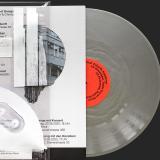
Luc Ferrari, Konstantin Simonovitch - Luc Ferrari: Presque Rien Nr.1; Societé II

Album #1 der brandneuen Vinyl-Serie mit zukunftsweisenden Aufnahmen der musikalischen Avantgarde.
Luc Ferraris Presque Rien Nr. 1 und Société II zählen zu den radikalsten Werken der Avantgarde des
20. Jahrhunderts. Mit Presque Rien Nr. 1 leistete Ferrari Pionierarbeit bei der Verwendung von Umgebungsaufnahmen als vollständiges musikalisches Material – er nahm die Geräusche eines kroatischen Fischerdorfes im Morgengrauen auf. Ohne Manipulation markierte dies einen entscheidenden Wandel hin zum
klanglichen Minimalismus und beeinflusste Generationen von experimentellen Künstlern.
Im Gegensatz dazu verkörpert Société II, komponiert für Klavier, Schlagzeug und Ensemble, Ferraris politisch aufgeladene, theatralische Seite. Entstanden inmitten der sozialen Umwälzungen der späten 1960er
Jahre, inszeniert es eine feministische Allegorie, in der die Interpreten um die Vorherrschaft wetteifern und
dabei Struktur, Improvisation und Satire miteinander verbinden.
Gemastert und geschnitten von den originalen analogen ¼-Zoll-2-Spur-Masterbändern von Rainer Maillard und Sidney Claire Meyer in den Emil Berliner Studios.
Limitierte und nummerierte Auflage mit Original-Artwork und einem neu gestalteten, wunderschön gearbeiteten Sammler-Cover mit neuen Liner Notes von Bradford Bailey, gepresst auf 180-g-Vinyl.

pre-order now01.05.2026

expected to be published on 01.05.2026

35,08
Luc Ferrari - L'Escalier Des Aveugles

L’Escalier des Aveugles, or The Stairway of the Blind, was commissioned in November 1990 by Spanish National Radio (Radio Nacional de España). Asked for a piece to premiere as part of the European Day of Music, Luc Ferrari returned with a radiophonic concept that organised his anecdotal music into montage form, sequencing short, elusive narratives in a successive way.

The completed composition is formed of thirteen chapters containing a mixture of environmental and synthesised sound, commentary, chatter, and encounters with people and places. Each focuses on a small event within this playbook, and Ferrari notes that each “in addition to being a realistic photograph, will be the subject of a ‘setting to music’: fragments of voice and atmosphere will be sampled and will produce musical matter or a ‘song’.”

The sonic language of Madrid forms the setting to which Ferrari lays out the persistent theme of the piece, that of the composer being guided throughout the city by a young woman. Using a game-like structure (liners for this edition include Ferrari’s “Regles de Jeu”, or “Rules of the Game” which act as a script or score to the piece) the motivation is posed: imagine that one day you are told “I know a place in Madrid that sounds amazing (or bizarre)”, to which you reply “Let’s go to it together.” The recordings toy with the relationships between guide and tourist, translator, director and actress, and masculine and feminine that emerge as Ferrari and the actresses follow this action, documenting the shared experience and connections they make as they visit these places.

Six actresses guide Ferrari (and the listener) through locations simultaneously ordinary and sonically rich: the metro; the El Corte Inglés department store where we hear the gossip from changing rooms set against music emanating from the PA; vagabonds declaiming their political stance in the Conde de Barajas plaza; interactions buying apples in a market; the reverberant and spacious halls of the Prado Museum where one actress gives a moving description of her favourite painting - Goya’s The 3rd of May 1808.

Ferrari replies in French to their comments in Spanish, and there are several self-referential plots, devices, and word games that flirt with the poetics and rhythm of language and sound. A recital of Lorca’s poem "La Casada Infiel" in “Hommage À Lorca” in amongst the location recordings feels striking, and the call and response of “La Nouvelle de L’Escalier”, where one of the actresses descends the staircase of the blind - a long stone stairway in Madrid proposed to Ferrari as an interesting location to visit during the trip by producer José Iges. She replies to Ferrari’s vocal enunciation of the place (and title) in French - L’Escalier des Aveugles - with the place-name in Spanish: La Escalera de los Ciegos.

Using this repeated title and image of the staircase of the blind as a symbolic place, a line is drawn to a situational landscape experienced and diffused through snapshots and allusion rather than holistically overviewed, sound conjuring pictures within the imagination. In the sensorial qualities of Ferrari’s treatment of emotion and language—fortified with electro-acoustic motifs and musical properties—the piece accelerates towards a render that is truthful, beautiful, yet also surreal; somewhere between theatre and reality, a gonzo cinema of the ear.

out of Stock

Order now and we will order the item for you at our supplier.

21,98

Last In: 5 years ago
LUC FERRARI - Photophonie

To celebrate the 90th anniversary of Luc Ferrari's birth Transversales Disques is very glad to announce the release of Photophonie, unpublished archives, spanning 1973-1992, revelatory collection of commercial, commission and secret music by electroacoustic music
pioneer Luc Ferrari.

out of Stock

Order now and we will order the item for you at our supplier.

19,29

Last In: 6 years ago
Luc Ferrari - Music Promenade / Unheimlich Schön

Cut by Rashad Becker at Dubplates & Mastering, Berlin, November 2018
Digital transfer: Jonathan Fitoussi & Diego Losa

Translations: Valérie Vivancos
Layout: Stephen O'Malley
Photos: Jacques Brissot, ARR

Coordination GRM: François Bonnet
Executive Production: Peter Rehberg
Remerciements: Brunhild Ferrari

SIDE A
Music Promenade (1964-1969), 20'29

Electroacoustic Music
World premiere for the Théâtre de la musique, March 16, 1970
" Hétéro-Concert ""

Permanent version for four stand-alone tape recorders. A series of colliding realistic sounds and sonic images. Whilst walking, a man is struck by the violence of his surroundings. Nature has disappeared in a whirlwind of warfare and industry in the midst of which he encounters a dying folklore and a lost young girl.
The "Installation" version is used to sonify a place in which walkers are free to choose their musical itinerary.

SIDE B
Unheimlich Schön (1971), 15'40

Musique concrète made in 1971 in the studios of the Südwestfunk in Baden-Baden.
Voice: Ilse Mengel.

"How does a young woman breathe when thinking about something else "
To be listened to at a low volume.

out of Stock

Order now and we will order the item for you at our supplier.

19,54

Last In: 7 years ago
Michael Meier & Christoph Franz - The Rhythm of Design LP

Clear Coloured Vinyl incl. Booklet in silk screened pvc sleeve

Sound fragments unfold across Zurich, making loss, memory, and cultural change physically and acoustically perceptible. In The Rhythm of Design, Zurich-based fine arts duo Michael Meier & Christoph Franz explore urban displacement and its impact on the local music scene.

Focusing on six venues that have disappeared or are under threat, the artists collected materials on site—wood, metal, and other architectural elements—and, with the support of professional instrument builders, transformed them into six musical instruments. Six artists and groups connected to these spaces—namely Kalabrese, Tobibi Ferrari-Bienz, Rafal Skoczek, Lucien Badoux & Jeremy Sauter, Nicola Kazimir, and Dualism—each composed a piece for them, forming the basis for site-specific performances in September 2025. Rather than performing as an ensemble, the works—ranging from experimental funk and punk to kraut, noise, and drone—unfolded simultaneously in spatial fragments at the original locations. Only through movement and listening across the city did the composition emerge as a whole. ​​The work was realized in collaboration with the City of Zurich, Art in Public Space (KiöR).

Eight months after the original performances took place, the pieces are released via Switzerland-based publishing platform Präsens Editionen. The record—available as a limited-edition coloured vinyl with a special artwork, as a digital album, and for streaming—carries the fragmented sounds of Zurich into a new form of collective memory, extending the work beyond its original locations as a lasting document of urban transformation.


* Edition of 300 clear color vinyl
* Special artwork feat. silk-screen printed plastic sleeve and an extensive booklet, designed by award-winning graphic design studio A Language, Melina Wilson and Martin Stoecklin
* Published by Präsens Editionen

pre-order now05.06.2026

expected to be published on 05.06.2026

25,63
Androo - Scénario pour un album

This is the story of a Telegram audio message suddenly poured and cast into the materiality of a vinyl record. Is it a correspondence archive? Above all, it’s a field recording, a moment bit torn from everydayness, where Androo found some fresh air in a church in Sardinia and started playing the organ. Next we’re in Naples, and Androo is playing a tiny instrument as we can hear sporadically the street hum in the background. This was all recorded on an already too old iPhone during the summer of 2023. As always, oscillating between heterogeneous elements, the album builds bridges between a radical and strangely romantic musique concrète (so slightly reminiscent of particular Luc Ferrari pieces), drawing inspirations from American minimalism, as well as traditional Sardinian music (which Androo listens to every morning), and a special kind of gospel-modal-jazz. Mostly, this is a very personal album (or its script), the fragments of a journey with no makeup. This is what it is.

credits
produced, played, recorded, mixed by androo

In Stock

On Stock and ready to ship

25,00
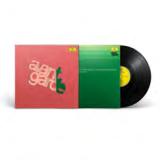
YOU CAN CAN - S/T LP

You Can Can

S/T LP

12inch36SC
SEANCE CENTRE
13.03.2023

You Can Can is an echoed affirmation, an album which traces song forms around silence, field recordings, and degraded analog memories. This is folk music transmogrified and mutated, as if recorded and reconstructed in Pierre Schaffer’s GRM studio.

Not your typical Mariposa folk duo, the group is comprised of Toronto avant-music scene stalwarts, vocalist Felicity Williams (Bernice, Bahamas) and bricolage artist and synthesist Andrew Zukerman (Fleshtone Aura, Badge Epoch). The album feels like a somnambulant conversation, fragmented and half-remembered with Williams’ vocals traveling through a landscape of field recordings and Zukerman’s saturated concrète topographies. It is an electro-acoustic assemblage, both analog and digital, comprised of air, electricity, minerals, wood, and water. Although the album nods towards traditional forms of folk and musique concrète (if at this point it can be called a traditional form), it is outwardly and inwardly contemporary; non-linear, citational, opaque, and sui generis. In a way it feels like a sonic index of the narrative experiments found on the infamous Language school-related publisher The Figures, in the work of Lyn Hejinian, Clark Coolidge, and Lydia Davis. In the musical continuum, the album picks up where Linda Perhacs left off in the early 70’s—explored by Gastr Del Sol in the ‘90s—a convergence of rural acoustic idioms and urban avant-electronics. This is country music for the discerning cosmopolitan citizen of the 21st Century.

RIYL: Luc Ferrari, Brannten Schnüre, William Basinski, Oval, Eric Chenaux, Emmanuelle Parrenin About Everything In Time and Failure Figures, Felicity Williams says:

Everything In Time is indebted to the language of Brazilian author Clarice Lispector (as translated by Alison Entrekin). Drawing on insights from psychoanalysis, we trace the roots of melancholy to render them available to consciousness; words from the ghostly realm of the transpersonal filter through dreams and shine a beam of light onto a lone trillium in a forest at night. Other influences include the experience of not knowing, of being subject to a gestation outside of one’s control. This is an ode to the power of naming to obliterate, to set free.

Failure Figures is a meditation on the radical contingency of reality and the vicissitudes of the will. With Slavoj Zizek as my guide (think: “Hegel for dummies” - I’m the dummy in this scenario), I wander through the valley of the shadow of death, and take heart. The last verse refers to an experience I had recording at a studio in Brussels. I was singing in French, with which I have some fluency, and the producer was complaining to the artist whose song it was that my delivery was not convincing. Thinking I was out of ear shot, he said in French, “c’est comme elle n'est pas là”; I was pronouncing the words correctly, but I failed to express anything. So what or whom is responsible for conveying meaning, if not the form of the word itself? And if the connection between meaning and form is broken, how do we fix it?

Gratitude to Thom Gill (guitar) and Daniel Fortin (bass) who joined us on the recording of Failure Figures. Thanks as well to my old roommate Christopher Willes, who unwittingly left behind his hand bells deep in the hall closet. We unearthed them by accident, and the bells became an important sound element. Thanks to other past roomies Robin Dann and Claire Harvie, whose childhood piano and guitar respectively still reside with us, and were used in the recording. Field recordings were made in Toronto, Canada and Celestún, Mexico in 2020.
In Stock

On Stock and ready to ship

18,70
Mouchoir Étanche - Une fille pétrifiée

Mouchoir Étanche

Une fille pétrifiée

12inchCELL-03LP NOCOVER
Cellule 75
30.12.2020

"I am sitting in a garden, I haven't left the property in weeks, someone is dropping off food once a week. I haven't seen a human being in ages, I feel like a reverse Schroedinger cat - do I exist when nobody sees me? I must be somewhere in France but I don't remember. I have lost my consciousness again. When I wake up I hear a broken record looping somewhere in the mansion. A washed-out opera. Behind the trees I see the dilapidated hermaphrodite sculpture in a field of verdant nettles and fern. I hear gunshots far afield, aeroplanes in the sky, sirens on the main road.
When unconscious I dreamt of sitting on the Concorde observing the scarab blue ocean and iridescent clouds from above, an erstwhile receding memory. Sometimes I hear the organ of the nearby Renaissance Cathedral merging with the Russian Church bells.
I am hallucinating again. Someone's humming in the kitchen? Singing? A Radio? I overhear two young women talking about art galleries in the neighbour's garden. Bees attack, again…..again and again. The hairspray finally intoxicates them. An amphoric japanese voice is whispering in my head saying I will die soon. Someone (something?) bangs on the vases. The fountain's water turns dark red.
Fleur calls and says mum died. The funeral will be televised on tuesday. We opt for the synthetic choir for the service. The call is suddenly interrupted. Mold is slowly taking over the house.
I go back inside."

Une Fille Pétrifiée is the debut album of new Black To Comm related entity Mouchoir Ètanche (after one recent 12" on Richter's own Dekorder label). Combining real and fake acoustic instrumentation, sampling, field recordings and excessive yet inaudible post production this is another sublime and ethereal statement. Influences are ranging from (French) Classical & Opera to the anecdotical compositions of Luc Ferrari, Chinese Opera, Chanson, Sacred Music / Church Music, JG Ballard and Surrealism.

Marc Richter records as Black To Comm for Thrill Jockey, Type and Dekorder and as Jemh Circs for his own Cellule 75 imprint. He also produces soundtracks and acousmatic multichannel installations for institutions such as INA GRM Paris, ZKM Karlsruhe and Kunstverein Hamburg.

In Stock

On Stock and ready to ship

19,37
Alice Kemp - 9 Dreams In Erotic Mourning

Alice Kemp is a British artist working with noise, performance, fetish objects, installation and many other forms of media. Throughout her work, she articulates a broken and illogical syntax of the subconscious through trance states, dreams, and disturbances. She has performed extensively, occasionally as an associate to the Schimpfluch-Gruppe of Swiss extreme aktionists.

It is a rarified violence that the Kemp invokes on her 9 Dreams In Erotic Mourning. Something disfigured. Something fucked. Something left behind. The subject matter of her investigations are deliberately inscrutable as she grotesquely amplifies a moment of terror, or fear, of sadness through pockets of piano melodies broken by psychoacoustic noise, razor-cut silence, ghastly vocalizations, crushed acts of physical aggression, and buckets of high-pressure suspense. Cryptic and oblique by design Kemp's work reads perhaps as a seance gone awry, certainly as private ritual made public, and as a transfiguration of literary body horror turned into a sonic nightmare that runs parallel to the works of Rudolf Eb.Er, Puce Mary, Sewer Election, and Luc Ferrari.

9 Dreams In Erotic Mourning was originally published as part of the instantly out of print boxset, On Corrosion - a 10 cassette anthology from 2019 that was housed in a handcrafted wooden box and featuring full albums from Kleistwahr, Neutral, Pinkcourtesyphone, Alice Kemp, She Spread Sorrow, G*Park, Relay For Death, Francisco Meirino, Fossil Aerosol Mining Project, and Himukalt. The collection also stood as the 50th release for The Helen Scarsdale Agency.

pre-order now20.03.2026

expected to be published on 20.03.2026

23,32
Håvard Volden - Small Lives

Håvard Volden

Small Lives

12inchSAU004LP
Sauajazz
18.07.2025
  • 1: Seedling
  • 2: Soaring
  • 3: From Dirt
  • 4: Small Lives
  • 5: Dog Happy
  • 6: Oryzae

After years of sonic exploration with guitars and electronics in addition to other projects (Lost Girls, Moon Relay, Jenny Hval), Håvard Volden has returned to his main instrument with renewed curiosity and a new band. On this album, the guitar takes center stage, with alternative tunings and an exploratory approach forming the foundation for a new musical direction. The result is a beautiful album with an honest and organic sound, and the perfect blend of jazz and alternative pop/rock. The music is rooted in jazz but also draws inspiration from early tape music—think Joe Meek, and Luc Ferrari—as well as folk traditions from all over, new age, and the raw energy of experimental rock, likeVelvet Underground. The result is a collection of instrumental compositions where guitar, synthesizers, bass, and drums interweave in dynamic interplay. At times, the pieces are loose and expansive; at others, they are rhythmically precise and compressed—like instrumental pop songs with an open structure. And to add to the pop cultural pallett; the cover photo is taken on tour with Jenny Hval in front of the ”Twin Peaks” mountains. With music that thrives on dynamics and improvisation, most of the album was recorded live in the studio. This album is an exploration of the guitar’s potential, where echoes and tape machines extend the instrument’s rhythm, resonance, and tonality. A playful, dreamlike, and uncompromising record that embraces the power of collaboration.

pre-order now18.07.2025

expected to be published on 18.07.2025

33,57
VARIOUS ARTISTS - MUSIQUE EXPERIMENTALE
  • A1: Volumes; Composed By – François-Bernard Mâche
  • A2: Crucifixion; Compilation Producer – Romuald Vandelle
  • A3: Ambiance Ii (Toast Funèbre); Composed By – Michel Philippot; Text By – S. Mallarmé*; Voice – Nelly Delmas
  • B1: Tautologos Ii; Composed By – Luc Ferrari
  • B2: Texte Ii; Composed By – André Boucourechliev
pre-order now26.06.2025

expected to be published on 26.06.2025

13,07
JUDITH HAMANN - AUNES

Judith Hamann

AUNES

12inchSPLP154
Shelter Press
14.03.2025
  • By The Line
  • Casa Di Riposo, Gesu' Redentore
  • Seventeen Fabrics Of Measure
  • Bruststärke (Lung Song)
  • Schloss, Night
  • Neither From Nor Towards

Aunes is a rare solo album from peripatetic Australian cellist-composer-performer Judith Hamann, presenting six pieces recorded across several years and countries. Developing the collage techniques and expanded sound palettes heard on their previous releases, Aunes makes use of synthesizers, organ, voice and location recordings alongside the dazzlingly pure, enveloping tones of Hamann's cello. The record takes its name from an old French unit of measurement for fabric, varying around the country and from material to material. Unlike the platinum metre bar deposited in the National Archives after the Revolution as an immovable standard, an aune of silk differed from an aune of linen: the measure could not be separated from the material. In much the same way, in these six pieces_which Hamann thinks of as `songs'_formal aspects such as tuning, pacing, melodic shape and timbre are not abstractions applied universally to musical material but are inextricable from the instruments and sounds used, even from the places and communities in which the music was made. Audible location sound embeds the music in its place of making, as in the delicate duet for church organ and wordless singing `schloss, night', where shuffles and cluttering in the reverberant church space form a phantom accompaniment, gradually displaced by a uneasy shimmer of wavering tones from half-opened organ stops. `Casa Di Riposo, Gesu' Redentore' documents a walk up a hill to an outdoor mass in Chiusure, layering voices near and far with footsteps, insects and other incidental sounds. Like in the work of Moniek Darge or Luc Ferrari, location recordings are folded on themselves in space and time, their documentary function dislocated to dreamlike effect. On other pieces, it is the emphatic presence of the performing body that grounds the music, whether in the intimate fragility of Hamann's softly sung and hummed vocal tones or the clothing that rustles across a microphone on the opening `by the line'. The idea of a music inextricable from its material conditions is perhaps most strikingly communicated on the album's briefest piece `bruststärke (lung song)', composed from layered whistling recorded while Hamann suffered through an asthma flare up, the results halfway between field recordings of an imaginary aviary and the audiopoems of Henri Chopin. More than any of Hamann's previous solo works, a strong melodic sensibility runs through Aunes, even when, like on `seventeen fabrics of measure', the music hangs together by the merest thread. At other points, Hamann's love of pop music is more obvious: the rich synth harmonies of `by the line' could almost be a melting fragment of a backing track from Hounds of Love. The expansive closing piece `neither from nor toward' exemplifies the highly personal musical language that Hamann has developed in recent years through constant solo performance (and a rigorous discipline of instrumental practice), pairing two overdubbed voices with the boundless depth and harmonic richness of just-intoned cello notes, calling up Ockegham or Linda Caitlin Smith in its elegiac slow motion arcs. Hamann's most personal work yet, Aunes arrives in a striking sleeve reproducing a section of a painting made from sewn pieces of dyed wool by Wilder Alison, a friend and fellow resident at Akademie Schloss Solitude, one of the temporary homes where much of this music was recorded.

pre-order now14.03.2025

expected to be published on 14.03.2025

22,27
Tachycardie - Musique Pour Structures Sonores Baschet LP

After a triptych released by Un je-ne-sais-quoi, in barely 3 years, under the name Tachycardie, Jean-Baptiste Geoffroy, musician, composer but also visual artist, continues his very singular journey to the heart of sound matter, with an album composed on Baschet sound structures.

From the 1950s, the Baschet brothers created a truly innovative set of instruments which has since fascinated musicians seeking new sound experiences.

Both sculptures of glass, metal and instruments of great acoustic sharpness, these sound structures have made rare but remarkable forays into recordings of contemporary music (Bernard Baschet, Jacques Lasry, Luc Ferrari, Toru Takemitsu, Jonathan Fitoussi…).

The Baschet brothers were also keen to use these instruments for educational purposes in the form of workshops, cultural action projects or simply by inviting the public to try these instruments at the end of concerts. It is in the Ateliers Baschet, a place aimed at preserving and transmitting the work of the brothers (workshops, conferences, residencies) that Tachycardie recorded this new album.

After having combined on his previous albums, analog synthesis, audio-naturalism and percussion in an overwhelming balance, he explored here all the sonic variety of Baschet structures. He then just sculpted this sound material in his studio, using simple effects: editing and pitch.

The result is a new path to explore in Tachycardie’s world, made of subtle percussive crackles, beneficial chaos and restorative oscillations.

pre-order now04.10.2024

expected to be published on 04.10.2024

23,32
Mouchoir Étanche - Le jazz homme

Le jazz homme is the 2nd album of Black To Comm related entity Mouchoir Ètanche. This time heavily influenced by French Jazz (?) as well as the usual suspects: Nurse With Wound, Luc Ferrari, JG Ballard, Surrealism. The human entity has finally been replaced.

"Program music, instrumental music that carries some extramusical meaning, some “program” of literary idea, legend, scenic description, or personal drama. It is contrasted with so-called absolute, or abstract, music, in which artistic interest is supposedly confined to abstract constructions in sound. It has been stated that the concept of program music does not represent a genre in itself but rather is present in varying degrees in different works of music." (Encyclopædia Britannica)

Prompt 1: Pascal Comelade's toy piano falling down the stairs , Hector Zazou pushing from behind, laughing

Prompt 2: Cool jazz played on antique mellotron, low in fidelity, and sad, Glenn Miller‘s grandma crying silently

Prompt 3: A hippie commune version of jazz as played by a cheap computer fed by Chat GPT with medieval buisine fanfare information and samples, trained on the entire Amon Düül II history, heavily looped yet unsynchronized

Prompt: 4: Same, but flutes and synths and trance and chants

Prompt 5: French female artist philosophizes about Shirley Temple, mysterious atmosphere, insensitive homme laughing nervously, heavily looped, hynotic 18th century orgue de salon underneath

Prompt 6: Cool jazz, Echoplex, strange rhythm, Blue Note daydreaming

Prompt 7: Hammond jazz with fake Cyro Baptista loop, Madagascar indri indri lemurs chanting fake sax solos in Malagasy language, electronic bells

Prompt 8: German jazz and artificial prayers, and Shirley Temple returning, with defect Publison recorded at GRM, destroying the voice recording

Prompt 9: Andrei Tarkovsky's moustache meets Johann Sebastian Bach's wig, a well gently lapping in the background, fifths, car crashing into a poor violent onsen geisha

Marc Richter records as Black To Comm for Thrill Jockey and under the Mouchoir Ètanche and Jemh Circs monikers (and solo) for his own Cellule 75 imprint. He collaborated with visual artists such as Ho Tzu Nyen, Jan van Hasselt and Mike Kelley. He also produces soundtracks and acousmatic multichannel installations for institutions such as INA GRM Paris, ZKM Karlsruhe and Kunstverein Hamburg.

pre-order now15.03.2024

expected to be published on 15.03.2024

20,13
Brunhild Ferrari - Extérieur-jour

After her stunning collaborations with Vincent Royer (for Mode Records), Jim O"Rourke and Christoph Heemann (both for Oren Ambarchi"s Black Truffle Records) Brunhild Ferrari returns to the scene with this new solo album. Extérieur-jour is comprised of two previously unreleased compositions, one being the title track the album is named after and the other "Le Piano Englouti (version original)." Extérieur-jour translates to "Outside Day," and indicates an instruction for a film scene, a piece of cinéma pour l"oreille, a movie for the ears. It was recorded at Luc Ferrari"s Atelier Post Billig in January and February 2014. "Le Piano Englouti" ("The Sunken Piano"), another electroacoustic composition which was realized over a period of fourteen years between 1996 and 2010, also brings forth cinematic elements with sound sources recorded in places as diverse as a Greek island by the noisy Agean Sea, a Pachinko place and a quiet island in Japan. It comes across as a meditation on the loss and reappearance of memory and silence. The graphics for the album sleeve were created by the late Wolfgang Meyer Tormin, artist and composer and also father of Brunhild Ferrari. The album was mastered for vinyl from the original source by Jim O"Rourke.

pre-order now26.01.2024

expected to be published on 26.01.2024

32,14
Various - In Fractured Silence LP

Have you heard of the Nurse With Wound List? If you are a fan of creative-experimental-unlikely music, certainly. You would therefore be aware that amongst the recommendations that Steven Stapleton slipped into the first album of his group Nurse With Wound, were to be found a few restless frogs: Jef Gilson, Luc Ferrari, Jacques Thollot, Urban Sax, Horde Catalytique and last but not least Jean-Jacques Birgé and Francis Gorgé. Stapleton admired their album Défense de. The two Frenchmen just had to conceive of a fabulous precursor to the channel tunnel (check out the inside of the record, you’ll see) to enable Stapleton to come to France in 1980. The Englishman was looking for contributions to a compilation to be released on his United Dairies label that he had created with John Fothergill, and he naturally called on Birgé and Gorgé, who were then playing with Bernard Vitet in ‘Un drame musical instantané’.

It was a done deal and the compilation would be named In Fractured Silence. Alongside Nurse With Wound and Un drame musical instantané, could be heard Hélène Sage (whom Birgé introduced to Stapleton) and Sema, a project from the experimental British musician Robert Haigh who had participated in key records in the Nurse With Wound discography, such as Homotopy to Marie and Spiral Insana.

The curtain is raised and it is Un drame musical instantané who start the ball rolling. Mystery abounds; synthesisers lurk, percussion clatters and the sounds (creaks, whistles, vocal insertions...) fire in all directions. For the piano, it’s a debacle, the Drame won, Hélène Sage can take over. Heading up a quintette including Gorgé and Vitet, she creates a cushioned chamber music with strings and many silences.

On the B side, it’s the other side of the channel. Sema’s piano first off, which dares everything, even melody, before spilling out its darkest ideas in a raucous requiem. Finally, Stapleton appears, delving into his collection of female voices to devote himself to an iconoclastic transformation and concoct a song which collapses under the assault like Marianne at Agincourt. After having listened to In Fractured Silence, you will simply have to choose sides.

pre-order now13.10.2023

expected to be published on 13.10.2023

25,00
Various - In Fractured Silence LP

Have you heard of the Nurse With Wound List? If you are a fan of creative-experimental-unlikely music, certainly. You would therefore be aware that amongst the recommendations that Steven Stapleton slipped into the first album of his group Nurse With Wound, were to be found a few restless frogs: Jef Gilson, Luc Ferrari, Jacques Thollot, Urban Sax, Horde Catalytique and last but not least Jean-Jacques Birgé and Francis Gorgé. Stapleton admired their album Défense de. The two Frenchmen just had to conceive of a fabulous precursor to the channel tunnel (check out the inside of the record, you’ll see) to enable Stapleton to come to France in 1980. The Englishman was looking for contributions to a compilation to be released on his United Dairies label that he had created with John Fothergill, and he naturally called on Birgé and Gorgé, who were then playing with Bernard Vitet in ‘Un drame musical instantané’.

It was a done deal and the compilation would be named In Fractured Silence. Alongside Nurse With Wound and Un drame musical instantané, could be heard Hélène Sage (whom Birgé introduced to Stapleton) and Sema, a project from the experimental British musician Robert Haigh who had participated in key records in the Nurse With Wound discography, such as Homotopy to Marie and Spiral Insana.

The curtain is raised and it is Un drame musical instantané who start the ball rolling. Mystery abounds; synthesisers lurk, percussion clatters and the sounds (creaks, whistles, vocal insertions...) fire in all directions. For the piano, it’s a debacle, the Drame won, Hélène Sage can take over. Heading up a quintette including Gorgé and Vitet, she creates a cushioned chamber music with strings and many silences.

On the B side, it’s the other side of the channel. Sema’s piano first off, which dares everything, even melody, before spilling out its darkest ideas in a raucous requiem. Finally, Stapleton appears, delving into his collection of female voices to devote himself to an iconoclastic transformation and concoct a song which collapses under the assault like Marianne at Agincourt. After having listened to In Fractured Silence, you will simply have to choose sides.

pre-order now13.10.2023

expected to be published on 13.10.2023

23,49
Marc Richter - Coh Bâle

Marc Richter

Coh Bâle

12inchCELL-11LP
Cellule 75
15.07.2023

This new album compiles several songs made in the years following Black To Comm's classic "Alphabet 1968" album. Originally released on the seminal Type label in 2009 (and to be reissued on Cellule 75 this year) "Alphabet 1968" combined the sound of vintage shellac and vinyl loops with broken electronics and field recordings, the press release mentioning disparate influences "ranging from Moondog to Basic Channel by way of Bernard Herrmann". In a beautiful one-page review in The Wire magazine (later reprinted in his book Ghosts Of My Life) Mark Fisher compared Richter's music to JF Sebastian’s miniature automata in Blade Runner ("with their bizarre mixture of the clockwork and the computerised, the antique and the ultramodern, the playful and the sinister"), ETA Hoffmann's inventor-magicians and Auguste Villiers de l'Isle-Adam's 1886 tale of Thomas Edison's (fictitious) construction of an artificial human.

Now titled "Coh Bâle" (inspired by a strange dream) these recordings were supposed to become a follow-up to said album but for reasons unknown it never materialized and the album seemed forever lost. At the time Richter started to dive deeper into several strains of (so-called) world music aka the folk music of Southeast Asia and Eastern Europe as well as liturgical and medieval music, the Kraut-Electronica of Harmonia and several certain Mediterranean experimentalists from the 1980's who started to merge their mostly electronic and field recording based compositions with traditional musics from all over the world by way of new sampling technology.

Many of the songs for the album were recorded while travelling and at various residencies around Europe: a detuned piano in a Thessaloniki basement (Richter played at a children's birthday party there), vintage synthesizers in the GRM studios in Paris, decaying acoustic instruments found in an old Black Forest mansion, childrens' voices at a workshop in Karlsruhe's ZKM Institute; then mixed on headphones in the ICE trains running between these places and his hometown Hamburg.

"Coh Bâle" is taking inspirations from old Nonesuch Explorer and Ocora LP's, Crammed Records, 80s Mediterranean Ambient (Nuno Canavarro, Roberto Musci) combined with the DIY spirit of Deux Filles and Flaming Tunes and the playfulness of Asa Chang & Junray. The songs are both mysterious and transparent, intricate and frugal, vibrant and patient. One of the album's unexpected climaxes is a gorgeous (artificial) berimbau version of the Welsh traditional "Iechyd o Gylch".

No two songs feature the same instrumentation and many acoustic sources (pianos, flutes, wood percussion, viola, tablas, autoharp) were disassembled and later coalesced into new configurations or used as virtual instruments; later combined with samples, field recordings, electronics and (on a few tracks) autotuned vocals reminding of recent works by the likes of Claire Rousay or More Eaze.

We had to wait for a worldwide pandemic for Richter to dig deep into the vaults and finally bring these recordings to light. This is the 2nd release from his archives after the "Diode, Triode" LP which presented Musique Concrète/Acousmatic recordings made at INA/GRM and ZKM. Another massive Double-CD (MM∞XX Vol. 1 & 2) was released last year featuring collaborations with 33 artists such as Andrew Pekler, Richard Youngs, Eric Chenaux, Maja Ratkje, Radwan Ghazi Moumneh of Jerusalem In my Heart, GRM boss François Bonnet (Kassel Jaeger), Felix Kubin, Timo van Luijk (In Camera, Af Ursin), Luke Fowler and many others, showing Richter's versatility and his willingness to reinvent himself for every new release.

Marc Richter is widely known under his Black To Comm moniker, having released (at least) 12 albums under this alias in the last 20 years. He is currently signed to the Thrill Jockey label. Richter composes soundtracks for film and has worked with visual artists such as Mike Kelley and Ho Tzu Nyen. He also records as Jemh Circs and Mouchoir Étanche for his own Cellule 75 label (named in tribute to the late Luc Ferrari).

pre-order now15.07.2023

expected to be published on 15.07.2023

20,13
Niko-Matti Ahti - Kaivajaiset

Students of Decay presents "Kaivajaiset" by Finnish composer Niko-Matti Ahti. Best known for his work alongside his partner Marja as Ahti & Ahti, Niko-Matti has been an active participant in the Finnish underground since the late 1990s. "Kaivajaiset" is his first solo recording and was originally conceived of as an installation. Part horspiel, part musique concrete, it is a piece of music that draws comparisons to the work of pioneering avant-garde composers such as Henning Christiansen, Annea Lockwood, Luc Ferrari, and Pierre Mariétan. Ahti weaves vivid foley and domestic recordings together with oration and classical instrumentation (violin, clarinet, bass clarinet, and flute) to arrive at an expansive, narrative, and at times thrilling composition. “Kaivajaiset" was exhibited in two Finnish galleries: B-Galleria in Turku (2019) and 3H+K in Pori (2020). The installation drew inspiration from The Diggers' 1649 pamphlet and Michel Foucault's extension of Friedrich Nietzsche’s concept of genealogy, and consisted of sounds, opinion pieces, a print copy of the pamphlet, and four cardboard collages. This record is a summary of the sounds of the installation.

pre-order now14.04.2023

expected to be published on 14.04.2023

25,59
Various - Future Trance 100 LP 4x12"

Various

Future Trance 100 LP 4x12"

4x12inch0600753971345
Polystar
24.11.2022
 
51

The last flight – we have arrived! Fasten your seatbelt and buckle up – Denn die erfolgreichste Dance- & Trance-Compilation unseres Planeten setzt einmalig zu ihrem letzten Landeanflug an.

Anlässlich des 100. Jubiläums erscheint die beliebte Produktreihe als galaktische Sonderausgabe und Fans dürfen sich neben der 3CD und dem eAlbum auf eine streng limitierte Fan-Box mit 3CD, galaktischem Comic-Poster, Fan-Socken und Schlüsselanhänger freuen. Damit aber noch nicht genug: Diese letzte Ausgabe unserer FUTURE TRANCE erscheint am 25.11.2022 zudem exklusiv als 4LP inkl. Comic-Poster!
Echte Fans werden zudem bei der besonderen Optik ein Flashback erleben – das erste Mal seit der Landung der FUTURE TRANCE Vol. 60 erlebt die Reihe wieder ein Alien-Revival und erscheint in außerirdischem Design.

Die FUTURE TRANCE 100 besticht durch ein randvolles Aufgebot mit den größten Stars der Szene und ihren aktuellen Bangern. Ein letztes Mal zünden wir die Trance-Booster - mit dabei sind z.B. Scooter,
Pulsedriver, Armin van Buuren, Rocco und und und. Abgerundet wird dieser Senkrechtstarter mit einem exklusiven FUTURE TRANCE UNITED Mix „The last flight – we have arrived!“ Hier ist Gänsehaut vorprogrammiert!

out of Stock

Order now and we will order the item for you at our supplier.

39,45

Last In: 15 months ago
Items per Page:
N/ABPM
Vinyl