Suche:domin

19
Avril Lavigne - LET GO (20th ANNIVERSARY EDITION) - Let Go celebrates 20 years as one of the most influential pop punk albums of the early 2000's. Originally released in June of 2002, Let Go became an instant sensation with hits such as "Complicated," and "Sk8ter Boi" dominating the charts and airwaves. Certified 7X Platinum, the album has cemented it's lasting legacy in the pop punk world and beyond. To commemorate it's 20th anniversary, an expanded edition of the original album will be released featuring 6 bonus tracks, including a brand-new recording of "Breakaway" by Avril, reimagined 20 years later.

- 01: Nhá Zefa &Amp; Nhô Pai - We&Apos;Ll Never Forget
- 02: Leôncio &Amp; Leonel - Envious Affair
- 03: Grupo Sertanejo Do Lenço Preto - Oh I Cry
- 04: Mandi &Amp; Sorocabinha - Bad Weather
- 05: Jeca Mineiro &Amp; Bambuí - River Of Revenge
- 06: Zé Mané &Amp; Zé Pagão - White Rose
- 07: Zico Dias &Amp; Ferrinho - I Went For A Walk In The City
- 08: Mariano &Amp; Caçula - Shaved Moustache
- 09: Tonico &Amp; Tinoco - Example Of Faith
- 10: Sulino &Amp; Marrueiro - Return Of The Cowboy
- 11: Moreno &Amp; Moreninho - City Of Roses
- 12: Valdomiro &Amp; Valdemar - Old Saying
- 13: Serrinha &Amp; Caboclinho - The Crimes And Death Of Dioguinho
- 14: Raul Torres &Amp; Serrinha - Friday The 13Th
- 15: Canário &Amp; Passarinho - Goodbye
- 16: Mandi &Amp; Sorocabinha - I Dreamt I Had Died
16
Death Is Not The End present the first volume in a survey of a form of Brazilian country music known as música caipira ("hillbilly music") - a stripped-back forerunner to música sertaneja, the Brazilian equivalent to US country & western which in it's contemporary form has come to dominate the domestic music industry in recent decades. This collection covers some of the earliest recordings made by the pioneering folklorist Cornélio Pires at the end of the 1920s, through to records from the 30s, 40s & 50s and the beginning of the 60s.
Somewhat rooted in Portuguese troubadour folk traditions, música caipira is typically performed by a duo singing in parallel thirds and sixths, drawing upon a Portuguese-Brazilian style known as moda de viola - with the viola being the viola caipira, a Brazilian-style ten-string guitar that is the core instrument of the music. Born out of the "outback"-style region in north-eastern Brazil, these songs tell stories of pain, love, loss & betrayal - often backed by homemade guitars using invented tunings. Away from the polished pop country & western-stylings of the sertaneja, these recordings could be viewed as the Brazilian equivalent to the roots music of the American dustbowl or Appalachia.

9
Twoosty Mayonez is a duo consisting of Bartosz Wolert (drums) and Kornel Karolak (synthesizers), creating post-jazz music and is considered to be part of the new Polish wave of this genre. The album is a continuation of the story begun in 2123, when Captain Harrison Focus, as a result of an emergency landing of his rocket, lands on the unknown planet Carmin. This story was described and released by U Know Me Records and this is how the (universe) world learned about Twoosty Mayonez. Their latest album is a story about what happens on the surface of the mysterious planet Carmin. This time, the main character of the album is Triceradiplodocus. The songs show changes in mood and atmosphere. The music is full of energy, harmony and emotions that reflect the diversity of the world the hero goes through.
All compositions were created on a weekend in September 2023, as a result of the duo's collective improvisation. The recordings were made at the Twoosty Room studio in Warsaw by the band's drummer.
The album features guest appearances by: Alicja Sobstyl (flute), Ola Szmidt (vocals), Wojtek Mazolewski (double bass), Olaf Węgier (sax). The cover was designed by Dominika Kiszkiel, and the mix and mastering was done by Maciek Goliński (Envee). The album, released in LP and digital formats by U JAZZ ME Records, is scheduled for January 9, 2025.

Dompe Delivers Peak-Time House Energy on New Reload EP.
Definitive Recordings welcomes a brand-new three-track EP from Dompe, showcasing his unmistakable blend of classic house foundations, driving grooves, and modern club attitude.
Dompe aka Dominic Wagner is a DJ and producer driven by relentless passion and an instinctive feel for the dancefloor.
Known for pairing distinctive vocals with finely crafted basslines and arrangements, his sound is always moving forward while staying rooted in house tradition. Based in Berlin since 2011, Dompe founded Jackfruit Recordings in 2017 as his personal creative playground, releasing a steady stream of music that has earned both national and international attention. His doublevinyl album ‘Hippie Crack’ sold out quickly and charted strongly on Beatport, followed by ‘French Collection’. In 2025, Dompe made his debut on Definitive Recordings with a standout remix of the label classic ‘Let It Go’ by John Acquaviva, Olivier Giacomotto and Dan Diamond further cementing his connection to the imprint.
Now returning with a full EP, Dompe opens with ‘Reload’, a classic house groover built around a tight rhythm, a looping piano motif, and a chopped, repeated male spoken-word vocal that locks into the groove. It’s raw, hypnotic, and instantly effective on the floor. ‘Wave’ shifts into more percussive territory, drawing on classic tech house energy. Built almost entirely around drums, the track evolves through rolling percussion, catchy vocal snippets, and sharp house synth work before snapping back into a full percussive drive designed for late-night momentum. Closing the EP, ‘Sundown’ delivers a no-nonsense house stomper. Big 909 drums, a 90s-inspired piano theme, and a vocal sample declaring ‘ecstasy’ capture the peak-time feeling of a packed club
in full flow: direct, euphoric, and unapologetically house.
3
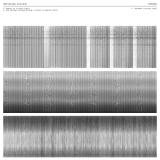
Faitiche welcomes a new artist: Christina Kubisch belongs to the first generation of sound artists. Her practice ranges from performances, concerts, to works with video and visual art, but she is best known for her sound installations and electro-acoustic compositions.
TUNING brings together three pieces by Christina Kubisch from different periods of her oeuvre. What they have in common is the way they transform sound phenomena originally considered “non-music” into compositions.
Jan Jelinek: Gaming in Silence (2024) is the most recent work on this compilation. It’s a collage of electromagnetic waves, voice, and abstract sound textures. How did this combination come about?
Christina Kubisch: Gaming was commissioned as a fixed-media composition for the Sound Dome at ZKM Karlsruhe. Since Resonances: The Electromagnetic Bodies Project (2005), I’ve been making recordings in the old and new server rooms at the ZKM and in their permanent collection of historical computer games. Computer games like Asteroids (Atari, 1979) and Poly-Play (VEB Polytechnik, 1986) have specially generated analogue electromagnetic waves that interest me in particular on account of their density, rhythms and textures. I originally studied painting and to me the work of composition often feels like painting an abstract picture. I alter my source material as little as possible, layering and overlapping until a distinctive sound space emerges. In recent pieces, I sometimes combine magnetic waves with field recordings or live instruments. In Gaming it’s my recording of a Chinese song about silence.
JJ: Two persons walking through a street in Madrid (2004) is a recording from your Electrical Walks series. Here we should give a brief explanation of one of your best known works: participants in an Electrical Walk move through public spaces wearing prepared headphones that allow them to receive electromagnetic waves from their surroundings – for example from security gates, ATMs or neon signs. They discover a situation that normally is inaudible to the human ear and they can actively shape it by choreographing their movements. I really admire this piece, not least because there’s no clear dividing line between participants and artist. What exactly do we hear in Two persons walking through a street in Madrid (2004)?
CK: With this early work, I wanted to understand what is heard by people participating in an Electrical Walk in the same place but moving in different ways. The Spanish composer Miguel Alvarez-Fernàndez and I set off from opposite ends of a major shopping street in Madrid, met briefly in the middle, and then continued to the end. We both recorded our walks and I then layered them over one another. You might call it a work of electromagnetic conceptualism.
JJ: Diapason (2009 version) is an installation that plays a composition based on sounds from fifteen tuning forks. This setting is audible in the recording: there’s no dramatic arc, no beginning or end – instead, it recalls a piece of aleatoric music focussing on the decay phase. How did you come to make this work and could you tell us something about your compositional method?
CK: Diapason is part of a series of three pieces that deal with “non-instruments” or instruments that no longer exist: electrical mine bells used to send signals to the workers underground; a historical glass harmonica originally used for medicinal purposes; and tuning forks that were used by doctors to test people’s hearing. All of these methods are no longer in use. The sound of the tuning forks, audible only if held close to the ear, was recorded at the electronic studio at Berlin’s Technical University in such a way that even their decay remained audible. The frequencies range between 64 and 2048 Hertz and they can be adjusted at micro-intervals using small movable weights. The sequence and the duration of the pauses are dictated by chance and were not defined in advance. The 2009 version was created for an installation in the historic Holy Cross Church (Korskirken) in Bergen. Visitors could enter and leave the space at any time, deciding for themselves where and for how long they wished to listen to the sounds played back over an array of small loudspeakers placed on the floor of the apse.
Credits:
Gaming in Silence: commission of the ZKM/Hertzlab, Karlsruhe 2023
elektronic sound processing: Tom Thiel
sound engineering and mixing: Eckehard Güther
Diapason: produced at Elektronisches Studio of TU Berlin
rearrangement: Eckehard Güther
Christina Kubisch, published by Edition Christina Kubisch / Random Musick Publishing
image front: Transitionen 2021 by C. Kubisch, sonagrams of electronic waves (courtesy: Galerie Mazzoli Berlin)
image back: Diapason Tuning Fork, property of Folkmar Hein, Photo: Archiv Christina Kubisch
design by Tim Tetzner
mastered by Giuseppe Ielasi
Thanks to Miguel Álvarez-Fernández, Folkmar Hein, Dominik Kautz and Mario Mazzoli

- A1: The End
- A2: Polonium
- A3: It's All Over
- A4: Addis Abba Ft. Vinnie Paz
- A5: Imminent Danger (Interlude) Ft. Sunez Allah
- B6: Black Caesar Ft. General Steele & Maitre D
- B7: Spilled Sphinx Ft. Nejma Nefertiti
- B8: Bombardians Ft. Cf & Dontique
- B9: Think Dominant Ft. Skam2, Innocent & Maitre D
- B10: Water Seeds (Interlude) Ft. Eloh Kush
- B11: Masked Assassin
- C12: Tough Skin - Napoleon Da Legend Ft Skyzoo
- C13: Break The Chains Ft. Gregg Green
- C14: Kill Bots Ft. Passport Rav
- C15: Star Wars Ft. Crazy Dj Bazarro & Maitre D
- C16: Sinners And Saints
- C17: Mind War Ft. Goretex
- D18: G.a.m.o
- D19: System Error (Interlude)
- D20: Ultimate Power
- D21: Alan Wattage Ft. Ghost Machine
- D22: Save Point
- D23: The Beginning Ft. Bbass
23
G.A.M.O. (Gods Against Man's Oppression) recounts events leading to Napoleon Da Legend transformation after being bestowed a metal helmet, which is a weapon against our modern dystopia. The album features a blend of soulful and dystopic grit featuring the likes of Vinnie Paz, Goretex, General Steele, Skyzoo, Passport Rav, Nejma Nefertiti, Innocent?, SKAM2?, Eloh Kush, CF, Dontique and more. It has production from Dub Sonata, Maitre D, Homage Beats, Passport Rav Proffeny and Napoleon Da Legend. The result is 23 tracks that blend retro-sci fi "Noir Wave" and modern Boom Bap. It features an exclusive 2 page comic illustrated by UK's Dan Lish. Limited to 300 copies only.

Phantasy transports back to 1982 for a faithful reissue of the highly sought after ‘Fools Are Friendly’ from Xclusiv, carefully re-mastered from the original tapes.
The alias of sisters Karen and Maxine Berlinski, Xclusiv emerged inconspicuously from the London borough of Croydon with a sophisticated vision of cosmic disco pop, linking the suburbs with Soho’s neon-tinted nightlife. Decades later, and in close collaboration with the sisters, this highly sought-after record arrives lovingly reissued by Phantasy in its original, sensuous form.
Originally self-released on Le Maitre Music, a record label spun-off from their family-run fireworks and pyrotechnics company, ‘Fools Are Friendly’ has the irresistible sense of a radio hit that never was. A brilliant DIY reflection of the disco and soul that dominated the charts of the time, its glossy, primitive electronics echo the synth experiments of Giorgio Moroder or Didier Marouani, pioneers that were transforming pop music.
The extended mix provides an overture to the sisters’ twinned vocals, unfolding with delectable disco drama. In contrast, the Instrumental Mix lets the record’s blend of elements truly breathe, a synthesised version of Xclusiv’s irresistible vocal hook holding court between timeless arpeggios and subtle modulation.

- 1: Oba, La Vem Ela
- 2: Ze Canjica
- 3: Domenica Domingava Num Domingo Linda Toda De Branco
- 4: Charles Jr
- 5: Pulo, Pulo
- 6: Apareceu Aparecida
- 7: O Telefone Tocou Novamente
- 8: Mulher Brasileira
- 9: Terezinha
- 10: Forca Bruta
There are sounds that are hard to recognize,
Others whose initial hisses awaken memories,
sensations.
We are in between,
In a no man’s land,
In a memory without a master,
In a face without light.
We scratch at the secrets of our souls,
Hoping for redemption.
We carve, without any remorse,
Words of hate into our hearts,
To guide us, to dominate us,
Unaware of their effect on ourselves.
We flee without destination, without reason.
We find ourselves among slabs of ice,
Of which our minds become the prison.
• Utopian Soul -
- 1: Through Darkened Glass
- 2: Very Heavy Greening
- 3: Wet Skull
- 4: The Magus
- 5: Exodus
- 6: Music For Mandrax
- 7: Return To Earth
- 8: The Middle Way
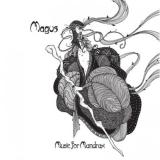
A magus is a wizard…a sorcerer. Magus, the band, is certainly interested in such things (who isn’t), but the name is especially apt due to the band’s approach to alchemy, the blending of rock, gothic, proto metal, and psychedelic styles to create a sound that is, ultimately, unique. Part of that uniqueness comes from the instrumentation. While guitar is often a dominant instrument of the rock oeuvre, the Fender Rhodes generally plays a supportive role. Not so here, where Jessica Weeks’ deft use of the keyboard dovetails with Greg Weeks’ more standard six-string approach. Not standard is the band’s sound. Doomy yet inspirational, dour yet vibrant, the duo’s tunes map sinister realms whose subjects span metaphysical creatures to enigmatic portals. You know, the typical stuff that rubs elbows with a magus.
Formed in late 2024, Magus sprung from a desire by both artists to experiment with darker, heavier sounds. Long enamored of artists like Flower Travelling Band,, Black Sabbath, and Deep Purple, the duo delved deeply into trance like riffs and euphoric solos to create the backbone of what has become their debut album, Music for Mandrax. This thirteenth Language of Stone offering features grounded, metronomic grooves, organic, lugubrious synth lines, and tandem vocals (supplied by both Weekses) that, in total, weave a heavy, trancelike spell sure to entice fans of bands as disparate as Sabbath is to Pink Floyd. Recorded at Weeks’ Hexham Head studio (to analog tape, of course), the band enlisted long-time counterparts Jesse Sparhawk (bass) and Ben McConnell (drums) to round out their sound and lock down the grooves that propel the album.
Mixed by Brian McTear and Amy Morrisey at Miner Street in Philadelphia, the band’s fully realized vision came to fruition, which left only the album art to contemplate. The band, wishing to further the gothic aesthetic of their sound, enlisted fashion designer and artist extraordinaire Hogan McLaughlin (Game of Thrones) to create the starkly beautiful line drawings of the front and back covers. The duo travelled to Salem, MA to complete the package with Courtney Brooke Hall, who shot the moody and evocative photographs that grace the gatefold release’s inner panels.

- 1: Intro
- 2: I Cut Up Rough
- 3: Bitch In A Bullet Belt
- 4: In The Night Back In The Day
- 5: I Can Hear The Angels Cumming
- 6: Motorboatin
- 7: I Fucked Her Mind
- 8: Motorboatin
- 9: I Fucked Her Mind
- 10: Killed To Death
- 11: Beer Monkeys
- 12: Doomhill
- 13: Into It
- 14: Fullmoon Crazy
Geboren im Sommer '96/'97 - dem Jahr des Höllenschweins - brannten Mustang als soziales Experiment aus der Innenstadt Tasmaniens heraus. Sie kamen mit ziemlich viel davon, andere hätten für weniger wohl nicht mehr gleich ausgesehen.Sie sauf-ten, machten Sachen kaputt und brachten dieses Chaos in das Schreiben von Banger-Songs - während sie sich bei den ,Proben" XXX Ales reinzogen und bei sehr wichtigen ,Bandmeetings" Protokolle führten.Mustang schütteten Benzin über ihre tasmanische Ödnis, bevor sie 7,69 Millionen Quadratkilometer Landmasse der Erde in sich aufsogen und dort ,dominierten", auf die einzige Art, die sie kannten: laut, wütend und zu ihren eigenen Bedingungen - und nahmen dabei Horden williger Partygänger mit auf die Reise.Über drei Non-Studio-Alben und eine Handvoll kleiner Veröffentlichungen hinweg bauten Mustang einen Katalog auf, der von Bier, Speed und störrischer Unabhängigkeit geprägt war. Kein Glanz. Kein Trendgehechel. Kein Buckeln vor dem Mann. Sie ritten ein, tranken, was da war, und hinterließen klingelnde Köpfe.Cut Up Rough (2015) war ihr Schwanengesang - geboren in einer Heuscheune am ausgefransten Rand von Tasmaniens Rock-Hochburg. Aufgenommen über zwei schlaflose, bierselige Tage wurde das Album mit improvisierten Drum-Takes, aufgedrehten Gitarren und purem Instinkt in die Existenz gerissen. Die Band lebte während der Aufnahmen buchstäblich in der Scheune - schiss ins Gras, schlief zwischen leeren Dosen, und ließ Isolation und Absurdität direkt in billige Mikrofone bluten.
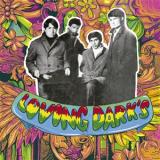
- 1: Complicado
- 2: No Quiero Llegar A Viejo
- 3: El Adivino
- 4: Mi Imposible
- 5: Ven Debajo De Mi Bote
- 6: A Través De Las Lgrimas
- 7: Psicosis
- 8: Vino Dulce
- 9: Conexin
- 10: Llmame
- 11: Algo De Ttere
- 12: Toad
Los Amantes Oscuros" brings together for the first time on vinyl the recordings made between 1968 and 1969 by pioneers of Bolivian garage rock, Loving Darks, originally released on their three EPs. A selection packed with proto-punk covers of hits by the Stones, Cream, Tony Hatch, and more-often surpassing the originals in attitude and power. Their original records are highly sought after and are virtually impossible to find in any condition_ If we had to choose the Latin American country where the rawest and wildest garage and beat records of the '60s were recorded, Bolivia would be one of the clearest contenders. For some strange reason-surely related to the country's extreme conditions, its high altitude, and the influence of huayno-Bolivian recordings are truly unique and fascinating. A multitude of bands sprang up under the influence of groups-mainly British-that dominated the international charts. From the ashes of two of Bolivia's most important seminal bands, Los Black Byrds and The Turtles, two new groups fundamental to the history of Bolivian rock would be born: the mythical Climax and the legendary Loving Darks. "Los Amantes Oscuros" brings together for the first time on vinyl the recordings this band made between 1968 and 1969, originally released across three EPs on the local Lyra label. Their repertoire is packed with covers such as 'El Adivino,' a sped-up reinterpretation of 'Fortune Teller,' or even 'Algo de títere,' a reworking of 'Jumpin' Jack Flash.' They also adapt the classic 'Call Me' by Tony Hatch and 'Toad' by Cream, from whom they borrow the cover of one of their most iconic albums for the artwork of their EP "Complicado." In fact, 'Complicado'-a proto-punk version of the Rolling Stones' 'Complicated' and their signature track-is a perfect example of how a Bolivian band could outdo the British giants in attitude and power. Their importance lies in having paved the way for new sounds, styles, and aesthetics within a still-emerging scene. This compilation is a joint release with the Peruvian label Rey Record and includes an insert with notes on the band's history. First time vinyl reissue.

Marking both the debut of the label and his first solo EP, Sasho Uzun fuses classic and contemporary house influences into 4 percussive and sensual cuts crafted purely for the floor. Shaped by the legendary club “Sektor 909”, this EP embodies raw groove, deep tension and southern warmth that perfectly captures the sound of Bare Minimum.
Mastered by DJ Goce Artwork by David Manev

- 1: The Show Ain't Over Till The Fatman Swings
- 2: Portrait Of A Fiend
- 3: Just Like A Niguh
- 4: From The Brick Jungle
- 5: It Ain't Easy Bein' Me
- 6: Only In America
- 7: Hustler
- 8: It's Getting Hard
- 9: T.h.i.c.k
- 10: Marrero
- 11: You Said It Couldn't Be Done
- 12: Leave 'Em Out There
- 13: Bitch Contro
Originally released in 1993 on Big Beat/Atlantic, MC Thick’s The Show Ain’t Over Till the Fatman Swings followed his 1991 underground single “Marrero (What the Fellas Be Yellin)” and marked a defining moment for the Marrero, Louisiana rapper. While early ’90s New Orleans was dominated by bounce, MC Thick stood apart with gritty, street-level storytelling and a raw, unapologetic voice.
Featuring “T.H.I.C.K.” and production work involving T-Ray (Todd Ray), known for his work with Cypress Hill, the album remains an important piece of Southern rap history.
Fully remastered and pressed on black vinyl, this is the first vinyl availability in decades. Housed in a full-color jacket with a printed insert and is limited to 500 copies worldwide.

- A1: Dick Morrissey Quartet - Bang!
- A2: Emcee Five - Mike's Dilemma
- A3: Michael Garrick Quintet - Vishnu
- A4: Vic Lewis & His Bossa Nova All Stars - Last Minute Bossa Nova
- A5: Johnny Burch Octet - Early In The Morning
- B1: Pony Poindexter - 4-11-44
- B2: Terrell Prude - Princess
- B3: Johnny Hartsman - Soppin
- B4: Eddie Kochak & Hakki Obadia - Jazz In Port Said
- B5: Charles Kynard With Clifford Scott - Where's It At
- B6: Gene Ammons - Jungle Soul
Compare the best of British jazz circa 1963 with American sounds from labels such as Prestige, Tangerine and World Pacific. This album captures the period when rhythm and blues is emerging as the dominant club sound, forcing Soho jazz clubs to change their music policy in order to survive. On the British side, you’ve got Ronnie Scott’s arrangement of Last Minute Bossa Nova; Bang!, taken from Dick Morrissey Quartet’s first session for the BBC’s World Service, recorded around the time of the release of their first album Have You Heard? The version here is take two. You can hear take one along with the rest of the eleven-track session on R&B18 Jazz For Moderns.
Early In The Morning is a Ginger Baker/Jack Bruce arrangement of the traditional work song realized as a repeated blues riff, and is the first ever recording that is recognizably British Blues. Graham Bond features on alto sax along with Bruce and Baker together as members of the Johnny Burch Octet heard playing live at a BBC staff party from March 1963. Side Two features Jazz Stateside, such as West Coast guitarist Johnny Hartsman, Gene Ammons veering into proto jazz-funk on Jungle Soul, aka Ca' Purange plus a couple of top notch Hammond workouts from Terrell Prude and Charles Kynard.

Plastik People deals in house & garage done right. This latest drop is a split EP between Marc Cotterell and Dominic Balchin and opens with 'The Trumpet Track', which is exactly that. 'Baby Do You Feel Me' is unabashed vocal joy, while 'Oh Lord' sinks into deeper house with shapeshifting chords that keep you moving. 'Rhythm Of The Vibe' is a New York homage with shades of Kerri Chandler and we can't get enough of it.

4
Canadian minimal titan Akufen dominated the scene at the turn of the new millennium and has a fine back catalogue full of classics. Now the Montreal man is back with new music though and it's like he never went away - 'Breakin' Free' (feat Dominique Fils Aime) is a slow, smoochy sound with low-slung drums and r&b vocals, while 'You Naughty Scamp' is a little more propulsive as it rolls through deep house and bright, textured synth melody. 'Rubber Ducky' is another playful jam with jazzy top notes, sampled vocals cut up and smeared through the mix and languid bass funk. 'Sensitive People (With So Much To Give)' is another symphonic and soulful house sound.
5
,,Hologramm" is the new EP by Schwefelgelb.
Remix contributions by Nastia Reigel and Norbak make it a 5 track Techno heavyweight.
An intriguing combination of positive, joyful atmosphere and gritty, pushy sound aesthetic spans all over the record. "The Show" and its euphorigenic rising stabs appears like what could be transformed into an Euro Dance anthem easily.
Yet the aware and well curated production holds it firmly in the zone of Techno and House underground. Speaking House, here's "In Mein Glas" - a sportive track with an irresistible bounce foiled by a lackadaisical vocal line, which gives it a comic twist.
As "Fieber" keeps the bounce we're getting a little more aggressive again: a delicate distortion, a dominant bass and a groovy drive. In all these 3 original tracks it's the melange of melodic motives, vocal highlights, crispy production as well as versatile creative details, which creates this specific sound that gets you hooked. It is lightness however wrapped in an Industrial musical language.
That said, the remixes proof how a new energy can be revealed by more minimal re-interpretations. Nastia Reigel, getting hands on "The Show", pushes drums and a fresh rhythmic play of vocal chops into the foreground. A sparse break followed by a powerful drop adds a strong climax. Norbak's approach on "In Mein Glas" takes the melodic motive and embeds it into a dubby space, not giving up on the hard-hitting kick.
"Hologramm" will be released on 140 g colored vinyl and digitally, April 10th, on n-PLEX.
4
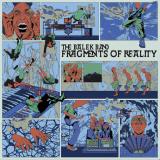
Some grooves don’t rush to the dancefloor — they crawl there, slow and heavy, like smoke wrapping around a bassline. With Fragments of Reality, The Balek Band sculpt an electronic funk that lives between shadow and light — an end-of-the-world fever dream, a Barjavel-style Ravage where chaos turns nihilistic.
No sequencer grid here — just four musicians sharing the same room, shaping air and tension together: drums locked tight with a slap bass, a guitar dripping with echo and heat, and a one-man orchestra behind his machines, weaving acid lines and synth arpeggios while mixing the band live — drenching it in delay, reverb, and saturation, like a dub producer in a Kingston studio, Lee Scratch Perry or King Tubby conjuring ghosts through smoke.
This isn’t fusion — it’s friction. A living ritual where the TB-303 hums, and machines don’t dominate but converse with the human pulse. Each track feels like a night that refuses to end — that humid in-between where trance slips into languor, and the body starts to think for itself.
The record recalls the cosmic jazz of Alain Mion or Eddy Louiss meeting the fiery energy of West African afrobeat musicians freshly arrived in a smoky Belleville basement in the mid-’80s. When The Balek Band summon ghosts, it’s only to reshape them — bending the past into something futuristic, alive, and strangely refreshing. Both disciplined and delirious, Fragments of Reality feels like a promise at dawn: dark funk for the late hours, slow acid for warm blood.
This EP isn’t nostalgic, though it remembers. It’s a transmission from a parallel past — a moment when jazz players met drum machines and decided never to stop playing. Each note sweats, each rhythm breathes. You can almost see the light cutting through the haze, faces half-awake, half-possessed.
The Balek Band aren’t recreating a moment — they’re keeping it alive.
Flesh and cables. Impulse and patience.
A band, not a loop.
A trip, not a format.
4
‘White Series #4’ marks the debut EP of Marc Feldmann and Dominik André as a producer duo. The record opens with ‘Natural Oscillation’
, a hypnotic techno piece where flowing percussion meets subtle trance influences. ‘A Breeze of Mistral’ builds on this energy with layered repetition and a deep pulse that unfolds gradually, drawing the listener further in. On the flip side, Audrey Danza reinterprets Natural Oscillation with a direct, dancefloor-focused approach. She sharpens the groove, raises the tempo, and pushes the track forward with her signature, driving drums and a tightly locked kick, transforming the original’s hypnotic flow into a no-frills cut. The EP slows the pace with ‘Discernible Rhythms’, a reflective, 80s-influenced synth chugger that adds warmth and restraint to the record. Released as a hand-stamped white label on Subject To Restrictions Discs, White Series #4 reflects and continues the label’s contribution to the more understated forms of electronic club music.


Błoto has never cared much for dominant aesthetics. Instead, the band has consistently chosen paths less travelled, unexplored territories and uncharted routes where experimentation is not so much a conscious decision as a natural state of being. After years of a rather hermetic approach to recording their albums, the time for change has come. A trip to Bucharest and the opportunity to collaborate with the community of musicians associated with the underground label Future Nuggets, led by Ion D, resulted in many hours of recordings, which will be presented by Astigmatic Records in a series of releases across 2026. It opens with a 7-inch vinyl titled Zmiany / Schimbări, recorded in collaboration with Ion D and Plevna.

Regal delivers his first full EP on Backspin, marking a defining moment for the label he founded. More than just another release, the Forgotten Heroes EP captures the essence of Regal's vision: groovy, forward-moving techno that balances raw club energy with atmosphere, emotion and narrative.
The title track 'Forgotten Heroes' sets the EP in motion with a sense of controlled urgency. A rolling, slightly breaktinged groove pushes forward relentlessly, while an eerie, almost nostalgic synth melody hovers in the background, giving the track an emotional pull. 'Concentrate' shifts the focus inward_ bleeping motifs, tight claps and restless hihats circle around spoken fragments that feel like thoughts caught between the peak of the night and the quiet hours before sunrise.
On the B-side, 'Forte' accelerates into pure momentum: sharp, bleep-led sequences and forward pressure combine into a rush that feels like racing through the city at night. 'Soft Killer' deepens the mood with a darker, dominant edge, its stripped back power and razor-sharp sounds cutting clean through the mix. Closing track 'Wild Magic' offers a final release of tension, slowing the pace into a lighter, more house-leaning groove. Warm pads and a catchy, uplifting melody bring a sense of air and openness, letting the EP drift out on a hopeful, almost euphoric note.
Regal's comeback EP 'Forgotten Heroes' stands as a personal statement and a cornerstone release for Backspin. It's techno built on groove, contrast and character, made to leave a lasting impression on the dancefloor.

Foundations Records brings you their hotly anticipated third release from Sonar's Ghost on Rinse Out EP - a bold four-tracker of breakbeat jungle, atmospheric jungle and jungle-tekno.
Sonar's Ghost
Starting out DJing in the peak hardcore era of 1992, Dominic Stanton rose as a post-hip-hop and ragga kid, cutting his teeth at free parties across the Shires. Drawn into the new directions of hardcore and jungle, he earned early gigs at the legendary Sanctuary, Milton Keynes, performing as Dom-unique.
Learning the art of beat-chopping on the Amiga 500, Dom landed his first release on Reinforced Records in 1995 and continued releasing into the 2000s as Static Imprints and Sonar Circle. Inspired by Dego and the evolving trajectory of 4hero, Dom began moving into more unexplored territory, producing eclectic, soulful beats under the name Domu.
After a brief hiatus, Sonar's Ghost was born - an outlet to explore the years Sonar Circle missed, from 1991 to 1995. Creating alternate journeys through that era, Sonar's Ghost reimagines the original sound palette using original sources, new blends of beats, and a lifetime of musical influence. For Dom, Sonar's Ghost is his happy place.
The Foundations release blends the eras and directions Dom loves most - from '93 bouncy darkside through to '03 drum funk - with authentic drums and samples integral to the vibe.
Here's the support on radio:
- Makossa (Radio FM4 Vienna)
- Distant Planet (Infrared FM)
- Sun People (Sub FM)
- Alex Ruder (KEXP Seattle)
- Haus of Beats (Txapa Irratia)
- Haus of Beats (Txapa Irratia)
- Tom Ravenscroft (Rinse FM)
- Jon1st (Subtle Radio)
- Martha (NTS / BBC R1)
- Harper (Czworka Polskie Radio)
- Gremlinz (89.5FM Toronto)
- N-Type (Rinse FM)
- Michelle (NTS)
- Mathieu Schreyer (KCRW, LA)
- Darkerthanwax (The Lot Radio)
- Bevin Campbell (PBSFM Aus)
- Errol Anderson (NTS)
- Ian (94.9 CHRW)
- OPR8 (Sub FM)
- Tramma (Noods)
- Carlos Contreras (Tilos Radio Budapest)
- Jay Scarlett (BR Puls Munich)
- DJ Tuco (91.90FM Prague)
- Ed2000 (Cashmere / The Face)
- Vinyl Junkie (Eruption Radio)
- Klaus Fiehe (1WDR)
- Benji B (BBC 1Xtra)
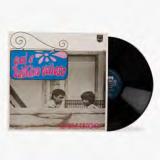

Return of the Blastromen! OEra marks the comeback of the Finnish Electro duo, 7 long years after their last album Cyberia. The new EP on German label Dominance Electricity features 4 powerful, polished productions, with melodic synths and Vocoder vocals somewhere between Kraftwerk, Anthony Rother, TRON soundtrack, a pinch of Psytrance and Jackal & Hyde / Dynamix II / Code Rising style Electrobass.

6

DJ Support: Nic Fanciulli, Joe T Vannelli, Danny Tenaglia, Richie Hawtin, Nick Curly, Shiba San, Adam Beyer, Marco Bailey, Boris, Jamie Jones, Markus Schulz, Tom Novy, John Digweed, James Zabiela, Tiesto, Claude VonStroke, Roger Sanchez, Blond:ish, Adriatique, Paul van Dyk, Joris Voorn, Deer Jade, Vintage Culture & Paco Osuna
Few labels can claim true legendary status in dance music - where trends fade as quickly as they emerge and icons are made and broken overnight. Yoshitoshi stands as one of those rare exceptions.
The label makes its return with a statement of intent: a definitive new remix package of Alcatraz’s era-defining “Giv Me Luv”, a dancefloor classic that hasn’t seen fresh interpretations in over a decade. While the original has remained a staple for those who know, it’s now primed for a new generation of club enthusiasts.
“Giv Me Luv” represents everything Yoshitoshi has been standing for: raw energy, unforgettable hooks, and that indefinable magic that makes a track timeless. Bringing it back with new remixes after all these years demanded artists who could match its legacy.
Enter Sébastien Léger, the French maestro whose thirty-year journey has seen him perform everywhere from Coachella to the Great Pyramids of Giza. His interpretation delivers the sophisticated, hypnotic drive that has made him one of electronic music’s most respected tastemakers and the founder of the acclaimed Lost Miracle imprint.
Alongside him, progressive titan Jerome Isma-Ae, whose unique fusion of trance, techno and house has dominated Beatport charts and earned him breakthrough recognition from Armin van Buuren, unleashes his signature sharp, breathtaking power on the classic.
The vinyl also includes the original mix on the B-side, completing a package that marks Yoshitoshi’s triumphant return to form.
6
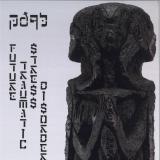
pdqb is an entity without a fixed form, moving through multiple timelines at once, performing in all of them simultaneously.
Every tone on this record was sampled somewhere else: in collapsed futures, unfinished pasts, and inside stress loops that never resolved. The tracks are not composed - they are retrieved, stitched together from moments that already happened and moments that haven't happened yet.
The music is unstable, dependent on who listens, and in which dimension, the tracks re-arrange themselves, revealing different harmonics, different fears, different exits. No two listeners hear the same, even if they play it at the same time.
The überskilled Detroit remixers provide a solution for Earthbound listeners - those unable to time-travel or shapeshift: By filtering pdqb's multidimensional signal through machine discipline, they force a temporary alignment - a version of a track that sounds the same to most listeners. Only then does collective rhythm become possible, a shared timeline where bodies on a dancefloor move to the same future at once.
---
Dr. Paul Dominic Quentin Bernard defines Future Traumatic Stress Disorder as a cognitive condition marked by a reversal of mnemonic orientation. Memory, in this model, no longer operates retrospectively but functions prospectively, encoding anticipated survival outcomes rather than past experience. Affected subjects do not recall what has been lived through; instead, they retain anticipatory memory structures of what will be survived. Bernard notes that this temporal inversion produces sustained psychological stress and warrants further empirical investigation.
Continuum - Vol. 16.219, Peer-Reviewed Scientific Journal
13
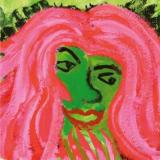
"Disco Chimi" by Dominican-raised Cuban artist Charles is the second release on Coco Maria's newly found Club Coco label. Comes with 4 paged insert with liner notes and art.
Charlie Chimi — the alter ego of Charles Garmendia — is a globe-trotting, kaleidoscopic creator best known for La China de la Gasolina. A percussionist for legendary Zamrock band WITCH, L’Eclair, and other international acts, Charlie moves fluidly between roles as a live performer, studio musician, and visual artist.
Like the iconic Dominican street burger it’s named after, the Charlie Chimi project is a spicy mélange of Afro-Cuban rhythms, funk-driven basslines, and playful, inventive wordplay — touching on everyday rituals like making lunch, as well as the trickier themes of illusion, hustle, and deception in the animal (and human) world.
Charlie has assembled an international crew of “Chimis” to help him run the numbers, delivering a dizzying, theatrical live show that feels like peeking into the hazy back room of a bodega: old men slamming dominoes, bachata blasting, and a cosmic sandwich opening a wormhole to somewhere far stranger.

"K8A a.k.a. Kaethe Hostetter is a New York–based violinist. composer, and bandleader, whose work grew out of eleven years living and collaborating in Ethiopia. As a founding member of Debo Band and QWANQWA, Hostetter has been performing Ethiopian music for over two decades, and her solo debut, Woradj Alle, builds on this legacy by reimagining Ethiopian songs through live-looped violin and electronics.
"The album unfolds as a hypnotic, ritual-like performance that expands the instrument into an immersive sonic landscape, that refracts Ethiopian classics through dub, psych rock, and avant improvisation. It is not fusion, but transmission - music that blurs memory, place, and time.
"This collection of musical vignettes is based on my time in Ethiopia, the place I called home for 11 years", Kaethe explains. "The phrase 'Woradj Alle' is one of the first colloquial expressions I learned upon arriving in Addis Ababa, used on public transportation, simply meaning 'let me off right around here'. In choosing this name, I invite you to join me on the rickety minibus journey through my time in Ethiopia, and step off 'the bus' into scenarios, atmospheres, and soundscapes that describe moments I experienced, people I met, and other lasting impressions, striking and mundane."

7
Double 12" release
The Story — From the Streets of Rome to the Male Productions Label
In the early 1990s, Rome lived in a kind of suspended moment. The city was still tied to its historic clubs, yet in the outskirts—inside abandoned warehouses, quarries along the coastline, and the wooded parks north of the capital—something new was beginning to stir. A nocturnal, constantly shifting movement fuelled by a hunger for freedom and a sonic curiosity that reached far beyond the mainstream.
Moving through this ferment was Francesco “Chicco” Furlotti. First an organizer of unconventional parties and underground nights, he soon became one of the driving forces behind Rome’s itinerant rave scene. Furlotti sensed that a wave of change was about to sweep across the city. It wasn’t just about parties: it was the rise of a culture, a new way of thinking about music, community, and belonging.
It was within those nights—later held with official permits, properly built sound systems, and an ever-growing crowd—that Furlotti recognized the existence of a distinctly Roman sound, and the need to capture it, preserve it, and give it tangible form.
So, in 1991, he decided to take a bolder step: to found an independent record label—small, determined, and far removed from the commercial logic that dominated at the time.
That was the birth of Male Productions.
Male was not a label like any other: it was a workshop, a gathering point, a creative hub where DJs, producers, friends, and wanderers converged. Within that environment, an artistic core took shape—Stefano Di Carlo, Leo Young, and Mauro Tannino, along with other collaborators orbiting around Furlotti. From their synergy emerged a project whose very name declared its mission:
The True Underground Sound of Rome.
The collective did not simply aim to release music; it sought to tell a story of Rome through sounds that defied categorization: house, techno, ambient, electronic mysticism, psychedelic visions… a unique blend, instantly recognizable, emotional, and experimental. The sessions unfolded using essential yet razor-sharp gear: Roland drum machines, analogue synthesizers, Akai samplers, stripped-down mixers. Few tools, endless imagination.
The first result of this work was the 12” Secret Doctrine, released in 1991 in an extremely limited run—around 500 promotional copies, according to accounts. The record captured something that until then had floated only in the air of Roman raves: enveloping atmospheres, deep rhythms, melodies built to make the mind travel far beyond the dancefloor. A sound that did not imitate what was happening in Detroit, London, or Berlin, but absorbed those influences and re-sculpted them with a distinctly Roman sensibility.
Yet, precisely because it was independent and detached from commercial circuits, Male’s output remained sparse: few EPs, few copies, irregular distribution. Over time, those records became rare artifacts—almost mythical objects within the Italian electronic scene. The legacy of Male Productions seemed destined to survive only in the memories of those early years, in the stories told after raves, and in the private archives of a handful of collectors.
Many years later, thanks to the almost accidental rediscovery of a few original copies of the first two releases issued by Male Productions, it became possible to undertake a meticulous process of recovery and restoration of the audio etched into those grooves, with the aim of preserving as fully as possible the quality and character of that unrepeatable sound.
We are therefore able today to present — at last in a complete and faithful form — the first two mixes created for Male Productions, now released on a double vinyl that brings back into the present the exact moment when it all began: the nomadic nights of the raves, Furlotti’s vision, the creativity of Di Carlo, Young and Tannino, and the sonic identity of a Rome in the midst of transformation.
This is not merely a reissue.
It is a historical document.
A fragment of a culture that changed the city.
The authentic sound of the Roman underground, finally returned to the world.
4
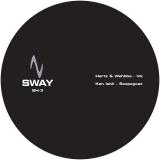
A new SWAY vinyl is coming your way, packed with some of our very best material. Kicking things off is Hertz & Wehbba - Ink, the Beatport No. 1 that's still riding high in the charts. Then the legendary Ken Ishii brings the heat. Next up, Hertz & Ramon Tapia deliver another high-energy collaboration. And finally, the Richie Hawtin favourite Kristian Heikkila & CDTRAX - Work, a track that's been in more or less every set over the past six months. Support also comes from Dave Clarke, Ben Sims, Kaiserdisco, UMEK, Christian Smith, Pan-Pot and Perc, just to name a few. SWAY vinyl FTW!

With their upcoming album Waves, Moonchild enters a bold new chapter. A deeply personal and emotionally raw project, Waves explores themes of grief, healing, resilience, and self-worth, eschewing the love songs that once dominated their catalog. "This album is about processing loss and stepping into your power," says Amber. "It's a lyrical departure, but it reflects what I've been going through these past few years."
The project also marks a return to in-person collaboration and a new embrace of sampling and sonic experimentation. The result is an album that feels more vulnerable and grounded than ever, while still pushing the boundaries of their signature sound.
f 06: Fear (Hey Friend) feat. PJ Morton
f 06: Fear (Hey Friend) feat. PJ Morton
f 06: Fear (Hey Friend) [feat. PJ Morton]

With their upcoming album Waves, Moonchild enters a bold new chapter. A deeply personal and emotionally raw project, Waves explores themes of grief, healing, resilience, and self-worth, eschewing the love songs that once dominated their catalog. "This album is about processing loss and stepping into your power," says Amber. "It's a lyrical departure, but it reflects what I've been going through these past few years."
The project also marks a return to in-person collaboration and a new embrace of sampling and sonic experimentation. The result is an album that feels more vulnerable and grounded than ever, while still pushing the boundaries of their signature sound.
f 06: Fear (Hey Friend) feat. PJ Morton
f 06: Fear (Hey Friend) feat. PJ Morton
[f] 06: Fear (Hey Friend) [feat. PJ Morton]
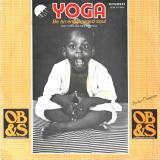
The rare and deeply funky LP "Yoga – Be An Enlightened Soul – Stay Young And Pure With Yoga"
by Osunfisan Brothers & Sisters is set to return to vinyl in an official reissue, marking the first
authorized repress of one of Nigeria’s most elusive spiritual records.
Originally released in limited circulation, Yoga occupies a unique place in many collectors grail list.
According to Mr Femi Osunfisan, the album was conceived by his senior brother and bandleader, "We
chose yoga to as a concept to channel our music, but it was not intended to practise yoga with the
music". Neither pop record nor conventional boogie LP, the album is highly sought-after for the amazing
production by the Sound master Odion Iruoje and for the heavy afro-disco workouts.
At a time when Nigerian music was dominated by Afrobeat, highlife, and disco, Osunfisan Brothers &
Sisters charted a more introspective path—using rhythm, voice, and repetition as tools for enlightenment
and personal grounding.

5
The fifteenth release from electro label Gladio Operations once again brings us a multi-artist format, featuring new faces and a distinctly Spanish flavour.
This EP opens with the return of producer Cycloplex, with his characteristic minimalist sound.
This track, titled ‘EP01-A’, once again showcases his powerful and aggressive bass lines.
From Gerona comes one of the new and talented artists on the Spanish electro scene. David Pasajero makes his debut on Gladio Operations with ‘Dislektro’, a fluid journey of melodies and warm textures infused with acidic touches.
On the B-side we find Barcelona producer Dark Vektor, who needs no introduction, as he is one of the Spanish icons of electro sound. This artist also makes his debut on the label with ‘Te Voy A Dar Ahhhhh’, a dizzying track with suspenseful melodies and a powerful bass line that will keep you on the dance floor no matter what.
The Spanish duo Slit Observers is another of the label’s new faces and treats us to this vibrant track titled ‘Green Machine’, where we encounter dark passages with a perfect dose of acid and embellished with subtle vocoders.
The EP closes with a collaboration between German producers Intergalactic Noize Commander and Elektrotechnik, the latter an artist who has released music previously. ‘Informationen’ is a rough track, created in the most hidden German bunkers, featuring arpeggios and robust bass lines that dominate throughout the whole track, accompanied by gloomy vocals.

StandUP Records returns with its second release, welcoming a respected name Konerytmi with the 1999 EP.
Across five tracks, Konerytmi pulls listeners straight into the golden era of 80s electronic music. Steering clear of formulaic kicks and basslines, the EP embraces eerie nostalgia, raw textures, and dim-lit atmospheres, the elements that defined the genre’s earliest identity. It’s a deep dive into the past, capturing the authentic sound, spirit, and experimental edge of early electronic music.
