Belgian techno don Marco Bailey lands on Watergate with a debut that’s guaranteed to intrigue as he leans into electro territory, grabbing rerubs from Extrawelt & Biesmans while he’s at it. DJ, producer and label chief, his is a storied career that spans three decades, and it’s long been evident that Marco’s enthusiasm and passion remains resolute. He closed 2021 with the release of his sixth studio album Surreal Stage, an ambitious, introspective body of work that dropped via his booming imprint Materia. His own label aside, his discography is stacked with cuts across eminent labels Second State,
ARTS, Bedrock Records, as well as being one of the first artists to debut on Carl Cox’s seminal INTEC.
While it’s techno that he’s become firmly associated with, his adeptness in the studio isn’t limited to the nuances of one genre and this is a rare opportunity to showcase a different side to his musicality.
‘The Spirit’ floods in first, almost immediately engaging listeners as it ebbs and flows with complete abandon. If the promise of electro grabbed your attention, it’s ‘From My Mind’ that delivers and sticks in your mind - from the heavy synth bassline to the soaring ascendant melody, and distorted, robotic vocals.
‘Pulse’ slaps and packs plenty of punch power as it snakes its way through with dominating, ascendant chords.
German duo Extrawelt and Belgian export Biesmans step in with rerubs of ‘From My Mind’, and firmly grip some of the elements which make this electro excursion so memorable.
Поиск:domin
Все
Limited to 50 copies… Veleno Viola welcomes Parasite, a promising Maltese newcomer, with a 4-tracker EP of edgy, hypnotic and frantic blend of Proto-EBM and oldschool Industrial.
Jacob Gorensteyn is an Israeli saxophonist and producer. Born in the USSR in 1980, his family emigrated to Israel when he was a child, with Jacob picking up the saxophone soon after. A long time member and one of the creative forces behind the well-known Israeli brass band Marsh Dondurma, he co-produced all seven of the band's albums, as well as a solo effort that was released locally in 2006. Over the years Jacob became well known in the Israeli music scene both as a potent multi-genre session player and a mixing engineer and music producer, lending his sound to many recordings over the last 20 years. His main focus in his solo work is funky jazz music, being influenced by soul, R&B and funk music, mostly from the 60s and 70s.
Wooden House is one funky record. It began, as many records did at the time, with a recording session arranged to not feel as useless during the early days of the pandemic, at a time when planned gigs and sessions were falling like dominoes, and most, if not all, working musicians across the globe were in a state of mild shock watching their creative outlets, as well as their livelihoods, crumble away. Jacob assembled a group of friends – all powerhouse musicians, and all some of the most favorite people in the world for him to play with – into a recording studio. Just before the pandemic, Jacob moved away from the city into a little wooden house in a village located in the picturesque Yehuda mountains near Jerusalem. The new location prompted some creative juices in the form of a string of funky tunes, written in his new project studio on the 2nd floor of that very Wooden House. Three of those were the tunes he brought into the studio that day. None of the musicians assembled, including Jacob, knew what the music they came out with would end up sounding like. The music was worked out during the session and then swiftly recorded, all of it live, all of it energetic and groovy. Two more similar sessions followed in the following months, often being rescheduled because of lockdowns. What came out became "Wooden House", a funky, brass-heavy instrumental album, a fun, instant mood improver. Put it on and groove with us.The album was recorded in 2020.
If your inspiration is Herbie Hancock's "Head Hunter", or any of The Meters or The Apples albums – This one is for you.
(Clássicos Em Vinil) Reissue on 180 Gram vinyl by Polysom Brazil.Chakal's debut full-length 'Abominable Anno Domini' was just as important as Sepultura, Mutilator, Holocausto, Sarcófago, when it came to delivering uncompromising extreme metal, Brazilian style.
"Half a Klip" is a Vinyl Reissue of Kool G Rap's first solo release It was originally released in 2007: As is to be expected, G Rap fills out the lyrics sheet here with banana clips and stacks of body bags -- certainly not a disappointment (he played a big part in inventing this agenda after all), though the MC's steady, workmanlike approach and topical sameness leaves a lot of responsibility on the shoulders of his producers. t's open to debate as to whether there has ever been a rapper more influential, yet somehow less celebrated, than Kool G Rap. From his seminal work on Marley Marl's Juice Crew productions and Cold Chillin' Records, to the major contributions he gave to the blueprint of gangster storytelling in rap, the Kool Genius has remained relevant and consistent despite heaps of record label drama and the ever-diminishing attention span of the listening public. It's unlikely that the new Chinga Chang Records EP Half A Klip will do much to elevate G Rap's legacy, but there are still shining moments to remind us why the legendary MC is more than deserving of the little reverence he receives.IThus, the EP's best moments come when he is united with a strong hand behind the boards. Marley Marl's sinister keys and kettle drum composition for "With A Bullet" (inexplicably buried at track eight on this 11-track offering) is probably the best canvas for Rap's gangster mentality. DJ Premier contributes a strong track (merely serviceable by Premier standards, but a standout here) and the lesser-known Domingo also seems to be able to give G Rap room to run. Unfortunately, the rest is just middling with one true mistake, Critical Child's dismal "Turn It Out", which sounds like a cast-off from a Jim Jones studio session. In any event, this collection of new and unreleased material is not the next Road to the Riches. On the bright side, the MC behind Road to the Riches is still here (in every sense) and still doing it 20 years later.
Boris Barksdale's first full length on the label is the final joyride of the human mind. Over two sides of screwed proto-beat, street electronics and twisted metal ambiance, Mind Over Matter picks apart the medias domination of the world we live in, drawing on internet advertising campaigns and social commentary to show you how messed up things have really become.
The record builds on from Boris' inclusion in Natural Sciences' Future Works & Age in Decline compilation series.
7 years after debut album “Universes” on Ninja Tune, Seven Davis Jr. returns with the official follow up titled “I See The Future” on his own Secret Angels imprint.
The 11 song adventure provides a fun concentrated blend of deep house, soul, disco, funk, electronica and underground textures. The album brings together Sev’s different flavors into a finely aged familiar yet new atmosphere.
First two tracks “Records” featuring L3ni (member of Natasha Diggs Soul In The Horn collective in New York) and “U Already Know” featuring bassist Neil White (half of Canadian Rock duo The Carps), were originally produced in London early 2016 at a studio provided to Jr. by Domino Publishing located in the basement of a run down home rumored to formerly belong to The Rolling Stones.
Title track “I See The Future” was produced in Houston Texas early 2017 and features fellow Texan Oye Manny (Sure Shot, Secret Angels), who co-produced the track. “Figure It Out” featuring LA soulful house DJ Juliet Mendoza (Dusk Recordings), was recorded early 2021 post-lockdown. While “Escape The Matrix” was a demo produced around 2013 then reworked in 2020.
“Share Your Toys” featuring Toribio (front man of NYC live band Conclave), “Boys & Girls” and “N’Joy” were all produced in Los Angeles late 2019 pre-covid. “Mission Completed” was produced during 2020 in Seattle Washington, where Sev spent lockdown. “Let’s Travel...” the most recent of the recordings, was produced in Houston Texas over the summer of 2021 in a hotel room during a road trip.
Closing track “New Life, Who Dis” was produced in early 2019 and has a different origin. The moody instrumental was first made for a celebrity that Sev had been invited to ghost produce for. We cannot mention said celeb (because, NDA). After many sessions it became clear the celeb only wanted criminally watered down and copy cat ideas. So Sev respectfully declined the invitation and decided to save this track for something special.
All vocals were recorded between 2020 and 2021 after Sev recovered from Covid, gratefully with no long term damage. A situation that caused him to retrain his vocals and breathing skills. An experience that he considers to have had a rejuvenating effect on his life.
Cover art by Carlos Parra (a.k.a Kako, Sure Shot, Secret Angels)
“The album’s called *I See The Future* because it’s mostly a collection of songs I’d been keeping in my vault for whatever reason. Instrumentals I’d been really sitting on, letting cook longer than usual. Songs that needed more time, in this case years, to form. Usually it hasn’t taken too long to get ideas out but for this project I wanted different results. Plus so much happened in the world it’s made me become a different person/artist. So my process is different. All in all it’s fun uplifting vibes about enjoying life and moving on to better, hope people pick up on that. ” - Sev
Diskotopia is ecstatic to launch our 11th year with a bombastic new LP from label co-founder BD1982. Initiation Insight follows 2021's seminal Distance Vision LP - which garnered inclusion in Bandcamp's Best Electronic Music, JunoDaily's Best New Albums, and coverage in The Wire, RA, and Louder Than War - surveying the previously-plotted sonic ley lines and expanding upon them in drastically robust and kaleidoscopic directions.
Musically, the tracks across Initiation Insight have been composed with an ear towards ritualistic structures, with the album's themes touching upon spirituality, hermetic philosophy, dreams, and human evolution in the face of impending natural destruction.
On this release, BD1982 favors stylistically nomadic production and a drive for emotion over genre constraints to explore further depths of songwriting and structures not yet heard in his previous material. Tribal-informed industrial and molten-electro styles coalesce with both future-facing and ancient-rooted textures – spread across an underlying current of soundsystem-savvy sonics.
Initiation Insight proves to be another major step in the evolution of BD1982's sound, a caustic yet covalent natural mutation that will appeal to fans of Killing Joke, My Bloody Valentine, PJ Harvey, Cabaret Voltaire, Samhain, and Tricky alike.
Mastered by Dominic Clare at Declared Sound.
Available as a limited-edition cassette.
The second strike of Leipzig’s new electro offshoot sets
Friedrich Ernst on the offensive. With these four new tracks
he progressed his sound signature from a playful but
reected 8bit world soundtrack on SELF001 to a rm and
gritty b-boy attitude. With SELF002 the do-it-yourself label
team of DJ Unisex and Friedrich Ernst back up nothing less
than their label mission: "We believe in the human mind as a
self-learning system" – and it has the basement dance in the
eye. Classic electro otakus will parté about the succinct
elements that ts each other seamlessly on Class Beat while
the groove remains alert and phantasmagoric. Back 2 The
Ol_ Skool invites two breakdance crews to battle out who
owns the oor: the pale electro robot boys on the left and the
hoover sound loving UK hardcore girls on the right. Wildstyle
is the living proof that a tight 808 groove still smashes
especially hard when complimented with a proper breakbeat.
Best played loud and from vinyl. The last bit of the whole
enchilada is almost tranquilizing until you realise how far
your stone rolled already. Rhythm Control is a crowd pleaser
with endless qualities. Collaboration partner Dominik
Widmann delivers the stunning artwork again for their
ongoing conceptual series with his acrylic paintings.
Included as A2 inlay print in every record.
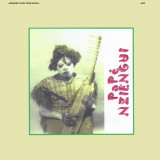
Kadi Yombo, published in 1989, is the most successful album in the quest for a fusion between tradition and modernity in Bwiti harp music of the Tsogho people of Gabon. Combining beating rattles with a layer of synthesizers, Papé Nziengui blends in a contrapuntal dialogue characteristic of harp playing: male song in appeal and female choir in response, male voice of the musical arc and rhythms of female worship. But above all it’s Tsogho ritual music and modern studio orchestration. The result is an initiatory itinerary of 10 musical pieces which are all milestones likely to be simultaneously listened to, danced, meditated on, and soon acclaimed. In the years since, Nziengui has traveled he world from Lagos to Paris, from Tokyo to Cordoba, from Brussels to Mexico City to become a true icon, the emblem of Gabonese music.
Like Bob Dylan, "electrifying" folk and Bob Marley mixing rock with reggae, some purists have criticized Nziengui for having distorted the music of harp by imposing a cross with modern instruments. They even went so far as to claim that Nziengui was just an average harpist covering his shortcomings with stunts that were only good for impressing neophytes; like playing a harp placed upside down behind his back or playing two or three harps simultaneously. Sincere convictions or venomous defamations, in any case, Nziengui never gave in to such attacks, imposing himself on the contrary to pay homage to the elders (Yves Mouenga, Jean Honoré Miabé, Vickoss Ekondo) while instructing the maximum of young people. He is thus the promoter of many young talents, the most prominent of which is certainly his nephew Jean Pierre Mingongué. In a conservative society where the sacred is confused with secrecy, exposing the mysteries of Bwiti in broad daylight can be punished by exclusion or even execution.
Papé Nziengui has always claimed that he faces such risks because he never felt enslaved to a community that governs his life, that regulates his conduct, that has a right of censorship over his activities. Like Ravi Shankar, the famous sitarist, Papé Nziengui is a man of rupture but also of openness, a transmitter of culture. As proof, he has established himself in Libreville, Gabo’s capital, as the main harpist for sessions and concerts, accompanying the greatest national artists (Akendengué, Rompavè, Annie-Flore Batchiellilys, Les Champs sur la Lowé, etc.) as well as foreign artists (Papa Wemba, Manu Dibango, Kassav', Toups Bebey, etc.). In 1988, he was the first harpist to release an album in the form of a cassette produced by the French Cultural Center (Papé Nziengui, Chants et Musiques Tsogho). At the same time, he created his own group (Bovenga), combining traditional music instruments (musical bow, drums, various percussion instruments, etc.) in the framework of a true national orchestra, which gave the first concert and the first tours of a traditional music that was both modern and dynamic, thus "democratizing" the harp, to the dismay of certain purists.
On the other hand, in modern music, dominated by the logic of profit or even commercialism, artistic creation must often be adjusted for a specific audience based on reason rather than heart. But instead of allowing himself to be distorted, Papé Nziengui has always tried to produce music that is not a caricature, worthy in its expression as in its content, of the sacredness and transcendence of the music of the Origins. This is what makes Nziengui not only the musician, but the man someone whose age hasn’t altered any of his freshness or authenticity
Kadi Yombo, published in 1989, is the most successful album in the quest for a fusion between tradition and modernity in Bwiti harp music of the Tsogho people of Gabon. Combining beating rattles with a layer of synthesizers, Papé Nziengui blends in a contrapuntal dialogue characteristic of harp playing: male song in appeal and female choir in response, male voice of the musical arc and rhythms of female worship. But above all it’s Tsogho ritual music and modern studio orchestration. The result is an initiatory itinerary of 10 musical pieces which are all milestones likely to be simultaneously listened to, danced, meditated on, and soon acclaimed. In the years since, Nziengui has traveled he world from Lagos to Paris, from Tokyo to Cordoba, from Brussels to Mexico City to become a true icon, the emblem of Gabonese music.
Like Bob Dylan, "electrifying" folk and Bob Marley mixing rock with reggae, some purists have criticized Nziengui for having distorted the music of harp by imposing a cross with modern instruments. They even went so far as to claim that Nziengui was just an average harpist covering his shortcomings with stunts that were only good for impressing neophytes; like playing a harp placed upside down behind his back or playing two or three harps simultaneously. Sincere convictions or venomous defamations, in any case, Nziengui never gave in to such attacks, imposing himself on the contrary to pay homage to the elders (Yves Mouenga, Jean Honoré Miabé, Vickoss Ekondo) while instructing the maximum of young people. He is thus the promoter of many young talents, the most prominent of which is certainly his nephew Jean Pierre Mingongué. In a conservative society where the sacred is confused with secrecy, exposing the mysteries of Bwiti in broad daylight can be punished by exclusion or even execution.
Papé Nziengui has always claimed that he faces such risks because he never felt enslaved to a community that governs his life, that regulates his conduct, that has a right of censorship over his activities. Like Ravi Shankar, the famous sitarist, Papé Nziengui is a man of rupture but also of openness, a transmitter of culture. As proof, he has established himself in Libreville, Gabo’s capital, as the main harpist for sessions and concerts, accompanying the greatest national artists (Akendengué, Rompavè, Annie-Flore Batchiellilys, Les Champs sur la Lowé, etc.) as well as foreign artists (Papa Wemba, Manu Dibango, Kassav', Toups Bebey, etc.). In 1988, he was the first harpist to release an album in the form of a cassette produced by the French Cultural Center (Papé Nziengui, Chants et Musiques Tsogho). At the same time, he created his own group (Bovenga), combining traditional music instruments (musical bow, drums, various percussion instruments, etc.) in the framework of a true national orchestra, which gave the first concert and the first tours of a traditional music that was both modern and dynamic, thus "democratizing" the harp, to the dismay of certain purists.
On the other hand, in modern music, dominated by the logic of profit or even commercialism, artistic creation must often be adjusted for a specific audience based on reason rather than heart. But instead of allowing himself to be distorted, Papé Nziengui has always tried to produce music that is not a caricature, worthy in its expression as in its content, of the sacredness and transcendence of the music of the Origins. This is what makes Nziengui not only the musician, but the man someone whose age hasn’t altered any of his freshness or authenticity
Reissue of the Count Basie Orchestra's 1970 album 'High Voltage',
arranged by Chico O'Farrill and featuring Eddie "Lockjaw" Davis, Cecil
Payne, Joe Newman, Freddie Green and Harold Jones among others
When in January, 1970 Count Basie entered the studio with his 17-piece big band
to record 'High Voltage', he ushered in the last full decade as bandleader of his
Orchestra. The Orchestra had left its imprint on the sixties by recording with the
likes of Frank Sinatra and Ella Fitzgerald. There would be more great albums with
star vocalists in the seventies, but the band's purely instrumental works, which
had begun in 1965, would also continue. Back then Basie had engaged acclaimed
Cuban composer/arranger Chico O'Farrill to arrange the music for such concept
albums as "Basie Meets Bond" and "Basie's Beatle Bag", transforming them into
crossover gems.
On 'High Voltage' O'Farrill demonstrates his affinity to Basie's big band sound, this
time with a repertoire of standards. For this album, Basie specifically chose
pieces the band had never recorded in their more than 30-year existence. This is
saying something, since the band covers such an impressive span of jazz history,
from the beginning of the swing era to the bop-influenced bands of the 50's on
through to the present album.
The Count's new drummer Harold Jones propels Fred Fisher's "Chicago" with a
tremendous drive. The Rogers and Hart classic "Have You Met Miss Jones"
features beguilingly dense deep- register horn lines and an almost languorous
piano, and Eric Dixon's tasty flute solo spices up "The Lady Is A Tramp". With its
smoky sophistication, Eddie Lockjaw Davis' Tenor dominates "Bewitched",
whereas guest trumpeter Joe Newman's muted tongue-in-cheek solo highlights
"Day In Day Out". Of course, Basie himself also steps forward: for instance, on the
Fats Waller-like intro to "I'm Getting Sentimental Over You", and with the playful
grace notes on "If I Were A Bell"." Reminiscent of the Las Vegas shows the band
performed with Frank Sinatra, "Get Me To The Church On Time" is also a
masterful dialogue between the horn sections.
Kadi Yombo, published in 1989, is the most successful album in the quest for a fusion between tradition and modernity in Bwiti harp music of the Tsogho people of Gabon. Combining beating rattles with a layer of synthesizers, Papé Nziengui blends in a contrapuntal dialogue characteristic of harp playing: male song in appeal and female choir in response, male voice of the musical arc and rhythms of female worship. But above all it’s Tsogho ritual music and modern studio orchestration. The result is an initiatory itinerary of 10 musical pieces which are all milestones likely to be simultaneously listened to, danced, meditated on, and soon acclaimed. In the years since, Nziengui has traveled he world from Lagos to Paris, from Tokyo to Cordoba, from Brussels to Mexico City to become a true icon, the emblem of Gabonese music.
Like Bob Dylan, "electrifying" folk and Bob Marley mixing rock with reggae, some purists have criticized Nziengui for having distorted the music of harp by imposing a cross with modern instruments. They even went so far as to claim that Nziengui was just an average harpist covering his shortcomings with stunts that were only good for impressing neophytes; like playing a harp placed upside down behind his back or playing two or three harps simultaneously. Sincere convictions or venomous defamations, in any case, Nziengui never gave in to such attacks, imposing himself on the contrary to pay homage to the elders (Yves Mouenga, Jean Honoré Miabé, Vickoss Ekondo) while instructing the maximum of young people. He is thus the promoter of many young talents, the most prominent of which is certainly his nephew Jean Pierre Mingongué. In a conservative society where the sacred is confused with secrecy, exposing the mysteries of Bwiti in broad daylight can be punished by exclusion or even execution.
Papé Nziengui has always claimed that he faces such risks because he never felt enslaved to a community that governs his life, that regulates his conduct, that has a right of censorship over his activities. Like Ravi Shankar, the famous sitarist, Papé Nziengui is a man of rupture but also of openness, a transmitter of culture. As proof, he has established himself in Libreville, Gabo’s capital, as the main harpist for sessions and concerts, accompanying the greatest national artists (Akendengué, Rompavè, Annie-Flore Batchiellilys, Les Champs sur la Lowé, etc.) as well as foreign artists (Papa Wemba, Manu Dibango, Kassav', Toups Bebey, etc.). In 1988, he was the first harpist to release an album in the form of a cassette produced by the French Cultural Center (Papé Nziengui, Chants et Musiques Tsogho). At the same time, he created his own group (Bovenga), combining traditional music instruments (musical bow, drums, various percussion instruments, etc.) in the framework of a true national orchestra, which gave the first concert and the first tours of a traditional music that was both modern and dynamic, thus "democratizing" the harp, to the dismay of certain purists.
On the other hand, in modern music, dominated by the logic of profit or even commercialism, artistic creation must often be adjusted for a specific audience based on reason rather than heart. But instead of allowing himself to be distorted, Papé Nziengui has always tried to produce music that is not a caricature, worthy in its expression as in its content, of the sacredness and transcendence of the music of the Origins. This is what makes Nziengui not only the musician, but the man someone whose age hasn’t altered any of his freshness or authenticity
‘Hive Mind Records are here to help you through the winter months with this generous helping of Wet Tuna with their signature deeply fried rural psychedelia.
Matt Valentine (MV) and Pat Gubler (PG Six) have been jamming together since the mid '90s, floating around in the US psych-folk scene, playing together in Tower Recordings and separately with influential underground crews Woods, The Golden Road, Garcia Peoples and The Weeping Bong Band. Both MV and PG Six have been prolific with their solo work and over the years they've recorded for labels such as Ecstatic Peace, Drag City, Woodsist, 3 Lobed, and Crash Symbols and we are very happy to be joining such esteemed company.
On these recordings, made during the first months of the COVID lockdowns in the forests of the Vermont wilderness, MV and PG Six handle the guitars and synths but they're joined by fellow forest freaks S. Freyer Esq, Jim Bliss, Coot Moon and Carson 'Smokehound' Arnold on bass and drums. Brought to you in their patented mind-expanding SPECTRASOUND, Eau'd To A Fake Bookie Volumes 1 & 2 delivers an irresistible gumbo of deep, cosmic psychedelia, primitive drum-machine grooves and woozy country-funk jams. These 6 songs are cover versions of artists as diverse as The Blackbyrds, Michael Hurley and Jimmy Cliff, but stretched out over 4 sides, the album is entirely Wet Tuna - loose, free-flowing and lots of fun!’
Recorded in 1991 by the quintet of vocalist Billie Ray Martin and Birmingham-based electronic musicians Brian Nordhoff, Joe Stevens, Les Fleming and Roberto Cimarosti, Electribal Soul was conceived as the sequel to the band’s 1990 debut album, Electribal Memories.
Electribal Memories had yielded the hits ‘Talking With Myself’ and ‘Tell Me When The Fever Ended’ and pushed Electribe 101 to the forefront of a crossover electronic scene that fused dance music with pop savvy. They were snapped up by Phonogram, managed by Tom Watkins and hailed as “the next band to meet the Queen” by i-D. The band took the coveted support slot for Depeche Mode on their epochal World Violation tour and supported Erasure at Milton Keynes Bowl. Seen as the next big thing, everything pointed toward enduring critical success for Electribe 101, and the band settled into putting their second album together.
“There was a degree of confidence among us when we came to write the second album,” recalls Billie Ray Martin. “To me, the songs we put down sound like some of our finest moments.” More immediately lush and warm than the dancefloor-friendly structures of Electribal Memories, the clue to the sound of Electribal Soul lies in the second word in its title: soul. Songs like the aching sensuality of opening track ‘Insatiable Love’ or the emboldened defiance of ‘Moving Downtown’ showcase Billie Ray Martin’s distinctive vocal range as it moves from haunting quiet to dramatic, euphoric rapture. Lyrics from ‘Moving Downtown’ had found their way into ‘Pimps, Pushers, Prostitutes’ by S’Express, and the song would appear as ‘Running Around Town’ on Martin’s 1996 solo album. The strikingproduction on the version of the song presented on Electribal Soul suggests classic late sixties soul influences, such as those of legendary Motown producer Norman Whitfield, with the long shadow cast by Kraftwerk never being far away.
‘Deadline For My Memories’, the song that provided the title for Martin’s first solo album, was originally intended for the second Electribe 101 album. Its lyrics document a sense of freedom and liberation from the darkness of a bad relationship, accompanied by jazzy piano and organ sounds over a quiet rhythm and discrete electronics. In contrast, ‘A Sigh Won’t Do’ finds Martin in soothing vocal mode, despite its devastating message about the final ending of a strained relationship, her lyrics framed by restrained and subtle beats and sounds.
To spend time with Martin’s voice on Electribal Soul is to find yourself moved deep into the ordinarily impenetrable emotional corners of your own psyche. “I was into big ballads at the time and listening to all kinds of US and UK singers, and I was also young enough to want to prove myself as a belter of ballads,” explains Martin of the classic soul edge the album showcased.
Electribal Soul heads into darker territory with ‘Hands Up And Amen’. Originally written by Martin in Berlin in the period before moving to London and forming Electribe 101, the song was then perfected and enhanced by the band’s production nous. ‘Hands Up And Amen’ savagely documents the mugging of a woman in Queens, NY at gunpoint, only to resolve itself with a middle section that nods reverently toward gospel tradition. The song coalesces around a regimented break and burbling synths, finally ending with layers of urgent synth sounds.
Meanwhile, a cover of Throbbing Gristle’s ‘Persuasion’ takes us into a seedy world of sexual coercion and creepy infatuation, predating Martin’s chilling version of the track with progressive house unit Spooky two years later. Supported by a minimal, nagging rhythm and barely-fluctuating sounds, Electribe 101’s take on ‘Persuasion’ makes for uneasy listening, even though Martin manages to inject a sort of twisted sympathy for the protagonist as the song progresses.
That Electribe 101 were as comfortable offering complicated, nuanced tracks like ‘Persuasion’ alongside pop house bangers like ‘Space Oasis’ – written by Billie Ray Martin with Martin King before Electribe 101 was formed – is testament to the way the band wove their way effortlessly through electronic music reference points. Framed by light, jazzy piano melodies and string sounds, the energy of ‘Space Oasis’ soars so high that it could easily reach the moon, while highlighting how well-suited Martin’s voice has always been to club music. We hear the same reminder of her dance music credentials on ‘True Memories Of My World’, finding her describing a Hollywood actress who reflects on being used by directors to sell her ‘tears’.
Hooking up with the Birmingham-based Nordhoff, Stevens, Fleming and Cimarosti after placing a Melody Maker ad in 1988 (“Soul rebel seeks musicians – genius only”), it was clear that Martin had found a group that recognised the unique power and importance of her voice. Having worked with genres as diverse as reggae, rock and R&B, the four producers proved to be perfect collaborators, presenting carefully-sculpted backdrops that emphasised the towering emotional dexterity of her voice.
“Listening back to these tracks now, I was reminded of what a bunch of great musicians they were,” says Martin. “They had a rule that if a part still sounded good after a day or two then it could stay. If it bothered the vocals, it would go.” Even more so than on Electribal Memories, Electribal Soul places Martin at the captivating centre of these pieces, surrounding her voice with everything from dubby rhythms to chunky R&B beats to nascent trip hop breaks; wiry, acid-hued synths uncoil gently without ever dominating, while horn samples and lush, disco-inflected strings provide a rich, naturalistic accompaniment for Martin’s emotional outpourings.
The band finished mixing the album at London’s Olympic Studios in 1991. They were assisted by Apollo 440’s Howard Gray on production duties for ‘Deadline For My Memories’, ‘Insatiable Love’ and ‘Space Oasis’, with Gray supported by talented engineer Al Stone. Pre-release promo tapes were issued and an enthusiastic energy started to build around the band’s anticipated second album.
It was not meant to be. Against a backdrop of a worsening relationship with Tom Watkins, and a disinterested Phonogram, instead of receiving a positive reaction to the new tracks, Electribe 101 were swiftly dropped by their label. Electribal Soul languished, unreleased, and the band yielded to pressures that had been building and split up. After collaborating with Spooky and The Grid, Billie Ray Martin went on to release her seminal debut solo album in 1996, with it securing the era-defining hit ‘Your Loving Arms’, while the other group members continued to work together as The Groove Corporation.
Thirty years after the songs were recorded, we’re now finally able to hear what the second and final chapter of Electribe 101’s story sounded like. Electribal Soul shows that the band had really only just got started when they dropped their first album in 1990. Heard only by a select and privileged few, what followed elevated the band’s music to a completely new level, making Electribal Soul musical buried treasure of the most precious and rare variety.
Electribal Soul will be released on LP, CD and digital formats on 18th February 2022 through Electribal Records. The physical formats include extensive liner notes from Billie Ray Martin, and the album sleeve features unseen archive photographs by Lewis Mulatero from the original 1990 sessions with the band that were never used in the sleeve designs for Electribal Memories.
Les Disques du Crepuscule present a new, remastered vinyl edition of Quart de Tour, Mon Amour, the highly collectible debut album by enigmatic Belgian duo Piscine et Charles, originally released by the label in 1984.
This remastered 2021 reissue retains the original cover art, as well as adding text and previously unseen images from the Piscine et Charles archive, plus a digital copy (MP3). A limited edition of 500 copies only has been pressed on turquoise vinyl.
A duo comprising Dominique Outers and Luc Raemdonck, Piscine et Charles taped their debut album at Daylight Studio in Brussels with engineer Didier de Roos (Univers Zero, Tideline), along with several guest musicians and classical singer Lucie Grauman. A concept album of sorts, Quart de Tour, Mon Amour (which translates as Quarter Turn, My Love) combines literary lyrics with music described as a ‘neat fusion of coldwave, electronics and lounge-jazz, predating acid-jazz by about five years and conjuring impressive atmospheres.’
Despite failing to reach a wide audience at the time, the album has since become a sought-after collector’s item, with the title track recently appearing on acclaimed anthology set Uneven Paths: Deviant Pop From Europe on Dutch label Music From Memory. ‘A very unique sound, Piscine et Charles explore a poetic, romantic and enigmatic musical realm where synth-pop meets jazz and spoken word.’
Constructions seeks to explore the world of pulsing rhythms, gritty synth lines and corny vocals. Through a nostalgic glance towards the 80’s italo disco era Love a la Carte attempts to recreate the almost naive atmosphere that was unavoidable through 80’s music charts, while Over These Hills is a contemporary boogie tune partly inspired by the likes of Sade, Chic and even Tears For Fears. Assault, a synth dominated piece of storytelling, samples dialogue from John Carpenter’s 1976 cult classic Assault on Precinct 13, and Mechanical Bird is an instrumental journey through various electronic soundscapes.