If you were to ask for a defining Habibi Funk track, there are a few that come to mind: from Fadoul’s “Sid Redad,” Dalton’s “Soul Brother” to Ahmed Malek’s “Omar Gatlato.” However, none are as widely connected with us at this point as Hamid Al Shaeri’s “Ayonha.” We heard the track for the first time when we were working on selecting tracks for your first compilation and we instantly loved it. We obviously had heard of Hamid El Shaeri’s music before, but only material from his Al Jeel phase when he was already the full-blown
superstar he is now.
Listening to his releases from the early 1980’s opened a whole new door for us. At the time, Hamid had just left Libya to pursue his career in Egypt via a detour in London, where he recorded his
first album. Hamid’s distinct sound of the sound is quintessentially reliant on heavy synths and so it was particularly important to purchase these synths in a timely manner. “Whenever a new one synthesizer would come out, we would have to buy it immediately, otherwise someone else would get their hands on that sound.” London also played an important role for Hamid as a musical epicenter.
He fondly reminisces about the many live shows he attended there, including some of the biggest international musicians like Freddie Mercury and Michael Jackson. After returning to Cairo where he also recorded his following albums, he connected with SLAM! for the
release of his debut, laying the foundation of a collaboration that lasted for 5 albums. Luckily, we were able to connect with Hamid through our friend Youssra El Hawary, whose extensive network has opened many doors for us within the Egyptian music scene. We met Hamid for the first time probably in 2016 at his office / rehearsal studio in the outskirts Cairo. We were expecting a larger-than-life
character in-line with his status as a certified superstar, yet the actual person turned out to be very approachable and super easy to connect with. He liked the idea of an effort to amplify his early works again,
which, when originally released, were far from an economic success.
While he was down to assist with an interview and his blessing for the project he also told us that for any license we needed to speak with the original label SLAM! who released these songs, still held the rights and also remained in business over the decades though they didn’t actively release any new music. Hany Sabet had started SLAM! records in the early 1980s and focused on cassette tape releases, the
format that expedited the success of a new generation of record labels in Egypt. By the mid 1980’s, SLAM! had become one of the most successful and economically dominant record labels in Egypt, with Hamid El Shaeri being just one of their key artists, alongside Mohamed Mounir, Hanan, Hakim, Mustafa Amar and many more. Luckily, Hany Sabet turned out to be a friend of our colleague Malak Makar’s father, which probably helped to warm him to the idea of licen- sing “Ayonha” to this - in the scale of his world - tiny label
from Germany. Eventually “Ayonha” ended up becoming a widely successful release and either Hany or we brought up the idea of a full album dedicated to Hamid El Shaeri’s work on SLAM!.
"Maktoub Aleina” is the first single and will be released January 14th. Following the massive success of "Ayonha,” “Maktoub Aleina” is another mid-tempo groover with a beautiful, synth-forward melody, that brings together a lovely combination of soul, disco and Arabic pop music of the highest order, giving a taste of full album. The second single, “Yekfini Nesma Sotak” will be released January 28th and combines Hamid’s unique formula of soul and pop, held together by a catchy synth melody. “Yekfini Nesma Sotak” picks up the
pace a bit, making the uplifting mood of the track even more powerful. Third single, arriving February 11th, is “Dari Demou’ek,” one of the stand out tracks of Hamid’s early recordings done for SLAM! in the early 1980s. Dominated by a disco infused bassline, the track offers a lot of space of the funky production to shine while Hamid inserts his vocals at all the right moments. A masterpiece of disco touched by Arabic pop music.
Full album arrives February 25th. This release is dedicated to Hany Sabet, the founder of SLAM! and his wife Rosemary Jane Sabet (who
took the photos we used for the cover and the booklet), who sadly passed away during the time it took us to prepare the release.
Vinyl comes with an extensive booklet with an interview with Hamid as well as unseen photos

quête:dominant
The last decade has seen a seismic shift in how people buy and play music, vinyl has returned to being the dominant physical format with CDs consigned to second fiddle. Things were very different back in 2012 when we compiled and released the eponymous "Cool Runnings" on CD only. The vinyl revival is a belated opportunity to give the band their first long playing record to complement that earlier CD release. Together for a dozen years, Cool Runnings were one of Bristol's longest lasting bands gigging throughout the 1980s, though their failure to gig beyond the West Country meant they were also one of the City's best kept musical secrets. Originally formed in Weston-Super-Mare by Keyboardist Mark Tuck and Guitarist George Condover, they immediately relocated to Bristol and recruited various local musicians including an experienced and talented singer, Winston Minott. Although "Robin Hoods of The Ghetto" was their solitary release, the band regularly recorded material throughout their career and fortunately thanks to the foresight of George and Mark in holding onto various master tapes, Bristol Archive Records were able to release the band's self-titled debut album "Cool Runnings" in 2012. For this vinyl release we've selected eight tracks recorded between 1983 and 1985 at various local studios, and a solitary live track to give an idea of why the band were so popular in person. Although their music leans towards the more mellow end of the market, Lovers Rock, music ideally suited to Winston's soulful voice, the band were more than capable of writing good roots tunes including the excellent "We Must Go Home", "Children of Zion" and "Robin Hoods of The Ghetto". Winston Minott had spent many years touring all over Europe with soul band The Invaders and many songs showcase his vocal talent, but a particular highlight has to be "Playhouse" an alternative recording of which can be found on "The Bristol Reggae Explosion Volume 3". Perhaps proper management would have seen Cool Runnings achieve the success and wider exposure that their combined talents and unique take on reggae undoubtedly deserved. Now thirty years after the members went their separate ways, Bristol Archive Records are pleased to finally release the vinyl album that if things had worked out differently should have appeared in the 1980s
In Rumi's poem A Great Wagon he writes of a place of total acceptance. "Out beyond ideas of wrongdoing and rightdoing, there is a field. I'll meet you there," It is a boundless, liminal space where we can release the judgments we make and carry of ourselves, and the comparisons to others. When we think of this field, there is a sense of tranquility that only comes when we are undisturbed by the shadow self and see existence as neither bright nor dim, white nor black. But as lead singer Greg Bertens explains, arriving there is a whole different story. "This is a poem I've returned to over the years, and I love the idea of this place, but getting there is life's journey." Bertens adds "I think the longing for and elusiveness of this field is a recurring theme in our music." Field is enveloped by themes of regret, disconnection and frustration but with the space to understand that these feelings are a natural part of the struggle between reconciling the inner and outer self. The Los Angeles/San Francisco-based group have been indie shoegaze stalwarts since their formation in 2001. After two decades and a handful of line-up changes, their extensive discography presents a dynamically textural, lush psychedelic rock that has featured guest appearances by members of Pavement, My Bloody Valentine, and Snow Patrol, among others. 2021's LP We Weren't Here was hailed for its dense instrumental blanket, where unrelenting hi-hats and heavy kicks exist alongside dreamy drone guitar. This propulsive nature permeates Field, as members Bertens, Noël Brydebell (vocals), Nyles Lannon (guitar), Jason Ruck (synths), Justin LaBo (bass), and Adam Wade (drums) produce a kaleidoscopic sonic landscape. Patient, sprawling instrumentation builds a foundation in which Bertens' themes of endurance, perseverance and clarity can bloom with a considered poise. As a lyricist who writes in response to the instrumental arrangements, rather than a focus on a specific theme or person, Field is a testament to Film School's ability to create in the moment, and to showcase the magic that stems from when we are truly present. Album opener "Tape Rewind" is a swirling rush of color, as sustained guitars, darkened bass lines and urgent, percussive swells dance alongside each other. "This is the newest of all the songs on the record and feels like a new level of heaviness for the band," Bertens explains, noting that its lyrical context of struggling to move past trauma adds to its cathartic essence. Field is bookended by heavier themes, with closer "All I'll Ever Be" taking on the perspective of those we hurt when we embrace our own toxic behaviors. Originally written to be a simple acoustic guitar and vocals song soon turned into an ethereal, effects-laden composition, with Noël's hazy lead vocals ushering in a new-found acceptance. "It's all I want / To be released / And all I can be," she laments, cementing Field's message of accepting ourselves in whatever form we find ourselves in. "Defending Ruins" is a murky relentless underworld, inspired by the freewheeling tones of Texas-based band Holy Wave. "Defending the ruins, defending remains," Bertens spits, among a richly-layered outro. "Don't You Ever" confirms Film School's ability to merge both delicate and growling instrumentation throughout the album, with the song's softly spoken section hovering above sparkling guitar. "Is This A Hotel" bends towards the electronic aspects of the band, with wailing synths accompanying a story of bitter desire. With over two decades in the industry, Field cements Film School as a distinct, dominant force in the shoegaze scene. Soaked in an emotionally open, imaginative atmosphere, the album is both singular and expansive, and leaves the door open for a constantly evolving interpretation. Film School have never confined themselves to the rigidity of specifics, and it's on Field that they urge us to look beyond the binary of certainty, and to take a second look
Featuring contributions from Brittany Howard, Daniel Tashian (Kacey Musgraves, Demi Lovato), Julien Baker + more. Since moving to Nashville to start their music career in 2012, Becca Mancari has been lauded for their dextrous songwriting and prodigious guitar playing. Their sophomore album The Greatest Part, released in 2020, was an indie rock opus that garnered acclaim from The New York Times, NPR, and more. After its release, however, Mancari was despairing. An illness in their family, coupled with a realization that their alcohol dependency had become untenable, led Mancari to begin the hard work of taking ownership of their existence by mending broken relationships and investing in their mental health. "I didn't realize it then, but looking back, I was a passenger in my own life," Mancari says. The transformative period of self-reckoning was the catalyst that ultimately steered Mancari to write and produce their triumphant new album, Left Hand. After a disheartening studio session with an outside producer, Becca became convinced that they were capable of rendering their vision independently. Close friend and musical ally Juan Solorzano, who has played on all of Mancari's albums since the debut of Good Woman in 2017, joined them in the studio to co-produce the majority of the record. In addition, Daniel Tashian (Kacey Musgraves, Demi Lovato) co-wrote and co-produced the song "Don't Close Your Eyes," encouraging Mancari to track every instrument on the initial demos. As much as self-producing this album was an act of resilience and growth in one's own craft, Mancari brought trusted friends like Brittany Howard, who they play with in Bermuda Triangle, Julien Baker and Zac Farro into the process. Insecurities that had dogged Mancari since childhood couldn't weather the force of energy in that studio, where they executed decisions with newfound certainty. The title track, "Left Hand," is named for the Mancari family crest. After a lifetime spent feeling like they didn't belong, Mancari unlocked a perfect metaphor in the crest: "In many cultures children born with a dominant left hand were taught not to use that hand, and were told that using the right hand was `normal' and `correct.' Similarly, queer children are often times told that it's not `normal' for them to love who they love and that they need to `change.'" On Left Hand, Mancari offers the listener a collection of songs that should be played in moments when we are in need of reassurance and encouragement. No song exemplifies this better than the ebullient track "Over and Over," which is a reminder to friends that happiness doesn't need to be fleeting. "I wanted to write a queer pop song that has meat on its bones," they say. Inspired by one of many reckless and joyful hangs with dear friends in Nashville, the enlivening pop song makes a promise to them, and to the greater community Mancari embraces on this album. "There is something to the feeling/ Head hanging out of the window/ Being ok that we don't know," sung on the chorus over a beat replete with congas and shakers. What follows is a promise to anyone who ever feels like the greatest moments of their life are disappearing in the rearview: "We can have it like we used to, over and over and over and over again." For Fans of boygenius, Phoebe Bridgers, Julien Baker, Julia Jacklin, Caroline Rose, Miya Folick, Molly Burch, Widowspeak.
Death metal overlords DYING FETUS once again raise the bar of sonic extremity with their 8th studio album and first new material in over 5 years, Wrong One To Fuck With. The seasoned veterans manage to further stretch their creative and technical boundaries across 10 complex tracks of pulverizing death metal, filled with more dynamic intricacies, brutal breakdowns and varied vocal patterns than ever before. Now over 25 years into their distinguished career, DYING FETUS cement their legacy with Wrong One To Fuck With and uphold their position as the most dominant force in death metal today.
Following on from Soundway’s 2022 compilation, Padang
Moonrise, are two late 1960s tracks from Java, Indonesia. one
instrumental psychedelic organ version of Classic Indonesian
track ‘Bubuj Bulan’ and the other a raw funk cut sung in
Arabic.
Rully Djohan recorded this unique, psychedelic instrumental
version of Benny Corda’s classic ‘Bubuj Bulan’ for his album
of instrumental organ versions of popular Indonesian songs
recorded in 1971-72. With echoes of Indian, Ethiopian and
Egyptian jazz melded with traditional Javanese music this
version is a shimmering, dubbed-out take on a song that
has been recorded by many Indonesian vocalists. Djohan is
backed by The Galaxies Band, and led by one of Indonesia’s
most original band leaders and arrangers Jopie Item, who
also plays sitar and guitar alongside Djohan’s electric organ.
On the flip-side, Munif Bahasuan delivers a deep funk track
sung in Arabic. Munif was a Jakarta-based vocalist who sung
mostly in Arabic and English. Jakarta has a small population
of Arabic, ethnically Middle Eastern people who settled in
Indonesia via connections with Islam and Islamic culture, the
dominant religion in Java, Sumatra and many other of the
main islands in the Indonesian archipelago
New year, new energy, new music...
We’re all waiting for that tune to land in our lap, reach up and slap us simultaneously in the ears, feels, souls and feet. That big sonic blast of emotion and inspiration that sets the tone and gets us excited about a new season of shows.
Hard Times Records present ‘All I Need’, a powerful, slab of house music positivity that smacks of ‘first anthem of the year’ vibes and comes courtesy of one of house music’s biggest pioneers AND a certified UK House music institution that permanently changed the face of global club culture over 30 years ago... Steve ‘Silk’ Hurley and Hard Times.
Neither Hurley or Hard Times need any introductions, but both have histories that deserve so much more than this hype-fuelled promo blurb. Steve ‘Silk’ Hurley is a certified legend. As one of the pioneering House music artists to emerge from Chicago’s primordial 80s phenomenon and the first ever to score a UK number one Hit with ‘Jack Your Body’, the multiple Grammy nominated artist has been a powerful source of energy and inspiration ever since as one of the most consistent forefathers of this scene.
Hard Times have played an equally influential role and are arguably responsible for some of the most defining moments in uk House Music. One of the first club nights to import the US titans to UK dancefloors, the Yorkshire brand were instrumental in creating a blueprint in international DJ culture as they invited the biggest pioneers and legends to their events that began in the sleepy town of Mirfield, but eventually sprawled across the UK with line-ups that ranged from Todd Terry to Masters at Work to Deep Dish and every titan in between. A dominant force throughout the 90s, Hard Times wound down in the 2000s as its founder Steve Raine took a break from the industry to become a sheep farmer, which he still does to this day... Safe in the knowledge that he helped to create an ethos for uncompromising underground House Music that remains steadfast to this Day.
The Hard Times label originated back in 1994 And ran alongside the club night, boasting a small but elite catalogue. It’s about to thrive on a whole new level as Hard Times returns as a label with its first new material for over 20 years with ‘All I Need’.
Timeless yet forward-thinking, loaded to the brim with precision groovemanship, glazed with a strong Latin twist and sprinkled with the gorgeous vocals of Sara Garvey, who many will instantly recognise from her Nightmares On Wax collaborations, ‘All I Need’ is a pedigree house anthem-in-waiting. Universal in vibe and spirit, fully transcending trend or flavour-of-the-month fickleness, this taps into the source and has full potential to be the first big boundary-breaking house hit of 2023... 36 years after Steve ‘Silk’ Hurley topped the charts with ‘Jack Your Body’!
It comes complete with a rainbow of remixes from some equally eye-opening heavyweights: Alex Arnout, Eddie Leader, Terry Farley & Kevin Swain and DJ Skip (who runs S&S Records with ‘Hurley) all provide different perspectives on ‘All I Need’, giving it even more scope and depth to slap us simultaneously.
Techno trailblazer Amelie Lens presents her new EP 'In My Mind' on her own Lenske imprint, containing three explosive techno tracks.
Belgium's Lenske Records presents its next EP from label head Amelie Lens. The release marks a considerable high point of Lens' career, hot on the heels of the launch of her radio show and dropping just before her debut Ibiza residency with sister label EXHALE. 'In My Mind' will mark Amelie's first solo release on the label since 2020 and follows her collaboration with Airod on 'Raver's Heart' EP late last year. The EP also was inspired by electrifying visuals that Amelie takes on the road and showcases at selected gigs.
Title track 'In My Mind' opens proceedings with blasts, bangs and heavy reverbs whilst Amelie's voice swirls above. The build-up gives way to furious claps, and spiking synths that continue to dance around the vocal sample in a ruthless march. The beat is unrelenting with a venomous, pulsing bassline that creates this raw and atmospheric techno cut, while bubbling keys maintain vitality and lightness with their careful arrangement.
Multiple elements come into play for subsequent track 'First Light'. A stripped back kick synchronizes with distorted pads for the opening, soon accompanied by a heavier kick-drum counterpart and lick of acid to inject some sharpness. The true DNA of the track is the programmed claps and dark pads that rise and fall menacingly throughout, as splashes of effects are thrown into the mix.
Final track on the record 'Trippin'' undoubtedly packs a punch. Blasting off with a dominant kick and oscillating spring reverb that swipes through Amelie's wistful vocals, the harder elements gradually succumb to the softness of her voice. The listener's focus is momentarily shifted during an early breakdown before the kick returns with more vigor accompanied by hurried hi-hats and distortion that sends you into a frenzy.
- 1: Nightgaunts
- 2: The Horrors In The Museum
- 3: The Only Child
- 4: Architectonic & Dominant
- 5: The Evil Clergyman
- 6: Brown Jenkin
- 7: Crazed Couplet
- 8: Sarcophagus
- 9: Lovecraft Baby
- 10: Dream City
- 11: C12 H22 O
- 12: Zenophobia
- 13: Sunset For The Lords Of Venus
- 14: Beyond The Tanarian Hills
- 15: Imps Of The Perverse
- 16: The Dead Loved
- 17: Periwig Power
- 18: Kappa Alpha Tau
- 19: American Anglophile In The World Turned Upside-Down
- 20: Memento Mori
- 21: Better Not Born
- 22: Arkham Hearse
- 23: The Old Man Is Not So Terribly Misanthropic
- 24: Gentlemen Prefer Blood
- 27: The Crime Of The Century
- 28: Musick In Diabola
- 29: Shard
- 30: Black On Gold
- 25: Sonia
- 26: The Day The Universe Ceased (March 15Th 1937)
Cassette[26,68 €]
Cacophony is the second Rudimentary Peni album. Released after the band returned from their first hiatus following a series of personal events that changed the band forever. The thirty track LP keeps turning heads 34 years after its release. Far from writing another “Death Church” the band embarked on a truly bizarre quest - to record an album based on the life and writings of horrors absolute king H.P. Lovecraft. A dense cacophony of total free songwriting. Dark, gothic, intricate, unexpected head-scratching punk. The short bursts of music twist and turn at every corner - the vocals are part classic Blinko and part spoken word, the guitar is full of distorted awkward tones and the very inventive bass and drums are locked together creating a truly unique album. Cacophony is the benchmark of outsider Punk and the influence and cult nature of this album grows with every passing year. This reissue stays close to the original version, with Nick Blinko’s incredible cover art, including a 11” x 11” 8-page lyric booklet.
The timeless music and expert arrangements are about the only things smoother than the powder-blue suits sported by the Spinners on the cover of their resplendent self-titled 1972 record. The band's first album for Atlantic after departing Motown, Spinners ranks as an all-time soul classic – a filler-free set boasting immaculate harmonies, sweet melodies, and impeccably matched vocals. Thom Bell's flawless production puts it all over the top. Yielding an ideal balance of lushness and grit, the collaboration between the Detroit-based group and studio veteran yielded a record that birthed the celebrated Philadelphia Sound. Now, you can finally experience it in audiophile-grade sonics.
While the career-defining performances within the grooves cannot be overlooked, Spinners remains equally notable for its historical importance. At the dawn of the 70s, Motown still held sway as the dominant soul style. Yet the Spinners' decision to move to Atlantic – prompted by a suggestion by Aretha Franklin – and refashion their approach with Bell signalled a sea change that ushered in a smoother, sweeter variety of R&B punctuated with sweeping strings, jazzy flourishes, brassy replies, and funk rhythms. Few, if any, vocal groups mesh these traits more convincingly, pleasingly, and naturally than the Spinners on this watershed effort.
Anchored by Top 5 smashes like "Could It Be I'm Falling In Love," Spinners signalled the beginning of a partnership with Bell that lasted seven years and elevated the band to stardom. Indeed, even in spite of the four hit singles, the record remains defined by an artistic consistency, watertight focus, and collective unity that make everything here deserving of close attention. Flush with catchy hooks and pop accents, each song is treated as a potential anthem. Laden with depth and richness, Bell's savvy, wide-open arrangements frame the Spinners' satiny singing with sensual class and refined delicacy.
Heaven-sent voices do the rest. Making his first appearance on record as a member, Philippe Wynne treats the carefully honed material as a breakout session for his dulcet tenor on tracks such as "One of a Kind (Love Affair)." Not to be outdone, the equally measured Bobbie Smith mesmerizes with his deft phrasing, reedy timbre, and sparkling clarity, never finer than on the million-selling "I'll Be Around." Solo or paired together, Wynne and Smith's glorious leads run the gamut from upbeat and optimistic to sad and forlorn, forming the backbone of a masterwork that addresses romance ("Just You and Me Baby"), regret ("How Could I Let You Get Away"), and social ills ("Ghetto Child") with consummate passion.
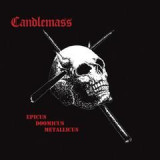
THE ICONIC 1986 DOOM METAL OPUS 'EPICUS DOOMICUS
METALLICUS', FEATURING REMASTERED AUDIO & PRESENTED WITH ITS
ORIGINAL SLEEVE DESIGN
Candlemass was formed by bassist & songwriter Leif Edling in Stockholm,
Sweden in 1984 & they are well known for their epic doom metal, having a great
influence over a generation of the genre's subsequent greats - Candlemass
themselves taking a large influence from Black Sabbath. Bands such as Paradise
Lost & My Dying Bride to this day rate 'Epicus...' among their most inspirational
albums. 'Epicus Doomicus Metallicus' is a true classic. Heavy metal riffs blended
with almost neo-classical touches, plus some theatrical elements recalling bands
like Mercyful Fate (thought to be another influence). All-in-all, this is considered
one of the definitive Doom Metal releases. 'Epicus € ' was recorded at
Thunderload Studios in 1986 & was released later that same year. The vocals
were handled by Johan L ngqvist, before the iconic vocalist Messiah Marcolin
became a solid fixture in the band until the early nineties. Candlemass instantly
became a great inspiration to countless metal bands upon the album's release in
1986; a time when thrash metal, not doom, was fast becoming the dominant style
in both Europe & the US. This edition of 'Epicus Doomicus Metallicus' features
recently remastered audio courtesy of Patrick Engel at Temple of Disharmony &
is presented with its original sleeve design.
The old adage about Elvis Presley is that his soundtrack work never held a candle next to his studio albums. Though true for a majority of his film-related outings, the traditional notion is forever disproved by his Blue Hawaii set. Originally released in 1961 in support of the film in which he starred, the triple-platinum LP spent nearly five months at the top of the Billboard album charts; outsold his two prior studio efforts; and ultimately, remains the second-best-selling soundtrack of the musical-dominant 1960s. And now, it has received sonic treatment befitting rock royalty.
Recorded before the King started to burn out on soundtracks and go into a creative tailspin, Blue Hawaii presents him in tremendous voice. The newly uncovered layers of detail, body, emotionalism, and tonality on this SACD bring that treasured element – as well as the brilliance of the arrangements and accompaniment – to light like never before. Presley's warm crooning alone warrants unmitigated attention. It's not for nothing that this record – replete with panache, whimsy, romance, and seriousness – forever altered the course of his career.
Much like the film itself, the music on Blue Hawaii subscribes to a feel-good aesthetic. Presley plunges into a stylistic deep end with equal parts fearlessness and fun. He delves into early rock ‘n' roll ("Rock-A-Hula Baby"); touching balladry ("Hawaiian Wedding Song"); playful rumba ("Beach Boy Blues"); relaxing luaus ("Hawaiian Sunset"); and naturally, island-inspired fare ("Ku-U-I-Po"). It becomes immediately evident that the King is enjoying himself and committed to the mission. Is Blue Hawaii all serious art? No, but it was never intended to be. Rather, it serves as a showcase of Presley's outgoing personality and chameleon-like ability – like that of Frank Sinatra – to inhabit different roles and entertain.
Of course, Blue Hawaii remains timeless for another reason: The inclusion of the timeless, gorgeous, and still-untouchable staple "Can't Help Falling in Love." Penned by Hugo Peretti, Luigi Creatore, and George David Weiss, the love song quickly transformed into an international standard – with Presley's definitive version hitting No. 2 on the charts and ultimately becoming the closing song to his concerts. Ranked among the 500 Greatest Songs of All Time by Rolling Stone, its conviction, sentiment, and depth testify on behalf of why Presley still reigns as the King.
However subtly, the staple also underscores another reason Blue Hawaii should never be overlooked in Presley's canon: the ace musicians involved in its creation. Guitarists Scotty Moore and Hank Garland; drummer D.J. Fontana; percussionist Hal Blaine; pianist Floyd Cramer; bassist Bob Moore; and iconic gospel backing vocalists the Jordanaires all contribute masterful performances. Hearing them with such expressiveness, openness, and realism on this 2LP 45RPM & SACD should forever alter how Presley's 1961 soundtrack – the finest of his career – is viewed. As he sings in the title track, dreams come true, indeed.
Digga D returns with his highly-anticipated third mixtape, Noughty By Nature. Lead Single 'G Lock’ featuring US rap star, Moneybagg Yo follows on from Digga’s previous releases which include ‘2K17’, ‘Pump 101’ and ‘Wasted’, the latter two of which were his second and third top 10 records. Since the release of his critically acclaimed 2021 mixtape, Made In The Pyrex – a project which showcased the lyrical dexterity of the West-London rapper – Digga D has firmly cemented his position within drill, a genre which he has dominantly spearheaded over the last few years.
For fans of Rush, Evanescence and Progressive Metal! The synergistic sound and seemingly telepathic energy behind Dianthus can be traced to their beginnings in the heart of Riverside, California. Inspired by the well-known perennial flower, twin sisters (Jackie and Jessica Parry) bring forth delicate, yet dominant voices to the metal scene. An early upbringing in classical piano led them to begin creating music together at a young age. Not long after, they were captivated by the heavier genres in metal. The two enhanced their musical palettes with the addition of drums and electric guitar. Since forming, Dianthus has gained the likes of well-respected musicians such as Matt Sorum (Guns ‘N Roses / Velvet Revolver / Hollywood Vampires / The Cult) and Jeremy ‘Jinxx’ Ferguson (Black Veil Brides) who produced their debut CD. The twin metal duo are now ready to release their brand new album “Realms” which was produced by Steve Evetts (The Dillinger Escape Plan, Symphony X, Butcher Babies, etc.). They had previewed the tracks “Realms” and “Creeping In” during the height of the pandemic in 2020 and now have finally been able to get in the studio and finish up their much-anticipated sophomore release. “Dianthus just released their new single "Realms" and it's probably going to get stuck in your head. The duo employs soaring guitar melodies, perfectly grounded drums, and excellent vocal hooks through the track for an overall killer experience.” – Metal Injection
Track listing: Realms; My First Breath Don't Change Creeping In The Quest for Nessie Spines Side B A Space in the Silence The Returning Lonicera Heart's Ease Nora's Finding; Secrets & Promises
Thomas Dinger (1952-2002) war der jüngere Bruder von Klaus Dinger. Zusammen waren beide bei Neu! und La Düsseldorf aktiv. Entnervt von Streitigkeiten mit seinem dominanten Bruder, flüchtete Thomas Dinger im Jahr 1978 nach Südfrankreich - mitten während der Produktion zum zweiten La-Düsseldorf-Album "Viva". Dort entstand die Idee zu einem Soloalbum. Er wollte endlich mal was ganz Eigenes machen, etwas "Für mich". Gemeinsam mit dem Ex-Bandkollegen Hans Lampe als Co-Produzenten nahm er 1981 im bandeigenen Studio sechs Tracks des Albums auf: instrumentale, melancholische, elegische, von flächigen Synthesizer-Sounds dominierte Stücke, die eher an Musik von Wolfgang Riechmann oder Michael Rother erinnern als an den typischen La-Düsseldorf-Sound: Nur einmal ist der charakteristische 4/4-Dinger-Beat zu hören, zwei Stücke kommen sogar als Walzer daher.
- A1: Alberto Radius - California Bill
- A2: Mario Lavezzi - In Alto Mare
- A3: Beppe Cantarelli - Se Il Mio Canto Sei Tu
- B1: I Ricci - Vienimi A Pigliare
- B2: Eduardo De Crescenzo - Alle Sei Di Sera
- B3: Im Porto - Smettila (Po-Para) (Po-Para)
- B4: Barnaba - Bianco E Nero
- C1: Enzo Cervo - Solo Mo
- C2: Peppino Di Capri - Mo
- C3: Franco Camassa - Non Andar Via
- C4: Stefano Pulga - La Mia Nave
- D1: Massimo Stella - C'e Una Donna Sola
- D2: Gino D'eliso - Ti Ricordi Vienna?
- D3: Enzo Carella - Contatto
- D4: Serafini - Serafini
Between the late 70s and the early 80s, pop music was in a transitional phase. After a return to the roots of punk, rock was morphing into new wave, while disco was rapidly declining and the electronic revolution, already on the rise, was ushering in the transition from analog to digital. This period also saw the emergence and relatively brief flowering of a commercially dominant style that mixed soul influences (especially Stevie Wonder and Ear th Wind & Fi re) , folk/pop songwriting and jazz sensibilities in equal measure, creating a hybrid easy on the ears but also emotionally and musically rich. It was the style represented by artists like Christopher Cross, Michael McDonald, Gino Vannelli and Kenny Loggins, who were all influenced by black music. They belonged to a larger trend that took place in all major music producing countries, including Italy where, like so many other things, the style was not merely imported or copied, but reshaped into a specifically local version based on the nation's tastes and cultural traditions. In Italy, a soulful and sophisticated approach to pop music was embraced not only by established names like Mina, Alan Sorrenti and Loredana Berté, but also, and perhaps most importantly, by an entire generation of writers, arrangers and musicians who had grown up listening to early fusion, to Steely Dan's refined recordings, and to Quincy Jones's productions. So, with this compilation we hope to give new exposure to artists and songs that, despite having moderate or little success when first released, must be regarded as among the creative peaks of Italian pop music. "Paisà Got Soul" features pop veterans Peppino Di Capri, Mario Lavezzi and Alberto Radius alongside atypical singer-songwriters (Enzo Carella, Enzo Cervo, Gino D'Eliso), Italo-disco heroes (Stefano Pulga), international hit composers (Beppe Cantarelli, who has co-written for Aretha Franklin and Mariah Carey), Brazilian-born naturalized Italians (Jim Porto) and complete unknowns (Franco Camassa, I Ricci, Massimo Stella).It brings together little gems that in most cases are no longer available on the market, or only available in their original and now very rare vinyl format. We believe they all deserve to be rediscovered today, partly because of the recently renewed interest in "yacht rock", as this music style has been retrospectively named, and partly because they provide further evidence that Italian artists rework international music styles in creative and original ways.
Compiled and conceived by David Nerattini partnered by Pierpaolo De Sanctis
- A1: Live At The Sahara Tahoe, 1973 (Remaster 2022)
- A2: Farben Says Love To Love You Baby (Remaster 2022)
- A3: Muskeln (Remaster 2022)
- B1: Suntouch Edit (Remaster 2022)
- B2: Farben Says As Long As There's Love Around (Remaster 2022)
- B3: 6Ff (Remaster 2022)
- C1: Beautone (Remaster 2022)
- C2: Farben Says So Much Love (Remaster 2022)
- C3: T Microsystems (Remaster 2022)
- D1: Raute (Remaster 2022)
- D2: Silikon (Remaster 2022)
- D3: Farben Says Love Oh Love (Remaster 2022)
On textstar+ Jan Jelinek brings together the material from the CMYK series, four EPs he released between 1999 and 2002 under the pseudonym farben (the German word for both colours and paints), on a vinyl double LP for the first time. The selection of tracks has been remastered from the original tapes, joined by two additional pieces that appeared on compilations during the same period.
A Polaroid. Still life with tangled leads and consumer electronics, late twentieth century. Black and various shades of dirty white are the dominant non-colours. The image’s spatial depth remains diffuse, the links between its elements speculative. A note stuck to the wall (a legend, perhaps, or an all-explaining blueprint in text form?) is impossible to decipher. You can’t see what connects the picture’s signs. You have to hear it.
farben says: Every sound is a text. A bearer of meaning in search of a reader. Hoping the ideas inscribed in its autonomous existence will be understood as intended. While its beauty lies precisely in misunderstanding, in reading the coded message a new way every time. A thousand colours of sound, a thousand different ways to hear, to see, to understand.
On textstar+ Jan Jelinek brings together the material from the CMYK series, four EPs he released between 1999 and 2002 under the pseudonym farben (the German word for both colours and paints), on a vinyl double LP for the first time. The selection of tracks has been remastered from the original tapes, joined by two additional pieces that appeared on compilations during the same period. Another new element is the Polaroid, showing the origins of a world: Jelinek’s home studio in Berlin at the time.
farben says: Move your body! The project has its roots in Jelinek’s love of house as a reductionist vision of soul. Of four to the floor as a proposition that can be accessed anywhere. Of electronic dance music as a realm of possibility that can be continually expanded. farben was written as contemporary house music. As a text about excitement and euphoria. The arrangements were made directly while recording to DAT, on a twelve-channel mixing desk. Several track titles suggest a link to live concerts, coupled with the context of machine music and bedroom recording. Others affirm pop music’s most extravagant stock phrases about various states of love.
Jelinek produced the tracks with the aim of making music for dancefloors. An idea that failed very productively. In the locations to which it was originally addressed, the project barely figured. But people did listen, and they listened all the more closely to this music that opened up new acoustic and associative scope for house. farben is the opposite of genre: a music spawning new terms (clicks & cuts, micro-house) that never manage to fully capture it.
farben says: Signifiers. The four CMYK EPs are designed as a network of references that cannot be missed but that can also never be precisely deciphered. The vectors of sound, word and image point to Isaac Hayes and Ornette Coleman, to Detroit and the first generation of the Red Army Faction, to Karl Marx and Friedrich Engels. So multifarious that they are distorted to the point of recognition. Overall we hear sonic docufictions whose appealing vagueness derives precisely from this oscillation between clarity and ambiguity, which is also the source of their poetry: the lyricism of the pure circulation of signs.
The artwork is based on photographs of former Red Army Faction members, broken down into the four colours of the CMYK model. The motifs dissolve into individual dots of a single colour, so close to the faces that their expressions are only hinted at. Taken together, the individual colours compose a new whole out of fragmentary material, defying definition and thus maintaining their vibrancy. The same occurs on the level of sound. The sampler Jelinek used for these tracks had to be fed with floppy disks, imposing a memory limit of 1.44 megabytes per audio quotation from soul or jazz records. As a necessary consequence of this, the individual references, like the dots of colour, are dissolved into details and abstractions. They appear as splinters that recombine in new ways to create new meanings. The joy of collapsing metaphors.
farben says: New departures. Even two decades after its original release, textstar+ does not come across as an epitaph to the modern era. Instead, it appears as a euphoric affirmation of the utopias of the twentieth century, translated into new sound texts via the aesthetic strategies of abstraction, collage, networking and speculation. 1.44 megabytes of history, one thousand signifiers, one album. From “Live ...” to “... Love”.
Arno Raffeiner, 2021
Die dänische Metalband URKRAFT präsentiert ihr fünftes und bisher brutalstes Album und servieren eine intensivere und brutalere Version ihres melodischen, düsteren und schnellen Death Metal-Stils.
In jedem Ton und Takt ist eine schwere Melancholie zu spüren, die von der dunklen Seite des Lebens zeugt, aus der wir alle hervorgehen. Auch die Texte drehen sich um die Schattenseiten des Lebens, um sinnlosen Fanatismus und bösartige Handlungen dominanter Patriarchen.
"The True Protagonist" ist das neueste Werk in URKRAFTs brutalem und knallhartem Backkatalog, angefangen bei den frühen Schreien von "Eternal Cosmic Slaughter", dem melodischen Durchbruch von "The Inhuman Aberration" über das erdrückende "A Scornful Death" bis hin zur Wiederauferstehung der Band mit "Our Treacherous Fathers".
Die Band kommentiert: "Dieses Album ist uns nicht leichtgefallen, aber es fühlt sich in jeder Hinsicht richtig an. Wir sind unserem Sound und Stil treu geblieben, haben aber eine Menge Wut und Aggression, die wir im Laufe der Jahre gesammelt haben, in alle 11 Tracks des Albums einfließen lassen. Wir bleiben wütend, sind aber auch sehr zufrieden mit dem Ergebnis!"