Annie and the Caldwells are a family that plays a powerful disco soul from West Point, Mississippi, led by Annie Caldwell (who sings) and her husband of the last fifty years Willie Joe Caldwell, Sr. (who plays guitar). Can"t Lose My (Soul) is their new album 40 years in the making ... and it"s already gotten rave reviews in MOJO and The Guardian, even before it"s been announced!
Cerca:don disco
- A1: Theme From The Men (Instrumental)
- A2: Type Thang
- A3: Rolling Down A Mountainside
- A4: (If Loving You Is Wrong) I Don't Want To Be Right
- A5: Joy Pt 1
- B1: Joy Pt 2
- B2: Wonderful
- B3: Someone Made You For Me
- B4: Title Theme
- B5: Hung Up On My Baby (Instrumental)
- C1: Chocolate Chip
- C2: Chocolate Chip (Instrumental)
- C3: Come Live With Me
- C4: Body Language
- C5: Disco Connection
- D1: St. Thomas Square
- D2: Rock Me Easy Baby Pt 1
- D3: Rock Me Easy Baby Pt 2
- D4: Juicy Fruit (Disco Freak) Pt 1
- D5: Juicy Fruit (Disco Freak) Pt 2
The wonderfully favourable response to our first CD and double vinyl volume of the original A and B sides of the singles of the late great Isaac Hayes – as originally released on Stax’ Enterprise subsidiary between 1969 and 1972 – has forced us to bring forward, this month, the release of “Hot Buttered Singles 2” to cater for what Ace is sure will be just as great a level of popular demand.
This volume picks up where “Hot Buttered Singles Vol 1” left off with Hayes’ final 45 of 1972, and carries his seven inch story through to 1976 – by which time Stax was defunct, and Hayes’ was on his own Hot Buttered Soul label via ABC Records. It features eight US R&B chart hits including the much sampled ‘Hung Up On My Baby’ and ‘Chocolate Chip’, Hayes’ biggest hit of this period ‘Joy’ and the ever-popular 1976 instrumental ‘Disco Connection’, which finally gave Hayes’ his second UK Top 20 hit after ‘Shaft’.
All tracks match the original single edits, and wherever possible are taken from digital transfers of the original Enterprise singles masters. Where the original 45s came in two parts, they also do so here. And where original singles masters no longer exist, as was the case for two tracks, Ace’s engineers have re-created them beat for beat from the longer album versions. (Have fun guessing which two they were…)
- 1: Why Don't You Love Me
- 2: That Ship Has Sailed
- 3: Up Against The Wall
- 4: The War Within
- 5: Wicked Cool
- 6: I'm Free
- 7: You See Me
- 8: I Just Can't Today
- 9: Watching The Petals Fall
- 10: One For Me
This April, Jessie Wagner releases her long awaited second solo album, “War Within”
on Little Stevie Van Zandt’s Wicked Cool Records. Jessie is a true multi-talent. She is a vocalist, songwriter, actor, model and dancer who possesses a unique worldview which she shares via her very personal songs.
Many of Jessie’s current fans know her best as a featured vocalist with some of the best known and most loved names in music. She launched her career within a year of moving to New York when she became a member of the world renowned disco group Chic, with Nile Rodgers. Jessie played to sold out crowds at London’s famed O2 Arena with Chic and then later on, with Kid Rock, with whom she also performed at the Grammys. Jessie then got to tour with her personal rock idol Lenny Kravitz and is featured in his tour documentary, “Just Let Go”. She performed with Stevie Nicks and Robert Plant at the Montreux Jazz Festival and sang on the platinum selling album “Rock and Roll Jesus”.
- Wake Up Everybody
- Keep On Lovin' You
- You Know How To Make Me Feel So Good
- Don T Leave Me This Way
- Tell The World How I Feel About Cha Baby
- To Be Free To Be Who We Are
- I M Searching For A Love
- Don T Leave Me This Way
"As one of the founders of Philadelphia soul, Harold Melvin & The Blue Notes played & recorded for a few decades, but the musical highlight of their career must have been when Teddy Pendergrass joined ranks between 1972 and 1975. Wake Up Everybody from 1975 is the last album on which you can hear his sultry vocals before he went solo, and it is filled with profound, uplifting & thought provoking songs that in some cases are better known for their covers than for their originals. The song ""Wake Up Everybody"" was a radio hit for John Legend & The Roots, and ""Don’t Leave Me This Way""’ is a disco classic that was made even bigger by Thelma Houston. This 180 gram audiophile vinyl version has a special bonus track: an 11-minute remix of ""Don’t Leave Me This Way"" by inventor of the remix and the 12”: Tom Moulton! Wake Up Everybody is available as a 50th anniversary edition of 750 copies on dark green coloured vinyl."
[h] Don T Leave Me This Way [Tom Moulton Mix]
AFIN returns to Frank Music with round 3! Alexander Franz is back on the sampler, delivering another fierce pack of tracks for the dancefloor. First up is "Disko Inferno", a peak-time-power-disco-house (PTPDH) banger that lives up to its name, igniting the energy. Next, "The Beloved" brings a groovy vibe, perfect for those with dancing feet and open hearts. Rounding out the release is "Body Rock", a track that gets your body moving, featuring a special vocal announcement that adds extra flavor. Once again, Birbs and Planties delivers solid gold basslines, locking in the rhythm.
Get ready for non-stop movement as AFIN delivers the goods. This one’s vinyl-only, so don’t wait—snag your copy and let’s make this spring real fun.
splatter vinyl[16,85 €]
Imagine having a song go viral for 17 years - without even knowing it. That's exactly what happened to the German 1980s band FEX. And this isn't just any song - it's The Most Mysterious Song on the Internet, a track that puzzled music detectives for decades before finally being identified in November 2024. Now, it has been officially released - twice.
The Story in Brief:
Sometime around 1984, a song was broadcasted on NDR Radio. The name of the song was Subways Of Your Mind - only found out 40 years later in November 2024. Back then, a listener recorded the NDR show on cassette, a common practice at the time. Decades later, the tape resurfaced, but while most songs from the recording were identified, one remained an enigma. On March 18, 2007, the track was uploaded to the internet in an attempt to uncover its origins. Due to its now-iconic opening lyric, it was tentatively titled Like The Wind. Over time, the mystery deepened, and the song was given a nickname: The Most Mysterious Song - or simply TMMS.
Starting in 2019, a dedicated Reddit group, TheMysteriousSong, now boasting over 63,000 members, took up the search. They meticulously documented every lead, hoping to solve the riddle of the song's origins. Then, in 2024, the breakthrough: Reddit user marjin1412 reached out to musician Michael Hädrich after discovering a reference to his band FEX in an old newspaper article. Hädrich, FEX's keyboardist, provided a recording from an old demo cassette which included an alternative version of the song. On November 4, 2024, the mystery was officially solved: FEX was the band, Subways Of Your Mind was the title.
What Happened Next:
Since then, FEX has released two singles - both featuring Subways Of Your Mind - through the Berlin-based independent label The Outer Edge. First, the demo cassette version was pressed onto vinyl, as the original NDR radio recording remained lost (see EDGE-028). The Remastered Demo Mix single instantly topped Bandcamp's global charts, holding the #1 spot for several days. By then, it was clear: this was more than just an internet curiosity. A real fanbase had formed. Enthusiastic comments on the sales page ranged from "best post-punk song to ever exist" to "FEX themselves (are) perhaps the most underrated musicians of all time."
But the story didn't end there. A higher-quality version of the NDR radio recording was rediscovered in late december, remastered, and now sent for a second vinyl pressing: the TMMS Version. This new vinyl 7" is backed with Talking Hands another great and unissued song that was found on the demo cassette.
Fame Comes with a Price
Suddenly, time isn't standing still for FEX. The band had to come to terms with the fact that they had become Lostwave super stars. A FEX fan club quickly formed on Reddit, fan-hosted FEX parties are popping up, and the internet is demanding more - an album, merchandise, live performances. But how does a band prepare for a comeback after a 40-year hiatus?
For now, FEX is carefully considering their next steps. Their demo cassette contains six songs - and a few other recordings have resurfaced which probably could be restored and compiled. But foremost, a brand new re-recording of Subways Of Your Mind is in progress.
One thing is certain: The Most Mysterious Song will continue its unstoppable journey around the world. Don't miss this (second) chance to own a piece of music history!
Chicago house don GLENN UNDERGROUND digs further into his archive of classic funk & disco edits and comes up with 4 more of his favorite dancefloor weapons. Includes classics from LOOSE JOINTS, MACHINE, THE ISLEY BROTHERS, and LE COP. Very limited hand-stickered white labels in paper sleeves.
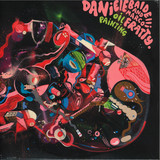
Leng Records’ first album of the year release comes courtesy of two contrasting legends of Italian dance music, Afro-Cosmic pioneer Danielle Baldelli and sometime FPI Project member Marco Fratty (real name Marco Frattini).
Both producers have a wealth of experience. Baldelli first to rose to fame as resident DJ at the near mythical Cosmic Club in the early 1980's, before moving into music production two decades ago. Since then, he’s collaborated with heaps of producers – most notably DJ Rocca, Marco Dionigi and Dario Piana – but “Oil Painting” marks his first collaboration with Frattini, an experienced producer whose bustling discography stretches right back to the Italian house explosion of the late 1980's and early ’90s.
The pair’s debut collaborative release is bold, bubbly, vibrant and funky, with the storied Italian veterans making extensive use of live instrumentation, vintage synthesizers and chugging, floor-friendly grooves. As you’d expect from a Baldelli-related project, the influences are obvious – think funk, dub-disco, cosmic rock, Italo-disco and nu-disco – but the resulting colourful cuts refuse to settle on one specific style.
Firmly focused on the dancefloor, “Oil Painting” is a gleeful, celebratory and excitable as anything either producer has released to date. For proof, check the surging arpeggio style synth-bass, kaleidoscopic synthesizer lines and eyes-closed rock guitar solos of “Automatic Amplitude”, the flute-laden dub disco shuffle of “Jasmine Flavour”, the organ-laden cosmic funk chug of “Oil Painting” and the lolloping disco-funk exuberance of “Steam Engine”, where crunchy guitar licks and Meters style organ stabs wrap themselves around a vintage disco bassline and head-nodding, toe-tapping drums.
The highlights don’t step there, either. Check the percussion and delay-laden Afro-Cosmic funk fusion of “Slinky Funk”, a veritably tropical excursion that repurposes the bassline and incessant cowbells from Cymande classic “Bra”, and the Clavinet-heavy stomp of “Positive Flow”, whose snaking, constantly-changing saxophone solo and flash-fried guitar riffs help create a thrillingly excitable mood.
From start to finish, “Oil Painting” is an album full to bursting with musical joy and umpteen giddy calls towards the dancefloor. From producers of Baledlli and Frattini’s experience, we’d expect nothing less.
- A1: The Fashion - Future Girl
- A2: The Fashion - Future Girl (Instrumental)
- B1: The Fashion - Future Girl (Flemming Dalum Remix)
- B2: The Fashion - Future Girl (Longdrink Remix)
- C1: Myxoma - Don‘t Runaway
- C2: Myxoma - Don‘t Runaway (Instrumental)
- D1: Myxoma - Don‘t Runaway (Flemming Dalum Remix)
- D2: Myxoma - Don‘t Runaway (Ali Renault Remix)
- E1: Diviacchi - Waiting For Heaven (Vocal Version)
- E2: Diviacchi - Waiting For Heaven (Instrumental)
- E3: Diviacchi - Waiting For Heaven (Radio Version)
- F1: Diviacchi - Waiting For Heaven (Flemming Dalum Remix)
- F2: Diviacchi - Waiting For Heaven (Also Playable Mono Remix)
- G1: Brian Dalmini - Can You Tell Me (Vocal Version)
- G2: Brian Dalmini - Can You Tell Me (Instrumental Version)
- H1: Brian Dalmini - Can You Tell Me (Also Playable Mono Glittering Revision 2020)
- H2: Brian Dalmini - Can You Tell Me (Longdrink Remix)
- I1: The Managers - One Race (12“ Vocal Version)
- I2: The Managers - One Race (Instrumental)
- J1: The Managers - One Race (Flemming Dalum Remix)
- J2: The Managers - One Race (Juan Segundo & Kimmo Salo Remix)
The hit series is back with four more solid dubs for the clubs! Vol III brings you more boogie; spaced out electro disco and dancefloor bangers, and this time Parkway is thrilled to include the dub of "GOT TO FIND" a collaboration with Nicky BENEDEK! As always, all four tunes are primed and loaded for the floor. Limited numbers via Rubadub - Don't miss.
- A1: Searchin' Ft. Jem Cooke
- A2: Falling Down - Totally Enormous Estinct Dinosaurs & A-Trak
- B1: Y Don't U
- C1: Alive Ft. Bloom Twins
- C2: R U Dreaming? Ft. Mathew Jonson
- D1: So Low Ft. Zoe Kypri
- D2: La Hija De Juan Simon Ft. Mëstiza
- E1: Warrior Dance Ft. Jojo Abot
- F1: Sunrise Generation Ft. Fink
- F2: Force Ft. Jojo Abot
Audio alchemist Damian Lazarus continues to redefine the boundaries of electronic music with his fifth studio album, ‘Magickal’.
Renowned for his unparalleled ability to craft transformative sonic journeys, Damian Lazarus is a master of rhythm, melody, and vibration—a true pioneer among his generation’s visionary artists. Damian’s broad depth of experience encompasses a variety of disciplines: tastemaker, selector, label owner, A&R and a Grammy-nominated artist in his own right - each informed by his unique ear for sound. He is chief wizard of the hugely influential and culture-defining Crosstown Rebels label, a globally renowned DJ with a penchant for exotic outdoor locations and a highly regarded recording artist with four albums and a plethora of solo cuts, collaborations and remixes in his sprawling discography.
With his fifth album, ‘Magickal’, Damian steps into his next evolutionary phase, combining his newly found sobriety with a more mature outlook while still pushing boundaries and creating unforgettable moments. At the root of it all is the magical power of togetherness and human connection that only music can facilitate. Driven by this core ethos, Damian continues on his mission to share his heartfelt music, taking the dance floor into unexplored realms of experience, facilitating moments of transcendence, bliss and pure, unadulterated magic.
Damian Lazarus, the avant-garde architect of spiritually nourishing sounds, is joined by a stellar lineup of collaborators on his latest excursion. It’s imaginative and mystical, rhythmically captivating and daring in its own way, as is typical of Damian’s approach. Taking consideration of his past, the album references his previous work to create a tapestry of compositions that tap into the energy of key moments from his discography. Drawing on his existing catalogue creates cohesive through lines and thematically serves as a continuation of previous stories. November’s single, ‘Sunrise Generation’, for instance, works as a companion to ‘Vermillion’, which was recorded by Damian with his band The Ancient Moons and vocalist Moses Sumney back in 2015. ‘Sunrise Generation’, featuring the beautiful vocals of Fink, was Damian’s first major release since his Grammy-nominated 2021 collaboration ‘Don’t Be Afraid’ with Diplo and Jungle, and continues to take inspiration from global gatherings at solstice and those moments of collective awe at sunrise.
Indeed, the album’s themes of mental elevation and psychedelic sonic journeys are evident throughout. Damian channels this energy through tracks like the soulful ‘So Low’, featuring the incredible Zoe Kypri, and the luminous ‘Searchin’, with Jem Cooke, whose collaboration with Damian dates back to ‘Flourish’ (2020) and lead single ‘Into The Sun’. Uplifting is the operative word here, as Damian aims straight for our hearts and inner selves, stripping away the layers to take us on a trip inwards, and out into the ether all at once. There’s a clear nod to Damian’s appreciation of amapiano when he teams up with Ghanaian interdisciplinary healer Jojo Abot on ‘Warrior Dance’. Old friend and inspirer Mathew Jonson brings his virtuoso touch to ‘Are You Dreaming?’, while TEED and A-Trak form an awesome alliance for ‘Falling Down’ with its heartrending vocals. ‘Alive’ features the Bloom Twins, and also additional production from acclaimed producer Mark Ralph, who incidentally worked on Damian’s debut album ‘Smoke The Monster Out’ in 2009 and forms another throughline to the past. ‘Alive’ blends pop sensibilities and song structure with Damian’s inimitable sound - and could become one of Damian’s biggest moments to date. ‘La Hija De Juan Simon’ delves into the Latin energy synonymous with vibrancy and self-expression as Damian teams up with acclaimed Spanish flamenco-influenced duo Mëstiza. On a solo tip, he rolls out with the eight-minute-plus soulful funk flex ‘Why Don’t U’.
In a suitably aligned instance of serendipity, the arrival of ‘Magickal’ comes at a pivotal period in Damian’s life, just as it has been with previous album concepts. Albums made and released during big shifts in his life speak to the correlation between growth, personal evolution, creativity, catharsis and sharing that process musically. The last album ‘Flourish’, for instance, was recorded and released in the space of a few months during the first summer of the global pandemic. As a result, there’s a kind of vulnerability in the music, a subtle story that’s being told with emotional touchpoints that will be relevant to anyone listening. The universal human experience and spectrum of emotions are things almost everyone can relate to. With the enhanced clarity of his sobriety, Damian’s compositions embody the uplifting nature of simply being alive, connected and unified in our love for music and one another.
Day Zero, Damian’s iconic annual festival, is intrinsically linked to ‘Magickal’. It’s the setting for his imagination when producing the music, it’s the launchpad for each year’s kaleidoscopic adventures around the world, and this year’s edition will be the backdrop to the release of ‘Magickal’. As the pinnacle of Damian’s annual experiences, Day Zero marks a vital milestone for his artistry, an extension of his inner realm, carefully curated and created for his global family of lovers and dancers to revel in the awe-inspiring beauty of Mother Nature. Central to the ethos of Day Zero is its sustainability practices and deep consideration for the locality within which it is held. Connections with local elders embolden its depth, cultivating a strongly aligned purpose with the ritual, customs and energy of the land and its people.
‘Magickal’ will be released in the same week as Day Zero, tying the two projects together in a neat dovetail. 12 years since it started, Day Zero continues to play a significant role in the music Damian makes, curates and plays. For him, it’s the epitome of his vision: a stunning natural setting, the very best party people from around the world, an unparalleled lineup of friends and family, high production values, eco-centric policies and music from another dimension. With these interdimensional transmissions, Damian channels his inner alchemist, which, in turn, permeates into the vibrational framework of ‘Magickal’.
Never one to adhere to convention, Damian has opted for a disruptive album release. ‘Magickal’ is to be kept under wraps and then announced and released on Crosstown Rebels on 8th January 2025, bypassing the modern trend of prolonged single drops and ‘tombstone’ album releases. ‘Magickal’ is the embodiment of Damian and his intentional, against-the-grain approach and reinforces the album as a complete artistic statement, offering listeners the full cohesive experience from the very beginning. This is a return to the album as the pinnacle moment and not the afterthought. Singles, edits and remixes will follow the ‘Magickal album’ release, and, of course, there will be a world tour to promote the album (including Glastonbury and Coachella) and a chance to present the album in exciting, innovative and unique ways.
Forever dreaming, a sincere student of magic, new and old, social sorcerer, lover of nature and master of musical wizardry, Damian Lazarus is a potent force. With ‘Magickal’, he reaffirms his place as one of electronic music’s most influential figures, taking listeners on a profound journey into sound, spirit, and connection.
Repress!
Every once in a while a record comes along which is a little bit special, a record which stands the test of time, bringing the same reaction to the dancefloor now as it did all those years ago, and 'Don't You Want My Love' is one of those records. Almost four decades after its original release in 1979, the record has become a favourite with the Glitterbox crowds, creating a seminal moment at Ministry of Sound when David Morales dropped it at the party in March 2017. Now Debbie Jacob's timeless classic lands on Glitterbox Recordings for a special vinyl package including a re-edit courtesy of disco veteran Dimitri From Paris. The spirit of disco lives on.
- A1: Do U Fm
- A2: Novelist Sad Face
- A3: Green Box
- A4: Dusty
- A5: The Linda Song
- A6: Dm Bf
- B1: I Tried
- B2: Melodies Like Mark
- B3: Wildcat
- B4: How U Remind Me
- B5: Pocky
- B6: Bon Tempiii
- B7: Pt Basement
- B8: Alberqurque Ii
- B9: Mary's
Yellow Coloured Vinyl[29,37 €]
Kneading dough is tricky – you should know how it’s supposed to feel. If you try too hard you could make it worse. It’s a beautiful practice – creation with a gentle touch, to work at something so it can be left alone. “If it’s too drawn out it’s awful. It’s easy to give too much.” Dance in the mirror. Contemplate your veiny hands. Who do they remind you of?
You begin by mixing flour and water. “What happens when your people die? Why’d they move the rock to the other side of Ulster Park?” Eliza Niemi asks two seemingly unrelated questions in a rising melody with guitar accompaniment, like fingers playing spider up to the nape of your neck. Gentle pressure. Strands of gluten form to bind the mix. A new question lingers in the binding. When she admits “but I don’t know how to tell if I’m feeling it or not,” that question surfaces through the text. It is reiterated throughout the album. When I’m working with dough I think the same thing to myself.
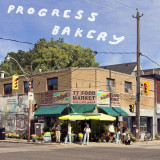
On Progress Bakery, her second album as a solo artist, Eliza knows to leave some questions alone – to let juxtaposition and tension be the proof. It doesn’t have to be hard. The feelings and revelations they provoke rise in the heat. The smell is sweet. Crispy on the outside and soft all the way through. She playfully slip-slides through words and sounds and images, delighting in surprise, skimming ideas like stones cast across clear water, touching down briefly with uncommon grace.
The question provoked between those opening lines resurfaces in the strands between songs – “Do U FM” is fully formed and beautifully layered, while “Novelist Sad Face” is a short, acapella rendering of gentle curiosity. What is holding these ideas together? Some songs demand more, seem to carry a whole load – eventually the skipping stone will halt to sink and resume its idle duty – while others drift in and out of focus, the way thoughts and dreams become interwoven before the mind is sunk into true sleep.
Music and words don’t always have to interact. Where she decides to keep them apart gives a new contour to where and how she puts them together. The kind of thing you’re supposed to take for granted with songs and their singers comes alive in Eliza’s hands – the little miracle of mixing, kneading, stretching, and stopping.
So often on Progress Bakery, Eliza teases out truth and meaning by asking questions. “Do I wanna be crying?” “Do you want me good or do you want me bad?” “Do I need an eye test?” “I’m writing songs in my head while you’re going over stuff with me — is that cruel??” In “Pocky” Eliza ends with a question that feels to me like the actual biography, succinct and revealing:
I don’t wanna be made to see
I just wanna ask “what’s that?”
Grace that ought to be rare, but in its care and precision is offered humbly, with great generosity, and without announcing itself. Eliza’s simple, miraculous music is given further form and shape by a group of collaborators – invaluable guest musicians Jeremy Ray, Evan Cartwright, Steven McPhail, Kenny Boothby, Ed Squires, Carolina Chauffe, Dorothea Paas, Louie Short, and Avalon Tassonyi. Together with Louie Short, who recorded, mixed, and produced the album along with Jeremy Ray and Lukas Cheung, Eliza has cultivated a richness in sound and texture that prods and provokes the ticklish ear. Barely audible guitar tinkering, a brief lo-fi field recording of trumpets, the harmonic clicking of a looped synthesizer, a flourish of reeds, a child’s conversation, each uncanny sound perfectly placed, rippling out under a soft breeze.
Lay in bed alone at night and ask aloud to the stillness,
“What were you doing at the Albuquerque Airport?
What were you doing there??”
And hear your question answered by a dream of swelling, undulating cellos. Try to grasp at the melody and structure. It’s not an answer (if there could be one), but it moves deeper, closer to the weird layer of fleeting moments and disconnected images, barely perceptible at its core. Wait for the dream reel to click into place.
Eliza took me for a ride in Nicole (her beloved Dodge Grand Caravan) and told me she’d been thinking of the album as an embodiment of transition – and I think every transition, known or unknown, carries the weight of new meaning, skittering off the surface tension of life as you know it, creating ripples, sometimes bouncing off and sometimes breaking through. There is a trick you can use to tell if a dough is glutinous enough. You’re supposed to stretch it out as thin as you can without breaking it and hold it up to the light. If you can see through, even if it renders the world murky and uncertain, you should leave it alone. I love this trick. It’s one that Eliza seems to know intuitively: work gently and ask questions and don’t always expect answers, and when you can, take a glimpse at something new, and then leave.
Kneading dough is tricky – you should know how it’s supposed to feel. If you try too hard you could make it worse. It’s a beautiful practice – creation with a gentle touch, to work at something so it can be left alone. “If it’s too drawn out it’s awful. It’s easy to give too much.” Dance in the mirror. Contemplate your veiny hands. Who do they remind you of?
You begin by mixing flour and water. “What happens when your people die? Why’d they move the rock to the other side of Ulster Park?” Eliza Niemi asks two seemingly unrelated questions in a rising melody with guitar accompaniment, like fingers playing spider up to the nape of your neck. Gentle pressure. Strands of gluten form to bind the mix. A new question lingers in the binding. When she admits “but I don’t know how to tell if I’m feeling it or not,” that question surfaces through the text. It is reiterated throughout the album. When I’m working with dough I think the same thing to myself.
On Progress Bakery, her second album as a solo artist, Eliza knows to leave some questions alone – to let juxtaposition and tension be the proof. It doesn’t have to be hard. The feelings and revelations they provoke rise in the heat. The smell is sweet. Crispy on the outside and soft all the way through. She playfully slip-slides through words and sounds and images, delighting in surprise, skimming ideas like stones cast across clear water, touching down briefly with uncommon grace.
The question provoked between those opening lines resurfaces in the strands between songs – “Do U FM” is fully formed and beautifully layered, while “Novelist Sad Face” is a short, acapella rendering of gentle curiosity. What is holding these ideas together? Some songs demand more, seem to carry a whole load – eventually the skipping stone will halt to sink and resume its idle duty – while others drift in and out of focus, the way thoughts and dreams become interwoven before the mind is sunk into true sleep.
Music and words don’t always have to interact. Where she decides to keep them apart gives a new contour to where and how she puts them together. The kind of thing you’re supposed to take for granted with songs and their singers comes alive in Eliza’s hands – the little miracle of mixing, kneading, stretching, and stopping.
So often on Progress Bakery, Eliza teases out truth and meaning by asking questions. “Do I wanna be crying?” “Do you want me good or do you want me bad?” “Do I need an eye test?” “I’m writing songs in my head while you’re going over stuff with me — is that cruel??” In “Pocky” Eliza ends with a question that feels to me like the actual biography, succinct and revealing:
I don’t wanna be made to see
I just wanna ask “what’s that?”
Grace that ought to be rare, but in its care and precision is offered humbly, with great generosity, and without announcing itself. Eliza’s simple, miraculous music is given further form and shape by a group of collaborators – invaluable guest musicians Jeremy Ray, Evan Cartwright, Steven McPhail, Kenny Boothby, Ed Squires, Carolina Chauffe, Dorothea Paas, Louie Short, and Avalon Tassonyi. Together with Louie Short, who recorded, mixed, and produced the album along with Jeremy Ray and Lukas Cheung, Eliza has cultivated a richness in sound and texture that prods and provokes the ticklish ear. Barely audible guitar tinkering, a brief lo-fi field recording of trumpets, the harmonic clicking of a looped synthesizer, a flourish of reeds, a child’s conversation, each uncanny sound perfectly placed, rippling out under a soft breeze.
Lay in bed alone at night and ask aloud to the stillness,
“What were you doing at the Albuquerque Airport?
What were you doing there??”
And hear your question answered by a dream of swelling, undulating cellos. Try to grasp at the melody and structure. It’s not an answer (if there could be one), but it moves deeper, closer to the weird layer of fleeting moments and disconnected images, barely perceptible at its core. Wait for the dream reel to click into place.
Eliza took me for a ride in Nicole (her beloved Dodge Grand Caravan) and told me she’d been thinking of the album as an embodiment of transition – and I think every transition, known or unknown, carries the weight of new meaning, skittering off the surface tension of life as you know it, creating ripples, sometimes bouncing off and sometimes breaking through. There is a trick you can use to tell if a dough is glutinous enough. You’re supposed to stretch it out as thin as you can without breaking it and hold it up to the light. If you can see through, even if it renders the world murky and uncertain, you should leave it alone. I love this trick. It’s one that Eliza seems to know intuitively: work gently and ask questions and don’t always expect answers, and when you can, take a glimpse at something new, and then leave.
Black Country, New Road veröffentlichen ihr neues Studioalbum „Forever Howlong“ auf Ninja Tune! Das Album ist ihre erste Studioveröffentlichung seit ihrem Album, „Ants From Up There“, aus dem Jahr 2022, neben ihrem für den Mercury Prize nominierten Debüt, „For The First Time“ und folgt auf „Live At Bush Hall“ aus dem Jahr 2023. Jetzt, auf dem dritten Studioalbum, beginnt die Band wieder von Grund auf und vollzieht eine weitere wundersame musikalische Verwandlung.
Das lang erwartete neue Album wurde von James Ford (von Simian Mobile Disco, der u.a. bereits mit Arctic Monkeys, Depeche Mode und Blur zusammenarbeitete) produziert und zeigt Black Country, New Road in einer neuen Form, in der die Gesangsaufgaben - und der Großteil des Songwritings - zwischen Tyler Hyde, Georgia Ellery und May Kershaw aufgeteilt sind. „Forever Howlong“ ist ein ehrgeiziges, detailliert ausgearbeitetes Album, das von Folk über Prog und Barock-Pop bis hin zu einem Hauch von Alt-Rock alles enthält - mit Anklängen an Joanna Newsom, Randy Newman, Fiona Apple und Janis Ian - und dabei doch diesen unverwechselbaren, einzigartigen Sound beibehält, den nur diese Kombination von Musiker:innen hervorbringen kann. Obwohl das Album sehr vielfältig und umfangreich ist, fühlt es sich auch sehr kohärent und fokussiert an, da es drei verschiedene Stimmen und Stile aufnimmt und sie nahtlos in einen neuen kollektiven Sound einfließen lässt.
Black Country, New Road veröffentlichen ihr neues Studioalbum „Forever Howlong“ auf Ninja Tune! Das Album ist ihre erste Studioveröffentlichung seit ihrem Album, „Ants From Up There“, aus dem Jahr 2022, neben ihrem für den Mercury Prize nominierten Debüt, „For The First Time“ und folgt auf „Live At Bush Hall“ aus dem Jahr 2023. Jetzt, auf dem dritten Studioalbum, beginnt die Band wieder von Grund auf und vollzieht eine weitere wundersame musikalische Verwandlung.
Das lang erwartete neue Album wurde von James Ford (von Simian Mobile Disco, der u.a. bereits mit Arctic Monkeys, Depeche Mode und Blur zusammenarbeitete) produziert und zeigt Black Country, New Road in einer neuen Form, in der die Gesangsaufgaben - und der Großteil des Songwritings - zwischen Tyler Hyde, Georgia Ellery und May Kershaw aufgeteilt sind. „Forever Howlong“ ist ein ehrgeiziges, detailliert ausgearbeitetes Album, das von Folk über Prog und Barock-Pop bis hin zu einem Hauch von Alt-Rock alles enthält - mit Anklängen an Joanna Newsom, Randy Newman, Fiona Apple und Janis Ian - und dabei doch diesen unverwechselbaren, einzigartigen Sound beibehält, den nur diese Kombination von Musiker:innen hervorbringen kann. Obwohl das Album sehr vielfältig und umfangreich ist, fühlt es sich auch sehr kohärent und fokussiert an, da es drei verschiedene Stimmen und Stile aufnimmt und sie nahtlos in einen neuen kollektiven Sound einfließen lässt.
- 1: Dance
- 220: Th Century
- 3: Survival (New Version)
- 4: Deprived
- 5: Killer On The Streets
- 6: Bitch
- 7: Defective Breakdown
- 8: Conscription
- 9: Casualty
- 10: We Don't Care
- 11: Live In Pain
- 12: Head On Collision
- 13: Metal Walls
- 14: Thoughts
Sunburst Yellow/Red Vinyl[28,15 €]
Introducing the vinyl reissue of "Defective Breakdown" by The Defects, a cornerstone album in the history of Irish punk. Originally released in 1982, this album captures the raw energy and rebellious spirit of Belfast’s punk scene during a turbulent period. Known for their uncompromising lyrics and driving rhythms, The Defects became anthems for youth discontent and anti-establishment sentiments. Fronted by the powerful vocals of Buck Defect, with infectious guitar work from Geoff "Duke" Gilmore, the band brought a visceral sound that resonated with audiences far beyond Northern Ireland. Tracks like "Survival" and "Brutality" showcase their fast-paced, no-holds-barred approach to punk, combining aggressive instrumentals with direct, hard-hitting lyrics. This vinyl edition brings "Defective Breakdown" back to life with enhanced clarity and depth, giving both long-time fans and new listeners the chance to experience The Defects’ iconic sound as it was meant to be heard.
- A1: Future Nostalgia (3 06)
- A2: Don't Start Now (3 00)
- A3: Cool (3 30)
- A4: Physical (3 10)
- A5: Levitating (3 22)
- A6: Pretty Please (3 16)
- B1: Hallucinate (3 28)
- B2: Love Again (3 41)
- B3: Break My Heart (3 57)
- B4: Good In Bed (3 38)
- B5: Boys Will Be Boys (2 44)
- C1: Dua Lipa X Angele - "Fever" (2 36)
- C2: We're Good (2 40)
- C3: Miley Cyrus - "Prisoner" (Feat Dua Lipa) (2 50)
- C4: If It Ain't Me (3 09)
- C5: That Kind Of Woman (3 13)
- C6: Not My Problem (Feat Jid) (3 14)
- C7: Levitating (Feat Dababy) (2 32)
- C8: J Balvin, Dua Lipa, Bad Bunny - "Un Dia (One Day)" (Feat Tainy) (3 44)
- D1: Levitating (Feat Madonna And Missy Elliott - The Blessed Madonna Remix) (3 59)
- D2: Hallucinate (Paul Woolford Remix - Extended) (5 24)
- D3: Don't Start Now (Kaytranada Remix) (4 13)
- D4: Physical (Feat Gwen Stefani - Mark Ronson Remix) (2 56)
- D5: Love Is Religion (The Blessed Madonna Remix) (3 36)
- D6: Break My Heart (Moodymann Remix) (5 52)
- E1: That Kind Of Woman (Jacques Lu Cont Remix) (4 50)
- E2: Pretty Please (Masters At Work Remix) (3 56)
- E3: Boys Will Be Boys (Zach Witness Remix) (3 54)
- E4: Good In Bed (Gen Hoshino Remix) (3 32)
- E5: Future Nostalgia (Joe Goddard Remix) (4 49)
- E6: Love Again (Horse Meat Disco Remix) (5 30)
- F1: Cool (Jayda G Remix) (4 05)
- F2: Don't Start Now (Yaeji Remix) (4 12)
- F3: Hallucinate (Mr Fingers Deep Stripped Mix) (8 06)
- F4: Pretty Please (Midland Refix) (4 36)
- F5: Good In Bed (Zach Witness Remix) (3 49)
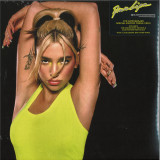
Dua Lipa veröffentlicht zum bevorstehenden 5-jährigen Jubiläum ihres mit einem GRAMMY Award ausgezeichneten und mit Platin zertifizierten zweiten Studioalbum Future Nostalgia eine 3LP Special-Edition.
Gepresst auf einer gelben Splatter-Vinyl und zwei schwarzen Vinyl, enthält das 3-LP-Set die 11 OriginalTracks des Albums sowie die Deluxe Moonlight Edition und das Remix-Album Club Future Nostalgia.
- A1: Montego Bay - Everything (Paradise Mix) 04 59
- A2: Atelier - Got To Live Together (Club Mix) 06 06
- A3: Golem - Music Sensations 04 56
- B1: The True Underground Sound Of Rome Feat. Stefano Di Carlo - Gladiators 05 26
- B2: Eagle Parade - I Believe 04 26
- C1: Dj Le Roi - Bocachica (Detroit Version) 05 28
- C2: Green Baize - Synthetic Rhythm 01 41
- C3: M.c.j. Feat. Sima - Sexitivity (Deep Mix) 05 30
- D1: Kwanzaa Posse Feat. Funk Master Sweat - Wicked Funk (Afro Ambient Mix) 06 31
- D2: Progetto Tribale - The Bird Of Paradise 06 29
- D3: Mbg - The Quite 06 59
Vol 1[28,99 €]
Googling “paradise house”, the first results to pop up are an endless list of European b&b’s with whitewashed lime façades, all of them promising “…an unmatched travel experience a few steps from the sea”. Next, a little further down, are the institutional websites of a few select semi-luxury retirement homes (no photos shown, but lots of stock images of smiling nurses with reassuring looks). To find the “paradise house” we’re after, we have to scroll even further down. Much further down.
It feels like yesterday, and at the same time it seems like a million years ago. The Eighties had just ended, and it was still unclear what to expect from the Nineties. Mobile phones that were not the size of a briefcase and did not cost as much as a car? A frightening economic crisis? The guitar-rock revival?! Certainly, the best place to observe that moment of transition was the dancefloor. Truly epochal transformations were happening there. From America, within a short distance one from the other, two revolutionary new musical styles had arrived: the first one sounded a bit like an “on a budget” version of the best Seventies disco-music – Philly sound made with a set of piano-bar keyboards! – the other was even more sparse, futuristic and extraterrestrial. It was a music with a quite distinct “physical” component, which at the same time, to be fully grasped, seemed to call for the knotty theories of certain French post-modern philosophers: Gilles Deleuze, Félix Guattari, Paul Virilio... Both those genres – we would learn shortly after – were born in the black communities of Chicago and Detroit, although listening to those vinyl 12” (often wrapped in generic white covers, and with little indication in the label) you could not easily guess whether behind them there was a black boy from somewhere in the Usa, or a girl from Berlin, or a pale kid from a Cornish coastal town.
Quickly, similar sounds began to show up from all corners of Europe. A thousand variations of the same intuition: leaner, less lean, happier, slightly less intoxicated, more broken, slower, faster, much faster... Boom! From the dancefloors – the London ones at least, whose chronicles we eagerly read every month in the pages of The Face and i-D – came tales of a new generation of clubbers who had completely stopped “dressing up” to go dancing; of hot tempered hooligans bursting into tears and hugging everyone under the strobe lights as the notes of Strings of Life rose up through the fumes of dry ice (certain “smiling” pills were also involved, sure). At this point, however, we must move on to Switzerland.
In Switzerland, in the quiet and diligent town of Lugano, between the 1980s and 1990s there was a club called “Morandi”. Its hot night was on Wednesdays, when the audience also came from Milan, Como, Varese and Zurich. Legend goes that, one night, none less than Prince and Sheila E were spotted hiding among the sofas, on a day-off of the Italian dates of the Nude Tour… The Wednesday resident and superstar was an Italian dj with an exotic name: Don Carlos. The soundtrack he devised was a mixture of Chicago, Detroit, the most progressive R&B and certain forgotten classics of old disco music: practically, what the Paradise Garage in New York might have sounded like had it not closed in 1987. In between, Don Carlos also managed to squeeze in some tracks he had worked on in his studio on Lago Maggiore. One in particular: a track that was rather slow compared to the BPM in fashion at the time, but which was a perfect bridge between house and R&B. The title was Alone: Don Carlos would explain years later that it had to be intended both in the English meaning of “by itself” and like the Italian word meaning “halo”. That wasn’t the only double entendre about the song, anyway. Its own very deep nature was, indeed, double. On the one hand, Alone was built around an angelic keyboard pattern and a romantic piano riff that took you straight to heaven; on the other, it showcased enough electronic squelches (plus a sax part that sounded like it had been dissolved by acid rain) to pigeonhole the tune into the “junk modernity” section, aka the hallmark of all the most innovative sounds of the time: music that sounded like it was hand-crafted from the scraps of glittering overground pop.
No one knows who was the first to call it “paradise house”, nor when it happened. Alternative definitions on the same topic one happened to hear included “ambient house”, “dream house”, “Mediterranean progressive”… but of course none were as good (and alluring) as “paradise house”. What is certain is that such inclination for sounds that were in equal measure angelic and neurotic, romantic and unaffective, quickly became the trademark of the second generation of Italian house. Music that seemed shyly equidistant from all the rhythmic and electronic revolutions that had happened up to that moment (“Music perfectly adept at going nowhere slowly” as noted by English journalist Craig McLean in a legendary field report for Blah Blah Blah magazine). Music that to a inattentive ear might have sounded as anonymous as a snapshot of a random group of passers-by at 10AM in the centre of any major city, but perfectly described the (slow) awakening in the real world after the universal love binge of the so-called Second Summer of Love.
For a brief but unforgettable season, in Italy “paradise house” was the official soundtrack of interminable weekends spent inside the car, darting from one club to another, cutting the peninsula from North to centre, from East to West coast in pursuit of the latest after-hours disco, trading kilometres per hour with beats per minute: practically, a new New Year’s Eve every Friday and Saturday night. This too was no small transformation, as well as a shock for an adult Italy that was encountering for the first time – thanks to its sons and daughters – the wild side of industrial modernity. The clubbers of the so-called “fuoriorario” scene were the balls gone mad in the pinball machine most feared by newspapers, magazines and TV pundits. What they did each and every weekend, apart from going crazy to the sound of the current white labels, was linking distant geographical points and non-places (thank you Marc Augé!) – old dance halls, farmhouses and business centres – transformed for one night into house music heaven. As Marco D’Eramo wrote in his 1995 essay on Chicago, Il maiale e il grattacielo: “Four-wheeled capitalism distorts our age-old image of the city, it allows the suburbs to be connected to each other, whereas before they were connected only by the centre (…) It makes possible a metropolitan area without a metropolis, without a city centre, without downtown. The periphery is no longer a periphery of any centre, but is self-centred”.
“Paradise house” perfectly understood all of this and turned it into a sort of cyber-blues that didn’t even need words, and unexpectedly brought back a drop of melancholic (post?)-humanity within a world that by then – as we would wholly realise in the decades to come – was fully inhuman and heartless. A world where we were all alone, and surrounded by a sinister yellowish halo, like a neon at the end of its life cycle. But, for one night at least, happy."