Dark Entries and Honey Soundsystem Records have teamed up once more to release the final volume of gay porn soundtracks by San Francisco-based musician and producer, Patrick Cowley. One of the most revolutionary and influential figures in the canon of disco, Cowley created his own brand of Hi-NRG dance music, The San Francisco Sound.' Born in Buffalo, NY on October 19, 1950, Patrick moved to San Francisco in 1971 to study at the City College of San Francisco. He founded the Electronic Music Lab at the school, where he would make experimental soundtracks by blending various types of music and adapting them to the synthesizer.
By the mid-70's, Patrick's synthesis techniques landed him a job composing and producing songs for disco superstar Sylvester, including hits like You Make Me Feel (Mighty Real)', Dance Disco Heat' and Stars.' This helped Patrick obtain more work as a remixer and producer. His 18-minute long remix of Donna Summer's I Feel Love' and his production work with edgy New Wave band Indoor Life were both of particular note. By 1981, Patrick had released a string of dance 12 singles, like Menergy' and Megatron Man'. He also had founded Megatone Records, the label upon which he released his debut album, Menergy'. Around this time Patrick was hospitalized and diagnosed with an unknown illness: that which would later be called AIDS. Throughout 1982, he recorded two more Hi-NRG hits, Do You Wanna Funk' for Sylvester, and Right On Target' for Paul Parker, as well as a second solo album Mind Warp'. On November 12, 1982, he passed away.
In 1979 Patrick was contacted by John Coletti, owner of famed gay porn company Fox Studio in Los Angeles. Patrick jumped on this offer and sent reels of his college compositions from the 70s to John in LA. Coletti then used a variable speed oscillator to adjust the pitch and speed of Patrick's songs in-sync with the film scenes. The result was the VHS collections Muscle Up' and School Daze' released in 1979 and 1980. Afternooners' is the third collection of Cowley's instrumental songs, recorded in May 1982. These recordings were culled from two 23-minute reels in the Fox Studio vaults. All songs were originally untitled, so we've used the titles from Fox Studio's 8mm film loops. This compilation also includes three bonus tracks found in the archives of fellow Megatone Records recording artist Paul Parker and the attic of teenage friend Lily Bartels. Influenced by Tomita, Wendy Carlos, and Giorgio Moroder, Patrick crafted a singular sound from his collection of synthesizers, percussion, modified guitars, and hand-built equipment. The listener enters a world of forbidden vices, evocative of Patrick's time spent in the bathhouses of San Francisco. The songs on Afternooners' reflect the advances of the equipment available at the onset of the 1980s. Cowley's unadulterated electronic forms are stripped down and dubbed up. Lush electronic percussion, soaring synthesizer riffs and low slung funk grooves comingle on these magnificent soundscapes.
Featuring 70 minutes of music never before released on vinyl. All songs have been remastered by George Horn at Fantasy Studios in Berkeley, CA. The vinyl is housed in a gatefold jacket designed by Berlin-based artist Gwenael Rattke, featuring black and white photos of Patrick in his studio that opens to a full color array of x-rated scenes from the Fox Studio vaults. Included is a fold-out poster featuring a handmade collage using photography and xeroxed graphics of classic gay porn imagery and an essay from Drew Daniel of Matmos. For Patrick's 67th birthday, Dark Entries and Honey Soundsystem Records present a glimpse into the futuristic world of a young genius. These recordings shed a new light on the experimental side of a disco legend who was taken too soon.
Suche:don tom
- A1: Wise Man
- A2: Skylarka
- A3: Wild Man Street
- A4: Cow Town Skank
- A5: Northern Sound
- A6: Convention
- A7: The Joker From La Boka
- B1: Legs Man
- B2: Greenwich Farm
- B3: Girls Town
- B4: Tip Toe
- B5: Gold Coast
- B6: Boys Town
repress !
If one band could be cited for the emergence of Ska music, that band would be the Skatalites.
Formed around June 1965 and built around the many musicians that had honed their craft at the Alpha Boys School in Kingston, Jamaica. The early line up consisted of Don Drummond (Trombone), Roland Alphonso (Tenor Saxophone), Tommy McCook (Tenor Saxophone), Johnny ’Dizzy’ Moore (Trumpet), Lester Sterling (Alto Saxophone), Jerome ’Jah Jerry’ Hines (Guitar), Jackie Mittoo (Piano), Llyod Brevett (Bass) and Llyod Knibbs (Drums).
Named originally The Satellites after the big news of the day, the Soviet space satellite. They became The Skatalites when band member Tommy McCook introduced a play on the characteristic ‘Ska’ sound, made by the guitar when following the’ after beat’ of the music.The group had already cut its musical teeth by playing under various guises around the Jamaican island in numerous ‘hotel bands’. When the big Sound System operators Sir Coxsane Dodd, Duke Reid and King Edwards needed new material to play out with and their usual source of the material, American R & B records were drying up. They turned to this pool of musicians to back up their main singers of the day. Delroy Wilson, Alton Ellis and Lord Creator to name but a few. Also to cut the many instrumental tracks they needed usually under the tutor ledge of Don Drummond, official band leader and main musical director. Their knowledge of the old mento tunes and an understanding of Jazz and R&B music somehow blended to make this musical sound that was to dominate the island from the early 60’s up until around 1966 when the sound would slow down to what we now know as Rocksteady.
The time span of the Skatalites career considering their output of litually 100’s of sides of music, was a relatively short one of just over two years. We have delved into the vaults of Wirl Records and have selected some tunes that show the dexterity of the band and what great sounds this group of musicians were capable of producing and the high quality they maintained. They recorded before they were named as a collective The Skatalites, when personal and financial problems became an issue the band split into two halves. Jackie Mittoo and Roland Alfonso going on to form The Soul Brothers band for Coxsone Dodd. Tommy McCook moving over to work with Duke Reid as musical director. Sadly, Don Drummond suffering for years from depression would see his career cut short ending in Belle Vue hospital in 1969.
But while together they cut some of the finest Ska Sounds to be found on record. We hope you enjoy this set as much as we have in putting it together.
So, stand Up, Listen Hard and do the Ska……
Human Worth are proud to present the killer second album ‘Celestial Devastation’ from UK supergroup COWER, featuring members of The Ghost of a Thousand, Petbrick, USA Nails, Yards, The Eurosuite and JAAW, with a portion of proceeds donated to charity. Featuring the musical might of Tom Lacey (Yards, The Ghost of a Thousand), Wayne Adams (Petbrick, JAAW, Big Lad) and Gareth Thomas (USA Nails, The Eurosuite) Cower is a collaborative project of 3 friends celebrating a lifetime of music exploration together. Each bringing their own distinct flavour to this new record, which pushes the boundaries even more than their acclaimed debut ‘BOYS’, exploring further into the realms on gothic darkness, but still with a real kick, highlighting the trio’s noise roots.
Recorded, mixed and mastered at Bear Bites Horse Studio by Wayne Adams, ‘Celestial Devastation’ explores the idea of technology becoming the guiding light in our lives, for better or worse. In the words of the band’s lyricist Tom Lacey “We give up a lot of decision making to the algorithm more and more, so these songs are an attempt to make sense of that. I think that kind of power speaks to certain type of men, they seem to want to try and harness it, make others see it’s value, so this record speaks a lot to tech bros and the weird cult of silicon valley.” Human Worth have pressed up a limited run of ‘Celestial Eco Mix’ vinyl, housed in a gorgeous package designed by Thomas Lacey using MidSommar AI – linking perfectly with the album’s themes. Featuring a super high gloss cover, with additional photographic inserts illustrated by Daniel Holloway. 10% of all proceeds will be donated to Hackney Foodbank, supporting people in crisis or trapped in poverty with compassion and dignity.
Small tribute to the Spiral Tribe for the choice of the title.
For making us see life in a different way with alternative music and parties to what was done at the time and which continues and will continue to influence the sound systems and artists from yesterday, of today and tomorrow.
10 artists 10 different Tribe styles
Thank you to the artists for participating in this project.
Die aus Hawthorne, Kalifornien, stammenden Thee Heart Tones setzen mit ihrer Musik sowohl eine Tradition fort als auch neue Grenzen. Leadsängerin Jazmine Alvarado ist gerade mal 19 Jahre alt und das älteste Mitglied der Gruppe, Jorge Rodriguez, ist 21, aber wenn man sich ihre Platte anhört, wird deutlich, dass sie weit über ihr Alter hinaus talentiert sind. Thee Heart Tones, das sind Jazmine (Gesang), Ricky Cerezo (Tasten und Orgel), Jorge (Schlagzeug), Jeffrey Romero (Bass), Peter Chagolla (Leadgitarre) und Walter Morales (Rhythmusgitarre). "Eines Tages bekam ich eine Mail von Ricky Cerezo mit der Frage, ob ich einen Song für seine neue (damals noch namenlose) Band schreiben wolle", erzählt Jazmine. "Ich kannte seinen Schlagzeuger und die anderen Jungs aus der Mittelschule, sie waren also bekannte Gesichter. Sie schickten mir ein mp3 eines Instrumentalstücks, das sie geschrieben hatten, und sagten mir, sie wollten einen Text, also schrieb ich einen und schickte ihn ihnen." Dieser Song wurde schließlich "Don't Take Me as a Fool", eine schwermütige Moll-Ballade, in der Jazmines schwülstiger, perfekter Gesang erklingt, und die nun für ihr Debütalbum bestimmt ist. Ricky ging nach Hause und spielte seinem Vater "Don't Take Me As a Fool" vor, das er als Sprachnotiz auf seinem Telefon aufgenommen hatte. "Ich war zögerlich. Dad kannte diese Musik besser als jeder andere, er ist damit aufgewachsen. Aber er hat sich mein Telefon geschnappt und es an sein Ohr gehalten. Seine Zustimmung bedeutete mir sehr viel. Aber er hatte die gleiche Reaktion wie Jorge und ich, als wir Jazmine zum ersten Mal singen hörten. 'Das wird ein Hit', sagte er mir. Ihr habt hier etwas ganz Besonderes". Es war dieselbe Aufnahme, die Leon Michels und Danny Akalepse von Big Crown Records aufhorchen ließ, die beide sofort das Potenzial der Gruppe erkannten. Nachdem sie bei dem Label unterschrieben hatten, flog Leon nach Los Angeles, um mit Tommy Brenneck in Tommys Diamond West Studio ihr Debütalbum aufzunehmen. In fünf Tagen haben sie 14 Songs aufgenommen, die den Charme des Teenager-Souls einfangen und ihn mit ihren bewährten Produktionsfähigkeiten mischen - das Ergebnis ist ein modernes klassisches Soul-Album. Der Album-Opener und Titeltrack "Forever & Ever" ist ein ansteckender Two-Stepper, der sofort die Stimmung hebt, während schwere B-Seiten-Balladen wie "Should I Call You Tonight", "Cry My Tears Away" und "It's Time" den Klassikern des Genres den Rang ablaufen. Mit "Need Something More" ziehen sie das Tempo an und füllen die Tanzfläche, während Jazmine mit einem Track im Northern-Soul-Stil ganz sachlich die Dinge auf den Punkt bringt. Sie covern den Klassiker "Sabor A Mi" aus der Feder von Alvaro Carrillo mit großem Effekt, werden ihm gerecht und stellen ihre Version auf eine Stufe mit den besten von ihnen. Ein weiterer Höhepunkt ist ihre Version des The Vanguards-Klassikers "Somebody Please", den sie auf eine ganz andere Ebene heben. Die stampfenden Drums von "No Longer Mine" stehen im Kontrast zu Jazmines honigsüßem Gesang und enden mit der düsteren Energie eines Hip-Hop-Samples aus den mittleren 90ern. Forever & Ever ist sowohl ein Beweis für die unverwechselbare musikalische Chemie als auch für das Talent der beiden. Ihre Intentionen als Band sind ein Beweis für ihren kollektiven Charakter. Die Entscheidung, "Sabor A Mi" zu covern, "erlaubt es uns, unser Publikum wissen zu lassen, dass wir zu unseren Wurzeln zurückkehren", sagt Jazmine. "Wenn man in L.A. aufwächst, wird man von der Stadt, den Kunstwerken und der Musik beeinflusst", sagt Ricky. "Dad besaß kein Lowrider-Auto, aber andere Mitglieder unserer Familie schon. Impalas. El Caminos. Wir waren von der Kultur beeinflusst, insbesondere von der Chicano-Kultur. Und Oldies und Soulmusik spielten eine große Rolle." Der Stil. Die Kultur. Die Anspielung auf die Vergangenheit. "Das ist es, was wir anstreben. Wir wollen junge Chicanos mit ihrem Erbe verbinden. Und wir wollen die Menschen vereinen_ alt und jung."
Are you a mannequin in the eyes of your beloved? Does your partner compare your relationship to a factory that emits plumes of smoke? Are you in love with a seductive and destructive Credit Default Swap? Someone who sucks you in with skyrocketing short term erotic returns - only to ghost you until you crash so hard that you end up broke(n) in your own bed? Do you pay $300 an hour out of pocket to a psychiatrist who promises to help you strike a deal with a difcult parent - one that will produce more stable long term returns on your psychic investments? If so, then you, my friend, may be drowning in the sea of Love in the Time of Capital. It's where everyone would love to drown. It's a new album from John Davis of The Folk Implosion that fnds him backed with confdence by Eli Moore and Andrew Dorsett of the indie pop band Lake. It was recorded by Nich Wilbur at the Unknown, a cavernous recording studio in Anacortes, WA that has been a favorite destination for indie rockers around the nation. Ben Brodin recorded Megan Siebe playing strings on two tracks at his Hidden Branch studio in Omaha, and the album was mixed by Scott Solter in Durham NC. Arrangements are based on the classic power pop trio of drums, bass and electric guitar. Those elements are tastefully embellished with organs and pianos that call to mind records by classic rock bands like Tom Petty's Heartbreakers. That is, if the Heartbreakers were fltered through the Northwestern International Pop Underground tradition, and cast a critical eye on how commodity culture shapes the way we think of ourselves and our intimate relationships. The album also features four ballads, three drum and electric guitar free, for all you late night introspective heads.
- A1: Mystery Train
- A2: That's All Right (Alternate)
- A3: Good Rockin' Tonight (Alternate)
- A4: Baby Let's Play House
- A5: I Love You Because (Undubbed)
- A6: Don't Be Cruel
- B1: Blue Suede Shoes
- B2: Jailhouse Rock
- B3: Tryin' To Get To You
- B4: Blue Moon Of Kentucky (Alternate)
- B5: Tomorrow Night
- B6: I Forgot To Remember To Forget (Alternate)
Elvis Presley was undoubtedly Sun Records’ biggest star, burning brightly during his tenure at the label from 1953 to 1955. 2024 marks the 70th anniversary of the release of Elvis’ first single, “That’s All Right,” on Sun Records. This collection is Elvis as interpreted by his Sun contemporaries like Jerry Lee Lewis, Johnny Cash, and Roy Orbison, sharing their versions of songs Elvis made famous. Special additions include alternate versions of tracks from Johnny Cash, Sleepy LaBeef, and more.
- A1: Here's A New Thing (Lp1)
- A2: That Spiritual Feeling
- A3: Into Tomorrow
- A4: Arrival Time
- A5: Fly On The Wall
- B1: All Year Round
- B2: Ends Of The Earth
- B3: This Is No Time
- B4: Wild Wood (Portishead Remix)
- C1: Kosmos (Lp2 - Lynch Mob Bonus Beats Remix)
- C2: The Loved
- C3: It's A New Day Baby
- C4: A Year Late
- D1: So You Want To Be A Dancer
- D2: Everything Has A Price To Pay
- D3: Helioscentric
- D4: The Riverbank
- E1: Feelin Alright (Lp3)
- E2: Ohio
- E3: Black Sheep Boy
- E4: Sexy Sadie
- E5: I Shall Be Released
- E6: I'd Rather Go Blind
- F1: My Whole World Is Falling Down
- F2: Aint No Love In The Heart Of The City
- F3: Waiting For An Angel
- F4: Bang Bang
- F5: Instant Karma
- F6: Don't Let Me Down
Diese Dreifach-Vinyl-Compilation vereint bisher schwer erhältliche Tracks aus Paul Wellers Zeit bei Go!
Discs und später auch Island Records.
Das Set, das sich über den Zeitraum von 1991 bis 2001 erstreckt, war seit seiner ursprünglichen Veröffentlichung im Jahr 2003 nicht mehr erhältlich, bis jetzt. Die 3LP ist bei allen teilnehmenden Händlern ab
dem 09.08.2024 erhältlich.
Repress!
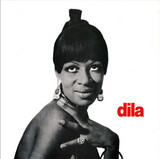
Far Out Recordings proudly presents the first and only album from the mysterious Brazilian vocal sensation Dila (pronounced “Jee-la”). Having reportedly died in a car crash shortly after the album’s release in 1971, there is very little known about the woman behind the voice. But the joyous music Dila left behind, gives us a picture as good as any, of a powerful feminine soul at the top of her game.
The liner notes on the elusive original LP, written by composer Arnoldo Medeiros attest: “Friend, look out! Because when this girl starts to sing, you’re in trouble. Hold the railing so you don’t fall down the stairs, because she’s coming this way and shaking up everything.”
Arranged and produced by Durval Ferreira, alongside his studio band affectionately known as “Os Grillos” (The Crickets), Dila (1971) is a rare glimpse into the authentic soulful Samba sound of Rio’s favelas in the late sixties and early seventies.
A blast of funky, percussive Brazilian breaks, scorching hot brass and swing-laden piano, the music is as iconic as the album’s stark cover, as is clear on opener ‘Inez’, composed by The Crickets’ bassist Romildo. There’s a fantastic interpretation of the Ivan Lins classic ‘Madalena’ (made famous by Elis Regina), a moving version of the Tom Jobim and Vinicius De Moraes classic ‘O Morro Não Tem Vez’, and a number of sunny original compositions by Arnold Madeiros, who’s other writing credits include music for Marcos Valle, Wanderlea, Evinha and Dom Salvador.
With original LPs extremely hard to come by, this rare treasure of Brazilian soul, which fans of Gal Costa, Celia, Evinha and Elis Regina will love, gets a much-deserved official reissue: remastered and pressed to 180g vinyl.
- A1: Psycho Killer
- A2: Heaven
- A3: Thank You For Sending Me An Angel
- A4: Found A Job
- A5: Slippery People
- A6: Cities
- B1: Burning Down The House
- B2: Life During Wartime
- B3: Making Flippy Floppy
- B4: Swamp
- C1: What A Day That Was
- C2: This Must Be The Place (Naive Melody) (Naive Melody)
- C3: Once In A Lifetime
- C4: Big Business/I Zimbra
- D1: Genius Of Love
- D2: Girlfriend Is Better
- D3: Take Me To The River
- D4: Crosseyed & Painless
LOS ANGELES—To celebrate the 40th anniversary of the celebrated Talking Heads and Jonathan Demme’s concert film Stop Making Sense, the set will be re-released as a 2LP and 2CD/Blu-ray set this summer.
Released last year, the sold-out Deluxe Edition of the soundtrack will return as a 2-LP black vinyl on Rhino and 2-LP crystal clear vinyl at retail. Both variants feature a 12-page booklet with liner notes from all four band members –Tina Weymouth, David Byrne, Chris Frantz, and Jerry Harrison—and band photos. The 2CD/Blu-ray version includes the entire 28-page booklet from last year’s Deluxe Edition and a Dolby Atmos mix of the complete concert, mixed by Jerry Harrison and E.T. Thorngren, who also mixed the original release. Both will be available on July 26. Pre-order now.
The band appeared together for a sold-out screening and Q&A last night at the Pantages Theater, the same theater at which Stop Making Sense was recorded. They were joined by Blondshell, who performed “Thank You For Sending Me an Angel.” Another special screening with the band will occur in Brooklyn at the King’s Theater on June 13, with the Q&A hosted by Questlove and The Linda Linda’s performing “Found a Job.” The two events cap off a banner year of celebrations for what many consider to be the best concert film of all time.
The inspiration for Stop Making Sense came when director Jonathan Demme saw Talking Heads perform during the band’s 1983 tour for Speaking in Tongues. Afterward, he approached them with the idea of making the show into a concert film. They agreed and worked together over the next few months to finalize the details. Ultimately, Demme filmed three shows at Hollywood’s Pantages Theater in December 1983 to create Stop Making Sense.
The concert film presents a retrospective of the band up to that point, with a performance that weaves together songs from all six of its studio albums. The show progresses methodically, opening with Byrne onstage performing “Psycho Killer” alone with a drum machine. After each song, he’s joined by a new band member until Weymouth, Frantz, and Harrison are all on stage with him. The group continues to grow throughout the concert as members of the stellar touring band are added: keyboardist Bernie Worrell, percussionist Steve Scales, guitarist Alex Weir, and backup singers Lynn Mabry and Ednah Holt.
The band performs 18 songs in Stop Making Sense, including its recent single at the time, “Burning Down The House.” That summer, the song was in heavy rotation on radio and MTV, helping the song become the band’s first top 10 hit in America. It was, however, a different song from Speaking in Tongues that was destined to deliver one of the film’s signature moments. Talking Heads would perform “Girlfriend Is Better” wearing the now iconic, oversized suit inspired by costumes worn in traditional Japanese theater. For good measure, a picture of David Byrne in the suit also graces the album cover.
Stop Making Sense focuses mainly on music by Talking Heads but does include a few songs recorded outside the band: “Genius Of Love” by Tom Tom Club, “What A Day That Was” and “Big Business” from Byrne’s 1981 album, The Catherine Wheel. Limited edition vinyl versions of both of these albums, along with Harrison’s The Red And The Black, were released for this year’s Record Store Day.
When it arrived in September 1984, Stop Making Sense was an artistic and commercial triumph. The film had people dancing in theatre aisles, and the soundtrack sold over two million copies. Just last year, the Library of Congress added Stop Making Sense to the National Film Registry in recognition of its cultural, historical, and aesthetic significance.
Weymouth praises Demme as a collaborator: “…Jonathan was a very enthusiastic, highly adaptive, and imaginative guy who was just as good a listener as he was a talker and collaborator. From the get-go you just got the impression he was as flexible as he was disciplined. Being team players, that boded well for a great relationship and a great film!”
Harrison says the film still holds up today: “To me, Stop Making Sense has remained relevant because the staging and lighting techniques could have been created in a much earlier time period. For example, Vari-Lights, lights with motors to re-aim them, had just come into vogue. Had we used them, there would have been a timestamp on the film, and it eventually would have felt dated...The absence of interviews, combined with the elegant and timeless lighting, created a film that can be watched over and over.”
Byrne says it’s interesting that this album was – for many people – an introduction to Talking Heads. “We had done a live album before this, but coupled with the film, and with the improved mixes and sound quality, this record reached a whole new audience. As often happens, the songs got an added energy when we performed them live and were inspired by having an audience. In many ways, these versions are more exciting than the studio recordings, so maybe that’s why a lot of folks discovered us via this record.”
Frantz recalls the sheer joy surrounding the entire Stop Making Sense experience. “I’m talking about real, conscious, transcendent joy… I’m talking about what the Southern gospel people call ‘getting happy,’ which means ‘to be filled with the Spirit.’ That is what happened to us onstage every night, and from my seat behind the drums, I recognized that this was happening to the audience too. Joy was visible in front of me and all around me every night.”
- 01: Coined - Your House
- 02: Untitled (Halo) - Pedal Petal
- 03: Ety - This Town
- 04: Nourished By Time - I Guess I Got My Answer
- 05: Ms Ray - Signs
- 06: Pelin Pelin - Foamy
- 07: Olan Monk - Surf
- 08: Tony Bontana & Will Lister - A Long While
- 09: Adela Mede, Isa Otoya & María Catalina Jiménez - Pardo Plumetí
- 10: Max Winter - Don’t Live Inside
- 11: Canty - Alligator
- 12: Mark William Lewis - Lighter
- 13: Mary Jane Dunphe - Uriel
- 14: E-Prime - Somebody Else
- 15: Zoee Ft. Nourished By Time - Moth To A Flame
- 16: Nova Variable - Fountaine
- 17: Ma.moyo - Cave
- 18: Nukuluk - Shadowplay
- 19: Sy3 - Electric Puppy
- 20: Pig$ Ft. Paige Savahn - Last Call
‘Road Less Travelled vol.2’ once again brings together the imprints far-reaching community of artists spanning London, Los Angeles, Montreal, Budapest, Copenhagen, Barcelona & beyond. The compilation floats between shoegaze, moody electronics, and shimmering synths; featuring new and original music from the likes of Nourished By Time, Mark William Lewis, and Untitled (Halo). Road Less Travelled Vol.2 sees the label continue to amplify the voices of these singular artists who continue to sculpt their respective sounds. It’s a follow-up to 2022’s ‘Road Less Travelled vol.1’ which was celebrated by Resident Advisor, CRACK, The Wire, Dazed, Clash, NTS, Tom Ravenscroft, and Jamz Supernova.
Scenic Route continues to reaffirm its position as some of London’s premier tastemakers; building a grassroots following via their sell-out live shows featuring the likes of Chanel Beads, James Messiah, Mark William Lewis, Delilah Holiday, and more. Paired with ground-breaking releases including Nourished by Time’s debut album ‘Erotic Probiotic 2’ garnering the coveted Pitchfork’s 'Best New Music' and was widely regarded as one of the ‘Best Albums of 2023’ with features on Gorilla vs Bear (#1), Pitchfork (#5), The Guardian, The Fader, Paste and more. Most recently releasing Vanessa Bedoret’s (Astrid Sonne band mate) debut album ‘Eyes’ in the words of Boomkat ‘a timeless bouquet of raptures and ballads iced with shearing strings and shatterproof electronics’ having additional support from Vinyl Factory, Resident Advisor, Bleep, Nina, The Fader and more.
Coloured vinyl repress of Penguin Cafe album Rain Before Seven… A sense of optimism infuses Penguin Cafe’s fifth studio album, not the braggadocious, overconfident kind, but more a blithe, self-effacing optimism in keeping with the national character. Even when all signs point to the contrary, it operates within the certainty that things are going to be alright. Probably.
The title comes from an old weather proverb with the rhyming prognostication — fine before eleven — hinting at a happy ending, irrespective of the science: “I found it in a book and I'd never heard it before,” says Arthur Jeffes, leader of Penguin Cafe. “It has faintly optimistic overtones and I quite like it. It's fallen out of usage recently but it does describe English weather patterns coming in off the Atlantic.”
From the widescreen reverie of opener ‘Welcome to London’ with its cheeky nod to Morricone to ‘Goldfinch Yodel’, the self-described “Maypole banger” at the denouement, there’s a welcome sense of sanguinity, always with an undercurrent of exotic rhythmic exuberance. Playfulness pervades, with a titular nod to A Matter of Life... from 2011, the last album title that concluded with an ellipsis. That Penguin Cafe debut is the bridge between the legendary Penguin Cafe Orchestra, led by Arthur’s father Simon Jeffes, and the much- loved descendent, led by Arthur.
“Stylistically it's really satisfying to get back to playful rhythms and instruments,” says the younger Jeffes, who kept the group’s debut from 12 years ago in mind when writing the new album. “Certainly when starting out, I became aware that we’d stopped using quite a few of the textures that had been there at the beginning—and it was certainly there in my dad's earlier stuff. So there's a lot of balafon and textures from completely different parts of the world, musically and geographically: ukuleles, cuatros and melodicas that you can hear.”
Encouraged by co-producer Robert Raths, the rhythmic elements of Rain Before Seven... have never been more to the fore and, at times, even hint at the electronic. ‘Find Your Feet’, for instance, is underpinned with more than just a pulse. Mixed by Tom Chichester-Clark, it brings to the musical melange what Arthur describes as a “near electronic feel”. He adds, excitedly: “There are elements of fun here which we haven't really done with the last three records.” Another ebullient highlight is ‘In Re Budd’, dedicated to the late ambient godfather Harold Budd, who Arthur discovered had died on the day he’d been writing the celebratory ear worm with a deceptively tricky syncopation. Played on an upright piano with some “prepared” felt to accentuate the bounce, Jeffes feels a track with an Afro Cuban Cafe vibe would appeal to Budd’s contrariness.
- A1: Hard To Say I'm Sorry/Get Away
- A2: Look Away
- A3: Stay The Night
- A4: Will You Still Love Me?
- A5: Love Me Tomorrow
- A6: What Kind Of Man Would I Be?
- B1: You're The Inspiration
- B2: I Don't Wanna Live Without Your Love
- B3: Hard Habit To Break
- B4: Along Comes The Woman
- B5: If She Would Have Been Faithful
- B6: We Can Last Forever
"Greatest Hits 1982–1989 is the third greatest hits album by the American band Chicago, released by Full Moon/Reprise Records on November 21, 1989.1 It became one of Chicago's biggest selling albums. Spanning from Chicago 16 in 1982 to Chicago 19 in 1988, the set includes founding vocalist Peter Cetera and his successor Jason Scheff. It includes a remix of ""What Kind of Man Would I Be?""
Highlights: On a sea blue colour vinyl for the first time as part of Rhino’s Summer Vinyl Campaign"
- A1: Psycho Killer
- A2: Heaven
- A3: Thank You For Sending Me An Angel
- A4: Found A Job
- A5: Slippery People
- A6: Cities
- B1: Burning Down The House
- B2: Life During Wartime
- B3: Making Flippy Floppy
- B4: Swamp
- C1: What A Day That Was
- C2: This Must Be The Place (Naive Melody) (Naive Melody)
- C3: Once In A Lifetime
- C4: Big Business/I Zimbra
- D1: Genius Of Love
- D2: Girlfriend Is Better
- D3: Take Me To The River
- D4: Crosseyed & Painless
LOS ANGELES—To celebrate the 40th anniversary of the celebrated Talking Heads and Jonathan Demme’s concert film Stop Making Sense, the set will be re-released as a 2LP and 2CD/Blu-ray set this summer.
Released last year, the sold-out Deluxe Edition of the soundtrack will return as a 2-LP black vinyl on Rhino and 2-LP crystal clear vinyl at retail. Both variants feature a 12-page booklet with liner notes from all four band members –Tina Weymouth, David Byrne, Chris Frantz, and Jerry Harrison—and band photos. The 2CD/Blu-ray version includes the entire 28-page booklet from last year’s Deluxe Edition and a Dolby Atmos mix of the complete concert, mixed by Jerry Harrison and E.T. Thorngren, who also mixed the original release. Both will be available on July 26. Pre-order now.
The band appeared together for a sold-out screening and Q&A last night at the Pantages Theater, the same theater at which Stop Making Sense was recorded. They were joined by Blondshell, who performed “Thank You For Sending Me an Angel.” Another special screening with the band will occur in Brooklyn at the King’s Theater on June 13, with the Q&A hosted by Questlove and The Linda Linda’s performing “Found a Job.” The two events cap off a banner year of celebrations for what many consider to be the best concert film of all time.
The inspiration for Stop Making Sense came when director Jonathan Demme saw Talking Heads perform during the band’s 1983 tour for Speaking in Tongues. Afterward, he approached them with the idea of making the show into a concert film. They agreed and worked together over the next few months to finalize the details. Ultimately, Demme filmed three shows at Hollywood’s Pantages Theater in December 1983 to create Stop Making Sense.
The concert film presents a retrospective of the band up to that point, with a performance that weaves together songs from all six of its studio albums. The show progresses methodically, opening with Byrne onstage performing “Psycho Killer” alone with a drum machine. After each song, he’s joined by a new band member until Weymouth, Frantz, and Harrison are all on stage with him. The group continues to grow throughout the concert as members of the stellar touring band are added: keyboardist Bernie Worrell, percussionist Steve Scales, guitarist Alex Weir, and backup singers Lynn Mabry and Ednah Holt.
The band performs 18 songs in Stop Making Sense, including its recent single at the time, “Burning Down The House.” That summer, the song was in heavy rotation on radio and MTV, helping the song become the band’s first top 10 hit in America. It was, however, a different song from Speaking in Tongues that was destined to deliver one of the film’s signature moments. Talking Heads would perform “Girlfriend Is Better” wearing the now iconic, oversized suit inspired by costumes worn in traditional Japanese theater. For good measure, a picture of David Byrne in the suit also graces the album cover.
Stop Making Sense focuses mainly on music by Talking Heads but does include a few songs recorded outside the band: “Genius Of Love” by Tom Tom Club, “What A Day That Was” and “Big Business” from Byrne’s 1981 album, The Catherine Wheel. Limited edition vinyl versions of both of these albums, along with Harrison’s The Red And The Black, were released for this year’s Record Store Day.
When it arrived in September 1984, Stop Making Sense was an artistic and commercial triumph. The film had people dancing in theatre aisles, and the soundtrack sold over two million copies. Just last year, the Library of Congress added Stop Making Sense to the National Film Registry in recognition of its cultural, historical, and aesthetic significance.
Weymouth praises Demme as a collaborator: “…Jonathan was a very enthusiastic, highly adaptive, and imaginative guy who was just as good a listener as he was a talker and collaborator. From the get-go you just got the impression he was as flexible as he was disciplined. Being team players, that boded well for a great relationship and a great film!”
Harrison says the film still holds up today: “To me, Stop Making Sense has remained relevant because the staging and lighting techniques could have been created in a much earlier time period. For example, Vari-Lights, lights with motors to re-aim them, had just come into vogue. Had we used them, there would have been a timestamp on the film, and it eventually would have felt dated...The absence of interviews, combined with the elegant and timeless lighting, created a film that can be watched over and over.”
Byrne says it’s interesting that this album was – for many people – an introduction to Talking Heads. “We had done a live album before this, but coupled with the film, and with the improved mixes and sound quality, this record reached a whole new audience. As often happens, the songs got an added energy when we performed them live and were inspired by having an audience. In many ways, these versions are more exciting than the studio recordings, so maybe that’s why a lot of folks discovered us via this record.”
Frantz recalls the sheer joy surrounding the entire Stop Making Sense experience. “I’m talking about real, conscious, transcendent joy… I’m talking about what the Southern gospel people call ‘getting happy,’ which means ‘to be filled with the Spirit.’ That is what happened to us onstage every night, and from my seat behind the drums, I recognized that this was happening to the audience too. Joy was visible in front of me and all around me every night.”
- Sicily
- More Steps
- Tailing Tom
- Leaving New York
- Sicily Redux
- Being Richard
- Opening The Letter
- Una Barca - Vanitas
- Una Barca - Fin
- Dickies Documents
- A Palermo
- The So Called Memories - By Myself For A While
- Forgery Letters
- A Venezia
- The Latest News
- Dickies Rings
- Dickies Last Letter
- Sicily Variation - Ravini
- Next Steps
- Dear Mrs. Dasilva
- The Talented Mr. Ripley - Fin
- Tom
- Tom - Piano Sketch
- Dickie By Day
- Setting The Stage
- The Rooms - Don't Call Me Tommy
In collaboration with NETFLIX, Waxwork Records is excited to present RIPLEY Original Netflix Series Soundtrack Music by Jeff Russo. Tom Ripley, a grifter scraping by in early 1960s New York, is hired by a wealthy man to travel to Italy to try to convince his vagabond son to return home. Tom’s acceptance of the job is the first step into a complex life of deceit, fraud, and murder.
The limited series drama is based on Patricia Highsmith’s bestselling Tom Ripley novels. An- drew Scott plays Tom Ripley. Dakota Fanning plays Marge Sherwood. Johnny Flynn plays Dickie Green-leaf.
- Pastures Of Plenty
- This Land Is Your Land
- Blowin Down This Room Feeling Bad
- Hard Ain T It Hard
- I Ride An Old Paint
- John Henry
- Pretty Boy Floyd
- Talking Dust Bowl Blues
- Tom Joad
- House Of The Rising Sun
- Dust Pneumonia Blues
- Hard Travellin
- The Biggest Thing That Man Has Ever Done
- Sinking Of The Reuben James
- Car Song
- So Long It S Been Good To Know You
Tom Noble, digger extraordinaire, owner of Superior Elevation Records, and general Brooklyn/LA legend, dons his House Of Sprits moniker for the first single from a forthcoming LP on Razor-N-Tape.
'Times Are Changing' sets the tone for this album project that collects the work of nearly 15 years, a gritty vision of modern-retro soul that throws a reverent nod to its Mizell Brothers and Patrick Adams influences as it brings the sound into the future. Recorded with all live instrumentation and mixed tough for the dance floor, this limited 12 Inch boasts an extended original and instrumental on the A side, and a huge remix from Aussie synth wizard Harvey Sutherland on the flip that highlights the rich instrumentation and extremely catchy vocal hook. A surefire summer jam, this is timeless music that is only the tip of the iceberg from a future classic album
“On ‘The Nashville Sessions’ as throughout Van Zandt’s entire catalogue, the more wretched he sounds, the better - and on the best parts of ‘The Nashville Sessions’ he almost makes melancholy sound a condition to be envied.” Uncut In 1974, Townes Van Zandt recorded what would have been his seventh album, ‘Seven Come Eleven’. Business issues prevented its release until the recordings surfaced two decades later as ‘The Nashville Sessions’ In 2014, Townes Van Zandt’s original manager and producer Kevin Eggers gave Charly Records’ Rob Caiger and engineer Pete Reynolds the only surviving tapes to restore and remaster to present a stunning document of the folk-blues master at his absolute peak, originally released on vinyl for the first time in 2015. “You did a first-class with the record. The packaging looks sensational and the records sound great. That was what matter most to me over the years. I know Townes would be very pleased. The simple truth is the only things that matter to him was his songs and his music. All the rest was bullshit and he could have cared less. We began as dear friends and that’s how it ended just before his death. When it came to the music he gave all he had to give.” Kevin Eggers - 26 March 2015