Elsden Music presents the vinyl version of 'Above The Clouds', by the Ilario Ferrari Trio, with two brand news tracks - a new recording of the title track featuring trumpeter Henry Spencer and a stunning live version of "Leah Meets Laika"
The release of the vinyl comes at the point of an extensive tour across the UK and Europea between now and the end of this year.
On the cusp of releasing this, his fourth studio recorded album, pianist and singer Ilario Ferrari has developed a distinctive compositional style that integrates instrumental contemporary jazz with vocal harmonies, adding hints of sounds and rhythms from both Indian and Mediterranean culture, alongside some classical nuances with additional influences from Ilario's southern Italian heritage. This approach is singular to Ilario Ferrari as an artist: a style that is perfectly complimented by his two well-known collaborators and rising jazz stars in their own right; drummer Katie Patterson and bassist Charlie Pyne.
At the heart of 'Above The Clouds' lies the notion of relationships. Between us and our planet, the musical and personal relationships between Ilario, Charlie and Katie, and, of course, with their loved ones. It is also about elevation and observation, from 'Above The Clouds' and from the grounded embrace of Mother Earth, impressions of love, loss, and home, expressed through a beguiling blend of vocal led songs and instrumentals.
This recording is more than just a simple jazz trio album, with the trio expanding and contracting as the song requires. The Ilario Ferrari Trio's innovative approach combined with their indisputable skill promises to be a breath of fresh air in the jazz world and beyond.
Ilario Ferrari: piano, piano effects & vocals
Charlie Pyne: double base & vocals
Ketie Patterson: drums & vocals
Plus: Henry Spencer: trumpet (on "Above The Clouds")
Samosa Records comes at you with all the elements for Earth, Wind & Funk Vol. 2 – a succulent double slice of vinyl heaven!
DeGama unlocks his ReGroove toolkit for A1 – Leslie Lello’s house stomper ‘R U Doing’. The bass does all the talking before a glorious synth arrangement washes over your ears. The filtered, soaring, time stretched breakdown will have you in raptures. Pure late night dance floor territory, ‘R U Doing’ is simply relentless.
Frank Virgilio gets his ‘Juice’ flowing for track A2. A fusion of furious acid style synth bass, rolling beats, organ stabs and bongos, ‘Juice’ doesn’t waste any time at all in revealing all of its glory. There’s so much goodness going on in this track – no less than the glorious, uplifting tribal vocal that weaves its way in and out.
A3 gives a reprise of Leslie Lello’s ‘R U Doing’ with the original cut making a welcome appearance on the disc. All the ingredients are here – tight bongo led rhythm, gorgeous sequenced synth and driving bass. ‘R U Doing’ is one of those smile inducing tunes that lights up the floor, be that sunset or sunrise.
On the B-side of this Part.2 we return to the company of Dirtyelements & Drunkdrivers with ‘Hey You’ and another DeGama Re-Groove. Coming in at 124pm, ‘Hey You’ leads you up the piano dazzler path – a pounding, funk fuelled story set in the big city after midnight with no cabs home available.
On B2 Iberian groove master Javi Frias bakes all his funk in one big pie with ‘The Big Dance’. At a heady 128bpm, ‘The Big Dance’ wastes no time in setting its stall out. Javi’s recipe is electric, elaborate and fast-paced – oodles of bongos, laser beams and a disco bass to die for, ‘The Big Dance’ does exactly what it says on the tin.
In Earth, Wind & Funk Vol. 2 Samosa Records has produced a stunning double slab release, featuring a good mix of some of the label’s most prolific artists and some welcome newcomers.
out of Stock
Last delivered 3 months ago available to reorder, subject to availability
Oh yes, we love it when Theo represses some of his most sought after tracks and this one is particularly well-timed. Leron Carson is still an unknown figure, a kid who used to make viciously raw and futuristic techno tracks in the late 1980's! "China Trax", alongside the rest of his tracks on a different Sound Signature double 12", is totally ahead of its time and if it was truly made in 1987 then it is nothing short of amazing. Of course, it's not just the year it was made in that's interesting but also the fact that it's music without an age, able to be appreciated by any generation of techno freaks. Theo's own "Insane Asylum" on the flipside is also pretty monumental; rigged beats, off-kilter grooves and that familiar spontaneity so heavily associated to the label. RECOMMENDED.
out of Stock
Last delivered 14 months ago available to reorder, subject to availability
Edit maestro Danny Krivit delivers a double-sider of killer instrumentals that rocked such iconic venues as the Loft and the Paradise Garage. ‘Flying Machine’ from War was written for the climactic scene in the 1978 film Youngblood and brings an intense burst of drama and excitement to any set. With swirling flute, the group’s trademark heavy percussion & an iconic drum beat that's been sampled by countless afro house records. This Latin-flavoured jam never fails to provoke dancers to new heights of expression, appearing for the first time on a 7-inch! The Flipside ‘How Much Are They’ plumbs the depths of dub and exists in a strange netherworld between four-on-the-floor, steppers reggae and motorik krautrock, courtesy PIL bassist Jah Wobble and Can’s Jaki Leibezeit and Hoger Czukay. Two certified classics from the playlists of NYC’s greatest clubs, remastered & delivered in maximum sonic fidelity.
out of Stock
Last delivered 4 months ago available to reorder, subject to availability
Something different from Causa Sui. While Causa Sui have always had one foot in heavy psychedelic rock, they've had the other one deep in a wide variety of esoteric styles. On this new double LP set, that other dimension of the band is being explored full-scale. "Szabodelico" paints with a colourful palette, both compositionally and sonically - digging deep into an assortment of cultures, eras and sounds with a true crate-digger mindset. Throughout their 15 year life-span Causa Sui has always been about seeking out new directions, exploring the past and the present in a way that's unique at each step of their subtle progression - forging new paths into an existing map. "Szabodelico" feels like discovering a small room under the stairs of your own house: familiar, yet new and exciting. Their latest vision is an elegantly zoned-out version of itself: a turn inward. Anti-bombastic, yet rich with ecstatic harmonics and dynamics. The band stringed together a long series of sessions in 2019 and early 2020 in their studio in Odense, often prioritizing playful first takes and good vibes rather than clinical perfection.Sparsely dubbed and mixed with a natural, full bodied flavour by Jonas Munk during the summer of 2020, each track has its own aesthetic. There's no simple equation to sum up the 13 individual parts of the album, but as a whole it creates an entity that's as complete as each of its parts. From the windblown opener "Echoes of Light", to the closing slow-motion epic "Merging Waters" you'll find yourself asking where did the time go? The answer of course is: Szabodelico.
Welcome to this wild ride of cheese, wooden shoes, green gold and a whole lotta Dutch rock 'n roll attitude! This album is a high-octane compilation where today's garage, beat and rock'n'roll artists pay tribute to the rich history of Nederbeat and pop Each covering a classic Dutch tune with their own twist, companied with their own original. Think of it as a musical time machine with a detour through the gritty, reverbing walls of Studio Teepdek, guided under strict supervision by studio guru Arjan Spies and released by Soundflat Records / Topsy Turvy Records; home of the best contemporary Dutch artists. Buckle up, because you're about to hear the Netherlands' musical past and present collide in a glorious explosion of sound with a shot of cheap adrenaline.Enjoy the ride and to turn it up to 11.
The Krontjong Devils:The Greatest thing to come out of Holland since the Dutch Treat! Playing Surfmusic since 1991 and still going strong! Mooon: This young power trio consists of brothers Tom and Gijs and their cousin Timo. These cats take you to the Golden Age of pop music: the psychedelic boom of the 60's and 70's. The Kryng:Three jinxed no-good guys with an insatiable appetite for great popsongs. Their ace in the hole is singer/ guitarist/ cult- hero Mark ten Hoor, an extraordinary craftsman //when it comes to writing catchy and powerful songs. Fleur:She has the looks, the moves and a voice that sounds like a cool breeze on a hot summer day. The Heck:High pace, hectic, energetic and wild 60's garagepunk outfit all the way from Klazinaveen. Feel free to place them somewhere in between The Sonics and Reigning Sound. Frankie:The young and aspiring talent Frankie from the Eindhoven writes double edged songs like a head in the clouds and roots from your feet. Written like a dream but grounded in reality. Les Robots: Mechanical men from outer space, stationed in Rotterdam, presumably programmed by legendary producer Joe Meek to make astonishing instrumental music.
The project by Jens-Uwe Beyer and Thomas Venker boasts a remarkable origin story. In 2017, Venker, co-founder and co-editor-in-chief of Cologne’s Kaput magazine, hosted a gathering at Beyer's house, bringing together journalists, creatives, and musicians. To mark the occasion, the pair decided to join forces for an impromptu ambient-electronic performance, presenting themselves as a two-man band. That evening, donned in special costumes designed by artist Sarah Szczesny and fuelled by a generous amount of Japanese whisky, Hasan Poppu was born. Over the course of the pandemic, the duo thought about creating a record based on the live recording of their premiere show. However, the synergy of their collaborative creative energies led them in entirely novel directions. Their self-titled, double-sided album traverses a wild and raucous terrain, moving swiftly from hybrid noise-techno to giddy party ecstasy, to strange and shadowy atmospheres.
Including remixes by YPY, Hibotep, Lena Willikens, Efdemin and Barnt, the 11 tracks span a dizzying array of experimental dance-facing styles. 'Die-Biden' kicks off as a high-vibrational vocal experiment seemingly voiced by a sentient German vocoder. 'Kodō' follows, featuring Venker's playful mantra set against a stomping beat. Willikens' reimagining of 'Teiko' transports the track to obscure realms inhabited by strange creatures emitting ungodly sounds. Meanwhile, Efdemin's take on 'Ekusutashī' pulsates with a kinetic buzz. Flipping over to the B-side, 'Sakura' is a euphoric wall of drone punctuated by eerie whispers and mystical singing. Then, the second installment of 'Kodō' takes a fresh trajectory with a touch of Barnt’s electronic groove stylings. Finally, Hibotep's 'Shojo no yo ni flp' serves as the finsher – an unrepentant trance belter that disintegrates into sampled fragments. Loosely translating to "broken pop music," Hasan Poppu is informed by Beyer and Venker's shared love for Japan. The band takes their cues from the country’s rich sonic cultures while also drawing on Venker's wordsmith background and Beyer's flair for melding melodic tech-house with song-based synth-pop. Originally out on Beachcoma Recordings, Hasan Poppu’s debut album gets a new lease of life on Osàre! Editions with a digital and limited edition cassette tape release. Sarah Szczesny reprises her role in shaping the visual identity of Hasan Poppu by creating beautiful, painterly artwork for the record. words by Hannah Pezzack
out of Stock
Last delivered 17 months ago available to reorder, subject to availability
Causa Sui return with the perfect companion to last year's tour de force, "From The Source". Whereas that record was a tightly structured piece of work, that condensed many aspects of the band's sound into a concise 45 minute LP, "In Flux" presents the more loose and impulsive side of Causa Sui. After an introductory suite in classic Causa Sui territory, with deep fuzz riffs and syncopated grooves, things gradually become more outlandish. The following three vinyl sides see the band channeling Hot Rats-style jazz fusion, the oceanic post-rock of late-period Talk Talk, and the impulsive, anarchic experimentalism of Can's "Tago Mago" into their own beatific brew. On "Spree", the band abandons guitar entirely, relying on a dual synthesizer on top of drums and bass instead, yet maintains that uniquely Sui-an vibe.The centerpiece in this set, "Astral Shores", unfolds over 16 minutes - from gently hypnotic, ritualistic folk, through motoric psychedelia and back again. It's been many years since Causa Sui have sounded this unmoored on a studio record. "In Flux" is an essential chapter in the band's ever-changing oeuvre. The double 10" format might seem like an odd choice, but splitting the album into four short, distinctive parts makes perfect sense stylistically. Each side has a character all off its own, taking the listener somewhere different. Still a continious CD version is available as well.
As one of the most prolific and influential producers of the last thirty years, The Hacker’s imprint on electronic music already spans genres, eras and scene revolutions. And still, there’s more. In spirited collaboration with friend and fellow French journeyman Endrik Schroeder, the first release from The Hacker & Endrik Schroeder Project eschews EBM excess or gritty electro. Instead, two introductory tracks slip into the continuum of evergreen underground techno, influenced in equal part by the digital soul of Detroit, and the futurist experimentations of Sheffield.
Quickly escalating from a classic beat to a hoover-rave ascent determined to fill the vacuum of any warehouse, ‘Puissance’ is an unapologetic anthem that doubles as an elegant and impactful introduction to the Hacker & Schroeder partnership. Hypnotising dancers with ever-more forceful acid oscillations, the pair masterfully stave off the pressure with a wide-eyed organ riff, played live and direct from rave heaven.
‘The Voyagers’ contrasts with a cosmic groove, certain to satisfy heads-down bleep purists, while dedicating time and space for the charisma and quirks of this machine-led dance to shine through, including emotional pads and whispering voices, par excellence.
out of Stock
Last delivered 10 months ago available to reorder, subject to availability
Many of the greatest artists of all time found inspiration in their dreams... and pdqb is known to be an absolute pro when it comes to creatively exploiting the REM cycles.
Recently, for example, he dreamed of Gunnar, who had witnessed the rise and fall of electronic dance music, which had once held simple-minded creatures in its thrall. The beats had a peculiar effect on them, drawing them into euphoric trances. But Gunnar, allergic to its hypnotic frequencies, stood apart, unaffected. However, eventually, in a hidden enclave in the highlands of Reykjavík, he met Dr. Amara El-Amin, a neuroscientist fascinated by his unique immunity. Together, they discovered that Gunnar's resistance was a gift, offering insights into human consciousness and the power of music. With this knowledge, Gunnar inspired a global movement celebrating frequencies that resonate...differently. Though EDM had become a relic, Gunnar Oliasson remained a legend - a bad taste survivor who embraced a symphony of pure electrical potential, a language of circuits and oscillations beyond sound.
He woke with a jolt, the phantom music still echoing in his mind. He scribbled furiously, equations and diagrams mixing with strange, abstract notations. The dream, he knew, was a glimpse into a world where his inventions would dance, not just function.
For Synaptic Cliffs, it is an extraordinary honor to be able to offer you, dear listeners, the soundtrack of pdqb's world-changing dream: Four beautiful genre-defining Electrocognition tracks, embracing the depths of the human wetware. And three jaw-dropping sonic remodels from a human-like being called The Exaltics.
out of Stock
Last delivered 17 months ago available to reorder, subject to availability
Berlin-based French-Irish multimedia artist Zoe Mc Pherson levels up on their third full-length "Pitch Blender", mangling years of experience DJing and performing live into a tight set of cybernetic soundsystem experiments that flicker between the rave and the art space.
Cast your mind back to February 2020 for a moment, when Mc Pherson released their last album "States of Fugue". The world seemed less tangled somehow, and yet Mc Pherson's precision-engineered fusion of exploratory sound design and visceral club pressure seemed to hint at a cataclysmic event none of us were really expecting. Only a few weeks after its release the world changed forever, and the majority of us were grounded - forced to consider our lives and the movement (or lack thereof) surrounding us. The philosophy of this extended time period is welded into the bones of "Pitch Blender", Mc Pherson's supple third album. They have learned plenty in the last two years, and infuse all of that anxiety and spiky emotionality into a spread of tracks that sound as powerful in headphones as they do over a well-tweaked soundsystem, soldering vocals, environmental recordings and instrumental flourishes to unpredictably pneumatic, cybernetic beats.
Anyone that's caught one of Mc Pherson's energetic live performances over the last few months will have an idea of what "Pitch Blender" is made of. They're an artist who's somehow able to match the raw energy of post-punk and no-wave music with the brain-altering potential of the best experimental club tracks, vocalizing an incongruous post-lockdown reality over beats that sound as if they're in a permanent state of flux. 'On Fire' splutters to life in a frenetic patter of drums that blur into oddly soothing hoover sounds, snaking lysergically towards a drop that's teased constantly, and never comes. We're forced to wait until 'The Spark' for that, fighting through choppy, pitch-mangled guitar and rolling beats until a gruesome kick drum forces its way through the psilocybin mists and heaving Bristol-inspired bass clonks. Backed up with just the inverted traces of recognizable breaks, this vigorous pulse lies at the heart of "Pitch Blender", the driving force that powers Mc Pherson's sound even when it's only hinted at.
'Blender' is the moment where Mc Pherson show their full hand, using crackling sound effects, ghost vocals and uneven rhythms to build a textural landscape that's so evocative you can almost taste it. Squealing modular synth effects sound like gameshow buzzers being triggered in another dimension and propel the track forward - it's club music, just about, but Mc Pherson's motivation is world-building, and their world is colorful, abstract, and dizzyingly surreal. "Obsolete user," their voice echoes over driving airlock kicks. But they take a swift left turn with 'Lamella', reducing the kinetic club rhythms to a longing simmer and letting loose with powerful vocals, intoning with robotic, gender-fluxed intensity. On 'Wait', New York City's clacking crosswalk signal - already an effective club track on its own - is transformed into a reminder to slow down, juxtaposed with booming sub-heavy kicks, acidic synths and effervescent percussion that rattles in time with the vibrations. It's foley rave, built for pure psychedelic intensity to blur the line between real life and sonic fiction.
One of the album's most galvanic tracks, 'Power Dynamics' curves a double-time rhythm around breathless HQ sound design squiggles until it hits a polyrhythmic crescendo, striking a queasy balance between rave hedonism and ritualistic hand drum energy. It all builds towards eerie closing track 'Outside' that acts as an important wind down, spotlighting Mc Pherson's ability to operate outside of the rhythmic spectrum, using cinematic scrapes and flickering neon synths to create music that's tense but never terrifying. The track feels like the end credits of a particularly bewildering movie - something between the cyberpunk dystopia of "Ghost in the Shell" and the vivid, sky-scraping beauty of "Koyaanisqatsi". Mc Pherson has managed something special with "Pitch Blender": mashing together genres with rare focus, and sharpening their engineering skills to a fine point, they've concocted an antidote to contemporary malaise - a wakeup call that's begging us to loosen our limbs and move.
out of Stock
Last delivered 11 months ago available to reorder, subject to availability
When we last heard from Bay Area producer DEAD PERRY, he was riding high on the critical success of "The Art Of Re-Animation" album. That album was a re-imagining of legendary Hieroglyphics crew emcee Casual's work from his "Big Head Science" album.
However on the forthcoming "Acoustic Shadows" album, as the title implies things get a bit dark. As he relays "when I made (The Art Of Reanimation) with Cas, I wanted to cater to the specific sound that Hieroglyphics has, but put my spin on it without making it too dark (though there are a couple of dark gems sprinkled throughout). I knew that my next album was going to be a solo LP and I wanted it to be something special. Dark and grimy has always been my style of beat making so I wanted to showcase that with this record."
However, the title also has a double meaning to the producer. "The term Acoustic Shadows comes from a Civil War phenomenon that refers to a sonic blind spot. Due to geographical obstructions disrupting sound waves you could think you are a great distance from the battlefield while you could already be in it. It also refers to my style keeping to the shadows and out of the limelight, when I only appear in photos wearing a mask, it's not because I'm on that post MF Doom craze, it's because I came from graffiti and graffiti artists let their art be their only face to the public."
That style is showcased throughout the forthcoming album, including his choice of collaborators include Casual, Daniel Son, Estee Nack, Al Divino, Raz Fresco, Ill Bill, Goretex, Hus Kingpin, Crimeapple, Planet Asia, Da Flyy Hooligan, Izrell, P-Dirt, J-Spliff and cuts from DJ Eclipse. Concepts also lent itself to the grime including the John Carpenter-esque synth laden "Call Me Snake" track, which inadvertently inspired the emcees. As DEAD PERRY relates "I give the beats a place-holder title until the track is done so this one was 'Die Kurt Russ.' P-Dirt chose to create the concept off the beat title. Crafting that song was a fun experience." It also has a full circle moment as DEAD PERRY and Casual expand their "White Crown" single from their previous project on this release enlisting Planet Asia to drop an additional Afro-Centric verse.
Chiminyo is a UK-based jazz/electronic artist and the founder of the new label NRG Discs (having previously released on Brownswood, Nightdreamer, Gearbox, and Astigmatic, with artists such as Gary Bartz, Shabaka Hutchings, Maisha, Nubya Garcia, Cykada, Uniri, as well as solo). Chiminyo is a versatile musician who blends the raw energy of live drums and percussion with cutting-edge electronic production.
His early solo releases showcased his knack for unique approaches to making music, using self-coded software to trigger synths and samples from every cymbal crash and drum hit, eliminating loops and click-tracks. This DIY, tech-driven methodology allowed Chiminyo complete, spontaneous control over his music—all from the stool behind his drum kit—creating a sound that is both daring and innovative.
Chiminyo's latest project, NRG, continues this trend of innovative thinking. Born from discussions around the UK jazz scene, Chiminyo concluded that this musical expression is less about "jazz" and more about the energy (NRG) that fuels it. As a result, NRG has evolved into a semi-regular event where Chiminyo brings together some of London's finest musicians for live, improvised performances that encapsulate the spirit of the scene. These live recordings are then given the magic production treatment by Chiminyo and co-producer Aviv Cohen, transforming them into the masterpieces we get to hear on wax.
The first three NRG LPs were a massive success, generating over 600,000 streams, selling over 800 copies (without distribution support), and receiving airplay on BBC Radio, Jazz FM, NTS, Soho Radio, and many more. High-profile DJs like Gilles Peterson and Jamz Supernova championed the albums, which were also covered in print by The Guardian, Jazzwise, Echoes Magazine, and various online channels. This success led to an invitation to record a live album at Ronnie Scott's, one of London's most iconic jazz venues—an incredible opportunity for any artist.
NRG 4 brings together some of the best jazz and electronic musicians in London. The album features Marisia Osu (harp), James Akers (tenor saxophone), Daniel Casimir (double bass), Lyle Barton (synthesizers), and Tilé Gichigi-Liperé (live electronics)—an all-star lineup whose members have released multiple records on Concord, Brownswood, Jazz Re:freshed, Astigmatic and more, and have collaborated with artists such as Laura Misch, Nubya Garcia, Blue Lab Beats and Emma-Jean Thackray. Three tracks are graced with features from Jorja Smith's backing vocalist BAELY and Cuban saxophone maestro Regis Molina.
" Pickled Eggs and Sherbet is the sole album by English electronic group All Seeing I - the production trio of Dean Honer, Jason Buckle and Richard Barrett (aka DJ Parrot).
" Part of the late nineties big beat / trip hop scene, it brought together many disparate threads of the Sheffield's music scene past (and then) present including contributions from the likes of cabaret crooner Tony Christie, Human League frontman Phil Oakey and Pulp's Jarvis Cocker.
" Lead single "The Beat Goes On" which had a huge viral moment on TikTok and social media in 2022, becoming one of the most widely used 'Sounds' in recent years accruing 2.4 billion views and 162k creations.
" The follow up 'Walk Like A Panther' peaked at #10 in the UK Singles Chart. Featuring vocals from Tony Christie, it became his first hit single in 25 years.
" London Records have remastered & re-issued the cult-classic album :
1. for the very first time on vinyl ! As collector Red & Yellow Double LP.
2. with an expanded and remastered 2CD edition to boot, including rare b-sides from lost CD singles, new mixes from DJ Parrot and more.
The wonderfully favourable response to our first CD and double vinyl volume of the original A and B sides of the singles of the late great Isaac Hayes – as originally released on Stax’ Enterprise subsidiary between 1969 and 1972 – has forced us to bring forward, this month, the release of “Hot Buttered Singles 2” to cater for what Ace is sure will be just as great a level of popular demand.
This volume picks up where “Hot Buttered Singles Vol 1” left off with Hayes’ final 45 of 1972, and carries his seven inch story through to 1976 – by which time Stax was defunct, and Hayes’ was on his own Hot Buttered Soul label via ABC Records. It features eight US R&B chart hits including the much sampled ‘Hung Up On My Baby’ and ‘Chocolate Chip’, Hayes’ biggest hit of this period ‘Joy’ and the ever-popular 1976 instrumental ‘Disco Connection’, which finally gave Hayes’ his second UK Top 20 hit after ‘Shaft’.
All tracks match the original single edits, and wherever possible are taken from digital transfers of the original Enterprise singles masters. Where the original 45s came in two parts, they also do so here. And where original singles masters no longer exist, as was the case for two tracks, Ace’s engineers have re-created them beat for beat from the longer album versions. (Have fun guessing which two they were…)
Lunchbox's legendary lost album "Evolver" is lost no more! Sparklingly remastered for the album’s twentieth (and a few!) anniversary and available on CD, cassette and (for the first time) vinyl, this psychedelic masterpiece fills a crucial hole in the band's discography. Recorded in the couple's 1990s Oakland basement between stays in Berlin, tour dates in London, and dreamy sojourns up the rugged Mendocino coastline, "Evolver" fuses jangle and jungle, ambient and dub into a striking pop statement.
Marrying refined songcraft to the serendipitous magic hidden in half-broken reel-to-reel tape decks and vintage synthesizers, the "Evolver" plants its pop flag on the terrain of magic and mystery. Dreamy jangle pop gems emerge seamlessly out of a sea of loops, drones, and dubbed-out horn fanfares, cascades of tape echo feedback and whispers from outer space providing a trance-inducing backdrop to the pop sensibility for which Lunchbox is well-known. Hook-filled and hypnotic, "Evolver" is a sublime slice of post-pop psychedelia that you won't want to miss.
For this special and long-overdue reissue we've raided the bands vaults for three previously unreleased tunes that add extra dimensions to the album's uniquely trippy flow. And for the vinyl heads we're pressing this as a double LP for maximum fidelity and playability, including a vinyl-only fourth side of beats, loops, interludes and puzzling aural ephemera, all taken directly from the original master tapes. Super cool!
Being one of the most popular albums in the history of the label,
Music Brokers is happy to announce the release of Jazz And Beatles in a limited-edition double LP.
The album features 24 stellar Beatles classics reinvented in jazz form that highlight the catalog of the biggest band of all time.
Gems such as “Yesterday”, “Here Comes The Sun”, “Revolu- tion” and “She Loves You” have new life with reworked versions
by many of the biggest names in the nu-jazz move- ment including Jazzystics,
Les Crossaders, The Cooltrane Quartet, Eve St. Jones and Apollinare Rossi. With stellar artwork and remastered sound,
this is another essential addition to your jazz-lounge music collection in vinyl format.
out of Stock
Last delivered 3 months ago available to reorder, subject to availability
Double LP pressed on yellow and sky blue vinyl ("Feld & Fluss") Dorfromantik is a relaxing building strategy and puzzle game in which you place tiles to create ever-growing, idyllic village landscapes. With Dorfromantik, you can immerse yourself in a quiet, peaceful world at any time and take a break from everyday life. At the same time, the game offers a challenge for those who are looking for one: To beat the highscore, you need to carefully plan and strategically place your tiles. The original superchill Dorfromantik soundtrack by Laryssa Okada (Manifold Garden OST), Pygoscelis and Only Sound is totally living up to game's intention and atmosphere. It is inspired by the warm and nostalgic memories of a childhood spent between city and countryside. These soothing and relaxing tracks created from a wide arrangement of different instruments and musical styles will take you on a peaceful but nonetheless dynamic journey through joyful soundscapes. Dorfromantik was developed by four students from the Berlin University of Applied Sciences (HTW Berlin): Luca Langenberg, Sandro Heuberger, Timo Falcke and Zwi Zausch. The full version of the video game was officially launched in April 2022. It is the winner of multiple prizes and received positive reviews throughout the press. The physical boardgame even won the acclaimed "Game of the Year" award in 2023. What a whirlwind of success! Time to sit down, relax and listen to the unmatched Dorfromantik soundtrack on beautiful, coloured vinyl.
Googling “paradise house”, the first results to pop up are an endless list of European b&b’s with whitewashed lime façades, all of them promising “…an unmatched travel experience a few steps from the sea”. Next, a little further down, are the institutional websites of a few select semi-luxury retirement homes (no photos shown, but lots of stock images of smiling nurses with reassuring looks). To find the “paradise house” we’re after, we have to scroll even further down. Much further down.
It feels like yesterday, and at the same time it seems like a million years ago. The Eighties had just ended, and it was still unclear what to expect from the Nineties. Mobile phones that were not the size of a briefcase and did not cost as much as a car? A frightening economic crisis? The guitar-rock revival?! Certainly, the best place to observe that moment of transition was the dancefloor. Truly epochal transformations were happening there. From America, within a short distance one from the other, two revolutionary new musical styles had arrived: the first one sounded a bit like an “on a budget” version of the best Seventies disco-music – Philly sound made with a set of piano-bar keyboards! – the other was even more sparse, futuristic and extraterrestrial. It was a music with a quite distinct “physical” component, which at the same time, to be fully grasped, seemed to call for the knotty theories of certain French post-modern philosophers: Gilles Deleuze, Félix Guattari, Paul Virilio... Both those genres – we would learn shortly after – were born in the black communities of Chicago and Detroit, although listening to those vinyl 12” (often wrapped in generic white covers, and with little indication in the label) you could not easily guess whether behind them there was a black boy from somewhere in the Usa, or a girl from Berlin, or a pale kid from a Cornish coastal town.
Quickly, similar sounds began to show up from all corners of Europe. A thousand variations of the same intuition: leaner, less lean, happier, slightly less intoxicated, more broken, slower, faster, much faster... Boom! From the dancefloors – the London ones at least, whose chronicles we eagerly read every month in the pages of The Face and i-D – came tales of a new generation of clubbers who had completely stopped “dressing up” to go dancing; of hot tempered hooligans bursting into tears and hugging everyone under the strobe lights as the notes of Strings of Life rose up through the fumes of dry ice (certain “smiling” pills were also involved, sure). At this point, however, we must move on to Switzerland.
In Switzerland, in the quiet and diligent town of Lugano, between the 1980s and 1990s there was a club called “Morandi”. Its hot night was on Wednesdays, when the audience also came from Milan, Como, Varese and Zurich. Legend goes that, one night, none less than Prince and Sheila E were spotted hiding among the sofas, on a day-off of the Italian dates of the Nude Tour… The Wednesday resident and superstar was an Italian dj with an exotic name: Don Carlos. The soundtrack he devised was a mixture of Chicago, Detroit, the most progressive R&B and certain forgotten classics of old disco music: practically, what the Paradise Garage in New York might have sounded like had it not closed in 1987. In between, Don Carlos also managed to squeeze in some tracks he had worked on in his studio on Lago Maggiore. One in particular: a track that was rather slow compared to the BPM in fashion at the time, but which was a perfect bridge between house and R&B. The title was Alone: Don Carlos would explain years later that it had to be intended both in the English meaning of “by itself” and like the Italian word meaning “halo”. That wasn’t the only double entendre about the song, anyway. Its own very deep nature was, indeed, double. On the one hand, Alone was built around an angelic keyboard pattern and a romantic piano riff that took you straight to heaven; on the other, it showcased enough electronic squelches (plus a sax part that sounded like it had been dissolved by acid rain) to pigeonhole the tune into the “junk modernity” section, aka the hallmark of all the most innovative sounds of the time: music that sounded like it was hand-crafted from the scraps of glittering overground pop.
No one knows who was the first to call it “paradise house”, nor when it happened. Alternative definitions on the same topic one happened to hear included “ambient house”, “dream house”, “Mediterranean progressive”… but of course none were as good (and alluring) as “paradise house”. What is certain is that such inclination for sounds that were in equal measure angelic and neurotic, romantic and unaffective, quickly became the trademark of the second generation of Italian house. Music that seemed shyly equidistant from all the rhythmic and electronic revolutions that had happened up to that moment (“Music perfectly adept at going nowhere slowly” as noted by English journalist Craig McLean in a legendary field report for Blah Blah Blah magazine). Music that to a inattentive ear might have sounded as anonymous as a snapshot of a random group of passers-by at 10AM in the centre of any major city, but perfectly described the (slow) awakening in the real world after the universal love binge of the so-called Second Summer of Love.
For a brief but unforgettable season, in Italy “paradise house” was the official soundtrack of interminable weekends spent inside the car, darting from one club to another, cutting the peninsula from North to centre, from East to West coast in pursuit of the latest after-hours disco, trading kilometres per hour with beats per minute: practically, a new New Year’s Eve every Friday and Saturday night. This too was no small transformation, as well as a shock for an adult Italy that was encountering for the first time – thanks to its sons and daughters – the wild side of industrial modernity. The clubbers of the so-called “fuoriorario” scene were the balls gone mad in the pinball machine most feared by newspapers, magazines and TV pundits. What they did each and every weekend, apart from going crazy to the sound of the current white labels, was linking distant geographical points and non-places (thank you Marc Augé!) – old dance halls, farmhouses and business centres – transformed for one night into house music heaven. As Marco D’Eramo wrote in his 1995 essay on Chicago, Il maiale e il grattacielo: “Four-wheeled capitalism distorts our age-old image of the city, it allows the suburbs to be connected to each other, whereas before they were connected only by the centre (…) It makes possible a metropolitan area without a metropolis, without a city centre, without downtown. The periphery is no longer a periphery of any centre, but is self-centred”.
“Paradise house” perfectly understood all of this and turned it into a sort of cyber-blues that didn’t even need words, and unexpectedly brought back a drop of melancholic (post?)-humanity within a world that by then – as we would wholly realise in the decades to come – was fully inhuman and heartless. A world where we were all alone, and surrounded by a sinister yellowish halo, like a neon at the end of its life cycle. But, for one night at least, happy."
out of Stock
Last delivered 3 months ago available to reorder, subject to availability
SC returns with a full length LP showcasing his vast armoury of musical ability in a controlled, contemplative reflection of his inner self, laid bare in breaks-driven form for the enjoyment of Spatial fans new and old - continuing the ongoing celebration and evolution of classic atmospheric drum & bass.
A1 - Fear of the Deep
Curious, high twinkling bells cautiously introduce Fear of the Deep, reminiscent of classic sci-fi movies building atmosphere and intrigue, before the hi-hat heavy, snappy break previously used in Spatial classic Essence (also by ASC) makes a welcome return. The 2-step - occasionally broken - beat pattern drives the track along with a darkly, investigative energy, while a typically deep bassline rumbles beneath, setting the scene perfectly.
A2 - Concentric Circles
A change of pace for ASC here with Concentric Circles, exploring a jazzier spectrum of influences not often broached in his production adventures, with broken scattershot beats toying and playing around a wealth of reverberating brass samples to create a minimal yet quietly imposing undertone. Double bass props up the composition wonderfully, completing an exquisitely quirky entry to the LP.
B1 - Say It
Opening with rousing strings and quietly ominous effects, ASC utilises a unique fusion of melancholic atmospherics, jazzy basslines and a classic old-school breakbeat to form Say It. Dense, purposeful kicks stomp across the mix as the strings and synthwork wash in the foreground, developing a sombre, contemplative tone to the track throughout, before a wonderful outro ending with those delightful strings.
B2 - Virtual World
Filtered Hot Pants breaks gently ease their way to the forefront of a beautifully constructed intro to Virtual World, trademark crispness and intricacy etched onto the beats effortlessly, as we've come to expect from ASC. Delicately nuanced vocal samples combine with an intense concoction of synths and micro-melodies, dancing over the sharp breaks and a suitably earthy undertone bassline.
C1 - Eons
The classic, intense atmospherics continue with Eons, a spacey piece introduced by a memorable melody, tinged with purpose and allure. This melody continues through sci-fi computer FX reminiscent of early 720, and persistent backdrop synths as we are treated to a gentle flurry of perfectly edited amens leaping and falling over subtle, juddering basslines creating that elusive blend of both headphone and dancefloor appeal.
C2 - Timeslides
ASC flexes the timeless Hot Pants break again - crisply edited with a sharpness in the mix which is simply to die for - in Timeslides, a track which continues the brooding, introspective tone of the LP. Utilising a varied array of samples and effects which will transport you straight back to that unmistakable era of 90's atmospheric heaven with several nods to forefathers of this wonderful sound - just how we like it at Spatial.
D1 - Lightspeed
Take a moment to appreciate the bells tolling, glimmering and colliding during an enchanting intro, freely crafting layered melodies without a care as ASC presents us with an immensely memorable piece in Lightspeed. Long, elongated vocals drift and swirl through the airy soundscape, all punctuated by finely tuned and arranged Circles breaks, energetically deployed for the discerning breakbeat aficionado.
D2 - Nightvision
Intensity is dialled up to 11 in Nightvision, a deeply atmospheric track which showcases a perfect, symbiotic combination of melancholy, drama and raw energy. The lively breaks take center stage over a heavy, consistent 808 bassline with enveloping masses of atmospherics circling, gripping your attention, joined by dreamy vocal samples deployed subtly in an ever-changing tone to close the LP in style.
Words by Chris Hayes (Spatial / Red Mist)
out of Stock
Last delivered 11 months ago available to reorder, subject to availability
Soul Jazz Records" Studio One Showcase 45 features a roll call of classic Studio One reggae legends including Horace Andy, Cornell Campbell, Bob Marley and The Wailers, Jackie Mittoo, The Heptones, The Skatalites and more - seminal reggae artists who all launched their careers at the legendary Studio One label. The album was previously only ever released as a long-deleted limited-edition seven-inch box set for Record Store Day. This album has now been expanded into a super double-vinyl album edition as well as first time on CD, with both featuring a massive eight bonus tracks of wicked Studio One classics and rarities.
out of Stock
Last delivered 15 months ago available to reorder, subject to availability
"Soundz of Freedom" is a classic album in Bob Sinclar"s discography. Certified gold, it"s now being reissued for the fist time as a double vinyl. Featuring : Axwell, Tocadisco, Ron Caroll, Jamie Lewis, Mousse T...
out of Stock
Last delivered 7 months ago available to reorder, subject to availability
Sharpening his modernist, hybridised club sound with the restless energy he’s made his name on, Breaka returns with Aeoui. Nodding to the vowel-only vocal samples he scatters throughout his tracks, this much-anticipated second album reaffirms Charlie Baker’s reputation as a many-sided bass music innovator.
Since 2019, Breaka has been primarily shaping his own destiny by self-releasing most of his music, and it’s afforded him the space to evolve his sound on his own terms. In the wake of his 2022 debut LP We Move, the consistently prolific producer had been looking for a fitting window to channel his work into a second full-length. The opportunity arose when he struck on a fit of jet-lagged inspiration in late 2023 and laid down two of the new album’s key tunes, ‘squashy track’ and ‘yolo bass rewind’. Jutting out at a distinct angle from his other work, Breaka knew he’d found the anchor point around which to build out the next phase of his sonic evolution.
This productive period also aligned with a new studio space to work in, leading to the album’s striking double-dose opening of ‘Aeoui’ and ‘Are We There’. With the flavour of his new album established, Breaka was able to comb back through his reams of existing ideas and find the remaining pieces that fit the emerging puzzle. There are enduring influences which bind together the Breaka sound — footwork, techno and dancehall continue to guide the infectious floor-ready pressure of the record, but he worked free of stylistic concerns to find a vibe that remained true to his independent spirit.
It’s clear the Breaka DNA reaches beyond purist club music — his roots as a jazz drummer from an early age guide the expressive flair in his beat programming, while he took a more direct influence from a mind-blowing Sons Of Kemet gig in 2022 to make psychedelic centre-piece ‘Roundhouse’. Elsewhere ‘Cascara’ pays tribute to the Afro-Cuban rhythm of the same name, which he fused with amapiano’s lithe log drums and shakers, Brazilian percussion and edgy sound design to create a maverick soundsystem wrecker.
The collision of organic and synthetic, crisp forms and chaotic energy are captured perfectly in the cover artwork created with Jordan Core. It’s a savvy sum-up of where Breaka is at right now, continually building out with clear intentions while embracing the unpredictable energy of lived experiences and the ideas that get sparked along the way. That’s why Aeoui sounds like no one else out there but Breaka.
out of Stock
Last delivered 16 months ago available to reorder, subject to availability
Insolate unveils the 'Full Disclosure' album, arriving 7th March 2025 on her Out Of Place Records, released on digital and double record vinyl. It's the Croatian artist's second full-length release, already supported by the likes of Rodhad, Stephanie Sykes, and Nastia, following 2019's 'Order Is Chaos' on the label and its subsequent remix album, which featured reworks by Ben Sims, Pfirter, Sev Dah, Amotik, Under Black Helmet, Volster, ASEC, and Flamina.
"'Full Disclosure' is a reflection of who I am today. It represents the music I love to play, featuring high-energy bangers alongside functional tracks while experimenting with chords, vocals and melodies. As the title suggests, Full Disclosure is about openness, transparency, and revealing the full truth of who I am as an artist" - Insolate
'On Your Knees' starts Insolate's 'Full Disclosure' LP with rolling dub-infused rhythm drenched in a subtle but potent 303, an otherwordly vocal providing a tripped-out vibe. Closing out the A-side is 'Stand Strong', a pacey groove with an effective vocal sample and well-swung drums shot through with razor-sharp stabs.
On the flip, Insolate teams up with Croatian guitarist PEP for 'The Proof', a real banger that marks his debut in Techno production featuring mind-melting arpeggio sequences and a shadowy atmosphere. This is before 'Survival Symphony' strips things back via minimal drum work and electrifying synthlines that build in intensity.
The title track of Insolate's 'Full Disclosure' album, perfect peak-time cut 'Full Disclosure', continues with glitchy sequences, a bass bin-shaking groove, and another high-impact vocal sample. The aptly named 'Playground' then picks up speed with racing drums and rattling percussion while synths wriggle around playfully, followed by 'Big City', which features hauntingly enchanting melodies laid over bubbling arps and a steady beat. Insolate's 'The Biggest Fan' is another rave-ready trip with carefully crafted polyrhythms which won't fail to hypnotise the dancefloor before 'Ocean of Tears' closes out Insolate's stellar long-player via a captivating vocal harmony and acid-soaked 909s.
Since 1997, Insolate has become synonymous with the Croatian Techno scene via her HUSH! and TRAUM event series and her Osijek-based Out Of Place record label that's spotlighted artists like Anne, Francois X, and many more. She has built an impressive international career that's led her play at Berghain, Rex, and Tomorrowland, while her productions have seen her win the support of titans like Laurent Garnier and Ben Klock and join labels such as Luke Slater's Mote-Evolver and Bpitch.
'Full Disclosure' is a masterful body of work that shows the complete wealth of Insolate's talent and two-decade-long experience in Techno.
out of Stock
Last delivered 7 months ago available to reorder, subject to availability
Running Back’s Double Copy subsidiary for house music history returns with four musical masterpieces from Chicago, London and an international cast from Italy on its first various artist sampler.
Originally released on Roy Davis Jr.’s Undaground Therapy outlet, Destination Heaven by the enigmatic Earth Boys project delivers a piece of cloud-nine-deep-house that was a staple at Frankfurt’s Wild Pitch Club and during the early days of its successor Robert Johnson. Produced by Cloudy Eyes and Cole Brooks, we unfortunately have never heard from the duo again. Luckily, Family of Few have been a little bit more productive. Also known as Mind Readers, Kevin Elliot and Billy ‚Jack“ Williams produced some of the more tender moments on Detroits 430 West label. Intervoles is amongst the most peculiar and catchy tracks that slow-burning dance floors can hope for.
The flip side turns the attention to the conclusions that Europe drew from its US-role-models. Released in 1992 on Rena Records with the involvement of New York’s JoVonn (a distinct genius of deep grooves himself), the keyboard skills of Pierre Audetat and the production work of I. Betti, M. Clemente and W. Brown, Dummy Head is one of a kind. Swirly echoes, dubby textures and a heavy bass line mate on the Edit Mix of I Have Been Wanting You to create one of the very first examples of fully formed dub-house.
Similar pioneering properties can be ascribed to the work of Rob Mello. We don’t have enough room here to list all his merits, but rest assured that the UK’s house scene wouldn’t be the same without him (Luxury Service Records, Classic et al). Under the Karim guise, Mello delivered a unique stroke of genius. Distilling the essence of deep house, while looking far into the future, In My Mind is many things at once: broken beat, electro, house with embracing chords, and – if you will – a warm-up banger. and does, what all the tracks in here do: turning heads then, turning heads now. Hardcore Deep House!
out of Stock
Last delivered 6 months ago available to reorder, subject to availability
Soul Jazz Records' Studio One Showcase 45 features a roll call of classic Studio One
reggae legends including Horace Andy, Cornell Campbell, Bob Marley and The
Wailers, Jackie Mittoo, The Heptones, The Skatalites and more – seminal reggae
artists who all launched their careers at the legendary Studio One label.
The album was previously only ever released as a long-deleted limited-edition
seven-inch box set for Record Store Day. This album has now been expanded into a
super double-vinyl album edition as well as first time on CD, with both featuring a
massive eight bonus tracks of wicked Studio One classics and rarities. The album
also comes with newly commissioned sleeve and track notes by Noel Hawks.
Featuring seminal cuts like Bob Marley and The Wailer's original version of 'One
Love', Freddie McGregor's take on the classic 'Beat Down Babylon', Judah Eskender
Tafari's re-version of 'Danger In Your Eyes' plus more from The Skatalites, Lone
Ranger, Johnny Osbourne and more!
Fresh from beasting the end-of-year charts with her 'I Miss Your Love' remix project, Ghost Assembly, aka Manchester DJ and writer Abigail Ward, is back with a double A-side: RESIST! / I Keep on Making the Same Mistake.
RESIST! (Extended 12" Mix)
Laid down quickly and angrily after attending a demo in Manchester city centre, RESIST! aims to capture the galvanising spirit of protest and put it on wax.
A 111bpm acid chugger that will leave dancefloors of an ALFOS or Optimo persuasion begging for more, this is uncompromising machine funk at its crudest.
Duelling 303s twist around each other whilst a taut, snaking 707 groove underpins unexpected blasts of Arabic rhythm, almost as if DJ Pierre had remixed 'Get UR Freak On', relocating it to the Middle East.
As a stuttering Harper Hay vocal sample urges us to RESIST!, the track climaxes with an ice-cold acid house string coda banged out on a disobedient synth. Please note: the sub on this record may trouble your duodenum.
RESIST! (Utter Kunt Mix)
The Utter Kunt mix is a sparse and daring Sleng Teng-inspired avant-dub affair strictly for discerning dancefloors only. Improbably combining hints of the Mission Impossible theme, Les Negresses Vertes' 'Zobi La Mouche' and the rough-hewn sampling of 'Duck Rock', this is a radiant obstacle in the path of the obvious. Warning: collectors of On-U, EBM and New Beat could experience a spate of nocturnal emissions upon purchasing this record.
The A-side closes with a BONUS BEATS version of the Utter Kunt Mix: a must-have DJ tool.
I KEEP ON MAKING THE SAME MISTAKE
Picking up the pace to 120, 'I Keep on Making the Same Mistake' sees Ghost Assembly returning to her string-drenched sad banger comfort zone, pairing a chilly breakbeat with a bass riff reminiscent of Joey Beltram having a gut-wrenching cry wank. Keening vocals supplied by Hazel Grove are chopped up, tormented and eventually hurled down a K-hole as the strings build and the drama escalates.
When the credits roll on this cinematic masterpiece we hear a wistful French lesbian talking about 'borrowed bliss'.
A future comedown classic; also sounds good slowed down to 33rpm.
The E.P. signs off with a stunning string-a-pella that will linger long after the needle hits the run-out groove.
out of Stock
Last delivered 20 months ago available to reorder, subject to availability
Remastered from the original tapes & pressed on loud double vinyl! Hot of the success of Jay-Z’s Reasonable Doubt, producer extraordinaire Ski was on fire when he flipped Dynasty’s “Adventures In The Land of Music” for Camp Lo’s breakout 1996 smash single “Luchini aka This Is It”. The same year saw Camp Lo opening shows for De La Soul during their Stakes is High tour. Combine that with the fact that Ish aka Butterfly from Digable Planets had cosigned for the group’s reputation and would appear on of the tracks (in addition to Trugoy from De La), there became a huge buzz around their debut album Uptown Saturday Night. Fast forward a few months to January 1997 and the heavily anticipated release of Camp Lo’s first record, which did not disappoint. It struck the perfect balance between club tracks and underground bangers for the mixtape crowd. Critically acclaimed and fan approved, this late 90s must-have was complimented by the incredible cover art illustrated by legendary NYC graffiti artist Dr. Revolt that paid homage to Marvin Gaye’s 1976 classic I Want You. It’s hard to believe in the time of Puffy’s heyday, Camp Lo had developed and delivered a style of Hip Hop that was not only fresh and creative, but also straight up dope. Flipping intricate rhyme styles over some of Rap’s finer beats, the fact that Camp Lo got main stream radio play and love from big time club DJ’s is a testament to the essence of what Hip Hop was once about: raw talent and originality!
out of Stock
Last delivered 4 years ago available to reorder, subject to availability
1021 is the third studio album from Toronto singer/songwriter, Rochelle Jordan. Originally released in 2014, 1021 is the album that forever changed Rochelle’s trajectory as an artist. Filled with moments of honest and pure self expression yet still showing signs of who she has eventually become, the album showcases Rochelle’s resilience as an indie artist, her unapologetic risk taking, and her drive and uncompromising belief in herself. The album’s production is filled with lush, airy, evocative beats, with her vocals drawing comparison to the iconic R&B superstar, Aaliyah - in fact, “Ease Your Mind,” was co-produced with Eric Seats, who produced the iconic Aaliyah track, “Rock the Boat.” Since then, Rochelle has gone on to become a major player in the R&B and dance spaces, most recently working with Kaytranada on his new album. To celebrate the 10 year anniversary since it’s release, 1021 will be making its debut on vinyl for the very first time. 2xLP, pressed on Baby Blue Galaxy vinyl and includes a 24x36 double-sided poster, as well as three additional songs not originally included on the album - this is strictly for the Day Ones.
out of Stock
Last delivered 10 months ago available to reorder, subject to availability
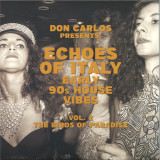
Volume 1 of this expertly curated project of 90s Italian House - put together by Don Carlos.
If Paradise was half as nice… by Fabio De Luca.
Googling “paradise house”, the first results to pop up are an endless list of European b&b’s with whitewashed lime façades, all of them promising “…an unmatched travel experience a few steps from the sea”. Next, a little further down, are the institutional websites of a few select semi-luxury retirement homes (no photos shown, but lots of stock images of smiling nurses with reassuring looks). To find the “paradise house” we’re after, we have to scroll even further down. Much further down.
It feels like yesterday, and at the same time it seems like a million years ago. The Eighties had just ended, and it was still unclear what to expect from the Nineties. Mobile phones that were not the size of a briefcase and did not cost as much as a car? A frightening economic crisis? The guitar-rock revival?! Certainly, the best place to observe that moment of transition was the dancefloor. Truly epochal transformations were happening there. From America, within a short distance one from the other, two revolutionary new musical styles had arrived: the first one sounded a bit like an “on a budget” version of the best Seventies disco-music – Philly sound made with a set of piano-bar keyboards! – the other was even more sparse, futuristic and extraterrestrial. It was a music with a quite distinct “physical” component, which at the same time, to be fully grasped, seemed to call for the knotty theories of certain French post-modern philosophers: Gilles Deleuze, Félix Guattari, Paul Virilio... Both those genres – we would learn shortly after – were born in the black communities of Chicago and Detroit, although listening to those vinyl 12” (often wrapped in generic white covers, and with little indication in the label) you could not easily guess whether behind them there was a black boy from somewhere in the Usa, or a girl from Berlin, or a pale kid from a Cornish coastal town.
Quickly, similar sounds began to show up from all corners of Europe. A thousand variations of the same intuition: leaner, less lean, happier, slightly less intoxicated, more broken, slower, faster, much faster... Boom! From the dancefloors – the London ones at least, whose chronicles we eagerly read every month in the pages of The Face and i-D – came tales of a new generation of clubbers who had completely stopped “dressing up” to go dancing; of hot tempered hooligans bursting into tears and hugging everyone under the strobe lights as the notes of Strings of Life rose up through the fumes of dry ice (certain “smiling” pills were also involved, sure). At this point, however, we must move on to Switzerland.
In Switzerland, in the quiet and diligent town of Lugano, between the 1980s and 1990s there was a club called “Morandi”. Its hot night was on Wednesdays, when the audience also came from Milan, Como, Varese and Zurich. Legend goes that, one night, none less than Prince and Sheila E were spotted hiding among the sofas, on a day-off of the Italian dates of the Nude Tour… The Wednesday resident and superstar was an Italian dj with an exotic name: Don Carlos. The soundtrack he devised was a mixture of Chicago, Detroit, the most progressive R&B and certain forgotten classics of old disco music: practically, what the Paradise Garage in New York might have sounded like had it not closed in 1987. In between, Don Carlos also managed to squeeze in some tracks he had worked on in his studio on Lago Maggiore. One in particular: a track that was rather slow compared to the BPM in fashion at the time, but which was a perfect bridge between house and R&B. The title was Alone: Don Carlos would explain years later that it had to be intended both in the English meaning of “by itself” and like the Italian word meaning “halo”. That wasn’t the only double entendre about the song, anyway. Its own very deep nature was, indeed, double. On the one hand, Alone was built around an angelic keyboard pattern and a romantic piano riff that took you straight to heaven; on the other, it showcased enough electronic squelches (plus a sax part that sounded like it had been dissolved by acid rain) to pigeonhole the tune into the “junk modernity” section, aka the hallmark of all the most innovative sounds of the time: music that sounded like it was hand-crafted from the scraps of glittering overground pop.
No one knows who was the first to call it “paradise house”, nor when it happened. Alternative definitions on the same topic one happened to hear included “ambient house”, “dream house”, “Mediterranean progressive”… but of course none were as good (and alluring) as “paradise house”. What is certain is that such inclination for sounds that were in equal measure angelic and neurotic, romantic and unaffective, quickly became the trademark of the second generation of Italian house. Music that seemed shyly equidistant from all the rhythmic and electronic revolutions that had happened up to that moment (“Music perfectly adept at going nowhere slowly” as noted by English journalist Craig McLean in a legendary field report for Blah Blah Blah magazine). Music that to a inattentive ear might have sounded as anonymous as a snapshot of a random group of passers-by at 10AM in the centre of any major city, but perfectly described the (slow) awakening in the real world after the universal love binge of the so-called Second Summer of Love.
For a brief but unforgettable season, in Italy “paradise house” was the official soundtrack of interminable weekends spent inside the car, darting from one club to another, cutting the peninsula from North to centre, from East to West coast in pursuit of the latest after-hours disco, trading kilometres per hour with beats per minute: practically, a new New Year’s Eve every Friday and Saturday night. This too was no small transformation, as well as a shock for an adult Italy that was encountering for the first time – thanks to its sons and daughters – the wild side of industrial modernity. The clubbers of the so-called “fuoriorario” scene were the balls gone mad in the pinball machine most feared by newspapers, magazines and TV pundits. What they did each and every weekend, apart from going crazy to the sound of the current white labels, was linking distant geographical points and non-places (thank you Marc Augé!) – old dance halls, farmhouses and business centres – transformed for one night into house music heaven. As Marco D’Eramo wrote in his 1995 essay on Chicago, Il maiale e il grattacielo: “Four-wheeled capitalism distorts our age-old image of the city, it allows the suburbs to be connected to each other, whereas before they were connected only by the centre (…) It makes possible a metropolitan area without a metropolis, without a city centre, without downtown. The periphery is no longer a periphery of any centre, but is self-centred”.
“Paradise house” perfectly understood all of this and turned it into a sort of cyber-blues that didn’t even need words, and unexpectedly brought back a drop of melancholic (post?)-humanity within a world that by then – as we would wholly realise in the decades to come – was fully inhuman and heartless. A world where we were all alone, and surrounded by a sinister yellowish halo, like a neon at the end of its life cycle. But, for one night at least, happy.
out of Stock
Last delivered 88 days ago available to reorder, subject to availability
Beaten To Death’s brutal and innovative sound is somewhat melodic, in a strange way, and that’s why their sound is often called ‘melodic grindcore’; an oxymoronic definition, some might even say a moronic definition, but still the definition that best applies to this Norwegian quintet’s music. Beaten To Death consists of members from Insense, Tsjuder, The Cumshots, Gothminister and She Said Destroy and have won fans over globally for their energetic, strangely melodic and innovative approach to grindcore. With their combination of hysterical blast beats, meaty grooves, double guitar twang attack, asshole-of-god-earthquake bass and tongue in cheek lyrical approach to the shittiness of life, Beaten To Death have dug out their very own little niche in the music world. Their new sixth album “Sunrise Over Rigor Mortis” was recorded and mixed by Tommy Hjelm, and the amazing artwork is once again by William Hay. Since their last album from 2021, all the band members have aged horribly, and this is also the theme of the album. The positive thing about getting closer to the grave, is that profound grindcore poetry comes much easier than when the member were still carefree youngster, frolicking in the Norwegian forests…
Recorded in 1997, Mountain Top features the commanding vocals of Tony Roots, backed by the legendary Firehouse Crew and produced by the visionary Fada Waz (Clifton Carnegie). This record’s release was driven by the people, evidenced and encouraged by the countless wheel-ups and sing-alongs during King Original’s international tour dates over the last three years whenever this seminal recording was dropped in the set.
Tony Roots, known for his cultural and spiritual themes, delivers a powerful vocal performance, reminding us that life’s most important journey is overcoming obstacles to find ‘Jah Love on the Mountain Top.’ This message is as relevant in today’s fast-paced, easy-come-easy-go consumer culture as it was when recorded three decades ago.
The Firehouse Crew renowned for their work with iconic acts like Luciano and Sizzla—shine brightly on this riddim, with the MPC drum machine-centered sound of 90s Jamaican roots reggae. An up-tempo 4/4 steppers beat layered with rich analogue textures and soulful instrumentation defines this timeless recording.
The first of many collaborations between Studio 55, Before Zero Records, and Footsie, the King Original legacy continues into the future, honouring the enduring contributions of Fada Waz and his collaborators.
Clifton Carnegie aka Ras Wazair aka Fada Waz - Clifton Carnegie, known as Ras Wazair, founded King Original Sound System in 1973, establishing it as East London’s foremost reggae sound. Operating under his Studio 55 moniker, he collaborated with legends like Johnny Osbourne, Barry Brown, Michael Prophet, Cornell Campbell, and Frankie Paul through imprints such as Original Sounds, Studio 55, and Original International. A mentor to many of the UK’s top sound systems and a key figure in London’s RasTafari community, Ras Wazair’s connections with prominent Jamaican artists, bands, and producers like Fattis Burrell ensured that Jamaican music remained an influential force in the UK sound system scene.
King Original Founded in 1973 by Fada Waz, King Original Sound System shaped East London’s reggae scene for over two decades. Fada Waz and his son Footsie—a UK Grime pioneer who in later years expanded the legacy through his KO LP series and sold-out King Original mixed-genre events at London’s top venues—worked together until Footsie assumed full control following Fada Waz’s passing in 2021. Having worked with artists such as Dizzee Rascal, Arctic Monkeys, The Prodigy, D-Double E, Wiley, and Skepta, Footsie’s dedication to King Original has reinvigorated the legacy that underpins all UK bass music—the reggae sound system. Joining Footsie is his brother, Wazair’s last born Ras D also Jah Model, and long-time collaborator Sir Spyro, producer of two UK number-one hits with Stormzy and son of UK reggae stalwart Nerious Joseph. Armed with cutting-edge QSS sound system technology, King Original continues to set trends, shaping the future of UK bass music.
Tony Roots Hailing from Manchester, Jamaica, in the 1980s, Tony Roots emerged alongside iconic figures like Garnet Silk and Tony Rebel. While his peers remained in Jamaica, Tony moved to the UK, where he went on to release ten albums and numerous singles, including hits like Grow Your Natty Dread Locks and Hola Zion. A steadfast champion of Rastafari, Tony has collaborated with legends such as the Firehouse Crew, earning worldwide respect and a devoted following within both the reggae community and the UK sound system scene.
The Firehouse Crew Formed in 1986, The Firehouse Crew became a cornerstone of the 1990s roots-reggae revival. Initially associated with King Tubby’s Firehouse label before establishing their own, the band rose to prominence through collaborations with producer Philip “Fattis” Burrell at Xterminator Records. Their contributions to timeless albums like Luciano’s Where There is Life highlight their extraordinary musicianship. Over the years, The Firehouse Crew has backed iconic artists such as Sizzla, Buju Banton, and Beres Hammond, cementing their legacy as masters of roots reggae.
out of Stock
Last delivered 18 months ago available to reorder, subject to availability
“Okie Dokie It´s The Orb On Kompakt“ is already the 13th album of one of Britian's most prized cult bands. We feel it's better that way, because the music of The Orb only has an intensive effect when taken in as a long playing full length. And it proves with this lovingly conjured collection of songs brought together like a collage. The first half of Okie Dokie showcase The Orb´s love for minimal Techno and Schaffel/Shuffle as it is so obviously present in the foreground, while the second half is only reserved to the classic Orb-ish ancestral domain. There are wonderful guest appearances by Schneider TM and Kompakt´s ambient-guru Ulf Lohmann. As many of you know, there is so much history about The Orb you could write a book. Since Jimmy Cauty and Alex Paterson, in the flush of euphoria invented Chill Out and Ambient House in the first summer of love 1988, an incredible amount of things have occurred. The following timeline should give you a rough idea. - Alex Paterson gives up his job as roadie for Killing Joke. - “A Huge Ever Growing Pulsating Brain That Rules From The Centre Of The Ultraworld” is not only the record with the longest title of the world, but it also marks the departure into the new sonic worlds of post-Rave Ambient. - While Cauty goes different ways with The KLF, The Orb re-form themselves and have a big hit with Little Fluffy Clouds in 1990. - The debut album “The Orb´s Adventures Beyond The Ultraworld“ hits the Top 30 in England. - The Orb produce “Higher Than the Sun“ for Primal Scream. - The Orb perform “Blue Room“ as chess-playing aliens at Top Of The Pops. Everything goes. - “Blue Room“ clocking in at 39:58 minutes goes into music-history as the longest time for a chart single ever. - The Orb achieve great success in Glastonbury '92 + '93. - The Copenhagen double concert “to the sunrise and sunset” is eternalized on record: “Live 93“ - Previously a floating member of The Orb, Thomas Felmann becomes a fix member in 1997 - No joke: Robbie Williams takes part of The Orb for a short time. The collaboration “I started A Joke“ is released on a benefit compilation - After 2002 The Orb found with Kompakt a new ambient-loving partner and release a row of singles and play live, as the trimmed-down version as Le Petit Orb. And one more for the extra hush-hush: The Orbs first album “A Huge Ever Growing Pulsating Brain...” was actually a Kompakt release. You can check it out. Besides the actual label Wau! Mr. Modo you can read... Kompakt Discos. Ha!!
Mit „Okie Dokie It´s The Orb On Kompakt“ liegt nun das circa 13. Album der britischen Kultband vor. Das ist gut so, denn The Orb's Musik wirkt eigentlich erst im Longplay-Format so richtig intensiv. Die Stücke sind, wie man das von ihnen kennt, liebevoll collagenhaft miteinander verwoben. In der ersten Hälfte tritt The Orb's Liebe zu Minimaltechno und Schaffel in den Vordergrund, während die zweite Hälfte ausschliesslich der Orbschen Ur-Domäne Ambient vorbehalten ist. Es gibt wunderbare Gastauftritte, wie etwa Schneider TM und Kompakt's Ambient-Guru Ulf Lohmann. Zur Geschichte von The Orb könnte man ganze Bücher schreiben, denn seit Jimmy Cauty und Alex Paterson im Rausch der Euphorie des ersten Summer of Love anno 1988 Chill Out und Ambient House erfunden haben ist viel passiert. Extrem viel. Die folgende Auflistung soll einen ungefähren Eindruck davon vermitteln. -Paterson hängt seinen Job als Roadie für Killing Joke an den Nagel -„A Huge Ever Growing Pulsating Brain That Rules From The Centre Of The Ultraworld“ ist nicht nur bis dato die Platte mit dem längsten Titel der Welt sondern markiert den Aufbruch in die neuen sonischen Welten des Post-Rave Ambient. - Während Cauty mit The KLF andere Wege geht, reformieren sich The Orb und landen 1990 mit “Little Fluffy Clouds“ einen Riesenhit. -Das Albumdebut “The Orb's Adventures Beyond The Ultraworld“ geht Top30 in England -The Orb produzieren „Higher Than The Sun“ für Primal Scream -The Orb performen „Blue Room“ als schachspielende Aliens verkleidet bei Top Of The Pops. Alles geht. -“Blue Room“ geht mit 39.58 Minuten als längste Chart-Single ever in die Musikgeschichte ein - The Orb legen 92 + 93 Glastonbury flach - Ein Copenhagener Doppelkonzert zum Sonnenauf- und Untergang wird auf Platte verewigt: „Live 93“ - Bisheriges „floating member“ Thomas Fehlmann wird 1997 festes Mitglied - Ohne Scheiss: Robbie Williams wird für kurze Zeit The Orb-Bestandteil. Die Kollaboration „I Started A Joke“ erscheint auf einer Benefiz-Kompilation. - Ab 2002 finden The Orb mit Kompakt einen neuen ambientverliebten Partner und veröffentlichen eine Reihe wunderbarer Maxis und treten live, vornehmlich in abgespeckter Form als Le Petit Orb in aller Herren Länder auf. Ein kleiner Treppenwitz am Rande für Erbsenzähler : Schon The Orb's erste Platte („A Huge Ever Growing Pulsating Brain...“) war eigentlich eine Kompakt-Veröffentlichung. Ihr könnt nachschauen. Neben dem eigentlichen Label Wau! Mr. Modo stand nämlich folgendes ...Kompakt Discos. Ha!
out of Stock
Last delivered 10 months ago available to reorder, subject to availability
"KILLER KLOWNS FROM OUTER SPACE have landed at Waxwork Records! After much anticipation, we are thrilled to present the official 1988 Original Motion Picture Soundtrack by John Massari! In this '80's cult classic, teens Mike Tobacco (Grant Cramer) and Debbie Stone (Suzanne Snyder) have to fight both the diabolical bozos and the local law enforcement's disbelief to save themselves and their community from becoming victims of intergalactic killer klowns! The original score to Killer Klowns From Outer Space is kicked off by the classic 80’s horror movie theme track, Killer Klowns (From Outer Space) by California punk band, The Dickies. The ‘nightmare merry-go-round’ continues with a smattering of menacing electronic brass sections, electric guitar, bombastic drum machine beats, & harpsichord combined with sci-fi synth elements to capture the ultra-specific origins of the antagonists. Massari's score to Klowns is a retro-synth joyride from start to finish featuring immediately recognizable cues from the beloved 80's cult-classic! Waxwork Records is thrilled to present the official Killer Klowns From Outer Space double LP, released for the first time on vinyl. Complete with “Killer Klown” handpoured colored vinyl, deluxe packaging, new artwork by Ruiz Burgos, heavyweight gatefold jackets with matte coating, a heavyweight 12”x12” art print, and liner notes by composer Massari and Klowns co-creator Stephen Chiodo!
The Clamps Unveils From Dust to Dawn - A Cosmic Journey into Drum & Bass
French Drum & Bass producer The Clamps is set to release his highly anticipated second album, From Dust To Dawn, through the label Kosenprod.
Known for pushing the boundaries of Drum & Bass, he delivers a highly personal and finely crafted album that merges intricate sound design with an intense dancefloor-oriented energy.
From Dust To Dawn showcases The Clamps' signature Neurofunk style, characterized by deep, dark basslines, meticulously engineered beats, and emotional soundscapes, while also incorporating elements of Jungle, Hardcore, and Techno. This 16 track journey blends introspective themes with hard-hitting club anthems, creating a diverse experience that is both thoughtful and electrifying.
The album will be released as a special double vinyl edition, cementing its place as a must-have for Drum & Bass enthusiasts.
out of Stock
Last delivered 7 months ago available to reorder, subject to availability
It’s safe to assume no one in the audience at Carnegie Hall on March 30, 1974 anticipated what Miles Davis would play at the concert documented on Dark Magus: Live at Carnegie Hall. Recorded near the tail end of his electric period, the double album remains the darkest, most ferocious statement of Davis’ career — a visionary effort that foresaw developments in jungle, noise-rock, funk, and drum ‘n’ bass.
Initially issued in Japan in 1977, Dark Magus waited two decades for U.S. release. Now, more than 50 years after Davis and his ensemble blew minds at the famous New York venue, it gets its first-ever domestic issue on vinyl — and on a definitive-sounding pressing at that.
Mastered at Mobile Fidelity's California studio, housed in a Stoughton gatefold jacket, and pressed at Fidelity Record Pressing, this numbered-edition 180g 33RPM 2LP set of Dark Magus invites you to pull up a seat and wrap your head around an exhilarating performance that simultaneously functions as an audition, experiment, release, and magnificent explosion of jazz-rock fusion. We hope your turntable and speakers are up to the challenge.
This collectible reissue presents the improvisational magic that unfolded onstage — the skronking tonalities, wah-wah-pedal bluster, acid-washed effects, furious drumming, run-the-voodoo-down grooves, menacing riffs, crashing cymbals —with incredible detail, color, and pace. It also captures the band’s unbelievable energy, rendering both instruments and on-the-fly changes with revealing depth, definition, and dynamics. At its core, MoFi’s audiophile set takes you deep into the boundless mystery, promise, and uncertainty of Davis and company’s efforts like never before.
The story behind Dark Magus is nearly as unbelievable as the spur-of-the-moment compositions that resulted when Davis brought drummer Al Foster, bassist Michael Henderson, percussionist James Mtume, horn virtuoso Dave Liebman, and guitarists Pete Cosey and Reggie Lucas together, and, in a new twist for the concert’s second half, added guitarist Dominique Gaumont and tenor saxophonist Azar Lawrence to mix. That the latter two instrumentalists had never seen each other until that night adds to Davis’ legend — and penchant for bold, unorthodox moves.
Ditto Davis’ own actions that spring evening, which reportedly included showing up to the show an hour late and taking the stage with his back facing the crowd. The strategy worked. Davis inspired the group to play in a bold manner that few, if any, had heard before. Dark Magus is a rhythmic bonanza. Rooted in Afro-centrist techniques, avante-garde sensibilities, and exploratory moods, the songs eschew set arrangements and solos, and, for the most part, melodic devices.
For Davis, Dark Magus represented a personal triumph amid a period marked by health issues, addictions, and critical decline. The latter slight would be corrected, but not until decades later when Dark Magus saw Stateside release in 1997 via a CD reissue. Of course, the free-form patterns, unpredictable passages, dense structures, and distorted blues that course through the songs — titled after Swahili numerals — are not for everyone. And certainly not for the fainthearted. Though Dark Magus contains majestic moments marked by quiet restraint and something on the level of balladry, its rich and radical concoction of tormented thwacks, thumps, cracks, clatters, wails, bleeps, burbles, stomps, and enigmatic beats remains its adventurous heart and soul.
Primal and enigmatic, fierce and jagged, forceful and revolutionary, jolting and terrifying, Dark Magus seemingly attacks from any and all directions. Turn it up loud and let the prophetic brilliance of this inimitable and relentlessly funky album wash over you.
The Air Texture Series asks two Producers/ Performers to select a double CD worth of unreleased music. The only guidance is the music should not be main floor bangers, other than that we get out of the way, allowing them autonomy over their selection. This time Steffi and Martyn were asked to step up. Exciting, since as residents at Berghain/Panorama Bar - two of the most important dancefloors in the world... how would two such respected artists approach our experimental ethos.
Limited to 500 copies
out of Stock
Last delivered 15 months ago available to reorder, subject to availability