Irlam's infamous upstarts DJ Absolutely Shit are at it again with four more tracks to rattle yer spines and rupture yer spleens.
Utilizing the classic approach of sourcing a sick sample, adding a rugged breakbeat, then tweaking out the buzz for maximum enjoyment, the pair deliver an explosive EP of global hypercoloured mayhem that burns hotter than an oz of 'Ells Angels sputnik.
'Bridge To Your Heart' grabs Sade by the hand, shoves two purple doves down her throat and queue-jumps to the front of Bowlers for an endorphin-rushing hardcore workout full of modern beat engineering and sample manipulation.
Switching approach, 'Bolivia' shuns the dreamy feminism for an altogether more masculine affair - roping in the Wu for an argy-bargy, elbows-out speaker shaker full of hi-definition laser stabs and destructive, land mine subs.
Hitting the accelerator, 'Rocking You Eternally' traverses the jungle boarders in a blacked out Nova, Ab Shit's flair and panache at drum programming and contemporary production chops beautifully on show throughout this big system roller with a carp-hunting vocal hook.
'Gong' closes off proceedings, merging moods inna more seductive flavour. E-soaked pianos and a gentle throb coaxing us to that end-of-night climax that'll have us humming the piano line all the way down the M65 home.
No jokes cru, this is some of the best tackle to emerge outta the DJ Absolutely Shit studio to date. One of two, vinyl-only EPs and ahead of their debut album that follows on C90 tape.
Boing boing boing, boing boing boing, boing boing!!
Cerca:dov
- 1: Your Favourite Coat
- 2: Things That Look Like Mistakes
- 3: Injured Crow
- 4: I Can’t See Anything I Don’t Like About You
- 5: All You Get Is Confetti
- 6: Tai Chi With My Dad
- 7: I Wanna Feel Calm
- 8: Henry Says
- 9: Hot Chocolate
- 10: Nothing Cures Melancholy Like Looking At Maps
- 11: We Don't Speak Anymore
- 12: I Don't Wanna Be Angry
Tri-Colour[23,32 €]
The upcoming album, How to Build an Ocean: Instructions is a project doused in personal conflict, but simultaneously a love letter to the normal and how beauty can be found in just being. Charged with references to literature, philosophy and film, as well as first hand experiences, the band explore thoughts of what it means to find purpose when everything feels purposeless, all whilst ultimately instructing themselves to find “small joys in the face of cosmic indifference”. Produced by George Perks (Enter Shikari, The Doves, You Me At Six), How to Build an Ocean: Instructions marks an exciting new development for Bears in Trees, being the first album they’ve recorded with the help of consultants outside of the band themselves, having previously relied on drummer George’s expertise, who outside of the band, works as an engineer at Subfrantic Studios. Tenderness, triumph, and a totally unashamed feeling of enjoying the ride whilst they're on it, How to Build an Ocean: Instructions is their definitive statement. Though no matter how far this record takes them, the most important thing is that they are together and doing what they love. Because when all is said and done, that's the connection that will last a lifetime. "We started the band because we loved hanging out with our friends and wanted to make stupid music together"; Iain concludes. "That's always been the reason, and it hasn't changed. All we want to do is make what we do as honest and authentic as possible. That's what it means to be in the Bears in Trees business."
- 1: Your Favourite Coat
- 2: Things That Look Like Mistakes
- 3: Injured Crow
- 4: I Can’t See Anything I Don’t Like About You
- 5: All You Get Is Confetti
- 6: Tai Chi With My Dad
- 7: I Wanna Feel Calm
- 8: Henry Says
- 9: Hot Chocolate
- 10: Nothing Cures Melancholy Like Looking At Maps
- 11: We Don't Speak Anymore
- 12: I Don't Wanna Be Angry
Duck Egg Vinyl[23,32 €]
The upcoming album, How to Build an Ocean: Instructions is a project doused in personal conflict, but simultaneously a love letter to the normal and how beauty can be found in just being. Charged with references to literature, philosophy and film, as well as first hand experiences, the band explore thoughts of what it means to find purpose when everything feels purposeless, all whilst ultimately instructing themselves to find “small joys in the face of cosmic indifference”. Produced by George Perks (Enter Shikari, The Doves, You Me At Six), How to Build an Ocean: Instructions marks an exciting new development for Bears in Trees, being the first album they’ve recorded with the help of consultants outside of the band themselves, having previously relied on drummer George’s expertise, who outside of the band, works as an engineer at Subfrantic Studios. Tenderness, triumph, and a totally unashamed feeling of enjoying the ride whilst they're on it, How to Build an Ocean: Instructions is their definitive statement. Though no matter how far this record takes them, the most important thing is that they are together and doing what they love. Because when all is said and done, that's the connection that will last a lifetime. "We started the band because we loved hanging out with our friends and wanted to make stupid music together"; Iain concludes. "That's always been the reason, and it hasn't changed. All we want to do is make what we do as honest and authentic as possible. That's what it means to be in the Bears in Trees business."
Das erste offizielle Album von Jean Yves Tola nach der Auflösung von 16 Horsepower anno 2005. Als Gründungsmitglied der Alternative Country Band aus Denver waren Tolas Arrangements, Ideen und sein Einfluss innerhalb der Band immer präsent. Jetzt kommt endlich seine ganz eigene musikalische Vision auf "Feathers" zum Vorschein und präsentiert dabei zehn wunderschöne, dunkle Folk Songs. Als Gastmusiker:innen sind hier Chantal Acda, Calvin Dover (Dover Brothers), Steve Taylor (ex-16 Horsepower) und Theo Hakola (Orchestre Rouge, Passion Fodder) zu hören.
Matteo Mussoni and Nicola Zucchi were raised on the disco romance of the 1970s and early 80s. Channelling their shared love of music machines and mirrorballs, the duo founded Sparkling Attitude. Their debut EP draws on the magic of italo disco, the synthesizer soundtracks of the silverscreen and the open stretches of the Italian coastline.
“Dov’eri Sabato Sera” recounts the tale of unrequited love; youth, possibility and dashed hopes play out to a crisp rhythm and wistful melodies. Those heart-strained notes then take the limelight for the instrumental version, analogue strings soaring to impassioned heights. The flames keep burning on the flip with “Melodico Romantico”.
Disco infused, bold and brazen beats are made-up in dark rouges and effervescent greens as breathy vocals whisper. Mussoni and Zucchi dive deep into their machines for the curtain close. Inspired by Japanese culture, made in Italy, daring key stabs and astral echoes are draped in a late-night groove for this glittering finale. Joyous sounds from a Sparkling Attitude
Demon Music are happy to present – Electribe 101 - ‘Electribal Memories’, this stunning half-speed master vinyl edition cut from the original tapes by Barry Grint at Air Studios. Formed when Hamburg-born / London-based, sometimes S’ Express member Billie Ray Martin hooked up with four musician / producers from Birmingham, Electribe 101 instantly hit upon a sound heavily influenced by the de rigueur deep house sounds of Chicago and Detroit but with a distinctive European twist. With Billie Ray up front, with a voice like ice on fire and looking as if she’d stepped forward in time from a circa-1966 Mary Quant catwalk, the band were instantly snapped up by Mercury Records, and taken under the wing of Pet Shop Boys manager Tom Watkins. The band released five singles in the UK, and all featured on their debut album ‘Electribal Memories’ – ‘Tell Me When The Fever Ended’, ‘Talking With Myself’, ‘You’re Walking’, ‘Lipstick On My Lover’ and an incredible cover of Odyssey’s deep soul classic ‘Inside Out’. When the album arrived in 1990, it was an instant hit with critics – immaculately produced, poised, luxurious and soulful, it was difficult to believe it was a debut record at all. After ‘Electribal Memories’, Electribe 101 called it a day. Since then, the album’s reputation has grown in stature and many of its’ singles’ attendant remixes have become sought-after rarities. The cultural earthquake prompted by the late-1980s arrival on these shores of house, acid and rave prompted many a legendary club night and a generation of superstar DJ / producers. While there were a myriad of great club tracks produced in that heady period between 1988-1991, classic albums from the scene were rather more of a rarity. One towering exception was the debut by Electribe 101…
Nexcyia unveils his debut album “Endless Path Of Memory” out December 8th on Pensaments Sonics.
Nexcyia’s inaugural project delicately explores the realm of sound design, eschewing the over-visited constraints of a tempo grid. Upon immersing yourself, the immediate departure from conventional song structures becomes apparent. Instead, it feels as though the artist fills the silence with disruptive yet evocative sonic experimentation. The compositions appear to surrender to the ebb and flow of textures, revealing a musical journey driven by spontaneity rather than a predetermined destination. The musical endeavour of the Londonbased sound artist revolves around the essence of sound itself, transcending the pursuit of memorable melodies. It invites listeners into a realm of moods and atmospheres that both surprise and elicits a deeper connection to one’s inner realities.
Given Adam Dove's background in sound art practices, it's no surprise that his inaugural fulllength release is a rich soundscape, weaving through the realm of harsh sampling and gentle synthesis. Requiring the listener to explore with him the boundaries
between reality and illusion, he neatly manipulates granular synthesis, interweaves a library from his own archived audio, while pondering the very essence of our universal desire to belong.
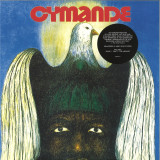
Sie sind die größte Band, von der Sie noch nie gehört haben. Unbesungene Helden, deren Musik politisch und spirituell war und ihrer Zeit um Generationen voraus. Ihre Geschichte ist nie erzählt worden. Bis jetzt... Cymande, eine Gruppe schwarzer britischer Musiker, die alle als Kinder aus der Karibik nach Großbritannien gekommen waren, veröffentlichten Anfang der 70er Jahre kurz hintereinander drei brillante Alben und wurden in den USA begeistert aufgenommen. Doch im Vereinigten Königreich sahen sie sich mit einem Musikgeschäft konfrontiert, das von Vorurteilen gegenüber einheimischen schwarzen Talenten geprägt war, und wurden weitgehend ignoriert. 1975 lösten sie sich auf. Aber ihre Musik lebte weiter, da nachfolgende Generationen von Künstlern und Fans ihre Songs entdeckten und sich für sie begeisterten.
Die brandneue Neuauflage des bahnbrechenden selbstbetitelten Albums der Band, Cymande, wurde 2022 in den Abbey Road Studios neu gemastert.
In diesem Jahr kommt die gefeierte Cymande-Dokumentation "Getting It Back: The Story Of Cymande" in die britischen und internationalen Kinos. "Getting It Back" wurde unter der Regie von Tim Mackenzie-Smith gedreht und enthält Interviews mit einer ganzen Reihe von Musikern und Produzenten, die beeinflusst und begeistert sind von der Musik Cymandes, darunter Mark Ronson, Jim James, Kool DJ Red Alert, DJ Maseo und Louie Vega.
Indies Maroon Vinyl[23,74 €]
New solo album from Seth Avett of the Avett Brothers (his first in 5 years), featuring songs written by lauded folk singer Greg Brown, whose songs have also been performed and recorded by Joan Baez, Willie Nelson, Lucinda Williams, Carlos Santana, Ani DiFranco, Gillian Welch, Mary Chapin Carpenter, and more. For those who may need reminding, Greg Brown is the ultimate songwriter's songwriter. Over a forty-plus-year career, he's occupied the same rarefied air as Loudon Wainwright III and John Prine - a keen-eyed poet and diarist of the human condition. And he's done it mostly on his own. “This is a man who put forty records out because he had to,” Avett says. “He made his own record label. He played the coffee shops, the bars, the little theaters. He built it. He's a world-class artist who did it all under the radar, which is just mind-blowing to me.” As Avett's new solo record makes clear, this collection is an expression of admiration and gratitude for one of his heroes. But it's also a reflection of his own artistry and ability as an interpreter. Though Brown's songs have been a part of his listening diet for decades, Avett gained a more profound appreciation once he put his own voice behind them. And though on the surface it's a covers record, it dovetails seamlessly with the most recent Avett Brothers album The Third Gleam and Seth's solo outing IV, which find him in equally stripped-down settings exploring the light and shadows of his own personal stories.
This is a repress of Tycho's second release with Ghostly International to celebrate the 10 year anniversary of this masterpiece, while Ghostly International celebrates its 25th year anniversary. For nearly a decade, Tycho has been known as the musical alias of Scott Hansen, but with the release of Awake - his second LP for Ghostly International - the solo project evolved into a three-piece band. Relating closer to post-rock than ambient soundscapes, the record is situated in the present, sounding more like Hansen than drawing from his influences. This is, in many ways, the first true Tycho record. Following 2011's Dive LP, the San Francisco-based designer toured extensively, and with a full band on stage, his sound coalesced into a percussive, organic whole. Zac Brown (guitars, bass) rejoined Scott on the road for this tour, but it was the particular addition of Rory O'Connor's live drumming that ultimately sent Hansen back to the studio with a more precise vision. "After the tour, I decided that I wanted to capture the more energetic, driven sound of the live show on the next album," Hansen recalls. Bringing musicians into Tycho's creative process was a step towards expanding his own songwriting and advancing the project beyond its current sound. In a cabin near Tahoe last winter, Zac and Scott began fleshing out the structure of the new record, but it wasn't until they set up shop in the hills of Santa Cruz with Rory that it all fell into place. "It crystallized the vision of how the drums would come to the forefront on this record," says Hansen. The sound was much more stripped-down and concise with more organic instruments in the fold. Songs like "Montana" and "Awake" are a departure from Tycho's previous material - unique to the group effort poured into the songs on the new record - while "See" and "Dye" echo ideas from previous works, bridging a middle ground between the old and new. Working with Count Eldridge, who also engineered Dive, the team could fixate on the pulses that Tycho might previously layer under synthesizers and exhume them with distinct bass and guitar patterns. Also known for his design work as ISO50, Hansen's visual and sonic efforts have dovetailed throughout the course of his career. "This is the first time in my life I've dropped everything to focus on one artistic pursuit," notes Hansen. Previous Tycho releases came to fruition when an amalgam of songs were nearing completion, but Awake is where music becomes the focus and true expression becomes the result.
Most audiophiles know Alan Parsons Project's I Robot by heart. Engineered by Parsons after he performed the same duties on Pink Floyd's Dark Side of the Moon, the 1977 record reigns as a disc whose taut bass, crisp highs, clean production, and seemingly limitless dynamic range are matched only by the sensational prog-rock fare helmed by the keyboardist and his creative partner, Eric Woolfson. Not surprisingly, it's been issued myriad times. Can it be improved? Relish Mobile Fidelity's stupendous UltraDisc One-Step 180g 33RPM box set and the question becomes moot.
Mastered from the original master tapes and pressed at RTI on MoFi SuperVinyl, I Robot comes to life with reference-setting realism on this numbered, limited-edition reissue. Boasting immaculate highs and lows, generous spaciousness, and see-through transparency that takes you into the studio with Parsons and Woolfson at Abbey Road, this definitive edition is designed to demonstrate the full-range capabilities of the world's best stereo systems while offering listeners the convenience of having all the music on one LP.
Featuring a nearly inaudible noise floor, this transcendent UD1S edition functions as a repeat invitation to savor reference-grade soundstages, immersive smoothness, sought-after instrumental separation, three-dimensional imaging, and consummate tonal balances. Able to be played back at high volumes without compromise or fatigue, it is a demonstration record for the ages – the likes of which are no longer being made. This is the very reason you own and invest in high-end audio gear.
The special characteristics of this UD1S version extend to the premium packaging. Housed in an elegant slipcase, the reissue features special foil-stamped jackets and faithful-to-the-original graphics. Aurally and visually, it is made for discerning listeners who prize sound quality and production, and who desire to fully immerse themselves in everything about this conceptual landmark. The Alan Parsons Project's most famous record deserves nothing less.
Inspired by and loosely based around the Isaac Asimov stories of the same name, I Robot delves into themes of artificial intelligence and technological dominance that make the record extremely relevant in the 21st century. Indeed, Parsons and Woolfson's pinnacle creation dovetailed with the ascendency of Star Wars, which itself is experiencing a rebirth in an age of self-driving cars, smart devices, and mindless automation. Lyrically, songs such as "The Voice" call into question human behavior – and their relationship to increasing robotic supremacy – in everyday life. Parsons and Woolfson reflect the associated paranoia, dichotomy, and transformation via shifting sci-fi arrangements steeped in drama and moodiness.
The absorbing tunes on I Robot also continue to fascinate due to their perfectionism and innovation. Borrowing from Pink Floyd's strategies, Parsons and Woolfson utilize a looped sequence on the title track to create new downbeats. "Some Other Time" employs two different lead vocalists and yet gives the illusion that only one is involved. Captivating strings, a piccolo trumpet, and bona fide pipe organ grace "Don't Let It Show." The origins of "Nucleus" stem from a unique analog keyboard concoction dubbed "the Projectron," devised by Parsons and electronic engineer Keith Johnson. Andrew Powell's orchestral and choral arrangements top it all off, with "Total Eclipse" arriving as a frightening track that presages the climactic "Genesis Ch. 1 V. 32."
Does man or machine win in the end? Decide as you get lost in Mobile Fidelity's UltraDisc 180g 33RPM LP pressing. Secure your numbered copy today!
More About Mobile Fidelity UltraDisc One-Step and Why It Is Superior
Mobile Fidelity Sound Lab's UltraDisc One-Step (UD1S) technique bypasses generational losses inherent to the traditional three-step plating process by removing two steps: the production of father and mother plates, which are created to yield numerous stampers from each lacquer that is cut. For UD1S plating, stampers (also called "converts") are made directly from the lacquers. Since each lacquer yields only one stamper, multiple lacquers need to be cut. Mobile Fidelity's UD1S process produces a final LP with the lowest-possible noise floor. The removal of two steps of the plating process also reveals musical details and dynamics that would otherwise be lost due to the standard multi-step process. With UD1S, every aspect of vinyl production is optimized to produce the best-sounding vinyl album available today.
MoFi SuperVinyl
Developed by NEOTECH and RTI, MoFi SuperVinyl is the most exacting-to-specification vinyl compound ever devised. Analogue lovers have never seen (or heard) anything like it. Extraordinarily expensive and extremely painstaking to produce, the special proprietary compound addresses two specific areas of improvement: noise floor reduction and enhanced groove definition. The vinyl composition features a new carbonless dye (hold the disc up to the light and see) and produces the world's quietest surfaces. This high-definition formula also allows for the creation of cleaner grooves that are indistinguishable from the original lacquer. MoFi SuperVinyl provides the closest approximation of what the label's engineers hear in the mastering lab.
Crypt of the Wizard is proud to present Dipygus - Dipygus on vinyl and digital formats. Breaking bones, sucking the marrow dry and concocting its own mind-bending blend of cryptid death metal mutilations for over a decade now, Dipygus are a North American quartet powerhouse of crushing caveman gore grooves and monstrous neanderthal percussive slaughter. With already a blood hungry host of extended plays, splits and full-lengths under their gut string loincloths, Dipygus burst forth into 2024 with their self-titled third album—pushing the primitive psychosis of their sonic assault into new arenas of hallucinogenic cannibal combat. Rife with the foetid stench of mouldering mammoth corpses, Dipygus have spared no prisoners for their latest album; amping up their jungle fever dead dreams with skull smashing drumwork, monolithic bass brutality, captivating death hooks, venomous hypnotic leads, guttural flesh growls, ancient cryptid thematics and a truly diseased atmosphere, one that is as equally oppressive, as it is ferociously ominous. Freak induced fatalism from the backward fringes of time, Dipygus have once again laid morbid massacre to the audio waves and created their most potent slab of infectious caveman styled death metal to date, one that any cannibalistic monster marauder would be thrilled to sharpen their gnarled bone axes upon.
- A1: The Great Hen-Yuan’ River
- A2: Summer Will Not Come
- A3: Six Coral Devils (Part Ii)
- A4: Six Coral Devils (Part Iii)
- A5: Six Coral Devils (Part Iv)
- A6: Six Coral Devils (Part V)
- A7: Six Coral Devils (Part Vii)
- A8: Definitely That Ketsal
- A9: The Waltz Windows On The Floor
- B1: Blue
- B2: Kwolyj Twist (Slow Twist)
- B3: Argolida (Part I)
- B4: Argolida (Part Ii)
- B5: Argolida (Part Iii)
- B6: Argolida (Part V)
- B7: Argolida (Part Vi)
- B8: Argolida (Part Vii)
- B9: Argolida (Part Viii)
- C1: All Secrets Of A Poem (Part Iii)
- C2: All Secrets Of A Poem (Part Iv)
- C3: All Secrets Of A Poem (Part Vi)
- C4: All Secrets Of A Poem (Part Vii)
- C5: Poliuwannia (The Hunt)
- C6: Smilywo Chodit’ Do Zymy (Walk Brave To The Winter)
- D2: Widen Spyt’ (Vienna Is Sleeping)
- D3: Wartowyj (The Stand Guard)
- D4: Procesija Mertwych (Dead Ceremony)
- D5: Na Skryni (On The Basket)
- D6: Untitled (Bonus Track)
- C7: Zradnyky (The Traitors)
- D1: Obminaj Misce (Around This Place)
The founders of Cukor Bila Smert’ (Ukrainian: Цукор– Біла Смерть, English: Sugar – White Death) band were Svitlana Okhrimenko (a.k.a. Svitlana Nianio), Oleksandr Kohanovs’kyi, and Tamila Mazur, who studied at the Reinhold Glier Kyiv Academy of Music in 1984-1988. In the summer of 1988, they got acquainted with Eugene Taran, a young guitarist and artist. He joined the band and also became the ideologist of Sugar – White Death. Moreover, Eugene coined the name for the band: the irony towards the Yellow Press. The musicians gathered at Kohanovs’kyi’s house, where they spent their free time not only playing music but also listening to and discussing new records and thinking about the conception of their new project.
For two years, the band recorded a few home-made albums, such as “Rhododendrons Coral Aspides” in 1988 (which is considered lost), where Kostyantyn Dovzhenko took part as a guitarist and sound engineer. He also replaced Taran during the recording session because Eugene was passing an exam at that time. The band also recorded another album – “Lilies and Amaralises,” in 1989, which is also considered lost. Eugene remembers that the band made a lot of recordings but did not pay so much attention to them. Sugar – White Death played live occasionally but spent more time creating their own sound, which was named by Oleksii Dekhtyar (a founder of “Ivanov Down”) as a “sugar calypso sound.” At that time, the music was mostly created by Oleksandr Kohanovs’kyi, and the lyrics were written by Svitlana Okhrimenko and Eugene Taran.
In February 1990, a quartet came to the Scientists House Studio in Kyiv, where they had one studio session only, recorded by Valerii Papchenko. Musicians played live for about one take. This session was represented on the “Mannered Music” compilation by several blocks – “Venus with Long Neck,” “The New Sissies,” and “Rhododendrons Coral Aspides,” which was shortened to “Rhododendrons” on the cassette (two songs from which – “Summer Will Not Come” and “The Great Hen-Yuan’ River,” dedicated to Grigorii Khoroshylov, the sinologist from Kyiv). The compilation cover design was created by Eugene Taran. Later, this tape got to Vlodek Nakonechnyj, the founder of Koka Records, a young Polish label, who released “Mannered Music” on cassettes and made efforts to invite Sugar – White Death to play several gigs in Poland.
In November 1990, Sugar – White Death played their last gig as a quartet in Kharkiv. They were invited by Sergii Myasoyedov, who curated the art association “Nova Scena” (The New Scene). The band played selected tracks from the albums “The New Sissies” and “The Shellfishes in Gold Wrappers” (the last one is also considered lost). Due to Sergii Myasoyedov's efforts, the performance was documented: he saved a lot of photos and fragments of soundboard recordings on reel-to-reel tape.
Later, Oleksandr Kohanovs’kyi and Tamila Mazur left Sugar – White Death: Oleksandr founded his own project Pan Kifared, and Tamila became a bass player of Shake Hi-Fi (whose co-founder was Eugene Taran). Sugar became a duo of Svitlana and Eugene. They started to focus on their next work: “Antinoy Is Leaving” in late 1990.
In 1992, they were also invited by Sergii Myasoyedov for a studio session in Kharkiv, where due to the efforts of Oleksandr Vakulenko, Sugar recorded the new album called “All Secrets Of A Poem”. Some tracks from the work (“Dead Ceremony,” “Vienna Is Sleeping,” and “Untitled”) were released on their next and last album, “Selo” (“The Village”). The rest compositions were published as a part of the compilation for the first time.
In the autumn of 1992, the musicians went to Poland, where Vlodek Nakonechnyj, who wanted Sugar to come to a “real” studio, organized their last recording session. Although the journey’s beginning was unsuccessful (Eugene’s guitar was taken away by a customs officer when crossing the border), the musicians worked fast during the session at the Arek Was studio at Marki on an 8-track reel-to-reel machine. Boleslav Blazhchyk took part as a cellist, playing the parts created by Svitlana. The album was completed in three days – the musicians spent two days recording and one-day mixing, mostly done by Eugene Taran. In 1993, this work was released as “Selo” (“The Village”) album on cassette tapes by Koka Records (remastered by Tadeusz Sudnik). Later, Sugar – White Death was disbanded.
Credits:
Cukor Bila Smert’: Svitlana Okhrimenko (lyrics, keyboards, piano, vocals), Eugene Taran (lyrics, keyboards, guitar), Oleksandr Kohanovs’kyi (piano, A1-B2), Tamila Mazur (cello, A1-B2), Boleslaw Blaszczyk (cello, C5-D6)
Cover photo by Vlad Urazovs’kiy
Photo archive courtesy: Vlad Urazovs’kiy, Vlodek Nakonechnyj (Koka Records),
Oleh Yuhrinov, Sergii Myasoyedov
Audio archive courtesy: Vlodek Nakonechnyj (Koka Records), Guido Erfen,
Sergii Myasoyedov
Liner notes: Vlad Yakovlev
Compiled by Dmytro Nikolaienko, Dmytro Prutkin and Sasha Tsapenko
© ? Shukai / Cukor Bila Smert’
2024
- The Black Angels' classic sophomore album - Special color edition pressed on Metallic Silver Wax. - Triple LP housed in a Stoughton tri-fold gatefold jacket // "The Black Angels bring the aura of mid-1966 the drilling guitars of early Velvet Underground shows, the raga inflections of late-show Fillmore jams, the acid-prayer stomp of Austin avatars the 13th Floor Elevators everywhere they go, including the levitations on their second album, Directions to See a Ghost. Mid-Eighties echoes of Spacemen 3 and the Jesus and Mary Chain also roll through the scoured-guitar sustain and Alex Maas' rocker-monk incantations. But he knows what time it is. 'You say the Beatles stopped the war," Maas sings in `Never/Ever.' `They might've helped to find a cure/But it's still not over.' Even so, this medicine works wonders." - David Fricke, Rolling Stone Last time we met The Black Angels, they were staring into the desert sun somewhere outside of Austin, Texas. Two years later, night has fallen and the spirits have come out. It's time for The Black Angels to provide Directions On How To See A Ghost. If you're familiar with Passover, the band's 2006 debut, you'll know that The Black Angels's music alone is enough to invoke spirits. There's a name for the band's sound; they call it `hypno-drone 'n roll'. It's the sound of long nights on peyote, of dreams of a new world order, and of half-invented memories of the seamy side of '60s psychedelia. While the Iraq war is still a major influence on the band's lyrics, there are new forces at work here, including Eugene Zamyatin's dystopian novel We and in Christian Bland's words "psychic information from the past and future." See, The Black Angels really are in contact with ghosts. "Civil War battlefields are prime spots for seeing ghosts," says Bland. "One time at Kennesaw mountain in Georgia, I was climbing the mountain in the middle of June and it must have been close to 100 degrees, but in this one particular spot it was very cold. The hairs on my neck stood up and I knew something strange was happening. Then the wind whispered something like `retreat,' and I did. I later learned that the spot where I was on the battlefield was known as `the dead angle', the place where the fiercest fighting took place. The confederates ended up retreating from the mountain towards Peachtree Creek." The Black Angels formed in Austin, Texas, in 2004, comprising from six people (now five) from very different backgrounds. Singer/vocalist Christian Bland is the son of a Presbyterian Pastor and was raised in a devoutly religious household. Bassist / guitarist Nate Ryan was born on a cult compound and drummer Stephanie Bailey claims she's a descendent of Davy Crocket. She and Alex Maas (vocals/guitar) believe a little girl in a red linen dress haunts the group's home. The band released Passover in 2006 to critical acclaim for both the album and the song "The First Vietnamese War". Most of all, Passover established The Black Angels as a band with brains, balls and a strong message. And this time around, the message is there to read in a 16-page booklet that comes with the album. "Our central theme is that people need to open up their minds and let everything come through, and to learn from past mistakes," says Christian. "Only then will we understand the reality of this world and progress beyond where we are now as humans. We've built upon that theme with Directions to See a Ghost. We want people to study the booklet we are providing with the album in hopes that they will be able to relate each song to something in their life." _"War is Peace. Freedom is Slavery. Ignorance is Strength. Keep Music Evil."_
DOG BEACH is Merryn Jeann’s first full length album, produced by Rob Ellis, comparing her directely with his previous collaborators.
Rob Ellis is a record producer, composer, arranger and musician who has been acting for about 40 years and during which he's had the honor to work with such notable artists as PJ Harvey, Marianne Faithfull, Scott Walker, Nick Cave, Warren Ellis, Brian Eno, Thom Yorke, Anna Calvi, ...
About working with Merryn : "In every instrumental phrase that she arrived at and each line of her vocal delivery Merryn's enthusiasm and very individual creativity comes across brilliantly I think... whilst still managing to retain an expression of deeply felt heart and soul... a rare combination in my experience, and a match for any of my aforementionel, much admired collaborators."
"The days in the studio were endlessly creative and playful... and subsequently very exhilarating... by the end it felt like we had really gone through something extremely special, and I believe the resulting LP strongly reflects that." Rob Ellis
Album was recorded over 5 weeks in England, including musicians such as Jim Barr (Portishead), Ben Christophers (Bat For Lashes) or Patrick J. Pearson (Daughter, LYR) but also Christelle Canot aka Confuse, half of IN CASE OF FIRE recently signed to Steve Budd’s prestigious record producer agency.
Merryn Jeann is a Naarm/Melbourne and Bundjalung Country/Byron Bay Shire based singer-songwriter and multi-instrumentalist. She has crafted a genre-bending, dreamy world of soundscapes that bear an enticing musical wisdom.
Sitting somewhere between Caroline Polachek, Cat Power, Weyes Blood, Feist, and Kelsey Lu, Merryn Jeann’s sound is fueled by authenticity. Her raw and honest self packaged into intricate and reflective morsels, many of which are yet to be revealed.
She played Glastonburry at the beginning of her career with the band TORA.
UK and international promo by Whiteboard PR.
A second LP will be recorded in 2025 again with Rob Ellis at the production.
Side projects : OSOO with Kyson & Chris Hill, IN CASE OF FIRE
Musique Infinie is the collaborative project of Manuel Oberholzer a.k.a. Feldermelder and Noémi Büchi.Their album »Earth«, released through the Hallow Ground label, is based on a spontaneously composed live score for Alexander Dovzhenko’s groundbreaking 1930 silent movie »Zemlya« (»Earth«) created for the 24th edition of the VIDEOEX festival for experimental film.
Frequently cited as a masterpiece of early 20th century filmmaking, the movie deals with the collectivisation of Ukraine’s agriculture. The Swiss duo complemented it with atmospherically rich electronic soundscapes that are both deeply immersive and highly evocative. As a stand-alone music release, the two-piece »Earth« album captures the essence of Büchi and Oberholzer’s collaboration that is marked by mutual trust and musical versatility that puts them in a state of »togetherness trance,« as they call it.
Oberholzer has been highly productive as a composer, musician, sound designer, and installation artist in recent years, releasing a slew of solo albums as well as a variety of collaboration records with artists such as Sara Oswald and Julian Sartorius. Büchi has recently debuted as a solo composer and sound artist working with electroacoustic techniques to create a »symphonic maximalism for the end of the world,« as she dubs it.
Both are prolific and versatile artists with a penchant for working conceptually, however their collaboration as Musique Infinie is an improvisational and thus by design an intuitive one.
Their sessions start with an exchange on emotions and thoughts rather than theoretical questions or aesthetic debates. When they get to work—often for several hours—they rarely talk.
They approached »Earth« the same way, improvising freely together and using only a few select samples from the film’s original score in the process. Their open-ended approach is marked by an aesthetic ambivalence that perfectly corresponds with the movie’s own inherent contradictions.
Dovzhenko approached his socio-political subject with poetic imagery and philosophical rigour, juxtaposing notions of traditionality with the depiction of modernity.
Büchi and Oberholzer accordingly work with motives that at o ce seem anthemic and elegiac, working with sounds and musical motives that evoke a sense of familiarity in one moment before transforming into something futuristic and uncanny in the next. Their score for »Zemlya« is not to be understood as a mere interpretation of the movie, but rather a re-narration or even re-negotiation of its aesthetic and emotional qualities under their very own terms. »Earth« is an album that concisely depicts what is at the core of the duo’s musical partnership
Engineers songwriter and guitarist Mark Peters' new EP features guests including former One Dove singer Dot Allison and pedal steel legend B.J. Cole. The EP includes two brand new tracks alongside two remixes of songs from last year's acclaimed album `Red Sunset Dreams'. The Dot Allison-featuring `Sundowning' gets an almost Balearic makeover by Richard Norris which flows perfectly from `Silver River', featuring B.J. Cole, which has been turned into awe-inspiring ambient Americana by the Indianapolis collective Dawn Chorus And The Infallible Sea. The two new tracks, despite sharing a common theme with the album in terms of their sunset-related titles, signal a change in musical mood. Both are much more propulsive and driving, inspired by Mark's recent live shows which he has played as a trio with bassist Dean Roby and drummer Chris Smith. In fact, adding the title track to his live set finally brought it to life after 20 long years. Yellow 10" vinyl!
The latest release on An’archives, Suikyō, documents a first-time meeting between three Japanese improvisers: Takashi Masubuchi on guitar and harmonica; Ayami Suzuki on voice and electronics; and Tomo on hurdy-gurdy. Recorded at Permian on the 29th of January, 2023, it’s a stunning, forty-minute long improvisation of rare artistic sympathy. Notably, it was the first time the trio had performed together, though Masubuchi and Suzuki have prior form as a duo; on the evening itself, the trio performance was preceded by solo sets from Suzuki and Tomo, which served as a kind of introduction, of sorts, to the broader aesthetic visions of two of the musicians on Suikyō.
Masubuchi, Suzuki and Tomo make for a fascinating trio, not only due to the shared musical sympathy that’s clear from their performance, but also due to their histories, and the way these dovetail on the music you hear on Suikyō. Masubuchi has recorded a number of stunning solo albums for guitar and has also improvised with a number of musicians: you can hear his responsiveness and thoughtful playing on albums alongside Suzuki, Taku Sugimoto, Straytone, Shizuo Uchida, Takahiro Kawaguchi, and more. Suzuki’s work for voice has been documented on several solo cassette releases, and in consort with Tetuzi Akiyama, Rob Noyes, Leo Okagawa, Aidan Baker and Tobias Humble. And Tomo’s music can be heard on a small clutch of solo CDs, as a member of Tetragrammaton and Archeus, and in collaboration with Junzo Suzuki.
The way their instrumental voices meld together on Suikyō, though, is evidence of a capacity both to draw from these histories, and to take these collective knowledges to new places. And sometimes, unexpectedly old places: Masubuchi notes that his guitar on this set took him back to the rock and blues he used to play, perhaps in earlier groups like Pelktopia, which he suggests contributes to “the psychedelic mood” of Suikyō. Tomo’s hurdy gurdy matches this by pulling drones out of the air or allowing melodies to slowly morph and envelop the listener – their development, at times, reminds me of troubadour music from Occitanie.
Suzuki’s presence is equally compelling and curious. Her voice is an eternally flexible instrument, and whether it sits unadorned within the soundworld magic’d into space by Masubuchi and Tomo, or slips between the cracks thanks to subtle use of electronic effects, it has a quality about it that is both otherworldly – at times, the voice soars and pirouettes – and thoroughly, deeply grounded, of this earth, a most human and intimate encounter. There is a lovely consort between Suzuki and Tomo, the voice and hurdy-gurdy shadowing each other: as Tomo notes, “the hurdy gurdy has been an instrument played to accompany singing since the Middle Ages.” For Suzuki, the performance was “psychedelic and hedonistic in a good way,” but it wasn’t simply given in to that experience: “we were at the same time looking at it from an objective point of view.”
That feels like the right way to approach Suikyō: as a performance that both sets the mind and ears spinning, but with a careful, thoughtful, and considerate objectivity to its moment-by-moment development. It’s also incredibly gorgeous. As a first encounter, it’s surprising in both its comfort and its challenge: and as Masubuchi says, the playing together feels just the way it had to be: “instinctive, unintentional, and inevitable.”
The weird world of Wombo is a kaleidoscopic journey of sharp turns and surprising visions, a melting pot of influences with a cheeky cheshire-cat grin that coalesce into a trippy but infinite universe of the band's own, and a portal into their unique vantage point without limitation. Already committed to living outside the traditionally-heralded country sound of the music scene in their hometown of Louisville, Sydney Chadwick (vocals) and Cameron Lowe (guitar) had previously played in punk pop band the Debauchees, and with the addition of Joel Taylor (drums) in 2016 they found a winning combination of more straightforward indie rock combined with Chadwick's pitched up, oscillating vocals and unpredictable shifts in melody that see the band moving forward at an impressive pace. Their 2020 Blossomslookdownuponus LP is a snapshot of Wombo's wide-ranging aspirations that careen across avant pop, post punk and warbly indie interludes with a sky's-the-limit approach to translating the mundanity of regular life into their own high-frequency language.
Blossomlooksdownuponus by Wombo, released 2 February 2024, includes the following tracks: "Ginkobiloba", "Blossom Bear", "Chugging", "Black Hole Sun II" and more.
This version of Blossomlooksdownuponus comes as a 1xLP.
The vinyl is pressed as a baby blue disc.
Third album from Brooklyn, NY singer/songwriter/guitarist/harpist Lizzie No; first album with a label partner Let’s start with this: genre is a construct. To categorize artists might make it easier to organize record stores and playlists but there’s no one term that could define any artist, least of all one like Lizzie No (she/her/they/them). You could say that Lizzie No makes “Americana” music, in that her work pulls from the rhythms and traditions of Blues, Folk, and Country — not unlike the artists to whom she’s most often compared: Allison Russell, Rhiannon Giddens and Adia Victoria — but her collaborations with Brian Dunne, Pom Pom Squad and Domino Kirkie display an undeniable Indie influence that allows No to move frequently and seamlessly between overlapping musical circles. You could say that Lizzie No writes “protest” songs, in that as a Queer, Black woman, her entire existence is a living, breathing, singing protest against a genre and a country that, on their best days, are reluctant to reckon with the very foundations upon which they were built.