POD & Edward Richards return for the third and final of their series of hand stamped vinyl with a very unique outing. In contrast to the slower tempo of the the Polar Phase and Temporal Loop Trascendance EP’s, the pair up the ante with a blend of bass music meets dub techno. With the addition of drummer Miles Henry, the sound transcends basic genre descriptions into a liminal space between live music and the repetitive machine form of electronic music. Miles contributes both acoustic kit and electronic drums to the title cut and Nautilus, and in his own words he seeks to capture the impossibility of playing like a machine. On the flip side Quadratic Illumination progressively builds, with layers of hardware synths atop a foundation of deep sub-bass, broken beat drums, and hints of electro. And to cap of proceedings there is an incredible remix by Evigt Mörker that embodies a sense of serene bliss, and is a near perfect end to not only this record, but to the series as a whole.
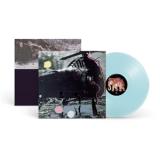
Land of Talk is still here. That wasn’t always a guarantee. Over the multi-faceted twenty year history of their project, Lizzie Powell has drifted from and back to music, always interrogating their role as an artist. In the time since 2023’s Performances, they found themselves utterly worn down by the vicissitudes of the music industry and wracked with worry around their aging parents. Yet the music didn’t stop: Powell heard songs in traffic and in birds chirping, in their downstairs neighbor’s daily prayers and in the babble of children on the street. Melodies slowly cohered over time. “Life can become so unbearable, and music is where I go to metabolize it,” they explain. “I know the music was the only thing that was going to help me.” Soon Powell reemerged with the sixth Land of Talk album, LASTS.
LASTS is full of double meanings — both resilience and finality, acting as a noun and a verb. Though LASTS is haunted by crises including climate collapse, political upheaval, and genocide, the mangitude of global turmoil led Powell towards smaller, humane depictions of suffering and grief. As both their parents became ill, Powell reflected on the last time a person might walk, might talk to a loved one. Yet watching their parents near the other side of life’s arc also made Powell consider all they had survived across their own decades on this earth, their new songs channeling both gratitude and rage. LASTS became a phrase, honoring Land of Talk’s circuitous route and all Powell’s reckoned with through the years. “I think of this record as a love letter to life,” they say.
The end result is an album both lean and winding, allowing Powell’s words and melodies to take centerstage, uncrowded in visceral, shot-no-chaser arrangements. LASTS jumps right in with “Broken Tongue,” a wiry track built on thrumming electric guitar and ghostly synths as Powell rails against the lack of justice for victims of abuse. The trio’s interplay is readily evident in “Saffron” and “4:44,” two earworm songs that also allow themselves to unspool into extended instrumental codas. Early in the record, there are seething tracks like “Dogs” — “Just your basic instinct / Even dogs know better,” Powell growls in the chorus, before the song quiets into a plaintive plea of “Leave us alone now” — and later there are more vulnerable, wandering moments. In “Projections” and “Cedars,” Powell ventures deep into their head, inviting their co-conspirators and listeners alike to follow the songs wherever they meander.
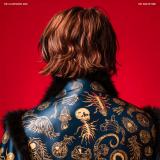
“Interpretation”
The act of explaining, reframing, or otherwise showing your own understanding of something. This captured me. We can all look at the same thing but what we see, hear or experience may differ. This word ended up being the title of my new album. I want to share my interpretation of music with listeners and take them on a musical journey. Through my music, I hope to bring about many interpretations. Your interpretation.
With great joy and pride we announce that The Night Service Commute second album Interpretation is a fact. The release is set for November 13th. You can expect cinematic vibes driven by breakbeats, bass, rhodes, violin, poetry, trumpet and field recordings. This turned out fantastic, and gave the album the groove, feel and vibe I was looking for. During the making, It was so great to learn how to capture the sound and get it to sit well in the mix.
The cover was made by my dear friend Saša Ostoja. His illustrations resonate greatly with me and put a smile on my face. The setting of the cover artwork is urban with hints of forest. Behind the windows, you can see the characters playing music and doing studio stuff. It has loads of hidden jokes and details. I can look at it again and again and discover new things every time.
The Comfort enters the double digits of its catalogue with the label’s most ambitious release to date by Saudi Arabian artist Noboot, titled “Call and Pulsate”.
Fluid in genre yet wholeheartedly electro in spirit, Noboot’s creative output shapeshifts across the record: from four-to-the-floor acid-tinged propulsion to time-freezing illuminations, with neon-coloured synths, body-twisting low ends and piercing drum hits mutating throughout the album, and often within the tracks themselves.
Noboot’s capacity for sonic manipulation is on full display here with the pieces moving with a captivating direction and command. Sometimes gentle, sometimes dramatic, but always carried with a particular elegance and poise. To listen to the record from start to finish is to step into Noboot’s own conceptual world, one in which the artist has the confidence to take floor-oriented dance music and elevate it both in spirit and form.
There is composure and ambition in this approach. Tracks move the listener from one emotional state to another in the span of six minutes: not merely teasing transformation, but by fully taking the listener there. To deliver on that ambition requires control and idiosyncratic intuition. If “Desolated Delay” and “Timer Set” are striking examples of Noboot’s capacity for propulsion, “Meter Tired” shows the other side of their talent: the ability to make time feel briefly suspended in a weightless flux of cybernetic psychedelia.
To achieve this once or twice would already be impressive. To sustain it across an album of this scale is rare in electronic dance music, and makes The Comfort’s tenth release a defining moment in the label’s catalogue.
Die vollständigen Aufnahmen aus der ,Crank!"-Ära des wegweisenden texanischen Nicht-Emo-Quartetts Mineral sind nun erhältlich. Auf drei LPs versammelt finden sich Nachdrucke von ,The Power of Failing" aus dem Jahr 1996, dem Abschiedswerk und zweiten Album ,EndSerenading" sowie ,_And What Remains" - einer neuen Sammlung von Singles und Demos. Nina Corcorans ausführliche Begleittexte entwirren die komplizierte Geschichte des zurückhaltenden ,mittleren Bruders" der zweiten Welle, illustriert durch Dutzende von historischen Fotografien, Flyern und Songtexten in grellen Farben. Überzeugen Sie sich selbst.
Die vollständigen Aufnahmen aus der ,Crank!"-Ära des wegweisenden texanischen Nicht-Emo-Quartetts Mineral sind nun erhältlich. Auf drei LPs versammelt finden sich Nachdrucke von ,The Power of Failing" aus dem Jahr 1996, dem Abschiedswerk und zweiten Album ,EndSerenading" sowie ,_And What Remains" - einer neuen Sammlung von Singles und Demos. Nina Corcorans ausführliche Begleittexte entwirren die komplizierte Geschichte des zurückhaltenden ,mittleren Bruders" der zweiten Welle, illustriert durch Dutzende von historischen Fotografien, Flyern und Songtexten in grellen Farben. Überzeugen Sie sich selbst.
Infusing his cinematic, psychedelic musical vision into cutting-edge, bass-heavy electronics, Kutiman presents a euphoric club journey through UK garage, D&B, post-dubstep, and futuristic dance music.
With syncopated drums, deep basslines, and R&B-soaked vocals from standout artists like Jenny Penkin, Misha Sutherland and Odelya Illouz, the project bridges the gap between the indie electronica of Four Tet, Caribou, and Jamie xx and classic alternative club sounds.
Club music is emotional at its heart, and this release captures its essence perfectly; the peak-time euphoria, the moments of introspection & the times spent lost in the music.
Das fünfte Studioalbum von Psychic Ills, ,Inner Journey Out", feiert sein zehnjähriges Jubiläum. Ursprünglich erschien es 2016 als erstes Album der Band seit ,One Track Mind" (2013) und gilt als Höhepunkt einer dreijährigen Odyssee des Songwritings, die die Psych-Rock-Landschaft durchquert, die Psychic Ills im Laufe ihrer Karriere geprägt haben, während sie inspirierte Ausflüge in Country, Blues, Gospel und Jazz unternahmen. ,Inner Journey Out" begann so, wie viele Alben von Psychic Ills: mit den Demos von Frontmann Tres Warren. Wie bei allen ihren Alben ist Elizabeth Harts Bass das Bindeglied, das alles zusammenhält. Eine ganze Reihe von Musikern und Sängern - darunter Hope Sandoval von Mazzy Star, die beim Duett der Lead-Single ,I Don't Mind" mitwirkt - begleiten die Band auf dieser Reise. Dies ist zudem das erste Album, auf dem der Tour-Keyboarder Brent Cordero zu hören ist; sein Spiel auf Farfisa und Wurlitzer zieht sich wie ein roter Faden durch das Album. Diese Musiker bilden den Rahmen, auf den Warren seine verträumte Gitarre und seinen Gesang legt. Eine endlose Reihe von Freunden und Gästen beteiligt sich am Geschehen und steuert Pedal-Steel-Gitarre, Blasinstrumente, Streicher und Hintergrundgesang bei, was in einem karriereprägenden Moment für die Ills gipfelt. Thematisch ist ,Inner Journey Out" eine detaillierte Erkundung des Inneren und des Äußeren sowie des Weges zwischen beiden. Das fokussierte Songwriting sorgt dafür, dass sich die stilistischen Abweichungen nahtlos in das vielseitige Ethos der Band einfügen. Die mitreißende Gospel-Psychedelia von ,Another Change" und ,Baby" sowie die abgedrehte Free-Jazz-Erkundung ,Ra Wah Wah" tragen dazu bei, ,Inner Journey Out" zu einem facettenreichen, umfassenden Albumerlebnis zu machen. Abgesehen von dieser Weite ist es auch das persönlichste Album der Psychic Ills, das verlockend auf Liebe und Verlust anspielt, dem Hörer aber keine Auflösung bietet - es stellt Fragen, gibt aber nie Antworten; es sucht, kommt aber nie zu einem endgültigen Schluss. Stell es neben andere ,Drop-out"-Symphonien wie ,Ladies and Gentlemen We Are Floating in Space" von Spiritualized, ,Pacific Ocean Blue" von Dennis Wilson und ,Born to Be With You" von Dion - und lass deine Reise beginnen.
Das Debütalbum ,Dins" von Psychic Ills erscheint anlässlich seines 20-jährigen Jubiläums in limitierter Auflage auf Vinyl! ,Dins" führt die Band weit über ihre beeindruckende Live-Dynamik aus kreisenden Rhythmen und Gitarren-Spektakel hinaus. Sie verbinden nahtlos unkonventionelle Instrumentierung und Studio-Improvisation mit einer mitreißenden Rock-Dynamik zu einem unglaublich kraftvollen Debüt, aufgenommen von Charles Burst, der bereits mit Bands wie Black Dice, Gang Gang Dance und The Double zusammengearbeitet hat. ,Dins" strotzt nur so vor Psychedelia - getränkt in Hall und grenzenlosem Dröhnen - und greift mit seinen achtminütigen Rock-Hymnen wie ,I Knew My Name" und ,Another Day Another Night" die Psych-Rock-Inspirationen der frühen 90er wie Sonic Youth und The Velvet Underground auf. Während andere Tracks einen glückseligen Geisteszustand erzeugen, deine inneren Spannungen lösen und dich mit endlosem, surrendem Gitarrensound hypnotisieren - wie ,Electric Life". Ein unvergessliches Debüt mit weltweiten klanglichen Inspirationen: Psychic Ills geben auf ,Dins" alles. Lehn dich zurück und mach dich bereit für den Trip deines Lebens.
Turbo was a part of Joe Robinson and Sylvia Robinson’s All-Platinum Records set up in New Jersey which operated from 1967 to 1979. At one stage the fiercely independent and proudly black owned label threatened to become another Motown or Philadelphia International. That never happened, but the Robinson’s dream of worldwide success came later when Sylvia discovered Rap, recorded Rappers Delight by The Sugarhill Gang and Sugar Hill records was born.
Music historian Steve Guarnori describes All Platinum as "probably the most unusual record company there ever was. Dysfunctional, but at the same time wonderful."
The All-Platinum chaos extended to Turbo. But despite anarchy - some superb albums went straight from manufacture to be deleted and sold as cut-outs - sublime music was created. This 10" 6-track release collects together some of the most hallowed Turbo releases which between them have become cherished by collectors.
Brother to Brother "The Bottle" captures the label at its most astute. Gil Scott-Heron and Brian Jackson’s original version was an album only track on Strata-East so Turbo seized the opportunity to quickly make a worthy cover version and rush release it a single which enjoyed success.
"Ton Of Dynamite" by Frankie "Love Man" Crocker was Turbo’s debut release in 1968 (it actually sounds a later recording). At the time Frankie was a DJ on WWRL radio station in New York and the release was essentially a reward for his previous support of All-Platinum releases. The record (a b-side) is actually made Willie & The Mighty Magnificent who went on to re-record it as
"Funky 8 Corners". It took until 1975 for "Ton Of Dynamite" to get recognition when it became an anthem as the UK Northern Soul scene adopted it as part of the movement away from old skool 1960’s Soul. Whatever its’ provenance, "Ton Of Dynamite" is now revered by the Rare Soul and Funk communities.
The Optimistics "Man" from 1971 is another b side single. The group specialised in smooth harmony Soul but "Man" is a funkier affair which won support from Rare Soul aficionados and will cost you £600 plus if you are lucky enough to locate a copy of the hard to find 45.
Willie & West "Attica Massacre", also from 1971, is an even more elusive single. It is a powerful protest against the killing of 29 prisoners, many black, following a riot at a prison - Attica Correctional Facility in New York. The deaths and a subsequently discredited cover up caused outrage. John Lennon was amongst the first musicans to make a recording about the bloodbath, but the most emotional protest is this Willie & West track. Only 300 copies were manufactured of one of the most powerful civil rights recordings ever made. The vocal sounds like anti-War Edwin Starr at his most bristlingly aggressive.
Perhaps the strangeness of All-Platinum is best illustrated by the later success of Lonnie Youngblood "Sweet Sweet Tootie" which is essentially the backing track of "Attica Massacre" plus exquisite sax playing by Lonnie. Despite it selling 100,000 plus copies the label did not see this as a reason to reissue "Attica Massacre". Strange. Or as Marvin asked "What’s Going On"?
The New Sounds "Don’t Take Your Love From Me" was only issued by Turbo as an album track. Despite good music on it the LP was poorly (it at all)/ promoted and flopped. The superb "Don’t Take Your Love From Me" is a long time Northern Soul / X-Over favourite.
Larry Saunders mesmerising "On The Real Side" made no impact when released on Turbo in 1974 but was nevertheless issued in the UK by London Records. The Northern Soul discerning dancers instantly latched on to its combination of uplifting lyrics, heartfelt vocal and clomping beat and since then its’ appeal has extended across the whole of the Soul community. Without doubt an all time classic.
So six treasures from a label that despite frequently advocating cash out of chaos frequently conjured up awesome music.
ANORAX is grateful to have the opportunity to present this very special Soul selection.
Often credited as the father of multi-media theatre, Alwin Nikolais (1910-1993) took complete creative control over his productions - including cutting-edge approaches to lighting and costume that transformed human bodies into shifting sculptural shapes, while also composing wildly innovative electro-acoustic and synth-based audio as accompaniment.
After initially experimenting with musique concrète and tape manipulation (as demonstrated on the 1959 LP Choreosonic Music of the New Dance Theatre of Alwin Nikolais) Nikolais became the first owner of Robert Moog's synthesizer at the Audio Engineering Society convention in New York in late 1964. Relying heavily on the Moog and later the Synclavier synth/sampler, these 21 tracks document Nikolais' highly-prescient compositions across the mid 1960s through to the late 1980s - existing not only as extensions of his other-worldly choreographic productions, but standalone pieces of foundational mid-century American electronic and experimental music.
"Born in Southington, Connecticut in 1910, Nikolais’s early years and early career were in acting, music and puppetry. It was not until the late 1930s that he began his work as dancer/choreographer in Hartford, Connecticut, where he was commissioned by the Avery Memorial Theatre, a part of the Wadsworth Atheneum, to create an evening-length work to the music of Ernst Krenek. Previously his work and study as a pianist-organist found him accompanying silent films. This sort of accompaniment required from the musician not only a playing skill but also a versatility in improvisation, matching movement to sound, and evoking mood to situation.
Nik was drawn initially to dance by his involvement with the percussion scores used by the illustrious early twentieth century German dancer Mary Wigman. In trying to learn more about percussion, he was lured into dance class and thus his career began. His development of music and dance occurred simultaneously. His introduction to the twelve-tone technique opened his mind to the expanding areas of atonal music, and his dealing with music as sound per se. In 1948, after being appointed director of the Henry Street Playhouse in New York, Nikolais formed the Playhouse Dance Company, later known as the Nikolais Dance Theater, and began his aesthetic orientation toward dance as a study of motion. By the 1950s, he had ceased creating literal dances and began his explorations and eventual milieu as an abstractionist.
Sound became an important part of his abstract theatre. For his first dances, which involved his new thinking of dance as both a visual and kinetic art, he used live percussion scores in which he directed his dancers to play instruments of all nature. There was a combination of children’s toy instruments as well as harsh and resonant automobile brake drums, and other pitched auto parts which he also used to accompany classes. Once he installed his own tape recording machines, he quickly used the limited range these instruments provided in a new way, slowing and increasing speed and reversing sound. He also made the sounds adhere to the choreographic structure (not the other way around), thereby giving the dance its independence from the musical phrasing. But the real need remained: the search for new sound. Nik made a sound library, recording noises and percussion and vocal sounds, which the French aptly called musique concrète. Needless to say, he became a master at splicing bits and pieces.
From 1956 to 1962 Nikolais composed eleven major scores for his theatre pieces using such techniques. In 1963, James Seawright, who at the time was assisting Nik in his productions and also working at the Columbia-Princeton Center for Electronic Music, recorded a sound bank for the production Imago (1963). With this material, Nikolais created his first synthesizer score. Imago won the Paris Grand Prix in 1968 and launched the Nikolais Dance Theatre towards its national and primarily international acclaim.
During the same period, Seawright came to Nik and told him of a young man who had invented and constructed a simplified synthesizer and insisted that Nik visit the electronic fair currently being held in New York. Nik did so and met Robert Moog. He was completely taken by the new machine and after making some suggestions to Moog, (which Moog made), Nik bought the inventor’s first machine with the aid of a Guggenheim Fellowship. Moog himself was astonished by what his machine could produce for Nik. This machine was later acquired by the Museum of Musical Instruments at the University of Michigan at Ann Arbor as the first Moog synthesizer. The Synclavier was Nik’s next source of sound and since the mid-1970s remained the major instrument in the Nikolais soundroom.
Alwin Nikolais has been honored and awarded throughout the world. He has received the French Legion of Honor, the Kennedy Center Honors, National Medal of the Arts, two Guggenheim Fellowships, as well as Mellon, Ford, and Rockefeller grants. He has been a recipient of NEA grants since 1966, been awarded five honorary doctorates, all for his remarkable achievements in Dance Theater. His genius has influenced several generations of artists."
—Murray Louis
Al Wahem (“The Illusion”) is the new full-length release by PRAED, the Swiss–Lebanese duo of Raed Yassin and Paed Conca. Recorded between Beirut and Berlin, the album returns to the group’s central aesthetic: a rhythm-driven weave of Egyptian shaabi, electronics, improvisation and the gritty pulse of street-level sound. Nearly twenty years into the project, PRAED have distilled their approach into four pieces that subtly shift the listener’s bearings, reordering grooves and fragments until familiar elements take on new identities.
The twenty-minute title track sets the tone. A tightly interlocking two-drum foundation from Pascal Semerdjian and Ayman Zebdawi shapes a structure that expands steadily: synth figures branch outward, clarinet and bass lines act as internal guideposts, and brief vocal calls from Yassin and guest singer Mayssa Jallad sit inside the texture rather than leading it. PRAED’s shaabi keyboard language is present, but the duo stretch it outward, building tension and movement through patient accumulation.
“Al Hathayan,” at 4:46, tightens the focus. Conca’s clarinet moves between melodic arcs and clipped rhythmic gestures, threading through electronic loops that surface and disappear. Zebdawi’s percussion adds a raw, tactile quality, placing acoustic patterns and electronics in direct conversation. The piece acts as a bridge between the album’s two long-form compositions.
Side B begins with “Al Maraya,” a thirteen-minute piece that relies on electronic, bass and clarinet interplay. The atmosphere nods to the breadth of PRAED Orchestra!, but remains anchored in the duo’s rhythmic foundations. Rather than building mass, the layering creates a sense of depth, as if new spaces were opening inside the groove.
The album closes with “Assarab,” featuring keyboardist Amr Said. Semerdjian and Zebdawi again form a dual percussive axis, while synths hover between melody and pulse, and themes recur in widening circles rather than building vertically. The porous boundary between electronic and acoustic sources — processed clarinet mistaken for a sequencer, rhythmic figures springing from live drums — is where the album’s theme of “illusion” shows itself most clearly.
Al Wahem follows a long arc: early releases on Annihaya, a key appearance on Ruptured Sessions Vol. 5 – Live at Radio Lebanon (2013), later albums on Akuphone, and the large-scale PRAED Orchestra! documented on Morphine Records. This new Ruptured/Annihaya co-release brings the duo back to a concentrated format, reorganizing their familiar materials with renewed clarity and intent.
MTMS2 - Mystica Tribe Meets Scopeotaku 2 Following the duos first release - Mystica Tribe Meets Scopeotaku on 13/Silentes. Mystica Tribe and Scopeotaku push their collaborative adventures further with MTMS2. Creating psychedelic dubs with rich textures, tape saturation and echo chambers. Utilising acid synths combined with deep dub rhythms and melodic electronics evolving into a new dimension of dub. Deep psychedelic electronic steppers blend with bass pressure and heavyweight rhythms drifting into techno, ambient and mutant dub. Creating a sonic adventure where tradition is often pushed into unfamiliar territory. Two distant worlds, one frequency. Nine tracks for the mind and body. Deep dub frequencies. Psychedelic textures. Heavyweight rhythms. —————————
Mystica Tribe is the musical alias of Tokyo, Japan based producer Taka Noda. Drawing on a wide range of influences from dub, soul, bass and rhythm & blues. Mystica Tribe has been developing a very distinctive sound that exists in a weird freaked out zone, between dub and techno. Noda is especially interested in deep psychedelic music and this is reflected in his productions. Which are equally suited for late night listening sessions or on bent broken dancefloors.
Scopeotaku is the alter ego of Scott Prentice, a Glasgow, Scotland based artist. Scopeotaku has experimented with audio since purchasing a sampler and a four track cassette deck many many moons ago. His love for left-field dub and eccentric sounds have led him to create a variety of output, from industrial ambient, illbent electronics to mutant dub.
Another long-awaited vinyl shaped through time, pressure, and careful listening. On this record, Spinnski, Ian Oskadev, and CLGR each bring the maximum of their craft, pushing their sound until it holds up under the toughest real-world testing. Airy textures, rolling low-end, sharp rhythmic structure, and hypnotic elements come together into a sound that feels both controlled and alive. Every detail has been checked, adjusted, and refined with precision — not just for the studio, but for real systems. This is a record that translates everywhere, from small rooms to large dancefloors. VAM14 stands as another carefully built piece in the catalogue — balanced, warm, and fully functional. A release shaped with attention, experience, and respect for the sound.
Kashatskikh Studio Mastering
Design & Illustration by Kirill Kashatskikh
Following the passing of our dear friend DJ Romain earlier this year, we've spent a long time reflecting on when to share some of the new music he entrusted to Hard Times Records. The incredible response to 2024’s 'The Lost D.A.T.S.' EPs reignited Romain's creative spark at a time when, unbeknownst to many, he was quietly battling serious ill health. After relocating from his beloved New Jersey to Cleveland, the studio once again became his sanctuary, inspiring a remarkable new chapter of music. The 'New Jersey' and ‘Cleveland’ EPs were the first recordings from that period.
Funky Streets completes the first trio of new EPs, but it is also just a glimpse of the wealth of music Romain crafted before his passing. His final studio sessions became an escape from his daily battles, inspiring a remarkable outpouring of new material that he was determined to finish, knowing his beats would continue to warm dancefloors and further cement the legacy of one of house music's true masters.
Opening with the horn-driven swagger of the title track, the EP moves seamlessly into the soulful groove of 'I Like To Boogie' before culminating in the deep, organ-led dancefloor energy of 'This Is Where I Wanna Be’. Romain signs off with 'The Chocolates’ - an uplifting, guitar-laced boogie jam filled with warmth, joy and unmistakable soul.
Beautifully crafted from beginning to end, Funky Streets stands as a lasting testament to DJ Romain's extraordinary talent, timeless musicality, and enduring contribution to House music. His legacy lives on in every groove.
The moment the instantly recognizable intertwined guitar passage on the title track to the Eagles' Hotel California begins, the record's genius becomes obvious all over again. Ranked the 118th Greatest Album of All Time by Rolling Stone, certified by RIAA as the third best-selling LP in history, and considered the foundation on which the Golden State's mid-‘70s music scene was built, the 1976 landmark is a music staple immune to shifts in trends, eras, and styles. Fearlessly addressing the chaos and consequences of American life, its songs remain strikingly prescient and gain creedence with each passing day.
Mastered from the original analogue master tapes, pressed on MoFi SuperVinyl, and limited to 17,500 numbered copies, Mobile Fidelity's UltraDisc One-Step 180g 45RPM 2LP vinyl box set ensures you will want to permanently check into and never leave this particular Hotel California. Up to the herculean task of standing head and shoulders above all prior reissues, this collectible edition plays with extreme clarity, organic richness, tube-like warmth, massive dynamics, and microscopic levels of detail. You'll be able to practically smell the colitas and feel the breeze in your hair. Songs come across with an epic sweep and feature immersive, front-to-back soundstages that allow the music unprecedented air, roominess, and separation. As for the noise floor? It's basically as invisible as the spirits that waft in the corridors of the unforgettable title song.
Aesthetically, the premium packaging and presentation of the UD1S Hotel California pressing befit its esteemed status. Housed in a deluxe box, it features gorgeous foil-stamped jackets and faithful-to-the-original graphics that illuminate the splendour of the recording. From every angle, this UD1S reissue exists as a curatorial artefact meant to be preserved, touched, and examined. It is made for discerning listeners that prize sound quality and production, and who desire to fully immerse themselves in the art – and everything involved with the album, from the renowned cover art to the meticulous finishes.
Indeed, the opportunity to zero in on all the particulars of the 26-million-selling Eagles record dubbed "a legitimate rock masterpiece" by vaunted Los Angeles Times scribe Robert Hilburn has never been better. A global phenomenon that marked the band debut of guitarist-singer Joe Walsh, Hotel California continues to resonate and connect with listeners of all generations taken by its narrative depth, stark directness, picturesque melodies, daring majesty, and ardent emotionalism. Adorned with a breathtaking exterior photograph of the Beverly Hills Hotel that serves as the simultaneously haunting and alluring cover art, and rounded out by a rear-cover shot of the Lido Hotel lobby that reinforces a notion that teeters between permanence and transience, Hotel California is brilliantly tied to a specific place that functions as a universally understood metaphor for the American Dream.
Confronting the darker undercurrents and oft-ignored constructs attached to that romantic notion, the record's songs revolve around a host of shared themes: excess, mobility, stability, illusion, fame, destruction, and idealism included. Notably, Hotel California appeared at a crucial junction in American history: During the country's bicentennial and amid escalating controversies related to the Vietnam War, energy crisis, and governmental corruption. That the Eagles manage to channel such cultural, social, and economical matters into a cohesive, stately, big-picture statement is alone a stupendous feat. That the album's reach, boldness, vitality, accessibility, and understated intensity have never waned make it a marvel.
Reflecting on Hotel California 40 years after its original release, and indirectly explaining its enduring appeal and increasing relevance, singer-songwriter Don Henley confirmed the record pertains to the "loss of innocence, the cost of naiveté...the difficulties of balancing loving relationships and work, trying to square the conflicting relationship between business and art; the corruption in politics, the fading away of the Sixties dream of ‘peace, love and understanding.'"
It can be argued that Henley and company squarely hit on and drove home those ideas in the surreal title track, chart-topping "Life in the Fast Lane," and grand "The Last Resort" alone. But that would miss the forest for the trees. Experienced as an unbroken whole, complete with the pristinely shot imagery and physical grooves, Hotel California unfolds like a geography-conscious saga by James Michener and plays like colour-saturated movie shot on 70mm film by Martin Scorsese. It's about our collective and individual decisions – and the shape of our past, present, and future. And, just like that conjured by our imaginations, Hotel California continues to take on a life of its own.
More About Mobile Fidelity UltraDisc One-Step and Why It Is Superior
Mobile Fidelity Sound Lab's UltraDisc One-Step (UD1S) technique bypasses generational losses inherent to the traditional three-step plating process by removing two steps: the production of father and mother plates, which are created to yield numerous stampers from each lacquer that is cut. For UD1S plating, stampers (also called "converts") are made directly from the lacquers. Since each lacquer yields only one stamper, multiple lacquers need to be cut. Mobile Fidelity's UD1S process produces a final LP with the lowest-possible noise floor. The removal of two steps of the plating process also reveals musical details and dynamics that would otherwise be lost due to the standard multi-step process. With UD1S, every aspect of vinyl production is optimized to produce the best-sounding vinyl album available today.
MoFi SuperVinyl
Developed by NEOTECH and RTI, MoFi SuperVinyl is the most exacting-to-specification vinyl compound ever devised. Analogue lovers have never seen (or heard) anything like it. Extraordinarily expensive and extremely painstaking to produce, the special proprietary compound addresses two specific areas of improvement: noise floor reduction and enhanced groove definition. The vinyl composition features a new carbonless dye (hold the disc up to the light and see) and produces the world's quietest surfaces. This high-definition formula also allows for the creation of cleaner grooves that are indistinguishable from the original lacquer. MoFi SuperVinyl provides the closest approximation of what the label's engineers hear in the mastering lab.
Originally from Sicily but living in Basel, electronic composer Marco Papiro confirms his eccentric and multifaceted personality. The sound articulation of his analog synthesizers flows into in an artificial hyperrealism of great thematic and expressive variation. The tracks unfold between ascending cosmic moments, more ecstatic meditative tones, symphonic planetary floods, exotic afrodelic and psycho-andean drifts. Papiro synthesises and converts echoes of acoustic wind instruments (oboe, recorders, bamboo flute), while the percussion lives on its own pulsating reality. The influence of certain folk traditions, as well as contemporary music, also suggests the more acoustic flavor of an ethereal minimalism (for voice and psaltery), making his music a continuous open sea of visions. Cover painting by Anton Bruhin printed on two different colored papers. Co-released with Les Giants.
In 2023, Kraków-based composer Martyna Basta and Los Angeles-based sound artist claire rousay were invited to Poland by Unsound for a short residency, where they spent a few days trading ideas and concepts, and brainstorming their first collaboration. Initially motivated to create lengthy, expansive pieces together, they also ended up experimenting with shorter vignettes, and ‘hotel room’ expresses these two extremes, featuring three long-form tracks and three brief, euphoric songs. “It wasn’t something we specifically planned,” explains Basta. “It just unfolded that way.” The most important stage of the process, however, was the period that followed the residency, when rousay and Basta began working on their sketches in isolation, trading drafts and sculpting the sounds independently before rousay handled the final mixdown. In the comfort of their own bedrooms, they were better able to reflect their individual creative routines, organically reaching a junction where their music felt truly unified. Even while they were in Poland, the duo joked that it might have been easier if they’d been holed up in separate rooms emailing each other.
Both artists have had an energetic few years: after steadily building a reputation for her diaristic and candid concrète experiments, rousay signed to Thrill Jockey in 2023, releasing the acclaimed ‘sentiment’, ‘a little death’ and the more eaze collaboration ‘no floor’; Basta, meanwhile, followed up 2023’s hallucinatory ‘Slowly Forgetting, Barely Remembering’ and her debut for Belgium’s Stroom imprint, ‘Diaries Beneath Fragile Glass’ with a studio album on !K7’s 7K sublabel: ‘Winged in Collapse’. The title of their collaboration reflects rousay and Basta’s hectic touring schedules in the wake of these releases, the constant feeling of displacement and the emotions that emerge when the environment is in flux. “I know we aren’t the only musicians traveling and creating work at the same time,” says rousay, “but being able to speak about that experience and all the things that come with it was comforting.” And the music itself, assembled from hypnagogic field recordings, spectral voices, electronics and filtered instrumental improvisations, sounds bewitchingly unmoored, not tied to a specific location but hovering around the uncanny space in-between.
Scratchy ASMR sounds introduce us to the opening track ‘zoom’, initially obscuring the duo’s elegiac harmonies. They are careful to let the various elements evolve at their own pace, with the fictile guitar drones melting into the foreground while Basta’s dissociated whispers and rousay’s illusory synths pick out the subtlest subliminal shades. It all builds to the piece’s dramatic third act, when layered chords ring out like organ blasts, enveloping the negative space. The shorter, more anxiety-provoking ‘denim’ is remarkably divergent, a dismantled folk memory pieced together from skeletal piano notes, vaporous choral echoes, haunting string plucks and pulsating feedback. Where the music aligns is in the mood itself, capturing a feeling that’s neither completely abstract nor fully referential. Not ambient exactly, ‘hotel room’ is a suite of soundscapes that gesture towards structure while repeatedly folding in on themselves.
On ‘Lost and Found’, wordless Autotuned ad-libs spiral around delicate guitar plucks and washing waves, coalescing into a faded Polaroid of opiated Americana, and on ‘Where Are You Now’, operatic squeals and corroded orchestral scrapes are juxtaposed with nauseous low-end tones. Evaporating until only industrial whirrs and music box chimes remain, the latter encapsulates the entire album’s chilling liminality, smudging saturated voices with casual electro-acoustic interjections before it erupts abruptly, transforming into a dense, pitch-skewed hymn. ‘hotel room’ plays like a surreal travelogue, teasing listeners with airy familiarities as it humidifies dry, awkward spaces. More a labyrinth of catacombs than a single, fixed chamber, it’s Escher-like – cryptic and seductive – and decked out with personal asides and intimate details that reward the most patient, curious listeners.
The long-awaited new vinyl release from Daniel Broesecke features three original tracks and one remix by Ki.Mi., delivering a technically precise and energetic deep-tech statement. Built for the club yet flexible enough for any moment in a set, the record balances drive, groove, and atmosphere with confidence. Side A focuses on modern, immersive deep-tech — forward-moving, hypnotic, and immediately engaging. Side B explores broken rhythms, controlled tension, and deeper movement, closing with a distinctive reinterpretation by Ki.Mi. that adds a new perspective while preserving the core energy of the release. VAM13 isn’t just another vinyl — it’s a focused, cohesive label gem with a strong signature sound. A reliable companion for DJs and a powerful addition to the Afterme catalogue.
Kashatskikh Studio Mastering
Design & Illustration by Kirill Kashatskikh
A phantom never announces its return. It first emerges as a barely perceptible pulse within the silence - a movement without a source, a presence without a shape. Slowly, the space begins to respond: distant textures draw closer, the rhythm finds its contours, and the invisible takes on weight. What seemed to have vanished was never truly gone; it was simply waiting for the right moment to be heard again.
Kashatskikh Studio Mastering
Design & Illustration by Kirill Kashatskikh
"There are records that move between genres and records that dissolve them into something with no clean name. Tomb is the second kind. Eight tracks from Maltese producer OS 1R 1S, where Detroit electro, dub and braindance are pulled through a sonic elixir, so specific, that the genre tags become a formality. As Digital Empathy's third outing, Tomb, cements the label's 'sinister futurism' ethos in its sharpest form yet. The lore is its own document: a Dantesque collapse, a young Malassian psyche fractured by events on Terra, a landscape where all water has been replaced by coke. An angelic Unipolan risks immortality to pass one message through - 'all axioms are false in this system'. 'RIP' opens with illbient dread of early Actress, 'St. Peter' pulls a Drexciyan chassis under metres of dub, 'False Axioms' time-shifts in a thematic unresolved structure, and 'Misplaced Prayer', a floor-track with enough mid-range distortion that can hallucinate spiral engravings. That OS 1R 1S originates from Malta, home to the oldest standing stone structures on earth, sits exactly right in the record's ritualistic undertones. For heads of the negative space of Stingray, the unnerving melodies of Terrence Dixon, but none of the comfort of knowing exactly where you are."
Back in stock and highly coveted, The Smiths - Best… II is a compilation of some of The Smiths’ biggest tracks featuring Heaven Knows I’m Miserable Know, Ask, There Is A Light That Never Goes Out and more.
ANNE & SERA J return for the second edition of their Symbiosis series on Mutual Rytm.
ANNE, known for potent techno on the likes of Soma and Hardgroove, and Nechto and Life In Patterns associate Sera J, have had standout years that have seen them put out a stream of essential club tracks. They are partners in both life and music, and the first volume of 'Symbiosis' on SHDW's Mutual Rytm imprint was their first release together. Delivering an honest representation of their innermost feelings, having also contributed to the label's 'Federation Of Rytm III' VA in February, this new six-track EP (plus bonus cuts) presents a 'mature and refined connection between their souls'.
The second instalment of 'Symbiosis' reflects not only their deep personal connection, but also their collaborative synergy as musical peers with the same goals. The EP captures the essence of their mutual artistic journey and showcases the strength of their bond both in life and through their shared creative vision - to create a storyline through sounds coming from their souls and convey a narrative that many listeners may find relatable.
SERA J kicks off with the lithe and melodically elegant techno of 'Your Soul Is Art' which will have both heart and heels dancing. 'Illusions' is a more heavy and dubby cut with paired back grooves and pulsing synths, while 'Glacial Pace' is an urgent deep techno roller with turbocharged stabs and huge icy hi hats locking you into a trance.
ANNE steps up on the B-side with 'Floating Waves' exploring physical, chunky drum funk and raw synth textures. 'Planetary Dust' is a dark and moody astral techno journey to the stars, before 'Sweet Seventeen' brings a more melodic cut with a sense of hope and joy in the bright pads that shimmer above the glitchy grooves.
Both artists also offer two digital bonus cuts with SERA J's 'Syncrosonix' and 'Space Velocity' delivering perfectly reduced minimal techno monsters, while ANNE's 'Gentle Loop' and 'Starburst' are interplanetary trips with widescreen cosmic synths.
Connecters Vol. 1: Original Recordings, 1992-1999 ist die erste Veröffentlichung von Larrison, dem Pseudonym des bildenden Künstlers und Musikers Larrison Seidle aus dem Mittleren Westen. Larrison komponierte, programmierte und nahm alles komplett auf einem Casio CZ-5000 auf, während der guten alten Zeit der selbstgemachten Experimente und Entdeckungen in den frühen 90ern. Er lebte in einer Traumwelt, die er selbst erfunden hatte, mit Soundtracks aus Space-Age-Pop-Vignetten, gespickt mit hypnotischen, überschwänglichen, vielschichtigen Synthesizer-Melodien. Mit 26 Tracks, die alle neu restauriert und aus den Originalquellen gemastert wurden, erfindet sich Connecters Vol. 1 Song für Song neu, überwindet die Zeit und trotzt der vorbestimmten Vergessenheit dieser brillanten, diskreten Musik, die vor drei Jahrzehnten entstanden ist. Larrison Seidle wuchs in den 70er und 80er Jahren in Greenwood, Indiana, einem Arbeitervorort von Indianapolis, auf. Er stammte nicht aus einer Musikerfamilie, aber aus einem Haushalt, in dem Musikalität gefördert wurde. Sein Vater kaufte eine elektrische Orgel, in der Hoffnung, dass Larrison und sein älterer Bruder das Instrument lernen würden. ,Am Ende saß mein Vater einige Abende an der Orgel, improvisierte und spielte immer wieder dieses eine Lied, von dem ich mich noch an die ersten Takte erinnern kann", erinnert sich Larrison. Möglicherweise war es in diesem Moment, in dem es zwar keine formale Ausbildung gab, aber viel Ermutigung und Entdeckungsfreude, dass der Künstler seine ersten musikalischen Experimente machte. Diese Erlaubnis, sich auszuprobieren, sollte seine kreative Arbeit in den folgenden Jahren deutlich prägen. Während in Larrisons Elternhaus klassische Rockplatten leicht zugänglich waren, lieh sich sein Vater 35-mm-Dokumentarfilme aus der Bibliothek aus, um sie im Wohnzimmer zu zeigen, die alle mit skurrilen Instrumentalstücken unterlegt waren. Als Teenager nahm er John Carpenters und Alan Howarths Endthema aus ,Die Klapperschlange" mit einem kleinen Kassettenrekorder neben dem Fernsehlautsprecher auf und liebte Tangerine Dreams Beiträge zu Ridley Scotts düsterer Fantasy ,Legend". Seine Faszination für diese weitgehend textlosen, synthesizerbasierten Kompositionen führte zu einem eigenwilligen Verständnis davon, wie Musik nicht nur das ergänzt, was wir vor uns sehen, sondern auch das, was wir in den Tiefen unseres Bewusstseins erleben. 1985, als er dreizehn Jahre alt war, überzeugte Larrison seinen Vater, ihm ein Casio CZ-5000-Keyboard zu kaufen. Wie zuvor die Orgel war auch dieses Instrument eine Neuheit im Haushalt der Seidles. Erst nach seinem Highschool-Abschluss 1991 und dem Beginn seines Studiums an der Herron School of Art in Indianapolis entdeckte er den in das Casio integrierten Sequenzer und begann, seine Kompositionen auf Band aufzunehmen. ,Das CZ-5000 und sein 8-Spur-Sequenzer sind die einzigen Musikinstrumente, die ich benutzt habe. Es hat eine fast unbegrenzte Funktion zur Erzeugung neuer Klänge", erklärte Seidle. Während seiner Zeit an der Herron School of Art freundete sich Larrison mit seinem Kommilitonen und Klangkünstler Michael Northam an, den er bei einem Konzert auf dem Campus kennengelernt hatte. Nachdem Northam Larrison für die Musik von Severed Heads, Throbbing Gristle und Roger Doyle begeistert und damit seine Zuneigung und sein Vertrauen gewonnen hatte, überredete er ihn, nach Austin, Texas, zu ziehen, das in den frühen 90er Jahren für seine lebendige Kunst- und Musikszene bekannt war. Die beiden wohnten zunächst bei Northams Freund Daniel Plunkett, dem Herausgeber und Verleger von ND, einem einflussreichen Magazin, das sich von 1982 bis 1999 mit DIY-Musik und Tape-Trading beschäftigte. In seiner Blütezeit hatte ND Tausende von Lesern, und Plunkett verschickte die Ausgaben weltweit. In den letzten Monaten des Jahres 1993 und Anfang 1994 schrieb und nahm Larrison mit begrenzten Mitteln und grenzenloser Intuition eine Reihe von Songs mit seinem CZ-5000 in einer kleinen Wohnung nördlich der Innenstadt von Austin auf, bastelte eine farbenfrohe, illustrierte Beilage, in der einige Songtitel durch Linien oder Pfeile dargestellt waren, und gab sie an Plunkett weiter, damit er sie für ND rezensieren konnte. Diese einzelne Kassette mit dem Titel Connecters sic war eine von 1200, die im Laufe des Bestehens der Publikation bei ND eingereicht wurden und die Jed Bindeman, Mitbegründer von Freedom To Spend, 2020 erworben und fast wie durch ein Wunder entdeckt hat. ,Ich hatte große Schwierigkeiten, mir die Kassetten in dieser Sammlung anzuhören", gibt Bindeman zu. ,Aber dann legte ich Larrisons Connecters ein und dachte sofort: ,Wow! Was höre ich da?' Die Kassette war von Anfang bis Ende einfach fantastisch." Mit Musik von genau dieser Kassette und anderen Aufnahmen aus Larrisons Experimenten in den 90er Jahren ist Connecters eine Übersicht über Instrumentalmusik, die sowohl durch vielfältige konzeptionelle Strategien als auch durch spielerische Neugierde geprägt ist. Seidle arbeitete unter Bedingungen, die viele Musiker als Einschränkung empfinden würden, und entwickelte technisch innovative Ansätze, um die Klänge und integrierten Effekte des CZ-5000 zu modifizieren. Das Gerät ermöglichte es ihm, die Wellenform, die Hüllkurve und die Tonart von Klängen mithilfe der Phasenverzerrungssynthese zu verändern und so im Grunde genommen Instrumente zu schaffen, während er Songs komponierte. Die Tracks zeichnen sich durch eine durchdachte impressionistische Vielfalt aus, die mal lo-fi, mal symphonisch klingt. Inmitten der Zerlegung und Verstärkung der Fähigkeiten des CZ-5000 gibt es auch einen geschmackvollen Rückgriff auf eine kindliche Interaktion und Erfahrung von Klang. Vielleicht ist es diese Erfahrungsqualität, die es so schwierig macht, Larrisons Projekt einfach als Ambient oder Elektronik zu verstehen. Sein Wille, die ihm zur Verfügung stehenden Werkzeuge zu transformieren, hebt die daraus resultierenden Kompositionen auf eine persönliche Ebene und verleiht der Musik einen bezaubernden Sinn für Mystik. Connecters ist ein Beweis für eine künstlerische Vision, die sich nicht durch Grenzen einschränken lässt und keine Angst vor Informalität hat. Diese Aufnahmen, die dreißig Jahre nach ihrer Dokumentation auf magische Weise an die Oberfläche kommen, zeigen, wie personalisierte Produktionsmittel die Zeit ausdehnen und verkürzen können. Larrison lädt die Zuhörer ein, sich auf die Wunder der auditiven Vorstellungskraft einzulassen - eine Brücke zwischen visueller Erinnerung, emotionaler Resonanz und der grenzenlosen Möglichkeit, mit den uns zur Verfügung stehenden Mitteln Musik zu machen. Larrison's Connecters Vol. 1: Original Recordings, 1992-1999 wird am 3. April 2026 von Freedom To Spend als Vinyl- und Digitalausgabe veröffentlicht.
Ring Noord and Anetha connect on Everything Is Still To Come EP for Mama Told Ya
Ring Noord return with a five-track EP on Mama Told Ya, marking their first collaboration with Anetha and their first release on the label. Developed between studio sessions in Groningen and sustained time in the club, Everything Is Still To Come places their work in a broader context, moving between bass music, techno and rave, where instinct-driven writing meets a more direct sense of physical function.
Odlazak – the third full-length from multidisciplinary artist and musician Ivan Masic as Ex Ponto – takes its name from the Serbian word for departure. It’s a theme that reverberates throughout the release as the motifs of departure, arrival and the journey between the two are woven into an intimate personal narrative from 1980s Yugoslavia to contemporary suburban Coburg and back. Odzalak feels like a bookend to a decade of concerted, illuminating visits to the place of his birth and a countenance to the departure that long defined his youth.
Alongside Ex Ponto’s signature mix of electronic and organic textures, Masic has interspersed moments of exchange from his homeland. The haunting sound of the gusle — a traditional Serbian instrument played by his ancestors — opens the album, alongside 40-year-old VHS recordings of family members reflecting on life and death. The cover was designed by long-time friend Rick Milovanovic (TRiC), whilst photographs from Masic’s visits to Serbia and Bosnia-Herzegovina by his wife, photographer Sarah Pannell, are featured on the inner sleeve. The release was mastered and partially mixed by Belgrade-based Goran Simonoski (La Plant), a collaboration rooted in shared lineage and a mutual love of the darker edges of the sonic spectrum.
Taking cues from ambient to kosmiche, dub to post punk and everything in between, this is a sonic journey as much as it’s a personal one. Part Balkan Bladerunner soundtrack, part Vini Reilly in wonderland, Odzalak is Ex Ponto’s most pointed and heady release to date, equally at ease in the club and at home.
&Me, the chunky critter, did it again! This hypnotic one-off was stoically crafted to be lifted into the next dimension with thousands of people. Where the hospitality of all-encompassing love and euphoria awaits with arms raised and eyes closed.
Mano le tough found the original Muddy Funster so boring that he ran out of cigarettes. Even as a non-smoker! With his congenial version of this evergreens, this deranged pig forces his cranky perception on us and takes us into a mystical world in which no two stones are alike, but whose unique construction represents an earthquake-proof pyramid of love whose dimensions have perfect relationships to the size of the earth and to mathematical laws. Illumination feat Roísín Murphy as Mano Le Toughs needs A Birra Light Remix persistently pulls us music-loving dance muffins under the disco ball with all the TikiTaka tricks in the book, only to let us go and spin gloriously free at the crucial moment. So beautiful, we dance, wow.
Much like the fusion resulting in the output of light and heat within a star, the last seven years for Dave Sumner, aka Function, have been defined by immense change and an outpouring of creative energy. What began in late 2016 as a period of burnout from a relentless touring life became a catalyst for the most prolific recording era of his career. At the time, the studio became the only viable escape, a space to transmute exhaustion into a gestalt work.
Aeternum (Existenz) serves as the missing element in this creative arc. It acts as the final chapter of a cycle, that began with the 2019 album Existenz and moved through Subject f (Transcendence), Awakening from the Illusory Self, and Green EP. Drawing inspiration from the seven stages of alchemy, this mini-album represents a cathartic process; a natural end point of a psychological cycle and the beginning of a new curve.
Across the six tracks on the mini-LP, recorded 2016-2019, Function builds a unique world, one which underlines his place as one of the luminaries of contemporary techno. Opening track, Ascent, traverses the space between ambient and techno; second track City Of Luz almost fades into itself across its twelve minutes before Transmutation brings around a reawakening with a beat that would not have sounded out of place on an early Rephlex or even a Sähko release. Final track on the 12”, Growth Cycle is fittingly a re-version/re-vision of a track on the Existenz LP; Robert Owens’ soulful vocal now Stefanie Parnow's floating Siren-like voice with music that feels reborn: fresh, strong and insistent. The digital pack contains two further tracks, the deep electro of November 29, as well as Rubedo, a spacial ambient track that feels like the final glowing red embers of a fire turning to ash as the sun rises to reveal a new, golden dawn.
Aeternum (Existenz) is the final chapter of the soundtrack to Function’s spiritual awakening, the closing of a door and the clearing of a path. It’s a sonic manifestation of the Magnum Opus completed, a moment of total integration, where the leaden weight of the journey is finally perfected into the incorruptible gold of the spirit.
It is dedicated to John Mendez, aka Silent Servant, Sumner’s dear friend and lifelong collaborator.
After the dissolution of his wave-making duo project Ameli Paul, Berlin based musician and producer Paul Valentin aims to venture down new roads and finds help from illustrious folks like Liv Lisa Fries, DJ Koze, Thomass Jackson and Philipp Fein along the way. Valentin’s debut EP on Feines Tier marks his first solo release in 10 years and is a colourful journey through sonic worlds and emotions in the continuous search for his own sound.
Opener ELVAU is a collaboration with actor Liv Lisa Fries built around their intimate voice recordings which are woven delicately into a dreamy web of shimmering synths atop pulsating break beats that would make Bicep proud. For his remix, His Kosiness, the Tripsitter Himself also known as DJ Koze follows the breakbeat path further down, gleefully taking all sorts of wonky and fun diversions on the way, which makes one hope that the ride never ends.
Follow-up tune MALFUNCTION is a more straightforward affair with its rolling synth arps and is - in Valentin’s own words - “about personal failure, dissolution, and the distortion of the self“. Equally dark under- and overtones are throwing shades over WHATTHE!, dealing with anger and transformations, resulting in a banger for the heavier moments on the dancefloor or the mind between your headphones. The EP closes on a more hopeful note with LISTEN, which stands for „everything that could be, if we listened to each other“. And it’s never a bad idea to listen to chirping 303 basslines, especially when paired with melancholic synth pads and weird vocal samples, as is the case here. The rework of Thomass Jackson and FT-head honcho Philipp Fein feels beautifully anachronistic with its reduced tempo and could have been something Andrew Weatherall would have played when he was still playing our earthly dancefloors.
Mit Künstlern wie Bellaire, Tour-Maubourg, Folamour, Kings Of Tomorrow, The Mighty Bop, Motor City Drum Ensemble, St Germain, Kazam und DJ Deep entfaltet sich auf "Jazz House Vibes - The Finest Selection Of..." ein facettenreicher Sound zwischen soulful Deep House, warmen Jazzharmonien und eleganten, organischen Arrangements. Ob sanfte Piano-Melodien, feine Bläserstrukturen oder pulsierende Beats - Jazz House Vibes vereint Klassiker und moderne Produktionen zu einem stimmigen Gesamtbild voller Atmosphäre und musikalischer Tiefe. Eine hochwertige Vinyl-Compilation für alle, die House nicht nur als Clubmusik, sondern als stilvolles, emotionales und zeitloses Klanguniversum erleben wollen. Rediscover the perfect balance between jazz and house, captured on a brand-new vinyl release that is as elegant as it is timeless ! INCLUDING : Bellaire - Tour-Maubourg - Folamour - Kings Of Tomorrow The Mighty Bop - Motor City Drum Ensemble - St Germain Kazam - DJ Deep...
The irreversible Monsieur Van Pratt is back with more edit magic on a new 12" that offers up a sharp transatlantic pairing aimed squarely at late-night selectors. He begins with 'What You Got', which is all tight groove science and polished uplift, before 'Disco Woman' retools a rare source into driving, peak-time tackle laden with soul. On the flip, Rob Castillo brings Afro-leaning firepower as 'Zig Zag Eoh' rides hypnotic percussion and loose funk swagger, while 'Good Time Woman' signs off with an irresistible strut. Potent weaponry as ever from this always naughty but nice label.
Veinyl returns with Decant Vol 1, the fourth release and the label's first Various Artists compilation. Rooted in the label’s philosophy of connecting sound, atmosphere, and the social ritual surrounding a good bottle of wine, this record unites producers from the deeper edges of house and tech-house. Much like wine, which brings people together and reveals different notes with every sip, Veinyl seeks to curate music that encourages listeners to savour the moment and discover new layers with each play.
Diego Krause opens the bottle with “Currents,” setting the tone with controlled momentum. Punchy kick and bass sync with swinging hats and airy pads as crystalline synths gradually expand in colour, culminating in sparse, darker echoes and an understated atmosphere in its final moments. Lescano’s “Illusion” uses a stripped-back tech-house palette of resonant dubby chords, vocal echoes, and funky bass stabs, all thrown into motion, ready for the dancefloor. On the flip, NVNDO & Until6’s “Donkey Long” brings a playful shift: bongo-driven percussion, rubbery grooves, and 90s-tinted house basslines and synthwork give it a hint of Balearic flavour without losing club weight. Skotsch closes with “Blood,” a dark, jacking tune where acidic basslines, razor-sharp drum programming, and teasing vocal fragments close the V.A. out with punch and style.
With Decant Vol. I, Veinyl distils its approach into four tracks that move between minimal house atmosphere and tech-house mechanics without losing focus on groove. It’s a compilation that highlights the label’s ear for subtle detail and functional design, pointing toward a catalogue shaped less by trends than by carefully curated underground talent and special dancefloor moments.
Grammy award-winning titan of dance music Purple Disco Machine joins the illustrious list of Defected House Masters with a celebratory compilation. The German producer, DJ and global household name Tino Pointek, AKA Purple Disco Machine, is the blueprint for what makes a successful dance music artist in the modern age; respected on the underground scene while achieving major crossover success with remixes for the likes of Sir Elton John, Dua Lipa and Mark Ronson. The crate digging kingpin of house and disco first landed on Defected over a decade ago, and has since delivered remixes of iconic tracks like Fatboy Slim’s ‘Praise You’ and the London label’s top tracks including Shakedown’s ‘At Night’ and ‘Coma Cat’ by Tensnake – as well as striking originals like ‘Beat Fantasy’. From edits of the classics to remixes of the modern, as well as uplifting originals, Purple Disco Machine has birthed a distinct sound that is instantly recognisable, one that is not afraid to reference or not reference and is always bursting with joy. Across Defected presents House Masters: Purple Disco Machine, the full breadth of the iconic German selector’s sound is felt from the 2019 smash hit ‘Dished (Male Stripper)’ to deep cuts like his re-work of Fallout’s ‘The Morning After’ as well as remixes of legendary tracks like ‘Lola’s Theme’ by The Shapeshifters and Spiller’s ‘Groovejet’ featuring Sophie Ellis-Bextor. Defected presents House Masters: Purple Disco Machine is here to showcase the sound of a bona fide electronic maverick in full.
This new volume of Casquiat diesel into the streets of LA and mixes up the raw realities of life and plenty of lyrical and production innovation across mutant rap, hip-hop, breakbeat and dub sounds. 'Mexican Illegals' is a big opener with distorted bass blasts and ice-cold analogue beats with a stylish delivery up top that twists and turns between the drums. 'Fuck Ice (bonus beat)' is menacing and full of swagger with saw tooth synths and infectious syncopation, then 'Pistol Grip Pump' (Casquiat remix) is an early rap sound made freaky with sci-fi production touches and larger than life bars.
Jing reveals her third 6dimensions release, here we get an insight into Jing probing and questioning the definitions of realities, transporting the listener through a series of thoughts, images, and sensations, often experienced when the mind surrenders to a dreamlike state.
Jing present’s 'Psychiatric Population’ a four track EP containing Jing's sound illusions, that challenge all forms of genre definitions, Jing further explicate's her work as a true creative .
Mr Bongo presents a reissue of one of the rarest releases on the illustrious and now ultra-rare tax scam label TSG Records. A label with a checkered past, operated by Lloyd Price and with alleged ties to boxing promoter Don King. The album in question, Disco Party by Reality, is a stunning journey through ‘70s dancefloor-focussed funk into early proto-disco grooves. Back in mid-‘70s Manhattan, Dr. Otto Gomez and a group of fellow New York musicians including Tony Dixon, Norman Drayton, Tony Dupree, Al Jones and Fred Nanton were brought in for a recording session by songwriter and producer, Billy Nichols. Laying down one of Nichols' songs and a selection of the group's own, they were paid as session musicians and thought little of it. The tapes came to the attention of Lloyd Price who struck a deal with Nichols unbeknownst to Gomez and the rest of the band. Price then pressed the album and put it out in 1976 on a newly formed subsidiary label, TSG Records, that would later be documented as one of the US tax scam labels of the ‘70s. Such labels were created to exploit a loophole in the US tax system, running up inflated production costs / losses that investors or the parent label could write off against their tax bills. Releases on these labels were never intended to have commercial success. They would usually be produced in incredibly limited pressing numbers and have little to no promotion or distribution. As such many of these records instantly fell into obscurity, becoming mythical amongst DJs and record collectors. Sadly, this meant that artists like Dr. Otto Gomez and friends never had the chance for their record and their talents to shine at the time. In fact, it was only when Jazzman reached out for their 2022 reissue that Dr. Otto Gomez became aware that the album had ever been released and heard the story behind it. Disco Party is a time capsule where ‘70s instrumental funk edges and intertwines into an early disco sound. The sessions are for the dancefloor, minimalist and groove-based. The bass and drums are at the forefront, providing the pulse of the album. Driving funky guitar licks, and a brilliant horn section weave their way in and out of the productions. Highlights include the uplifting feel-good ‘Let's Party People’, the early disco swagger of ‘Reality’, and ‘Disco Party (Let's Have A)’ with its wah-wah groove and percussion break, which could easily have found its home on a Blaxploitation film soundtrack of the period. It’s not just rarity that makes this record so sought after, but rather the fact that it is a superb example of dancefloor-focussed mid ‘70s funk and disco.
For his sixth solo album, Ezéchiel Pailhès returns with a new collection of songs infused by a sunny wandering spirit.
Within each of the twelve songs on SOL is a thread of melancholic happiness that has permeated much of Pailhès’ music and songwriting. He addresses love, the passing of time, hope, lost illusions, fleeting moments of grace, the temptation of forgetting, a need to escape, and desire. All this is
insulated by understated orchestrations that blend acoustic and electronic instrumentation with deft confidence.
The Portuguese and Brazilian concept of saudade—a form of melancholic longing and nostalgia— pervades, thanks in part to Pailhès decision to record the album in Rio de Janiero and to reinterpret some of the finest works of Música Popular Brasileira (MPB). In particular, he revisits a handful of
lesser known classics from the mid-century samba and bossa nova era—originally written or performed by talents including Vinícius de Moraes, João Gilberto, Tom Zé, Dorival Caymmi, João Donato, Os Tincoãs, and Ataulfo Alves.
The shift from Brazilian Portuguese to French and the decision to adapt rather than perform a straightforward cover versions, allows Pailhès to invent a form of prosody and euphony (the musicality and harmonious combination of words) that feels vibrant and unlike anything else in today’s French
chanson landscape.
“Some lyrics are simple translations from Portuguese, in what I’d call an expanded version. For others, I started from a single word or a single phrase and embroidered an entirely new text that carried me elsewhere,” explains Pailhès. “I allowed myself great interpretive freedom, while preserving the humanist dimension of the original songs. I’ve always been deeply moved by the way Brazilians transfigure reality through heightened emotion. I love this visceral and spontaneous country, which always seems to live through emotion. And above all, I love its music both popular and unifying,
bringing together all social classes. In that sense, it’s very political music, but even more so utopian, made by the people and for the people.”
On this new album, however, the French artist was keen to avoid cliché. Each song is therefore built around a carefully balanced interplay between Pailhès’ piano and synthesizers, alongside restrained arrangements of percussion, brass, bass, and cavaquinho (a small four-string plucked guitar). These parts were recorded in Rio de Janeiro with two musicians who regularly perform alongside the legendary Caetano Veloso—Kainã Do Jêje and Alberto Continentino—joined by Thomas Harres, Antônio Neves, Eduardo Neves, and Gabriel Loddo.
Since the 1960s, France and Brazil have shared a long-standing cultural and musical relationship. Some Brazilian artists, most famously Gilberto Gil, took refuge in France during the dictatorship years (1964–1985). But above all, French chanson quickly fell in love with the richness and ingenuity of
bossa nova and samba, translating and reinventing them in the language of Molière. Throughout the 1960s and 1970s, albums and hits by Henri Salvador, Georges Moustaki, Pierre Barouh, Pierre Vassiliu, and Claude Nougaro all drew from the MPB repertoire.
Fifty years later, with SOL, Ezéchiel Pailhès reinvents this rich Franco-Brazilian musical legacy, bringing to it a personality and modernity that stand confidently alongside those of his forbears.