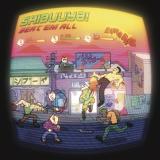
BEAT'EM ALL is french hip-hop/jazz instrumental trio SHIBUUYA!'s latest LP release. A blend of nu-jazz, fusion, hip-hop and future beats, all in original compisitions from the band's keyboardist and drummer, the album goes against the polished image we usually have of jazz music to deliver a raspy, energic and groovy sound that shakes the listener instead of nurturing him. With prestigious featurings such as CHiLi GiRL aka Shinobu Kawasihma, a Tokyo-raised Shamisen (a traditional japanese guitar) player, Melbourne rapper Nelson Dialect, french virtuoso saxophonist Hugo Afettouche, or the "french problem kid of jazz" trumpetist Daoud, SHIBUUYA! pushes forward its identity with references to japanese pop-culture through anime samples, powerful hip-hop beats, progressive broken-beat grooves and crazy deliveries on all three instruments (keys, drums and bass), all of it served by an original manga-inspired cover art by the band's keyboardist and leader. A reference to the japan-popular videogame genre (Shibuya being a neighborhood of tokyo centered around fashion and pop culture), BEAT'EM ALL tries to beat the odds on what we expect from a jazz album and to make it sound more like a garage-produced LP rather than a million-dollar studio album, to make as authentic and as generational as possible, a true product of today's young jazz scene.
Das Debütalbum ,Dins" von Psychic Ills erscheint anlässlich seines 20-jährigen Jubiläums in limitierter Auflage auf Vinyl! ,Dins" führt die Band weit über ihre beeindruckende Live-Dynamik aus kreisenden Rhythmen und Gitarren-Spektakel hinaus. Sie verbinden nahtlos unkonventionelle Instrumentierung und Studio-Improvisation mit einer mitreißenden Rock-Dynamik zu einem unglaublich kraftvollen Debüt, aufgenommen von Charles Burst, der bereits mit Bands wie Black Dice, Gang Gang Dance und The Double zusammengearbeitet hat. ,Dins" strotzt nur so vor Psychedelia - getränkt in Hall und grenzenlosem Dröhnen - und greift mit seinen achtminütigen Rock-Hymnen wie ,I Knew My Name" und ,Another Day Another Night" die Psych-Rock-Inspirationen der frühen 90er wie Sonic Youth und The Velvet Underground auf. Während andere Tracks einen glückseligen Geisteszustand erzeugen, deine inneren Spannungen lösen und dich mit endlosem, surrendem Gitarrensound hypnotisieren - wie ,Electric Life". Ein unvergessliches Debüt mit weltweiten klanglichen Inspirationen: Psychic Ills geben auf ,Dins" alles. Lehn dich zurück und mach dich bereit für den Trip deines Lebens.
Das fünfte Studioalbum von Psychic Ills, ,Inner Journey Out", feiert sein zehnjähriges Jubiläum. Ursprünglich erschien es 2016 als erstes Album der Band seit ,One Track Mind" (2013) und gilt als Höhepunkt einer dreijährigen Odyssee des Songwritings, die die Psych-Rock-Landschaft durchquert, die Psychic Ills im Laufe ihrer Karriere geprägt haben, während sie inspirierte Ausflüge in Country, Blues, Gospel und Jazz unternahmen. ,Inner Journey Out" begann so, wie viele Alben von Psychic Ills: mit den Demos von Frontmann Tres Warren. Wie bei allen ihren Alben ist Elizabeth Harts Bass das Bindeglied, das alles zusammenhält. Eine ganze Reihe von Musikern und Sängern - darunter Hope Sandoval von Mazzy Star, die beim Duett der Lead-Single ,I Don't Mind" mitwirkt - begleiten die Band auf dieser Reise. Dies ist zudem das erste Album, auf dem der Tour-Keyboarder Brent Cordero zu hören ist; sein Spiel auf Farfisa und Wurlitzer zieht sich wie ein roter Faden durch das Album. Diese Musiker bilden den Rahmen, auf den Warren seine verträumte Gitarre und seinen Gesang legt. Eine endlose Reihe von Freunden und Gästen beteiligt sich am Geschehen und steuert Pedal-Steel-Gitarre, Blasinstrumente, Streicher und Hintergrundgesang bei, was in einem karriereprägenden Moment für die Ills gipfelt. Thematisch ist ,Inner Journey Out" eine detaillierte Erkundung des Inneren und des Äußeren sowie des Weges zwischen beiden. Das fokussierte Songwriting sorgt dafür, dass sich die stilistischen Abweichungen nahtlos in das vielseitige Ethos der Band einfügen. Die mitreißende Gospel-Psychedelia von ,Another Change" und ,Baby" sowie die abgedrehte Free-Jazz-Erkundung ,Ra Wah Wah" tragen dazu bei, ,Inner Journey Out" zu einem facettenreichen, umfassenden Albumerlebnis zu machen. Abgesehen von dieser Weite ist es auch das persönlichste Album der Psychic Ills, das verlockend auf Liebe und Verlust anspielt, dem Hörer aber keine Auflösung bietet - es stellt Fragen, gibt aber nie Antworten; es sucht, kommt aber nie zu einem endgültigen Schluss. Stell es neben andere ,Drop-out"-Symphonien wie ,Ladies and Gentlemen We Are Floating in Space" von Spiritualized, ,Pacific Ocean Blue" von Dennis Wilson und ,Born to Be With You" von Dion - und lass deine Reise beginnen.
SHORT INFOS
Because Music celebrates the 50th Anniversary of Cerrone's debut album "Love In C Minor (Cerrone I)" .
A record which is one of the mots important of its time. It brought French Disco to the World and established Cerrone as the French King of Disco.
- Pressed in exclusive 2026 Apple Green Crystal Clear vinyl
- Original 1976 artwork - Digitally remastered from original tapes.
BIOG
Cerrone I
Love in C Minor (1976)
The story behind Cerrone's first album could be summarised in the libertarian atmosphere and the creative energy of the 70s, inherited from the 60s revolutions, spiritual, aesthetic or sexual. Looking back now, this record is one of the most important of its time. It helped creating the sound of an era and brought French disco to the world. It is also, and this is fundamental to understand its success, the result of a man's vision: Marc Cerrone, a free spirit inhabited by music, who ended up with a major work of art. With this album, Cerrone accumulated the main elements that make a record timeless, even bigger than its creator: the pure originality, the madness of a vision without compromise, a sense of the market and a great dose of luck too. To some extent, this is the perfect record to start a career, even though Cerrone's one already existed in an implicit way. He actually began in a rather popular band, Kongas, signed by Barclay. Between 1972 and 1974, the band was famous and made it abroad, particularly in Japan, where people loved its sound. Despite this success, probably fed up with the music and not ready to follow the orders of a label that wanted the band to sound more pop, Cerrone disbanded Kongas. He had the sound of his instrument in mind and mostly its central element: the bass drum. The idea of this first solo album came to him after a detour via selling records. Wishing to forget about the studios, he took the head of a small chain of stores, selling records imported from the States. That's when he discovered a daring new sound coming from New York: disco music. This energy inspired him to record again. He then remembered the crazy reaction of the audience when, during the Kongas' concerts, he used to hit his bass drum hard. Cerrone felt like going back into the studio but to make something different. He decided to record a sixteen minutes long track, driven by its beat, that would fit on its own on one side of a LP (during these vinyl days, musicians used to think in terms of sides…), with girls' voices simulating sex. This concept of musical and physical orgasm was recorded at Trident Studios in London (where pop stars used to record at the time… ) with Don Ray, of Kongas, man in the shadows and brilliant arranger who'd follow Cerrone during his whole career. Obviously, like always in pop music (it happened to the Beatles), record companies started by turning this weird track down, convinced that radios would never play sixteen minutes of beats and moaning. Cerrone, a born fighter, decided to trust his instinct (a mix of ego and business sense) and chose to believe that if the radios wouldn't play the track, people would dance to it in the clubs. He released the record himself, with a sexy cover a bit provocative where he wore a black bathrobe, a young short-haired girl leaning on him. Being played here and there, thanks to Cerrone's own network, the record started to work a bit in France. But luckily, things really happened in the States. Due to a mistake, a box of "Love In C Minor" albums were sent to the States via Cerrone's record shop instead of some unsold American LPs. Once in New York, the box was opened and the record with its intriguing cover was instantly loved and passed through the hands of radio and club DJs. All of a sudden, and unknown to its creator, the track that was turned down by every French label, became a hit on the New York disco scene. Casablanca, the US disco label, released a cover recorded by an ad hoc band because nobody knew Cerrone of how to find him. Once he discovered what was happening in the States, Cerrone flew to New York. He realised he had a hit, one of the biggest then, that opened the doors to every record company and especially Atlantic. He was welcome by Ahmet Ertegun, one of the main visionaries of the American music who, among other artists, signed Aretha Franklin and John Coltrane. It's believed that Ertegun understood that the French young musician, like some Atlantic artists, was about to define the sound of his time and that his work would live long after its birth date. "Love In C Minor" was the first step, adamant and successful.
I SPLIT MY ORGAN IN TWOS - a sonic world where animals could speak and parents would never grow old. Music is playing beneath the trees. Creeks are flowing towards the treehouse. Bears are singing and Owls are sailing through the wind like miniature spaceships. Solitude is a chosen path of clarity. And when this world collapses, all memories will vanish. Left behind is the Sting that keeps us separated from the insane.
The debut album I SPLIT MY ORGAN IN TWOS by Munich indie project plainhead is a freak folk inspired rockrecord fusing key aspects of 00s experimental indie with 90s indie rock.
The organic soundscapes remind of yetto-be-refined the Microphones from the album It Was Hot, We Stayed in the Water (2000). Acoustic Guitars fuse with the sound of fuzz and distortion. Clarinets and pianos can be found somewhere buried beneath the noise,
while the vocals remain dry and tired in the front. The 18-track double LP features easy-listenable songs such as the single Ghost / Smoke, short playful instrumentals named after animals and long ever-evolving operas such as River and Sunsick. The album was released on Munich local DIY recording label new basement.
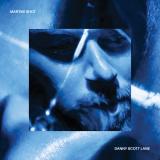
Martini Shot is the new album from Danny Scott Lane-a catchy, nostalgic and slightly manic collection that feels a little like one drink too many. Moving between lounge, soul, indie pop and exotica, the record plays more like a mixtape than a single idea, with a distinctly '90s streak running through it.
Lane sings on seven of the album's ten songs, a departure from his largely instrumental past work, and plays drums and percussion for the first time alongside his usual synths, keyboards, guitar and bass. Longtime collaborator David Lackner contributes flute, joined by new collaborators Logan Hone on flute and Katie Jacoby on violin.
Martini Shot marks Lane's second release with Records We Release, following the well-received House of Alice. The result is loose, romantic, restless and a little unpredictable.
Martini Shot is the new album from Danny Scott Lane-a catchy, nostalgic and slightly manic collection that feels a little like one drink too many. Moving between lounge, soul, indie pop and exotica, the record plays more like a mixtape than a single idea, with a distinctly '90s streak running through it.
Lane sings on seven of the album's ten songs, a departure from his largely instrumental past work, and plays drums and percussion for the first time alongside his usual synths, keyboards, guitar and bass. Longtime collaborator David Lackner contributes flute, joined by new collaborators Logan Hone on flute and Katie Jacoby on violin.
Martini Shot marks Lane's second release with Records We Release, following the well-received House of Alice. The result is loose, romantic, restless and a little unpredictable.
A defining classic of the melodic house and techno scenes, Oxia's Domino has remained a dancefloor staple for two decades, driven by its hypnotic groove and instantly recognisable synth hook. Celebrating 20 years, this special vinyl edition pairs an anniversary remaster on the A-side, with Space 92's powerful peak-time remix on the B-side, bridging the track's iconic past with the new generation.
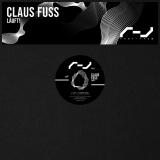
London-based Frankfurt export Claus Fuss brings his vibrant creativity to Rant & Rave with the Läuft! EP. Claus’ output includes a whole bunch of solo productions and collaborative projects with OneOneOne and LANDER, as well as co-productions with UK legends such as Zed Bias, Emerald a.o. His analogue-produced cuts have been signed to labels such as Khemia, Crème Organization, Neighbourhood, Heras and Kaizen. With his arrival on Rant & Rave, Claus drops four scintillating examples of rough and ready techno, including a collab with label head MAEDON. The EP kicks off with the title track ‘Läuft!’ (Running! in English), a mesmerising cut with a repetitive vocal snippet that forms part of the main riff. The beats are exquisitely programmed, and Claus keeps that track progressing, shifting and evolving masterfully.
Subtle layers add depth, while the main thrust of ‘Läuft!’ remains potent and captivating throughout. Next up is ‘Schwarze Löcher’ (Black Holes). As the title suggests, this one is dark and deep, sucking you into the sonic void. Elastic kick drums propel this one forward, as a rhythmically peppered, resonance shifting riff rises and falls. Claus gradually ramps up the intensity until we reach a breakdown, where that riff really works its magic. When the drums are reintroduced, it’s a powerful moment. Then we have ‘TopUp’, a lively, upbeat cut with contagious energy. Claus hooks the listener with an irresistible rhythmic structure, the bassline is especially addictive. Fast paced, dynamic drum programming keeps this one moving at a frenetic pace. On the surface it’s deceptively simple, but attentive listeners will pick up on all the details that make this one a compelling listening (and dancing) experience. Finally, we have ‘Zwanzig’ (Twenty), a heady collaboration with Rant & Rave boss MAEDON. This one brings together MAEDON’s earworm melodies and Claus’ penchant for hypnotic grooves. An insistent groove gives this cut a feel of urgency, while a relentless riff and punchy beats aim squarely at mind and body. A masterclass in dance floor engagement and connection.
By Most Bands' Fifth Album, The Sound Is Pretty Set. Parameters
Established. Refinement Dissipated In Favour Of Formulaic Execution Of
What's Worked In The Past. Fair Enough. All Them Witches Take A
Harder Route. In 2017, The Nashville Four-piece Offered What Might've
Otherwise Become Their Own Template In Their Fourth Album, 'sleeping
Through The War'. Their Second For New West Records Following
2015's Mellow-vibing 'dying Surfer Meets His Maker', 'sleeping
Through The War' Brought Larger Production Values To Dug-in Heavy
Psych Blues Jamming With Oversight From Producer Dave Cobb (jason
Isbell, Sturgill Simpson). After Exploring New Ground On 2013's
'lightning At The Door' And 2012's 'our Mother Electricity' As Well As
'dying Surfer Meets His Maker', With 'sleeping Through The War' The
Band Had Arrived At Something New, Something Sprawling, And
Grander-feeling Than Anything Before It.
So Naturally, In A Year's Time They've Thrown That All To The
Appalachian Wind, Turned The Process Completely On Its Head And
Reversed Paths - Recording In A Cabin In Kingston Springs, About 20
Miles Outside Of Nashville On I-40, With Guitarist Ben Mcleod At The
Helm. The Result, Mixed By Rob Schnapf (beck, Elliott Smith, Kurt
Vile), Is The Most Intimate, Human-sounding Album All Them Witches
Have Ever Recorded And Another Redefinition Of The Band. Introducing
Keyboardist / Percussionist Jonathan Draper To The Fold With Mcleod,
Bassist / Vocalist Charles Michael Parks, Jr., And Drummer / Graphic
Artist Robby Staebler, The New Eponymous Record Isn't Self-titled By
Mistake. It's The Band Confirming And Continuing To Develop Their
Approach, In The Shuffle Of 'fishbelly 86 Onions', The Organ-laced
Groove Of 'half-tongue', The Tense Build Of 'hjtc' And The Fluid Jam In
Closer 'rob's Dream'.
From The Sustained Consonants In Parks' Vocals To Mcleod's
Commanding Slide In 'workhorse' And Drifting Melancholy At The
Outset Of 'harvest Feast', All Them Witches Are Laying Claim To The
Essential Facets Of Their Identity.
Lp Format Pressed On Red Transparent 140g Double Vinyl In A Gatefold
Sleeve.
For Fans Of The Oh Sees, Baroness, Mastadon.
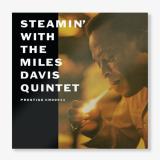
Original Jazz Classics celebrates Miles Davis’ centennial with the release of Steamin' with the Miles Davis Quintet. Released on Prestige in 1961 as one of four albums recorded in 1956 at Van Gelder studios, Steamin’ features Davis with his first great quintet of John Coltrane, Paul Chambers, Red Garland and Philly Joe Jones. This new edition of the album is released on 180-gram vinyl pressed at RTI with all-analog mastering from the original tapes at Cohearent Audio and a Tip-On Jacket.
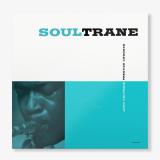
Original Jazz Classics celebrates John Coltrane’s centennial with this release of his 1958 album Soultrane. Recorded at Van Gelder Studios in New Jersey, the album contains 5 cuts from the quartet featuring Coltrane alongside Red Garland (piano), Paul Chambers (bass) and Art Taylor (drums). This new edition of the album is released on 180-gram vinyl pressed at RTI with all-analog mastering from the original tapes at Cohearent Audio and a Stoughton Tip-On Jacket.
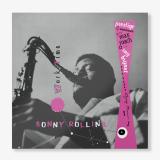
Released in celebration of the lasting impact Sonny Rollins has had on music comes this Original Jazz Classics series edition of his 1956 Prestige album Work Time. Recorded at Van Gelder studios the album completes the quartet with players Ray Bryant (piano), George Morrow (bass) and Max Roach (drums). This new edition of the album is released on 180-gram vinyl pressed at RTI with all-analog mastering from the original tapes at Cohearent Audio and a Tip-On Jacket.
Originally released in 1962 on the Riverside label, How My Heart Sings features the Bill Evans Trio of Evans (piano), Paul Motian (drums) and Chuck Israels (bass). A lively mix of jazz standards and originals, highlights include "I Should Care," "In Your Own Sweet Way," and "Summertime.”. This new edition is released as part of the Original Jazz Classics series and is presented on 180-gram vinyl pressed at RTI with all-analog mastering from the original tapes at Cohearent Audio.
Early DJ Support: Enzo Siragusa, Traumer, Laidlaw, Voigtmann, Franco Cinellli
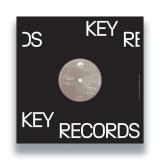
Key Records returns with a four-track various artists release, bringing together four different vibes that sit naturally alongside each other, while each artist puts their own stamp on the record.
Julian Anthony opens with the spacious and driving “Stargazing”, followed by Wilba’s darker and more stripped back “Head Noise”. On the flip, Darren Roach brings a strong old school feel with “Putting Things In Perspective”, before Reflex Blue closes the record with the playful, after hours sound of “Question”.
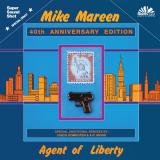
1986 was a very good year for Mike Mareen. It was the moment when something changed in his music. After years of searching for the right sound, Mike decided to change his production team and it turned out to be exactly the right decision. The first major result was “Love Spy”, with Lutz Rahn playing a crucial role in shaping its sound. The record simply exploded. Even without the kind of massive promotion normally associated with an international hit, “Love Spy” became one of the defining records of that peculiar German intersection between synth-pop, electro, Hi-NRG and Italo Disco. But Mike and Lutz were only getting started. Soon afterwards they wrote and recorded “Agent Of Liberty”. And once again, everything worked. The single travelled far beyond Germany, appearing in places as distant as Mexico, Australia, Sweden, Denmark, Norway, Venezuela and South Africa. It was another demonstration of how sophisticated Euro Disco could be when it was treated as serious electronic music rather than disposable dance-pop. The sound was simply dope. Sharp digital synthesizers, metallic FM textures, punchy electronic drums, dramatic arrangement changes and the kind of bright, futuristic timbres that made the Yamaha DX7 era so instantly recognizable. But the biggest change… was Mike himself. This was no longer the romantic lover of “Dancing In The Dark”. On “Agent Of Liberty” he sounds tougher, sharper and more confrontational. His half-spoken, half-rapped delivery cuts through the production with almost streetwise confidence, while huge uplifting backing vocals and highly melodic synth lines keep pulling the track back towards the dancefloor. And beneath the attitude there was something much more interesting going on. “Agent Of Liberty” announced a new chapter in Mike Mareen’s music, a direction that would later be developed much further on the “Let’s Start Now” album. Mike wanted to belong to the intelligent side of the electronic scene. And, just as importantly, he wanted to help shape where that scene was going next. “Agent Of Liberty” is probably one of the clearest examples of that ambition. It has all the ingredients of a huge club record, but there is tension in it, drama, attitude and a sense that something bigger is happening behind the beat. Four decades later, it still sounds completely distinctive. Not merely like a record made in 1986, but like a record that captures what was exciting about 1986 in the first place.
For its 40th anniversary, Vintage Pleasure Boutique brings “Agent Of Liberty” back to vinyl in newly remastered form. The release will be available on classic black vinyl and in a striking bright orange edition. And because this is not meant to be just another archival reissue, we have added two brand-new interpretations. Disco Computer takes the track into more adventurous territory. His remix is the more unconventional of the two, approaching the original from a slightly more modern and experimental angle while keeping its unmistakable melodic identity. A.P. Mono takes almost the opposite approach. Rather than trying to reinvent “Agent Of Liberty”, his version works more like a contemporary DJ edit. The original character remains intact, but the structure has been reshaped for the modern dancefloor, with stronger build-ups, clearer mixing points, carefully controlled changes in dynamics and moments designed to let the tension rise before the track hits again. The idea was simply to give DJs two new ways of playing it.
Forty years after its first release, “Agent Of Liberty” remains one of the most characteristic records not only of Mike Mareen’s career, but of the entire German electronic dance scene of the 1980s. Powerful, melodic, intelligent and wonderfully excessive. The Agent is back.
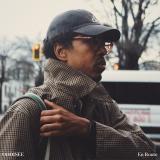
On En Route, Oddisee captures the tension of motion—between where you’re from and where you’re headed, between ambition and grounding, between survival and purpose. Released at a moment when his voice was sharpening into something unmistakably his own, En Route feels like a checkpoint record: reflective, hungry, and deeply human.
Built on warm, head-nodding production and Oddisee’s signature blend of jazz-inflected beats and conversational clarity, the album balances internal dialogue with outward observation. He raps not as a distant narrator but as someone in the thick of it—touring, questioning, recalibrating—turning everyday moments into quiet revelations. Themes of independence, self-definition, and forward momentum run through the record without ever tipping into cliché; this is movement with intention, not escape.
What makes En Route endure is its honesty. There’s no forced grandeur here, just earned confidence and craft. Oddisee treats growth as a process rather than a destination, letting listeners ride alongside him as the miles stack up. The result is an album that feels lived-in and timeless—music for long drives, late nights, and anyone figuring out who they are while still on the way.
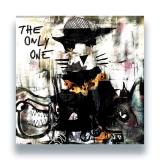
Globally acclaimed duo Bedouin return with a powerful new collaboration alongside rising producer Luch and vocalist Karl Williams on 'The Only One.'
A brooding, late-night club cut, the track is driven by hypnotic drum rhythms, pulsing percussion, and dark, immersive synth work, while Karl Williams' emotive vocal delivery adds depth and allure, unfolding with tension and atmosphere.
DJ Support: Glenn Underground, Crazy P, Terry Farley, Aroop Roy, Chris Coco, Frank Tope, Greg Wilson, Dom Servini, Francois K, Max Essa, Oliver Dollar, Pete Herbert and many more
Danny Ward’s Balaphonic project, one of many the long-serving performer, producer, percussionist, drummer and DJ has utilised over a career spanning over three decades, has evolved considerably since his first release under the alias 11 years ago. Conceived as a platform to explore his love of Afro-Cuban and Brazilian musical culture, it gathered new impetus during lockdown and the recording of superb first album Resolution Revolutions, which fused these influences with nods to Balearica, dub, dancehall and deep house.
On the Organic Matters EP, Ward’s follow-up to that critically acclaimed set, the Balaphonic musical universe has expanded once more, with the Manchester native showcasing a wealth of eye-catching collaborations and an even more intricately layered and sonically detailed sound rich in live percussion and instrumentation. It’s an ambitious and widescreen musical vision wrapped in sun-soaked melodies, morning-fresh motifs and simmering, sunset-friendly soundscapes.
The dizzying new heights scaled by Ward on Organic Matters is evident from the opening bars of ‘Dew Drops’, a piece created in unison with internationally renowned composer and arranger Robin Dewhirst. Between them, the pair have conjured up a yearning, life-affirming samba shuffler where picturesque piano, xylophone and balafon melodies rise above Ward’s dense, layered Latin percussion and warming bass.
Next, Ward delivers a thrillingly different take on his 2005 composition ‘Switch’, featuring legendary Brazilian jazz vocalist Flora Purim and her equally talented daughter Diana Moreira Booker. Whereas that was a jazzy deep house workout, Ward’s Balaphonic re-make is a shuffling, gentle exploration in 7/4 time – a heartfelt tribute to the Brazilian records with which Purim first made her name in the 1960s and ‘70s.
‘Balaventurers’ sees Ward join forces with an old friend from the North-West scene, R.S.L founder Joe Botham AKA Baleardelica – a multi-instrumentalist and producer whose Flamenco-inspired acoustic guitar motifs provided the starting point for another vividly colourful exploration rich in layered vocalisations, twinkling keys and impeccably arranged percussion.
It’s followed by ‘Life of Strings’, a more up-tempo and dancefloor-leaning excursion written and recorded alongside Amsterdam-based violinist, and composer Katya Gabeli. While Ward’s percussion-rich groove provides propulsion and a rock-solid foundation, it’s Gabeli’s evocative string arrangement that provides the focal point and emotional resonance. It’s a genuinely brilliant collaboration.
To round off a second stunning Balaphonic release on NuNorthern Soul, Ward delivers two simmering, slow-motion delights: the Afro-Cuban rhythms, cascading melodies and melodic percussion motifs of ‘Boxfresh’, and stunning EP closer ‘Home’ – an almost overwhelmingly poignant and beautiful number that gently ebbs and flows on waves of tracked piano, dreamy chords and a comforting sense of closure. It’s a genuinely sublime conclusion to another wonderful Balaphonic release.
10 years since his first edits outing on RNT, label co-founder JKriv digs into his deep well of reworks for a four-tracker of cheeky dancefloor madness. Coming in hot on the A side, I Feel Amor is modern twist on the disco classic anthem, a peak time weapon of epic proportions with hard-hitting beats and churning synths, and the inimitable sing-along vocal (pero en Español). Love Dub is a stripped down deep house affair, a solid driving groove with thunderous bass, synth accents and acapella flourishes. On the B-side, Cuando Bailo is the edit you didn’t know you needed; a callback to a bygone era of one-hit wonder magic, flipped masterfully to be all-club and just a sprinkle of camp. And rounding off the record Dance Sexy takes an obscure purple-hued cover into hypnotic red-light territory, with funky synth stabs riding a pulsing and infectious bass line, in classic JKriv fashion.
London producer and live musician Ben Hauke announces his new album ‘Future Bruk’ , set for release via Woop Records. The ten-track record sees Hauke push Broken Beat beyond its familiar territory, exploring darker, faster and more experimental directions while keeping its rhythmic DNA at the core.
The project began after Hauke found himself questioning where the genre could go next. Inspired by Mark Mac’s ‘Vintage Bruk’ , but deliberately moving away from its softer, jazzier tendencies, ‘Future Bruk’ takes in electro, two-step, raw club music and experimental electronic textures. “I knew there was something I rejected in Broken Beat. I didn’t like how soft and jazzy it was, so I thought, why not make what I wanted to hear?”
Across the album, Hauke moves between the raw drums and bass of ‘FYS’ , the eerie textures of ‘SPOOOOKY’ featuring Sheiva, and the dark, hopeful energy of ‘No Regulation’ featuring Nigerian artist Meso-IX. ‘No Bruk On Splice’ finds humour in the lack of a Bruk category on the sample platform, while ‘Tuned Into Happy’ reflects on growing up in London, where youthful romance and casual violence could exist side by side.
Produced largely between July and December 2025, the album was built with both the club and headphone listener in mind. Around 15 additional tracks were made during the process, with Hauke ultimately distilling the project down to ten tracks with a focus on groove, movement and varied moods. “I feel the style has more room to evolve. I wanted to explore that and think about what the future of electronic music looks like to me. ”
After the worldwide techno hit that was Darc Marc's "Dirty Rocking Bass" comes the next Cluster X instalment from French legend GANEZ THE TERRIBLE. "The Rave..." is another prime time techno monster from the Acid Techno/Techno underground that is going to cause massive dancefloor mayhem with its cheeky 'The rave, the sound, the people, the party" sample and hard funky beats and 303 stabs. With pounding remixes from D.A.V.E. THE DRUMMER, and new kid-on-the-block SEON, and a kicking bonus track "Elevator" from Ganez himself this gives a nod to all areas of harder techno.
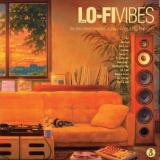
Diese Doppel-Vinyl-Compilation lädt ein in die warme, entspannte Welt des Lo-Fi-Sounds - eine Musik, die entschleunigt, Atmosphäre schafft und Nähe erzeugt. Versammelt sind prägende Künstler des Genres, die Lo-Fi, Downtempo, Jazz-Einflüsse und elektronische Gelassenheit miteinander verbinden. Mit Beiträgen von FKJ, Darius, Kid Loco, St Germain, The Mighty Bop, DJ Cam, DJ Spinna und weiteren wichtigen Namen entsteht ein vielschichtiges Panorama zwischen organischen Grooves, sanften Beats und subtilen Melodien. Die Auswahl richtet sich gleichermaßen an langjährige Liebhaber wie an neue Hörer, die Lo-Fi als eigenständige, zeitlose Form elektronischer Musik entdecken möchten. Ein stimmiger, sorgfältig kuratierter Sampler für entspannte Hörsituationen, stilbewusste Sets und alle, die elektronische Musik lieber fühlen als konsumieren. ENGThis double-vinyl compilation invites listeners into the warm, comforting world of lo-fi music - a sound defined by relaxed rhythms, organic textures and understated emotion. Featuring leading artists of the genre, the collection blends downtempo beats, jazz influences and laid-back electronic production. With tracks by FKJ, Darius, Kid Loco, St Germain, The Mighty Bop, DJ Cam, DJ Spinna and others, the album offers a broad yet coherent overview of lo-fi aesthetics. It appeals both to seasoned listeners and newcomers seeking a timeless, atmosphere-driven listening experience. A carefully curated selection designed for calm moments, focused listening and stylish musical environments
Your Trip bw Workout is the second release by Magnus Dahl under his MDHL moniker. Your Trip is a machine funk techno including acidic melodies, ethereal sounds and a vocal sample on top of a relentless funky bassline. The second mix strips it down to the bare essentials. A rhythmic dubby take that lets the bassline shine. On the flip is the long Workout. In a slightly slower pace the murky kick and metallic percussion is combined with an ambient, dubby, dreamscape that keeps evolving as it unfolds.
"Potency continues apace with 'Jackin Shit', a gleefully self-explanatory EP from label founder Cromby. Following widely-played recent releases from Malik Kassim aka Retromigration, Trax Unit and Rhythms of Prescott, the prolific DJ and producer reaffirms his imprint's fundamentals with four upfront, high-energy tracks, each reflecting a different facet of the Belfast-via-Berlin producer's decades-deep understanding of house and techno history. Title track 'Jackin' Shit' gets things moving with a rich blend of rolling basslines, liquid keys and diva'ed up vocal snippets. Lucid and groovy in the style of seminal East Coast vocal pleasures, Cromby's vision of house is nonetheless driven by a dusty kick drum that references Head High/WK7, or Paul Woolford in a warehouse somewhere... In contrast, 'Sense Control' places percussion front and centre, locking in a tight rhythm in order to ride out a liquid collage of acid lines, ecstatic piano and other blissfully wavy elements. 'Con Gas' establishes a tougher direction on the flip, finding Cromby's busier instincts reduced the simplest of ingredients - sub, bass and stabs - taking dancers deep into the bowels of house, replete with classic vocal call-outs, and yes, even a well-earned inbuilt spinback. Having exhibited such restraint, we're unceremoniously booted out of the cubicle and back toward the strobes for 'Cheeky Bump', a rubbery, driving dancefloor tool guaranteed to delay any impending cab home. Colourful, charismatic and exclusively engineered for true party people, 'Jackin' Shit' finds Cromby returning to home turf on definitive form."
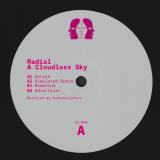
Dutch Barcelona-based Radial joins Rotterdam imprint Fusion Of Thought with 'A Cloudless Sky'. Jeroen Liebregts has been a steady force in underground Techno since the late 90s, with a string of releases under his belt via a multitude of aliases on genre-defining labels such as Mord, Token, Mote-Evolver, and his own Radial Records - only to name a few. 'A Cloudless Sky' marks a return of Liebregts' 'Radial' pseudonym, with four cuts of funked-out, analogue-driven Techno paranoia.
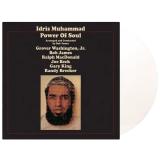
Power Of Soul is the third record as a bandleader by legendary jazz drummer Idris Muhammad, originally release in 1974. He embarked on his solo career in 1970 after years of work as a sideman for the absolute biggest names in jazz such as George Benson, Lou Donaldson, Grant Green, Ahmad Jamal, Pharoah Sanders, and many, many others.
This record was produced by Creed Taylor, founder of CTI, and engineered by Rudy Van Gelder. The architect of the Blue Note sound developed a deep relationship with Muhammad and played a big role in finetuning his sound. But, don't forget the rest of the line-up; the recorded features arrangements and compositions by keyboard legend Bob James and smooth jazz founder Grover Washington Jr., supplemented with performances by Randy Brecker, Joe Beck, and Ralph MacDonald. All in all, you can see why Muhammad's works ended up as samples on so many hip-hop records.
Power Of Soul is available as a limited edition of 2000 individually numbered copies on white vinyl.
Deep in the sea lives one of Earth's most ancient creatures: the Nautilus. Hunted for its beautiful shell and now, through our global evolution, endangered, like so many other beings. Perhaps most astonishingly, no one has ever observed a baby Nautilus in the wild. The title track of this debut EP takes you on a dark journey, searching through the deep ocean for this elusive animal.
On the other side, I don't believe in Fermi’s Golden Rule, is a sonic interpretation of a statement made during a quantum field theory lecture, questioning the experimental mathematics often used to derive the famous rule. But actually, trying to express the confusion about quantum physics in general.
The dub-infused EP is mainly inspired by the pioneering magic of Detroit’s electronic music scientists and the experiments of European electro wizards.
Turbo was a part of Joe Robinson and Sylvia Robinson’s All-Platinum Records set up in New Jersey which operated from 1967 to 1979. At one stage the fiercely independent and proudly black owned label threatened to become another Motown or Philadelphia International. That never happened, but the Robinson’s dream of worldwide success came later when Sylvia discovered Rap, recorded Rappers Delight by The Sugarhill Gang and Sugar Hill records was born.
Music historian Steve Guarnori describes All Platinum as "probably the most unusual record company there ever was. Dysfunctional, but at the same time wonderful."
The All-Platinum chaos extended to Turbo. But despite anarchy - some superb albums went straight from manufacture to be deleted and sold as cut-outs - sublime music was created. This 10" 6-track release collects together some of the most hallowed Turbo releases which between them have become cherished by collectors.
Brother to Brother "The Bottle" captures the label at its most astute. Gil Scott-Heron and Brian Jackson’s original version was an album only track on Strata-East so Turbo seized the opportunity to quickly make a worthy cover version and rush release it a single which enjoyed success.
"Ton Of Dynamite" by Frankie "Love Man" Crocker was Turbo’s debut release in 1968 (it actually sounds a later recording). At the time Frankie was a DJ on WWRL radio station in New York and the release was essentially a reward for his previous support of All-Platinum releases. The record (a b-side) is actually made Willie & The Mighty Magnificent who went on to re-record it as
"Funky 8 Corners". It took until 1975 for "Ton Of Dynamite" to get recognition when it became an anthem as the UK Northern Soul scene adopted it as part of the movement away from old skool 1960’s Soul. Whatever its’ provenance, "Ton Of Dynamite" is now revered by the Rare Soul and Funk communities.
The Optimistics "Man" from 1971 is another b side single. The group specialised in smooth harmony Soul but "Man" is a funkier affair which won support from Rare Soul aficionados and will cost you £600 plus if you are lucky enough to locate a copy of the hard to find 45.
Willie & West "Attica Massacre", also from 1971, is an even more elusive single. It is a powerful protest against the killing of 29 prisoners, many black, following a riot at a prison - Attica Correctional Facility in New York. The deaths and a subsequently discredited cover up caused outrage. John Lennon was amongst the first musicans to make a recording about the bloodbath, but the most emotional protest is this Willie & West track. Only 300 copies were manufactured of one of the most powerful civil rights recordings ever made. The vocal sounds like anti-War Edwin Starr at his most bristlingly aggressive.
Perhaps the strangeness of All-Platinum is best illustrated by the later success of Lonnie Youngblood "Sweet Sweet Tootie" which is essentially the backing track of "Attica Massacre" plus exquisite sax playing by Lonnie. Despite it selling 100,000 plus copies the label did not see this as a reason to reissue "Attica Massacre". Strange. Or as Marvin asked "What’s Going On"?
The New Sounds "Don’t Take Your Love From Me" was only issued by Turbo as an album track. Despite good music on it the LP was poorly (it at all)/ promoted and flopped. The superb "Don’t Take Your Love From Me" is a long time Northern Soul / X-Over favourite.
Larry Saunders mesmerising "On The Real Side" made no impact when released on Turbo in 1974 but was nevertheless issued in the UK by London Records. The Northern Soul discerning dancers instantly latched on to its combination of uplifting lyrics, heartfelt vocal and clomping beat and since then its’ appeal has extended across the whole of the Soul community. Without doubt an all time classic.
So six treasures from a label that despite frequently advocating cash out of chaos frequently conjured up awesome music.
ANORAX is grateful to have the opportunity to present this very special Soul selection.
René ter Horst (DJ Zki) and Gaston Steenkist (Dobre), credited here as René et Gaston, are a DJ and music production duo from Haarlem, Netherlands. Their stage names include Chocolate Puma, Klatsch!, Jark Prongo, The Good Men, and Riva.
Their most notable productions are "Give It Up" (1993) credited to The Good Men, "I Wanna Be U" (2001) credited to Chocolate Puma, and "Who Do You Love Now?" (2001) credited to Riva, and featuring Dannii Minogue.
Vallée de L'Armes became a massive international club hit in 1993. Throughout the years, multiple remixes were released. The best remixes are now bundled on this exclusive 12".
Andre Zimmer reworks Vallée De L’Armes into a modern dance floor weapon. and receives support by Danny Howard,, Green Velvet, Peggy Gou and many more.
Andrew Dum created a swerve-inducing Afrohouse remix as well. The new rendition preserves the emotional depth that made the original resonate through the years, while giving it a fresh contemporary edge.
The 2026 Marco Lys remix transforms the original’s iconic melodic hook into a high-energy House production tailored for contemporary sets. The remix replaces the 90s-era breakbeat elements with a driving, tech-influenced rhythmic foundation, ensuring the emotional resonance of the original melody remains functional for peak-time modern dancefloors.
Vallée de l’Armes remains an essential house tune. This exclusive 12" features all the extended mixes and is available as a limited edition on orange vinyl.
Often credited as the father of multi-media theatre, Alwin Nikolais (1910-1993) took complete creative control over his productions - including cutting-edge approaches to lighting and costume that transformed human bodies into shifting sculptural shapes, while also composing wildly innovative electro-acoustic and synth-based audio as accompaniment.
After initially experimenting with musique concrète and tape manipulation (as demonstrated on the 1959 LP Choreosonic Music of the New Dance Theatre of Alwin Nikolais) Nikolais became the first owner of Robert Moog's synthesizer at the Audio Engineering Society convention in New York in late 1964. Relying heavily on the Moog and later the Synclavier synth/sampler, these 21 tracks document Nikolais' highly-prescient compositions across the mid 1960s through to the late 1980s - existing not only as extensions of his other-worldly choreographic productions, but standalone pieces of foundational mid-century American electronic and experimental music.
"Born in Southington, Connecticut in 1910, Nikolais’s early years and early career were in acting, music and puppetry. It was not until the late 1930s that he began his work as dancer/choreographer in Hartford, Connecticut, where he was commissioned by the Avery Memorial Theatre, a part of the Wadsworth Atheneum, to create an evening-length work to the music of Ernst Krenek. Previously his work and study as a pianist-organist found him accompanying silent films. This sort of accompaniment required from the musician not only a playing skill but also a versatility in improvisation, matching movement to sound, and evoking mood to situation.
Nik was drawn initially to dance by his involvement with the percussion scores used by the illustrious early twentieth century German dancer Mary Wigman. In trying to learn more about percussion, he was lured into dance class and thus his career began. His development of music and dance occurred simultaneously. His introduction to the twelve-tone technique opened his mind to the expanding areas of atonal music, and his dealing with music as sound per se. In 1948, after being appointed director of the Henry Street Playhouse in New York, Nikolais formed the Playhouse Dance Company, later known as the Nikolais Dance Theater, and began his aesthetic orientation toward dance as a study of motion. By the 1950s, he had ceased creating literal dances and began his explorations and eventual milieu as an abstractionist.
Sound became an important part of his abstract theatre. For his first dances, which involved his new thinking of dance as both a visual and kinetic art, he used live percussion scores in which he directed his dancers to play instruments of all nature. There was a combination of children’s toy instruments as well as harsh and resonant automobile brake drums, and other pitched auto parts which he also used to accompany classes. Once he installed his own tape recording machines, he quickly used the limited range these instruments provided in a new way, slowing and increasing speed and reversing sound. He also made the sounds adhere to the choreographic structure (not the other way around), thereby giving the dance its independence from the musical phrasing. But the real need remained: the search for new sound. Nik made a sound library, recording noises and percussion and vocal sounds, which the French aptly called musique concrète. Needless to say, he became a master at splicing bits and pieces.
From 1956 to 1962 Nikolais composed eleven major scores for his theatre pieces using such techniques. In 1963, James Seawright, who at the time was assisting Nik in his productions and also working at the Columbia-Princeton Center for Electronic Music, recorded a sound bank for the production Imago (1963). With this material, Nikolais created his first synthesizer score. Imago won the Paris Grand Prix in 1968 and launched the Nikolais Dance Theatre towards its national and primarily international acclaim.
During the same period, Seawright came to Nik and told him of a young man who had invented and constructed a simplified synthesizer and insisted that Nik visit the electronic fair currently being held in New York. Nik did so and met Robert Moog. He was completely taken by the new machine and after making some suggestions to Moog, (which Moog made), Nik bought the inventor’s first machine with the aid of a Guggenheim Fellowship. Moog himself was astonished by what his machine could produce for Nik. This machine was later acquired by the Museum of Musical Instruments at the University of Michigan at Ann Arbor as the first Moog synthesizer. The Synclavier was Nik’s next source of sound and since the mid-1970s remained the major instrument in the Nikolais soundroom.
Alwin Nikolais has been honored and awarded throughout the world. He has received the French Legion of Honor, the Kennedy Center Honors, National Medal of the Arts, two Guggenheim Fellowships, as well as Mellon, Ford, and Rockefeller grants. He has been a recipient of NEA grants since 1966, been awarded five honorary doctorates, all for his remarkable achievements in Dance Theater. His genius has influenced several generations of artists."
—Murray Louis
Perry Louis is a pivotal figure in the UK jazz dance movement. As a dancer and choreographer, producer, DJ, broadcaster, and founder of the internationally respected jazz dance collective JazzCotech Dancers, he is perfectly placed to curate this collection.
Perry has been at the heart of the scene since the early 1980s, from JAFFAS, the Electric Ballroom, Dingwalls, Acid Jazz, Hi Hat, and Messin’ Around, taking its energy and sound as far as Japan, the USA, St. Lucia, India, Canada, and across Europe.
This compilation celebrates 25 years of Shiftless Shuffle, with Perry as its ambassador and driving force. Over the years, he has collaborated with top DJs including Paul Murphy, Gilles Peterson, Snowboy, Colin Curtis, and Shuya Okino, helping shape the UK jazz dance sound into a global phenomenon.
The album blends deep jazz, fusion, Latin, and groove-driven tracks, reflecting both the scene’s rich heritage and its forward momentum.
From the brand-new exclusive track by Kyoto Jazz Massive, Get It Together (Samba Fusion Mix), to Bunny Brunel’s Fickle Funk appearing on vinyl for the very first time, and the hard-hitting Caribbean Fire Dance by Tom Grant, this compilation tells the story of a movement—an underground culture born on UK dancefloors that has now captured a worldwide audience.
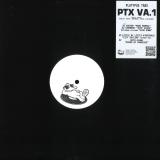
Platypus Trax's first edition of the annual vinyl VA-series brings together an impressive bunch of artists around the globe! A1 - Guchon (Japan) - Hard Normal: A timeless club roller with a hardgroove attitude and inventive splatter of vocal cuts and sounds, that blend together with the driving drums and hard and stabby bassline. 140BPM A2 - Chambray (Germany) - Step Aside: A legend that is Chambray brings the old school ghetto techno back to his repertoire with Step Aside, not shying away from keeping it as minimal as possible, yet keeping the overall sound as full and destructive as possible. 132BPM A3 - Joedan & Killaman (UK) - Slam Down: A fun little ender for the A-side by them boys from Leeds. Big drums and even bigger techy bassline for the peak time of almost any event imaginable. 135BPM B1 - Little By Little (France) & Reginald (Finland) - City Skyline (Detroit Mix): A touch of experimentalism and big synths molded together with sick drum groove and stretchy vocal line. Wait for the second drop for pure nostalgia! 140BPM B2 - Beth Alana (Germany) - Birds of Paradise: A minimalistic workout from the depths of Berlin. Fresh soundscapes and the voices of birds counterbalancing the deep groove and heavy basses. Meditative piece to end the compilation with pure style and respect. 145BPM
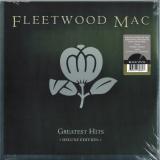
a A1 Rhiannon 4:11
b A2 Don’t Stop [3:11]
[c] A3 Go Your Own Way [3:38]
[d] A4 Hold Me [3:45]
[e] A5 Everywhere [3:43]
[f] A6 Gypsy [4:25]
[g] A7 As Long As You Follow [4:17]
[h] B1 Say You Love Me [4:10]
[i] B2 Dreams [4:14]
[j] B3 Little Lies [3:38]
[k] B4 Sara [6:22]
[l] B5 Tusk [3:30]
[m] B6 No Questions Asked [4:36]
[n] C1 Landslide [3:19]
[o] C2 Big Love [3:39]
[p] C3 Over My Head [3:35]
[q] C4 Oh Diane [2:39]
[r] C5 You Make Loving Fun [3:32]
[s] D1 The Chain [4:30]
[t] D2 Think About Me [2:44]
[u] D3 Seven Wonders [3:42]
[v] D4 Never Going Back Again [2:14]
[w] D5 Silver Springs (Live) [5:42]
[a] A1 Rhiannon [4:11]
[b] A2 Don’t Stop [3:11]
[c] A3 Go Your Own Way [3:38]
[d] A4 Hold Me [3:45]
[e] A5 Everywhere [3:43]
[f] A6 Gypsy [4:25]
[g] A7 As Long As You Follow [4:17]
[h] B1 Say You Love Me [4:10]
[i] B2 Dreams [4:14]
[j] B3 Little Lies [3:38]
[k] B4 Sara [6:22]
[l] B5 Tusk [3:30]
[m] B6 No Questions Asked [4:36]
[n] C1 Landslide [3:19]
[o] C2 Big Love [3:39]
[p] C3 Over My Head [3:35]
[q] C4 Oh Diane [2:39]
[r] C5 You Make Loving Fun [3:32]
[s] D1 The Chain [4:30]
[t] D2 Think About Me [2:44]
[u] D3 Seven Wonders [3:42]
[v] D4 Never Going Back Again [2:14]
[w] D5 Silver Springs (Live) [5:42]
[a] A1 | Rhiannon [4 11]
[b] A2 | Don’t Stop [3 11]
[c] A3 | Go Your Own Way [3 38]
[d] A4 | Hold Me [3 45]
[e] A5 | Everywhere [3 43]
[f] A6 | Gypsy [4 25]
[g] A7 | As Long As You Follow [4 17]
[h] B1 | Say You Love Me [4 10]
[i] B2 | Dreams [4 14]
[j] B3 | Little Lies [3 38]
[k] B4 | Sara [6 22]
[l] B5 | Tusk [3 30]
[m] B6 | No Questions Asked [4 36]
[n] C1 | Landslide [3 19]
[o] C2 | Big Love [3 39]
[p] C3 | Over My Head [3 35]
[q] C4 | Oh Diane [2 39]
[r] C5 | You Make Loving Fun [3 32]
[s] D1 | The Chain [4 30]
[t] D2 | Think About Me [2 44]
[u] D3 | Seven Wonders [3 42]
[v] D4 | Never Going Back Again [2 14]
[w] D5 | Silver Springs (Live) [5 42]
[a] A1 | Rhiannon [4 11]
[b] A2 | Don’t Stop [3 11]
[c] A3 | Go Your Own Way [3 38]
[d] A4 | Hold Me [3 45]
[e] A5 | Everywhere [3 43]
[f] A6 | Gypsy [4 25]
[g] A7 | As Long As You Follow [4 17]
[h] B1 | Say You Love Me [4 10]
[i] B2 | Dreams [4 14]
[j] B3 | Little Lies [3 38]
[k] B4 | Sara [6 22]
[l] B5 | Tusk [3 30]
[m] B6 | No Questions Asked [4 36]
[n] C1 | Landslide [3 19]
[o] C2 | Big Love [3 39]
[p] C3 | Over My Head [3 35]
[q] C4 | Oh Diane [2 39]
[r] C5 | You Make Loving Fun [3 32]
[s] D1 | The Chain [4 30]
[t] D2 | Think About Me [2 44]
[u] D3 | Seven Wonders [3 42]
[v] D4 | Never Going Back Again [2 14]
[w] D5 | Silver Springs (Live) [5 42]
Mechatronica presents “Residual Future” by Koloah. Across six tracks, Koloah delivers a striking fusion of futuristic electro, bass-heavy rhythms, and expressive vocal experimentation. Combining powerful machine grooves, processed voices, and detailed synth programming, the EP explores the connection between human emotion and technology. From the driving energy of “Graduate” and the vocoder-driven character of “Vocodex” to the deeper moods of “System” and the sharp rhythm of “Edge”, the release moves through a wide spectrum of electronic forms — balancing dancefloor impact with atmosphere, melody, and a strong sense of storytelling. The journey expands further with “Elevator”, a slower, immersive descent built around hypnotic movement, spacious textures, and a more introspective emotional pull. On the other side, “Jump” pushes the pressure higher — a peak-time electro weapon driven by explosive rhythms, heavy low-end force, and Koloah’s unmistakable futuristic energy. Throughout “Residual Future”, vocals become a central element: fragmented, transformed, and woven into the machinery of the tracks. Human traces merge with precise rhythms and futuristic textures, creating a sound world that is both soulful and synthetic. A distinctive statement from Koloah, delivering forward-thinking electro with depth, emotion, and a unique voice-driven identity.
Blind Harmonies returns with its second release, this time welcoming Argentinian & Berlin based artist Augusto Taito for a powerful and deeply detailed EP. Built around four carefully crafted tracks, the release moves through driving rhythms, dynamic grooves and refined sound design, balancing raw club energy with subtle textures and hypnotic movement. Each track carries Augusto’s distinctive approach, functional yet emotional, precise yet alive. Alongside the driving moments, the EP also reveals a more personal side through a melodic piece filled with introspection and meaning, adding depth and contrast to the journey. A release designed for both the dance floor and deeper listening.