Kharkiv label Trance Pandemic did not have to wait long for the announcement of the next release and already in september plans to release a new work Komponente and Kurilo, known for their love of trance and acid. The album "Lord Of Destruction", consisting of four dashing tracks, justifies the name with its energy, which quickly brings to consciousness from summer drowsiness.
"Lord Of Destruction", which opens the pawn - the real master of
destruction, an extraordinary track, which is designed to conquer the
dance floor with its non-linear bass lines and smooth pedal
arrangements, including the singing of Elina Elian and the voice of
Kurilo. "Magnifico" is a mysterious trance xenomorph. The multifaceted "Etat" starts from a state of ecstatic joy, and then carries to the depths of the subconscious. "Oblivion" is an acid forgetting of this record, a message in which vocal samples and acid stuffing, seasoned with good bleep techno are intertwined.
Omni AM presents the long-awaited reissue of “Can We Get / Keep Doing That.” This timeless record sent dance music in a new direction. Euphoria Record’s vaults are open and finally, for the first time since 1997, this seminal tech-house classic is available to everyone for the very first time in over 25 years. This 1997 indie record was Euphoria Records second release – and their first international record. Whether you agree with it or not, many people consider this one of the pioneering records of American Tech-House. Both sides and several mysterious alternate versions have graced the decks of DJs like Evil Eddie Richards, Terry Francis, Derrick Carter, Tyler Stadius, and Magda. The list goes on.
We were lucky. Curve Pusher lovingly remastered the original four tracks from the 1997 studio masters. Then, he went a step further, and remastered some previously unreleased versions – including a live version in Chicago that encapsulates what Omni AM was back then: ambient house. There’s a bit of Chicago, a bit of London, a bit of New York, and a bit of Tokyo in every second of these classic, genre-defining tracks.
A1.
“Can We Get” happily sits with the finest works of Ron Trent, Chez Damier, and Mood II Swing – and goes further, as Omni AM has never feared genre definitions. It opens with classic deep house chords, floating synth pads, and sparse vocals. The bassline is deep and warm. Marky Star and Adam Collins expertly work the percussive effects but always keep the theme simple and clear. Everyone knows this is a classic house track because it hypnotizes you.
A2.
“Keep Doing That” continues the theme with another classic late-night killer. However, this one is totally different – almost industrial, yet clearly housey and ambient. It drives deep into a tough groove that just builds and builds. The dub-influenced bass line gives way to a more angular synth riff that both offsets and adds to the track's forward thinking sound design. It’s dark and dirty, yet terribly sexxxy at the same time. It was and always will be mesmerizing. Once again, musical magic by Marky Star and Adam Collins.
B-Sides
The flip side features two remixes of “Keep Doing That” by UK tech-house legend Mark Ambrose. His bubbly, psychedelic take on the track pumps up the percussive Chi-town groove while going in a distinctly London afterhours direction. Trippy, for sure. Fun for all, for sure. These remixes are guaranteed to make your afterhours weird.
The city of Rome once again confirms the excessive abundance of records produced for the music industry, television and, even, shopping malls. The mistery that surrounds the musicians involved in these sessions makes the journey even more interesting and tense. “Was really that drummer involved in that record?” – “I don’t know” or, of course, “I don’t remember…”. Certainly, a new distinctive brick has now been added to the Italian Jazz-Fusion heritage.
Angelo is an LP, named after a car, featuring nine songs Brijean have crafted and carried with them through a period of profound change, loss, and relocation. It finds percussionist/singer Brijean Murphy and multi-instrumentalist/producer Doug Stuart processing the impossible the only way they know how: through rhythm and movement. The months surrounding the acclaimed release of Feelings, their full-length Ghostly International debut in 2021 which celebrated tender self-reflection and new possibilities, rang bittersweet with the absence of touring and the sudden passing of Murphy’s father and both of Stuart’s parents. In a haze of heartache, the duo left the
Bay Area to be near family, resetting in four cities in under two years. Their to-go rig became their traveling studio and these tracks, along with Angelo, became their few constants. Whereas Feelings formed over collaborative jams with friends, Angelo’s sessions presented Murphy and Stuart a chance to record at their most intimate, “to get us out of our grief and into our bodies,” says Murphy. They explored new moods and styles, reaching for effervescent dance tempos and technicolor backdrops, vibrant hues in contrast to their more somber human experiences. Angelo beams with positivity and creative renewal — a resourceful, collective answer to “what happens now?”
Angelo the car is a 1981 Toyota Celica they got off Craigslist during their first stint in Los Angeles, where Murphy and Stuart have since settled. “Such a bro-y, ‘80s dude car, it’s been super fun to drive around in a new town,” Murphy says. “He’s older than us, he’s a classic, he’s got a story.” It is a spiritual vehicle with a cinematic appeal, first dropping them off in an alleyway for the scene-setting intro, “Which Way To The Club.” The question is quickly resolved by “Take A Trip” as a cruising bassline mingles with crowd sounds, hand-claps, cuíca hiccups, whip-cracks, even a horse neigh. Brijean have found some club on this cross-dimensional trip — the kind of
imagined space or chamber within one’s self capable of “shifting a fraction of who you are,” says Murphy. They wrote the track with the simple intention to be “as free as we could be,” adds Stuart, likening the flip on the B section to a realm unlocked: ”What if the world changed completely? You open the door to a new room.”
Next is “Shy Guy,” a motivational anthem for the wallflowers among us. Murphy sets up the daydream: “We are in junior high, we’re on the dance floor, what’s going down, who is dancing, who is not, how are we gonna make them dance?” The narrator, the MC, hypes up the room as conga-driven rhythms bounce between languid synth and guitar lines. “Show me how to move...I feel something...I know you feel it too,” Murphy sings sweetly, calling back to the opening lines of Feelings, and this time the audience chants it back. It is easy to picture Brijean performing this one — something they only got to do a handful of times until more recently, opening shows for Khruangbin and Washed Out, an experience they found informative. Murphy explains, “It was inspiring to be out there and let loose more. To see how people can expand their expression on stage gave me more liberty with how I viewed my musicianship. My role for so long was to be a backup percussionist, so why would I ever leave the drums, you know? But then after playing all these runs, you see these artists and realize you can, you have permission.”
“Angelo” and “Ooo La La” deliver the danciest stretch in Brijean’s catalog to date. The title track adopts a deep house pulse replete with strings, hi-hats, and kicks. The latter opts for a funkier groove that foregoes verses in favor of warbled hums and extended breakdowns. What follows is perhaps the duo’s dreamiest run, a comedown initiated with the honey-hued interlude “Colors” drifting into “Where Do We Go?”, a tropicália reverie where Murphy contemplates the passage of time and space.
It all culminates in “Caldwell’s Way,” a fond farewell to their Bay Area community — “a part of my life that I knew couldn’t come back,” says Murphy. Above shimmering organ sounds, lush strings, and the birdcall of their former neighborhood, she wistfully articulates the uncertainty of moving on by remembering the characters dear to them. There’s the wisdom of their neighbor, Santos, who refused payment when helping them move out: “I’d rather have 100 friends than 100 dollars.” And the song’s namesake, Benjamin Caldwell Brown, a friend and club night cohort for many years. “I’m only miles away, maybe I’m just feeling lonely,” the line resigns to warm nostalgia, and “Nostalgia” runs the closing credits to this healing and transportive collection.
Sidney Charles welcomes M-High to his leading Heavy House Society imprint and the Dutchman drops a classy four track EP of exceptional high quality laden with groove style and panache.
M-High is known to many within the Minimal and Deep scene through his releases on prominent labels such as Locus, META, Rutilance, Politics of Dancing PIV and more. These releases have been supported by a who’s who including Archie Hamilton, Chris Stussy, Phil Weeks, Jamie Jones, Sam Divine and many others. This support coupled with always fire releases and his highly impressive record selection in his sets has seen him being booked at in demand venues and festivals including Fabric London, BPM Costa Rica, Mint Warehouse Leeds, Thuishaven Amsterdam, Defected Croatia and more, and now Sidney Charles welcomes him to his Heavy House Society imprint and once again the young talented Dutchman does not disappoint.
His ‘Up The Attic EP’ is a luxurious blend of house ranging from the more jackin’ warehouse style of ‘Jackstion’, to the sensuous bassline roller ‘Let J Say’. He then takes you on a powerful deeper journey with ‘That Reminds Me’ and he rounds off the EP with the lofty and effervescent title track ‘Up The Attic’, making this an essential must have for those who like their music, intelligent, understated yet highly danceable and chic.
Before MF DOOM donned his mask and became one of the most prolific MC-producers of modern Hip-Hop, he was a member of KMD, an early ‘90s rap group whose work still goes criminally under-appreciated to this day.
Following their 1991 debut album, Mr. Hood, the former trio shed one member leaving only two remaining – Subroc and his brother, Zev Love X (better known today as MF DOOM). Originally scheduled for release in 1994, their sophomore album Black Bastards showed clear progression from their debut. It was a truly amazing record, both sonically and lyrically, full of youthful creativity and tinged with the stresses of growing up as Black men in urban America. Songs like the lead single “What A N*gga Know”, the slippery, bass-driven “Get U Now”, and the album’s title track explore Black consciousness viewed through young-but-experienced eyes. Musically alternating between bouncy and raw – many times both, concurrently – the tracks gave the MC’s the springboard they needed to express themselves clearly.
Sadly, Subroc would face a sudden and untimely death in 1993, just as the duo were finishing the album. Grief-stricken, his brother Zev Love X – now the sole remaining member of the group – was determined to carry the legacy of KMD onward, but Elektra Records unceremoniously shelved the project in the eleventh hour, due to controversy surrounding the album’s provocative cover art. Following the fallout with Elektra, Zev tried for years to release the album on other labels, but he was continually met with dead ends. Struggling through the pain of losing his brother, coupled with the inability to release their final project together, a discouraged Zev Love X quietly withdrew from the scene and began quietly plotting his revenge on an industry that had broken him spiritually. Thus, in order to understand the true origin story of the super-villain, MF DOOM, one must recognize and appreciate the evolution of his former group, KMD, and the backstory of their pivotal album, Black Bastards.
A1 Fred Hush - Close Your Eyes
This track is cracking and is the unofficial follow up to open your eyes. Some sounds have been taken from OYE and mixed with new sounds and a new discreet vocal. For the people who like hypnotic long and deep climaxes.
A2 Fred Hush - I Say (Remix Noseda)
I SAY is a niche record released on Emmanuel Top's Fokalm label. This version is a remix by techno man Noseda known from Ragnarok Berlin and releases on Deborah De luca's Solamente label.
B1 Emmanuel Top Acid Phase (Fred Hush & Dimitri Andreas Rework)
Acid Phase, an unbelievable record that is hard to match, was repackaged by Fred Hush & Dimitri Andreas. A slightly dreamier and more melodic tone was indicated in a compelling beat. This version was released before but quickly sold out. Played by Sven Vath.
B2 Fred Hush - I Say (Remix Klaudia Gawlas)
International DJ Star Klaudia Gawlas also let her go for a while to make her own version. Very strong sound and an unmissable second break that certainly works on the dance floor.
Metro is one of the most recognized underground rap producers. He has already collaborated with Guilty Simpson, Wildchild, MED, Oh No, Rakaa, DJ Babu and Percee P to name just a few.
The album "Blunted Fusion" 2LP is his most refined album. This time without guests - only sophisticated samples, cuts and fat beats.
Plus amazing graphics designed by SewerX. This is the most beautifully released album in the 21-year history of JuNouMi Records.
From samba and bossa nova through to baile funk, with carioca expressions of jazz, rock and hip hop in between, the sound of Rio de Janeiro, while continually evolving, has always held an unnameable quality which reflects the magic and mystique of the city itself. Multi-instrumentalist and arranger Antonio Neves is the city’s newest trailblazer: the enfant-terrible of Rio’s music scene, leading a vital and diverse constellation of both emerging and well-known artists advancing the city’s musical legacy.
“It all started one sleepless night, after watching a Quincy Jones documentary”. Inspired by the legendary music magnate, Neves began writing a list of artists residing in Rio de Janeiro “people that I admire, that I consider geniuses of their instruments, who share with me affinities, anxieties and projects.” The list included some of Brazil’s most revered living musicians who Neves has worked with in recent years: Hamilton de Holanda, Leo Gandelman and Dorival Caymmi. Neves also called on some of Brazil's most exciting emerging talents including Alice Cayymii and Ana Frango Eletrico.
A Pegada Agora É Essa (The Sway Now) is Neves’ second album: a vibrant portrait of the current Brazilian music scene. From the regional to universal, popular to erudite, samba to rap, Latin rhythms to jazz, MPB and pop to good old rock'n'roll, Neves walks with fluency and mastery amongst all the musical genres that Brazil has to offer.
“My offer to the musicians was complete freedom to express themselves through the songs I proposed – classics like “Summertime”, “Luz Negra” and “Noite de Temporal”, and compositions of my own – creating a space of authorship for the band and the guests. A space for inventions, purges, delusions, laughter. The idea was to bring the freedom of jazz crossed by Brazilian rhythms, such as the traditionals Partido Alto (A Pegada Agora É Essa) and Jongo (Jongo no Feudo and Luz Negra); rhythms of African-Brazilian religions like Candomblé (Noite de Temporal) and Umbanda (Forte Apache); and a tribute to newest Rio de Janeiro’s contribution to Brazilian music, the Funk Carioca (Simba)”.
Coming from a musical family, Antonio’s father, Eduardo Neves, was a renowned conductor and a professor at Juilliard School of Music and the California Jazz Conservatory. In the bohemian neighbourhood of Lapa, aged 14, Antonio began his career as a drummer, before experimenting with brass. He would soon become a skilled trombonist and arranger achieving the recognition of his teachers and peers. It wasn’t long before he would be playing with some of the biggest names in Brazilian music, such as Hamilton de Holanda, Leo Gandelman, Moreno Veloso, Kassin and Elza Soares.
His debut album as a trombonist was PA7 (2017, Rock It), released at the same time he was travelling the world playing with artists like Moreno Veloso, Kassin and Leo Gandelman, and recording the albums Jobim, Orquestra e Convidados (2017, Biscoito Fino), with Mário Adnet and Paulo Jobim; and Elza Soares Canta e Chora Lupi (2017, Coqueiro Verde Records). More recently, Neves was the arranger for the acclaimed Little Electric Chicken Heart album, by Ana Frango Elétrico, which has been nominated for a Latin Grammy and voted 2019’s ‘Brazilian Music Revelation’ by The Art Critics Association of São Paulo.
In 1975, under the oppressive air of military dictatorship in Brazil, brothers Lelo and Zé Eduardo Nazario invited bassist Zeca Assumpção to join their musical experiments in a basement under Sao Paulo’s Teodoro Sampaio Street. As teenagers, the trio had already been playing together in Hermeto Pascoal’s Grupo, alongside guitarist Toninho Horta and saxophonist Nivaldo Ornelas, and it was while working together under Hermeto’s direction that the Paulista rhythm section (as they were then known) began to realise their own potential.
With many nightclubs and venues closed in the mid-70s and government censors dictating the output of radio, TV and art galleries, many Brazilian artists fled during the years of dictatorship. But underground, Grupo Um were fusing avant garde ideals with contemporary jazz and Afro Brazilian rhythm; making phenomenally free and expressive music - in stark contrast to the sterile, conservative conditions being imposed above ground.
Just like Hermeto Pascoal’s Viajando Com O Som from the following year, Starting Point was recorded over two days at Vice-Versa Studios, by revered engineer Renato Viola. The studio was one of the best in Sao Paulo and musicians communicated with engineers through cameras and a monitor, allowing the group complete immersion in the process. They also made use of the studio’s hemispherical tiled room, which served as an acoustic reverberation chamber.
The album begins with Zé Eduardo Nazario’s thunderous drum solo on “Porão da Teodoro”, before clearing the clouds with the lone Berimbau which opens “Onze Por Oito”. Built around a hypnotic electric bass line, heady Fender Rhodes improvisations, and more rip-roaring drums, it’s a rapturous, electrifying freak-jam in 11/8.
Like some invertebrate deep-sea curiosity, the free-form “Organica” is made up of Lelo Nazario’s playfully eerie prepared piano, with Zé Eduardo’s percussion flurries darting around Assumpçao’s double bass. The equally non-conformist, percussion-only piece “Jardim Candida” features many of Zé Eduardo’s home-made instruments, including a long saw blade played with vibraphone sticks and violin bow. While working with Hermeto, Zé Eduardo famously built his own all-in-one percussion set-up known as the “Barraca de Percussão” (Percussion Tent) - the first of its kind in Brazil, which he would also use on Hermeto Pascoal’s Viajando Com O Som and throughout his career.
“Suite Orquidea Negra'' (Black Orchid Suite) was written by Lelo Nazario as the score for an imaginary movie - the story of a rare, black orchid which produced a substance meant to cure all diseases, but which had mysteriously disappeared from the laboratory… “As a screenplay it’s not very good” reflects Lelo in jest, “but the music ended up being very interesting, the way its parts are chained to one another carries a little of the mystery I imagined for the movie.”
The album closes with the triumphant “Cortejo dos Reis Negros” (Procession of Black Kings) - a groovy variation on the Maracatu rhythm, with a two-note bassline underpinning piano improvisations, exultant wordless vocals, cuicas, slide-whistles and a very special guest appearance from Zé’s dog Bolinha.
Starting Point was to mark the inception of one of Brazil’s most daring instrumental groups. Their debut now sits in the lofty echelon of otherworldly 70s Brazilian music, alongside the likes of Marcos Resende & Index’s self-titled debut, Cesar Mariano & Cia’s Sao Paulo Brasil, Azymuth’s debut and indeed Hermeto Pascoal’s Viajando Com O Som. But just like all of those titles, which were either shelved or largely ignored at the time, Grupo Um - so radically ahead of their time - struggled to find a label to release their debut album. So Lelo kept the tapes safe in his archives, which is where they sat for almost half a century. Finally, almost fifty years later, this mesmerising piece of history is here, and it was only the beginning...
Grupo Um’s Starting Point will be released by Far Out Recordings, on vinyl LP, with an insert featuring unseen photos and liner notes by the Nazario brothers, as well as a CD on 17th February 2023.
There’s more than a hint of ambition on the double LP sophomore effort from Sam Austin Rabede, the producer known as DJ Black Low. Pretoria, South Africa-born and based, the young man makes amapiano with new ways of expressing this local turned-global style of dance music.
In DJ Black Low’s musical imagination, the songs manage to smoothly vacillate between dreamy and firmly-grounded. Adorned with vocalists across most of the twelve tracks, there’s a new dimension to Black Low’s now-signature approach to abstract, angular deconstruction of the rhythmic developments in his songs.
The album references influences and ambitions in its song titles and lyrics while the music itself is anthemic in its sonic and structural aspirations. On many of the songs a slow-burning tension transforms into something unexpected until you’re somewhere else as the track concludes. There is an emotional and compositional maturity that builds on his earlier work. Vocals and lyrics are in focus.
Production collaborators among Black Low’s Gauteng Province circle add to the constantly churning array of ideas that populate this consistently surprising release. Despite being a relative newcomer, DJ Black Low is onto something here.
You Can Can is an echoed affirmation, an album which traces song forms around silence, field recordings, and degraded analog memories. This is folk music transmogrified and mutated, as if recorded and reconstructed in Pierre Schaffer’s GRM studio.
Not your typical Mariposa folk duo, the group is comprised of Toronto avant-music scene stalwarts, vocalist Felicity Williams (Bernice, Bahamas) and bricolage artist and synthesist Andrew Zukerman (Fleshtone Aura, Badge Epoch). The album feels like a somnambulant conversation, fragmented and half-remembered with Williams’ vocals traveling through a landscape of field recordings and Zukerman’s saturated concrète topographies. It is an electro-acoustic assemblage, both analog and digital, comprised of air, electricity, minerals, wood, and water. Although the album nods towards traditional forms of folk and musique concrète (if at this point it can be called a traditional form), it is outwardly and inwardly contemporary; non-linear, citational, opaque, and sui generis. In a way it feels like a sonic index of the narrative experiments found on the infamous Language school-related publisher The Figures, in the work of Lyn Hejinian, Clark Coolidge, and Lydia Davis. In the musical continuum, the album picks up where Linda Perhacs left off in the early 70’s—explored by Gastr Del Sol in the ‘90s—a convergence of rural acoustic idioms and urban avant-electronics. This is country music for the discerning cosmopolitan citizen of the 21st Century.
RIYL: Luc Ferrari, Brannten Schnüre, William Basinski, Oval, Eric Chenaux, Emmanuelle Parrenin About Everything In Time and Failure Figures, Felicity Williams says:
Everything In Time is indebted to the language of Brazilian author Clarice Lispector (as translated by Alison Entrekin). Drawing on insights from psychoanalysis, we trace the roots of melancholy to render them available to consciousness; words from the ghostly realm of the transpersonal filter through dreams and shine a beam of light onto a lone trillium in a forest at night. Other influences include the experience of not knowing, of being subject to a gestation outside of one’s control. This is an ode to the power of naming to obliterate, to set free.
Failure Figures is a meditation on the radical contingency of reality and the vicissitudes of the will. With Slavoj Zizek as my guide (think: “Hegel for dummies” - I’m the dummy in this scenario), I wander through the valley of the shadow of death, and take heart. The last verse refers to an experience I had recording at a studio in Brussels. I was singing in French, with which I have some fluency, and the producer was complaining to the artist whose song it was that my delivery was not convincing. Thinking I was out of ear shot, he said in French, “c’est comme elle n'est pas là”; I was pronouncing the words correctly, but I failed to express anything. So what or whom is responsible for conveying meaning, if not the form of the word itself? And if the connection between meaning and form is broken, how do we fix it?
Gratitude to Thom Gill (guitar) and Daniel Fortin (bass) who joined us on the recording of Failure Figures. Thanks as well to my old roommate Christopher Willes, who unwittingly left behind his hand bells deep in the hall closet. We unearthed them by accident, and the bells became an important sound element. Thanks to other past roomies Robin Dann and Claire Harvie, whose childhood piano and guitar respectively still reside with us, and were used in the recording. Field recordings were made in Toronto, Canada and Celestún, Mexico in 2020.
"‘Soil’ by Amsterdam-based producer and musician Jelee is heavily influenced by video game world-building. Like a beat alchemist, he carefully pours his love for beats into his lifelong passion for video game soundtracks. That far exceeds your typical 8-bits and bobs: Soil unfolds like a challenging adventure game, held together by a sonic palette of hip-hop-minded drum programming, jazz-inspired chords, and synthesized sounds.
The album features tight-knit homegrown collaborations with jazz multi-instrumentalist Guido Hoek, rising deejay Jerrau, producer lofi prototype (“one of Amsterdam’s best-kept secrets when it comes to beatmaking,” says Jelee), deejay, producer, and keyboardist Mo Wrights, and singer Erosi. With influences ranging from Brainfeeder’s roster to Zelda games, Jelee presents a multifaceted take on music.
Jelee’s music has been featured on compilations by Resilienza Records, Stamp The Wax, and Carista’s ‘Modern Intimacy Volume 1.’ Jelee is also known for his expressive live sets, such as the support act for Onra, Samiyam, and Salami Rose Joe Louis."
KINGUNDERGROUND TO RELEASE SET OF 45s, FROM CAVENDISH MUSIC CATALOGUE. PAYING HOMAGE TO LIBRARY MUSIC, FURTHERING ITS EXPOSURE TO A NEW GENERATION OF LISTENERS.
Library Music experienced its heyday in the 60s and 70s, as thousands of instrumental tracks were produced by musicians and composers for the purpose of placements in radio, television, and film.
The first 45 of the to be released, classified as ‘Dramatic’ features tracks from both John Scott and Tony Kinsey. Titling was important to Library Music, because it needed to clearly represent the emotions being expressed through the music, so it was easy for television and film executives to find what they needed to complete their projects. John Scott wasted no time getting into the dramatics with the opening track “Milky Way”, it displays the importance of grabbing a listener from the top, as well as being concise clocking in at just 47 seconds. Scott was not only a master composer, but also known for his work on the Saxophone, including playing on John Barry’s soundtrack for ‘Goldfinger’ in the James Bond series.
The juxtaposition of Tony Kinsey’s composition on the record offers a dynamic not present in the two tracks from Scott. Kinsey is more patient in his approach to “Kaleidoscope” building the tension with multiple movements and highlighting several instruments. The way the keys and bass play off each other leaves just enough room for a guitar lick to sneak in, as if it is hinting toward something.
In all there will be 8 individual 45s, licensed from Boosey & Hawkes & Cavendish Music Library and released by KingUnderground. Including compositions by Tony Kinsey, John Scott, Sam Fonteyn, Ray Davies, and more.
Featuring music from a lost tape of devotional keyboard jams, field recordings of migrating birds, mysterious bells, meditative noise and crooked new beat/EBM, made god-knows-when and subsequently discovered in a Thessaloniki charity shop years later. It now somehow finds its way to vinyl, newly mastered by Rashad Becker, and sounding like a lost Hype Williams x Muslimgauze madness.
Originally discovered in a musty charity shop by Live Adult Entertainment, and issued in minuscule numbers on CD in ’21, Christian Love Forum’s raverential debut ‘Naked Light’ documents the fraternal post-church jams of siblings, Scott, Kiro and N•X, plus their mate Steve, who would regularly channel the light and pain of Sunday mass sermons into their ecclesiastic crud.
As previously heard on their blink ’n miss ‘Unconditional Love’ tape, the trio express their higher purpose thru ribboning microtonal keyboard jams that sound like Gurdjieff with a Casio and a knackered drum machine after too much sacramental wine. They hit the strangest, most affective seam of religious cinematic epic soundtracks, gnarled noise and clandestine Belgian new beat that seriously pushes our buttons, sounding quite unlike anything in the contemporary sphere, but eerily also echoing sentiments explored on record by James Leyland Kirby or Bryn Jones.
Now reshuffled and clad in custom artwork, ‘Naked Light’ is unveiled to believers and skeptics as a definitive article of faith. The lord works in mysterious ways within, manifest in stages of sun-bleached post-church field recordings, whirligig melodies, blown-out bouzouki and choral tape howls and a Béla Tarr soundtrack-like campanology on the A-side, before letting their passions flow in ‘Wicked City (Parts I-IV)’; a spellbinding side-long collage of slurred synths, neo-noir hardbeat rhythms and speaking-in-tongues vox recalling V/Vm’s new beat apocrypha as much as bits from Hype Williams’ hypnagogic ‘One Nation’, thee dustiest gooches of Dirk Desaever’s archive, or even aspects of Rat Heart at his cruddiest.
‘Naked Light’ rarely fails to induce uncontrolled eye movement in susceptible skulls, destined to become an occult hit with lapsed churchgoers, new beat fiends and anyone missing the enigma and ineffable flavour of ‘00s underground noise tapes in this auspicious year of AD2023.
SPF 50, real name Stephan Kimbel Olson, has graced New York’s finest sound systems with his deep, rolling club sets. In his numerous roles – DJ, engineer, party promoter, label head, producer and dancer – Stephan has become an essential contributor to New York’s nightlife culture, a fixture in the city’s extended sonic community.
On Social Life, his first release with NY label Bliss Point, Stephan has channeled two booming club workouts, each with modular synthesis evoking the organic: an unruly bassline snakes through the aural fauna of “Body Concept”, while breaks and acid fly by on “Liquid USB”, an intricate sonic constellation propelling through space, culminating in the release of classic house chords midway.
On the B side, Stephan takes us deeper into the unknown. “Grove Map” is world-building club ambiance aptly named after The Grove, a stage deep in the woods at New York’s Sustain-Release festival, where portals have long been known to be opened. “Iris (Bad Water Version)”, rounds out the offering, a drippy dub that time seems to slip off of, perfect for a melted warm up or come down.
Last year the Atlanta artist releaed her debut EP Swan, made with producer Marshall Vore who is known for his work with folk dynamo Phoebe Bridgers. The five song col¬lection found a supportive home with Royal Mountain Re¬cords, and drew remarkable acclaim for a debut EP, earning praise from outlets like NPR, FADER, Nylon, Paste, Under The Radar, Coup De Main and Line of Best Fit among many others.
When I’m Alone is the debut album from Girlpuppy. Across the record, Harvey weaves in several cinematic allusions: a Keanu Reeves look alike pops up in “Teenage Dream,” named for the alternate title of an ‘80s movie he stars in;
There are two versions - 180g black vinyl and color vinyl version - limited to 100 copies and each vinyl has a different color. All versions has booklet inside with the special artwork dedicated to each track from teh album.
Things don't always go your way, especially when your plans involve space travel. In the case of Captain Harrison Focus's expedition, it started innocently, but no one was prepared for an emergency landing on the mysterious planet Carmin. Only then did the real fight for survival begin. This record tells the story of a dangerous expedition into space that began on February 6, 2023.
Twoosty Mayonez consists of Bartosz Wolert (drums) and Dominik Kaniewski (bass guitar and synthesizers). "Carmin" is their debut album, which is released primarily on vinyl by U Know Me Records.
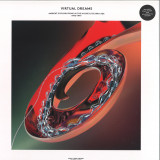
Music From Memory is delighted to be turning 50 with a special release: MFM050 - V/A - Virtual Dreams: Ambient Explorations In The House & Techno Age, 1993-1997 (3xLP/2xCD). The first in a series of compilations, alongside more in depth artist-focused releases, Virtual Dreams will delve into music produced during the 1990’s that redefined the boundaries of ‘Ambient’. This was music that explored the possibilities of Ambient music within a new setting, created often by House & Techno music producers for a world beyond dance floors but made very much with the pre and post-clubbing listener in mind.
When House and Techno exploded out of America in the mid 1980s a whole generation was redefined not only musically but also culturally and chemically speaking. Peaking, quite literally, with a second ‘Summer of Love’ in 1988, millions of young people across the world would experience the life-changing ups of a brave new world but with it of course came the downs; enter the concept of a ‘Chill-out’ room. Whilst early Chill-out rooms lacked a specific sound and were often soundtracked by music such as reggae and soul, slowly young Techno and House producers themselves would become increasingly interested in developing a futuristic ‘Ambient’ soundtrack to a world beyond the thud of the main room.
‘Ambient’ in this new age now though had sharper teeth than in Brian Eno's key text for ‘Music for Airports’, instead here the sounds were the mode of transport rather than the backdrop. While the melodies were pretty, the soundscape steered away from the pastoral, dreaming of outer-space and technology as opening up exciting new dimensions. Much like in the first Summer Of Love; the musicians were again exploring psychedelic, mind-altering and transcendental possibilities of music. And also much as in the first Summer Of Love, a psychedelic visual language would accompany the music. Though now the tracks could be accompanied by music videos, utilising early CGI techniques, they would look almost entirely to the future: envisioning technology, nature and humanity intertwined in a new Utopian future. Virtual Dreams of a better world.
From Ambient and early Chill-out classics, to lesser known one-off projects, as well as Ambient deviations by some of House and Techno’s leading producers, Volume One of Virtual Dreams features tracks by Bedouin Ascent, LA Synthesis, LFO, Marc Hollander, Mark Pritchard & Kirsty Hawkshaw, Richard H. Kirk and more.
To celebrate our 50th release the first 1000 copies include a holographic 'Virtual Dreams' sticker plus a special insert poster with artwork by Victoria Pacheco and design by Steele Bonus.
Paul Wise aka Placid is the driving force behind ‘We’re Going Deep’ – a thriving online community and record label that keeps you coming back for more. Born out of a lifelong affair with the many shades of electronic rhythm and an obsession for collecting records since 1988, Paul is known and respected by many in the realms of underground House and Techno. Renowned for making hips and feet move at parties, clubs and fields across the UK and beyond over the last few decades.
As a label owner, his mission couldn’t be clearer - releasing new music for heads of all persuasions. Fresh cuts aimed squarely at the dance floor, front room or even just your headphones. Rather than staying too hung up on the past, he continues to serve up the freshest in Acid, Electro, Techno, Deep House alongside sweet slices of Electronica.
Sticking to the format of 4 superlative cuts from equally talented producers, the quality remains unquestionably consistent on Volume 8 of his various artist series. Kicking off A1 in style with a family affair from Acid House aficionado Affie Yusef and his daughter Leila, ‘Dublovr’ is a Class A slice of pure late night chug that rides clockwork rhythms to a rolling bassline. As dubbed out synths ring out to lift you skywards – eerie sweeping undertones add another dimension. Tried and tested since the summer season, the added layer of a TB-303 brings everything nicely to a head. Not to be outdone, Bristol based Electro emissary Zobol delivers a pure slice of machinist joy on A2 ‘Sense The Consesus’, showing his ability to finesse and balance uplifting melodies with warm synthesis on this finest of jams.
Over on the flipside, Maltese producer Acidulant takes up the reins with the hushed tones of ‘The View of Her Shade’ on B1 – a thoughtful excursion into electro hinterland that’s a textbook lesson in making more with less. Last but not least, mysterious I Love Acid affiliate Type-303 turns out an exquisite IDM inflected serving of woozy broken Electronica on the mysterious ‘Knowhere’. Steeped in rippling melodies and aquatic
High Focus Records are excited to share a new full length offering from prolific Brighton based producer Mr Slipz, this time with a fresh label signing, Australian rapper Nelson Dialect. A landmark release and signing for High Focus with Nelson being the first international signing on the label. UK listeners might have first heard Nelson collaborating with Verbz & Mr Slipz on the song ‘Hope’ from their acclaimed LP ‘Radio Waves’ released on High Focus in 2020. Nelson has a cult following in his own right in Australia, and previously released music on the legendary U.S label Fat Beats to great acclaim. Now teaming up with one of the most exciting and respected UK producers, Nelson & Mr Slipz deliver ‘Ever Since’. A statement piece by two artists with well over a decade spent on their craft which sounds as urgent and refreshing as if it were their first time releasing music. The album’s title is a reference to the endless quest for a timeless sound, reflecting the creative partnerships which spark from a seemingly forever existing thread of music. The two artists crossed paths whilst Nelson was on tour in Brighton, and a chance introduction to Slipz made this album a reality. As fate would have it, due to a cancellation of plans and changing of schedules during Nelson’s tour, the pair ended up in the studio for 8 days straight together which is when the bulk of the album was created. They each saw this as a cosmic alignment and thus played into the albums astrological artwork themes and overarching concept. Striving to capture the lightning in a bottle moment, what resulted musically on this album was an inspired surge of energy and intense creative output that is felt across the entire LP. Equal parts personal and lyrically dextrous, Nelson explores a multitude of concepts over the hard hitting drums and jazzy samples producer Mr Slipz is renowned for through his previous work with artists including Verbz, Kofi Stone, Vitamin G & Datkid among many more. The album features a slew of impressive guest verses including label mates Vitamin G & Verbz on the emphatic ‘Oxford Scholars’. Two legends Jehst & Confucius MC combine on ‘Smooth Ride’. Bronx pioneer & D.I.T.C legend A.G delivers a show stopping verse on ‘Trembling the Marrow’. There are hypnotic singing performances by Indira May on ‘First Date’ & ‘Open Book’ as well as Hiatus Kaiyote back up vocalist Jace XL on the soul stirring anthem “Figure Out What’s Right”. U.S rappers SickInTheHead & Cazeaux O.S.L.O round out the impressive guest list on the album with their inspired verses. Listeners caught their first glimpse of the duo with their debut single ‘Only Just Begun’. A whirlwind 3 verse tune showcasing the relentless wordplay and imagery Nelson is regarded for over a moody, hard hitting Slipz production. With a buzz already around what Nelson Dialect & Mr Slipz are brewing, the duo have just released their second single ‘Oxford Scholars’ featuring label mates Vitamin G & Verbz
Charlotte de Witte, without doubt one of Belgium's fastest rising talents in the techno circuit, and known from two strong EP's on Tiga's Turbo label, makes her debut on OFF.
The EP starts off with 'Trip', aptly name due to its cinematic sound design and arrangement. Charlotte's trademark use of vocals ooze character, and haunting synths complemented by a laidback but steady drum-foundation are the ingredients of this track.
Sweden's Techno-legend Cari Lekebusch delivers the first remix, a functional and linear interpretation, which is sure to be heard on festival dancefloors during the late summer.
TWR72 of Amsterdam, themselves very much what you would call a 'current breakthrough act', are responsible for remix number two, a contemporary interpretation based on syncopated rhythms.
The EP is completed with 'Repeat', a reduced drum-tool built around a repetitive vocal hook.
Altogether a strong statement of a promising young artist and another proof of the ongoing evolution of OFF Recordings.
KingUnderground presents a stunning collection of 8 releases pressed onto 7” vinyl from the Cavendish Music catalogue. Paying homage to the genre of Library Music, furthering its exposure to a new generation of listeners.
Library Music experienced its heyday in the 60s and 70s, as thousands of instrumental tracks were produced by musicians and composers for the purpose of placements in Radio, Television, and Film. This rich piece of European music history would go on to inform genres to come and speak heavily to the Jazz, Funk, and Hip Hop communities of the future.
This was often a musician's first opportunity to become a composer, or what most would commonly know now as producer of music. These composers would work with a stable of musicians to record 100’s of tracks that would go into a publishing Library. The pieces of music were recorded quickly and deliberately. The composers, musicians, and engineers understood their role in the process, it was an act of discipline amongst all involved. Often the composer was given a brief on what the end goal was for the client. The specifics would include tempo to lock into, song ending time, ect.
Never before have these tracks from the Cavendish Music Library been pressed on 7” vinyl at 45RPM. In all there will be 8 individual 45s, licensed from Boosey & Hawkes & Cavendish Music Library. The collection includes compositions by Tony Kinsey, John Scott, Sam Fonteyn, Ray Davies, and more.
There’s a boldness to Library music. It's in the forward nature of where the drums sit in the mix and the percussive playing of the keys that gives you something to grab hold of, it feels grounded yet exciting. It’s music beamed in from a different galaxy!
Weorus is back. This time with four deeply minimalistic tracks.
The opening track comes with Andrea Ferlin’s masterpiece “TRK”. The evolution of the sound rising in it uplifts the sense of a deeper inner self. Perfect meditative notes bound together with miscellaneous hi-hats and organic tones.
The journey continues with Neem’s “Joke or serious”. Master Neem knows well how to touch souls and push the right buttons. The track is an evolution of a higher time space perspective. Listen carefully, it will change you.
Fabrizio Siano’s “L’erosione monometrica” flips the vinyl of the B side. Constant evolutionary and revolutionary sound design brought together with majestic writing. The micro minimalistic approach stands out in front of a constant kick and bass roll. The background piano gives the right atmosphere for a newer meaning of the track.
To close the 12” is Dragosh’s “Kardiomomo”, a one shot production that brings out drum based percussion throughout the track. Vocals and drifting concepts melt together with the less electronic touch of a piano. Perfect for afters and sophisticated mixes.
Weorus strikes again.
For this uniquely personal retrospective spread over twelve vinyl discs, Sven Väth takes us back to the early days of his DJ career. On What I Used To Play we meet great pioneers of electronic music, gifted percussionists, obscure wave bands, and innovative producers of a bygone 'new electronic' era. Rough beats and irresistible grooves from the identification stage of house, techno, and acid remind us not just how far electronic music has evolved over the past four decades, but how great it was to dance to EBM, techno, and house for the very first time.
If there is one protagonist of the electronic music scene who has remained curious, innovative and at the very cutting edge of music for over four decades, it's Sven Väth. His multi-layered artist albums and Sound of the Season mix compilations have been defining the genre for over two decades, and even today, he is constantly on the lookout for the next top tune to add to the highlights of his next set. At least, that's the case when he's not producing them himself as an artist or remixer. "Actually, it's always been part of my DNA to think ahead," and nothing had been further from his mind than looking back at his past, but when in spring of 2020 the international DJ circuit had to be scaled down to virtually zero, the 'restless traveler' suddenly had time. Time to stop and reflect on "how it actually was back then, at the very beginning of my career..."
"It was a great trip and with every track, beautiful memories came flooding back".
In the London apartment, he had just moved into, Sven has set up a "little music room", where he cocooned himself for several days, "to look way back for the first time and review my musical journey through the eighties, so to speak."
The interim result was six thematically oriented playlists with a grand total of 120 tracks from 'early 80s' to 'Balearic late 80s', together with excursions into afrobeat, European new wave, and EBM sounds and a few epochal techno/house tracks from the USA in between. From these 'Best of Sven Väth's favorites', the project What I Used To Play crystallized. Sven remembers how the Cocoon team reacted to his proposal: "They found the idea of making a compilation out of it MEGA from the beginning and everyone said 'Sven, go for it', but then, of course, the work really started, namely, to clear the rights and to get clean sounding masters of the up to 40-year-old tracks. There was also disappointment, of course. We couldn't clear certain titles because the rights holders in the USA had fallen out with each other or simply disappeared from the scene. In short, it wasn't easy, but now I can safely say we got the most important tracks."
Finally, after two years of research, curation, design, and administrative fine-tuning, the "little retrospective" from 1981 to 1990 is available. The exquisitely packaged, and three-kilo heavy box set is not only physically impressive, WIUTP is also the definitive record of Sven Väth's musical development. On each of the twenty-four sides of vinyl, you can trace track by track, what influenced him during which phase, and how he took off as a DJ from his parents' Queen's Pub straight into the spotlight at Dorian Gray. There and at Vogue (later OMEN), Sven became the style-defining player in the DJ booth that he still is today.
1981 - 1990: Future Sounds of Now
In the early eighties, the crowd in clubs like Vogue and Dorian Gray danced to what nowadays we call 'dance classics' - mainly disco, funk, soul, and chart pop. It was up to a new generation of DJs, including Sven Väth, the youngest protagonist in the Rhine-Main area at the time, to create their own club-ready music mix. Good new tracks and potential floor-fillers were rarities that had to be sought out and found, in order to prove oneself worthy.
Without MP3s, internet streaming, or other digital download possibilities, music didn't just gravitate to the DJ, instead, it had to be tracked down. In well-stocked record stores in Frankfurt and Wiesbaden or even in Amsterdam, London, or New York, Sven and friends sourced the material for countless magical nights. On WIUTP we can follow Sven's very personal journey through this wild, innovative era in which synth-pop, funk, hip-hop, and disco were successively replaced as 'club music' by house, techno, acid, and breakbeat. By the end of the decade, it was clear to see that these once exotic 'fringe' phenomena would soon become 'mass' phenomena.
Early 80s
Dirty Talk by the Italian-American duo Klein & M.B.O. represents the most innovative phase of the Italo-disco genre in the early eighties like no other track. Mario Boncaldo (I) and Tony Carrasco relied entirely on the original synthetic drum and percussion sounds of the Roland TR-808, coupled with the raunchy vocals of Rossana Casale and guitar accents of Davide Piatto. Of course, other tracks from this period were also influential in style, most notably Unit by Logic System, which worked as the perfect soundtrack to the laser lighting system at the legendary Dorian Gray club. With stomping beats and robotic rap interludes, Bostich by Yello also belongs on Sven's eternal playlist - after all, it caught the attention of Afrikaa Bambaataa, who invited the Swiss duo to perform at the Roxy in New York in 1983.
EBM Wave - Mid 80s
From today's point of view, the almost ten-minute-long, downtempo track Giant by Matt Johnson's band project The The, would probably not be considered an obvious club classic. However, a closer (re)listen reveals the rhythmic intricacies of the percussion overdubs by JG Thirlwell (aka Foetus) on Johnson's composition, and it becomes clear why this exceptional piece of music is one of Sven's absolute favorites. Other classics from this phase include Kaw-Liga by the mysterious The Residents, the hypnotic-synthetic Our Darkness by Anne Clark (and David Harrow), and last but not least, the somber, monotonous anthem Where Are You? by 16Bit, one of Sven Väth's projects together with Michael Münzing, Luca Anzilotti from 1986.
US House - Late 80s
You certainly can't talk about Chicago house without mentioning Frankie Knuckles. The resident DJ at the Warehouse not only gave the name to an entire genre, but also produced epochal floor fillers on the Trax label like the timeless Your Love, sung (and moaned) by Jamie Principle. Acid house protagonists Phuture also hail from Chicago, and on We Are Phuture (also released on Trax) we hear the chirping acid sounds of the legendary Roland TB-303 in full effect. Another featured classic is No UFO's by Detroit's Model 500 aka Juan Atkins, who is rightly considered the 'Godfather of Techno' even if the genre-defining track from 1985 still breathes with the spirit of hip-hop and electro from the first breakdance era.
Afrobeat
Le Serpent, by Algerian-born Abdelmadjid Guemguem, is a track that sounds completely different from everything else on WIUTP. Made in 1978, it's a monumental, rousing groove created without bass or synths, just with five congas! Even though Guem sadly passed away in 2021, his immortal, acoustic beats are understood all over the world and will continue to enrich many thousands of DJ sets for years to come. Another classic that not only Sven appreciates beyond measure is Hugh Masekela's Don't Go Lose it, Baby. In addition to being one of the most important jazz pioneers, the trumpeter and freedom fighter from Johannesburg was very experimental, integrating electronic sounds into his music in later years, in a similar vein to Miles Davis and Herbie Hancock. Dutch jazz pianist Jasper van't Hof's afrobeat project Pili Pili has also aged well. The trance-like, almost sixteen-minute-long track of the same name, manages to fill a whole side on the seventh of twelve vinyl discs in the WIUTP box.
UK-US-Euro - Late 80s
Time for a change of scene, in the truest sense of the word, and from a musical perspective, this section is like landing on another planet. First up is Andrew Weatherall's classic remix of Primal Scream's Loaded, featuring the iconic Peter Fonda sample (lifted from the 1966 biker film Wild Angels) that came to personify the mood triggered by the British Second Summer of Love in the late eighties: "We wanna be free to do what we wanna do, and we wanna get loaded...". This period also saw the emergence of M/A/R/R/S whose only single, 1987's Pump Up The Volume, became a club classic with support from DJ legend CJ Mackintosh. In this most eclectic of sections, we also encounter New York house and reggae producer Bobby Konders and his seminal Nervous Acid.
Balearic - Late 80s
Those who know him, know that Sven had already lost his heart to the 'magic island' of Ibiza as a teenager, so with that in mind, the WIUTP project couldn't end without a Balearic chapter. Inspired by Manuel Göttsching's E2-E4, the immortal, eponymously titled Sueño Latino belongs in there without question. Equally popular on the island was, and still is Break 4 Love by Raze, which thinking about it, would also fit perfectly into the house chapter. Last, but not least, there's an overdue reunion with Sven Väth himself, in his role as frontman of the successful Frankfurt trio OFF. Together with Michael Münzing and Luca Anzilotti (later of Snap!) this 'Organization For Fun' created the off-the-wall club hit Electric Salsa in 1986 which incidentally turned into an international chart smash, putting Sven in the enviable position of having to decide between pop stardom and a DJ career. Well, we all know how that decision turned out and the rest, as they say, is history. A not insignificant part of his story is What I Used To Play. Enjoy!
Tod Dockstader's Aerial series, an electronic/drone masterpiece, is cherished among fans of the artist's work and this second volume is available in an audiophile quality double LP edition.
Tod Dockstader's Aerial series is sourced from his life long passion for shortwave radio. Dockstader collected over 90 hours of recordings, made at night, and comprised of cross signals and fragments plucked from the atmosphere.
Opening with airwave drones, Dockstader gradually allows elements to slowly come and go, summoning an ominous atmosphere of ethereal cloud clouds. Malignant placidity continues, giving the feeling of eavesdropping upon late-night audio activity not unlike discovering number stations while sweeping the dials. These sounds pull you in as their density and rhythms come and go.
Backward voices, deep echoing choruses of conversations flowing under the surface, ocean sounds, pulsing electro-rhythms, all seem to be created via the collaging of many hours of source recordings. A masterwork of collage and juxtaposition by an overlooked pioneer of American electronic music.
Artwork by John Brien (Imprec) is inspired by the propagation of shortwave radio signals throughout the earth's atmosphere.
"This return of Dockstader is something to cherish, not just because his output has been so limited and scarce but because what we do have is so intriguing, persuasive and cliche-free; the music of an inspired explorer who trails in nobody's slipstream." The Wire
"One of the great figures of musique concrete composition." Dusted
The Aerial project
I've written before of my interest in shortwave radio, in the notes to the Quatermass CD. Also, in the notes to the Omniphony CD (which has my first "Aerial" mix, "Past Prelude," in it), I mentioned "The Aerial Etudes," which was my working title for what became the three CDs you have. And, at the end of an interview with Chris Cutler (which can be found in the "Unofficial TD Website"), the piece I mentioned I was starting to work on at the time became Aerial.) When I was very young, people got most of their entertainment from radio. They called it "playing the radio," as if it were a musical instrument. That's what I've tried to do in this piece. About this time, a few people encouraged me to look into using a computer for this work.
I'd never used one, but I saw it would allow me to keep my mixes digital - no more transfer losses. So, at the end of 2001, I got a computer and an editing program for it, and spent what seemed a long time learning it. I began selecting mixes and loading them into the computer in late March, 2002. Out of the 580, I selected 90 "best" mixes - eventually reduced to 59, the ones on the CDs. Finally, in assembling the CDs, I followed David Myers' suggestion to allow each piece to flow into the next - making a continuous journey to the end. Tod Dockstader, 14 september 2003
About Tod Dockstader: Dockstader moved to New York in 1958 and became a self-taught sound engineer and sound effects specialist and apprenticed as a recording engineer at Gotham Recording Studios. It was around this time that he started to use his off-work hours to experiment with mixing and manipulating sounds on magnetic tape (musique concrète). By 1960 he had amassed enough material to assemble his first record Eight Electronic Pieces which was released on the Folkways label in 1961 (this would later be used in the soundtrack of Fellini’s Satyricon). The last of the eight pieces was later re-worked into his first stereo piece. In 1961 he applied to use the facilities at the Columbia-Princeton Electronic Music Center and was denied access by Vladimir Ussachevsky. Ussachevsky’s official reason was the “overstrained” scheduling of the studios, although many suspect that Dockstader’s lack of academic training was a factor in the decision. He continued to create music throughout the first half of the 60s, working principally with tape manipulation effects. His last piece at Gotham was Four Telemetry Tapes in 1965, after which he left to work as an audio-visual designer on the Air Canada Pavillion at Montreal’s Expo ‘67. It was around this time in 1966 that some of Dockstader’s pieces were released on three Owl L.P.s, and his work became known to a larger audience. He achieved modest recognition and radio play alongside the likes of Karlheinz Stockhausen, Edgard Varèse, and John Cage.
It is a huge honour to present the Disco Gospel 12”, curated and edited by Chicago's Marc Davis and Sadar Bahar. Featuring two under-the-radar disco / gospel fusion tracks that have been given a new lease of life courtesy of these masters of their craft.
We first came to know Marc through his always on-point Black Pegasus record label, which he’s been running since 2006. As a renowned international DJ, record collector, and an integral part of Chicago's underground music scene, we knew anything he sent our way was going to be serious and he didn’t disappoint. Joining forces with Sadar Bahar (Soul in the Hole), who is himself a gospel and disco legend and a DJ's DJ favourite across the globe, they dug deep and put us onto two absolute gems from their beloved collections. As DJs who play a wide range of genres, their ability to spot the real heat within any sound has placed them at the top of their game. As Sadar puts it, "We are always digging for records and these fit the criteria of disco and happen to be gospel”.
First up is the feel-good joint 'I'm So Happy' by Fountain of Life Joy Choir Under The Direction of Kevin Yancy. Originally released in 1978 on a subsidiary label of T.K. Productions entitled Gospel Roots, the clue is in the title with this one. It's an unadulterated, uplifting, joyous dancer. Marc and Sadar’s fizzing edit brings out the best elements of the song and extends them. Working the addictive vocal hooks and building the funky instrumental grooves produces a spirit-lifting mood that is bursting with enough energy to light a fire under any dancefloor.
'Optical Illusion' on the flip, takes the tempo down, but doesn’t let up on the vigour. It’s a driving, stomping anthem that features another lung-busting vocal performance. Working with a live recording of Rev. Charles H. Nicks and The Baptist Assembly Of Free Spirit Churches Mass Choir, this one proves to be the perfect accompaniment to the ecstatic vibe of the A-side. The duo has condensed and heightened the drama of the song and added some light-touch production elements to clean up and enhance the sound. We guarantee this will be filtering its way into the sets of discerning DJs worldwide.
Marc described the selections best when he succinctly put it like this, “We both knew these were two heaters on our first listen”.
We completely agree, and with recording and engineering contributions from Tone B. Nimble (Soul Is My Salvation) and Rahaan, here we have Chicago royalty creating an unmissable release that celebrates the crossover of dance music with the musical traditions of the church.
Mal-One’s seventh single sets out to tell the listener in 3 minutes and 21 seconds, everything that it is not. But in doing so by default or design, becomes everything it says it is not!!!
So here it is for your listening pleasure. The non-Punk, Punk single. As Mal-One is asked at the end of the song what this song is all about…seems he runs out of time….
Hope you enjoy the illusion…..
Let me tell you what these songs all about…
This is not a song about Young Parisians
This is not a song about an Outside View
Ripping Her to Shreds, Hong Kong Garden
One Chord Wonders or a Freak Show
This is not a song about Complete Control
This is not a song about Less Than Zero
New Rose, Defiant Pose
Sex & Drugs & Rock & Roll
This is not a song about the Blitzkrieg Bop
This not a song about Top of the Pops
God Save the Queen, Something Better Change
I’ve Got a Right or Life’s A Gamble
This is not a song about London Girls
This not a song about Identity
An Alternative Ulster, Baby Does Good Sculptures
Or Everybody being Happy NowaDays
Hey Mal-One…..Yeah
So what’s this song about ?
Do you really want to know ?
Yeah well let me tell ya
In October 1974, the first number of “L'Indépendant du Jazz”, a small self-produced magazine DIY -before punk supposedly invented the concept- was launched by Jef Gilson, Gérard Terronès, Jean-Jacques Pussiau and a few other specialists of a different kind of jazz in France, it looked at the already long career of Jef Gilson and in detail at the album with saxophonist Philippe Maté:
“The ‘Workshop’ is, with Philippe Maté (alto-sax), an undeniable success. Maté is genuinely ‘the’ most inventive French saxophonist since Michel Portal burst onto the jazz scene (who has also worked with Jef Gilson on both “Enfin” and “Gaveau”).”
Even though the author of the article is a mysterious I.H. Dubiniou, and it is difficult to know if it is a real person or a pseudonym used by one of the merry bunch, it is also tempting to hear it as what Jef Gilson really thought about his new discovery. Even more so as the two men would work together over a long period, as Maté became one of the key figures of Gilson’s Europamerica orchestra up until the 1980s.
Philippe Maté had started to make a name for himself with the Acting Trio when they released an album on the BYG label in 1969, and he was also one of the regular sidemen for the Saravah studios (he can notably be heard on albums by Higelin, Fontaine or his cult duo album with Daniel Vallancien).
The album was recorded on 4 February 1972, at the Foyer de Montorgueuil, where Gilson had set up his studio, with more or less the same team found on “La Marche Dans Le Désert” by Sahib Shihab + Gilson Unit (recorded ten days later). This was drummer Jean-Claude Pourtier and pianist Pierre Moret (regular Gilson accomplices since “Le Massacre Du Printemps”), alongside Maurice Bouhana and Bruno Di Gioa on various percussions and/or wind instruments. On bass is Didier Levallet, of the now mythical Perception, (Jean-François Catoire would replace him with Shihab) and Philippe Maté who took top billing, rather than the American saxophonist afterwards. The two albums are however quite different. This “Workshop” is more abrasive, more free. Made up of two long improvisations each of over 22mn, “L'Œil” on side A and “Vision” on side B (Gilson specialists would recognise the nod to one of his albums from the 60s), the album plunges you into the depths, attempting to drown you in electronic waves, dragging you back to the surface by the collar, giving you a good shakedown, before showing you the light, leaving you breathless on the shore after 46mn of the most intense music French has to offer. “An undeniable success”, they said. (by Jérôme "Kalcha" Simonneau)
Nous'klaer audio presents Oceanic's debut album Choral Feeling. A rhythmically diverse electronic album full of sonic explorations and beautiful moments, all bound together by a sense of colour. The album touches on the core of what music can be for: a sense of togetherness, finding meaning in moments, a way to cope with loss and soundtracking dreams about a different future. The music on this album reflects that in the most personal way. Each track consists almost entirely of his friends' voices, recorded and transformed into the sounds you'll hear. No, you can But how Just think of anything How can it just be anything Why does it need to be more Because they're afraid of it. They're not afraid of the words Then what are they afraid of The power behind the words How can words have power If you say something, only you, maybe I can hear it. Perhaps someone sitting over near that tree can hear it too. If we say it together, maybe we can reach past that tree and reach that rock. But if us and a million others say them same thing, all at the same time. Then every tree and every rock everywhere will hear us. Trees and rocks don't have ears. No they don't but they do. Why don't they just cover their ears Because then they need to do that every time we use our voice. And use them we did and use them again we shall. They got tired of covering their ears, so they decided to cover our mouths. Won't they hear us now? We're safe here. For how long will we be safe? For now. Perhaps until later. Just try. Read the words like I've written, but do so like the birds in the trees. You are my sunshine A little louder You are my sunshine, my only sunshine, you make me happy When skies are grey You'll never know dear How much I love you Please don't take my sunshine away Beautiful. Shall we go teach the others When will we have enough to free ourselves We'll always have more than they do. We only need to not forget I'll never forget Sing it again. Artwork by Bob Verhoeven. Text by Gregory Markus.
A little masterpiece of soul afrofunk with carpets of dreamy keyboards on their swirlingly seductive sound and their really cool voices. The second album of BLACK CHILDREN SLEDGE FUNK BAND released in 1978 is a delight. Repressed for the first time.
'Intensely textured, interlocking guitar riffs weave together on New Bright Object, the debut album from Berlin and Edinburgh-based duo I’m Not You.
Working under the name I’m Not You, artist Alex Gibbs (bass & vocals) and sound designer Niall McCallum (guitar & drums) have honed a sound that draws in equal measure from jazz funk of Weather Report and the math rock of Don Caballero. Their debut album, New Bright Object is their most developed statement to date, an intricate, robust and unique collection of songs born from serpentine jam sessions in rural idylls.
The duo make no secret of their admiration for bands like Battles and Tortoise. They reference Jim O’Rourke’s lounge numbers and the droll lyricism of Modern Lovers’ Jonathan Richman. There’s a touch of Vini Reilly in their sparse and serpentine guitar lines. A hint perhaps of Mogwai. All these names place New Bright Object within a constellation of albums made with bigger budgets for wider audiences.
New Bright Object opens In a flash of light, comet-like, with the sound of ‘Mr. Wind- Up Bird’. The threads they weave are full with intent, as moments of density rise like hills from the track’s quieter valleys. It’s easy to imagine the pair looking out over the rolling fields of the garden studio in East Lothian where they recorded the album, as they assiduously try and draw their own landscapes in sound.
Similarly, there is a crispness to ‘A Certain Arrangement Of Atoms’ - every clipped hat, rim-shot snare and tightly wound tom a fine-tipped mark on the score. It is intricate and precise, a result perhaps of Niall’s attention to detail. Then there is the piano, Alex’s grandmother’s, slightly out of tune, which adds a few expressionist strokes to this pointillist composition. The piece loosens, until all we’re left with is the bass.
Although the album orbits around the pendulum sway of ‘The Older I Get’, it is ‘What Cats Think About’ that stands out most. That it does is by design – a nod to the Sun City Girls and albums that like to throw their listeners a curveball every now and then. Pleasantly ramshackle, confusingly domestic, agreeably strange.
All this speaks to the spirit of the album and the creative relationship between two best friends whose differences seem to have been the only things they could agree on.'
Samuel L Session and Van Czar drop a four-track techno EP on Unrilis that showcases a deeper and more hypnotic sound with dystopian atmosphere and driving percussion. Rino Cerrone launched the Unrilis record label over 15 years ago, and part of the label's back catalogue is its iconic Rilis series. 2022 sees the relaunch of the Rilis series that has a focus on underground DJ tools with raw analogue sounds. The Rilis series was originally launched in 1999, and was restricted to a concept on only 10 releases, each pressing a limited run of vinyl. It was hugely popular with each one often selling out in only a week and picking up DJ support by people ranging from Jeff Mills to Richie Hawtin. Those first 10 releases were focused on Rino Cerrone's own music, but since his retirement from the industry, the revitalised Rilis series will welcome other artists whose sound matches the label's underground concept.
This latest release in the Rilis series features collaborative tracks by Samuel L Session and Van Czar who have previously teamed up for releases on other imprints ranging from Marco Bailey's MB Elektronics to Ben Sims' Hardgrooves. Both are also successful solo artists, Sweden's Samuel L Session being well-known for his headline DJ sets at clubs around the world, along with the music he has released via iconic imprints such as Slam's Soma, Shlomi Aber's Be As One, Len Faki's Figure and Emmanuel's ARTS plus his own imprints SLS, Cycle, New Soil, and Klap Klap Belgium's Van Czar is also an accomplished DJ who is well-established across Europe and he has also released music on respected record labels ranging from Kevin Saunderson's KMS Records as well as the classic imprint, Yin Yang.
'Air Raid' opens the release with its eerie pads, spine-tingling melody loop and machine-driven percussion. It's got a raw aesthetic with dramatic claps and snare fills that add to the building suspense.
'18-022' is a dark and stripped back track with modulating synth textures layered with fast-flowing high-end percussion. Its pounding kick drum and clap rhythms add rigid structure to its expansive atmosphere and dance floor focused groove.
'Route 200' has thrashing cymbals punishing claps and rippling pads that create a stripped back groove submerged in deep atmosphere. Rich with analogue textures and gritty sound design, its relentless energy is tailor made for club sound systems.
'Objectivism' closes out the release with it's funky bassline and bleeping melody. Whirling textures and fluttering percussion maintain an unrelenting tension that's driven forward by the pounding kick drum.
Lined up next on Toolroom, we’re set to welcome the return of WEISS to the label 3 years after his last outing. Most known for his certified gold, 2018 smash-hit ‘Feel My Needs’, which received critical acclaim, topping 5 international music charts at #1, and earning DJ Mag’s ‘Best Of British Winner’ in 2018. WEISS himself has locked in an incredible collaboration with legendary Soul act The Jones Girls, using their classic record ‘You Gonna Make Me Love Somebody Else’ to create the club stomping cut that is, ‘I Need Some’.
A prolific DJ and producer, WEISS has released cuts on DIRTYBIRD, Universal, Island Records, D4 D4nce, Glitterbox and Toolroom along with remixing A-list artists including Kylie Minogue, Robyn, Calvin Harris, and Rag n Bone Man to name a few. When it comes to the House Music elite, Weiss is amongst some of the best there is, touring worldwide and sharing stages with Armand Van Helden, Todd Terry, and MK.
Of course, The Jones Girls are an act that needs no introduction, the legendary Philadelphia trio of sisters are the vocalists behind the classic Soul cuts ‘Nights Over Egypt’ and ‘Who Can I Run To’, released on the renowned Philadelphia International label.
Backing singers to both Aretha Franklin and Diana Ross during the 1970’s, The Jones Girls have left their mark on Music History and still influence artists and vocalists alike today.
With a passion for all things Soul, Disco and R&B, WEISS has officially fulfilled a childhood dream working with The Jones Girls to create ‘I Need Some’. This is a Disco House focused cut that pays homage to the original record ‘You Gonna Make Me Love Somebody Else’, whilst reinterpreting the sample and making it club ready for dance floors.
Nearly 10 years on since his last solo LP, Berlin techno icon Marcel Dettmann arrives on Dekmantel with an expansive album captured in a flash of inspiration.
In many ways Fear Of Programming is a reflection on the artistic process – the critical hurdles one has to overcome, the constant strive for originality, the ability to capture inspiration in its pure moment of inception. Bar the closing title track (and we all know Marcel loves a surprise closing), these 13 tracks came together during a period in which our hirsute host was able to immerse himself in studio practice and set the intention to record an album’s worth of material every single day. From the resulting mass of work there were many options to choose from, and Fear Of Programming stood out as one of the most complete statements on Dettmann’s approach in the here and now.
Unconcerned with an overarching concept, it was the work in the studio which drove the musical direction. No labouring over knotty arrangements, no painstaking mix downs – just honest expression, a moment caught, a groove locked, a stroke of synth sent pirouetting over a cavernous bed of texture. The results are varied, and while you might well hear plenty of bruising machinations in line with the techno Dettmann has made his name on, there are plenty of other shades expressed across the album.
Ambient sojourns, beatless epics and angular electronica have equal footing with strident, floor-friendly workouts. Standout piece ‘Water’ offers an icy ballet of swinging minimal and drip-drop melodics fronted by Ryan Elliott on lesser-spotted vocal duties, urging, ‘give me a sign, just a little something to let me know that you’re mine’. It’s playful, but still underpinned with the sincerity that comes with Dettmann’s work.
Running on instinct, Dettmann presents an honest version of himself in the here and now, speaking through the sonics and not over-thinking the results. His decades of experience helming a thousand techno parties speak for themselves, while his evolution as a musical entity through collaboration and his own BAD MANNERS label demonstrate his appetite for change. Indeed, the working method which resulted in the album also spurred him on to create a live set beyond his well-established DJ practice. Without resorting to a conceited overhaul, Fear Of Programming opens up the idea of what Dettmann represents in the modern techno landscape.
SAISEI founder Junki Inoue continues his vital archival work uncovering the riches of Japan’s distinctive electronic music scene and bringing them to new audiences around the world.
The PMA EP compiles four dynamic tracks recorded around 30 years ago by the duo of Shigeru Nakamura (drums/vocals) and Mikio Kato (synths) aka B-2DEP’T.
Nakamura and Kato’s first album as B-2DEP’T, Products Plus, appeared on cassette in 1993 on Trigger Records, the predecessor label to Transonic (given a retrospective on SAIS004). Its bright yellow and blue retro-futurist artwork – which is echoed in the design for this reissue on SAISEI – matched the sounds held within: inventive, out-of-the-box dance music blending overseas influences with an idiosyncratic Japanese sensibility.
Two tracks from Products Plus appear on this EP, All tracks re-edited by Junki Inoue and regular collaborator Yuzo Iwata for vinyl extended play and available now for the first time on vinyl. ‘Clockwork Giant Panda’ appearing in a version co-produced with Yoshinori Sunahara (ex - Denki Groove), merges a breezy US house groove and bassline with twinkling, almost parodic Japanese keys that act as a kind of meta commentary on Western perceptions of Japan (a concept pioneered by Yellow Magic Orchestra). The two parts of ‘BSMH’, or Body Sonic Mental Health from ‘Products Plus’, were originally remixed by Daishi Hisakawa of Tanzmuzik, who draws on darker sounds from Europe and the UK: restless Depeche Mode synth harmonies spiral above a pacy EBM pulse, with robot vocals intoning the titular slogan. The package is completed by the unreleased track ‘PMA’, whose driving, bass-heavy mood falls somewhere between Sheffield bleep and the ambient techno of early Biosphere.
SAISEI is a Japanese word which translates to ‘reproduction’ and ‘to play’ (as in playing records). Japanese culture is widely known for its traditional nature just as much as it is for being forward into the future and this label’s concept does justice to exactly that. Having started digging for records as early as 16 years old, Inoue delved into productions from 1990s Japan to uncover these native gems. SAISEI’s core concept is to recapture and reintroduce unique pieces of Japanese electronic music onto vinyl, to an audience it never reached before as most of this music was only released in Japan.
The Lagaffe boys have a special one for you. Lagaffe 10 marks the 10th EP in our vinyl series and serves as a perfect way to end our 10th year in existence. To mark this occasion we are releasing a 4 tracker with our founders and label regulars.
The EP opens up with Cohen Social Club by Flexi Leifs aka Felix Leifur. Our man Felix lost his drum machines last spring but luckily he found a guitar and some drums. The track starts off with suspicious sounding guitar notes that somehow end up as pure beauty, giving hope in the darkest of places. Frodo with the ring stuff, if you know what I mean. Playful reverbs and echos give the tune the classic Felix Leifur feel to it!
Moff & Tarkin has the next track "Pure Fury", some breakbeats and cheesy disco vocals, why change a winning recipe?
Next up is "We are not alone " by label boss Jonbjörn. I think this is what Elton John meant when he said "thank god for those electro bangers!" Solid 909 drum work featuring dramatic chords and some original vocal work. If you can spot the sample write us on Soundcloud and you might win a year's worth of LaCafe Tales!
With "Að handan" Viktor Birgiss comes back to the label in style. Our mastering engineer described it as having the loudest kick drum in history, imagine that! Lo fi dub sounding drums interlaced with atmospheric chords, made for those late night intimate moments on the dancefloor, again Frodo with the ring stuff, if you know what I mean.
Superbly multifaceted nocturnal sound journey by prolific Swedish producer Peter Benisch, known under the name “Harmon Eyes”. Beautiful synth melodies, powerful drums: three techno/trance tracks from out of space. All tracks freshly remastered. Powerful, unique and must-have EP!
Ivor Cutler is loved by generations of fans - including Paul McCartney, Billy Connolly and Alex Kapranos - for his unique music and poetic humour. A phenomenal stage presence for 50 years, with a prolific output. Championed by legendary DJ John Peel for whom Cutler recorded 21 sessions. 'Privilege' was produced as a vinyl LP for Rough Trade Records in 1983 and has been unavailable for decades. The album is only one of two where Cutler collaborates with other artists. It is unique in that there is a second voice - singer Linda Hirst. Musicians Steve Beresford and David Toop play several instruments and produced the record.
(Produced, Arranged and Conducted by Claus Ogerman)
Not long after the dawn of her career, as a teenager in Rio de Janeiro, Joyce was declared “one of the greatest singers” by Antonio Carlos Jobim. Yet despite reputable accolades and the fact that she has since recorded over thirty acclaimed albums, Joyce never quite achieved the international recognition of the likes of Jobim, João Gilberto and Sergio Mendes, all of whom became global stars after releasing with major labels in the US.
There was a moment when it seemed she might be on the cusp of an international breakthrough. While living in New York, Joyce was approached by the great German producer Claus Ogerman. Ogerman had already played a pivotal role in the development and popularisation of Brazilian music in the 1960s, recording with some of the all-time greats like Jobim and João Gilberto, as well as North American idols like Frank Sinatra, Billie Holiday and Bill Evans.
"I met him in New York City, in 1977”, recalls Joyce. “I was living and playing there, and João Palma, Brazilian drummer who used to play with Jobim, introduced me to Claus. We had an audition, he liked what we were doing and decided to produce an album with us.”
Featuring fellow Brazilian musicians Mauricio Maestro (who wrote/co-wrote four of the songs), Nana Vasconcelos and Tutty Moreno, and some of the most in-demand stateside players including Michael Brecker, Joe Farrell and Buster Williams, the recordings for Natureza took place at Columbia Studios and Ogerman produced the album, provided the arrangements and conducted the orchestra.
But mysteriously, Natureza was never released, and what should have been Joyce’s big moment never happened. As Joyce remembers, “I returned home, but Claus and I remained in contact, by letters and phone calls. He was very enthusiastic about the album and tried to hook me up with Michael Franks. He wanted me to go back to NYC in order to re-record the vocals in English with new lyrics, which I actually wasn’t too happy about. But then I got pregnant with my third child and could not leave Brazil. And little by little our contact became rare, until I lost track of him completely. And that was it. I never heard from him again."
While Claus was known to be something of an elusive character, the album’s disappearance might also have been a result of timing. The Brazilian craze was coming to an end, making way for disco and new wave at the end of the seventies, and Ogerman struggled to find a major label interested in a new Brazilian sensation. Additionally, as Joyce mentions, it wasn’t quite finished. Ogerman wanted to add finishing touches to the mix and to record alternative English lyrics for the US and international markets - a critical artistic difference between Joyce and Ogerman.
As the military dictatorship’s grip on Brazil began to subside in the 1980s, Joyce had a handful of hits in her home county, including a tribute to her daughters ‘Clareana’, and the iconic ‘Feminina’ - an intergenerational conversation between mother and daughter about what it means to be a woman. But already a feminist pioneer, these successes were hard fought. Joyce had caused controversy as a nineteen-year-old when she became the first in Brazil to sing from the first-person feminine perspective, and the institutional sexism she faced was worsened by the dictatorship who would often censor her music. Even once the Junta was out of the way, Joyce found herself up against the male-dominated major record companies in Brazil, who sought to dictate her career and sexualise her image, before dropping her for refusing to play along.
A few years after the success of her albums Feminina and Agua E Luz in Brazil, Joyce’s music began to find its way to the UK, Europe and Japan, and “Feminina” and “Aldeia de Ogum” became classics on the underground jazz-dance scenes of the mid to late-eighties and early-nineties.
The full-length version of “Feminina” from the Natureza sessions was first heard on a Brazilian Jazz compilation in 1999 and “Descompassadamente” was licensed for a CD compiling the work of Claus Ogerman in 2002. Following these, word began to get out about an unreleased Joyce album with Claus Ogerman and the legend of Natureza grew.
Forty-five years since it was recorded, Natureza finally sees the light of day, as Joyce intended: with her own Portuguese lyrics and vocals. Featuring the fabled 11-minute version of ‘Feminina’, as well as the never before heard ‘Coração Sonhador’ composed and performed by Mauricio Maestro, Natureza’s release is a landmark in Brazilian music history and represents a triumphant, if overdue victory for Joyce as an outspoken female artist who has consistently refused to bow to patriarchal pressure.
***Disclaimer! While “Feminina” and “Descompassadamente'' were mixed by legendary engineer Al Schmitt and mastered from the original master tapes, the remaining five tracks are unmixed. Due to significant deterioration of the master-tapes, the best audio source for these tracks was an unmixed tape copy Joyce had kept of the recordings. The best care has been taken in the restoration and mastering of this release, but the sound quality may differ from other releases on Far Out Recordings. We advise listening to sound clips before buying where possible.