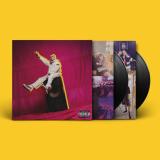
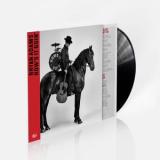
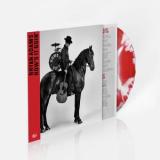
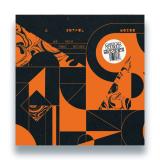
"Baby put that cheecky dress on_get your feet on the ground, shake your hips to the sound! We're dancing to the music!"_of THE MODBIRDS! Ladies & Gentleman, die Tanzfläche ist freigegeben! Spotlights an, Boxen auf Anschlag aufgedreht bis die rotierende Discokugel in 1000 Scherben zersplittert - hier kommt "Shards", der erste Longplayer der Modbirds. Einen berauschenderen Cocktail mit allerfeinsten musikalischen Zutaten wirst Du an keiner Theke finden! Der abwechslungsreiche Mix aus Ska, Soul, Reggae, Rocksteady, einer kleinen Prise Punk bis hin zu Swing und klassischen Big Band Elementen macht süchtig und vereint alles was Birdies, Rudeboys und sonstige Nachtschwärmer lieben werden. Nach ihrer Mini-LP "Spin it to win it" hat die 7-köpfige Big Band mit u.a. ehemaligen Mitglieder von The Porters und Los Placebos im Music Area Studio bei ihrem ehemaligen Bandkollegen Beagle 12 neue Songs aufgenommen und all ihre musikalischen Einflüsse und Vorlieben darin einfließen lassen. Ob Jamaica-Roots, Ausflüge in verschiedenen Waves of Ska-Äras, den typischen UK-2 Tone Sound nach Art von Madness bis Buster Shuffle oder eine einfach nur Spaß machende Reminiszenz an all die deutschen Ska-Bands von El Bosso bis Frau Doktor (mit dem einzig deutschsprachigen Song "Jogger"): Mit jeder Note und Takt merkt man diesem Album an: Die Modbirds leben und lieben diese Subkultur seit Jahrzehnten und kreieren daraus ihren eigenen Sound! Die 180g Vinyl-Edition kommt im Gatefold in klassisch schwarz oder silber mit mehrfarbigem Splatter. Limitiert auf insgesamt nur 300 Exemplare!
"Baby put that cheecky dress on_get your feet on the ground, shake your hips to the sound! We're dancing to the music!"_of THE MODBIRDS! Ladies & Gentleman, die Tanzfläche ist freigegeben! Spotlights an, Boxen auf Anschlag aufgedreht bis die rotierende Discokugel in 1000 Scherben zersplittert - hier kommt "Shards", der erste Longplayer der Modbirds. Einen berauschenderen Cocktail mit allerfeinsten musikalischen Zutaten wirst Du an keiner Theke finden! Der abwechslungsreiche Mix aus Ska, Soul, Reggae, Rocksteady, einer kleinen Prise Punk bis hin zu Swing und klassischen Big Band Elementen macht süchtig und vereint alles was Birdies, Rudeboys und sonstige Nachtschwärmer lieben werden. Nach ihrer Mini-LP "Spin it to win it" hat die 7-köpfige Big Band mit u.a. ehemaligen Mitglieder von The Porters und Los Placebos im Music Area Studio bei ihrem ehemaligen Bandkollegen Beagle 12 neue Songs aufgenommen und all ihre musikalischen Einflüsse und Vorlieben darin einfließen lassen. Ob Jamaica-Roots, Ausflüge in verschiedenen Waves of Ska-Äras, den typischen UK-2 Tone Sound nach Art von Madness bis Buster Shuffle oder eine einfach nur Spaß machende Reminiszenz an all die deutschen Ska-Bands von El Bosso bis Frau Doktor (mit dem einzig deutschsprachigen Song "Jogger"): Mit jeder Note und Takt merkt man diesem Album an: Die Modbirds leben und lieben diese Subkultur seit Jahrzehnten und kreieren daraus ihren eigenen Sound! Die 180g Vinyl-Edition kommt im Gatefold in klassisch schwarz oder silber mit mehrfarbigem Splatter. Limitiert auf insgesamt nur 300 Exemplare!
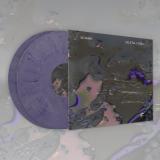
Timeless – yet always fresh: Regardless of the whims of the pop business, Planet Yello has been making its rounds for almost fifty years, repeatedly whisking us away to a world where past and future greet each other and James Bond joins forces with the Man in the Moon, Dionysus and Philip K. Dick.
"To the future, through the past"—with their fifteenth studio album, "Time Lab," Dieter Meier and Boris Blank put this maxim into practice more vividly than ever. Blank meticulously crafts his imaginary soundtracks from fresh samples and found objects from his own archive, which has accumulated a vast collection of sonic fragments, riffs, and motifs over nearly fifty years of creative work. Meier immerses himself in these parallel soundscapes, discovering within them his romantic tales of robbers, mysterious night creatures, and Dadaist wordplay. Essentially, every Yello track is both ancient and brand new at the same time. This principle is perfectly illustrated by the first single, "Around the Sun." It's based on a dormant Meier recording that was cut at the last minute from the selection for "Claro Que Si" (1981). Blank gave Meier's sonorous voice a fresh sonic makeover – the result is an elegant and flexible, thoroughly Yello-esque combination of past and present, romantic wanderlust and driving percussion. "Break Out" also plays with stylistic elements that can be traced back to Yello's earliest days: a dangerously prowling bass riff, fiery percussion, and storyteller Meier in hypnotic top form.
Time begins where it ends, or vice versa. Or, as Boris Blank says: "Yello's music doesn't really know time."
Since the release of DAMAGED in 2024, Michael Fiedler aka GHOST DUBS has been surfing intensifying waves of adulation, earning praise from such diverse underground legends as Justin Broadrick (Godflesh/Jesu), Regis, Stefan Betke (Pole) and Steve Von Till (Neurosis). With second album Oblique, his mastery of sculpting sound waves results in a spellbinding set of alien soundscapes: larger in scale, richer in tone and considerably more cinematic than its predecessor. Lower, deeper and moodier, its cloudy abstractions, shadowy pulsations and submerged rhythms find Fiedler reaching further into his own sonic void, crafting blurred melodies and addictive narco loops into something simultaneously heavyweight and hypnotic.
Lead single and album opener “Low Times” sets the atmospheric pressure to maximum, resembling a dream date between prime dirt-house era Andy Stott and Berlin dub-tech pioneers Basic Channel. From there, Oblique descends into a series of enchanting mood scenes: the furtive, balletic gyrations of “After All”, the haunting ambience and buried heartbeat throb of “Soft Collapse”, and the noirish atmospherics of “Blackout Dust”, which worms its way into the mind like some forgotten David Lynch scene. The spirit of reggae is more distanced here than on DAMAGED, but the ghost of Jamaican dub still permeates these foggy soundscapes, particularly on “Bombed Suburbs”, where Augustus Pablo-style melodicism is chopped, screwed and slowed into a magnetic lock groove.
Superficially minimal but maximal in its minute detail, Oblique is a record of contorted reflections, mesmeric echoes and tantalising audio mirages. By the vaporous mist of closing track “Almost a Structure”, obvious rhythm has been craftily filtered away, leaving a blurred and blunted residue full of mystery and implied narrative. Dense in the best possible sense and crushing when played loud yet equally potent played quiet, Oblique imagines dub techno burning its own rigid rulebook: sensual, funky and concussive rather than dry or alienating. Following Fiedler’s recent work scoring Sound of Falling, recognised at Cannes in 2025, Oblique finds Ghost Dubs shedding his influences and making it clear he has arrived at a sound entirely his own — essential deep listening and a bewitching dose of future shock.
Guillaume & the Coutu Dumonts has always been a maverick. The Quebec native draws on his electroacoustic studies and love of Latin and classical percussion to cook up left-of-centre sounds that still work well in a club setting. On this latest for Soundrive, he brings a tender, spectral vocal to 'Big Bird's Roll' that tugs at the heart as the phased percussion rides a dubby house groove. The Nail Remix brings more defined drums and his signature crispness, then 'Chiens De Chasse' has an off-kilter swagger and freaky melange of vocals and 'Argos' explores deep, subterranean techno.
In 2000, after almost two decades of hibernation under the ambient waves and dub currents of the Sargasso Sea, LSD revived the seminal ‘Auntie Aubrey's' series, an Orb Remix Project. Released as a 2 x CD compilation, Part 3 is a veritable smorgasbord of classic, new and unreleased labour-of love remixes that span three decades yet still transcend space and time.
Many influential artists have been involved with The Orb since the beginning, and the project keeps evolving and adapting. Dr. Alex Paterson, the gravitation centre of the Orb is known for his playfully subversive remixes and true to form this album highlights the diversity of his musical mind.
We see the good doctor remix the melancholy and evocative “The Last Lighthouse Keeper” from The Transit Kings, an early British electronic music group that included Jimmy Cauty of The KLF, one of the original members of The Orb. The remix of ‘Davy Jones’ Locker’ from System 7 takes you surfing on a sun-dappled sea of ambient dance nostalgia, while Killing Jokes’ ‘European Super State’ remix (in which LSD label founder Martin ‘Youth’ Glover plays bass guitar) sounds like the soundtrack for an imaginary spy thriller with the powerful lyrics and hypnotizing voice of Jaz Summers.
Legendary producer Youth teams up with Lx yet again on a psychedelic rocker with spellcasting vocals by Lara Smiles, and this is just the beginning! Boasting an all-star lineup, the compilation includes many of our scenes most esteemed electronic music producers such as Coldcut, David Harrow, Sendelica and Gaudi as well as the ambient blissed out vibes from the enigmatic DF Tram, Duende India Collective and The Gyuto Monks of Tibet, this collection offers up such the variety to appease even the most dedicated Orbsessives and music connoisseurs
2024 breakout superstar Teddy Swims announces the second part of his debut album, I’ve Tried Everything But Therapy (Part 2), arriving January 24, 2025. It follows the massive success of Part 1, which includes his global smash hits “Lose Control” and “The Door.” The news arrives on the heels of his acclaimed new single, “Bad Dreams.”
Swims recently released his new single “Bad Dreams” - watch the video HERE. The new track debuted on the Billboard Hot 100 this week, giving him three songs on the chart, in addition to hitting #1 on the UK airplay charts.
It builds on the momentum of his global smash hit "Lose Control,” which he performed last month on the MTV VMAs, along with his recent charting single “The Door” and a rendition of Rihanna’s “Stay.” He was nominated for four awards at the show, including Best New Artist, Song of the Year, Best Alternative, and PUSH Performance of the Year.
2024 has been a whirlwind for Swims, who celebrated the success of his multi-Platinum chart-conquering hit “Lose Control” from I’ve Tried Everything But Therapy (Part 1). In addition to claiming the #1 spot on the Billboard Hot 100 chart, #2 on the UK official chart, the song has amassed over 2.3 billion global streams, reached #1 on five radio formats (Top 40, Hot AC, AC, R&B, and Rhythm), and was recently inducted into Spotify’s “Billions Club.”
You'd be hard pressed to name a song with the driving, emotional intensity and raw energy of the Hamilton Movement's anthemic ode to heartbreak, "She's Gone." Issued as the B-Side of the band's 1976 single "We're Gonna Party," and distributed in and around Indianapolis, there is no evidence the song garnered significant attention upon release—yet over the past fifty years it has amased a cult of devotees across the globe. But while interest in the group's music remains strong, little information has surfaced about the Hamilton Movement's history, and until now, there have been no official reissues of their work. This collection presents the band's discography, alongside previously unreleased music discovered on tape; it is the Indianapolis soul album that should-have-been.
The keys to the Hamilton Movement's mystery can be found in central Indiana, where promoter Dick Melvin has lived the past few decades, in a rural suburb of Indianapolis, amidst forests and cornfields. Melvin served as the group's manager throughout their entire existence, but his involvement extended far beyond typical managerial duties. He co-wrote and co-arranged the band's music; he produced and released their recordings on his Look Out label. Dick is also the band's archivist. His home is filled with boxes of demo sessions, live tapes, contracts, posters, and promotional photos documenting his work with the Hamilton Movement. He entrusted his archive to Now-Again's care and they've assembled this album under his watch. Dick's story, and the story of his band, are presented in an extensive, oversized booklet with Dick's rarely-seen photos and ephemera and words by Now-Again's Egon and Naptown historian Kylie Long.
Mysticisms’ explores the previously unknown Dub House, Digidub and electronic Street Soul of Manchester émigré Andrew Fitzgerald aka Atone on a 6 track EP, shape shifting from dark basements to summer fields, the music is wide-screen dreams, mixing psychedelic temperaments with ecstatic memories.
Dub Dats is a compendium of a life around or making music, beats, dubs; menageries of sound that encompass a love of reggae mixed with the influences of youth. Growing up in Thatcher’s then declining Manchester housing estates, Fitzgerald found escape first as a young roadie, just aged 15, sorting ‘cigarettes and alcohol’ for visiting bands. Rubbing shoulders with the likes of The Buzzcocks, Ian Dury and The Slits, was a great way to learn the ropes, while avoiding becoming another juvenile delinquent.
A love of Bowie, Kraftwerk, Motown, film scores and the emerging electronic and industrial bands like Throbbing Gristle led to a first studio, featuring the unique and faithful DR-55 Dr. Rhythm, soon followed by Sequential Circuits Pro One, Juno 60, Roland 303 (x 2), Roland 808 and Space Echo.
Working on music solidly, a release finally appearing on Robs Records, before losing all the equipment in a robbery. Manchester was shifting, gangs and “Gunchester” meant it was time to move on and when ‘an out’ appeared, Fitzgerald was landing in Sydney and settling into a new life.
Hooking up with Ali Omar, who he’d met while doing a stint in Brixton, London; the two worked solidly on music, gigging continuously, hanging with the likes Severed Heads and living a good life of that post acid-house party era. The loss of Ali to cancer, still young, hit hard and period “quite liked the madness” ensued. Rehab and starting again, Atone has been gaining some interest.
With 2 EPs of early works recently released on Tonal Oceans, Dub Dats looks deeper, with the dubbed house grooves of title cut, Dats and, the intriguingly named, Somewhere In France With Eric Random. Complimented by the electronic dub of Keep On, the soulful, slow breaks torch song, I Be There, the sample heavy Sound Of Soul and closing, trippy Unlike You, this is a multi-genre producer of considerable capability and talents.
Finally getting his due, Dub Dats perfectly fits the Dubplate Series, broadening its soundscape, while also standing out as its own, sonic release.
After fifteen years of shaping dancefloors around the world, Mele is set to release his long-awaited debut album Alive On Arrival via Defected Records Far from an introduction, the album marks the arrival of an artist operating with complete creative clarity, bringing together the sounds, collaborators and influences that have defined his journey into one cohesive body of work.
"Alive On Arrival draws inspiration from what feels like my entire life as a producer, a DJ and a music fan, bringing together everything I love about house, hip- hop, UK music, soulful R&B and wider global sounds. The name comes from Wu-Tang Clan's C.R.E.A.M., which felt fitting to where I'm at in my musical journey. It's been 15 years as Mele, but I'm still alive and feel like I've got so much more to give. I've finally arrived at this point with my debut album. The album was made in, and heavily influenced by, London, Miami and Liverpool - three places that are close to my heart. Sonically, it's inspired by some of the best: Jungle, The Neptunes, Gorillaz and Masters At Work." - Mele aka Krissy Peers Set for release on 25 September, Alive On Arrival is Mele's most expansive project to date. Across fourteen tracks, he draws together house, hip-hop, soul and R&B into a record that reflects a lifetime spent moving between genres rather than being limited by them. Created between London, Miami and his hometown of Liverpool, the album captures the energy and musical history of three cities that have shaped both his sound and perspective. At the heart of Alive On Arrival is collaboration. Rather than simply assembling a list of featured artists, Mele has curated a cast of voices whose individual perspectives deepen the emotional and cultural narrative of the album. Long-time collaborators sit alongside new creative partnerships, each contributing to a record built on shared musical language and mutual respect.
'You & Me', 'The Ballad of John Henry' and 'Live from the Royal Albert Hall'.
It is in a live setting where Joe Bonamassa the performer really thrives and in May
2009, he played the historic Royal Albert Hall in London. It was an incredible
memory for everyone present and one of his greatest live performances has been
remastered on high- quality 180g heavyweight triple vinyl for the first time. The
majestic evening saw him glide through his back catalogue of original hits as well
as inspired covers and featured guest performances from Eric Clapton and Paul
Jones – truly a special night to savour.
With 25 #1 albums, yearly sold-out tours worldwide and custom annual cruises,
he's a hard act to beat. These albums are a testament to his credentials and a
toast to his longtime fans who remember them originally and new fans who can
experience them for the first time. It's Joe Bonamassa at his finest, ready to rock.
In celebration of the 40th anniversary of Talk Talk's iconic "It's My Life" album, it has been cut at Half-Speed by Matt Colton at Metropolis Studios, overseen by Talk Talk drummer Lee Harris and Charlie Hollis, son of Mark Hollis, giving the album a greater depth. Originally released in February 1984, "It's My Life" is the band' second album and followed the 1982 release of their debut "The Party's Over" which initially received moderate success in the UK reaching number 21 in the UK chart and finding some global success.
By the time they came to writin and recording "It's My Life" the band had gone from the four piece to a three with Simon Brenner leaving the band. The album initally found considerable international success. "Such A Shame", the album's first single was a top 10 hit across Europe and the album's title track entered global Top 40's including in the US.
Music from Tokyo / New York serves as the 2024 sequel to his previous release, Music for Joshua Tree. This conceptual album is divided into Side A (Tokyo) and Side B (New York), utilizing field recordings captured in each location. The ceramic images featured on LP jacket is the work of Namiko Ishikawa (NamipotNYC).
On this record, he incorporates Ambient, Downtempo, Trip-hop, and Dub—bringing to life the specific sounds currently resonating in his mind and his original roots.
Since the pandemic, he has been traveling and capturing "environmental sounds" through field recordings, which served as the primary inspiration for this record. Side A features tracks inspired by the atmosphere of Tokyo, including recordings from streets, parks near his home in Japan. Side B explores New York, incorporating the sounds of Brooklyn and Manhattan, as well as the chirping of insects recorded in the New York mountains.
While the album remains centered on analog synthesizers and vinyl samples, he has introduced analog drum machines and glitch noise to craft the groove. Unlike his previous work, this release brings prominent bass lines and added more Dub elements to the forefront. His primary focus for this project was expressing a sense of "space" and "air" through the meticulous use of reverb and delay.
Throughout the album, he invites the listener to imagine the unique "local atmosphere" he experienced during his travels.
Juxtaposing acid-tipped breakbeats with influences of acoustic behaviour in nature, Sully unveils a debut release for Critical Music with two-track 12” ‘Flux’ b/w ‘Chatter’. Sully says: "‘Flux’ and ‘Chatter’ were another attempt to take the groove and feel of the breakbeats I've been previously working with and build them from the ground up. The aim was to find space for the tonal elements to breathe and end up in a place I'd not been to before." Birdsong became an unexpected reference point during the writing process, with Sully using synthesis to analyse and recreate natural calls as compositional material. The resulting dialogue between acoustic behaviour and digital sound generation forms part of the release's underlying methodology rather than a surface aesthetic. "The contrast and contradiction of the organic world captured by digital processes is always a pull for me," Sully explains. "It never fails to inspire." Jack Stevens aka Sully has spent much of the last two decades developing a body of work that sits slightly outside the obvious cycles of revival that have shaped UK bass music. While his records draw from established rhythmic forms, they rarely settle within a single tradition, instead examining the shared characteristics between them. His releases have consistently explored the points where 2-step swing, breakbeat construction, and jungle's rhythmic vocabulary begin to overlap. Sully’s records retain a relevance that extends beyond the moment of their release, continuing to circulate through DJ sets and specialist record collections. This 12” adds another chapter to a catalogue defined by sustained investigation into rhythm, texture and soundsystem music.
“Neither from here nor from there” is often used to describe migrant identities in territorial terms. In the case of Siete Catorce, it works better temporally: his music has always been so far ahead of its moment that it ultimately carved out a space of its own within both Latin American and global electronic music.
Born in Mexicali and shaped between the Bay Area and northern Mexico, his musical identity emerged through hip hop, dubstep, and the independent borderland scenes. After several years in Mexico City — without a clear place inside the local circuit — he created his own space through his music, developing a distinctive DJ/live set and a singular vision of contemporary Mexican electronic music, becoming a key figure within the city’s most forward-thinking underground.
In 2026, he releases El Valle, his first album in nearly three years. The record moves through different currents of electronic music — ambient, techno, cumbia, and tribal — filtered through a unique rhythmic language marked by syncopation, unpredictable breaks, and a constant tension between restraint and energy.
The album opens with “Mexicali,” alongside Andre Pereda, a tribal track stripped down to its percussive essence, evoking the genre through an ambient and synthetic approach. From there, “Aragón” and “El Rancho” progressively increase the tempo and intensity, combining cadenced phrases with minimalist tribal beats and unexpected turns.
In the second half of the album, now moving through territories of 140 BPM and beyond, tracks like “Montecarlo 1” and “Tierra Roja” drift between futuristic bass music and large-scale techno structures. This is followed by the 8-minute epic “East LA,” where Siete Catorce expands the energy of syncopated techno before releasing it into a pre-Hispanic tribal journey with flute and all the drums required for the occasion.
The closing section arrives with “Tlatelolco,” accelerating into an epic cumbia infused with trance references, and “Los Pinos,” a direct and forceful finale sustained by some of the album’s most precise sound design.
More than genres, Siete Catorce’s work is defined by meticulous sound design and an exceptional rhythmic sensibility — qualities that have established him as one of the most respected drum programmers of his generation.
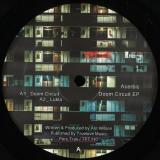
UK underground legend Acerbic aka Ant, Chicago Loop and many other alias returns to Perc Trax after the huge success of this Acerbic remix of Perc's 'Imperial Leather' last year. A regular on labels such as Stay Up Forever, Cluster, Hydraulix, Maximum Minimum and his own Power Tools label, now it is time for his over overdue first full EP for Perc Trax. Across the four tracks on the Doom Circuit EP Acerbic sets out is vision of club techno. Hard driving and powerful with a constant sense of forward momentum. Opening track 'Doom Circuit' has been a key part of Perc's sets for months now. Acid techno without the acid as a succession of computer bleeps take over the role a 303 would usually play in tracks like this. Next up 'Lukla' floats echoing lead lines, looping house music stabs and just a touch of London underground acid to create a fusion of key underground sounds. B1 track 'Metroliner' is the most energetic track on the EP as a stomping kick and clap rhythm is topped off synths stabs reminiscent of Luke Slater's classic 'Forklift. Finally 'Helter-Skelter' takes things down a notch to finish the EP to focus more percussion intricacy making it the perfect mixing tool for the more creative DJ.
Mining the rich seam between transcendental escapism and crushing physical pressure, Sciama delivers his first album for Samurai Music. Exploring an energetic pitch between half-time and full-tilt 170, the London-based producer sculpts brooding soundscapes of sheer peaks and deep pits, driven by unrelenting but light-footed forward motion and an imposing strain of sound design. As Sciama, Michael Watters has been marking out his exacting sound since 2019 with an assured run of albums on ASC's Auxiliary label. His second EP for Samurai — the Wave Interaction 12" released earlier this year — pointed to his current area of focus inspired by the teachings of electronic music pioneer Daphne Oram. Contemplating the relationship between precise electronic frequencies and human perception, Celetal Form now delivers the full findings of his exploration. Oram coined the term 'celetal' in her 1972 book An Individual Note of Music, Sound and Electronics, trying to sum up a connection between the celestial and electrical. It's this spiritual dimension contained within sound waves Watters is concerned with, and the shape of the music on Celetal Form follows suit. In an opening statement of abyssal ambience, 'Overload Into Silence' establishes an atmosphere that endures throughout the album. Caught between steely textures, vaporous reverb tails and subtle harmonic interactions, the glacial shift of the many layers under Watters' control reveals an intense amount of detail at play even before drums and bass come into play. From there on in, the intensity ramps up from one heavyweight stepper to the next. There is agile, brittle top-end percussion at work on the likes of 'Induced Resonance' and 'Consuming Pulse', perhaps the most closely connected to D&B, while 'Rational Echoes' and 'Scanning Waveband' deal in urgency and techno-coded tension. A half-time roll guides the huge kick drum undulations of 'No Panacea', and 'Celetal Emergence' opens up into more spacious surroundings to let the subtle microtonal inflections of the synth tones set a curious mood. The two 'Intermodulation' tracks bring Watters' exacting approach into sharp focus, pushing the drums back and foregrounding alien frequencies that coalesce into unfamiliar yet strangely uplifting forms. Throughout Celetal Form this uncanny sensation charges the music with a power that reaches beyond its immediate, surface level impact. This intentional reflection on Oram's visionary thinking charges the current sound of Sciama with energetic intrigue that stands apart and invites a mindful, maybe even spiritual, engagement.
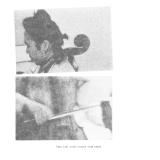
Faitiche presents the debut solo album by cellist, sound artist, and composer Topu Lyo: “quiet scenes from tokyo” brings together sixteen miniatures for solo cello and tape echo that oscillate between abstracts drones and rhythmic pizzicato sketches – all recorded at Topu’s Tokyo apartment. The constant traffic noise from a nearby highway has become an accompanying soundtrack for his compositions and can be heard on the recordings. Topu’s playing is marked by a distinctive idiom oriented more towards abstract electronic studio effects than classical technique.
The artist spoke to Jan Jelinek about his work:
JJ: A solo cello album may seem like an odd fit for a label that has to date released only music that is electronic in the broadest sense. But I think “quiet scenes from tokyo” complements the Faitiche repertoire exceptionally well. Its sixteen miniatures showcase the cello in all its complexity: the bowed passages sometimes recall a tape feedback drone; the pizzicato playing conjures up the percussion recordings of Moondog; and the abstract textures might be mistaken for the product of a granular sampler rather than rapid finger work on the cello. I’m constantly surprised by just how rich and varied this album is – without ever losing the charm of its sketch-like quality. Could you say a few words about the making of your album – first of all, from a rather technical perspective: what production tools did you use, and why?
TL: My production tools were very sparse. Just a solo cello and my Roland 301 Space Echo, which I only used at the end, running everything through it during mixing, tape only. After years of working with electronics, pedals, and synthesizers, moving to Tokyo pushed me toward minimizing my setup. But my aesthetics shifted too, toward simplicity. I wanted to strip everything back to just the acoustic cello and see how far I could push it — replicating some of my favorite electronic effects through extended technique: slow portamento, LFOs, filters, detune, noise. I’d also been listening to a cassette of ocean sounds for years. When I moved to Tokyo I was horrified to find myself living directly across from a freeway. Eventually the freeway started sounding almost identical to the ocean — and that ended up playing a prominent part in the recording.
JJ: That’s super interesting: mimicking electronic production as a compositional idea for the cello! You say the sound of the freeway is crucial to the album: I, too, tend to interpret steady traffic noise as a positive soundscape – do we hear the freeway on the album? I can also hear other field recordings, for example on “a street car with announcements”. Can you say a bit about how these field recordings influence your playing?
TL: Yes, you can hear the freeway on the album! The freeway is most prominent in “old trees in lonely spring”, “yuyake koyake”, and “the moon” (you can clearly hear individual cars). When I first began recording I had my balcony door shut tightly, but after a while I began leaning into the highway sound and slowly opening the door little by little to control the amount of noise. “streetcar with announcements” was a moment I was recording and a car passed by making announcements in the background. I loved how it sounded! Same thing with “yuyake koyake”, and later I realized that every day at 5pm the same song plays to mark sunset, telling children it’s time to go home. Having this bedrock of sound puts less pressure on me to put music on top or to play more notes.
JJ: It’s astonishing how much this differs from what I’d imagined: I’d been picturing peaceful landscape recordings, but had never thought of a freeway. Which goes to show how open to interpretation traffic noises are. So the room by the freeway had a major influence on the album – how are you going to perform it live?
TL: The contrast between the freeway and the beautiful landscape in my head couldn’t have been starker. I too was imagining a beautiful landscape in which to create the album, but somehow it still worked out. I've been going back and forth a lot on live shows and I think the most honest way is to have it the most stripped down. I was thinking of using traffic samples etc., but I think the duet really comes from the background sounds from every unique venue/environment. So as it stands, I’ll just be doing acoustic solo cello.
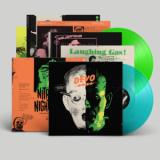
Futurismo are proud to present DEVO’s NITROUS NIGHTMARE, Halloween Live ‘75. Never before released, or heard in it’s entirety, this legendary live performance is presented here in it’s full chaotic glory on limited edition 2xLP and 2xCD. The live release all hardcore Devo fans have been waiting for, Nitrous Nightmare demonstrates a band harnessing their artistic greatness in the purest of forms. This mythic performance captures Devo perfecting some of their most iconic concepts in the raw. Expertly restored, this live recording makes for a thrilling experience, it also captures Devo as a lightening rod for hostility. On Halloween 1975, Devo took the stage at the WHK Auditorium in Cleveland, in a supporting capacity for jazz legend Sun Ra, to perform for a raucous crowd dressed in the finest of Halloween cliché. Already riding high on Nitrous Oxide and booze supplied by the sponsoring radio station, this unaware horde was expecting to see a slick cover band churning out renditions of Bad Company hits, only to be subjected to an act of subversive performance art that would send the growingly aggravated crowd into eventual meltdown. Physical threats ensued, but Devo played on. Acting as a live companion release to Futurismo’s much lauded Art Devo, the tracklist featured here showcases the origins of de-evolution theory in a live setting. These songs would become some of their most famous material, with this recording believed to be the very first time ‘Jocko Homo’ was performed in front of a live audience; the full 12 minute version documented here is sure to please fans, even if it displeased the urban hippies and horror masked onlookers that evening. Whilst Devo may have felt they were trapped inside a negative energy vortex during that era, it is clear in retrospect that the band was using this energy to carve out the genesis of a sonic and visual art that has truly stood the test of time. The music performed that evening would mutate culture for decades to come, long after the denizens of the auditorium packed away their cheap vampire costumes and returned to their day jobs. Spanning 2xLP’s of unreleased live material, most of which has never been heard before, this wondrous performance draws purely from that integral early history. Mixed and mastered directly from recordings kept in the bands personal vaults, this live collection showcases why Devo was, and still is, one of the most important bands in American history. De-evolution is real. The art of DEVO is real. Here is the evidence. This 2xLP is housed in a gloss laminated wide spined sleeve. It has a tracklist that has been sourced directly from the archives, and contains colour inner sleeves and a fold-out containing archival imagery and liner notes by Gerald V Casale.
For the seventh edition of the Vega Records 5 Pack Unreleased series, Louie Vega once again opens the vault to reveal a special collection of unreleased recordings, alternate versions, remixes, demos, tribute reworks and deep cuts from the Vega Records musical family.
5 Pack Unreleased VII brings together 15 tracks across five 12-inch records, showcasing the wide musical spectrum that has always been part of the Vega Records story. From soulful house and deep grooves to jazz, soul, Brazilian influences, live instrumentation, Latin influences, powerful vocals, disco-rooted rhythms and the freedom to experiment in the studio, this collection moves through many different sides of the music.
Some of these recordings have been waiting patiently in the vault. Others represent alternate versions of songs that continue to evolve through different interpretations. Together, they create another musical journey through the sounds, collaborations and ideas that have shaped the Vega Records universe.
These final recordings speak to something that has always been important to Louie’s musical journey: respecting the music that came before while finding a way to reinterpret it through his own musical language.
From Loleatta Holloway and Duane Harden to Elements Of Life, 2SoulFusion, Domo Domo, Brutha Louie & Brutha Basil, and the tribute recordings, 5 Pack Unreleased VII brings together different generations, different voices and different musical influences under one roof.
The Elements Of Life sound continues throughout the collection, with “Sunshine (I Can Fly),” “Every Step” and “Dreamer” offering special previews into the musical direction of the forthcoming 2027 Elements Of Life album.
This is the seventh chapter of the series, but the philosophy remains the same:
Open the vault.
Share the music.
Let the DJs discover it.
Let the dancers feel it.
Five records.
Fifteen tracks.
A collection of unreleased music, special versions, studio discoveries, tributes and musical experiments from the world of Vega Records — with plenty more waiting inside the vault.
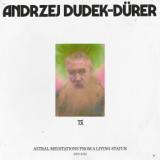
Forty years of cassette releases, pressed for the first time on vinyl
First of two instalments exploring the previously unreleased sonic archives of one of Poland’s most enigmatic
living artists - with its first volume focused on his deep listening practice and spiritual reverie (recorded 1990–2013)
The last time Andrzej Dudek-Dürer took a banknote bearing the face of the Polish anarchist Jarosław Dąbrowski from his pocket to trade it for a pair of shoes was in 1969. He bought them for 120zł - the equivalent of 100€ today - and never replaced them since then. Only rebuilt them, year after year, drawing a needle and thread through the leather each time it split, closing one wound before the next one opened. It became a ritual of precision, stitching a record of another year into their soles.
That same year, in Wrocław, he arrived at a conclusion that would recalibrate everything that followed. Convinced he was the reincarnation of Albrecht Dürer, he adopted the surname Dudek-Dürer, stopped cutting his hair and began wearing the same garments every day. It was the first ritual of many, though he wouldn't have called it that yet. Look closely enough, over the decades, and it is always the same gesture, returning in different material: hair growing in a single unbroken strand, a needle drawing thread through leather, sitar strings pulled taut across a neck he built with his own hands and magnetic tape spooling forward inside the cassette boxes stacked against his walls.
None of this began in a vacuum. Dudek-Dürer emerged from the Wrocław neo-avant-garde, in a Polish art world where an exhibition could be cancelled overnight by the stroke of a censor's pen. In 1973, his exhibition Auto-crucifixion was shut down by the state, and for a time he found himself blocked from exhibiting his own art at all - the one force in his life that ever came close to cutting the thread.
He seemed to experience it differently. In 1974, after long, patient research into sitar craftsmanship, he built his first prototype with his brother, a knowledgeable luthier. In 1978, in a smoked-out jazz club, he took his first steps into sound recording with the unreleased album Jazz From Underground with his first band. By 1979, recognition started to travel further than he could.
Turning toward Far-Eastern philosophy, meditation and the idea of reincarnation was another language of freedom for him. It was a way of claiming an inner territory the state could not reach, a border it could not close. Mail Art served a parallel function, reaching further out: in a country that restricted travel and expression, sending and receiving art through the postal system became an act of quiet rebellion.
The body, in his understanding, is only an envelope readied for constant transformation. From this came Metaphysical Telepathy: during the years he could not leave Poland, he treated that confinement as a rehearsal room, sending his mind out ahead on the same thread his body would later follow. Living Sculpture grew from the same root with performances of stillness beside static art objects, until the boundary between the object and the man beside it simply dissolved. Camera Meditation extended the same instinct into photography: a shutter click flattening three dimensions into two so that a single instant could be held forever. Inspired by the pioneers of self-portrait photography like Robert Cornelius, he used it to document time itself, and kept explaining to me: "You know. This is not about vanity. This is about observing time passing.”
The isolation did not end suddenly. It ended the way his own philosophy had already predicted it would, from the inside first. Mail Art quietly solved the problem politics couldn't. Correspondence built during years of confinement slowly worked its way through doors the state itself had kept locked. Contacts made through folded paper and stamps became invitations. Ultimately, invitations became passports.
In 1983 he made his first trip outside Poland, to Germany, in search of the audio technology he couldn’t get his hands on before. In 1985, he was invited by the Indian embassy in Poland to give a sitar concert on an instrument he had spent a decade patiently stringing together - half sitar, half tanpura, built from patience and determination. After the collapse of the People's Republic of Poland, the travels kept unspooling: South Korea, then Mexico, then Australia, Canada, New Zealand, Singapore, Japan and the United States - each stop leaving behind its own small knot of tape, tied off and carried home.
In the decades since, recognition arrived at the same unhurried pace: he conducted workshops at UC Berkeley, served as vice-president for artistic affairs of the Union of Polish Art Photographers and the Union of Polish Visual Artists between 2010 and 2014 and received the Bronze Medal for Merit to Culture - Gloria Artis. His visual work gradually entered collections including the National Museums of Warsaw, the Stedelijk Museum, Tate Modern, MoMA and the Venice Biennale. His musical practice, by contrast, never found that kind of room - left to circulate quietly, sharing his cassette tapes directly, waiting for someone willing to follow it further.
It took months before I could find a way to reach Andrzej Dudek-Dürer - his presence online is very close to nonexistent. Surprisingly, LinkedIn turned out to be the only door still open, a faintly absurd irony given everything else about him. I packed the strict minimum for a three-day trip and an empty notebook and made my way to Wrocław. His headquarters sits in the neighbourhood of Grabyszyn: a two-storey pre-war house that has belonged to his family for generations. The man who opened the door was long-haired, long-bearded, in his trademark leather shoes and patched jeans. We sat in his living room, in front of a computer where decades of recordings sat organised in cryptically named files, surrounded by books and objects that had arrived one layer at a time, leaving room for only two chairs in the middle. His shoes sat by the door, rebuilt so many times they had become their own quiet sculpture. Cassette tapes filled boxes against the walls, almost unlabelled, each one a spool of thread holding decades of sound that had never once been asked for, until now.
I listened for hours: meditating in front of strangers on the porch of a Seoul temple until the tourists stopped taking photos and simply waited with him; a stand-off with border guards at the US–Mexico crossing over an instrument they couldn't identify and didn't trust; a session with the Stockhausen family that he still, decades later, describes like it happened last week. All of it interrupted, occasionally, by the smell of soup boiling and fresh bread warming on the ceramic stove. After two days, it felt like being handed the end of a very long thread and asked, gently, to keep following it. I left with a USB drive holding his full discography, signed with his unmistakable signature.
Astral Meditations From A Living Statue is a length of that thread, drawn out from the boxes stacked against his walls - recordings gathered from different rooms, different countries, different decades. This first record breathes slowly: incense-thick, meditative, built for stillness. A cutting-edge séance in outer space where machines learn how to dream.
It begins with the neo-classical improvisations of Andrzej, space-delayed, recorded at Klub Muzyki i Literatury in Wrocław in 2002. 'When..So' opens the curtains with a deep-rooted meditation accompanied by slow-decaying piano figures illuminated by a candle-lit spirit gathering.
Los Angeles, 1990: a dormant villa, a grand piano, the voice of Bonnie Barnett. 'Exception' is captured in a single room, in a single afternoon - voice and keys circling each other, neither one leading, until the silence between the notes starts to feel like the instrument.
'The Meta...' and 'Tired Of...', recorded at Studio Morandi in Ponte Nossa, Italy, in 1992, settle into a sitar drone built entirely from patience - overtones stacking and beating against each other, strung by a man who never once set foot in India. 'Mastery Of...' follows, recorded the same year at Studio Suski in Łomianki, pushing that same hum further still, until pitch dissolves into a spectral reverie. 'Transcendental Sound', from 2000, closes the first record in a slow bath of celestial frequency - better heard beside the shores of the Odra river.
More than fifty years after deciding that a life could become an artwork, Andrzej Dudek-Dürer continues to inhabit that decision. His shoes keep wearing thin against the earth's crust. His hair keeps growing, one strand at a time. His cassette tapes keep spooling in the dark of their boxes.
Now the thread finds its last shape: a single unbroken groove, spiralling inward from the outer edge to the label at the centre. Never cut - the way nothing else in his life ever was. Drop the needle and it will find that groove and follow it, the same way a needle once followed leather, once followed a border it couldn't cross, once followed string into an instrument that didn't exist until he built it. This record is the other end of a thread that has been travelling for fifty years. For the length of both sides, it rests here, in your hands. This is a timeless proof that the Lord of the New Age was never lost."
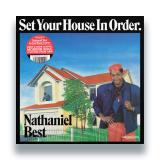
Celestial Echo Records presents Nathaniel Best – Set Your House In Order, an incredible gospel soul LP from 1986, finally back in circulation.
Originally released on Spirit Records of Nevada, the album is very much of its time in the best way — gospel music with drum machines, warm synths and basslines that push it right into modern soul and boogie territory. Nathaniel Best’s voice carries the whole record with real conviction, joined by group vocals and arrangements that give the album that rich, uplifting 80s gospel soul sound.
For us, the standouts are clear. “Call Him” is the boogie dancer — bright, driving and full of movement, the kind of gospel cut that sits perfectly in a modern soul or boogie set. The title track, “Set Your House In Order”, is something else entirely: a beautiful downtempo soul glider, deep and heartfelt, with that slow-burning quality that makes the whole LP feel so special.
Those two tracks tell the story, but the magic runs through the whole record. Scattered across the album are these amazing slower gospel soul moments, balanced with enough groove and lift to keep it moving. It’s not just a one-tracker, it’s a proper LP with feeling, range and a sound that collectors have been chasing for years.
Best’s musical story runs deep. He grew up around gospel, recorded from a young age, played piano in church, sang with the Love Center Choir under Bishop Walter Hawkins, and later worked with names including The O’Jays and The Fairfield Four.
Original copies have always been hard to come by, and the album has built a serious reputation with gospel, soul and boogie collectors over the years.
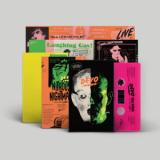
Futurismo are proud to present DEVO’s NITROUS NIGHTMARE, Halloween Live ‘75. Never before released, or heard in it’s entirety, this legendary live performance is presented here in it’s full chaotic glory on Super Limited edition Deluxe cassette format!
The live release all hardcore Devo fans have been waiting for, Nitrous Nightmare demonstrates a band harnessing their artistic greatness in the purest of forms. This mythic performance captures Devo perfecting some of their most iconic concepts in the raw. Expertly restored, this live recording makes for a thrilling experience, it also captures Devo as a lightening rod for hostility.
On Halloween 1975, Devo took the stage at the WHK Auditorium in Cleveland, in a supporting capacity for jazz legend Sun Ra, to perform for a raucous crowd dressed in the finest of Halloween cliché. Already riding high on Nitrous Oxide and booze supplied by the sponsoring radio station, this unaware horde was expecting to see a slick cover band churning out renditions of Bad Company hits, only to be subjected to an act of subversive performance art that would send the growingly aggravated crowd into eventual meltdown. Physical threats ensued, but Devo played on.
One Eye Witness serves up a collection of spacey, subtle dancefloor wares on WITNESS09. Here on its ninth edition, the Amsterdam label enlists three scene mainstays to patch into the WITNESS matrix. With their respective back catalogs highly sought after, this EP is a freshly-wrought showcase of tried and tested club craftsmanship.
Founder of Evasive records, Rob Pearson has been turning out tech house since the turn of the millennium. A1 “The Tempest” sees him enter a rapturous hypnotic portal. Its tight beat provides a framework for off-kilter aural delights: eerie melodies and buried phrases captivate, with whispered vocals — courtesy of Jayson Walker — diffusing into a curtain of modulated mists.
Silverlining, another UK tech house stalwart, follows with a deeper cut. Thirty years having passed since his debut, B1 “A Political Act” shows the artist has not lost his touch for building a breezy, groove-led aesthetic. Detroit’s spirit permeates: dub chords and astral tones are underpinned by a deeply funky bassline and swung rhythm.
Following the effervescent sound of his Perfect Encounter EP on O.E.W. sister label Spectral Bounce, Chris Carrier’s contribution to WITNESS09 is a similarly pulsating creation. “The Drop” is a pacier and denser counterweight to the preceding tracks, with the familiar twisting extraterrestrial sonics that we’ve come to expect from the French DJ and producer.
*Originally pressed in 2021 - this is a brand new master and cut.**
In partnership with Analogue Foundation, Oshu Records is proud to present the exclusive vinyl repress of "Laroyê" in a thick cardboard tip-on gatefold jacket on 2x 180g vinyl.
Acclaimed Hungarian, Berlin-based producer, composer and pianist Àbáse (AKA Szabolcs Bognár) returns, sharing a special, 5 anniversary remaster of his breakthrough project 'Laroyê'. Releasing on Friday 1 May via Bridge The Gap & Oshu Records, this sensitive exploration of Afro-Brazilian culture originally began as an audio diary, documenting Szabolcs’ travels and collaborations in Brazil through a collection of voice memos, fragmented beats, sketches and field recordings. As his journey progressed, and his collaborations and research deepened, the music project started to take on its own life:
"Laroyê evolved through weeks and months of research and collaborations into the album that it is now. That means that all the sessions were done in different apartments, small studios, often with borrowed equipment, which all adds to the character, but makes the creation of a coherent sound a challenge. Benjamin Tierney, Erik Breuer and Analogue Foundation did an incredible job with the mixes and with this new remaster. I truly believe that we are able to hear the tracks in a new light, with even more depth and clarity."
Coming from the West African Yoruban language, Àbáse stands for "collaboration" – a key element of the music perfectly encapsulated on 'Laroyê'. Recorded in Rio de Janeiro and Salvador, Àbáse spent five months working with diverse artists, from young talents to veterans of the Brazilian scene including Letieres Leite, Luciane Dom, Dofono d'Omolu, Afrojazz and more. The album explores the rich heritage of afro-brasilian culture through samba, MPB and Candomblé, mixing these with broken beat, hip hop and afrobeat, creating a contemporary homage to the classic Brazilian sound. Szabolcs shares:
"Despite already leading and managing musical projects that are close to my hearth, I always felt that one day I would like to start a solo project, where I could take full responsibility for the artistic direction and the music would reflect a truly personal vision. In 2017, I decided to take five months to fulfil a childhood dream and travel to Brazil to expand my creative horizon and expose myself to new influences."
An album standout is the bass-heavy, afro-brazilian ‘Agangatolú, which Àbáse describes as "best exemplifying the story and concept of Laroye as a collaborative effort - a research project exploring the rich heritage of Afro Brazilian culture through my own lens." The track features singers and percussion players Jadson Xabla and Gabriel Santana - two artists based out of one of the oldest terreiros (houses of worship) in Bahia, whilst drummer Jorge Dubman is an integral part of one of the most famous afrobeat bands from Salvador IFA. The contributions of one of Szabolcsoldest collaborators - Hungarian flautist Fanni Zahar - also made the track a full-circle moment.
On a quest for cosmic grooves of unity, Àbáses music pulls from an eclectic blend of global reference points, including modal jazz, Hungarian folk, West African, Brazilian, hiphop and underground electronic music. His work has drawn widespread critical acclaim from the likes of MOJO, Songlines, Soulection and The Guardian, and been supported by key tastemakers including Gilles Peterson, Jamz Supernova and BAMBII. As a keyboard player, Szabolcs has also collaborated with the likes of Wayne Snow, Dele Sosimi, Patti Smith, Emmanuel Wilkins, Gulty Simpson and Zeitgeist Freedom Energy Exchange.
'Laroyê' (2026 Remaster) will release on Friday 1st May via Bridge The Gap & Oshu Records.
Colorful, powerful and elegant. A watershed masterpiece that embraces before then and after that by Kiyoshi Sugimoto, the master of the era.
Since turning professional in 1960, Kiyoshi Sugimoto has been active in many sessions and recordings. From the latter half of the 1960s, he joined groups such as Hideo Shiraki, Akira Ishikawa, and Terumasa Hino, gaining attention and solidifying his position with leader works such as “Country Dream” and “Babylonia Wind.” This work was recorded with Akira Ishikawa, Hiromasa Suzuki, Takao Uematsu and others right after studying in America for about a year. Starting with the groovy and luscious “Our Time” and “Marmalade Sky”, the dubious keyboards of “Jones Street”, and the melancholic and beautiful “Quiet Pulse”, it can be said to be a gap between jazz rock and fusion. There are attractive songs. This work represents Sugimoto’s work in the mid-1970s.
Danza Nativa was founded in Buenos Aires in 2019 and has been drip-feeding us with a few choice releases a year ever since. The latest is another deeply immersive take on atmospheric techno from BLNDR, and it opens with the mystic, murky sounds of 'Tidal Veil'. The rhythm rolls freely, but the vibes are dank and grainy, as if you're in a dark underground cavern with the walls closing in. 'Mangrove' is just as aquatic as the title suggests, with wispy motifs buzzing about like mozzies above the humid groove. 'Arwing' has a more astral sound design with cosmic melodies over another low-key but meticulous mix of drums and hits. Finally, Alderaan enters on remix duties with a swirling late-night energetic charge.
California-based couple Allie Schulz and Alex Pasternak are Florecer, a producer and vocalist combo who draw on the energy that having their daughters gave them. 'Babies' and 'energy giving' are not often heard in the same sentence together, given the demands newly born small people often have on parents' time and sleep, but judging by these sounds, this pair have been fully inspired. The title cut is tropical and dub and kosmiche all collide into an undulating rhythm that's bright and demanding of your attention. Coyote dubs it into a more smooth affair and then 'What I Knew' rides world dub with steel drums. 'Running Behind' slows to a deep, soft plod with whimsical vocals this time, and Chris Coco turns up the reverb for a lovely, sleepy dub of his own.
A love letter to Canada sees Adams explore new musical territory, drawing on country, folk and rock while telling stories inspired by the people, places and history of home. How's It Goin' could be the most Canadian album ever written! Inspired by the landscapes, characters, stories and current affairs that are all part of Canada's ongoing history, How's It Goin' sees Adams explore a different musical landscape of his own. Alongside the unmistakable songwriting and voice that have been at the heart of his music, the album introduces elements of country and folk, giving the record a warm, roots-y character. Among the songs are "Diesel and Dirt," "How's It Goin'," "Iron Ribbon" and "The Battle of Lundy's Lane". "The idea was simply to make a record about Canada," says Adams. "It started with writing the song for the documentary, 'Canada's Wild Eastern Edge' and after doing so much research, I was inspired to start writing more songs about Canada. Musically it took me somewhere a little different too, which made the whole thing exciting." One of the album's most poignant moments is "The Ballad of Terry Fox," Adams' tribute to one of Canada's most inspirational figures.The song will also be featured in the forthcoming new documentary film about Terry Fox, entitled "Run Terry Run". How's It Goin' acknowledges Adams' roots and delivers an album that is at times personal, cinematic and, occasionally, reflective but always unmistakably Adams.
A love letter to Canada sees Adams explore new musical territory, drawing on country, folk and rock while telling stories inspired by the people, places and history of home. How's It Goin' could be the most Canadian album ever written! Inspired by the landscapes, characters, stories and current affairs that are all part of Canada's ongoing history, How's It Goin' sees Adams explore a different musical landscape of his own. Alongside the unmistakable songwriting and voice that have been at the heart of his music, the album introduces elements of country and folk, giving the record a warm, roots-y character. Among the songs are "Diesel and Dirt," "How's It Goin'," "Iron Ribbon" and "The Battle of Lundy's Lane". "The idea was simply to make a record about Canada," says Adams. "It started with writing the song for the documentary, 'Canada's Wild Eastern Edge' and after doing so much research, I was inspired to start writing more songs about Canada. Musically it took me somewhere a little different too, which made the whole thing exciting." One of the album's most poignant moments is "The Ballad of Terry Fox," Adams' tribute to one of Canada's most inspirational figures.The song will also be featured in the forthcoming new documentary film about Terry Fox, entitled "Run Terry Run". How's It Goin' acknowledges Adams' roots and delivers an album that is at times personal, cinematic and, occasionally, reflective but always unmistakably Adams.
21 Bum Salute is the fifth album from Sydney experimental psych-noise-pop duo Party Dozen. The work of Kirsty Tickle (saxophone, vocals) and Jonathan Boulet (drums, loops, production), 21 Bum Salute finds the critically-acclaimed, semi-improvised duo feeling liberated - from their peers, their worries, and what the nell they're supposed to sound like now.
Emerging in 2017 from the warehouses of the Sydney experimental noise-rock scene, Party Dozen arrive at the release of their fifth album, 21 Bum Salute, in peak form. Over the course of four, increasingly perverse albums of psych-tinged rock peppered with pop noise and bursts of doom in equal measure, they've transformed from gleeful noise-makers producing DIY albums from a tiny room in Marrickville, NSW, to globe-hopping, critically-adored favourites - producing DIY albums from a tiny room in Marrickville.
As well as tours with Amyl and the Sniffers, King Gizzard and the Lizard Wizard, Tropical F*ckstorm, Algiers and more, Party Dozen had Nick Cave appear on 2022 single Macca The Mutt', collabed with New York rapper billy woods, performed an incendiary live set on KEXP, signed international deals, firstly with Temporary Residence LTD (Mogwai, Explosions in the Sky,
Along the way Party Dozen self-released their first two albums, The Living Man (2017) and Pray For Party Dozen (2020), struck a chord internationally with album The Real Work (2022), which sent them on tours of Europe, North America, Japan, China and New Zealand, while fourth LP, Crime in Australia (2024), an ode to Aussie noir that leaned beyond rock into moodier moments, repeated it.
Party Dozen recorded, mixed and mastered 21 Bum Salute completely themselves, over a three month span. Inspired by spooky "old recordings" as well as the primal impulses of acts like ESG and Bikini Kill, 21 Bum Salute - named after a peculiar, larrikin ritual in Australia's arid Northern Territory - condenses consecutive years of jam sessions, loops and improvisations into just over half an hour's worth of fizzing, strutting, striking sonics from the fringes.
The music on ‘Remanens’ is the result of a commission by Art Cinema OFF off and B.A.A.D.M to score the short silent film ‘Positano’ made by french actor and filmmaker Pierre Clémenti in 1969. The film itself is an ever-shifting series of glimpses, without much context, of a family vacation to the island Positano. The short cuts are similar to a dream or obscured, residual memories where chronology has fallen apart.
The score was reworked into album format on ‘Remanens’, the title being the Swedish word for remanence. The word has several meanings, most commonly residual magnetism left behind in a material. It is consequently used when referring to residue on magnetic tape, as well as data remanence, which is the residual digital data that remains even after attempts have been made to erase a hard drive. The music was reworked with remnant traces of memory in mind, of the film, but also of how glimpses of memories from another life, when the future was undecided, can make a person feel – and how it can unveil one’s own traces of what the future felt like.
Linus Hillborg (b. 1989) is a Swedish composer, musician and multidisciplinary artist based in Stockholm. His diverse creative practice spans experimental music across both electronic and acoustic realms, as well as compositions for film, theatre, and interactive installations. In 2021 he released his acclaimed solo-debut 'Magelungsverket' through Moloton, derived from the installation 'Orphan Works' which he built with an obsolete computer game engine. In 2023 he released 'Four Works' through Kali Malone and Maria W Horn’s label XKatedral, which featured a series of instrumental works by himself and Theodor Kentros.
Efdemin and Vril. revisit Endless / Purge, originally released in 2021 as the only release on the short-lived Sun Sad imprint, launched by Kinzua’s Lucas Brell. Five years later, it returns on Confusion Is Next To Happiness in a revised and expanded edition. The original recordings have been newly mixed and remastered by Rashad Becker and are complemented by a previously unreleased Vril. reinterpretation of Endless.
Throughout the record, arpeggiated sequences drift through layers of finely textured dub haze, balancing physical momentum with an floating sense of weightlessness. While retaining the artists’ unmistakable sonic signatures, the record subtly channels the melancholic futurism and machine-driven pulse of techno's Motor City tradition.
With the stunning Planes In Reverse, Sascha Funke, the Berlin-born producer and DJ, and long-time member of the Kompakt family, releases his first album in almost a decade, since 2017’s Lotos Land. It’s a welcome return for one of the most eloquent and elegant producers in electronic and dance music, someone who’s always been able to say more with less, and the ten tracks here, moving effortlessly between techno, house, minimalism, disco house, and home listening tunes, are all gorgeously sculpted miniatures. With guest appearances from partner Julienne Dessagne (Fantastic Twins), with whom Funke has also worked in Saschienne, there’s something homely and family about it, too; a family of sounds, a home of tone. There’s also something consummate about Planes In Reverse, as though Sascha Funke has perfected the album format. There’s no flab here, no excess – it plays out like a perfectly designed experience, ten tracks, coming in under fifty minutes, an album where every moment matters.
It’s full of variety, but everything has the unmistakable Funke thumbprint, one that was developed during the late ‘90s / early ‘00s minimal techno and microhouse moment, but which was always open to other ideas and other sounds, too. Planes In Reverse came together quickly for Funke: “Last winter, I had two or three new tracks, which gave me a core feeling: ‘Ah, this could be the direction of something like an album.’ Sometimes it can be very easy that you wrap it up and then it becomes something coherent and solid. This happened within two or three months; it was very fast and direct.” Everything fell into place – the ten tracks revealed themselves, the album sat together as a whole, and the final piece of the puzzle was returning home again to Kompakt, who have supported Sascha Funke from the very start, releasing his first single, “Campus”, back in 1999.
Planes In Reverse opens stealthily with “What You See”, where rhythms percolate and bass prowls while gaseous textures fill the sonic spectrum. It’s also the first appearance of Fantastic Twins on the album; here, she speaks a hypnotic mantra, a prelude to the title track, where Dessagne has a pure pop moment, her voice ecstatic and vibrant. Indeed, Planes In Reverse plays out like thesis and antithesis ending in synthesis, the tracks nestling next to each other even as they shuttle between sounds, genres, perspectives. There are some beautiful moments dropped throughout Planes In Reverse – the heavenly textures that make the title track feel so cloud-bound; the glassy and orbital tones that drop from the skies through the disco house inspired “Karat”; the clamour and clatter of hyper-edited voices shuffling through “Splitter”; or the field recordings of Sascha’s son football training session that drop “Zockers” into a different place and space, slowly giving way to a beautifully paced electro-pop mantra. “In Germany,when the kids play a computer game, or when they play football, we describe it as zocken. They’re the players, they’re the Zockers.“ Funke explains.
Planes In Reverse winds down with the beautiful “Kruso”, where ticklish, loving arpeggios careen around the room, and drift-work chords shimmer and shuttle between your ears. It’s a perfect comedown to an album that feels breathes in and out at an organic pace, nothing above 130 BPM, everything sitting together just so. Indeed, that’s the feeling you take away from Planes In Reverse; it sums up the spirit of Sascha Funke productions perfectly, while also existing beautifully as its own world dreamt unto itself. It’s Sascha Funke down to the very essence. Nothing unnecessary, nothing extraneous: Pure Funke.
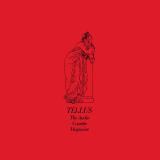
Long before streaming services, podcasts, or even the compact disc, there was Tellus—a radically ambitious publication that imagined recorded sound as an exhibition space. Founded in 1983 in downtown New York, Tellus transformed the humble audio cassette into a magazine, commissioning and publishing new works by musicians, composers, visual artists, poets, writers, choreographers, and performers who were reshaping the boundaries of contemporary art. Each issue invited listeners into a world where no wave, industrial music, spoken word, Fluxus performance, electroacoustic composition, downtown pop, conceptual art, and avant-garde experimentation could coexist on equal footing. More than forty years later, Earth Libraries proudly presents TELLUS: The Audio Cassette Magazine Anthology Vol. 1, the first comprehensive anthology devoted to the groundbreaking publication. The story of Tellus begins, fittingly, at the Rum Runner Bar on Canal Street. There, in 1983, visual artist Joseph Nechvatal, curator Claudia Gould, and composer Carol Parkinson conceived an entirely new kind of publication. Portable cassette players were transforming how people experienced music, and the trio saw an opportunity to use the cassette itself as a curatorial medium—one capable of circulating work that traditional record labels, galleries, and magazines simply couldn't accommodate. Early recordings by Sonic Youth and Liquid Liquid sit alongside works by James Tenney, George Brecht, Takehisa Kosugi, Carol Parkinson, Y Pants, Live Skull, Shelley Hirsch, Lenny Pickett, Paul Dresher, Gregory Whitehead, and dozens of other artists whose work helped define one of the most fertile creative communities of the era. For Earth Libraries, restoring Tellus represents a continuation of the label's commitment to preserving overlooked musical histories. Working from the original cassette masters, every recording on TELLUS: The Audio Cassette Magazine Anthology Vol. 1 has been carefully restored and newly mast
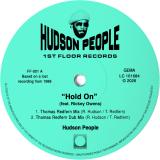
We are finally ready to unveil one of the most exciting projects we have worked on in our label's history: a new release by legendary disco project Hudson People, best remembered for their essential classic "Trip to Your Mind" - which just received its anniversary issue on our label!
Now it's time for "Hold On" - a brand-new single featuring several mixes based on an original recording from the late 1980s, with the completely unheard yet incredibly soulful voice of singer Rickey Owens, whom composer and producer Reginald Hudson worked with at the time.
When we first got in touch with Reg Hudson several years ago, we were originally interested in releasing his "Shake It - Make It Loose" album, which he recorded with John Davis (later known as one of the real voices behind Milli Vanilli). While talking about John Davis (RIP) and other great GI singers such as Karl Keaton, Reginald Hudson immediately mentioned Rickey Owens as one of the best singers he had ever worked with.
Of course, we had never heard of him, as none of his music had ever been released. But when Hudson showed us some old demos and sent us the original DAT recordings, we were immediately hooked.
"Hold On" was recorded in or around 1988 with a simple drum machine and keyboard accompaniment - essentially a demo intended to be recorded properly in a better studio. But the vocal performance was simply stunning, complete with beautifully recorded ad-libs. Owens had a truly remarkable, clear voice with an incredible amount of soul. Luckily, Hudson had his old DAT tapes digitized several years ago, so the acapella recordings survived in excellent shape.
We immediately reached out to several producers to create reworks of the track. The 12" EP compiles some of the most club-friendly of these new mixes - but there is more to come…
First up is Thomas Redfern, a senior producer, professional studio musician and keyboardist from London, UK. His version is a catchy, funky yet deep House track that could easily become a favourite on dancefloors around the globe. Redfern also blessed us with a dub mix that takes things even deeper.
But it gets even catchier on side B of the vinyl. Tom Quick sped up the tempo, added filters and delivered a rework that could make fans of Chromeo, Daft Punk, Stardust and any late-'90s French House afficionado go completely nuts. Yes, we mean it! With a fresh twist on the original, the track has a massive club appeal that we hope both DJs and dancers will dig.
The vinyl single is completed by a mix from German legend DJ Friction, whose version is based on synth layers from the Tom Quick mix. Friction added new drums and bass, giving the track the distinctive modern electro boogie funk vibe he is known for. His mix brings to mind classics such as Shannon's "Let the Music Play" and works of Freestyle's Tony Butler.
The vinyl 12" with 4 mixes is released on The Outer Edge's brand-new sublabel, 1st Floor Records, which focuses on more dancefloor-oriented material. More mixes are available digitally and should not be missed.
PR Feedback:
„Killer“ – Gilles Peterson
„Disco, deep house and boogie all in there! Superb!“ – Groove City Radio
„Dope!!“ – DJ Craze
„The boogie mixes are so good!“ – Selvagem
„Awesome and Huge Package“ - Leon El Ray
„Wow, Trip to Your Mind is so good and this is a real grower“ - Ibiza Sonica
„Really liking the Balearic & Redfern Mix, thanks!“ – Mystic Bill
„Both Thomas Redfern mixes are ace!“ – Deeper Shades of House
With the “Extrasensory” EP, Slices Of Life welcomes one of the most versatile producers in the UK minimal house scene. Since 2003, Tom Ellis has been creating funk- and jazz-inspired house and techno, distinguished by his keen sense of organic rhythm. His extensive discography spans labels such as Logistic/Telegraph, Minibar, Wisdomteeth, KANN, Banoffee Pies, Onysia, among many others. Beyond his solo work, he is also the mastermind behind the electronic jazz ensemble Soulstatejazz.
The four tracks on “Extrasensory" distill this wealth of musical experience into diversely textured minimal house productions. Precisely placed drums and percussion, and rolling grooves form the foundation - clearly shaped by Ellis’s background as a drummer, percussionist, and bass player.
All the tracks share a warm, organic atmosphere, oscillating between lightness and relentless drive. The title track, "Extrasensory", blends almost pop-like melodies with shimmering vocals. "Bring Forth" takes us into deeper, dubby, and driving territories, while "Be The Moment" reveals a playful and melancholic side. Finally, "Vividly" immerses us in a dense, dreamy, yet pulsating sonic world.
For 3+ years Razor-N-Tape has held their quarterly A Joyful Noise event in the Sound Room at Public Records. Conceived as a hearkening back to an early 2000s era of NYC nightlife, it is a club night that includes both DJs and live music. Led by JKriv as musical director and bassist, the live band is a collective of luminary NYC talent including singer Brandon Markell Holmes, guitarist Peter Matson, flutist/singer Domenica and percussionist Olatunji Ojore (Underground System), trumpeter Carter Yasutake (Midnight Magic), keyboardist Jason Lindner (Donny McCaslin/David Bowie's Blackstar), drummer Jim Orso (Hot Chip/Holy Ghost!) and saxophonist Stuart Bogie (Antibalas/Arcade Fire). Merging club sensibilities with jazz, funk and afrobeat pedigree, the A Joyful Noise repertoire includes live-interpreted renditions of J’s music and remixes, features by Razor-N-Tape artists, and original works. This album is a document of this special event, capturing all the live energy, moments of dazzling ensemble interplay, and features by artists Adi Oasis, Toribio and Cor.Ece.