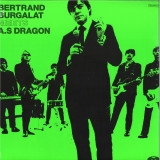
This album, recorded live after the release of Bertrand Burgalat's first album (The Sssound of Mmmusic, 2000), is a unique testimony of a passionate encounter, of explosive concerts and an exceptional musical adventure, a mixture of soulful rhythms, oniric keyboards and songs with chiseled lyrics and harmonies.
Out of stock on vinyl for decades, it will be reissued and published in December 2022, with a text by Philippe Manœuvre. 21 years after its first publication, it has not aged a bit. It includes tribute covers ("Follow Me" by Amanda Lear, "Tears Of A Clown" by Smokey Robinson), and a version of "Easy Tiger", recorded at the same time for Depeche Mode.
"This album brings back the great psychedelic concerts that Bertrand gave at the time. For me, Aux Cyclades électronique is in the running for the title of most beautiful song in the world, I haven't changed my mind."
Philippe Manoeuvre, excerpt from the innersleeve note, April 2022
"A.S Dragon is arguably the best French rock band of today. Nearly an hour of psyche-magnetic madness, the spectacular collision of a Gainsbourg theorist playing his melodies to a Jefferson Airplane from Clignancourt charged with pushing all galactic limits."
Philippe Manoeuvre, Rock & Folk, October 2001
"Bertrand Burgalat meets A.S Dragon could satisfy both French Touch fans and Rock'n'Roll purists. It sounds like the resurrection of a sixties garage rock band, somewhere between Detroit and Combs-la-ville. Burgalat for charity."
Philippe Barbot, Télérama, November 2001
"This is a fantastic remix! It sounds a bit like 70's funk. Bertrand has taken the song and reworked it from top to bottom, re-recording people on every part. It sounds like a James Bond song. It's really one of the best remixes we've ever done. "
Martin Gore (Depeche Mode) on "Easy Tiger", Magic, May 2001
"I wish this song could last my whole life..."
Virginie Despentes, on "Aux Cyclades électronique", "Vernon Subutex
Suche:dr madness
Comprehensive box of 6 LPs / EPs and the band's first rare 7inch.
Aroma Di Amore is/was Belgian’s premier cult band. Since the early eighties ADA innovatively combined electronics with rock. With a mix of razor-sharp Flemish lyrics and unconventional song structures the group earned a cult status in Belgium and abroad. 40 years later they conclude their career with a few last concerts and a vinyl box set spanning the years 1983-1987.
At the notorious Rock Rally of 1982 Aroma Di Amore stands out with their wonderful handling of the Flemish language, a deep bass, typical cold new wave drums, biting guitar riffs with the occasional flavor of absolute madness. Frontman Jos Verlooy adopts the stage name Elvis Peeters. The explanation for this remarkable pseudonym choice: in 1977 – the period of the singer's musical awakening – one of the two famous rocking Elvises (not Costello, but Presley) succumbs to his pill addiction. So, dixit Verlooy, there is an Elvis vacant. A banal surname belongs next to that exotic first name. A combination that breathes rock 'n' roll, according to the singer.
His companion Gerry Vergult – who very much determines the sound with his metallic riffs, somewhat indebted to Jean-Marie Aerts – adopts the stage name Fred Angst. Completely in line with the depressing zeitgeist of the 1980s. Gerry eats and breathes music. Besides composing most of ADA’s songs, he records & self-produces a few fantastic dark en loner solo minimal wave tracks as Fred Angst. He is still musically active, more towards the electronic leftfield nowadays under the moniker Zool.
It is clear from an early age that companion Elvis Peeters possesses the gift of the word. As an adolescent he published the punkzine “Dus”. The punk spirit stimulates Peeters. He begins to transform the poetry that he has been entrusting to paper for some time into song lyrics. It is on a whim and without any stage experience that punk friends Peeters and Angst register for the Rock Rally as Aroma di Amore. On a bed of post-punk and cold wave (Joy Division, Wire and Sisters of Mercy are the main influences), they initially let out playful, minimalist and nonsensical slogans such as "Doe De Mafia" (1982) and "Gorilla Dans De Samba" (1983). Later on, the tone becomes more serious, although Peeters' choice of words continues to show a penchant for absurdism and sarcasm. No one in Dutch songwriting imitates this verbal elasticity, certainly at that time.
The numerous songs about war are downright horrifying. In the 1980s, an arms race is underway. When the Belgian government decides to install nuclear missiles in 1981, Aroma di Amore asks for one minute of silence in the hall during performances. In "Lauwe Oorlog" (1983), Peeters exposes the core of his unrest: “paraat voor de parade / de vrede wordt begraven / met militaire eer”. To this day, the frontman of AdA still proudly wears his at least 30 year old 'atomic energy, no thanks!' button.
In 1984 Aroma releases Koude Oorlog on the new and independent Brussels label Play It Again Sam. The traditional press and radio ignore the record, but in the alternative circuits the mini-album does not go unnoticed, and the group starts to build a solid fan base, resulting in more and more offers for gigs. There's also interest in the Netherlands, and due to the international contacts of PIAS, the record also ends up in France, Switzerland, Spain and Canada.
Encouraged by this modest success, the group returns to the studio for a 12" single. With new group member Frits De Cauter on sax, they record "Voor De Dood". To this day, Voor De Dood remains the most popular AdA song, as evidenced by the countless compilations on which the song has appeared.
AdA goes to the Netherlands to record their next album “De Sfeer Van Grote Dagen”. The people from Nasmak have built a new studio in Eindhoven and one of the members, Theo Van Eenbergen (later Henry Rollins), will be the producer. “De Sfeer Van Grote Dagen” is the group's most adventurous album, and the reviews are again unanimously favorable. However, sales are disappointing and PIAS proposes to recruit Chris Reed of Red Lorry Yellow Lorry and record a new single with him. "Zonder Omzien" is recorded at the prestigious Pyramid Studio. However, PIAS is waiting to release the album and in the meantime AdA is recording a number of extra tracks with producer Ludo Camberlin, including "Koekoek In De Stad". Towards the end of the year, Lo and Elvis travel to Africa for a few months and as a result the group comes to a standstill. In this period, Zonder Omzien is released.
At the beginning of 1986, Peeters and Meulen return, and Andrea Smits leaves the group. Luc Pillards is hired as a replacement, and when Ludo Camberlin presents himself as a new label boss and producer (Anything But Records), they start recording their first full album for the label. “Harde Feiten" kicks in immediately, and the group is back up to cruising speed. In the first week of release, the record even appears in the bestseller list of the record stores.
At the beginning of 1987 the recordings for the second album start, this time in a production by Peeters and Angst themselves. Shortly after the shooting, AdA goes to Switzerland for a short but successful tour, with Men 2nd and Cas & Organized Crime as support act. "Koudvuur" is published in the autumn and considered to be their strongest record so far by the group, the reactions are rather low. Both the reviews in the press and the sales are disappointing and put a damper on the joy. Nevertheless, the group is invited to perform in Valencia, Spain, where they have an unexpected success.
MUTANT SOUNDS BLOG
Aroma Di Amore have always been outsiders, even within the confinement of the alternative rock circuit. Their peculiar blend of raw guitars, electronics, Dutch lyrics and unconventional song structures was too hybrid for many. Those howewer who, without prejudice, would lend an ear to the band's music, discovered an energetic, authentic and uncompromising collective that stood above all trends. While so many Belgian "connaisseurs" had their doubts about the possibilities of international recognition for a band singing in Dutch, Aroma Di Amore toured France, Switzerland and Spain; their records figured in alternative charts from Poland to Canada.
From beginning to end the nucleus of Aroma Di Amore consisted of Elvis PEETERS, who in a inimitable, possessed way delivered his highly original lyrics, and Fred ANGST, guitarist mastering the heaviest riffs as well as refined tapestries of sound. Furthermore, the line-up varied throughout the band's carreer with:- H.K. (Guitarist from 1982 until 1983)- Andrea SMITS (Organ from 1982 until 1985)- Luc PILLARDS (Synthsizer in 1986)- Jan WANDELAAR (Guitar and synthesizer in 1986)- Pulcherie (Saxophone in 1983)- Wout DOCKX (Bass from 1987 until 1988)and especially- Lo MEULEN (Bass from 1983 until 1987)and the late Frits DE CAUTER (Saxophone from 1984 until 1986) contributing to the music.
Box Set includes: Gorilla Dans De Samba 7" (1983), Voor De Dood 12" (1984), Koude Oorlog LP (1984), De Sfeer Van Grote Dagen 12" (1985), Zonder Omzien 12" (1986), Harde Feiten LP (1986), Koudvuur LP (1987)
First-time reissue of Aroma Di Amore's debut album, originally released in 1984.
Aroma Di Amore is/was Belgian’s premier cult band. Since the early eighties ADA innovatively combined electronics with rock. With a mix of razor-sharp Flemish lyrics and unconventional song structures the group earned a cult status in Belgium and abroad. 40 years later they conclude their career with a few last concerts and a vinyl box set spanning the years 1983-1987.
At the notorious Rock Rally of 1982 Aroma Di Amore stands out with their wonderful handling of the Flemish language, a deep bass, typical cold new wave drums, biting guitar riffs with the occasional flavor of absolute madness. Frontman Jos Verlooy adopts the stage name Elvis Peeters. The explanation for this remarkable pseudonym choice: in 1977 – the period of the singer's musical awakening – one of the two famous rocking Elvises (not Costello, but Presley) succumbs to his pill addiction. So, dixit Verlooy, there is an Elvis vacant. A banal surname belongs next to that exotic first name. A combination that breathes rock 'n' roll, according to the singer.
His companion Gerry Vergult – who very much determines the sound with his metallic riffs, somewhat indebted to Jean-Marie Aerts – adopts the stage name Fred Angst. Completely in line with the depressing zeitgeist of the 1980s. Gerry eats and breathes music. Besides composing most of ADA’s songs, he records & self-produces a few fantastic dark en loner solo minimal wave tracks as Fred Angst. He is still musically active, more towards the electronic leftfield nowadays under the moniker Zool.
It is clear from an early age that companion Elvis Peeters possesses the gift of the word. As an adolescent he published the punkzine “Dus”. The punk spirit stimulates Peeters. He begins to transform the poetry that he has been entrusting to paper for some time into song lyrics. It is on a whim and without any stage experience that punk friends Peeters and Angst register for the Rock Rally as Aroma di Amore. On a bed of post-punk and cold wave (Joy Division, Wire and Sisters of Mercy are the main influences), they initially let out playful, minimalist and nonsensical slogans such as "Doe De Mafia" (1982) and "Gorilla Dans De Samba" (1983). Later on, the tone becomes more serious, although Peeters' choice of words continues to show a penchant for absurdism and sarcasm. No one in Dutch songwriting imitates this verbal elasticity, certainly at that time.
The numerous songs about war are downright horrifying. In the 1980s, an arms race is underway. When the Belgian government decides to install nuclear missiles in 1981, Aroma di Amore asks for one minute of silence in the hall during performances. In "Lauwe Oorlog" (1983), Peeters exposes the core of his unrest: “paraat voor de parade / de vrede wordt begraven / met militaire eer”. To this day, the frontman of AdA still proudly wears his at least 30 year old 'atomic energy, no thanks!' button.
In 1984 Aroma releases Koude Oorlog on the new and independent Brussels label Play It Again Sam. The traditional press and radio ignore the record, but in the alternative circuits the mini-album does not go unnoticed, and the group starts to build a solid fan base, resulting in more and more offers for gigs. There's also interest in the Netherlands, and due to the international contacts of PIAS, the record also ends up in France, Switzerland, Spain and Canada.
Encouraged by this modest success, the group returns to the studio for a 12" single. With new group member Frits De Cauter on sax, they record "Voor De Dood". To this day, Voor De Dood remains the most popular AdA song, as evidenced by the countless compilations on which the song has appeared.
AdA goes to the Netherlands to record their next album “De Sfeer Van Grote Dagen”. The people from Nasmak have built a new studio in Eindhoven and one of the members, Theo Van Eenbergen (later Henry Rollins), will be the producer. “De Sfeer Van Grote Dagen” is the group's most adventurous album, and the reviews are again unanimously favorable. However, sales are disappointing and PIAS proposes to recruit Chris Reed of Red Lorry Yellow Lorry and record a new single with him. "Zonder Omzien" is recorded at the prestigious Pyramid Studio. However, PIAS is waiting to release the album and in the meantime AdA is recording a number of extra tracks with producer Ludo Camberlin, including "Koekoek In De Stad". Towards the end of the year, Lo and Elvis travel to Africa for a few months and as a result the group comes to a standstill. In this period, Zonder Omzien is released.
At the beginning of 1986, Peeters and Meulen return, and Andrea Smits leaves the group. Luc Pillards is hired as a replacement, and when Ludo Camberlin presents himself as a new label boss and producer (Anything But Records), they start recording their first full album for the label. “Harde Feiten" kicks in immediately, and the group is back up to cruising speed. In the first week of release, the record even appears in the bestseller list of the record stores.
At the beginning of 1987 the recordings for the second album start, this time in a production by Peeters and Angst themselves. Shortly after the shooting, AdA goes to Switzerland for a short but successful tour, with Men 2nd and Cas & Organized Crime as support act. "Koudvuur" is published in the autumn and considered to be their strongest record so far by the group, the reactions are rather low. Both the reviews in the press and the sales are disappointing and put a damper on the joy. Nevertheless, the group is invited to perform in Valencia, Spain, where they have an unexpected success.
MUTANT SOUNDS BLOG
Aroma Di Amore have always been outsiders, even within the confinement of the alternative rock circuit. Their peculiar blend of raw guitars, electronics, Dutch lyrics and unconventional song structures was too hybrid for many. Those howewer who, without prejudice, would lend an ear to the band's music, discovered an energetic, authentic and uncompromising collective that stood above all trends. While so many Belgian "connaisseurs" had their doubts about the possibilities of international recognition for a band singing in Dutch, Aroma Di Amore toured France, Switzerland and Spain; their records figured in alternative charts from Poland to Canada.
From beginning to end the nucleus of Aroma Di Amore consisted of Elvis PEETERS, who in a inimitable, possessed way delivered his highly original lyrics, and Fred ANGST, guitarist mastering the heaviest riffs as well as refined tapestries of sound. Furthermore, the line-up varied throughout the band's carreer with:- H.K. (Guitarist from 1982 until 1983)- Andrea SMITS (Organ from 1982 until 1985)- Luc PILLARDS (Synthsizer in 1986)- Jan WANDELAAR (Guitar and synthesizer in 1986)- Pulcherie (Saxophone in 1983)- Wout DOCKX (Bass from 1987 until 1988)and especially- Lo MEULEN (Bass from 1983 until 1987)and the late Frits DE CAUTER (Saxophone from 1984 until 1986)contributing to the music.
First-time reissue of Aroma Di Amore's 2nd album, originally released in 1986.
Aroma Di Amore is/was Belgian’s premier cult band. Since the early eighties ADA innovatively combined electronics with rock. With a mix of razor-sharp Flemish lyrics and unconventional song structures the group earned a cult status in Belgium and abroad. 40 years later they conclude their career with a few last concerts and a vinyl box set spanning the years 1983-1987.
At the notorious Rock Rally of 1982 Aroma Di Amore stands out with their wonderful handling of the Flemish language, a deep bass, typical cold new wave drums, biting guitar riffs with the occasional flavor of absolute madness. Frontman Jos Verlooy adopts the stage name Elvis Peeters. The explanation for this remarkable pseudonym choice: in 1977 – the period of the singer's musical awakening – one of the two famous rocking Elvises (not Costello, but Presley) succumbs to his pill addiction. So, dixit Verlooy, there is an Elvis vacant. A banal surname belongs next to that exotic first name. A combination that breathes rock 'n' roll, according to the singer.
His companion Gerry Vergult – who very much determines the sound with his metallic riffs, somewhat indebted to Jean-Marie Aerts – adopts the stage name Fred Angst. Completely in line with the depressing zeitgeist of the 1980s. Gerry eats and breathes music. Besides composing most of ADA’s songs, he records & self-produces a few fantastic dark en loner solo minimal wave tracks as Fred Angst. He is still musically active, more towards the electronic leftfield nowadays under the moniker Zool.
It is clear from an early age that companion Elvis Peeters possesses the gift of the word. As an adolescent he published the punkzine “Dus”. The punk spirit stimulates Peeters. He begins to transform the poetry that he has been entrusting to paper for some time into song lyrics. It is on a whim and without any stage experience that punk friends Peeters and Angst register for the Rock Rally as Aroma di Amore. On a bed of post-punk and cold wave (Joy Division, Wire and Sisters of Mercy are the main influences), they initially let out playful, minimalist and nonsensical slogans such as "Doe De Mafia" (1982) and "Gorilla Dans De Samba" (1983). Later on, the tone becomes more serious, although Peeters' choice of words continues to show a penchant for absurdism and sarcasm. No one in Dutch songwriting imitates this verbal elasticity, certainly at that time.
The numerous songs about war are downright horrifying. In the 1980s, an arms race is underway. When the Belgian government decides to install nuclear missiles in 1981, Aroma di Amore asks for one minute of silence in the hall during performances. In "Lauwe Oorlog" (1983), Peeters exposes the core of his unrest: “paraat voor de parade / de vrede wordt begraven / met militaire eer”. To this day, the frontman of AdA still proudly wears his at least 30 year old 'atomic energy, no thanks!' button.
In 1984 Aroma releases Koude Oorlog on the new and independent Brussels label Play It Again Sam. The traditional press and radio ignore the record, but in the alternative circuits the mini-album does not go unnoticed, and the group starts to build a solid fan base, resulting in more and more offers for gigs. There's also interest in the Netherlands, and due to the international contacts of PIAS, the record also ends up in France, Switzerland, Spain and Canada.
Encouraged by this modest success, the group returns to the studio for a 12" single. With new group member Frits De Cauter on sax, they record "Voor De Dood". To this day, Voor De Dood remains the most popular AdA song, as evidenced by the countless compilations on which the song has appeared.
AdA goes to the Netherlands to record their next album “De Sfeer Van Grote Dagen”. The people from Nasmak have built a new studio in Eindhoven and one of the members, Theo Van Eenbergen (later Henry Rollins), will be the producer. “De Sfeer Van Grote Dagen” is the group's most adventurous album, and the reviews are again unanimously favorable. However, sales are disappointing and PIAS proposes to recruit Chris Reed of Red Lorry Yellow Lorry and record a new single with him. "Zonder Omzien" is recorded at the prestigious Pyramid Studio. However, PIAS is waiting to release the album and in the meantime AdA is recording a number of extra tracks with producer Ludo Camberlin, including "Koekoek In De Stad". Towards the end of the year, Lo and Elvis travel to Africa for a few months and as a result the group comes to a standstill. In this period, Zonder Omzien is released.
At the beginning of 1986, Peeters and Meulen return, and Andrea Smits leaves the group. Luc Pillards is hired as a replacement, and when Ludo Camberlin presents himself as a new label boss and producer (Anything But Records), they start recording their first full album for the label. “Harde Feiten" kicks in immediately, and the group is back up to cruising speed. In the first week of release, the record even appears in the bestseller list of the record stores.
At the beginning of 1987 the recordings for the second album start, this time in a production by Peeters and Angst themselves. Shortly after the shooting, AdA goes to Switzerland for a short but successful tour, with Men 2nd and Cas & Organized Crime as support act. "Koudvuur" is published in the autumn and considered to be their strongest record so far by the group, the reactions are rather low. Both the reviews in the press and the sales are disappointing and put a damper on the joy. Nevertheless, the group is invited to perform in Valencia, Spain, where they have an unexpected success.
MUTANT SOUNDS BLOG
Aroma Di Amore have always been outsiders, even within the confinement of the alternative rock circuit. Their peculiar blend of raw guitars, electronics, Dutch lyrics and unconventional song structures was too hybrid for many. Those howewer who, without prejudice, would lend an ear to the band's music, discovered an energetic, authentic and uncompromising collective that stood above all trends. While so many Belgian "connaisseurs" had their doubts about the possibilities of international recognition for a band singing in Dutch, Aroma Di Amore toured France, Switzerland and Spain; their records figured in alternative charts from Poland to Canada.
From beginning to end the nucleus of Aroma Di Amore consisted of Elvis PEETERS, who in a inimitable, possessed way delivered his highly original lyrics, and Fred ANGST, guitarist mastering the heaviest riffs as well as refined tapestries of sound. Furthermore, the line-up varied throughout the band's carreer with:- H.K. (Guitarist from 1982 until 1983)- Andrea SMITS (Organ from 1982 until 1985)- Luc PILLARDS (Synthsizer in 1986)- Jan WANDELAAR (Guitar and synthesizer in 1986)- Pulcherie (Saxophone in 1983)- Wout DOCKX (Bass from 1987 until 1988)and especially- Lo MEULEN (Bass from 1983 until 1987)and the late Frits DE CAUTER (Saxophone from 1984 until 1986)contributing to the music.
First-time reissue of Aroma Di Amore's 3rd album, originally released in 1987.
Aroma Di Amore is/was Belgian’s premier cult band. Since the early eighties ADA innovatively combined electronics with rock. With a mix of razor-sharp Flemish lyrics and unconventional song structures the group earned a cult status in Belgium and abroad. 40 years later they conclude their career with a few last concerts and a vinyl box set spanning the years 1983-1987.
At the notorious Rock Rally of 1982 Aroma Di Amore stands out with their wonderful handling of the Flemish language, a deep bass, typical cold new wave drums, biting guitar riffs with the occasional flavor of absolute madness. Frontman Jos Verlooy adopts the stage name Elvis Peeters. The explanation for this remarkable pseudonym choice: in 1977 – the period of the singer's musical awakening – one of the two famous rocking Elvises (not Costello, but Presley) succumbs to his pill addiction. So, dixit Verlooy, there is an Elvis vacant. A banal surname belongs next to that exotic first name. A combination that breathes rock 'n' roll, according to the singer.
His companion Gerry Vergult – who very much determines the sound with his metallic riffs, somewhat indebted to Jean-Marie Aerts – adopts the stage name Fred Angst. Completely in line with the depressing zeitgeist of the 1980s. Gerry eats and breathes music. Besides composing most of ADA’s songs, he records & self-produces a few fantastic dark en loner solo minimal wave tracks as Fred Angst. He is still musically active, more towards the electronic leftfield nowadays under the moniker Zool.
It is clear from an early age that companion Elvis Peeters possesses the gift of the word. As an adolescent he published the punkzine “Dus”. The punk spirit stimulates Peeters. He begins to transform the poetry that he has been entrusting to paper for some time into song lyrics. It is on a whim and without any stage experience that punk friends Peeters and Angst register for the Rock Rally as Aroma di Amore. On a bed of post-punk and cold wave (Joy Division, Wire and Sisters of Mercy are the main influences), they initially let out playful, minimalist and nonsensical slogans such as "Doe De Mafia" (1982) and "Gorilla Dans De Samba" (1983). Later on, the tone becomes more serious, although Peeters' choice of words continues to show a penchant for absurdism and sarcasm. No one in Dutch songwriting imitates this verbal elasticity, certainly at that time.
The numerous songs about war are downright horrifying. In the 1980s, an arms race is underway. When the Belgian government decides to install nuclear missiles in 1981, Aroma di Amore asks for one minute of silence in the hall during performances. In "Lauwe Oorlog" (1983), Peeters exposes the core of his unrest: “paraat voor de parade / de vrede wordt begraven / met militaire eer”. To this day, the frontman of AdA still proudly wears his at least 30 year old 'atomic energy, no thanks!' button.
In 1984 Aroma releases Koude Oorlog on the new and independent Brussels label Play It Again Sam. The traditional press and radio ignore the record, but in the alternative circuits the mini-album does not go unnoticed, and the group starts to build a solid fan base, resulting in more and more offers for gigs. There's also interest in the Netherlands, and due to the international contacts of PIAS, the record also ends up in France, Switzerland, Spain and Canada.
Encouraged by this modest success, the group returns to the studio for a 12" single. With new group member Frits De Cauter on sax, they record "Voor De Dood". To this day, Voor De Dood remains the most popular AdA song, as evidenced by the countless compilations on which the song has appeared.
AdA goes to the Netherlands to record their next album “De Sfeer Van Grote Dagen”. The people from Nasmak have built a new studio in Eindhoven and one of the members, Theo Van Eenbergen (later Henry Rollins), will be the producer. “De Sfeer Van Grote Dagen” is the group's most adventurous album, and the reviews are again unanimously favorable. However, sales are disappointing and PIAS proposes to recruit Chris Reed of Red Lorry Yellow Lorry and record a new single with him. "Zonder Omzien" is recorded at the prestigious Pyramid Studio. However, PIAS is waiting to release the album and in the meantime AdA is recording a number of extra tracks with producer Ludo Camberlin, including "Koekoek In De Stad". Towards the end of the year, Lo and Elvis travel to Africa for a few months and as a result the group comes to a standstill. In this period, Zonder Omzien is released.
At the beginning of 1986, Peeters and Meulen return, and Andrea Smits leaves the group. Luc Pillards is hired as a replacement, and when Ludo Camberlin presents himself as a new label boss and producer (Anything But Records), they start recording their first full album for the label. “Harde Feiten" kicks in immediately, and the group is back up to cruising speed. In the first week of release, the record even appears in the bestseller list of the record stores.
At the beginning of 1987 the recordings for the second album start, this time in a production by Peeters and Angst themselves. Shortly after the shooting, AdA goes to Switzerland for a short but successful tour, with Men 2nd and Cas & Organized Crime as support act. "Koudvuur" is published in the autumn and considered to be their strongest record so far by the group, the reactions are rather low. Both the reviews in the press and the sales are disappointing and put a damper on the joy. Nevertheless, the group is invited to perform in Valencia, Spain, where they have an unexpected success.
MUTANT SOUNDS BLOG
Aroma Di Amore have always been outsiders, even within the confinement of the alternative rock circuit. Their peculiar blend of raw guitars, electronics, Dutch lyrics and unconventional song structures was too hybrid for many. Those howewer who, without prejudice, would lend an ear to the band's music, discovered an energetic, authentic and uncompromising collective that stood above all trends. While so many Belgian "connaisseurs" had their doubts about the possibilities of international recognition for a band singing in Dutch, Aroma Di Amore toured France, Switzerland and Spain; their records figured in alternative charts from Poland to Canada.
From beginning to end the nucleus of Aroma Di Amore consisted of Elvis PEETERS, who in a inimitable, possessed way delivered his highly original lyrics, and Fred ANGST, guitarist mastering the heaviest riffs as well as refined tapestries of sound. Furthermore, the line-up varied throughout the band's carreer with:- H.K. (Guitarist from 1982 until 1983)- Andrea SMITS (Organ from 1982 until 1985)- Luc PILLARDS (Synthsizer in 1986)- Jan WANDELAAR (Guitar and synthesizer in 1986)- Pulcherie (Saxophone in 1983)- Wout DOCKX (Bass from 1987 until 1988)and especially- Lo MEULEN (Bass from 1983 until 1987)and the late Frits DE CAUTER (Saxophone from 1984 until 1986)contributing to the music.
First-time reissue of Aroma Di Amore's 3rd EP, originally released in 1985.
Aroma Di Amore is/was Belgian’s premier cult band. Since the early eighties ADA innovatively combined electronics with rock. With a mix of razor-sharp Flemish lyrics and unconventional song structures the group earned a cult status in Belgium and abroad. 40 years later they conclude their career with a few last concerts and a vinyl box set spanning the years 1983-1987.
At the notorious Rock Rally of 1982 Aroma Di Amore stands out with their wonderful handling of the Flemish language, a deep bass, typical cold new wave drums, biting guitar riffs with the occasional flavor of absolute madness. Frontman Jos Verlooy adopts the stage name Elvis Peeters. The explanation for this remarkable pseudonym choice: in 1977 – the period of the singer's musical awakening – one of the two famous rocking Elvises (not Costello, but Presley) succumbs to his pill addiction. So, dixit Verlooy, there is an Elvis vacant. A banal surname belongs next to that exotic first name. A combination that breathes rock 'n' roll, according to the singer.
His companion Gerry Vergult – who very much determines the sound with his metallic riffs, somewhat indebted to Jean-Marie Aerts – adopts the stage name Fred Angst. Completely in line with the depressing zeitgeist of the 1980s. Gerry eats and breathes music. Besides composing most of ADA’s songs, he records & self-produces a few fantastic dark en loner solo minimal wave tracks as Fred Angst. He is still musically active, more towards the electronic leftfield nowadays under the moniker Zool.
It is clear from an early age that companion Elvis Peeters possesses the gift of the word. As an adolescent he published the punkzine “Dus”. The punk spirit stimulates Peeters. He begins to transform the poetry that he has been entrusting to paper for some time into song lyrics. It is on a whim and without any stage experience that punk friends Peeters and Angst register for the Rock Rally as Aroma di Amore. On a bed of post-punk and cold wave (Joy Division, Wire and Sisters of Mercy are the main influences), they initially let out playful, minimalist and nonsensical slogans such as "Doe De Mafia" (1982) and "Gorilla Dans De Samba" (1983). Later on, the tone becomes more serious, although Peeters' choice of words continues to show a penchant for absurdism and sarcasm. No one in Dutch songwriting imitates this verbal elasticity, certainly at that time.
The numerous songs about war are downright horrifying. In the 1980s, an arms race is underway. When the Belgian government decides to install nuclear missiles in 1981, Aroma di Amore asks for one minute of silence in the hall during performances. In "Lauwe Oorlog" (1983), Peeters exposes the core of his unrest: “paraat voor de parade / de vrede wordt begraven / met militaire eer”. To this day, the frontman of AdA still proudly wears his at least 30 year old 'atomic energy, no thanks!' button.
In 1984 Aroma releases Koude Oorlog on the new and independent Brussels label Play It Again Sam. The traditional press and radio ignore the record, but in the alternative circuits the mini-album does not go unnoticed, and the group starts to build a solid fan base, resulting in more and more offers for gigs. There's also interest in the Netherlands, and due to the international contacts of PIAS, the record also ends up in France, Switzerland, Spain and Canada.
Encouraged by this modest success, the group returns to the studio for a 12" single. With new group member Frits De Cauter on sax, they record "Voor De Dood". To this day, Voor De Dood remains the most popular AdA song, as evidenced by the countless compilations on which the song has appeared.
AdA goes to the Netherlands to record their next album “De Sfeer Van Grote Dagen”. The people from Nasmak have built a new studio in Eindhoven and one of the members, Theo Van Eenbergen (later Henry Rollins), will be the producer. “De Sfeer Van Grote Dagen” is the group's most adventurous album, and the reviews are again unanimously favorable. However, sales are disappointing and PIAS proposes to recruit Chris Reed of Red Lorry Yellow Lorry and record a new single with him. "Zonder Omzien" is recorded at the prestigious Pyramid Studio. However, PIAS is waiting to release the album and in the meantime AdA is recording a number of extra tracks with producer Ludo Camberlin, including "Koekoek In De Stad". Towards the end of the year, Lo and Elvis travel to Africa for a few months and as a result the group comes to a standstill. In this period, Zonder Omzien is released.
At the beginning of 1986, Peeters and Meulen return, and Andrea Smits leaves the group. Luc Pillards is hired as a replacement, and when Ludo Camberlin presents himself as a new label boss and producer (Anything But Records), they start recording their first full album for the label. “Harde Feiten" kicks in immediately, and the group is back up to cruising speed. In the first week of release, the record even appears in the bestseller list of the record stores.
At the beginning of 1987 the recordings for the second album start, this time in a production by Peeters and Angst themselves. Shortly after the shooting, AdA goes to Switzerland for a short but successful tour, with Men 2nd and Cas & Organized Crime as support act. "Koudvuur" is published in the autumn and considered to be their strongest record so far by the group, the reactions are rather low. Both the reviews in the press and the sales are disappointing and put a damper on the joy. Nevertheless, the group is invited to perform in Valencia, Spain, where they have an unexpected success.
MUTANT SOUNDS BLOG
Aroma Di Amore have always been outsiders, even within the confinement of the alternative rock circuit. Their peculiar blend of raw guitars, electronics, Dutch lyrics and unconventional song structures was too hybrid for many. Those howewer who, without prejudice, would lend an ear to the band's music, discovered an energetic, authentic and uncompromising collective that stood above all trends. While so many Belgian "connaisseurs" had their doubts about the possibilities of international recognition for a band singing in Dutch, Aroma Di Amore toured France, Switzerland and Spain; their records figured in alternative charts from Poland to Canada.
From beginning to end the nucleus of Aroma Di Amore consisted of Elvis PEETERS, who in a inimitable, possessed way delivered his highly original lyrics, and Fred ANGST, guitarist mastering the heaviest riffs as well as refined tapestries of sound. Furthermore, the line-up varied throughout the band's carreer with:- H.K. (Guitarist from 1982 until 1983)- Andrea SMITS (Organ from 1982 until 1985)- Luc PILLARDS (Synthsizer in 1986)- Jan WANDELAAR (Guitar and synthesizer in 1986)- Pulcherie (Saxophone in 1983)- Wout DOCKX (Bass from 1987 until 1988)and especially- Lo MEULEN (Bass from 1983 until 1987)and the late Frits DE CAUTER (Saxophone from 1984 until 1986)contributing to the music
First-time reissue of Aroma Di Amore's 4th EP, originally released in 1986.
Aroma Di Amore is/was Belgian’s premier cult band. Since the early eighties ADA innovatively combined electronics with rock. With a mix of razor-sharp Flemish lyrics and unconventional song structures the group earned a cult status in Belgium and abroad. 40 years later they conclude their career with a few last concerts and a vinyl box set spanning the years 1983-1987.
At the notorious Rock Rally of 1982 Aroma Di Amore stands out with their wonderful handling of the Flemish language, a deep bass, typical cold new wave drums, biting guitar riffs with the occasional flavor of absolute madness. Frontman Jos Verlooy adopts the stage name Elvis Peeters. The explanation for this remarkable pseudonym choice: in 1977 – the period of the singer's musical awakening – one of the two famous rocking Elvises (not Costello, but Presley) succumbs to his pill addiction. So, dixit Verlooy, there is an Elvis vacant. A banal surname belongs next to that exotic first name. A combination that breathes rock 'n' roll, according to the singer.
His companion Gerry Vergult – who very much determines the sound with his metallic riffs, somewhat indebted to Jean-Marie Aerts – adopts the stage name Fred Angst. Completely in line with the depressing zeitgeist of the 1980s. Gerry eats and breathes music. Besides composing most of ADA’s songs, he records & self-produces a few fantastic dark en loner solo minimal wave tracks as Fred Angst. He is still musically active, more towards the electronic leftfield nowadays under the moniker Zool.
It is clear from an early age that companion Elvis Peeters possesses the gift of the word. As an adolescent he published the punkzine “Dus”. The punk spirit stimulates Peeters. He begins to transform the poetry that he has been entrusting to paper for some time into song lyrics. It is on a whim and without any stage experience that punk friends Peeters and Angst register for the Rock Rally as Aroma di Amore. On a bed of post-punk and cold wave (Joy Division, Wire and Sisters of Mercy are the main influences), they initially let out playful, minimalist and nonsensical slogans such as "Doe De Mafia" (1982) and "Gorilla Dans De Samba" (1983). Later on, the tone becomes more serious, although Peeters' choice of words continues to show a penchant for absurdism and sarcasm. No one in Dutch songwriting imitates this verbal elasticity, certainly at that time.
The numerous songs about war are downright horrifying. In the 1980s, an arms race is underway. When the Belgian government decides to install nuclear missiles in 1981, Aroma di Amore asks for one minute of silence in the hall during performances. In "Lauwe Oorlog" (1983), Peeters exposes the core of his unrest: “paraat voor de parade / de vrede wordt begraven / met militaire eer”. To this day, the frontman of AdA still proudly wears his at least 30 year old 'atomic energy, no thanks!' button.
In 1984 Aroma releases Koude Oorlog on the new and independent Brussels label Play It Again Sam. The traditional press and radio ignore the record, but in the alternative circuits the mini-album does not go unnoticed, and the group starts to build a solid fan base, resulting in more and more offers for gigs. There's also interest in the Netherlands, and due to the international contacts of PIAS, the record also ends up in France, Switzerland, Spain and Canada.
Encouraged by this modest success, the group returns to the studio for a 12" single. With new group member Frits De Cauter on sax, they record "Voor De Dood". To this day, Voor De Dood remains the most popular AdA song, as evidenced by the countless compilations on which the song has appeared.
AdA goes to the Netherlands to record their next album “De Sfeer Van Grote Dagen”. The people from Nasmak have built a new studio in Eindhoven and one of the members, Theo Van Eenbergen (later Henry Rollins), will be the producer. “De Sfeer Van Grote Dagen” is the group's most adventurous album, and the reviews are again unanimously favorable. However, sales are disappointing and PIAS proposes to recruit Chris Reed of Red Lorry Yellow Lorry and record a new single with him. "Zonder Omzien" is recorded at the prestigious Pyramid Studio. However, PIAS is waiting to release the album and in the meantime AdA is recording a number of extra tracks with producer Ludo Camberlin, including "Koekoek In De Stad". Towards the end of the year, Lo and Elvis travel to Africa for a few months and as a result the group comes to a standstill. In this period, Zonder Omzien is released.
At the beginning of 1986, Peeters and Meulen return, and Andrea Smits leaves the group. Luc Pillards is hired as a replacement, and when Ludo Camberlin presents himself as a new label boss and producer (Anything But Records), they start recording their first full album for the label. “Harde Feiten" kicks in immediately, and the group is back up to cruising speed. In the first week of release, the record even appears in the bestseller list of the record stores.
At the beginning of 1987 the recordings for the second album start, this time in a production by Peeters and Angst themselves. Shortly after the shooting, AdA goes to Switzerland for a short but successful tour, with Men 2nd and Cas & Organized Crime as support act. "Koudvuur" is published in the autumn and considered to be their strongest record so far by the group, the reactions are rather low. Both the reviews in the press and the sales are disappointing and put a damper on the joy. Nevertheless, the group is invited to perform in Valencia, Spain, where they have an unexpected success.
MUTANT SOUNDS BLOG
Aroma Di Amore have always been outsiders, even within the confinement of the alternative rock circuit. Their peculiar blend of raw guitars, electronics, Dutch lyrics and unconventional song structures was too hybrid for many. Those howewer who, without prejudice, would lend an ear to the band's music, discovered an energetic, authentic and uncompromising collective that stood above all trends. While so many Belgian "connaisseurs" had their doubts about the possibilities of international recognition for a band singing in Dutch, Aroma Di Amore toured France, Switzerland and Spain; their records figured in alternative charts from Poland to Canada.
From beginning to end the nucleus of Aroma Di Amore consisted of Elvis PEETERS, who in a inimitable, possessed way delivered his highly original lyrics, and Fred ANGST, guitarist mastering the heaviest riffs as well as refined tapestries of sound. Furthermore, the line-up varied throughout the band's carreer with:- H.K. (Guitarist from 1982 until 1983)- Andrea SMITS (Organ from 1982 until 1985)- Luc PILLARDS (Synthsizer in 1986)- Jan WANDELAAR (Guitar and synthesizer in 1986)- Pulcherie (Saxophone in 1983)- Wout DOCKX (Bass from 1987 until 1988)and especially- Lo MEULEN (Bass from 1983 until 1987)and the late Frits DE CAUTER (Saxophone from 1984 until 1986)contributing to the music.
- 01: Emerson, Lake & Palmer – Peter Gunn (Live)
- 02: Basement Jaxx – Where’s Your Head At (Head-A-Pella)
- 03: Peaches – Fuck The Pain Away
- 04: The Velvet Underground – I’m Waiting For The Man
- 05: Polyester – J’aime Regarder Les Mecs
- 06: Sly And The Family Stone – Dance To The Music
- 07: Ready For The World – Oh Sheila (A Capella)
- 08: Dakar & Grinser – I Wanna Be Your Dog
- 09: Ural 13 Diktators – Disko Kings
- 10: Bobby Orlando – The “O” Medley
- 11: Felix Da Housecat – Silverscreen-Shower Scene
- 12: The Stooges – No Fun
- 13: Salt ‘N Pepa – Push It
- 14: Hanayo With Jürgen Paape - Joe Le Taxi
- 15: The Jets – Crush On You (A Capella)
- 16: Funkacise Gang – Funkacise
- 17: Soul Grabber – Motocross Madness
- 18: Lil Louis And The World – French Kiss
- 19: Zongamin – Serious Trouble
- 20: Garbage – Androgyny ‘Thee Glitz Mix’ By Felix Da Housecat
- 21: Frank Delour – Disc Jockey’s Delight Vol. 2
- 22: The Residents – Kaw-Liga (Prairie Mix)
- 23: Carlos Morgan – Shake Your Body
- 24: Alphawezen – Into The Stars (Firebirds Remix)
- 27: Destiny’s Child – Independent Women Part 1 (A Capella)
- 28: 10Cc – Dreadlock Holiday
- 29: Dolly Parton – 9 To 5
- 30: Röyksopp – Eple
- 31: Arbeid Adelt – Death Disco
- 32: Jeans Team – Keine Melodien Feat. Mj Lan
- 33: Skee.lo – I Wish (A Capella)
- 34: Maurice Fulton Presents Stress – My Gigolo
- 35: The Breeders – Cannonball
- 36: The Cramps – Human Fly
- 37: The Wildbunch – Danger! High Voltage
- 38: Op L Bastards – Don’t Bring Me Down
- 39: Adult – Hand To Phone
- 40: Vitalic – La Rock 01
- 41: Queen Of Japan – I Was Made For Loving You
- 42: New Order – The Beach
- 43: Detroit Grand Pubahs – Sandwiches (A Capella)
- 44: Lords Of Acid – I Sit On Acid (Soulwax Remix)
- 45: Streamer Feat. Private Thoughts In Public Places – Start Button
- 25: Interstellar – Concepts
- 26: Nena – 99 Luftballons
Das ikonische belgische DJ-Duo 2ManyDJs, bestehend aus den Brüder Stephen und David Dewaele, feiert das 20-jährige Jubiläum ihres Albums 'As Heard on Radio Soulwax Pt. 2' mit einer besonderen Re-Issue. 2002 erschien es ursprünglich nach einer Reihe von Radioshows der beiden Brüder, damals vor allem bekannt als die Köpfe hinter der Electronic/Indie-Rock Band Soulwax. Die Re-Issue erscheint mit dem Foto von Richard Young auf dem Cover, das ursprünglich als Cover vorgesehen, aber nach Rechtsstreitigkeiten mit Tipp-Ex verfremdet wurde.
Heralding the release of Memoirs of Hi-Tech Jazz, the forthcoming album by Detroit-born-and-based artist, Waajeed, the 12” features further examinations of the track’s motifs by the vaunted Detroit collective, Underground Resistance, Zambian producer SHE Spells Doom, and a special reimagining by Waajeed himself featuring live drums.
Alongside the LP version the three remixes further explore the links between Techno and Jazz, styles both founded on African traditions that make commentary on the present but are always oriented to potential hereafter.
On the People Mover Remix, Waajeed enlists the talents of Zo!, Tall Black Guy, Michele Manzo, and more to explore one extreme of the track’s musical heritage. Syncopated drums, driven by a full and bright snare drum, firmly place this version in the sphere of contemporary Jazz emanating from Detroit and cities across the US.
Coming from an album inspired by revolutionary efforts against oppression in Detroit and in Black locales around the world it is entirely fitting that Underground Resistance should provide their take on Motor City Madness. UR’s Mike Banks follows the lead of the original’s melange of genres. By thickening the bassline, peppering the mix with extra brass from the Mad Brass Horn Section, and adding strings courtesy of Six Mile Strings, UR further explore the dynamic intersection of music, history, and geography.
SHE Spells Doom closes the remix package with his second release on Tresor after his contribution to 2021’s Tresor30 compilation. The Zambian artist trims Motor City Madness down to the bones of the brass section and infuses them with a gqom beat, simultaneously referring to Jazz and Techno’s deepest roots in Africa, as well as suggesting where they might be headed in the future.
PUBLISHED: 6TH OCTOBER 2022
Inspired by revolutionary efforts against oppressive hegemonies in Detroit, and in Black locales around the world, Memoirs of Hi-Tech Jazz is a sound score evocative of that resistance. It is also a reminder that although violence and injustice looms, it is not the only story: we are much more than what oppresses us. The album celebrates Black leisure and play; the mundane joys that persist in spite of the depleting realities of the world.
Movement, and the very mobility of the car specifically is integral to Memoirs of Hi Tech Jazz. Timed perfectly to match the duration of a round trip drive from Underground Music Academy in the North End, to Detroit’s island park, Belle Isle - the album is undoubtedly best experienced while driving.
That journey signifies the transition from labor to pleasure: from the neighborhood of the Techno Museum in North End to an outdoor park that has long been a destination for Black Detroiters to cookout, park their boats, play spades, and listen to local music.
Memoirs of Hi-Tech Jazz embodies the feeling this place engenders—a reprieve from the midwestern work ethic, and a reminder to ground in the pleasures of your body and the land.
- A1: Kush Clouds 03 03
- A2: Görlitzer Park 02 56
- A3: Palmistry 02 49
- A4: Fra – Chi 02 22
- A5: 44.20 Fm 03 19
- A6: Sekundenschlaf 02 51
- B1: Gästeliste (Skit) 00 25
- B2: A Dream In A Dream In A Dream 02 11
- B3: Room #421 01 55
- B4: Long Havel Beach 02 44
- B5: Good Bye 02 08
- B6: K-Hole (Skit) 00 21
- B7: You Got Me 02 28
- B8: Rip Txl 03 30
“A Dream In A Dream” is the debut LP by DJ Piper, also known as Felix Wagner of techno superstar duo FJAAK.
One might be surprised about this all hip-hop instrumental album looking at Felix’ all dance music focussed musical resumé. Nevertheless, he has been crafting rap beats ever since he started producing as a teen, but had his childhood friends freestyle over the tracks solely. It took until 2020 when he teamed up with Lukas and
Jonathan Nixdorff of Kommerz Records to release his first solo track “Iluminay”, which was part of “Kommerz Season 1: Anti-Virus” compilation and shared by B-Real of Cypress Hill right away.
Now, 2022, marks the right moment to share his debut album, a waltzing ode to hip-hop’s golden era. The Berlin- Spandau original merges the legacies of both Pete Rock and Dr. Dre, while funky breakbeats meet laid back SoCal “Chronic” vibes. 12 instrumental tracks and 2 skits strong, his album tells the story of a young man, who lives up to his wildest teenage dreams. Most of the track ideas came up while being on tour with FJAAK. Between international transit areas, making inspirational new friends and bizarre encounters all over the world, beat making became DJ Piper’s safe space to process all the positive madness around him. As a result, “A Dream In A Dream” breathes that raw, untamable creative energy around Felix’ extraordinary day-to-day life, while being heavily influenced by the sound of his childhood, 90s and 2000s rap.
To visualize “A Dream In A Dream” DJ Piper and Kommerz Records joined forces with Raman Djafari, a childhood friend of the artist, who illustrated music videos for Dua Lipa and Elton John (no joke!) and worked for New Release Information Adult Swim. Raman’s supernaturalistic aesthetics bring life to DJ Piper’s somewhat psychedelic, somewhat nostalgic fantasy, locating the album in an otherworldly version of Spandau, hometown to both of the artists.
As one half of FJAAK Felix became an icon of Berlin techno conquering major festival stages and mainstream audiences while heavily representing underground D.I.Y. mentality up to this very day. As an initiator of Spandau20 label and collective, Felix pushes his creative family and day 1’s regardless of commercial potentials.
The same ethos and love for culture fuels the DJ Piper project. No matter if it’s FJAAK or DJ Piper, techno or hiphop… Integrity is key!
It was conceived bit by bit, when inspiration would sneak into a rehearsals for
shows or in between recording sessions at my studio in East Vancouver. These
little song starts or jams sprout up; incomplete, but with the potential to be full
songs. As these recordings amassed on hard drives, I would occasionally listen
back, hunting for a glimmer or an angle of potential; some of which were buried
inside long jams. These sessions happened over a five year period as I was also
recording, mixing, writing and mastering for other artists in my studio called
recRoom. In 2020, my partner and bandmate in Limblifter, Megan Bradfield and I
migrated to our cottage on a Southern Gulf Island in British Columbia. At the start
of the pandemic, recording, mixing and at my Vancouver studio wasn't a wise
idea, so I migrated my from East Van to the Southern Gulf Islands and opened
Mayne Island Sound. My partner and bandmate, Meagan Bradfield and I have
been coming to this island for years to take a break from our busy downtown
Vancouver life and during COVID we found ourselves staying here, waiting for the
madness to pass. Moving away from my busy Vancouver studio life and from
touring gave me perspective. Living in the middle of this spectacular forest on an
island has put Megan and I back in touch with nature. The combination of all
these things gave me laser focus to write new material and finish the songs we'd
started. - Ryan Dahle.
Selected Productions is a collection of tracks produced by Tom Chasteen in the late 90s and released on the Exist Dance label.
Exist Dance started in Los Angeles in 1991 and was among the first labels to emerge from the LA Rave scene of the time, although musically the label pursued its own path , sometime in tune with rhythmic warehouse madness, sometimes heading elsewhere.
These tracks emerge from later in the Exist Dance story, when Tom Chasteen was living in Prescott, AZ, performing at Phoenix and Tucson raves and clubs and steadily releasing small pressings of 12” singles and EPs.
Ghost Story is a high desert tale, emerging from the hours long Roland 303 and Space Echo based live performances Tom was doing at the time, condensed into a dramatic vinyl side and featuring guest guitar work from Clive Wright.
Champion Sound is a remix of a 1991 Exist Dance release, the original being perhaps the first “Breakbeat” track from the West Coast. This version expands the concept of remix to its limits, keeping only some vocals from the original and setting them free in a new psychedelic landscape.
The Accident Of Birth takes the breakbeat style to a darker galaxy.
Commissioned for Fela Day in Amsterdam Paradiso Noord, Raul Monsalve y Los Forajidos celebrates the legacy of the father of Afrobeat, Fela Anikolapu Kuti, with this new 10’’ vinyl on Super Sonic Jazz Records, where Nigerians rhythms travel the Atlantic ocean to meet Venezuelan Calipso , sangueos, and more.
First in Venezuela, Monsalve played with a number of bands before forming the first incarnation of his Forajidos band. A move to Paris, via London, led to opportunities to share stages with a vast array of musical giants, not least of all the legendary Nigerian saxophonist Orlando Julius, as well as the Heliocentrics, Venezuelan master percussionist Orlando Poleo and members of Fela Kuti’s legendary bands, Afrika 70 and Egypt 80.
“Calipso Time” is none other than a cover of Fela’s Koola Lobitos’ “Highlife Time. Taking the original track to the region of El Callao in Venezuela, where the population from Trinidad & Tobago and other islands in the Caribbean settled themselves at the end of the 19th century when they started to work in mineral exploitation. As a result, this region of Venezuela has a particular language, mixing English and Spanish elements, and of course the celebration of the Carnival and the birth of Venezuelan calipso .
Side B brings the Afrobeat madness of “Deo e’ Mono”, the very first track Monsalve did for the project back in the day. As Raul says “I just took the opportunity to celebrate Fela’s anniversary by recording this track as I dreamed it should sound when I was starting the project, learning Afrobeat only through records” . For this Monsalve called Chief Uduh Essiet, the original percussionist of the Egypt 80 and with the Forajidos’ Mario Orsinet on drums the rhythm section was without doubt cooking immediately. As on their last record, “Bichos” on Olindo Records, these two tracks are full of psychedelia, rough electronics, powerful vocals and tons of traditional Venezuelan percussion.
'Back In Business Again', the long-anticipated new record from blues-rock
eccentrics The Hooten Hallers, is a fever-dream of thoroughly American
rock and roll from the fertile musical heartland of Missouri, USA
On this ten track thrill-ride, The Hooten Hallers inhale a wealth of roots and rock
influences — blues, soul, punk, even New Orleans jazz — and spit forth a highvoltage, swinging rumpus that defies what you thought you knew about rock and
roll. Bubbling beneath the rip- roaring surface are all- original songs of outsider
Americana delight, from tall tales about near-mythological characters to a eulogy
commemorating the demise of 15 years worth of tour vans to heartfelt blues and
well beyond. John Randall's infernal howl and frenzied guitar swirls into a
demon's brew with Andy Rehm's otherworldly falsetto screams and unbridled
drumming. Kellie Everett drives the unorthodox low end with the rich tones of her
rumbling baritone and bass saxophones, rounding out the band's sound and
placing it firmly in a class of its own.
Produced by Dominic Davis (Jack White, Greensky Bluegrass), 'Back In Business
Again' takes a match to The Hooten Hallers' fuse and explodes the renegade
power trio to the edge of madness and back again, one vigorous, swinging,
perfectly peculiar song at a time.
“Pure psychotropic madness.” A screaming head on fire penetrated my chest, jolting me from the universal plane back to earth.” Guitarist/Singer/Sonic Alchemist Dave W’s vivid fever dream ignited The Revenge of Heads on Fire, WHITE HILLS’ latest release, which harnesses the energy of ferocious, hedonistic rock with blissful passages of dark ambience. Exploring themes of mortality, transformation and rebirth, the band reveals a spiritual depth unparalleled in previous works. The roar of fire, swirling of oceans and hallucinogenic visions can be heard throughout the 75-minute journey. From the intrepid prelude “The Instrumental Head” to the closing punk blaze of “Eternity”, the album ebbs and flows, smouldering and seething in the middle with the 21- minute mammoth opus “Don’t Be Afraid”. “’Don't Be Afraid’ alone makes this an essential listen for fans of contemporary psychedelia.” -All Music The Revenge of Heads on Fire consummates Dave W’s prototype for the 2007 release on Rocket Recordings, Heads on Fire, later picked up by Thrill Jockey. Six rediscovered songs accompany re-mixed versions of the original material, fulfilling the master arch of the pyre lit long ago. Recorded during the band’s tumultuous early years, the music vibrates with the energy and volatility of a sonic boom. The album will be released on Heads on Fire Industries, distributed worldwide via Cargo Records.
Debut solo album from Julia Kugel (The Coathangers). Limited edition first LP pressing on heartbeat pink color vinyl, includes DL (1500 copies). If you can’t trust yourself, who can you trust? This is the crucial question at the core of Julia, Julia, the moniker for Julia Kugel, founding member of garage punk icons The Coathangers and the dream pop duo Soft Palms. On her first solo full-length album Derealization, Kugel shifts her focus from collaboration and band dynamics towards a singular artistic vision and private self-discovery. Steeped in the beguiling pop elements of her past work, Derealization is a meditative deep dive into the mind of a person struggling to understand a crumbling internal and external world. The album traverses a landscape of ethereal folk, atmospheric deconstructed pop, and dubbed-out country ballads, all centered around straight forward and direct lyrics. This juxtaposition of nebulousness and lucidity gives the album a sense of clarity emerging from the haze, an apt refection of Kugel's personal growth and journey toward self-acceptance. Derealization is based on weaving the unreal, unsaid, and unknown into an undulating sonic fabric. Vocal layering and abstract instrumentation convey a blurred desperation to connect to an emotional and psychological focal point. Moody, dark, and sumptuous, the record is a flow chart of Julia Kugel coming into herself as an artist and songwriter. The album finds Julia playing almost all the instruments and taking her first stab at engineering at COMA, her and her husband's home recording studio in Long Beach, CA. “You know how touring musicians often speak of whether home is real or tour is real? Well, it can lead you to lose grasp on ‘reality,’ especially when touring is taken away and you are left to wonder if anything was ever real, including yourself. Like you we're just playing a character,” Kugel says of her headspace leading up to the creation of Derealization. “Honestly, I kinda lost it, and through making this record I made peace with it and reconciled myself as a real person. I forgave myself and in turn forgave those around me. The song ‘Forgive Me’ is the apology I wanted to say and to hear. I wrote every song from that place and gained the confidence I was pretending to possess.” This raw and personal approach to the lyrics is present throughout Derealization. On the opening track "I Want You," Kugel creates a woozy sense of space with reverb-soaked drums and spaghetti western guitars while she lists off her desires for a mysterious “you.” Is she actually listing off her desires for herself? For the people around her? As she repeats "do you feel it?" in the song’s chorus, it feels as if she’s conjuring a magical thread by which we are all connected, showing us how our desires are all the same. On "Fever In My Heart" the listener is treated to a lush, acoustic techno track detailing the exhilarating madness of an emotional breakdown. Simple truths percolate to the surface on "Words Don't Mean Much,” as if clearing away the murk of platitudes and empty gestures. The journey continues on the detached and conflicted "Do It Or Don't,” an alluring walk through the winding road of lonely choices. The name for the project Julia, Julia is a look in the mirror, a reflection of what is hidden and unanswered, of what is real and what is transient. The experience of living life not as you planned it but as it unfolded, and the mysterious, magical pain that creates meaning.
Tracklisting 1. I Want You 2. Forgive Me 3. Impromptu 4. Fever In My Heart 5. Words Don’t Mean Much 6. Do It Or Don't 7. No Hard Feelings 8. Big Talkin' 9. Paper Cutout 10. Where Did You Go 11. Corner Town
- A1: Stanislas Noel & Jean-Christophe Utz - Money Money
- A2: Scoop! - Caravan
- A3: Son Of Sam - Anti Apartheid
- A4: From Raushenberg - About Fritz
- A5: Fist Of Facts - Fire Breath
- A6: Philippe Laurent - Rapide
- A7: Vox Populi & Man - Alternative Fresh
- B1: Zoohtee - Track 8
- B2: Kosa - Nykowe
- B3: Randall Kennedy - Smith's Room
- B4: The Arms Of Someone New - Cool As Christ
- B5: Human Backs - Takayama Rising
- B6: Ony - Give It To Me
- B7: Vox Populi & Man - Megamix
Volume 2[24,16 €]
New label 'Platform 23' lands with a bang, delving into the mysterious world of 1980's cassette culture and in particular the Vox Man label run by French outfit Vox Populi, Axel Kyrou and Francis Man.
This Alternative Funk: Vol 1 collection cherry picks from the various instalments of Alternative Funk that Vox Man released in the mid 80's, presenting some vaguely familiar names and a whole lot of unknowns that fuelled a DIY scene brimming with creativity and lo-fi brilliance.
On this first installment, get down to weirdo boogie of From Raushenberg, wig out to the psychedelic synth music of Scoop!
And throw down to the drum-tastic madness of Fist of Facts. It's all old, and yet it feels so new.
In a world hurtling towards new frontiers of horror on a daily basis, there’s precious little time for pause. For the self respecting artist, the only reasonable solution is psychic warfare. Such is the terrain of Petbrick on the titanic and transformative Liminal. Here on their second album the duo of Wayne Adams (Big Lad/Johnny Broke) and Iggor Cavalera (Sepultura/Cavalera Conspiracy/Soulwax) lays waste to all or any constrictions in its path, Blending a vast sonic landscape with a relentless compunction to break the pain barrier, Liminal is a dizzying exercise in overdrive which can take in industrial abrasions, pulverising rhythmic drive, acid-damaged freakery, cinematic tension and balladic gravitas in disarmingly coherent fashion. Other heads and personalities also came on board to add richness and intrigue to the onslaught - “I believe we got an amazing team of collaborators - from old school friends like Neurosis’ Steve Von Tilll and Converge’s Jacob Bannon to new school artists like Paula Rebbeledo from Rakta and New York doom rappers Lord Goat and Truck Jewelz” notes Iggor. This is an album birthed in difficult times and expressly engaged with raging against the dying of the light. As Iggor puts it “Liminal is an insane mirror of what being isolated feels like - madness through noise experimentations” An alchemical vision fit to both elevate the spirit and destroy everything in its path, ‘Liminal’ is the sound of Petbrick blasting their way through the boundaries of a fresh hell. Tracks: 01. Primer 02. Arboria 03. Pigeon Kick 04. Raijin 05. Lysergic Aura (Feat. Lord Goat & Truck Jewelz) 06. Damballa 07. Ayan 08. Grind You Dull (Feat. Jake Bannon) 09. Chemical Returns 10. Distorted Peace (Feat. Paula Rebellato) 11. Reckoning (Feat. Steve Von Till
Archival reissue of the garage-psych Zamrock masterpiece (1975). PRESSED ON OPAQUE ORANGE VINYL. “...face melting psych-funk garage madness..." MTV // “Four Stars!" MOJO // This landmark recording from Now-Again’s comprehensive overview of Zambia’s premier garage-, psych-, prog-, funk-,afro-rock ensemble WITCH, We Intend To Cause Havoc! Is now available in a never before seen color variant. The audio is nigh-perfect – restored and remastered from the original master tapes. WITCH’s musical arc is contained to a five year span and, in retrospect, is a logical one. The band’s third album, Lazy Bones!!, is the band’s masterpiece - a dark, brooding psychedelic opus that makes equal use of wah-wah and fuzz guitars, that relies as heavily on the stomping feel of hard rock as it does the syncopation of funk.




