Laurel Halo, Donato Dozzy and Teheran sound artist Tegh give us their "Glassforms Versions"alongside a new edit by Max Cooper. The works of Philip Glass are reflected and refracted in a myriad of ways by some of the most renowned electronic artists alive, making for a blissful, multi-dimensional listening experience.
Textextext - (add your write up)
With "Glassforms", Max Cooper and Bruce Brubaker set out on an intimate, nuanced exploration of the works of Philip Glass. The resulting recordings, developed in a fluctuating exchange between the American pianist and the Irish scientist-artist, are an astounding testament to the innovation that artistic collaboration can achieve and what depths are yet to discover in Philip Glass' compositions. The two artists did not just rework, but fundamentally rewired the original songs using algorithmic software to process and augment the musical data it received from Brubaker's piano live on stage.
When approaching his remix, Donato Dozzy also tapped into that inspiration to create something new rather than just reworking it, which is one of the core motives that emanates from "Glassforms". The Italian producer and label owner is known for his drive to explore: he develops installations for public spaces and museums, uses obscure musical instruments and collaborates with classical singers or visual artists. "I chose "Two Pages" for it's hypnotic feel in the notes repetition", he says, "but I did not want to merely sample the piano, but instead ask someone I trust and admire to carve it from scratch and even go further." So he followed the lead of Brubaker and Cooper and teamed up with the renowned Italian percussionist and jazz musician Daniele Di Gregorio to completely rewire "Two Pages" into a gorgeous piece of endlessly modulating ambient electronica.
Laurel Halo, the second remixer on "Glassforms Versions", does not need a long introduction either: the American musician is at the forefront of electronic music in 2020, a bright star today after releasing her debut "Quarantine" on Hyperdub in 2012. Her remix of "Opening" brings to mind the string section of an orchestra tuning their violins before the performance - forever. They glide in and out of tune, sometimes individually, then together, then are accompanied by keys that are most likely a ghostly representation of Brubaker's piano, sampled and pitched down, but sound almost jazzy in the context of Halo's remix. It's a blissful listening experience, calling to mind her recent collaboration with cellist Oliver Coates on "Raw Silk Uncut Wood" and showing a deep understanding of Philip Glass' work.
Sound artist Tegh is the third on the remix bill - the electronic musician from Teheran delivers his take on "ƒTwo Pages", once again showcasing how versatile, how inherently complex the works of Philip Glass are. They can be interpreted in a myriad of ways - Tegh's version is a bounding, brooding piece filled with raw energy that feels like it is performed live, just for you, every single time you listen. His version is, at first, much more focused on the underlying moods, electronic undercurrents of the original than Dozzy's version, and yet, when the piano finally does break through, it becomes clear that we are listening to Philip Glass, reflected manifold: through the piano of Bruce Brubaker, the synths of Max Cooper, and then again through the mind of the artist Tegh.
Concluding the new "Glassforms Versions" is a previously unheard edit of "Two Pages". It's difficult to edit a piece of minimalistic beauty without losing it's essence, but Max Cooper - after many efforts and close conversations with Bruce Brubaker - managed to bring these shorter edit into a satisfying, conclusive form.
quête:dr res
- A1: Play Dead
- A2: Snap Ya Neck Featuring – Joe Burn
- A3: Bod Gets Slapped Up (Krash Slaughta Remix) Featuring – Ced Gee, Ramson Badbonez* Remix – Krash Slaughta
- A4: Zasa Featuring – Aj*, Specifik
- A5: Hills Are Alive
- A6: Keep Drinking
- B1: Lemonade Featuring – Juga-Naut
- B2: Where The Monster Is Featuring – Noah Churton
- B3: New Planet Goons Featuring – Klashnekoff, Micall Parknsun
- B4: Write Featuring – Greg Blackman
- B5: Fuck You
This is the latest album by UK hip hop artist, Uncle Mic Nitro. Following releases as a member of Dark Craftsmen, Ill Psychosis, The Bomb Factory & The Pick Pockets, he released his first solo album, Mind State Krakatoa, for B-Line Recordings in 2016.
B-Line are a highly respectable UK hip hop label run by DJ Specifik and have released a number of 7” singles, 12” singles, EP’s and albums from the likes of Whirlwind D, Sir Beans OBR, Chrome & Illinspired, Def Defiance, Heavy Links, Carpetface, etc.
Hip Hop Be Bop Records started with a release by US hip hop veteran and member of Fantasy 3, Silver Fox. This was followed with singles by Sugar Bear, best known for his 89 hit “Don’t Scandalize Mine”, Unique (“Axe Maniac”), newcomers 05:21 and Bla.Ze plus a previously unreleased album by UK hip hop veterans, Outlaw Posse (“My Afro’s On Fire Vol. 2”).
B-Line and Hip Hop Be Bop have now teamed up to release “Vincent On Horseback” by Uncle Mic Nitro. The album is pressed on neon yellow vinyl and comes with a cut-out face mask. Production is by Ollie Knight, Ryan Mac, Featurecast, Djar One, Speaks, Djar One, etc and featured artists include DJ Krash Slaughta, DJ Jabbathakut, DJ Tones, Micall Parknsun, Joe Burn, Specifik, Juga-naut, Klashnekoff, Greg Blackman and Ced Gee from Ultramagnetic MC’s.
Highlights include ‘Lemonade’ (Video link below), ‘Where The Monster Is’ and ‘Write’ which samples Stevie Wonder’s ‘Do I Do’ (Shhhh!) and features the vocal talents of Greg Blackman. This is definitely one for the summer.
Gatefold Double LP Pressing of Amaryllis on Rustic Green Colored Vinyl.
Multi-platinum, record-breaking band Shinedown - Brent Smith vocals, Zach Myers [guitar], Eric Bass [bass, production], and Barry Kerch [drums] - have sold more than 10 million albums and 10 million singles worldwide, earned 14 platinum and gold singles, five platinum and gold albums, and amassed more than 2.7 billion total streams. Recent hits "Atlas Falls," "ATTENTION ATTENTION," "GET UP," "MONSTERS" and "DEVIL" bring their total to 17 No. 1s on the Mediabase Active Rock Chart and 16 No. 1s on the Billboard Mainstream Rock Songs Chart, breaking the record for the most No. 1s ever in the history of the Billboard chart. Additionally, all of Shinedown's 27 consecutive career singles have reached the Top 5 of the Billboard Mainstream Rock Songs Chart, another unparalleled achievement.
As part of their “Atlas Falls” COVID-19 relief effort, Shinedown has raised more than $300,000 for Direct Relief, one of the largest providers of humanitarian medical resources in the world whose mission is to improve the health and lives of people affected by poverty or emergency situations by mobilizing and providing essential medical resources needed for their care.
Hailed for their high-octane live shows, Shinedown continues to engender diehard love from millions of global fans and has racked up countless sold-out tours and headlining festival sets.
Gatefold Double LP Pressing of ATTENTION ATTENTION on Clear Yellow Colored Vinyl.
Multi-platinum, record-breaking band Shinedown - Brent Smith vocals, Zach Myers [guitar], Eric Bass [bass, production], and Barry Kerch [drums] - have sold more than 10 million albums and 10 million singles worldwide, earned 14 platinum and gold singles, five platinum and gold albums, and amassed more than 2.7 billion total streams. Recent hits "Atlas Falls," "ATTENTION ATTENTION," "GET UP," "MONSTERS" and "DEVIL" bring their total to 17 No. 1s on the Mediabase Active Rock Chart and 16 No. 1s on the Billboard Mainstream Rock Songs Chart, breaking the record for the most No. 1s ever in the history of the Billboard chart. Additionally, all of Shinedown's 27 consecutive career singles have reached the Top 5 of the Billboard Mainstream Rock Songs Chart, another unparalleled achievement.
As part of their “Atlas Falls” COVID-19 relief effort, Shinedown has raised more than $300,000 for Direct Relief, one of the largest providers of humanitarian medical resources in the world whose mission is to improve the health and lives of people affected by poverty or emergency situations by mobilizing and providing essential medical resources needed for their care.
Hailed for their high-octane live shows, Shinedown continues to engender diehard love from millions of global fans and has racked up countless sold-out tours and headlining festival sets.
Gatefold Double LP Pressing of Leave a Whisper on Clear Blue Colored Vinyl.
Multi-platinum, record-breaking band Shinedown - Brent Smith vocals, Zach Myers [guitar], Eric Bass [bass, production], and Barry Kerch [drums] - have sold more than 10 million albums and 10 million singles worldwide, earned 14 platinum and gold singles, five platinum and gold albums, and amassed more than 2.7 billion total streams. Recent hits "Atlas Falls," "ATTENTION ATTENTION," "GET UP," "MONSTERS" and "DEVIL" bring their total to 17 No. 1s on the Mediabase Active Rock Chart and 16 No. 1s on the Billboard Mainstream Rock Songs Chart, breaking the record for the most No. 1s ever in the history of the Billboard chart. Additionally, all of Shinedown's 27 consecutive career singles have reached the Top 5 of the Billboard Mainstream Rock Songs Chart, another unparalleled achievement.
As part of their “Atlas Falls” COVID-19 relief effort, Shinedown has raised more than $300,000 for Direct Relief, one of the largest providers of humanitarian medical resources in the world whose mission is to improve the health and lives of people affected by poverty or emergency situations by mobilizing and providing essential medical resources needed for their care.
Hailed for their high-octane live shows, Shinedown continues to engender diehard love from millions of global fans and has racked up countless sold-out tours and headlining festival sets.
Gatefold Double LP Pressing of The Sound of Madness on White Colored Vinyl.
Multi-platinum, record-breaking band Shinedown - Brent Smith vocals, Zach Myers [guitar], Eric Bass [bass, production], and Barry Kerch [drums] - have sold more than 10 million albums and 10 million singles worldwide, earned 14 platinum and gold singles, five platinum and gold albums, and amassed more than 2.7 billion total streams. Recent hits "Atlas Falls," "ATTENTION ATTENTION," "GET UP," "MONSTERS" and "DEVIL" bring their total to 17 No. 1s on the Mediabase Active Rock Chart and 16 No. 1s on the Billboard Mainstream Rock Songs Chart, breaking the record for the most No. 1s ever in the history of the Billboard chart. Additionally, all of Shinedown's 27 consecutive career singles have reached the Top 5 of the Billboard Mainstream Rock Songs Chart, another unparalleled achievement.
As part of their “Atlas Falls” COVID-19 relief effort, Shinedown has raised more than $300,000 for Direct Relief, one of the largest providers of humanitarian medical resources in the world whose mission is to improve the health and lives of people affected by poverty or emergency situations by mobilizing and providing essential medical resources needed for their care.
Hailed for their high-octane live shows, Shinedown continues to engender diehard love from millions of global fans and has racked up countless sold-out tours and headlining festival sets.
Gatefold Single LP Pressing of Threat To Survival on Clear Red Colored Vinyl.
Multi-platinum, record-breaking band Shinedown - Brent Smith vocals, Zach Myers [guitar], Eric Bass [bass, production], and Barry Kerch [drums] - have sold more than 10 million albums and 10 million singles worldwide, earned 14 platinum and gold singles, five platinum and gold albums, and amassed more than 2.7 billion total streams. Recent hits "Atlas Falls," "ATTENTION ATTENTION," "GET UP," "MONSTERS" and "DEVIL" bring their total to 17 No. 1s on the Mediabase Active Rock Chart and 16 No. 1s on the Billboard Mainstream Rock Songs Chart, breaking the record for the most No. 1s ever in the history of the Billboard chart. Additionally, all of Shinedown's 27 consecutive career singles have reached the Top 5 of the Billboard Mainstream Rock Songs Chart, another unparalleled achievement.
As part of their “Atlas Falls” COVID-19 relief effort, Shinedown has raised more than $300,000 for Direct Relief, one of the largest providers of humanitarian medical resources in the world whose mission is to improve the health and lives of people affected by poverty or emergency situations by mobilizing and providing essential medical resources needed for their care.
Hailed for their high-octane live shows, Shinedown continues to engender diehard love from millions of global fans and has racked up countless sold-out tours and headlining festival sets.
"Awaken the Legacy" is the first EP to be released in early September 2020 on the Berlin Techno Label INHERIT. The four-track release spotlights two original tracks from the founders of INHERIT Daniel Heinrich & Disguised as well as two remixes by MORBECK & YA.
The original tracks "Awaken the Legacy" & "Power" perfectly demonstrate why Daniel Heinrich & Disguised decided to take their collaboration to the next level and to found INHERIT at the beginning of 2020. The sound of both original tracks is straightforward and shakes your body to a melodic mix of trance tunes combined with hard drum sessions.
MORBECK from Berlin, founder of "Code is Law" & "Low Life Club" brings with his first and unique driving remix a death melody interpretation of "Power" to the EP. The re-mix stands out with a playful and forward-driving rhythm and can be called the most danceable track on the EP.
YA from Paris, founder of Mainmise Records and Pulse perfectly completes the first release with his remix of "Awaken the Legacy'. His typical YA sound, as well as the mix of trance & hard techno elements, energizes you and lifts off the track to a different level. No time to rest, this remix should be part of every driving DJ set.
As has often been noted, psychedelic music can involve causal links between getting out of it and getting into it. Conversely, expansion of consciousness can be found by heading deep into the roots that a band explores, and journeying to the centre of their inspiration. Thus, a curious paradox is attained, whereby the traditional elements of an outfit’s sound are superseded by them blasting their core vibrations into unchartered territory. Such is the case with the new opus from third-eye visionaries Hills, a dizzying journey that traverses through the band’s origins and beyond to new dimensions.The Gothenburg-based Hills are entering their ninth year of existence, in which they’ve released two full-length albums, the second of which, ‘Master Sleeps’ saw a vinyl outing on Rocket last year. Part of a rich scene in their homestead also including friends and Rocket Recordings label mates Goat, they form the new chapter in a tradition of Swedish psychedelia that found its origins in late-’60s and early ‘70s freakouts and mind-melts by the likes of Baby Grandmothers and Älgarnas Trädgård - not to mention the unholy trinity of Pärson Sound, International Harvester and Träd Gräs och Stenar - before being developed by the likes of The Spacious Mind and Dungen in the last two decades. These inspirations make their mark on ‘Frid’ by journeying inward, via mantric repetition and hip-shaking pulsations as on the ten-minute monolith, ‘ Och Solen Sänkte Sig Röd’, yet they can also lurch into the unknown via the fuzz/wah odysseys of the aptly monikered ‘National Drone’ and the ceremonial exhortations of the closing ‘Death Will Find A Way.’As they also showed recently at a rare and spellbinding appearance at Liverpool International Festival Of Psychedelia, Hills have landed on a rich and intoxicating sound that sidesteps the cliches and humdrum stylistic foibles that often plague modern-day psych, in the process breathing new life into an approach that can sometimes seem in danger of appearing redundant through lack of imagination. ‘Frid’, their most out-of-mind and out-of-sight effort to date, crystallises everything that makes these Scandinavian satyrs stand out from the global herd; adventurous experimentation and fearless hallucinatory intensity, rendered with brass-knuckle fortitude. The end result is 38 minutes that translate into a feast for seasoned crate-diggers and fresh-faced converts alike. There is, indeed, gold in these here Hills.
The band that became Nightshift formed in 2019 in the ecosystem of Glasgow's current indie scene. The city's fertile & creative group of musicians have been committed to pushing the boundaries of and blurring the lines between DIY, punk, experimentalism and indie pop for decades now; a home to bands like Shopping, Vital Idles, Current Affairs, Still House Plants, and Happy Meals as well as forebears like Orange Juice, Teenage Fanclub and Yummy Fur. Nightshift slot right in with all mentioned, featuring members from current indie stalwarts Spinning Coin, 2 Ply and Robert Sotelo. Initially formed by guitarist David Campbell and bassist Andrew Doig as a "No Wave/No New York/ early Sonic Youth/This Heat-esque" group, the addition of Eothen Stern (keyboards/vocals) and Chris White (drums) instantaneously transformed their approach (guitarist/vocalist/clarinetist Georgia Harris joined as the band was writing "Zöe"). The band self-released a full-length tape on CUSP Recordings in early 2020, laying the foundation of their sound; hypnotic, melodic, understated indie post-punk with hooks that stick around long after you've heard them. "Zöe" is the band's newest effort, and first for Trouble In Mind. Unlike the band's previous album, the songs on "Zöe" weren't conceived live in the band's practice space, but rather pieced together and recorded remotely during quarantine lockdown, with each member composing or improvising their parts in homes/home studios, layering ideas over loops someone made and passing it on. The isolation actually allowed for an openness and creativity to flow and many of the songs took on radically different forms from when they were originally envisioned. Vocalist & primary lyricist Eothen Stern says "The process of writing these songs separately during lockdown was a kind of exquisite corpse - I liked this gesticulation of reaching out to one another and responding. Building up the next layer and passing it on." Stern says "poetic restraints" to writing & Eno's Oblique Strategies concepts were on their mind when composing the words to the songs on "Zöe" and lists the influence of author Rosi Bradiotti's book "The Posthuman". "Zöe" means "live drive", derived from the word conatus. Bradiotti defines conatus as "an effort or striving, endeavour, impulse, inclination, tendency, undertaking, serving is an innate inclination of a thing to continue to exist and enhance itself." and Stern views it as "...a kind of feminist re-claiming of communal public, anti- privatisation, looking to strive for social and environmental justice. Zöe kind of became a character of striving for me when writing.". "Zöe" kicks off with "Piece Together", a hypnotic song anchored by the band's chanted vocals and serpentine guitar licks. "Spraypaint the Bridge" showcases Harris' clarinet in an unexpected & delightful melodic shift during the song's anti-chorus. Elsewhere tunes like the swooning "Infinity Winner" and "Outta Space"s minimalist, slinky rhythm swirl in a late-night vibe, while "Make Kin" ruminates on "Looking to kinship as a way of engaging with entangled environmental and reproductive issues... how a band is a bond" and lurches forward with kinetic guitar strangling and staccato rhythmic percussion from White and Doig. "Power Cut" is the album's centerpiece, kicking off side two and lures the listener into its world over it's 7-minute runtime. Lulling them into involuntary movement with its waves of melodic harmonies, synth drones and metronomic pulse, until they all come crashing down in the song's dissonant midsection. The band acknowledges the whiffs of nostalgia prevalent in "Zöe"s songs (the title track in particular), and the nature of writing and recording the album is soaked in the self-work, reflection and reevaluations involved not only personally but creatively in each member's lives. Consequently, the album becomes a collection of sketches of hope, growth, awareness of the power of the world and the power of self, kith, kinship, friendship, resistance, and possibility.
During an unprecedented yet poignant global situation, Bobhowla’s debut album EVERYTHING’S WRONG, BUT
IT’S ALRIGHT serves to soundtrack our daily challenges we all face since the start of the pandemic.
Recorded and produced by Rod Jones at Post Electric Studio, this 11-track strong collection of songs bring
together a wider scope of influences than usually found in any particular group’s output. Years of solo acoustic
performances around the north west have honed an acoustic base into more gritted tones, alongside folk,
electronica and dream-pop influences.
The single Million $ Man is as direct as a song can be, with crunchy guitars harking back to simpler times of loud
choruses and powerful anthems. Their debut album is the culmination of recording sessions with Rod Jones
(Idlewild) at Post Electric Studio. Working together to form 11 tracks, an accumulation of songwriting ideas
spanning years. Million § Man is the album’s example of taking a staple live favourite and letting the studio process
completely re-map the track’s direction. The once folky-skiffle ditty is now a hard-hitting, anthemic call to arms,
complete with a crafty hook and chorus to match.
Behind the music, hides deeper meaning. In what singer Howard Doupé believes to be first - a track dealing with
the emotional complexities of a life, delicately touched with health-laden ‘survivor’s guilt.’ Like so many songs
before, Million $ Man is an upbeat indie-pop tune that masks a sobering and very rarely explored subject matter.
It’s an honest and frank perception that attempts to deal with issues that will resonate with a particular section of
our community. In a daringly brave move, Doupé expresses a personal narrative with the track, firmly cementing
the album’s themes in real life matters.
The trinity of piano, bass and drums is an ensemble construction with a particularly prominent place in jazz, past and present. Indeed, some of these piano trios are among the most revered and popular groups the music has seen.
The standing of the piano trio in the Norwegian jazz landscape is no different. And like a lot of modern jazz from Norway it has also taken on flavours very distinct to this country.
Pianist Torvik met and played with double bassist Bjornar Kaldefoss Tveite and drummer Oystein Aarnes Vik during a short stint in Oslo.
They quickly hit it off, and the idea of making an album with this trio began to take shape. The resulting album, ‘Northwestern Songs’, was recorded at Newtone Studio in Oslo, June 2019.
Here, Torvik continues to explore the relationships between pop sensibilities and jazz, which was also a feature of the music on his debut as a leader, the 2016 quintet recording ‘Northwestern Sounds’. At the same time, the open and revealing nature of the trio format allows him to further explore and challenge himself as piano player.
Personnel: Arne Torvik (piano), Bj rnar Kaldefoss Tveite (bass), ystein Aarnes Vik (drums)
Though any and all vocals on De Sidera are wordless, language is central to the album. ‘I try to make my vocalisms sound like words,’ she explains, ‘but it is a kind of invented language.
Somehow the form, the signifier, is enough to express meaning, sense, emotion.’ Burelli notes that this concept has resonance with her practice in Greek and Turkish music, in which wordless vocals and instrumental improvisations are common.
This is front and center on a song like the title track ‘De Sidera,’ where Burelli’s rising and falling vocals dance atop an undulating, contemplative bassline - close your eyes, and the clear tides of the Mediterranean lap at the sand - her wordless intonations guiding you to a tranquil state.
Burelli surrenders to the natural world and the ineffability of words - on De Sidera she shares the gem of universality she discovered while doing so.
One of the most striking documents of Italy’s Minimalist movement, Giusto Pio’s "Motore Immobile" is a work with few equivalents. Produced by Franco Battiato in 1979, at the outset of a long and fruitful period of collaboration between the two composers, and issued by the legendary Cramps Records, its triumphs were met by silence, before falling from view.
"Motore Immobile" now sits within a reappraisal of a large neglected body of efforts made by the Italian avant-garde during the second half of the 1970’s and early 80’s. It is singular, but not alone. It resonates within a collective world of shimmering sound, one familiar to fans of Battiato, Lino Capra Vaccina, Luciano Cilio, Roberto Cacciapaglia, Francesco Messina and Raul Lovisoni.
An exercise in elegant restraint - note and resonance held to the most implicit need. Where everything between root and embellishment has been stripped away. A sublime organ drone, against interventions of deceptively simple structural complexity - executed by Piano, Violin, and Voice. A sonic sculpture reaching heights which few have touched. A thing of beauty and an album as perfect as they come.
Alan Fitzpatrick returns to Radio Slave’s Rekids with the ‘Immortal Daydream’ in January.
Following 2020’s ‘Step Away’ on Rekids, as well as multiple releases on heavy-duty labels such as Drumcode, Hotflush, and of course his own We Are The Brave, Alan Fitzpatrick returns in full techno mode for his second appearance on the imprint in 2021 with an EP of crushing, hypnotic, and uncompromising techno.
Classic 909 kits and spacey reverberations take front and centre across the record, neatly displayed on lead track ‘Everlasting’, which kicks off proceedings by rumbling through a series of sizzling effects and dubbed-out chords. ‘Titan Silence’ follows with reserved synths built delicately around thunderous and attention- grabbing drums; a track built for dark cavernous rooms.
On the flip, ‘Droid Disco’ sees the Southampton powerhouse look to the twilight hours, as off-kilter synths wriggle and evolve throughout, leading into the closing track ‘The Underdog’, which sees Fitzpatrick delve further into the night, combining crunchy drums with soft, elegant synthesis to close off a memorable 12” on a quintessential label.
Whtie Vinyl
Freund der Familie invite Christopher Rau, Pole, Roger Gerressen and Van Bonn to remixes cuts from their 2018 ‘Panorama’ EP this February.
Leipzig, Germany’s Freund der Familie, the producer and label name, has long been respected in the world of raw, underground house and techno. The past decade has seen the founders Klaus Rakete & Mirko Hunger unveil a number of releases under the alias,
exploring a wide range of styles influenced by dub, leftfield electronica and much more.
Here the label revisits the ‘Panorama’ EP from a few years back, welcoming remixes from some esteemed artists in the industry.
Christopher Rau returns on remix duties following his take on Symbian for FDF005 and also FDFALFA01, this time round Rau delivers a hazy take on ‘PRS’ driven by raw analogue drums, woozy synths and winding subs. Dub master and Scape mastering head
honcho Pole steps up next with his take on ‘CRM’, delivering a typically intricate twist employing expansive swells, snappy percussion and swirling low end tones.
Irenic boss Roger Gerressen delivers his take on ‘PRS’ next, taking a more groove-driven feel with stripped-back drums, ethereal pad textures and crisp bass stabs before Van Bonn wraps up the package, reworking ‘CRM’ with a heavily swung drum groove,
menacing synth flutters and a dynamic, ever-evolving feel.
- A1: In Your Rosary 1
- A2: In Your Rosary 2
- B1: You Cannot See Me From Where I Look At Myself 1
- B2: You Cannot See Me From Where I Look At Myself 2
- B3: You Cannot See Me From Where I Look At Myself 3
- B4: You Cannot See Me From Where I Look At Myself 4
- C1: Horses The Color Of Rust 1
- C2: Horses The Color Of Rust 2
- C3: Horses The Color Of Rust 3
- D1: Horses The Color Of Rust 4
- D2: Kept In The Night By The Light Of The Moon
NOTON signs Italian-born, Bern-based sound-artist and producer Saele Valese.
In ‘IVIC’, his debut LP, Saele Valese, distills hauntological noise, droning tonal experiments and minimalist rhythms into a series of electro-acoustic-wave ventures written over five years in Berlin, Saas-Fee and Thun.
Drawing influences from the psychoacoustic properties of the live album format, IVIC’s 11 tracks were mixed and recorded live on DAT cassettes and through DAW experimentation, without the possibility to revise the final recordings. Valese adopted this approach to conceptually propose reconciliations between the irreversibility of the
past, and acceptance of its residuals in the present. The track titles themselves follow this pathos, citing the works of the American photographer Francesca Woodman and the poet Sylvia Plath. The inclusion of passages incorporating live sonics and throes of industrialismnso,ton.info contributes to the images of gravity, intimacy and spatiality that the music presented here invokes.
In keeping with this imagery, the music possesses a dilated, shuffling rhythmic base, much like the firm traversal of a tanker against a storm of jangling components, and still moments of gloomy sonics
alternating with more ravenous upheavals of power electronics.
If the track divisions do not pass by unheeded, they are consistently assembled to sonically accompaign the emotional charges and momentum of an imaginary cinematic experience; the beats caves in
for instants of relief, only to recoil in a cognated tempo but rearranged structurally. In another gesture of cogitated stride, the portentous waves of the record progressively rage into a turmoil in its third quarter during 'Horse The Color Of Rust'. The album reaches its closure fluctuating through microtonal oscillations to slowly eclipse into silence.
´In Your Rosary ì and Yì ou Cannot See Me From Where I Look At Myself ì were previously released on vinyl via Saele Valese’s own imprint, JSMË.
The track ‘You Cannot See Me From Where I Look At Myself’ 4 - is dedicated to the memory of Marco Bacher.
Artwork designed by Carsten Nicolai. Mastering by Matt Colton (Metropolis Studios, London).
- A1: 30/70 & Alex Albrecht - Breaking Tense
- A2: Fantastic Man, Adam Halliwell & Edd Fis - Sirius Mystery
- A3: Loure & Zeitgeist Freedom Energy Exchange - Keep In Touch
- A4: Kris Baha & Morgan Wright - Need 2 Breed (Veneto Club Edit)
- B1: Rings Around Saturn, Sui Zhen - The Feelings Gone
- B2: Barney Mccall & Bell Towers - Make Ur Move
- B3: Big Yawn & Sleep D - Packet To Plate
- B4: In2Stellar & Mike Callander - Dreamworld Syncrasy
- B5: Michael Ozone & Toni Yotzi - Wobbly Gina
At Cloud’s Length is a collaborative compilation of musical works from artists on Melbourne/Naarm based collective WAT artists, using the vehicle of music as the driving force of connection.
While the opportunities to gather have been put on hold, this compilation is a collaborative release rising from a challenge set to the WAT artists roster to connect and create using isolation as a creative parameter from which to generate new music, resulting in surprising and powerful musical cross-pollination.
At Cloud’s Length - an ode to the use of cloud storage as the last front of musical collaboration during lockdown - reaches through the veil of isolation, passing overland, gathering energy and offering a release saturated with creativity and collaboration from afar.
This compilation is both a confluence of unique and diverse creative minds and a narrative of humanity's desire for deeper meaning and connection.
Music contributors:
30/70, Adam Halliwell (Mildlife), Alex Albrecht, Barney McCall, Bell Towers, Big Yawn,
Edd Fisher, Fantastic Man, IN2STELLAR, Kris Baha, Loure, Mike Callander, Morgan Wright, Michael Ozone, Rings Around Saturn, Sleep D, Sui Zhen, Toni Yotzi, ZFEX
- A1: Yes We Can Can – Allen Toussaint
- A2: World I Never Made – Dr. John
- A3: Back Water Blues – Irma Thomas
- A4: Gather By The River – Davell Crawford
- A5: Cryin' In The Streets – Buckwheat Zydeco
- B1: Canal Street Blues – Dr. Michael White
- B2: Brother John Is Gone / Herc-Jolly-John – Wild Magnolias
- B3: When The Saints Go Marching In – Eddie Bo
- B4: My Feet Can't Fail Me Now – Dirty Dozen Brass Band
- B5: Tou' Les Jours C'est Pas La Meme (Every Day Is Not The Same) – Carol Fran
- C1: L'ouragon (The Hurricane) – Beausoleil
- C2: Do You Know What It Means To Miss New Orleans –Preservation Hall Jazz Band
- C3: Prayer For New Orleans – Charlie Miller
- C4: What A Wonderful World (Feat. Donald Harrison) – The Wardell Quezergue Orchestra
- C5: Tipitina And Me – Allen Toussaint
- C6: Louisiana 1927 (With Members Of The New York Philharmonic) – Randy Newman And The Louisiana Philharmonic Orchestra
- D1: Do You Know What It Means – Davell Crawford *
- D2: Let's Work Together – Buckwheat Zydeco & Ry Cooder *
- D3: Crescent City Serenade – Dr. Michael White *
- D4: Walking By The River – Dr. John *
- D5: Do You Know What It Means (Feat. Donald Harrison) – The Wardell Quezergue Orchestra *
Nonesuch releases a remastered, special edition of the 2005 record Our New Orleans for the first time on vinyl. The two-LP set, also available digitally, includes five previously unreleased tracks: ‘Do You Know What It Means’, by Davell Crawford; ‘Let's Work Together’, by Buckwheat Zydeco and Ry Cooder; ‘Crescent City Serenade’, by Dr. Michael White; ‘Walking By the River’, by Dr. John; and ‘Do You Know What It Means’, by The Wardell Quezergue Orchestra featuring Donald Harrison.
The $1.5 million raised from the 2005 release went toward providing housing in partnership with low-income musicians and others through the New Orleans Habitat Musicians’ Village, a concept that was developed by New Orleans Area Habitat for Humanity, working with Branford Marsalis and Harry Connick, Jr. Habitat–built homes in the village now provide musicians and others of modest means the opportunity to buy decent, affordable housing. The centerpiece of the village is the Ellis Marsalis Center for Music, dedicated to celebrating the music and musicians of New Orleans and to the education and development of homeowners and others who live nearby.
For Our New Orleans, many of the Crescent City’s best-known musicians recorded songs that are integral to their lives and that express their feelings about the city and the trauma of Katrina. The album was made swiftly and simply, over the course of a month, in one-day sessions across the country. Nick Spitzer, host of public radio’s New Orleans–based American Routes, contributed liner notes to the record, as did Pulitzer Prize–winning author Richard Ford, also a Crescent City resident. Other producers who made enormous contributions include Mark Bingham, Ry Cooder, Joel and Adam Dorn, Steve Epstein, Joe Henry, Doug Petty, Matt Sakakeeny, and Hal Willner.
Nonesuch’s parent company – Warner Records, part of the Warner Music Group – donated all production costs for Our New Orleans as part of the Group’s larger efforts on behalf of hurricane victims on the Gulf Coast. Many others involved in creating the album also generously donated their time and services.
Nonesuch President David Bither recalls, “What was most remarkable to me was the immediate response of the musicians. Many were in New Orleans when Katrina struck. Many lost everything they owned including even the musical instruments that are their livelihood. Yet they responded within days to the question of whether they might participate in this project. The emotion and the power of Our New Orleans come both from their anguish and from their incredible generosity.”
And the label’s Chairman Emeritus Bob Hurwitz said, “When we pick up a CD booklet, we usually skip over the page that says, ‘Special thanks to…’, but in the case of Our New Orleans, it is, after the listing of the musician’s names, the most important part of this package. Everyone wanted to help – studios that insisted on contributing free time, caterers, photographers and videographers, instrument rentals, producers, engineers – every step down the line, people gave, not only their profits, but absorbed all of their costs. It was an incredible outpouring of generosity.”
“Our New Orleans is a testament to the power of music to heal and provide a sense of community,” said Marguerite Oestreicher, Executive Director of New Orleans Area Habitat for Humanity. “Musicians helped the city heal after Hurricane Katrina, and Musicians’ Village helped them come home. We’re grateful to Nonesuch and everyone who worked on this album. This year has brought new challenges to everyone, but especially to our culture-bearers. This re-release could not be more timely.”
Devi Mambouka’s evolution is rooted in her past informing her
present and future.
Born to a Gabonese ambassador and a Singaporean mother makes her a child of the world, and one who learned to tap into her inner magic to overcome trauma, abuse, and addiction. Play at Night, her debut album under the moniker Masma Dream World, is the resume of such learnings and experiences.
Abruptly moving from Africa to the Bronx at 12 years old yielded intense challenges, but singing was a refuge and music was an escape. Influenced by the likes of Amel Larrieux, Toni Braxton, and Zap Mama, Play At Night challenges your preconceived relationship with darkness, guiding you to step into it.
The album encompasses elements of butoh (a Japanese spirit-led performance art), the theta frequency, and the need to hold sacred space. This space is a prime opportunity to awaken one’s power source from within.
- 1: So Young
- 2: Animal Nitrate
- 3: She’s Not Dead
- 4: Moving
- 5: Pantomime Horse
- 1: The Drowners
- 2: Sleeping Pills
- 3: Breakdown
- 4: Metal Mickey
- 5: Animal Lover
- 6: The Next Life
• Released in March 1993, “Suede” was the fastest-selling debut album ever in the UK.
• Available on vinyl for the first time in the US, the album contains what Rolling Stone called “its triptych of instantly classic singles” - “The Drowners”, “Metal Mickey” and “Animal Nitrate”.
• At the time, the album’s release in the US was hampered by an injunction from an existing US act called Suede. As a result, the band’s subsequent album releases in the US were ‘branded’ as being by “The London Suede”, but the first album was never re-branded.
Much has changed in the musical life of renowned composer and director John Carpenter since 2016's Lost Themes II. Following the release of that album, he went on his first-ever concert tour, performing material from the Lost Themes albums, as well as music from his classic film scores. He re-recorded many of those classic movie themes for 2017's Anthology album, working alongside son Cody Carpenter and godson Daniel Davies. The following year, he was asked to executive produce and compose the music for the new Halloween movie directed by David Gordon Green, which promptly became the highest-grossing installment in the series. Now, he returns with his first album of non-soundtrack music in nearly five years, Lost Themes III: Alive After Death. Underpinning Carpenter's renaissance as a musician has been his collaboration with Cody Carpenter and Daniel Davies. They've composed and performed as a trio throughout this entire run, on studio albums, on soundtracks, and onstage. Here, the trio reaches a new level of creative mind meld. Richly rendered worlds are built in the interplay between Davies's guitar and the dueling synthesizers played by the Carpenters. "We begin with a theme, a bass line, a pad, something that sounds good and will lead us to the next layer," John says of the trio's process. "We then just keep adding on from there. We understand each other's strengths and weaknesses, how to communicate without words, and the process is easier now than it was in the beginning. We've matured." Whereas the original Lost Themes album came as a pleasant surprise after years of relative silence from Carpenter, the third installment sees him in the midst of a resurgent moment as a cultural force. The 2018 Halloween score gave his music its biggest audience in decades, and the world he releases his new album into is one that has, at long last, given him the credit he deserves as a founding father of modern electronic music.
It's tempting to think that you have all the answers, screaming your gospel every day with certainty and anger. Life isn't quite like that though, and the debut album from London four-piece TV Priest instead embraces the beautiful and terrifying unknowns that exist personally, politically, and culturally. Posing as many questions as it answers, Uppers is a thunderous opening statement that continues the UK's recent resurgence of grubby, furious post-punk music. It says something very different though - something completely its own. Four childhood friends who made music together as teenagers before drifting apart and then, somewhat inevitably, back together late in 2019, TV Priest was borne out of a need to create together once again, and brings with it a wealth of experience and exhaustion picked up in the band's years of pursuing 'real life' and 'real jobs', something those teenagers never had. Last November, the band - vocalist Charlie Drinkwater, guitarist Alex Sprogis, bass and keys player Nic Smith and drummer Ed Kelland - played their first show, to a smattering of friends in what they describe as an "industrial freezer" in the warehouse district of Hackney Wick. "It was like the pub in Peep Show with a washing machine just in the middle_" Charlie laughs, remembering how they dodged Star Wars memorabilia and deep fat fryers while making their first statement as a band. Unsurprisingly, there isn't a precedent for launching a band during a global pandemic, but among the general sense of anxiety and unease pervading everything at the moment, TV Priest's entrance in April with the release of debut single "House Of York" - a searing examination of the Monarchy set over wiry post-punk and fronted by a Mark E. Smith-like mouthpiece - served as a breath of fresh air among the chaos, its anger and confusion making some kind of twisted sense to the nation's fried brains. It's the same continued global sense of anxiety that will greet the release of Uppers, and it's an album that has a lot to say right now. Taking musical cues from post-punk stalwarts The Fall and Protomartyr as well as the mechanical, pulsating grooves of krautrock, it's a record that moves with an untamed energy. Over the top of this rumbling musical machine is vocalist Charlie, a cuttingly funny, angry, confused, real frontman. Uppers sees TV Priest explicitly and outwardly trying to avoid narrowmindedness. Uppers sees TV Priest taking musical and personal risks, reaching outside of themselves and trying to make sense of this increasingly messy world. It's a band and a record that couldn't arrive at a more perfect time.
-LTD. LOSER EDITION-
This LIMITED LOSER INDIES edition is on GREY MARBLED Vinyl! It's tempting to think that you have all the answers, screaming your gospel every day with certainty and anger. Life isn't quite like that though, and the debut album from London four-piece TV Priest instead embraces the beautiful and terrifying unknowns that exist personally, politically, and culturally. Posing as many questions as it answers, Uppers is a thunderous opening statement that continues the UK's recent resurgence of grubby, furious post-punk music. It says something very different though - something completely its own. Four childhood friends who made music together as teenagers before drifting apart and then, somewhat inevitably, back together late in 2019, TV Priest was borne out of a need to create together once again, and brings with it a wealth of experience and exhaustion picked up in the band's years of pursuing 'real life' and 'real jobs', something those teenagers never had. Last November, the band - vocalist Charlie Drinkwater, guitarist Alex Sprogis, bass and keys player Nic Smith and drummer Ed Kelland - played their first show, to a smattering of friends in what they describe as an "industrial freezer" in the warehouse district of Hackney Wick. "It was like the pub in Peep Show with a washing machine just in the middle_" Charlie laughs, remembering how they dodged Star Wars memorabilia and deep fat fryers while making their first statement as a band. Unsurprisingly, there isn't a precedent for launching a band during a global pandemic, but among the general sense of anxiety and unease pervading everything at the moment, TV Priest's entrance in April with the release of debut single "House Of York" - a searing examination of the Monarchy set over wiry post-punk and fronted by a Mark E. Smith-like mouthpiece - served as a breath of fresh air among the chaos, its anger and confusion making some kind of twisted sense to the nation's fried brains. It's the same continued global sense of anxiety that will greet the release of Uppers, and it's an album that has a lot to say right now. Taking musical cues from post-punk stalwarts The Fall and Protomartyr as well as the mechanical, pulsating grooves of krautrock, it's a record that moves with an untamed energy. Over the top of this rumbling musical machine is vocalist Charlie, a cuttingly funny, angry, confused, real frontman. Uppers sees TV Priest explicitly and outwardly trying to avoid narrowmindedness. Uppers sees TV Priest taking musical and personal risks, reaching outside of themselves and trying to make sense of this increasingly messy world. It's a band and a record that couldn't arrive at a more perfect time.
Harry Bertoia's Glowing Sounds LP contains three versions of the same composition, each transferred at different tape speeds in accordance with the artist's instructions. This is the third LP to be released from Bertoia's extensive tape archive and it's the first, of many, to be released using instructions left behind by the artist himself.
Bertoia wrote the concept for this Glowing Sounds LP on a note in 1975 and slipped it into the master tape case where it sat unread for 45 years. The idea was simple, transfer the original recording at its original speed and two slower speeds. Bertoia noticed that the results, however, were profound.
Recorded on January 20, 1975 using two large gongs, Glowing Sounds is one of the most powerfully minimal recordings yet discovered in Bertoia's collection. The artist's note left with the tape indicated that it was recorded at a speed of 15 IPS (inches per second) but slowing it down to speeds of 7.5 IPS and 3.25 IPS were quite effective for enhanced playback. Side A features the original 15 IPS recording and the 50% slower 7.5 IPS recording. Side B features a 20 minute, ultra-slow version at 3.25 IPS.
Long, deep drones and powerful overtones define the sound of this recording. Comparison of the three speeds provides a revealing magnification of Bertoia's gongs, overtones and the artist's inventive approach to performance, composition and recording.
Bio:
Harry Bertoia first gained some artistic visibility in the early 1940s, then came into prominence with his sculptural, ergonomic chairs, produced by Knoll Furniture beginning in 1952, which quickly became classics of modernist furniture. Inspired by the resonant sounds emanating from metals as he worked them and encouraged by his brother Oreste, whose passion was music, Harry restored a fieldstone "Pennsylvania Dutch" barn as the home for this experiment in sounding sculptures which he had begun in the late 1950s. Bertoia was an obsessive composer and relentless experimenter, often working late into the night and accumulating hundreds of tapes of his best performances; Oreste, too, would explore and record the sculptures' sounds during his annual visits to his brother's home in rural Pennsylvania.
Harry Bertoia's recently dismantled Sonambient barn collection was an attentive listener's paradise full of warm, expressive instruments that were gorgeous visually and audibly. Nothing could prepare you, even on return visits, for the overwhelming experience of entering the spacious wood and plaster interior where gongs, some of them giant, hung among the ranks of standing sculptures of various metals. Over nearly twenty years of adding, culling and rearranging, Bertoia carefully selected nearly 100 harmonious pieces ranging in height from under a foot to more than fifteen feet. He considered this barn a full experience, sights and sounds comprising not a collection of works, but one piece unto itself. It was here, deep in the woods, that his Sonambient recording work took place.
Learning by experimentation was common for Bertoia and he mastered the art of tape recording, turning the Sonambient barn into a sound studio with four overhead microphones hanging from the rafters in a square formation. He would experiment with overdubbing by performing along to previous recordings, sometimes backwards, constantly improving his methods while also honing his performance skills. Bertoia was a careful editor of his own work and only chosen recordings remained, each with a date and carefully considered observations written on a note included with each tape. Through these pieces of paper a the artist's logic can be uncovered, a careful approach to composition, ideas, feelings and forms. The story of Sonambient barn collection will slowly be told through the release of recordings from the archive as well as installations and performances built from Bertoia's own recordings, lectures and a book.
The five members of Sun June spent their early years spread out across the United States, from the boonies of the Hudson Valley to the sprawling outskirts of LA. Having spent their college years within the gloomy, cold winters of the North East, Laura Colwell and Stephen Salisbury found themselves in the vibrant melting-pot of inspiration that is Austin, Texas. Meeting each other while working on Terrence Malick's 'Song to Song', the pair were immediately taken by the city's bustling small clubs and honky-tonk scene, and the fact that there was always an instrument within reach, always someone to play alongside. Coming alive in this newly discovered landscape, Colwell and Salisbury formed Sun June alongside Michael Bain on lead guitar, Sarah Schultz on drums, and Justin Harris on bass and recorded their debut album live to tape, releasing it via the city's esteemed Keeled Scales label in 2018. The band coined the term 'regret pop' to describe the music they made on the 'Years' LP. Though somewhat tongue in cheek, it made perfect sense ~ the gentle sway of their country leaning pop songs seeped in melancholy, as if each subtle turn of phrase was always grasping for something just out of reach. Sun June returns with Somewhere, a brand new album, out February 2021. It's a record that feels distinctly more present than its predecessor. In the time since, Colwell and Salisbury have become a couple, and it's had a profound effect on their work; if Years was about how loss evolves, Somewhere is about how love evolves. "We explore a lot of the same themes across it," Colwell says, "but I think there's a lot more love here." Somewhere is Sun June at their most decadent, a richly diverse album which sees them exploring bright new corners with full hearts and wide eyes. Embracing a more pop-oriented sound the album consists of eleven beautiful new songs and is deliberately more collaborative and fully arranged: Laura played guitar for the first time; band members swapped instruments, and producer Danny Reisch helped flesh out layers of synth and percussion that provides a sweeping undercurrent to the whole thing. Throughout Somewhere you can hear Sun June blossom into a living-and-breathing five-piece, the album formed from an exploratory track building process which results in a more formidable version of the band we once knew. 'Real Thing' is most indicative of this, a fully collaborative effort which encompasses all of the nuances that come to define the album. "Are you the real thing?" Laura Colwell questions in the song's repeated refrain. "Honey I'm the real thing," she answers back. They've called this one their 'prom' record; a sincere, alive-in-the-moment snapshot of the heady rush of love. "The prom idea started as a mood for us to arrange and shape the music to, which we hadn't done before," the band explains. " Prom isn't all rosy and perfect. The songs show you the crying in the bathroom,, the fear of dancing, the joy of a kiss - all the highs and all the lows." It's in both those highs and lows where Somewhere comes alive. Laura Colwell's voice is mesmerising throughout, and while the record is a document of falling in love, there's still room for her to wilt and linger, the vibrancy of the production creating beautiful contrasts for her voice to pull us through. Opening track 'Bad With Time' sets this tone from the outset, both dark and mysterious, sad and sultry as it fascinatingly unrolls. "I didn't mean what I said," Colwell sings. "But I wanted you to think I did." Somewhere showcases a gentle but eminently pronounced maturation of Sun June's sound, a second record full of quiet revelation, eleven songs that bristle with love and longing. It finds a band at the height of their collective potency, a marked stride forward from the band that created that debut record, but also one that once again is able to transport the listener into a fascinating new landscape, one that lies somewhere between the town and the city, between the head and the heart; neither here nor there, but certainly somewhere.
Reymour packed their bags in the pre-Alps of Switzerland and left to start a new life in Bruxelles. This debut album finds originates in this transition, again in a bilingual environment, by now a Knekelhuis theme. Leviosa documents the emergence of a kind of dance built from chansons, synthpop and cute minimal wave. Luc Bersier’s wide musical spectrum reaches great heights while staying small. He creates the musical bedrock on which Reymour’s cabinet of musical curiosities rests, allowing us to drift away on the unctuous fumes of Lou’s vocals. On these tracks she covers a wide array of feelings, of doubt, sexual orientation, play and melancholia. And it all comes together in the reflection of life. Close friend and family guy Low Bat contributes vocals and gameplay on 2 of the album’s tracks.
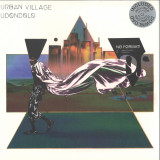
Signed to Parisian label N F rmat! (home to Oumou Sangar , Blick Bassy & M lissa Laveaux), Soweto-based 4 piece band Urban Village present their debut album, ‘Udondolo’.
Marrying the day-to-day experiences of black South Africans with ebullient elements from traditional Zulu music, Urban Village is the alias of four experimental musicians all born & raised in the township of Soweto at the tail end of apartheid.
Urban Village release music under a name which specifically references the blend of cultures, music & rites which were assimilated into the now 1 million strong population of Soweto, when black South Africans from multiple provinces were brought to the area during the establishment of apartheid, under strict segregation from Johannesburg’s white suburbs.
Born for the most part in the last years of apartheid, whilst growing up the band plunged happily into house and dance music that turned the page of a heavy past. Guitarist Lerato came across older Zulu musicians and their style of maskandi playing. Lerato has since mixed styles from homelands and rural areas, sharpened in club jam sessions (where he went on to meet Tubatsi and form Urban Village) during which spoken word, hip-hop and jazz rub shoulders freely.
‘Udondolo’ - partially recorded at legendary Downtown Studios in the heart of Johannesburg and at Figure of 8 studios in the leafy suburbs of Randburg, - is a journey through all the colours of Soweto. This is where it draws its consistency, strength & identity. That of Soweto itself - a dormitory town designed to
monitor those who were sent there, it has become a laboratory of music where the hopes of an entire people resonate, even today.
Over the course of two decades The Body - Lee Buford and Chip
King - have consistently challenged assumptions and defied
categorization, redefining what it means to be a heavy band.
On ‘I’ve Seen All I Need To See’, they test the boundaries of the
studio to explore the extremes and microtonality of distortion to
find its maximal impact.
Their most incisively bleak album to date, a towering monolith of
noise, Buford’s booming, resolute drums paired with King’s
obliterated guitar and howl.
Course, bristling distortion contorts every instrument, with
samples of spoken word, cymbals, toms and King’s already
noxious tone emerging from layers of feedback.
Features guests Ben Eberle (Sandworm) and Chrissy Wolpert
(Assembly of Light Choir).
Recorded with long time engineer Seth Manchester at Machines
with Magnets (Lightning Bolt, Battles, Daughters) and mastered by
Matt Colton (Sumac, Brian Eno, Uniform, Sunn O)))).
Available on CD, metallic silver vinyl and black vinyl. LP formats
include digital download code.
The Body have collaborated with many, including Full Of Hell,
Thou, Uniform and Bummer.
“The distortion has this ability to envelope you, and not push you
away. It has this strange kind of beautiful timbre... once you give
into the sheer power of it, and let it take you on a ride then it
becomes this whole other kind of sonic experience.” - Matt Colton
The Body have continued to mould their sound into something
even more devastating, gorgeous and terrifying... As a whole, The
Body’s discography is, and will continue to be, without peer.” -
Metal Injection “Some of the most captivating heavy music around right now.” - Rolling Stone
After much anticipation, UK-talent Ben Westbeech returns under his Breach moniker next February. Serving up the long-awaited Sun Salutations on André Hommen’s These Eyes imprint, the EP marks his first release under the alias since 2018, and features Dekmantel mainstay Cinnaman on the second track. The ethereal sound of Sun Salutations sets the feel of the release, as progressive synths reside atop a distinctive kick-hat backbone. We’re soon graced with an enchanting mid-track breakdown, paving the way for a tribal-leaning bassline and dreamy, flute-like chords. New Horizons feat. Cinnaman brings things to a gentle close, as warm keys converge on reverberating vocals to form a soothing, slow-building cut that’s perfect for sunrise, sunset or anywhere in between. Ben Westbeech AKA Breach is no stranger to the scene. Cutting his teeth on Gilles Peterson’s Brownswood Recordings, it was in 2013 that Claude Von Stroke picked up Breach’s Jack EP for a release on his iconic Dirtybird imprint, the likes of which charted at number nine in the Official UK Top 40 Chart. Since then, the UK-talent has refocused his attention on the underground, launching his Naked Naked label as well as producing standout productions for the likes of Crosstown Rebels, Ninja Tune, Aus music and many more besides. André Hommen's These Eyes has cemented its standing as one of Germany’s leading labels, with the likes of Tlak (Denis Horvat), Marc Romboy and Jonathan Kaspar finding a home on the imprint in recent times. Refusing to be pigeon-holed by genre or style, Breach’s debut highlights the eclectic sound through which the label has become best known, a testament to the vision of label-founder Andr é Hommen.
Perhaps best known as the upside-down, guitar-wielding frontman of psych-legends The Entrance Band, and solo albums released under the ENTRANCE moniker, notably 2004's country blues epic Wandering Stranger (Fat Possum) , 2006's self-released cult classic, Prayer of Death ( which led to the formation of The Entrance Band) , and most recently 2017's Book of Changes (Thrill Jockey), Blakeslee has typically used his own name to release his most experimental and confounding records. Postcards From The Edge is no exception. Nearly two decades into a lifer's voyage of shapeshifting through shadowy realms of the American underground, Guy Blakeslee, poses these and other conundrums on his dramatic new album, Postcards From The Edge (Entrance Records). Recorded in New Orleans at the house studio of Preservation Hall Jazz Band, with former Sonic Ranch engineer and producer, Enrique Tena Padilla (Oh Sees, Wand), and featuring appearances from singers Lael Neale, Hale May, Rachel Fannan, and drummer Derek James of The Entrance Band, Postcards From The Edge is electrified by the spirit of sonic experimentation, and the fervent desire to chart a map into unknown territory. Across the record's seven tracks, Blakeslee's questing lyrics teem with stormy emotion, his plaintive voice finding succour in richly-textured melodies that soar over lushly-produced soundscapes, always on the verge of collapse. A wandering soul who has spent the better part of his musical life on the road, Blakeslee, a Baltimore native and LA transplant currently residing in the wilds of Virginia, has supported the likes of Spiritualized, Beach House, Cat Power, Mazzy Star, Interpol, and Father John Misty to name a few. "Seven tracks of questioning, tremulous, occasionally beautiful gospel-psych" - Uncut Magazine
Though synthesizers are the backbone of Shen’s music, while performing live, she plays self-made synths, invented instruments, and even acoustic objects like a bull whip.
Her live show vacillates between moments of restraint and swells of frenetic and confrontational movement. Her sound is dynamic with a sensitivity to texture and structure throughout. This sensitivity is maintained in her debut LP
Hair Birth, the result of several weekends locked in a studio creating cacophonous, wondrous synth noise with Harvard’s Buchla 100 and Serge modular systems.
She tracked hours of stems before cloistering herself in a painstaking editing process. Songs like ‘Under The Stall Door’ sound like a cybernetic rollercoaster with rumbles and shrieks that hurtle the listener through virtual space. Others, like ‘Bolete,’ are tense, dense mood pieces that move from the queasy to the tranquil to the surreal.
MSG is a legendary name. After two phenomenal records under the guise of Michael Schenker Fest, a true guitar hero is returning to his roots. By forming Michael Schenker Group (MSG) back in 1979, Michael Schenker laid the foundations for one of hard rock’s most glorious solo careers of all times. And while nobody expected anything less from a former guitarist for Scorpions and UFO, it’s close to impossible mentioning everything Michael has built over the past 50 years, or the countless people he influenced or played with. This, truly, is the stuff that hard rocking myths are made of.
“I never looked back,” is how Michael dryly sums up an extraordinary career. Due to this mindset, he only realised much later what a huge impact his playing had made on the world of metal and hard rock. Very few guitarists can be cited as a primary influence for the likes of James Hetfield, Kirk Hammett, Dave Mustaine, Dimebag Darrell, Slash or Kerry King. However, to understand Michael Schenker means to understand one primary thing: he’s not here to be worshipped or adored, he’s not here to get rich, he’s here to play. And at 65, he’s doing it with the same swagger, verve and dizzying artistry as always. “I’m still 16 in my head,” he laughs.
Right in time for his 40th anniversary as a solo artist and his 50th birthday as a musician, he resurrects the immortal Michael Schenker Group. “Immortal” is also the name of his new album, recorded by likely the strongest line-up in his long history. Its a lightning bolt of an album that sounds fresh, bloodthirsty and agile. “Immortal” showcases the gargantuan vocal talents of Chilean hard rock prodigy Ronnie Romero (Rainbow), backed by singers Ralf Scheepers (Primal Fear), Joe Lynn Turner (ex-Deep Purple) as well as Schenker’s brother in arms, Michael Voss (Mad Max) who again produced the record alongside Michael Schenker – flawlessly, punchy and at full steam as if their very lives depended on it.
Next to Michael Schenker caressing his iconic black and white Dean Flying V, we hear bass player Barry Sparks (Dokken), keyboard player Steve Mann as well as the three drummers Bodo Schopf, Simon Phillips (ex-Toto) and Brian Tichy (ex-Whitesnake) pumping gallons of fresh blood through the tracks. And that’s not all, keyboard wizard extraordinaire Derek Sherinian (Dream Theater, Black Country Communion) gives the listener a baptism of fire in the blistering, heavy hitting opener “Drilled to Kill”, powered by Ralf Scheepers’ unbelievable vocal tornado.
Michael Schenker doesn’t live to play, he plays to live, and there’s no better way of summing up his relationship to his music than this – now for half a century and counting. The most emblematic representation of this relationship is the monumental closing track “In Search Of The Peace Of Mind”, a new recording of the very first song he ever wrote. “I composed this track in my mother’s kitchen back when I was 15,” he looks back half a century and smiles broadly: “The solo is just so perfect, I wouldn’t change a single note even today. This is the most important song of the last 50 years for me. It’s what started it all.”
When it finally got released in 1972 on the Scorpions’ debut “Lonesome Crow” Schenker had already moved on to UFO. What followed were several decades of pure hard rock ecstasy on and off stage, featuring a rotating cast of stellar players, always pressing the pedal to the metal. Now, in 2020, he reaps what he sowed. Alongside many of his peers, friends and contemporaries, he is celebrating 50 years of hard rock – fittingly with an album that is something like a zeitgeisty reminiscence of everything he’s ever done. The massive midtempo smasher “Don’t Die On Me Now” sees Joe Lynn Turner going all in, Ronnie Romero works his magic in “Knight Of The Dead” while Michael Voss cuts a grand figure before the microphone as well as behind the mixing desk on the furious second single “After The Rain”.
Towering above them all, Michael Schenker and his guitar prove they’re truly and utterly invincible. The celebrated icon pulls out all the stops – including his legendary “howler”, the fabled magnet he’s used on his fingerboard for a while now. And here’s yet another thing that’s just so archetypically Schenker, when bringing up his fiery and dedicated performance on “Immortal” he nonchalantly shrugs it off: “I simply played from the heart, as always.” This, dear Michael, is the understatement of the year – all the more so for a record that is already one of the top contenders for hard rock/metal album of the year.
MSG is a legendary name. After two phenomenal records under the guise of Michael Schenker Fest, a true guitar hero is returning to his roots. By forming Michael Schenker Group (MSG) back in 1979, Michael Schenker laid the foundations for one of hard rock’s most glorious solo careers of all times. And while nobody expected anything less from a former guitarist for Scorpions and UFO, it’s close to impossible mentioning everything Michael has built over the past 50 years, or the countless people he influenced or played with. This, truly, is the stuff that hard rocking myths are made of.
“I never looked back,” is how Michael dryly sums up an extraordinary career. Due to this mindset, he only realised much later what a huge impact his playing had made on the world of metal and hard rock. Very few guitarists can be cited as a primary influence for the likes of James Hetfield, Kirk Hammett, Dave Mustaine, Dimebag Darrell, Slash or Kerry King. However, to understand Michael Schenker means to understand one primary thing: he’s not here to be worshipped or adored, he’s not here to get rich, he’s here to play. And at 65, he’s doing it with the same swagger, verve and dizzying artistry as always. “I’m still 16 in my head,” he laughs.
Right in time for his 40th anniversary as a solo artist and his 50th birthday as a musician, he resurrects the immortal Michael Schenker Group. “Immortal” is also the name of his new album, recorded by likely the strongest line-up in his long history. Its a lightning bolt of an album that sounds fresh, bloodthirsty and agile. “Immortal” showcases the gargantuan vocal talents of Chilean hard rock prodigy Ronnie Romero (Rainbow), backed by singers Ralf Scheepers (Primal Fear), Joe Lynn Turner (ex-Deep Purple) as well as Schenker’s brother in arms, Michael Voss (Mad Max) who again produced the record alongside Michael Schenker – flawlessly, punchy and at full steam as if their very lives depended on it.
Next to Michael Schenker caressing his iconic black and white Dean Flying V, we hear bass player Barry Sparks (Dokken), keyboard player Steve Mann as well as the three drummers Bodo Schopf, Simon Phillips (ex-Toto) and Brian Tichy (ex-Whitesnake) pumping gallons of fresh blood through the tracks. And that’s not all, keyboard wizard extraordinaire Derek Sherinian (Dream Theater, Black Country Communion) gives the listener a baptism of fire in the blistering, heavy hitting opener “Drilled to Kill”, powered by Ralf Scheepers’ unbelievable vocal tornado.
Michael Schenker doesn’t live to play, he plays to live, and there’s no better way of summing up his relationship to his music than this – now for half a century and counting. The most emblematic representation of this relationship is the monumental closing track “In Search Of The Peace Of Mind”, a new recording of the very first song he ever wrote. “I composed this track in my mother’s kitchen back when I was 15,” he looks back half a century and smiles broadly: “The solo is just so perfect, I wouldn’t change a single note even today. This is the most important song of the last 50 years for me. It’s what started it all.”
When it finally got released in 1972 on the Scorpions’ debut “Lonesome Crow” Schenker had already moved on to UFO. What followed were several decades of pure hard rock ecstasy on and off stage, featuring a rotating cast of stellar players, always pressing the pedal to the metal. Now, in 2020, he reaps what he sowed. Alongside many of his peers, friends and contemporaries, he is celebrating 50 years of hard rock – fittingly with an album that is something like a zeitgeisty reminiscence of everything he’s ever done. The massive midtempo smasher “Don’t Die On Me Now” sees Joe Lynn Turner going all in, Ronnie Romero works his magic in “Knight Of The Dead” while Michael Voss cuts a grand figure before the microphone as well as behind the mixing desk on the furious second single “After The Rain”.
Towering above them all, Michael Schenker and his guitar prove they’re truly and utterly invincible. The celebrated icon pulls out all the stops – including his legendary “howler”, the fabled magnet he’s used on his fingerboard for a while now. And here’s yet another thing that’s just so archetypically Schenker, when bringing up his fiery and dedicated performance on “Immortal” he nonchalantly shrugs it off: “I simply played from the heart, as always.” This, dear Michael, is the understatement of the year – all the more so for a record that is already one of the top contenders for hard rock/metal album of the year.
MSG is a legendary name. After two phenomenal records under the guise of Michael Schenker Fest, a true guitar hero is returning to his roots. By forming Michael Schenker Group (MSG) back in 1979, Michael Schenker laid the foundations for one of hard rock’s most glorious solo careers of all times. And while nobody expected anything less from a former guitarist for Scorpions and UFO, it’s close to impossible mentioning everything Michael has built over the past 50 years, or the countless people he influenced or played with. This, truly, is the stuff that hard rocking myths are made of.
“I never looked back,” is how Michael dryly sums up an extraordinary career. Due to this mindset, he only realised much later what a huge impact his playing had made on the world of metal and hard rock. Very few guitarists can be cited as a primary influence for the likes of James Hetfield, Kirk Hammett, Dave Mustaine, Dimebag Darrell, Slash or Kerry King. However, to understand Michael Schenker means to understand one primary thing: he’s not here to be worshipped or adored, he’s not here to get rich, he’s here to play. And at 65, he’s doing it with the same swagger, verve and dizzying artistry as always. “I’m still 16 in my head,” he laughs.
Right in time for his 40th anniversary as a solo artist and his 50th birthday as a musician, he resurrects the immortal Michael Schenker Group. “Immortal” is also the name of his new album, recorded by likely the strongest line-up in his long history. Its a lightning bolt of an album that sounds fresh, bloodthirsty and agile. “Immortal” showcases the gargantuan vocal talents of Chilean hard rock prodigy Ronnie Romero (Rainbow), backed by singers Ralf Scheepers (Primal Fear), Joe Lynn Turner (ex-Deep Purple) as well as Schenker’s brother in arms, Michael Voss (Mad Max) who again produced the record alongside Michael Schenker – flawlessly, punchy and at full steam as if their very lives depended on it.
Next to Michael Schenker caressing his iconic black and white Dean Flying V, we hear bass player Barry Sparks (Dokken), keyboard player Steve Mann as well as the three drummers Bodo Schopf, Simon Phillips (ex-Toto) and Brian Tichy (ex-Whitesnake) pumping gallons of fresh blood through the tracks. And that’s not all, keyboard wizard extraordinaire Derek Sherinian (Dream Theater, Black Country Communion) gives the listener a baptism of fire in the blistering, heavy hitting opener “Drilled to Kill”, powered by Ralf Scheepers’ unbelievable vocal tornado.
Michael Schenker doesn’t live to play, he plays to live, and there’s no better way of summing up his relationship to his music than this – now for half a century and counting. The most emblematic representation of this relationship is the monumental closing track “In Search Of The Peace Of Mind”, a new recording of the very first song he ever wrote. “I composed this track in my mother’s kitchen back when I was 15,” he looks back half a century and smiles broadly: “The solo is just so perfect, I wouldn’t change a single note even today. This is the most important song of the last 50 years for me. It’s what started it all.”
When it finally got released in 1972 on the Scorpions’ debut “Lonesome Crow” Schenker had already moved on to UFO. What followed were several decades of pure hard rock ecstasy on and off stage, featuring a rotating cast of stellar players, always pressing the pedal to the metal. Now, in 2020, he reaps what he sowed. Alongside many of his peers, friends and contemporaries, he is celebrating 50 years of hard rock – fittingly with an album that is something like a zeitgeisty reminiscence of everything he’s ever done. The massive midtempo smasher “Don’t Die On Me Now” sees Joe Lynn Turner going all in, Ronnie Romero works his magic in “Knight Of The Dead” while Michael Voss cuts a grand figure before the microphone as well as behind the mixing desk on the furious second single “After The Rain”.
Towering above them all, Michael Schenker and his guitar prove they’re truly and utterly invincible. The celebrated icon pulls out all the stops – including his legendary “howler”, the fabled magnet he’s used on his fingerboard for a while now. And here’s yet another thing that’s just so archetypically Schenker, when bringing up his fiery and dedicated performance on “Immortal” he nonchalantly shrugs it off: “I simply played from the heart, as always.” This, dear Michael, is the understatement of the year – all the more so for a record that is already one of the top contenders for hard rock/metal album of the year.
Parisian label Chuwanaga proudly presents the first opus of its new 12inch series, starting with the brand new EP of Koji Ono: Ricochet / Maloja Pass. Recorded during a short week-end in Paris, it is the result of a true collaboration by a team of musicians who wanted to bring a modern twist to a classic and timeless sound, staying true to the original late seventies/early eigthies dance music spirit and the passion of Chuwanaga for the original Britfunk.
On bass, you’ll hear Lester Batchelor aka LB from Atmosfear, the legendary British JazzFunk band best known for their En Transe LP and the classic track « Dancing In Outerspace». Killing it on the drums, Roy Mistry is their 2020 official drummer. Recording together in Studio Delta, with Koji playing almost all the other instruments, from keys to guitars to percussions, they all had a blast collaborating on these two new tracks. Add a blazing Rhodes solo by Jean-Michel Bernard on « Maloja Pass », some precious magic from producers Seiji Ono & Saint-James, a great dose of savoir-faire by sound engineer David Cukier aka Greita (Disques Flegon)… And you end up with two killer tunes ready to blast their way through your speakers.
On both tracks, you’ll immediately recognize Koji Ono’s touch – as found on his previous Incognito EP : simple but uplifting melodies on synthetizers, sparkling guitars and a certain playfulness in the arrangements. On side A, « Ricochet » sounds like an irresistible mid-tempo boogie banger. On B side, the uptempo « Maloja Pass » is faster paced and bursts with energy, giving the listener an irresistible urge to travel endlessly through the night.
On their Night Dreamer debut, Sarathy Korwar and his allstar “UPAJ Collective” gain brand new ground in their mission to rebalance spiritual jazz with authentic Indian classical music. “UPAJ” means “to improvise” inHindi, and recording direct-to-disc at Artone Studios with almost no preconceived directions, they truly capture the “spirit of spontaneous improvisation”, as Sarathy puts it, like never before.
Sarathy Korwar 2020
"Recording in one take, direct-to-disc is a unique scenario to be in. I feel very blessed to be presented this opportunity. I decided very early on that in order to make the best use of this scenario, the music had to be completely improvised and spontaneous. That is the only true way to record within the limitations of one take. No regrets, no mistakes, no fear and no judgement. These were the ideals. In a way, this was about creating a utopian vision of a world I would like to live in. A microcosm of the ideals that I would like to live by, in the recording studio. The vision of going into the studio with this in mind, was more important than the resulting music we created. Process over product.
Before the session we did some collective breathing exercises that I have learnt from my mother (who is a pranayama practitioner/teacher) and Wim Hof. I believe this helps centre the focus of the group and balances the mind, making it most receptive to new sounds and inspiration.
The song So said Said is a tribute to Edward Said. Intimate Enemy, a tip of the hat to the book of the same name by Ashis Nandy (Intimate Enemy: Loss and recovery of self under colonialism). A cover of Flight IC408 by State Of Bengal is on Side B, as I am a massive fan of the band. Elephant Hangover is the imagery that the tune conjures for me personally on listening to it. A beautiful remix by the brilliant Osunlade of So said Said is on side D.
Thank you to the gifted musicians - Al, Tamar, Achuthan and Giuliano for trusting and letting go. I am lucky to spend time with you."
- A1: Transhuman
- A2: Hamburg - Dusseldorf
- A3: Zukunftmusik (Radiophonique) (Radiophonique)
- A4: Specimen
- B1: Clone
- B2: To The Limit
- B3: Zufallswelt
- B4: Plant In Fever
- C1: Shifted Reality
- C2: Kreiselkompass
- C3: Data Landscape
- C4: Transhumanist
- D1: Sexersizer
- D2: Maschinenraum
- D3: Let Yourself Go
- D4: Let Yourself Go (Beatsole Remix)
There are few genres in which German artists play such a central pioneering role as they do in electronic music, be it techno, electropop, trance or rave. At the frontline for many years were Kraftwerk and U96, two absolute trailblazers of this musical direction. While Kraftwerk wrote international music history mainly in the 1970s with cult albums such as Autobahn (1974), Radio-Aktivität (1975), Trans Europa Express (1977) and Die Mensch-Maschine (1978), U96 had a profound influence on the global pop music, rave and techno scene of the 1990s with hits such as ‘Das Boot’, ‘Love Sees No Colour’, ‘Night In Motion’ and ‘Heaven’. Transhuman, scheduled for release on UNLTD Recordings on 30th October 2020, will feature a spectacular collaboration between U96 (Ingo Hauss
& Hayo Lewerentz) and Wolfgang Flür, Kraftwerk’s drummer in the years between 1972 and 1987 and therefore involved in the most seminal albums by the group from Düsseldorf.
This remarkable cooperation was first announced and implemented by two joint numbers on U96’s 2018 offering Reboot. Transhuman sees U96 and Wolfgang Flür develop their creative exchange across a full album, creating fascinating sonic worlds. The title song ‘Transhuman’ and an updated version of ‘Zukunftsmusik (Radiophonique)’ will be released as lead singles, including, as we’ve come to expect from U96, experimental video clips. That New York record label Radikal Records immediately secured the rights to the album for the US and Canada points to major interest in this project, not only on these shores but also across the Atlantic.
“Transhuman is a stylistic mélange of our different histories,” describe Wolfgang Flür and U96 masterminds Hauss and Lewerentz an offering that is spectacular in many respects, featuring, along with typical U96 tracks such as ‘Clone’ and ‘Specimen’, numbers such as ‘Transhuman’, ‘Planet In Fever’ and ‘Sexersizer’ that are inspired by Flür’s past. Notably, the content has been reduced to the sheer basics, in other words: sparingly used associative statements with deep, but at times also playful and mysterious messages that the listener feels rather than consciously registers. The lyrics are about the transformation of people through technology and our massive interference in life on our planet. Hauss: “Pieces like ‘Zukunftsmusik’ and ‘Transhuman’ don’t tell a story in the classic sense, they articulate emotions and associations in very few words, bringing to mind recordings such as Radio-Aktivität, Autobahn and Die Mensch-Maschine. In addition Transhuman, features a number of melodies created on the basis of computer algorithms, in other words fractal music which takes us even further back in history, to Klaus Schulze, Stockhausen, the electronics laboratories of the fifties and sixties and the musique concrete compositional technique.”
“A shell of a coconut from India started it all. We found it laying about in the studio. I discovered it had a powerful yet gentle sound when I hit it with a drum stick. Someone pushed the ‘record’ button. The rest is history. We present to you the result of three studio sessions - all three tracks are interpretations of the original “Ramma” which was featured on Prins Thomas’ Full Pupp label anniversary release.
VINYL[19,87 €]
Nahawa Doumbia's new album Kanawa concisely captures this current moment in Malian history. The singer, whose storied career spans more than four decades, reflects on the immigration crisis from the Malian perspective in the title of her new album Kanawa. Across eight songs recorded in Bamako with a band including traditional and modern instruments, Doumbia merges her early work that relied on a spare expression of her trademark didadi rhythm with the bombastic range of contemporary Malian pop. The beautifully complex musical accompaniment that results is courtesy of the large ensemble she pulled together with producer and arranger (and day one collaborator) N'gou Bagayoko. The band features two highly expressive Malian string instruments, the ngoni and the slightly smaller kamalé ngoni, as well as a variety of percussion, drum programming, karignan (a metal scraper) and acoustic and electric guitars. Doumbia's daughter, a celebrated singer with her own group and busy concert schedule, Doussou Bagayoko sings on "Adjorobena," a song about patience, tolerance and living in peace. Doumbia weaves together a roadmap of her psyche when it comes to the good and bad life has to offer. She talks about marriage and women leaving home to join another through the metaphor of a tree in the garden; she includes gunshot samples in the song "Foliwilen" to honor the bravery of hunters, soldiers and other courageous people; she uses a bird in "Djougoh" to talk about lazy people; and, in "Ndiagneko" she advises people to ignore critics, just do you. Mali has gone through an intense period of regional strife and terrorist incidents over the last ten years and Doumbia roots the album in tragic local concerns with deep global implications. "The meaning of Kanawa is so simple. We see our children trying to cross the ocean all the time. I said that many of our children die in the ocean and some of them die while crossing the Sahara. But I ask them why do they leave their country? They said that they leave because of the family situation or problems like poverty and unemployment. I ask them to stay and work in their country. I call on the UN and African leaders so that we can coordinate our efforts to find a solution, to create jobs for them so that young people stop leaving. That's why I chose it as the title of my album so that everybody can learn from it and also so that there is a reduction in the number of people emigrating. So that some will hear the message and stay home and grow the land. Leaving is not the only solution. My message is to help the youth find jobs."
Ralph Heidel is one of the young musicians that represent the spirit of Berlin’s new musical ecleticism better than others. He is part of the avantgarde circles that mix modern jazz and contemporary classical music with elements of new electronica and experimental ambient music. This is the vibe of Germany's next generation.
Heidel creates a sonic universe that is unique. He takes the listener into a deep, atmospheric travel that stimulates emotions and feelings on a different level. Heidel brings together two worlds: what he learned at Musikhochschule München, Germany’s leading academy for classical music where he studied saxophon and composition and the moods happening in Germany's new electronic circles.
On „Relief“ Heidel created six songs. Except one, all of them are instrumental music. Partly composed and often improvised these sounds take the listener into Heidel's specific sonic universe. Raw beat structures, emotive horn lines, strong harmonical tensions and dramatic build ups. Heidel’s signature sound.
In fact Heidel is a multiple influenced artist with a strong personality that absorbs whats around him, connects it with his own wide artistic knowledge and fullfills it into magical musical moments.
Relief is the next step in what could become a longtime artistic career.
After a (very composed) debut album for string quartet and rhythm section for Kryptox (Moments of Resonance 2019), it was important for Heidel, to process current feelings of daily life.
Not just his cultural learnings, but also emotions connected to the hard COVID times and a lot of personal experiences.
Relief are six abstract, distorted patterns. Long deep transitions that lead into euphoric parts of sonic greatness. Heidel's sense for sound design and the soft tone of his saxophone phrases, add a personal note that is somehow alone in the current music scenario. Sampling his saxophone (reeds, keys etc.) to create very organic beats is one of the many techniques to create that special „Heidel“ sound. Also his calm and wide harmonies over disquiet, rough drums are part of his unique ambivalent, disrupted moods.
Most of this EP has been played by Heidel alone. For a few parts he was joined by musicians from the local scene. In fact besides his albums on Kryptox Ralph Heidel is very connected in Berlin’s current cultural playground: He creates music for underground performance art happenings in Neukölln as well as for new German theater (Volksbühne, Berliner Ensemble). Also German rapper Tarek from K.I.Z heard about Heidels string debut album, so they collaborated for an album, where Heidel reworked his record for stringquartet, piano, drums and bass.
Repress of the self-titled debut album. Their self-titled debut album is an instrumental bluesy heavy rock with no DOOM taste. A lot of improvised double guitar solo and a very special groovy rhythm section.
The release got a real unexpected awesome response all over the world. All the tracks are 100% original, except the cover of the blues classic "Going Down".
BIOGRAPHY:
"Sonic Flower" were formed as a side project of "Church of Misery" in 2001. Tatsu Mikami (bass) and at that time Church's guitarist Takenori Hoshi (guitar on Church of Misery's 2nd album "The Second Coming"), teamed up to play more bluesy & non Doomy taste instrumental Heavy Rock. They were influenced by famous 70's heavy rock bands like CACTUS, GRAND FUNK RAILROAD, GROUNDHOGS,SAVOY BROWN etc.
Soon female guitarist "Arisa" and drummer Keisuke Fukawa joined the band. In 2003, they released the self titled debut album "SONIC FLOWER" on Japanese Heavy rock label "Leafhound Records". All instrumental bluesy heavy rock and improvised doubleguitar, they got a tons of good response from all over the world. They also played some shows as support for some foreign band's Japan appearance like Electric Wizard, Bluebird (Amen's side project), Acid King etc.
In 2005 they went to studio for new recordings. At that time the band has some problems and after the recording quit. So this recordings were long years sleeping in the vault. Totally unreleased studio materials. In 2018 Tatsu decided to re-form the band. He has already tons of new songs. This time he teamed up with old Church singer and his old friend. A new album is in progress and will be released in 2021.
‘Giants of All Sizes’ was recorded at Hamburg’s Clouds Hill Studio, The Dairy in Brixton, 604 Studios in Vancouver and Blueprint Studios in Salford with additional recording taking place at various band member’s home studios spread across Manchester. As with their previous four studio albums, ‘Giants’ was produced and mixed by Craig Potter. Guests across the album include Jesca Hoop, The Plumedores and South London newcomer Chilli Chilton.
Given such bleak, if ultimately redeemed, subject matter, it is also, perversely, the most relaxed record which elbow have made in some time. On ‘Giants of All Sizes’, each band member extended their usual process of working on demos alone and followed their vision to its conclusion rather than, as Craig Potter puts it, ‘taking the edges off things to find compromise’. In tandem with this, they returned to playing live in the studio, encouraged to experiment with the banks of analogue equipment at Clouds Hill in Northern Germany, giving songs a looser, more live feel. The result is the most starkly dynamic record from the band in recent times, “Sonically unabashed”, as Guy would have it. Whilst album closer ‘Weightless’ has the gossamer melodies and communal harmonies for which the band have latterly been known, this album echoes earlier elbow work at times whilst also breaking new ground.
‘White Noise White Heat’ is motorik, metal machine soul driven by a vocal that is rage incarnate, ‘Doldrums’ mixes John Carpenter with The Plastic Ono Band to brilliantly disturbing effect and ‘On Deronda Road’ hitches stark bass beats and glitches to an ad-hoc choir. ‘Empires’ delivers dark resignation via an insidious melody and ‘Seven Veils’ continues the subversion by inverting the perception of elbow as a band for lovers into a band for haters, a double-barrelled fuck-you song par excellence. ‘The Delayed 3:15’ marries mariarchi guitars to jazz dynamics, Morricone via Buddy Rich, and ‘My Trouble’ is a clockwork, analogue shuffle housing a delicate melody that builds over the course of the song into a fragile monolith to the power of love.
Lead track, ‘Dexter & Sinister’, released on 10” ahead of the album, encapsulates the whole. A seven-minute musical journey that blends deep bass grooves, sudden keyboard stabs, dislocated piano and guitar runs and soul stylings then abruptly shifts gear, parts the storm clouds and takes wing, flying towards the heat of the sun. It is the soundtrack for these ‘hope free, faith free, charity free days’, a denial of the divine and a reconciliation, two songs in one song, two emotions for one emotion, human, fragile and brilliant like the album which it opens.
Hyperspace will be Beck’s 14th album, following 2017’s Colors, which won Best Alternative Music Album and Best Engineered Album, Non-Classical at the 61st GRAMMY Awards earlier this year. Hyperspace’s new dimensions in sound are the result of Beck’s most collaborative efforts to date. Seven of the album's 11 tracks—including single “Uneventful Days” and “Saw Lightning” (as featured in the Beats by Dr. Dre Powerbeats Pro campaign and also included with pre-orders)—feature co-writing and co-production from Pharrell Williams. Elsewhere in Hyperspace, “See Through” is co-written/co-produced by frequent Beck collaborator Greg Kurstin, “Star” is co-written/co-produced by Paul Epworth, “Stratosphere” features back-up from Chris Martin, the album’s title track features guest vocals from Terrell Hines, and “Die Waiting” is co-written/co-produced by Cole M.G.N. with backing vocals from Sky Ferreira. Longtime Beck bandmates Jason Falkner, Smokey Hormel and Roger Manning Jr. feature on much of the album as well.
Recorded in 2011 in a dusty, beloved barn, ‘Even Your Drums Will Die’ is a time machine, a real one, to a moment packed thick with Richard Swift’s singular, crackling liveliness. Where Swift’s studio recordings are marked by texture, tone and mood, ‘Even Your Drums Will Die’ puts a spotlight on Swift’s voice, his lyrics and his songwriting.
Running through all of Swift’s tunes is a certain agitation - a fidgetiness, a restlessness. It’s clearer than ever now, over two years after Swift’s passing, that he used his music to let a little pressure out of his tire. ‘A Song for Milton Feher’ nods to all this, its namesake coming from the professional dancer and director who taught his students to release their “habits of tension.” The song feels like a skeleton key to Swift’s oeuvre, a clear look into the wild wheels spinning inside his big old artist noggin.
On the flipside is ‘Lady Luck’. The classic. The revived ghost of a lost 45 that never existed, or maybe always did, but that only Richard Swift could make real.
If you know these songs, you will find them set alight here. If you don’t, ‘Even Your Drums Will Die’ is an incomparable snapshot of both art and artist. It is a genie, a real one, let loose from the lamp with Richard Swift’s explosive energy, imagination and mischief.
Recorded Live at Pickathon, 2011.
Swift was a celebrated recording artist, collaborator (The Black Keys, The Shins, the Arcs) and producer (Nathaniel Rateliff, Kevin Morby, Guster, Pretenders).
• 180 GRAM AUDIOPHILE VINYL
• BLACK VINYL
Mikey Dread started out as an engineer with the Jamaica Broadcasting Corporation when some of the most innovative reggae was being recorded in Jamaica. He convinced his bosses to give him his own radio program called Dread At The Controls and the rest is history. You can hear his radio announcements and shout outs before most tracks of his first record African Anthem Dubwise. It is one of the finest ‘80s era Reggae records as it features many styles.
- A1: Top Of The Pops
- A2: Time Will Tell
- A3: Punk A Go Go
- A4: Disco Zombies
- A5: Tv Screen Existence
- B1: Drums Over London
- B2: Heartbeats Love
- B3: Here Come The Buts
- B4: Mary Millington
- B5: Where Have You Been Lately, Tony Hateley?
- C1: The Year Of The Sex Olympics
- C2: Target Practice
- C3: New Scars
- C4: Greenland
- C5: Paint It Red
- D1: Night Of The Big Heat
- D2: Lho
- D3: Paint It Red #2
- D4: Lenin’s Tomb 5 Hit
It was 1977, there may well have been “knives in West 11”, but at a student’s hall of residence in Leicester, a packed room of cross legged intellectuals were about to witness the debut of The Disco Zombies; Andy Ross on vocals and guitar, Geoff Dodimead on bass, Johnny ‘Guitar’ Hawkins on guitar and Andy Fullerton on drums. They were loud, fast and they had some witty one-liners.
The four-piece became five with the addition of Dave Henderson from The Blazers, a chirpy power pop punk quintet, who were part of a burgeoning scene in the city that included The Foamettes, Dead Fly Syndrome, Wendy Tunes, The RTRs, Robin Banks And The Payrolls and many more. Wine bars, canteens and bowling alleys in pubs were the home of this phenomenon until Subway Sect and The Lou’s arrived for The Great Unknown Tour. They needed a local band for support and the Disco Zombies obliged.
Record Shop owner - and now Mayor Of Mablethorpe - Carl Tebbutt was keen to ride the punk rollercoaster and decided to launch Uptwon Records with a Disco Zombies EP. Recorded in Chester in one four hour session, it included The Blazers’ ‘Top Of The Pops’ and Andy’s ‘Time Will Tell’, ‘Punk A Go Go’ and ‘Disco Zombies’.
Carl had done a deal with a one-stop music production company who went bust almost immediately and the record was shelved. Unperturbed the band pressed on and recorded a session at the local radio station, ‘TV Screen Existence’ being the only track that survived. A tour of Leicester – five pubs in five days – was the end of that era and the band without Johnny ‘Guitar’ who had another year to do at Uni, relocated to London taking with them The Foamettes’ guitarist Steve Gerrard who wisely returned to Leicester and become part of The Bomb Party. Steve was replaced by Mark Sutherland in what was to become the recognised line up of The Disco Zombies for several years, playing lots of London gigs from The Hope And Anchor to The Moonlight Club, North London Poly to the Scala.
By 1978, there was an eruption of small DIY indie labels and Andy Ross launched South Circular Records to release the band’s debut single, ‘Drums Over London’ - an ironic stab at people’s hostility to the arrival of other cultures, a piss-take of Spear And Jackson-wielding Tory attitudes. John Peel played it regularly until Rock Against Racism complained even though Peel explained that it was actually supporting their views. Ho hum. South Circular wasn’t to last but Dave Henderson launched Dining Out. Dave and Andy journeyed to Ipswich to record the debut EP from the Peel-approved Adicts, the plan being to follow it with a Disco Zombies’ single and regain momentum. ‘Here Comes The Buts’ was the second Dining Out release, featuring the breakthrough Dr Boss drum machine; it was greeted with great enthusiasm in some quarters, although strangely it was likened to The Cramps meets Neil Young in NME.
Dining Out was always just one step ahead of going out of business and even though the follow up had been recorded - ‘The Year Of The Sex Olympics’, backed with ‘Target Practice’ and ‘New Scars’ – it never saw the light of day as the money finally ran out.
Somehow, Dining Out had a second lease of life and Andy wanted to record a new track for a new release amid 45s from The Sinatras, New Age and Spit Like Paint. By now, the Zombies had been through their dark post punk phase and ‘Where Have You Been Lately Tony Hateley’ was a clever upbeat anthem which told the tale of the nomadic footballer. The test pressing gained many Peel minutes but by the time it was ready to release, the band had finally split up. It eventually saw the light of day on the Cordelia label’s ‘Obscure Independent Classics’ album. Very fitting.
So, it was 1980: Mark Sutherland opened a studio in Bow, Dod got a day job, Andy Fullerton already had one. Andy and Dave went a bit experimental in Club Tango; Andy eventually discovering Blur for Food which he started with The Teardrop Explodes’ David Balfe, while Dave flirted with Worldbackwards.
In 2011, the drum machine line up descended on Mark’s studio, rehearsing for a show at the Bull And Gate. They recorded two of their lengthier tracks – ‘Night Of The Big Heat’ and ‘LHO’ powered by a waning Dr Rhythm – these were pressed as an extremely limited edition ten-inch. A few years later Andy Fullerton returned to the fold recording three more originals ‘Hit’, ‘Lenin’s Tomb’ and ‘Paint It Red’ for an even more limited edition ten-inch in 2018 and a show in October that year at The Dublin Castle.
Since then, meandering lunchtime discussions in restaurants that were popular in the ‘70s (Joe Allen, Café De Pacifico, etc) have led to arguments about the lost tracks – ‘Man From UNCLE’, ‘I Need You Like I Need VD’, ‘Throwaway Line’, ‘I Thought You Were Only Joking’, ‘London Nights’, ‘Cosmetics For China’, ‘When Doo Wop Hit Hampstead’. It’s only a matter of time. Until then.....
- 1: Prologue: Rain
- 2: A Trail Of Wind And Fire
- 3: Second Born Child
- 4: Tokyo Music Experience
- 5: The Rise And Fall Of The Plague
- 6: Another Year
- 7: Fragments
- 8: The Disappearance Of Dr. Duplicate
- 9: Excerpt Taken From Chapter 3
- 10: Where Is My Dream?
- 11: Part One: The Long Drought
- 12: Part Two: Crossing The Desert
- 13: Epilogue: Big Poisonous Shadows
BLACK vinyl with deluxe origami fold out sleeve & obi strip & DL Card. CD Wallet. The third album from Dutch punk-laced noiseniks adds new maturity and a conceptual feel that pulls the extremes of their sound together. A psyche-fuelled journey into the id punctuated with rhythmic kabuki modal mood swings, thunderstorms, digital beeps, traffic noise, and just plain old beautiful cacophonous reverb-drenched sound when needed. The 'third chapter' refers to the last five years that the Dutch band have spent creating their "difficult" third album. Each song spins a yarn; there are plagues, dreams, wind and fire, 'mythical' characters, and the search for the secret government warehouse. Lead single, Tokyo Music Experience, resonates with a conveyor belt-propelled modal guitar, reflecting the halcyon days of Japanese super-productivity; a mesmerising mantra, infected with news bulletin on-the-hour bleeps underlining its time-sensitive nature; a pristine super-commercial anthem to drive loyalty and reinforce solidarity with the party! Having been described as creating "underground noise with a bracing, warped pop appeal" (Mojo), their new album is a coming-of-age post-classic with a unique worldview - inspired by Van Dyke Parks (Song Cycle) Scott Walker (3 & 4), Moondog (Elpmas), White Noise (An Electric Storm) and Beach Boys (Smile). If their previous effort (Tape Hiss) was their very own sketch of a sketch for an incomplete concept album, a noisy reaction to their previous life, then 'Excerpts From Chapter 3..', with all its interlaced intricacies, is the realisation of their transition from punk-spiked-pop to psyche-pop protagonists. Evolving, testing, infectious...
Gerd Janson, Lexx, Bell Towers, Belia Winnewisser, DJ Kaos and Never4ever remixed Ethimm’s By Night EP.
We all know Nights are nicer when you are with your friends, so Ethimm asked some of his old friends and favorite acts to remix his recent EP ‘By Night’. Quite a few hopped on the bandwagon: Germany’s most prolific remixer and DJs DJ Gerd Janson turned Ethimm’s ‘Lies’ into a relentlessly deep and driving house cut with drums reminiscent of New Order. Balearic boss Lexx stripped the track down to its bare vocal and rebuilt it with a 90ies New York vibe. Bell Towers added his prototypical leftfield approach to ‘Don’t Go Away’, while Berlin’s legendary DJ Kaos remade it into a classic acid stomper. The remix EP is completed by newcomer Never4Ever’s breakbeat treatment of the same track and swiss experimental queen Belia Winnewisser’s treatment of ‘Island Jam’.
‘Del Rio’ is the third album from the Austin triumvirate of guitarist Craig Clouse (Shit and Shine), bassist Nate Cross (Marriage, Expensive Shit) and drummer King Coffey (Butthole Surfers) and the band’s first release to feature vocals from Colby Brinkman (Taverner). While their two prior albums (2017’s ‘Laredo’ and 2019’s ‘Matamoros’) were somewhere on the periphery of rock music , ‘Del Rio’ is a step or several beyond and a real testament to human imagination (maybe you’re impressed by Tesla Powerwall batteries but that’s because you’ve not heard “Soft Taco”, yet)
Coming off a pair of records their respective labels could barely keep in stock and critical assessments that put reviewers’ own chops to the test (see below), USA/Mexico have delivered their most fully realized statement to date.
Prior praise for ‘Matamoros’ :
“Laredo was a bent-out sunstroke of processed vocals and noise-laden riffs, and its follow up Matamoros is slower, freakier, and somehow louder…too defiantly weird and alien for pigeonholing, that’s how they fit inside Austin’s storied noise rock and experimental music scenes: by refusing to fit exactly in anywhere.” Andy O’Connor, Pitchfork
“Monolithic without being monotone: dirty sounds and gritty textures sliding over each other like sandpaper wiped across a chalkboard.” Marc Masters, Bandcamp
“The amplifiers sound broken, the vocals suggest someone's got their leg caught in a mantrap while deep in the woods trying to poach fat brown hares, and the mixing desk squeals as if it is undergoing physical tort
Over the course of two decades The Body - Lee Buford and Chip
King - have consistently challenged assumptions and defied
categorization, redefining what it means to be a heavy band.
On ‘I’ve Seen All I Need To See’, they test the boundaries of the
studio to explore the extremes and microtonality of distortion to
find its maximal impact.
Their most incisively bleak album to date, a towering monolith of
noise, Buford’s booming, resolute drums paired with King’s
obliterated guitar and howl.
Course, bristling distortion contorts every instrument, with
samples of spoken word, cymbals, toms and King’s already
noxious tone emerging from layers of feedback.
Features guests Ben Eberle (Sandworm) and Chrissy Wolpert
(Assembly of Light Choir).
Recorded with long time engineer Seth Manchester at Machines
with Magnets (Lightning Bolt, Battles, Daughters) and mastered by
Matt Colton (Sumac, Brian Eno, Uniform, Sunn O)))).
Available on CD, metallic silver vinyl and black vinyl. LP formats
include digital download code.
The Body have collaborated with many, including Full Of Hell,
Thou, Uniform and Bummer.
“The distortion has this ability to envelope you, and not push you
away. It has this strange kind of beautiful timbre... once you give
into the sheer power of it, and let it take you on a ride then it
becomes this whole other kind of sonic experience.” - Matt Colton
The Body have continued to mould their sound into something
even more devastating, gorgeous and terrifying... As a whole, The
Body’s discography is, and will continue to be, without peer.” -
Metal Injection “Some of the most captivating heavy music around right now.” - Rolling Stone
Cobalt Chapel release ‘Orange Synthetic’, the follow-up to their much lauded self-titled debut album and its companion piece ‘Variants’. ‘Orange Synthetic’ is an exploration of the epic county they call home, Yorkshire. Written during this tumultuous turn of the decade, it is inspired by the humanity, anecdotes and folklore of the region, and the surrounding landscape.
The album delves into stories which exist at the edge of history and myth: the drowning of a village under Lake Semerwater, the mystery of the lost geodesic domes of RAF Fylingdales, the fate of John Hotham of Hull, beheaded for treason during the English Civil War, a psychedelic folk song about an infamous Cragg Vale farmer killed in a fight over a flock of sheep, the cry of Skylarks over Erringden Moor.
The album’s name stems from a line in the title track, telling the story of the fateful Yorkshire Folk, Blues & Jazz Festival in Krumlin, fifty years ago. Hit by a violent storm, it resulted in the devastation of the site, near-deaths from exposure and the promoter being found wandering the moors, days later.
Cobalt Chapel’s atmospheric style remains distinctively their own, through Cecilia Fage’s crisp English vocals and choral arrangements, and Jarrod Gosling’s use of organs such as the Vox Continental, Philicorda, and the USSR-era Elektronika Organ. These are the foundations of their rich, experimental yet melodic sound, and this album sees them expand on it with the addition of mandolin, guitars, and drawing on Cecilia’s classical background, with clarinets and recorders.
Residing at the base of Mount Yōtei on Japan’s geologically wondrous island Hokkaido - with it’s volcanoes, hot springs and national park - Masaki “mfp” Konagi is no stranger to natural beauty. Having resided in L.A. and Melbourne in the past, mfp (or mindfullpeace) settled in this natural haven as the place to set down some roots and create.
Having begun his musical journey over a decade ago, including an appearance on Gilles Peterson’s “Brownswood Electr*c 2”, we are proud to announce his debut full length album “Natural Law”.
Drawing on long time collaborators and friends from his travels, mfp has pulled on his foundation in hip-hop and pushed its boundaries to breaking point, embodying the true ethos of the genre as an ever expandable principle.
Featuring Melbourne stalwarts Simon Mavin (Hiatus Kaiyote) and ALIEN (Piette Aillion) plus Sydney’s Natalie Slade (Eglo), funk maestro sauce81 and hip-hop hero Stan Smith, mfp’s productions ebb and flow, building and releasing pressure, exploring discord and harmony through electronic polyrhythms and diverse explorations in slaps, swirls, lopes and kicks.
Masaki has also opened the very first organic food store in the area - Pyram Organics & Plants - embodying his, (and our) ethos in food and music as a way to bring ecological awareness to reconnect with nature and our planet for sustainable living.
- Episode One
- Episode Two
- Episode Three
- Episode Four
- Episode Five
- Episode Six
‘‘I am not as other detectives!’
Presently in triple gatefold vinyl for the very first time, Dirk Gently – The Long Dark Tea-Time of the Soul sees Harry Enfield return as the singular detective in this full-cast BBC radio dramatisation of the novel by Douglas Adams. First broadcast on Radio 4 in 2008, these fantastically entertaining comedy sci-fi dramas are adapted and directed by Dirk Maggs, acclaimed for his dramatisations of The Hitchhiker’s Guide to the Galaxy, Good Omens, Neverwhere and many others.
When Dirk Gently’s long-suffering secretary, Janice, resigns to work in an airport, it’s the beginning of a very strange adventure for both of them. The detective takes to reading palms whilst dressed as an old gypsy woman, but meanwhile the ancient Norse God Odin has fallen into the hands of an unscrupulous advertising executive (and her husband). Bring on Odin’s son, Thor, a godlike curse that turns Janice into a vending machine, and countless other interconnected things…
Starring Harry Enfield as Dirk Gently and Olivia Colman as Janice, with Billy Boyd as Richard MacDuff, Laurel Lefkow as Kate Schechter, Stephen Moore as Odin, John Fortune as Dr Standish, Philip Jackson as the Vagrant, Jan Ravens as Cynthia Draycott and Peter Davison as Simon Draycott, with a guest cast including Rupert Degas, Morwenna Banks, Sally Grace, Jon Glover, Michael Fenton Stevens and Susan Sheridan, and music by Philip Pope. Adapted by Dirk Maggs and John Langdon from the novel of the same name by Douglas Adams. Directed by Dirk Maggs.
Three 140g coloured vinyl discs – in Holistic Red, Yellow and Blue - are presented in an illustratedc triple gatefold sleeve, with an exclusive sleeve note by Dirk Maggs.
“The Vale” is in immersive electronic album of dark soundtrack work. It’s the first of several Everyday Dust releases scheduled for Castles in Space in 2021.
Everyday Dust is RJ McConnell. Based in Scotland, RJ ditched piano lessons when he realised I had no interest in being an instrumentalist. Instead he wanted to create his own musical works from the ground up. He goes on, “I was much happier working my way through music theory books on my own and applying my learning to my own music. We had a little home studio when I was a child. My Dad was also a musician and was involved in local amateur theatre where he prepared and operated all the sound cues on reel to reel tape. So from an early age I was messing around with tape machines, making tape loops and recording music. For years I tried to make the most interesting tones I could from a Yamaha home keyboard by passing it through my Dad’s guitar pedals, or recording to tape and playing it back at different speeds etc. My first proper synth was the Roland SH101.” He went on to study music and sound for theatre and worked for many years as a theatre composer before branching into larger events and eventually film and documentary work.
The Vale story starts in 2018. RJ again, “I was brought in as composer for an independent horror short that was being filmed in Istanbul. The film was a vampire movie, very atmospheric and beautifully shot. I was aware of being a Scottish composer on a Turkish film and therefore didn’t want to attempt in any way to make anything that sounded traditionally Turkish. I wanted to represent the idea of these ancient beings who had existed in one of the oldest cities in the world for centuries. I wondered how I could imply this “ancient” world with the instruments I had to hand. I recorded various old metal whistles, which were slowed right down to become eerie arcane horn blasts that sounded like they had come from another time. I also recorded lots of melodica, which was again slowed down to sound like wheezing old harmonium drones. I spent another day recording inside an old piano, plucking individual strings and also hammering them percussively with wooden beaters. Using synthesizers and effects as the “glue” to bring these sounds together I started to work on the cues for the film. I had scored most of the film by the time I heard it was being cancelled. The concept and story had been taken over by a streaming site who wanted to make it into a series - with a drastically different tone and style.
“Later that same year I had worked on a project that incorporated the folklore of a celtic water sprite who kept the waterfalls and streams running smoothly so they could turn the mills of the local village. In return the villagers would bring the water sprite bannocks (Scottish flatbreads) each day. I started to daydream about a darker, Lovecraftian twist on this story. Some Ancient One dwelling in the forests and controlling the water - the very life essence of the village - in return for offerings of the soul. The concept was filed away in the back of my mind for some months.
“The following year I was on a flight to visit my friend in Bodrum. He had been the producer and editor on the original disbanded Vampire film, and I found myself thinking about the project again. I wondered if the sound cue files were still on my laptop, which they were. It had been a year since I’d even heard them. Hearing the eldritch folk-tinged sounds of the whistles and plucked strings my mind instantly returned to the idea of the Lovecraftian folk horror story. I started jotting down notes and musical ideas and by the time I landed in Bodrum I already had the album title - The Vale. Having the album concept and prototype ideas to work with was a huge head start in making the album. Although all of the original cues were so dramatically developed and transformed that they really just served as the initial clay on the wheel.
“I used a Doepfer A100 modular synth to create the animalistic yelps, conches and horns that were improvised over the original cues as a response to the arcane “folk” world of the acoustic instruments. This half-acoustic half-modular landscape was the sonic scene-setter I needed to move onto the composition and musical journey of the album. I composed and developed most of the musical parts on an Oberheim Matrix 6 synthesizer. However all the percussion, rhythmic sequences and ornamental synth sounds were created from improvised modular sessions multitrack recorded. A lot of editing later, the soundtrack to the movie in my mind was finally there.
OPAQUE GARAY VINYL
SUMAC (Aaron Turner on guitar and vocals, Nick Yacyshyn on drums, and Brian Cook on bass) invests in the recursive exercises of chaos and control, which manifest on the band's second album What One Becomes. The trio's debut The Deal (2015) revealed a new side of Turner's combustible songwriting and guitar work, further expanding on his efforts in Isis and Old Man Gloom. On the new album (recorded by the prolific engineer Kurt Ballou of Converge, who has also recorded High on Fire and Torche), the trio has elevated the songs' complexities with a greater entanglement of velocity, density, form, and function. The results are a testament to the tour-honed collective intuition and technical skills of drummer Yacyshyn (Baptists), bassist Cook (Russian Circles, These Arms Are Snakes, Botch) and Turner. The music of What One Becomes requires that each player be attuned to the dynamics and the tension within the multilateral structures.
Roly Porter returns to Subtext with 'Kistvaen'. The LP takes its name from a type of granite tomb found pre-dominantly in Dartmoor, an area in southwestern England. Scattered across the moorlands, the kistvaens were often found covered in a mound of earth and stone. They housed dead bodies, allowing them to lie facing the sun.
With 'Kistvaen', Porter speculates on the burial site as a mirror, or a gate in time. Excavating stories and images of ancient burial rituals, the record teases out similarities in emotional and social rituals between the Neolithic period and today. While a myriad of social, cultural and technological factors drastically differentiate our contemporary period and the end of the Stone Age, certain affinities may still be found in experiences of death across eras.
Venturing across histories, Porter soundtracks a moorland burial unanchored in time. Raw, unprocessed vocals are folded into field recordings made in the area, wordlessly relaying tableaus of burial rituals in Neolithic Dartmoor. 'Kistvaen' features three singular vocalists—Mary-Anne Roberts, from medieval Welsh music duo Bragod; Ellen Southern, of Bristol's Dead Space Chamber Music group; and Phil Owen, a singer and researcher in vocal traditions.
An exploratory record that dances across time and genre, guided by fidgety miniatures and jazz inflected collage. Throughout, the band pool together their instrumental chops, moving from fluid and serpentine R&B to meditative, minimalistic piano, evoking a contrast of virtuosity and self-surrender.
While constructed from the inspiration of soul, funk and film music, BÉE mediate those influences having first digested them through the productions of Madlib & the RZA.
A sticker on the sleeve tells us Self Help “combines jazz-funk and mysticism,” a signpost to where its musical and spiritual concerns align. The jazz-funk component translates to arresting hooks in sideways song forms: echoes of Gainsbourg spooled through Azymuth-style Brazilian jazz and punctuated by the whip and snap of Steely Dan. “The Sound Where My Head Was,” the instrumental centrepiece, exemplifies present-wave jazz but also ancient sounds, giving off the mothballed air of a Hiroshi Yoshimura record in a library-music archive.
Self Help’s mysticism emerges in broad and specific ways, denoting not only a search beyond cliché and intellect but also an inquiry into the beat, the spirit, the one will. This isn’t new territory for them: Turnbull—the artist formerly known as Slim Twig, who writes and performs with U.S. Girls and various other Toronto concerns—named the group’s Nature, Man & Woman EP after the Alan Watts book. Building these songs from his drafts over three weekends at Toronto’s Palace Sound studio, the ensemble was free to tap out of the city and into some other place, taking up residence in a collective mind maze. The album produces, in equal measure, familiar surprises and the surprisingly familiar. Intoxicated jazz riffs swerve left at phantom intersections. Rhythms cut loose and tie you in knots. But wired in to each song is a sense of gentle accumulation, making every featherlight flourish weigh a ton. U.S. Girls’ Meg Remy brings serenity to “Sing a Silent Gospel,” and wears its antic melodies lightly. The soul shimmer of “Unity (It’s Up to You)” lets the players pool their R&B chops into something fluid and serpentine while, on guest vocals, the musical performance artist James Baley issues urgent declaratives: “Water must pool, as a rule, before tasted/Or else the water is wasted.” The words throughout the record complement the ensemble music while riffing on the precarious nature of unity itself. Then, closer “Extinct Commune” finds Turnbull deserted at the piano, playing phrases of meditative minimalism taking after the composer Joanna Brouk.
For all the record’s reach, it is these contrasting quiet moments that bring Self Help’s communal spirit into focus. A note on personnel: Badge Époque Ensemble now has a seventh member in Karen Ng, the saxophonist and sometime collaborator of Do Make Say Think, Feist, and others. In BÉE, Ng joins Chris Bezant and Giosuè Rosati, her bandmates in the Andy Shauf live band, as well as U.S. Girls co-conspirators Turnbull and Ed Squires, and other Torontonian cross-pollinators listed below. Guest vocalists across Self Help include Meg Remy, who sings with Dorothea Paas on the opener, James Baley, and Toronto singer-songwriter Jennifer Castle on the remarkable “Just Space for Light.” Words by: Jazz Monroe
This cassette collects some of these stills, or better said freeze frames. Freeze frames that become almost landscapes that one can enter or not, listen closely to or use as mere background ambience. Wilson went in and untied the knot, yet while investigating the situation, posing more questions. This is as open-ended a release can get, so captiously simple.I met Andrew Wilson, (aka Berko, Art Wilson, Andras), a few months ago in Tokyo where we were both to perform on a sort of Balearic Ambient variety show in the heart of Shibuya. At some point Andrew was telling me about his interest in Youtube videos of truck accidents, animals attacking people and bloopers. With creating one-shot samples of these sort of “popular fringe finds” he started creating long-form drones of harmonic beauty, without being overtly and subjectively emotional. Wilson presented some of these pieces on said night in Tokyo, in a dandyesque manner all dressed in white, sitting behind a small restaurant table. "Table for one, please … "
Lucrecia Dalt is a Colombian recording artist, songwriter, and producer. After studying civil engineering in Colombia, Dalt worked at a geo-technical company for two years and has since lived in Barcelona and Berlin, where she currently resides. She has released six solo albums and has collaborated with musicians Aaron Dilloway, Jan Jelinek, and Gudrun Gut, to name a few. No era sólida is Dalt's seventh solo record, and her second on RVNG Intl., following the release of 2018's Anticlines. No era sólida is an introspective venture into visceral sonic terrain, as Dalt sets out to capture the moment when one becomes pure sound. The album observes a transition in Dalt herself through the emergence of an alternate ego / state of self named Lia. Each song identifies a different state experienced by Lia, opening with Disuelta (`dissolved') and transforming through pieces such as Seca (`to be dry'), Ser boca (`to be mouth'), Espesa (`thick'). Lia's poetic reflections on the panspermia echo her origins, having come from some other ether. As a lifeform seeded through sound, the very essence of Lia is embodied in the exploratory instincts of her creator Lucrecia Dalt, an artist whose innate sonar system traces the far reaches of musical experimentation.
CASSETTE[8,78 €]
Nahawa Doumbia's new album Kanawa concisely captures this current moment in Malian history. The singer, whose storied career spans more than four decades, reflects on the immigration crisis from the Malian perspective in the title of her new album Kanawa. Across eight songs recorded in Bamako with a band including traditional and modern instruments, Doumbia merges her early work that relied on a spare expression of her trademark didadi rhythm with the bombastic range of contemporary Malian pop. The beautifully complex musical accompaniment that results is courtesy of the large ensemble she pulled together with producer and arranger (and day one collaborator) N'gou Bagayoko. The band features two highly expressive Malian string instruments, the ngoni and the slightly smaller kamalé ngoni, as well as a variety of percussion, drum programming, karignan (a metal scraper) and acoustic and electric guitars. Doumbia's daughter, a celebrated singer with her own group and busy concert schedule, Doussou Bagayoko sings on "Adjorobena," a song about patience, tolerance and living in peace. Doumbia weaves together a roadmap of her psyche when it comes to the good and bad life has to offer. She talks about marriage and women leaving home to join another through the metaphor of a tree in the garden; she includes gunshot samples in the song "Foliwilen" to honor the bravery of hunters, soldiers and other courageous people; she uses a bird in "Djougoh" to talk about lazy people; and, in "Ndiagneko" she advises people to ignore critics, just do you. Mali has gone through an intense period of regional strife and terrorist incidents over the last ten years and Doumbia roots the album in tragic local concerns with deep global implications. "The meaning of Kanawa is so simple. We see our children trying to cross the ocean all the time. I said that many of our children die in the ocean and some of them die while crossing the Sahara. But I ask them why do they leave their country? They said that they leave because of the family situation or problems like poverty and unemployment. I ask them to stay and work in their country. I call on the UN and African leaders so that we can coordinate our efforts to find a solution, to create jobs for them so that young people stop leaving. That's why I chose it as the title of my album so that everybody can learn from it and also so that there is a reduction in the number of people emigrating. So that some will hear the message and stay home and grow the land. Leaving is not the only solution. My message is to help the youth find jobs."
Since bitten by the Techno bug some twenty years ago, Sammy Goosens aka Sierra Sam has been following the steady pulse of the kick drum. Soon his solo tracks caught the attention of legendary R&S Records label who signed him in 1997. James Pennigton aka Suburban Knight started to work with him, co-producing Suburban Knight's classic album - My Sol Dark Direction' for Peacefrog as well as as well as other remixes and singles.
More releases on renowned labels like Dirt Crew, Supplement Facts,Serialism, Upon You or Souvenir followed and resulted in a busy schedule, performing analogue live sets at some of the world's most revered clubs such as Fabric, Rex, Wood, Watergate or Berghain.
In May 2014, Sam teamed up with KiNK for a very special 3h20 improvised live jam at Watergate club Berlin which resulted in the - Live at Watergate' release in 2015. Apart from this, Sam has been busy producing tracks for Upon.You, Sound of Vast, Holic Trax and proveded a 32 tracks retrospective to Best's Friends.
Dark Entries is pleased to announce a deluxe reissue of Sexual Harrassment’s 1983 opus I Need A Freak. Lynn Tolliver, DJ/Program Director at Cleveland’s WZAK, adopted the pseudonym David Payton in order to keep his musical endeavors separate from his public persona. Sexual Harrassment (misspelled deliberately) was formed as a concept band, with members selected based on appearance and choreographic skill rather than musical ability. Tolliver’s explicit lyrics focused on the central themes of desire and sexual relations. Working at a studio in Akron, he recorded an album of quirky-yet-lurid electro funk, which was released on Heat Records. Tolliver remarks, “I learned as a youngster, sex sells! The things that are rated the worst – violence, horror and sex – are the things people want to see or hear about.” I Need a Freak was a surprise hit, selling over 100,000 copies.
I Need A Freak is presented here for the first time on double LP, pressed at 45 rpm for maximum DJ-friendliness. While the album’s naughtier moments seem quaint by contemporary standards, the fusion of lo-fi funk and disaffected vocals still stuns today. On the eternal electro-raunch anthem “I Need a Freak”, minimalism serves to highlight the lasciviousness of the deadpan lyrics, which were inspired by Lourdes Figueroa, Tolliver’s girlfriend at the time. Tolliver’s whimsy shines on tracks like “If I Gave You a Party” and “K.I.S.S.I.N.G.”, which contrast nursery rhyme structures with decidedly R-rated lyrics. “Exercise Your Ass Off” lampoons the home exercise craze, but with a more-than-suggestive sexual bent. Also included are two bonus cuts, “We Want Prince” and “These Are The Things That I Like”, previously released as singles in 1984 and 1986, respectively. “We Want Prince” is both a homage to the Purple one and a gentle satire of obsessive fandom.
I Need A Freak has been remastered by George Horn at Fantasy Studios. The album comes in a gatefold sleeve featuring the original artwork. Included are lyrics, photos, and liner notes by Lynn Tolliver and drummer Dale Jackson. Tolliver’s sly provacateurship is best captured by the quote: “It’s funny – without sex, mankind is dead, yet we hide the very thing we need.”
Take a much-loved UK soul gem, Loose Ends classic from ‘85 ‘Hangin’ On A String’ and hand it to the godfather of house, Frankie Knuckles to work his unquestionable magic and there was no doubt the result would be a slice of house music heaven. South Street Records unlock the vaults once again, reissuing this melding of transatlantic minds presenting a triple threat that sees both Frankie’s 1992 Club Mix and the elusive Classic Club Reprise sit alongside the Loose Ends Original 12 Inch Mix, on either side of a 12 inch.
Taking the best of London’s soul and coupling it with the heart of Chicago, the master Frankie Knuckles purrs this one out across the highways with a slung-back house interpretation of ‘Hangin’ On A String’. A bumping beat, punchy bass line and effortless percussive touches give the perfect platform for Loose End’s vocal dynamics to provide a power, emotion and sincerity often lacking in modern dance music.
Flip it over to find the Classic Club Reprise - straight up sunset business with Frankie side-lining the vocals to let the instrumentation sing with added trademark flourishes in true spiritual style. Finally, the Original 12 Inch Mix gets a well-deserved inclusion which, back in 1985 was a true game changer bridging a multiplicity of scenes in the UK with its use of drum machines and synthesizers whilst maintaining that pure soul vibe. A track that topped the US Billboard R&B chart, making Loose Ends the first ever British band to do so, it’s a UK soul classic drenched in drum machine hits, soaring synths and crunchy guitar licks that’s infused with an ‘80s electro style and a quintessentially London flavour.
Lyon-based freakers Chico Magnetic Band began as Chico & the Slow Death, its front man a
wild Tunisian-born singer otherwise known as Mahmoud Ayari, with drummer Patrick Garel,
bassist Alain Mazet and guitarist Bernard Lloret, later replaced by Bernard Monneri.
Conjuring a dark, excessive sound with unfettered guitar, pummelling drum rolls and Ayari
growling and grumbling over the top, this sole LP is culled from different permutating
sessions, with plenty of audio freakery and extreme effects from Jean-Pierre Massiera;
Hendrix cover “Cross Town Traffic” is rendered with love, despite Ayari’s hefty accent.
Hailing from the city of Hamilton, outside Ontario, melodic Canadian punk band Teenage Head was formed at Westdale High School in 1975; later, co-founder Frank Kerr became lead singer Frankie Venom, and guitarist Gord Lewis brought in bassist Steve Mahon and
drummer Nick Stipanitz. Major label Epic issued debut singles “Picture My Face” and “Top Down” in 1978, paving the way for acclaimed debut LP, Frantic City; aside from punkish
covers of Eddie Cochrane’s “Somethin’ Else” and Vince Taylor’s “Brand New Cadillac,” power-pop punk originals like “Let’s Shake” and “Infected” helped the disc go gold.
NEW REPRESS IN HARD CARDBOARD SLEEVE + OBI + INSERT WITH LINER NOTES
+ RESEALABLE OUTER SLEEVE.
Killer unreleased US album from 1972. Originally from Louisville, KY, Leslie’s Motel line-up included several members from The Oxfords as well as Blues Project drummer Roy Blumenfeld. They played explosive, bluesy hard-rock with powerful vocals and stunning guitar / organ, in the same vein as early Allman Brothers or Ten Years After.
Remastered sound from the original master tapes, insert with liner notes and rare pictures.
“The earth shall rise again...”
AMOR/LEMUR finds the Glasgow quartet AMOR in partnership with Norwegian improvising ensemble LEMUR to hopeful and ecstatic effect. Conceived before the onset of Covid 19 but finished during spring lockdown, their eponymous EP is the most loose, alive and elevated recording in AMOR’s catalog. AMOR/LEMUR takes the template of throbbing avant disco expanded upon on previous recordings for Night School and lifts it into new
territories, with new tonalities and unexpected turns on the journey. More than anything, the expanded, near- cinematic expression of human connectivity feels like a lightning new energy to grasp in the dark.
Following a revelatory concert in Glasgow in January 2020 wherein the two sets of musicians met and performed together for the first time, a recording session was arranged the following day, resulting in the most elevated permutation of AMOR’s art to date. Each track was built upon a rhythmic bedrock of percussion and drums performed by Paul Thomson and samples/synthesizer by Luke Fowler. Thomson used bamboo Javanese gamelan (most notably on For You) and scrap metal, as well as traditional percussion and drums while Fowler incorporated processed ambient field recordings recorded in enclosed acoustic spaces around Glasgow. Singer/pianist Richard Youngs contributes some of the most bright and mindful work of his career. Acoustic bass player Michael Francis Duch, whose lush playing as ever provides the elastic spine to each song, scored the string parts for LEMUR on piano at home in Norway. The addition of swelling strings and drones fills out the AMOR sound significantly, lending a sonorous tone to 8 minute, epic closer For You or an ascending melodic introduction to Stars Burst that feels like a new morning dawning on a world saved from certain death. With the circumstances of lockdown forcing the musicians to work differently, a thread of optimism and utopia grounded in the moment weaves through these tracks. Unravel reveals a spine tingling vocal from Youngs. It’s a song about the simultaneously grounding and ecstatic effect of love, feeling connected to others. It’s a simple message, “I’m finding myself in your smile, always unravels me” speaks of ego death, the dissipation of the material into a nirvana of pure energy, the power of surrender. This isn’t a quasi-religious message, this is the power of each other, a love song to connection in a temporary age of isolation. Stars Burst is a play on the inner and outer cosmos, with narrator Youngs exploring wonder to a pounding galloping rhythm and snake-charming synth. It’s an open dance, with the group locked in together for the wild ride. Fear is the centerpiece of the record, starting with drones and scraped overtones before swirling synth notes filter upwards to meet reverberating minor chords. Over 8 minutes of tight but loose playing, Youngs is the shaman instructing us to use Fear as a celebration of the moment, embrace it and jump into the unknown. The only way to overcome your fear is to feel it, use it as an energy. The use of the studio as an instrument throughout side 2 is particularly important, with the dubbing and mixing prowess of engineer Paul Savage (who mixed unattended due to lockdown restrictions) and tape manipulations performed by Jason Lescallet coming into play. For You closes out with a largely instrumental, evolving composition that uses many of the abstract and novel aspects of this permutation to aid the trance. It’s massive, an unfurling creature with unexpected tonalities and serious heft.
The Master Scratch Band was first break-dance / hip-hop / electro funk band in Yugoslavia in 1984. The band members were Zoran Vracevic, Zoran Jevtic and Milutin Stoisiljevic, previously known as Data and Sizike. Jugoton, the biggest label in Yugoslavia, published Data 7'' and MSB's 'Degout' 12'' with limited edition cassette containing two bonus tracks. Impossible to find on the collectors market, Fox & His Friends team in collaboration with Jugoton / Croatia Records is releasing a full, complete version of the rare "The Breakwar" tape, with tracks "Tonight" and "Pocket" never pressed on vinyl. All tracks are sourced from original studio tapes. With the kind help of Zoran Vracevic on credit list and liner notes, this is now the ultimate Master Scratch Band album, released originally in a year 1984 when break-dance was in the peak of its popularity in Yugoslavia. While Data was synthpop, Sizike mellow synth-disco recorded in private studio, this release is pure breaks and hip-hop electro, done old-school way in one of the best studios in Yugoslavia, Enco Lesic's 'Druga maca' in Belgrade. MSB used impressive electronic gear and were helped by huge list of famous musicians and guests: Duca Markovic from hit-show 'Hit meseca' (Yugoslavian Top Of The Pops); Japanac on bass, Max Vincent of Max & Intro on synths, Dudu Vudu from Du-Du-A, Goranka Matic as photographer and many more. MSB sampling technique and choices are unique: from obscure industrial records to freestyle; from found-sounds to cut-up breaks and even real prank-calls. This is document of time that still sounds fresh and needs to find it's new, young audience of hip-hop history researchers, break-dancers, b-boys, b-girls and DJ's. When you know that it's produced in 1984 Yugoslavia, far away, but actually, so close to its USA & EU brothers and sisters, it's even more mind-boggling. Thanks to Fox & His Friends and Jugoton CR collaboration, this gem is waiting for your freezes, footwork and electric boogie moves. ----- Equipment used: Commodore 64 Computer, Roland MC-4B Microcomposer, Prophet Pro-One, RSF Cobol II Expander, Korg Mono-Poly Synthesizer, PPG Wave 2.3 Synthesizer, PPG Waveterm Computer, Boss DE-200 Digital Delay, Drumtraks Digital Drum Machine, Roland TR-808 Rhythm Composer, Electro Harmonix Vocoder, Linn Drum MKII, Juno 60, SH-101, SVC-350, VP-330 Vocoders, Polysix & MS10, Simmons drum module.
Four tracks by one of the biggest names in South African disco: Condry Ziqubu. A regular on the local soul scene since the late 1960s in groups such as The Flaming Souls, The Anchors and The Flaming Ghettoes, by the mid-80s he had qualified as a sangoma (traditional healer), recorded with Harari (the biggest group in the country at the time), fronted his own group Lumumba, and travelled the world as part of Caiphus Semenya and Letta Mbulu’s band.
In 1986 he ditched Lumumba and released his first solo hit, ‘Gorilla Man’. Opening with an audacious 20-second intro, the song tells the story of a man preying on women in downtown Johannesburg. It highlights Condry’s winning formula of lyrics that touch on everyday South African issues and places (without drawing the attention of apartheid censors). Musically the song draws obvious influence from Piano Fantasia’s 1985 Euro-disco hit ‘Song for Denise’.
Also included on this new anthology is another song from the same album, the politically charged ‘Confusion (Ma Afrika)’, as well as ‘Phola Baby’ from his 1988 album Pick Six – a call to men to “stop pushing your woman around … what kind of man are you?” – and ‘Everybody Party’ from 1989’s Magic Man, a straight-up party song with no political or social intimations, other than as a brief escape from the harsh reality of the time, one that still resonates today.
Gorilla Man will be released on vinyl and digitally in early 2021 on Johannesburg-based Afrosynth Records (AFS047), distributed worldwide by Rush Hour in Amsterdam.
Linus Hillborg’s solo debut Magelungsverket lures listeners through despaired soundscapes of justly tuned electroacoustic orchestral arrangements seeped in rich harmonic synthesis.
Magelungsverket is a rendering of materials from Hillborg’s own computer game hacking project, Orphan Works, where an obsolete game engine was modified to create an interactive installation in which participants drive through the purple midnight streets of a decrepit and abandoned Stockholm. The game's generative soundtrack interacts with the player’s haphazard navigation of a ceaseless digital void of factories, housing projects, run down bars, ditches and lakes. Displaced, uncanny narratives and depictions of both real and semi-fictional locations in Stockholm that could have existed - but do not - procures distinct sequences of sound constructed with the Buchla 200 system, programmed synthesis, bowed cymbals, metal clarinet and tape machines.
The rendered pieces on Magelungsverket have been adapted from Orphan Works’ interactive and generative material into separate, fixed compositions, bound by duration, each one named after a location in this fictional, virtual Stockholm. For instance, Vårbergsobservatoriet (The Vårberg Observatory), draws its name from an artificial mountain that exists in the outskirts of Stockholm, amidst the sprawl of residential areas far beyond the sparkling city center. It was built from garbage scraps left behind after the underground metro system was constructed in the 1970s. In this fictional version, a public observatory was wishfully imagined to have been built on top of it. However fictitious Hillborg has imagined these locations, it is a bittersweet reflection and fragmented mental image of a Stockholm that never existed. Magelungsverket will be released on the 4th of December in a limited run of 200 black vinyls and across digital platforms.
Linus Hillborg (b. 1989, Stockholm) is a composer, musician and sound artist based in Stockholm, operating in numerous fields, ranging from experimental musics and audio-visual installations to post-punk and noise formations.
- Rare P-Funk album from 1983 - Funkadelic/Parliament All-Star Line-Up - First ever vinyl reissue - Comes with a repro of the original insert - 180g Black Vinyl Edition - Limited to 500 copies, comes with obi strip // Jerome "Bigfoot" Brailey is an American drummer who started performing in the early 1970s with several R&B groups from the likes of The Unifics, The Chambers Brothers and The Five Stairsteps where he developed his unique style and finesse on drums. Later in 1975 he joined George Clinton's P-Funk collective and has appeared on many of Parliament & Funkadelic's most popular recordings (some of which he also co-wrote). Brailey played on classic albums like `Mothership Connection' and `One Nation Under A Groove'. Samples from that body of work (and his drum arrangements) have since then appeared on hundreds of hip hop and contemporary R&B songs by renowned artists such as Kendrick Lamar and Childish Gambino. Jerome Brailey is a member of the Rock and Roll Hall of Fame (inducted in 1997) and part of their `50 greatest drummers in the Hall' list (stating that his drum style kept Parliament-Funkadelic rooted in the old-school `James Brown-style funk')_next to this achievement, he was proclaimed by Rolling Stone as one of the `100 Greatest Drummers of All Time' for his steady kick drum, shifty hi-hat action and intricately unpredictable snare patterns. Brailey earned numerous Gold and Platinum records with the P-Funk Organization and has worked as a session drummer for many talented artists such as Herbie Hancock, Buddy Miles, Snoop Dogg and Pharoah Sanders. George Clinton's funk empire was not without its disagreements and Jerome Brailey's `Mutiny' project was a direct result of just such a disagreement (as well as one of the more notable offshoots of the P-Funk axis). Mutiny performed in a style not far removed from the classic P-Funk style and with a lot of emphasis on the dual lead guitar work, but what makes them unique compared to their contemporaries is that at times their recordings also emit a darker, more sinister feeling. Besides Brailey on drums (and on most of the lead vocals) Mutiny featured a funk-alumni line-up and released three amazing and collectible albums: `Mutiny On The Mammaship' (CBS, 1979), `Funk Plus The One' (Columbia, 1980) and `A Night Out With the Boys' (J. Romeo, 1983)_these were followed by two comeback albums: `Aftershock' (Rykodisc 1995) and `Funk Road' (Catbone, 2013). The `Mutiny' album we are proudly presenting you today (A Night Out With The Boys) is an underrated gem made by musicians who defined the funk scene of the '70s and '80s! Featuring an all-star line-up that includes Rodney Curtis (Fred Wesley, Maceo Parker), Michael Hampton (Funkadelic-Parliament, Deee-Lite), Kenni Hairston (Cameo) and Maceo Bond of Osiris/Afrika Bambaataa fame! `A Night Out With The Boys' has it all: Jerome's trademark drumbeats, funky bass grooves, driving riffs accented by stinging synth parts, slow spacey (and prominently featured) guitars, top-notch lead vocals and chants that recall Sly Stone's "Loose Booty". The whole album is a hot dance jam with crisp percussion_an extremely infectious, locked-in-the-pocket bass-heavy monster-funk-bomb that any serious self-respecting funk fanatic must have in his/her collection!
- A1: Intro / Vessels
- A2: She
- A3: Trash
- A4: Filmstar
- A5: Animal Nitrate
- B1: Heroine
- B2: Pantomime Horse
- B3: The Drowners
- B4: Killing Of A Flashboy
- C1: Can't Get Enough
- C2: Everything Will Flow
- C3: He's Gone
- D1: The Next Life
- D2: The Asphalt World
- D3: So Young
- D4: Metal Mickey
- E1: The Wild Ones
- E2: New Generation
- E3: Beautiful Ones
- F1: The Living Dead
- F2: The 2 Of Us
- F3: Saturday Night
• At the request of the Teenage Cancer Trust, after a seven-year hiatus Suede reformed to play what they believed would be a one-off concert at the Royal Albert Hall on 24th March 2010. As a result of the extraordinary reaction from the audience, the band decided to reform permanently, and have gone on to record three new studio albums.
• Featuring exhilarating versions of their most popular songs, including ‘Beautiful Ones’, ‘Animal Nitrate’, ‘Trash’, ‘Saturday Night’ and ‘The Wild Ones’, luckily this incredible performance was captured on tape, and is now available again as a 3LP set, pressed on 180 gram clear vinyl.
• The inner sleeves feature Paul Khera’s beautiful photos of the event.
In a time where everyone from Whitney Houston to Frank Zappa have been re-created in hologram form, where Grimes recently suggested in an interview that “we were at the end of human art”; there could scarcely be a better time for genre-shifting Leeds-based six-piece Team Picture to bring forth the thrillingly expansive synth-pop opus of their debut album The Menace of Mechanical Music.
Inspired by an early 20th century essay under the same name by American marching band leader John Philip Sousa, Team Picture take a look at the automation of creativity on this, their first record with a fully settled line up. Themes centre around the value of creative identity in an automated age, the increasingly disposable nature of art and where that leaves its creators. At twelve songs split into a three-part suite; The Menace of Mechanical Music is emphatically maximalist.
Tracks like the breathy, twinkling Flowerpots, Electric Beds and Handsome Machines’ Icarus-like striving for the sun are an antidote to a music world awash with digital production manipulation and songs written to algorithm. In debating the loosening of the human grip on creativity, Team Picture have poured every last drop of emotion into the recording process.
The group’s now trademark three-way vocal delivery and blurring of textures takes on new structure and purpose. They’ve always had a self-awareness to themselves, too. Initially grouped in with the guitar psych crowd, thanks to their fledgling repeato-rock, they were quick to disassociate themselves from that on 2018's mini-album Recital. With The Menace of Mechanical Music, they expand their sound further still, pirouetting from the likes of Sleeptype Auction – which glimmers like a late 80’s 4AD artefact – through various FX-laden dreamscapes, to the squelchy post-punk of closer Quit Reading. Yet the group were as much influenced by the work of the Early Netherlandish painter Hieronymus Bosch, and his triptych The Garden of Earthly Delights, as they were music touchstones ranging from Kate Bush, Cass McCombs and The Cure.
It’s Sousa words that resonate most deeply within the record however: “The fears of Sousa echo the fears of today's musician,” says Lewis of the late band leader’s 1907 text. “The re-appropriation of funds and support that the artist needs to survive, the gradual erosion of musicianship and self-improvement, that art will become disposable, and that our cultural identity will disappear.”
Recorded with producer Matt Peel (W.H Lung, Eagulls), half the group were unemployed during the session and a daily routine would see them undertake universal credit meetings and job interviews in the morning, before heading to the studio to work into the night. “It was an anxious process but an enjoyable one” says the band’s guitarist Josh Lewis. Indeed, beyond the increasingly golden gated idea of ‘making it’ as an artist, this new album is simply about surviving as one.
Sousa’s vision of a society that had deferred to automation, where babies were rocked to sleep by wheels and pulleys, and people no longer played piano with their own hands. Well over 100 years later and on the precipice of a technological shift never seen before, The Menace of Mechanical Music is the most human response that Team Picture could have given.
Following the 2020 release of RoundAgain, Nonesuch reissues on vinyl Joshua Redman's first album with his own band — pianist Brad Mehldau, bassist Christian McBride, and drummer Brian Blade — originally released in 1994. MoodSwing was Redman’s third recording as a band leader and his first featuring all-original compositions. The young saxophonist sought to change what he believed to be the public perception of jazz — a largely academic and overly intellectualized form of music devoid of the emotional themes that drive many other genres. As he explains in the original liner notes, jazz was seen as, “an elite art form, reserved for a sophisticated intelligentsia who rendezvous in secret.” With MoodSwing, Redman makes the case that jazz can be an accessible musical medium that could evoke basic and visceral emotional reactions.
From the playfully coy ‘Chill’ to the urgent energy of ‘Rejoice’, Redman offers up a communicative and inspired record ofemotional diversity. Joining him in this task was a young band of his peers, all of whom have since become established and esteemed figures in jazz. MoodSwing was one of the first exposures the jazz community had to young pianist Brad Mehldau, then beginning his career in Redman’s quartet. Mehldau anchors these compositions behind Redman’s lyrical playing, occasionally stepping out front to show his talents in ‘The Oneness of Two (In Three)’ and ‘Past in the Present’. The band’s rhythm section has since been recognized as one of jazz’s best, with Christian McBride on bass, and then little-known Brian Blade on the drums.
As the follow-up to his breakout Wish, MoodSwing was universally praised by critics and enjoyed commercial success, selling over 300,000 units worldwide. Entertainment Weekly wrote, ‘saxist Redman finds ingenious ways of creating a modeof acoustic jazz that is both entertaining and enlightening.’ This record continues to provide a cornerstone for Redman’s currentcareer; many of these compositions are still featured in the saxophonist’s live sets today.
Redman’s previously announced European summer 2020 tour dates with Mehldau, McBride and Blade have been rescheduled for 2021, including London’s Barbican, now on July 11.
Ecstatic Meditations’, the follow up to 2016’s acclaimed debut solo outing ‘Interludes’, features six beautifully crafted new tracks leading with an edit of the 20 minute album opener and lead track ‘Journey In Ecstasy’. An adventurous deep listening experience, the new collection was recorded, mixed and mastered by Furse at his electronic studio on the Margate coast.
A sonic tapestry of sound that takes inspiration from the likes of Alice Coltrane, Laraaji, Eno and Steve Reich together with a new found appreciation for Japanese environmental music composers such as Akira Ito and Yasauki Shizimu. The result is an intense yet playfully refreshing take on ambient and electronic music.
- Halloween Pts. 1 & 2
- Master Of Art
- Caretaker
- The Healthy One
- Finish Piece
- Peachy
- 8: 0
- Red Clay Roots
- Barnacles
- Montauk Monster
- The Wait
- The Weight
- I See Dark
- Halloween, Pts. 1 & 2 (Btmi Split 7-Inch Version)
- Master Of Art (Alternate Mix)
- Caretaker (Raymond Street Version)
- The Healthy One (Demo)
- Peachy (Live)
- 8: 0 (Demo)
- Barnacles (Live)
- The Wait (Alternate Mix)
- I See Dark (Demo)
- Web In Front (Live)
The thirteen song album has been remastered at the hallowed Abbey Road Studios in London from the original 1/4’ analog master tapes, and the vinyl processed with a new half speed lacquer cut to ensure the highest quality audio possible.
The bonus LP is a collection of outtakes of nearly every album track, including never before heard pre-production demo recordings, alternate mixes and arrangements, live material, an Archers of Loaf cover, as well as a newly recorded version of the album track ‘Caretaker’ which was recorded in 2019 on the literal last night in the house Stevenson grew up in, ten years after the song was originally written there.
The album features liner note essays written by musicians Julien Baker and Lucy Dacus who drew early inspiration for their own music and songwriting from the album. Also contributing liner notes are Pitchfork, NPR and Stereogum writer Nina Corcoran, as well Packaging: LP Deluxe edition, stoughton tip-on jacket gatefold w/ download card
Niscitam is the debut album by Australian musician and songwriter Blake Scott. Better known as a member of The Peep Tempel, Blake is revered for his character driven lyrics and pointed songwriting, evident across the band’s three critically acclaimed albums.
Written in the months leading up to the birth of his first child and during a period of extended sobriety, Niscitam is a recollection and reflection on dreams, memories and the pressures of everyday existence. Blake partnered with multiinstrumentalist and engineer John Lee to produce the album at Phaedra Studios in Melbourne with musicians Jacey Ashton and Nick Finch.
It remains voluminous and bold in arrangement, whilst taking a more introspective path lyrically. On one hand, the album explores the fear, anxiety, and questions of adequacy ahead of pending parenthood. On the other, it celebrates health & mobility, love & possibility and is an attempt by the artist to reconcile with his past, as well as cultivating a positive and nourishing path forward. The result is an astonishing debut album.
Houston’s reputation for developing first-class jazz acts is well-established, as a stream of young players have been distinguishing themselves for decades…among those musicians and mentors who stood tallest, Bubbha Thomas was no exception (and a major key-player) in this long tradition of talent.
Before becoming an artist and educator, Bubbha Thomas (born 1937) was a Fourth Ward kid who grew up in a music-filled household. In High School he divided his time between music & basketball (he excelled at both) and studied with jazz legend Conrad “Prof” Johnson. “Prof” would later bring jazz glory to Texas with the Kashmere Stage Band, the group of teenagers who would win the “Best High School Stage Band In The Nation” prize in Mobile, Alabama in 1972 and who were anthologized in 2006 on Now-Again’s ‘Thunder Soul’ (which led to the 2010 Jamie Foxx documentary of the same name).
After finishing college, Bubbha got drafted in the service (he was a Korean War veteran) and would return to Houston in the early 1960s where he found work as a session drummer for the Duke and Peacock labels. Thomas drummed on recordings by O.V. Wright, Buddy Ace and the Mighty Clouds of Joy. He was playing his own stuff and backing luminaries such as R&B singer Chuck Jackson and homegrown legends like Lightnin’ Hopkins. Bubbha Thomas also teamed up with some of his equally legendary peers (like guitarist Melvin Sparks & organist Leon Spencer) and eventually established his own group, the Jazz Merchants.
Bubbha learned every style that was thrown at him and he played straight-ahead jazz with renowned artists before the political and social upheaval of the late 1960s led him to a path first charted by Coltrane and Sun Ra…the result of these new found influences was the incredible spiritual jazz ensemble ‘The Lightmen’, who released four incredible recordings in the 1970s. Their first album ‘Free As You wanna be’ predates the deep-set, maverick jazz issued by the likes of Tribe and Strata East and is a harbinger of some of the best in the 1970s jazz underground. The Lightmen albums eventually fell out of print until 2017 when the Now-Again record label brought them back into circulation and generated new interest in Bubbha Thomas’ work.
Thomas had a storied career as a drummer and bandleader, but perhaps his most enduring work is that as founder of Houston’s Summer Jazz Workshop, a remarkable program that nurtured upcoming talent for generations...we can’t begin to count the number of young people who benefitted from the exposure to music-arts because of Bubbha Thomas and what he meant to the Houston music community. In his career he earned five Grammy nominations and authored a pair of books. Next to this he was also a writer/editor for several local newspapers, ran one of the first Houston African American Television shows and he hosted a radio program on KYOK. Impressive to say the least!
Bubbha Thomas passed away in March 2020 at the age of 82. It was obvious he was a principled, fiery & wise person…and any anger he felt at America’s (and the world’s) injustices he met with music, intellect, activism and unity!
Next to his work with ‘’The Lightmen’’, Bubbha also released the fantastic (solo) album ‘Life & Times’ in 1985. ‘Life & Times’ (which we are proudly presenting you today) is particularly interesting to boogie-enthusiasts because of its high doses of funky twerks, solid grooves, crazy synth work, soulful vocals and excellent drum-beats courtesy of Mr. Thomas himself. You’ll quickly find yourself shaking hips the moment the needle hits the first track! The whole album is backed by a fantastic cast of all-star players and includes Howard Harris (Ruth Copeland), Dwight Sills (Bobby Lyle - TLC), Jerry McPherson (Donna Summer), Leo Polk (Kashmere Stage Band), John Gordon (Strata East) and Jackie Simley (Queen Latifah - Lionel Richie). All of the above makes this LP an essential purchase for any self-respecting fan and collector.
Tidal Waves Music now proudly presents the FIRST ever vinyl reissue of this fantastic album (originally released in 1985 on Lightin’ Records). This rare record (original copies tend to go for large amounts on the secondary market) is now finally back available as a limited 180g vinyl edition (500 copies) complete with the original artwork.
The latest signing to Parisian label No Format! (home to Oumou Sangaré, Blick Bassy and Mélissa Laveaux), Soweto-based 4 piece band Urban Village will release their debut album "Udondolo". Marrying the day-to-day experiences of black South Africans with ebullient elements from traditional Zulu music, Urban Village is the alias of four experimental musicians all born & raised in the township of Soweto at the tail end of apartheid; Urban Village release music under a name which specifically references the blend of cultures, music & rites which were assimilated into the now 1 million strong population of Soweto, when black South Africans from multiple provinces were brought to the area during the establishment of apartheid, under strict segregation from Johannesburg's white suburbs. Born for the most part in the last years of apartheid, whilst growing up the band plunged happily into house and dance music that turned the page of a heavy past. Guitarist Lerato came across older Zulu musicians and their style of maskandi playing. Lerato has since mixed styles from homelands and rural areas, sharpened in club jam sessions (where he went on to meet Tubatsi and form Urban Village) during which spoken word, hip-hop and jazz rub shoulders freely. "Udondolo" - partially recorded at legendary Downtown Studios in the heart of Johannesburg and at Figure of 8 studios in the leafy suburbs of Randburg - is a journey through all the colours of Soweto. This is where it draws its consistency, strength & identity. That of Soweto itself - a dormitory town designed to monitor those who were sent there, it has become a laboratory of music where the hopes of an entire people resonate, even today.
The music of CARM features horns in roles typically reserved for drums, guitars, and voices, while also escaping the genre categorizations reserved for music featuring an instrumentalist as bandleader. It is not jazz or classical music, nor is it a soundtrack. This is contemporary popular music that features a sound normally used as a background color and texture as the unabashed lead voice. According to CARM, aka CJ Camerieri, "It started with the question: `What kind of record would my trumpet-playing heroes from the past make today?' I believe they would want to work with the best producers, beat makers, song-writers, and singers to create new, truly culturally relevant music, and that's what I sought to do with this project." Produced in Minneapolis by Ryan Olson ( Polica , Lizzo ) and featuring collaborations with Sufjan Stevens , Justin Vernon ( Bon Iver ), Yo La Tengo , Shara Nova , Mouse on Mars , Francis and the Lights and many others. It is a completely unique sound that additionally serves as a survey of the collaborations that have come to define the artist's career thus far. Says Vernon, "I truly believe there isn't a more accomplished brass player in the entire world of music. And this is way more than a 'horn' record. It's a discovery of new heights with what is possible in creating music." The album begins with an orchestral brass choir of french horns, which quickly gives way to a piano sample from Francis, as Stevens and Lupin combine voices over a lush bed of horns to sing "Song of Trouble." The album bookends with the same piano sample used as a springboard to an iconic lyric by Vernon in the album closer "Land." Between these two generation-defining artists we have upward sweeping melodies and fanfares reminiscent of Ennio Morricone . The acutely original sound of Georgia Hubley and Ira Kaplan of Yo La Tengo in "Already Gone" give way to the virtuoso sound of Nova's voice. A more experimental path emerges before the strings from yMusic bring us back to the piano sample that started the record. Instead of recycling well-trodden sounds, CARM offers a respite for those seeking an original voice.
When Ajax Tow travels in his Pop Western landscapes, you can be sure there’s always a perfect 70’s road trip soundtrack. Italians cowboys meeting the legendary Miriam Makeba in Rennes suburbs... For his 3rd album The Soul Vegetable Orchestra, Ajax Tow is bringing us on a ten tracks sonic adventure, where many inspirations and references collide. The succession of tracks inspires many feels and moods from sipping a good old bourbon, dance in the kitchen, or gallops though the plains of Napoli.
We can found the influence of Danger Mouse paying hommage to the late Ennio Morricone (Roma, 2011), a cinematic side of Shawn Lee and Misha Panfilov, from music library à la Jean-Claude Vannier to the Band Voilaa, a little glimpse of pimped Ninja tune, a Reworked organic Mo’Wax vibe, all mixed up and spiced up with a Tricky style.
This album is also the result of a collaboration with Dan Voisin (Modul-Club, Eighty…) at the production and drums with Rennes city scene musicians who gives a hand on this album: Romain Baousson (Coupe Colonel, Bikini Machine…) on drums, Sax Machine and Racecar (Saxtoys Records) on horns and vocals, Dj Marrrtin (Funky Bijou, Lord Paramour) on beatmaking, Medline (My Bags) on Flûte.
As a special guest, the late and legendary Miriam Makeba appears on “Magic Miriam”. “Feel it” is definitely setting a west coast on the LP with a Jurassic 5 inspiration, accompanied by a spicy rhythm, MC Racecar (Sax Machine) flows and lyrics brings even more energy to the track. On “Movie” and “Silence”. Ajax Tow give us a nice taste of his favorite psychedelic blends, romantic and intimate at the same time, where we found back Fuzz guitar with 60’s Eric Clapton style (Cream era) and Pink Floyd synths Flavors. The cinematic style and first notes of “So What” reminds Air first EP and the beautiful bass of “Melody Nelson”. For the dessert, “Smallville” is a kind of wedding cake with 70’s loops sprinkling that brings us to Phillipe Sarde’s La Grande Bouffe soundtrack, but with a more contemporary feeling.
NEW REPRESS IN HARD CARDBOARD SLEEVE + OBI + INSERT WITH LINER NOTES
+ RESEALABLE OUTER SLEEVE.
Christopher were an underground acid rock trio featuring future Josefus drummer Doug Tull. They evolved from United Gas, a psychedelic band from Houston who rubbed shoulders with legends like The 13th Floor Elevators and Moving Sidewalks . After relocating to Los Angeles - where they changed his name to Christopher - they played at numerous biker parties and recorded their sole album in 1970 for the Metromedia label. It’s an amazing example of West Coast psychedelia / acid-rock featuring strong fuzz-wah guitar, great compositions and superb musicianship. It was housed in a terrific cover depicting the band at the same hippie crash-pad where some scenes from the “The Trip” movie were filmed.
One of the holy grails of American psychedelic-rock and the rarest album originally released by the collectable Metromedia label.
Remastered sound, original artwork, insert with liner notes.
Note: This is the only legitimate, fully-authorized vinyl reissue of Christopher in the current market. Beware of inferior, low-quality bootlegs.
NEW REPRESS IN HARD CARDBOARD SLEEVE + OBI + INSERT WITH LINER NOTES
+ RESEALABLE OUTER SLEEVE.
Ultimate US hard-psychedelic / proto-prog burner from 1971!!
Obscure Sabbath-esque hard-rock band Salem Mass self-released their only album in 1971. Recorded at a beer bar converted studio, “Witch Burning” consists of seven tracks full of ripping guitar, crazy Moog attacks, heavy keyboards, demented vocals and Satanic / Occult related lyrics, especially in the mindblowing ten minute long title track.
*Original artwork.
*Remastered sound from the original masters, insert with liner notes and rare photos / memorabilia.
Note: This is the only fully-authorized vinyl reissue of Salem Mass in the current market. Beware of inferior, low-quality bootlegs.
Early summer 2019, João Lobo started recording his compositions at les Ateliers Claus in Brussels, with guitarist Norberto Lobo, bassist Soet Kempeneer and recording engineer Christophe Albertijn. The recording sessions were planned over the course of one week, however the job was mostly done in just a few takes. With the addition of some overdubs, the whole process was finalised in a spontaneous wave. It is too simplistic to define Joao Lobo’s compositions with one term, and the association of the album “Simorgh” with this ingenious partnership’s new creations, is inevitable.
While the mix of genres and styles may be easy to distinguish, the focus centres on the result of the mixing: a highly grooving and an occasionally paused and introspective music that seems out of time and out of space. It is difficult to grasp or define a specific period in time or a geographic origin in this fusion of references, as what you listen to is a bold creation of original and surprising elements. Drummers – such as João Lobo – employ a multi-layered concept in their music, weaving the different tracks into a linear wash of sound. He plays the song with the drum set while the other members fly in and out of the compositions, always gathering around their phoenix in order to attain enlightenment.
What João Lobo and many of his contemporaries are up to, can be explained through simple terms as a future exploration of the emotionally expressive possibilities of sound. It breaks away from the conventional order providing space for the discovery of a new order. Simultaneously it allows a more profound and broader expression of what the current reality of music is and represents. It was instantly clear for me that we had to share his music with our audience and create this medium for happiness.
This release is the trio’s debut record, which is the impetus for their personal development in the realisation that features João as a mentor in the creation process. The featured compositions highlight the musicians’ unique physical aspect to control their instruments and their hidden techniques that underlying these tracks. The result is an ongoing aural interplay. It was love at first sound.
This album is a co-release between Les Albums Claus and Shhpuma.
After two full-length albums, freshly released and shortly out on S+M, Evitceles & Spite Cathedral meet their equally twisted but often polar approaches to electronic music for a 12” split release. Five tracks are inhabiting the Evitceles side of the record and while two of them we already heard on his latest cassette they seem to be living a completely new life when put in the context of this shared release. ‘Endless Reachʼ deceivingly sets a more dreamy tone which is instantly shattered by the tracks to follow. Itʼs not until the second half of ‘Restless Headʼ that the skies are clear again and weʼre once again ready to fall in the warm embrace of “Нелюбов”, the most heart-breaking track in the ever-growing discography of Bulgarian producer Etien Slavchev as Evitceles. While a bigger chunk of Spite Cathedralʼs tracklist can be found on forthcoming new full-length ‘The Human Touch” (Sores022) his side on this record is not less tense and emotionally charged. Usually indulging his musical searches in lengthier releases, here Dan Mortazavi teams up with his long term partner Karsten Svendsen on several tracks to offer us a more dense and saturated version of his recent work as Spite Cathedral. The first half of the material is more rhythm and beat oriented, then the producers carefully refocuses on melody until it all disintegrates into amorphic ambiances and microsound debris.
Growing up in deindustrialized Providence, Rhode Island of the 1970s and 1980s provided NYC-based composer and interdisciplinary artist Gavilán Rayna Russom access to derelict subterranean spaces including the mile-long East Side Rail Tunnel. The tunnel's reverberant darkness would produce distinctive sensory effects and host Russom's formative experiences of interpersonal connectedness, liminality, transgender identity, anti-capitalist desire and state repression.
Secret Passage – an absorbing, memoiristic work by Russom, whose synthesis-based practice fuses information and expression into organic wholes – draws on memories of "unsupervised autonomous zones where I tasted the possibilities of a world without surveillance," as she writes in the liner notes. Inspired by "this beautifully neglected place," the music resounds with ghostlike echoes and raw pulsations.
Russom utilizes synthesizers, field recordings and voice to illustrate hallucinatory revelations of the city's lightless undercarriage. Each track of Secret Passage, originally released as a limited cassette on Voluminous Arts, is dedicated to a friend – entwining personal liberation with collective discovery. The East Side Rail Tunnel has been inaccessible since the 1990s, the result of urban development and gentrification.
Legendary Turkish psych innovators Moğollar grace the Artone Studios in Haarlem for a masterclass in the original Anadolu psych roots, cutting a compendium of their rawest hits and most-wanted psychedelic rock classics – including the J.Dilla-sampled ‘Haliç’te Güneşin Batışı’ – for the latest edition of Night Dreamer’s essential Direct-to-Disc series.
In the beginning, there was Moğollar.
Formed at the end of 1967 with five young musicians, Moğollar were the original Anadolu psych originators. They were the first Turkish pop band who tried to blend the microtonal folklore and traditional instruments of rural Anatolia with Western pop and rock; they were the first Turkish psychedelic band to achieve overseas recognition, winning the prestigious French Grand Prix Du Disque in 1971 after a period in Paris; and they coined the very phrase ‘Anadolu Pop’ with their first album release. They were radical, innovative, and hugely popular, and when the great artists of the Turkish rock revolution appeared on the scene, Moğollar were already there – stars including Barış Manço, Selda, Cem Karaca and Ersen all recorded with them or briefly joined the line-up. Moğollar were and are the undisputed pioneers of the style.
More than fifty years after first forming, Moğollar materialised in the Artone Studios to give a masterclass in fuzzed-out folklore and Turkish psychedelic roots for Night Dreamer’s Direct-to-Disc series – a fitting follow-up to Night Dreamer’s BaBa ZuLa set, coming straight from the group who laid the foundations of the genre.
In 1971, having already released numerous singles, they secured an album deal with French label Guild International du Disques. Travelling to Paris that year, they recorded their first major statement, Danses Et Rythmes de la Turquie d’Hier à Aujourd’hui, a set later released in Turkey as Anadolu Pop. The album won a prestigious French award – the Grand Prix du Disque from the L’Académie Charles Cros, an honour that had been won in the past by Jimi Hendrix, Pink Floyd and Soft Machine. Moğollar, and Anadolu psychedelic pop, had arrived on the international scene.
In 1976, after many more releases and line-up changes, and pressured by an increasingly difficult political situation in Turkey, the group dissolved for seventeen years, and various members dispersing to exile in Paris and Berlin. However, after a petition from their fanbase asked them to reform, they agreed to play a comeback concert in 1993. It was a huge success, and reunited, they went on to record some of their greatest work. Led today by original member Cahit Berkay alongside original bass player Taner Öngür, and joined by Cem Karaca’s son Emrah, Moğollar continue to push their uniquely original brand of fuzz-scorched folk-rock and crackling Anadolu psychedelia forward into a new millennium.
For this Night Dreamer session, Moğollar spent two days in the Artone studios, recording sides A and B on the first day, and C and D on day two. With BaBa ZuLa’s Murat Ertel adding contemporary sonic punch behind the boards, the band revisited their most renowned hits to lay down energised new versions, and dusted off some of the most sought-after cuts from their enormous catalogue. The result is a showcase set by a band that are one of true pioneers in global psychedelic rock, and a masterclass in the true roots of the Anadolu psych sound: fuzzed-out, committed, and straight from the source.
Highlights of the set include:
-‘Haliç’te Güneşin Batışı’, an Anadolu psych classic which was first issued as the b-side to the ‘Ternek’ single in 1970, before being recorded again for the Danses Et Rythmes de la Turquie d’Hier à Aujourd’hui LP in 1971. A tense slab of roughneck psychedelia, the final breakdown of the original recording was sampled by none other than J. Dilla for the ‘Intro’ cut on Welcome To Detroit.
-‘Gel Gel’, a 1974 song with head-nodding tempo change, originally featuring Cem Karaca. It is here voiced by his son Emrah Karaca, now a permanent member of Moğollar.
-‘Çığrık’, a 1972 cut which originally appeared on one of Moğollar’s most coveted singles, is a funky psych-rock workout with an unforgettably riff, a ringing guitar motif, and twist of Led Zeppelin.
-‘Düm Tek’, the title track of the bands second full LP (Düm Tek, 1975), a raw psych screamer, laced with hardcore davul drum patterns.
-‘Bi’Sey Yapmali’, first recorded for the 1996 Dört Renk album, became the anthem of huge street protests that took place in Turkey that year after an investigation uncovered a huge network of state, police and mafia corruption.
-‘Dinleyiverin Gari’, a hit from the 1994 come-back album Moğollar 94, addresses a notorious corruption scandal of the era.
- A1: Samba Negra - Eberebijara
- A2: King Somalie - Monkey 'S Dance
- A3: El Grupo Folclórico - Tamba
- A4: Los Viajeros Siderales - El Campanero
- A5: Rio Latino - Ayu
- B1: Aníbal Velásquez - La Mazamorra Del Diablo
- B2: La Francachela - Mosquita Muerta
- B3: El Grupo Folclórico - Juipiti
- B4: King Somalie - Le Mongui
- C1: El Grupo Folclórico - El Tornillito
- C2: Samba Negra - Long Life Africa
- C3: La Banda Africana - Te Clavo La... Mano
- C4: Myrian Makenwa - El Platano
- D1: El Grupo Folclórico - Tucutru
- D2: Grupo Bola Roja - Caracol
- D3: El Grupo D'abelard - Otro Perro Con Ese Hueso
- D4: Conjunto Barbacoa - Wabali
La Locura de Machuca is the story of one man’s bizarre odyssey into Colombia’s coastal music underground, and the wild, hypnotic sounds he helped bring up to the surface.
One night in 1975, a successful tax lawyer named Rafael Machuca had his mind blown in Barranquilla’s ‘Plaza de los Musicos’. Overnight he went from a high ranking position in the Columbian revenue authority to visionary production guru of the newly formed record label that bore his name, Discos Machuca, and for the next six years he devoted his life to releasing some of the strangest, most experimental Afro Psychedelia Cumbias ever produced. La Locura de Machuca is the story of one man’s bizarre odyssey into Colombia’s coastal music underground, and the wild, hypnotic sounds he helped bring up to the surface.
The Colombian music industry was thriving in the mid-seventies, but while homegrown bolero and vallenato tunes were doing well on the charts, it was imported African records that were setting crowds on fire at the picos – the sound-systems that fuelled neighbourhood parties – and wherever those records were played there were always a handful of groups who were inspired to plug traditional Cumbia directly into the electric currents coming from across the Atlantic.
It was these obscure bands, who fused Colombian and African rhythms with the swirling organs and psychedelic guitars of underground rock, that fired Machuca’s imagination. While the label made its money releasing popular hits by legends such as Alejandro Durán and Aníbal Velásquez, that money was poured back into a unique run of experimental releases by fringe artists such as La Banda Africana, King Somalie, Conjunto Barbacoa, and Abelardo Carbono, one of the godfathers of Champeta Criolla.
When Machuca couldn’t find groups to realise his particular vision, he simply created them himself. Drawing on a fearsome roster of musicians associated with the label, he assembled bands that lasted only as long as it took to record an album ,and unleashed the results – complete with arrestingly unusual album covers – under a series of different names such as Samba Negra or El Grupo Folclórico. This unorthodox approach led his longtime recording engineer, Eduardo Dávila, to describes Machuca’s productions as the “B-Movies of Colombian music.”
The story of Doctor Machuca and his eccentric exploits tells of one of Colombia’s most atypical and peculiar record companies; a defining pillar of Afro-Caribbean psychedelia. His productions have come to represent the roots of Champeta and set the pedigree standards for Afro and Costeño avant-garde. The seventeen tracks on La Locura de Machuca, harvested from the darkest, strangest corners of the Discos Machuca catalogue, sound like little else recorded before or since.
ACCEPT ARE BACK! The German kingpins of heavy metal will release their new, eagerly-awaited studio album via Nu- clear Blast on January 15th 2021. The ingenious title of the masterpiece is “Too Mean To Die”.
Speaking of heavy metal kingpins, when ACCEPT first launched at the end of the 70s, the metal genre didn’t even exist - at first the band could only be labelled with the (quality) seal “crazy loud and crazy wild”. Today we know that this was (and is) metal par excellence. And we also know that ACCEPT opened the door to thrash metal, inspiring giants such as Metallica. Guitarist Kirk Hammett recently stated in the German magazine “Gitarre & Bass”: “Wolf Hoffmann has a huge influence on me.“
ACCEPT, who once had their origins in the city of Solingen, a city of sound, have been a worldwide music phenomenon for more than 40 years. They still impress with razor-sharp guitar licks and a steel-hard sound. The band created all-time metal classics like “Balls To The Wall”, “Metal Heart” and many more.
Countless world tours and headline slots at the biggest, cutting-edge festivals cemented the band’s reputation as one of the best, hottest and loudest live acts ever. In addition, the band has sold millions of records, has achieved gold status in the USA, top 10 chart positions worldwide and a number 1 album (Germany, Finland) for “Blind Rage” (2014).
Now with “Too Mean To Die” their 16th studio album is in the starting blocks - it is the fifth album that US vocalist and front man Mark Tornillo has put his incomparable vocal stamp on.Recorded in the world music capital of Nashville (USA), ACCEPT’s music was once again produced by British master producer Andy Sneap, who is responsible for the mix. Sneap, who works for Judas Priest and Megadeth among others, has also been responsible for all ACCEPT productions since 2010.
Special circumstances often lead to very special albums. This is certainly true for “Too Mean To Die”, which of course alludes to the Corona period, although in a different way than one might assume. Hoffmann says: “Its to be expected that many musicians will address the Corona situation in their songs. There will certainly be slogans for cohesion, through which positive vibes should be spread, which is also good. But we have decided to not let ourselves be influenced by it. The fans will get a hard, direct and uncompromising metal album, but of course accompanied with a wink: We are too mean to die! Weeds do not go away! ACCEPT do not let themselves get down!”
Wolf isn’t wrong - the title track is a classic Accept cracker: dynamic and unwavering, turned up to eleven!
Zombie Apocalypse’, also relentless and hard, strikes the same note in the band’s signature style.
The first single - which will be released on October 2nd 2020 together with a remarkable video - is different. Titled ‘The Undertaker’, its a terrific midtempo number with great vocals and a built-in character that chugs along – certain to deliver some mermorable live moments! According to Wolf Hoffmann its one of the most catchy, pleasing pieces of the album.
New to the band, and thus to be heard for the first time on an ACCEPT album, is Philip Shouse (Gene Simmons Band, among others). The US guitarist fights hot duels with Hoffmann, while Uwe Lulis makes the guitar trio perfect and pro- vides the right rhythm. “Phil was part of our orchestra project and was also completely convincing live. We recognised his great talent immediately and simply didn’t let him go,” explains Hoffmann.
Just how varied the ACCEPT guitar trio performs on the new album is proven by one of the secret highlights: ‘The Best Is Yet To Come’ – a beguiling ballad in which Mark Tornillo is at his best. The metal world knows that Mark can scream like no other, but here it shows once again that the frontman can also sing magnificently. “Mark sang this, for us rather unusual song stunningly well. The fantastic thing about Mark is that he not only masters the typical metal screams, but can also sing melodically and beautifully. He proves this impressively in this song”, chief guitarist Hoffmann raves.
In addition, ACCEPT have strengthened their team even further with newcomers Martin Motnik (bass) and Philip Shouse (guitar), thus forming an unbeatable team together with “Drum God” Christopher Williams and “Rhythm Mas- ter” Uwe Lulis.
There’s no doubt that with “Too Mean To Die” Accept are once again playing at the top of the Champions League of the genre. Wolf Hoffmann & Co. present the (music) world eleven masterpieces at the beginning of 2021 - eleven songs for eternity!
"When Candy Opera first appeared on the kaleidoscopic early 1980s Liverpool music scene, by rights they should have changed the world" ~ Louder Than War
"Very welcome news as a highly underrated band who is now back with a force. While their previous output is stellar, this new single is even more commanding of attention. This is absolutely stunning, the band reaching higher than ever before" ~ Big Takeover Magazine
Sometimes it takes a while to realise what you’ve got. So it goes with pop craftsmen Candy Opera, who emerged during Liverpool’s 1980s golden age and whose new LP 'The Patron Saint of Heartache' is their first collection of new material in nearly three decades.
Ahead of that, they present 'These Days Are Ours', a rally cry of hope for the current times and the first single from this long-play, which is due for release in mid-November via European / UK label A Turntable Friend Records. The video was created / produced by James
Davies and Paul Malone.
Mixed by Grammy award-winning producer Guy Massey and featuring back vocals by Paul Simpson of The Wild Swans, the track was recorded at Elevator Studios in Liverpool.
With all the hallmarks of an enduring pop anthem, this impeccably produced, adrenalin-fuelled song captures the essence of Candy Opera’s infectious energy and celebrates life with a genuine wonder-lust, whilst delivering the excitement of their live performances.
Following the overdue release of two archival sets - '45 Revolutions Per
Minute' and 'Rarities' (released in 2018 by Firestation Records., quickly selling out of their first runs) - their new album 'The Patron Saint of Heartache' picks up where the band left off, with 14 fresh songs ready for discovery of a sound as timeless as any Candy Opera output.
Candy Opera were formed in Liverpool in 1982 and went through various incarnations before calling it a day in 1992. By 1985, the band had played alongside the likes of The Pogues, The Go-Betweens and The Redskins, as well as appearing on Granada TV.
The band's current line-up is drawn from all eras of the band’s existence and features Brian Chin Smithers (guitar, vocals), Alan Currie (drums), Frank Mahon (bass), Paul Malone (vocals, guitar), Ken Moss (guitar) and Gary O'Donnell (keyboards, vocals, percussion).
This new LP also features a swathe of friends and contemporaries, including Paul Simpson (The Wild Swans) and Phil Jones (Afraid of Mice). The result is an exquisite piece of pop craftsmanship that brings their songs into the light. This is a labour of love born of experience, but retaining the sense of wonder that brought the band together in the first place.
LTD. CLEAR VINYL
Repressed in quantity for the first time in years. Includes the hit single "Strange Harvest". Tempers, comprised of Jasmine Golestaneh and Eddie Cooper, have carved out their own niche within dark indie, electronica and synth-pop circles. Their sound is about exploring tonal and emotional tension as much as it is about actual tracks or singular moments. Adrenalizing yet hypnotic landscapes layer mechanical and sensual impulses, as crystalline vocals weave fever dreams of yearning and alienation. Informed by both Golestaneh's involvement in musical performance and visual art and Cooper's electronic production resume, as well as their time in the States and abroad, they operate as a multi-disciplined entity in the spirit and ethos of Factory Records. Tempers describe their creative process as a telepathic kinship they've developed since they started making music together: "We have these sort of unspoken criteria when we're writing music. We never really need to explain what that is but we both know when it's missing or when we've hit it." After a string of critically acclaimed singles beginning in 2013 with "Eyes Wide Wider" b/w "Hell Hotline," the duo released their debut LP "Services" (2015) on cult imprint Aufnahme + Wiedergabe resulting in the underground club hit "Strange Harvest", extensive international touring and sold-out shows. The album's vinyl edition soon became a sought after collectors item. Their 2017 EP "Fundamental Fantasy" was released as a result of the Vinyl Factory's Volcano Extravaganza artist residency on the Aeolian island of Stromboli. Following their unique creative compass, in 2018 they indirectly moved from the dance floor to galleries, releasing "Junkspace" a conceptual collaboration with famed architect Rem Koolhaas. The record is available in the world's most select cultural hotspots, from The New Museum in New York to Walther Konig museum stores throughout Europe, a testament to Tempers' love for experimental output and unorthodox presentation. In 2019 Tempers signed with Dais Records, promptly releasing "Private Life" and the lead single "Capital Pains," a meticulous evolution of the dark pop that marked the duo's earlier output.
In 1978 Pharoah Sanders went into the studio with pianist, Ed Kelly, who was an important figure in the local San Francisco and Oakland jazz scene. The two of them recorded six tracks which ranged from covers of standards, through soul jazz through to two real gems. The album was originally released as Ed Kelly and Friend due to Pharoah being contracted to Arista Records at the time. Indeed, as you can see, the cover shows Kelly playing next to Pharoah’s hat, shoes and Selmer tenor saxophone.
Rainbow Song, a Kelly composition, opens matters in a manner far removed from Pharoah’s work on his Impulse albums (although there had been a dramatic change of course when he signed with Arista and recorded). This is firmly in Grover Washington Junior territory with a liberal sprinkling of oh so tasteful strings. The Master’s sound is full and mighty as ever.
With the radio track out of the way it is business as hoped for and Newborn is a Sanders composition that burns with intensity. The power of his solo is as good as anything he has produced and he runs over the full span of the tenor’s range and onwards into territory lesser known or explored by 99% of sax players.
Sam Cooke’s You Send Me is treated with reverence and respect, with Pharoah delivering a sensitive and heartfelt rendition and ending with some extraordinary phonics, which we will meet again on later albums. Kelly’s accompaniment complements Sander’s playing before he receives his own space for a shimmering yet restrained solo which discloses what this non-pianist assumes to be an agile right hand.
Answer Me My Love is an early 50’s ballad with a fascinating back story. On its initial release in post-war Britain, covers of this fine melody stirred sufficient controversy for the song to be banned by the BBC. What led to it being barred from broadcast on the Light Programme and treated like Anarchy For The UK, Wet Dream and Give Ireland Back To The Irish? I can reveal that the reason for this draconian action was that the original version was entitled ‘Answer Me, My Lord’. In the olden days, it seems that a direct appeal to God was considered to be blasphemous- especially if set in a secular or selfish. Further research indicates that Nat King Cole made the most celebrated recording and that Bob Dylan used to sing it live in the 1990’s, presumably during his overtly Christian phase. Anyway, it is a grand tune.
Pharoah went on to record at least three studio versions of his great anthem You’ve Got To Have Freedom but the one here is the earliest incarnation that I am aware of. It is also the most restrained treatment of the theme, although Pharoah’s solo shows his ability to play with fire and power over the entire range of the horn. There’s plenty of space for Kelly’s piano too and he provides an elegant setting for Sanders’ exploratory work.
- 1: Dungeon Dance
- 2: Poison Moon
- 3: I Fire Myself
- 4: The Bell
- 5: Painted Horses
- 6: The Hour Glass
- 7: 13 Bees
- 8: The Golden Fruit
- 9: Whisper From The Tree
- 10: 1542
- 11: Valley Of One Thousand Perfumes
- 12: Tiger Rising
- 13: An-Deluzion
- 14: The Fox And Hound
- 15: Rider On The Stormy Sea
- 16: Return To Pirates (Kingston St Session)
- 17: Poison Moon (Kingston St Session)
- 18: Killed By The Telephone (Kingston St Session)
- 19: Valley Of One Thousand Perfumes (Orchestral Version)
Remastered by Bob Weston, ‘Mountains’ comes back to us as a gold foil-embossed gatefold double LP and includes the previously unreleased original takes of ‘Return to Pirates’, ‘Poison Moon’ and ‘Killed by the Telephone’, which were delivered along with the original master tapes 20 years ago but were omitted from the final album.
The record is completed by a newly recorded orchestral version of ‘Valley of One Thousand Perfumes’ produced by composer Joe Wong (Russian Doll, Midnight Gospel) and mixed by Dave Fridmann.
At the turn of the Century, Timony (Ex Hex, Wild Flag, Hammered Hulls) was already a celebrated presence in American underground music - a fixture of D.C. and Boston rock ’n’ roll via her work in Autoclave and Helium respectively. By 1998, though, Helium was drawing to a close and Timony was feeling uncertain about the future. “I had never been good at the rock ‘n’ roll business, and making a living from being in a band just didn't seem like it was in the realm of possibility for me,” she writes. “I just knew I wanted to make another record because that was the part of being in a band that I liked the most.”
“If you have a vacancy for Favourite New Band, Pom Poko would like to apply for the role,” tweeted Tim Burgess in April, as Norway’s finest punkpop anti-conformists revisited their joyous debut album, ‘Birthday’, for one of Tim’s mood-lifting Twitter listening parties. Pom Poko pimp their CV on all fronts with their glorious second album, ‘Cheater’. Between the quartet’s sweet melodies, galvanic punky ructions and wild-at-art-rock eruptions, ‘Cheater’ is the sound of a band celebrating the binding extremes that make them so uniquely qualified to thrill: and, like Tim’s listening party, to fulfil any need you might have for a pick-you-up.
As singer Ragnhild Fangel explains of the leap from ‘Birthday’ to ‘Cheater’, “I think it’s very accurate to say that we wanted to embrace our extremes a bit more. In the production process I think we aimed more for some sort of contrast between the meticulously written and arranged songs and a more chaotic execution and recording, but also let ourselves explore the less frantic parts of the Pom Poko universe. I think both in the more extreme and painful way, and in the sweet and lovely way, this album is kind of amplified.”
The sound of four distinct personalities driving in divergent directions towards one destination, the result is an evolved snapshot of the bracingly contrary chemistry forged when Fangel, Tonne, Jonas Krøvel (bass) and Ola Djupvik (drums) united to play punk during a jazz gig at a literature festival in Trondheim (the band-members studied jazz there).
Along the way, the band drew praise from NME, Interview Magazine, DIY, PopMatters, The Line Of Best Fit, The Independent and BBC Radio 6, where Miranda Sawyer was moved to note that “‘Birthday’s ‘Crazy Energy Night’ seems to contain about 20 songs in one.” Meanwhile, a huge touring schedule included countless sold-out headline shows and a rapturously received UK jaunt with Ezra Furman.
‘Cheater’ does its predecessor proud on every front. Bursting with colour and wonky life from its cover art (by close collaborator Erlend Peder Kvam) outwards, it differs from ‘Birthday’ primarily in that its songs did not have a chance to be road-tested before going into the studio. But you wouldn’t know it. As Ragnhild explains, “That meant we had to practice the songs in a more serious way, but it also meant the songs had more potential to change when we recorded them since we didn’t have such a clear image of what each song should/could be as the last time.”
140g clear vinyl LP with PVC printed outer sleeve and digital download code.
Wer nach einer Beschreibung für Mario Rom's INTERZONE sucht, stößt unweigerlich auf Superlative. "Mario Rom spielt Soli, die in Europa ihresgleichen suchen - ruhig, beharrlich, ideenreich, virtuos" schrieb beispielsweise die ZEIT. Die Süddeutsche Zeitung ging sogar noch einen Schritt weiter: "Rom spielt Trompete, als hinge sein Leben davon ab. Was Interzone an Einfällen und Inspirationen in einen einzigen Titel packen, davon füttern andere Instrumentalisten ihre gesamte Karriere." Solch euphorische Reaktionen von einigen der wichtigsten Vertretern des deutschsprachigen Feuilletons sind gewiss keine Selbstverständlichkeit für eine Österreichische Band mit einem Altersdurchschnitt von knapp über 30 Jahren. Und wirklich hat das aus Mario Rom, Lukas Kranzelbinder und Herbert Pirker bestehende Dreiergespann binnen kürzester Zeit ungewöhnlich große Aufmerksamkeit von Publikum und Medien rund um den Globus erhalten. So schreibt beispielsweise der Hauptkritiker des renommierten Rochester Jazz Festivals in New York nach einem Konzert des Trios von "einem der unterhaltsamsten und spannendsten Acts des diesjährigen Festivals" und geht sogar so weit zu behaupten, er habe "noch nie, egal wo auf dieser Welt, eine Gruppe von Musikern gehört, die - im wahrsten Sinne des Wortes - so unglaublich miteinander spielen' wie dieses Trio."
"When Candy Opera first appeared on the kaleidoscopic early 1980s Liverpool music scene, by rights they should have changed the world" ~ Louder Than War
"Very welcome news as a highly underrated band who is now back with a force. While their previous output is stellar, this new single is even more commanding of attention. This is absolutely stunning, the band reaching higher than ever before" ~ Big Takeover Magazine
Sometimes it takes a while to realise what you’ve got. So it goes with pop craftsmen Candy Opera, who emerged during Liverpool’s 1980s golden age and whose new LP 'The Patron Saint of Heartache' is their first collection of new material in nearly three decades.
Ahead of that, they present 'These Days Are Ours', a rally cry of hope for the current times and the first single from this long-play, which is due for release in mid-November via European / UK label A Turntable Friend Records. The video was created / produced by James
Davies and Paul Malone.
Mixed by Grammy award-winning producer Guy Massey and featuring back vocals by Paul Simpson of The Wild Swans, the track was recorded at Elevator Studios in Liverpool.
With all the hallmarks of an enduring pop anthem, this impeccably produced, adrenalin-fuelled song captures the essence of Candy Opera’s infectious energy and celebrates life with a genuine wonder-lust, whilst delivering the excitement of their live performances.
Following the overdue release of two archival sets - '45 Revolutions Per
Minute' and 'Rarities' (released in 2018 by Firestation Records., quickly selling out of their first runs) - their new album 'The Patron Saint of Heartache' picks up where the band left off, with 14 fresh songs ready for discovery of a sound as timeless as any Candy Opera output.
Candy Opera were formed in Liverpool in 1982 and went through various incarnations before calling it a day in 1992. By 1985, the band had played alongside the likes of The Pogues, The Go-Betweens and The Redskins, as well as appearing on Granada TV.
The band's current line-up is drawn from all eras of the band’s existence and features Brian Chin Smithers (guitar, vocals), Alan Currie (drums), Frank Mahon (bass), Paul Malone (vocals, guitar), Ken Moss (guitar) and Gary O'Donnell (keyboards, vocals, percussion).
This new LP also features a swathe of friends and contemporaries, including Paul Simpson (The Wild Swans) and Phil Jones (Afraid of Mice). The result is an exquisite piece of pop craftsmanship that brings their songs into the light. This is a labour of love born of experience, but retaining the sense of wonder that brought the band together in the first place.
When Lindstrom and Prins Thomas get together, expect the unexpected. The Norwegian production duo's third album III is also their first outing together in eleven years, since II from 2009 and as ever, Lindstrom and Prins Thomas have crafted their own unique sonic world between the two of them. This is expansive, luscious electronic music rich with texture and intricacy, patiently revealing every eccentricity while constantly pulling the listener in. Getting lost never sounded so good. Since the release of II, Lindstrom and Prins Thomas have remained more than busy with their respective solo careers, but work on III was taking place behind the scenes the whole time - slow and steady by sending files back and forth. "There's a different process with every album," Thomas explains. "With the first two albums, we had a door between separate rooms in the studio, so I could open my door and play him something. We also toured together a lot after the first album, and after that experience we realized that we work better together at a distance. We're doing our best work by not worrying too much about what the other one of us is doing." Eventually, the bulk of III came together over the last year, as Lindstrom and Prins Thomas teamed up to craft a lush and lovely work that recalls the hazy atmospherics of Air, the loose-fit jazz of Lonnie Liston Smith, and the genreresistant electronic music that both artists have made their name on over the course of their impressive careers. "Our partnership is very democratic "we never turn down each other's ideas. And if it goes wrong, we blame it on the other guy," Thomas says with a laugh. "The tracks that Lindstrom sent me this time were almost like standard house tracks. I already had an idea of what I wanted to do, so I forced those tracks into new shoes and dresses." Above all else, III is a testament to the adventurousness of Lindstrom and Prins Thomas when it comes to soundcraft. Both artists have established separate careers on bodies of work that feature infinite twists and turns, thrilling their audiences with the suggestion of where they've been and where they're about to go. Together, they've crafted what might be their most beguiling and inviting work yet, a jeweled box of electronic music ornately crafted but never losing the sense of playfulness that so many have come to love from them.
“The greatest thing about being a musician is experiencing it with other people,” says Ed Riman, the Brighton-based Eurasian singer, songwriter and sound-scapist who records as Hilang Child. “Whether that’s playing with others, creating together, sharing a vision, whatever, I just think in all aspects it’s a totally elevated experience when you’re not alone.” Proof rings out with force and feeling on Hilang Child’s superlative second album, ‘Every Mover’, released on Bella Union.
In 2018, Riman delivered a serene, textured debut album in ‘Years’, rich in sound and feeling. Lauren Laverne, Q, MOJO and others lavished praise but the “isolating process” of making the album left Riman hungry to find alternative ways of working. Meanwhile, the “lonely, pressured” aftermath of ‘Years’ found Riman grappling with “rough selfesteem and anxiety issues,” amplified in part by social media’s “fulfilment narratives.” Duly, he set out to navigate and overcome these mindsets, drawing deeply on his own insecurities and those he recognised in others.
These themes converge emphatically on ‘Every Mover’, an album steeped in everyday emotional states and crafted for cathartic, communal performance. Drawing on a rich spread of collaborators, sounds and themes, Riman uses his frustrations as the impetus to transform the brimming promise of ‘Years’ into upfront and expansive new shapes. “I wanted it to sound a bit gutsier than the first album,” he says, succinctly, “heavier and closer to the kind of stuff that hits me when I go to shows or blast music in the car. I started out in music as a drummer playing for pop or beat-driven artists and grew up listening to louder stuff, but a lot of the music I’ve made as Hilang Child has been more ethereal. I wanted to bring it back to a place that feels more ‘me’ and make more of a thing of having big hypnotic drums, aggressive bass, ripping distorted instruments and a general energy to it.”
‘Good To Be Young’ serves swift notice of this leap, its banked synths and twinkling sound clusters leading to an assertion of fresh force when the main beat lands and a congregation of friends - AK Patterson, Paul Thomas Saunders, Dog in the Snow, Ellen Murphy, members of Penelope Isles - unite for the gang-vocal refrains. “It’s all iridescent colour I’m on,” Riman exults, a claim lived up to on the full-flush folktronica of ‘Shenley’.
A reflection on spiralling insecurity, ‘Seen The Boreal’ ups the ante again with its monkish chorales, looping samples, spectral woodwinds (from multi-instrumentalist John ‘Rittipo’ Moore, of Public Service Broadcasting and Bastille previous) and ecstatic chorus, Riman transforming a meditation on hindsight’s limiting effects into a spur to look forwards. And surge forwards he does with the glittering synths, spacey guitars and Krautrock propulsion of ‘King Quail’, developed in jam sessions with dream-pop wonder Zoe Mead (Wyldest) in her basement studio.
Brought to a sublime close with ‘Steppe’, the resulting album projects its own epiphanic force. Thankfully, most of the main parts were recorded pre-lockdown between East London, Gateshead, Brighton, Wandsworth and elsewhere, before mixing proceeded remotely. Meanwhile, alongside indie-pop trio OUTLYA’s Will Bloomfield (percussion/coproduction on ‘Play ’Til Evening’), visual design collective Tough Honey (accompanying videos) and other collaborators, Riman’s bond with co-producer JMAC (Troye Sivan, Haux, Lucy Rose) proved crucial. “It felt freeing to work collaboratively and have that push-andpull of ideas,” says Riman. “Even the moments where we didn’t see eye-to-eye made it feel like I wasn’t alone, with someone else working just as passionately on the project.”
LP pressed on red transparent vinyl.
This album could easily have turned top-heavy. After all, here’s a record which, in just under 40 minutes, covers anything from Arabic scales to Japanese sounds, from free jazz references to concepts by Finnish pianist Kari Ikonen’s favourite painter Vasiliy Kandinsky.
To realise his vision, Ikonen even personally developed a device allowing him to play micro-intervals on his piano. And yet, things turned out differently: If anything, the results sound dream-like and mesmerising rather than stodgy and severe.
The album’s genesis may serve to explain this paradox. In August of 2019, Ikonen suddenly found himself with a month of free time. Without thinking twice and as if in a premonition of the Covid-lock-down, he recorded ‘Impressions, Improvisations and Compositions’ at his own home. His only companion was his beloved Steinway, captured by a personal selection of high-end microphones. Just a few days after the final session, the pieces landed on the desk of ECM- and Blue-Note-engineer Johannes Lundberg who mixed the album at his Gothenburg Epideminstudios. Clearly then, the music is spontaneous. But it’s also refined and deep. The influence of Kandinsky inspired
Ikonen to write some of his most complex and monumental pieces.
Repress
It's An Honour For S.l.a.m. To Welcome Long Time Friend Manni Dee To The Label After His Debut Album On Tresor. Inspired By The Progression Of London's Anti-rave Direction Since Thatcher Took Office, We Present Four Original Tracks As Part Of His Contribution To The Resistance. Take Your Pick Of 4/4 On The A-side. Powerful Tools Each Creating Unique Dance Floor Tension, Hypnotic Synths And Driving Drum Work A Common Theme. The B-side Contains A Broken Beat Anthem That Has Been Doing Damage Since The Demo Was Received And The Record Is Completed With A Final Call To "comply Or Die".
Bristol-based trip hop trio Jabu this week announced details of their second album. ‘Sweet Company’ will be released on November 20th via the group’s own do you have peace? imprint.
Sweet Company is the second album by Jabu. Where their first LP, Sleep Heavy, was an unflinching exploration of grief, dark and disembodied, Sweet Company’s deep, sedative soul feels like more of a lovers’ outing: optimistic, becalmed, looking outwards as well as inwards, and longing for the kind of human connections where ego and self-consciousness might dissolve. It is perhaps also an exhortation to love and accept yourself, to recover a lost innocence and peace – that paradise which has always been lost. Released via their own do you have peace? label, Sweet Company is on the one hand a very intimate and private-sounding work - the sound of life played out in a room, a bubble, a home, a head. The rhythms of everyday domesticity: listening to the plants, cars in the street, voices through the wall…. going to work, not going to work, sleeping heavy or not sleeping at all. Wavering on the brink of a revelation, of something just beyond the material world, while you wait for the kettle to boil. The core Jabu trio of producer Amos Childs and vocalists Jasmine Butt and Alex Rendall is present and correct. Sweet Company has theexhilarating sweep and confidence of a collaboration between people who trust and understand each other implicitly, and, secure in that knowledge, are able to give the absolute best of themselves to us. As before, Jasmine’s voice is a textural, painterly instrument, layered and blurred into abstraction, resisting the limits of language; the songs she sings on are portals into vast internal landscapes where the normal rules of gravity are suspended, every sound is smothered in a cathedral-like resonance, and you're both fearful and hopeful that you might never find your way back out again. Alex takes a more narrative, confessional and no less engaging pop tack: as on the gauzy, decelerated 2-step of ‘Lately’, with his masochistic, self-mocking entreaties to “be cruel to me … I like it when you make a fool of me”. Childs has a true hip-hop fiend's ear for a striking sample, and how to loop it to most hypnotic and rapturous effect, but here takes things to ever more powerfully uncanny and auteurish places, drawing inspiration from the voidal bliss-outs of shoegaze (AR Kane’s amniotic dream-pop epic 69 is one influence cited) and the space-time disturbances of dub, commanding both a raindrops-on-cobwebs delicacy and an immense, oceanic pressure. His productions seem to resist linear progression - instead they move by a kind of unstoppable diffusion, like weeds reclaiming an unkempt garden, or alien flora patterning the sea-floor and coral-caves of the subaquatic level of a computer game which may exist only in your, or his, imagination. Perhaps it's Daniela Dyson, the British-Afro-Colombian artist who contributes her vivid, energising poetic mysticism to two tracks, who best sums up Sweet Company's ambition and effect: “Me quiero perder en los momentos tan puros en su esencia que Las Horas mismas se detienen para ser testigo de nuestro amor” (I want to lose myself in the moments so pure in their essence / that The Hours themselves stop to bear witness to our love…). For a precious half an hour, we're invited to celebrate the smallness of our lives - and the limitless grandeur which that smallness contains. When it ends, we step back from the brink but things aren’t quite the same anymore: we’re haunted by what we briefly almost knew.
Dexta and Crypticz are delighted to announce their long awaited 12" single, 'Together', featuring two remixes from Munich-based Danny Scrilla. Two years in the making, the project will finally see the light of day on 10th November 2017 via Diffrent Music.
A fusion of Drum & Bass, Jungle, House and Garage, 'Together' is built for the dancefloor. The track borrows vocals and breaks from the early '90s, while blending drum machines, bass samples and vintage effect processes crafted by Dexta & Crypticz.
Danny Scrilla debuts on the label with a pair of remixes. The 'Reslice', is a great example of signature Scrilla, manipulating the original parts into an exploration of dubby, half time soundsystem music. His 'Reflop', meanwhile, is a 140bpm re-think, splicing chopped up breaks and bass stabs from the original along with strong percussion lines and weird vocal edits.
Since his outing on Hospital Records in 2015, and his debut 'SE4 EP' on Diffrent Music last year, Dexta - otherwise known as Londoner Chris Royle - has released the third part in an ongoing series for None60 Recordings, honing tracks for dancefloors and stereos alike.
Somerset's Crypticz (aka Jordan Parsons) has had quite an eventful 12 months, with his 'Echo Sound EP' on Doc Scott's 31 Recordings, and more recently the 'Forever EP' Om Unit's Cosmic Bridge imprint, while evolving his club performance from a DJ set to a custom live show consisting solely of his own music and explorations in sound design. This single comes two weeks after his latest release, the 'Access You EP', also on Diffrent Music, which set a new benchmark for Jordan, refining his sound to its highest quality.
Danny Scrilla (born Daniel Pirkl) has gone from strength to strength this year, dropping a cassette tape project on Cosmic Bridge, compiled of 16 synth and hardware-led experiments. Last month Dan also released a collaborative 12" with Sam Binga called 'Weird In Munich' - a superb effort, pushing boundaries from both their usual styles - before putting out an EP for Amit's AMAR imprint in early September.
'Together' will be available as a limited 300 run of 180gsm coloured 12" vinyl, and will be officially released on 10th November 2017. An exclusive small batch will be available at the Clashmouth D&B Label Market on 28th October 2017 at Cafe 1001 on London s Brick Lane.
Repressed in quantity for the first time in years. Includes the hit single "Strange Harvest". Tempers, comprised of Jasmine Golestaneh and Eddie Cooper, have carved out their own niche within dark indie, electronica and synth-pop circles. Their sound is about exploring tonal and emotional tension as much as it is about actual tracks or singular moments. Adrenalizing yet hypnotic landscapes layer mechanical and sensual impulses, as crystalline vocals weave fever dreams of yearning and alienation. Informed by both Golestaneh's involvement in musical performance and visual art and Cooper's electronic production resume, as well as their time in the States and abroad, they operate as a multi-disciplined entity in the spirit and ethos of Factory Records. Tempers describe their creative process as a telepathic kinship they've developed since they started making music together: "We have these sort of unspoken criteria when we're writing music. We never really need to explain what that is but we both know when it's missing or when we've hit it." After a string of critically acclaimed singles beginning in 2013 with "Eyes Wide Wider" b/w "Hell Hotline," the duo released their debut LP "Services" (2015) on cult imprint Aufnahme + Wiedergabe resulting in the underground club hit "Strange Harvest", extensive international touring and sold-out shows. The album's vinyl edition soon became a sought after collectors item. Their 2017 EP "Fundamental Fantasy" was released as a result of the Vinyl Factory's Volcano Extravaganza artist residency on the Aeolian island of Stromboli. Following their unique creative compass, in 2018 they indirectly moved from the dance floor to galleries, releasing "Junkspace" a conceptual collaboration with famed architect Rem Koolhaas. The record is available in the world's most select cultural hotspots, from The New Museum in New York to Walther Konig museum stores throughout Europe, a testament to Tempers' love for experimental output and unorthodox presentation. In 2019 Tempers signed with Dais Records, promptly releasing "Private Life" and the lead single "Capital Pains," a meticulous evolution of the dark pop that marked the duo's earlier output.
Once upon a time “Miss Onion” made her way to Zanzibar, in search of real traditional African music.
Luckily, she got in touch with an Italian collective of people called Uhuru Republic, who were traveling throughout Kenya and Tanzania and collaborating with many local musicians, in studios and on stage.
One evening they were recording the Qanun, the main instrument in the Swahili culture, and Miss Onion participated the whole intensive session of music and Konyagi (the local most famous super alcoholic drink). She fell in love immediately with the Afro-Bass gem that was born, and decided to bring it back to Europe. Like this Miss Onion turned this particular piece into a sweet memory from a splendid trip to the heart of Africa.
We immediately shared Miss Onion’s love for this real tribal music experience called “Konyagi a Gogo”, fusing African instruments with electronic sounds and orchestral elements.
For the remix we put the stems in the expert hands of Rafael Aragon who greatly managed to give it an “even more clubbing” spin.
The result is a tasty 7” inches called “Veggie Tales Vol. 3”!!
We’ll hope you enjoy as much as we did.
Buon appetito!
„Dance Hall At Louse Point“ ist das erste Album in Zusammenarbeit zwischen John Parish und Polly Jean Harvey. Es ist das Nachfolge-Album zu „To Bring You My Love“, das von der Kritik hochgelobte und kommerzielle Durchbruchalbum PJ Harveys.
Das von Parish und Harvey produzierte Album „Dance Hall At Louse Point“ wurde ursprünglich am 23. September 1996 veröffentlicht. Die Neuveröffentlichung wird von einer vollständigen Restaurierung der
Videos zu „Is That All There Is?“ und „That Was My Veil“ begleitet.
„Dance Hall At Louse Point“ wird als 180g LP veröffentlicht.
Following 2019’s ‘INSHROUDSS EP’, ‘RESURRECTEDINBLACK’ marks the first Bestial Mouths LP crafted fully under frontwoman Lynette Cerezo’s guiding mind.
Emerging from the shrouds of trauma explored on her debut release as the singular force behind Bestial Mouths, RESURRECTEDINBLACK weaves a world riddled by grief and loss—a world of broken systems, of toxic lands once sacred, of lost saviors and inner voids that may be tented with strong flesh, but remain as raw as the meat surrounding them.
While branching deeper into the searing industrialized electronics and imminently danceable darkwave of the previous EP, RESURRECTEDINBLACK also continues to channel new and experimental paths through the project’s original gothic post-punk roots. Led by Cerezo’s visceral, emotional voice and lyrics, and featuring beautifully brutal production from Brant Showers (AAIMON/SØLVE), Alex DeGroot (Zola Jesus) and Balázs Képli (nullius in verba), it is the journey of a soul shattered—then stapled back together by female rage and self-determination.
Alfredo "El Inca" Linares is one of the best and most beloved musicians in the history of salsa. Fans love his piano playing because of his authentic Cuban feel and 'swing' combined with progressive arrangements and uncompromising phrasing. "Lo Que Tengo" is full of rock solid dance floor killers and no filler, recorded in 1980 with some of the cream of the crop of contemporary Venezuelan salsa musicians (members of Mango, Madera, El Trabuco Venezolano, Los Dementes, Los Melódicos, Dimensión Latina, Guaco, and La Salsa Mayor) and launched there on the indie label A.L.G. Records as ¡Con Todo!, and then a year later on the much larger Velvet Records with a different cover. This a classic Alfredo Linares album, but with the updated studio sound of 1980s Caracas. With five perfectly paced salsas, one funky cha cha chá, a steamy bolero and a dance-friendly Latin jazz number to top it off, there is something for everybody on this record. Thankfully today's generation can now enjoy this rarity at a fraction of the cost of an original copy. Presented in its original artwork and pressed on 180g vinyl. Good to know: Alfredo "El Inca" Linares is one of the best and most beloved musicians in the history of salsa. Fans love his piano playing because of his authentic Cuban feel and 'swing' combined with progressive arrangements and uncompromising phrasing that puts one in mind of Eddie Palmieri. As a composer, arranger and band-leader Linares is highly respected as well. Ever since the 1960s in Lima Peru when his career began, his records have always been on point, being super tight, sharp, and hard as hell, what salseros call salsa brava con afinque. It's no surprise that Lo Que Tengo is exactly that: full of rock solid dance floor killers and no filler, played with verve and flair. Unlike some of his other records that were patched together from various sessions made in different studios (sometimes even in several countries!), this album has the advantage of being produced, recorded and mixed by Alfredo Linares all in one studio and block of time, and backed by hand-picked seasoned professionals who Linares had already played with, both in the studio and on stage, lending it a consistency and sonic integrity that is excitingly manifest in every groove. The album was recorded in 1980 in Caracas with some of the cream of the crop of contemporary Venezuelan salsa musicians (members of Mango, Madera, El Trabuco Venezolano, Los Dementes, Los Melódicos, Dimensión Latina, Guaco, and La Salsa Mayor) and launched there on the indie label A.L.G. Records as ¡Con Todo!, and then a year later on the much larger Velvet Records with a different cover. The LP was also released in Colombia (INS, 1982) and the US (Gallo, 1984), both editions utilizing the Velvet Records cover. During this time Linares had been in Venezuela for some five years and was under contract with a nightclub in Caracas. Through being on the salsa scene there he became friends with the band Mango and even guested on an album with them in 1976. After the contract was up Linares was a free agent again and he was able to draw on his friendship with Mango and assemble a band to back him, first for the Colombian/Venezuelan production Salsa de Verdad (Fonodisco, 1976) and then again with ¡Con Todo! / Lo Que Tengo. One of the distinctive aspects of Alfredo Linares tunes is the 'break' (la cierre)-there are always plenty of dramatic hand-clapping breakdowns followed by an infectious tumbao (sustained vamp) section that sends shivers up the spine and makes the dancers go crazy. In addition, Linares always lets his musicians stretch out, especially in the percussion section. Again, Lo Que Tengo is no exception: there are so many examples of typical arrangements here that one could call this a classic Alfredo Linares album, but with the updated studio sound of 1980s Caracas, which was awash in petro-dollars at the time and so had the latest equipment and a strong consumer base for the salsa market. The album's title tune (originally credited on the Venezuelan edition as 'Lo que tengo que crear'-'What I Have To Create') is by Mango's timbalero José "Cheo" Navarro and sums up Linares' central career philosophy: the musician lives every day to create music, to spread joy and create a party, without complications, wherever he goes. With five perfectly paced salsas, one funky cha cha chá, a steamy bolero and a dance-friendly Latin jazz number to top it off (note the bluesy piano solo from Linares and the sublime vibes of Mango's Freddy Roldán), there is something for everybody on this record. Thankfully today's generation can now enjoy this rarity at a fraction of the cost of an original copy.
First Word Records are extremely proud to welcome aboard Allysha Joy and her first EP
for the label, 'Light It Again'.
Well versed in poetry and performance, Allysha Joy's potent lyricism, unique musicianship and killer vocals have garnered legions of attentive fans the world over. She's an integral member of the Melbourne soul jazz scene, known as part of the acclaimed 30/70 Collective and for her own equally revered solo work.
'Light It Again' is a 4-part expedition across a variety of grooves and deep lyricism that marks a defiant statement of intimacy and hope. Produced and engineered by twice Grammy nominated artist Clever Austin, the EP features accompaniment from an all-star set of Melbourne artists; Horatio Luna, Ziggy Zeitgeist, Danika Smith and Josh Kelly. This EP marks a new sound for the young artist, transmitting her honest and raw expression through the signature crunch and sonic landscape of Clever Austin.
Allysha is already well established across Europe, performing on the live circuit alongside the likes of Sampa the Great, Matthew Halsall, Ezra Collective, Bradley Zero and Children of Zeus, as well as currently hosting two regular radio shows, on Worldwide FM and Reform Radio in Manchester respectively.
Her 2018 debut album 'Acadie : Raw' on Gondwana Records won 'Best Soul Album' at the Music Victoria Awards, was nominated for a Worldwide Award, and featured in many an end-of-year list, including Bandcamp's Top Soul Albums, whilst she's also featured on releases on UK labels such as Rhythm Section, Total Refreshment Centre and now an EP for First Word, 'Light It Again'.
The EP touches on love, shame, mental health, grief & spirituality. 'Watercolours' sets off on a mid-tempo neo-soul jazz tip. Allysha says "I wrote this in the hope that maybe we could all feel the beauty that is present in the every day - in nature, in art, in each one of us mirroring each other so intrinsically. Then maybe we'd all start to live out a message of love."
'Better' follows on an uptempo vibe influenced musically by The Senegambian Jazz Band, who Allysha would watch regularly at Bar Oussou in Melbourne. Lyrically the song explores the external and internal struggles that occur trying to create a more inclusive and compassionate world. "It's about catching myself pointing the finger outwards to challenge social / political systems and certain individuals, then coming to the realisation that I must turn that finger back on myself to ask, "how can I do better, how can I know better?"
Lead track 'Light It Again' begins with Allysha's keys gliding a steppa-like rhythm - head-snap snares and punchy bass accompany ethereal harmonies and delicate vibes on an ever-evolving groove before switching entirely mid-track. This time the subject matter is mental health and "the cycle of addiction and pain, the coping mechanisms that hold us back from reaching our true potential".
The EP closes out with the beautiful 'Mardi'; deep Rhodes, sax and synths build ahead of deliciously slushy percussion and jilted drums. Named for her grandmother, 'Mardi' is a tribute to the spiritual connection they shared before her passing. Allysha writes, "it's about the connective forces of the matriarchal lineage and the drive to step into my own sense of self, in all the beauty and pain which that entails".
Allysha's lyrics weave together a heartfelt mix of love, power, desire, wonder, anger, faith and hope for change. An artist that presents a palette of intricate grace and optimism, whilst unafraid of adding uncomfortable truths. Allysha is an incredibly powerful live performer; her husky vocals sonically synced with her formidable Fender Rhodes playing, whilst her influences are a solid base of jazz, hip hop and R&B; all glazed with the unique special sauce the Melbourne soul scene has become known for globally. A gloriously meditative, raw soul, we are delighted to be able to share her music with you.
'Light It Again' is released on vinyl & digital worldwide, November 20th 2020.
"The second in the series of DJ Duckcomb affiliated reissues brings the Jamaica / London connection to light, with a reissue of the Brixton based band Red Cloud under the spotlight.
Double Talk was their debut release, coming on House / Freestyle / Reggae label Dancefloor Records, first explored by Emotional Rescue several years ago. After meeting with label head, Jeffrey Collins, in his then London base, the band went on release 2 albums, a 12" and 7" with him, as well as notably being Floyd Lloyd Seivright's backing band.
The original 1983 12"" - now a highly sought after digger's disco reggae bomb - Double Talk is a perfect summer Lovers jam. A tale of sweat talking, cross loving and loss, with redemption and strength, all backed by an uplifting drum and bass, with guitar, keys and piano highlighting the JA climbs instilled in dem sound.
Dubble Dub brings it all down, stripping away and lifting the interplay between keys and piano, allowing guitar to ride above warm bass grooves.
On the flip Duckcomb returns, with his now trademark riding the vocal'n'dub, gently teasing'n'pulling, looping'n'flipping, before letting the echoplex loose to just let the wonderful groove bump'n'grind.
Italian composer Gadi Sassoon debuts on A Strangely Isolated Place with an experimental exploration of impossible physics; an intricate soundtrack based on newly created sounds and abstract atmospheres. In 2015 Gadi was invited to Edinburgh by The NESS Project to check out their groundbreaking sound synthesis work. With the help of a supercomputer, the NESS group had created new digital systems capable of creating sounds so complex, rich and realistic they were indistinguishable from acoustic instruments. Better yet, the code could be hacked to create completely imaginary sonic worlds with bizarre physical properties. Gadi fell in love with this idea and became resident composer at NESS for the following years, collaborating with the researchers to create impossible instruments: mile-long trumpets blown by dragon fire in Black Hole Fanfare, needle fingers brushing eternally vibrating strings in Pi (p), giant resonating lattices of bound masses and springs in the Moto Perpetuo suite and Collision Suite, marbles sliding on thousand-string fretboards in Young's Modulus, morphing bouncing objects in Chaos & Order, an orchestra of giant bowed basses in Life On A Tidally Locked Planet. Multiverse was designed and created by bending the laws of physics in subtle ways, effectively creating acoustic simulations from parallel universes. Gadi combined the NESS sessions with analogue synths and live instruments in his Milan studio, with the intent of creating a space for the listener to get lost in - blurring the lines between organic and synthetic, loud and quiet, the abstract and the familiar.
Type “Was Joan of Arc” into Google and the suggested endings for this statement give you an accurate gauge of her place in pop culture: “Catholic” / “a nun” / “canonised” / “a prophet” / “French” / “a witch” and so on. Related questions to “What were Joan of Arc’s last words” on the info-sharing site Quora include “Was Joan of Arc bisexual” and “Was Joan of Arc simply crazy?” Everyone seems to agree this person was burned at the stake in 1431, but beyond that, Joan’s narrative is an enigma. It is this lack of definition that the production duo Pillow Queen harnessed for their second release, Burn Me Up. Inverting the image of the devout Christian girl, the Joan who stands as this record’s heroine was a heretic, a transvestite, most definitely a dyke and a hot femme-top at that.
Opening up the A-side, the title track is a call— a battle cry, but also a summoning. In a time of need one calls upon their patrons and elders from history; a DJ beckons and gathers dancers to the floor; prayer and sweat go hand and hand. A traditional Irish bodhrán drum beats out the first rhythms, joined by a steamy vocal sample that gets caught, chopped, and soon “Burns Me Up” is pumping along with organ chords and distorted keys. Pivoting away from the 4/4 format, “Submission” is a textured, downtempo slow-burner, with close-mic’d vocals from Vani-T and the D. Tiffany’s deft drum programming. When the choral pads come in, there’s an echo of the 1990s German worldbeat project Enigma, with its Gregorian chants and flutes laid on top of lounge beats—here, though, the chorus is stripped of kitsch, only driving the track deeper into a mood.
If Burn Me Up’s sequence of tracks is read as a kind of narrative, they seem to tell the story of Joan’s last moments. “Burn Me Up” is, frankly, heat—aggressive, the high-end crackles and the bass puts a pyre under one’s feet. “Submission” is like an exhale, a giving-in to death’s grip; there is, along with the sensuous tread, a melancholy. It only makes sense that one flips the record to “Resurrection”, which rolls in a tremolo’d wail of pitched vocals for 30 seconds before a kick drum begins the 141-BPM march. The percussion is central here, as the track shifts between polyrhythms like a range of resuscitations, varied heartbeats. “Salvation” closes the record, again dialling back the tempo to the deep nod of dub. To no surprise, the scene of redemption here is not one of sunlit cherubs—the church bell sample tolls one strike every few measures of bass-throb and shadow, while Vani-T intones, “Then he lay down and died”. Death can be salvation to some; living as many selves, living in contradiction, is a saving grace to many more.
Flute, congas, bass, drums, guitar and clavinet; this unconventional arrangement of instruments intertwine to form the debut album by Badge Époque Ensemble - a group of creative improvisers assembled to perform new, largely instrumental compositions by Maximilian ‘Twig’ Turnbull(formerly Slim Twig - DFA Records).
Badge employs an eclectic cast of characters from the Toronto underground music scene, whose combined experience would take pages to spell out. It includes stints accompanying songwriters Andy Shauf and Marker Starling, outfitting heavies Blood Ceremony and Biblical, and respective careers spent gigging Django-jazz and the classical cannon.
Badge’s distinctive sound arises from the diversity of these musical exploits, creating a palpable chemistry well captured on the live-tracked songs that form the group’s self-titled debut. Part of this crucial chemistry can be attributed to the fact that four of the six players in the Ensemble have been at the core of the live, U.S. Girls band, a group that has scorched stages internationally over the past year and was hailed by Paste magazine as the best live band of 2018. While it may call to mind an improbable collision between psych-era Stevie Wonder and the whimsically dark, Fantastic Planet score, it is clear we are operating in a post Wu-Tang paradigm. If a crate of library, tropicalia, prog and electric jazz records were flattened into a single 12” and then fed into a sampler, we might approximate the process.
Tappa Zukie (David Sinclair) born 1955 Kingston,Jamaica actually cut his first record in England,after being sent there aged 17.
He was breaking from his troublesome past that found him running with the rough crowd on the streets of Kingston. On his arrival in sunny Ladbroke Grove London, producer Bunny Lee called him up on stage at a local dance to sing a tune. Impressed with the results fellow producer Larry Lawrence got the young Tappa in the studio the very next day and cyt 'Jump and Twist'.
This led to cutting his 'Man I Warrior' album,but somewhat disillusioned and homesick he returned to Jmaica shortly afterwards.
But this venture in the Uk was to pay dividends,seeing his 'I Man Warrior' album receive great reviews on its release.
We have collected together some great lost treasures and some alternative cuts to some of Tappa'sbetter known releases.
Mr Zukie, DJ/Toaster/Producer Roll the tape one more time if you please.......
A lucid dream meeting of synth waves, aquatic jazz spirits and drum-triggered electronics.'Linha D'Água'translates as 'water lines', fitting for an album that traces boundaries between water and air through an echo chamber of dizzying oceanic layers and free flowing ideas.
This is not a record based on genres. It's an album that navigates through atmospheres, through explorations and discoveries, through curiosity and dialogue. The eight tracks were recorded in a single day in the studio, but it is the result of more than two years of collaborations.
Mauricio Takara and Carla Boregas are two towering figures of the Brazilian underground/experimental scene, where they provide the rhythm section for demented genre-bending trio Rakta. While that band is all ritual percussion and red-blooded passion, as a duo they're a blue-water flowing counterpoint. From the drums, Takara fires melodies and, with the synthesizer, Carla sculpts the sound. The result iscaught somewhere between abstract improvisation and propulsive rhythm. Each song's an organic layering of manipulated synthesizers and acoustic sounds; teasing new rhythms from the drum kit via MIDI (and a near-telekinetic bond between Carla and Mauricio).
Sometimes'Linha D'Água'driftsclosest to ambient music, as in the title track, in 'Mãe D'Ouro' and 'Bocca Chiusa'; sometimes it runs into free jazz, as in 'Traçado Entre Duas Linhas'. There are moments when Carla and Mauricio explore a universe of tension that comes closest to the cosmic music of 70s Germany, as in 'Rosa de Areia' and 'Constante de Distância'; in others they evoke the metallic sounds of Indonesian gamelan (on 'Execution').
Carla Boregas is a founding member of the band Rakta, which started in 2011. She co-founded Auta, a DIY space dedicated to adventurous music in São Paulo hosting artists like Feminine Hi-Fi and Deafkids. She is also part of the transdisciplinary duo Fronte Violeta.
Mauricio Takara also plays drums/percussion with the bands Hurtmold and São Paulo Underground (with trumpeter Rob Mazurek from Chicago). Takara has played with a dizzying array of improv / experimental / jazz figures such as Pharoah Sanders, Damo Suzuki, Yusef Lateef, Joe Lally (Fugazi), Naná Vasconcelos, Prefuse 73, Makoto Kawabata and more.
- A1: Mega Corp - Jon Sewi
- A2: Gladdics - Black Soyls
- A3: It's Tea Time - Renegades Of Jazz
- A4: Jagged - Serafin Plum
- A5: Opera - The Maenads
- A6: Sheikah - Double Screen
- A7: Put It On Ice - Stubby Dials
- B1: The Cards - Lucinate
- B2: Waving At A Melting Square Tooth Of A Specific Rabbit (Short Version) - Woodpecking Mantis
- B3: Lucempight - Wrenasmir
- B4: Poets And Rockets - Jay Solomon
- B5: Midnight Sun - The Motion Orchestra
- B6: What - Teis Ortved
- B7: The Last Recording From Earth - Funki Porcini
This compilation sees the coming together of independent music makers from across the globe to meet in one place and gather as a single entity. That simmering hub of warmth and affection is known as Motor Jazz - a place for artists to congregate and share their devotion for songs that are infused with rhythms created by anodic wires, buttons and other digital paraphernalia. That's electronic music to you and me, and in this case electronic music with swing, a sense of freedom and improvisation that some might call 'Jazz'.
The album opens with the ominous drone of the Mega Corp., sounding like one of the parties responsible for 2020's almost post-apocalyptic feel. It's perhaps an unlikely opener for a what's a positive and optimistic collection courtesy of young musicians from across the globe, but we all need to be reminded of who's in charge sometimes, and Dutch producer Jon Sewi does just that!
The mood soon lightens though, with the soulful strings and enticing keys of Gladdics by the mysterious Black Soyls, before well established German musical artisan Renegades of Jazz brings the family in for It's Tea Time with ticking clocks, warm tea pots and slices of cake, whilst being serenaded by a very vintage sounding horn section.
Serafin Plum almost steer us into drum & bass territory with their off-the-wall percussive nugget Jagged, whilst keeping a calming hand on the shoulder (as all good parents should) with soothing keys, before it's playtime once again.
There's nothing conventional about the Motor Jazz family though, and after tea time and play time, it's time to rave! In Greek mythology, The Maenads were female followers of Dionysus; their name literally translating as "the raving ones". Often they were portrayed as being inspired by the god into a state of ecstasy through a combination of dancing and intoxication, during which time they would dress in fawn skins and carry a thyrsus - a long stick wrapped in ivy or vine leaves and tipped with a pine cone. With a sound ranging between Jazz, Techno, Rave and Breaks their track, Opera, delivers a psyche and Jazz influenced piece with colliding styles, busy drums and rich melodies.
Heading over to Dublin, Ireland, and multi-talented producer, musician and DJ, Donal Sharpson (aka Double Screen) makes his presence known with grandiose brass preempting a four-to-the-floor wood block frenzy in the shape of Sheikah, complete with enthusiastic whoops and a persuasive bassline. Meanwhile, somewhere below the Irish Sea, aquatic artiste Stubby Dials delivers the bass worrying Put It On Ice the only way he knows how - living in a submarine, he emerges from time to time to leave his master tapes on the beach with a note saying "Release this!" before submerging, never been seen again.
Back in the Netherlands, Bram van der Hoeven, otherwise known as Lucinate, is an electronic Jazz producer par excellence. His effortless balance of organic musical roots like Fusion, Bossa Nova and Soul, into the world of modern beat orientated sounds is something to behold, and with The Cards he offsets life-affirming keys with rolling drums reminiscent of some of the seminal liquid Drum & Bass he grew up with.
As the global Motor Jazz family expands, we head to Canada, where the wonderfully monikered Woodpecking Mantis brings a little acid to the party with his squelchy, stuttering and brilliantly entitled Waving At A Melting Square Tooth Of A Specific Rabbit……. We're guessing they like acid a lot in Canada.
We're going down under to Newcastle, Australia next, where things take a more serene turn. Wrenasmir, known to his parents as Craig Smith, used to be a baroque pipe organist before he discovered samplers and synthesizers. Now he makes imaginary soundtracks at his studio for the twilight beachside city that lives in his head - full of vinyl and pixels and bittersweet memories. The gorgeous Lucempight is exactly that.
Keeping things low key and tranquil, Poets And Rockets, the latest offering from Jay Solomon is a horn driven slice of futuristic dub that makes way for The Motion Orchestra's majestic Midnight Sun, complete with Alexander Bednasch on double-bass, Mark Matthes on violins, Andy Sells on drums and David Hanke on electronics and production. Though influenced heavily by neo-classical and jazz sensibilities they occupy a musical space that sits in neither sphere, with a compositional style that deftly fuses the orchestral and electronic worlds. The full Motion Orchestra album, All One, will be released later this year on Bathurst.
Sixteen year old, self taught producer and multi-instrumentalist Teis Ortved is something of a prodigy. The Copenhagen based wunderkind has so far self-released two EPs, and if What, his offering here, is anything to go by, he's going to be making big waves across the eclectic music spectrum for years to come.
If Teis is the new kid on the block then what better way to round off this compilation that with its patriarchal figure. Funki Porcini has over a quarter of a century of recordings in his back catalogue, and has spent fifteen of those years dedicated to the independent UK behemoth that is Ninja Tune records. The Last Recording From Earth is exclusive to this album and is in many ways the perfect closing song. Perhaps more concept art than traditional piece of music, the idea behind it is that an alien archeologist has found this recording tens of thousands of years after humans have disappeared into the sand…. You never know, it might just happen, and hopefully Them To Us will take on a whole new meaning.
Midnight Operators is back with its second release, which is also the first vinyl to be released on this imprint. Dominik Marz has his label debut with a solid four-tracker, delivering his signature blend of Avantgarde House and Indie Dance.
A1
Dominik Marz blends melancholic arpeggios and gloomy pads with a rock-solid groove to what is the title track of his four-track vinyl debut on Midnight Operators.
A2
A driving baseline and howling synths already are a match made in heaven, but Dominik Marz manages to take the track up a notch when he brings in distorted leads together slightly shuffled percussion.
B1
Dominik Marz opens with straightforward percussive and melodic elements immediately catch the listeners' attention, only to surprise him when he intertwines these with another harmonic layer and triplet rhythmic elements.
B2
This track comes with wonky pads and a haunty aura, slowly building up tension and eeriness. Dominik Marz manages to maintain this particularly blood-curdling atmosphere, despite the backbone of a catchy groove and steady baseline.
Memento’s label honcho Idriss D is back at the production duties with
a mesmerising super single featuring a shattering remix by the
Norwegian infamous wonder known as Dj Sotofett.
“Lunatic” symbolises Idriss D natural inclination for an incessant
sonic exploration, which on this esoteric cur, has brought him to the
darkest and the most hectic jungle territories; drawing from the early
nineties British tradition but with a long sight into the contemporary
climate, these heavy rattling beats and scattered vocals will simply
leave you speechless.
On the flip side , Dj Sotofett is just condensed cutting edge music
technology wisdom; the straight deep beat and the charming arpeggios transform the original mayhem into a late night anthem.
The splendid picture on the release cover has been taken by Ismail
Zaidy of L4artiste, which is also responsible for the astonishing
video teaser, while the artwork has been as usual an graphic affair of Boogie.
Light Blue Marbled Vinyl
Memento’s label honcho Idriss D is back at the production duties with
a mesmerising super single featuring a shattering remix by the
Norwegian infamous wonder known as Dj Sotofett.
“Lunatic” symbolises Idriss D natural inclination for an incessant
sonic exploration, which on this esoteric cur, has brought him to the
darkest and the most hectic jungle territories; drawing from the early
nineties British tradition but with a long sight into the contemporary
climate, these heavy rattling beats and scattered vocals will simply
leave you speechless.
On the flip side , Dj Sotofett is just condensed cutting edge music
technology wisdom; the straight deep beat and the charming arpeggios transform the original mayhem into a late night anthem.
The splendid picture on the release cover has been taken by Ismail
Zaidy of L4artiste, which is also responsible for the astonishing
video teaser, while the artwork has been as usual an graphic affair of Boogie.
2023 Restock
Within the elusive confines of this film awaits an unreleased album that defies categorisation by a musician who in a different time and space would be revered amongst some of the most important exponents of progressive rock, dark ambient, Krautrock and pioneering synthesiser composition - not to mention sound design and art-house film scores. As a protégé of François Bayle and Luc Ferrari who had studied classical music before immersing himself in found-sound manipulation and oscillators, Alain Pierre quickly became an enthusiastic go-to man for sound sculpture and technical studio proficiency in Belgium’s small film industry.
To the many generations of dedicated fans of the visual work of Philippe Druillet it might seem virtually impossible to adequately “score” the alien, futurist landscapes of the man who many called the “space architect” (on account of his space age reductions of Gothic cathedrals, Art Nouveau, and Indian temples), but once you have heard the sonic reactions of Alain Pierre on this the first-ever dedicated Druillet documentary, Ô Sidarta, complete with his own equivalent sound palette, it will be difficult to “hear” Druillet’s world via any other composer. Despite Druillet’s truly incredible record sleeve designs for projects like cosmic disco ensemble Black Sun, concept albums such as Attention by Jean-Pierre Mirouze (composer of Le Mariage Collectif), Parisian metal bands like Sortilège, gatefold portraits of Jimi Hendrix, later period albums by William Sheller and most relevantly on albums by Igor Wakhévitch (Docteur Faust, 1971) as well as separate releases by both Richard Pinhas and Georges Grünblatt (both from the cosmic prog outfit Heldon), it is fair to say that this criminally unreleased album by Alain Pierre would conjure up the closest synergy between sound and vision that either artist would come close to.
The almost twelve of continuous music that Alain Pierre supplied for Ô Sidarta in 1974 fortunately appears in its entirety, unedited, as it does here for the first time ever away from its original broadcasts. Broadcast on Belgian and French TV that autumn, the film received a warm reception from Druillet fans, prospective film producers and space rock fans lucky enough to catch the short feature.
Throughout his career Alain’s commitment to conceptual music excelled within both cinematic realms as well as with the live arena. Never shying away from the constraints of transporting heavy synthesiser technolog and unpredictable analogue equipment to public spaces, Alain took his self-initiated “live” work very seriously. It was within his lesser-documented performances that you would find the closest sound to the music on Ô Sidarta, proving that the Druillet collaboration was naturalistic and conceptually close to Alain’s personal stylistic agenda. A rare recording of a one-off concert at the Université libre de Bruxelles in October 1976 reveals a very similar set of movements and soundscapes found on Ô Sidarta. This rare artefact has been included on the second side of this record under its original title Notions de physique intérieure (Notions Of Interior Physics) and stands as a perfect companion piece to Ô Sidarta - complete with a very similar “kit list” including the welcome addition of an Arp Sequencer, a Korg Vocoder and a Theremin (a back line whose total would far surpass any stationary studio of the era never mind a live show!).
By looking back at his original composition for one of his very first solo soundtrack commissions, Ô Sidarta, you can hear that back in 1974 Alain had already successfully managed to combine more unlikely musical influences, experimental techniques, and previously unheard soundscapes and studio tricks in to one twelve-minute score than most musicians fail to cram in to a whole discography. But still there is so much music yet to be discovered and Ô Sidarta is just the tip of the iceberg in the middle of a cosmic sea. Much like a character from one of Philippe Druillet’s books, Alain Pierre is a rogue pilot, steering his own ship in to the unknown, uncharted, unnoticed and quite unbelievable.
Philipp Gorbachev presents his latest 5-track EP "Nichego Ne Ponyal" on System 108. Philipp Gorbachev is amongst Moscow's most renowned dance music artists. The musician, DJ, and live performer is also known as the resident of MUTABOR, a member of ARMA17 and the System 108 community. His previous releases on Comeme, Trip, ARMA, and his own PG TUNE label contribute to a big variety of music genres: full live bands, church bell music, and techno. The new EP, which translates to 'I understood nothing' is an ode to isolation, where one's personal state of solitude simultaneously clashed with a global pandemic lockdown. The record was produced in the process of a fleeting stream of thought, and rather than relying on the use of automatization and the digital, it consists of recorded instruments. Drum machines, live drums, drum pads, keyboards, accompanied by bewildering vocals - all create an enticing audio tale that embodies the ethereal state of today's existence. Whilst being confined in the new secluded and virtual reality of the world, the artwork was devised via Facetime by photographer Nick Gavrilov, and just like the EP, it depicts the act of creation as such; Gorbachev's kitchen transformed into a temporary art studio where the interchange of imagination roamed free. The 'Nichego Ne Ponyal' EP is a result of Philipp Gorbachev's collaboration with System 108 and is the 3rd vinyl release of the creative platform, which is recognized for delivering outstanding events in Moscow's electronic music scene.
Denovali presents the first cooperation album of the Italian composer, arranger, producer and guitarist ERALDO BERNOCCHI with the Berlin-based Japanese violinist, composer, electronic producer and TANGERINE DREAM member HOSHIKO YAMANE.
Born in Osaka, Hoshiko Yamane attended the University of Arts in Aichi. Her training destined her to be a violinist in classical music - later on she extended her practice to modern and pop music. In 2011 she joined the legendary band Tangerine Dream. In 2014 she started to release her first solo works.
During his long lasting career in several musical fields and genres London-based Eraldo Bernocchi worked with artists like Nils Petter Molvaer, Harold Budd, Thomas Fehlmann, Bill Laswell, Colin Edwin, Mark Stockhausen, Mick Harris or Robin Guthrie.
The first collaboration of both artists called "Mujo" combines traditional classical music with innovative electronic production techniques. The result is a coherent album that combines eight pieces to a timeless soundscape. The artwork of "Mujo" was arranged by the renowned media artist Petulia Mattioli.
- A1: Frank Wiedemann - Dream Hoarding
- A2: Sainte Vie - Hibernation
- A3: Mano Le Tough - Oblivion
- B1: Marc Piñol - Sooner
- B2: Adana Twins -Shadow Of Doubt
- B3: Axel Boman - Anywhere In The World
- C1: Echonomist - Cecil
- C2: Perel - Der Abend Birgt Keine Ruh
- C3: Michael Mayer - Hamstring
- D1: Rebolledo - Twenty Tears
- D2: Frank Wiedemann - Peter Pan Me
- D3: Robag Wruhme - If You Leave
“We have always been very fortunate to meet and know many talented producers. In recent years, we have been exploring those relationships with different remixes and collaborations, and every time something exciting came out. That’s why we started our Synchronicity project. To challenge ourselves making inspiring, fun and beautiful music.‘Synchronicity’ means "the simultaneous occurrence of events which appear significantly related but have no discernible causal connection. This very well describes how our path led to the place we are now – somewhere between the club and indie scenes.” – WhoMadeWho
KOMPAKT welcomes back Copenhagen’s WhoMadeWho. Tomas Barfod’s penchant for electronic music poetically juxtaposed with Tomas Høffding and Jeppe Kjellberg’s respective backgrounds in rock and jazz, gives their music an electrifying combination of sounds, merging a variety of influences to produce a unique sonic fingerprint that is emotive, irresistible and immensely satisfying.
Though we both have yet to strike a note together since the release of their 2012 full length “Brighter” (KOM 254), WhoMadeWho have been remarkably productive. With two full lengths, a DJ mix for Watergate’s series and releasing two of 2019’s most played out club tracks together with Rampa (Innervisions) and Artbat (Watergate Records), the trio have found themselves diving more and more into the world of electronic music, tapping into their goldmine of connections within the scene to spearhead an array of collaborations.
Synchronicity is all about ‘meaningful coincidences’ – bringing interpretation to bear on connections that have no actual causal relationship. It’s a canny concept to pin onto Copenhagen trio WhoMadeWho’s latest album, which sees them return to Kompakt for the first time since 2012’s Brighter.
This re-established connection helps us to understand the synchronicity at play, the way that the WhoMadeWho core ave built an album around collaboration with friends and peers, much as Kompakt is all about cross-connections and family. On Synchronicity, WhoMadeWho call on friends old and new – Michael Mayer, Echonomist, Adana Twins, Alex Boman, Robag Wruhme, Frank Wiedemann, Sainte Vie, Mano Le Tough, Marc Piñol, Rebolledo, and Perel is the cast list; WhoMadeWho direct the material, shaping it into one lovingly flowing gem of dance-pop glory.
There’s something particularly generous about hearing an album as all-inclusive and open-hearted as Synchronicity in the midst of the profound social and cultural shifts we’re currently experiencing. While some songs on Synchronicity were recorded together, in real time, such as the collaborations with Adana Twins and Rebolledo, most of them have taken place via long distance, thanks to the pandemic lockdown. But you don’t need to know who was where to understand either the magnesium-flare melancholy of “Sooner”, recorded with Piñol, which has you holding your breath with the gentle thrill of the song’s lush melody, or the stomping strut of the following Adana Twins collaboration, “Shadow Of Doubt”.
Elsewhere, there’s the stentorian robot voice at the heart of “Hamstring”, where they’re joined by Michael Mayer; the lustrous headsoak of “Twenty Tears”, a tender intervention by Rebolledo; the strip-light, slow-motion disco strut of “Cecil”, produced alongside Echonomist; or the glittering, arpeggio dreamwork that Perel helps sculpt into shape on “Der Abend birgt keine Ruh.”… Really, there’s so much to celebrate here, a panoply of pleasures. From pop revelations to dancefloor delirium to slow-burning brooders, Synchronicity is just that; a space for the joys of the unexpected to collide, and to be given meaning by their coincidental co-existence in WhoMadeWho’s beautiful world.
"Wir hatten immer schon das Glück, viele talentierte Produzenten kennenzulernen. In den letzten Jahren haben wir diese Beziehungen durch verschiedene Remixe und Kollaborationen vertieft und jedes Mal kam etwas Aufregendes dabei heraus. Aus diesem Grund haben wir unser Synchronicity-Projekt gestartet: um uns selbst herauszufordern inspirierte, lustige und schöne Musik zu machen. “Synchronizität” bedeutet das gleichzeitige Auftreten von Ereignissen, die scheinbar in einem signifikanten Zusammenhang stehen, aber keinen erkennbaren kausalen Zusammenhang haben. Das beschreibt sehr gut, wie unser Weg zu dem Ort geführt hat, an dem wir jetzt sind - irgendwo zwischen der Club- und der Indie-Szene". – WhoMadeWho
KOMPAKT freut sich über Rückkehr der Kopenhagener Band WhoMadeWho. Tomas Barfods Vorliebe für elektronische Musik im poetischen Kontrast zu Tomas Høffding und Jeppe Kjellbergs jeweiligem Hintergrund im Rock und Jazz macht ihre Musik zu einem elektrisierenden Konglomerat, in das verschiedene Einflüsse zu einem einzigartigen klanglichen Fingerabdruck verschmelzen: gefühlvoll, unwiderstehlich und immens befriedigend.
Obwohl wir seit der Veröffentlichung von "Brighter" (KOM 254) in 2012 keine gemeinsamen Dinger gedreht haben, waren WhoMadeWho in der Zwischenzeit bemerkenswert produktiv. Mit zwei Full-Length-Alben, einem DJ-Mix für die Watergate-Reihe und der Veröffentlichung von zwei der meistgespielten Clubtracks aus dem Jahr 2019 zusammen mit Rampa (Innervisions) und Artbat (Watergate Records), taucht das Trio mehr und mehr in die Welt der elektronischen Musik ein. Für ihre Kollaborationen greifen WhoMadeWho immer wieder auf ihre Goldgrube an Bekanntschaften innerhalb der Szene zurück.
Bei “Synchronicity” geht es um "sinnvolle Zufälle" - also um die Interpretation von Verbindungen, die keinen tatsächlichen Kausalzusammenhang haben. Es ist ein ausgeklügeltes Konzept, das dem neuesten Album des Kopenhagener Trios WhoMadeWho anheftet: Diese wieder hergestellte Verbindung hilft uns, die Synchronizität im Spiel zu verstehen; die Art und Weise, wie WhoMadeWho ein Album um die Zusammenarbeit mit Freunden und Gleichgesinnten herum aufgebaut hat: schließlich geht es auch bei Kompakt um Querverbindungen und Familie. Auf Synchronicity richten sich WhoMadeWho an alte und neue Freunde: Michael Mayer, Echonomist, Adana Twins, Axel Boman, Robag Wruhme, Frank Wiedemann, Terr, Sainte Vie, Mano Le Tough, Marc Piñol, Rebolledo und Perel stehen auf der Liste. Das Trio führt Regie und sorgt für den Feinschliff. Das Ergebnis: ein echtes Juwel aus Dance, Pop und Glorie.
Inmitten der tiefgreifenden sozialen und kulturellen Veränderungen, die wir derzeit erleben, ist es etwas Besonderes, ein Album zu hören, das so offenherzig ist wie “Synchronicity”. Zwar wurden einige Songs gemeinsam und in Echtzeit aufgenommen – etwa die Kollaboration mit den Adana Twins und Rebolledo – die meisten Sessions fanden aufgrund der Pandemie jedoch über größere Entfernungen statt. Letztlich muss man aber gar nicht wissen wer wo war, um die Melancholie von "Sooner" mit Marc Piñol zu verstehen und im sanften melodischen Rausch des Liedes den Atem anzuhalten. Auch die eher brachiale Energie der darauf folgenden Adana-Twins-Kollaboration , "Shadow Of Doubt" vermittelt sich eingehend über die soziale Distanz hinweg.
An anderer Stelle ertönt die schallende Roboterstimme im Herzen von "Hamstring", wo sich Michael Mayer zu ihnen gesellt; die schimmernden "Twenty Tears", einer zärtlichen Intervention von Rebolledo; der Zeitlupen- Disco-Nummer "Cecil", die zusammen mit Echonomist produziert wurde; oder der glitzernde Arpeggio-Traum, den Perel in "Der Abend birgt keine Ruh" in Form bringt.. Ja, es gibt tatsächlich einiges zu feiern: Von Pop-Enthüllungen über Dancefloor-Delirium bis hin zu Stücken, die sich ihre Zeit nehmen - Synchronicity bietet Platz für all das; das Album spendet Raum, in dem die Freuden des Unerwarteten aufeinanderprallen und durch ihr zufälliges Nebeneinander in der Welt von WhoMadeWho Sinn ergeben.
"It is time for man to set a goal for himself. It is time for man to plant the seed of his highest hope. His soil is still rich enough for it. But that soil will one day be poor and exhausted, and no lofty tree will any longer be able to grow on it. Alas. There will come a time when man will no longer launch the arrow of his longing beyond man - and the string of his bow will have unlearned to whir! I say to you: one must still have chaos in oneself to give birth to a dancing star. I say to you: you still have chaos in yourself. Alas. There will come a time when man can no longer give birth to any star. Alas. There will come the time of the most despicable man, who can no longer despise himself."
This excerpt of Nietzsche's "Thus Spoke Zarathustra" sets the mood for the latest album of Sardinian sound researcher Eugenio Caria. "In Origine: The Field of Repentance" is a concept album dealing with the origin of man and its impact on the cycle of creation and destruction which drives the evolution of the universe. This time Caria invited one of the world's major trumpeters, prolific Sardinian jazz artist Paolo Fresu to collaborate on the album. Fresu's unique trumpet sound is recognized as one of the most distinctive in the contemporary jazz scene and on this album Caria and Fresu succeed in perfectly merging their contributions into a coherent entity. Fresu is not accompanying Caria and Caria is not accompanying Fresu. Instead they both drive each others plays, building and rebuilding, forming and reforming meticulous pieces of analogue-electronic music that invoke the feeling of a pure timelessness.
The debut album from writer and artist Holly Childs and artist Gediminas Žygus formerly known as J.G. Biberkopf.
Initiated in 2017, Hydrangea grew out of a series of performances emphasising conspiracies and the designer realities that they generate. Navigating a tangle of digitally induced subjectivities and relationships, Hydrangea sees Childs & Žygus amidst a continuously evaporating world in which narratives dissolve, leak, fold in on themselves and loop.
Childs & Žygus ask: As individuals are siloed online, can rifts in reality ever be reconciled? Is history a form of science fiction? And are narrators ever reliable? The process of creating Hydrangea was defined by the search for a form to bind fiction, poetry, and musical experience. Its narrative is influenced by technical instructions, lectures and whispered conversations, in which slippage and floating focus can create new meanings in the listener that weren’t intended by the speaker.
Aspects of physical and informational security including passwords, codes, locks and obstacles speak to the ways in which meaning or material can be locked, unlocked or instrumentalised for a range of potential outcomes. Hydrangea reflects on the Machiavellian strategies of political ideologists such as Steve Bannon, Aleksandr Dugin and Vladislav Surkov who have made use of contemporary and postmodern artistic strategies to design narrative uncertainty—covertly braiding together questionable truths, slippery narratives and bespoke reinterpretations of history for undisclosed political ends.
"Hydrangea’s Just the Password Though, Right?"
Childs & Žygus employ a musical language that layers their cumulative practices and experiences. The compositions are cinematic and spatial, working with the illustrative qualities of Disneyesque string melodies and taking cues from Maurice Ravel’s impressionistic piano works.
The work is also influenced by both artists’ lifelong experiences of rave culture, beginning for Žygus during childhood in newly independent Lithuania, spending time juggling Disney and happy hardcore cassettes on the family stereo, and for Childs as a preteen in Australia, tagging along with her sisters to doofs and warehouse parties. Initiated while the artists were both working between Amsterdam and Rotterdam in 2017, the work also draws on Dutch gabber music.
Hydrangea’s development has been influenced by collaboration with artists and filmmakers Metahaven, who created the album art.
Holly Childs is a writer and artist. Her research involves filtering stories of computation through frames of ecology, earth, memory, poetry, and light. She is the author of two books: No Limit (Hologram) and Danklands (Arcadia Missa); and has presented her work at ICA (London), Stedelijk Museum (Amsterdam), Trust (Berlin), Elam School of Art (Auckland) and more.
Gediminas Žygus is an artist working within the fields of sound, documentary and performance. Their practice assembles a spectrum of influences deriving from architecture, ecology, ethnography, science studies, and media theory. As J.G. Biberkopf, their releases have found homes on Knives and Danse Noire. Žygus has performed at Barbican Centre (London), Berghain (Berlin), Sonic Acts (Amsterdam), and Centre Pompidou (Paris), among others. credits
Favorite Recordings presents an exclusive reissue of the first private press eponymous LP by Sacbé, a Mexican Jazz Fusion masterpiece from 1977. Unique and beautifully recorded, with a breezy feel brought by the synthesizers, Sacbé could be likened to what Azymuth was doing at the same time in Brazil. Available as a vinyl-only limited pressing Deluxe Tip-On LP, coming with its original printed innersleeve, remastered by The Carvery.
Sacbé was composed of Eugenio (keyboards), Enrique (electric bass) & Fernando Toussaint (drums), three brothers hailing from the huge Mexico city, and their friend and sax player Alejandro Campos. Growing up in a family of musicians, they quickly became familiar with jazz music. However they were mostly self-taught, most of them choosing at first to work and study outside the music industry, but somehow, Eugenio had the opportunity to start studies at the Berklee Music University. Before leaving, he deeply wanted to play jazz with his brothers. That’s how Sacbé was created on a hot day of October 1976.
The band then built step by step a challenging repertoire including Chick Corea, Herbie Hancock, Weather Report, Milton Nascimento, Focus, Passport, and many more… Gradually, Eugenio started to compose more tracks, and through a cooperative work of arrangement, Sacbé ended up playing only their own compositions. That was not an easy choice for the band, resulting in a lot fewer opportunities to play in bars and clubs at night, while they were cumulating small jobs during the daytime. But their dedication, tightness, and integrity started to attract a wider audience thanks to their sessions at the Musicafé and helped Sacbé to assert its imprint within Mexico’s creative artistic circles. A group of artists with similar attitudes was created and they began working almost as a team, holding live shows, exhibitions, and dance performances, all with a very unique and creative proposal. It’s at this period that the band met Luis Gil, a young designer and recording engineer, who had access to one of the best studios of the city called LAGAB. Recording at nights and weekends for free, the Toussaint brothers had, therefore, the chance to really put their band quite literally under the microscope.
With tenacity, they explored all the possibilities of interpretations, structures and improvisations, collaborating with great musicians and finding themselves in the position of being their own producers, despite being only around 20 years old! This album is the result of this perfectionism ethics, shared by everyone involved. “Sacbé” means white road in the Mayan culture, it was the name for the roads connecting the main ceremonial centres with the jungle, made of roughly three feet of coral limestone. They were sacred roads used by high priests and warriors, which echoed the musical path of the three brothers. Putting the pieces together, they managed to create their own label and pressed 1000 copies of their reunited recordings in 1977. The artwork was painted by Enrique, inspired by the work of Le Douanier Rousseau and the Mayan jungle. Hopefully, the LP met some success in Mexico and California, opening many radio and TV doors for them. It was the starting point for a whole career of recordings, with a total of seven albums including various guests.
Nkumba System, new project led by guitarist Guillo Cros (Romperayo) provides a vibrant fusion of catchy percussions, Afro-Colombian songs and Cameroonian guitar picking style linking Central Africa to the Caribbean! Nkumba System is about to fill the dancefloors with debut album ¡Bailalo Duro!, recorded between Bogotá and Paris.
On the imaginary highway of Guillo Cros, makossa crosses paths with cumbia, Zairean rumba combines with that of Cuba and last but not least, currulao melts into Malian desert blues. Cros' journeys led him to meet the Cameroonian singer Mama Ohandja, alongside whom he trained for several years. Thereafter, he resided in Bogotá from 2014 to 2019, collaborated with Pedro Ojeda in the band Romperayo and “Los Propios Bateros” (7” NYCT). His current project Nkumba System was born in 2018, inside Colombia's effervescent tropical music scene. The original line-up includes bassist Jhon Socha (Romperayo, la Makina del Karibe), singerpercussionist Leonel Merchan (La Phónoclórica) and Kike Narvaez on drums. Several singles were
released on local labels Tambora Records and Palenque Records, preceeding the arrival of Cameroonian guitarist Simba Daniel Evousa in the band. The drummer Pedro Ojeda, travelling companion in Romperayo, is invited on the track “Mujer hermana”, as well as the Malian singer Mamani Keita on “Paisano”. The album is mixed in
Amsterdam by sprawling musician Alex Figueira (Fumaça Preta, Conjunto Papa Upa, Music With Soul), in his studio Barracão Sound, and comes as a Limited Pressing.
As we continue our ever long winded hiatus from the dancefloor, we are happy to welcome a new group of producers to the label in the form of 00:AM’s fourth various artists compilation. Certainly not the only way we expected to come together this year, but we’re grateful to be able to cultivate another 12” to share with the world.
Across the A Side, we are joined by three artists who we’ve had the pleasure of hosting and playing with in Montreal over the past couple years. Alfredo92 of the Axces crew in Copenhagen presents ‘Tente Hjul’ which gets the remix treatment from Mr. ACTION SHADOW himself, Fett Burger. The result in something distinctly mechanical but not without a human pulse and a tear jerking conclusion. Fantastic Man then puts his own psychedelic twist on the hardcore continuum, taking the beautiful palette of his recent LP on Mule Musiq to the brink of insanity with ‘On Tha Run’.
On the B side we find two new friends to 00:AM. We have a mandatory “minimum of 1 ESB tune gets played a night” policy round these parts, and so its truly a pleasure to release his ‘Sequential Dub’. Nothing less than a future classic, it’s dubby and understated, but a little quicker than you think. And finally, its a pleasure to introduce 2wo2imes, who delivers ‘Immune’ a deep and driving excursion into the wormhole.
It’s a weird world, we miss you all, but we’ll keep doing what we know best, releasing and enjoying the music that moves us - no matter the time or place.
The sixth vinyl release of the Valencian label HC Records is signed by the legendary
brothers John & Paul Healy aka "Somatic Responses" in "Interlinked Ep". To talk about
them is to talk about real heroes of the history of the most personal, raw and abstract
electronic music born in Wales. Active since 1994, to this day they continue experimenting
with all their analogical stuff to compose with tremendous regularity.
The neural connection of wet cable with the Somatic Responses universe begins with "Satin
Armour", a stunning and beautiful electro melodic track surrounded by rough rhythms and
strange atmospheres like a rose protected by steel thorns. Raw, primitive and rough rhythms
are the presentation card of "Snake"; a track with a marked industrial influence where an
avalanche of beams and Martian LFOs, with a marked acid taste, develop along this
primitive discharge of high electric voltage. The mechanical and industrial force hits our
prefrontal cortex in "Interlinked (Cell Mix)", a sonic aggression that combines all the
violence of the Intelligent Hardcore Techno with an avalanche of mysterious and fatalistic
auras coming from a future Cyberpunk.
"Aria" inaugurates the B side of the vinyl in a demonstration of harmonic virtuosity and
synthesizer juggling, seasoned with a whirlwind of accelerated broken rhythms totally
saturated with emotion, passion and hope.
The album's farewell track is "Heading South", a strange emotional trip, with velvety
cadences and dreamy pads seen through a stereogram, a potential anthem.
Four digital bonus tracks complete the journey through the dark future designed by the
Healy brothers:
"Dolaucothiacid v2" is an advanced and sharp experiment in several layers of pressure and
distortion around the amalgam of possibilities of the stacking of corrosive sequences and
abstract structures.
"Automaton Reign" reinvents all the concepts of the most acidic and vengeful Techno
Industrial, a merciless brain-roller. Persistent Illusion infiltrates us in the middle of an epic
and decadent combat of space cruisers where nobody survives, rhythmic rage and metallic
histrionics. We don't abandon the forcefulness or the post-apocalyptic hysteria in "Cell
(Loquelic Mix)" a demolishing closure that connects us fully in the already tangible manmachine
connection.
For this special release, we have collaborated with the Valencian artist Manuel Monzonís,
who has been in charge of creating the cover illustration. A stunning work that perfectly
captures the spirit of this Interlinked EP.
THUGWIDOW (Circadian Rhythms / Tar) is an artist that creates 'modern jungle with a sense of atmosphere and space that alludes most of his peers' (Resident Advisor), Bruised Skies (Pure Life Records / Blank Editions) creates ambience that captures a hyper-real landscape. Here on 'Requiem For a Sesh', the pairs first collaborative record, these two worlds collide to bring the listener an offering of strobe-laden 4x4, disfigured break beats, low slung sqaure waves and euphoria inducing top lines.
EP opener 'Epic Questing' is arguably the most dance-floor refined offering from either artist - sliced vocal chops and hard hitting kick drums tip the hat to classic 90's house anthems before heavily chopped jungle breaks and compressed 808's splinter around your ear drums like it's 3am at Unit 18 and the lighting technician is coming up riding the lazer fader. The ecstasy-laced piano melodies of title track 'Requiem For A Sesh' sounds like the sonic fruits of children raised on Olvie's 'You're not alone' and early XL Recordings 12"s. Elsewhere, 'Void Release' is a peak time 6-minute cataclysm of heavily sliced jungle breaks and jittering basslines, whilst EP closer 'Infinite Bass' feels like the clock winding down on the end of a night that we wish could go on forever.
Bruised Skies has recently been receiving radio support from Murlo, Lee Gamble & Francis Redman. Whilst THUGWIDOW's recent releases have received support from Team Sesh, Amy Becker & Whities as well as glistening reviews on The Quietus, & Resident Advisor.
Philipp Otterbach’s psychedelic music never been a sunshine pleasure pill. But yet, the souls of his notes are deeply gentle. With “Everything Else Matters” the Berlin based DJ and producer now introduces his debut album, that follows a long introduction. Already since a while he devotes himself with endurance to music. He was an early resident at Düsseldorf’s shrine for outernational grooves Salon Des Amateurs. Since 2014 he releases music under his given name or as Grand Optimist on labels like Grokenberger Records, Knekelhuis or Themes For Great Cities and leaves marks as a remixer for artists like DJ Normal 4, Brainwaltzera, Wolf Müller and Niklas Wandt on labels like Growing Bin Records or Second Circle. His long DJ nights and already released music prefigures the spirits, that he now bunched on his first album. It’s a record, that does not want to pursue a straight categorization. It rather aims to spellbound with an atmosphere, that is made for moments in the absence of hysteria. Tribalistic, trip-hopping rhythms, menacing sounds, cold cool vocal passages, drone chants, morbid goth-ambient spheres, Indie rock indications: its many facets meld into some kind of black highway sound for thoughtful night prowlers in a dissociative state of mind. In context all particles achieve delicate sculptural effects that operate like the surprising architecture of a dream. A forward- thinking dream, that bundles something otherworldly, something unspeakable, that lives hauntingly between the sounds, rhythms and suggested melodies.
We present to you our last release of this bizarre year, thirteenth release on 7” format, a new collaboration between Ojah and Nik Torp, keyboard player from The Specials.
The A side contains the track “Notting Hill”, a tribute to the famous carnival (greatly missed this year) featuring sounds of the vintage and rare Yamaha SK-20 organ played by Nik over a riddim formed by 80’s & 90’s synths and drum machines. Underlying the whole riddim is the recording of a baby’s heartbeat in the womb.
On the B side we find a dub version as is customary, sparse and full of fx, reminiscent of those open air dub sessions at Notting Hill Carnival, mixed live by Ojah on his analog console.
Limited edition of 350 copies, hand-stamped and hand-numbered, served in a thick custom reversed kraftliner sleeve.
Produced by Ojah, recorded at Alchemy Dubs Studio, London.
Organ by Nik Torp, recorded at Eastcote Studio 4, London.
Mixed & mastered by Oscar Pablos “Ojah" at Alchemy Dubs Studio, London, 2020.
Graphic design by Victor Castro.
all rights reserved
Conjunto Papa Upa returns with “Todo Parao” (“Total Shutdown”), another boundary pushing tropical smasher. Bringing you the ultimate (humourous) hymn to the pandemic over an exquisite blend of highly danceable Caribbean rhythms (zouk, cadence, kompás, guaracha) and classic synths. Backed by a deep sea dub on the flip, complete with resplendent cowbell(!), timbales and Wurlitzer solos. Another stepping stone that showcases yet another angle of the unique and radical production style of Alex Figueira. Drop this 45 at your next virtual party and watch everybody leave their computers in a desperate search of a dancing partner.
Conjunto Papa Upa is the Afro Caribbean centered solo project of Figueira, backed live bysome of the best musicians from Amsterdam’s Latin and free jazz scenes. Their debut LP was recently released on legendary American indie label Names You Can Trust. Figueira is also known for his percussive work on tropical psych power trio Fumaça Preta or his regular live incursions with Amsterdam’s turkish psych folk powerhouse, Altin Gun.
Having spent the whole night working on the melodic structure of the song, Figueira took a break to take advantage of the different time zones and check on his dad in Venezuela, and ask how the pandemic was unfolding there. His answer: “Todo Parao” (“Total Shutdown”). The same two words he had used multiple times before, this time pronounced in a hilarious Rum-infused way, giving Alex an unexpected flush of inspiration in the form of an instant infectious chorus. He excused himself and immediately got locked back in the studio. The result is this incredibly catchy tune, displaying the optimistic approach of a boyfriend to the chaos, uncertainty and worrying of his girlfriend about the pandemic, presenting her with his own lascivious lockdown plan for the two, declaring at a certain moment: “while everyone is lamenting, you and I are going to enjoy”.
In the musical side, rhythms from Haiti, Guadaloupe, Martinique, Puerto Rico and Cuba are unscrupulously mixed with the most diverse and strikking elements: strident cowbells that evoke the toughest salsa of 70's New York, harmonized guitars evidencing the inconfesable influence of 80’s heavy metal, a delicate Wurlitzer piano reminiscent of Black America’s greatest Soul ballads, Casio keyboards rescued from a child’s toy cabinet and a whole plethora of half-broken classic Synths, to create an equally irresistible and unclassifiable hybrid.
On the flip side, Part 2 opens with a prominent dose of the lead guitar that appeared briefly on the A side, working as a preamble to an instrumentalist frenzy that is not concerned about displaying technique. Its mere intention is to tell you the rest of the story without using words. A few bars into the song, the first gear shifts with a monumental solo given by the least probable of all “soloist” instruments: the cowbell (!). After it, a crispy Timbal crashes the party, making a statement out of its only appearance in the entire recording. Finally, the longed-for turn of the melodious Wurlitzer, who left everybody craving for more on the other side of the record, giving the modest keyboard skills of Figueira an imposing pentatonic virtue.
- A1: If I Could See Heaven Without Dying Feat Scott Burton
- A2: Ce-Les-Tial
- A3: Sunwalkers Part Two And Three Feat Bill Summers
- A4: Just A Little While Longer
- A5: African Bahia Sol Feat Dr Who Dat?
- B1: Viberian Waves 1 & 2 Feat Capitol Peoples
- B2: Broken Arted
- B3: Banana Peel (Cáscara De Plátano) Featuring Masauko Chipembere
- B4: Trop-Pics
- B5: Let The Cuica Play Feat Café And Micröclimate
In 2018 Far Out Recordings signed a record deal with Brooklyn born, nomadic producer Jneiro Jarel. Having just put the finishing touches to the recordings, Jarel suffered an ischemic stroke while living and working in Costa Rica and his wife Indigo was forced to set up a crowd fund to cover special medical transport back to the states to receive treatment. The release was put on hold, but thanks to the generosity of friends and fans around the world, Jarel was able to get the care he needed and is now on the long road to recovery. We’re overjoyed to finally announce that Jneiro Jarel’s After A Thousand Years is now set for an October 2020 release.
Throughout a career that has spanned over twenty years and seen collaborations with MF DOOM, Thom Yorke, Damon Albarn, BadBadNotGood, Portishead’s Beth Gibbons, Kimbra and Khujo Goodie (Dungeon Family), Jneiro Jarel’s consistently distinctive, forward thinking productions, as well as his love for the music of Brazil, made his partnership with Far Out a perfect fit.
Recorded between New York, New Orleans, Miami and Costa Rica, After A Thousand Years features legendary multi-instrumentalist Bill Summers, famed for his work with Herbie Hancock, Quincy Jones and Eddie Henderson. The album also features Malawian-American guitarist Masauko Chipembere who has worked with the likes of RZA from Wu-Tang Clan and Ladybug Mecca from Digable Planets.
For Jarel, After A Thousand Years is “a culmination of the longstanding musical contributions of the African diaspora.” Permeating the Brazilian music and Latin jazz Jarel has loved and drawn inspiration from, as well as the stateside jazz, soul and funk Jarel grew up around, the influence of Africa and its musical history, on both North and South America, is key to the album’s sound.
On lead single “Banana Peel”, Jarel’s outernational perspective makes for a track that is almost impossible to place geographically: you can hear the swing of Jarel’s native New Orleans jazz, the vibrance of Costa Rican rainforests as well as the influence of Jarel’s vast collection of Brazilian records. “Viberian Waves 1&2” is equally nonconformist, morphing from funky baroque-flavoured instrumental hip hop into a bossa inspired, percussive jam.
Taking its inspiration from the biblical prophecies found in the books of Isaiah, Daniel, and Revelation, foretelling the fully realized, physical and spiritual restoration of the earth and mankind after the thousand year reign of the Messianic Kingdom, After A Thousand Years contemplates and celebrates a world where everlasting love, peace, and harmony abound under a sovereign, divine rulership.
After A Thousand Years will be released on Vinyl LP and CD on the 30th October 2020 via Far Out Recordings.
FEEDBACK
“great release. Really like this!” Antal (Rush Hour)
“Banana Peel is exactly what we need now. Visionary Jneiro Jerel at his finest channelling healing sounds and rhythms from Mother Earth. A much-anticipated lens through Jneiro’s third eye. Thank you!” King Britt
“Sounding real good!” Errol Anderson (Touching Bass)
“I love it!!!!!!!” Raffaele Costantino (RAI RADIO 2)
“Sounds great. Congratulations. Will play it on my radio shows.” Batida
“Will pitch album to my editors” Dean Van Nguyen
“Please send me the full album once it's finished.” Francisco Noronha (Publico PT)
“Beautiful man. So happy that he's ok” King Hippo (WLPN-LP / Worldwide FM)
“cracking tune. already lined up to add to playlist. might go into radio show too.. love it” Oli Brunetti (Collectivo Futuro / Olindo Records)
“Amazing! Ive not heard anything from JJ for a long time but a welcome return, this is a cracking track. Looking forward to hearing more new material.” Mickey Jukes (1BTN FM)
“Very vibrant, fresh release! It gets better every time I am listening to it.” Shantisan (Superfly FM Vienna)
“This is a pretty special track , unique sound but very accessible , like it a lot and will play in my show Look forward to hearing the LP” Andy Wilson (Ibiza Sonica Radio)
“So good to hear Jneiro again, loving this cut. Thanks!” Chris Knight (Astrojazz)
“sublime !!!! will definitely play !!!” Mark Milz (Radio Corax)
“I-Robots approved!” Thanks for sharing...” I-Robots
resh imprint Caldeira open their account with the first vinyl retrospective of Swiss composer Louis Crelier, whose FM sorcery and LinnDrum drama takes the listener away to an imaginary Africa.
Standing proud amid the sound waves, Caldeira emerges with a singular mission; to bring us music with hidden depth. Whether it’s a reissue or retrospective, archival or original, each release reflects the Michelin-grade tastebuds of label founder Camille Bertin AKA Plastic Bamboo.
Operating out of the shadow of Les Puces, the Saint-Ouen digger, DJ and producer has turned those in the know onto a wealth of zouk, boogie, proto-house and Balearic bombs over the past couple of years, but it seems he’s saved something truly special for this first release.
Rich with FM synthesis, infectious rhythms and evocative motifs, Rester Partir transports us to a fantasised Africa, found onstage at a Lausanne Theatre in 1985. Scoring a story about a 19th Century French missionary’s trip to Timbuktu, Swiss composer Louis Crelier created his own sonic landscape, capturing the exoticism and otherness of an imaginary Mali. Though the hypnotic rhythms and cascading mallets conjure images of the continent, the queasy keys, dubby idents and synthetic sonatas suggest something more interplanetary - picture James T. Kirk and Spock beaming down into the ochre dust of a ruined city.
Aided and abetted by a selection of ambient interludes, jazzy diversions and polyrhythmic excerpts from Crelier’s film work, as well as the exceptionally Balearic Deep In The Dale from TV series Alpine Academy, the largely unreleased compositions on Rester Partir finally break the fourth wall to find the wider audience they deserve.
Words by Patrick Ryder
Leroy Smart the self-proclaimed ‘Don’, carries much respect in the Jamaican musical community. His attacking vocal style gives his lyrics and tunes that extra meaningfulness.
Born in Jamaica and orphaned as a young child, Leroy was sent to Maxfield Park children's home and educated at the famed Alpha Boys School. The school was run by nuns who encouraged musical talent and would provide the world with the cream of Jamaica’s artistic talent. Such legends as Don Drummond, Tommy McCook, Johnny’ Dizzy’ Moore, to name but a few, all learnt their musical trade in this strict environment.
Leroy worked with many Jamaican producers, but seemed to find his feet working with Bunny ’Striker’ Lee. With whom he cut many of his greatest tunes. It is from this period that we have compiled this album. Featuring lost to now dubs to many of his classic tunes, like ' Wreck up my Life’, featured here as ’Dub Wrecker’. ’God Helps the Man’ Help yourself to Dub, Pride and Ambition If I should Dub. Fittest of the Fittest Dub for the Fittest and the title track of this selection his self-affirming Mr Smart Mr Smart in Dub.
These work alongside less known cuts that he also puts his musical stamp on .’No Love’ No Love In Dub. which sees him working over the ‘Zion Gate’ rhythm, made famous by Mr Horace Andy. The ‘My Conversation’ rhythm originally cut by Slim Smith but made into Leroy’s own ‘Jah Jah Forgive them’ For They Know What They Dub. All portrayed in his enviable style.
Such was Mr Leroy Smart’s stature in his homeland Jamaica, that when the ‘One Love’ peace concert line-up was put together for the 22nd of April 1978. The best of Jamaica’s Reggae stars was picked to play alongside Bob Marley & the Wailers. Such greats as Dennis Brown, The Mighty Diamonds, Peter Tosh and Inner Circle were chosen alongside the Don himself, Mr Smart. Whose stage shows were always colourful and to say the least eventful..
Mr Smart has continued to release music during the 80’s & 90’s, most notably with ‘She Just a Draw Card’ & ‘I’m the Don’. But as a set we feel this stands up with the best of them. Hope you enjoy the ride...
Respect Jah Floyd.
Big Crown Records is proud to present Ekundayo, Liam Bailey’s debut record on the label. This album is a long time in the making, and after listening, clearly worth the wait. It didn’t take a long time to record, but it did take years for all the stars to line up.
Bailey, born and raised in Nottingham, England, the son of an English mother and Jamaican father got his early influences from his mom’s record collection. Bob Marley and Dillinger, Stevie Wonder and The Supremes, The Beatles and Jimi Hendrix would eventually shape the singer/songwriter we know today.
Fast-forward to 2005, Liam is in London and doing the whatever-gig-you-can-get musician hustle with hopes of landing a record deal. And it was through this time that Liam first teamed up with Leon Michels, musician / producer luminary, and the co-founder of Brooklyn's own Big Crown Records. Liam flew out to New York and those first sessions together produced the now classic tunes “When Will They Learn” and “I’m Gonna Miss You” which still get spins at reggae spots around the globe. That trip helped kick off what was to follow next for Liam: a slew of record releases, label deals, and working with some wildly-notable mainstream producers. Even a just-famous Amy Winehouse heard one of Liam's apartment-made, lo-fi recordings through a friend and liked what she heard. Regardless of the audio quality, Liam's particular sound shone through—all guitar, warm-rough and genuine soul. She signed him to her label shortly after.
But, as the story can go with major labels, they already had an idea of the Liam they wanted to make, promote, and push. With the typical pay-day enticement, Liam did his best to fit into whatever shape they put him to. "'Maybe I can make it work,' that's what you're thinking," Liam remembers, "but, you quickly find out that you can't."
While Liam’s career went through a bunch of record industry twists and turns he and Michels stayed in touch and would regularly connect and collaborate. Finally, in 2019, the time was right to do a full-length album together. And this time, it would be free of any restricting major label presumptions and opinions. "This is the record we always wanted to make," says Michels. Set to release in November 2020, the album is called Ekundayo. And the word's meaning may be all you need to know to get to the essence of this project. It means "sorrow becomes joy" in Yoruba, a language spoken mostly in Western Africa. On the surface, Ekundayo is a weighty Reggae record, full of new and old textured riddims. But listen more in-depth, and you'll find subject matter that's more recognizable from a modern-day R&B record. An example of the former is the first single off the album. Sung to the most beautiful woman at the nightspot, "Champion" is a joyous anthem powered by a silly-thick Juno-bass throb and 808-proof drums. In short, "Champion" is dancehall-ready. But then there's a song like "Don't Blame NY." Moody and sparse with a somber drive, you might have to resist the urge to compare it to a Frank Ocean-ish type vibe. Liam's voice is in a different but fitting element here, showing stripped-back emotion and soulful restraint. Anyone who has lived and tried to thrive in New York won't have a hard time relating to the lyrics but they may join the masses who blame the city, while Liam points the finger at himself and sings praises to The Big Apple.
Credit to Leon's hand, elements of Jamaican production are everywhere, peppered throughout the record. Like the pitch-perfect organ stabs that push through the authentically positive "White Light," or the muted, percussive guitar strums that chug along in the back of "Fight." In the same vein of any fantastic singer/songwriter album, Ekundayo is a reflection of who Liam Bailey is, taking on topics and approaches he never would think of just a few years ago. Some evidence: "Ugly Truth" is about reconnecting with his biological father, a subject he once thought would be too personal to address. The journey from conforming to major labels to this latest record has been a long one for Liam, and a bit of a struggle. But struggle may be the only way we truly grow and evolve. With a new clarity of purpose, sound, and life, Liam has found joy out of those struggles. And it's called Ekundayo.
Four Flies are proud and honoured to release the first vinyl reissue of Bruno Nicolai's outstanding original score for GEMINUS, a 1969 Italian TV mini-series directed by Luciano Emmer and starring Walter Chiari, Alida Chelli, and Ira von Fürstenberg.
Originally released under Italian label Gemelli, Nicolai's soundtrack has been remastered from the original master tapes and comes in a glossy, tip-on style jacket featuring the restored original cover artwork, as well as extended liner notes by film critics Francesco Cesari and Roberto Curti.
Bruno Nicolai composed and directed an eclectic score that brings together different music genres and influences, from 60s beat, psych, and progrock to baroque and experimental music. He did not hesitate to mix classical forms and structures with new instruments andremarkable, eccentric arrangements.
In 'Giano' (Janus), the interplay between a distorted electric guitar and a hypnotic harpsichord creates a strange, somewhat troubling ambience.
The delicate, celestial voice of Edda Dell'Orso leaves its unique emotional imprint on the most lyricalpiece in the soundtrack, 'Tema Barocco' (Baroque Theme).
The main theme 'Il cielo cade' (The Sky Is Falling) features a luxurious arrangement and stunning orchestration enhanced by enchanting vocal harmonies sung by 'I Cantori Moderni di Alessandroni'.
In other pieces, such as 'Larve' (Larvas), 'Il sognatore' (The Dreamer), 'Eclisse di luna' (Moon Eclipse), 'Visioni' (Visions), 'Catacombe' (Catacombs), and 'Notti romane' (Roman Nights), expressive and experimental solo passages played by instruments such as the vibraphone, sitar, harmonica, or percussions, contribute to the sombre, mysterious atmosphere of the score as a whole.
The Mighty Jah Stitch was a legend in Jamaica, making the move as so many ghetto youth’s have tried from Bad Man to Music Man. Jah Stitch embraced the DJ Culture that he himself was an integral part of.
He put not one but two musical stamps on the format. His initial Big Youth sounding chants grew from working alongside the man on the mic. The second almost spoken vibe came about after a well documented incident that led to him being shot .He lived to tell the tale and cut some of the finest Roots DJ cuts, with his new vocal style that many copied but few have surpassed.
We have selected some of his best known tracks to show the knack of working a killer rhythm and dubbed vocal with an almost call and response story telling style.
The opening and title track to this set ‘Dread Inna Jamdown’ sees him working over John Holt’s ‘In The Springtime’.
The second cut ‘Dem Seek Natty Everywhere’ works another John Holt classic ‘Forgot to Say I Love You’.
After some hits in the 1970’s, the 1980’s would see a short name change to Major Stitch.
But we feel that his best loved monicker Jah Stitch serves the man well.
So sit back and enjoy some fine DJ Cuts
No Dread Can’t Dead…Jah Stitch R.I.P
"This second series of Konduko reissues continues with the rare and in demand Street Talk. Noel Williams (aka King Sporty) again shows the breadth of his talent, recording reggae, funk, soul and disco in the space of a few years with groundbreaking results.
Back recording at Miami's legendary Quadradial Studios, alongside master engineer Paul Speck, Williams created a synth-assisted, beat-programmed bomb, adding Jeanette Williams and Betty Wright's vocals and Bert Bailey's (The Ex-tras) blazing guitar, Street Talk heralds the dawn of the computer funk called electro boogie.
The inclusion of Benji "The Mad Bomber" for some South Beach rapping showed Williams' encompassing new music styles that led to his music being heavily sampled and revered at the birth of Miami Bass.
This all comes together and out the other side in the panoramic Discomix by Rune Lindbaek. A legend of the Norwegian sound that has conquered far and wide, Rune is one of the elder statesmen, from setting up his own long standing Drum Island label, to releasing with Noid, Repap and recent edit excursions on Norsk Tripping. His psychedelic dub wonderland is an all-together outer-body experience where vocal and rap soundclash deep, deep in the echo chamber.
- A1: Illegal Smile
- A2: Spanish Pipedream
- A3: Hello In There
- A4: Sam Stone
- A5: Paradise
- A6: Pretty Good
- B1: Your Flag Decal Won't Get You Into Heaven Anymore
- B2: Far From Me
- B3: Angel From Montgomery
- B4: Quiet Man
- B5: Donald And Lydia
- B6: Six O'clock News
- B7: Flashback Blues
John Prine’s self-titled debut album continues to sound as fresh as it did back in 1971, with Rolling Stone ranking it amongst its 500 greatest albums of all time. It includes some of Prine’s finest works such as “Sam Stone,” “Paradise,” and the famous “Angel From Montgomery.” After initially being spotted by famed singer-songwriter Kris Kristofferson, John Prine’s debut album earned him a number of admirers, including the likes of Bob Dylan. Tracks such as “Paradise” resonated with many, quickly becoming a bluegrass standard. Originally written by John for his father, the track has since been covered by a number of artists such as Johnny Cash and The Everly Brothers.
John Prine, who passed away in April, was one of the most celebrated singer/songwriters of his generation and recipient of the 2020 Grammy® Lifetime Achievement Award. Considered a true folk-singer, Prine was known for his raspy voice and equally admired for his unique songwriting ability. His career spanned over five decades, during which he created witty and sincere country-folk music that drew from his Midwestern American roots and incorporated sounds from rockabilly, R&B and rock 'n' roll.
In addition to earning the Lifetime Achievement Award this year, Prine also won Grammy® Awards for The Missing Years (1991) and Fair and Square (2005). His songs have been recorded by a long list of well-respected artists, including Joan Baez, Johnny Cash, Bonnie Raitt, Kris Kristofferson, Carly Simon, George Strait, Norah Jones, John Denver, Miranda Lambert, The Everly Brothers, Bette Midler, Paul Westerberg, Tammy Wynette and Dwight Yoakam.
- A1: Impressions Of Copenhagen/R.v
- A2: The Northstar
- A3: I’ll Say No This Time
- B1: Quiet Dawn
- B2: Why Am I Here?
- B3: Lush Life (Bonus Track)
Re-mastering by: Ray Staff at Air Mastering, Lyndhurst Hall, London
Originally released by Theresa in 1981, this frequently exquisite set features the McCoy Tyner-inspired piano of Joe Bonner on four originals, Cal Massey's "Quiet Dawn," and "Lush Life." Bonner and a rhythm section are joined by a string quartet, trumpet, trombone, and flutist Holly Hofmann (the leader provided the arrangements) for music that is both lyrical and often passionate. Bonner is an underrated talent, and this is one of his finest recordings. by Scott Yanow
Bonner is only the second-most famous pianist born in Rocky Mount, N.C., behind Thelonious Monk. It’s indicative of Bonner’s lack of fame and appreciation that Monk is listed as a notable resident on Rocky Mount’s Wikipedia page, but Bonner is not.
But the pianist Bonner was most often compared to was not Monk but McCoy Tyner. Scott Yanow’s allmusic review of Impressions of Copenhagen said Bonner’s piano playing was “McCoy Tyner-inspired.” Bonner’s admittedly biased drummer, Tom Tilton, even felt Bonner surpassed Tyner. “Joe Bonner has all the power of McCoy, he has all the capability of McCoy, but he’s so much more romantic,” Tilton said, according to westword “I mean, I’ve been there time after time where there were tears running down people’s faces when he would play a ballad. He could captivate a room like nobody I’ve ever experienced before.”
Bonner did most of his playing over the last two decades in Denver, where he was beloved and appreciated. Even Gov. John Hickenlooper was a Bonner fan. “He was without question, the most talented piano player I’ve ever heard,” the governor told the website heyreverb in a remembrance of Bonner. “… I want people to know that I loved Joe Bonner.”
clear magenta vinyl edition
EP number eight of the "10 Years De:tuned" series is centered around the 303 tinged acidic sound. This release kicks off with a new and innovative version of Humanoid's highly ranked and major influential classic acid house cut, followed by a proper rave peak time slammer courtesy of Mike Dred. The B-side brings Luke Vibert's grinding acid funk rhythm to the table, plus the squelchy "Strunkelpotz" produced by the cult duo Air Liquide, resulting in a broader spectrum of acid-referencing styles with the same brain-melting effect!
Kevin Foakes (Openmind, DJ Food, Ninja Tune) created all the graphic work. Mastered by Matt Colton at Alchemy Mastering and pressed on 180 gr vinyl. Stay tuned!
Unbegrenzt is the third in an ongoing series of archival records of the unheard music of Swedish composer Catherine Christer Hennix, co-released by Blank Forms Editions and Empty Editions. It follows Selected Early Keyboard Works and Selections from 100 Models of Hegikan Roku (named the #1 archival release of 2019 by The Wire), in addition to a two-volume collection of Hennix’s writing titled Poësy Matters and Other Matters.
Recorded in February of 1974 and featuring Catherine Christer Hennix (recitation, percussion, and electronics) and Hans Isgren (bowed gong), Hennix’s realization of Karlheinz Stockhausen’s “Unbegrenzt” (German for “unlimited”) from Aus den Sieben Tagen is an elaboration both rigorous and radically different from the canonical 1969 recording issued by Shandar. The collection of 15 text pieces written in Paris during May of 1968, Aus den Sieben Tagen, denies its performers notated direction and instead provides poetic cues that hinge upon Stockhausen’s conception of “intuitive music,” a Eurocentric perspective on improvisation antithetical to the vernacular forms Hennix had engaged with as a young drummer performing in Stockholm jazz clubs with musicians like Bill Barron, Cam Brown, Hans Isgren, Lalle Svenson, Allan Vajda, Bo Wärmell, and many others. While both Hennix and Isgren saw the formal prospect of Aus den Sieben Tagen as a productive development of and beyond La Monte Young’s event scores, she here steadfastly counters his rationalization of intuition with the Principle of Sufficient Reason. (Cf. Brouwer’s Lattice.) Eschewing the busy, conservatory-addled lapses into idiomatic citation of Stockhausen’s 1969 recording, Hennix’s alternative realization of the “Unbegrenzt” score’s instructions to “play a sound with the certainty that you have an infinite amount of time and space” is based on her concept of Infinitary Compositions, the trademark of her ensemble The Deontic Miracle which, at one time, considered adding Stockhausen, La Monte Young and Terry Jennings scores to its repertoire. Taking a mature, minimal iteration of Stockhausen’s compositional method of “moment-forming” to heart, her version’s dark, controlled feedback and amplified bowed gong subtly shift through an immanent sequence of formative moments, step by step. Its bubbling computer noise, percussion, and repeated ominous transient sounds of temple blocks over the bowed gong terminate with the integrated recitation of exotic text fragments from Hevajra Tantra which faithfully take Stockhausen’s score into deeper vistas of the unconscious and a more devastating opening to the unlimited time and space of a dreaming mind.
Audio restoration and mastering by Stephan Mathieu, with an essay by Bill Dietz.
Catherine Christer Hennix (b. 1948) started her creative life playing drums with her older brother Peter, growing up in Sweden where she heard jazz luminaries, such as John Coltrane, Eric Dolphy, Dexter Gordon, Archie Shepp, and Cecil Taylor perform from 1960 to 1967. Directly after high school, Hennix went to work at Stockholm’s pioneering Elektronmusikstudion (EMS), where she developed early tape music, incorporating computer generated speech done at the Royal Technological University (KTH), where she was an undergraduate student. After traveling to New York In 1968, she met artists Dick Higgins and Alison Knowles who invited her to stay at the Something Else Press Town House where she had the opportunity to meet, among others, composers John Cage, James Tenney, and Phil Corner. During the following years she developed fruitful collaborative relationships with many composers in the burgeoning American avant-garde, including, most significantly, Henry Flynt and La Monte Young. Young introduced Hennix to Hindustani raga master Pandit Pran Nath and she would later study intensively under him as his first European disciple. While Hennix continued to make music performing alongside Arthur Russell, Marc Johnson, Henry Flynt, and Arthur Rhames, she also served as a professor of Mathematics and Computer Science at SUNY New Paltz and as a visiting Professor of Logic (at Marvin Minsky’s invitation) at MIT’s Artificial Intelligence Laboratory. In recent years Hennix has led the just-intonation ensemble the Chora(s)san Time-Court Mirage, which has featured musicians Amelia Cuni, Amirtha Kidambi, Chiyoku Szlavnics, Hilary Jeffrey, Amir El-Saffar, Benjamin Duboc and Rozemarie Heggen. She currently resides in Istanbul, Turkey pursuing studies in classical Arabic and Turkish makam.
By 1995 Kwaito was already a well established and distinguishable sound compared to the International House Remixes that preceded. The tempo was slowed down, Soulful vocal samples were replaced by catchy and repetitive hooks and versus sang in vernacular. The new hit sound had a template and studios worked around the clock to pump fresh releases into the demanding market.
After the successful 1995 release of Import mixes Vol 4, The Groove City team behind the productions now decided to venture into the territory of Mid Tempo. They would craft an album for a young frontman with the help of Kwaito pioneer Oscar Warona, and without much trouble, the team had their first hit on their hands. Filling the boots of their cars with copies of the cassettes and taking the stock to various townships around Johannesburg the tape quickly circulated and sold out every new batch that was printed. Demand was high for the release but as with much of the music at the time, the fast paced demand for the music moved on. Without a follow up release Scotch failed to ride the momentum built by the debut and remained largely unknown although he is still in the music industry to this day.
Even with their first artist release being a success, the following years proved more difficult in reaching such a large audience for the Kaleidosound studio. With popularity for the genre growing, the simple templates for early classics were changing as Kwaito fused with hip hop. Rapping took over as the preferred vocals for the masses. Mysterious production teams and labels that served as guides for music lovers were eclipsed by frontmen and groups that could draw crowds. The fight for fresh sounds continued as the airwaves became the main battleground for artists and the more club oriented music was pushed back underground, eventually evolving into some of the earliest examples of Deep House seen on the continent. The Kaleidosound production team would finally strike gold again in 1997 when reviving Groove City for vol. 5 which acted as the debut for the newly formed group Chiskop. The group would become superstars of the new commercial era that followed, sparking solo careers for the members and creating some of the biggest hits the genre knew.
To this day Scotch remains one of the best albums to come out of the golden era of Kwaito. Although it was outperformed by other groups from the time it has a special place for those who knew it and can still be found as a treasured piece in many collections. The various people involved created a one off fusion of sound that has remained fresh for 25 years. Playful lyrics over floaty grooves resulted in favourites like “Jam Alley” which uses catch phrases from the beloved TV show and “Bafana Bafana” guaranteed to get the boys on the dance floor. Here you have these two tracks taken from the album pressed on a club ready Maxi Single for the Deejays
3 x LP - Live in Sharjah Box Set + Booklet. designed by Lorenzo Mason Studio.
If you’ve ever travelled to Egypt and wandered through its crowded streets, you probably ended up buying a cassette or a CDR of popular synth based music heard in most cabs, cabarets, or alleys around town: the almighty Shaabi.Raed Yassin and Paed Conca based their project PRAED on research between Shaabi and Mouled (traditional trance music from Egypt) and the hypnotic structures of both these genres. Repetitive beats, loud Mizmar and loads of energy, with a strong influence from psychedelic rock, free jazz and electronica.
During the years in which the duo produced 4 albums and performed on an endless number of stages around the globe, PRAED started working on anambitious expansive project: an orchestra that could transpose this study of rural and popular culture into an immense, iconic work. In autumn 2018, supported by the Sharjah Art Foundation, PRAED Orchestra! premiered “Live in Sharjah”, interpreting new material merged with some of the band’s iconic pieces. The composition process started with the choice of musicians: the line-up consisted of some of the most innovative artists coming from a wide spectrum of musical practices. Each musician was chosen for a defined role, and the common denominator was their capacity to interpret written material, and their ability to improvise effortlessly. Each role was clearly set to work in unison with the rest of the group, while simultaneously sustaining a centrality in the choir. Solo parts masterfully drawn over the structure as a fil rouge connecting every piece of the entire concert; massive and powerful orchestral sections leading to a breathtaking trance-like state of mind; all of this material ultimately coalescing into an Egyptian Operette that narrates the sorrow, love, and deeply rooted culture of this urban music called Shaabi.
Paed Conca: Clarinet, Electric Bass, Electronics
Raed Yassin: Synthesizers, Vocals, Electronics
Alan Bishop: Alto Saxophone, Vocals
Nadah El Shazly: Vocals, keyboard, Electronics
Christine Kazarian: Electric Harp
Hans Koch: Bass Clarinet, Soprano Sax
Martin Kuchen: Tenor Saxophone, Baritone Sax
Maurice Louca: Keyboard, Organ
Radwan Ghazi Moumneh: Buzuk, Vocals, Modular Synthesizer
Sam Shalabi: Electric Guitar, Oud
Ute Wassermann: Vocals, Mouth Harp, Whistles
Khaled Yassine: Drums, Percussion, Darbuka
Michael Zerang: Drums, Percussion
Recorded live at Calligraphy Square on November 3rd, 2018 in Sharjah, UAE by: Sudish Suman & Shuaib Ahmad Poonthala
Edited by: Rabih Beaini at Morphine Studio, Berlin, Germany
Mixed by: Radwan Ghazi Moumneh at Hotel2Tango Studio, Montreal, Canada. Mastered by: Harris Newman at Grey Market Studio, Montreal, Canada.
Artwork by Lorenzo Mason Studio.
Project manager : Simsara Music
Big Crown Records is proud to present Ekundayo, Liam Bailey’s debut record on the label. This album is a long time in the making, and after listening, clearly worth the wait. It didn’t take a long time to record, but it did take years for all the stars to line up.
Bailey, born and raised in Nottingham, England, the son of an English mother and Jamaican father got his early influences from his mom’s record collection. Bob Marley and Dillinger, Stevie Wonder and The Supremes, The Beatles and Jimi Hendrix would eventually shape the singer/songwriter we know today.
Fast-forward to 2005, Liam is in London and doing the whatever-gig-you-can-get musician hustle with hopes of landing a record deal. And it was through this time that Liam first teamed up with Leon Michels, musician / producer luminary, and the co-founder of Brooklyn's own Big Crown Records. Liam flew out to New York and those first sessions together produced the now classic tunes “When Will They Learn” and “I’m Gonna Miss You” which still get spins at reggae spots around the globe. That trip helped kick off what was to follow next for Liam: a slew of record releases, label deals, and working with some wildly-notable mainstream producers. Even a just-famous Amy Winehouse heard one of Liam's apartment-made, lo-fi recordings through a friend and liked what she heard. Regardless of the audio quality, Liam's particular sound shone through—all guitar, warm-rough and genuine soul. She signed him to her label shortly after.
But, as the story can go with major labels, they already had an idea of the Liam they wanted to make, promote, and push. With the typical pay-day enticement, Liam did his best to fit into whatever shape they put him to. "'Maybe I can make it work,' that's what you're thinking," Liam remembers, "but, you quickly find out that you can't."
While Liam’s career went through a bunch of record industry twists and turns he and Michels stayed in touch and would regularly connect and collaborate. Finally, in 2019, the time was right to do a full-length album together. And this time, it would be free of any restricting major label presumptions and opinions. "This is the record we always wanted to make," says Michels. Set to release in November 2020, the album is called Ekundayo. And the word's meaning may be all you need to know to get to the essence of this project. It means "sorrow becomes joy" in Yoruba, a language spoken mostly in Western Africa. On the surface, Ekundayo is a weighty Reggae record, full of new and old textured riddims. But listen more in-depth, and you'll find subject matter that's more recognizable from a modern-day R&B record. An example of the former is the first single off the album. Sung to the most beautiful woman at the nightspot, "Champion" is a joyous anthem powered by a silly-thick Juno-bass throb and 808-proof drums. In short, "Champion" is dancehall-ready. But then there's a song like "Don't Blame NY." Moody and sparse with a somber drive, you might have to resist the urge to compare it to a Frank Ocean-ish type vibe. Liam's voice is in a different but fitting element here, showing stripped-back emotion and soulful restraint. Anyone who has lived and tried to thrive in New York won't have a hard time relating to the lyrics but they may join the masses who blame the city, while Liam points the finger at himself and sings praises to The Big Apple.
Credit to Leon's hand, elements of Jamaican production are everywhere, peppered throughout the record. Like the pitch-perfect organ stabs that push through the authentically positive "White Light," or the muted, percussive guitar strums that chug along in the back of "Fight." In the same vein of any fantastic singer/songwriter album, Ekundayo is a reflection of who Liam Bailey is, taking on topics and approaches he never would think of just a few years ago. Some evidence: "Ugly Truth" is about reconnecting with his biological father, a subject he once thought would be too personal to address. The journey from conforming to major labels to this latest record has been a long one for Liam, and a bit of a struggle. But struggle may be the only way we truly grow and evolve. With a new clarity of purpose, sound, and life, Liam has found joy out of those struggles. And it's called Ekundayo.
The reflective and immersive extraterrestrial synth explorations of Surgeons Girl's 'A Violet Sleep' EP mark a stunning, dream-like debut for the Bristol based artist to close a tumultuous year.
Specialising in live audio-visual performance, combined with a love of analogue synths, Surgeons Girl weaves emotive and enveloping sounds from her instruments, drawing on influences from the likes of Suzanne Ciani, Laurel Halo and Kaitlyn Aurelia Smith.
Livity Sound is a label set up by Peverelist in 2011 as a vehicle for a raw and exploratory strain of UK techno, rooted in the heritage of UK dance music and sound system culture. It has since become one of the UK's foremost protagonists for cutting edge underground electronic music.
- A1: Ogni Riferimento A Fatti Realmente Accaduti È Puramente Casuale
- A2: Uh Ah Brr
- A3: Arrivederci E Grazie
- A4: New Dehli Deli
- A5: Il Pacco
- A6: Passaggi Nel Tempo
- B1: New York New York
- B2: Buone Notizie
- B3: La Banda Del B B.q. (Brooklyn, Bronx, Queens)
- B4: Pioggia E Cemento
- B5: Massacro All'alba
- B6: Ogni Riferimento A Persone Esistenti È Puramente Casuale
Record Kicks reissues mythical Calibro 35's third album "Any Resemblance To Real Persons Or Actual Facts Is Purely Coincidental" sampled by Dr Dre in "Compton".
Completing the trilogy of Calibro 35's reissues, Record Kicks proudly presents "Any Resemblance To Real Persons Or Actual Facts Is Purely Coincidental", the third album by Italian cinematic funk heroes CALIBRO 35, whose title track was sampled by Dr.Dre in "One Shot One Kill" featuring Snoop Dog in his 2015 "Compton" album. After the reprint of the previous two records "Calibro 35" and "Ritornano Quelli Di (The Return Of)", this third and last reissue will be available on December 4th on a limited edition LP and digitally in a Deluxe Edition version. The digital Deluxe Edition includes 3 bonus tracks: the band's original compositions "Ballando In Balera" and "Appuntamento al Contessa" and a cover of Herbie Hancock's "Deathwish".
Recorded in Brooklyn in just five days, with "Any Resemblance" the Milan cult combo, while cultivating its damn-near-perfected cinematic vibes, experiments a more improvisational approach to writing. "Massacre at Dawn" comes straight from afro-funk territory, an homage to Brooklyn heroes Budos Band and Menahan Street Band. "Rain On Concrete" instead sounds like a French soundtrack composed some decades ago by Francis Lai or Jean Claude Vannier. There is also a more globally-inspired flavour to several tracks on the album: from the Indian vibe of the sitar-injected "New Dehli Deli," to the streets of San Francisco with the heavy weight of the clavinet on "Thank You and Good Bye," to the high impact horn riffs of Detroit's Motown Studio sound on "The BBQ Band" and "The Package", and then back again to Italy for retro-scat vocals on "Uh Ah Brrr", reminiscent of the best of Ennio Morrione's and Piero Umiliani's compositions from the 60s. Just like the previously reprinted "Calibro 35" and "The Return Of", 2012 "Any Remblance" LP is highly sought-after by collectors and soundtrack aficionados worldwide and by popular demand a reissue sees the light of day on a limited edition Gatefold LP that includes digital download of the bonus tracks.
Active since 2008, CALIBRO 35 enjoy a worldwide reputation as one of the coolest independent bands around. During their ten-year career, they were sampled by Dr. Dre on his "Compton" album as well as by Jay-Z and The Child of Lov & Damon Albarn, they shared stages worldwide with the likes of Roy Ayers, Muse, Sun Ra Arkestra, Sharon Jones, Thundercat and Headhunters and as unique musicians they collaborated with, among others, PJ Harvey, Mike Patton, John Parish and Stewart Copeland and Nic Cester (The Jet). Described by Rolling Stone magazine as "the most fascinating, retro-maniac and genuine thing that happened to Italy in the last years", Calibro 35 can now count on a number of aficionados worldwide, including VIP fans such as Dj Food (Ninja Tune), Mr Scruff and Huey Morgan (Fun Lovin' Criminals) among others.
Ibiza Records has collaborated with Yardrock Productions to bring you this 4 track EP called 'Straight From The Yard Vol 1. We've gone into their back catalogue n picked choons that are reppin the 'Original London Jungle Sound' back in 2013-14.
Yep those kinda choons that give that 'back a yard' feeling with reggae/rnb samples with strong jungle breaks n some sic heavy reggae basslines resonating the essence of jungle musik to make you wanna skip n hop, skank n jump...
A. This track made in 2014 has both a reggae and David Rodigan samples on it with some dutty drum patterns n heavier leading basslines that reflect the jungle sound representing that upbeat jamaican vibez.
AA. Rough n Rugged: This track produced in 2014 showcases a more rave feel with the whistles n sirens. The reggae sample giving that steppers vibez alongside jungle breaks n basslines
AAA. Soundboy Killer: This track produced in 2014 has a classic Bitty Mclean reggae sample with that soundclash feel of yard. Heavy basslines, horns n drum patterns to kill any soundbwoy. With a slight soulful vibe with cymbals n flutes combining with jungle breaks
AAAA. Wha Grawn Blud: This track produced in 2013 has a sic intro with the jungle breaks n vocals giving an upbeat n grimy tones n strong drum patterns that inter mingle up holding that authentic jungle london sound of modern day jungle
Michel Baumann is one of Germany's most respected artists. You probably know him as Soulphiction, his iconic alias Jackmate and head chief of Philpot - a label pushing the sounds of dance music in every possible way since the beginning of 2000.
Now making his debut on the very first release from 18437 Records, after teasing everyone with his recent 12" for Matthew Herbert's Accidental label, Jackmate is back in full swing.
Opening track Modulate Nightdrive is a mind expanding, deep techno affair. Remember when techno had funk and made you sweat? This is it.
Next up is CubanLinx, a percussive machine voodoo exercise. Last but not least, Test Drive shows why Jackmate is still relevant as a producer and worthy of your record collection.
The recipe is simple, a drum machine, a few thick bass notes and whack on some chords - voila - timeless dance music delivered by Michel Baumann.
Label info:
18437 Records is a brand new label by focused on the outer fringes of house and techno.
Rising London-based talent Casey Spillman debuts on LOCUS with his latest four-track EP, ‘Bit More Raggo’.
A hotly-tipped name within the UK house and minimal scene, London’s Casey Spillman continues to impress as one of the city’s key emerging DJs, producers and label owners. Founder of his own blossoming imprint Temperature, his releases and remixes via the likes of e1ven records, Sukhumvit and Infuse have gained support from a long list of the scene’s key players - solidifying his growing profile as one of FUSE’s key up-and-coming talents, whilst featuring across a string of their infamous events within the UK capital. Next up, Spillman’s latest outing welcomes a debut on recently launched FUSE imprint LOCUS, delivering four typically impressive cuts in the form of his ‘Bit More Raggo’ EP.
Opening cut ‘What I Say’ delivers a moody, up-front production armed with metallic percussion licks, resonant chords and driving low-ends, whilst the skipping hats and sweeping key leads of the slick ‘Gambling Man’ reveal a classy yet warping journey to close out the A-side. On the flip, ‘Humidity Meter’ introduces a hypnotic combination of shuffling percussion atop of escalating electronics and squelching bass patterns, before closing proceedings via the tripped-out vocals, crisp, raw drum shots and menacing bassline of final track, ‘Commands’.
Remastered Version des 1987 veröffentlichten Albums. Das Doppelvinyl enthält ausschließlich die Tracks von "Children Of God". Der beiliegende Hi Res Download Code enthält außerdem die Aufnahmen des Bonus Live Albums "Feel Good Now", das 2021 noch mal als Standalone Version auf Vinyl erscheint.
Connected to the Occulto LP, this 7-inch single by Sorgini features two alternative versions of
'Telecinesi' (Telekinesis), a dark, nocturnal tune with a supernatural, macabre flavour, fuelled by solid drum breaks, percussions and restless synths harmonies.
On the flip side you've got a drums and synths only version, which sounds even more spectral and abstract than the original mix. Ideal for beatmakers looking for the perfect sample.
I can't actually remember why we decided to do this project other than ask ourself, why had it not been done years ago? let's do it! Linkwood and Other Lands are well known from their various outings on Firecracker, Night Theatre, The Nuclear Family, Rush Hour, Dekmantel, AOTN and many other labels, both talented musicians and fierce producers. The plan was simple, drop them into the mostly finished Athens of the North studio and cross the streams….
The results are nothing short of spectacular but putting them into words or genres on paper is somewhat of a challenge. Folding modular textures, post-punk, Electro, House and Techno even ending in some lush Balearic business, they have moulded their years of experience and translated it into something new.
What strikes me when listening to the LP is both their voices have come through in this production. Other Lands guitar work and Vocal and Linkwood deep sense of Rhythm and structure. The recording of this LP was just pre-covid which seems strange as it fits now so well. Like a dream of what it would be like to be out In the city night in all its different factions.
“Inner Touch is the embodiment of Nicolas Field within the electronic music art form. With a storied history informing their most recent work, Inner Touch is a concise vision of transformation and relinquishment. The music is both simple and deceptively deep, best suited to those seeking moments of transcendence on the dancefloor.
Throughout the last decade, Nicolas has toured extensively around the world, mostly with punk bands, galvanizing a thirst for moving and connecting people through music. Along with dozens of musical collaborations and releases, Field has published Farewell Manly Strength: Masculinity and the Politics of Emotion (Furrawn Press 2018), their take on the contemporary state of masculinity and gender identity. There is a wisdom and thoughtfulness that guide Nicolas' art, a calm and focused resolve that renders a delicate intensity.
100% Gone is the debut EP from Inner Touch. A five track exploration of synthetic textures, pulsing beats and polyrhythm that would happily bop in any night club. Yet these tracks hold the listener effortlessly to a place of fulfilled solitude and with a wonder for the natural world. This juxtaposition of solitude and community, nature and synthesis is what makes Inner Touch so special and a joy to listen to.”
In these dark times of Covid we still have our music. We have the sounds to soothe us, distract and take our minds away from the chaos and uncertainty.
We can't dance like we used to but we can hear and feel. Our release must be found in another way, we must look within. We find solace and grant ourselves space and time in the music.
Sam McQueen (Indio co-producer with John Beltran, Indigo Aera, Delsin Records, Furthur Electronix) presents his debut album Dreams In Sepia for Mojuba sub label a.r.t.less and hits us with a real time soundscape of the moment, an epic-like document of these times. The rhythms are subtle, sometimes broken, the time structures often complex, this is not primarily dance floor orientated music. These sounds are way more cerebral, for the heads. They reflect perfectly the complexities of life we are experiencing in 2020.
The edges are rounded with occasional strolling bass lines and comfy chords. Slabs of keys and spaced out female vocals like a psychedelic journey that scares you at first yet comforts you soon after. Sam McQueen's mediatory sounds give an overwhelming sense of the moment. The music makes you take time out and listen. Its purposeful manner suggests there are more hours in the day, like time slowing down a pause, like the sun slithering slowly behind the horizon. These are sunset sounds for dark back-rooms.
Daytime or night, it works. This is the soundtrack for the other room, the deeper sounds not designed to make you dance. This music doesn't get in your face, it creeps up and smacks you on the ass. There are elements of early nineties UK Techno, a warmth and delicateness that pervades a distinct lack of four four dance floor in the beat structures, a softer tone throughout than the harder Detroit techno sounds of the same era but still nods and acknowledgements to the D in the layout and way the sounds present themselves. Think John Beltran, Symbols and Instruments, Black Dog or Kirk DeGiorgio, mid 90s Berlin sounds from Basic Channel / Rhythm & Sound, but in lockdown. Music for today's modern lacking landscape. The sounds often familiar, analogue, the drums, hi hats and snares, shimmer, jazz style. They accentuate and push the rest of the elements around them.
?In a bygone era this would be crudely classed as Chill Out music. In 2020 Covid era its about how it makes you feel as you relax and really listen to it. It is about emotion and empathy, a oneness, a new unknown and a deeper train of thought for the listener. Much like 2020, Sam McQueen lays the pieces round the edge of the jigsaw and lets you fill in the rest.