Beautiful Full Cover Art, Limited to 300 - Lumière Noire - The new label by Chloé!
Il Est Vilaine aren't from Brittany, but they sure are tricksters. The Francophiles among you might have caught on to the corny pun in their name (beating a certain presidential candidate to the punch all while turning the name of the pastoral Ile-et-Vilaine region into, literally, 'he's a nasty woman") but the real takeaway is that these born-and-bred Parisians don't take themselves too seriously - especially in an era in which there is much too much of that happening. It was in 2014 (and on Dialect Recordings) that Florent and Simon tossed their debut 12 into the ring, the rightfully named Scandale - a tight little bombshell released that roused the electronic music scene out of its complacent little catnap.So there we had it, two outcasts refusing to eat at the same table as the tech-house scene queens, serving up three whiplash-on-the-dancefloor cuts drenched in sweaty hedonistic disco and wrapped in a battered motorcycle jacket (with a gooey post-punk-pop core for good measure.) A clear mission statement right out of the gates, watermarked with mystical incantations and throbbing with rock 'n' roll's primitive drive. Everything and the kitchen sink, and a bag of chips - an invitation to just let lose that's even better than the sum of its parts. Moving on to this new platter. We set the scene: motorcycles blazing from the airport strip to the strip joint, our heroes traded their Oberkampf stomping grounds for a sleepless weekend of Spanish groupies, discount bikinis, whiskey and bukkake. And a creative spurt that left us with a mutant of a record, the sound of rock and techno crashing through a drum kit mid-coitus, interrupted by La French Chanson
Поиск:dr ring ring
Все
- 1: Chapters Of Torment
- 2: Scaphist Waste
- 3: Coffin Birth
- 4: Post Mortal Fetal Extrusion
- 5: Pit Of Morbidity
- 6: Internal Organ Feast
The debut seances from Crypt Rot drag the listener to depths of morbidity. For sick fiends of Deicide, Dismember, Death, and Dissection.
Southern Lord unleash a torrent of tumultuous filth, having signed Ohio-based CRYPT ROT - formed by several current/former members of Homewrecker — for the release of their Embryonic Devils debut in early 2017. The album's 'Chapters Of Torment' has been issued for early streaming, as the band announces new live dates, including a set at The Power Of The Riff.
Having written and recorded five original songs within a months' time, CRYPT ROT captured these terrorizing, filth-laden death anthems on their Embryonic Devils debut, with each track led by a death-aura segue. For the recording sessions, the band enlisted Bill Korecky at the Mars Compound (Integrity, Ringworm, Homewrecker); the collaboration with Korecky lead to a well-polished, high-gain sound that grasps elements of many genres and crushes its listeners with its ferocity. Upon completion, the album was passed along, ultimately leading to the signing with Southern Lord.
UNKR enslave dust-coated synthesizers, dilapidated drum machines and rusty FX boxes to craft 4/4 tunes for their impatient overlords. Their vision is clear - they will make techno, they will make house, they will make electronica, and you will listen and dance. It's not yet clear if BUNKR is the work of one frenzied human or many lazy individuals but we do know one thing - the ringleader is one James Dean, who previously released as Lost Idol on labels such as Pork Recordings, Nature, Final Frontier and Cookshop. Following a prolonged spell of writing music at slow tempos, Dean initiated BUNKR as a reactionary desire to speed things up. Too much time had been spent just sitting around - it was time to stop sitting and start dancing. True to their vision, here we have 'Cloud Chaser', a bubbling jam backed with a huge remix from Shan, who flips the mix with dramatic strings, sprinkles of magic dust and massive amen breaks. No less impressive is 'Juno's Revenge', a track you'd turn up on your headphones while taking a nice afternoon stroll on the moon, on a sunny morning after a long interplanetary rave. Igor Tipura delivers the rework, complete with a marching percussion workout and acid chemtrails that will send you right back to 1993.
Orbis X is a sublabel of Orbis Records and will be mainly focusing on softer yet often usable as DJ material for the broader mass interested in Electronic music. This sublabel is an extension of Orbis Records softer, more melodical and experimental side. Music will be ranging from house, dub, chicago over melodic acid and even breaks. Not any track makes it to this sublabel if it can't stand on its own and stand the test of time!
Aleksander Zekovski might not ring a bell but it should ring a bell within a few months.
We warmly welcome Moda on OrbisX with his very special and pure analog feel to sound.
Unique, funky, very good arrangements and multi-talented. Nothing more, nothing less.
Someone who deserves to be discovered or at least get a bigger audience.
We re taking the leap of faith with Moda, serving him a full EP to experiment.
The Roots EP was born.
The full EP is a mixture of funky beats with some housy touches with, in some phases, gentle and experimental dirty glitches.
Something to add to your collection. This EP can be played in quirky eclectic DJ sets, lounge bars or just at home with a nice glass of red wine.
Background music while having dinner with friends and you want to serve something special This is one of those special EP s!
Something To Talk About is funky, dreamy and sparks that twitchy leg movement when you doubt if you should be dancing or be slightly head banging to that tune.
That kinda track. Serves well with candles, wine and late night talks.
Under Her Skin might take off on a weird bit quirky dirty start, but when that lead kicks in, ... we were sold.
Extremely funky. Be aware: you can t hold yourself from clapping to this song.
On the B-side, "Winter Tale" counts as the second A track on the EP. Deep! Gentle and yet so snappy in it's own dirty way.
We fell in love from the first note, or should we say that filthy deep baseline, those dirty well mixed-in toms and snappy rude claps!
"Running Man". Well... if you like dreamy catchy house. This is for you.
A nice extra track, making this EP a brilliant pressing.
We can't emphasize the talent Alexander has.
We hope he gets more attention with this EP.
Full support for you Alex.
- mau
Finally, the battle is about to reach its thrilling finale after three exhausting rounds. Our pugilists are staggering on their feet and the bookies are running around frantically, taking the final bets. Will the Bad Guys suckerpunch the Good Guys into oblivion, or does team Good have an epic deathmove in store for its malevolent adversaries Amsterdam native Nachtbraker steps back into the arena for the fourth chapter in the saga. The Quartet Series label boss and Heist and Dirt Crew mainstay has defected to the bright and sunny Good Guys. Piano chords, chopper effects and toms are the main ingredients of his funk-laden and groovy energy drink. Better than steroids they say. Laurence Guy (Church, Rose Records) joins forces or heads in this particular case with a much-needed supplement that tugs on your heartstrings with its lush keys and deep pads. This London lad has been stirring up the scene with his flawless and addictive chords, not to mention the big support he's getting from maestro Move D. Will this dapper duo be strong enough to floor the misfits featured on the flip Great precaution is imperative with two heavyweights in the other corner. First mr. Tommy Vicari Jnr (Cabinet Records, YAY Recordings, AMMO84) comes barging in. This Sheffield veteran has been making killer cuts for years now and is about to step into the ring with his slamming snares, and wonkly wobbly bassline swinging around a phat kick. To keep both The Bad Guys feet on the ground LK (Shall not Fade, Hokkaido Dance Club) adds some extra meat with a deep, heavy bassgroove, while a sexy vocal and steady chords create that gangsta vibe that will boost the Bad Guys' confidence.
Zeal....Enthusiastic devotion to a cause, ideal, or goal. In our case devotion to deep, dubby, warm mirco grooves.
The label's first release comes from 'Monsieur Georget' which is an alternative alias for well-known French producer Chris Carrier, who many will recognise from his own label Adult Only Records, along with releases on other labels including Robsoul, One Records, OFF Recordings and Silver Network.
The release also features a remix from stellar German artist DeWalta, who along with a number of seminal releases on Meander, is a regular collaborator with Mike Shannon and boasts releases on other labels including Vakant, Haunt and Visionquest.
Track one titled Le Village Flottant' is the first of the three originals on the release. Setting the tone of what's to come, it has stripped back drums with delicate sprinkles of delay that are brought to life with a wonky lead synth and poignant piano stabs. The track fuses intricacy with dancefloor focused energy.
Second track called Mecrant Des Oceans' has gliding synths that line the back of the mix whilst the morphing tones and subtle squelch of an acid line provides the momentum. Murky and mysterious, there's a metallic ring to the percussion and it's a fine example of how less can often be so much more.
Third on the release is the DeWalta remix of Le Village Flottant' and keeping the originals ride, he adds his own dub Techno influence. With new synth parts he cuts the already stripped drums to a bare minimum, which gives his added synths plenty of room to breathe and creates a captivating ambience.
Finishing the EP is the third original track titled Picnic Dans Le Metro' and like the rest of this release, it twists and turns with rippling textures and deep atmospherics. Each drum hit is crafted with expert precision and every textured synth sound merges to create the perfect groove and mood.
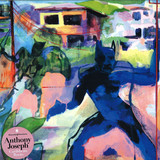
Strut team up for the first time with respected French label Heavenly Sweetness for the brand new album by the inspired poet, novelist and musician, Anthony Joseph.The Caribbean is an influence that runs through Joseph's discography, obliquely or headon, suggested or on full display. It resonates on each of his albums, from the furious trance of 'Bird Head Son' to the more polished 'Time'. On 'Caribbean Roots', he has now decided to turn a guiding thread and a reference point into a communications cable - a powerful bond that makes light of distance and braves the seas to link his island to that of his friends in the Caribbean arc, dancing to the strains of tumbélé and mendé only a few miles
from Port of Spain where people live it up to rapso and soca beats. Caribbean Roots' represents a return to his roots for Anthony Joseph, who has always remained true to a powerful, deep-seated sense of his Caribbean identity. Having started
out as a joint project with the outstanding percussionist Roger Raspail (Cesaria Evora, Papa Wemba, Kassav), 'Caribbean Roots' swiftly grew into a creative force incorporating
the rhythms, sounds and vibes that rock the Caribbean from San Fernando, Scarborough, Kingston and Les Abymes to Port-au-Prince and Havana. Backed by a band made up
of a blend of local musicians, the album attempts to unite the different islands into a single entity whilst ensuring that the identity of each is in no way diluted by the mix instead creating a richer and stronger alloy. The saxophones of Shabaka Hutchings (The
Heliocentrics) and Jason Yarde, the trumpet of Yvon Guillard (Magma), the bass of Mike Clinton (Salif Keita) and the trombone of Pierre Chabrèle (Creole Jazz Orchestra) all combine to form a group of Caribbean All Stars to which Andy Narrell, the master of the steel pans, brings ringing drum beats. The album features bursts of catchy rhythms and slow percussive riff progressions, as on a film soundtrack, incandescent voodoo funk and rhythmic high-speed frenzies shot through with free-jazz sax. This reunion of the Caribbean diaspora was never meant to come up with a formula divisible into eleven separate tracks - its goal was to explore and discover new sounds. And all of this under Anthony Joseph's guidance, as he spins his lyrical blend of afro-futurism and surrealism, commemorating the Caribbean people's sometimes violent resistance to colonialism. Anthony Joseph, one moment a chronicler reciting his text against a background of simple percussion, the next a storyteller possessed by the power of a hypnotic bassline, then an adventurer chanting among mangroves where the rhythm section and the brass have created an impenetrable thicket. At turns, an MC too, strutting to a fat, throbbing groove in vocal tandem with Sly Johnson or David Rudder to pay tribute to Mighty Sparrow, the undisputed and indisputable king of calypso
Shaw Cuts is happy to present its third release, which includes 4 tracks produced by Farron under the title 'Death Duel'. The story of this chapter is simple: The Third Master is respected as the unrivalled and undefeated swordmaster of the day. His strength and skill saw many opponents who sought to slay him and win his title. All failed. There was only one rival who might sever his crown. It is only a matter of time until the ultimate duel... 'We Don't Make No Sense' rings in combat with a dirty break-beat drum pattern combined with deep, melancholic pads, circling the scene before one of the masters makes the first attack. Warmer in tone, 'Tangency' is the first intermission, a lull in bloodshed and impending annihilation. Short-lived... The B-Side brings back battle mode with 'Centro', a rough and rolling thunder with churning synth action and distorted drums. The duel ends with 'Par 2', its sharp percussions, goliath bass drum and spheric pads reverberate victory. An open breast and sword glazed red. Fatal hemorrhage...
2016 reissue of an earlier album by Apparat, aka Berlin's Sascha Ring, who's also singing in Moderat, originally released in 2007.
"Apparat has had one hell of a year. His collaboration with Ellen Allien, the critically acclaimed album Orchesta of Bubbles, forged electrifying new connections between techno, electro and pop music. They developed the material into an electrifying live show that wowed clubs and festival audiences the world over. Apparat kept honing his solo show at the same time, delivering a powerful electro/techno laptop attack that would leave crowds twitching in its wake. And somewhere, in between all those activities, he managed to record Walls, his first solo studio album since 2003's Duplex. Despite its title, Walls isn't about dividing lines. Instead, it describes a circle that pulls many elements together into a protected, enclosed space where they jostle and roam free: strings and mallet instruments; rock guitar and gravelly sawtooth synths; stuttering digital percussion and muscular studio drumming."
- A1: John Kameel Farah - Fugue And Toccata On Hold
- A2: Ana Maria Rodriguez - Pocket Songs For Violoncello & Live Electronics
- A3: Zeitblom - Ikon
- A4: Eliav Brand - Individual Stuff
- A5: Guido Möbius - Entertain Premium
- B1: Juliana Hodkinson - Ring A Ring
- B2: Alex Paulick - Jingle Bells
- B3: Ari Benjamin Meyers - Telekom Ii For 2 Baritone Saxophones
- B4: Adi Gelbart - Musical Offering Against Telecommunication For
- B5: Magnetic Tape, Bass Clarinet And Electronics
- B6: Patric Catani - Baka Baka Dam
There used to be a time when ring tones were important. You were easily recognizable as one of the few people actually owning one of these new gadgets called ›mobile phone‹ (or ›handy‹ as the Germans say). Later you could make an important distinction by choosing a ›cool‹ ring tone...
In May 2014 the Festival »Doofe Musik« (»Stupid Music - Songs for Dreaming, Sedation and Forgetting«) took place at Haus der Kulturen der Welt (HKW) in Berlin. As part of the »Anthropocene Project« the festival focussed on escapism and the special function of music when retreating from reality. Detlef Diederichsen, curator at HKW, and Holger Schulze, Head of Sound-Studies-Lab Berlin, decided to not only focus on music which music lovers usually hate, e.g. ›Schlager‹, German folk music, Light Jazz, but also on ring tones.
The audio logo of Deutsche Telekom has been part of Germany's mobile phone culture from the very beginning so it acted as a starting point to question the usual concepts for ring tones. Using Christian Kellersmann's idea of the »Pocket Symphony« ten artists were invited to come up with adaptations of Telekom's audio logo. The results were performed for the first time during »Stupid Music« and once again in October of the same year when most of the recordings you can find on the album were made.
As you will hear: The short motif, as simple and unforgettable as it is, is ideal musical material.Everyone knows it, everyone has some sort of connection to it and these ten different versions, these ten different positions, open up the most varied possibilities for associations.
It is time that we take the ring tone seriously again. As the most reduced musical form that is the most-widely available in the whole world it contains enormous and unrealised potential!
Key Fachwerk team member Sascha Rydell is back on his home label founded by Mike Dehnert with another EP of searing techno. 'Thought Disorder' is a cantering, bulky affair with clipped vocals trapped in the middle of meaty drum loops. It's a well-swung track that has plenty of height to it, while 'Haptic' appears to make sue of the same vocal phrases. This time it's subtler, buried deep in a minimal percussive line and dubby, swaying drums. With some cute finger clicks joining the fray, this one is perfect for early evening warm-ups where the opener is a peak time banger. Filling up the b-side is Moony's remix of 'Rings Of Smoke' - a track by Roberto that was released on Fachwerk's previous EP. This new remix is a jazzy bit of dubbed out house with whispered vocals, uneven but warm piano chords and rolling kick drums that all make for a seductive and propulsive listen
Back in stock!
Some friends think that Shihab the man owes the balance of his soul to his beautiful Danish wife. They may be right; for Eros is the very essence of what Shihab plays.Yet Eros is a god with many a face. A tale of tender mournings Shihab's flute is telling in MAUVE - a piece that translates its title into delicately changing colors of sound. In UMA FITA DE TRES CORES he has his instrument wooing with the proud self-reliance of Latin grandezza. Calmly, softly, almost blandishly Shihab blows the solo flute in the Jimmy Woode composition MY KINDA WORLD. Serene and somewhat playful his own title ANOTHER SAMBA comes along - a most uncommon composition by the way: lasting for sixty bars as if growing independent out of itself, with solos that appear to be additional spinnings rather than improvised choruses; and yet; a perfect, self sustaining melody no element of which is superfluous. In the last of the pieces for flute, in Klook Clarke's THE WILD MAN, which is based on a flourish of trumpets, Shihab for the first time reminds of the sombre, the demon-like face of God Eros. He contrasts flawlessly intoned passages with challenging phrases, phrases raucously sung into the flute - really, he is a 'wild man' who is playing like that. This raucous challenging sound prevails throughout the four baritone-titles ('Shihab never withholds long to caress', Campi says). Shihab blows the instrument the same way he speaks: without any delay, directly coming to the point. And he treats it like a voice, not aiming at an artificially homogeneous sound in all the registers, but at their different modes of expression. In the high pitches the horn gains a brilliant tenor-like quality - for instance in PETER'S WALTZ, dedicated to Shihab's son Peter, and in Kenny Clarke's simple drum fills comprising theme JAY-JAY. In the deep register Shihab produces snotty sounds filling lady's ears with horrors like Pan - thus in JAY-JAY and in the boppy blues SET UP . Shihab's sense of a scurrilous humor breaks through in SEEDS (which reminds of the West-African heritage of jazz with its multiple rhythms and its renunciation of harmonious development - only the eight bars of the bridge base on a progression of chords): not only does he omit the notorious bombastic chord by the ensemble after his own final cadenza, he even ends with a minor second above the keynote. Seems as if Shihab now unrestrictedly conveys to his music all the experiences and emotions he formerly did not deal with in a musical way. Shihab the man need not be disturbed so that Shihab the musician may improvise passionate choruses. It would be unjust, however, to forget the choruses of the four other musicians for those by the 'born leader'. Francy Boland, taciturn and always introverted: he plays an extrovert, a masculine piano. Even with spare single note lines he produces a piercing and ringing sound that hitherto nobody except him has discovered, a bluesy sound bespeaking the very element of frustration that lies within the title of the trio number WHO'LL BUY MY DREAM. The unfailing feeling for rhythm the musicians of the CBBB praise with the arranger Boland, becomes manifest in the piano solo on SET UP. Francy's improvisation is rhythmically styled in a Monk-like manner, and yet no accent could be set differently. Maybe this is the secret of the Shihab-Combo. 'Rhythm is our business', this credo of Jimmy Lunceford could be the one of the five musicians as well. Sadi hits his vibes as dryly as if wanting to bring its ancestors to memory, the wooden chimes of West Africa's coastal tribes. To reach the fullest poignancy possible, he intentionally calms down even the resonance in MY KINDA WORLD. In UMA FITA DE TRES CORES Jimmy Woode bears out the crispy jazz beat against Sadi's Bongos and Klook's Latin-American percussion all by himself. Moreover - and that, too, is connected with the school of the Duke who was the first in the history of jazz to discover the instrument's potential as a melody instrument - Woode rips a marvelous counterpoint to the inventions of the other melody instruments, take for example PETER'S WALTZ. And then there is Kenny Clarke. Klook. On the entire record he only uses his brushes. Means by which different drummers only know to bring forward impressionistically blending noises: He drums a vigorous beat with them, fanciful fills, a solo, melodious and at once skillfully playing with cross rhythms in JAY-JAY. The 'born leader', the 'outstanding baritone saxophonist of modern jazz' (Joachim-Ernst Berendt), he could not wish himself different sidemen for this record overdue since some years.
Six years have passed since the last album by Andi Otto alias Springintgut, ("Park and Ride", City Centre Offices, 2007). In this period, Otto has done nothing less than inventing a new instru- ment: His "Fello" is a cello with movement sensors attached to the bow and a corresponding software. The development has been kicked off at STEIM in Amsterdam already in 2007. Since then, Otto has achieved vital refinements of the system, cooperated with artists of various fields as diverse as choreographers in Macedonia, theatre in Nigeria and Techno DJs in the Berghain Kantine in Berlin or the Fusion Festival. He even played solo with his instrument on different continents. For this third album, "Where We Need No Map" Otto takes the "Fello" to his studio in Hamburg for the first time. He records his instrument which has until today only been presented live on stage. In these Fello Sessions, the bow gestures immediate- ly modulate and process the amplified cello sound. In the subsequent editings he selects and cuts these sessions and merges them with other styles, such as Skweee, House and Jazz. Springintgut's trademark sound, this unique playfulness, is pre- sent throughout, while the live-processed cello adds an unrivaled deepness. The artist's expeditions even add more colour. Two tracks have been recorded in India. The lead voi- ce in "Bangalore Kids" is a field recording of a schoolboy in Cubbon Park, Bangalore. Andi Otto spends three months in Japan as artist- in-residence in the Villa Kamogawa in Kyoto. Du- ring this concentrated period he produces the more contemplative tracks of the album, like "Ka- mogawa Cycling" and "Western Kyoto". In Sri Lan- ka, finally, he meets Sasha Perera, the voice of Berlin's Dub Techno band Jahcoozi. They record two songs together. Especially in "Bullet" one can sense the lazy, muggy, peaceful heat of the after- noons in which this beautiful track has been com- posed. These stories may help to locate the music's orig- ins but still the sound of "Where We Need No Map" points us to unknown territories. The journey itself is the reward, let's listen!
Sechs Jahre sind seit dem letzten Album "Park and Ride" (City Centre Offices, 2007) von Andi Otto alias Springintgut bereits vergangen. Diese Zeit hat der Pingipung-Mitinhaber genutzt, nicht weni- ger als ein eigenes Instrument zu erfinden: das "Fello", ein Cello mit Bewegungssensoren auf dem Bogen und einer dazu gehörigen Soft- ware. Die Grundlagen dafür entstehen bereits 2007 am STEIM in Amsterdam. In der Folgezeit gelingt es Otto, das Instrument immer weiter zu verfeinern, mit unterschiedlichen Künstlern zu kooperieren und international aufzutreten. Für "Where We Need No Map" trägt Otto das Fello erstmals ins Hamburger Studio und nimmt unzählige Sessions auf, in denen die Gesten des Bogens direkt den verstärkten Sound des Cellos verändern und neu formen. Diese Fello-Sitzungen werden anschließend editiert und mit anderen Ein- flüssen vermengt, die von Skweee über House bis hin zum Jazz reichen. Der Markenzeichen-Sound von Springintgut, diese ureigene Verspieltheit, ist weiterhin vorhanden, gewinnt durch das live-pro- zessierte Cello aber eine bisher unerreichte Tiefe. Weitere Farbe erhält das Album durch Ottos zahl- reiche Tourneen in ferne Länder. Zwei Stücke ent- stehen in Indien. Die Stimme von "Bangalore Kids" ist eine Feldaufnahme eines Schuljungen im Cubbon Park in Bangalore. In Japan verbringt Andi Otto drei Monate als "Artist in Residence" in der Villa Kamogawa in Kyoto. Während dieser kon- zentrierten Zeit entstehen die ruhigeren Tracks des Albums wie "Kamogawa Cycling" und "Western Kyoto". In Sri Lanka lernt er dann Sasha Perera kennen, die Stimme von Jahcoozi. Sie nehmen zwei Songs zusammen auf. Vor allem in "Bullet" kann man der faulen Nachmittagshitze nachspü- ren, in der die Stücke entstanden sind. So lassen sich die vielfältigen Entstehungspunk- te von "Where We Need No Map" zwar karto- graphieren, aber der Sound des Albums schickt einen trotzdem in unbekanntes Terrain. "Der Weg ist das Ziel, frag nicht viel, hör mal..."
In the great tradition of Count Ossie, four new grounation furies — hypnotic, thunderous, urgent, mystical — with dubwise repeta, funde and bass drums embedding the Light Of Saba veteran's gorgeous trombone classicism.
The opener is a rocking kumina rhythm, with ring-the-alarm metal percussion and exhortatory brass; Free The People swirls some apocalyptic reasoning into the foggy, thumping mix. Universe In Crisis is another emergency call, chuffing headlong down the grooves... before the beautiful, anthemic Chant takes a step back from the fire, closing with a sense of thankful, spiritual reconciliation, the expert drumming and lyrical bone-work in full effect.