New/Deluxe vinyl pressing housed in old school tip-on jacket In 1973, Davis would finally kick off her cosmic career with an amazingly progressive hard funk and sweet soul self-titled debut. Davis showcased her fiercely unique talent and features such gems as "If I'm In Luck I Might Get Picked Up" and "Game Is My Middle Name." The album Betty Davis was recorded with Sly & The Family Stone's rhythm section, sharply produced by Sly Stone drummer Greg Errico, and featured backing vocals from Sylvester and the Pointer Sisters.
Cerca:dr sly
New/Deluxe vinyl pressing housed in old school tip-on jacket In 1973, Davis would finally kick off her cosmic career with an amazingly progressive hard funk and sweet soul self-titled debut. Davis showcased her fiercely unique talent and features such gems as "If I'm In Luck I Might Get Picked Up" and "Game Is My Middle Name." The album Betty Davis was recorded with Sly & The Family Stone's rhythm section, sharply produced by Sly Stone drummer Greg Errico, and featured backing vocals from Sylvester and the Pointer Sisters.
Released for the first time in 1983 on the UK label Vista Sound, »Fight Against Corruption« sees Campbell backed by most of The Aggrovators musicians (Sly & Robbie, Earl Chinna Smith, Jackie Mittoo, Winston Wright). The album was produced by Bunny Lee and Campbell itself, who – here - clearly skims some social criticism , but also does not disdain some more lovers tunes.
Beautiful, soulful jazz record by Jimetta Rose and The Voices of Creation, a Los Angeles-based community choir, a mainstay of the local scene. Highly recommended!!
The Voices of Creation are a community-based choir led by vocalist, songwriter, arranger, producer and mainstay of the Los Angeles scene Jimetta Rose. Made up of a multigenerational group of mainly non-professional singers backed by some of the city’s finest musicians,their music marries hip strains of gospel with layers of jazz, soul and funk. While aspects of their music might recall Kamasi Washington, The Staple Singers or Sly Stone, Jimetta’s unique vision has resulted in new spiritually-charged forms of music whose whole-hearted embrace of love, joy and peace act as sonic healing balms for the soul.
For Jimetta - whose resume includes collaborations with Miguel Atwood Ferguson, Georgia Anne Muldrow, Sa-Ra Creative Partners, Angel Bat Dawid, Shafiq Husayn, MED and Blu - the very act of creation was part of a healing process: “I was very low at the time and I wrote most of the songs going through hardship. But I found comfort in the songs and a way to adjust my mindset to where things got better. So I thought ‘if this music works for me, maybe it will work for other people’ I believe that every person has their own voice and their own note and that we can use our voices to heal ourselves. That’s the intention behind creating the project.”
After putting out a call on social media for people interested in joining her choir she was met with a sea of replies. Members were chosen in less-than conventional fashion: “I recruited people based on their interest in healing themselves and others, not necessarily on their musical experience or being seasoned performers” she says. Among those accepted into the ever-evolving collective, which was begun initially as a community choir, were the likes of Sly Stone’s daughter Novena Carmel, better known as a radio DJ for KCRW’s flagship breakfast show. Jimetta’s upbringing in the Pentecostal church, where she was a youth choir director, fed into her otherwise intuitive teachings of her songs and arrangements to the inexperienced members with help from the group’s seasoned organ player/co-musical director Jack Maeby.
Produced by Mario Caldato Jr. (Beastie Boys, Seu Jorge) and his wife Samantha Caldato the results show the incredible sense of togetherness and communal spirit that the group had built up over time in the rehearsal sessions. The six tracks of their debut album, a mixture of originals and rearranged covers, are performed in a wide-eyed mix of styles that reflect Jimetta’s vision for borderless music: “It’s new black classical music,” she explains. “It’s all the hodgepodge of being an African American but also with creativity and vision for the future. It has a taste of what is to come and what we can do. What we have gone through and who we are now.”
The group’s propensity for warm and buoyant sonics finds representation on album opener Let The Sunshine In, a sparkling rework of the Sons and Daughters of Lite’s deep jazz classic. Their version finds the group’s dynamic group harmonies offset with Allakoi Peete’s nimble afro-percussive touches and plenty of soul- drenched keys courtesy of pianist Quran Shaheed and organ player Jack Maeby. A similarly uplifting take on Rahsaan Roland Kirk’s choral jazz classic Spirits Up Above follows, with Maeby’s groove-laden organ lines inspiring some gorgeous group harmonies as well as prime solo turns from the likes of Kellye Hawkins, Zavier Wise, Tamara Blue, and Khalila Gardner.
Another Sons and Daughters of Lite cover follows as Jimetta leads the choir in the groove-drenched ode to self-affirmation Operation Feed Yourself. Written as a series of mantras for everyday living, the Jimetta-penned composition How Good It Is harnesses the full transformative power of music to generate a stirring and joyful ode to positivity - it’s chanted declarations bringing out some of the group’s most deeply-felt and affecting vocal performances over some superlative piano and organ accompaniment with a surprise feature vocal from Novena Carmel.
Jimetta’s talent for re-imagining songs in her own light is highlighted in Answer The Call, her vivid re-telling of Funkadelic’s Cosmic Slop: “When I listened to the original song, the Mom in the story was really going through it. I thought of how I could turn this into a song that can encompass the glorification of all mothers and I thought of the Egyptian cosmic goddess Nut. To that mother we’re all the seeds planted in the garden. Answering the call in your life is literally that. Finding out exactly what you’re here for through your heart.”
The album finishes with the standout original gospel number Ain’t Life Grand. Over swaying organs and clapped percussion Jimetta’s lyrical mantras serve to emphasise the good feelings that come to those with a grateful heart. Good feeling is an apt descriptor for the mood of the album as a whole. Its shining positivity provides a welcome ray of light in an increasingly dark world. “It’s a shortcut if you will to the better feelings” Jimetta says. “The hope that we need to keep pressing forward. We are saturated and inundated with images of chaos and destruction, death and hatred. There’s so much we can witness. So, I want to make sure that there is a representation sonically of the other parts that are still there to witness so that we can continue to build those things. So that the systems we support actually reflect what we want to experience. So it’s like: “Don’t give up and Let The Sunshine Into You” and then find out what your purpose is and answer the call.”
2023 Repress
What you have in your hand is Tappa Zukie's legendary 'Escape from Hell' album.
Originally released in 1977 as a dub follow up to Tapper's exceptional 1976 release 'Tappa Zukie in Dub' (JRLP044).
The 'In Dub' album was cut using the great talents of engineer Philip Smart, but when the tracks were pulled together for its follow up 'Escape to Hell' Philip Smart had left Jamaica for New York and his replacement at the controls was Prince Jammy.Who had just returned from Canada at the request of King Tubby himself.
The purpose was to fill Mr. Smarts position.
Tapper was definitely in good hands and at the time he would tell the Prince was soon to become King Jammy due to his outstanding studio work.
The 'Escape from Hell' set was initially overlooked more to the fact of the small numbers of its original pressing.The album makes great use of Tapper's extraordinary Channel One rhythms cut with Sly and Robbie's The Revolutionary's Band.
Great rhythms matched the magic from King Tubby's studio at the hands of Prince Jammy.
We added the cd release for this album and at Tappers request some alternative dubs and tracks that seem to compliment this set.
So drop the needle on this great album and judge for yourself..
....A FINE ALBUM CUT IN FINE STYLE...
Parisian quintet En Attendant Ana have dazzled since day one. From the muted strains of their 2016 EP "Songs From The Cave", to the assured 2018 TiM debut "Lost & Found", to the sparkling refrains of "Juillet"; released just before the world collapsed around us, and which stood as the band's rebirth and purest statement of their music ambitions - until now. "Principia" is the band's third album and is without a doubt their best yet. Bandleader & principal songwriter Margaux Bouchaudon's voice anchors many of the songs on "Principia", her crystalline delivery ringing out like a bell as the band swoons & sways beneath her. The songs on "Principia" were composed from a place of confusion about the state of the world and her place in it, looking outward and inward for answers. They question our perception of others, the one they have of us and finally the one we have of ourselves in a society where the individual is king and the group is forgotten. Guitarist Max Tomasso - newly joined just before the recording of "Juillet"- feels more "moved-in" on these tunes, his sly guitar-work gliding effortlessly through. No showboating - only prickling at the precise moment necessary in suit of the song itself. New member Vincent Hivert (their touring sound man, Hivert joined the group just as touring was underway for "Juillet", replacing founding member Antoine Vaugelade)'s bass-work is rubbery & flexible, bouncing around and thru the melodies on a rhythmic sugar-high, practically urging on drummer Adrien Pollin's metronomic swing. The band's secret weapon, multi-instrumentalist Camille Frechou's trumpet & saxophone are more present & considered in the arrangements, adding a new layer of sophistication to the group's already debonair indie pop. Her beatific harmonies add a yearning to Bouchaudon's lilting phrases; sometimes uplifting, other times melancholic. Bouchaudon says "One of the most important points we tried to focus on was the place given to each instrument. For the first time, we withdrew parts, we were careful not to play everyone at once and I think that the result is a much lighter album in which every musician has a specific place and moment". But this album is also the first one to have been shaped entirely by the band, from the conception to the production. The meeting of Vincent Hivert and Margaux Bouchaudon gave birth to a duet in which the technical and artistic aspects were intertwined from the very beginning of the conception of "Principia". Apart from reshaping En Attendant Ana's dynamic, Vincent Hivert was able to think as a musician and producer as soon as they started working on Margaux Bouchaudon's demos which brought a new dimension to their music. The two of them recorded and mixed the album together reuniting their references and artistic goals. "Principia" is a great step forward without sacrificing the things that make the band unique. The nods to French pop (both current & classic) still permeate the proceedings, and the group's penchant for Anglo-Saxon indie pop from The Nineties (think Electrelane, Stereolab, American Analog Set) still rings out, but there's an air of - dare we say - maturity in "Principia"s twelve songs. The group always felt a little 'out-of' and 'ahead-of' its time, but tunes like "Wonder" "The Cutoff" and "Same Old Story" are cinematic and romantic, and absolutely feel like the next great phase of an already great band.
Peach Vinyl
Parisian quintet En Attendant Ana have dazzled since day one. From the muted strains of their 2016 EP "Songs From The Cave", to the assured 2018 TiM debut "Lost & Found", to the sparkling refrains of "Juillet"; released just before the world collapsed around us, and which stood as the band's rebirth and purest statement of their music ambitions - until now. "Principia" is the band's third album and is without a doubt their best yet. Bandleader & principal songwriter Margaux Bouchaudon's voice anchors many of the songs on "Principia", her crystalline delivery ringing out like a bell as the band swoons & sways beneath her. The songs on "Principia" were composed from a place of confusion about the state of the world and her place in it, looking outward and inward for answers. They question our perception of others, the one they have of us and finally the one we have of ourselves in a society where the individual is king and the group is forgotten. Guitarist Max Tomasso - newly joined just before the recording of "Juillet"- feels more "moved-in" on these tunes, his sly guitar-work gliding effortlessly through. No showboating - only prickling at the precise moment necessary in suit of the song itself. New member Vincent Hivert (their touring sound man, Hivert joined the group just as touring was underway for "Juillet", replacing founding member Antoine Vaugelade)'s bass-work is rubbery & flexible, bouncing around and thru the melodies on a rhythmic sugar-high, practically urging on drummer Adrien Pollin's metronomic swing. The band's secret weapon, multi-instrumentalist Camille Frechou's trumpet & saxophone are more present & considered in the arrangements, adding a new layer of sophistication to the group's already debonair indie pop. Her beatific harmonies add a yearning to Bouchaudon's lilting phrases; sometimes uplifting, other times melancholic. Bouchaudon says "One of the most important points we tried to focus on was the place given to each instrument. For the first time, we withdrew parts, we were careful not to play everyone at once and I think that the result is a much lighter album in which every musician has a specific place and moment". But this album is also the first one to have been shaped entirely by the band, from the conception to the production. The meeting of Vincent Hivert and Margaux Bouchaudon gave birth to a duet in which the technical and artistic aspects were intertwined from the very beginning of the conception of "Principia". Apart from reshaping En Attendant Ana's dynamic, Vincent Hivert was able to think as a musician and producer as soon as they started working on Margaux Bouchaudon's demos which brought a new dimension to their music. The two of them recorded and mixed the album together reuniting their references and artistic goals. "Principia" is a great step forward without sacrificing the things that make the band unique. The nods to French pop (both current & classic) still permeate the proceedings, and the group's penchant for Anglo-Saxon indie pop from The Nineties (think Electrelane, Stereolab, American Analog Set) still rings out, but there's an air of - dare we say - maturity in "Principia"s twelve songs. The group always felt a little 'out-of' and 'ahead-of' its time, but tunes like "Wonder" "The Cutoff" and "Same Old Story" are cinematic and romantic, and absolutely feel like the next great phase of an already great band.
Tape
Parisian quintet En Attendant Ana have dazzled since day one. From the muted strains of their 2016 EP "Songs From The Cave", to the assured 2018 TiM debut "Lost & Found", to the sparkling refrains of "Juillet"; released just before the world collapsed around us, and which stood as the band's rebirth and purest statement of their music ambitions - until now. "Principia" is the band's third album and is without a doubt their best yet. Bandleader & principal songwriter Margaux Bouchaudon's voice anchors many of the songs on "Principia", her crystalline delivery ringing out like a bell as the band swoons & sways beneath her. The songs on "Principia" were composed from a place of confusion about the state of the world and her place in it, looking outward and inward for answers. They question our perception of others, the one they have of us and finally the one we have of ourselves in a society where the individual is king and the group is forgotten. Guitarist Max Tomasso - newly joined just before the recording of "Juillet"- feels more "moved-in" on these tunes, his sly guitar-work gliding effortlessly through. No showboating - only prickling at the precise moment necessary in suit of the song itself. New member Vincent Hivert (their touring sound man, Hivert joined the group just as touring was underway for "Juillet", replacing founding member Antoine Vaugelade)'s bass-work is rubbery & flexible, bouncing around and thru the melodies on a rhythmic sugar-high, practically urging on drummer Adrien Pollin's metronomic swing. The band's secret weapon, multi-instrumentalist Camille Frechou's trumpet & saxophone are more present & considered in the arrangements, adding a new layer of sophistication to the group's already debonair indie pop. Her beatific harmonies add a yearning to Bouchaudon's lilting phrases; sometimes uplifting, other times melancholic. Bouchaudon says "One of the most important points we tried to focus on was the place given to each instrument. For the first time, we withdrew parts, we were careful not to play everyone at once and I think that the result is a much lighter album in which every musician has a specific place and moment". But this album is also the first one to have been shaped entirely by the band, from the conception to the production. The meeting of Vincent Hivert and Margaux Bouchaudon gave birth to a duet in which the technical and artistic aspects were intertwined from the very beginning of the conception of "Principia". Apart from reshaping En Attendant Ana's dynamic, Vincent Hivert was able to think as a musician and producer as soon as they started working on Margaux Bouchaudon's demos which brought a new dimension to their music. The two of them recorded and mixed the album together reuniting their references and artistic goals. "Principia" is a great step forward without sacrificing the things that make the band unique. The nods to French pop (both current & classic) still permeate the proceedings, and the group's penchant for Anglo-Saxon indie pop from The Nineties (think Electrelane, Stereolab, American Analog Set) still rings out, but there's an air of - dare we say - maturity in "Principia"s twelve songs. The group always felt a little 'out-of' and 'ahead-of' its time, but tunes like "Wonder" "The Cutoff" and "Same Old Story" are cinematic and romantic, and absolutely feel like the next great phase of an already great band.
The first LP by Bloedneus & de Snuitkever, MILLI MILLE. Finally on wax, it’s Lukas De Clerck’s musical vehicle for his explorations with the aulos, that ancient reed instrument that mainly satyrs and archeological enthusiasts found beguiling. Equipped with his handmade pipes and the artful sense of devotion of a true modern-day aulete, De Clerck has dug deep into the technical and cultural peculiarities of this long-silenced instrument, paying it the kind of attention and mindfulness that Marsyas the satyr so lacked when he challenged Apollo and his lyre to that ill-fated musical match. But beyond merely resuscitating an ancient cult, De Clerck as Bloedneus gives the aulos a different kind of renaissance where its penetrating qualities are expanded and expounded to effects worth every nosebleed, paving new grounds in these practices of old.
MILLI MILLE hints at mysteries universal to humans of yore, present and morrow, like a Joseph Campbellesque recounting of transcendental journeys through drones and extra reverb. Elegiac modes encounter pastoral vibes that are punctuated by sly baroque flourishes, all pointing to the timelessness of the aulos’s sound - one can easily imagine its power of enlightenment through many ages. Yet in MILLI MILLE, an insistence on the fickleness of the instrument surfaces through disorienting, perception-shifting blasts and a compulsion to push the aulos to its fullest and most destabilizing potential. This is the flavor that Bloedneus & de Snuitkever imbues into that dormant canon, one that permeates the atmosphere long after the last note puts an abrupt end to these vibrations. The satyr’s song rings on, leaving the air abuzz with a timeless pulse that holds the promise of sounds still to be unearthed.
Blackploid has become one of Central Processing Unit's stalwarts in the past couple of years. Martin Matiske's project contributed a trio of EPs to the Sheffield label across 2021 and 2022, with each of them showing off the kind of electro chops and production sensibilities that made Blackploid an ideal fit for an imprint which also boasts the likes of Cygnus, Silicon Scally and Bochum Welt among its catalogue.
Now, for CPU's first release of 2023, Matiske levels things up with the debut Blackploid LPEnter Universe. Across these twelve tracks, Matiske leaves us in no doubt that he's a prime mover in the world of modern electronic music.Enter Universedoes not let up from start to finish, delivering a dozen pieces of leftfield electro that draws from the sound's greats while also showcasing an unpredictability and flair that is all of Blackploid's own.
The tone is set from the first frosty chords of opening cut 'Pulsation'. The track traverses the starscape on pitter-patter drums and chirruping synths, a lively and slightly dystopian roller with an adventurous undercurrent reminiscent of classic Rephlex drops. It's a style which Blackploid often draws for throughout the rest ofEnter Universe, albeit with elements added or subtracted at each stage.
Indeed, this album features some of the most unusual production you will hear on any record this year. While the grooves pulse away in a manner reminiscent of Drexciya or Legowelt, Blackploid layers the mixes with a whole cornucopia of synth tones. 'The Mission' boasts a bleep-bloop breakdown that sounds like malfunctioning rotary telephones; 'Silent Room' is a ghoulish jam which harks back to Warp's legendary Artificial Intelligence compilations; 'Automatik' and 'Wormhole' are defined by some brilliantly strange low-ends - you'll be thinking of Mr. Oizo's 'Flat Beat' with the wiggly former, while the gurgling, writhing anti-lead that dictates 'Wormhole' is oddly thrilling and more than befits the track's title.
This inventive approach is also apparent in some of the structural choices onEnter Universe. While the tracks here all keep a steady, dancefloor friendly pulse, several of them surprise you by switching up the approach after a minute or two. 'Pulsation', 'Automatik' and 'The Mission' all feature moments where a new element - extra hi-hats, a synth line entering from leftfield - inject fresh impetus into the tune to keep the listener on their toes.
Blackploid may push the sonic envelope onEnter Universe, but this does not mean there is no room for melody. In particular, the cuts here which most strongly channel 'Computer World'-era Kraftwerk do so by fronting some slyly tuneful work, particularly in the low end of the mix. 'Unidentified' serves up delightfully springy chords, 'Cell Mutation' leads from the bassline, and 'Space Curve' features little cells of melody and counter-melody working together to closeEnter Universeout on a high.
Blackploid's debut LP Enter Universe marries Drexciyan electro and Warp-school electronica with some brilliantly inventive production choices.
Dubmatix has taken his time working on his new album. Sly & Robbie meet Dubmatix "Overdubbed" was released in 2018. It scooped the Juno Award for "Reggae Recording Of The Year 2019", marking the second time the Canadian producer and multi-instrumentalist from Toronto had received this coveted award. "ReWired" is his first studio album in years and it"s already abundantly clear that the wait has been more than worth it. The album offers a dazzling, masterful kaleidoscope of modern sounds of dub-oriented bass music that is enormous fun. The Canadian could be in with a great chance of winning another Juno Award.
Growing up around Paris, Yasin Hazim learned about music through both his classical music training at the conservatory & his family's Moroccan & Algerian roots.
It's from those influences ranging from Leonard Cohen, Keith Jarrett & Jacques Brel to Gnawa music, Abdel Halim Hafez & Reinette l'Oranaise that he draws his own style, ranging from Blues to folk music, sly elements of R&B, to his own blend of psychedelic disco and beyond.
Awash in waves of haunting piano lines and warm chugging drums, Yasin Hazim's music is a departure from all that is pumped-up, instead drifting along a more circuitous river of melodic emotions and rhythmical movements, taking you on a heartfelt and personal journey.
Classic 1978 Reggae album re-released on 180 gram vinyl Produced by Linval Thompson
Personnel
Bass: Robbie Shakespeare Bongos: Skully Drums: Sly Dunbar Organ: Ossie Hibbert
Percussion: Sky Juice Piano: Winston Wright Producer: Linval Thompson
Recorded At: Channel One Recording Studio & Harry J’s Recording Studio
- A1: Logic System - Unit
- A2: Kraftwerk - Computerwelt (2009 Remastered
- B1: Whodini - Magic's Wand
- B2: Rocker's Revenger - Walking On Sunshine (Feat Donnie Calvin
- C1: Klein & Mbo - Dirty Talk (European Connection
- D1: Liaisons Dangereuses - Los Niños Del Parque
- D2: Yello - Bostich
- E1: The The - Giant
- F1: The Residents - Kaw-Liga
- G1: Clan Of Xymox - Stranger
- G2: A Split - Second - Flesh
- H1: Severed Heads - Dead Eyes Opened
- H2: The Weathermen - Poison!
- I1: New Order - Blue Monday
- J1: Anne Clark - Our Darkness
- J2: 16 Bit - Where Are You?
- K1: Phuture - We Are Phuture
- K2: Model 500 - No Ufo's (Vocal
- L1: Frankie Knuckles Feat Jamie Principle - Your Love
- L2: Quest - Mind Games (Street Mix
- M1: Jasper Van't Hof - Pili Pili
- N1: Guem Et Zaka Percussion - Le Serpent
- N2: Hugh Masekela - Don't Go Lose It Baby
- O1: Sly & Robbie - Make 'Em Move
- Q1: The Ecstasy Club - Jesus Loves The Acid
- R1: Foremost Poets - Reason To Be Dismal?
- S1: Lhasa - The Attic
- S2: A Guy Called Gerald - Voodoo Ray
- T1: M/A/R/R/S - Pump Up The Volume - Usa 12" Mix
- T2: Bobby Konders - Nervous Acid
- U1: Meat Beat Manifesto - Helter Skelter
- V1: Raze - Break 4 Love
- W1: Sueño Latino With Manuel Goettsching Performing E2-E4 - Sueño Latino (Paradise Version
- X1: Off - Electrica Salsa
- O2: Brian Eno - David Byrne - Help Me Somebody
- P1: Primal Scream - Loaded (Andy Weatherall Mix
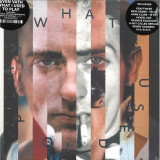
For this uniquely personal retrospective spread over twelve vinyl discs, Sven Väth takes us back to the early days of his DJ career. On What I Used To Play we meet great pioneers of electronic music, gifted percussionists, obscure wave bands, and innovative producers of a bygone 'new electronic' era. Rough beats and irresistible grooves from the identification stage of house, techno, and acid remind us not just how far electronic music has evolved over the past four decades, but how great it was to dance to EBM, techno, and house for the very first time.
If there is one protagonist of the electronic music scene who has remained curious, innovative and at the very cutting edge of music for over four decades, it's Sven Väth. His multi-layered artist albums and Sound of the Season mix compilations have been defining the genre for over two decades, and even today, he is constantly on the lookout for the next top tune to add to the highlights of his next set. At least, that's the case when he's not producing them himself as an artist or remixer. "Actually, it's always been part of my DNA to think ahead," and nothing had been further from his mind than looking back at his past, but when in spring of 2020 the international DJ circuit had to be scaled down to virtually zero, the 'restless traveler' suddenly had time. Time to stop and reflect on "how it actually was back then, at the very beginning of my career..."
"It was a great trip and with every track, beautiful memories came flooding back".
In the London apartment, he had just moved into, Sven has set up a "little music room", where he cocooned himself for several days, "to look way back for the first time and review my musical journey through the eighties, so to speak."
The interim result was six thematically oriented playlists with a grand total of 120 tracks from 'early 80s' to 'Balearic late 80s', together with excursions into afrobeat, European new wave, and EBM sounds and a few epochal techno/house tracks from the USA in between. From these 'Best of Sven Väth's favorites', the project What I Used To Play crystallized. Sven remembers how the Cocoon team reacted to his proposal: "They found the idea of making a compilation out of it MEGA from the beginning and everyone said 'Sven, go for it', but then, of course, the work really started, namely, to clear the rights and to get clean sounding masters of the up to 40-year-old tracks. There was also disappointment, of course. We couldn't clear certain titles because the rights holders in the USA had fallen out with each other or simply disappeared from the scene. In short, it wasn't easy, but now I can safely say we got the most important tracks."
Finally, after two years of research, curation, design, and administrative fine-tuning, the "little retrospective" from 1981 to 1990 is available. The exquisitely packaged, and three-kilo heavy box set is not only physically impressive, WIUTP is also the definitive record of Sven Väth's musical development. On each of the twenty-four sides of vinyl, you can trace track by track, what influenced him during which phase, and how he took off as a DJ from his parents' Queen's Pub straight into the spotlight at Dorian Gray. There and at Vogue (later OMEN), Sven became the style-defining player in the DJ booth that he still is today.
1981 - 1990: Future Sounds of Now
In the early eighties, the crowd in clubs like Vogue and Dorian Gray danced to what nowadays we call 'dance classics' - mainly disco, funk, soul, and chart pop. It was up to a new generation of DJs, including Sven Väth, the youngest protagonist in the Rhine-Main area at the time, to create their own club-ready music mix. Good new tracks and potential floor-fillers were rarities that had to be sought out and found, in order to prove oneself worthy.
Without MP3s, internet streaming, or other digital download possibilities, music didn't just gravitate to the DJ, instead, it had to be tracked down. In well-stocked record stores in Frankfurt and Wiesbaden or even in Amsterdam, London, or New York, Sven and friends sourced the material for countless magical nights. On WIUTP we can follow Sven's very personal journey through this wild, innovative era in which synth-pop, funk, hip-hop, and disco were successively replaced as 'club music' by house, techno, acid, and breakbeat. By the end of the decade, it was clear to see that these once exotic 'fringe' phenomena would soon become 'mass' phenomena.
Early 80s
Dirty Talk by the Italian-American duo Klein & M.B.O. represents the most innovative phase of the Italo-disco genre in the early eighties like no other track. Mario Boncaldo (I) and Tony Carrasco relied entirely on the original synthetic drum and percussion sounds of the Roland TR-808, coupled with the raunchy vocals of Rossana Casale and guitar accents of Davide Piatto. Of course, other tracks from this period were also influential in style, most notably Unit by Logic System, which worked as the perfect soundtrack to the laser lighting system at the legendary Dorian Gray club. With stomping beats and robotic rap interludes, Bostich by Yello also belongs on Sven's eternal playlist - after all, it caught the attention of Afrikaa Bambaataa, who invited the Swiss duo to perform at the Roxy in New York in 1983.
EBM Wave - Mid 80s
From today's point of view, the almost ten-minute-long, downtempo track Giant by Matt Johnson's band project The The, would probably not be considered an obvious club classic. However, a closer (re)listen reveals the rhythmic intricacies of the percussion overdubs by JG Thirlwell (aka Foetus) on Johnson's composition, and it becomes clear why this exceptional piece of music is one of Sven's absolute favorites. Other classics from this phase include Kaw-Liga by the mysterious The Residents, the hypnotic-synthetic Our Darkness by Anne Clark (and David Harrow), and last but not least, the somber, monotonous anthem Where Are You? by 16Bit, one of Sven Väth's projects together with Michael Münzing, Luca Anzilotti from 1986.
US House - Late 80s
You certainly can't talk about Chicago house without mentioning Frankie Knuckles. The resident DJ at the Warehouse not only gave the name to an entire genre, but also produced epochal floor fillers on the Trax label like the timeless Your Love, sung (and moaned) by Jamie Principle. Acid house protagonists Phuture also hail from Chicago, and on We Are Phuture (also released on Trax) we hear the chirping acid sounds of the legendary Roland TB-303 in full effect. Another featured classic is No UFO's by Detroit's Model 500 aka Juan Atkins, who is rightly considered the 'Godfather of Techno' even if the genre-defining track from 1985 still breathes with the spirit of hip-hop and electro from the first breakdance era.
Afrobeat
Le Serpent, by Algerian-born Abdelmadjid Guemguem, is a track that sounds completely different from everything else on WIUTP. Made in 1978, it's a monumental, rousing groove created without bass or synths, just with five congas! Even though Guem sadly passed away in 2021, his immortal, acoustic beats are understood all over the world and will continue to enrich many thousands of DJ sets for years to come. Another classic that not only Sven appreciates beyond measure is Hugh Masekela's Don't Go Lose it, Baby. In addition to being one of the most important jazz pioneers, the trumpeter and freedom fighter from Johannesburg was very experimental, integrating electronic sounds into his music in later years, in a similar vein to Miles Davis and Herbie Hancock. Dutch jazz pianist Jasper van't Hof's afrobeat project Pili Pili has also aged well. The trance-like, almost sixteen-minute-long track of the same name, manages to fill a whole side on the seventh of twelve vinyl discs in the WIUTP box.
UK-US-Euro - Late 80s
Time for a change of scene, in the truest sense of the word, and from a musical perspective, this section is like landing on another planet. First up is Andrew Weatherall's classic remix of Primal Scream's Loaded, featuring the iconic Peter Fonda sample (lifted from the 1966 biker film Wild Angels) that came to personify the mood triggered by the British Second Summer of Love in the late eighties: "We wanna be free to do what we wanna do, and we wanna get loaded...". This period also saw the emergence of M/A/R/R/S whose only single, 1987's Pump Up The Volume, became a club classic with support from DJ legend CJ Mackintosh. In this most eclectic of sections, we also encounter New York house and reggae producer Bobby Konders and his seminal Nervous Acid.
Balearic - Late 80s
Those who know him, know that Sven had already lost his heart to the 'magic island' of Ibiza as a teenager, so with that in mind, the WIUTP project couldn't end without a Balearic chapter. Inspired by Manuel Göttsching's E2-E4, the immortal, eponymously titled Sueño Latino belongs in there without question. Equally popular on the island was, and still is Break 4 Love by Raze, which thinking about it, would also fit perfectly into the house chapter. Last, but not least, there's an overdue reunion with Sven Väth himself, in his role as frontman of the successful Frankfurt trio OFF. Together with Michael Münzing and Luca Anzilotti (later of Snap!) this 'Organization For Fun' created the off-the-wall club hit Electric Salsa in 1986 which incidentally turned into an international chart smash, putting Sven in the enviable position of having to decide between pop stardom and a DJ career. Well, we all know how that decision turned out and the rest, as they say, is history. A not insignificant part of his story is What I Used To Play. Enjoy!
Glasgow’s Seated Records return with more archival Scottish New Wave material; this time, in the form of Pop Wallpaper’s disco-not-disco interpretation of the Shuggie Otis classic, “Strawberry Letter 23”. And interpretation is the right word, guitarist Evan Henderson confesses that the lyrics sang by Audrey Redpath on the record were, “err inaccurate due to pre-internet home recording translation”.
The Edinburgh band first released “Strawberry Letter 23” in 1986 as a double A side 12” alongside original song, “Nothing Can Call Me Back". The 1986 record’s sleeve states that the original - “Strawberry Letter 23" has been “re-modelled for special pleasures, namely on the dance floor”. Here the re-model has been re-modelled once more. The track is recontextualised for 2022 playing on a four track 12” that includes an unreleased instrumental demo version of the track, as well as mixes from label founder Pigeon Steve and close friend of the label, Useful Tom.
Wallpaper’s first EP “Over Your Shoulder” was released in 1984. The release received a considerable amount of radio support, not least from Radio 1’s John Peel and Janice Long, which culminated with a live session for Long’s show at the BBC’s studios in London. Released a couple of years later, Strawberry Letter received similar levels of radio play. Despite (much to the band’s confusion) being tracked by Motown UK at one point, Pop Wallpaper did not go on to receive commercial success and eventually went their separate ways.
“Strawberry Letter 23” sits in the singular historical, cultural context of mid-80s Britain. Following the explosion of punk at the end of the 1970s, in the 1980s many British bands began experimenting with new styles and instruments - always keeping an eye firmly on their punk roots. The loose percussion and synthesiser melodies have an almost new-age, balearic mood, while the falsetto vocals of singer Audrey Redpath are an unmistakable embodiment the Post-punk style of the time. The prominent bass-line suggests a reggae or disco inspiration, and bass player Myles Raymond admits that he obsessed over a Sly & Robbie Taxi records compilation around the time the band put the tune together.
This reissue includes an unreleased, unheard instrumental demo-version of the cover, “SL23”. The band recorded the demo during an nighter at Wilf’s Planet studios in Edinburgh, just after Wet Wet Wet had just finished up their own demo for “Wishing I Was Lucky” (Pop Wallpaper all insist they thought it would never be a hit). In this version, we hear the band messing around with drum machines and synths which, in a similar style to Kevin Low and Fiona Carlin on Seated 001, creates a stripped back dance floor work-out that bares almost no resemblance to any version of “Strawberry Letter 23”. In an attempt to emulate the Trevor Horne production style of the time, the band’s drummer Les Cook recalls pushing for more and more reverb on the drums during the session to a reluctant producer Chic Medley, who “eventually obliged, but needed a lot of persuading”. Much to Cook’s disappointment “the reverb was toned down when we got to the final release”.
On the B side, label boss Pigeon Steve delivers a dubbed-out and acid drenched, cosmic rendition of the track with “SL24”, before Useful Tom (son of Pop Wallpaper bass player Myles Raymond) brings the EP to an end with spacey de-construction of fractured vocals and gliding synths on the B2 with “SL25”.
- A1: Funkadelic & Soul Clap Ft Sly Stone - In Da Kar (Xl Middleton Remix)
- A2: Underground System - Nmani (Zeynep Erbay Remix)
- A3: Nona Hendryx - Keep Funkin For The World (Fsq Remix)
- B1: Fsq Ft Fonda Rae & Chas Bronz - 11 Am (Cosmodelica Remix)
- B2: Lonely C Ft Kendra Foster - I Ain't Worried (Zopelar Remix)
- C1: Life On Planets - Brotha (Dazzle Drums Stomp Mix)
- C2: Nona Hendryx - Scream (Michael The Lion Remix)
- C3: Ancient Deep - Hard To Fall (Liam Mockridge Remix)
- D1: The Fitness & Pony - Sex I''m An Addict (Afriqua's 2 Live New Mix)
- D2: John Camp Ft Greg - Mistral (Charlie Soul Clap Remix)
People often ask why we started Soul Clap Records and I usually answer: “because we were receiving tons of unique demos by creative artists that we had to start a label.” 11 years later and that flowing faucet of incoming music is still the driving force behind the label. Sure, there is the Funk, House, Disco, and multi-cultural influences in all of the music that we release, but it’s always the artists themselves who guide us.” – Eli Goldstein (Soul Clap)
Having nurtured a community, built many a life-long relationship and brought together an extensive musical family over the past 11 years, Soul Clap showcase these deep bonds with their 11th Anniversary Remix Compilation across two 12 inch records in a beautifully designed picture sleeve. A real smorgasbord of flavours and feelings, from beaming boogie and dizzying disco to blissful broken beat, house and downtempo nuggets coming courtesy of a plethora of the finest artists on the planet right now including the likes of Zopelar, XL Middleton, Colleen 'Cosmo' Murphy, FSQ and many more, alongside the mighty Soul Clap themselves. There’s no denying that this compilation is one with community at it’s core.
DJ Feedback:
OSUNLADE / YORUBA
Very funky.
PABLO VALENTINO/ MCDE FACES
Love this comp
CROSSTOWN REBELS/ PAOLO BARTHOLEMEW
Oh yes! Big fan!
FRANCK ROGER/ REAT TONE
Dope compilation.. still in love with life on planets guy :-)
MR V/ SOLE CHANNEL
Dope. Love it.
AROOP ROY
Diggin the remixes from Zeynep, Cosmodelica, Zopelar and Charlie.
PONTCHARTRAIN/ WHISKEY DISCO
OH my, that Afriqua remix is absolute fire! Whole album is hot.
DJ ROCCA
All the remixes are great. Big fan of SC records, of course ;-)
THE SILVER RIDER/ MUSIC IS 4 LOVERS
Holy crap that Zopelar remix is amazing!
DICKY TRISCO
Love the Underground System remix by Zeynep Erbay. Class! Feeling the Mickey Lion too. Lovely.
FISH GO DEEP/ SHANE JOHNSTON
Phenomenal line up here with a great range of music. Standouts for me on first listen are Life on Planets and John Camp ft. Greg but it’s all quality from start to finish.
MARK BROADBENT/ PIKE HOTEL
This s a killer comp. I’ll be playing this for sure.
DAZ-I-KUE/ BUGZ IN THE ATTIC
Love this comp so dope.
WILLI GRAFF/ THE STANDARD IBIZA
What a killer compilation of remixes. Especially feeling the Cosmodelica Mix and Michael The Lion's mix.
- A1: X-Pert Profat
- A2: Break For Ma
- A3: Drums
- A4: Ducklings
- A5: #Ew_Horseplay
- A6: Jo Barker
- A7: Ar Day
- B1: New Family
- B2: Repepepater (Feat Joli B)
- B3: Clean Father
- B4: Ambient Jams 3
- C1: July 11 Creepy (Feat Ted Pilsner)
- C2: Brain Bed
- C3: Roxy Dancer
- C4: Summer Storm
- C5: They Work For Mr O
- C6: Tricky Dees Dumm Dumm
- C7: Ufos Over Egypt (Feat Cristobal)
- D1: Weak Stranger
- D2: Xmods In The Living Room
- D3: Being A Total Warm Up
One of our all-time favourite artists and extended Circus Company member The Mole returns to the label for a proper presentation of his album The River Widens. Originally a limited, cassette-only release via fellow Canadian Eddie C’s Red Motorbike, we are proud to offer this album in its full glory for the first time on all formats.
Never one to shy away from synth deep dives, or raw sample flip collaging, this collection of 21 works checks all the boxes. Ambient trippers to straight up neck-snapping instrumental beats. Not forgetting tastes of the more uptempo, highly-assured and hypnotic dance floor feels the world has come to love The Mole for. Moments of casual chillin are interspersed with effortless, emotive angles, some evoking the charm of his Little Sunshine release for us in 2017.
X-pert Profat opens the set with sly statements that give way to relaxed and subtle keys over gentle, midtempo rhythms. Things switch up nicely into easy, Northwest Coast boogie-meets-beatdown feels inBreak For Ma, followed by a solid array of almost Jaylib-schooled boom bap twists, like the aptly-titled Drums 2002 and Jo Barker. Ambient cuts like AR Dayand New Family offer a refreshing tap of the brakes, setting the scene for the gorgeous, Jarre-esque Weak Stranger. We also get treated to Repepepater’s nod to Detroit house, urban-mode Balearic feels on They Work For Mr. O, and sneak
attack lo-fi future funk in the form of UFOs Over Egypt, with Montreal co-pilot Cristobal on a wild shisha-lit vox narrative, earlier versions of which have blessed many of our label comrades’ DJ sets, from Dave Aju to Vincent Lemieux.
The River Widens expands beautifully on the breadth of unique musical directions The Mole is capable of taking us in, now spread across fresh 2x12” vinyl and available digitally for the first time, along with another limited edition cassette run - we hope you enjoy the ride as much as we do!
Poolblood, the musical nom-de-plume of Toronto's Maryam Said, is an
ethereal spirit of punk rock, swirling and dancing in the air with a
collection of gorgeously orchestrated bedroom pop music
Raised in a religious household at arm's length from popular music, they
nonetheless found themselves drawn in by the music of Yusuf Islam (Cat
Stevens), who left an indelible imprint on their relationship to music and
songwriting. The results of their upbringing "time spent practicing chords in guitar
class, learning about hardcore from friends after school and honing their
songwriting as an early teen "is a winding path of melody, making stops along the
way to dabble in everything from noise rock to lush and gorgeous pop hooks.
poolblood is a pastiche of genres and styles working in blended harmony.
poolblood understands the tender urgency in crafting stories around deep and
abiding intimacies, romantic and platonic, that run so far below the surface they
become the root of everything that grows on the surface. These stories have
come together to create the ethereal bedroom pop songs on their debut LP
"mole" out on Next Door Records.
It is fitting that on an album so much centered around the connectivity of deep
and abiding friendships that "mole" is awash with collaborators, each bringing
their own unique talent and skill into the mix. Louie Short and Shamir Bailey
worked with Maryam as producers on the project, and played on a number of
tracks in addition to a cadre of musicians filtering in and out of each song.
Not afraid of letting their sly sense of humor bleed through the layers, poolblood's
"mole" is rife with humor and wonder, dancing playfully along. Pressed on Aubade
Blue Color vinyl.
Nixon was released in 2000 and immediately enshrined by the British music press. Uncutnamed it album of the year, Mojo ranked it 10th, and Q was still doing their lists alphabetically. The NME called Nixon “near to perfect” and the Guardian said that the band was “reinventing American music.”
Meanwhile, most people in America continued to have no idea who Lambchop were. (“I don’t think Nixon made much of an impression on anyone over here,” Wagner told a seemingly baffled interviewer in spring, 2001.) Lambchop’s take on America—sly, tender, mysterious but mundane—is less a realist’s portrait than a surrealist’s impression: funnier, more pathetic, more improbable than what actually exists. In 2007 I met a German man named Frank who told me he loved seeing the band overseas because it meant getting to sit in a plush, quiet room while drinking tons of beer and listening to Lambchop, which I guess he imagined Americans were mellow enough to actually do.
Nixon is still an improbable album. The band never sounds like they’re trying very hard and yet every song breaks some convention or another. Despite its showbiz arrangements, the music is tenuous and weird (a contrast that the band toyed with again on 2012's Mr. M), and Wagner’s falsetto—usually the most vulnerable part of a man’s singing range—sounds less like a Romeo
Brixton in South London has to be the place whee legends in Reggae & Dub meet up for a collaboration. The result is this 8 track all-analogue mixed Dubwise adventure that features the UK’s hardest Roots Reggae bass player & drummer (Mafia & Fluxy) playing the UK’s deepest dubs (Vibronics).
This fascinating and intricate LP merges old stool Jamaican reggae musicianship with the swirling euphoria found in contemporary dub music.
Vibronics is one of the most established names in UK Dub/Reggae music. From their base, in the Dub Cupboard Studio in Leicester, their music has achieved millions of views on YouTube, millions of Spotify streams and many tens of thousands of vinyl record sales. Vibronics have collaborated with reggae legends Michael prophet, Macka B, Iration Steppas, Soom T, Aba-Shanti and so many more.
Mafia & Fluxy are the UK’s foremost Reggae rhythm section and were initially inspired by Sly And Robbie, consisting of brothers Mafia (Bass) and Fluxy (drums). Legends of the stage and the studio, they record regularly in the UK & Jamaica, building rhythm tracks for Bunny Lee, Blacker Dread, King Jammy, Exterminator and Jah Shaka. They continue to work with the cream of the crop in terms of Reggae, having recently backed Luciano & Eek-A-Mouse on their world tours.