Polished and forward-looking even 40-odd years on from its initial release, Bourbon Suite captures Japanese female keyboard trio Cosmos at a time when fusion leaned into pop accessibility without losing technical finesse. Built around layered keys and crisp studio musicianship, the album moves with a sleek, late-night feel. 'Midnight Shuffle' stands out for reworking earlier material into a smoother, instrumental-led groove, while 'Cosmic Cosmos' drifts into more spacey territory and is driven by elastic bass and shimmering synth lines. There's a clarity to the arrangements that keeps things light on their feet and means this remains a refined example of early 80s crossover fusion.
Cerca:dr space
The Goblin Walk is an invitation to trace the footsteps of the eponymous creature through five swampy, dubby, liquid techno interpretations from four different artists. Label head Caldera opens with the gently underlapping space chug of 'Today', followed by Traevor's 'Reef' which turns marimba into a dubbed-out bass meditation. Caldera then features again under his Loop LF alias with 'Tiz', which pairs spectral sonic sketches with whimsical melodies that drift and float as if in a gravity-free zone. Streetfaxx then unearths a long-lost 2013 Cologne track, its patient rhythmic progression untouched by the passing years, before ambient textures take centre stage in Nightwaif's 'Xmas1 (vocal dub)' as tape experiments float over deep sub-bass, caught somewhere between 1980s new age and modern ambient minimalism. A compelling, exploratory world of sound.
Duality Trax welcomes the newly formed 9 Hours Ahead to the label with their debut release, complete with a remix from progressive royalty Bliss Inc. Landing in early 2026, Smooth Sailing traces a blissed-out sonic journey from the combined minds of San Francisco’s Namastrange and Amsterdam’s Breeze. Their cross-continental connection threads throughout the EP, with subtle nods to the vast ocean that separates them. The title track opens the release with a gentle drift: airy synths, angelic pads, and tribal percussion guiding listeners steadily out to sea. Meridian Space picks up the momentum, driven by a pulsating, everexpanding bassline. Namastrange’s whispered vocals weave between swelling orchestral pads, before the track mutates into a mind-bending acid line - perfect for a heads-down, eyes-closed dancefloor moment.
The B-side turns up theenergy with Transatlantic Dreams, a dancefloor-minded cut that nods to the golden era of San Francisco progressive and the Hardkiss legacy. Lush piano melodies, breakbeat interludes, rave stabs, and glimmering gated vocals collide in a warm, nostalgic swirl. Closing the EP, Bliss Inc. delivers a psy-tinged reinterpretation of Meridian Space - a dark, brooding acid workout that pulls the original into deeper, murkier waters.
Zürich-based musician Angelo Repetto returns with his new album Between Worlds: Interference, released on Subject to Restrictions Discs. The record is the result of a unique collaboration with Argentinian visual artist Clara Grabowiecki, extending their immersive live project Between Worlds into a sonic and tangible form.
«This album is a continuation of the deep conversations Clara and I had about concepts of perception that led us to question silence, time, transcendence, and the future», says Repetto. «It’s not about finding answers, but about opening spaces where sound, image, and emotion can flow freely.»
Between Worlds: Interference oscillates between hypnotic rhythms, kraut-inspired synth layers, and psychedelic atmospheres – hallmarks of Repetto’s style that listeners may recognize from earlier releases such as Sundown Explosion and Kamiokande. At its core it is an invitation into an open dimension where disciplines, experiences, and realities dissolve into one another. It is both a deeply personal statement and a collective journey into new perceptual spaces.
In spring 2025, Abul Mogard and Rafael Anton Irisarri created the source material for their second album, Where Light Pauses in the Silence of the Sun, during a three-day residency at Morphine Raum in Berlin. Functioning as both recording studio and performance venue, the space has no stage, with the audience gathered around the performers. Working within an open framework, the duo reshaped the music each evening while recording the performances live to multitrack. Rotary speakers, modular synthesizers and bowed guitar formed the core of their sonic language, captured through a 1970s mixing console and microphones placed around the room.
Back in Mogard’s studio in Rome, the material was further crafted as motifs were stretched, fragments isolated, and tempos dissolved. Irisarri recorded additional guitar textures and treatments in New York, while passages recorded by Martina Bertoni and Andrea Burelli in Berlin reinforced the harmonic centres and brought breath, refinement and a new sensibility to their compositions. The process continued as Mogard’s layering and subtraction reassembled everyone’s parts into the final arrangement.
The album opens with “In the Eastern Wild,” building from a sparse outline into a monumental formation of low-frequency weight, its internal motion shaped by the rotating Leslie speaker. “Over the Domes” widens into a broader acoustic field, where sustained modular tones meet waves of softly plucked guitar. The music then turns inward with “A Blue Descent,” centred on Bertoni’s cello, whose growling timbre introduces a melancholic depth.
At the album’s centre, “In a Quiet Radiance” unfolds around a slow guitar ostinato, its luminous stillness opening into a more expansive and reflective state. Across its ten-minute span, Burelli’s violin lines and Bertoni’s lower cello phrases gradually surface, weaving through the harmonic field. Mogard brings Burelli’s processed voice to the fore, its emotive, operatic presence becoming one of the record’s pivotal moments. “Of Blessed Ages” suspends the sonic flow, shifting between parallel major and minor chords as lingering, slowly decaying melodies shape the music’s internal drift. The closing “Among Shadows” settles into a darker resonance as layered textures recede.
Mogard and Irisarri’s shared language balances restraint and maximalism. UK magazine Crack describes the music as “a tidal wave held in suspension,” while Dutch newspaper de Volkskrant writes, “What a colossal sound, and how this music strikes at the emotions.” Reflecting on the residency sessions, Irisarri recalls: “At moments I genuinely couldn’t tell if a sound was coming from me or from Abul. It stopped feeling like two people making decisions and began to feel like we were inside a system moving on its own."
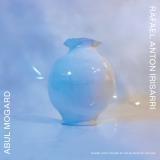
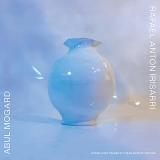
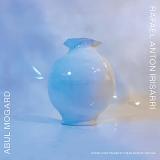
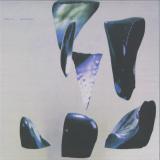
Marja de Sanctis’ cover artwork revisits the vessel sculpture from the duo’s first album, Impossibly Distant, Impossibly Close. There it appeared as raw, unfired clay. Here it has been fired in the kiln and finished with a glaze. Light gathers on its polished surface and spills into the surrounding space. As she explains, “I wanted to convey the idea of continuity within the duo, and the vessel became a kind of container for that idea. However, their music felt different this time, and with the collaboration of Martina and Andrea, I felt it should have a sleeker, softer, more glamorous look, very distant from the first raw appearance.” The transformation of the vessel from raw clay to fired form suggests a passage from immediacy toward permanence, mirroring the music’s gradual expansion.
In spring 2025, Abul Mogard and Rafael Anton Irisarri created the source material for their second album, Where Light Pauses in the Silence of the Sun, during a three-day residency at Morphine Raum in Berlin. Functioning as both recording studio and performance venue, the space has no stage, with the audience gathered around the performers. Working within an open framework, the duo reshaped the music each evening while recording the performances live to multitrack. Rotary speakers, modular synthesizers and bowed guitar formed the core of their sonic language, captured through a 1970s mixing console and microphones placed around the room.
Back in Mogard’s studio in Rome, the material was further crafted as motifs were stretched, fragments isolated, and tempos dissolved. Irisarri recorded additional guitar textures and treatments in New York, while passages recorded by Martina Bertoni and Andrea Burelli in Berlin reinforced the harmonic centres and brought breath, refinement and a new sensibility to their compositions. The process continued as Mogard’s layering and subtraction reassembled everyone’s parts into the final arrangement.
The album opens with “In the Eastern Wild,” building from a sparse outline into a monumental formation of low-frequency weight, its internal motion shaped by the rotating Leslie speaker. “Over the Domes” widens into a broader acoustic field, where sustained modular tones meet waves of softly plucked guitar. The music then turns inward with “A Blue Descent,” centred on Bertoni’s cello, whose growling timbre introduces a melancholic depth.
At the album’s centre, “In a Quiet Radiance” unfolds around a slow guitar ostinato, its luminous stillness opening into a more expansive and reflective state. Across its ten-minute span, Burelli’s violin lines and Bertoni’s lower cello phrases gradually surface, weaving through the harmonic field. Mogard brings Burelli’s processed voice to the fore, its emotive, operatic presence becoming one of the record’s pivotal moments. “Of Blessed Ages” suspends the sonic flow, shifting between parallel major and minor chords as lingering, slowly decaying melodies shape the music’s internal drift. The closing “Among Shadows” settles into a darker resonance as layered textures recede.
Mogard and Irisarri’s shared language balances restraint and maximalism. UK magazine Crack describes the music as “a tidal wave held in suspension,” while Dutch newspaper de Volkskrant writes, “What a colossal sound, and how this music strikes at the emotions.” Reflecting on the residency sessions, Irisarri recalls: “At moments I genuinely couldn’t tell if a sound was coming from me or from Abul. It stopped feeling like two people making decisions and began to feel like we were inside a system moving on its own."
Marja de Sanctis’ cover artwork revisits the vessel sculpture from the duo’s first album, Impossibly Distant, Impossibly Close. There it appeared as raw, unfired clay. Here it has been fired in the kiln and finished with a glaze. Light gathers on its polished surface and spills into the surrounding space. As she explains, “I wanted to convey the idea of continuity within the duo, and the vessel became a kind of container for that idea. However, their music felt different this time, and with the collaboration of Martina and Andrea, I felt it should have a sleeker, softer, more glamorous look, very distant from the first raw appearance.” The transformation of the vessel from raw clay to fired form suggests a passage from immediacy toward permanence, mirroring the music’s gradual expansion.
In spring 2025, Abul Mogard and Rafael Anton Irisarri created the source material for their second album, Where Light Pauses in the Silence of the Sun, during a three-day residency at Morphine Raum in Berlin. Functioning as both recording studio and performance venue, the space has no stage, with the audience gathered around the performers. Working within an open framework, the duo reshaped the music each evening while recording the performances live to multitrack. Rotary speakers, modular synthesizers and bowed guitar formed the core of their sonic language, captured through a 1970s mixing console and microphones placed around the room.
Back in Mogard’s studio in Rome, the material was further crafted as motifs were stretched, fragments isolated, and tempos dissolved. Irisarri recorded additional guitar textures and treatments in New York, while passages recorded by Martina Bertoni and Andrea Burelli in Berlin reinforced the harmonic centres and brought breath, refinement and a new sensibility to their compositions. The process continued as Mogard’s layering and subtraction reassembled everyone’s parts into the final arrangement.
The album opens with “In the Eastern Wild,” building from a sparse outline into a monumental formation of low-frequency weight, its internal motion shaped by the rotating Leslie speaker. “Over the Domes” widens into a broader acoustic field, where sustained modular tones meet waves of softly plucked guitar. The music then turns inward with “A Blue Descent,” centred on Bertoni’s cello, whose growling timbre introduces a melancholic depth.
At the album’s centre, “In a Quiet Radiance” unfolds around a slow guitar ostinato, its luminous stillness opening into a more expansive and reflective state. Across its ten-minute span, Burelli’s violin lines and Bertoni’s lower cello phrases gradually surface, weaving through the harmonic field. Mogard brings Burelli’s processed voice to the fore, its emotive, operatic presence becoming one of the record’s pivotal moments. “Of Blessed Ages” suspends the sonic flow, shifting between parallel major and minor chords as lingering, slowly decaying melodies shape the music’s internal drift. The closing “Among Shadows” settles into a darker resonance as layered textures recede.
Mogard and Irisarri’s shared language balances restraint and maximalism. UK magazine Crack describes the music as “a tidal wave held in suspension,” while Dutch newspaper de Volkskrant writes, “What a colossal sound, and how this music strikes at the emotions.” Reflecting on the residency sessions, Irisarri recalls: “At moments I genuinely couldn’t tell if a sound was coming from me or from Abul. It stopped feeling like two people making decisions and began to feel like we were inside a system moving on its own."
Marja de Sanctis’ cover artwork revisits the vessel sculpture from the duo’s first album, Impossibly Distant, Impossibly Close. There it appeared as raw, unfired clay. Here it has been fired in the kiln and finished with a glaze. Light gathers on its polished surface and spills into the surrounding space. As she explains, “I wanted to convey the idea of continuity within the duo, and the vessel became a kind of container for that idea. However, their music felt different this time, and with the collaboration of Martina and Andrea, I felt it should have a sleeker, softer, more glamorous look, very distant from the first raw appearance.” The transformation of the vessel from raw clay to fired form suggests a passage from immediacy toward permanence, mirroring the music’s gradual expansion.
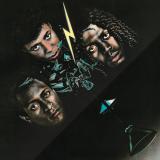
WRWTFWW Records unleashes the first ever release of legendary post-disco, funk, soul and electronic UK trio Imagination's cult album Night Dubbing in (well deserved) double LP format. The limited edition full-length comes with pristine audiophile treatment and luxurious packaging : a 45rpm and Half Speed Mastered DLP housed in heavyweight silver cardboard sleeve.
Imagination's singular 1983 album Night Dubbing is a refined deconstruction of black British soul and club pop, filtered through the deep studio and mixing techniques of dub music. Elegant, restrained, and, in its very own subtle way, radical, the record reshapes choice selections from the group's stellar catalogue into an immersive and out-of-this-world listening experience.
The special mixes on Night Dubbing are built on time and space. Basslines elongate and dissolve. Vocals appear, vanish, and reappear like ghosts. Drums fall away into vast silences, while echoes, tape edits, and precise engineering manoeuvres smoothly slide across the stereo field, revealing themselves like magic over repeated listens. Far from simple extensions or 12" versions, Night Dubbing treats the studio itself as an instrument, opening new dimensions of sound.
Often cited as a foundational record in the genesis of the house genre, the album also features the historic Larry Levan remix of "Changes", a Paradise Garage anthem that helped shape the direction of club music for decades to come.
More than 40 years on, Night Dubbing remains a seminal work. Its influence continues to echo through contemporary dance music, offering a blueprint for how pop could be transformed into something darker, stranger, more physical - a timeless sound that drifts effortlessly from the dancefloor into space.
Important note : it sounds amazing played on 33rpm too !
2026 Repress
As electronic music pioneers and co-founders of Soma Records, Slam have continually shaped the landscape of underground techno. With their forthcoming album, Dark Channel, they present a raw, club-focused record that stands as both a reflection of our turbulent times and a celebration of the dance floor's enduring power.
In 2025, the world feels fractured, dominated by division and extremism. Amidst this chaos, the dance floor remains a rare sanctuary-one of unity, self-expression, and collective escape. Dark Channel is an unapologetic tribute to this sacred space, where rhythm dissolves barriers and music serves as a universal language. Through relentless energy, deep textures, and hypnotic grooves, the album embodies the essence of club culture: a place where we reconnect with ourselves and each other.
Slam make no mistake when it comes to the sonic tone of the album as it opens with the tribalistic Use It, Lose It before the discordant sounds of title track Dark Channel hints at the relentless nature of things to come. The intensity continues with Parametric Factor & Glide - both pushing a pulsating, synth driven trip; the later leading on a more traditional Slam percussive workout. The dance floor warping Morganatic pursues dark territory while Infinit Spaces adds trippy FX to an already animated synth hook. The beautifully crafted Kuture Version delves into a more immersive sound as more direct, chord driven elements take the lead. The pace quickens yet again with Ghost Dancer highlighting sub tones whilst still crafting ominous intonations with its modulating FX. Approaching the conclusion, the ferocious Beat On The Drum delivers a lesson in rhythm and energy before the contorted Irregular Object completes proceedings in a suitably hypnotic fashion.
Mastered By Conor Dalton @ Glowcast Mastering
- 1: White Noise
- 228: Grams
- 3: Revolutionary Blues
- 4: Come Around
- 5: Still Nothing
- 6: I Dream Of Fever
- 7: Desolation Grows
Ckear Vinyl[24,79 €]
Seit ihrer Gründung im Jahr 1988 bewegen sich The Telescopes in einer ganz eigenen Umlaufbahn. Vage zwischen Noise, Space Rock, Dream Pop und Psychedelia verortet, hat die Band um Stephen Lawrie ihre Klanggrenzen stets verschoben und sich konsequent jenseits etablierter Strömungen bewegt. Static Charge ist bereits das 19. Studioalbum der Gruppe und zugleich die achte Veröffentlichung bei Tapete Records - ein weiteres eindrucksvolles Kapitel ihrer rastlosen, genreübergreifenden Geschichte. Nach einer dreimonatigen Tour durch Großbritannien und Europa kehren The Telescopes mit einem kompakten, fokussierten Werk zurück. Sieben Songs, überwiegend live eingespielt, entfalten eine rohe, elektrisierte Energie: primitive Beats, Außenseiterklänge und tief vibrierende Frequenzen verbinden sich zu einem widerständigen Sound, der bewusst gegen die Absurditäten der Gegenwart arbeitet. Aufgenommen und produziert innerhalb von zwei Monaten im hauseigenen Butterfly House Studio in Shropshire, präsentiert sich Static Charge reduziert, direkt und kompromisslos. In der aktuellen Viererbesetzung bündeln The Telescopes ihre Kräfte zu einem Album, das zugleich wuchtig, hypnotisch und erstaunlich konzentriert wirkt - Musik, die nicht gefallen will, sondern nachhallt.
- A1: Waiting For
- A2: I Couldn’t Remember So I Made Something Up
- A3: Bus To Fairlop
- A4: Orchids
- B1: Whistling On A Tuesday
- B2: Electrical Mobility
- B3: Holly Can Swim But She Doesn’t Really Like It
- B4: 7 Years Or More
dgoHn (pronounced “John") is the moniker of John Cunnane, who hails from somewhere between London and Essex. ‘Tessares,’ his fourth album but his first for Planet Mu, is playful, unconventional drum & bass that contrasts sparse effects and melodic elements with complex drumfunk and breakcore. He often uses unusual time signatures and head-spinning polyrhythms inspired by jazz and math rock, sometimes within the same track. Somehow he makes it sound effortless, and occasionally pretty as well, keeping a fine balance that never feels punishing; exploratory without getting lost.
He's built a name for himself over the last two decades performing live at festivals and events around the world, while collaborating with fellow artists such as Macc, Nic TVG, Jodey Kendrick and Badun as well as solo releases.
The album opens with ‘Waiting For’ which combines complex breaks with melodic fills, spacey effects and dubbed out vocals that feel like snatches of lost conversations - a combination he uses throughout the album giving it an eerie touch of humanity. Lead single ‘I Couldn't Remember So I Made Something Up’ is in 15/8 time. It feels like a conventional melodic drum & bass track, but the time signature disrupts the listeners’ expectations, while the detuned melody eases its sense of dislocation. ’Whistling On A Tuesday’ opens with a light echoey piano countdown into bass stabs which introduce heavy whirling amen breakbeats that switch between 180 and 120 bpm. ’Holly Can Swim But She Doesn’t Really Like It’ is the most rhythmically challenging track here. It feels hard to hang on to as its knotty breaks play out over bell chimes, like something Autechre might make if jungle was in their DNA. The album ends on the dubbed-out drumfunk of ‘7 Years Or More,’ with an arrangement that builds a filmic, dusty atmosphere of chimes and electric guitar, layering in vocals, vinyl crackle and echoing synth giving way to tough drums, before all that is taken away so that just a voice remains.
After a series of successful outings alongside sidekicks Ofofo and Zongamin, studio wizard MYTRON turns in his debut solo full-length for Multi Culti World Records. With contributions on Invisible Inc, Calypso, Bongo Joe, Kalahari Oyster Cult, LYO, Codek Records and Earthly Measures, Mytron has carved out a name for himself in a carefully-curated left-field quadrant of the indie-dance galaxy. Tuning his oscillators to myriad sounds — from dub and disco to krautrock — the London-based producer perhaps most notably channels the pristine compositional style of Kraftwerk. While most apparent in the use of vocoder, there’s a consistent efficiency of arrangement that recalls the man-machine in effervescent, idealistic fashion. Mytron manages to keep it simple, funky and musical — whimsical tunes that bop along with analog grit, wilderness, and wonk. There’s a warmth and wit that shine through every synth line, an understated confidence that speaks of years spent tangled in wires and waveforms, with an inclusive sonic eclecticism that flattens hierarchies between genres, geographies, and generations. Each influence is invited to the table, treated not as pastiche but invited to dine and dance in a space where kosmische dub disco and Afro rhythms can coexist without borders. The sleeve design echoes this philosophy: video-feedback patterns hinting at our modern screens, both portals and filters — coloured, distorted intermediaries through which we perceive the world. In the trippiest sense, the record is both reflection and refraction — a sonic mirror held up to an interconnected, glitchy reality. Tailored equally for DJ use and home-listening head trip, the album is meticulous, mischievous and merry.
BanBanTonTon review:
On Mytron’s debut long-player for Multi Culti groovy 21st Century leftfield house gear collides with Daniele Baldelli and Beppe Loda’s hugely influential `80s afro / cosmic. The 9 tracks are chunky, chugging and full of funky, funny noises. Old school B-lines mixing with eccentric electronics. Spinning, spiralling sounds.
Sugar is an electro-pop, vocoder confection, cut from the same sonic cloth as cult classics like Codek’s Tam Tam. Created from tough trap drums, splashing effects and a mutant Giorgio Moroder bass arpeggio. The title track, Propellor, pits Kraftwerk-esque hardware harmonised vocals against a bongo loop and a whistling hook. Playground has simian shrieks surround tumbling tom-toms. Highway Maintenance adds kosmische synths to a dance of woodblocks and buzzing bottom end. Keep On Dubbing is an organ-led, clip clopping percussive canter.
Tracks such as Speaker Can Talk, shot through with disco lasers blasts and recalling Curt Cress’ Dschung Tek, also lift the tempo up, but the bulk of the music here is a mid-tempo, techno drum circle. Squelchy sequences gurgling in and out of programmed percussion. On Quasar, spiky acid edges in and slowly takes over.
Key references that come to mind are Baldelli’s own turn-of-the-2000s Cosmic Sound Project productions, and Wolf Müller’s scene shaking sides on Themes For Great Cites, from around a decade later.
While Toronto producer Demuir regularly features on a wide variety of house labels, it's always worth keeping an eye on his Purveyor Underground label and its' limited-edition offshoot. He's back on the latter label for this outing, where he shares vinyl space with long-serving Parisian producer (and Robsoul founder) Phil Weeks. Demuir handles side A, delivering two passes on 'The Spark': the lightly funk-fuelled original mix, where woozy jazz samples dance atop a rubbery bassline and vintage Masters at Work style beats, and the more bumpin', cut-up and sub-heavy swing of the 'Some Too Suspect remix'. On side B, Weeks delivers 'Party Time', a typically low-slung and analogue-rich deep house number where classic boogie-era vocal samples and occasional chords wrap around loose-limbed machine drums and a killer TB-303 acid bassline.
Daniele Baldelli and Jolly Mare come together for a record that feels less like a collaboration and more like a shared state of mind. Flusso Uno moves through Afro-cosmic kraut-inflected psychedelia and cinematic electronics with a natural, unforced flow, where rhythm, texture and narrative all pull in the same direction.
Rather than referencing the past, the EP treats it as a living language. The longform, ritualistic percussion of early cosmic dance culture meets the hypnotic motorik pulse of krautrock and the more structured, sample-driven tribalism that followed in later decades. What ties it all together is a deep sense of atmosphere and intention: music that feels physical, emotional and quietly transportive.
“We particularly focused on ritual percussions, hypnotic grooves and suspended atmospheres, trying to blend musical anthropology, auteur electronics and narrative instinct.”
Dhol Parade opens the journey like a slow-burning procession, drums circling and expanding as if guiding the listener into another space. With Icari the perspective lifts, melodic lines drifting and tilting, constantly searching for balance between gravity and flight. Huldufolk pulls everything back into a shadowy, nocturnal zone, where textures feel half-real, half-imagined.
Finally, Viaggio Tascabile loses the record in a quietly reflective way, a compact voyage that sums up the EP’s philosophy: small in scale, deep in meaning. Flusso Uno is not about nostalgia or revivalism. It is about taking the spirit of cosmic culture and letting it breathe in the present, where storytelling, dancefloor intuition and sonic exploration still meet. A record made for open ears, open minds and long nights.
- 1: No Me Jodas
- 2: The City Begins
- 3: Sirena
- 4: Yellow Sun
- 5: Viva La Rosa
- 6: Enemy Without
- 7: You're A Ghost
- 8: Albuterol
- 9: Mi Concha
- 10: Public Works
- 11: Public Luxury
Downtown Boys have pushed relentlessly forward as an artistic and political project since their founding. Singer Victoria Marie and guitarist/singer Joey La Neve DeFrancesco first met at union meetings while working together at a hotel in Providence, RI, writing many of the band's early songs about labor organizing and exploitative workplaces. The quintet is completed by Joe DeGeorge (sax/synth), Mary Jane Regalado (bass), and Joey Doubek (drums). Over years of touring, and three acclaimed albums, Downtown Boys have continued to grow as artists, musicians, and organizers. Now, the band has arrived with Public Luxury, an enthralling album that keeps politics front and center while summoning the band's most urgent and powerful sound to date. The definition of Public Luxury falls very much in line with that of the title of the second Downtown Boys LP, Full Communism. Straight up, Public Luxury means, "everything for everyone." It's the stubborn insistence that a better world is possible, while fully recognizing the horrors we witness daily, and the individual and collective responsibility to resist the nihilism and hopelessness we all feel. Sentiments like "everything for everyone," and "we will have it all" perfectly represent the cathartic, communal live experience this cadre of multi-instrumentalists create. These sentiments also encapsulate the inclusive, joyful sonic fusion that defines the album: anthemic punk and indie rock mix with Latin traditions, drum machines blend with acoustic drums, saxophones punctuate riffs, and layers of synths add flourishes from new-wave to industrial. The amount of ground covered on Public Luxury can't be overstated, and yet the album feels totally vital and cohesive. Public Luxury is a revisitation of the band's past for the sake of their future. It was co-produced by DeFrancesco with recording engineer and longtime Downtown Boys supporter Seth Manchester (Lambrini Girls, Lightning Bolt, Model/Actriz) at the Pawtucket, RI studio and arts space Machines With Magnets, not far from the band's first home of Providence, RI. Victoria Marie's grandmother-a monumental figure for the band throughout their existence-passed away in May of 2025, and her influence looms large over the album; the songs "No Me Jodas" and "Sirena" are crystallized representations of the love between a woman and her ancestor. Beyond the loss, rage and frustration of the present, Public Luxury points boldly towards a vibrant, open-hearted vision of both music and the world: "Our music is simply for anyone and everyone who believes in the new future we can make together," Victoria Marie declares. "A world that will be awkward, inconsistent, yet truly free when it comes to all that matters."
“The Long Transition From Death To Wisdom” marks a new chapter in Dmitry’s evolving sonic world – a contemplative, slow‑burning journey through grief, memory, and the quiet emergence of clarity. Rooted in a brooding fusion of shoegaze, goth, and darkwave, the album drifts through washed out guitars, spectral synths, and poignant vocals – its emotional landscape suspended between sadness and awakening. On vocal duties is Dmitry’s longtime collaborator Valeria Simonova, whose presence deepens the album’s atmosphere. Each track feels like a step forward in the ritual of becoming aware of one’s own existence, moving through silence and ancient memories toward a sense of spiritual renewal.
The album opens with the mysticism and layered metaphors of “Liar,” before descending into the ancient, biblical presence of “Serpent Queen.” Midway, “Zenith” rises with shimmering synths and steady, triumphant percussion, while “Echoes of Yesterday” lingers in celestial melancholy, dissolving the boundary between remembrance and insight. The Bside begins with “The Other Side of Life,” a threshold into a quieter, more reflective space, followed by the meditative, ritual like ambience of “Shrine of Ruins.” Closing track “Cold” offers a final exhale from the fading realm of the past – an acceptance shaped by distance, time, and the erosion of old wounds.
An array of musicians contributed to the recoding of the album: Mathys Dubois (No One Is Innocent, exBlack Strobe), Loïc Maurin (M83), Victor Sologub (Deadушки, Странные Игры), Alexander Titov (Кино, Аквариум), Ben Easton (Deary), and others. The album was mastered at Abbey Road Studios by Miles Showell.
Yeong Die would typically be described as DJ, musician, or “experimental” composer, but in reality she is a sculptor. Between the rapidly disintegrating boundaries of composition and sound design, her work employs a hunting and gathering of intangible material—bursts of memory, fragments of liminal space, interstitial banalities—materializing as boundless expressions that evade genre constructs. As an integral presence among Seoul’s most forward thinking sound artists, Yeong is in a constant uphill battle rejecting the reverence that so quickly creeps in and infects contemporary craft, that relegates even the most audacious attempts of her peers to pigeon-hole pastiche. Given this style-agnostic starting line, her ESP Institute debut 'Uncapturable' exudes non-urgency, an unfettered pace that allows breathing room, affording the listener freedom to mentally isolate and explore elements without fear of missing a “bigger picture.” There is a warm and welcoming feeling that invites repetitive, even studied listening. While half the work is somewhat singular in presentation—'1km', 'Like Your Flaw', or 'Burnt'—there are moments of meticulous complexity—'Morning Rum Punch' (featuring vocals by Cifika) and 'Did' (featuring a smattering of spoken words by icecream drum), both underground Korean peer artists. These moments feel more of like an acute focus on execution that compliments the overall shape of the album, rather than a dynamic contrast. Cifika’s vocals, in particular, command the listener’s periphery in a playful and refreshing way, exaggerating negative space and in-between moments that not only the paint an arresting stereo field but a remarkable sense of depth, not easily achieved without production sorcery. It is, without a doubt, these beautiful fleeting moments that we describe as 'Uncapturable'.
Five years on from her debut on the label, Surgeons Girl returns to Livity Sound with an EP of explorative, synth-rich techno. In the time since A Violet Sleep announced Sinead McMillan's fulsome analogue sound, she's maintained a considered presence with live, hardware-rooted performance and a select handful of releases.
On A Moment To Machine EP, McMillan showcases a widescreen strain of techno that leans into the expressive, emotional weight of powerful synth composition while maintaining a fierce physicality tuned up for the club. 'Under This Space' and 'Razor's Whip' dart along upwards of 150 without sacrificing depth and subtlety, while 'Steps Right' and 'Silken Place' shelve drums in favour of cascading arpeggios. 'Rested' brings balance to the record with needlepoint rhythmic exploration and pensive pads, rounding out Surgeons Girl's ever-developing, highly personal approach to techno.