SACRED COWBOYS are a moody hard rock band with a dry sense of humor. They started playing in murky Melbourne dive bars in 1982 attracting a rabid following. With the release of their iconic first single, Nothing Grows in Texas, they were catapulted to national TV notoriety on Countdown, Australia's version of Top of the Pops. 2025 saw founders Garry Gray and Mark Ferrie enlist Timothy Deane, Anthony Paine, and Damian Fitzgerald. You will soon be holding in your hands the new album, 'In the Manifesto.' 'In the Manifesto' was mastered by Mikey Young, who worked on the last six Mark Lanegan records and plays in Eddie Current Suppression Ring. All new songs are written by Garry and the band. 'In the Manifesto' shows the Sacred Cowboys do not indulge in one musical style. It's a complex, atmospheric soundtrack with Gray's uber cool delivery over sometimes sparse, sometimes weaving guitars and rich harmonies. Channeling a Sonic Youth ethos and grinding the gears in the engine room of the Cosmos Factory, 'In the Manifesto' is as wide and expansive as the Australian desert skies. Radio 3CR's Paul 'Dr Gonzo' Elliott got a sneak preview and says. "Garry Gray returns with Sacred Cowboys and a brand-new album . a 12-track tour de force titled, 'In the Manifesto'. The Sacred Cowboys have performed intense live shows and transported that energy and mood onto this new album, 'In the Manifesto.' It is all killer and a tour de force. Garnering the attention of Andrew McGee at Torn & Frayed Records, Australia and combining with French allies Seb Blanchais and Romain Michon at BEAST Records, France, the rest is about to become history.
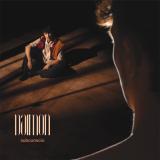
Subconscio left the smallest town in Gargano to begin a new life in uncharted Bologna.
Leaving mother earth, he still retains a strong sense of that distant world, expressed through the senses of his inner child. The Subconscio
project finds its expression in music, where it blends Neo Soul, Hip Hop, and Electronica into a sound deeply influenced by individual experiences. Soft vibrations and relaxed lyrics are the means through which he expresses his devotion to creative freedom, moving with the urgency of someone who has finally found his voice. The word dáimōn originates from Ancient Greek and means divine messenger, a guiding
spirit that hovers in a middle ground, called metaxu, the same place where the soul resides, and acts as a link between God and humanity.*
"Daimon" is Subconscio's debut album, produced by Luzee. It's the intimate vision of a person suspended in his imagination, questioning
the identity of his own memory and how the places that led him to his NOW are actually his future. The present doesn't exist in the narrative.
It exists only in the connection between childhood memories and the adult perspective.
Giulio is his son and also his parent: the Subconscious; the "daimon" is the musical journey that connects these two ways of observing the
same memory. Nostalgic turmoil meets the desire to recognize oneself and fuel the obsession with music, because only this—albeit the least
apparent art—is the only one that can be the voice and bearer of the dimensions of consciousness.
Featuring on the album: Madbuddy and Claver Gold
Sabine McCalla creates her own version of multi-cultural American roots music. It's a sound that crosses borderlines, pulling everything from Brazilian samba to southern soul to British rock & roll into its orbit. On Don't Call Me Baby, Sabine filters those influences through the lens of her Haitian heritage and her music community of New Orleans, creating a debut album that's every bit as multi-faceted as the woman who wrote its songs.
The daughter of first-generation Haitian immigrants, Sabine was raised in the suburbs of New York City, where she grew up alongside her sister Leyla McCalla (Sons of Our Native Daughters, Carolina Chocolate Drops). Introduced to chamber music at an early age, Sabine began playing classical violin in orchestras, music camps, and conservatory classes as an 8 year old. Back at home, she filled her head with Motown classics, girl group hits, Bob Marley albums, Beatles standards, and Haitian folk music. It was a wide constellation of sound that spanned more than a half century, and Sabine made it all her own, drawn to the connections binding everything together.
Don't Call Me Baby shines a light on those connections. The follow-up to her critically-acclaimed Folk EP, whose pre-war sound earned her a slot at the Newport Folk Festival in 2019, the album transcends genre and generation, creating a raw, rich mix of country, R&B, folk, and soul that exists on its own timeline. Co-produced by Sam Doores of the Deslondes and featuring a cast of New Orleans’ most spirited and gifted (including guest vocals from Riley Downing, Leyla McCalla, and The Lostines), Sabine McCalla reaches beyond her beloved New Orleans Americana scene with Don't Call Me Baby, building a bridge between the world-spanning sounds that have captured her attention.
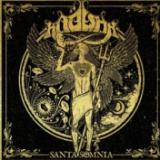
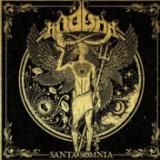
Santa Somnia is an imaginary saint, shaped like a medieval folktale figure, who steals the sleep and childhood creativity of his victims to feed a kingdom of oblivion and torment. The album's lyrics follow the journey of a protagonist stripped of rest and innocence, wandering through a decaying dreamworld reminiscent of Dark Souls, Bloodborne, and Elden Ring. Santa Somnia becomes an allegory of lost hope and the crushing weight of adulthood, drawing further thematic influence from the bleak darkness of Kentaro Miura's Berserk. Santa Somnia is a sonic trip through a crumbling psyche-- drenched in despair and shadows-- ruled by the struggle against madness brought on by sleeplessness, the inner torment of depression, and the inevitable, sometimes merciful, pull of death.
The influence of FromSoftware and Berserk emerges through the album's cryptic, oppressive storytelling, where the line between nightmare and reality barely exists. While rooted in the band's earlier works, the sound of Santa Somnia blends the crushing weight of doom metal with classic and thrash metal elements and injections of punk- rock melody, mirroring the emotional instability and mental agony woven throughout the lyrics.
MOVIE MOVIE is based out of NYC and features members of the bands TWIN GUNS, THE ELECTRIC MESS, and THE ABOVE. The band combine elements of power pop, '60s, '70s and '80s garage, classic, alternative and glam rock, but they have a sound all their own, with a focus on strong hooks and melodic vocals. "After Hours" is a 1980s New Wave comedy about a party girl on the downtown scene whose claim to fame is a bit part in a popular movie, where she uttered the immortal line, "Won't you look at the time," but she wouldn't give you the time. "Wasting Time" is an existential road picture in the mind of the protagonist, set across heartland America and a sunny beach in the Caribbean, but in reality he never leaves the girl, or town, and in the end ponders his wasted years. "First Love (Never Dies)" is a romantic drama that spans decades, about an aging rocker who reflects on his first teenage love, a girl he has never stopped thinking about. He tries to track her down and reconnect after all these years, only to find she is now married to his old childhood rival.
"Photograph" is a future arthouse hit, shot in stark black white, about the disintegration of a relationship seen from two different perspectives, captured in an old photograph, in which the truth is revealed in the looks on their faces. "Coming Attractions" is MOVIE MOVIE's second EP, after their debut six track EP, "Now Playing" (2022), on Ghost Highway/ KOTJ Records, and they have two full LPs, "Storyboards" (2023), and "In 4-D!" (2024), both Topsy-Turvy Records.
On one hand, it could be bumming out the people who enjoyed hearing what the band evolved into. On the other hand, nostalgia sells...and daddy needs to eat! So...Nevermind 2! Broken Bones and Bloody Kisses has seen a few vinyl pressings in the past, but landing a physical copy of You Are My Canvas (which was only released on burned CDs, crafted in the Lovat- Frasers' basement) is almost impossible. And ooooooh boy...the pre- demo demo (or PDD) versions of "Sketch Artist Composite" and "The Anatomy of the Journey"? Those puppies - with me (Connor...hi!) on vocals/drums and Jeff playing everything else - were only available on the Y2K version and basically only used to recruit other band members. Smash all these old chestnuts together in one release and see what happens! Why not? It perfectly captures the whole spirit of early BOYS NIGHT OUT. But what title does one bestow upon such a sonic siphonophore? There are 3 versions of "Sketch Artist Composite".
Do you call it Sketch Artist Composite Plus Other Songs? Do you go all in on a lyric- based title like Fuck Us Where We Breathe? Decisions, decisions! Probably best to follow Costa's sage advice and go with Nevermind 2. So, almost exactly two decades after our first show - July 19, 2001 @ The Oakville Pine Room with Sky Came Falling, Unearth, and Rise Over Run - may we present unto you, Nevermind 2! What's old is new again, probably?
Alien Tropical: the perfect title for the second album by Servicio Al Cliente (Customer Service), the project of Colombian-born, Berlin-resident Juliana Martinez. If you were cannily seduced by the debut self-titled Servicio Al Cliente album, from way back in 2021, the wait for a follow-up has felt long, but Alien Tropical was worth the wait. Indeed, it feels like the perfect way for Michael Mayer’s Imara imprint to introduce itself to the new year: an album full of play and spirit, verve and sparkle, rich with pop spirit and with one eye smartly cocked toward the dancefloor.
That first Servicio Al Cliente album was a smart statement of intent, and a wonderful, unexpected turn from Martinez, who’d already been through plenty: being expelled from private music lessons,
training in law, joining a group named Las Palabras Correctas. 2021’s Servicio Al Cliente landed on the turntables of anyone with discerning radar (Ada included “Romántico” on her Connecting The Dots mix for Kompakt, for example). With Alien Tropical, Martinez works the sensual sway of her music even harder, building six luscious songs that twist chant-like repetitions into hypnotic mantras, each song the perfect confluence of melody and mystery.
When asked about Alien Tropical, Martinez pieces together fragments of memory: winter explorations, long road trips, navigating the highways and the heart. “I had been driving a lot at the time on the highway,” she recalls. “I depended on music I played in the car to manage my emotions and my thoughts on those long drives. Everything felt strange and unfamiliar on the highway, and I realised music was so psychological and my only tool to influence my feelings between highways and new places.”
So, the music becomes the narrative for where the body and the heart wants to go. That might explain the gentle yearning in Alien Tropical, and its eternal hypnotic, its sense of forever forward-motion, as though the music is flickering like the highway strip reflected in the rear-view mirror. But there’s also the skyward movement of the melodies, the way their loveliness lifts these six songs up through the clouds, like the helium balloons on the cover. From the sensual swelt
out of Stock
Last delivered 8 months ago available to reorder, subject to availability
Rhiza Semar presents its fourth chapter with Yildizlara, a four-track odyssey shaped from shadow, rhythm, and elemental texture. Crafted as both visceral tools and introspective journeys, the record navigates between ominous density and luminous release, guided by a deep awareness of space, myth, and matter. As an artist, Hitam paves the way for a new sound emerging from his burrows to build bridges between electronic subgenres while shaping a landscape unmistakably his own. Orb Weaver opens the cycle with jagged IDM rhythms that coil and release like threads of a web pulled taut. Originally composed for the graduation project of fashion designer Tim van der Plas, who's collection was inspired on climbing out of depression, its atmosphere is dark and ceremonial, with textures scraping against silence until catharsis emerges from the tension. A confrontation between inner turmoil and release. On Vanishing of the Anasazi, cavernous reverbs carry traces of lost structures, percussion echoing as if across ruins. A relentless drive holds the ghost of ritual processions, summoning a spectral energy that feels at once monumental and hollowed-out. The track suspends itself between presence and absence, architecture and collapse, leaving the listener in a space where echoes become the only surviving form of memory. Mesh Grip plunges downward into subterranean force. A thundering groove rumbles like minerals being unearthed, goblin-like figures at work in hidden shafts, chiseling away at stone in endless rhythm. From this pressure, a sudden swell of melancholy pads rises, reframing the heaviness with emotional resonance as if the whispers of angelic guardians seep into the caverns, transforming extraction into elegy. What begins as pure drive of endurance evolves into an introspective meditation. Closing the release, Yildizlara unfolds as an epic ascent. Layered rhythms rush forward with urgency, intricate yet propulsive, while chopped vocals bring back a sensual human element, scattering like signals across the night sky. Animalistic atmospheres dart through the mix as spectral cries and furtive movements, adding a primal dimension to the drive. What begins as erratic and untamed slowly converges into warmth and ultimate catharsis: a cosmic tale inscribed in sound, both intimate and monumental, familiar yet born of hidden memory. Yildizlara is both innovative and ancestral; a release where turbulence becomes ritual, and where rhythmic complexity unearths fragments of hidden memory. Beneath its dark and erratic surfaces lies a strange familiarity, like echoes of a primal past resurfacing through sound, reminding us of worlds once known but long concealed. Words by A. Veyra
out of Stock
Last delivered 6 months ago available to reorder, subject to availability
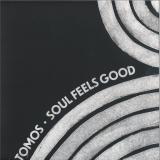
Tomos is no stranger to reinvention. Over the years, his sonic explorations have spanned genres, yet one thread has remained constant—his deep-rooted connection to house music. His earliest co-releases under the alias Vanguard were high-energy French House cuts, built on the foundations of crate-digging and sample collage, channeling the spirit of Daft Punk and the wider French electronic movement.
Now, 15 years later, he returns to those techniques with a fresh perspective, releasing his latest EP Soul Feels Good through the esteemed Noire & Blanche.
Soul Feels Good isn’t just a nod to the past—it’s a showcase of the vast influences that drive his ever-evolving sound. Tomos weaves together an intricate patchwork, merging the meticulous sampling techniques of his early career with a broader, more mature musical palette. The result? A genre-fluid blend of Jazz, House, Dub, Soul, Gospel, Broken Beat, Downtempo and Disco—stitched together with the finesse of an artist who has spent years honing his skills.
For listeners who appreciate the craft of sampling and fans of genre-defying, groove-driven music - Soul Feels Good is a record that demands attention.
out of Stock
Last delivered 8 months ago available to reorder, subject to availability
James Ruskin's Blueprint Records celebrates its 30th anniversary in 2026. Kicking off the festivities Vinicius Honorio returns to the label but this time it's alongside R.M.K who makes his Blueprint debut.
Vinicius Honorio is a Brazilian-born, London-based DJ and producer whose vision of techno is built on hypnotic repetition, gritty textures and emotional weight. With a career spanning over 2 decades, Vinicius has emerged as a powerful voice in contemporary techno - raw, focused and unflinchingly honest. His productions blend relentless drive with intricate groove, often laced with haunting melodic undertones and has released music on the likes of Figure, Token, Mord andSK_eleven, as well as Blueprint.
Hailing from London, R.M.K is the alias of Fossil Archive label head Roberto, representing a faster and more intense take on his unique brand of Techno. During his 20+ year career in music, he has formed friendships and worked in partnership with other respected artists such as Trevino (Marcus Intalex), Jamie Anderson, Robert Owens, Goldie and Nastia. Although the focus is always on the very heart of the most raucous of raves, R.M.K never shies away from groove and funk
out of Stock
Last delivered 3 months ago available to reorder, subject to availability
Finnish dub-techno craftsman TM Shuffle, head of Vuo Records, resurfaces with a deep and distilled EP that goes straight for the late-night heart of the dancefloor. Rooted in Tampere’s raw, analog dub sound, his productions have long balanced weight and warmth, smoked-out chords, rolling low-end and subtle shuffle that keeps the groove in constant motion.
The lead track “Kellari” dives into basement mode: pressure-cooker drums, slow-burning stabs and a humid, lived-in atmosphere that feels equally at home on a huge system or in headphones at 4 a.m. On the second original cut, TM Shuffle links up once again with long-time collaborator Monoder, the alias of Jussi-Pekka Parikka, known for his dubbed-out explorations on labels like Statik Entertainment and Pakkas-Levyt since the early 2000s. Their joint track stretches time, letting echo, tape hiss and distant melodic fragments float around a rock-solid groove, channelling years of shared studio language into one focused, hypnotic flow.
On the flip, Anton Kubikov (SCSI-9) steps in with a lush reinterpretation of Kellari. A true Russian techno veteran with a catalog that spans Kompakt, Force Tracks, Mayak and beyond, Kubikov melts the original into a widescreen, dream-state trip, soft-focus pads, gentle yet insistent percussion and that unmistakable rolling pulse that made his work so enduring. The remix doesn’t just extend the track; it opens a new dimension, turning the basement pressure into a slow-rising, celestial drift.
Pressed on limited coloured vinyl, this EP is built for selectors who like their dub techno deep, human and timeless, a record that will quietly live in bags for years and keep resurfacing whenever the room calls for true late-night elevation.
out of Stock
Last delivered 43 days ago available to reorder, subject to availability
Watershed is the ninth studio album by Swedish progressive metal band Opeth. Watershed is the first studio album by Opeth to feature guitarist Fredrik Åkesson and drummer Martin Axenrot, who replaced longtime guitarist Peter Lindgren and drummer Martin Lopez. The artwork for the album was made by Travis Smith in collaboration with Mikael Åkerfeldt. Opeth is a band that has been taking amazing chances and managed to not only win new fans, but not alienate older ones. A perfect blend of the death metal of Still Life and Blackwater Park, the monolithic riffage of Deliverance and Ghost Reveries, and the prog/classicism of Damnation combined with classic Deep Purple, Pink Floyd, and Scorpions. Watershed is available as a limited edition of 4.000 individually numbered copies on silver & black marbled vinyl, includes a 4 page booklet and a poster and the sleeve has a special linen laminate finish.
out of Stock
Last delivered 8 months ago available to reorder, subject to availability
Janeret present Orizon, With his new record label, Janeret opens the door to a world of unrestricted sound. A label that thrives on variety, mixing styles while providing a platform to artists who resonate with his vision. Orizon001, Mantrax EP is dedicated to the different spectrum of house music to a deep dive into atmospheric Drum & Bass. ,
out of Stock
Last delivered 36 days ago available to reorder, subject to availability
Guitars On Life solves a nagging mystery about the fate of a musician who stood out as a singularly spectacular bloom even in the verdant creative fields of the San Francisco Bay Area at the turn of the century. After more than two decades of recording silence and about a dozen years away from the bandstand, Jack West is back, still immediately recognizable as a guitarist and composer but miles from the last stop on his ongoing musical journey. There’s poetic symmetry in discovering that his detour from life as a performing musician involved fruitful work devising innovative solar technologies, as he had similarly distinguished himself as an inveterately inventive musician. When we last heard from West he’d carved out a vibrant niche as a guitarist with a percussive attack and lustrous group sound. Wielding a custom-built eight-string acoustic guitar with uncommon rhythmic dexterity, he released six albums featuring his original tunes, mostly recording with his band Curvature (though he also played mesmerizing solo recitals). West’s knack for crafting glistening, minutely detailed soundscapes full of surprising twists and oddly inviting textures prompted NPR to describe his work as “a whole new sub- genre of jazz.” Drawn back to performing in recent years, West saw guitarist Walter Strauss at Berkeley’s Freight & Salvage in 2022 and suspected he’d found a kindred spirit. Intrigued by Strauss’s unusual approach to guitar, West “wondered what a musical conversation might sound like between two guitarists who had developed such uniquely different ways of playing the instrument.” An invitation to play together led to them writing the tune ‘More Guitar,’ the bravura opening track that launches Guitars On Life. Several months later they spent a week in Florida together writing intensively, resulting in most of the material for this consistently thrilling project.
Siriusmo is back! His fourth album, "Buletten & Blumen", will be released in November 2025 – a collection of musical delicacies. Freshly prepared, spicy, and greasy, but as always with a flower on top. The Berlin-based producer, whose real name is Moritz Friedrich, remains true to himself and his distinctive style – between funk, hip-hop, electronica, soundtrack vibes, and genre playfulness. As usual, Siriusmo wanders through musical styles, embracing them, missing them spectacularly – or simply inventing them. A subtle "Berliner Allerlei". The artist himself says of his working method on the album: "I'm a whole band. Nobody masters their instrument, but everyone pretends to – always with the fear that the others will notice." The album begins with the tongue-in-cheek opener "That Could Function As A Song", an ironic exploration of the artist's own creative process. With "Buletten & Blumen," Siriusmo delivers not simple fare, but a multifaceted menu.
Guests: Mr. Oizo, Erobique, Dana (& Claire Waldorff) An album that oscillates between irony, melancholy, and absurdity.
Tracklist:
A1. That Could Funktion As A Song
A2. Hongkong House feat. Liu's Family
A3. Watch Me Fall
A4. Ok So
B1. Baum
B2. The Syntheziser Has Been Drinking
B3. Liquit feat. Mr. Oizo
B4. In Der Klemme
C1. Koko
C2. Langsame Runde
C3. Der Uhrturm
C4. Meissner Schwerter
D1. Dummdidumm
D2. Every Tree Needs A Friend
D3. Lehm feat. Erobique & Dana
D4. Irgendwohin
out of Stock
Last delivered 8 months ago available to reorder, subject to availability
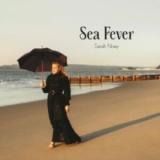
Formerly one third of the much-loved trio Black Box Recorder, alongside The Auteurs’ Luke Haines and Jesus and Mary Chain guitarist John Moore, the British singer-songwriter Sarah Nixey has steadily gained acclaim as a solo artist who makes savvy, sophisticated and poised pop.
Delivering vocals with a detached elegance over opulent tracks, any perceived nonchalance in Nixey’s luxe, cut glass voice belies her empathy, where social commentary serves as protest, both explicit and implied. Like Billy Bragg deepfaked as prime Julie Andrews, this strange but effective juxtaposition radiates soft power. ‘Lies of the Land’ depicts a corrupt post-Brexit and Covid-19 world where inequality and division flourish. ‘England's On Fire’ delves into the nuanced concepts of patriotism and nationalism, and ‘Pleasure Bay’ narrates the story of a love affair with a deprived yet beautiful English seaside town, written after Nixey left London, drawn back to the Dorset coast.
More than just a political record though, Nixey was drawn to the poetic elements of living too, telling stories of life and death, love and loss, conflicts and symmetry, in an intimate and close-up way, as if whispering secrets to her listeners.
“Sea Fever explores the bittersweet beauty of human life amid a volatile world of changing seasons and brutal elements,” says Nixey. “These are songs of deep sorrow, remembrance, birth, and change, set against a backdrop of the sensuous natural world.”
‘Rolling Waves’ explores profound grief following her beloved grandmother's death, while ‘Spring Equinox’ celebrates the joy and awe of life after welcoming her first grandchild. ‘At the Edge of the Forest’ is a poignant story of someone losing their memory, and ‘On This Wide Night’ recounts the early hours return home of a teenage runaway.
In February 2021, Jan Jelinek's seminal album "Loop-Finding-Jazz-Records" turned 20. The anniversary repress, a double LP with two bonus tracks (B-sides from the Tendency EP, 2000), is a little late to the party.
What the press said about Loop-Finding-Jazz-Records:
“Don’t be misled by the title, though for there isn’t a finger-snapping rhythm c bebop lead anywhere on the album. Instead, Jelinek chooses to explore the visual effect moiré - two shifting patterns creating an implied third dimension - in the audio realm.” (Alternative Press)
“The title acts as explanation for the studio technique that provided the basis for this album, snippets of other people’s arrangements deconstructed through a sampler into loops and then splashed onto an audio canvas.” (ATM)
“Jelinek’s sound evolved out of his dislike for (and inability to play) keyboards.” (RPM)
“Jelinek has abstracted his sources beyond recognition, looping his millisecond samples into flickering patterns of sonic moiré laid atop a dub Techno framework. (...) Jelinek might as well have sampled a horn player’s hissing intake of breath – it would have been ‘jazz’ enough for his purposes.“ (The Wire)
“It’s a perfect inversion of conventional music, a sonic negative. Everything that would typically be foreground is moved back or pushed off the screen altogether, and the flecks of sonic debris that would normally be covered by other sounds are left to carry the melody and rhythm.” (Pitchfork)
“All you need to know is that these onomatopoeic non-specific songs (...) are warm, paradisical creations”. (NME)
“Listen carefully and you’ll hear textures slowly unfolding and mutating. Presuming you’ve not fallen asleep of course.” (iDJ)
“At times, it’s all a bit dripping tap Japanese water torture; so sedentary it drowns in its own motionlessness” (DJ)
“Loop Finding Jazz Records' is a genuine modern classic whose re-release is anything but a cynical mortgage repayment exercise. Consider this a second chance, then pretend you had it all along.” (Boomkat)
PS:
“I’ve been fortunate enough to see Jan Jelinek live once, at Tonic NYC (...). Wearing a black and white striped shirt, he looked like a nihilistic Charlie Brown.” (beachsloth)
out of Stock
Last delivered 75 days ago available to reorder, subject to availability
Predatory Void returns with their third record, an EP titled `Atoned in Metamorphosis`, a concentrated statement of intent that compresses the band's restless energy into four precise movements. The music negotiates extremes: patient, reverb-saturated passages give way to sudden, metallic eruptions; subterranean basslines provide narrative weight beneath volatile guitar textures, vocals growl, wail and lament as drums alternate between measured architecture and volcanic release. The result is an austere, immersive sound that is both incandescent and violently sharp. Conceptually the EP takes on the ugly shadow of the unconscious and cathartically wrestles the demon onto canvas. Calling on elements from sludge, doom and black metal, as well as the unrelenting energies of hardcore and contrasting slower, haunted atmospheres, Predatory Void's signature sound is as volatile and piercing as ever. Concise, tight compositions that hook you in melody and then rage in filthy agony. The music can be confrontational, but it is never gratuitous_force is deployed to clarify rather than to overwhelm as emotional depth is at all times the compass. The production aesthetic prioritises fidelity to performance: takes are preserved for their immediacy, dynamics remain uncompromised, and the mix privileges contrast so that quiet moments carry as much dramaturgical weight as full-band climaxes. `Atoned in Metamorphosis` consolidates Predatory Void's forward motion and stakes a claim for a sound that prizes architectural heft and textural nuance in equal measure. Listeners should expect an immediate physical response in what is undeniably an ardent expression, and enjoy the reward of cumulative detail, for the EP dares you to listen closely: to feel transitions as processes, and to accept tension as a pathway to release. Predatory Void invites engagement, not escape, and demands to be met on its own terms, boldly. RIYL Hexis * CELESTE * Wallowing * LLNN * Downfall of Gaia * Witching
Predatory Void returns with their third record, an EP titled `Atoned in Metamorphosis`, a concentrated statement of intent that compresses the band's restless energy into four precise movements. The music negotiates extremes: patient, reverb-saturated passages give way to sudden, metallic eruptions; subterranean basslines provide narrative weight beneath volatile guitar textures, vocals growl, wail and lament as drums alternate between measured architecture and volcanic release. The result is an austere, immersive sound that is both incandescent and violently sharp. Conceptually the EP takes on the ugly shadow of the unconscious and cathartically wrestles the demon onto canvas. Calling on elements from sludge, doom and black metal, as well as the unrelenting energies of hardcore and contrasting slower, haunted atmospheres, Predatory Void's signature sound is as volatile and piercing as ever. Concise, tight compositions that hook you in melody and then rage in filthy agony. The music can be confrontational, but it is never gratuitous_force is deployed to clarify rather than to overwhelm as emotional depth is at all times the compass. The production aesthetic prioritises fidelity to performance: takes are preserved for their immediacy, dynamics remain uncompromised, and the mix privileges contrast so that quiet moments carry as much dramaturgical weight as full-band climaxes. `Atoned in Metamorphosis` consolidates Predatory Void's forward motion and stakes a claim for a sound that prizes architectural heft and textural nuance in equal measure. Listeners should expect an immediate physical response in what is undeniably an ardent expression, and enjoy the reward of cumulative detail, for the EP dares you to listen closely: to feel transitions as processes, and to accept tension as a pathway to release. Predatory Void invites engagement, not escape, and demands to be met on its own terms, boldly. RIYL Hexis * CELESTE * Wallowing * LLNN * Downfall of Gaia * Witching
“Recording this album felt like the crescendo of years of struggling to understand myself. It can get quite claustrophobic living inside my head.” ‘At Home in My Mind’ is an open invite into the world of Halifax indie artist, Ellur (Ella McNamara). The album is a journey around Ellur’s mind, it dips into different musical genres that have shaped her for the past 24 years – from the 90s indie rock she grew up with, to glitch-pop she discovered in her late teens to the alt-folk she cherishes now. Ellur has created a warm abode for her thoughts and experiences as a young woman growing up in Yorkshire’s Calderdale Valley and ‘At Home In My Mind’ beds them all in, safely together. ‘At Home In My Mind’ has been produced by Joel Johnston (Far Caspian) and recorded from his Leeds studio. Johnston and Ellur first worked together on her previous EP, ‘God Help Me Now’ – a stunning body of work that saw Ellur’s fanbase bloom and received praise from national press, radio and an impressive international artists. The buzz around Ellur has lead to a very busy live calendar throughout 2025, including debut festival slots in US and EU, over 14 Summer festival plays in UK (including Latitude, Truck, Big Feastival) and sold out headline shows across the UK. ‘At Home In My Mind’ expands on themes Ellur draws on in her ‘God Help Me Now EP’, particularly an overarching theme of connection. Ellur connecting with her childhood memories, listening to her honest feelings, but most importantly, Ellur wants ‘At Home In My Mind’ to be an arm extended out, looking for people who need a hand to hold.
Ivan The Tolerable returns with Chromophobia, an expansive new double album and his fourth for Riot Season after ‘Water Music’ & ‘Vertigo’ (both 2024) and ‘An Orphan Form’ (2025)
Chromophobia carries with it a deep personal history. The earliest recording sessions date back to 2018 at the IDI in Middlesbrough, engineered by longtime collaborator Nigel Crooks over the course of three weekends. The material was left unfinished for years, shelved for reasons that accumulated and compounded - until the tragic passing of Crooks in 2023. His unfinished work lingered, and the desire to complete it became a mission.
“In the end, I finished this record for Nigel, above all else,” says Oli Heffernan (Ivan The Tolerable). “It always annoyed him that it never got done.”
To bring the album to completion, the original stems were passed to producer Hugh Major (formerly of Benefits) in early 2024. Across a year of meticulous experimentation - countless versions, radical reconstructions, entire songs torn down and rebuilt - the album transformed into something wholly new. The final collection spans 14 tracks, reimagined from the ground up yet still anchored to the spirit of the sessions that began it.
“It’s a very different beast from where it started,” Heffernan adds, “but I think Nigel would really like it - and be glad it was finally finished.”
Chromophobia stands as both a reinvention and a tribute: a document of persistence, creative overhaul, and the enduring impact of a lost collaborator.
Here’s an expanded edition of one of Nurse With Wound’s most intense, unique opuses, so unique that for long-time fans it was a strange, chaotic loundge bizzarie when it first came out. For the first time, all four audio sides are complete (originally, there were only three sides). And to crown it all, a magnificent new cover by the great and talented Babs Santini, who is none other than Steven Stapleton behind his pseudonym of plastic artist, still in the luxurious tradition of the “silver collection” at Rotorelief Records.
Nurse with Wound’s album Huffin’ Rag Blues is unique in NWW’s discography. Stapleton teams up with composer, producer and multi-instrumentalist Andrew Liles, his co-creator of musical terrorism, to tackle the exotica and lounge genres, crushed into a cacophonous mess. Long-time NWW friends Colin Potter and Matt Waldron are also on board. Blues, jazz, crime films, bachelor pads and soap opera music are processed and discarded, then chopped up and recycled in a mix that contains a ton of space, but also overflows with dynamic tension, hilarious asides, sexually suggestive poetry and a certain rock & roll abandon.
This is a very surprising opus for long-time fans, is like a soundtrack that could illustrate a David Lynch film It’s brilliant, maddening, hilarious and sinister enough to earn a place in any collection with a little quirkiness and eccentricity. Huffin’ Rag Blues incorporates more familiar musical elements – including instruments (played live, even), rhythm and vocals – than almost any other Nurse With Wound album to date. The album’s main concern is, as always, to create environments for lucid dreaming rather than to create music as such.
Logical Absurd is very proud to present the 20th Anniversary of the album "She And Me Fall Together In Free Death" by Nurse With Wound. "She and Me Fall Together in Free Death" is probably the most approachable, largely "musical" album that NWW has released since Rock N' Roll Station. It's also one of his strangest concepts, a marriage of trance inducing Krautrock grooves with a traditional jazz standard and some jarringly atonal musique concrete. Side A is the 20- minute title track: a slow-motion jam reminiscent of of one of Can's sidelong tracks on Tago Mago or the more avant-garde grooves of Tony Conrad and Faust's Outside the Dream Syndicate.
The propulsive Jaki Liebezeit drumbeat is the foundation for a long jam session with what sounds like a dijderidoo and layers of guitar feedback. It's a massive, heavy sound, the kind that Julian Cope would devote a whole chapter to in his "Kratrocksampler". Side B is one long piece with three distinct movements. Beginning with those familiar, World Serpent-trademark windchimes, the listener is quickly ushered into Staple- ton's singing debut (!) in a rendition of the oft-covered traditional jazz ballad "Black is the Color of My True Love's Hair" This was a favorite of the recently deceased Nina Simone, and also of the avant-jazz screamer Patty Waters. Nurse With Wound's version is backed by cello drones, repetitive guitar strums and tambourine, sounding very much like The Velvet Un- derground's "Venus in Furs".
It's such a treat to hear Steven Stapleton's multitracked vocals cover this classic song, and this eerie version rates as one of my favorites. This song and the title track prove to the naysayers that Nurse With Wound is equally adept at rock n' roll songcraft as he is at demented sound collages. The creepy jazz cover seques into "Chicken Con- cret (For Missy E)", a truly warped tape-edit job that juxtaposes chicken squawks and sythesized birdcalls with random bleeps, speaker hiccups and gongs.
Helsinki's We Jazz Records presents "Ateneum 2019", part 2 of their ongoing "We Jazz Live Plates" series documenting the label's live activity. Recorded at the historic Ateneum Art Museum in Helsinki during spring 2019, the intense live compilation brings together three acts on the label's roster: Timo Lassy & Teppo Mäkynen, OK:KO and Alder Ego, each performing two tracks here.
OK:KO opens proceedings with their sound electrified by Toomas Keski-Säntti changing from piano to Fender rhodes, a little touch that opens up new avenues in their sound. The band who made a big splash with their 2019 debut album "Syrtti", present energetic new versions of the title track and the looping "Piik". Alder Ego, led by drummer Joonas Leppänen, shifts gears with a new deep version of their 2018 album track "Cubism", and add a new track "Mystery Room Nr. 6" into the mix. Timo Lassy & Teppo Mäkynen strecth out their compact tracks "Fallow" and "Goldenrod", which grow into new lenght and depth in the live setting.
"Ateneum 2019" released together with "Lonna 2019", We Jazz Live Plates vol. 3, is an inspiring example of the active and high quality jazz scene in Helsinki.
US sax player Stanley J. Zappa and Finnish drummer Simo Laihonen come together on the new album "Muster Point" on We Jazz Records, August 7. The two students of Milford Graves add bassist Ville Rauhala on a couple of tracks to make a bold and adventurous album captured both live and in the studio while Zappa was touring in Finland with the Black Motor musicians. This is a set full of fire and thunder, but also features some more meditative spiritual jazz. RIYL: Milford Graves, ESP-Disk', spiritual jazz
"Muster Point" consists of short trio bursts ("Muster Point I-IV"), deep duo cuts such as "Pleasant Avenue" and the inspired material linking the stylistic bookends. The music herein comes from the long standing tradition of independent improvised jazz music, and moves forward in the now, relying in the natural communication and the chemistry between the musicians. At its core, the album is a testament to the importance personal connections between like-minded creative musicians in creating something new.
Stanley J. Zappa, originally from New Jersey, now based in Oliver, BC (Canada) is a highly expressive musician whose career has so far progressed largely under the radar. Part of the lineage of a musical family (his uncle Frank should need no introduction), Zappa's story is that of a true craftsman, now coming into fruition with a like-minded collaborator, Simo Laihonen. Laihonen is best known from his long-standing trio formation Black Motor, also featuring bassist Ville Rauhala featured on the trio tracks on this recording.
Swiss artist Lukas Traxel releases his powerful debut album One-Eyed Daruma on We Jazz Records, March 10. The trio features Traxel on double bass, Otis Sandsjö on sax and Moritz Baumgärtner on drums. Compact, deep, and organic to the bone, Traxel & co's sound echoes the innovations of rhythmically driven avantgarde jazz while keeping things moving at all times. There's both drive and freedom to this sound.
ONe-Eyed Daruma features eight new compositions by Traxel, who crafted the outline for the album while dealing with the loss of his father. The group came together after an open invitation from the Zurich jazz club Moods to present a new group. The trio of Traxel, Sandsjö and Baumgärtner creates a full, symphonic, and powerful body of sound despite the instrumentation without a harmony instrument. The trio functions as a collective where the boundaries between composition, melody, and accompaniment are in flux, while keeping the common goal of creating new music together in sight at all times. Traxel reports that after playing bass in various groups with guitar and/or piano, he wanted to create a counterpoint of sorts with his new group and specifically go about it with a more sparse setup. As One-Eyed Drama proves, the idea behind the trio dynamic is a strong one and the unit makes use of their extra space in creating evocative, moody, swinging creative jazz with a distinguishable fingerprint of its own.
Lukas Traxel says:
"The process of composing this music while dealing with the loss of a loved one resulted in a writer's block at first. The notes would just not flow out of my pen until I noticed a mysterious-looking figure in the right upper corner of my piano. It was a daruma, an eyeless figure that in the Japanese tradition brings luck and prosperity. According to the myth, the first eye must be drawn onto the figure while expressing a wish. The second eye can be added only if the wish comes true. My daruma is meant to stay one-eyed as my wish, strongly connected and intertwined with my now gone father, is not meant to be fulfilled. The feeling of unfulfillment and imperfection of life serves as a common thread throughout this album, right down to its title. In a similar fashion, a composition remains incomplete until it is interpreted by musicians, and given form as music. That being said, for me playing together with this trio symbolises the upside: the sense of fulfillment in music and life.
Our musical influences include the American composer and singer Caroline Shaw, Swiss pianist Colin Vallon's trio, and composer/singer-songwriter Gabriel Kahane. In addition, I have listened a lot to the trio albums of Jimmy Guiffre and Sonny Rollins. Besides that, my musical heroes like Charlie Haden, John Coltrane, and Keith Jarrett always flow into the music. Another very important influence in the music is the work of American visual artist Agnes Martin, in whose works the imperfection of a multiplicity of repetitions results in a lively big whole in the end. (See "Wild Flower")
Live, the trio takes a lot of freedom in interpreting this music, yet we have a deeper, almost pop-like attitude towards the live performance as an experience. For me it's always important to build a strong narrative with the band while on stage."
One-Eyed Daruma by Lukas Traxel is released on 10 March 2023 by We Jazz Records on LP/CD/digitally. The LP edition is shelved in an inside-out sleeve and pressed on white vinyl. The CD is housed in a cardboard digisleeve with UV lacquer finish.
out of Stock
Last delivered 3 years ago available to reorder, subject to availability
The Andromeda EP by Hobzee & Response features four beautiful and expansive tracks comprised of two collaborations (Kioto and Andromeda) alongside solo offerings from each artist (Civilised Drinking by Response, and Undo by Hobzee, featuring vocals by Onde). As with previous Wilderness releases, the Andromeda EP flows from track to track and works together as a whole to take you on a journey.
out of Stock
Last delivered 5 months ago available to reorder, subject to availability
Rekids begins 2016 with the launch of an exciting new talent. South Korea-born DJ and producer Peggy Gou has been honing her production skills since her days in London. Having moved to the UK capital at age 14, she began producing tracks at a prodigious rate while studying university, honing her sound and refining her skills with advice from some of the city's most renowned DJs and producers until she had crafted an initial selection that will form her debut EP, set for release Rekids in January 2016.
Now based in Berlin, Gou has drawn on her years of DJing to help shape a sound that draws on Detroit & NYC house, as well as the African rhythmic sensibility and boogie funk influences she shares with Early Sounds duo Nu Guinea, with whom she had piano lessons and sought production advice from as her music took shape. In addition to her work as a stylist and fashion producer, Gou has also drawn on her art & design abilities to create the EP artwork.
The Art of War 12" includes two original productions plus a remix from White Material's Galcher Lustwerk. The original mix of Troop centres on a funk bassline which propels its dream-like tropical groove, while Lustwerk's remix re-purposes the track as a Fred P-esque jazz-infused star-gazer. The EP's other original production, In Sum, again asserts Gou's talent for raw, propulsive rhythms and subtle melodies.
We have sourced a whole bunch of original stock from Charles Webster's very tidy Miso label. This is one of them from 20 years ago, but the sounds still have a future edge. It's deep, dubby, minimal, but with meaningful and intricately crafted melodies that bring astral energies. Lo Rise's 'Life Goes On' is the source material for a quartet of tasty remixes. Charles Webster & Martin Iveson mix it into a fleshy, techy dub with a jazzy vocal, Dean DeCosta brings more bump to the drum and glitch to the texture, and Markus Enochson strides into classic 00s tech house. Jimpster shuts down with a sparkling and jazz-inflected dub.
out of Stock
Last delivered 4 months ago available to reorder, subject to availability
Remixer extraordinaire Eric Kupper takes a set of epic, lost recordings from 1982, that feature the cream of the crop session musicians behind the soulful sound of Philadelphia - Earl Young (Drums), Ronnie Baker (Bass), Norman Harris (Guitar), Lenny Pakula (Organ), Larry Washington (Percussion), Vince Montana, Jr (Vibes, Keyboards), John Bonnie (Saxophone) - along with powerhouse vocalists Joe Freeman, David Simmons, Bobby Love and Ron Tyson, and lovingly applies his own modern sheen, spinning them into ear candy for today’s listener as well as those who were there from the very beginning. These incredible remixes, which have individually been topping the charts on Traxsource, can now be had in one place - this exclusive 3-LP vinyl collection that is not just a tribute to the past, but a vibrant continuation of the legacy these legendary musicians helped create.
out of Stock
Last delivered 7 months ago available to reorder, subject to availability
Killer Groove Records proudly presents the debut 45 by Italian cinematic funk trio Atabasca. A syncopated journey where funk, psychedelia, and cinematic groove merge into a timeless narrative suspended between rhythm and vision.
"Cacopoulos" and "Kundela Mawedi" mark the birth of Atabasca's sonic universe: the first two singles from the upcoming self-titled debut album,which will be released on March 27 in limited-edition LP, CD digipack, and digital formats.
On the A-side, "Cacopoulos" is an impetuous, visionary ride that fuses the power of instrumental groove with the evocative imagery of library music and Italian golden-age soundtracks. From the first beat, listeners are drawn into a dry, dusty landscape driven by a primal drum groove and the acid twang of a guitar that evokes the spirit of classic Westerns. Indeed, "Cacopoulos" pays homage to I Quattro dell'Ave Maria (Ace High) and to the legendary Eli Wallach, the sly outlaw who turns deception into revenge, a subtle yet powerful nod that ties the trio's sound to imagery steeped in dust, dreams, and redemption.
On the flip side, the sound of an old lap steel guitar evokes the gentle waves of the sea, opening the doors to "Kundela Mawedi", a dreamy track with exotic tones and heavenly atmospheres. The sonic journey unfolds through hypnotic rhythms and echoes of ancient cultures, where ethereal voices and warm, entrancing bass lines intertwine with psychedelic riffs and evocative guitar melodies, merging into a soundscape rich in warmth and mystery. The chorus, with its unexpected choral chant, adds a spark of magic. An elegant twist that gently stirs the dreamlike mood and transports the listener into a new sonic dimension, steeped in mysticism and tribal vibrations. "Kundela Mawedi" is more than just a song: it's a sensory experience, a musical ritual where tradition meets psychedelia, sand meets sea, and the soul dances upon the waves of time.
Recorded in a single take, the session captures the raw energy and natural atmosphere of the performance. Artistic production was handled by the trio alongside Andrea Fabrizii (digger, musician, producer, and catalogue curator for CAM Sugar), while Riccardo Ricci mastered the tracks at Velvet Room Mastering Studio in Brighton.
A killer double-sider, blending psychedelic and funk moods with percussive, jazzy textures. A must-have gem for every groove-loving DJ.
Like a desert blooming within the evergreen forests of the planet's far north, a unique, alien, disruptive environment: this is the vision behind Atabasca, the project of Luca Mongia (guitars, lap steel, keyboards, vocals), Paolo Mazziotti (bass, keyboards, vocals), and Valerio Pompei (drums, percussion, vocals). Individually active for over twenty years on both national and international scenes, the three musicians came together in 2023 to create a project that merges experience, experimentation, and creative freedom. Their music is imaginative and at times dreamlike, blending the classic concept of the instrumental trio with the worlds of film scoring and sound design.
Atabasca's sound moves through jazz-funk, world, and cinematic territories, weaving together afrobeat, desert, and psychedelic influences into a personal and timeless language. Each piece is a scene; each sound, a fragment of a world, a journey between reality and imagination where groove, texture, and organic timbre merge into a singular sonic ecosystem: a perpetually shifting balance that generates new inner landscapes.
Fans of Khruangbin, Surprise Chef, and instrumental psych-funk, take note!
out of Stock
Last delivered 8 months ago available to reorder, subject to availability
Once again Trunk Records comes through with an album of sublime 1980s new age synthwave
music from an artist and library company you have never heard of.
With most Trunk LPs we write the story about how Jonny came across the music. And yes, this LP is no different...over to Jonny…
“My first encounter with Peter Patzer was when I was writing and researching the updated and fully expanded version of The Music Library Book, published by Fuel. The initial book - called The Music Library, was the first ever overview of library music and the wild, unpredictable graphic art of their sleeves. It was first published in 2005 and featured about 400 sleeves and about 120 library companies over 200+ pages. The book was based on over a decade of intense library LP collecting by myself and a handful of other geeky weirdos and made for fascinating and revealing reading and looking. It was a great education for many entering this odd, hidden musical world for the first time. The book quickly sold out.
A few years later the price of the original book had gone bananas. But the geeky weirdos like me had all carried on voraciously consuming and collecting library music so I strongly felt the first book could easily be doubled in size with new info, new sleeves and many newly discovered lost library companies. Which is exactly what I set about doing. The Music Library expanded edition came out in 2015. You have to realise here that The Music Library book was very much a first - until its unexpected arrival (and even the arrival of the much larger expanded edition) there was no published survey, accessible catalogue or anything about international library music. It was still an odd old world shrouded in some historical mystery - even the internet had not really caught up. And I was still finding unusual British one-off library LPs, more unusual Italian library diversions, hidden French funky things and then I finally found Peter Patzer. From Germany.
Hidden away in a very obscure music library corner. All on his own.Peter was unusual in that he was an artist and musician who made his own music and issued it all on his own library, called Crea Music, based out of Bremen in North Germany. Over a series of eight whitevinyl LPs produced in the 1980s Peter Patzer created synth heavy experiments for possible use in film, TV, video and anything else coming along. All his LPs had the same simple red, white and blue sleeve and a typed name and number. Across the eight LPs Peter goes to musical space, creates post-disco funk,travels to Vegas, goes all geological and more.
The eight Peter Patzer / Crea Music LPs are as follows:
This is a compilation of some of the music featured across those eight LPs, and yes, it was initially
licensed a few years ago but I held it back as I wasn’t sure people were quite ready for the plugged-inway out drifting 1980s electro sound of Peter Patzer with his synth washes, rhythms and chords. Or maybe I wasn’t ready. Anyway it’s here now... and if this sells out there could be another Peter Patzer LPbut with all his longer 7 minute compositions which there wasn’t room for here.
out of Stock
Last delivered 8 months ago available to reorder, subject to availability
Belia Winnewisser and Fatuma Osman have known each other since childhood, a friendship rooted in shared afternoons of music and late 90s/early 00s girl core. Their first joint debut EP Vertex, released through the Swiss label Light of Other Days, emerges as both a continuation of that bond and an exploration of process, weaving together collective memories with their present-day musical language.
Resisting polished closure, the record circles around the idea of limerence in sound: suggesting rather than declaring, outlining atmospheres that leave room for the listener’s imagination to fill out the blanks. Across its five tracks Belia and Fatuma oscillate between the personal and the universal, immediacy and nostalgia. The opening track Emerald rises like morning light; fragile, blissful, and quietly radiant. Covering Madonna’s 80s single Angel feels natural and slots seamlessly into the EP’s arc: as a defining pop presence of the last four decades, she embodies less an idol than a subtle compass. Surrender, the first track on the B-side, draws you into the club, vibrating between vulnerability and release. Each step extends their vision further, revealing a cohesive body of work.
Vertex holds opposite poles in tension, creating a space where vulnerability and intensity create dialog. What lingers is a realm of possibilities: a conversation between two friends and collaborators who understand that sound can be as much about what is left out as about what is expressed. Vertex documents their progression, marking a milestone without concluding it.
The journey through French-speaking pop archives continues with this fifth volume, packed with fuzz, gimmicks, and dissent. Far from the charts, the selected tracks display a great creative freedom, often backed by corrosive humor. Welcome to the surprising, kaleidoscopic, and colorful world of the late sixties and early seventies, Wizzz!
Born in Montauban, Robert Pico stumbled into music by chance when he met René Vaneste, then artistic director at Pathé-Marconi. René brought him to Paris to record his first 45 RPM EP in 1964. A year later, Pierre Perret introduced him to Vogue, where he recorded his second album with Claude Nougaro’s orchestra. Sylvie Vartan then introduced him to RCA, where he recorded four singles, including the astonishing "Chien Fidèle," a track backed by a hair-rising fuzz guitar. Alongside his solo career, he also composed for other artists like Alain Delon (the song was recorded but remains unreleased), Magali Noël, Bourvil, and Georges Guétary. In the Paris of the sixties, he mingled with Mireille Darc, Elsa Martinelli, Marie Laforêt, France Gall, Françoise Hardy, Petula Clark, Régine, Dani, Serge Gainsbourg, Joe Dassin, Franck Fernandel, Charles Level, and Roland Vincent. Despite his efforts and winning a Grand Prix Sacem for his final record, Robert Pico didn’t achieve the expected success in show business and decided to leave Paris and return to the Southwest, where he devoted himself to writing. He is the author of 23 books (including Delon et Compagnie, Jean-Marc Savary Editions 2025, a memoir about his youth and his many encounters). Today, he is relieved to never have become a celebrity and devotes himself to his work with passion.
In 1969, the Franco-Italian movie Erotissimo was released, directed by Gérard Pirès (who later directed Taxi in 1998, written and produced by Luc Besson). This pop comedy features Annie Girardot, Jean Yanne, Francis Blanche, Serge Gainsbourg, Nicole Croisille, Jacques Martin, and Patrick Topaloff. The soundtrack was written by Michel Polnareff and William Sheller, with lyrics by Jean-Lou Dabadie. "La Femme Faux-cils," performed by Annie Girardot. It recounts the feelings of a rich CEO's wife who seeks to develop her sex appeal under the influence of advertisement and magazines. Groovy, sparkling and light, this track, with ITS lush arrangements humorously critiques consumer society and feminine beauty standards.
“Je suis l’Etat” (1967) is the flagship track of the first EP by singer-songwriter Spauv Georges, aka Georges Larriaga, better known as Jim Larriaga (1941-2022). Born into a family of bakers, the young man was initially planning to become a hairdresser when he discovered English-speaking music through Elvis Presley and the Beatles. After this revelation, he decided he would become a songwriter and gave himself five years to succeed. He recorded his first two EP’s independently for RCA under the pseudonym Spauv Georges; meaning “that poor George”, a nickname given to him by the mother of her friend Jean-Pierre Prévotat (future drummer of the Players, Triangle, or Johnny Hallyday). Portraying a depressed and eccentric young man, Spauv Georges created corrosive and amusing songs that didn’t reach a wide audience, despite a TV appearance with Jean-Christophe Averty.
Supported by his loyal friend and fellow songwriter Jean-Max Rivière, Georges Larriaga met the future singer Carlos in the early '70s, then Sylvie Vartan’s assistant. He wrote songs for Carlos, including the popular "La vie est belle," "Y’a des indiens partout," and "La cantine", which went onto become a huge hit in 1972. He also composed for Claude François (“Anne-Marie”, 1971), Charlotte Julian (“Fleur de province”, 1972), helped launch child singer Roméo (who sold 4 million records), and later wrote the hit "Pas besoin d’éducation sexuelle" (1975) for the young Julie Bataille. In 1971, Jim recorded an album for Disc'Az: “L’univers étrange et fou de Jim Larriaga”, which featured pop gems like “La maison de mon père”.
The story of the song "Zoé" began when Pierre Dorsay, artistic director at Vogue Records, asked Swiss singer and musician Pierre Alain to write a song for a new female singer. The inspiration came when he realized that Zoé (the artist's name) was also the name of France's first atomic battery, created in 1948, which consisted of uranium oxide immersed in heavy water! The lyrics reflect a bubbling energy that must be handled with caution, while the instrumentation echoes this atomic theme, notably with the use of a theremin.
Zoé’s career lasted only as long as a single 45 RPM, but it seems Christine Fontane was the vocalist behind this pseudonym, who is known for several EPs, a good "popcorn" album in 1964, and a handful of children’s singles in the '70s. Regardless, the photograph on the cover is of a different girl entirely.
Later, Pierre Alain continued his career, writing songs for himself, Marie Laforêt, Danièle Licari, Alice Dona, Arlette Zola (3rd place in Eurovision 1982), and achieving multiple gold and platinum records in Canada. Also an inventor with several patents, president of the Romande Academy, and head of the French Alliance in Geneva, he now composes atonal music, books, and poetry. Moreover, he is also the host of "Les Mardis de Pierre Alain" at "Le P'tit Music'Hohl" in Geneva.
Filled with oriental choruses and fuzz guitar, "Fou" is from Jacques Da Sylva's only EP released by Vogue in 1967. Despite the quality of this recording, all traces of this singer disappear after this first effort.
Valentin is a baroque pop singer born in Belgium. He is the songwriter and composer of most of the tracks on his three singles released in the late 60s in Canada. A legend says that he reincarnated himself as Jacky Valentin during the 1970s for a rock'n'roll revival career in Belgium, but his older brother sadly debunked this story. Valentin's first two singles were arranged by Claude Rogen, a Parisian session pianist who had come to Canada to promote the song “Mister A Gogo”, a cover of David Bowie’s “Laughing Gnome”, adapted by singer Delphine, his wife at the time. Far from his usual network, Claude Rogen arranged music for Polydor, including the arrangements for “Je suis un vagabond” in 1969, a jerk tune with string arrangements and a furious optimism.
Jacques Malia wrote, composed, and recorded his only 45 EP for Festival in 1966. “Histoire de gitan” is an incredible beat track with bohemian scat that tells the story of a gypsy musician who came to Paris to make it in the Music-Hall, to no avail. The hero of the song and its author probably shared a similar fate, as Jacques Malia faded into anonymity after this remarkable attempt.
Bernard Jamet recorded two EPs for Barclay in the late sixties and co-wrote several songs with Christine Pilzer, Pascal Danel, and prolific songwriters Michel Delancray and Mya Simile. The track “Raison Légale” (1968), his masterpiece, immerses the listener in a courtroom right when a murderer is being judged, with jerk rhythm and free arrangements. A unique, paranoid, judicial, and psychedelic oddity.
Jean-Pierre Lebrot-Millers started his career in show business in 1967 as a singer and songwriter for the Philips label. After three singles, he wrote several songs of a new kind with his friend Pierre Halioche, in the midst of the sexual liberation movement and the democratization of drugs. With provocative lyrics, “Les filles du hasard” and “Barbara au Chapeau Rose” were released on a Philips singles in 1968. The character of Barbara was inspired by a queen of Parisian nightlife during the psychedelic years: model Charlotte Martin, who dated Eric Clapton from 1965 to 1968, then Jimmy Page from 1970 to 1983. Jean-Claude Petit’s arrangements, with a table-filled intro, soul brass, and Hendrixian guitar, emphasize the flamboyance of a hedonistic and sexy character, whose dog is named Junkie because “Junkie est un nom exquis”! The track was recorded live in three takes with a full orchestra.
Upon its release, the record was censored by Europe 1 and RTL due to its references to drug use. Jean-Pierre Lebrot was then banned from the airwaves and later dismissed by his record label. He changed his artist name to Jean-Pierre Millers, while his companion Pierre Halioche became D. Dolby for a new dreamy composition, “Chilla”, which Jean-Pierre produced himself with arrangements by Jean Musy. Once again, the song was immediately censored everywhere. After this setback, he decided to stop singing and started taking on odd jobs to support his Swedish wife and their son until the day he met Jean-Pierre Martin, then production manager at Decca, who had worked with Manu Dibango. Martin offered Jean-Pierre Lebrot-Millers, then employed at Rank Xerox, the position of artistic director at Decca. He accepted and became, a year later, promotion director (radio, press, TV). He worked on Julio Iglesias’s first album for Decca, which became a massive hit and allowed him to meet Claude Carrère. The latter asked him to write new songs and find their performers, much like a “talent scout.” It’s through him that Jean-Pierre discovered Julie Pietri and Corinne Hermès. He composed “Ma Pompadour” for Ringo, Sheila’s husband, and took the microphone again for the syncope hit “Rendez-Vous” in 1982.
That same year, Jean-Pierre Lebrot-Millers tried to release a track for which he had heavily gone into debt: “Si la vie est un cadeau”. Having recorded it in London, he presented it to numerous professionals, all of whom refused to get involved. The same thing happened with Antenne 2 and the Sacem when he proposed the song as France’s entry for Eurovision. He then met Haïm Saban, who was producing cartoon soundtracks and had just launched the Goldorak theme song. Saban, having listened to the song, declared it had the potential to become a hit. He sent Jean-Pierre and Corinne Hermès to meet the CEO of the Luxembourg radio and television network. The latter received them, asked to hear a verse and chorus a cappella in his office, and immediately hired them to represent Luxembourg at Eurovision 1983. They reworked the arrangements and recorded a new version with Haïm Saban as co-producer. The song ended up winning Eurovision 1983, a great comeback for our hero. He continued producing and hung out with the band Nacash in Belgium when a couple came to introduce their daughter for an impromptu audition in a hotel room. The girl sang “Les démons de minuit” while dancing to a radio cassette. Impressed, he had her take singing lessons for a year and composed a song for her (for which he had the melody and title, but no lyrics). This required him to go on the hunt for a lyricist, who ended up being Guy Carlier. They recorded the song, which was initially a ballad, at Bernard Estardy’s CBE studio, and gave the singer a new name: Melody. They showed the song around their industry network without success. Later, Estardy called Jean-Pierre to suggest changing the rhythm and making it pop-rock. Orlando, Dalida’s brother, liked the result and decided to co-produce the track. “Y’a pas que les grands qui rêvent » became a classic hit. The song has since been covered by Juliette Armanet (as a ballad, like the original) and Valentina.
Born into an aristocratic Breton family, Hervé Mettais-Cartier worked as a DJ at Queen Kiss, a nightclub in Poitiers, where he formed the band Les Concentrés with Michel (an actor) and Christian (a radio technician). Together, they created a repertoire of whimsical songs (“Ma bique est morte”, “J’suis un salaud”, “Fils de dégénéré”...) that they performed on stage dressed in white (in homage to “concentrated milk”). They performed at Bliboquet and Olympia in 1968 for the 10th edition of the “Relais de la chanson Française” organized by L’Humanité-Dimanche and Nous les Garçons et les Filles, sponsored by Pepsi Cola. Winners in the author-composer category, alongside Danish singer Dorte, their visibility allowed them to record a 45, and appear on television in Jean-Christophe Averty’s show. The A-side of the disc features Bruno le ravageur, a casatchok dedicated to Bruno Caquatrix, the director of Olympia, nicknamed in the song “Coq Atroce” or “croque-actrices”. The B-side is dedicated to “Fils de dégénéré”, a quirky tribute to Hervé's aristocratic roots, mixing absurdity with sophisticated vocal harmonies.
After Les Concentrés, Hervé Mettais-Cartier formed the duo La Paire et sa Bêtise with his friend Olivier Robert. They performed in Parisian cabarets and toured with Pierre Vassiliu. In the late 1970s, Hervé began a solo career. He recorded two albums for the Motors label in 1978 and 1979, which did not achieve their anticipated success due to lack of promotion. In 1980, he met Bernadette, with whom he started a family and created a “Chansons à voir” (songs to see) show that he performed until his death at the end of 2024.
Publicité comes from the final EP by the Missiles (Ducretet Thomson, 1966), a disc that also includes “La (nouvelle) guerre de cent ans”, featured on Volume 4 of our Wizzz! series. Please refer to the booklet for the story of the band.
“He’s 1.82 meters tall, 28 years old, weighs 135 kg, is black and Belgian”: this is the description of singer Hegesippe on the back of his sole single (Decca, 1967). He appears on the album cover wearing a Greek toga, like a hippie gag – we are at the end of the year 1967. In “Le crédo d’Hegesippe”, this former bodyguard of Antoine and the Charlots plays the delightful card of the thick brute converted to Flower-Power and non-violence, with arrangements by Jean-Daniel Mercier, aka Paul Mille.
“Ethéro-disco” was released on a promotional record for clients of the Maréchal company (Liège, Belgium) for the New Year 1979. Over a funky rhythm, celebrity impersonations (Brigitte Bardot, Jacques Dutronc, Fernandel…) deliver an enigmatic text about pharmaceutical products like ether, bismuth, and aspartate. The track was composed by Dan Sarravah (responsible for Joanna's “Hold-up inusité” featured on Wizzz! Volume 3) and Tony Talado, who was also a singer (one 45 in 1967), songwriter (with over a dozen credits between 1964 and 1985 in various styles from surf music to disco), author (Devenez Végétarien, Dricot Editions, 1985), ad designer, and psychologist.
Décollez-les is on the A-side of Mamlouk's only single, a pseudonym for Marsel Hurten, who is known for his work on several EPs in the late sixties, as well as composing music for Hervé Vilard’s “Capri, c’est fini”, Claude Channes' “La Haine”, Annie Philippe’s “On m’a toujours dit”, and Nancy Holloway’s “Panne de Cœur”.
This strange song, with Afrobeat horns and absurd dialogues between a chef and his kitchen staff, is the result of a collaboration between Marsel Hurten and one of his neighbors, a photographer from Pavillon-sous-Bois (93), where the musician settled after returning from the Algerian War. A music video was shot to promote the record.
Marsel Hurten was born in Tourcoing (59) into a musical family. At a young age, he joined the brass band founded by his grandfather, playing the piston before studying trumpet at the conservatory, as well as teaching himself how to play the guitar. As an orchestra musician, he toured in France, Belgium, Germany, and England. He released a series of solo 45’s between 1965 and 1968 for the DMF and Az labels before stopping recording to focus on working for other artists (Gilles Olivier, Noëlle Cordier…).
“L’amour nu” (Vogue, 1971) is the work of the short-lived Belgian band Mozaïque. The track, written by singer Jacques Albin, closely resembles another of his compositions, “Carré Blanc”, which he recorded in 1969 for Disc’AZ.
Represented by the Lumi Son micro-label based in Marignane (Côte d'Azur), Jean-Marc Garrigues released two 45 RPMs in the late sixties, defending the French jerk sound. The song “Je dis Non” is a short, joyful ode to youth, pop music, and rebellion.
Songwriter and performer Jacques Penuel released three singles. The first one, “Astronef 328” (Fontana, 1969), features a dizzying series of chords punctuated by sound effects, a sci-fi story, and arrangements by Jean-Claude Vannier.
We would like to sincerely thank Pierre Alain, Moon Blaha, Marsel Hurten, Bastien Larriaga, Jean-Pierre Lebrot-Millers, Bernadette Mettais-Cartier, Robert Pico, Olivier Robert, Claude Rogen, Micky Segura.
out of Stock
Last delivered 8 months ago available to reorder, subject to availability
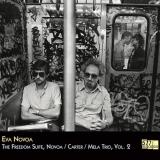
"Brooklyn-based pianist Eva Novoa returns with The Freedom Suite: Novoa / Carter / Mela Trio, Vol. 2 — the second radiant release from her compelling trio with saxophone icon Daniel Carter and celebrated drummer Francisco Mela. This marks Novoa’s sixth album with 577 Records. The trio first came together live in 2021, followed by a series of performances, including appearances in Cambridge (Boston) and later at the Brooklyn edition of the NY Forward Festival.
"The Freedom Suite is an homage to jazz titan Duke Ellington — particularly his masterful big band suites and legendary orchestra featuring Johnny Hodges and other luminaries who helped define an era of jazz greatness. In contrast, Novoa presents her Suite in a more intimate format: the piano trio. The album comprises twelve pieces — mostly brief — with a few extended tracks such as Free to Be Free and Cyborgs.
"For this recording, Novoa also steps in as a vocalist on several tracks, including Mainstream Media, Big Grande, Global, Free to Be Free, Dream, and Cyborgs. These pieces often feature a vocal dialogue between Novoa and Mela, whose expressive, word-infused style draws from rich Cuban traditions.
'Words are powerful,' says Novoa. 'They define who we are, where we come from, and who we hope to become. Without words, there is no conversation — and without conversation, there is no real sense of time, space, or connection.'
The Freedom Suite emerged from deep philosophical and creative conversations — spoken, written, and improvised — between Novoa, Carter, and Mela. In the studio, Novoa introduced printed texts that served as thematic foundations for spontaneous, in-the-moment musical interpretation. The result is an urgent and organic interplay, where instruments speak to one another in a language as fluid as it is fearless.
"Standout track Cyborgs begins with Novoa’s percussive piano, exemplifying the trio’s dynamic, conversational energy. Creative Destruction features Novoa on electric harpsichord in a wild, electric exchange. While Free to Be Free stands out as the album’s leading single, it also captures the essence and message of the entire Suite.
"Recorded in 2021 at New York City’s legendary Sear Sound Studio, the album captures a creative explosion of sound and spirit. Novoa dazzles on piano, Fender Rhodes, electric harpsichord, Chinese gongs — even whistle — showcasing her expansive sonic palette. Together, the trio embodies the power of free improvisation and emotional storytelling.
"Originally from Barcelona, Spain, Eva Novoa has been cultivating her distinctive voice since childhood. Now a staple of the New York creative music scene, she has performed across the globe and collaborated with some of the most adventurous voices in jazz and beyond."
“The album explores the duality between nature and mankind, and the blurred line where we become both the executioner and the victim. I’ve always felt this inner struggle, the pull between instinct and reason, between animality and humanity. This album reflects that ambivalence: an intimate journey where I allow myself to be consumed by my contradictions in order to be reborn. It’s a cry, a waking dream where we shed our masks to become whole again. I blend wildness with tenderness, fury with poetry — because deep down, I’m an animal who dreams, and a man who roars.” Sébastien Tellier
Grupo um celebrate 50 years with release of lost dictatorship-era album nineteen seventy seven!
First time release - vinyl comes with printed innersleeves
Brazilian avant-jazz vanguardists Grupo Um celebrate their 50th anniversary, sharing a second previously lost 1970s album from the vaults. Nineteen Seventy Seven (titled after the year it was recorded) is another rip-roaring instrumental fusion treasure from the band which spawned from within Hermeto Pascoal’s famed mid-1970s São Paulo collective.
Like their debut album Starting Point, Grupo Um’s Nineteen Seventy Seven was recorded when Brazil's military dictatorship was at its most repressive. “There were no open doors to those who dreamt to be protagonists in creative instrumental music”, remembers drummer Zé Eduardo Nazario, “even popular composers and singers had to submit their songs to censors and many records were banned and confiscated from the stores.”
Just like Hermeto Pascoal's Viajando Com O Som (1977) and Grupo Um's previous album Starting Point (1975), both of which remained unreleased until the 21st century, Zé Eduardo asserts that the 1977 album was flatly 'without any chance to be released at that time."
Recorded at Rogério Duprat’s Vice-Versa Studios in São Paulo, the group were under both time and space restraints, “we chose the small Studio B,” Lelo Nazario recalls, “which had a Tascam (TE AC) 12x8 console and a 4-channel AMPEX AG 440 machine. Therefore, we had to record without overdubs, everything straight to tape.”
Expanding from a trio to a quintet, original Grupo Um members Lelo Nazario (keys), Zé Eduardo Nazario (drums), and Zeca Assumpção (bass) were joined by saxophonist Roberto Sion and percussionist Carlinhos Gonçalves. Carlinhos, Zé and Zeca had already played together in the group Mandala, while brothers Lelo and Zé had just finished a stint backing Hermeto Pascoal during his years in São Paulo.
Lelo was deeply immersed in modular synthesizer experimentation during this period, working extensively with the ARP2600 and EMS Synthi AKS. These electroacoustic explorations formed the sonic foundation for "Mobile/Stabile," one of his first compositions to merge modular synthesis with Brazilian music, a fusion that would ripple throughout the Brazilian jazz scene. The piece premiered at the first São Paulo International Jazz Festival in 1978, performed by Grupo Um with guest trumpeter Márcio Montarroyos. In a shocking moment, festival organizers interrupted the show mid-performance, sparking fierce backlash from both audience members and journalists who denounced the incident as artistic censorship during Brazil's era of political and cultural repression. The version on Nineteen Seventy Seven is the first recording of the composition.
Nineteen Seventy Seven combines Afro-Brazilian rhythm, modular synthesis and a plethora of whistles, percussion and effects pedals. Album opener “Absurdo Mudo” - so titled for the absurd difficulty it poses to the musicians performing it - starts out in a cloud of mysterious dissonance, before the haze breaks for a glorious keyboard and saxophone interplay atop an uptempo samba groove. “Cortejo dos Reis Negros (Version 2)” (Procession of the Black Kings), based on the maracatu rhythm, inverts the traditional jazz song structure by beginning with improvisations, which are followed by the theme and a final coda. “The studio also had two Parasound electronic reverb units,” Lelo notes, “and the timbre is very audible on the soprano sax and percussion.”
Grupo Um’s daring music represents a manifesto of resistance during the dictatorship years, but it’s one which remains just as relevant today. As Lelo puts it: “For me, the aesthetic issue has always been about combining contemporary avant-garde languages with Brazilian music, independent of categories and commercial interests. The result of this fusion takes music to a new level.”
Recording credits (1977)
Recorded at Vice-Versa B Studio, São Paulo, November 9, 1977
Produced by Lelo Nazario and Zé Eduardo Nazario
Engineered by Ricardo “Franja” Carvalheira
Lelo Nazario – Wurlitzer electric piano, acoustic piano, signal generator, percussion
Zé Eduardo Nazario – drums, percussion
Zeca Assumpção – electric bass
Carlinhos Gonçalves – percussion
Roberto Sion – soprano sax, clarinet
Release credits (2025)
Produced by UTOPIA Studio, São Paulo
Project Coordination in Brazil by Irati Antonio (Utopia Studio)
Tape Restoration and Digital Mastering by Lelo Nazario at Utopia Studio, July 2025
Liner Notes by Lelo Nazario and Zé Eduardo Nazario
Photography by Jorge Las Heras, Lelo Nazario, and artists' personal archives
Photo Restoration by Lelo Nazario
Artwork and Design by Alessandro Renaldin
On Air is the second solo release by Alan Parsons following the split of The Alan Parsons Project. One of the creative forces was APP long-time guitarist Ian Bairnson. The concept of the album revolves around the history of airborne exploration.
The theme of “Too Close to the Sun” is escaping the labyrinth of the Minotaur. “Brother Up In Heaven” is an emotionally driven song, about the unfortunate death of Ian Bairnson’s cousin. “One Day To Fly” is a song about Leonardo da Vinci’s search to design a flying machine.
A who’s-who of lead vocalists are featured on this album; Christopher Cross, Eric Stewart, Neil Lockwood, Steve Overland and Graham Dye. The amazing looking artwork was recreated for this vinyl edition by none other than Peter Curzon of Storm Studios. Although On Air might be the most underrated Alan Parsons albums, many consider this as one of his best albums. The package includes an insert with lyrics and pictures.
From Ace Records’ early days, there’s always been a place in our hearts for music’s feminine side. A year having flown by since the release of our last compilation spotlighting the US girl group sound of the 60s – think castanets, anguished teen sirens, Svengali-esque producers and mini-sonatas about dreaming, dancing and moody boyfriends (sometimes deceased) – means the time has come for a new vinyl-only volume.
As 1968 drew to a close, the golden age of girl groups had seemingly been and gone: the Shangri-Las, Ronettes and Chiffons, for example, hadn’t had a hit record of note since 1966. Then along came ‘Condition Red’, a cleverly produced psychodrama performed by the Goodees, who grace the front cover and open the top side of this new comp in dramatic style. Over on the generally more soulful second side, Les Chansonettes are first up with ‘Don’t Let Him Hurt You’, a big production stomper written with Martha & the Vandellas in mind.
Elsewhere, Beverly Williams performs the very Lesley Gore-like ‘One Way Street’; ‘Go Away’ by the Murmaids (of ’66) is a lavishly produced number with a chamber pop vibe; ‘What Did You Do Last Night’ by the Drake Sisters was recorded in Phase-O-Phonic Sound; the lyrics of Denita James’ ‘Wild Side’ call to mind genre classics such as ‘He’s A Rebel’, ‘Out In The Streets’ and ‘Chico’s Girl’; and the Sweathearts close the show with a gorgeous harmony-filled update of the mid-50s oldie ‘Eddie My Love’. As usual in this series, the inner sleeve features a picture-packed 4,000-word track commentary by long-serving compiler Mick Patrick.