Having been dormant for over three years, New York label Satamile returns to continue spreading the gospel of proper electro music with a six-track EP from The Ghost That Walks. Drexciya enthusiasts will be all over this record; the rubbery melody of "The Angriest Angel" recalls the Detroit duo at their most playful but with a simmering undercurrent of tension that is very much the producer's own signature style. Similarly great are the searing analogue synth buzz of "Seven Deadly Sons", the tribal 303 stomp of "Urban Jungle" and the 808 rattle and Belgian rave tones of "Resident Evil". Those who were lost without the label's presence should rest easy - Angry Angels is easily among their extensive catalogue's best releases.
Cerca:drex
Smalltown Supersound’s Le Jazz Non Series returns with a collection of pure, emotional club bangers, on a tip somewhere between Aphex Twin’s first Analogue Bubblebath and Drexciya’s most direct The Other People Place romancers.
’Slay Tracks’ is Bratten’s 6th album and perhaps the closest to Smalltown’s heart, personally selected from his swelling hard drive by label bossman Joakim Haugland. You can see the tip he’s on too, opting for a sort of refracted view of ‘90s electronics, propulsive but always emotionally driven.
‘Res’ hits most closely to classic Richard D James with its doe-eyed, single note bassline, while screwed acid vignette ‘Tunnel’, reminds us of Sockethead and Michael J. Blood with its slow, square bass grind. ‘Repair’ gives it all gossebump-inducing melodies in a mode not far from classic Titonton Duvanté or even The Black Dog’s earliest, many-monikered excursions, while ‘A Fog’ craftily dices with a vibe redolent of Phoenicia or the Miami lot, and the closing couplet of ‘The Returner’ and ’Strayed’ smartly extend that analogue on a low- down, offbeat bent like some classic Push Button Objects.
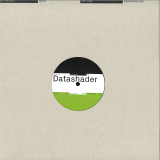
Datashader emerges from the shadows with a striking breaks- and bass-heavy debut release that challenges the fabric of our digital existence. Replete with a Dopplereffekt remix, it nods to the legacy of revered anonymous acts such as Scopex, Drexciya and Underground Resistance, pushing the boundaries of both electronic music exploration and its conceptual underpinnings. As a critique of the erosion of genuine human connection in the digital age, Datashader delivers a barrage of billowing subs, infectious electro, recontextualized jungle, and techno, serving as a poignant counterbalance to current dance floor-centric norms. It’s a contemporary anti-soundtrack that offers a haunting mirror to the societal costs of technological convenience.
In a world engulfed by the digital realm, where social media platforms thrive and dominate every aspect of our lives, the enigmatic project known as Datashader was founded to reflect on the pervasive erosion of authentic human connection through various virtual realities. Artistically, Datashader seeks to critique the impact of technology on human identity and relationships, breaking with an archetype of digital conformity and expressing a profound disillusionment with the superficiality of online interactions through music. Genuine human connection and art cannot be quantified by likes, comments, or followers but rather thrives in the visceral realm of shared sonic experience and human emotion. This idea is at the core idea of Datashader, whose artistic expression ranges from avant-garde composition and electronic experimentations to art, installation, film and more.
Expressed within the varied contexts of diverse artistic mediums, Datashader explores the concept of “technological gentrification”, which describes the gradual displacement of human interaction by technology. Just as gentrification alters the urban landscape, driving out communities and cultures, digital gentrification transforms the social landscape, replacing genuine connection with curated online personas.
Musically, Datashader’s practice confronts this dystopian reality, highlighting the alarming consequence of people becoming mere nodes in a network, reduced to a collection of data points. This is manifested sonically by a blistering assault of breaks, recontextualized IDM, abstract electronics and otherworldly synthscapes, conceived as the aesthetic counterbalance to much of contemporary electronic music’s dancefloor focus.
Datashader dives deep into genres and influences which stand for a form of sonic resistance: A contemporary anti- soundtrack – a sonic mirror of the price we pay for convenience and instant gratification. A self-image in constant flux. No false technological idols.
- D3: 4 3S 555
- A1: Trojan Horus (Pt 1)
- A2: Trojan Horus (Pt 2)
- D2: 4 3S 555
- A3: Lam Vril (Album Mix / Remastered) 00 04:31
- A4: Truth Benders D I.e (Album Mix / Remastered) 00 03:23
- B1: Bolt 23 Blue Screen Ov Death (Album Mix / Remastered) 00 00:37
- B2: Alt-Return-Dash-Kill (Album Mix / Remastered) 00 03:54
- B3: Bolt 777 Ordinary Boy (Album Mix / Remastered) 00 00:42
- B4: Drexian City R I.d.e (Album Mix / Remastered) 00 03:38
- B5: Remote Viewing (Album Mix / Remastered) 00 04:34
- C1: Gummi Void (Album Mix / Remastered) 00 04:55
- C2: Machine Machina (Album Mix / Remastered) 00 01:36
- C3: The Stele Of Revealing (Album Mix / Remastered) 00 02:56
- C4: Songs For Other People (Album Mix / Remastered) 00 02:08
- C5: Break Down On Lake Shore Drive (Album Mix / Remastered) 00 01:11
- C6: Bolt 33 Glitch & Chin (Album Mix / Remastered) 00 01:03
- D1: Sudden Intake (Album Mix / Remastered) 00 05:12
In the enigmatic realm of electronic music, The Black Dog stands as a visionary act, responsible for crafting, among other things, the mesmerising album "Silenced". Notably, this release marks a significant milestone in the band's evolution, being the first album from the new line-up and their collaboration with the fledgling label Dust Science.
Defying industry norms, The Black Dog embodies a Do-It-Yourself (DIY) ethos. Their artistic journey remains steadfast, with a commitment to originality and creative freedom, unfettered by the limitations imposed by the commercial music industry.
The record label Dust Science takes pride in championing The Black Dog's musical prowess, with its first release being the band's 4-track EP "Bite Thee Back". However, this EP was only a prototype for the revitalised collective, eventually leading to the composition of Silenced, which followed soon after.
This creative period denotes a fresh start for The Black Dog, a testament to their resilience and a commitment to evolving their sound. The resulting album represents a new beginning, celebrating and transcending the echoes of the past. It redefines the band's sonic landscape and establishes a distinct musical narrative that resonates with dedicated followers and newcomers alike.
a A1 The Black Dog Trojan Horus Part 1 (Album Mix / Remastered) 00:05:42
b A2 The Black Dog Trojan Horus Part 2 (Album Mix / Remastered) 00:02:29
q D2 The Black Dog 4 3s 555 Part 1 (Album Mix / Remastered) 00:02:57
[r] D3 The Black Dog 4 3s 555 [Part 2] (Album Mix / Remastered) 00:08:16
[a] A1 Trojan Horus [Part 1] (Album Mix / Remastered) 00:05:42
[b] A2 Trojan Horus [Part 2] (Album Mix / Remastered) 00:02:29
[q] D2 4 3s 555 [Part 1] (Album Mix / Remastered) 00:02:57
[Part 2] (Album Mix / Remastered) 00:08:16
[a] A1 Trojan Horus [Part 1] (Album Mix / Remastered) 00:05:42
[b] A2 Trojan Horus [Part 2] (Album Mix / Remastered) 00:02:29
[q] D2 4 3s 555 [Part 1] (Album Mix / Remastered) 00:02:57
[Part 2] (Album Mix / Remastered) 00:08:16
Back in stock!
NULLPTR never fails. Since emerging in 2016 with the Optical LP, Eddie Symons' project has become a byword for top-draw contemporary electro productions. After triumphantly returning to Sheffield's Central Processing Unit with 2020's Future World full-length, NULLPTR follows that album up with a new quartet of machine-funk slammers. Striking a balance between highwire, twitchy rhythm programming and some deft textural work, the Terminus EP demonstrates exactly why the NULLPTR name is so respected in the world of electro.
The first half here almost showcases the two sides of the NULLPTR sound in microcosm. Opening track 'Connected' zips along like one of the racers from a Wip3out game. The 808s are all booming breakbeats and hissing-piston hats, with a jittery synth bassline nipping in and out of the spaces left vacant by the drums. Atop these swirl eerie keyboard pads, the reverb from them draping across the rest of the instruments like fog above a city. By contrast, following cut 'Mesospheric Cruise' is the yin to 'Connected's yang. Where its predecessor was tense and coiled, this lilting number is expansive and open like a primetime Virginia joint - though the point where the wistful house pads strip back to foreground the twinkle-toed electro beat still has a pleasing crunch to it.
The B-side of Terminus serves dystopian snap from the off. Genre masters Drexciya are invoked by 'Syndicate'. The needle-gun bassline here turns itself inside-out across these five minutes, and all the while the tune is laced with some evocative shadow-realm synth pads. A similar energy courses through the EP's closing title-track, a cut which also brings into play a booming four-to-the-flour that gives it an unstoppable sense of forward-motion. Like 'Connected' and 'Mesospheric Cruise' - indeed, like all of the NULLPTR material that Central Processing Unit has brought us down the years - these jams will sound positively devilish when deployed in a dark basement.
The Terminus EP sees electro don NULLPTR (Eddie Symons) deliver four slices of unadulterated machine-funk heat.
RIYL: Virginia, Cardopusher, Drexciya, Silicon Scally
Warehouse find!
With '100% Dope' we find Central Processing Unit bringing up their hundredth catalogue number, and you'd struggle to find a more fitting artist to ring in a century of releases for the label than Cygnus. The one born Phillip Washington has been with CPU since the very beginning, his 2012 LP 'Newmark Phase' representing the first record ever released on the imprint. That album's combination of textured techno and grizzly Drexciyan electro set the tone for CPU perfectly, and it's no surprise that Cygnus has returned to the Sheffield imprint several times down the years.
While '100% Dope' is an expert demonstration of what Cygnus and CPU do, this EP also shows just how much both artist and label have grown over the past nine years. At its heart '100% Dope' is a set of prime machine-funk from a master of the form, but these are also some of the most daring and innovative tracks that Cygnus has ever produced.
Take opening cut 'Bad RGB Controller'. In the undulating synth lines we have a ghost of grime as well as Drexciyan drive, and as such the track reminds one as much of Mr. Mitch or Last Japan as it does, say, Dopplereffekt. Furthermore, 'Bad RGB Controller' shifts gear around the halfway mark into a highwire electronica mode which has the wit and spark of prime Bogdan Raczynski. Entries like 'Float Back To The Surface' are similarly unpredictable. There's some lovely industrial techno bite to this one - the snare drum will echo in your head long after the party's died down - but Cygnus periodically pulls out the rug from underneath us with passages of impressionistic texture that almost border on sound art.
'Float Back To The Surface' is one of a trio of vocoder-led jams here. On 'Throwing Shade' we hear I-F and Egyptian Lover, with Cygnus' vocals clattering around like pronouncements from some funked-out robot overlord atop hissing-piston drums. Then there's the enticingly-titled 'CPU Records'. 'CPU Records' delivers all the crisp electro snap we've come to expect from a record emblazoned with that signature black-and-white artwork, yet this thing is also widescreen and cinematic in ways that demonstrate the maturation of the Cygnus sound. With a wicked vocoder vocal that celebrates the label's many achievements, 'CPU Records' is a victory lap tune if ever we've heard one.
Central Processing Unit keep it 100 on for this new EP. '100% Dope' by Cygnus is CPU's 100th catalogue number, and the Texan producer delivers on the promise of the record's title with a collection of brilliantly unique electro joints.
Part two of the retrofuturistic 12’’ compilation series introduced by To Pikap Records. LEGACY inaugurates the release with an acid JeffMillsian ode to Detroit’s techno-electro sound, Future Draft takes us back to Europe with a euphoric broken house, while The Jaffa Kid concludes side A with a number of quirky melodies floating over Autechre’s (or Aphex Twin’s) memories of the genre previously known as idm. On side B, Odpein updates the Drexciyan electro palette slipping in elements of Chicago’s footwork combined with heavy acid bass, subsequently Dj Tsoug’s misty atmosphere crawls over some dry city bringing catharsis with its most anticipated drops of acid and finally happy99 enforces us to open up our eyes with a stripped and muffled techno-acid anthem of the future. It’s a must have till the next one!
Disciples bringt eine Neuauflage des modernen Detroit-Elektro-Klassikers des enigmatischen Projekts NRSB-11 heraus, das in erster Linie eine Zusammenarbeit zwischen Gerald Donald (Drexciya, Dooplereffekt, Arpanet, Japanese Telecom) und DJ Stingray 313 (Urban Tribe, offizieller Drexciya-Tour-DJ, gefeierter Solokünstler) ist. Ursprünglich 2013 als limitierte Auflage auf dem belgischen Label WéMè erschienen, war ihr einziges Album 'Commodified' schnell vergriffen und erfreut sich seitdem großer Beliebtheit, derzeit steht es auf 1.783 Discogs-Suchlisten. Die erste Reissue erscheint als CD mit 3 Bonustrack (NRSB-11 EP aus 2012) und als Clear-Vinyl-2LP-Edition, bei der das Original-Cover im Siebdruckverfahren auf eine PVC-Außenhülle gedruckt wurde, mit den beiden Vinyl-Discs in transparenten Poly-Innentaschen.
2023 Black Vinyl Repress
Drexciya presents Grava 4. Earth has finally discovered Utopia. (Drexciya Home Universe) Earth scientist discovered the home planet of Drexciya on 2-14-2002. Within moments Dr. Blowfin was given the orders to initiate the seven dimensional cloaking-spheres to hide the other three planets from earths view. The star chart is authentic; you will be able to find the star by using the coordinations on the star chart. The planet Drexciya can be found in the international star vault in Switzerland & recorded in the astronomical compendium.
Emerging from the ashes of Ireland's early rave era - that had been absorbed into the vastly commercialised club scene of the late '90s - was an oft forgotten, but exceptionally fertile period for electronic music in Ireland. Spearheaded by the then Dublin duo of Decal (later becoming the solo project of Alan O' Boyle), nurtured through nights like Phunk City at The Funnel, Model One at Switch and at a later point midweek club haunt Electric City, an unlikely Irish electro movement was born; breeding an abundance of new labels, parties and producers hungry to make their mark. "Dreams of Electric Bleep" revisits a crucial time of development (1999-2005), when production standards on the island of Ireland rose in perfect synchronicity with the collapse of the music industry as we knew it.
While Detroit, The Hague and London heavily influenced the sounds heard in the clubs, clubs in pubs, warehouses and great outdoors of Ireland - it was producers from Belfast, Cork, Donegal, Dublin, Limerick and Mayo who created the first significant chunk of high-quality Irish electro, demonstrated here over a range of styles (originally released a variety of local and international labels). This double 12" release - featuring key tracks from Decal, Magnetize, Metroneem, Americhord, Phil Kieran, Takeover Sound, Chymera and John Braine - comes on picture-sleeved coke bottle clear vinyl, and includes a download code.
Designed by Jonny Costello (Adult Art Club) with liner notes from Stephen Rennicks (Drexciya Research Lab). Mastered by Paul Mac at Hardgroove Mastering, vinyl mastered and cut by Simon Davey at The Exchange Vinyl.
Plant43 wrote a trio of EPs over the winter season at the end of 2022 and the start of 23 and has been putting them out on his own Plant43 Recordings label.
This third part from the man born Emile Facey is another emotional rollercoaster that conveys the wintry scenes in which they were written while also taking you on to the more warm and optimistic light of spring.
Lithe electro rhythms and icy synths open up on 'Tidal Flexing' while 'Reflective Waves' gets a little darker and more intense. 'System's Edge' is a celestial cruise with quick, slick drums and masterful leads then 'Mind Drift' channels Drexcyian cyborg funk to close. The final part of the story comes on coloured vinyl but only in limited quantities.
SoHaSo keeps finding lost gems in the rich soil of the Dutch electronic underground. You might know P.A. Presents from his epic Entangled EP (1995) or his many releases on U-Trax. When SoHaSo informed if he had any dusty DAT tapes laying around from that particular period in the 90s, Peter Aarsman started digging. And found plenty of goodies. Here's six tracks which will beam you right back the last century, when names like Carl Craig, Drexciya and Bola were household names among the lovers of funky, melancholic electronica. Whether it's moody strings, otherworldly melodies or syncopated break beats, P.A. delivers on his Lost Voices EP. Like on the 4Hero-esque Drum 'n Tech or the mysterious and jumpy electro vibes on Vice. On Drop It and closing track Lost Voices the Dutch producer goes into full club modus. This is techno that used to fill up warehouses in windy harbor neighborhoods. Be sure to check the Drexiyan remix by Proxyan, who masters the art of deduction on his skeleton-like remix of Vice.
Das neue Studioalbum TIMBRE des portugiesischen Singer-Songwriters Salvador Sobral enthält elf neue Originalsongs.
Sobrals Musik führt uns auf einzigartige und vielfältige Reise von Jazz inspirierten Eigenkompositionen über Pop und Rock zum melodischen Sound des Brasilianischen Bossa Novas.
Salvador Sobral: "Der Name TIMBRE entstand aus zwei Hauptgründen. Der erste - und vielleicht offensichtlichste - ist, dass ich in diesem Leben in erster Linie Sänger bin, ein Performer, und was mich am meisten definiert und auszeichnet, ist meine Stimme, mein Timbre. Der zweite Grund ist, dass ich mich für das Konzept der Klangfarbe als Farbe interessiere, die Farbe der Stimme, die Farbe
der Instrumente. Das Album wird wie eine bunte Palette von Klangfarben sein, die Klarheit erzeugen.
Ah! Und es gibt noch einen dritten Grund für den Titel des Albums: Das Wort ?timbre? wird in vielen lateinischen und germanischen Sprachen verwendet. Es wird gleich buchstabiert und bedeutet dasselbe. Das Konzept von TIMBRE scheint also universell zu sein, und wir können uns alle darauf verständigen."
DeForrest Brown Jr., the writer and producer behind Speaker Music, describes Techxodus as "abstracting Blackness through information overload". On the album he explores the intersection of tech, Blackness and resistance via music taken from his archived live shows, which are then edited, ordered and reassembled in the studio. The main line of inquiry that feeds into Techxodus is Drexciya, whose myths have informed much recent afrofuturist creativity. DeForrest researches and reimagines the artifacts and stories of Drexciya with new maps, ideas and music, particularly reflecting on the 'Seven Storms', seven albums that came out in quick succession around the death of Drexciya member James Stinson, which seemed to herald Drexciyans in the attack mode. The artwork by Abu Qadim Haqq, who also created artwork for Drexciya, links the work too, with Deforrest re-orienting charts and timelines familiar from Drexciyan mythology, working up clues to all possible environments where Drexciyans could survive, from the depths of the Atlantic, to oceanic islands or even outer space. Like Sun-Ra, another touchstone of Afrofuturist music, it might be that the Drexciyans wanted to leave the planet they hated. With these elements, DeForrest creates a soundtrack for an alternate history, a sort of sci-fi sonic fiction which threads together the sonic warfare and mythos of the Drexciyan records with ideas and references to Ishmael Reed's 'Mumbo Jumbo', which tracks the story of 'Jes Grew', an audio virus, back to the coastal black cities of Alabama and the American South. Musically the album is as intense as its inspirations. DeForrest skilfully hand-plays rhythms which amalgamate trap and jazz drumming, but feel at times like orca-song as they pulse through the thick waves of digital sound. Equally the music evokes the ocean, with deep cold drones, or as if it's floating through time like in 'Holosonic Rebellion' which mixes in recordings of African Warriors. Sometimes there is an energetic turbulence as on 'Jes Grew', where punched-in passages of jazz brass bounce against DeForrest's drums to create a weird disassembled jazz. Towards the end the album begins to feel like a spaceship taking off, the rushes of ascending noise and distortion, distant Southern Gospel Vocals feel like music that's leaving earth. Listen to it without the references or feed your imagination; this is a powerful and immersive original work from one of electronic music's most unique creators.
- A1: Ultradyne Clones Z Therapy Remix
- A2: Cisco Ferreira Womans Scent Heinrich Mueller Remix
- A3: Jauzas The Shining Victoria Lukas Bohrium 274 Remix Heinrich Mueller
- A4: Rough Days For Diamond Trade Somehow Dopplereffekt Remix
- B1: Albert Van Abbe Rytumtraks 0002 Rudolf Klorzeiger Remodel
- B2: White Car Now We Continue Heinrich Mueller Continuum
- B3: Duplex Autosug Heinrich Mueller Remix
- C1: Fasenuova Cachito Turulo Heinrich Mueller Remix
- C2: As One Where Did He Go And Why Heinrich Mueller Lamb Shift Model
- C3: The Exaltics The Truth Remixes Instinct Dopplereffekt Hubble Constant Remodel
- D1: 6D22 Longwang Heinrich Mueller Remix
- D2: Yan Wagner Forty Eight Hours Heinrich Mueller Apeture Synthesis Model
- D3: Dollska So Long For A Small Storm Rudolf Klorzeiger Remodel
Its been five years since Belgium's WeMe Records lovingly selected the first ever collection of Heinrich Mueller's (Drexciya/Doppleffekt) best remixes/remodels for a new generation of listeners that won't have to pay collector prices to have them on vinyl. Volume 2 of False Vacuum is now with us and still has riches to choose from.
These 13 rare and hard to find tracks (3 of which make their vinyl debut) all deliver in different ways as he systematically reinvents each one.
Beginning with his raw and now classic remix of Ultradyne's 'Clones', the hard-edged dance-floor friendly 'Woman's Scent' by Cisco Ferreira (The Advent), the more laidback and futuristic sounding 'Bohrium 274' by Jauzas the Shining and Victoria Lukas, the slow and mysterious and first time on vinyl 'Somehow' by Rough Days For Diamond Trade, reinventing the darkest of dance-floors on 'Rytumtraks 0002' by Albert van Abbe, the moody masterpiece and first time on vinyl 'Now We Continue' by White Car, Duplex's 'Autoslug' sounding like its been rearranged inside a black-hole, a balancing act between the light and darkness on Fasenuova 'Cachito Turulo', an insistent rise and falling workout for As One's 'Where Did He Go and Why', a tightly wound and almost meditative 'The Truth' by The Exaltics, an angular stomping march of the robots 'Longwang' by 6D22, a jumpy fidgety groove for first time on vinyl 'Forty Eight Hours' by Yan Wagner and perhaps one of his most sublime pieces is kept for last with 'So Long For A Small Storm' by Dollska.
Carl Finlow keeps on keepin' on. Not only is Finlow one of the most respected names in electro, a producer who boasts a sprawling catalogue that takes in a wide variety of aliases, but he's also spent recent years establishing himself as a mainstay for Sheffield's Central Processing Unit label. Soft Robotics, the new EP from Finlow's Silicon Scally project, is the fifth Silicon Scally release in five years to boast one of CPU's instantly-recognisable black-and-white covers.
The reason that Silicon Scally and CPU keep linking up is simple; they're a perfect fit for one another. Central Processing Unit has established itself as a haven for post-Drexciya producers since launching in 2012, and there are few artists better than Finlow at building on the Detroit group's sound. The union bears fruit once more on Soft Robotics, an EP of lithe machine-funk jams that will both do damage in the dance and also reward more concentrated home listening.
Things begin at a steadier speed than one might expect. Rather than barrelling off with the kind of sinewy roller one associates with the CPU name, Soft Robotics' title-track takes things at mid-pace. The groove reveals itself without hurry, Silicon Scally adding or subtracting elements - twitchy modular loops, pensive pads, the occasional blurt of low-end - atop the chugging bass/drums groove. It's a track which wins you over with guile rather than force.
As the name of subsequent cut 'Jitters' intimates, this one picks things up a little after 'Soft Robotics'. The tempo is higher here, the central beat more nervy. At their cores, though, 'Jitters' and 'Soft Robotics' are kindred spirits. Here, another slyly insistent bit of drum programming comes swirled up with all sorts of extraterrestrial tones, from little nuggets of melody supplied by the keys to electrifying synth stabs and percussive squelches.
Things limber up further still on first B-side 'Spin Ratio'. The track's 808 kicks are punchier than those of the A-side jams, and there's a dizziness to the bass tone which gives 'Spin Ratio' an intriguingly off-kilter feel. Atop the booming beat we find ourselves hypnotised by cells of melody and harmony interlocking or moving apart - particularly the staccato module at the track's heart. Sure enough, 'Spin Ratio' is the Soft Robotics joint which cleaves closest to Drexciya, invoking other Detroit disciples like Jensen Interceptor in the process.
After Soft Robotics picks up speed in the middle, closer 'Super Fluid Tones' brings us back to where we started. This track returns to the more measured delivery of the record's opener - there's a steady pulse to the drums, and once again Silicon Scally packs the mix with so many intriguing whizzes, bangs, blips and blurts that it's impossible not be won over by this tune's construction. 'Soft Robotics' and 'Super Fluid Tones' bookend Soft Robotics very nicely, and Silicon Scally's smart pacing gives the EP a lovely ebb and flow.
The ever-excellent Carl Finlow drops a Silicon Scally release via Central Processing Unit for the fifth year running. Like its predecessors, Soft Robotics is an excellent and deftly-crafted collection of modern machine-funk.
RIYL: Drexciya, Jensen Interceptor, Fleck E.S.C., The Advent